Introduction
Across the developing world a large percentage of adolescent girls are married as children; that is, before the age of 18. Despite some global decline in child marriage in recent years, particularly in South Asia, early marriage remains of concern, with 12 million girls globally marrying annually before they reach the age of 18 years (UNICEF, 2018). One consequence of this is high rates of early childbearing, which has a number of risks for mother and child (Adhikari, Reference Adhikari and Bott2003; Prakash et al., Reference Prakash, Singh, Pathak and Parasuraman2011; Santhya, Reference Santhya2011; Efevbera et al., Reference Efevbera, Bhabha, Farmer and Fink2017). Adolescent mothers are at higher risk of maternal morbidity and mortality than are older women. In fact, in developing countries as a whole, pregnancy and childbirth are leading causes of death among adolescent girls between the ages of 15 and 19 years (Reynolds et al., Reference Reynolds, Wong and Tucker2006). Mothers under the age of 20 are more likely to have lower birth weight babies than those aged between 20 and 30 years (Khatun & Rahman, Reference Khatun and Rahman2008). Despite these and other risks, young mothers often have inadequate – if any – knowledge of, and access to, appropriate maternity care (Santhya & Jejeebhoy, Reference Santhya and Jejeebhoy2003; Bearinger et al., Reference Bearinger, Sieving, Ferguson and Sharma2007; Doyle et al., Reference Doyle, Mavedzenge, Plummer and Ross2012).
Multiple studies of low-income countries in Asia, sub-Saharan Africa and Latin America have found that adolescent and young mothers are significantly less likely to use antenatal (Singh & Singh, Reference Singh and Singh2014) and institutional delivery services than are adult women (Magadi et al., Reference Magadi, Agwanda and Obare2007; Guliani et al., Reference Guliani, Sepehri and Serieux2012; Pal, Reference Pal2015). Reynolds et al. (Reference Reynolds, Wong and Tucker2006) found that younger adolescents used services less than did older adolescents: their analysis of Demographic and Health Survey data found that adolescents aged 16 or younger were significantly less likely than 17- to 19-year-olds to use any maternal care across the Asian countries analysed.
Addressing early marriage and early childbearing are near the top of the Indian Government’s list of social and health-related priorities (https://www.girlsnotbrides.org/child-marriage/india/) for a number of reasons. First, adolescents constitute a large proportion of the Indian population. As of 2014, adolescents (10–19 years) constituted one-fifth of India’s population and young people (10–24 years) one-third of the population (Government of India, 2014). Providing appropriate health services to such a large population is a critical yet gargantuan task. India also has the highest number of child brides in the world (Girls Not Brides, n.d.; UNICEF, 2018), with 27% of young women aged 20–24 years marrying before the age of 18 (IIPS & Macro International, 2017). Though rates of early childbearing have declined in the country over the last few decades, almost one in ten young rural women continue to become mothers before they reach the age of 18 (IIPS & Macro International, 2007, 2017).
However, pregnant adolescents in both urban and rural India are less likely than pregnant adults to use antenatal, safe delivery or postnatal services (Kavitha, Reference Kavitha2015). Singh et al. (Reference Singh, Rai, Alagarajan and Singh2012), in a study in rural India, found that only about 14% of married, pregnant adolescent girls received full antenatal care (ANC), 46% had a safe delivery and 35% used any postnatal care services. Analysis across states in northern India demonstrated that having been married as a child (and consequently being a young mother) was statistically significantly associated with lower use of antenatal care services among pregnant women, even after taking other factors into account (Pallikadavath et al., Reference Pallikadavath, Foss and Stones2004). The situation is worse in rural than in urban areas. Rural girls between the ages of 15 and 19 years are four times more likely than their urban counterparts to be mothers (80% versus 20%, respectively), and are significantly less likely to have a safe delivery (Singh et al., Reference Singh, Rai and Singh2012). Kumar et al. (Reference Kumar, Rai, Singh and Singh2013) found that, in Rajasthan state, despite an increase in both rural and urban areas in adolescents’ use of antenatal and delivery services between 1990 and 2006, rural adolescents were still significantly less likely to use either type of maternity care than were urban pregnant adolescents.
The lack of autonomy and power to make decisions about their own health may be a key factor in young and adolescent women’s low use of maternal care. In particular, young, married women’s health care is not prioritized by families and they are not empowered to demand care for themselves (Barua & Kurz, Reference Barua and Kurz2001; Santhya & Jejeebhoy, Reference Santhya and Jejeebhoy2003; Pande et al., Reference Pande, Kathy, Walia, MacQuarrie and Jain2006). Several intervention studies since at least the 1990s have demonstrated that programmes that succeed in improving adolescent reproductive and sexual health are typically multi-component programmes that combine improvements in health service quality with intensive efforts to change social norms and increase demand for such services for adolescent girls and women (Hughes & McCauley, Reference Hughes and McCauley1998; Speizer et al., Reference Speizer, Magnani and Colvin2003; Pande et al., Reference Pande, Kathy, Walia, MacQuarrie and Jain2006; Denno et al., Reference Denno, Hoopes and Chandra-Mouli2015; Plourde et al., Reference Plourde, Fischer, Cunningham, Brady and McCarraher2016; Nguyen et al. Reference Nguyen, Costenbader, Plourde, Kerner and Igrass2019). A recent review of interventions (Nguyen et al., Reference Nguyen, Costenbader, Plourde, Kerner and Igrass2019) also noted that such multi-component programmes are scalable, if they have adequate resources, a flexible and adaptable intervention design, community and government partnerships for sustainability and rigorous monitoring and evaluation systems. Yet – the same review noted – the evidence base for scalable interventions is limited.
The few intervention studies globally that have focused on maternal care for adolescents have tended to examine the results of maternal care services on maternal health outcomes (Campbell et al., Reference Campbell and Graham2006; Bhutta et al., Reference Bhutta, Das, Rizvi, Gaffey, Walker and Horton2013) rather than on increasing the use of maternal care services themselves. A review in 2003 of 41 rigorous intervention studies on adolescent reproductive health found only two that had any component that focused on improving the utilization of maternal care services (Speizer et al., Reference Speizer, Magnani and Colvin2003). A more recent systematic review of fourteen intervention studies to improve adolescent reproductive and sexual health included three that addressed use of maternal care services (Sarkar et al., Reference Sarkar, Chandra-Mouli, Jain, Behera, Mishra and Mehra2015). The authors concluded that ‘…a combination of community-based interventions targeting young married couples, influential family members, community members and health systems were effective in… increasing… pregnancy care’ (Sarkar et al., Reference Sarkar, Chandra-Mouli, Jain, Behera, Mishra and Mehra2015, p.16).
The Safe Adolescent Transition and Health Initiative (SATHI)
The Safe Adolescent Transition and Health Initiative (SATHI) was implemented from January 2008 to the end of June 2011 by the Institute of Health Management in Pachod (IHMP), a non-governmental organization (NGO) based in Maharashtra state, India. Its aim was to improve the reproductive health of married adolescent girls and avert the adverse consequences of early motherhood. The programme’s model was structured to be adoptable and scalable by the government’s public health system, if promising. Specifically, the SATHI programme aimed to demonstrate what it would take to have an effective cadre of ASHAs (Accredited Social Health Activists). An ASHA is a trained community-level health activist, one per village, who is central to the Indian Government’s National Rural Health Mission (NRHM). She is the interface between her village and the public health system (National Health Mission, n.d.). The timing of the SATHI intervention was particularly critical for the areas in which IHMP works: at the time of the SATHI programme (the pilot and the expansion) there were no government ASHA workers in the area, but they were expected to be introduced in the near future. Thus, the SATHI programme, if effective, could provide important information for upcoming ASHA training and deputisation.
The central assumption of the SATHI programme was that intensive, frequent interaction with ASHA-level community health workers (CHWs), combined with behaviour-change communication and community monitoring, could improve the use of reproductive and maternal health services by pregnant, married adolescent girls. This paper presents findings for the maternal health outcomes of the SATHI programme.
The SATHI study site
As of 2015, Maharashtra state had the largest GDP of any Indian state (Ministry of Statistics and Programme Implementation, 2015a), and the seventh largest GPD per capita of the 33 states for which these data exist (Ministry of Statistics and Programme Implementation, 2015b). Maharashtra also has consistently been among the best-performing Indian states in terms of the state-level Human Development Index (Drèze & Khera, Reference Drèze and Khera2012; Live Mint, 2017).
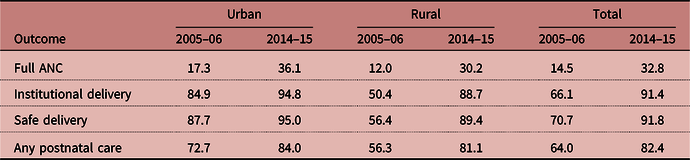
Child marriage in Maharashtra dropped from 39.4% of women age 20–24 married by age 18 in 2005–06 to 26.3% by 2014–15; early childbearing, defined as the percentage of women aged 15–19 years who were already mothers or pregnant at the time of the survey, dropped from 13.8% to 8.3% over the same time period (IIPS & ICF, 2018). Rural rates of early marriage and early childbearing remained higher than in urban areas. Maternal care indicators also showed improvement over this period (Table 1). Antenatal care rates more than doubled between 2005–06 and 2014–15 in both urban and rural areas. These remained low, however, compared with the rates of safe and institutional delivery, and postnatal care, in urban and rural areas in both time periods.
Rates (%) of selected maternal care indicators for women aged 15–49 years, Maharashtra state, 2005–06 and 2014–15

Data for 2005–06 are from the Maharashtra state NFHS-3. Data for 2014–15 are from the Maharashtra state NFHS-4. Full ANC figures are based on the last birth over the three years preceding the survey, as reported in Table 50 (IIPS & ICF, 2018); delivery figures are based on all births over the three years preceding the survey, as reported in Table 50 (IIPS 2018); postnatal care figures are based on live births over the five years preceding the survey, as reported in Table 38 (IIPS & Macro International, 2008) and Table 45 (IIPS & ICF, 2018).
Sources: IIPS & Macro International (2008) and IIPS & ICF (2018).
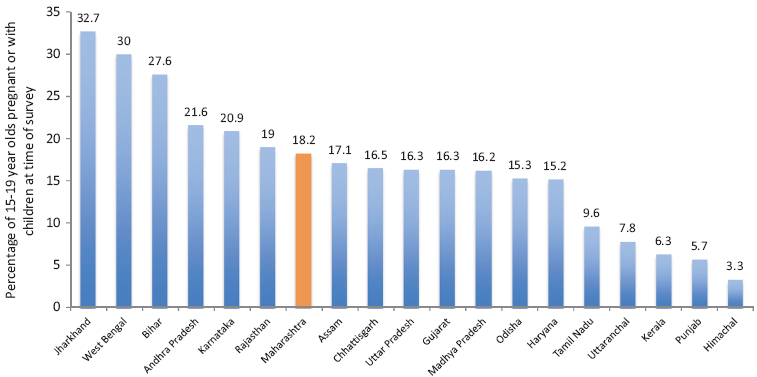
The most relevant data, closest in time period to the start of the SATHI intervention, are those from the NFHS-3 (2005–06) for rural Maharashtra. In 2005–06 rural Maharashtra had among the highest proportions of early childbearing among the rural areas of the largest states in India (Fig. 1); less than a quarter of mothers under the age of 20 years had consumed iron and folic acid (IFA) tablets for 90 days or more when they were pregnant with their last child (22.9%), about two-thirds had either delivered in a medical facility or were assisted by health personnel and about half (52.9%) had received a postnatal check-up (IIPS & Macro International, 2007, 2008).
Early childbearing (2005–06) by Indian states. Source: various NFHS-3 state fact sheets from http://rchiips.org/nfhs/factsheet_NFHS-4.shtml.

There were tremendous variations across districts within Maharashtra at that time. Full antenatal care in 2007–08 varied from 14.1% in Aurangabad district to 55.5% in Satara district, while safe delivery varied from 34% in Nandurbar district to almost all mothers (95.3%) in the suburban Mumbai district (IIPS, 2010). The inter-district variation in child marriage was even larger: from 4.8% of 20- to 24-year-olds marrying before the age of 18 in Chandrapur district to three-quarters (73.7%) marrying as children in Hingoli district (IIPS, 2010).
The SATHI study design
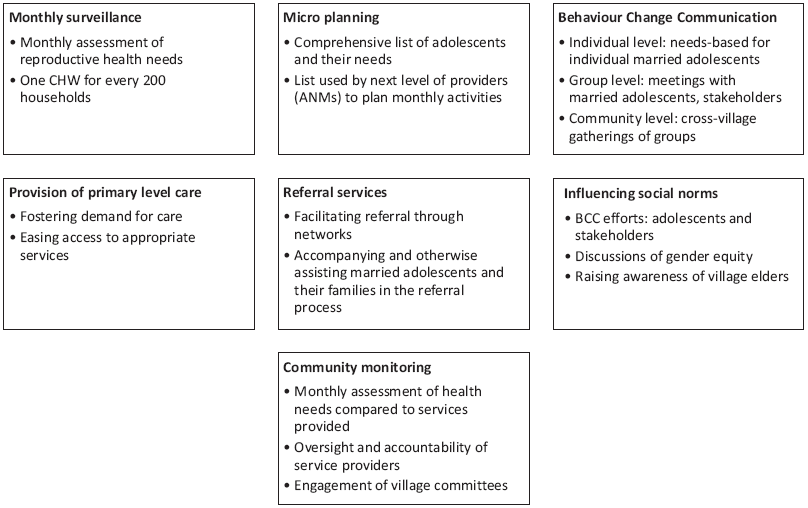
The SATHI study was designed as a community-based intervention with seven components (Fig. 2). Implementation activities were carried out by CHWs. These were recruited and trained to be as equivalent as possible to ASHAs. Monthly surveillance of reproductive health needs by CHWs was the foundation of the programme. Behaviour Change Communication (BCC), following a model developed by IHMP for this project, was also important. During monthly household visits, CHWs used simple algorithms to assess the information needs of each adolescent and make diagnoses for behavioural intervention needs, on the basis of which they provided need-specific BCC and counselling. Behaviour Change Communication, group meetings with married adolescent girls and other stakeholders, cross-village community meetings, and raising awareness among village elders and other gatekeepers about adolescents and their needs, all fed into the programme goals of influencing social norms and increasing demand for adolescent reproductive and maternal health services. Regular community-based monitoring ensured accountability in service provision; the programme also provided referral services where needed.
Components of the SATHI intervention.

A pilot phase of the SATHI programme was implemented in 2003 across 50 villages and 27 slums and evaluated in 2006 after two and a half years in the field. Based on positive findings (reported elsewhere) the project was scaled up in 2008 to be implemented in five districts, and was evaluated using a pre–post, study-control, quasi-experimental design. Such a design is commonly used in social science research and is considered one of the strongest evaluation designs short of a randomized control study (Campbell & Stanley, Reference Campbell and Stanley1963).
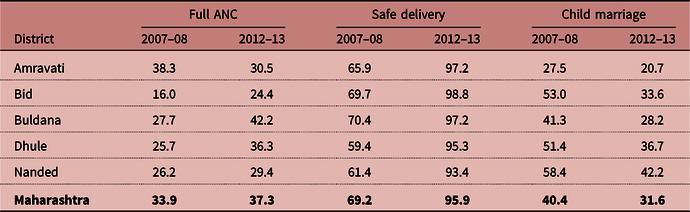
Districts were chosen for inclusion based on two criteria: (i) low performance in reproductive and child health and high proportions of child marriage, and (ii) the existence of an NGO with established credibility to act as a local implementing partner. On the basis of these two criteria the districts of Amravati, Bid, Buldhana, Dhule and Nanded were selected. At the time of the study, four of these five districts had a lower proportion of full ANC use and a higher proportion of currently married 20- to 24-year-old women who had been married before age 18 than did Maharashtra as a whole. Three out of five districts had lower levels of safe delivery than did the state as a whole. The most recent district-level data show that despite overall improvements in antenatal care, four of the five districts still had lower levels than the state as a whole. Three out of five had higher levels of child marriage, while safe delivery improved tremendously in all districts by 2012–13 (Table 2) (IIPS, 2010, 2014).
Rates (%) of selected maternal care indicators for women aged 15–49 years by study district, 2007–08 and 2012–13

Data for 2007–08 are from Maharashtra state’s District Level Household & Fertility Survey (DLHS-3; Tables 2.4, 4.6, 4.9). Data for 2012–13 are from Maharashtra state’s DLHS-4 (Tables 1.10, 3.6, 3.7). Child marriage figures reflect the percentage of sampled married women 20–24 years of age who were married before the age of 18.
Intervention (study) and control areas and the target population were selected from each of the five programme districts as follows. First, Primary Health Centres (PHCs) and associated villages were selected. The PHC is the first point of contact in India’s public health system between a rural community and a medical provider (Gupta & Bhatia, Reference Gupta and Bhatian.d.). One PHC area was purposively selected per intervention district such that it included the local implementing NGO (the second criterion above), resulting in a total of five PHC areas selected as intervention areas. Out of the remaining PHCs in the districts, five were randomly selected to serve as control PHC areas.
A complete census was conducted in all ten PHC areas, and villages mapped. In each PHC, villages were divided into three clusters on the basis of their population size: small (population below 1000), medium (pop. 1000–2000) and large (pop. above 2000). Villages were randomly selected from each cluster, totalling a population of approximately 20,000 from each PHC. A sample of married adolescents was selected from small, medium and large villages in proportion to their total sizes using a systematic random sampling technique. Married adolescent girls from the control PHCs were selected in the same way as in the study PHCs.
The SATHI study data
Cross-sectional pre- and post-intervention quantitative surveys were conducted in all study and control groups. The final desired total sample size was set at 800 married adolescent girls in study sites and 500 in control sites. Sample size calculations were based on the expected increase in contraceptive use. Following findings from the pilot phase of SATHI, the baseline self-reported contraceptive use of 5% amongst married adolescent girls aged up to 19 years was predicted to increase to at least 15% after the intervention. In order to detect a change in self-reported current contraceptive utilization from 5% to 15% over three years, assuming an alpha of 0.05 and using a two-sided test to achieve 80% power, it was determined that a sample size of 160 would be needed at each site to enable analysis of inter-site variation.
The baseline was conducted in December 2008 before the intervention was rolled out, and the endline after the intervention ended in June 2011. The inclusion criterion for the baseline for the SATHI study overall was currently married adolescent girls (aged up to 19 years) as on March 2008. For the endline sample from the study areas, eligible girls were those who were currently married (aged up to 19 years) as on 31st December 2009 and who were enrolled in the programme on or before 31st December 2009. For the SATHI study overall, a total of 818 girls in the study areas and 493 in control areas were interviewed at baseline; and 759 study participants and 516 control participants were interviewed at the endline.
Methods
Data
This study of maternal health among adolescent girls used the following eligibility criteria to select the study sample from the SATHI survey: those who had been pregnant at least once and for whom data on the outcome of the last pregnancy were available and who had a live birth in their most recent pregnancy. A total of 74.1% of married girls in the SATHI programme areas had ever been pregnant. Of these, the birth outcome data for the last pregnancy were known for 83.6%. From these 83.6% of ever-pregnant married girls whose last birth outcome was known, the current study included the 90.3% who had had a live birth from their most recent pregnancy. These criteria resulted in a final sample of 461 girls in the study areas and 183 in the control areas interviewed at baseline; and 526 girls in the study areas and 276 in the control areas interviewed at endline.
The study focused on the following outcomes:
1. The use of the minimum standard of full ANC (defined as registration at 12 weeks or less of pregnancy, consumption of at least 90 iron folic tablets, having received two tetanus toxoid injections during pregnancy and having gone for at least three ANC clinic visits).
2. The consumption of at least three meals per day in the third trimester of pregnancy.
3. Institutional delivery, defined as delivery in a hospital or other health care institution.
4. Safe delivery, defined as institutional delivery or delivery at home by a doctor or government auxiliary nurse midwife (ANM).
5. Use of postnatal care services.
6. Use of treatment for postnatal complications.
Analysis
Data were analysed using difference-in-differences and multivariate regression analysis. The difference-in-differences (DiD) design is used often in quasi-experimental studies in public health insituations where full randomization is either not feasible or not desirable (Wing et al., Reference Wing, Kosali and Bello-Gomez2018). This paper used a simple difference-in-differences of proportions, expressed as:
 $$\delta = ({p_{s1}} - {p_{s0}}) - ({p_{c1}} - {p_{c0}})$$
where δ represents the estimate of the difference-in-differences for the particular outcome in the study sample, p denotes the sample proportion of the outcome variable, s and c represent the study and control sites respectively, and 0 and 1 represent time, specifically, baseline (s 0 and c 0) and endline (s 1 and c 1) respectively. If the estimated variance of any one outcome is denoted by σ 2 and the sample size for which data are available for that outcome by N, then the following Z-statistic is used to test the significance of the difference-in-differences (Turpin Reference Turpin2017), i.e. the difference between the baseline-to-endline change in an outcome among the study sample compared with the control sample:
 $$Z = {\delta \over {\sqrt {{{\sigma _{s1}^2} \over {{N_{s1}}}} + {{\sigma _{s0}^2} \over {{N_{s0}}}} + {{\sigma _{c1}^2} \over {{N_{c1}}}} + {{\sigma _{c0}^2} \over {{N_{c0}}}}} }}$$
Regression analysis was conducted using a logit model, given that all study outcomes were dichotomous (Kennedy, Reference Kennedy1992). Two models were estimated at endline, expressed as:
 $${\rm{Logit}}({p_{i1}}) = \alpha + {A_i}{\beta _a} + {O_i}{\beta _0}$$
 $${\rm{Logit}}({p_{i1}}) = \alpha + {P_i}{\beta _p} + {O_i}{\beta _0}$$
where p i1 is the probability of the outcome for the i th individual at endline (time period 1) and O i is a vector of characteristics of individual i that could influence the likelihood of an outcome. Characteristics included in these models were: age, education level, age at and duration of marriage, exposure to media, work status, religion and caste; household socioeconomic status (proxied by the number of rooms in the house) and whether the respondent lived in a nuclear (husband, wife and children only) or extended (also in-laws and other relatives) family.
Model (1) tested whether indirect exposure to SATHI, proxied by whether the respondent lived in the intervention area, was likely to have had a significant beneficial impact on the use of the range of maternal health services under consideration, compared with living in the control area. The variable A i represents the effect of the area in which individual i lived; that is, whether she was in the study area or the control area.
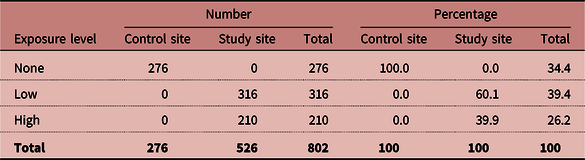
Model (2) tested a dose–response effect (P i). This is a categorical variable measuring the extent of exposure, where exposure is defined as having been reached by the project’s community health workers and having attended any intervention activities. It is coded 0 for no exposure (including those in the control area), 1 for low exposure (defined as having attended at least one intervention activity at least once during the intervention period but not attended all intervention activities) and 2 for high exposure (defined as having attended all intervention activities at least once during the intervention period). No individuals in the control areas attended any activity, and thus the entire control area sample fell into the ‘no exposure’ category (34.4% of all endline respondents). Six individuals in the study areas did not attend any intervention activity. However, by dint of living in the intervention areas, they are likely to have been indirectly exposed to at least some intervention activities and thus could be included in the ‘low exposure’ category. The regression analysis was run with these six girls excluded and included in the ‘low exposure’ categories. The results were substantively similar and thus, for the conceptual reasons explained above, as well as to have the largest possible sample size, the six individuals were included in the ‘low exposure’ category in this study. Close to 40% (39.4%) of all respondents had low exposure as defined above, and a little over a quarter (26.2%) had high exposure as defined above (Table 3).
Distribution of study sample adolescent girls by intervention exposure level and study/control location at endline

Source: authors’ calculations of project data
Results
Characteristics of the study and control site participants
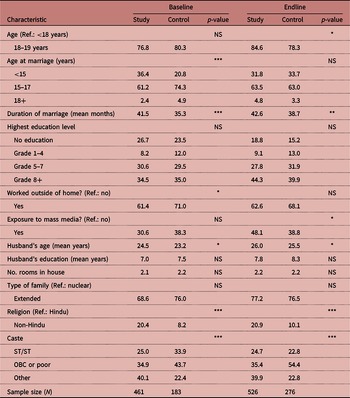
A majority of the sample respondents in the study and control sites at baseline and endline were at the latter end of adolescence, i.e. 18–19 years of age. A majority in both study and control areas were married before the age of 17 (90% or more). More than half of respondents, and at least half of all respondents’ husbands, had completed their schooling through at least Grades 5–7, with a third of respondents having completed Grade 8. Two-thirds or more of respondents reported working outside the home. Most married adolescent girls lived with their extended family, in homes that had two rooms on average. A large majority were Hindu, and of the lower castes (Table 4).
Background characteristics of sample of adolescent girls, and the differences between these at baseline and endline

***p < 0.001; **p < 0.01; *p < 0.05; NS, not significant.
Changes in outcomes between baseline and endline
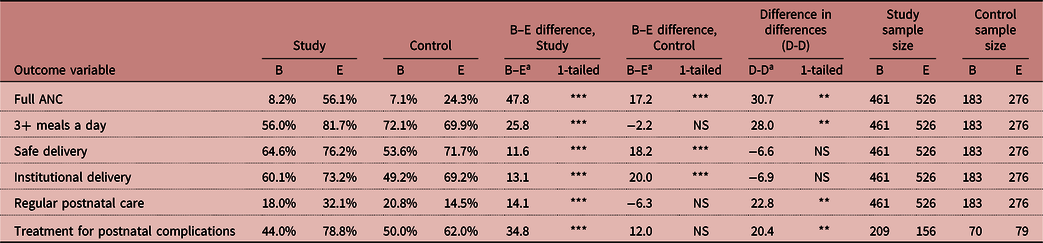
The difference-in-differences analysis (Table 5) showed that all outcomes improved significantly in the study sites between baseline and endline. The largest shift was in full ANC, which rose seven-fold between baseline and endline. The proportion of pregnant married girls who had at least three meals a day in the third trimester of their most recent pregnancy rose from just over half to slightly more than 80%. Use of postnatal care almost doubled, but still remained low at 32%. Treatment of postnatal complications also doubled. The increase in safe or institutional delivery was also statistically significant, though smaller in magnitude.
Difference-in-differences of outcomes between baseline and endline across study and control sites

a Percentage point difference.
B = baseline; E = endline; S = study; C = control.
***p < 0.001; **p < 0.01; *p < 0.05.
Baseline–endline improvements were less notable in the control sites. Full ANC, safe delivery and institutional delivery improved significantly, as they did in the study areas. However, postnatal care – both regular care and treatment for complications – and the consumption of at least three meals a day in the third trimester did not show statistically significant changes between baseline and endline (Table 5).
Table 5 also shows the statistical significance of these baseline–endline study–control changes. Full ANC care in the study site improved more than twice as much between baseline and endline compared with the control site, with this difference-in-difference being statistically significant. Specifically, full ANC increased by 47.8 percentage points between baseline and endline in the study sites, compared with an increase of 17.2 percentage points in the control sites. Married, pregnant adolescent girls in the study sites were also statistically significantly more likely to have improved their food intake (3+ meals daily) than in control sites. Finally, the study sites improved significantly more than did control sites in the use of both regular postnatal care and treatment for postnatal complications. This is of particular programmatic interest as research has shown that postnatal care among married adolescent girls in India is not only low, but also often stubborn to change in the face of interventions (Pande et al., Reference Pande, Kathy, Walia, MacQuarrie and Jain2006).
Results of multivariate analysis
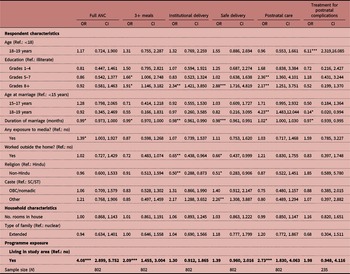
The results in bold in Tables 6 and 7 indicate the independent effect of the two different kinds of exposure analysed in this study on the study outcomes. Since the sample for treatment of postnatal complications was small, and some cell sizes very small as a consequence, the multivariate results for this outcome are unstable and should be regarded with caution. Thus, while the results for treatment of postnatal complications are presented in Tables 6 and 7 for the sake of completeness, these are not discussed further.
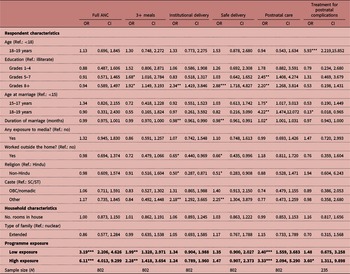
Results of logistic regression analysis: intervention exposure while living in the study sites

CI: 95% confidence intervals; ***p < 0.001; **p < 0.01; *p < 0.05.
Results of logistic regression analysis: dose–response effect

95% confidence intervals; ***p < 0.001; **p < 0.01; *p < 0.05.
Indirect exposure through living in the study area was statistically significantly associated with higher full ANC use, 3+ meals a day in the third trimester, and regular postnatal care, compared with living in control areas. Living in the study area was not significantly associated with the study’s two delivery outcomes. Among the other characteristics of the married adolescent girls surveyed in the study, only schooling post 8th Grade was consistently and statistically significantly associated with better use of multiple – though not all – included maternal care services (Table 6).
There was a statistically significant dose–response effect for antenatal care, nutrition and postnatal care service use variables. The largest effect was for full ANC. Those who participated in any intervention activity at least once were statistically significantly more likely to seek full ANC than were non-participants, with odds three times higher than was the case for non-participants. Those who participated in all intervention activities at least once had almost six times the odds of seeking full ANC than those who did not participate at all. The differences were also statistically significant though smaller in magnitude for 3+ meals a day during pregnancy, and for regular postnatal care. No statistically significant dose–response effect emerged for changes in institutional or safe delivery. Among other variables, post-primary schooling was the most consistently and statistically significantly associated with better use of multiple – though not all – included maternal care services (Table 7).
Study limitations
The study has its limitations. A key limitation is that about 20% of ever-pregnant adolescents in the overall SATHI study had to be excluded from the present analysis because data on the outcome of their last pregnancy were not available. Exploration of the differences in the socio-demographic characteristics of pregnant adolescents with and without data on the outcome of their last pregnancy showed that this did create some selectivity. Most critically, at both baseline and endline, respondents for whom data on the outcome of their most recent pregnancy were available tended to be older, and tended to have been married at a younger age (thus, married for a longer duration), than those for whom data on pregnancy outcome were not available. Further investigation revealed that all the pregnancies for which outcome data were unavailable were first pregnancies. In the study area, women may go to their natal homes for their first delivery, and it is likely that the girls for whom pregnancy outcome data were unavailable followed this practice and thus were absent at the time of the study. Unfortunately there are no data to confirm this. Thus, the findings may be less generalizable to the first pregnancies of married adolescents, particularly younger girls married for a shorter period of time.
Another shortcoming that future research could address is the inability of this study to measure the independent effect of individual components of the intervention because of the study design. Further research is also needed to more explicitly measure changes in social norms that interventions such as SATHI may bring about.
Finally, the SATHI intervention concluded in 2011. Thus, future efforts to replicate this programme within India should pay attention to changes in the government environment of policies related to maternal health and adolescent health. It is the case, however, that the SATHI findings have continued to be of relevance to the Indian government’s maternal and child health and adolescent health policymaking. IHMP has been invited to participate in task forces responsible for formulating policies on national programmes addressing these issues. Nonetheless, to date the systems, processes, protocols and materials that were responsible for the success of the SATHI project have not been incorporated in relevant programmes. In 2019, the World Health Organization expressed an interest in scaling up SATHI systems and processes at a district level in three Indian states. Discussions with IHMP are ongoing on this effort.
Discussion
This evaluation of data from the SATHI programme, designed as a pre–post, study–control quasi-experimental study, tested the dose–response effect of a multi-component intervention on married, pregnant adolescent girls’ use of health services in rural India. The maternal health outcomes assessed included receiving full antenatal care, having 3+ meals a day during pregnancy, having a safe or institutional delivery and receiving postnatal care and treatment for postnatal complications. The analyses showed that any exposure to the intervention was strongly associated with a higher likelihood of using full ANC, adequate nutrition in pregnancy and regular postnatal care. The dose–response effect was statistically significant for the same outcomes. The intervention had minimal – if any – effect on either of the delivery outcomes.
SATHI’s programme documentation suggests that its Behaviour Change Communication (BCC) model was probably a key factor in the successful outcomes of the programme. The individualized, interactive, non-hierarchical nature of the BCC component of the intervention allowed CHWs to carefully tailor information and communication to participants’ needs. In tandem, group counselling addressed social norms detrimental to married adolescent girls’ health seeking. These approaches built rapport, and encouraged discussion and decision-making with key decision-makers (namely, mothers-in-law and husbands). The importance of these approaches has been echoed in other studies (Jejeebhoy et al., Reference Jejeebhoy, Santhya, Singh, Rampal and Saxena2014; Denno et al., Reference Denno, Hoopes and Chandra-Mouli2015; Nguyen et al., Reference Nguyen, Costenbader, Plourde, Kerner and Igrass2019). SATHI’s close monitoring of service provision and referrals supported the increased demand for services.
The significant and substantive results for postnatal care – where those fully participating were three times as likely to seek postnatal care than non-participants – are particularly noteworthy. In many countries in sub-Saharan Africa and South Asia, including India, the postnatal period is governed by strict rules and taboos that can hamper health worker access to postpartum women (Pande et al., Reference Pande, Kathy, Walia, MacQuarrie and Jain2006; Warren et al., Reference Warren, Daly, Toure and Mangi2006; Syed et al., Reference Syed, Khadka, Khan and Wall2008). Other studies examining the continuum of maternal care services have noted that postnatal care continues to be the weak link (Kerber et al., Reference Kerber, de Graft-Johnson, Bhutta, Okong, Starrs and Lawn2007; Vidler et al., Reference Vidler, Ramadurg, Charantimath, Katageri, Karadiguddi and Sawchuk2016). An additional barrier to reaching adolescents is that often married adolescent girls go to their natal homes for delivery, at least in the first few years of their marriage, making it harder for interventions situated in their marital home to reach them (Barua & Kurz, Reference Barua and Kurz2001). That the SATHI intervention was able to influence adolescents’ postnatal care service use to the extent that it did should be studied more carefully for replication elsewhere, keeping in mind that the findings may be more relevant for older married adolescents and second and later pregnancies than for younger married adolescents and first pregnancies (see study limitations above).
That delivery care was not found to be significantly associated with intervention participation may in part be due to the fact that even at baseline, in both study and control sites, a notable proportion of married, pregnant adolescent girls were having institutional and safe deliveries. Government programmes such as Janani Suraksha Yojana (Safe Motherhood Programme) and the National Rural Health Mission, which were spreading across the country during the intervention period and which encouraged safe delivery and gave pregnant women financial incentives for having institutional deliveries, probably contributed to the increase in the use of institutional delivery across both study and control sites. The tremendous increase in safe delivery in the SATHI districts by 2012–13 supports this hypothesis (Table 2).
Several recent reviews of interventions seeking to address a range of sexual and reproductive health outcomes for adolescents have concluded that, of all the types of interventions analysed, holistic, multi-component, community-based interventions that engage not only with adolescents but also with their parents and their community, are ready for scale-up (Denno et al., Reference Denno, Hoopes and Chandra-Mouli2015; Sarkar et al., Reference Sarkar, Chandra-Mouli, Jain, Behera, Mishra and Mehra2015; Svanemyr et al., Reference Svanemyr, Amin, Robles and Greene2015; Haberland et al., Reference Haberland, McCarthy and Brady2018; Nguyen et al. Reference Nguyen, Costenbader, Plourde, Kerner and Igrass2019). The present analysis adds to this existing evidence. Indeed, the SATHI intervention exhibits three of the four facilitators to scale-up documented in a recent review of scalable interventions (Nguyen et al., Reference Nguyen, Costenbader, Plourde, Kerner and Igrass2019). The SATHI design is modular and well-documented, and thus flexible and adaptable to scale-up conditions; IHMP, the implementing organization, has built strong partnerships with communities, and with district- and state-level governments, hiring and training their core community health workers to mirror the government local-level health functionaries so as to facilitate scale-up in the government system; and IHMP has a long-established Monitoring and Evaluation (M&E) system.
In particular, the SATHI evaluation has implications for structuring the roles and training of community health workers so that they can more effectively communicate with adolescents and stakeholders in improving adolescent reproductive health. In the case of India, the largest cadre of community health workers are the ASHAs recruited by, and central to, several national health programmes. Though the ASHA programme has achieved success in improving access to public health services for reproductive, maternal and child health, effective communication skills are wanting, particularly when it comes to interacting with adolescents. This is a serious lacuna, since the provision of health care services by itself does not ensure use; rather, pregnant women and their families have to be confident that the services will benefit them and their unborn children (Griffiths & Stephenson, Reference Griffiths and Stephenson2001). The ASHAs interviewed in a qualitative study of the Indian government’s Janani Suraksha programme have pointed to interpersonal communication and intensive awareness-raising as key factors in encouraging pregnant women to use maternal health services (Vellakkal et al., Reference Vellakkal, Reddy, Gupta, Chandran, Fledderjohann and Stuckler2017). Yet, a review of evaluations of multiple interventions to improve adolescent reproductive health found that effective communication was a key skill missing among ASHAs (Hoopes et al., Reference Hoopes, Aggarwal, Bull and Chandra-Mouli2016). Furthermore, even though pregnancy care related information is a key aspect of ASHAs’ responsibilities, they are not always adequately sensitized to the unique needs of pregnant adolescents, nor trained to effectively impart appropriate maternal and reproductive health information to them (Jejeebhoy et al., Reference Jejeebhoy, Santhya, Singh, Rampal and Saxena2014).
The SATHI programme offers a successful model to address these gaps, in India and possibly elsewhere as well. Of key importance for replication and scale-up is that the SATHI programme’s CHWs have been trained to conduct activities that the Indian government’s ASHAs could undertake. Specifically, monthly surveillance, Behaviour Change Communication and group meetings (all key aspects of the CHWs’ responsibilities in the SATHI project) are a part of the job definition of the ASHAs.
As noted earlier, there were no ASHAs in the SATHI districts until 2012. Even in 2008, when SATHI was initiated, it was clear that sooner or later the ASHA programme would be introduced in this region. The SATHI programme has demonstrated that with appropriate training, mentorship, systems, processes, protocols and materials, ASHAs can have a significant impact on adolescent reproductive health by engaging more intensively in adolescents’ reproductive lives, and thus being able to play a more active role in advising married adolescents and their families about maternal health practices and services. Adopting a SATHI model of ASHA training and support might also serve to empower ASHAs to prevent or delay adolescent pregnancy in the first place: they would be aware of, and in touch with, married adolescent girls and their spouses to offer appropriate family planning advice, provide temporary contraception and talk to family members as needed. With almost a million community health workers (ASHAs) and 200,000 auxiliary nurse midwives (Ministry of Health and Family Welfare and Statistics Division, 2019) at the community level providing primary-level care in India through a range of governmental regional and national health programmes, replicating the SATHI model could make an enormous difference to the lives of millions of married adolescent girls.
Acknowledgments
The authors are grateful to the Sir Dorabjee Tata Trust and the John D. and Catherine T. MacArthur Foundation for funding the SATHI programme. Thanks also go to Priyal and Kalpana at IHMP for their administrative assistance. Deepest gratitude and thanks go out to all the community health workers, other IHMP staff and government field staff engaged in SATHI, and the project communities, families and adolescent girls who participated in SATHI and allowed researchers the privilege of asking them questions about their lives.
Funding
The Sir Dorabjee Tata Trust and the John D. and Catherine T. MacArthur Foundation (grant number 14-106483) provided funding for the SATHI programme.
Conflicts of Interest
The authors have no conflicts of interest to declare.
Ethical Approval
Informed consent for study participation was sought at three levels: the community, the household and from the individual respondents themselves. In order to maintain confidentiality, only a number identified respondents, and completed questionnaires were stored securely. The research staff were instructed not to discuss the interviews either among themselves or with others. Ethical approval was obtained from the ethics committee of the Gokhale Institute of Politics and Economics, an economics training institute in Pune, Maharashtra, India.