Introduction
New reaction pathways are of special interest in constitutionally dynamic materials (CDMs)[Reference Jin, Yu, Denman and Zhang1] particularly when they lead to greater possibilities and conditions where these material systems can be used for triggered release of contained chemical cargo[Reference Buchs, Guillaume, Trachsel, de Saint Laumer, Lehn and Hermann2,Reference Herrmann, Giuseppone and Lehn3] and reversible gelation.[Reference de Hatten, Bell, Yufa, Christmann and Nitschke4] CDMs are materials which are able to undergo dynamic rearrangements to their constitutions in an adaptive response to a stimulus or change in environment.[Reference Lehn5] CDM systems have been programmed to show responses upon exposure to light,[Reference Xu, Chen, Wu, Tung and Yang6] electric fields,[Reference Giuseppone and Lehn7] pH,[Reference Jin, Song, Su, Zhu, Pang, Qiu, Tong, Yan, Zhu and Zhu8] and heat.[Reference Vantomme and Lehn9] The nature of responses offered by CDMs is varied and have been shown to include mechanical modifications,[Reference Ono, Fujii, Nobori and Lehn10] phase-change,[Reference Deng, Li, Yu, Liu, Liu, Sun, Jiang and Chen11] self-healing adaptability,[Reference Lehn12] or self-replication.[Reference Otto13] CDMs have shown great promise as materials in drug discovery[Reference Whitaker, Mahon and Fulton14] and materials science.[Reference Wojtecki, Meador and Rowan15] New chemical reactions which display utility in these dynamic materials are of substantial value in broadening the practical scope and application of CDMs.
Reversible reactivity is an essential element in constitutional dynamics. The reversible covalent reactions which have shown utility in CDMs are Diels-Alder,[Reference Reutenauer, Buhler, Boul, Candau and Lehn16,Reference Chen, Dam, Ono, Mal, Shen, Nutt, Sheran and Wudl17] transamidation,[Reference Bunyapaiboonsri, Ramström, Lohmann, Lehn, Peng and Goeldner18–Reference Furlan, Cousins and Sanders23] transesterification,[Reference Montarnal, Capelot, Tournilhac and Leibler24,Reference Kricheldorf25] transetherification,[Reference Colquhoun, Lewis, Ben-Haida and Hodge26] disulfide exchange,[Reference Scott, Schneider, Cook and Bowman27] boronate ester formation,[Reference Cromwell, Chung and Guan28] and hemiaminal/aminal formation.[Reference Fox, ter Huurrne, Wojtecki, Jones, Horn, Meijer, Frank, Hedrick and Garcia29] Recently, CDMs based on hemiaminal and hexahydrotriazine (HT) have been reported to display pH responsive phase change and network rearrangements of CDMs, which have given them promise as recyclable plastics, self-healing polymers, and stimulus-responsive materials.[Reference García, Jones, Virwani, McCloskey, Boday, ter Huurne, Horn, Coady, Bintaleb, Alabdulrahman, Alsewailem, Almegren and Hedrick30] Hemiaminal gels also show dynamics through aminal/thiol-exchange.[Reference Wojtecki, Jones, Yuen, Chin, Boday, Nelson, García, Yang and Hedrick31] In this case, thiols are shown to ring-open HT through nucleophilic attack of the methylene groups on the ring. This property is what renders HT derivatives and, in particular, N,N,N-triethoxylethyl-1,3,5-hexahydro-1,3,5-triazine (HEHT) effective as H2S scavengers.[Reference Bakke, Buhaug and Riha32] Modifying HTs of these kinds with metal salts can greatly influence the dynamics of these materials. We recently reported the reversibility of aminal/hemiaminal inclusive CDMs which undergo phase transformations when complexed with metal salts of iron and aluminum.[Reference Boul, Jarowski and Thaemlitz33,Reference Boul, Rasner and Thaemlitz34] The divalent and trivalent metals investigated were found to reduce both the ground state energies and transition state energies of products in the condensation pathway of amines to aminals.
In this paper, we investigate the mechanism for the breakdown of an HT gel into a liquid when reacted with tris-carboxyethyl phosphine (TCEP). The mechanism for this phase-change reversal is described through nuclear magnetic resonance (NMR) analysis and the computational analysis of ground state energies of reaction intermediates and products. The utility of this new chemistry is demonstrated and applied through the triggered release of cargo from an HT gel exposed to nucleophilic TCEP.
Phosphines are well known to undergo nucleophilic addition to a wide variety of organic functional groups including alkyl halides, alkenes, aldehydes, imino compounds, and certain alkynes.[Reference Henderson and Buckler35,Reference Hudson and Hartley36] Their nucleophilicities are an essential characteristic because of their use as metal-free organocatalysts in a variety of carbon–carbon bond forming reactions including the Rauhut–Currier reaction, the Morita–Baylis–Hillman reaction, as well as certain Michael additions and cycloaddition reactions.[Reference Methot and Roush37] Phosphine initiated ring-opening polymerization as a material application of nucleophilic phosphine has shown usability in the synthesis of narrow weight distribution polylactides.[Reference Myers, Connor, Glauser, Möck, Nyce and Hedrick38] Some phosphine compounds have also been reported to open tetrahydrofuran, both assisted by metals[Reference Breen and Stephan39] and through reflux in the absence of metal activation. We report here that phosphine can be used as a nucleophile for the ring opening of HTs such that gels from the condensation of alkoxytris-amines (at their thermodynamic minimum HT structure) revert to the liquid or sol state. Phosphines with tris-carboxy termini (as in the case of TCEP) offer the possibility of further dynamic functionality and diverse material properties through exploitation of the carboxy functional reactivity.
The gel system discussed here is the result of formaldehyde condensation with a multifunctional amine in a polar aprotic solvent, such as N-methylpyrrolidone (NMP). The system evolves through a condensation pathway (Scheme S-1) over time at room temperature where the starting materials, I in Scheme S-1 proceed toward the hemiaminal, II. There is then an activation barrier which is rate-limiting for the formation of the HT, III. The activation barrier has been modeled to be 27.2 kcal/mol in a model study of methyl amine condensing with formaldehyde.[Reference Jones, Garcia, Horn and Hedrick40] In the gel system, extensive heating is required to surpass activation energy. Rather than heat further to produce the HT, a metal (AlCl3·6H2O) can be added to the gel which reverts the hemiaminal gel to a liquid. We have previously modeled the rate determining step for the metal complex and demonstrated a catalytic effect of the aluminum with a lowered barrier (approximately 16 kcal/mol).
Results and discussions
Gelation and NMR model studies
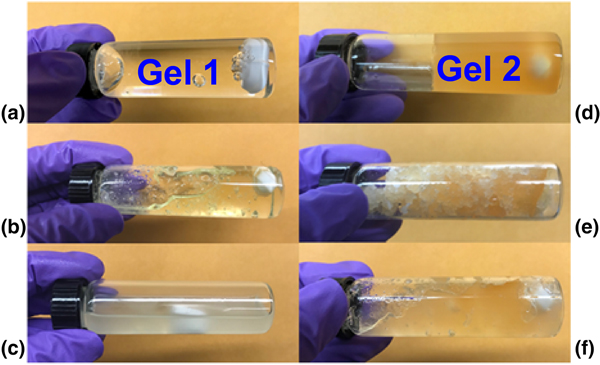
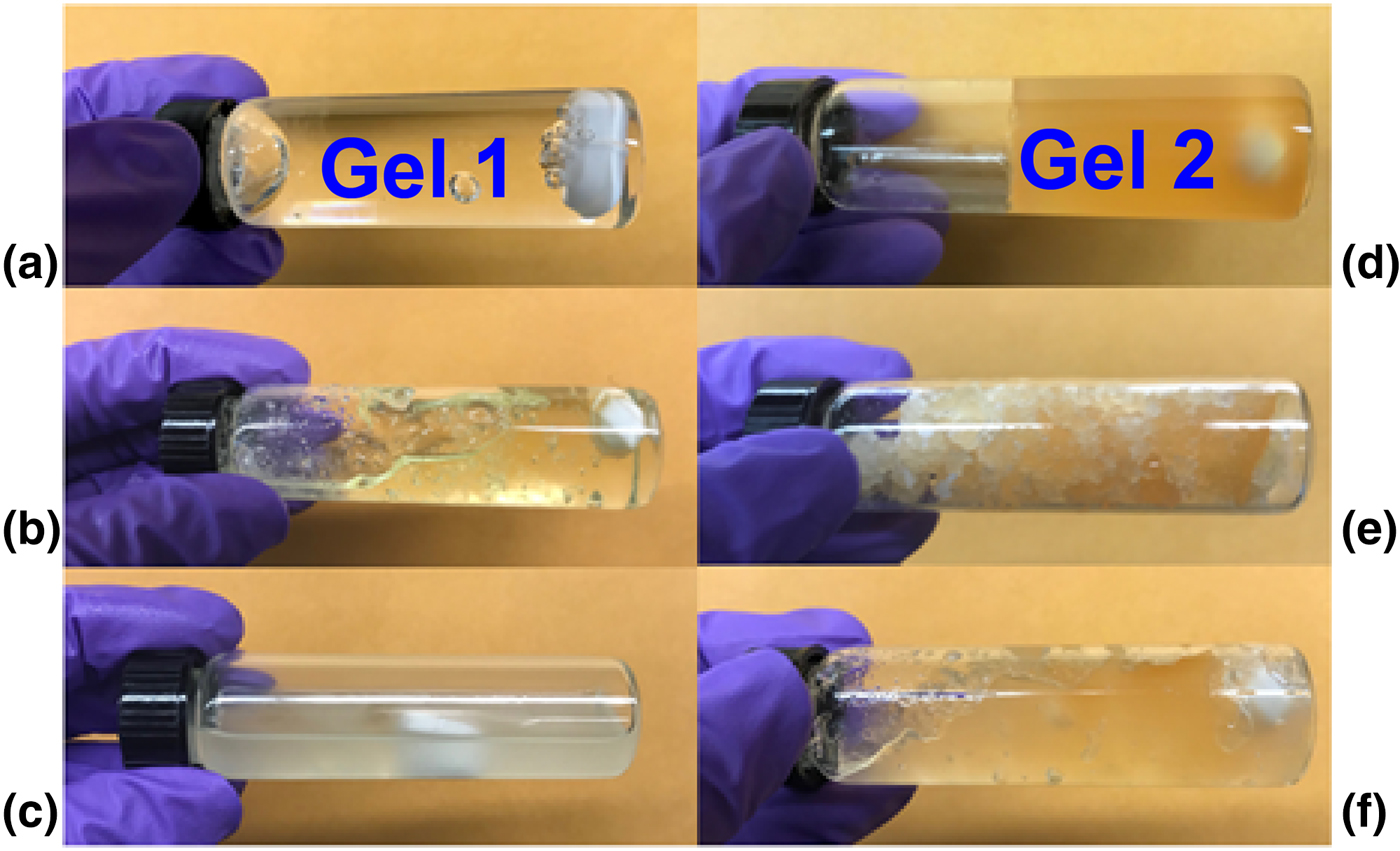
Figure 1 shows, pictorially, the different liquid and gel states of the amine/formaldehyde reaction in NMP. Figure 1(a) shows specifically the “kinetic” (non-equilibrium) gel. The gel state of this material is believed to be largely due to the existence of the open-ring hemiaminal structure in the material (II in Scheme S-1). Figure 1(c) shows the result of adding aluminum chloride hydrate to the kinetic gel in Fig. 1(a). The result is a liquid and, as has been described previously, heating this liquid to 70°C for 10 min, the aluminum displays a catalytic formation of the HT gel as shown in Fig. 1(d). The corresponding structure for this product is III shown in Scheme S-1. When TCEP is added to this product, the material is reverted to the liquid state as shown in Fig. 1(f).
(a) Gel 1 initial condensation gel between formaldehyde, NMP, and amine, (b) gel 1 after addition of TCEP, (c) gel 1 broken with aluminum(III), (d) gel 2 achieved through heating (c) with aluminum chloride to render the thermodynamic aluminum HT gel, (e) gel 2 with addition of TCEP at time = 0 h, and (f) gel 2 after 18 h of reaction with TCEP.
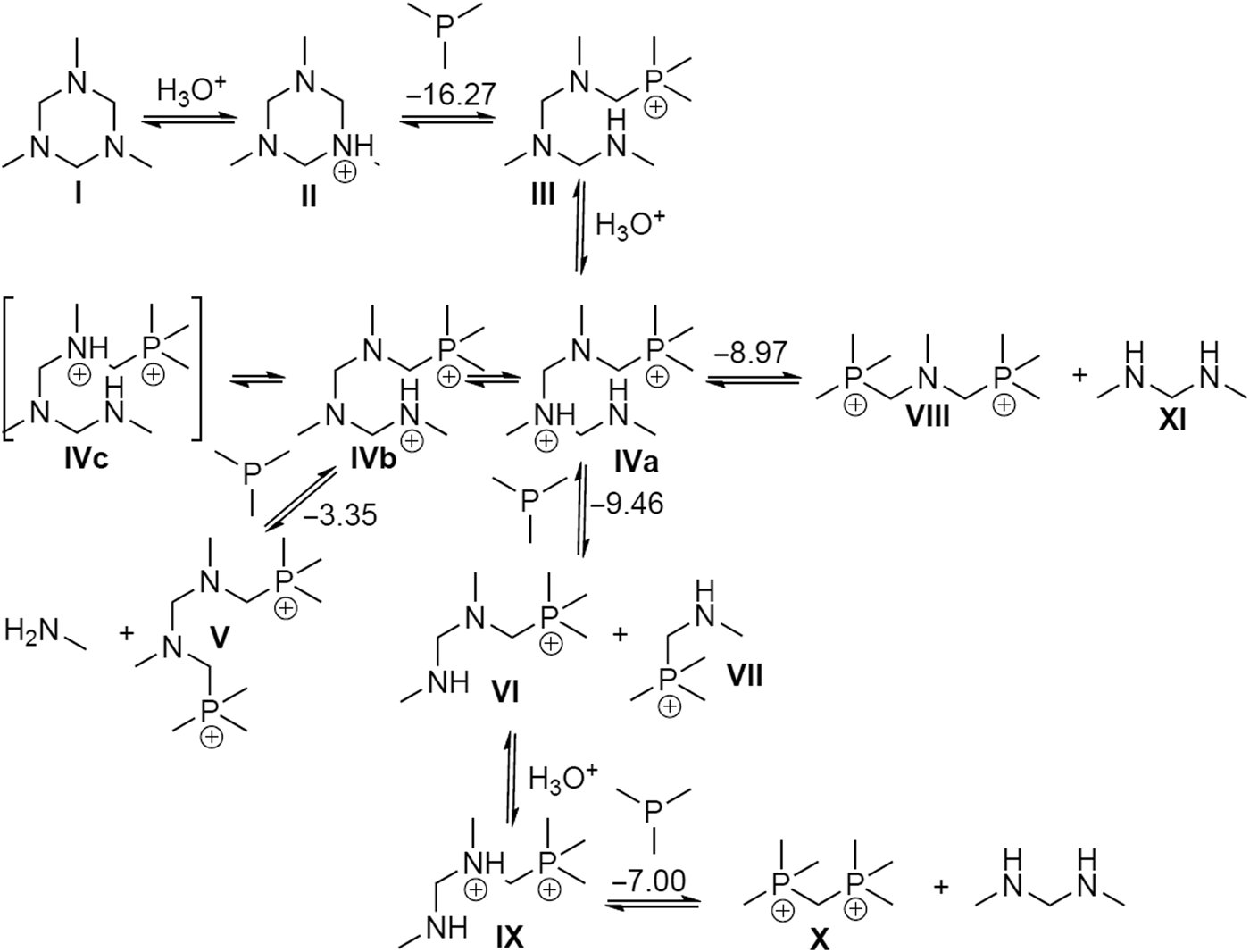
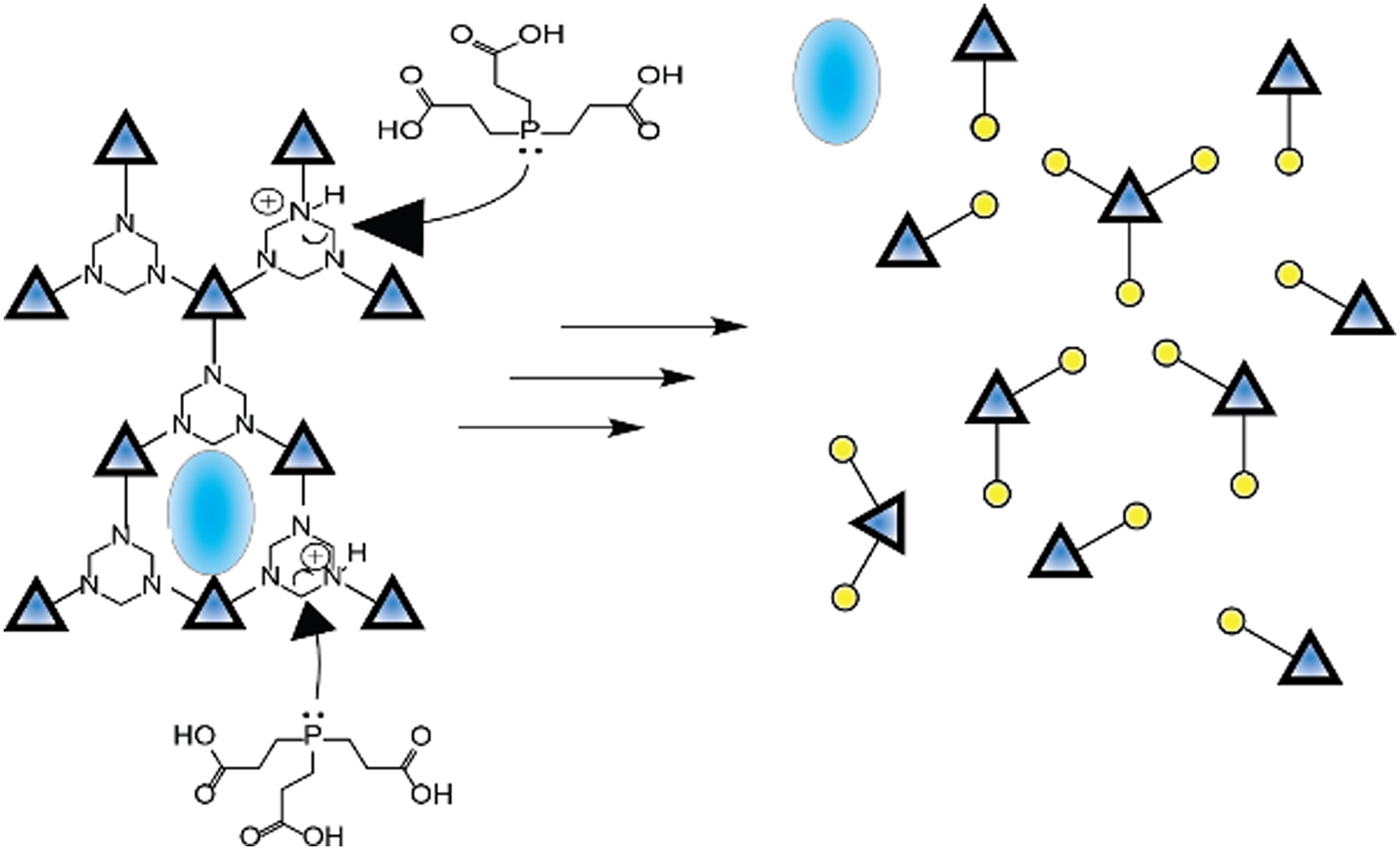
The mechanism for breakdown of this HT is proposed to occur initially through a ring opening step, whereby the phosphine undertakes nucleophilic attack of the HT methylene carbon. We assume the reaction is initiated by dilute quantities of acid that activate the electrophilicity of the amine (Scheme 1). Fragmentation of the structure occurs on aminal methylene groups to reduce the cross-linking density of the aminal/hemiaminal polymers and renders liquids in cross-linked gels.
Mechanism for the breakdown of HT through nucleophilic attack by phosphine (route 1).

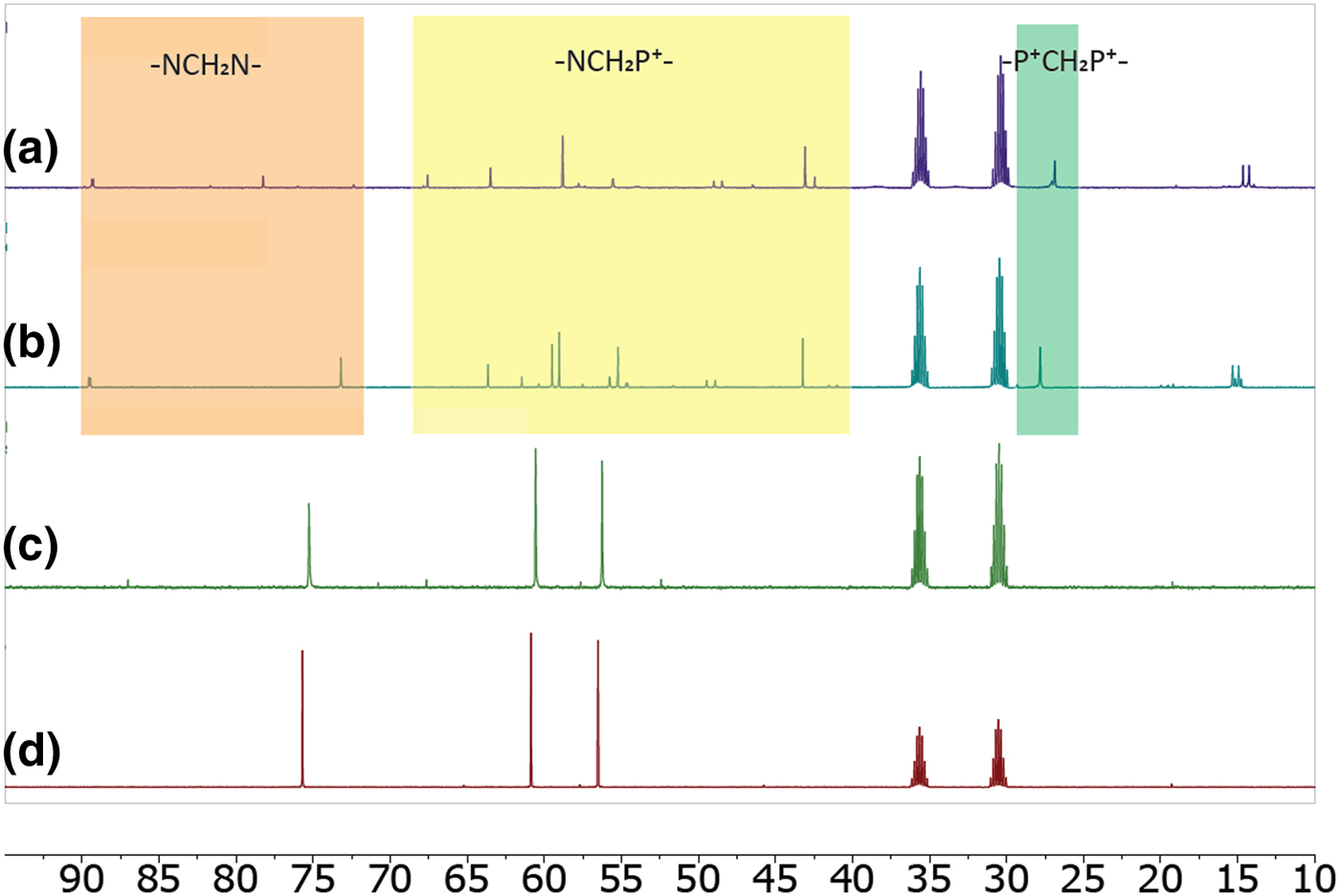
Approaching the details of the HT breakdown through experiment and for the conversion of the gel depicted in Fig. 1 into liquid, NMR model studies were performed due to the complexity of the products. In these investigations, TCEP is added to tris/(N-hydroxyethyl)hexahydrotriazine (HEHT) in dimethylformamide (DMF)-d 7. HEHT by itself shows three 13C-NMR peaks, at 75.7, 60.9, and 56.5 ppm as shown in Fig. 2(d). The peaks represent the methylene groups on the HT ring (–NCH2N–, 75.7 ppm), the methylene groups on the ethyl alcohol functionality immediately adjacent to the alcohols (–CH2(OH), 60.9 ppm), and the methylene groups on the ethyl alcohol side-group immediately adjacent to the nitrogen atoms on the HT ring (–CH2N, 56.5 ppm).
13C-NMR of the breakdown of HT with (a) spectrum A: HT complexed to aluminum(III) and reacted with TCEP, (b) spectrum B: HT in the absence of aluminum(III) and reacted with TCEP, (c) spectrum C: HT complexed to aluminum(III), and (d) spectrum D: HT by itself. All NMRs were recorded in DMF-d7.
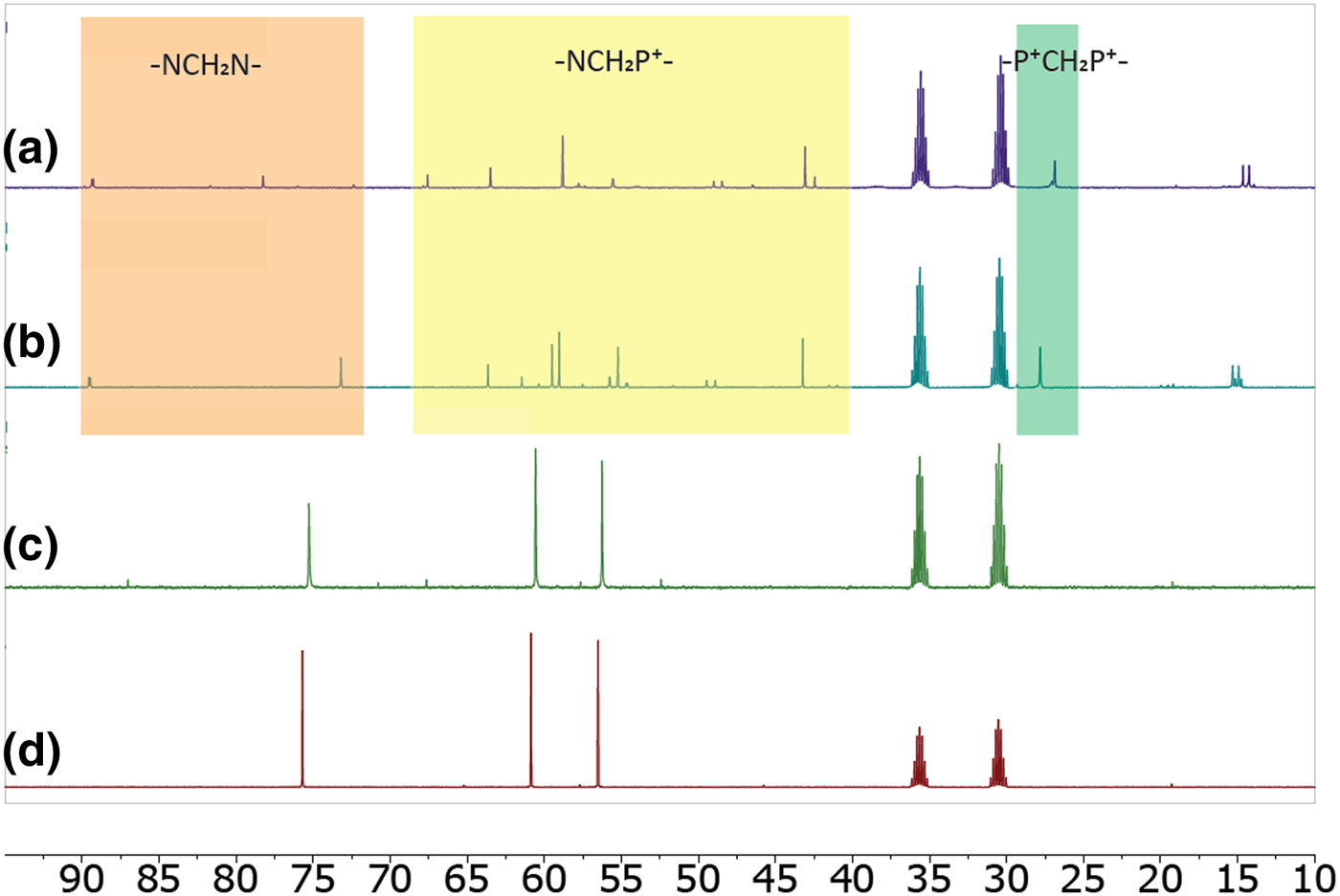
After the addition of two molar equivalents of TCEP to HEHT in the absence of metal, the NMR spectrum [Fig. 2(b)] becomes much more complex (complete spectral description is provided in the supplementary material). The reaction appears complete in Fig. 2(b), with no residual HEHT peaks remaining. However, at 73.2 ppm a singlet corresponding to a methylene-diamine-1,3-diyl moiety (–NCH2N–) appears slightly upfield to the corresponding peak in D at 75.7 ppm. Indirect evidence of ring opening can be further derived from the increased complexity of the presumed side group methylene groups –CH2(OH) and –CH2N, which now signal in the range of 55–65 ppm.
Small shifts in the peaks are evident after the addition of aluminum(III) establishing the direct complexation as has previously been elaborated and presented in Fig. 2(c) for clarity with the predominant 13C-NMR shifts appearing at 75.3, 60.6, and 56.3 ppm (complete spectral description is provided in the supplementary material). These are slightly upfield shifted from where the uncomplexed HT appears, largely due to coordination by aluminum. Spectrum A in Fig. 2 is the result of the addition of TCEP to HEHT pretreated with aluminum(III). The addition of TCEP to the complex renders a more complicated spectrum (complete spectral description is provided in the supplementary material). This spectrum shown in Fig. 2(a) is largely comparable with the spectrum in Fig. 2(b); most notable difference is the disappearance of two strong downfield methylene (–NCH2N–) signals indicating perhaps that the metal further decomposes the original HT into smaller fragments.
Evidence of a phosphonium containing species is readily extractable through the phosphonium carbon J-coupling constant (31P–13C), which is a large approximately 40 Hz. Such peaks appear at 46.4 and 89.3 ppm in spectrum A and 54.7 and 89.5 ppm in spectrum B.
There are two mechanisms of decomposition that are considered that follow initial attack by phosphine. In one mechanistic route (Scheme 1, route 1) subsequent reactions with phosphine yield bi-phosphonated compounds and other progressively smaller fragments. In another mechanistic route, subsequent additions of phosphine are accompanied by the elimination of the phosphonium ion leading the further fragmentation to small phosphonium products and imine, which may presumably be oxidized back to formaldehyde and poly(alkyloxide)amines (Scheme S-1, route 2 in the supplementary material). Both mechanisms lead to similar fragments that could be supported by the NMR data.
Computational studies
To validate the feasibility of different reaction mechanisms, and to identify energetic pinch points to look for in the NMR studies, both pathways were first considered from an energetic standpoint. The B3LYP/6-31+G(d) method with COSMO solvation in DMF was applied (see the Experimental section in the supplementary material for further details). As the product species are all ions, we did not consider any transition-states in the process and will only detail reaction free-energies (ΔG rxn) in kcal/mol. The calculations show that the initial phosphine addition to I is very favorable by approximately −16 kcal/mol (Scheme 1) leading to II. Following a second protonation (see the supplementary material for full mechanistic details), the second addition of phosphine to the three tautomers of III is quite exergonic leading ultimately to at least seven different phosphonated products. The reaction-free energies to give these products range from −4 to −9 kcal/mol. As this process is predicted to be spontaneous it can account for the appearance of multiple phosphonated species observed in the NMR. Investigations of route 2 (see the supplementary material), on the other hand, suggest that the phosphine exchange mechanism does not appear to be thermally efficient, requiring considerable heat to overcome additional phosphine addition reactions upward of 16 kcal/mol endergonic steps. Thus, we can discount this pathway. Route 1 is fully downhill energetically and as such, we propose this route as the dominant process.
Notably for species I, II, IV, V, VI, VII, and IX the carbon chemical shifts can be used to track the reaction and its intermediates with a noticeable change for the methylene carbon in HT (–NCH2N–) to a methylene adjacent to the phosphonium (–NCH2P+). Our density functional theory method predicts a chemical shift at about 76.5 ppm for the HT methylene in DMF comparing exceedingly well with the experimental value (75.7). There is a considerable increased shielding effect and shift for these methylene units after ring opening to give predicted peaks at 56.9 (II) 61.8 (IV), 53.7 (V), 64.9 (VI), and 59.3 (VII) ppm which correspond well with the appearance of peaks after addition of phosphine at 46.4 (A), 54.5 (B), and 55.6 (A) ppm experimentally. It is tempting to assign the last value to species V as a possible final product. The upfield phosphonium compound is likely species IX, which falls into a different subunit category (P+CH2P+). This species has a predicted chemical shift of 30.8 ppm. The methylene-diamine-1,3-diyl moiety appears to present chemical shifts similar to the starting triazine, if perhaps slightly deshielded at 82.1 (IV), 79.2 and 84.5 (II), and 89.5 (VII) ppm. Hints of this type of carbon environment appear in the NMR spectrum when aluminum is present in spectrum A, but are absent from spectrum B. Finally, the spin–spin coupling (1J-coupling) between 31P and 13C was also modeled giving a range of coupling constants between 46 and 49 Hz in good agreement with experimentally observed splittings adding strong evidence for the assignment of these of phosphonated species.
Triggered release
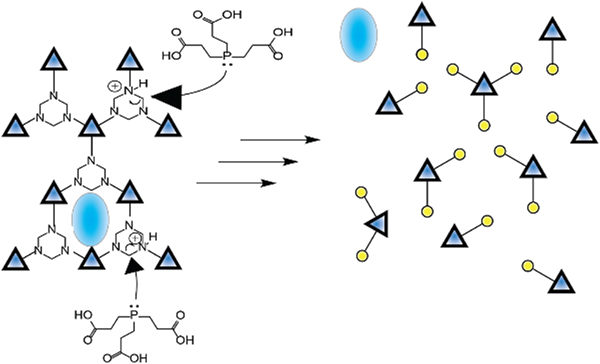
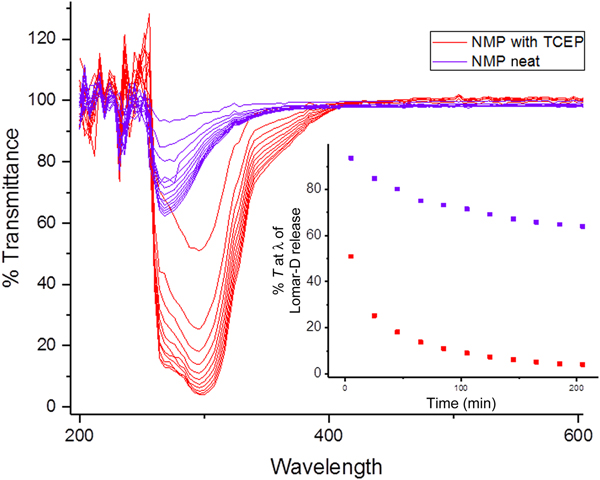
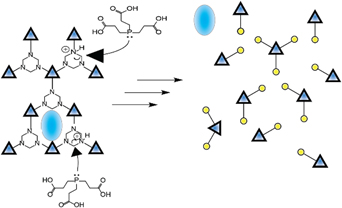
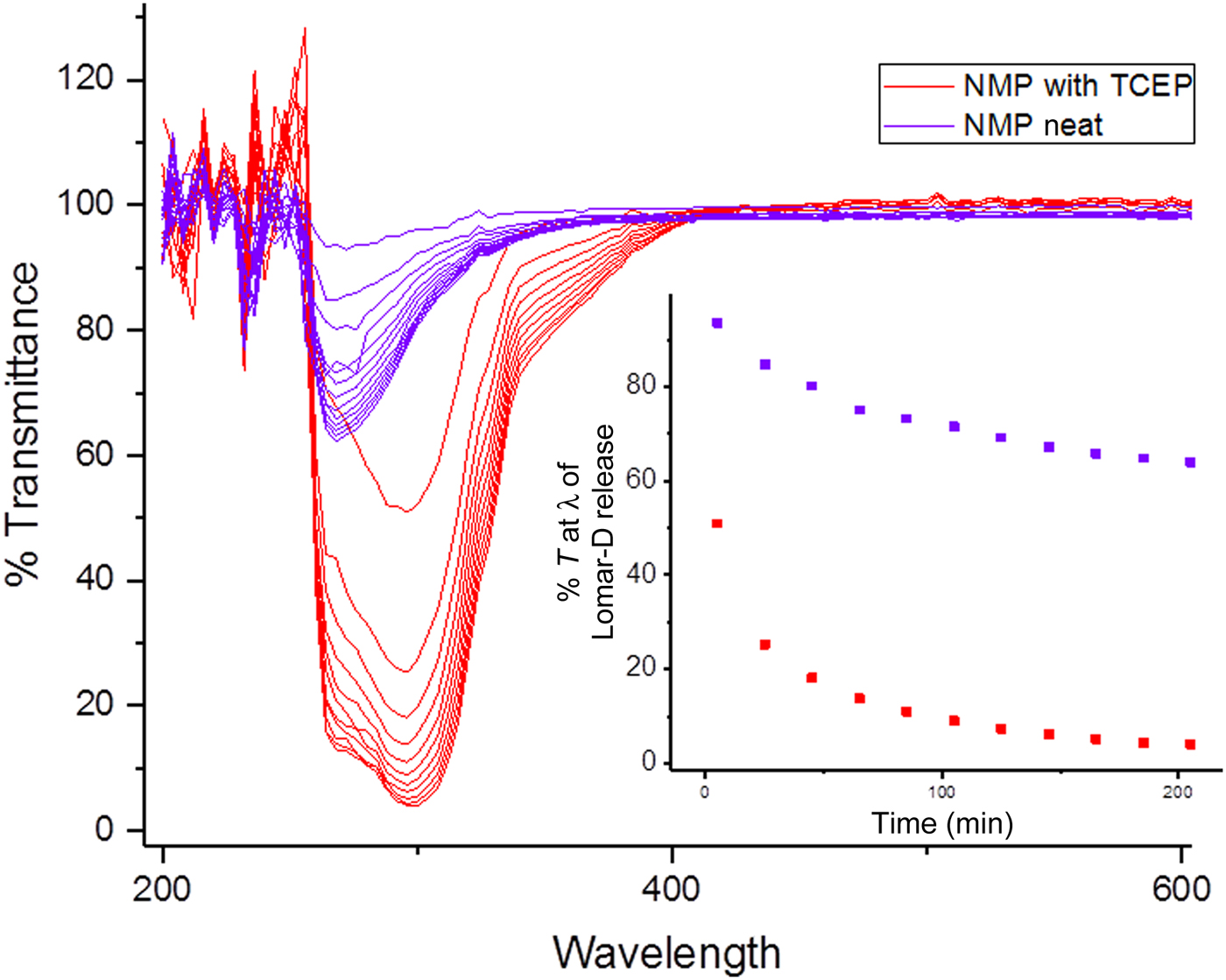
To illustrate the relative effectiveness of gel breakdown with TCEP in the presence of aluminum(III) and in its absence, we turned to a set of triggered release studies where a thermodynamic gel comprised largely of product III in Scheme S-1 was loaded with a chromophoric naphthalenesulfonate condensation polymer (Lomar D®) (Scheme 2). The naphthalene polymer is used as it has a distinct signature in the ultraviolet/visible absorption spectrum (UV/VIS). Thus, when the gel is broken with TCEP, the release of the cargo, naphthalene polymer, can be observed spectroscopically (Fig. 3). The method for the study is provided in the supplementary material. It was determined that a sample without aluminum did show release of cargo although, this release was not as rapid as the release in the gels that have been complexed to aluminum. This provides experimental support to the conclusion that the ring opening of HT with phosphine is assisted by aluminum(III) perhaps similarly to the ring opening of THF assisted by such metals as zirconium.
Nucleophilic attack with phosphine on the triggered release of cargo (blue ellipse) from the HT gel network. The yellow circles in the product represent phosphonium fragments derivative of products in Scheme 1.
UV/VIS spectra and time-resolved triggered release of cargo naphthalene polymer-loaded thermodynamic gel in the presence of TCEP and without.
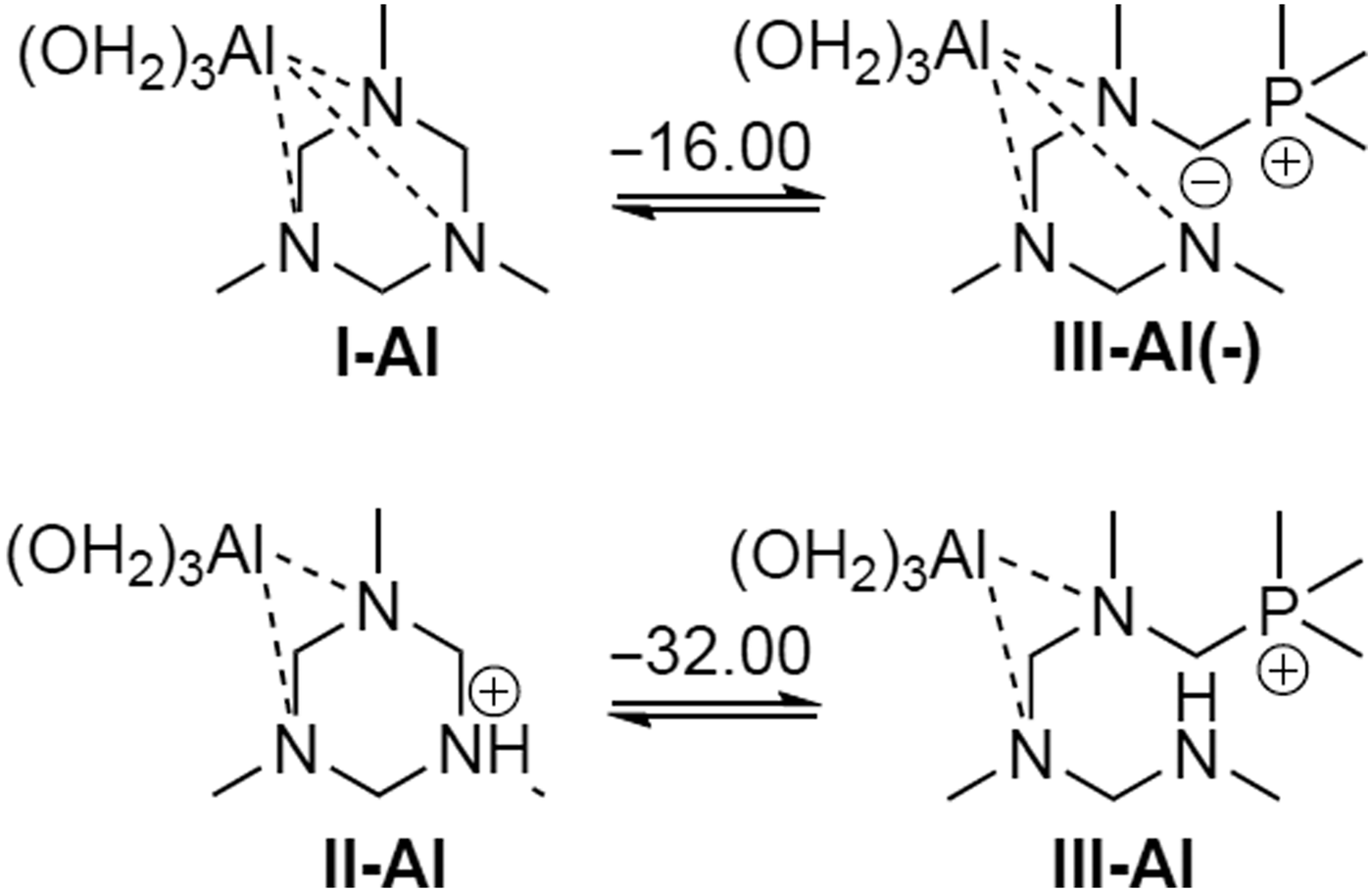
Further support of this effect was obtained through modeling of the energetics of the reaction of phosphine with the protonated triazine (as above at −16 kcal/mol) compared with this triazine additionally complexed with aluminum (Scheme 3). For the latter, the free energy of reaction is twice that as for the former at −32 kcal/mol, suggesting a large synergistic effect in the free energies of addition of phosphine when the starting material is both protonated and complexed with aluminum in-line with the triggered release experiments. This effect is likely due to the increased release of positive charge repulsion in the protonated aluminum complex after ring opening.
The effect of aluminum complexation on ring opening is to facilitate the fragmentation of HT.

In conclusion, we have determined that HT gels and kinetic hemiaminal gels are readily broken to liquids by phosphine through the ring opening of HT and subsequent fragmentation. The fragmentation of the products with TCEP results in a phase change from gel to liquid due to reduction of cross-link sites in the reversible covalent polymer. Our computational results substantiate this claim through correlation of 13C NMR data with computationally derived spectra for the different reaction intermediates. It has also been determined computationally that the fragmentation of HT by phosphine can be assisted by such trivalent metal salts as aluminum chloride. This technology was tested for proof-of-concept in triggered release chemistry demonstrating that these materials have potential in numerous applications in drug delivery and smart, stimulus-responsive materials.
Supplementary material
The supplementary material for this article can be found at https://doi.org/10.1557/mrc.2019.33
Acknowledgment
The authors would like to thank Aramco for permission to publish this work.
Conflict of interest
The authors declare no competing financial interest.