Introduction
During the Second World War, there were many extremely gifted academic refugees and British establishment figures, almost all of whom have now died. As a young boy during this period, I was personally caught up in the stirring events of the time, and retain many vivid and moving memories. I am a refugee from Nazi Germany, but was only 5 years old when my family and I left Germany after the Nazis came to power.Reference Kohn1
Many prominent Fellows of the Royal Society in London played a central role in the establishment and activities of the Academic Assistance Council (AAC) and did so much to enable refugee scientists from Germany to be accepted in universities and other learned institutions upon arrival in Britain. There were also many other institutions that strongly supported these academic refugees.
Quite apart from scientists, there were countless artists and musicians who were supplanted and drummed out of the German academic ranks. These people were literally ‘Hitler's gift’ to the rest of the world, as the ironic title of the book by Jean Medawar and David PykeReference Medawar and Pyke2 makes clear, or, as Alvin JohnsonReference Johnson3 of the New School said: ‘Hitler shakes the tree and I gather the apples’. The intellectual importance of these emigrants has often been saluted, and there was much genius on offer that had been senselessly rejected by the Nazi regime. But what of the people often completely ignored by history, or at least insufficiently acknowledged, some of whom worked night and day to make this emigration possible? It is this aspect of the story that is enormously interesting and may not have been highlighted sufficiently, being overshadowed by the extraordinary contributions of the refugee academics that arrived in Britain. Statistics from the early years of those assisted by the AAC show that 18 of these refugee academics were awarded Nobel Prizes, 14 received Knighthoods, and well over 100 became Fellows of the Royal Society or the British Academy. An extraordinary achievement.
As I hope to make clear, the British response to this challenge was pivotal in rescuing many unfortunate refugees from Nazi tyranny. I am well aware that other countries, particularly in Europe and the USA, did outstanding work for the unfortunate and at times desperate refugees, who had lost their positions and thus had no other sources of income. Emigration was the only way open for these abused and humiliated people. Thank heavens that, in these early days, when the full extent of Nazi evil unfolded month by month, and year by year, emigration was still a possibility. But where could these displaced people go, and who would allow them to enter other countries and work there?
There was a French Committee – the Association universelle pour les exiles Allemands – which worked tirelessly on behalf of the refugees, as well as committees in Holland, Belgium, Switzerland and the Scandinavian countries. Places were also found in Palestine, which in the 1930s was a British-mandated territory, and the University of Istanbul in Turkey recruited a considerable number of refugees for its newly established medical school.
The USA, with its hundreds of universities and colleges was able to absorb significant numbers of displaced scholars. The American contribution has been admirably summarized in the publication by Stephen Duggan and Betty Drury, The Rescue of Science and Learning!Reference Duggan and Drury4 In moments of world crisis we have always been able to rely on the USA, second to none in its generosity of heart and spirit, to come to the aid of persecuted people. But, particularly in the earlier years of this century, the USA was a very long way away from Europe, it had a strong isolationist lobby and it was inevitable that the initial burden of action fell on countries that were geographically nearer to Germany. In addition, in the USA, it was easier to find shelter for people who had already made a distinguished contribution – names such as Einstein, Fermi, Schoenberg, Bartok, Brecht and Weill come to mind. There was a smaller chance of emigration to the USA for those who had done useful academic work all their lives but who were not counted as being significant. The door was also shut to many of those younger scientists and artists who had not yet had the chance to build their reputations.
This is where the surprisingly impartial and thoroughly fair work of the AAC in London came in, and, to quote those American scholars Duggan and Drury,Reference Duggan and Drury4 ‘no praise can be too high to give to this distinguished body of British scholars and men of affairs for their unceasing efforts on behalf of the German Professors who had lost their careers and livelihood’. In the USA, funds were provided in large measure by wealthy Jewish philanthropists; fund-raising in Britain was done through universities and public appeals and the Jewish community was not particularly targeted. What was happening in Germany struck the British nation as being highly ‘unfair’ – and there was nothing like a monstrous lack of fair play to mobilize British public opinion and encourage contributions, even from the proverbial man in the street.
The Nazis, sensitive to world opinion, at least in the earlier years of the Third Reich, took care to play their deadly hand slowly and with great guile – and this convinced many people in both Britain and the USA that there was no real cause for alarm. The philosopher David Hume once observed that ‘Liberty is seldom lost all at once, but rather bit by bit’.Reference Rumsfeld5 The pathway towards terror and tyranny was gradual but relentless. Within weeks of Hitler's election victory at the end of January 1933 and the establishment of the Nazi government, new laws were promulgated concerning what was called the ‘Cleansing of the Civil Service’. German universities were structured in such a way that they were part of that civil service, and the new government had the right – unimaginable as far as the English and, I am sure, American universities were concerned – to dismiss staff at will, to make direct appointments and to limit university entrance to those who supported the party. There was no organized resistance to these measures, and those who suddenly found themselves without a job had nowhere else to look for help than abroad.
The exile of academics was also a feature of the Bolshevik Revolution in Russia, and the fascist uprising in Franco Spain. However, this immigration of German scholars was the most remarkable since the migration of Greek scholars from Constantinople in the 15th century.
To their credit, a number of the non-Jewish German scientists at least attempted to make a stand. The story of Professor Otto Krayer provides an illustration of the prevailing mood. The prestigious Chair of Pharmacology at Dusseldorf University became vacant when the Jewish incumbent Professor Philipp Ellinger was dismissed in 1933, and was offered to Professor Krayer. Krayer wrote back to the Prussian Minister for Science, Art and National education: ‘I will abstain from winning a position that corresponds to my inclinations and abilities, rather than make a decision contrary to my conviction or remaining inauspiciously silent. I feel the exclusion of Jewish scientists to be an injustice, the necessity of which I cannot understand, since it has been justified by reasons that lie outside the domain of Science.’ Krayer was immediately forbidden from entering any government academic institution or from using state libraries or scientific facilities. He left for the USA, where he subsequently became a distinguished Head of Pharmacology at Harvard University. What courage to have stood up against the Nazis – known for their inhuman brutality. And how justly Harvard was rewarded.
One of the most famous of all German scientists, Professor Max Planck, Nobel Laureate and founder of the quantum theory, was not Jewish. He attempted to reason with Hitler that German learning and science were endangered by the dismissal of talented men and women on racial and political grounds.
Hitler's infamous replyReference Hartshorne6 is worth quoting verbatim:
Our national policies will not be revoked or modified, even for scientists. If the dismissal of Jewish scientists means the annihilation of contemporary German science, we shall do without science for a few years.
Planck, who continued to teach the forbidden theories of Einstein, was accordingly branded a ‘white Jew’ – as non-Jewish opponents of the Nazi regime were called – and tragically his son was hanged by the Nazis after being indictment for being part of the Stauffenberg Plot against Hitler in 1944. As for Einstein himself, he was the bogeyman of Nazi ideology. The fanatical, notorious Nazi ideologist Professor Philipp Lenard, himself a Nobel Laureate, wrote a textbook on so-called ‘Aryan Physics’Reference Lenard7 and denounced Einstein's theory of relativity as ‘down and out’. As for any Jew, ‘his complete unfitness for scientific research is obvious, although this is concealed by arithmetical juggling’.Reference Lenard7
Einstein had left Germany for the USA in December 1932. With such a famous figure denounced by this kind of officially approved individual, what hope was there for other Jewish scientists? Very soon after the summary dismissal of the first wave of academics, the sheer injustice of their plight became the talk of the academic world.
The Academic Assistance Council
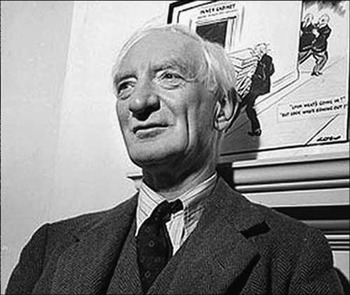
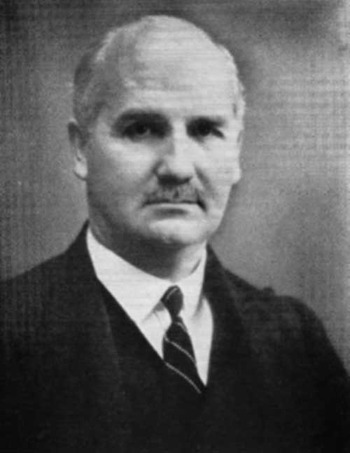
The AAC was established in London in 1933 by Lord Beveridge (Figure 1), as a result of these events in Germany.
Lord Beveridge. Reproduced with permission from the Council for Assisting Refugee Academics.

Galsworthy's remark ‘The English are slow, you must always give them time for new ideas’Reference Bentwich8 was thus disputed with the creation of the AAC. We must remember that, as had been demonstrated under Queen Elizabeth and Cromwell, opening the doors of asylum was an ancient British tradition.
Sir William Beveridge, later Lord Beveridge, then Director of the London School of Economics (LSE) and Political Science, and later architect of Britain's welfare state, was in Vienna at the time of the first dismissals of academics in March 1933. With him was his colleague from the LSE, Professor Lionel Robbins. This distinguished pair of British academics read in a newspaper, whilst sitting in a café, about the suspension of 12 important Jewish scientists from German universities. Beveridge realized that all this knowledge and experience had to be saved, and that the dignity of the German academics must be upheld for the benefit of the entire learned world.
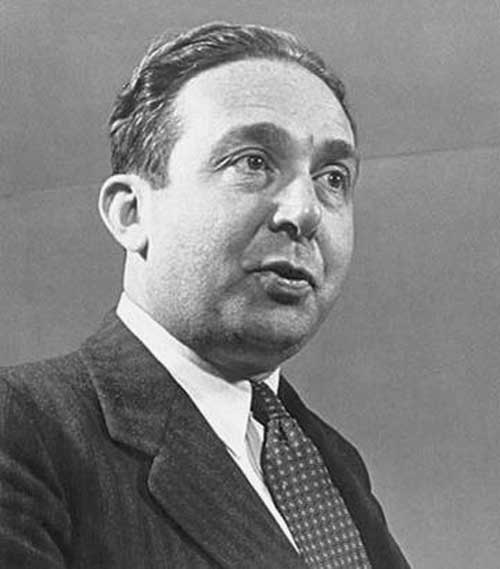
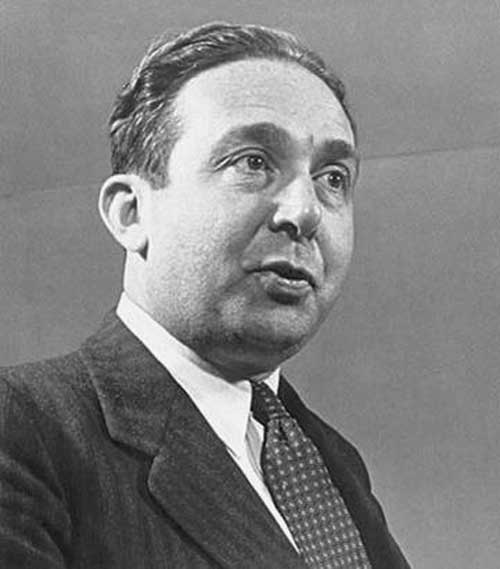
Oscar WildeReference Wilde9 once observed that ‘It is personalities, not principles, that move the age’ – and how much more true this is when large personalities such as Beveridge and Robbins and many others also have principles. They cut short their visit to Vienna and returned to London, but not before meeting a brilliant scientist, who happened to be in Vienna at the time. It must be remembered that Austria was not yet under Nazi control (the Anschluss took place in 1938) and it sheltered refugees from Germany in its own right, including a remarkable Hungarian of Jewish origin, the nuclear physicist Dr Leo Szilard (Figure 2).
Dr Leo Szilard. Reproduced with permission from the Egon Weiss Collection.
Szilard somehow always turned up in the right place and at the right time in the 1930s – a true man of destiny it would appear.
Many Hungarians had the reputation of being so extraordinarily talented and able (in whichever sphere they worked) that the joke went round ‘If you enter a revolving door in front of a Hungarian you would inevitably emerge behind him’. To reinforce this point, when a young Hungarian once introduced himself to Szilard as simply ‘I am a Hungarian’ (the rest being understood), he received the uncompromising reply ‘It is not enough to be a Hungarian – you also require talent.’
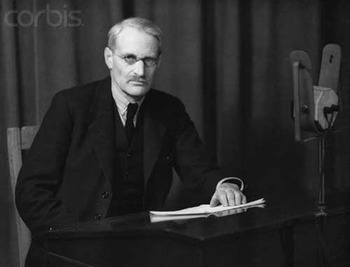
Szilard tried to persuade Beveridge to create a ‘university in exile’ for dismissed academics. Beveridge, however, felt that this was not a practical proposition and suggested instead that those academics affected by the Nazi dismissals should be placed in existing universities in the free world. It was Beveridge who proposed the formation of an academic assistance council to achieve this important aim when he met Professor George Trevelyan (Figure 3), later Master of Trinity, during a weekend in Cambridge in May 1933. As a result, Szilard moved to London in 1933 to support this new endeavour, but by 1938 Szilard had settled in the USA to deal with other urgent matters. Szilard later worked with Fermi, another distinguished atomic physicist and refugee from Fascist Italy, in Chicago on the atomic bomb.
Sir George Trevelyan. Reproduced with permission from CORBIS.

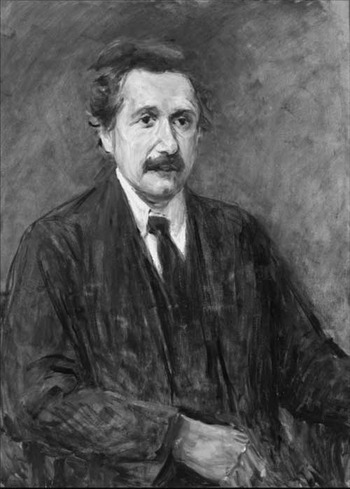
It was Szilard who persuaded Einstein (Figure 4) to write the famous letter to the American President Franklin D. Roosevelt in 1939 that led to the establishment of the Manhattan Project and the creation of the atomic bomb. Given these rather forceful credentials, it is little wonder that, during his years in London, Szilard was highly active at the office of the AAC – prodding, encouraging and pressurizing those he worked with, probably also driving them to despair, but all in a good cause. There is no doubt that Szilard was a key player in this story, but he had no real influence in England, and he rightly left it to Beveridge and his powerful British colleagues to handle the Establishment. That proved to be the right way forward.
Albert Einstein. Reproduced with permission from the Royal Society.

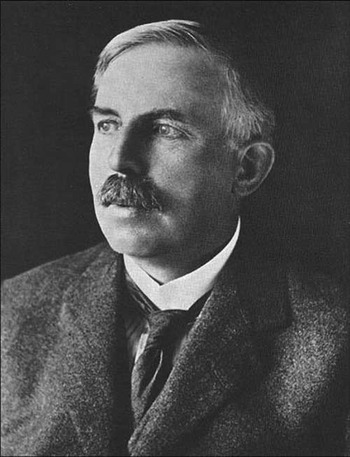
Beveridge was a famous man in his field, but he went right to the very top when it came to finding someone to take on the Chairmanship of the Council that he wished to bring into being. This was Lord Rutherford (Figure 5), by birth a New Zealander. He had been awarded the Nobel Prize in Chemistry in 1908, he was a past President of the Royal Society and he was Britain's most famous elder scientist. In political terms he was a Tory – but, as time went on, he had increasing sympathy with the warnings about Germany and its intentions that were coming ever more forcefully from the Churchillian side of the Conservative party.
Lord Rutherford. Reproduced with permission of CORBIS.

Ernest Rutherford was 62 at the time and not in the best of health. His wife and doctor advised against his taking on any new task, but he realized the crucial importance of this work and so took on the Chairmanship nevertheless. As head of the Cavendish Laboratory in Cambridge he had already moved on to the role of inspiration to a younger generation of scientists. Amongst these was his colleague James Chadwick, who was to be awarded the Nobel Prize in Physics in 1935.
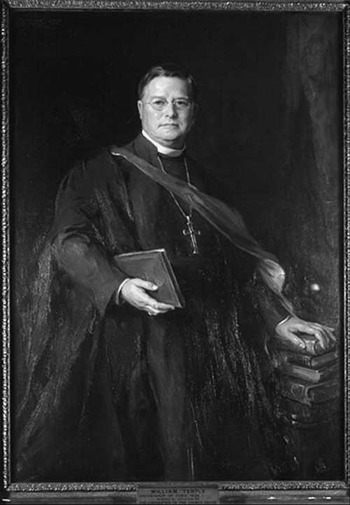
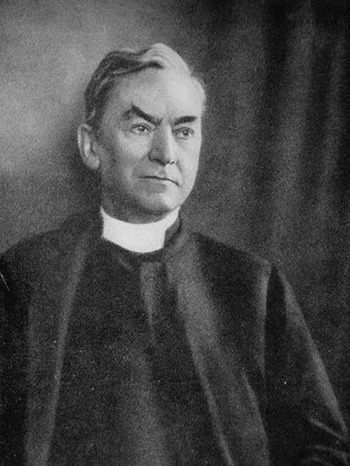
Rutherford died in 1937 and was succeeded as President of the Society for the Protection of Science and Learning (SPSL), as the AAC was then known, by Dr William Temple, Archbishop of York and later Archbishop of Canterbury (Figure 6). It was Temple who, in 1942, together with the Chief Rabbi of Great Britain, Dr Joseph Hertz, jointly founded the Council for Christians and Jews to combat anti-Jewish bigotry. It should be noted, then, that leading members of the British clergy took an active part in supporting the mainly Jewish dismissed academics.
Dr William Temple (Archbishop of York – later Archbishop of Canterbury). Reproduced with permission from Lambeth Palace.

In a powerful speech, Dr Temple said:10
The fellowship of knowledge has no frontiers. Truth is universal and wherever it is discovered its value is for all searchers after knowledge, who are in a peculiar degree the servants of humanity. In giving help to those among them whose opportunity to pursue their calling in their own land has been frustrated, we are doing something very material to preserve that solidarity of civilisation, which the inflated materialism of our era has imperilled.
Inspiring words spoken in 1939.
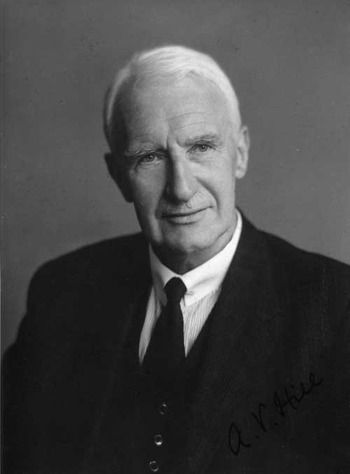
Beveridge selected a much younger and more energetic man to be Vice-President of the Council, Professor A.V. Hill (Figure 7). A.V. Hill was a Nobel Prize winner – he had shared the 1922 award with the German Otto Meyerhoff. Hill (or ‘AV’ as he was universally known) was one of the founders of biophysics together with Hermann Helmholz. However, in the eyes of the distinguished physiologist Starling at University College London (UCL), AV was a mathematician and physicist and ‘did not know a word of physiology’! When Hill, who had been appointed to a professorship in physiology at UCL, arrived there from Manchester after his Nobel Prize had been announced, he was carried by the students shoulder high to his new department and, on the way, they stopped outside Starling's room, shouting ‘We want Starling! We want Starling!’ Starling appeared – somewhat startled at the noise – and the students shouted ‘Who said he didn't know any physiology?’ Starling replied, ‘I said he didn't. He doesn't know a damn word!’ They all had a marvellously good-humoured time laughing and joking and this boisterous scene was actually photographed. Try to imagine this sort of scene in Nazi Germany!
Professor A.V. Hill. Reproduced with permission from the Council for Assisting Refugee Academics.

When the AAC was formed in 1933, Hill was Professor of Physiology at UCL. He was particularly active during the war years in the defence of fellow scientists persecuted by the Nazi regime. He was a brilliant physiologist, great humanitarian and highly effective Member of Parliament in the 1940s. He fought strongly for the refugee academics, with great success in and out of Parliament. Hill wrote movingly of the ‘brotherhood of science and learning’. One of his co-workers was Sir Bernard Katz, another refugee academic from Leipzig, who was subsequently to receive the Nobel Prize.
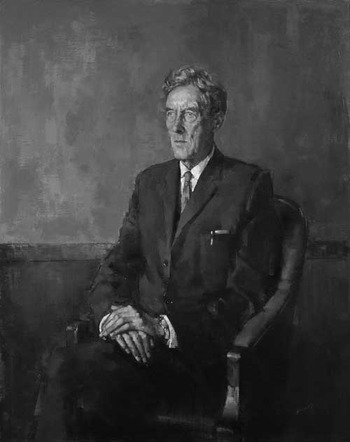
Professor Blackett (Figure 8) was a prominent member of the scientific and political Left and had a strong following among the younger members of the scientific community. He was elected Fellow of the Royal Society in 1933. Blackett stated that ‘Science in Germany was being deliberately used for war preparations, and for anti-working class activities. Scientific fact is being distorted to accord with Nazi teachings’. In his earlier years, Blackett had been strongly against the use of science for military purposes, but from 1935 onwards he worked with Sir Henry Tizard and A.V. Hill on the Committee for Scientific Survey of Air Defence that gave birth to radar, the system that was of immense importance in defending Britain against the German air assault in 1940.
Lord Patrick Blackett. Reproduced with permission from the Royal Society.

Blackett was awarded the Nobel Prize in Physics in 1948 for his investigation of cosmic rays. In 1965 he became President of the Royal Society and in 1969 a Labour peer, dedicated, as ever, to Left-wing causes.
If Blackett was a man of the Left, it was Beveridge's gift to be able to engage with the Right wing as well.
Next we come to a colourful personality, Professor Frederick Lindemann FRS, later Lord Cherwell or ‘the Prof’ as some called him with a certain amount of sarcasm (Figure 9). He had been head of the Clarendon Physics Laboratory in Oxford since 1920. He was of German non-Jewish origin. Unlike the vast majority of his fellow scientists he was actively involved with politics and was anti-Communist to a degree that made scientists like Blackett regard him as a wealthy capitalist reactionary! Churchill was a friend of Lindemann's, to whom he turned for scientific advice. ‘The Prof’ was violently anti-Hitler, which endeared him to Churchill, but he was also capable of anti-Semitic remarks and his biographers remain divided about his feelings towards Jews. Being a very wealthy man – inherited money, it should be added – he went around in Germany in his Rolls Royce clearing out whole departments of their best scientists, including such luminaries as Kürti, Mendelssohn and Franz Simon – later anglicized to Sir Francis Simon, who joined the Clarendon Laboratories.
Lord Cherwell. (Page 352 of Statesmen of Science by J. G. Crowther (1965, London, The Cresset Press)).

Nevertheless, Cherwell was appalled by Hitler's dismissal of Jewish scientists, and, in the words of the biographer David Zimmermann,Reference Zimmermann11 ‘he was a rare example of a person who, in the face of great injustice, could put bigotry to rest’. Cherwell had excellent contacts with industry and he did not wait for the work of the newly established council to get under way. Zimmermann makes the interesting point that ‘Cherwell viewed Hitler's foolishness as an opportunity to transform the Clarendon Laboratories in Oxford into a world centre for low temperature physics’.
The date of the first official meeting of the AAC was 23 May 1933; the speed with which the enterprise had been arranged was largely thanks to Beveridge's energy and help of the Royal Society, which generously offered the newly born Council valuable office space: two rooms in the attic of Burlington House, Piccadilly, where the Royal Society was then based.
Berlin book burning
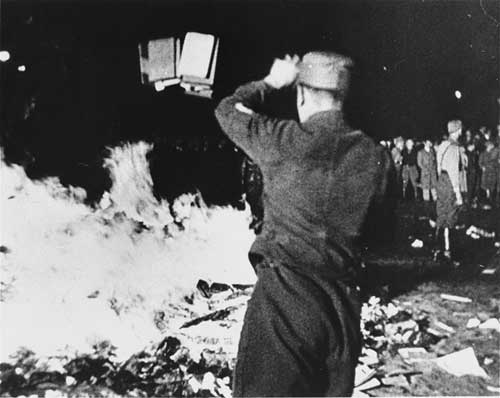
Events in Germany, less than a fortnight earlier, had confirmed that the AAC had been formed none too soon. I refer to the notorious burning of books in Berlin on 10 May 1933 (Figure 10) – an event just as ominous in its own way as the dismissal of the scientists. It was presided over by Berlin's Gauleiter, Joseph Goebbels. Like a Pagan High Priest, he intoned the words ‘Ich übergebe den Flammen’ (I consign to the flames), and oversaw the destruction of so-called degenerate books title by title, in each case naming the author, who was either Jewish or a political opponent of the regime.
Burning the books – Berlin, May 1933. Reproduced with permission from the Council for Assisting Refugee Academics.
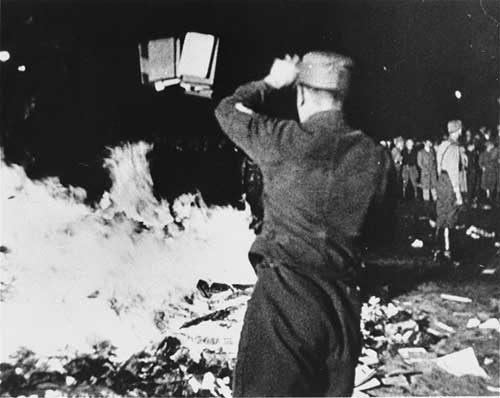
During the Third Reich period, some 18,000 works that did not conform to Nazi ideology were burned. This was the same city of Berlin which, until Hitler came on the scene, was considered one of the great cultural and scientific cities of the world, if not the most prominent.
Now a word about some of the books that escaped the Nazis, books that were saved by the forethought of a handful of scholars whose commitment to learning often placed the survival of their books above their own lives. The 15 years of the Weimar Republic had produced outstanding achievements in the Sciences and the Arts, and many other activities of human endeavour, but the looming threat of Nazism was taken seriously, and at a surprisingly early stage, by certain institutions with Jewish backgrounds.
Looking into the future with astonishing accuracy, certain institutions decided to transfer their important collections from Germany to England. The first and perhaps most significant of these was the Hamburg-based Warburg Institute, the brainchild of the art historian Aby Warburg, which had a unique collection of 70,000 items pertaining to the Renaissance. The Institute transferred its collection to London even before Hitler came to power. Prominent British academics were associated with this transfer, which took place in 1933. The collection was, and remains, a very important source for the study of art in its relation to classical and medieval thought. When the prominent art historian Ernst Gombrich came to England during the 1930s, he was closely involved with this institute.
Books that would certainly have qualified for burning were those of the Wiener Library, established by Dr Alfred Wiener. This comprehensive collection of literature from the beginning of the Hitler period, including books about Nazi racial and political theories, was originally housed in Amsterdam. In 1939, it was moved to London, where it remains.
All these transfers to London were possible only with the active and enthusiastic collaboration of British experts, for which we have to be immensely grateful. British concern for what was happening in Germany was thus already apparent before the Nazis came to power.
Another important collection was the transfer from Frankfurt to London of the Hirsch Music Library, which contained 15,000 volumes and included priceless autobiographies and first editions of works by Mozart, Beethoven and Purcell. This was the result of a life-long involvement with the collecting of valuable musical editions by the industrialist Paul Hirsch, who moved to Cambridge with his entire library in 1936 when he was already in his mid-50 s. This library later passed to the British Library, immeasurably enriching its holdings. Hirsch himself came as a refugee to England, where he died in 1951.
That great novelist and man of letters Stefan Zweig, hounded out of Austria, also eventually bequeathed his world-famous collection of manuscripts, many with a significant musical content, to the British Library. Thousands of musicians in Britain have benefited from the collecting skills of Hirsch and Zweig. Skills that were honed in Germany and Austria in more civilized times, and eventually immeasurably benefited British musical scholarship.
The book-burning episode was very important because it showed the Nazis – in their true light – to those who were not yet convinced that this was indeed a regime of darkness and ignorance and fear. That this book burning took place in the Opernplatz (the Opera Square) of the capital city is a cruel irony for those who love music.
Let me now briefly attempt to describe Berlin in cultural terms before the Nazis came to power.Reference Kohn12
Cultural Berlin
Berlin had hosted the orchestral and opera conductors Otto Klemperer, Bruno Walter, Wilhelm Furtwängler, Erich Kleiber and Leo Blech. The same high standard applied to the theatre, headed by the renowned director and producer Max Reinhardt, and to the visual arts, headed by Max Liebermann, the leading German Impressionist and President of the Academy of Arts. Paul Klee lived and worked in Berlin, although his art was soon to be denounced as ‘Entartet’ (degenerate) by Geramny's new Nazi masters, alongside hundreds of other members of the artistic avant-garde. Berthold Brecht and the composer Kurt Weill were particularly hated and had to flee, and did so to the USA.
Those scientists who had been active in Berlin included Einstein himself as well as Max Planck, Walter Nernst, Fritz Haber, Otto Hahn, Lise Meitner, Otto Warburg and many others. Younger scientists, the future Nobel Laureates such as Hans Krebs and Ernst Chain,Reference Kohn12 would make their names later and elsewhere. Berlin was home to a galaxy of stars, but most of those mentioned above were forced to emigrate from Germany.
The books burnt included works by Thomas Mann, Sigmund Freud, Karl Marx, Erich Maria Remarque, H.G. Wells and many others. Among these were the works of Jewish writers and poets of the past, once heroes of German culture, who were now cast as retrospective villains.
One of these was Heinrich Heine (Figure 11), the German–Jewish poet whose lyrics were set to music by composers such as Schubert and Schumann. His poems were the basis of hundreds of German songs – that precious world of Lieder which had always represented the most civilized face of German culture to the outside world. The Nazis were the kind of people who liked to talk of German cultural values and the protection of German art, while at the same time displaying shocking ignorance and a catastrophic lack of good taste. There was a school of Nazi painting, Nazi sculpture, Nazi music, even the ideal Nazi man and Nazi woman. But nothing they touched has proven to be of any enduring artistic merit, coming as it does from the sterile soil of totalitarian bigotry.
Heinrich Heine. Reproduced with permission from CORBIS.

Many volumes of the composers Schubert, Schumann and Brahms were all edited by a famous scholar, Max Friedländer, who was probably the greatest Lieder scholar of his time and who was stripped by the Nazis of his academic titles and honours in Berlin before dying a broken man in 1934. Friedländer was a world authority on Dichterliebe, the great lyric song cycle to Heine's Jewish poems by the Aryan composer Robert Schumann. Heine's words had to disappear and the Nazis employed some terrible modern poet to put new words to the cycle.
It was Heinrich Heine who, elsewhere, wrote the prophetic words ‘Dort wo man Bücher verbrennt, verbrennt man auch am Ende Menschen!’ (‘Wherever they burn books they will also, in the end, burn human beings!’). You would think, with hindsight, that Beveridge and the other supporters of the AAC would have made the same instinctive connection as Heine, without perhaps articulating it in so many words. But, as we will see, this took some time – an indication perhaps of the unimaginable enormity of future Nazi crimes.
Consensus
In 1933, of course, the members of the AAC were careful not to say anything too inflammatory. Their aim was to build as broad a consensus as possible. Beveridge and Hill had at first wished in their public statements to criticize the German government, but their more cautious colleagues, including Rutherford, persuaded them that rhetoric and polemic should be avoided, including anything that would have enabled the Council to be labelled by its enemies as a ‘Jewish pressure group’.
When Einstein came to London to address a large crowd at the Albert Hall in May 1933 in order to raise funds for the AAC, enormous care was taken to avoid direct public criticism of the new German government.
The reason for this was the danger that the Council might be placed on the list of proscribed organizations with which it would have been illegal for German citizens to correspond. This would have made their rescue work all but impossible. When collecting signatures for the Council's initial letter in The Times they had neither avoided Jews nor did they actively seek them out. There was a lot of discussion about this at the time. It was taken as understood that the majority of those scholars helped were German Jews, but there were academics throughout Europe – in Fascist Spain, Portugal and Italy for example – who were losing their jobs for political, if not racial, reasons.
The Royal Society felt that for political reasons the committee should not have any Jewish members in order for it to function smoothly. The AAC was something typically British in its understatement, where work was undertaken with little fuss but in deadly earnest. It is perhaps for this reason that the truly extraordinary work that it accomplished has been underestimated to this day.
At least Heine, who died in 1856, was unable to suffer personally from the Nazi destruction of his books. For modern writers it was a different story. In his book The World of Yesterday, the Austrian novelist Stefan ZweigReference Zweig13 (Figure 12), a later hate-figure for the Nazis when they took over Austria, devastatingly sums it all up:
I have witnessed the most terrible defeat of reason and the wildest triumph of brutality in the chronicle of the Ages. Never has any generation experienced such moral repression from such a spiritual height as our generation has.
Stefan Zweig. Reproduced with permission from CORBIS.

Nazi ‘culture’
The Nazi's abysmal attitude towards cultural standards may be illustrated with an infamous saying attributed to Göring, but actually stolen by him from a play performed in Berlin in 1933: ‘When anyone speaks to me of culture [Kultur], I want to reach for my gun’. In Göring's deranged mind the word ‘culture’ was invariably associated with Jews!
In addition, Göring stole the cynical statement ‘Wer Jude ist entscheide ich’ (‘I decide who is a Jew’) from Karl Lueger, a former Mayor of Vienna. This expression was very appropriate when Göring, as is well known, personally intervened to allow Otto Warburg,Reference Krebs14 the distinguished Nobel Prize-winning biochemist, to remain untouched throughout the War in his laboratories in Dahlem in the locality of Berlin, although he was of Jewish descent. The reason for this extraordinary exemption from dismissal was Göring's conviction that Otto Warburg was the man to solve the problem of cancer – a disease that terrified him.
Support for the Academic Assistance Council
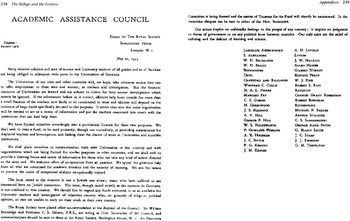
A letter with 41 signatories was sent to The Times and other leading newspapers in support of the AAC in May 1933 (Figure 13). Göring would presumably have wished to gun them all down, and not only because they were all exceptionally cultured people.
Academic Assistance Letter, 22 May 1933. Reproduced with permission from the Council for Assisting Refugee Academics. A typed list of the names mentioned in this figure is available at www.journals.cambridge.org/ERW.

It should be explained here that a ‘letter to The Times’ in England is most important to influence public opinion, and one could not have put together a more powerful and distinguished list of British Establishment personalities.
We have already mentioned Beveridge, Rutherford and A.V. Hill. No fewer than seven present or future holders of the Order of Merit (OM), the highest British honour, put their name to this document. Amongst these were the following:
1. Sir Frederick Gowland Hopkins OM, a biochemist awarded the Nobel Prize in Medicine in 1929 for his work on vitamins; he was the president of the Royal Society between 1930 and 1935.
2. Sir J.J. Thompson OM FRS, a physicist; he had been awarded the Nobel Prize in Physics in 1906.
3. Sir William Bragg, awarded the Nobel Prize in Physics in 1915.
4. Sir Robert Robinson, a younger man who was to be appointed OM in 1949 shortly after winning the Nobel Prize in Chemistry in 1947.
There were several historians who were signatories to the letter: Herbert Fisher OM, and G.M. Trevelyan OM, who was to become one of the most famous proponents of history recounted from the point of view of ordinary people. Other historians on the list were Sir Robert Rait, Charles Grant Robertson and the legal historian W.S. Holdsworth. F.G. Kenyon was Director of the British Museum, a famous Egyptologist, and Secretary as well as President of the British Academy.
Sir Samuel Alexander OM was an Australian-born British philosopher. He was the only person on the list who was Jewish, although the German-born physicist Arthur Schuster had been born to Jewish parents who had converted to Christianity – something that would, in Hitler's eyes, have made no difference at all to his racial status!
Female scholars and academics included the physiologist Winifred Cullis, and the prison reformer Margery Fry. That there were so few women is an indication of the times, and that all sorts of enlightened social developments that we now take for granted were still only at an embryonic stage. Theology was represented by the Scottish scholar George Adam Smith. The Classics provided a scholarly backbone of a different kind: the famous scholar and translator Gilbert Murray and the equally distinguished classicist Alfred Edward Housman, who was also a world famous poet. Hundreds of settings of his poems for voice and piano have increased his renown among musicians.
After talking about a List of Honour, let me now tell you about another list obtained from Gestapo files and reproduced from the Manchester Guardian of 15 September 1945 (Figure 14). It provided names of individuals in Britain to be rounded up and, presumably, eliminated in the event of this country being overrun by the Nazis. Many of these are well-known establishment figures.
Nazi ‘blacklist’ of names, Manchester Guardian, September 1945. Reproduced with permission from Guardian News & Media Ltd 1945.

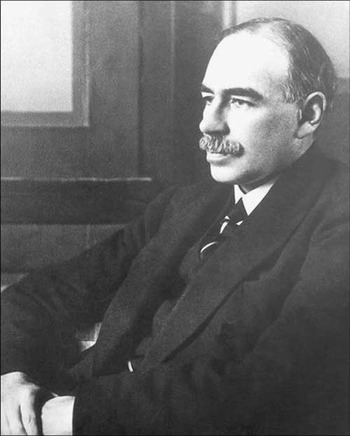
I have left the most topical name on the list until last – at least the most topical in terms of the financial turmoil we face today. This was the distinguished economist John Maynard Keynes (Figure 15), who was working on his magnum opus entitled The General Theory of Employment, Interest and Money,Reference Clarke15 published in 1936. He sympathized with Beveridge's plan to help the German academics without, however, devising a way to fund it.
John Maynard Keynes. Reproduced with permission from the Council for Assisting Refugee Academics.

The inevitable onslaught
With hindsight, we can now see that 1933 was the beginning of the inevitable onslaught that would lead to the Second World War and systematic genocide. And yet, at that time, six years before the war, most people would have dismissed any suggestion that lives were actually in danger. Not even a man of the greatest scientific imagination, such as the Nobel Laureate Professor A.V. Hill, who, as we have seen, played a major role in the establishment of the AAC, could as yet foresee the full evil of the Nazis. Hill wrote to Lord Beveridge in 1934, stating that ‘It is not that these academics will perish as human beings, but that as scholars and scientists, they will be heard of no more, since they will have to take up something else in order to live.’
At that time, almost incredibly, there was no fear on Hill's part for the lives of the dismissed scientists. The only thing that seemed clear then was that knowledge and learning were threatened by the petty-minded and vindictive edicts of a racial nature, and that much important scientific work was in danger of being lost because dedicated people with fine minds were being denied the chance to work. As we know only too well, those who had not left Germany before the outbreak of war in 1939 did, in fact, perish.
One experience that should have alerted Hill to the real nature of the Nazi regime was an exchange with Professor Johannes Stark. Stark was a well-known physicist and Nobel Laureate. He was also a strong supporter of the Nazi Party and, in fact, was regarded as the scientific ‘Gauleiter’ of the regime. Soon after the establishment of the Nazi regime, he took Hill to task, in correspondence published in the scientific journal Nature, for denouncing the Nazis for persecuting Jewish and ‘dissident’ scientists. Stark's contention was that there was ‘no factual basis for Hill's remarks’, but the Nazi government had been ‘obliged to protect itself against disloyal persons’. He even went so far as to write to Lord Rutherford, a Nobel Laureate of the greatest distinction and former President of the Royal Society, asking him to stop Hill making ‘dangerous statements’.
Stark was under the impression that, in Britain, Rutherford had the same dictatorial authority that he himself enjoyed under the Nazi system. And, furthermore, he should have known that Rutherford was the first President of the AAC in 1933. Although this correspondence dealt with serious matters, Hill dismissed it with some humour, remarking ‘laughter is the best detergent for nonsense’. But Hill perhaps did not realize that humour was no laughing matter for the likes of Stark.
An event occurred in 1936 involving prominent members of the AAC that is worth recording.
It was the occasion when Germany's oldest university, Heidelberg, founded in 1386, was celebrating its 550th anniversary. As one could imagine, the Nazis wished to make international propaganda out of this occasion and the students’ motto was ‘the days of supremacy of intellect are over’. It should be noted that the words ‘intellect and culture’ to the Nazis were invariably associated with Jews. This anniversary coincided with the 1936 Olympic Games held in Berlin. Heidelberg invited universities from other countries to join the celebrations and thus hoped to legitimize the Nazi's repugnant acts of discrimination.
This led to a vigorous debate again in the columns of The Times, initiated by a letter from the Bishop of Durham (Figure 16), Herbert Hensley Henson, in which he strongly opposed the acceptance of the Heidelberg invitation, having regard to the manner in which it and other German universities were persecuting scholars on racial grounds. Henson was a leading Anglican priest, a strong opponent of ‘appeasement’ to Hitler and uncompromising in his condemnation of the anti-Semitic policies of Nazi Germany. He was one of Winston Churchill's staunchest allies.
Bishop of Durham (Herbert Hensley Henson). Reproduced with permission from Lambeth Palace.

The Bishop of Durham was strongly supported by, amongst many others, Sir Frederick Gowland Hopkins (Figure 17), the Nobel Prize-winning Cambridge biochemist.
Frederick G. Hopkins. Reproduced with permission from the Royal Society.

An opposing view was held by other establishment figures, such as Sir Josiah Stamp and Sir Ian Hamilton, the latter claiming that the rise of Hitler was all the fault of the Versailles Treaty, and urged the British universities to ‘go and see’ for themselves before they severed ties with German universities.
Beveridge entirely agreed with the Bishop of Durham in this raging debate and said there was no need to go to Germany to see how the universities were acting, when so many of their Jewish academic colleagues had been driven into exile, as anyone with his eyes open could readily see.
It was, of course, clear that the Heidelberg celebrations were not an academic but a political affair, which was confirmed with speeches by the Rector and Goebbels. Beveridge's view was fully endorsed by A.V. Hill, Gowland Hopkins and Frederic Kenyon, and few people had any doubts as to the correctness of the line taken. At these celebrations, the flags of 32 countries whose universities and colleges had sent delegations were hoisted. However, the British Union Jack was absent. Every one of the British universities had stayed away to their great credit, inspired by these already-mentioned great highly principled men.
Of course, there was, as one might expect, a lack of universal support in Britain for the admission of refugees or providing financial aid. While attempting to raise funds for the AAC, Lord Rutherford received the following letter from a fellow member of the House of Lords:
Dear Lord Rutherford
I received a communication from you enclosing an appeal signed by various leading men (who ought to have known better) appealing to augment the £28,000 already spent on finding jobs for exiles.
I could have contemplated, with equanimity, the spending of £28,000 to keep them out, but I conceive it an act of treachery to spend a penny to bring them in, to deprive our countrymen of posts in an over-crowded profession.
… To support this appeal for international iconoclasts in the name of science is debasing the peerage!
This kind of covert anti-Semitism, sometimes quite blatant, was a feature of life on both sides of the Atlantic. The case of Breckinridge Long,Reference Newton16 in charge of the State Department's Immigrant Visa Section between 1940 and 1944, comes to mind. Long did his utmost to impede the flow of refugees from Nazi Germany into the USA. He met his match, however, in the person of Eleanor Roosevelt, who did her level best to circumvent his influence by appealing directly to the President, who objected, nevertheless, to Eleanor labelling Breckinridge Long a Fascist. It would seem that Breckinridge Long was finally dismissed when the Treasury Secretary, Henry Morgenthau, directly intervened with the President.
By the summer of 1933, the work of the AAC was in full swing. A committee, mainly of scientists, was quietly and persistently going through the paper work, considering each case without fear or favour, including those of people with worthy, rather than exciting, academic credentials. Rutherford now wrote to the vice-chancellors of all the British universities: ‘We shall be glad to hear from you if your University is in a position to find openings for any of those recommended men and women’. He also asked for financial assistance. Most of the vice-chancellors responded positively, if cautiously. They were prepared to make facilities available, but were less certain about the granting of funds. One university blamed the economic malaise; others refused without giving any reasons.
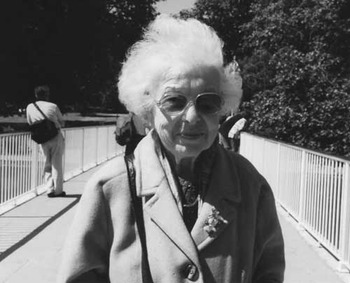
Tess Simpson (Figure 18) was at the centre of the AAC and of the Society for the Protection of Science and Learning (SPSL), as the Council was renamed in 1937. Under her watchful and sympathetic eye, this specialist employment exchange for displaced academics had over 2000 members registered on its books and grew into a powerful international force for good, making contacts with similar organizations all over the free world.
Dr Tess Simpson (June 1995). Reproduced with permission from the Council for Assisting Refugee Academics.

The memoirs of Tess Simpson, entitled Refugee Scholars,Reference Simpson17 are a wonderful source of information about the period. She had worked in Breslau and Vienna and was fluent in German. She was Jewish by birth, although she never said so, perhaps for some of the political reasons already mentioned. She seemed proud to be part of a huge national effort to save the academics, rather than part of a specifically Jewish organization. Music was very important to her. She was a fine violinist and chamber music player. Through her interests in the arts she made friends with a range of refugees who were not scientists, such as the distinguished art historian Ernst Gombrich, the great Schubert scholar Otto Erich Deutsch, the violinist Max Rostal, the members of the Amadeus String Quartet, the architectural historian Nicolaus Pevsner and the philosopher Karl Popper.
In November 1938, during the notorious Kristallnacht, the Nazis burned down more than 1000 synagogues in Germany, and arrested thousands of Jews. As a result, the British government agreed to admit 10,000 Jewish children from Nazi Germany, who were absorbed by kind and generous British families or placed in hostels.
Concluding remarks
Of course, we have touched on only the very beginnings of the ACC, known incidentally in modern times as CARA – the Council for Assisting Refugee Academics. In confining ourselves to the years before 1938, we have not reached the annexation of Austria, much less the war itself, and the numerous problems that arose with the internment of all German nationals. The AAC, A.V. Hill and Tess Simpson, and many other scientific personalities, were able to take many of these people out of internment and place them in employment. After the war there was ever-continuing work with academics from many other countries who found themselves unable to make their living because of political pressure of very different kinds. It was an endless struggle, and what has been done by CARA and its antecedents since its modest beginnings is beyond praise.
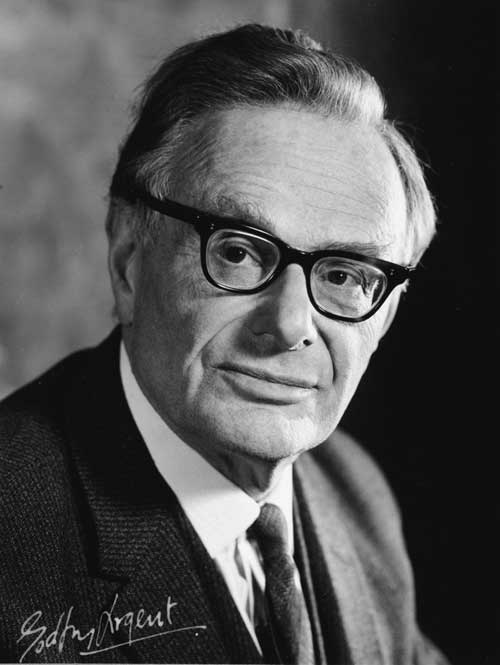
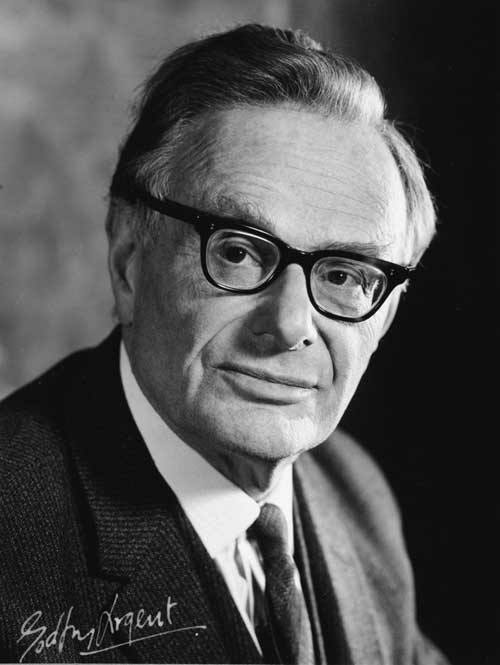
Sir Hans KrebsReference Krebs18 (Figure 19), the distinguished Nobel Prize-winning refugee biochemist, quoting Karl Zuckmayer, the author and himself a refugee from Nazi Germany, said ‘Home is not where a man is born, but where he wants to die, where he wants to carry out his life, and bring it to a close as is ordained. It is where he has put his roots down into the earth, which he has broken by his own toil’.
Sir Hans Krebs. Reproduced with permission from the Council for Assisting Refugee Academics.
Another distinguished refugee from Hungary, Arthur Koestler,Reference Koestler19 described the culture of the British as ‘A civilisation which admired character instead of brains, stoicism instead of temperament, nonchalance instead of diligence, the tongue-tied manner, instead of the art of eloquence’.
According to Koestler, it is the European with his brains and temperament, his hard work and his eloquence who seems the easier person to admire – rather than the hearty, inexpressive emotionally relatively cold British stereotype.
Sir Hans Krebs summed upReference Krebs18 for us all what it had been like to live in England and to have become part of the family of British scientists. Here, he defines the British way of life as he experienced it in Hopkin's laboratory in Cambridge, and these wise and perceptive words have reverberated round the world:
The laboratory included people of many different dispositions, connections and abilities. I saw them argue without quarrelling, quarrel without suspecting, suspect without abusing, criticise without vilifying or ridiculing, and praise without flattering. … Which other language uses in its everyday life phrases equivalent to ‘fair play’, ‘gentleman's agreement’, ‘benefit of the doubt’, ‘give him a chance’, and ‘understatement’?
When the AAC was first established 75 years ago, from the two small attic rooms of the Royal Society at Burlington House, A.V. Hill wrote the following words, as terse and to the point as any scientific formula, and something that remains forever true and must always be remembered:
Tolerance and intellectual freedom cannot be established once and for all in human society, but demand continual watchfulness and effort.
Acknowledgements
This article was first presented to members of the Harvard Faculty on 7 May 2010, and is based on a lecture given at the Royal Society, London, on 3 December 2008 to mark the 75th Anniversary of the establishment of the Academic Assistance Council (AAC) in 1933 in Britain. This Council was created as a result of the dismissal and persecution of academics, for the most part Jewish, shortly after the Nazis assumed power in Germany in January 1933. Subsequently, a modified version was presented on 3 November 2009 at Imperial College of Science and Technology, London.
The author wishes to express his gratitude and thanks to Dr Marshall Goldman for extending an invitation for him to address members of the Harvard Faculty Society at Cambridge, MA, USA, and for chairing the lecture on 7 May 2010.
Sir Ralph Kohn FRS is a pharmacologist, entrepreneur and musician. He won a scholarship to Manchester University, where he obtained a PhD in pharmacology and subsequently carried out postdoctoral research in Rome and New York. After some years as a senior executive in the pharmaceutical industry, he established the first independent medical research organization in the UK for evaluating new therapeutic treatments. For services to the pharmaceutical industry, he received the Queen's Award for Export Achievement. He was elected an Honorary Fellow of the Royal Society (FRS) for contributions to science. In addition to numerous awards and honours, he was knighted for ‘services to science, music and charity’.