




No CrossRef data available.
Article contents
Mixed infections of trypanosomes in tsetse and pigs and their epidemiological significance in a sleeping sickness focus of Côte d'Ivoire
Published online by Cambridge University Press: 18 November 2004
Abstract
In a sleeping sickness focus of Côte d'Ivoire, trypanosomes were characterized in humans, pigs and tsetse using various techniques. Out of 74 patients, all the 43 stocks isolated by KIVI (Kit for In Vitro Isolation) appeared to belong to only one zymodeme of Trypanosoma brucei gambiense group 1 (the major zymodeme Z3). The only stock isolated on rodents belonged to a different, new, zymodeme (Z50), of T. b. gambiense group 1. From 18 pigs sampled in the same locations as the patients, PCR showed a high proportion of mixed infections of T. brucei s. l. and T. congolense riverine-forest. Zymodemes of T. brucei s. l. from these pigs were different from those found in humans. From a total of 16260 captured tsetse (Glossina palpalis palpalis), 1701 were dissected and 28% were found to be infected by trypanosomes. The most prevalent trypanosome was T. congolense riverine-forest type, followed by T. vivax, T. brucei s. l. and T. congolense savannah type, this latter being associated to the forest type of T. congolense in most cases. Mixed infections by 2 or 3 of these trypanosomes were also found. Use of a microsatellite marker allowed us to distinguish T. b. gambiense group 1 in some of the mature infections in tsetse. Differences in infection rates and in trypanosome genotypes according to the host might indicate that the pig may not be an active animal reservoir for humans in this focus.
Keywords
Information
- Type
- Research Article
- Information
- Copyright
- © 2004 Cambridge University Press
INTRODUCTION
The protozoan parasite Trypanosoma (Trypanozoon) brucei is the aetiological agent of Human African Trypanosomosis (HAT, or sleeping sickness) in man, and nagana in animals. The human disease is a major public health problem in Africa (WHO, 1998), and the economic impact of the animal disease is a severe constraint for the development of this region. In addition to Trypanozoon, 2 other subgenuses are involved in nagana, Nannomonas (T. congolense) and Duttonnella (T. vivax), all being transmitted to the mammalian host by an infected tsetse during its bloodmeal.
In West Africa, the main vector is Glossina palpalis, and the pathogenic trypanosome for humans is T. b. gambiense. A major problem in the epidemiology of human disease is that T. b. gambiense is hardly differentiable from the ‘animal’ trypanosome T. b. brucei. Moreover T. b. gambiense has been found so scarcely in tsetse that our knowledge of transmission still suffers many gaps (Frezil & Cuisance, 1994), including the importance of an animal reservoir for the gambiense disease (Van Hoof, Henrard & Peel, 1937; Gibson et al. 1978; Mehlitz et al. 1982). In addition, controversy has occurred on the subspecies classification of T. brucei s. l. The only group which can be considered as a taxonomic unit is the one defined as T. b. gambiense group 1 (Gibson, 1986), which represents 80% of all West and Central African human isolates. Other trypanosome strains isolated from humans in West and Central Africa which did not belong to this group were classified in a heterogeneous T. b. gambiense group 2, or Bouafle group (Godfrey et al. 1990).
The development of molecular techniques applied to trypanosomosis, like DNA probes or PCR (Kukla et al. 1987; Moser et al. 1989; Majiwa et al. 1993) brought new insights on the epidemiology of the disease, first on animal trypanosomes with the discovery of many more multiple infections of different trypanosome groups in tsetse than previously suspected (Majiwa et al. 1994; Solano et al. 1995; Masiga et al. 1996). In the human disease, molecular studies to identify trypanosomes in tsetse and mammalian host remain scarce (but see McNamara et al. 1995; Morlais et al. 1998), certainly due to the lack of molecular markers able to distinguish ‘human’ and ‘non human’ trypanosomes within T. brucei s. l., although markers have been found in T. b. rhodesiense that can do this differentiation (Welburn et al. 2001; Radwanska et al. 2002). Here, in order to better understand tsetse/trypanosomes relations, we tried to characterize, by parasitological techniques and recently developed molecular markers, the trypanosomes found in the same place at the same time in tsetse, human host (patients), and one of the most suspected of potential animal reservoirs, the pig.
MATERIALS AND METHODS
The HAT focus of Bonon is located in Central West Côte d'Ivoire (6°55′N–6°W). Between 2000 and 2001, a medical survey was done on humans, followed by a survey on pigs located where the patients had been diagnosed. An entomological survey was also implemented at each season of the year in the area (see below).
Survey on humans and pigs; trypanosome isolation and molecular techniques
An exhaustive medical survey was implemented by the National Control Program of HAT to detect HAT cases, preceded by an exhaustive individual census of the entire population of the area (Solano et al. 2003). Sleeping sickness cases were detected by a classical procedure involving CATT test on blood and plasma (Card Agglutination Test for Trypanosomosis, Magnus et al. 1978), followed by mini-Anion Exchange Centrifugation Technique (mAECT, Lumsden et al. 1979), or lymph node examination when adenopathy was present. From each patient, 5 ml of blood were inoculated in a KIVI kit for trypanosome isolation (Aerts et al. 1992), followed by multiplication in axenic culture medium (Cunningham, 1977) according to the protocol described by Truc et al. (1992). The pellets of parasites were conserved in liquid nitrogen until use.
From a subsample of 16 of these patients (the first 16 who gave their consent), the blood was also inoculated in mice for another procedure of trypanosome isolation (mice isolation, MI). In detail, 0·5 ml of blood, from a heparinized tube, was injected intraperitoneally into 2 mice. The mice were inoculated with cyclophosphamide (Endoxan, 300 mg/kg) 2 days after blood injection, and then every 5 days. The mice were followed up every 3 days, from the 6th day after inoculation for a period of 2 months, by microscopical examination of tail blood. When parasitaemia became high (108 trypanosomes/ml), blood from the mouse was inoculated in rats. When the parasitaemia in the rat reached 108 trypanosomes/ml, a cardiac puncture was performed, and trypanosomes from the blood were filtered by using a macro-anion exchange column. The pellets of parasites were conserved into liquid nitrogen until required.
Blood was also taken from 18 pigs from the medical survey area. For each pig blood sample, parasitological diagnosis was performed by microscopical examination of the buffy coat (HCT, Murray et al. 1977), and each blood sample was inoculated both to KIVI and to mice for trypanosome isolation as described above.
MultiLocus Enzyme Electrophoresis (MLEE) was implemented to identify trypanosome zymodemes in humans and pigs. Proteins were extracted from the pellets of parasites previously grown by KIVI and MI according to the method of Truc, Mathieu-Daude & Tibayrenc (1991). Stocks were characterized by MLEE on cellulose acetate plates (Helena®) and 10 enzymatic systems representing 13 loci were revealed: ALAT (EC 2.6.1.2), GOT (EC 2.6.1.1), Nhi (EC 3.2.2.1), Nhd (EC 3.2.2.1), ME (EC 1.1.1.40), PEP-2 (EC 3.4.11), MDH (EC 1.1.1.37), IDH (1.1.1.42), PGM (EC 2.7.5.1), SOD (EC 1.15.1.1) (see Jamonneau et al. 2002 for details). For the analysis procedure, a UPGMA dendrogram was built starting with the Jaccard genetic distances (d, Jaccard, 1908) calculated from MLEE results to determine the relationships between stocks (Sneath & Sokal, 1973). Reference stocks of T. b. gambiense group 1 and Bouafle group were included, as well as stocks of T. congolense-like groups for the UPGMA comparison.
PCR with satellite and microsatellite markers was implemented on a subsample of 10 pigs to identify the trypanosome species/group which had been detected. A simple 1% Chelex treatment derived from the method of Walsh, Metzger & Higuchi (1991) was used to obtain DNA for PCR reactions (see Solano et al. 1999 for details). The following primers were used: TBR1-2 (Moser et al. 1989), specific for T. brucei s. l., TCF 1-2 (Masiga et al. 1992), specific for T. congolense West African Riverine Forest (T. congolense F), TCS 1-2 (Majiwa et al. 1993), specific for T. congolense Savannah (T. congolense S). T. vivax primers were not used in pigs because of known refractoriness of the pig for this trypanosome (Kageruka, 1987). In addition, on all the trypanosome pellets (from humans and pigs grown by KIVI and MI), another primer pair was used: TRBPA 1-2, the product of which, a 149 bp fragment, has been reported to be specific for T. b. gambiense group 1 (Herder et al. 2002; Truc et al. 2002). A negative control was included at each chelex procedure and within each PCR reaction.
Entomological survey, tsetse dissection, sample collection
Following the medical survey, the key sites (home, water supply points, working places) of the dwellings of each patient was recorded by use of a Global Positioning System (GPS) and subsequently 320 Vavoua traps (Laveissière & Grébaut, 1990) were settled in the area frequented by the patients. The captures were done in November 2000 (end of rainy season), January 2001 (cold dry season), April 2001 (end of hot dry season), and July 2001 (beginning of rainy season). Each trap remained for 4 days, with cages changed daily, and tsetse count, sex ratio, and dissection done daily. For the dissection, the mouthparts were first removed to prevent contamination from the midgut, and dissecting instruments were cleaned between each organ dissection with sodium hypochlorite, followed by rinsing in sterile water. Each organ (mouthparts, salivary glands, midgut) was put into a separate Eppendorf tube containing 30 μl of sterile distilled water.
For the PCR, we used the same 1% Chelex procedure as described above, and the same PCR primers as for the pigs (TBR 1-2, TCS1-2, TCF 1-2, TRBPA 1-2). In addition, primers specific for T. vivax were also used (TV1-2, Masiga et al. 1992).
RESULTS
Humans
Out of 15 227 people who came to the survey, 74 patients were found to have HAT, which gave a prevalence of 0·48% (0·47-CI95-0·49).
From each of the 74 KIVI inoculated, 43 (58·1%) were successfully grown and trypanosomes were isolated. They all were shown to belong to the major zymodeme 3 of T. b. gambiense group 1 by MLEE (as Sique reference stock, see Fig. 1). From the 16 human stocks inoculated in mice, only 1 was successfully isolated (1 Human/MI). It was shown to have a different genotype (zymodeme 50) from all those isolated by KIVI. Using the diagnostic microsatellite marker TRBPA 1-2, the 149 bp band specific for T. b. gambiense group 1 was observed in all these samples, whatever the isolation method.

Fig. 1. Dendrogram showing genotypes obtained by MLEE on trypanosomes isolated from humans and pigs by mice inoculation and KIVI. The reference stocks are in italics and are preceded by their zymodeme number. The stocks obtained in the present study are underlined, are also preceded by their zymodeme number, and are followed by the host of origin (ex: sample Z48 19 MI/pig, is sample number 19, isolated from pig by mice inoculation, and belongs to zymodeme 48).
Pigs
By HCT, 4 pigs were found to be infected with trypanosomes. Out of 18 pigs, 13 T. brucei stocks were isolated by KIVI (72%), from which 8 were also isolated by MI (see Table 1). By PCR using satellite sequences on a subsample of 10 pigs, mixed infections involving T. brucei s. l. and T. congolense F were found in 9 pigs. In the 10th pig only T. brucei s. l. was found. No T. congolense S was detected in any of the pigs. All the T. congolense F which were identified by PCR were no longer present after isolation by KIVI or MI.
Table 1. Results of trypanosome detection and isolation in pigs by various techniques (From 18 pigs, the search for trypanosomes was done first on the field using a parasitological technique (HCT, 2nd column). Blood was taken and returned to the lab, PCR was implemented for various species/groups of trypanosomes (3rd column) on some of the pigs (N.D.: not done). Mice and KIVI (4th and 5th columns) were also inoculated on the field and culture performed in the lab for trypanosome stocks which grew (see text for details). PCR/TRBP was then implemented on isolated stocks to check for the 149 bp allele specific for T. b. gambiense group 1 (6th column).)

By MLEE, all the stocks isolated from pigs by KIVI and MI were different (but very close) to those isolated from humans and belonged to distinct T. brucei s. l. zymodemes, namely Z44 to Z49 (see Fig. 1). Details concerning the reference stocks have been reported by Jamonneau et al. (2003), from which Fig. 1 was modified by adding the human stock isolated by MI (1 Human/MI). When a stock was isolated simultaneously by the two techniques from each single pig, 2 different zymodemes of T. brucei were observed (already published by Jamonneau et al. 2003). Using TRBPA1-2, the 149 bp band specific for T. b. gambiense group 1 was detected in 9 trypanosome stocks isolated by KIVI (see Table 1) and in 1 stock isolated by MI (sample no. 6).
Tsetse
Parasitological results
During the 4 tsetse surveys between 2000 and 2001, a total of 16260 tsetse belonging to G. p. palpalis were caught, giving an apparent density of 3·19 flies/trap/day. From these, 1701 flies could be dissected. The parasitological infection rate obtained by dissection followed by microscopical examination was 28·1% [26·1-CI95-30·1] (i.e. 478 flies were seen harbouring trypanosomes in either the midgut, the salivary glands, or the mouthparts).
Only 1 tsetse individual was found to be infected by trypanosomes in the salivary glands, which gives a T. brucei s. l. infection rate of 0·06% as determined by dissection. From the infected tsetse, 52·9% were infected in the midgut only, 27% in the mouthparts only (presumably T. vivax), and 19·6% had a concomitant infection of the midgut and the mouthparts (presumably T. congolense).
PCR results on infected tsetse
Because of logistical constraints, only 382 out of the 478 infected flies could be analysed by PCR. For each infected tsetse, PCR was implemented on mouthparts, salivary glands, and midgut. From these, 143 infections were due to T. congolense F (37·4%) which was the most prevalent, followed by T. vivax (95 occurrences, 24·9%), T. brucei s. l. (52 occurrences, 13·6%), and T. congolense S (16 occurrences, 4·2%). A total of 143 tsetse (37·4%) positive for trypanosomes by microscopy did not give any PCR signal (note that the total number of infections is more than 382 because of mixed infections).
Extended to all the dissected flies, the infection rates by species or groups of trypanosomes would give the following: 10·5% for T. congolense F, 6·9% for T. vivax, 3·8% for T. brucei s. l., 1·1% for T. congolense S as determined by PCR (see Fig. 2).

Fig. 2. PCR infection rates by species or groups of trypanosomes. Results obtained by PCR on the infected tsetse, extended to all dissected tsetse. Tcf: Trypanosoma congolense ‘West African riverine forest’ type; Tcs: T. congolense ‘Savannah’ type; Tb: T. brucei s. l.; Tv: T. vivax; nr: ‘not recognized’, i.e. infections detected by microscopy which did not give any amplification signal by PCR with the primers used. Tbg: T. brucei gambiense group 1. See text for the definition of ‘mature infection rate’, according to trypanosome species.
From the 382 dissected tsetse analysed by PCR, 59 were infected by more than one trypanosome. The more frequent associations were: T. congolense F and T. brucei s. l. (16), and T. congolense F and T. vivax (16), followed by T. congolense F and T. congolense S (11), and T. brucei s. l. and T. vivax (8). T. congolense S and T. vivax was the less common association (1 case). In some tsetse, 3 different trypanosomes were observed (6 cases), even 4 (in 1 tsetse).
It has to be noted that of 16 infections with T. congolense S, it was found 15 times with another trypanosome. From 52 tsetse infected with T. brucei s. l., 31 (59·6%) also harboured another trypanosome group.
Mature infections
For T. congolense, an infection was scored as mature if trypanosomes were found by PCR in either the proboscis and midgut concomitantly, or in the proboscis alone. In the latter case, we assume a disappearance of old T. congolense infections in the midgut, as previously described (Jordan, 1964).
For T. congolense F, 93 out of the 143 infections (65%) were mature. For T. congolense S, 12 out of 16 (75%) were mature. Hence, the mature infection rates for these trypanosomes in this study are: 6·8% for T. congolense F, and 0·8% for T. congolense S (see Fig. 2). Among the 12 mature infections of T. congolense S, all were mixed with other trypanosomes: in 10 tsetse, it was associated with mature infections of T. congolense F (among which, one also with T. brucei s. l., and one with T. brucei s. l. and T. vivax), in one tsetse it was with T. vivax, and in the latter with T. brucei s. l. and T. vivax.
For T. brucei s. l., an infection was considered as mature if both salivary glands and another organ (proboscis and/or midgut) were found simultaneously positive by PCR. Of the 52 tsetse found infected with T. brucei s. l., 14 had such mature infections. This would give a total mature infection rate of T. brucei s. l. of 1% (see Fig. 2). On these 14 tsetse having mature T. brucei s. l. infections, we used the T. b. gambiense group 1 specific primer set (TRBPA1-2, see Fig. 3). Seven of them showed the specific 149 bp band of T. b. gambiense group 1 at least in the salivary glands (Table 2). This would give a 0·5% infection rate of mature T. b. gambiense group 1 as determined by PCR.

Fig. 3. Acrylamide gel with TRBPA showing the 149 bp fragment diagnostic of Trypanosoma brucei gambiense group 1 in reference stocks and in salivary glands and midguts from field-caught tsetse. Lanes 1 and 15: molecular marker (M4, Eurogentec), Lane 4: negative control, Lane 8: Trypanosoma brucei gambiense group 1 reference stock (Jua, Truc et al. 1991). Lane 9: T. b. gambiense group 1 reference stock (Peya, Truc et al. 1991). Lane 10: T. b. brucei reference stock (Stib215, Gibson et al. 1978). Lanes 2 and 3: salivary gland and midgut of a tsetse infected by T. b. gambiense group 1 in these two organs, Lanes 5, 6 and 7: salivary gland, midgut, and proboscis of a tsetse infected by T. b. gambiense group 1 in the midgut only, Lanes 11, 12 and 13: salivary gland, midgut, and proboscis of a tsetse infected by T. b. gambiense group 1 in the salivary glands and midgut, Lane14: midgut of a tsetse in which T. b. gambiense group 1 was not found.
Table 2. PCR results on tsetse having mature Trypanosoma brucei infections (See text for definition of mature T. brucei infections; + positive; − negative. For PCR results, i.e. with PCR using TBR1-2, TCF1-2, TCS1-2, TV1-2 primer pairs, positive=presence of the band at the expected size. For TRBPA1-2 primer pair, positive=presence of the 149 bp fragment specific for T. b. gambiense group 1. T.c.f.: T. congolense ‘West African riverine forest’ type; T.c.s.: T. congolense ‘Savannah’ type; T.b.: T. brucei s. l.; T.v.: T. vivax. T.b.g. group 1: T. brucei gambiense group 1. For instance, tsetse no. 3 is infected by T. brucei s. l., T. congolense F and T. vivax. Tsetse no.6 is infected by T. b. gambiense group 1.)

Out of these 7 T. b. gambiense group 1 infections in the salivary glands, only one was a mixed infection involving another trypanosome (T. congolense F). Whereas of the 7 T. brucei s. l. infections that were not recognized as gambiense, 5 were mixed with other trypanosomes (see Table 2).
DISCUSSION
This study carried out in the HAT focus of Bonon in Côte d'Ivoire was performed to more clearly understand trypanosomes/tsetse/human and animal relations by characterizing trypanosomes found in the same place at the same time in these various potential or actual components in HAT epidemiology.
First, in humans, as expected using KIVI, only 1 zymodeme of T. b. gambiense group 1 was observed by MLEE, the predominant zymodeme Z3. Jamonneau et al. (2002) already reported this strong monomorphism, which was subsequently attributed to the selective nature of KIVI (Jamonneau et al. 2003). Here indeed, the only stock isolated from a patient by MI (Z50) was found to be genetically different by MLEE from all those isolated by KIVI (Z3), although both were shown to belong to T. b. gambiense group 1 by the TRBPA 1-2 marker. As isolation and culture stages probably select genotypes, the real genetic diversity of T. b. gambiense in humans must be higher than previously observed. For instance, multiple infections by different genotypes of T. brucei s. l. have recently been reported in patients (Truc et al. 2002; Jamonneau et al. 2004), as well as in tsetse (Letch, 1984). This strongly suggests that direct identification of trypanosomes within blood, without involving isolation and culture stages should be used in the future, provided that sensitive and specific molecular markers are available.
In our sample of 18 pigs, a high trypanosome prevalence was observed (72·2%), in accordance with previous studies (Mehlitz, 1986). The high prevalence of mixed infections of T. congolense F and T. brucei s. l. in pigs also confirms previous results (Mehlitz, 1986; Noireau et al. 1986), with additional information here on the T. congolense molecular group. We also noted that on pigs infected with these two trypanosome species, following a culture step (with both KIVI and MI) T. brucei s. l. always outcompeted T. congolense F which systematically disappeared.
Jamonneau et al. (2003) recently showed by MLEE that zymodemes of T. brucei s. l. on a single pig were different according to the isolation method used (KIVI and MI). In the present work, in contrast to other studies (Gibson et al. 1978; Mehlitz et al. 1982), zymodemes found in pig by MLEE were all different (albeit very close) to those found in humans whatever the isolation method used. By PCR with TRBPA 1-2, the specific 149 bp fragment of T. b. gambiense group 1 appeared in some of the stocks, confirming the close relationship between stocks from pigs and from humans.
These results suggest a very high diversity of genotypes of trypanosomes at the intra- (e.g. within T. brucei s. l.) and inter-specific level (e.g. T. brucei s. l. and T. congolense) circulating in pigs in this HAT focus, the majority of them remaining uncharacterized. It appears also that various genotypes circulate in humans, but that the ones which were characterized differ from those found in pigs, although again many genotypes of T. brucei s. l. in humans are still unknown (all those not isolated by MI nor by KIVI).
In tsetse, trypanosome infection rates observed using microscopical examination were higher than generally reported in West Africa (Squire, 1954; Lefrançois et al. 1998), even in Côte d'Ivoire (Croft et al. 1984; Nekpeni et al. 1991). An important number of infections seen by microscopical examination could not be characterized by PCR, as already reported (Solano et al. 1995; Lefrançois et al. 1998; Morlais et al. 1998). This may be attributed to the fact that the range of primers used in this study could not identify all the trypanosomes known to develop in the tsetse gut, e.g. T. simiae, T. varani, Tsavo T. congolense (Hoare, 1972; Majiwa et al. 1993), and also to PCR inhibition due to elements present in the midgut (Ravel et al. 2004).
T. congolense F was the most prevalent trypanosome in G. p. palpalis, as expected in this transitional forest-savannah area around a peridomestic habitat (see also Morlais et al. 1998) where pigs are abundant, and also small ruminants in which T. congolense F can develop. The higher prevalence of T. congolense F in G. p. palpalis, and its common association with T. brucei s. l. in mixed infections strenghtens the idea that there may be a predominant pig/tsetse/pig cycle in this area, also suggested by the reported bloodmeal preferences of G. p. palpalis for the pig (Sané, Laveissiere & Meda, 2000).
T. congolense S was weakly present in G. p. palpalis and, when present, was in most of the cases, associated to its closely related T. congolense F. In Toumodi, which is located in the same country at the same latitude as Bonon but in a savannah area, the reverse was observed in G. longipalpis, i.e. few T. congolense F, but always associated with T. congolense S which was the most prevalent (Solano et al. 1995). It may be that some evolutive mechanisms of association between these 2 trypanosome groups exist that help them to succeed in their transmission cycle in adverse ecological conditions (Solano et al. 2001).
Looking at mature infections, with parasitological detection only 1 salivary gland was found infected with trypanosomes out of 1701 dissected tsetse, which has been classically reported (Hoare, 1972). The use of PCR permitted a higher detection rate for T. brucei s. l. mature infections (in 14 tsetse) (see also Ravel et al. 2003). In addition, using a primer pair specific for the detection of T. b. gambiense group 1, this latter was found in 7 of the 14 mature infections. Eventually, the mature T. b. gambiense group 1 infection rate in tsetse was 0·5%, which is very close to the human prevalence of the disease in this focus (0·48%).
The great number of mixed infections involving 2, 3 or even 4 trypanosome groups in a single tsetse confirms previous results (Masiga et al. 1996; Woolhouse et al. 1996; Lehane et al. 2000), and supports the idea that tsetse can be sequentially infected on the field, at least for T. congolense and T. vivax (Squire, 1954). This might be different for trypanosomes infecting humans, which would infect tsetse mostly at their first bloodmeal (Van Hoof, 1937; Maudlin & Welburn, 1994), thus explaining a lower infection rate in tsetse for these trypanosomes. In addition, we observed in the present study that from the 7 tsetse harbouring a mature infection with T. b. gambiense group 1, only one was infected with another trypanosome, which might mean that either an established T. b. gambiense infection will prevent, in most cases, other trypanosomes from reaching a mature stage (when the first bloodmeal is on an animal), or that a tsetse infected by T. b. gambiense on a human (which occurs not frequently) will feed afterwards more readily on a human. In both cases, it can be assumed that a man/tsetse/man cycle, although occurring much less frequently than a pig/tsetse/pig cycle in this area, can mostly explain by itself the close and low prevalences of T. b. gambiense in tsetse and humans in this focus. Then, looking at the high infection rate of T. brucei s. l. in pigs, it has to be deduced that most of these trypanosomes will probably not be transmitted to humans. In this study, this is strenghtened by the fact that zymodemes found in pigs were all found to be different from those found in humans, although some of them belonged to T. b. gambiense group 1. However, this latter point has to be taken with caution, given that most of the genotypes circulating were not identified because of selection by culture.
Although being quite speculative, these scenarii would suggest that in the field in this area, there are few chances that a human could be infected by trypanosomes originating from pigs via a tsetse.
An interesting outcome of this study is the ability to identify T. b. gambiense group 1 trypanosomes in tsetse, although it is not known if the T. b. gambiense group 1 identified by TRBPA 1-2 in tsetse and in pigs are infective for humans. Another outcome is that the study was conducted in the different hosts of the pathogenic system at the same place and at the same time, and it shows a very high diversity and intense circulation of multiple different trypanosome genotypes of different species and subspecies among the different hosts. It also appears important to study the circulation of animal trypanosomes from which interactions with ‘human’ trypanosomes may help to understand the transmission of the human disease. We are aware that these results only involve this focus and might not be extended to others, and also that our sample of pigs was not sufficient to reach definitive conclusions. In the future, higher numbers and different species of animals should be used. Direct identification of trypanosomes will hopefully be performed without culture steps to avoid sampling bias, because many genotypes of T. brucei have never been isolated and could change the conclusions drawn so far.
Special acknowledgments to all the technicians from HAT team of the Institut Pierre Richet who, despite the war occurring in Côte d'Ivoire, saved all the samples and continued to work under hard conditions. We thank IRD and Service de Coopération et d'Action Culturelle d'Abidjan (SCAC) for their support, and M. Lehane for helpful comments on the manuscript.
References
REFERENCES
AERTS, D.,
TRUC, P.,
PENCHENIER, L.,
CLAES, Y. &
LE RAY, D. (
1992).
A kit for in vitro isolation of trypanosomes in the field: first trial with sleeping sickness patients in the Congo republic.
Transactions of the Royal Society of Tropical Medicine and Hygiene
86,
394–395.CrossRefGoogle Scholar
CROFT, S. L.,
KUZOE, F. A. S.,
RYAN, L. &
MOLYNEUX, D. H. (
1984).
Trypanosome infection rates of Glossina spp. in transitional forest-savannah near Bouflé, Ivory Coast.
Tropical Medicine and Parasitology
35,
247–250.Google Scholar
CUNNINGHAM, I. (
1977).
New culture medium for maintenance of tsetse tissues and growth of trypanosomatids.
Journal of Protozoology
21,
325–329.CrossRefGoogle Scholar
FRÉZIL, J. L. &
CUISANCE, D. (
1994).
Trypanosomiases, maladies d'avenir: leurs perspectives et leurs inconnues.
Bulletin de la Société de Pathologie Exotique
87,
391–393.Google Scholar
GIBSON, W. C. (
1986).
Will the real Trypanosoma brucei gambiense please stand up?
Parasitology today
2,
255–257.Google Scholar
GIBSON, W. C.,
MEHLITZ, D.,
LANHAM, S. &
GODFREY, D. G. (
1978).
The identification of Trypanosoma brucei gambiense in liberian pigs and dogs by resistance to human plasma.
Tropical Medicine and Parasitology
29,
335–345.Google Scholar
GODFREY, D. G.,
BAKER, R. D.,
RICKMAN, L. R. &
MEHLITZ, D. (
1990).
The distribution, relationships and identification of enzymatic variants within the subgenus Trypanozoon.
Advances in Parasitology
29,
1–74.Google Scholar
HERDER, S.,
SIMO, G.,
NKININ, S. &
NJIOKOU, F. (
2002).
Identification of trypanosomes in wild animals from Southern Cameroon using the PCR.
Parasite
9,
345–349.CrossRefGoogle Scholar
HOARE, C. A. (
1972).
The Trypanosomes of Mammals – a Zoological Monograph.
Blackwell Scientific Publications,
Oxford.
JACCARD, P. (
1908).
Nouvelles recherches sur la distribution florale.
Bulletin de la Société Vaudoise de Sciences Naturelles
44,
223–270.Google Scholar
JAMONNEAU, V.,
BARNABE, C.,
KOFFI, M.,
N'GUESSAN, P.,
KOFFI, A.,
SANE, B.,
CUNY, G. &
SOLANO, P. (
2003).
Identification of Trypanosoma brucei circulating in a sleeping sickness focus in Côte d'Ivoire: assessment of genotype selection by the isolation method.
Infection, Genetics and Evolution
3,
143–149.CrossRefGoogle Scholar
JAMONNEAU, V.,
GARCIA, A.,
RAVEL, S.,
CUNY, G.,
OURY, B.,
SOLANO, P.,
N'GUESSAN, P.,
N'DRI, L.,
SANON, R.,
FREZIL, J. L. &
TRUC, P. (
2002).
Genetic characterisation of Trypanosoma brucei ssp. and clinical evolution of Human African Trypanosomiasis in Côte d'Ivoire.
Tropical Medicine and International Health
7,
610–621.Google Scholar
JAMONNEAU, V.,
RAVEL, S.,
GARCIA, A.,
KOFFI, M.,
LAVEISSIERE, C.,
HERDER, S.,
GREBAUT, P.,
CUNY, G. &
SOLANO, P. (
2004).
Genetic characterization of trypanosomes infecting untreated but asymptomatic sleeping sickness patients in Côte d'Ivoire: a new genetic group?
Annals of Tropical Medicine and Parasitology
98,
329–337.Google Scholar
JORDAN, A. M. (
1964).
Trypanosome infection rates in Glossina morsitans submorsitans newst. in Northern Nigeria.
Bulletin of Entomological Research
55,
219–231.CrossRefGoogle Scholar
KAGERUKA, P. (
1987).
Trypanosomose dans les élevages porcins du Bas-Zaïre.
Revue d'Elevage et de Médecine Vétérinaire des Pays Tropicaux
40,
49–53.Google Scholar
KUKLA, B. A.,
MAJIWA, P. A. O.,
YOUNG, J. R.,
MOLOO, S. K. &
OLE-MOI YOI, O. (
1987).
Use of species-specific DNA probes for detection and identification of trypanosome infections in tsetse flies.
Parasitology
95,
1–16.CrossRefGoogle Scholar
LAVEISSIERE, C. &
GREBAUT, P. (
1990).
Recherches sur les pièges à glossines. Mise au point d'un modèle économique: le piège “Vavoua”.
Tropical Medicine and Parasitology
41,
185–192.Google Scholar
LEFRANÇOIS, T.,
SOLANO, P.,
DE LA ROCQUE, S.,
BENGALY, Z.,
REIFENBERG, J. M.,
KABORE, I. &
CUISANCE, D. (
1998).
New epidemiological features on animal trypanosomosis by molecular analysis in the pastoral zone of Sidéradougou, Burkina Faso.
Molecular Ecology
7,
897–904.CrossRefGoogle Scholar
LEHANE, M. J.,
MSANGI, A. R.,
WHITACKER, C. J. &
LEHANE, S. M. (
2000).
Grouping of trypanosome species in mixed infections in Glossina pallidipes.
Parasitology
120,
583–592.CrossRefGoogle Scholar
LETCH, C. A. (
1984).
A mixed population of Trypanozoon in Glossina palpalis palpalis from Ivory Coast.
Transactions of the Royal Society of Tropical Medicine and Hygiene
78,
627–630.CrossRefGoogle Scholar
LUMSDEN, W. H. R.,
KIMBER, C. D.,
EVANS, D. A. &
DOIG, S. J. (
1979).
Trypanosoma brucei: miniature anion-exchange centrifugation technique for detection of low parasitaemias: adaptation for field-use.
Transactions of the Royal Society of Tropical Medecine and Hygiene
73,
312–317.CrossRefGoogle Scholar
MAGNUS, E.,
VERVOORT, T. &
VAN MEIRVENNE, N. (
1978).
A Card-Agglutination Test with stained Trypanosomes (C.A.T.T.) for the serological diagnosis of T. b. gambiense trypanosomiasis.
Annales de la Société belge de Médecine Tropicale
58,
169–176.Google Scholar
MAJIWA, P. A. O.,
MAINA, M.,
WAITUMBI, J. N.,
MIHOK, S. &
ZWEYGARTH, E. (
1993).
Trypanosoma (Nannomonas) congolense: molecular characterization of a new genotype from Tsavo, Kenya.
Parasitology
106,
151–162.CrossRefGoogle Scholar
MAJIWA, P. A. O. &
OTIENO, L. H. (
1990).
Recombinant DNA probes reveal simultaneous infection of tsetse flies with different species.
Molecular and Biochemical Parasitology
40,
245–254.CrossRefGoogle Scholar
MAJIWA, P. A. O.,
THATTHI, R.,
MOLOO, S. K.,
NYEKO, J. H. P.,
OTIENO, L. H. &
MALOO, S. (
1994).
Detection of trypanosome infections in the saliva of tsetse flies and buffy-coat samples from antigenemic but aparasitaemic cattle.
Parasitology
108,
313–322.CrossRefGoogle Scholar
MASIGA, D. K.,
McNAMARA, J. J.,
LAVEISSIÈRE, C.,
TRUC, P. &
GIBSON, W. C. (
1996).
A high prevalence of mixed trypanosome infections in tsetse flies in Sinfra, Côte d'Ivoire, detected by DNA amplification.
Parasitology
112,
75–80.CrossRefGoogle Scholar
MASIGA, D. K.,
SMYTH, A. J.,
HAYES, P.,
BROMIDGE, T. J. &
GIBSON, W. C. (
1992).
Sensitive detection of trypanosomes in tsetse flies by DNA amplification.
International Journal of Parasitology
22,
909–918.CrossRefGoogle Scholar
MAUDLIN, I. &
WELBURN, S. C. (
1994).
Maturation of trypanosome infections in tsetse.
Experimental Parasitology
79,
202–205.CrossRefGoogle Scholar
McNAMARA, J. J.,
LAVEISSIERE, C. &
MASIGA, D. K. (
1995).
Multiple trypanosome infections in wild tsetse in Côte d'Ivoire detected by PCR analysis and DNA probes.
Acta Tropica
59,
85–92.CrossRefGoogle Scholar
MEHLITZ, D. (
1986).
Le réservoir animal de la maladie du sommeil à Trypanosoma brucei gambiense. Etudes et synthèses de l'IEMVT, N°18.
MEHLITZ, D.,
ZILLMANN, U.,
SCOTT, C. M. &
GODFREY, D. G. (
1982).
Epidemiological studies on the animal reservoir of gambiense sleeping sickness. Part III. Characterization of Trypanozoon stocks by isoenzymes and sensitivity to human serum.
Tropical and Medicine Parasitology
33,
113–118.Google Scholar
MORLAIS, I.,
GREBAUT, P.,
BODO, J. M.,
DJOHA, S.,
CUNY, G. &
HERDER, S. (
1998).
Detection and amplification of trypanosomes by PCR in wild tsetse flies in Cameroon.
Acta Tropica
70,
109–117.CrossRefGoogle Scholar
MOSER, D. R.,
COOK, G. A.,
OCHS, D. E.,
BAILEY, C. P.,
McKANE, M. R. &
DONELSON, J. E. (
1989).
Detection of Trypanosoma congolense and T. brucei subspecies by DNA amplification using the Polymerase Chain Reaction.
Parasitology
99,
57–66.Google Scholar
MURRAY, M.,
MURRAY, P. K. &
McINTYRE, W. I. M. (
1977).
An improved parasitological technique for the diagnosis of African trypanosomiasis.
Transactions of the Royal Society of Tropical Medicine and Hygiene
71,
325–326.CrossRefGoogle Scholar
NEKPENI, E. B.,
EOUZAN, J. P. &
DAGNOGO, M. (
1991).
Infection de Glossina palpalis palpalis par les trypanosomes en zone forestière de Gagnoa en Côte d'Ivoire.
Tropical Medicine and Parasitology
42,
399–403.Google Scholar
NOIREAU, F.,
GOUTEUX, J. P.,
TOUDIC, A.,
SAMBA, F. &
FREZIL, J. L. (
1986).
Importance épidémiologique du réservoir animal à Trypanosoma brucei gambiense au Congo. 1. Prévalence des trypanosomoses animales dans les foyers de maladie du sommeil.
Tropical Medicine and Parasitology
37,
393–398.Google Scholar
RADWANSKA, M.,
CHAMEKH, M.,
VANHAMME, L.,
CLAES, F.,
MAGEZ, S.,
MAGNUS, E.,
DE BAETSELIER, P.,
BUSCHER, P. &
PAYS, E. (
2002).
The serum resistance-associated gene as a diagnostic tool for the detection of Trypanosoma brucei rhodesiense.
American Journal of Tropical Medicine and Hygiene
67,
684–690.CrossRefGoogle Scholar
RAVEL, S.,
GREBAUT, P.,
CUISANCE, D. &
CUNY, G. (
2003).
Monitoring the developmental status of Trypanosoma brucei gambiense in the tsetse fly by means of PCR analysis of anal and saliva drops.
Acta Tropica
88,
161–165.CrossRefGoogle Scholar
RAVEL, S.,
MARIANI, C.,
GREBAUT, P.,
JAMONNEAU, V.,
CUISANCE, D. &
CUNY, G. (
2004).
Inhibition of the DNA amplification of trypanosomes present in tsetse flies midguts: implications for the identification of trypanosome species in wild tsetse flies.
Parasite
11, (in the Press).CrossRefGoogle Scholar
SANE, B.,
LAVEISSIERE, C. &
MEDA, H. A. (
2000).
Répartition spatiale et préférences trophiques de Glossina palpalis palpalis dans le foyer forestier de Zoukougbeu (Côte d'Ivoire). Implications épidémiologiques.
Parasite
7,
241–244.Google Scholar
SNEATH, P. H. A. &
SOKAL, R. R. (
1973).
Numerical taxonomy. In
The Principles and Practice of Numerical Classification
(ed. Kennedy, D. & Park, R. B.), p. 573.
W.H. Freeman and Co,
San Francisco.
SOLANO, P.,
ARGIRO, L.,
YAO, Y.,
REIFENBERG, J. M. &
DUVALLET, G. (
1995).
Field application of the Polymerase Chain Reaction to the detection and characterization of trypanosomes in Glossina longipalpis (Diptera: Glossinidae) in Côte d'Ivoire.
Molecular Ecology
4,
781–785.CrossRefGoogle Scholar
SOLANO, P.,
GUÉGAN, J. F.,
REIFENBERG, J. M. &
THOMAS, F. (
2001).
Trying to identify, predict and explain the presence of african trypanosomes in tsetse flies.
Journal of Parasitology
87,
1058–1063.CrossRefGoogle Scholar
SOLANO, P.,
KONE, A.,
GARCIA, A.,
SANE, B.,
MICHEL, V.,
MICHEL, J. F.,
COULIBALY, B.,
JAMONNEAU, V.,
KABA, D.,
DUPONT, S. &
FOURNET, F. (
2003).
Rôle des déplacements des malades dans l'épidémiologie de la Trypanosomose Humaine Africaine dans le foyer de Bonon, Côte d'Ivoire.
Médecine Tropicale
63,
577–582.Google Scholar
SOLANO, P.,
MICHEL, J. F.,
LEFRANÇOIS, T.,
DE LA ROCQUE, S.,
SIDIBÉ, I.,
ZOUNGRANA, A. &
CUISANCE, D. (
1999).
Polymerase Chain Reaction as a diagnosis tool for detecting trypanosomes in naturally infected cattle in Burkina Faso.
Veterinary Parasitology
86,
95–103.CrossRefGoogle Scholar
SQUIRE, F. A. (
1954).
Observations on the incidence of trypanosomes in Glossina palpalis in Sierra Leone.
Bulletin of Entomological Research
45,
797–801.CrossRefGoogle Scholar
TRUC, P.,
AERTS, D.,
McNAMARA, J. J.,
CLAES, Y.,
ALLINGHAM, R.,
LE RAY, D. &
GODFREY, D. G. (
1992).
Direct isolation in vitro of Trypanosoma brucei from man and other animals, and its potential value for the diagnosis of gambian trypanosomiasis.
Transactions of the Royal Society of Tropical Medicine and Hygiene
86,
627–629.CrossRefGoogle Scholar
TRUC, P.,
FORMENTY, P.,
DIALLO, P. B.,
KOMOIN-OKA, C. &
LAUGINIÉ, F. (
1997).
Confirmation of two distinct classes of zymodemes of Trypanosoma brucei infecting man and wild mammals in Côte d'Ivoire: suspected difference in pathogenicity.
Annals of Tropical Medicine and Parasitology
91,
951–956.CrossRefGoogle Scholar
TRUC, P.,
MATHIEU-DAUDE, F. &
TIBAYRENC, M. (
1991).
Multilocus isoenzyme identification of Trypanosoma brucei stocks isolated in Central Africa: evidence for an animal reservoir of sleeping sickness in Congo.
Acta Tropica
49,
127–135.CrossRefGoogle Scholar
TRUC, P.,
RAVEL, S.,
JAMONNEAU, V.,
N'GUESSAN, P. &
CUNY, G. (
2002).
Genetic variability within Trypanosoma brucei gambiense: evidence for the circulation of different genotypes in human African trypanosomiasis patients in Côte d'Ivoire.
Transactions of the Royal Society of Tropical Medicine and Hygiene
96,
1–4.CrossRefGoogle Scholar
VAN HOOF, L.,
HENRARD, C. &
PEEL, E. (
1937).
Rôle du porc comme réservoir de Trypanosoma gambiense.
Comptes Rendus de la Société de Biologie
126,
72–75.Google Scholar
WALSH, P. S.,
METZGER, D. A. &
HIGUCHI, R. (
1991).
Chelex® 100 as a medium for simple extraction of DNA for PCR-based typing from forensic material.
Biotechniques
10,
506–513.Google Scholar
WELBURN, S. C.,
PICOZZI, K.,
FEVRE, E. M.,
COLEMAN, P. G.,
ODIIT, M.,
CARRINGTON, M. &
MAUDLIN, I. (
2001).
Identification of human-infective trypanosomes in animal reservoir of sleeping sickness in Uganda by means of serum-resistance-associated (SRA) gene.
Lancet
358,
2017–2019.CrossRefGoogle Scholar
WORLD HEALTH ORGANIZATION (
1998).
La Trypanosomiase Africaine: Lutte et Surveillance.
WHO Technical Report Series, No. 881.
WHO,
Geneva.
WOOLHOUSE, M. E. J.,
McNAMARA, J. J.,
HARGROVE, J. W. &
BEALBY, K. A. (
1996).
Distribution and abundance of trypanosome (subgenus Nannomonas) infections of the tsetse fly Glossina pallidipes in Southern Africa.
Molecular Ecology
5,
11–18.CrossRefGoogle Scholar
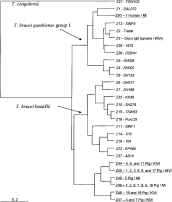
Fig. 1. Dendrogram showing genotypes obtained by MLEE on trypanosomes isolated from humans and pigs by mice inoculation and KIVI. The reference stocks are in italics and are preceded by their zymodeme number. The stocks obtained in the present study are underlined, are also preceded by their zymodeme number, and are followed by the host of origin (ex: sample Z48 19 MI/pig, is sample number 19, isolated from pig by mice inoculation, and belongs to zymodeme 48).
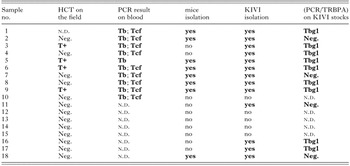
Table 1. Results of trypanosome detection and isolation in pigs by various techniques
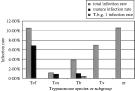
Fig. 2. PCR infection rates by species or groups of trypanosomes. Results obtained by PCR on the infected tsetse, extended to all dissected tsetse. Tcf: Trypanosoma congolense ‘West African riverine forest’ type; Tcs: T. congolense ‘Savannah’ type; Tb: T. brucei s. l.; Tv: T. vivax; nr: ‘not recognized’, i.e. infections detected by microscopy which did not give any amplification signal by PCR with the primers used. Tbg: T. brucei gambiense group 1. See text for the definition of ‘mature infection rate’, according to trypanosome species.
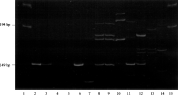
Fig. 3. Acrylamide gel with TRBPA showing the 149 bp fragment diagnostic of Trypanosoma brucei gambiense group 1 in reference stocks and in salivary glands and midguts from field-caught tsetse. Lanes 1 and 15: molecular marker (M4, Eurogentec), Lane 4: negative control, Lane 8: Trypanosoma brucei gambiense group 1 reference stock (Jua, Truc et al. 1991). Lane 9: T. b. gambiense group 1 reference stock (Peya, Truc et al. 1991). Lane 10: T. b. brucei reference stock (Stib215, Gibson et al. 1978). Lanes 2 and 3: salivary gland and midgut of a tsetse infected by T. b. gambiense group 1 in these two organs, Lanes 5, 6 and 7: salivary gland, midgut, and proboscis of a tsetse infected by T. b. gambiense group 1 in the midgut only, Lanes 11, 12 and 13: salivary gland, midgut, and proboscis of a tsetse infected by T. b. gambiense group 1 in the salivary glands and midgut, Lane14: midgut of a tsetse in which T. b. gambiense group 1 was not found.
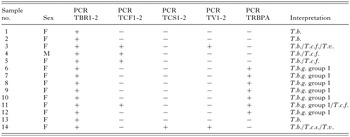
Table 2. PCR results on tsetse having mature Trypanosoma brucei infections
 You have
Access
- 78
- Cited by