INTRODUCTION
Trypanosoma (Trypanosomatidae) is a diverse genus of parasites primarily transmitted by haematophagous arthropods that have been isolated from hosts from all vertebrate classes. They are an important group of parasites, which comprise the causative agents of Human African trypanosomiasis (HAT) and Chagas’ disease in humans and Nagana and Surra in livestock and wildlife. A number of novel trypanosome species have recently been identified in Australian marsupials (Austen et al. Reference Austen, Jefferies, Friend, Adams, Ryan and Reid2009; McInnes et al. Reference McInnes, Gillett, Ryan, Austen, Campbell, Hanger and Reid2009, Reference McInnes, Hanger, Simmons, Reid and Ryan2011).
Two novel trypanosomes, T. irwini and T. gilletti and a marsupial trypanosome known as T. copemani, have been observed in the blood of koalas in Australia (McInnes et al. Reference McInnes, Gillett, Ryan, Austen, Campbell, Hanger and Reid2009, Reference McInnes, Hanger, Simmons, Reid and Ryan2011). The clinical significance of trypanosome infections in koalas is not clear because the majority of infected animals are apparently healthy. However, further investigation of the impact of trypanosome infection is required because a small number of infected koalas exhibited clinical symptoms suggestive of trypanosomiasis (Gillett personal communication; McInnes et al. Reference McInnes, Gillett, Ryan, Austen, Campbell, Hanger and Reid2009). Condition-dependent virulence has been reported in non-pathogenic trypanosome infection (Brown et al. Reference Brown, Schmid-Hempel and Schmid-Hempel2003). Infection with T. theileri has been associated with severe, sometimes fatal, disease in immunosuppressed animals or in the presence of concurrent infections (Ward et al. Reference Ward, Hill, Mazlin and Foster1984; Doherty et al. Reference Doherty, Windle, Voorheis, Larkin, Casey, Clery and Murray1993; Seifi, Reference Seifi1995).
The koala is currently classified as vulnerable to extinction in New South Wales (NSW) under the NSW Threatened Species Conservation Act 1995 No. 101 as Schedule 2 ‘Vulnerable species’ and in part of Queensland (QLd) under the QLd Nature Conservation (Wildlife) Regulation 2006 as Schedule 3 ‘Vulnerable wildlife’. The current vulnerable status of koala populations is due to habitat loss and fragmentation, hunting (fur trade, historical), urban encroachment with increased incidents of motor vehicle strike and dog attacks and a high prevalence of disease.
This study was conducted to provide a better understanding of the epidemiology of T. irwini, T. gilletti and T. copemani in koalas, with respect to geography as well as to host and health factors that may be associated with severe clinical disease and mortality.
MATERIALS AND METHODS
Sources of isolates and sample collection
Whole blood was collected from 595 koalas admitted to the Australian Zoo Wildlife Hospital (AZWH) at Beerwah, QLd between November 2006 and December 2009. The majority of the koalas originated from south-east QLd or northern NSW. The geographical origin (suburb, state), sex, age, body condition score (0–10), reason for admission (injury, illness, orphaned, research study, species management or combinations thereof), blood packed cell volume (PCV; %) and final outcome of admission (unassisted death, euthanasia, rehabilitation or release) were recorded. The numbers of koalas sampled, their state of origin, sex and year of collection are presented in Table 1. Age was estimated from premolar (P4) wear according to a classification system devised by Martin (Reference Martin1981). Body condition scores were assigned using a 10-rank scale, which is a modification of the 5-rank system described by Vogelnest and Woods (Reference Vogelnest and Woods2008). A rank is assigned based on the muscle mass covering the spine of the scapula and temporal fossa in conjunction with the general appearance of the koala. A rank of 1 is an extremely emaciated unhealthy koala and 10 is a well-muscled healthy koala. Full clinical examinations of koalas were conducted by veterinary staff at the AZWH, identifying clinical syndromes such as chlamydiosis, koala acquired immune deficiency syndrome (kAIDS, caused by infection with the koala retrovirus (KoRV)) and bone marrow disease (BMD), as well as trauma-related injuries and blood loss (evidenced by erythrocytes in abdominal tap and/or visible bleeding).
The number of koalas sampled in this study based on state of origin, sex and year

Koalas were anaesthetized by intramuscular administration of 3 mg/kg of alfaxalone (Alfaxan® CD RTU, Jurox Australia) to enable clinical examination and blood collection. Anaesthesia was maintained with a combination of oxygen and isoflurane delivered by either mask or endotracheal intubation. Approximately 0·5–1 ml of blood was collected by venepuncture of the cephalic vein. The packed cell volume (PCV) was determined by centrifugation of blood in 40 mm StatSpin microhaematocrit capillary tubes (Iris Sample Processing, Westwood, MA, USA) using a StatSpin VT (StaSpin Inc, Norwood, MA, USA). Whole blood for DNA extraction was mixed with EDTA in a Vacutainer® tube (Becton-Dickinson, New Jersey, USA) and stored at −20°C until required. Bone marrow samples of approximately 10–20 μl were collected from the iliac crest using an 18 gauge 1·5″ hypodermic needle (Terumo Corporation, Tokyo, Japan) and 3 ml syringe (Becton-Dickinson Medical (S) Pty Ltd, Singapore). A small drop of the samples was spread briefly and gently between 2 slides, air-dried and stained using Diff-Quick. Abdominal paracentesis to obtain peritoneal fluid was performed using a 25 G×¾″ winged infusion set (Terumo Corporation, Tokyo, Japan) and a 3 ml syringe (Becton-Dickinson Medical (S) Pty Ltd, Singapore) inserted through the lateral abdominal wall. An air-dried smear of peritoneal fluid was prepared, fixed by immersion in methanol for 30 sec and stained with Diff-Quick (Dade Behring Diagnostics Australia Pty Ltd, NSW, Australia). The slides were then rinsed in tap water, air-dried and a cover-slip mounted with a drop of water. Stained slides were examined microscopically for the presence of erythrocytes.
DNA extraction
Whole genomic DNA from each blood sample was extracted using a MasterPure™ DNA Purification Kit (EPICENTRE® Biotechnologies, Madison, Wisconsin, USA) with a modified protocol, which allowed extraction of larger volumes of lysed whole blood than the manufacturer's protocol. Briefly, 100 μl of whole blood was mixed with 150 μl of 2×tissue lysis buffer (EPICENTRE® Biotechnologies) and 50 μl of phosphate-buffered saline (PBS) in labelled 1·5 ml vol. Eppendorf tubes. Tubes were vortex-mixed and incubated at 65°C for 15 min, with vortexing every 5 min. After lysis, tubes were cooled on ice for 3–5 min before 200 μl of protein precipitation agent (EPICENTRE® Biotechnologies) was added and tubes vortexed for 15 sec. The tubes were centrifuged at 13 000 g and the supernatant transferred into new labelled tubes. Analytical grade isopropanol (600 μl) was added to each tube and the tubes inverted 40 times. Tubes were centrifuged at 13 000 g for 10 min, supernatant discarded and the DNA pellet washed twice with 70% analytical grade ethanol. The resultant DNA pellet was resuspended in 50 μl of distilled water and stored at −20°C until use. A DNA extraction control (an empty tube treated the same as samples processed) was included with each batch of blood samples to ensure that batch contamination could be identified.
Design of koala trypanosome species-specific primers
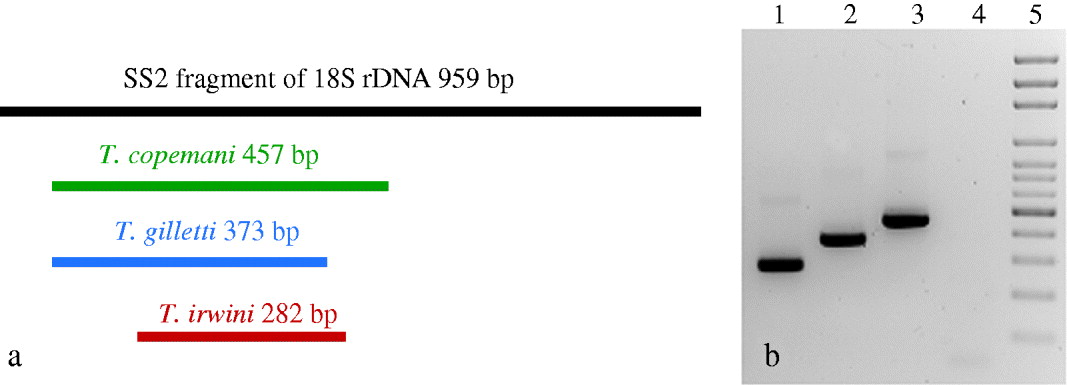
The 18S rDNA sequences of T. irwini (GenBank FJ649479), T. gilletti (GenBank GU966589) and T. copemani (koala) (GenBank GU966588) were aligned using ClustalW (Thompson et al. Reference Thompson, Higgins and Gibson1994) to design species-specific primers in variable regions of the 18S. The primers were designed to nest inside primers S825 (5′-ACC GTT TCG GCT TTT GTT GG-3′) sourced from Maslov et al. (Reference Maslov, Lukes, Jirku and Simpson1996) and SLIR (5′ACA TTG TAG TGC GCG TGT C-3′) from McInnes et al. (Reference McInnes, Gillett, Ryan, Austen, Campbell, Hanger and Reid2009) which amplify a 959 bp fragment (SS2) of Trypanosoma 18S rDNA. Trypanosoma irwini internal primers K1F (5′-CTT CCC TCA ACT CGT GGC TTC-3′) and K1R (5′ -TTA ATA AAT ATT GGC GAG ACG GAG-3′) amplified a 282 bp fragment of the 18S rDNA. Trypanosoma gilletti internal primers K2F (5′-TGCATCTGGTCATCATTGTATG-3′) and K2R (5′-GGC ACC GTC TCT GCT TTA AC-3′) amplified a 373 bp fragment of the 18S rDNA. Trypanosoma copemani internal primers WoF (5′-GTG TTG CTT TTT TGG TCT TCA CG-3′) and WoR (5′-CAC AAA GGA GGA AAA AAG GGC-3′) amplified a 457 bp fragment of the 18S rDNA. The primary PCR referred to as SS2 (primers S825/SLIR) was conducted according to McInnes et al. (Reference McInnes, Gillett, Ryan, Austen, Campbell, Hanger and Reid2009). The nested species-specific PCRs were performed using 1 μl of the primary PCR amplicon in 25 μl reactions containing 1× PCR buffer (with 1·5 mm MgCl2), 0·1 mm dNTPs, 0·8 μ m of each primer and 0·02 U/μl KapaTaq DNA polymerase (Kapa Biosystems, Inc. Woburn, MA, USA). The PCR conditions consisted of a pre-PCR step with 95 °C for 5 min, 50°C for 2 min and an extension of 72°C for 4 min followed by 35 cycles of 94°C for 30 sec, 56°C for 30 sec, an extension of 72°C for 30 sec and a final extension of 72°C for 7 min. A graphical representation and an agarose gel electrophoresis result of the PCR amplicons from the 3 species-specific nested PCRs are presented in Fig. 1.
(a) Graphical representation of the size and position of PCR amplicons generated by the koala trypanosome-specific nested PCRs for the amplification of Trypanosoma copemani, T. gilletti and T. irwini from DNA extracted from the blood of a koala infected with all 3 Trypanosoma spp. (b) An electrophoresis gel of the species-specific nested PCRs performed on 1 koala. Lane 1, T. irwini-specific PCR; Lane 2, T. gilletti-specific PCR; Lane 3, T. copemani-specific PCR; Lane 4, amalgamated negative controls for all 3 nested PCRs; Lane 5, 100 bp DNA ladder.

The specificity of each PCR was evaluated by DNA sequence confirmation of 8–13 amplicons. PCR products were purified using a MO BIO UltraCleanTM 15 DNA Purification Kit (MO BIO Laboratories Inc. West Carlsbad, California, USA) and sequenced using an ABI PrismTM Terminator Cycle Sequencing kit (Applied Biosystems, Foster City, California, USA) on an Applied Biosystem 3730 DNA Analyzer. All samples that were negative when screened with the 18S rDNA T. irwini, T. gilletti and T. copemani species-specific PCRs were tested with a nested 18S rDNA PCR (SS1 consisting of primers SLF/S762 followed by primer set S823/S662) which amplifies trypanosomatid DNA (McInnes et al. Reference McInnes, Hanger, Simmons, Reid and Ryan2011).
Statistical analysis
Koalas were classified as ‘diseased’ or ‘non-diseased’ based on the presence or absence of clinical signs of chlamydiosis, kAIDS or bone marrow disease (BMD). The presence/absence of each trypanosome infection was recorded and coded together with all the other information gathered from each koala. Koalas that were released back into the wild or placed into care/rehabilitation were coded as ‘survival’ and koalas that had an unassisted death or were euthanased as ‘non-survival’. The statistical significance of any differences in continuous variables (PCV and age) were determined using independent t-tests (P<0·05). Packed cell volume data were excluded for koalas that were observed to have clinical blood loss. Statistical associations between categorical variables were determined using Pearson's chi-square (χ 2) or Pearson's chi-square (χ 2) with continuity correction or Fisher's exact tests (P<0·05) respectively. Odds ratios were calculated for significant associations between infections and state, sex and outcome. The relationship between continuous variables was determined by calculating the Pearson's correlation coefficient with a 2-sided significance test (P<0·05). A non-parametric Mann-Whitney U test was used to determine the statistical significance of differences in the body condition scores of infected koalas and uninfected koalas at a 95% confidence level. Statistical analyses were performed using the Statistical Package for Social Sciences (SPSS) 17.0.1. (SPSS Inc. Chicago, IL, USA). Exact binomial confidence intervals (CI) were calculated according to Clopper and Pearson (Reference Clopper and Pearson1934). Statistical analyses relating to outcome in regards to signs of kAIDS and BMD were not conducted due to the policy of the AZWH to euthanase animals with these syndromes.
RESULTS
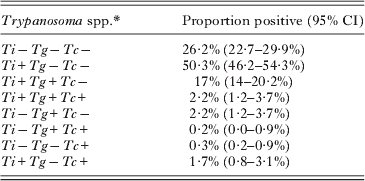
A total of 439 of the 595 koalas (73·8%, CI: 70·1–77·3%) sampled were positive when tested using the trypanosome species-specific 18S rDNA PCRs. The results from the 3 species-specific PCRs are presented in Table 2. All samples that were negative using the species-specific PCR were also negative when screened with a trypanosomatid 18S rDNA PCR. All DNA extraction controls were PCR-negative. All positive and negative PCR controls produced appropriate results. DNA sequence confirmation was carried out on the K1 (T. irwini), K2 (T. gilletti) and Wo (T. copemani) PCR products generated from 16 koalas, 12 of which had multiple infections. The DNA sequences of 13 K1 PCR positives (285 bp), 10 K2 PCR positive (352 bp) and 8 Wo PCR positives (437 bp) showed 100% homology with published sequences for the respective trypanosome species.
The composition of trypanosome infections (percentage and 95% confidence interval (CI)) determined by PCR screening DNA extracted from 595 koala blood samples using Trypanosoma irwini, T. gilletti and T. copemani 18S rDNA species-specific PCR primers

* Ti, T. irwini; Tg, T. gilletti; Tc, T. copemani.
Geography and trypanosome infection
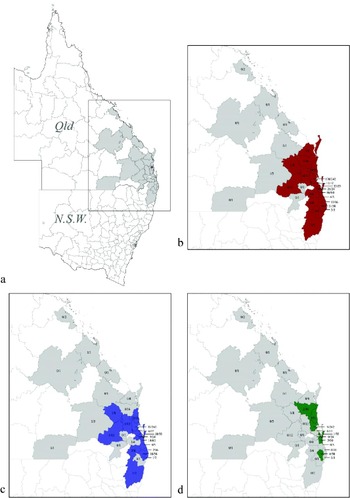
The geographical distribution of koalas infected with the three trypanosome species is presented in Fig. 2a, b and c. Of the koalas sampled, 84% originated from QLd and the remainder (15·3% CI: 12·5–18·4%) from NSW. There was no significant difference in the proportion of males and females sampled from the two states (P>0·05). There was a significantly higher prevalence of T. irwini infection (73·5% CI: 67·5–79%) compared to T. gilletti (14·5% CI: 10·3–19·5%) and T. copemani (3·7% CI: 1·7–6·9%) in koalas from the Moreton Bay Regional Council Shire, which was the origin of the highest number of koalas.
(a–d). The shires and number of koalas infected with Trypanosoma irwini (b, red), T. gilletti (c, blue) and T. copemani (d, green) in NSW and QLd as determined by 18S rDNA species-specific PCRs. (a) Shires sampled (grey) and location of the Australian Zoo Wildlife Hospital *. The proportions of PCR-positive koalas sampled in each shire are represented.

Month of sampling and trypanosome infection
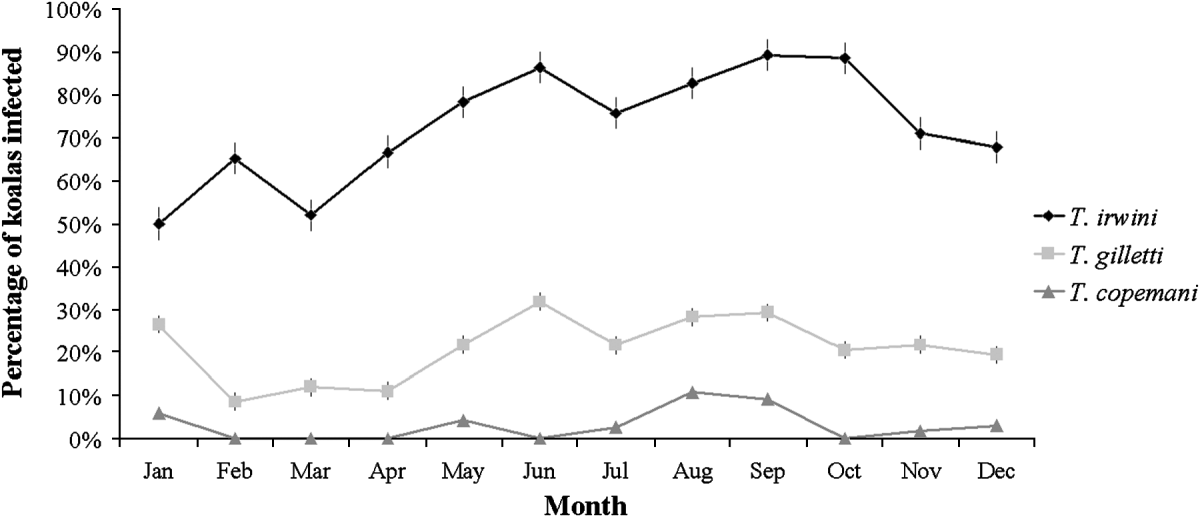
The majority of samples were collected in 2009 (n=488; 18–78 koalas sampled/month). The prevalence of trypanosome infection in koalas sampled each month during 2009 is presented in Fig. 3. The prevalence of T. irwini was highest in June, August, September and October of 2009. Trypanosoma gilletti and T. copemani infections were more prevalent in koalas sampled in January, August and September of 2009.
The percentage of koalas admitted to the Australian Zoo Wildlife Hospital, Beerwah, QLd, Australia that were infected with Trypanosoma irwini, T. gilletti or T. copemani by month from the period January–December 2009 as determined by 18S rDNA species-specific PCRs.

State of origin and trypanosome infection
The prevalence of T. irwini (P<0·001) and T. gilletti (P<0·001) infection in koalas from NSW was significantly higher than in koalas from QLd. There was no significant difference in the prevalence of T. copemani (P>0·05) infection in koalas from NSW and QLd. Koalas from NSW were more likely to be infected with T. irwini (OR: 3·4, 95% CI: 1·7–6·6) and T. gilletti (OR: 2·0, 95% CI: 1·4–3·7) than koalas from QLd. Koalas from NSW were more likely to be infected with more than 1 trypanosome species (OR: 2·6, 95% CI: 1·6–4·1) than koalas from QLd.
Koala sex and trypanosome infection
Male koalas had a significantly higher prevalence of infection with T. gilletti (P<0·05) and T. copemani (P<0·05) than female koalas. There was no significant difference in the prevalence of infection with T. irwini in male and female koalas (P>0·05). Male koalas were more likely than female koalas to be infected with T. gilleti (OR: 1·8, 95% CI: 1·2–2·7) and T. copemani (OR: 3·6, 95% CI: 1·3–9·8).
The prevalence of infection with T. gilletti (P<0·05) and T. copemani (P<0·05) were significantly higher in male koalas compared to female koalas in QLd. Male koalas in QLd were more likely than females to be infected with T. gilletti (OR: 1·7, 95% CI: 1·1–2·8) and T. copemani (OR: 4·1, 95% CI: 1·4–12·3).
Koala age and trypanosome infection
There was no significant association between age and the prevalence of T. gilletti (P>0·05) and T. copemani (P>0·05). The mean age of koalas infected with T. irwini was significantly higher (5·2±0·1 years) compared to uninfected koalas (4·1±0·2 years) (P<0·05).
Outcome of hospital admission and trypanosome infection
Male koalas were found to be more likely than females (OR: 1·17, 95% CI: 1·0–1·4) to have a ‘non-survival’ outcome (P<0·05). A significantly higher proportion of koalas infected with T. gilletti did not survive (P<0·05) compared to uninfected koalas. There was no significant difference in the survival outcome of koalas infected with T. irwini (P>0·05) and T. copemani (P>0·05) compared to uninfected koalas. Koalas with a ‘non-survival’ outcome were more likely to be infected with T. gilletti than koalas with a ‘survival’ outcome (OR: 1·6, 95% CI: 1·1–2·3). A significantly higher proportion of koalas with mixed trypanosome infections were classified as ‘non-survival’ compared to uninfected koalas (P<0·05). A significantly higher proportion of koalas from NSW that were infected with T. gilletti or a mixed infection died or were euthanased (‘non-survival’ outcome) compared to uninfected koalas from NSW (P<0·05).
Body condition score and trypanosome infection
The mean body condition score for koalas infected with T. gilletti (5·2±0·2) was significantly lower than the mean body condition score of uninfected koalas (5·8±0·1) (P<0·05). The mean body condition score of koalas co-infected with T. gilletti and T. irwini (5·2±0·2) was significantly lower than the mean body condition score of uninfected koalas (5·7±0·1) (P<0·05). There was no significant difference in the mean body condition scores of koalas infected with T. irwini or T. copemani compared to uninfected koalas (P>0·05).
Koala blood PCV and trypanosome infection
Koalas with signs of blood loss (215/595) were excluded from the analysis of PCV. The mean PCV of koalas without blood loss infected with T. gilletti (29·87±0·7%) or T. copemani (27·56±1·83%) was significantly lower compared to uninfected koalas without blood loss (32·27±0·3% and 31·95±0·28% respecively) (P<0·05, with equal variances not assumed). There was no significant difference in the mean PCV values of koalas without blood loss infected with T. irwini compared to uninfected koalas without blood loss (P>0·05).
The mean PCV value for koalas with ‘non-survival’ outcomes that were infected with T. gilletti (27·9±0·8%) was significantly lower compared to uninfected koalas (30·3±0·5%) with ‘non-survival’ outcomes (P<0·05). There was no significant difference between the mean PCV values of koalas with a ‘non-survival’ outcome and infection with T. copemani and T. irwini compared to uninfected koalas with a ‘non-survival’ outcome (P>0·05).
PCV values were significantly lower in koalas from NSW compared to QLd, in koalas which ‘appeared sick’ compared to those that ‘appeared healthy’ and in koalas with ‘non-survival’ compared to koalas with ‘survival’ outcomes (P<0·05). There were no significant differences in PCV values of koalas with respect to gender (P>0·05).
Other diseases/observations and trypanosome infection
A total of 48·4% (CI: 44·3–52·5%), 6·9% (CI: 5–9·2%) and 5% (CI: 3·4–7·1%) of koalas were observed with signs of chlamydiosis, kAIDS and bone marrow disease respectively. There was no significant association between any specific disease and infection with the 3 trypanosome species detected. There were no significant associations between any of the Trypanosoma spp. infections and signs of trauma or observations of koalas appearing sick (P>0·05).
The mean body condition score of koalas with signs of chlamydiosis (5·0±0·1), bone marrow disease (3·9±0·3) and kAIDS (2·9±0·1) was significantly lower than the mean body condition score of koalas with no clinical signs of chlamydiosis (6·3±0·1), bone marrow disease (5·8±0·1) or kAIDS (5·9±0·1) (P<0·001). There was no significant difference in PCV in koalas with (31·8±0·42%) and without (33·1±0·65%) signs of chlamydiosis (P>0·05).
Koalas with signs of ‘disease’ (kAIDS, chlamydiosis and BMD) had significantly lower PCV values (31·5±0·36%) compared with koalas without signs of these diseases (33·1±0·65%) (P<0·05). A significantly higher proportion of koalas classified with signs of these diseases had ‘non-survival’ outcomes compared to ‘survival’ outcomes than those without (OR: 4·6, 95% CI: 3·2–6·5) (P<0·001).
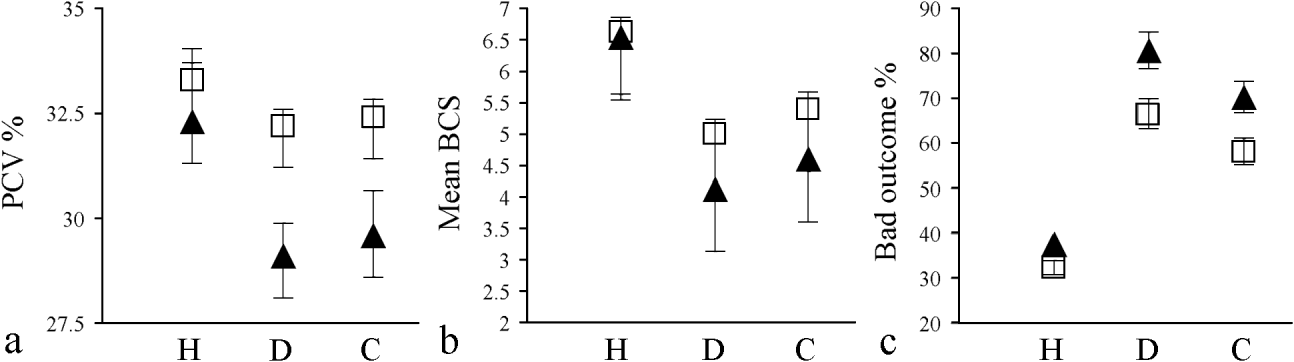
Comparison of trypanosome infection in koalas with and without signs of chlamydiosis was conducted with all koalas with signs of kAIDS and/or BMD removed. No significant differences in PCV (except with T. copemani in koalas without chlamydiosis, BMD or kAIDS), outcome or BCS were identified with T. irwini or T. copemani infection in koalas with or without signs of chlamydiosis (P>0·05). The only trypanosome with statistically reduced PCV values in koalas without signs of chlamydiosis, BMD or kAIDS was T. copemani (n=6) (23·7±3·2%) (P<0·001). Statistically significant differences in PCV and BCS were identified with T. gilletti infection in koalas with signs of chlamydiosis but not in koalas without signs of chlamydiosis. The PCV of koalas with signs of chlamydiosis and a T. gilletti infection was significantly lower (29·5±1·05%) compared to koalas that were not infected with T. gilletti (32·4±0·44%) (P<0·05) (Fig. 4a). The mean BCS of koalas with signs of chlamydiosis with a T. gilletti infection was significantly lower (4·6±0·26) compared to koalas that were not infected with T. gilletti (5·4±0·14) (P<0·05) (Fig. 4b). A higher but not statistically significant proportion of koalas with signs of chlamydiosis and a T. gilletti infection had non-survival outcomes (70·2%, 95% CI: 55·1–82·7%) compared to koalas that were not concurrently infected with T. gilletti (58·1%, 95% CI: 50·6–65·2%) (P>0·05) (Fig. 4c).
(a) The percentage packed cell volume (PCV) (5% error bar), (b) mean body condition score (BCS) (±s.e.) and (c) the percentage of koalas with a bad outcome (±s.e.) with (□) or without (▲) Trypanosoma gilletti infection. Koalas were grouped as follows: H, healthy koalas with no sign of Chlamydia infection, koala AIDS and or bone marrow disease; D, diseased koalas, those with signs of the previous mentioned diseases; and C, koalas with signs of Chlamydia infection only.

DISCUSSION
Species-specific PCRs were successfully developed to detect infection of 3 native Australian Trypanosoma spp. identified in koalas. Only 3 Trypanosoma spp. were detected in the koalas sampled in this study. This observation was confirmed by the absence of amplification in the species-specific PCR-negative samples when they were tested using a nested trypanosomatid 18S rDNA PCR (McInnes et al. Reference McInnes, Hanger, Simmons, Reid and Ryan2011). This nested PCR was designed to amplify a diverse range of trypanosomatids (McInnes et al. Reference McInnes, Gillett, Ryan, Austen, Campbell, Hanger and Reid2009, Reference McInnes, Hanger, Simmons, Reid and Ryan2011). It is possible that other trypanosome species were present at a level of parasitaemia below the detection threshold of this PCR. It is also possible that the PCR failed to amplify other trypanosome species due to the presence of PCR inhibitors or primer specificity issues. This is difficult to investigate given the scope of the current study. In addition, all recently identified Australian species of trypanosomes have been readily amplified using this PCR (Austen et al. Reference Austen, Jefferies, Friend, Adams, Ryan and Reid2009; McInnes et al. Reference McInnes, Gillett, Ryan, Austen, Campbell, Hanger and Reid2009, Reference McInnes, Hanger, Simmons, Reid and Ryan2011).
The prevalence of infection with T. irwini (71·1%) in koalas in this study was considerably higher than previous studies, which identified T. irwini infection in 38·2% to 52% of koalas (McInnes et al. Reference McInnes, Gillett, Ryan, Austen, Campbell, Hanger and Reid2009, Reference McInnes, Hanger, Simmons, Reid and Ryan2011). These previous studies used datasets that are subsets of this larger study and, therefore the results of this study are likely to be more accurate because of the larger sample size that comprised koalas sampled over 1 year. The difference is not likely to be due to variation in the sensitivity of the trypanosomatid PCR originally used and the species-specific PCRs that were subsequently developed. There was 100% agreement between the previous results and the results from re-screening all samples from the first 2 studies with the species-specific PCRs.
The demonstration of mixed infections in samples that had been previously tested and shown to contain only T. irwini using species-specific PCRs is interesting. This suggests that preferential PCR amplification of T. irwini may have occurred and masked mixed trypanosome infections. This is an important finding because the generation of a clean sequence chromatogram is usually accepted as evidence of a single infection. Mixed trypanosome infections were common in koalas (21%). The predominant mixed infection was a co-infection of T. irwini and T. gilletti (17%), which includes almost all koalas infected with T. gilletti. Interestingly, only 1 co-infection of T. gilletti and T. copemani was identified in the study despite the fact that many koalas originated from shires in which both species of trypanosomes were present. Trypanosoma copemani was more common as a dual or triple co-infection with T. irwini than in a dual infection with T. gilletti. This is, however, most probably a reflection of the low prevalence of T. copemani (4·4%) in the koala population.
To date, T. irwini and T. gilletti have only been found in koalas whilst T. copemani, on the other hand, is known to occur in a range of Australian marsupials (wombats, quokkas, Gilbert's potoroo and koalas) in different regions of Australia (Noyes et al. Reference Noyes, Stevens, Teixeira, Phelan and Holz1999; Hamilton et al. Reference Hamilton, Stevens, Gaunt, Gidley and Gibson2004; Austen et al. Reference Austen, Jefferies, Friend, Adams, Ryan and Reid2009; McInnes et al. Reference McInnes, Hanger, Simmons, Reid and Ryan2011). It is therefore possible that the koala is an accidental host for T. copemani which may explain its low prevalence (4·4%) in koalas and low prevalence of co-infection with T. gilletti. It could also be due to heterologous immunity resulting from a possible antigenic similarity between T. gilletti and T. copemani, which are genetically closely related (McInnes et al. Reference McInnes, Hanger, Simmons, Reid and Ryan2011), or due to non-specific interactions of inflammation mediators (Cox, Reference Cox2001). Heterologous immunity is known to occur with a range of malaria species (Voller et al. Reference Voller, Garnham and Targett1966; Maitland et al. Reference Maitland, Williams and Newbold1997) but has also been observed between different intra-erythrocytic protozoan genera (Babesia and Plasmodium) (Cox, Reference Cox1968; Cox and Milar, Reference Cox and Milar1968). An example of cross-protection with trypanosomes was given by Uche and Jones (Reference Uche and Jones1994) where rabbits, experimentally infected with T. evansi and then challenged with heterologous trypanosome species, had protection conferred to the most closely related trypanosome T. brucei, but not to the more distantly related trypanosomes, T. congolense and T. vivax. Similarly, in mice, infection with T. rangeli has been shown to provide protective immunity against infection with a virulent T. cruzi strain (Zuniga et al. Reference Zuniga, Palau, Penin, Gamallo and De Diego1997).
The differences observed in the geographical distribution of trypanosome-infected koalas are difficult to interpret. The statistical comparison of infection by state revealed significant differences in the prevalence of T. irwini and T. gilletti infection with infection by both trypanosome species more likely in koalas from NSW than QLd. There was, however, a definite sampling bias present in this study because QLd shires closest to the AZWH were the source of the majority of hospital admissions and distant shires, in particular, those in NSW were represented by very few koalas, and those that needed more urgent veterinary attention. Therefore, statistical analysis of trypanosome infection at the level of shire and state was inappropriate.
The finding that male koalas had a significantly higher prevalence of infection with T. gilletti and T. copemani compared to females is interesting. The observed difference was maintained when the state of origin was included in the analysis. The difference is not due to a sampling bias because there was no significant difference in the gender distribution in the koalas sampled in the two states. The difference in infection rates in males may be related to physiological differences or social hierarchy and differential activities of sexes. During the koala breeding season (from July to December), dominant males become active at dusk and move from tree to tree, scent marking, checking the status of females and fighting with other males for access to oestrus females (Lee and Carrick, Reference Lee, Carrick, Walton and Richardson1989).
The observation that the mean age of koalas infected with T. irwini is higher than uninfected koalas is best explained by T. irwini manifesting as a chronic and/or non-pathogenic infection, thereby leading to an increasing prevalence with age. The same pattern was not seen with T. copemani-infected koalas, possibly due to the small sample size (n=26). The prevalence of all three trypanosome species was lower in juvenile (0 to 2-year-old) koalas followed by an increase in the next age group (2 to 4-year-old koalas). This suggests that koalas predominantly become infected at 2–4 years of age, which coincides with dispersal from the maternal home range and sexual maturation. Female koalas begin to breed at 2–3 and males at 4–5 years of age (Lee and Carrick, Reference Lee, Carrick, Walton and Richardson1989). This stage of a koala's life leads to an increase in social behaviour, movement and activity patterns. This increase in physical activity is likely to increase the risk of contact with haematophagous arthropods such as ticks, a possible vector of native Australian trypanosomes as inferred by the phylogenetic placement of the tick-transmitted trypanosome isolate KG1 (Thekisoe et al. Reference Thekisoe, Honda, Fujita, Battsetseg, Hatta, Fujisaki, Sugimoto and Inoue2007) with T. gilletti and T. copemani (McInnes et al. Reference McInnes, Hanger, Simmons, Reid and Ryan2011).
The differences in PCV values between T. gilletti and T. copemani-infected koalas and uninfected koalas, although statistically significant, are not as marked as those reported with infections with the highly pathogenic African trypanosomes. Only the mean PCV values of T. copemani (23·7±3·2%) infected koalas (in koalas without signs of any other disease) was lower than the reference range of 29–44% (Canfield et al. Reference Canfield, O'Neill and Smith1989b). The sample size of T. copemani-infected koalas without signs of other diseases was small (n=6) and in koalas with concomitant infections there was no reduction in PCV associated with infection with T. copemani. It is difficult to interpret the results related to infection with T. copemani further because of its low prevalence in this population. A significant regenerative anaemia was observed in a small number of koalas that were infected with a trypanosome as evidenced by the presence of abnormally increased numbers of reticulocytes and nucleated erythrocytes (normoblasts) supported by hypercellular bone marrow on prepared blood and bone marrow smears (A. Gillett, personal communication). Anaemia is commonly associated with human (Chisi et al. Reference Chisi, Misiri, Zverev, Nkhoma and Sternberg2004) and animal trypanosomiasis, reported in native African cattle breeds (Ellis et al. Reference Ellis, Scott, Machugh, Gettinby and Davis1987; Sekoni et al. Reference Sekoni, Saror, Njoku, Kumi-Diaka and Opaluwa1990; Akinbamijo et al. Reference Akinbamijo, Bennison, Jaitner and Dempfle1998; Mahama et al. Reference Mahama, Desquesnes, Dia, Losson, De Deken and Geerts2004), horses (Silva et al. Reference Silva, Herrera, Da Silviera Domingos, Ximenes and Davila1995), pigs (Omeke and Ugwu, Reference Omeke and Ugwu1991), sheep (Katunguka-Rwakishaya et al. Reference Katunguka-Rwakishaya, Murray and Holmes1992; Onah et al. Reference Onah, Hopkins and Luckins1996), goats (Goossens et al. Reference Goossens, Osaer, Kora and Ndao1998; Ogunsanmi and Taiwo, Reference Ogunsanmi and Taiwo2001; Faye et al. Reference Faye, Fall, Leak, Losson and Geerts2005) and dogs (Onyeyili and Anika, Reference Onyeyili and Anika1990; Egbe-Nwiyi and Antia, Reference Egbe-Nwiyi and Antia1993) and cats (Da Silva et al. Reference Da Silva, Costa, Wolkmer, Zanette, Faccio, Gressler, Dorneles, Santurio, Lopes and Monteiro2009). Anaemia is, however, not always noted with trypanosome infections, in part due to the fact that numerous trypanosomes are non-pathogenic and also due to the variable disease dynamics of pathogenic trypanosomes. Anaemia is also commonly detected in diseased koalas, in particular those with complicated cystitis and lymphosarcomas (Canfield et al. Reference Canfield, O'Neill and Smith1989a). The same authors observed that uncomplicated cystitis or conjunctivitis and clinical symptoms of chlamydiosis did not noticeably impact haematological values. As the PCV value reductions in koalas with trypanosome infection were not marked the effect may not be biologically significant. Reduced PCV levels in koalas have also been attributed to heavy tick infestations (Obendorf, Reference Obendorf1983; Spencer and Canfield, Reference Spencer and Canfield1995) and details of the tick burden of koalas in this study were infrequently recorded in admission examinations.
The results of this study showed that koalas with signs of other ‘diseases’ (chlamydiosis, BMD and/or kAIDS) and infected with T. gilletti had significantly lower body scores than koalas not infected with T. gilletti. Body condition score is a commonly used measure to assess the general health of a koala (Jackson et al. Reference Jackson, Reid, Spittal, Romer and Jackson2003). It is similar to other ranking methodologies used to monitor and assess the health of domesticated animals. Decreased body condition scores have been observed in association with trypanosome infection in a range of animals (Mutayoba et al. Reference Mutayoba, Eckersall, Cestnik, Jeffcoate, Gray and Holmes1995; Clausen et al. Reference Clausen, Chuluun, Sodnomdarjaa, Greiner, Noeckler, Staak, Zessin and Schein2003; Singh et al. Reference Singh, Pathak and Kumar2004; Gonzales et al. Reference Gonzales, Chacon, Miranda, Loza and Siles2007; Jimenez-Coello et al. Reference Jimenez-Coello, Poot-Cob, Ortega-Pacheco, Guzman-Marin, Ramos-Ligonio, Sauri-Arceo and Acosta-Viana2008). Similar to the reduced PCV value there was only a statistically significant reduction in BCS in koalas that were infected with T. gilletti and showing clinical signs of other ‘diseases’.
The initial analysis of health parameters PCV, BCS and outcome indicated that T. gilletti infection might be exerting a negative impact on the health of koalas. Further analysis, however, revealed that these effects were only notable in koalas with signs of other concurrent diseases (chlamydiosis, BMD and/or kAIDS) and absent in koalas without these disease syndromes. There is limited understanding of concomitant infections as the interactions involved are often complex and difficult to unravel. The reduction in health parameters with concomitant infections which include a trypanosome may be due to condition-dependent pathogenicity or potentiation of concurrent infections resulting from trypanosomiasis-induced immunosuppression. Condition-dependent pathogenicity occurs when normally benign infections become pathogenic in hosts that are immunosuppressed or concurrently infected with other pathogens. This concept has been demonstrated in detail with the non-pathogenic trypanosomatid Crithidia bombi, which infects bumblebees (Brown et al. Reference Brown, Schmid-Hempel and Schmid-Hempel2003), and under conditions of stress results in disease. It has also been suggested to explain the phenomenon of clinical trypanosomiasis in cattle infected with the non-pathogenic bovine trypanosome T. theileri (Doherty et al. Reference Doherty, Windle, Voorheis, Larkin, Casey, Clery and Murray1993; Seifi, Reference Seifi1995; Ward et al. Reference Ward, Hill, Mazlin and Foster1984). Trypanosomiasis-induced immunosuppression which is the mechanism behind trypanosome potentiation of concurrent infections was first observed in trypanosome-infected rats and mice challenged with heterologous red blood cells (Goodwin, Reference Goodwin1970; Goodwin et al. Reference Goodwin, Green, Guy and Voller1972). Immunosuppression by trypanosomes renders hosts more susceptible and potentiates other concurrent infections (Reid et al. Reference Reid, Buxton, Finlayson and Holmes1979; Griffin et al. Reference Griffin, Allonby and Preston1981; Khan and Lacey, Reference Khan and Lacey1986; Kaufmann et al. Reference Kaufmann, Dwinger, Hallebeek, Van Dijk and Pfister1992; Dwinger et al. Reference Dwinger, Agyemang, Kaufmann, Grieve and Bah1994; Goossens et al. Reference Goossens, Osaer, Kora, Jaitner, Ndao and Geerts1997; Onah et al. Reference Onah, Onyenwe, Ihedioha and Onwumere2004; Carrera et al. Reference Carrera, Carmona, Guerrero and Castillo2009) as well as reducing the capacity of hosts to respond to immunizations (Fakae et al. Reference Fakae, Harrison, Ross and Sewell1999; Onah and Wakelin, Reference Onah and Wakelin2000). Trypanosome infections have been reported to reduce antibody production of a range of vaccinations for a range of disease agents including Bacillus anthracis (Mwangi et al. Reference Mwangi, Munyua and Nyaga1990), Brucella abortus (Rurangirwa et al. Reference Rurangirwa, Musoke, Nantulya and Tabel1983), foot and mouth disease (Sharpe et al. Reference Sharpe, Langley, Mowat, Macaskill and Holmes1982), haemorrhagic septicaemia (Singla et al. Reference Singla, Juyal and Sharma2010) and swine fever (Holland et al. Reference Holland, Do, Huong, Dung, Thanh, Vercruysse and Goddeeris2003).
Analysis of outcome and trypanosome infection was conducted in koalas without signs of BMD or kAIDS syndromes as koalas with those diseases are euthanased and their inclusion in the analysis of outcome would have introduced unwanted bias into the study. The observed higher (but not statistically significant) percentage of ‘non-survival’ outcomes in koalas with signs of chlamydiosis and concurrent T. gilletti infections compared to koalas uninfected by T. gilletti may reflect the generally non-pathogenic nature of trypanosomes of Australian native animals. However, the finding that koalas that were infected with T. gilletti and showing signs of concomitant infections had significantly lower BCS and PCV suggests that there is a biologically important interaction occurring that may be adversely affecting the health of the koalas. Therefore, it is possible that with a larger sample size the percentage of ‘non-survival’ koalas with T. gilletti infection would remain high and prove to be statistically significant.
Further investigation is required to understand the role of trypanosomes in the pathogenesis of anaemia and other clinical syndromes in koalas, particularly in view of the high prevalence of potentially immune-modulating agents such as the koala retrovirus (Tarlinton et al. Reference Tarlinton, Meers and Young2008). The impact of T. gilletti is complicated by endemic koala retrovirus, which has features consistent with immunosuppression or immunodeficiency (Hanger et al. Reference Hanger, McKee, Tarlinton, Yates, Tribe and Booth2003), similar to that observed with trypanosomiasis in some hosts. Furthermore, there is a need to develop new tools for assessing the immune status of koalas because of the complicated nature of the outcome of inter-current infections on the immune system of the host.
This study has revealed that koala trypanosomes, in particular T. gilletti, may have condition-dependent pathogenic effects on the ability to potentiate concomitant infections. The negative effects on PCV values, body condition and survival (not statistical), although not dramatic, provide evidence that some of the trypanosomes infecting koalas may not be entirely benign. Future research of these trypanosomes and their interactions with other koala diseases is imperative as trypanosomes may be compromising the health of wild koalas and contributing to koala population decline.
ACKNOWLEDGEMENTS
The authors gratefully acknowledge the assistance of the staff and carers at and connected with the Australia Zoo Wildlife Hospital, Beerwah, QLd. We thank Megan Aitken for her kind assistance with updating koala database information, Dr Caroline Jacobsen for help with statistical analysis and Howard Tam for assistance with graphics.