Introduction
The World Health Organization (WHO) defines anaemia as a low blood haemoglobin concentration. Anaemia is a major global public health problem, with different consequences (Galloway et al., Reference Galloway, Dusch, Elder, Achadi, Grajeda, Hurtado and Stephen2002; Figueiredo et al., Reference Figueiredo, Gomes-Filho, Silva, Pereira, Da Mata, Lyrio and Pereira2018). It affects the physical health and cognitive development of individuals, and decreases a country’s productivity and economic development (Galloway et al., Reference Galloway, Dusch, Elder, Achadi, Grajeda, Hurtado and Stephen2002; World Health Organization, 2011). It has also been shown to be related to high maternal and infant morbidity and mortality, especially in developing countries (Balarajan et al., Reference Balarajan, Ramakrishnan, Özaltin, Shankar and Subramanian2011; Stevens et al., Reference Stevens, Finucane, De-Regil, Paciorek, Flaxman and Branca2013). Anaemia affects more than half a billion women of childbearing age worldwide, and 38% of women with anaemia are pregnant (World Health Organization, 2014).
A variety of factors can cause anaemia in women of childbearing age, including an unhealthy diet, lack of micronutrients (mainly iron), deficiencies in certain vitamins (B12 and folic acid) and certain chronic diseases (Zhang et al., Reference Zhang, Willett, Selhub, Hunter, Giovannucci, Holmes and Hankinson2003; Velikkakam et al., Reference Velikkakam, Fiuza, Gaze and Singh2017). Normal physiological changes occurring in pregnancy, haemoglobinopathies, malaria, HIV and hookworm infections may also cause anaemia (Velikkakam et al., Reference Velikkakam, Fiuza, Gaze and Singh2017; Anchang-Kimbi et al., Reference Anchang-Kimbi, Nkweti, Ntonifor, Apinjoh, Chi, Tata and Achidi2017). Due to inadequate diets and insufficient intake of vitamins, iron and folic acid, the prevalence of anaemia in developing countries is significantly higher than in developed countries (Baig-Ansari et al., Reference Baig-Ansari, Badruddin, Karmaliani, Harris, Jehan, Pasha and Goldenberg2008; Ismail et al., Reference Ismail, Kahkashan, Antony and Sobhith2017). Other factors that make women susceptible to anaemia include certain lifestyles, socio-demographic characteristics such as ethnicity, increasing age and low socioeconomic class and education level, sanitary conditions and genetic susceptibility (Baig-Ansari et al., Reference Baig-Ansari, Badruddin, Karmaliani, Harris, Jehan, Pasha and Goldenberg2008; Ismail et al., Reference Ismail, Kahkashan, Antony and Sobhith2017).
Preconception care was started as a means of preventing low birth weight births in developed countries like the UK. It includes planning initiatives that aim to analyse and reshape the behavioural, biomedical and social risks to a woman’s health and pregnancy outcomes through prevention and management. In India, a very small number of women receive preconception care. For instance, the National Family Health Survey (NFHS) found that 37% of pregnant women received no preconception care at all (IIPS, 1995).
Previous studies in India have assessed women’s preconception knowledge (James et al., Reference James, George and Fernandes2019; Doke et al., Reference Doke, Gothankar, Patil, Pore, Palkar, Deshpande and Chutke2020) and morbidities (Chowdhury et al., Reference Chowdhury, Taneja, Dhabhai, Mazumder, Upadhyay, Sharma and Bahl2020), but such studies were either based on facility data, small scale, restricted to small geographical areas, limited in scope or used unsound methodology. Although previous studies have analysed regional-level variations in preconception morbidities, especially anaemia, in India, to the author’s knowledge no previous study has assessed the anaemia status of preconception young married women in India. The aim of this study was to use data from the recent large-scale NFHS-4 survey to assess the anaemia status of preconception young married women in India.
Methods
Data source
The study utilized data from the national representative cross-sectional fourth round of the National Family Health Survey (NFHS-4) conducted in 2015–16 under the stewardship of the Ministry of Health and Family Welfare (MoHFW), Government of India. The survey provides information on population, health and nutrition for all 36 states and union territories, and also, for the first time, all 640 districts. The detailed methodology, with complete information on the survey design and data collection, has been published in the survey report (IIPS, 2017).
Study sample
A total of 65,238 women were included in the study after applying the following inclusion criteria: 15–35 years of age, parity 0–3, currently married and living with husband/partner, had not undergone sterilization (women or her husband/partner), not using any contraceptive method for birth control, not currently pregnant, not breastfeeding and had menstruated in the 6 weeks before the survey.
Outcome variable
The dependent variable was a respondent woman’s anaemia status. This was tested during the survey (in the state module subsample of households), after obtaining women’s consent, with haemoglobin analysis conducted on-site with a battery-operated portable HemoCue Hb 201+ analyser. Respondents found to have severe anaemia (a haemoglobin level <9 grams/decilitre (g/dl) for pregnant women and <7 g/dl for women who were not pregnant) were referred to a health facility for additional evaluation and treatment. In the present study, a woman was considered to suffer from anaemia if she had a haemoglobin level of <11 g/dl, and not to be suffering from anaemia if she had a haemoglobin level of ≥11 g/dl.
Independent variables
The independent variables included in the study were women’s: age (15–19, 20–24, 25–29, 30–35), educational level (no education, primary, secondary and higher) and body mass index (BMI) (normal, too thin for their height, overweight and obese). The household factors included were: wealth quintile (poorest and poorer, middle, richer and richest), religion (Hindu and other), place of residence (rural and urban), caste (Scheduled Caste [SC], Scheduled Tribe [ST], Other Backward Class [OBC] and other) and total children ever born (0, 1 and 2–3). Also, Indian regions as used in the NFHS-4 report were included: North, Central, East, Northeast, West and South (IIPS, 2017).
Statistical analysis
Univariate, bivariate and multivariate logistic regression analyses were performed using SPSS version 20.0. Univariate analysis was used to show the background characteristics of the sample women. Bivariate analysis was used to assess the association between women’s anaemia status by their background characteristics. Multivariate analysis controlled for the background characteristics of women. In the case of categorical background characteristics, the choice of a reference group was guided by theoretical deliberations as well as the findings of bivariate analysis. For instance, for wealth quintile, place of residence and religion, the reference categories were richest, urban and other religions, respectively.
Results
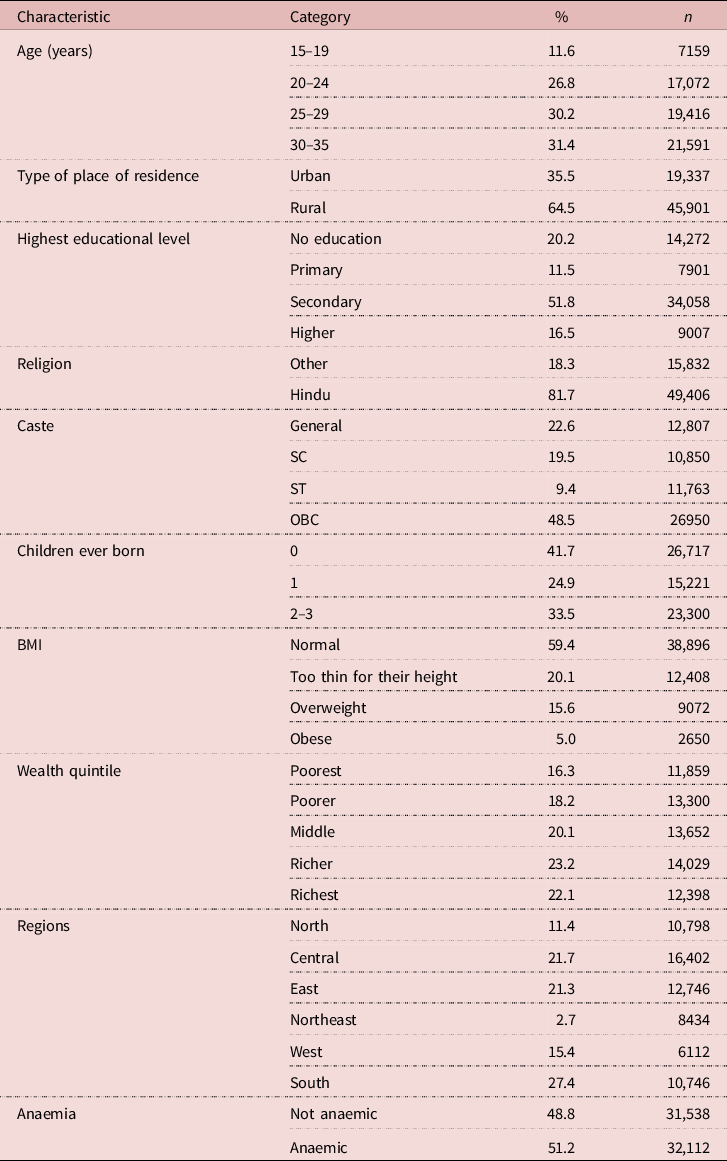
The background characteristics of the sample preconception women are presented in Table 1. The highest percentage of women were in the age group 30–35 years (31.4%). The majority of women belonged to the Hindu religion (81.7%), lived in rural areas (64.5%) and had completed secondary education (51.8%). Around 49% of the women were from OBC castes, 23% belonged to richer households, 41.7% didn’t have a child and 59.4% had a normal BMI.
Preconception young married women by selected background characteristics, India, NFHS-4

OBC: Other Backward Class; SC: Scheduled Caste; ST: Scheduled Tribe.
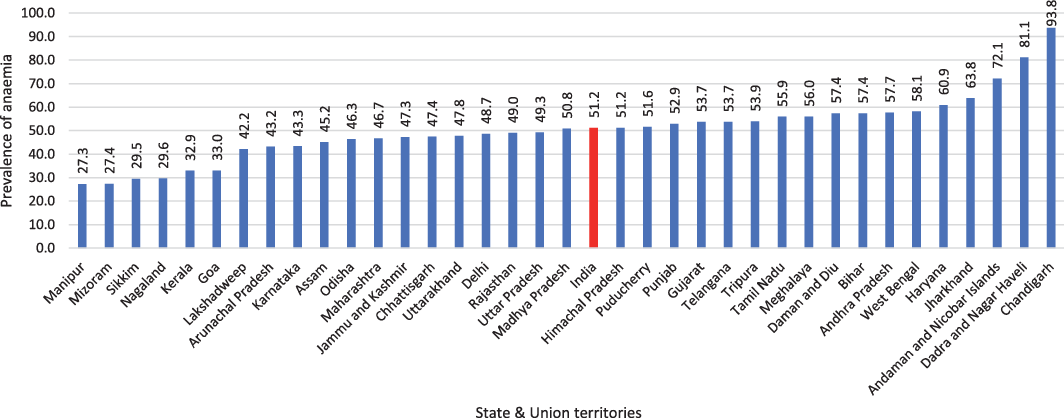
Figure 1 shows the prevalence of anaemia for the whole of India and for its states. More than half (51.2%) of preconception women were suffering from anaemia in India in 2015–16. The lowest prevalence of anaemia was reported in Manipur state (27.3%) and the highest were seen in Chandigarh (93.8%), Dadra & Nagar Haveli (81.1%) and the Andaman & Nicobar Islands (72.1%). Among the states, the highest prevalence of anaemia was observed in Jharkhand (63.8%).
Prevalence of anaemia among preconception young married women in India and its states.

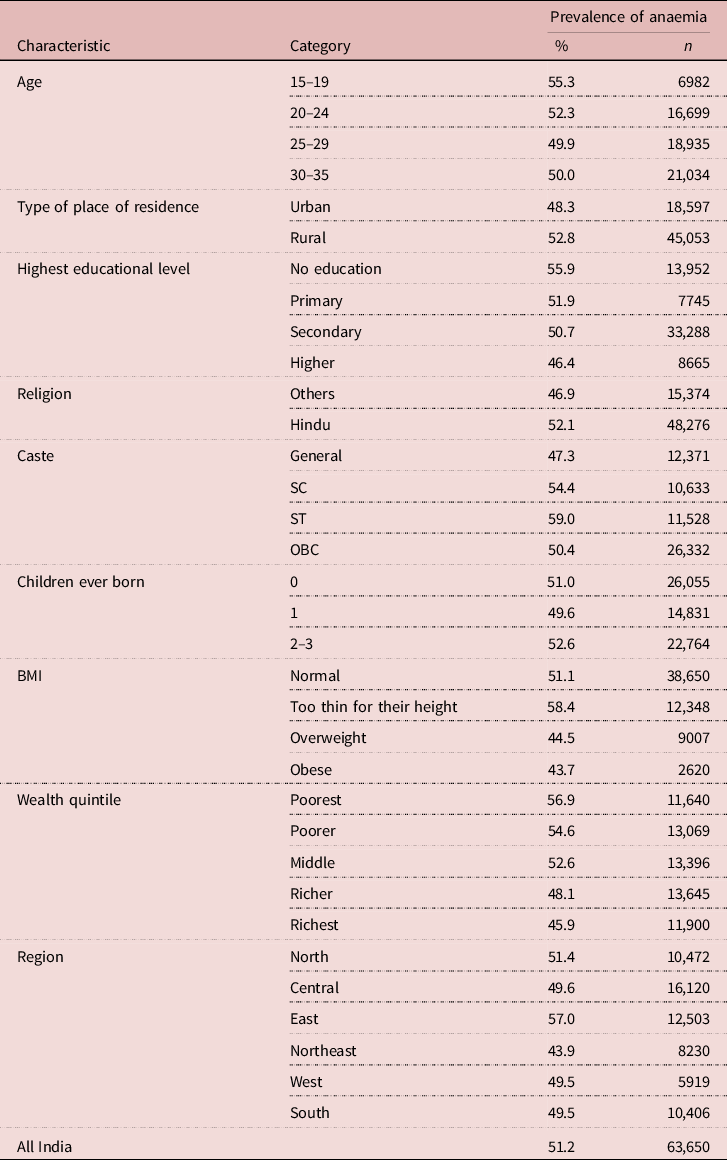
Table 2 presented the prevalence of anaemia among preconception women by background characteristics. About 50% of the women were suffering from anaemia in all the age groups. However, younger (15–19 years) women were at higher risk of anaemia (55.3%) than their counterparts. Rural (52.8%), non-educated (55.9%), Hindu (52.1%), Scheduled Tribe (59.0%), poorest wealth quintile (56.9%), those with 2–3 children (52.6%) and those who were too thin for their height (58.4%) had a higher prevalence of anaemia compared with their counterparts. By region, the East region (57.0%) had a higher prevalence of anaemia than the North (51.4%), Central (49.5%), Northeast (43.9%), West (49.5%) and South (49.5%) regions.
Prevalence of anaemia among preconception young married women by background characteristics, India, NFHS-4

OBC: Other Backward Class; SC: Scheduled Caste; ST: Scheduled Tribe.
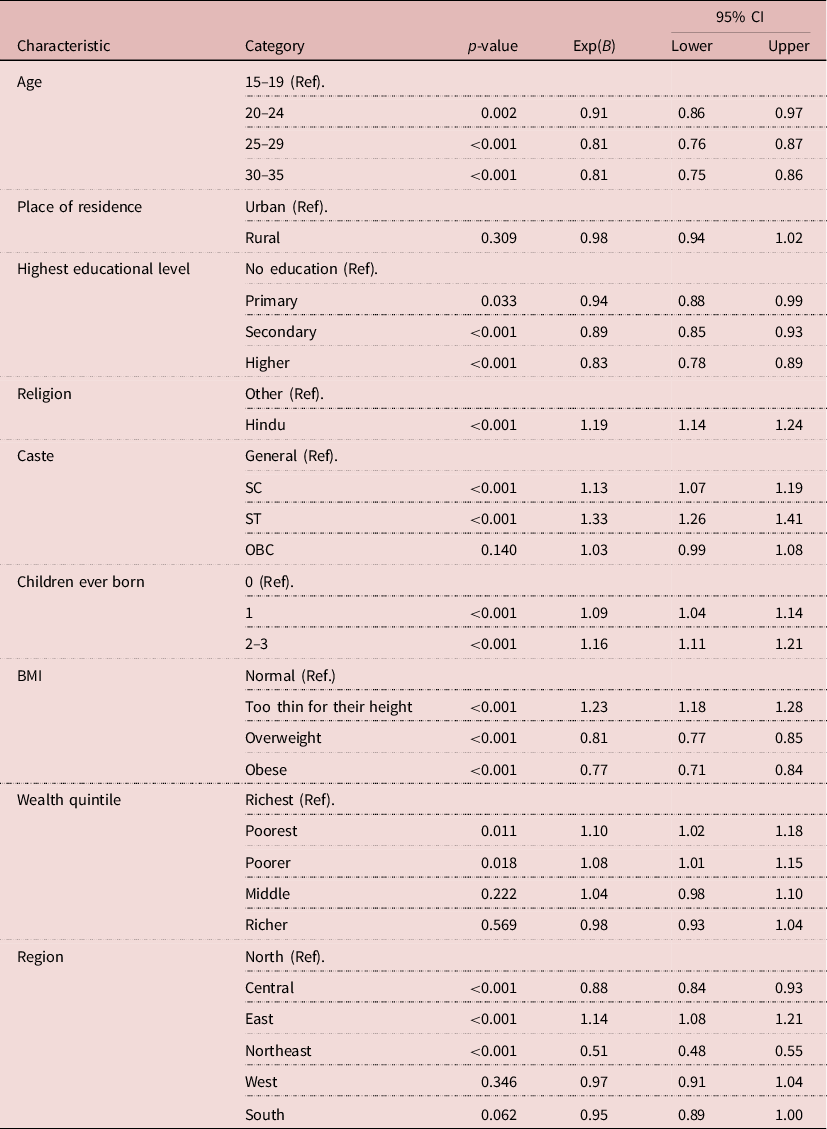
After controlling for significant background factors, Hindu (OR = 1.19, p < 0.001, 95% CI: 1.14–1.24), Scheduled Caste (OR = 1.13, p < 0.001, 95% CI: 1.07–1.19), Scheduled Tribe (OR = 1.33, p < 0.001, 95% CI: 1.26–1.142), East region (OR = 1.14, p < 0.001, 95% CI: 1.08–1.21), already had 1 or 2–3 children (OR = 1.09, p < 0.001, 95% CI: 1.04–1.14 and OR = 1.16, p < 0.001, 95% CI: 1.11–1.21, respectively), those who were too thin for their height (OR = 1.23, p < 0.001, 95% CI:1.18–1.28) and the poorer and poorest (OR = 1.08, p < 0.05, 95% CI: 1.01–1.15 and OR = 1.10, p < 0.05, 95% CI: 1.02–1.18, respectively) experienced higher odds of anaemia compared with their counterparts. The odds of suffering from anaemia decreased among young married women in India as age, education and BMI increased (Table 3).
Adjusted odds ratios for the association of background characteristics with anaemia status among preconception young married women, India, NFHS-4

Ref.: reference category; OBC: Other Backward Class; SC: Scheduled Caste; ST: Scheduled Tribe.
Discussion
The concept of prepregnancy care was first put forward in 1979, mainly focusing on the care of children. The comprehensive maternal–child care package includes pregnancy care, prenatal care, perinatal care, child care, disabled child services and youth services (Freda et al., Reference Freda, Moos and Curtis2006). In 1985, the Institute of Medicine published an article entitled Prevention of Low Birth Weight, which pointed out that there are various risk factors before pregnancy that can lead to low birth weight, but that these factors are often ignored (Freda et al., Reference Freda, Moos and Curtis2006). In 1989, the Prenatal Care Content Expert Group made some recommendations on preconception care called ‘opportunity care’, and included risk assessment and health promotion. In 1993, the March of Dimes Birth Defects Foundation published the Report on Improving Pregnancy Outcomes: 90s and Later, which introduced the concept of ‘reproductive awareness’ as a basic health promotion strategy for improving the pregnancy outcomes (Berns et al., Reference Berns, Kott and DeGroat2010).
The Government of India launched the India Newborn Action Plan in 2014 (Ministry of Health and Family Welfare, 2014), which proposed an intervention package with six pillars: preconception and antenatal care; care during labour and childbirth; immediate newborn care; care of the healthy newborn; care of the small and sick newborn; and care beyond newborn survival. Strategic interventions targeted towards preconception care include: adolescent reproductive health and family planning; nutrition-related interventions; counselling and birth preparedness; and prevention of malaria. Strategic intervention targets for prepregnancy care include adolescent reproductive health and family planning, nutrition-related interventions, counselling and fertility preparation and the prevention of malaria. However, the major health challenges faced by India are: lack of awareness; impeccable delivery of care; and programme monitoring and evaluation.
The present study found that 53.6% of preconception young married women were suffering from anaemia in India in 2015–16. The study findings will help design targeted interventions to reduce anaemia among this population. For instance, it was found that Hindu, ST, OBC, poorer and middle wealth quantile women had higher odds of having anaemia. Therefore, timely intervention targeting these groups of preconception young married women is required to reduce maternal and infant morbidity and mortality. Additionally, some geographical variation in the prevalence of anaemia was found among the study women. For instance, the East region has a higher risk of anaemia among preconception women than the North. The states of Bihar, Jharkhand and Odisha have a high maternal mortality ratio than the national average (Government of India, 2020a) because of their low health profile and women’s poor nutritional status (IIPS, 2017; Singh, Reference Singh2018). A recent study in Bihar showed that more than half of pregnant women suffered from anaemia (Singh, Reference Singh2018). Hence, more attention is required in the East region of India.
Too thin for their height preconception women had higher odds of suffering from anaemia. Al Kibria et al. (Reference Al Kibria, Swasey, Hasan, Sharmeen and Day2019), in their study in India, observed that the odds of suffering from underweight were highest among women who were younger, never-pregnant, non-users of hormonal contraceptives, less educated and less wealthy. The present study also found that preconception women in the poorest wealth quintile were at higher risk of anaemia. Similarly, Bentley and Griffiths (Reference Bentley and Griffiths2003) showed that poor women in both urban and rural areas suffer from anaemia more than richer women.
Despite India’s 50-year anaemia control plan, anaemia remains India’s biggest disease burden. Improving women’s anaemia status, and their access to resources (income), will have the greatest impact on reducing anaemia in India (Gupta et al., Reference Gupta, Pingali and Pinstrup-Andersen2019). Too thin for their height, and the poorest women, still suffer from anaemia in India. In the short-term, combined food and iron supplementation programmes would be the most effective way of addressing anaemia and underweight among this population. Integrated programmes for hookworm eradication, malaria prophylaxis, and to address other micronutrient deficiencies, will also be important for reducing the burden of anaemia in the country (Al Kibria et al., Reference Al Kibria, Swasey, Hasan, Sharmeen and Day2019; Government of India, 2020b).
The high prevalence of anaemia among women in India presents a burden for the women themselves, for their families and for the economic development and productivity of the country. Iron supplementation programmes, for a variety of reasons, have not been effective in reducing anaemia prevalence (Mithra et al., Reference Mithra, Unnikrishnan, Rekha, Nithin, Mohan, Kulkarni and Agarwal2014; Debi et al., Reference Debi, Basu, Mondal, Chakrabarti, Roy and Ghosh2020; Halli & Biradar, Reference Halli and Biradar2020) and operational research on how best to improve existing iron supplementation programmes are needed (Kapil et al., Reference Kapil, Kapil and Gupta2019). New and innovative strategies are needed, particularly those that improve the overall health and nutrition status of adolescent girls before they enter their reproductive years (Government of India, 2020b, c). This will require tailored programmes that target women in all socioeconomic groups and in both rural and urban areas, but those most in need of intervention are the poor, who are a rapidly growing marginalized segment of the Indian population.
In conclusion, the anaemia status of preconception women is poor in India. If strong measures are not taken, anaemia in women of childbearing age may become a major public health hazard. The health of a woman of childbearing age directly affects the health of the newborn baby she will give birth to in the future. Although the focus is on nutrition during pregnancy, there is an urgent need to raise awareness and take intervention measures to reduce the prevalence of anaemia before conception, thereby improving the health of mothers and their children.
Funding
This work did not receive any funding.
Conflicts of Interest
The authors have no conflicts of interest to declare.
Ethical Approval
The datasets analysed during the current study are available in the Demographic and Health Survey repository (https://dhsprogram.com/data/). The study performed a secondary analysis and there was no identifiable information about the respondents. Hence, ethical approval was not required.