


Introduction
In recent decades, disappearances have spread beyond the archetypal ‘dirty war’ of Latin American military regimes during the Cold War and appeared in new domains of global politics. A growing body of work documents ‘transnational’ disappearances, where authoritarian states abduct or eliminate critics far beyond their borders.Footnote 1 Globalization, diaspora politics, and digital communication have expanded the reach of repressive states, transforming exiles into ongoing political threats.Footnote 2 The killing of Jamal Khashoggi by Saudi operatives in Istanbul is a notorious example.Footnote 3 Russia, China, Turkey, and other states now routinely target dissidents abroad through renditions, forced returns, and disappearances.
Disappearances are also deeply entrenched in civil wars.Footnote 4 In Syria, Sri Lanka, and numerous other places, tens of thousands have vanished during counterinsurgency campaigns.Footnote 5 Cartel-controlled regions of Mexico or Colombia exhibit patterns of disappearance that rival authoritarian terrorism. Criminal groups disappear rivals, community leaders, and ordinary citizens to show territorial domination and regulate markets. At the same time, border and migration regimes, from the Mediterranean to the US–Mexican border, produce their own landscape of disappearances, where migrants vanish into smuggling economies and zones of impunity with minimal state oversight.Footnote 6
Taken together, these patterns suggest disappearances are part of an evolving global repertoire of violence. States, insurgents, militias, paramilitaries, and criminal organizations all deploy them to silence dissent, terrify communities, extract resources, police mobility, and reconfigure social order. According to the United Nations, in 2020, approximately 1,000 individuals forcibly disappeared daily in more than 95 countries,Footnote 7 underscoring how deeply the practice is embedded across multiple areas of international politics.
Despite the prevalence and strategic versatility of disappearances, international studies lack a framework allowing systematic comparison across domains. We do not have an integrated understanding of how practices vary across settings, how the phenomenon has evolved over time, or why different actors adopt disappearances under different conditions. This gap reflects both the intrinsic methodological challenges posed by a crime designed to leave no trace and the fragmented scholarly areas that study disappearances in isolation. Transitional justice, human rights, conflict studies, migration research, and criminology all examine disappearances, but emphasize different dimensions and rely on different forms of evidence. While these literatures often overlap empirically, they remain insufficiently integrated for systematic comparison across domains.
The contribution of this article is not to replace existing approaches, but to provide a comparative and integrative framework that enables a more systematic understanding of disappearances. To that end, we introduce the first global, systematically coded database of disappearances and a unified typology capturing the spectrum of disappearance practices. We identify nine strategic logics grouped into four clusters (political control, criminal–economic control, identity-based coercion, structural exploitation), allowing comparison across contexts typically studied in isolation. Rather than classifying disappearances by perpetrator type or the legal status of victims, we organize them according to their underlying purpose. This purpose-based approach enables comparison and allows us to trace how disappearance practices diffuse, adapt, and evolve across political, criminal, and transnational settings.
This comparison matters for three reasons. First, it reveals common coercive mechanisms across cases that are usually studied separately, such as state repression, criminal governance, and migration control. Second, it clarifies differences between practices that appear similar on the surface but serve distinct strategic purposes. Third, it allows us to examine whether disappearance practices follow broader temporal, spatial, and purpose-specific patterns.
The article advances a broader intervention in international studies by rethinking how coercion operates under conditions of heightened visibility and accountability. Disappearances reveal a form of power that does not rely on spectacle or overt violence, but on the strategic production of uncertainty, denial, and absence. By tracing how disappearance practices diffuse across political, criminal, and transnational contexts, we show how actors adapt coercive repertoires to evade scrutiny while maintaining control. In doing so, we contribute to debates on repression, sovereignty, and global governance by foregrounding invisibility and silence as central mechanisms of contemporary power.
The article proceeds as follows. In the next section, we review the literature to show how disciplinary fragmentation has produced a kaleidoscopic but incomplete view of disappearances. In the following sections, we define disappearances as a technology of control, explain our framework and typology, offer an analytical roadmap and expectations, and detail our methodology. We then present the main empirical findings and provide a conclusion, explaining the contribution of our study and suggesting future research. Our aim is not to resolve all questions about disappearances but to provide a conceptual and empirical foundation capable of sustaining a new research agenda on one of the most consequential – and least understood – practices in contemporary global politics.
The ‘missing’ framework: fragmented approaches to disappearances
Several factors help explain why the study of disappearances has developed in such an isolated manner. At the methodological level, disappearance resists straightforward observation. It is an intentionally clandestine form of violence meant to obscure responsibility and erase evidence.Footnote 8 By hiding the body and concealing the crime, perpetrators aim not only to eliminate a person but also to eliminate knowledge of what occurred. The core evidentiary anchors typically supporting social-scientific inquiry (i.e., location, cause of harm, physical remains, documentation, or official acknowledgment) are systematically absent, denied, or rendered ambiguous. Victims remain suspended between categories: neither confirmed dead nor reliably alive, a condition producing what BossFootnote 9 terms ‘ambiguous loss’ and trapping families for decades.
These epistemic constraints shape the scholarship. Because disappearances generate partial and inconsistent traces, different academic fields gravitate towards the types of evidence more salient to them. Human rights and transitional justice scholars emphasize legal responsibility and victims’ testimonies; conflict researchers interpret disappearances as components of wartime coercion; criminologists examine their role in illicit governance; and migration studies highlight the structural vulnerabilities of border regimes. Each literature captures an essential dimension of the phenomenon, yet none fully encompasses it. Researchers take discipline-specific vantage points, generating parallel bodies of work that seldom cross-fertilize. They analyse the same underlying practice (i.e., forced removal and concealment) using different terminologies, assumptions, and evidentiary standards, limiting systematic comparison across domains.
Legal scholarship has played a foundational role in shaping how disappearances are defined and addressed internationally. At the centre of existing work is the concept of ‘enforced disappearance’, defined in international human rights law as the deprivation of liberty by state agents or those acting with state acquiescence, followed by a refusal to acknowledge the fate or whereabouts of the person.Footnote 10 This concept builds on earlier legal concerns with ‘missing persons’ in international humanitarian law, focusing on the obligation to account for individuals whose fate is unknown in situations of armed conflict, without necessarily presuming intentional concealment.Footnote 11 The category of missing persons emerged in the postwar effort to regulate wartime conduct and address the humanitarian consequences of conflict, whereas disappearance developed later in response to systematic practices of concealment associated with state repression, in contexts like Latin America.Footnote 12
The distinction between categories remains analytically and normatively important: while both involve absence and uncertainty, the study of disappearances foregrounds intent, concealment, and responsibility, whereas missing persons frameworks prioritize tracing, identification, and humanitarian obligation.Footnote 13 These legal distinctions are not confined to doctrinal debates but are widely used across human rights research, advocacy, and policy analysis to document violations, structure evidence, and frame claims about responsibility and harm.
Much of the scholarship built around these definitions seeks to articulate the legal contours of disappearance and to codify states’ obligations and victims’ rights.Footnote 14 From this perspective, disappearance is understood as a violation requiring legal remedy and institutional accountability,Footnote 15 with research focused on the development of international treaties, monitoring bodies such as the UN Working Group on Enforced or Involuntary Disappearances, and jurisprudence from regional courts.Footnote 16 Victims’ organizations and families have reinforced this orientation by mobilizing legal mechanisms to demand truth and justice, contributing to the consolidation of disappearances as a central concern of international human rights law.Footnote 17
Beyond state-centric analyses, a substantial body of legal scholarship examines disappearances perpetrated by non-state actors, including paramilitaries, insurgent groups, militias, organized criminal organizations, and actors operating along migration routes.Footnote 18 This work focuses on the conditions under which such conduct engages state responsibility, whether through attribution or failures of due diligence. It has developed increasingly sophisticated tests for state knowledge, support, and omission, especially within the Inter-American system and in contexts such as Mexico’s ‘war on drugs’ or migrant disappearances.Footnote 19
These developments are analytically significant, but they point to an important limitation. While legal frameworks provide powerful tools for establishing accountability, they offer less leverage for understanding how disappearances operate as a recurring mechanism of coercion across political, criminal, and transnational contexts. What is missing, therefore, is not conceptualization per se, but a framework that enables systematic comparison across actor types, domains, and strategic logics.
Disappearances also feature centrally in the transitional justice literature, which has been crucial in documenting the consequences of the crime for families. Building on seminal work rooted in Latin American transitions, this scholarship examines the profound uncertainty created by the ambiguous status of the missing, the existential need for truth and acknowledgment, and the varied trajectories of victim mobilization in pursuit of accountability.Footnote 20 It explores how mechanisms such as truth commissions, trials, memorialization processes, reparations, and memorialization practices shape societal responses to past violence.Footnote 21 These contributions provide rich insights into the social and institutional aftermath of disappearance but are less concerned with the conditions under which disappearances are deployed in the first place. Even when scholars attempt to reconstruct the logic behind disappearance practices, analyses often remain idiographic, concentrating on emblematic cases such as Argentina or Chile.Footnote 22 As a result, this body of work provides limited analytical leverage for understanding why different actors employ disappearances or how the practice manifests across distinct political, criminal, and transnational environments.
Disappearances figure prominently in research on civil wars, counterinsurgencies, and ethnic conflict, where scholars have begun to examine their function within broader technologies of wartime violence. Work in political science has grown substantially, focusing on why armed actors adopt particular repertoires of coercion and how these vary across time and territory. Much of this scholarship uses a rational-choice lens, arguing that actors employ a certain coercive strategy when the expected strategic gains outweigh the costs.Footnote 23 Within this framework, disappearances are part of a selective repertoire of coercion enabling actors to consolidate territorial control, generate fear, and regulate civilian behaviour.Footnote 24 Because disappearances are resource-intensive, requiring manpower, a chain of command, secrecy, and logistical capacity, research in this area highlights the bureaucratic structure of armed groups and the degree of external scrutiny shaping their choices.Footnote 25 Yet this literature concentrates on ‘pull factors’, such as the strategic incentives to use clandestine coercion, devoting less attention to ‘push factors’, including how international or domestic accountability pressures may incentivize actors to adopt concealed forms of violence to maintain plausible deniability.Footnote 26 Moreover, disappearances are rarely analysed in this literature as a stand-alone practice. Instead, they are subsumed under broader categories of selective violence, rebellion governance, or coercive repertoires. This holistic orientation often obscures the specific logic and operational dynamics unique to disappearance. Compounding this problem, the conflict event datasets on which political violence research depends record killings far more reliably than disappearances, making it difficult to trace the practice systematically. The absence of comparable data has likely discouraged more sustained theorizing on the origins, purposes, and evolution of disappearances within wartime settings.
A parallel literature on transnational repression examines how authoritarian states deploy coercion beyond their borders, including through transnational disappearances. This research shows how states abduct, forcibly return, or disappear dissidents and diaspora members in third countries, often through covert cross-border operations or extraordinary renditions.Footnote 27 These practices are understood to be tools in a global authoritarian toolkit that blurs the boundary between domestic and international coercion.Footnote 28 Scholars argue that this extraterritorial repression challenges liberal norms and may be executed even within democratic host states. With the partial exception of Operation Condor, often framed as a regional exception, the literature focuses on a small set of high-profile cases, including the killing of Jamal Khashoggi, Russian operations abroad, and China’s pursuit of dissidents. Systematic data remain scarce, however, partly because the crime resists documentation. As a result, transnational disappearances tend not to be examined as a distinct modality of transnational coercion, but as one element within a broader repertoire of repression. Critically, although the blurring of jurisdictions has drawn attention in international relations, scholarship has yet to undertake cross-national comparisons of disappearances or to differentiate systematically between domestic and transnational variants.
In migration and border studies, a growing literature highlights how migrants and asylum seekers disappear along major migration routes because of structural vulnerabilities embedded in contemporary mobility regimes. In the Mediterranean, mass drownings and unrecorded fatalities have prompted research into the humanitarian consequences of disappearances at sea and the absence of identification protocols. Scholars in this area conceptualize disappearances as structural outcomes of bordering practices and enforcement strategies, often tacitly linked to state efforts at deterrence.Footnote 29 This work has provided a powerful critique of global mobility regimes, yet disappearances are frequently framed as a humanitarian crisis or moral exception, not part of a broader repertoire of coercion. As a result, findings remain analytically detached from insights emerging in political science, human rights law, and conflict studies, and research typically focuses on specific corridors, such as the Greek or Italian entry points into the EU or the US–Mexico border, not generating more generalizable frameworks.Footnote 30
Finally, research on criminal governance, often dominated by criminology, examines disappearances perpetrated by drug cartels, mafias, and gangs as tools to undermine state authority, regulate illicit markets, and impose territorial control.Footnote 31 This literature provides rich, often ethnographic accounts of how non-state actors govern through violence and fear.Footnote 32 Importantly, it demonstrates that disappearances can be carried out systematically by actors outside the state, challenging the assumption that the practice is inherently state-centric. Yet the study of criminally perpetrated disappearances remains conceptually isolated from political violence and human rights frameworks. This separation inhibits international/comparative analysis of state and non-state perpetrators and obscures the ways criminal and political actors converge in their coercive practices. Much of the research also prioritizes in-depth local cases over theoretical generalization, leaving unanswered questions about how international norms, accountability pressures, or governance structures shape criminal disappearances.
Across these literatures, disappearances are central but conceptualized differently and measured through different analytical lenses. While the approaches often overlap empirically, they rely on distinct categories, evidentiary standards, and data sources, limiting systematic comparisons across contexts, actors, or time. At the empirical level, data are fragmented across domains and do not capture the full range of disappearance practices or their evolution. As a result, it remains difficult to assess how disappearance practices diffuse, adapt, or vary across legal, political, criminal, and conflict environments. To address these limitations, we introduce the first global database of disappearances and propose a unified typology integrating insights from human rights law, conflict studies, criminology, migration research, and international security.
Defining disappearances as a technology of control
Despite the long-standing legal codification of disappearance, international studies lack an analytical definition that allows systematic comparison across political, conflict, and criminal domains. Human rights law identifies the core constitutive elements of the crime: deprivation of liberty, state involvement or acquiescence, refusal to acknowledge detention, and removal of the individual from legal protection.Footnote 33 It is understood as a composite violation of fundamental rights, including the right to liberty, the right to life (disappearance frequently results in death), freedom from torture, and the right to legal recognition.Footnote 34 These legal elements, although indispensable for accountability, do not capture the full range of practices constituting disappearances today. For instance, the mass disappearance of migrants along the Central Mediterranean route, where individuals vanish in unregulated detention sites or at sea, encompasses practices that escape legal codification. Legal categories do not necessarily illuminate the strategic purposes for which state and non-state actors deploy disappearances to shape political, social, and territorial orders.
To develop a conceptual foundation suitable for systematic comparison, we suggest disaggregating disappearance into three analytical components that remain constant even though perpetrators, motives, and contexts vary. In doing so, we do not seek to replace established legal categories such as disappearance or missing persons – these remain essential for accountability, documentation, and advocacy. Rather, we propose to shift the focus from legal classification to the mechanisms through which disappearance operates in practice.
The first component is material abduction. All disappearances begin with the forcible removal of an individual from the protection of the law through arrest, kidnapping, detention, rendition, or transfer. This deprivation of liberty is not limited to state agents; insurgents, militias, cartels, and hybrid state–criminal networks seize individuals for political, economic, or organizational purposes. Material abduction therefore provides the observable mechanism through which disappearance is enacted, even if later stages obscure responsibility. While abduction refers to this initial act of removal, disappearance involves an additional element of concealment and sustained uncertainty.
This distinction points to a second, defining component – epistemic concealment, the feature that most sharply distinguishes disappearances from other forms of coercive violence. Disappearances are designed not only to remove someone but also to remove knowledge about what happened. Perpetrators deny detention, destroy records, hide bodies, and sever information flows, rendering the victim’s fate unknowable. The strategic manipulation of uncertainty is central. Concealment protects perpetrators, inhibits accountability, and generates fear among broader audiences who understand violence may occur without trace or acknowledgment.
The third component, sustained ambiguity, is created when a victim is neither confirmed dead nor reliably alive. This liminal condition has profound social and political effects. Families and communities are suspended between hope and grief, and institutions cannot classify the missing within established legal categories.Footnote 35 Liminality extends the temporal reach of the crime, allowing a disappearance to function as an enduring form of control long after the abduction.
Building on this tripartite definition, we understand disappearance not simply as a legal category or a collection of isolated acts, but as a technology of control. We use ‘technology’ to emphasize the reproducible and adaptable nature of a set of practices that can be deployed across contexts to achieve similar coercive effects. As a technology of control, disappearances differ from more overt forms of violence. The combination of material abduction and epistemic concealment produces sustained uncertainty, fear, and dependency among those who remain. This broad understanding highlights two key features. First, disappearances are instrumental: the strategic use of ambiguity surrounding a person’s fate allows perpetrators to send signals, intimidate communities, or restructure local power relations. Second, they are adaptable: the same technique can be deployed in political, criminal, or economic domains. Recognizing this versatility is essential for developing the typology.
With such a typology, we can analyse disappearance as a strategic practice that varies systematically across contexts, enabling comparison of how different actors deploy it. We can also explore how disappearances operate as communicative acts directed at multiple audiences. Beyond the immediate victim, they send signals to domestic populations, rival groups, diasporas, and international actors. The strategic value of disappearances lies partly in the controlled production of uncertainty, which allows perpetrators to project power while maintaining plausible deniability. By shaping what can be known, denied, or contested, actors sustain a veneer of legitimacy even as they exercise coercion.
A unified framework and purpose-based typology
The framework developed here builds on existing legal and scholarly approaches to the study of disappearances while shifting the focus from legal classification to strategic use. As discussed above, legal distinctions, particularly between enforced disappearance and missing persons, remain essential for accountability and documentation, but do not capture how the practice of disappearance operates across political, criminal, and transnational contexts. The purpose of our framework is to identify the strategic logics through which disappearance is deployed across domains. The typology was therefore not developed as a purely deductive scheme imposed on the material, but neither could it be derived mechanically from the data alone. As work in computational text analysis has shown, inductive structures are not self-validating and require close substantive interpretation and problem-specific validation to function as meaningful social-scientific categories.Footnote 36 Because disappearance reporting is uneven across contexts and because strategic purpose is often implicit or contested, a data-driven typology would risk reproducing source-specific vocabularies and reporting biases rather than analytically meaningful distinctions. Our framework complements and builds on existing work by treating disappearance as a technology of control, thereby enabling a typology organized around strategic logics rather than formal legal distinctions.
Our typology operationalizes this framework by identifying nine distinct strategic logics that cut across legal categories and institutional settings. Our purpose-based approach focuses on strategic goals, enabling comparison across research traditions that have typically evolved in isolation. For instance, state security services may disappear activists to intimidate opposition networks, cartels may target rivals or community leaders to consolidate authority, and insurgents may disappear informants to maintain internal cohesion. Despite these differences, the practices share logics of removal, silence, and uncertainty. A typology organized around purpose, therefore, highlights cross-cutting mechanisms that transcend actor type and legal classification.
This approach also enables analytical differentiation between practices that appear superficially similar but are motivated by distinct goals. For instance, the disappearance of young men in a civil war zone may serve a counterinsurgency purpose, disrupting rebel recruitment or eliminating suspected collaborators, whereas the disappearance of young migrants along a border corridor may be driven by trafficking dynamics or extortion economies. Treating these as fundamentally different disappearance categories clarifies variations in targets, methods, and expected outcomes. Purpose thus becomes the conceptual hinge linking empirical patterns to underlying strategic logics.
Crucially, a purpose-based approach integrates insights from across disciplines. Human rights scholarship highlights state repression and legal violations; conflict studies focus on coercion; criminology examines illicit governance; and migration research emphasizes vulnerability and exploitation. Each literature identifies a subset of purposes, but none accounts for their coexistence across political, criminal, and transnational environments. A unified purpose-based typology provides the conceptual infrastructure for synthesizing disparate insights, revealing how multiple motives operate simultaneously or sequentially within complex violence and governance regimes.
The typology is grounded in the systematic analysis of large-scale human rights reporting and event data, combining narrative sources with event-level records and developed through iterative coding and classification of recurring patterns (see Section ‘Methodology’). It organizes disappearance practices according to their dominant strategic purpose. This approach makes visible the underlying logics that shape disappearances across political, criminal, and transnational environments, while permitting contextual nuance. The categories are not arbitrary or descriptive; they correspond to recurrent patterns in how actors wield disappearances to achieve specific goals. Clustering these practices around shared strategic logics enables us to integrate diverse cases into a coherent analytical structure.
As Figure 1 shows, we identify nine empirically distinct disappearance categories, grouped into four broader clusters reflecting different domains of coercive practice. These categories are not intended to mirror legal classifications, but to capture variations in how disappearances are used across contexts. They are defined in terms of the primary strategic function of disappearance (e.g., repression, control, extraction, exclusion) rather than the identity of the actor or the formal legal status of the act. This allows the typology to bring into a common analytical frame practices typically studied separately (e.g., state repression, insurgent violence, criminal governance, migration control). Throughout the article, the nine categories are the primary unit of classification, while the four clusters serve as higher-order analytical groupings that organize categories sharing broader strategic affinities.
Four clusters and nine categories of disappearance practices. Strategic purposes and empirical manifestations.

Simply stated, the nine categories capture recurring patterns in how disappearance is used across contexts. Each category reflects a distinct combination of actors, targets, and purposes. For example, disappearances used by state security forces to silence political opposition differ from those carried out by criminal groups to extract resources or control territory, while migration-related disappearances may arise from attempts to regulate mobility under conditions of weak oversight. By distinguishing between these patterns, the categories allow us to identify meaningful differences that would be obscured if we relied only on the broader cluster-level groupings. Together, they provide a more fine-grained analytical structure.
The first cluster of strategic logics captures disappearances motivated by efforts to consolidate political control. Disappearances as part of the repertoire of state repression exemplify this logic: security services, intelligence agencies, or police forces remove and conceal dissidents, activists, journalists, or opposition figures to neutralize dissent and signal the costs of resistance.Footnote 37 Examples include archetypal forms in countries like Argentina or Chile, where disappearances communicate impunity, bolster regime durability, and reshape the boundaries of permissible political action.Footnote 38 Similarly, in counterinsurgency and counterterrorism contexts, disappearances are deployed to dismantle rebel networks, silence suspected collaborators, and undermine the social infrastructure underpinning insurgent activity. In Sri Lanka, tens of thousands were disappeared during the military operation against the Liberation Tigers of Tamil Eelam. Similarly, in civil war contexts, rebel groups systematically use disappearances against civilians, militias, state officials, and other groups to achieve coercive and strategic goals; for example, in Lebanon, disappearances are an endemic form of imposing political control across communities. These practices reflect an instrumental calculus: the selective removal of individuals believed to pose a threat to state authority or territorial control. Although they differ in their operational details, they share a collective logic of political and military threat management.
A second cluster encapsulates disappearances driven by criminal–economic objectives. In settings of criminal governance, cartels, mafias, and gangs use disappearances to consolidate territorial control, regulate illicit markets, enforce discipline, and remove rivals or perceived traitors. Disappearances function simultaneously as punishment, signal, and mechanism of social ordering. They establish the authority of criminal actors while insulating them from legal responsibility through the concealment of bodies and evidence. In Mexico, over 110,000 people are officially listed as disappeared, with many cases attributed to cartels such as the Zetas and the Jalisco New Generation Cartel, who use disappearances to maintain territorial authority. Similarly, in Nigeria’s Niger Delta, armed groups involved in oil bunkering and protection rackets have repeatedly abducted and disappeared community leaders, oil workers, and rival operatives to secure control over lucrative extraction routes and illicit revenues.Footnote 39 Disappearances enacted for purposes of extortion or ransom are closely related, with individuals abducted and concealed as leverage for monetary extraction or political concessions. Since 2018, ‘bandit’ groups operating in Niger State have abducted hundreds of villagers. When ransoms cannot be extracted, victims are executed and their bodies disposed of in remote forests, creating economically driven disappearances.Footnote 40 Although the immediate goal differs from that of territorial domination, both forms rest on a logic of resource extraction and the maintenance of coercive authority within illicit economies.
A third cluster centres on identity and organizational discipline. These two logics are grouped together because in both cases, disappearance operates as a mechanism of internal regulation, enforcing conformity within a defined population, whether based on identity or organizational membership. Ethnic or sectarian disappearances aim to remove, intimidate, or eliminate members of particular identity groups as part of demographic engineering or wider campaigns of social cleansing, often embedded in long-term projects of exclusion and nation-building. In Cyprus, intercommunal violence produced systematic disappearances on both sides: Greek Cypriot forces abducted Turkish Cypriots during the 1963–1964 crisis to force them into defensible enclaves, while in 1974, Turkish forces and affiliated paramilitary groups disappeared 1,500 Greek Cypriots in an effort to clear the northern part of the island, still under Turkish occupation.Footnote 41 In contrast, internal purges or disciplinary disappearances occur within organizations – state apparatuses, militias, rebel groups, or criminal networks – and target members accused of betrayal, disloyalty, or deviance. Such acts are intended to enforce hierarchy, maintain cohesion, and eliminate internal threats that formal institutions cannot – or are not trusted to – manage. A well-known example comes from Northern Ireland, where the Provisional Irish Republican Army (IRA) ‘disappeared’ 16 individuals suspected of informing for British authorities.Footnote 42 For armed groups operating under conditions of asymmetry, such disappearances punish alleged collaborators and discipline their constituencies and assert organizational authority.
A fourth cluster of logics includes disappearance practices rooted in broader structural exploitation and vulnerability. In migration corridors, border zones, and trafficking networks, individuals may be disappeared to facilitate forced labour, sexual exploitation, or commodification by criminal or semi-criminal intermediaries. These disappearances exploit the structural precarity of migrants and refugees, who often traverse spaces where state protection is weak, fragmented, or actively hostile. For example, migrants crossing Arizona’s Sonoran Desert have disappeared in large numbers due to a combination of smuggler abandonment, dehydration, and predation by organized crime. Many bodies are never recovered, and thousands remain unidentified (the ‘border death crisis’). In some contexts, such dynamics intersect with broader forms of migration statecraft: ambiguous or weakly regulated enforcement environments may function not only as mechanisms of deterrence but also as signals to domestic and international audiences, allowing authorities to project control while maintaining plausible deniability. Disappearances in these settings thus emerge from the structured production of risk and uncertainty, not direct targeting alone. Similar dynamics are evident in forced recruitment or conscription: disappearances are used to forcibly recruit individuals, often minors, into military units, militias, insurgencies, or criminal groups, particularly where voluntary recruitment is insufficient or resistance is widespread. The Lord’s Resistance Army in Northern Uganda is a typical example; its leader (Joseph Kony) was indicted by the International Criminal Court (ICC) in 2005.Footnote 43 While epistemic concealment may be less systematically institutionalized in such cases than in state-led disappearances, it is present in the severing of information and social ties, which limits the ability of families and communities to trace or recover those taken. Disappearance in this context, therefore, operates through both coercion and controlled opacity, even if concealment is uneven. Across these contexts, disappearances reflect an opportunistic yet patterned logic tied to broader political economies of mobility, coercion, and exploitation.
Three caveats should be mentioned. First, disappearances are characterized by inherent epistemic constraints: because material and evidentiary traces are often deliberately obscured, the underlying purpose of an act cannot be directly observed and must be inferred from patterns in how disappearance is described and enacted in available sources. The typology therefore does not seek to determine intent; rather, it seeks to identify dominant observable logics based on recurring features, such as the identity of targets, modes of operation, and contextual patterns. Second, in many contexts, particularly where political, criminal, and security dynamics intersect, disappearance practices may plausibly reflect multiple strategic logics. For example, in Syria, disappearances combine state repression and counterinsurgency objectives, while in Mexico they may simultaneously serve economic extraction, territorial control, and political signalling. The framework addresses this by assigning each case to a single category based on its dominant observable logic, while recognizing that such classification constitutes an analytical simplification rather than a definitive account of motivation. Third, ambiguity is not only a limitation of the data; it is also a constitutive feature of disappearances. The production of uncertainty is often part of the strategic function, shaping how different audiences respond. In some cases, the production of uncertainty may constitute a central strategic objective. However, our framework treats uncertainty as a cross-cutting mechanism that operates across categories, not a distinct rationale in its own right.
Despite these constraints, the typology enables the identification of similarities and differences across contexts typically analysed separately. For instance, disappearances carried out by state security forces and those linked to organized criminal groups may perform comparable functions of population control and territorial domination, while practices that appear similar, such as wartime abductions, may differ substantially in their strategic logic, serving counterinsurgency, recruitment, or economic purposes. These constraints are inherent to the phenomenon; while they limit definitive inference, the absence of direct evidence should not be taken as evidence of the absence of underlying strategic patterns.
Analytical roadmap and expectations
The purpose-based typology developed in the previous sections provides a conceptual basis for understanding the multiple functions disappearances can serve across political, criminal, and transnational settings. This section explains our analytical path, clarifying the expectations emerging from the conceptual framework and the broader literature.
One of our central claims is that over the past 25 years, the practice of disappearance has expanded beyond its historical epicentres and now operates across diverse governance contexts. Scholars have documented its use in civil wars, migration and border regimes, criminal governance, and transnational repression.Footnote 44 These developments suggest disappearance should be understood not as an episodic or geographically isolated phenomenon but as an instrument that adapts to shifts in political authority, conflict dynamics, and illicit markets. Thus, our typology is designed to search for temporal patterns in its use. More precisely, we expect to find patterns reflecting major political ruptures, structural transformations in conflict arenas, and periods of intensified criminal or cross-border coercion. Some years are likely to be shaped by dramatic spikes linked to particular conflicts or authoritarian crises. Others may show slower, more dispersed growth associated with the spread of criminal or migration-related disappearances. Tracing these temporal patterns may tell us whether disappearances are indeed part and parcel of broader global transformations in governance and violence, as we suggest.
A second claim is that the diffusion of disappearances can be examined along a spatial axis. Our typology emphasizes disappearances are deeply embedded in local political and criminal structures, and these structures tend to be spatially concentrated. Conflict zones often generate geographically patterned forms of clandestine coercion. Organized crime groups enforce territorial control within defined regions. Migration corridors expose individuals to the danger of disappearance in specific border zones, transit hubs, or maritime routes. Existing work on political violence and illicit governance consistently shows violence clusters spatially because actors adapt to similar incentives, share logistical infrastructures, or imitate effective techniques of control.Footnote 45 As the use of disappearances is a tactic of violence, we expect to find clear spatial concentrations and possibly enduring disappearance belts where state fragility, violent competition, or institutional breakdown create conditions for clandestine coercion. According to our conceptual framework, disappearances should not be randomly distributed on the world map. Instead, temporal variations should intersect with spatial regularity, producing identifiable regions where disappearances remain persistently higher or where new clusters emerge in response to changing incentives.
A third analytical pillar stems directly from the purpose-based typology. The typology proposes that disappearance is not a singular phenomenon but a set of strategic practices serving different logics. Some involve the consolidation of political authority, while others focus on identity management; some involve criminal extraction or illicit governance, and others relate to migration control or transnational repression. If these categories represent distinct strategic logics rather than nominal labels, they should exhibit different patterns in time and space. Repressive disappearances should appear during political crises, insurgencies, or authoritarian consolidation. Identity-based disappearances should cluster in regions affected by demographic engineering, militarized nation building, or sectarian projects. Criminal governance disappearances should mirror the evolution of drug markets, territorial competition, or the restructuring of criminal protection economies. Disappearances along migration routes should form corridor-shaped clusters following land and maritime routes. These expectations arise directly from the typology, but they must be tested empirically. Examining how different disappearance types vary over time and across regions is a crucial step in assessing whether the typology reveals real structural variations or descriptive categories.
If our conceptualization holds, empirical examination of the data should reveal observable temporal trajectories, geographical concentrations, and purpose-specific patterns that together form a recognizable structure. A possible concern is the nature of the data. To test our typology and our analytical expectations, we draw on Amnesty International, Human Rights Watch, and the US State Department. All three monitor disappearances, but they have different priorities, regional emphases, and reporting intensities. Moreover, the clandestine nature of disappearances leads to systematic visibility problems; information is often fragmented and sometimes distorted by political pressures, conflict dynamics, or monitor access. For these reasons, our proposed analytical roadmap includes an examination of how these three watchdogs converge or diverge in their representations of disappearances. We do not expect their raw reports to mirror one another. Rather, by harmonizing and modelling them, we expect to find a shared underlying pattern reflecting a global disappearance signal. Given the uneven reporting and the distortions produced by spikes in document length and changes in monitoring priorities, we take a latent variable approach.
Methodology
Data sources and analytical strategy
We employed a multistage research design, bringing together several sources of information and converting them into a common structure supporting systematic analysis.
The main data source was HuRiViRe, a new dataset containing an extensive (almost exhaustive) body of human rights reporting (1999–2023) from the US Department of State, Human Rights Watch, and Amnesty International.Footnote 46 Researchers can study how these organizations describe violations, how topics change over time, and how reporting styles differ across sources. HuRiViRe also provides a foundation for supervised models that classify violations or extract events from text. Source material includes reports covering a broad range of violations, coming from different sources and using different formats and publication practices. HuRiViRe makes this material suitable for systematic analysis by converting it into a consistent and searchable structure. Each report is divided into paragraphs, and every paragraph receives identifiers that record the country, the year, the organizational source, and the position of the paragraph within the document. This produces a corpus in which the text is ordered and linked to precise metadata. The dataset applies natural language processing to each paragraph, creating additional variables that describe the content of the paragraph. All outputs are linked to the same paragraph identifiers, allowing users to work with the text and metadata without further preprocessing. HuRiViRe contains millions of paragraphs, but only a small fraction relate to disappearances. These paragraphs vary in clarity and detail and describe different actors and settings. A dedicated annotation task was therefore required to provide structured labels allowing movement from raw narrative text to a coherent analytical framework and ensure the categories used reflect actual reporting practices.
A second source of information was the Armed Conflict Location and Event Data Project (ACLED), a real-time conflict monitoring system recording political violence and related events across the world, including disappearances. Each record contains the date of the event, the actors involved, and precise geographic coordinates. These features allow researchers to locate violent events in space, place them on a detailed timeline, and link them to the behaviour of specific armed groups, state forces, or unidentified actors.
HuRiViRe and ACLED serve different but complementary purposes. HuRiViRe offers structured narrative material that reflects the reporting practices of major organizations, while ACLED provides concise event-level records that capture the occurrence of violent events in time and space. Together, they allow the reconstruction of disappearance practices from two independent perspectives.
A caveat should be highlighted. Disappearances are systematically underreported and unevenly documented across regions. Reporting depends on factors such as access, media freedom, organizational presence, and political constraints, which vary significantly across countries and over time. As a result, the data capture patterns in reported disappearances rather than the full underlying incidence. Differences in observed prevalence therefore reflect variations in both disappearance practices and reporting capacity. This limitation is particularly relevant in contexts such as migration, where disappearances often occur outside formal monitoring systems.
From narrative reports to structured data
We drew a random sample of paragraphs from HuRiViRe designed to capture variations across organizations and reporting styles. Each paragraph was assessed independently by trained expert annotators, who identified the perpetrators responsible, the victims affected, the violent event described, and the broader context or motive. These dimensions reflect the core elements required to study disappearances and provide the information needed for supervised classification. Only cases meeting agreement thresholds were retained. This process reduced noise and produced a validated reference dataset capturing how disappearances are described across contexts and organizations. For cases in which more than one strategic logic appeared plausible, classification was based on the dominant observable logic in the available evidence. This was not inferred from motive language alone, but from the combined assessment of perpetrator type, victim profile, event characteristics, and contextual narrative cues. Where political and criminal, or security and economic, logics overlapped, the assigned category reflected the function most clearly supported by the description of the event. Ambiguous cases were checked against the annotated reference set to ensure consistency across coding decisions.
The validated dataset consisted of paragraphs containing clear information about disappearance-related practices. Each paragraph included structured fields identifying perpetrators, victims, and events, along with contextual information, forming the basis for supervised modelling and downstream analysis. The scale and heterogeneity of the HuRiViRe corpus make manual coding infeasible, and disappearances cannot be isolated through simple keyword searches or rule-based extraction. We therefore employed supervised machine learning to extend expert judgment to the full dataset. We trained an instruction-tuned model (Gemma3-12b-it-qat) on the annotated material and validated its performance on a held-out set. The model showed strong performance on the core fields defining a disappearance, including perpetrators, victims, and events. Performance on motive was weaker, which is unsurprising given that strategic purpose is often implicit or contested. To mitigate this limitation, we did not treat motive as a stand-alone variable that mechanically determined category assignment. Instead, the strategic categories were inferred from the combination of human-validated fields, particularly perpetrator type, victim profile, event characteristics, and contextual narrative cues. Only cases meeting agreement thresholds in the expert annotation stage were retained in the reference dataset, and the resulting strategic classifications were cross-checked against these human-annotated cases to ensure consistency. Our aim was therefore not to recover definitive intent in each individual case, but to identify the dominant observable strategic logic through which disappearance was described in the available evidence.
After validation, the model was applied to the full HuRiViRe corpus. In the resulting dataset, each paragraph has structured fields identifying perpetrators, victims, and events and giving contextual information. These outputs scale expert judgment to the full body of human rights reporting and enable systematic analysis of disappearances across countries and years.
Classifying disappearance types at scale
From HuRiViRe, we produced a large corpus of paragraphs referencing disappearances with structured fields generated by supervised modelling. ACLED contributed additional disappearance events with precise geolocation. To classify all disappearance-related entries into the nine categories of the analytical framework, we adopted a two-stage modelling pipeline. In the first stage, we used a large language model to generate high-quality labels on a curated sample of entries from both HuRiViRe and ACLED. In the second stage, a fine-tuned transformer model learned from these labelled samples and applied the nine-category schema to the full datasets. This approach combined the interpretive reliability of large models with the scalability of efficient transformers. The resulting classifier achieved stable performance across categories, enabling consistent classification of disappearance practices across diverse reporting styles, actors, and contexts.
The categorization of disappearance practices into strategic logics was also grounded in human-validated annotation. The initial training data were produced through expert coding, and the resulting classifications were cross-checked against these annotated cases to ensure consistency. Consequently, the categories reflect patterns identified and validated by human judgment, not driven solely by model outputs.
Aggregation, estimation, and spatial analysis
The classification outputs from HuRiViRe and ACLED were converted into country–year aggregates to enable comparison across time and space. Paragraph-level and event-level outputs cannot be interpreted directly because countries differ in reporting density, document length, and coverage consistency. To correct for these imbalances, we applied a weighting scheme accounting for both the volume and the stability of reporting across organizations and countries. Country–year disappearance estimates from the three watchdogs, Amnesty International, Human Rights Watch, and the US Department of State, were combined into a single harmonized disappearance ratio, capturing the relative intensity of disappearance reporting while adjusting for systematic differences in coverage.
The harmonized disappearance ratios provide valuable information but remain imperfect measures of underlying prevalence. We therefore estimated a latent variable model treating observed values as noisy reflections of an unobserved country–year level of disappearance intensity. The model accounts for missing data and reporting noise and generates posterior estimates with uncertainty bounds. These latent predictions allow the construction of global and regional time series and support spatial analysis without distortions caused by differences in reporting density.
Latent country–year estimates were linked to geographic boundaries to examine spatial patterns of disappearance practices. We generated global visualizations and applied spatial clustering diagnostics to identify hotspots and regional concentrations over time. ACLED’s event-level geolocation data allow disappearance categories to be mapped precisely, highlighting how different forms of disappearance cluster across regions and contexts.
Results
If disappearances operate as a structured pattern of coercive practices, as argued here, we would expect to observe recurring patterns across contexts rather than isolated or idiosyncratic cases. Specifically, the data should exhibit (1) the presence of multiple strategic logics across regions, (2) systematic variations in the prevalence of these logics over time and space, and (3) identifiable patterns in how different forms of disappearance cluster geographically and temporally. Conversely, if disappearances were primarily episodic or context-specific, we would expect these patterns to be weak, inconsistent, or absent. We therefore examined whether such structured variations were observable in the data.
Our analysis yielded three core findings that together illuminate the global patterns of disappearances. First, disappearances exhibit clear temporal and spatial patterning rather than occurring randomly, with persistent regional clustering and identifiable global shifts over time. Second, different disappearance types associated with distinct strategic purposes display systematically different geographical and temporal profiles, underscoring the analytical value of the purpose-based typology. Third, while state repression remains the dominant form globally, the composition of disappearance practices has evolved, with growing prominence of criminal–economic and migration-related disappearances alongside the emergence of transnational variants. Taken together, these patterns show that disappearances operate as an adaptive repertoire of coercion that changes form across political, criminal, and transnational contexts. The latent yearly estimates summarized in Figure 2 show this global evolution. These patterns should be interpreted with caution, however, as they reflect the distribution of reported disappearances rather than the full underlying incidence and are shaped by uneven reporting across regions. This is particularly evident in migration contexts, where disappearances are often undercounted due to limited monitoring and fragmented reporting systems.
Global latent trend in disappearances, student-t hierarchical model.

Global trends
The first empirical result concerns the global trend of disappearances. We used the hierarchical Student-t model to synthesize information from the three watchdogs. The model treats these organizations as partial and uneven observers, separating substantive signals from the structural constraints that shape human rights reporting. This is essential because countries differ widely in how much text watchdogs produce about them. Reporting density depends on resources, access, and political priorities. These factors create systematic asymmetries: countries with more documentation appear to have more violations even when this is not the case. The latent model overcomes this problem by capturing a global yearly level of disappearance prevalence not driven by raw reporting volume. It down-weights extreme values, absorbs missing entries, and ensures years with limited coverage do not artificially inflate or suppress the trend. We do not foreground simple frequencies, which are misleading in the presence of large cross-national differences in reporting density and coverage.
Figure 2 presents the estimated global mean for each year, together with its credible intervals. The early period from 1999 to roughly 2003 shows a relatively stable level of estimated disappearance prevalence. A decline follows between 2004 and 2008, with the lowest values in the entire series. This decline persists even though the watchdogs produced more text during these years. The model isolates the underlying content and shows that reporting growth does not imply an increase in disappearances. A sharp rise in 2010 suggests a substantive global increase that is not an artefact of text quantity. The estimates remain stable for most of the 2010s, with values clustered around 0.030. A moderate decline appears in 2022, followed by a marked rise in 2023, returning to levels similar to the early 2010s.
One possible explanation for the decline between 2004 and 2008 is a change in how governments and armed groups managed internal threats during this period. Colombia is an important example. After 2003, the state expanded formalized demobilization agreements with paramilitary groups, while international scrutiny increased around the ‘false positives’ scandal. These developments pushed both state and non-state actors towards more overt forms of coercion and reduced the incentive for covert disappearance. In Nepal, the Comprehensive Peace Agreement of 2006 ended the civil war between the government and the Maoists, and both sides substantially reduced the use of disappearance tactics that had been common in the conflict’s peak years. Meanwhile, in Sri Lanka, although the civil war continued, the mid-2000s saw temporary reductions in areas under tight military control as the armed forces turned to more visible security operations. In Uganda, the Lord’s Resistance Army withdrew from the north of the country after 2005, reducing the systematic abduction and disappearance of civilians marking earlier phases of the conflict. And in Algeria, the large-scale disappearance campaigns of the 1990s had subsided by the mid-2000s, as the state consolidated control and shifted to surveillance-based coercion. These were all moments when conflict actors either entered formal political processes, withdrew from strongholds, or changed their coercive repertoire in ways that reduced the routine use of disappearances.
The spike in 2010 can also be linked to identifiable developments. The escalation of violence in Mexico following the federal government’s militarized campaign against organized criminal groups generated widespread abductions and disappearances as cartels fragmented and turned to mechanisms of territorial governance based on fear and infiltration. In Pakistan, intensified counterinsurgency operations in Balochistan and tribal areas led to significant increases in disappearances attributed to security agencies and associated groups. The run-up to the Arab uprisings created conditions in which several regimes, including Syria, Egypt, and Libya, responded to early signs of dissent with renewed coercive tactics, including the disappearance of activists, organizers, and suspected opposition supporters. In parts of sub-Saharan Africa, renewed rebel-government clashes, such as those involving the Séléka and anti-Balaka militias in the Central African Republic, contributed to localized surges. These are not isolated anomalies but instances when political uncertainty, intensified security operations, and territorial fragmentation increased the strategic value of removing individuals outside legal frameworks.
Spatial distribution of disappearances
The second empirical result is our derivation of the spatial distribution of reported disappearances using the latent country–year estimates. Figure 3 shows that disappearances are not evenly distributed across time and space. Instead, the maps reveal a set of persistent hotspots visible even in years when the global level of disappearances declines. North Africa stands out as the most stable concentration across the entire period. Countries such as Algeria, Libya, and Sudan consistently exhibit elevated disappearance intensity, reflecting long-standing patterns of security-led governance, counterinsurgency practices, and coercive control of political opposition.
Spatial distribution of reported disappearances.

Figure 3 Long description
Four world maps display the latent intensity of enforced disappearances across different years: 1990, 2007, 2014 and 2021. Each map uses a gradient to represent disappearance intensity, ranging from low to high. The maps are labeled with longitude lines at 120°W, 60°W, 0°, 60°E and 120°E. In 1990, high intensity is visible in parts of South America, North Africa and South Asia. By 2007, similar patterns persist, with notable intensity in North Africa and parts of South America. In 2014, high intensity is concentrated in North Africa and parts of South America, with some areas in South Asia. By 2021, North Africa remains a hotspot, with continued intensity in South America and South Asia. The legend indicates the gradient scale for latent disappearance intensity, with darker shades representing higher intensity.
A second pattern is the gradual emergence of sub-Saharan Africa as a sustained hotspot. By 2007 and more visibly by 2014 and 2021, countries including South Sudan and the Democratic Republic of Congo and parts of the Sahel have consistently high levels of disappearance intensity. The cases share features of prolonged internal conflict and the presence of armed groups using abductions and clandestine detention as tools of territorial and organizational control.
The maps highlight two regions where disappearance intensity remains persistently high across the selected years. Mexico’s elevated values reflect the entrenchment of criminal governance and the strategic use of disappearances by organized crime. Sri Lanka also appears as a continuous hotspot, consistent with long-standing patterns of conflict-related abductions and post-conflict repression. South Asia more broadly shows signs of becoming a region of sustained intensity, particularly Pakistan. These spatial patterns suggest that disappearances cluster in settings where coercive practices are institutionalized.
The global Moran’s I statistics (Table 1) show that disappearances are strongly and consistently spatially clustered across neighbouring countries throughout the entire period of analysis. In every year from 1999 to 2023, the statistic is positive and statistically significant at the 5% level, indicating countries with high disappearance intensity tend to be located next to other high-intensity countries, and the same holds for low-intensity countries. This pattern rules out the possibility that the global map of disappearances reflects random spatial noise or idiosyncratic reporting artefacts.
Global Moran’s I statistics for latent disappearance intensity, 1999–2023.

Table 1 Long description
Global Moran’s I statistics by year summarize spatial autocorrelation in latent disappearance intensity from 1999 through 2023, listing Moran I, expected I, variance, Z value, and p-value. From 1999 to 2007, Moran I stays near 0.203 to 0.206 with Z values around 3.31 to 3.41 and p-values near 0.00033 to 0.00047, indicating strong positive clustering. The highest Moran I occurs in 2008 and again in 2011 at about 0.234, with Z near 3.88 and p around 0.000052, marking the strongest clustering in the series. From 2012 through 2019, Moran I remains stable around 0.231 to 0.232 with similarly low p-values near 0.00006. In 2020 to 2022, Moran I dips slightly to about 0.227 and p-values rise to about 0.000086, but results still indicate clear positive clustering. In 2023, Moran I drops to about 0.161, the Z value falls to about 1.95, and the p-value increases to about 0.0257, suggesting much weaker and only marginally significant clustering. Expected I is negative throughout, and variance changes modestly, so year-to-year differences should be interpreted as changes in clustering strength rather than shifts in the null expectation.
The values remain remarkably stable. Between 1999 and 2007, Moran’s I hovers around 0.20, indicating moderate clustering. From 2008 onwards, it rises to approximately 0.23, suggesting a strengthening in the degree of spatial concentration. These magnitudes are non-trivial: in global cross-national data, values above 0.15 typically indicate meaningful spatial dependence, and values around 0.20–0.23 reflect substantive clustering in the underlying process. Only 2023 shows a lower coefficient, around 0.16, but even here, Moran’s I remains significant and clearly above expectation under spatial randomness. The expected value is consistently close to zero and negative, confirming the observed positive autocorrelation cannot be attributed to the structure of the weights matrix.
The consistently low p-values provide additional confirmation. These lie between 10−3 and 10−5 for most of the series, demonstrating that spatial clustering is not intermittent or driven by isolated crises but a stable property of the global distribution of disappearances. The data therefore suggest that disappearances emerge and persist within spatially contiguous regions shaped by shared institutional weaknesses, cross-border organizational networks, diffusion of repression strategies, and common regional conflict dynamics. The slight strengthening of clustering after 2008 may reflect the spread of similar counterinsurgency and intelligence practices across neighbouring states, as well as the growing spatial concentration of organized criminal groups in parts of North Africa and sub-Saharan Africa.
Overall, the results show that disappearances do not occur randomly across space. This spatial dependency reinforces our argument that disappearances are shaped by broader regional environments, not just domestic factors.
Results for classification pipeline
We now turn to the results produced by the Gemini–DistilBERT classification pipeline showing how the different types of disappearance have evolved over time. Recall that the model assigns each HuRiViRe paragraph to one of the nine categories in our framework, allowing us to study their relative prevalence and to determine how the global composition of disappearance mechanisms changed across the period.
Figure 4 traces how the relative weight of each disappearance type changes over time in our corpus. State repression dominates the whole period, accounting for about 60% of all coded mentions. Its share declines in the mid-2000s, before rising again, returning to and even slightly exceeding its initial level by the early 2020s. Counterinsurgency and counterterrorism disappearances go in the opposite direction. Their share falls almost steadily from around 14% at the start of the period to roughly 10% by the end.
Temporal evolution of disappearance categories as a share of global mentions, 1999–2023.

Figure 4 Long description
Temporal evolution of disappearance categories Eight small-multiple line charts arranged in 3 columns by 3 rows, with the bottom-right position empty. Each chart contains a single line with circular markers and a shaded band around the line. All charts share the same x-axis label, Year, with tick labels 2000, 2005, 2010, 2015 and 2020. Top-left chart title: State Repression. The y-axis label is Share of global mentions, with tick labels 56 percent, 58 percent, 60 percent, 62 percent and 64 percent. The plotted line starts near 60 percent at 2000, declines to about 58 percent around 2007 to 2008, then rises to about 62 percent by 2020. Top-middle chart title: Counterinsurgency and Counter-terrorism. The y-axis label is Share of global mentions, with tick labels 10 percent, 12 percent, 14 percent and 16 percent. The plotted line starts near 14 percent at 2000, declines to about 11 percent around 2015, then rises to about 14 percent by 2020. Top-right chart title: Transnational Repressive Disappearances. The y-axis label is Share of global mentions, with tick labels 1 percent, 2 percent and 3 percent. The plotted line starts near 1 percent at 2000 and rises steadily to about 3 percent by 2020. Middle-left chart title: Organised Crime and Narco-violence. The y-axis label is Share of global mentions, with tick labels 2 percent, 3 percent, 4 percent and 5 percent. The plotted line starts near 2 percent at 2000, rises to about 5 percent around 2010, then declines to about 3 percent by 2020. Middle-middle chart title: Ransom and Extortion. The y-axis label is Share of global mentions, with tick labels 2 percent, 4 percent, 6 percent and 8 percent. The plotted line starts near 2 percent at 2000, rises to about 8 percent around 2010, then declines to about 4 percent by 2020. Middle-right chart title: Ethnic and Sectarian Targeting. The y-axis label is Share of global mentions, with tick labels 9 percent, 10 percent, 11 percent, 12 percent and 13 percent. The plotted line starts near 12 percent at 2000, declines to about 10 percent around 2015, then rises to about 12 percent by 2020. Bottom-left chart title: Internal Purges and Organisational Discipline. The y-axis label is Share of global mentions, with tick labels 2 percent, 3 percent, 4 percent and 5 percent. The plotted line starts near 4 percent at 2000, declines to about 3 percent around 2010, then stays near 3 percent through 2020. Bottom-middle chart title: Trafficking and Immigration-related. The y-axis label is Share of global mentions, with tick labels 10 percent, 12 percent, 14 percent and 16 percent. The plotted line starts near 10 percent at 2000, rises to about 15 percent around 2015, then stays near 15 percent through 2020. Bottom-right chart title: Forced Recruitment and Conscription. The y-axis label is Share of global mentions, with tick labels 0 percent, 1 percent and 2 percent. The plotted line starts near 2 percent at 2000, declines to about 1 percent around 2010, then stays near 1 percent through 2020.
The criminal economic and structural categories rise in importance. Mentions linked to ransom and extortion increase sharply during the 2000s, peaking around 2010 at about 5–6%, before declining to around 3%. Organized crime and narco-violence follow a similar but more muted pattern. The development is much more pronounced for trafficking and immigration-related disappearances. This category grows from around 7% of mentions in the late 1990s to more than 12–14% in the 2010s. The trend is consistent with the expansion of irregular migration routes, the outsourcing of border control, and the growing involvement of criminal actors in smuggling and labour exploitation. Forced recruitment and conscription remain rare in relative terms and become even less central over time.
The identity and organizational discipline categories show a moderate decline but do not disappear from the landscape. Ethnic and sectarian targeting falls from around 12–13% of mentions to about 10%, with only a slight uptick in the most recent years. Internal purges and organizational discipline also lose relative weight. Transnational repressive disappearances remain numerically small but display a clear upward trend. Their share grows from almost zero to about 1%, indicating a gradual normalization of cross-border abductions and renditions as tools of political control.
Taken together, these patterns show that while state repression remains the backbone of the global architecture of disappearances, the mix of mechanisms shifts towards criminal economic governance and control of mobile and vulnerable populations, in line with our theoretical focus on multiple and evolving logics of disappearance.
Results for spatial analysis
The final result links the disappearance categories identified by the Gemini–DistilBERT classifier to the spatial coordinates recorded by ACLED. Figure 5 displays all disappearance events recorded by ACLED, classified into the nine categories of our framework, creating an event-level map that highlights how different forms of disappearance cluster in specific regions. As the figure shows, the distribution is uneven. State repression and counterinsurgency disappearances appear across a wide belt stretching from sub-Saharan Africa to South Asia. Ethnic and sectarian disappearances are concentrated in parts of Nigeria, the Horn of Africa, Pakistan, eastern China, and Myanmar. Organized-crime-related disappearances are heavily concentrated in Mexico and parts of Central America. Trafficking and migration-related disappearances follow major migratory corridors. Forced recruitment appears in smaller clusters in Myanmar and Syria, reflecting its more selective use by armed groups.
Geographical distribution of disappearance events across categories (ACLED).

Figure 5 Long description
World map illustrating enforced disappearance events categorized into various types. Categories include State Repression, Counterinsurgency, Organized Crime, Ethnic/Sectarian Targeting, Internal Purges, Human Trafficking and Forced Recruitment. State Repression and Counterinsurgency events are widespread from sub-Saharan Africa to South Asia. Ethnic and sectarian disappearances are concentrated in Nigeria, the Horn of Africa, Pakistan, eastern China and Myanmar. Organized crime-related disappearances are prominent in Mexico and Central America. Trafficking and migration-related disappearances follow major migratory routes. Forced recruitment is noted in clusters in Myanmar and Syria. Each category is represented by distinct symbols, showing specific regional patterns and concentrations.
The map also shows clear regional contrasts. The density of events in Mexico dwarfs that of neighbouring countries, reflecting the intensity of disappearances tied to organized crime and criminal governance. A second major concentration appears in the central Sahel, where multiple armed groups and state actors operate in overlapping theatres of violence. South Asia shows a range of events linked to counterinsurgency, sectarian violence, and state repression. North Africa displays a band of disappearances reflecting both domestic repression and regional counterterrorism dynamics. Europe, North America, and East Asia have few recorded events, underscoring the rarity of disappearances in contexts with stable institutions and lower levels of organized violence.
Conclusion
The global landscape of disappearances has an institutional logic that becomes visible only when multiple forms of evidence, theory, and measurement are brought together. Our analysis suggests that disappearances function as an adaptive instrument of power that solves recurring problems faced by states, armed groups, and criminal organizations when they seek to eliminate individuals while disrupting the flow of information on their violence. The behaviour observed across regions and categories reflects a common strategic rationale. Removing bodies stabilizes uncertainty. Removing information shapes plausible deniability. Together, they produce a form of coercion that is extremely attractive whenever actors must manage resistance, control mobility, or reorganize authority without incurring the reputational costs associated with open brutality.
The results also suggest that disappearance has evolved into an institutional technology that travels through different political and organizational environments. State agencies, militias, cartels, and cross-border networks employ disappearances to govern contested spaces, discipline rivals, protect illicit markets, and silence vulnerable populations. Disappearances are appearing in new environments, including transit hubs, border zones, and areas with complex migration flows, suggesting the strategic logic for their use is deeply entangled with transformations in global governance, security cooperation, and transnational crime.
The typology we developed clarifies that disappearance is not a single phenomenon but a family of purpose-driven practices that respond to different organizational constraints. State repression produces one pattern. Trafficking-related disappearance produces another. Narco-related disappearance produces still another, reflecting market incentives rather than ideological conflict. The categories suggest that disappearance should be analysed in connection with the wider repertoires of violence available to each actor. These repertoires vary in accordance with the economic structures, political institutions, and armed competition in each region.
The geospatial findings strengthen this argument. The persistent clustering of disappearances in North Africa and later in parts of sub-Saharan Africa aligns with long-term patterns of state consolidation, insurgency, and counter-movement repression. The growth of trafficking-related disappearances along South Asian and North African migration corridors reflects a strategic adaptation to the vulnerabilities created by forced displacement and labour migration. The concentration of criminal disappearance in Mexico and its diffusion across Central America mirrors the transformation of illicit markets and the restructuring of criminal governance. These spatial concentrations are not random but reflective of the specific environments in which disappearance is most efficient for achieving organizational goals.
The modelling approach we used provides a foundation for future research in several directions. The latent model shows it is possible to recover hidden patterns even when data are sparse, ambiguous, or distorted by reporting biases. This is crucial for analysing practices designed to erase evidence. Researchers can build on our framework by linking latent disappearance estimates to variations in policing structures, peacekeeping missions, or economic shocks. Panel models can test whether latent disappearance intensity predicts subsequent protest, displacement, or regime instability. Spatial econometric models can examine diffusion processes and identify the conditions under which disappearance spreads across borders or stays within regions.
In addition, the spatial data from ACLED, combined with the narrative content of HuRiViRe, will allow future researchers to investigate how disappearances influence community-level fear, trust in institutions, and patterns of political participation. Because disappearances simultaneously remove people and information, they can generate forms of social uncertainty that are qualitatively different from those produced by open violence. Understanding these effects will require new forms of data, including survey experiments, interviews with relatives of the missing, forensic investigations, and administrative records from missing persons systems.
Beyond its empirical findings, the article has implications for how international studies conceptualize coercion in contexts where visibility is costly. Power operates not only through overt violence or institutionalized repression but also through the deliberate production of uncertainty, silence, and informational voids. Therefore, treating absence as a political outcome rather than a data limitation can allow scholars to analyse forms of control designed to evade accountability while reshaping social and political order. By integrating narrative reporting, event data, and classification at scale, the study also illustrates how methods can be adapted to investigate practices that are intentionally obscured. More broadly, the findings suggest contemporary coercion increasingly relies on techniques that minimize traceability rather than intensity, raising new questions for research on repression, governance, and responsibility in global politics.
Finally, our conceptual contribution deserves mention. When our framework is applied, disappearance becomes intelligible not as an aberration but as a technique through which power preserves control while avoiding accountability. This changes how scholars should think about violence in modern political orders. Coercion does not disappear when transparency increases. It transforms. It moves underground. It adopts forms that preserve ambiguity and deny evidence. The global patterns uncovered here highlight the strategic importance of that transformation.
Video Abstract
To view the online video abstract, please visit: https://doi.org/10.1017/S0260210526102034.
Acknowledgements
We are particularly grateful to Elpida Vasileiou for her assistance with manuscript editing, reference management, and valuable support throughout the preparation of this work.
Funding statement
This research was funded by the European Union (ERC – DISACT, 101086935). Views and opinions expressed are, however, those of the author(s) only and do not necessarily reflect those of the European Union or the European Research Council Executive Agency. Neither the European Union nor the granting authority can be held responsible for them.

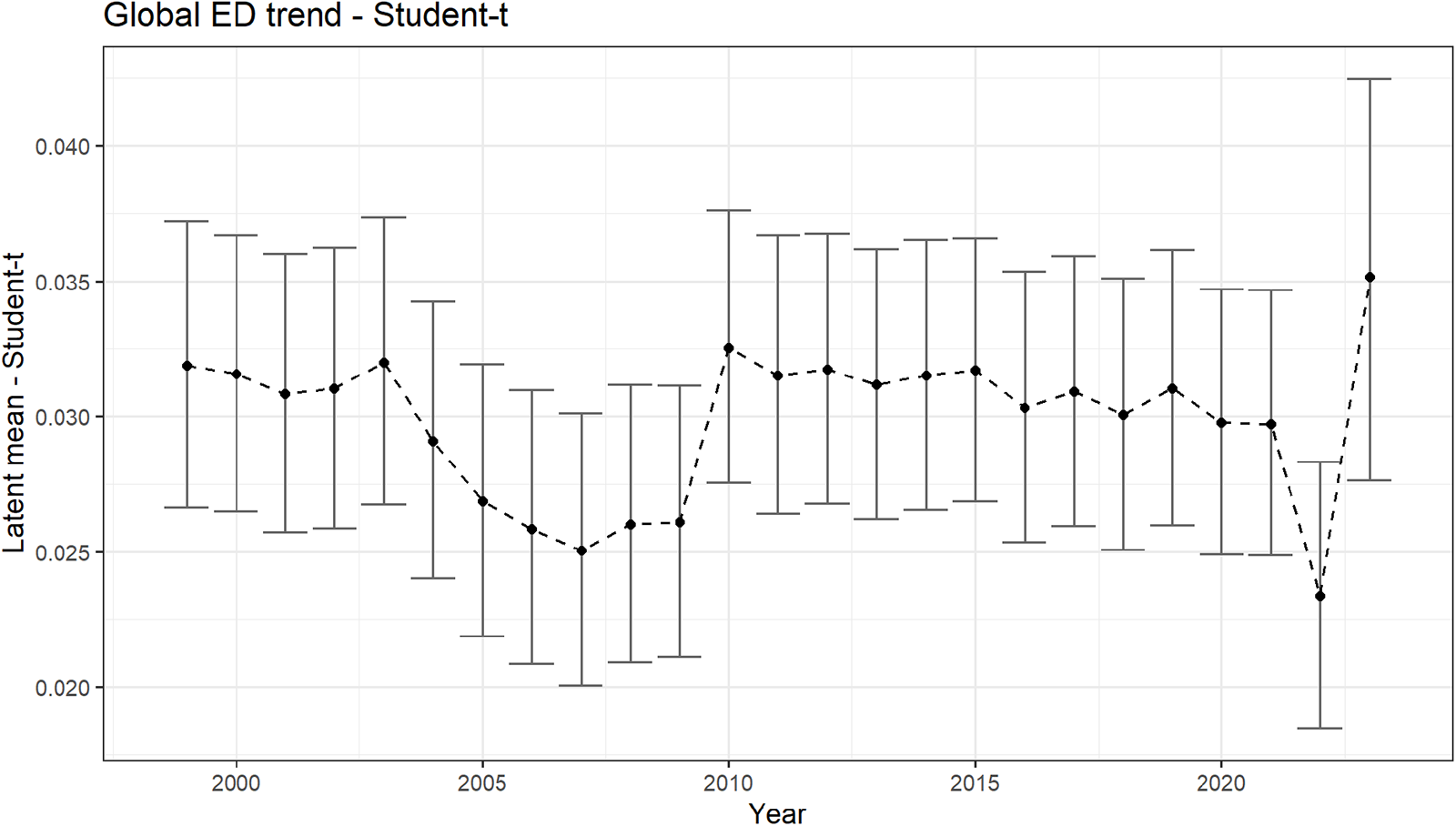


 Open access

