In June 1848 the Literary Gazette reported on a performance that was, by that time, a well-established scientific and cultural phenomenon: the unrolling of an Egyptian mummy. The setting was the studio of the Scottish orientalist painter David Roberts; the mummy was a specimen donated by Thomas Arden; and the unroller was the then well-known Thomas ‘Mummy’ Pettigrew, surgeon, antiquary and author.Footnote 1 Roberts's striking images of Egypt provided an atmospheric backdrop for the occasion but the focus of attention was the mummy and the stage belonged to Pettigrew:
Mr. Pettigrew delivered a perspicuous lecture on the various processes by which the ancient Egyptians preserved their Dead; the case generally replete with mythological formula; the wrappings often disclosing the name, and perhaps the rank, of the deceased … All this, and much more, Mr. Pettigrew explained in a luminous manner, so that the least informed could readily understand what the learned would be pleased to hear summed up in so clear a style. After this, the unrolling of the mummy was skilfully performed, with observations, as the task proceeded, worthy of Mr. Pettigrew's long experience, and having (we believe) done as many as forty or fifty similar subjects. The Copt in question (for so he was decided to be by his cranial and facial formation) was five feet eight inches in length … A load of other ‘trappings’ were successively removed, including circular and longitudinal pledgets, broader and coloured transverse tapes, and at last sheets rather than rollers. Here was found the head of a dragon fly … Altogether, the specimen was a fine one, in perfect condition to demonstrate a mode of embalming of a third or fourth rate class of persons.Footnote 2
The format for a mummy unrolling was by this point well established: the mummy rested upon a table surrounded by Egyptian funerary images, objects and texts. Following a lecture on Egyptian history and religion the lecturer and his assistants would gradually remove the textiles and other materials that encased the mummy. Fragments of the wrappings, pungent with resins and spices, were often passed around the audience along with the amulets and other artefacts encountered within them.Footnote 3 In this complex and many-faceted performance there are a number of factors we might choose to examine, including the authority of the lecturer; the integrity of the mummy; the nature of the space and the event; and the character of the audience, those who, in the words of the Chambers's Edinburgh Journal, ‘feel delight in witnessing the unrolling of endless bandages, smiling at the hieroglyphics, and then staring at the dried remains of a being who moved on the earth three or four thousand years ago’.Footnote 4 In this case, as in many accounts of mummy unrollings, the make-up of the audience was described and certain individuals noted by name:
To this sketch we may add, that a hundred and twenty ladies and gentlemen attended this lecture, and the Royal Academy and artists mustered in strong force, for we observed, inter alia, Uwins, Stanfield, Wyon, Maclise, Webster, C. Landseer, Grant, Prout, Jones, Knight, Chalons, Hart, Macdowell, Creswick, Hollins, and a number of antiquaries and other literary men, as the Hon. Mr. Neville, Captain Slade, Messrs. Birch, C. Croker, Britton, J. Gwilt, Donaldson, Bonomi, Prout, Fairholt, Sir H. Dillon, Arden, Macready, Monro, F. Fladgate, &c. &c.Footnote 5
Mummy unrollings were popular, spectacular events in nineteenth-century Britain, where mummies acquired in Egypt by soldiers, diplomats, travellers and collectors were subjected to autopsy in front of a paying or invited audience. As a form of performance they allude to a range of apparently related practices in the histories of science, medicine and archaeology. The body on the dissecting table harks forward in time to the medico-legal autopsy and the museum laboratory, while the prurient fascination of the audience harks back to the anatomy theatres of Renaissance Europe.Footnote 6 The popular fashion for mummy unrolling in Britain arose and peaked during the first half of the nineteenth century. During this period the study of ancient Egypt was revolutionized by the work of Napoleon's savants and by Champollion's decipherment of hieroglyphics. The practice of archaeology in Britain began to emerge in a recognizably modern and increasingly scientific form from beneath the long shadow of antiquarianism, and, like other sciences of the day, sought to exploit the myriad opportunities for popularization through congresses, magazines, popular books, institutions, meetings and performances.Footnote 7 The 1832 Anatomy Act, and the changing perceptions of the dead body that it marked, provide another context for the Egyptian mummy, whose journey from exotic commodity to scientific object ended, as often as not, with the shrivelled corpse displayed naked upon a table. My study of mid-nineteenth-century mummy unrollings and the many overlapping layers of meaning that they accumulated, focusing in particular on the work of Thomas Pettigrew, forms the basis of this paper.
In its focus on space, object and performance, this study can be aligned most usefully to the field of historical geographies of science, studies that focus on the physical places and social spaces where scientific knowledge is created. Shapin's study of places of experiment in seventeenth-century England begins with a set of questions that summarize my main concerns:
I want to know where experimental science was done. In what physical and social settings? Who was in attendance at the scenes in which experimental knowledge was produced and evaluated? How were they arrayed in physical and social space? What were the conditions of access to these places, and how were transactions across their thresholds managed?Footnote 8
The value of these questions lies not only in the answers they elicit but in the interconnectedness that they presuppose. The place of science, the audience, the performer and the performance are understood as mutually constitutive: in the words of Livingstone, the spaces of science ‘are made. They become what they are through the activities that “take place” in them and the human practices that constitute them’.Footnote 9 Historical geographies of science further emphasize the variety of places that have served as spaces for scientific discovery and endeavour: Livingstone and Lightman list a dizzying array including zoos, libraries, churches, mechanics' institutes and game reserves.Footnote 10 The mummy unrollers of the nineteenth century added to this list medical and military museums, operating theatres, artists' studios, provincial playhouses, pharmacies and drawing rooms. In addition to these more esoteric locations, mummy unrollings occurred in some of the most respected scientific arenas of the period, including the Friday evening lectures at the Royal Institution.
Alongside questions of place, historians of science have examined forms of performance, spectacle and observation, drawing on themes in art history and cultural and intellectual histories of the periods in question. Schaffer considered eighteenth-century natural philosophy ‘in terms of a practice of public display, and its rhetoric … as a set of claims about the putative effect on an audience of the experience of the production of active powers from matter’.Footnote 11 Drawing on the work of Jonathan Crary and others, Morus examined the value of spectacle, visual culture and the audience's gaze as objects of analysis in the history of science, closely connected to the geographies-of-knowledge approach: ‘Thinking about seeing … has clear resonances with recent approaches in the history of science, which emphasize the locally constructed nature of scientific knowledge and the role of audiences and witnesses in actively construing science in the making.’Footnote 12
The privileging of vision over the other bodily senses has been identified by Buck-Morss, Crary and others as a characteristic of emerging modernity: Pomata has argued that the collation and publication of visual observations constituted an ‘epistemic genre’ in Renaissance medicine with standardized conventions for the format and presentation of case notes.Footnote 13 At mummy unrollings this dominance of eye-witnessing did not preclude a role for the other senses: mummy fragments, associated artefacts and particularly the wrapping cloths impregnated with spices and resin were passed around audiences to be touched, smelt and tasted.
Egyptian mummies in European culture
Alongside pyramid building, the mummification of the dead is one of the best-known features of the cultures of ancient Egypt, reinforced through museum exhibits, popular books, supernatural fiction, horror films and computer games.Footnote 14 Mummification as practised by the Egyptians aimed to prevent the natural decay of the human body, through desiccation, evisceration and the use of preservatives, including spices and resins.Footnote 15 Before the unrollers of the modern era began to reverse-engineer these processes, scholars had relied on classical texts for their accounts of mummification, principally the works of Herodotus and Diodorus Siculus. These texts remained key references and authorities for mummy scholars of the nineteenth and twentieth centuries.Footnote 16
Most early accounts of mummy in medieval and renaissance texts refer not to mummies as objects but to the material mummy or mummie. The word ‘mummy’ is believed to derive from the Persian word mummia, referring to natural bitumen, highly valued as a medicine in early modern Persia, where Avicenna in the eleventh century asserted its curative powers for a bewildering variety of ailments. The mistaken belief that Egyptian mummies contained the valuable mummia led to an illicit international market, and by the sixteenth and seventeenth centuries it had became a highly popular preparation in European pharmacies. Catherine de Medici dispatched an expedition to Saqqara in 1549 to collect mummies for medical preparations, while the seventeenth-century English writer and scholar of hieroglyphs Sir Thomas Browne remarked, ‘Mummy is become Merchandise, Mizraim cures Wounds and Pharoah is sold for Balsams’.Footnote 17 The impact of this trade which flourished from the sixteenth century onwards undoubtedly encouraged tomb robbing as well as creating a market in fake mummies, including the bodies of recently executed criminals dried in the sun. The surgeon Ambroise Paré was notably sceptical about the medical value of mummy, arguing, ‘This wicked kinde of Drugge, doth nothing help the diseased … it also inferres many troublesome symptomes, as the paine of the heart or stomacke, vomiting, and stinke of the mouth’.Footnote 18
The popularity of mummy as medicine was later rivalled by its popularity as a pigment: ‘mummy brown’, a rich brown paint similar in colour to umber, was widely used by artists up to the nineteenth century. Its decline in popularity derived in part from its resinous finish, which tended to craze and crack over time, although Rudyard Kipling recalled his uncle Edward Burne-Jones ‘with a tube of “Mummy Brown” in his hand, saying that he had discovered it was made of dead Pharaohs and we must bury it accordingly’.Footnote 19
During the Renaissance there was considerable interest in ancient Egypt amongst scholars and philosophers, based in part on the study of the Hermetica, supposedly the work of Hermes Trismegistus, an Egyptian priest. The Jesuit polymath Athanasius Kircher studied Egyptian texts and antiquities, including pyramids in Egypt and Egyptian mummies in European collections.Footnote 20 During this period mummies and mummy fragments began to appear in museums in Dresden, Milan, Leiden and elsewhere in Europe, as well as in the private collections of scholars and antiquaries such as Nicolas-Claude Fabri de Peiresc and Pierre Borel.Footnote 21 Findlen has argued that early modern scholars were concerned with the ‘inherent spectacularity’ of the objects in their collections and resisted the urge to dissect or dismantle the most visually impressive specimens.Footnote 22 The presence of mummies amongst these largely natural collections was fairly common, and the embalmed Egyptian as a symbol of scholarly obsession and accumulation has a long pedigree: the fictional last will and testament of ‘Nicholas Gimcrack’, a satirical creation of Richard Steele's The Tatler in 1710, includes ‘The Mummy of an Egyptian King’ alongside ‘My Rat's Testicles, and Whale's Pizzle’, and other natural-history specimens.Footnote 23 Whether they viewed them as curios or as exotic artefacts, as medical or scientific samples, it was unsurprising that European scholars would sooner or later seek to learn more about the lives of the ancient Egyptians by delving into the wrappings of the mummies in their collections.
Unrolling Egyptian mummies
Many of the early unrollers sought to compare the mummies with accounts of mummification given in the classical sources. In 1658 the German author Andreas Gryphius attended a mummy autopsy in a pharmacy in Breslau (modern Wrocław) and recorded the findings in some detail.Footnote 24 One of the earliest mummy studies in Britain examined a specimen donated to Cambridge University by George Townshend in the early eighteenth century and described by the theologian Conyers Middleton.Footnote 25 In 1763 John Hadley unrolled a mummy from the collections of the Royal Society: at the outset of his account Hadley stated that the unrolling took place in his home, and listed the names of the people present, including William Wollaston, the physician William Hunter and his brother the surgeon John Hunter.Footnote 26 Following Hadley's efforts, the first systematic comparative study of Egyptian mummies in Britain was conducted by the German physician John Frederick Blumenbach, whose account to the Royal Society described how,
Among the many instances of kindness I have experienced during my late abode in London … I reckon and acknowledge with gratitude, the uncommon, and to me very interesting, opportunities that were afforded me, to open and examine several Egyptian mummies.Footnote 27
Amongst Blumenbach's most surprising conclusions was that many of the mummies in private collections in Britain, and particularly the abundant and popular small mummies around a foot in length, were modern fakes or contained only a few disarticulated bones.
In 1825 the Italian-born physician Augustus Bozzi Granville read a paper at the Royal Society describing an autopsy he had conducted on the mummy of a fifty-year-old Theban woman acquired in Egypt by the traveller Archibald Edmonstone. For a number of reasons Granville's study is widely regarded as the first modern medical autopsy of a mummy. The level of detail he recorded is exemplary: alongside descriptions of the wrappings and the body itself Granville recorded the dimensions of individual bones and body parts. The account is accompanied by several excellent engravings illustrating the head and some of the tissues of the body. Like many mummy unrollers of this and later periods, Granville offered speculations on the race of the individual, arguing that neither the cranial nor the pelvic dimensions indicated a member of the ‘Negro or Ethiopian race’.Footnote 28 Perhaps the most notable aspect of Granville's mummy autopsy was his attempt to deduce cause of death. During his dissection of the body of the mummy a large ovarian cyst was found, leading Granville to comment that:
it will bespeak a very extraordinary power of preservation in the mode of embalming then practised, in some cases at least, to be able to say, that the female of which we were speaking, died at an age of between fifty and fifty-five years; that she had borne children; and that the disease which appears to have destroyed her was ovarian dropsy attended by structural derangement of the uterine system generally.Footnote 29
In 2010 an interdisciplinary team re-examined Granville's mummy. In this study the ovarian tumour was found to be benign and the primary cause of death was reinterpreted as tuberculosis on the basis of DNA and lipid biomarker analyses.Footnote 30
Napoleon's Egyptian campaigns from 1798 to 1801 sparked a rapid growth in popular and scholarly interest in Egypt, based in part on the publications of the multi-volume Description de l'Egypte compiled by the roughly 160 scholars or savants who accompanied the military expedition. Mummy unrollings became popular spectacles in France and Britain, in the latter case encouraged in part by the extraordinary Giovanni Belzoni. Belzoni, a six-foot-six former circus strongman, actor and inventor, travelled to Egypt with the aim of selling hydrological equipment and ended up working for the British Consul General Henry Salt in a variety of enterprises including the transport of large ancient Egyptian sculptures to Britain by sea. Many of these form the basis of the Egyptian gallery in the British Museum, but Belzoni maintained collections of his own, and in 1821 contrived to hold an exhibition to coincide with the publication of a book based on his travels.Footnote 31 To publicize the exhibition, Belzoni held a mummy unrolling for an audience of medical professionals, including Thomas Pettigrew – an event described by his biographer as ‘shrewdly-aimed advertisement, calculated to bring in a large body of professional men’.Footnote 32 Belzoni's unwrapped mummy was displayed, alongside a motley collection of Egyptian artefacts, at the Egyptian Hall on Piccadilly, constructed in 1812 and an early example of ancient Egyptian influence on British architecture. Work and family commitments were to restrict Pettigrew's scholarly work at this time, and it was not until 1833, more than a decade after attending Belzoni's autopsies, that he began the careful and systematic public science of mummy unrolling that would bring him fame, money, connections, ridicule and a reputation that endures into the present.
British Egyptology in the early nineteenth century
Pettigrew's mummy unrollings and the Egyptomania they reflected and fuelled must be seen in the context of the impressive advances in the field of Egyptology in the first half of the nineteenth century. Wortham has argued,
During the period 1800 to 1850, Egyptology slowly began to evolve into a discipline restricted to professionals. When the nineteenth century dawned, all the major ruins in the Nile Valley had been explored, described, and sketched, and there was little original work left for the traveler who had not studied the hieroglyphic writing.Footnote 33
The discovery in 1799 of the Rosetta Stone, with its trilingual inscription, opened up the possibility of the decipherment of the hieroglyphic script. In 1822 Jean-François Champollion published his translation of the text, building on earlier work by Thomas Young. While the value of this translation and the work that has emerged from it are now well attested, they remained controversial for some time, with claims made for alternate methods and interpretations. In the latter part of this paper I argue that Pettigrew regarded his mummy unrollings, particularly those held in the presence of other scholars, as a means of demonstrating in a public arena the validity of Champollion's methods.
One of the principal figures in the promotion and practice of Egyptology during the early nineteenth century was Henry Salt, the British Consul General in Egypt and a collector of numerous antiquities including mummies. Salt conducted a number of excavations and surveys, as well as palaeographic work in the aftermath of Champollion's publications.Footnote 34 He employed agents to collect objects on his behalf, many of which he sold to the British Museum and the French crown. Two of these agents – Giovanni Belzoni, discussed above, and Giovanni d'Athanasi – were to become important figures in their own right and both were instrumental in inducting Thomas Pettigrew into the study of Egyptian mummies. Following Salt's death the diplomat John Barker was appointed Consul General. Like Salt he was a collector of antiquities and on his retirement in 1833 his collections were sold at Sotheby's in 258 lots, most them bought by the British Museum and by the antiquarian John Lee.Footnote 35 It was at this sale that Pettigrew purchased the first of the mummies that he was to unroll publicly.
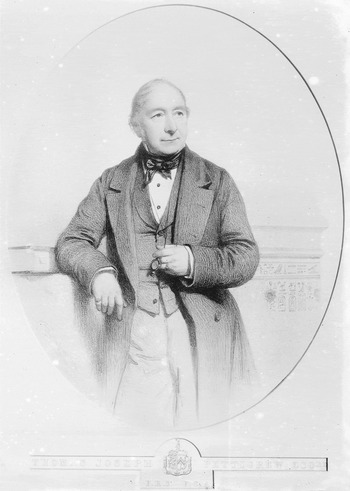
In 1824, towards the end of Salt's time in Egypt, a group of British explorers, artists and scholars arrived in the country, led by Robert Hay. Hay's team included the artist Joseph Bonomi, the scholar James Haliburton and the linguist Edward William Lane. Pettigrew never travelled to Egypt but he corresponded with Hay and his colleagues on a number of Syro-Egyptian matters.Footnote 36 The scholar John Gardner Wilkinson's travels and residency in Egypt overlapped with those of Hay and his team, with whom he was closely acquainted. Wilkinson's multi-volume Manners and Customs of the Ancient Egyptians later earned him fame, distinction and a knighthood.Footnote 37 Like Salt he was an early supporter of Champollion's translations of hieroglyphic writings and much of his correspondence with Pettigrew concerns translations and interpretations of texts found on, in or accompanying mummies.Footnote 38 Many accounts of Pettigrew's mummy unrollings in scholarly reports and the popular press mention the presence of Wilkinson, Bonomi, Hay and their colleagues, most often seated prominently in the front rows. The performances were no doubt of interest to these men and their expertise of value to their friend and colleague, but in the intellectual geography of the mummy autopsy their tacit assent to Pettigrew's work lent it an authority and credibility that shaped the meanings of the event. Morus has discussed the dual interpretations of the term ‘performance’ as presentation and dissimulation and the productive tensions between these concepts.Footnote 39 In this analysis performances can serve to seduce or intimidate an audience, to reinforce group identity or to delineate social boundaries. Alongside the purpose, form, location and time of the performance there is the agency of the scholar–performer: the scientists described by Shapin as ‘people with bodies, situated in time, space, culture, and society, struggling for credibility and authority’.Footnote 40 For Thomas Pettigrew, surgeon, antiquary and mummy unroller, this struggle was to prove a central and defining feature of his professional and intellectual life (see Figure 1).
Thomas Pettigrew, by Charles Baugniet. Source: Wellcome Library, London.

Thomas Joseph Pettigrew (1791–1865)
The history of mummy studies has been kind to Thomas Pettigrew; the histories of archaeology, science and medicine less so. Within the former his History of Egyptian Mummies based on his early unrollings is widely regarded as a foundational text in the discipline, and remains a pleasurable and illuminating read. When scholars of ancient Egypt and mummies have traced the foundations of their disciplines they have tended to rely on Pettigrew's own writings and those of his adoring biographer Warren Dawson,Footnote 41 from which he emerges a generous and hard-working polymath devoted to public health and the promotion of scholarship.Footnote 42 In the histories of the Royal Society, the Society of Antiquaries, the British Archaeological Association and Charing Cross Hospital a markedly different Thomas Pettigrew appears: a spiteful, calculating, capricious and corrupt individual devoted to self-advancement and the cultivation of powerful friends.Footnote 43 His friend Sir Francis Palgrave noted of Pettigrew that ‘nothing will ever cure his mania for meddling in the intrigues and dissensions of clubs and societies’;Footnote 44 his enemies were less restrained: in an open letter to the British Archaeological Association the Reverend Thomas Hugo wrote,
Sometime since, the Athenaeum well remarked of him, that ‘in any public relation he can live comfortably only in an atmosphere of disturbance; and as that is a phenomenon easy to produce, he readily contrives wherever he goes to create the moral condition in which his egotism thrives.’ Later years have not tended to improve him, as they who have been officially connected with him know full well. Petulance, captiousness, and jealousy, are still among his characteristics. The concoction of intrigues, the packing of meetings, and the confusion of congresses are still his delight. The fomenting of suspicions by misrepresenting to each of his colleagues what the rest are alleged to say in their disparagement … is still his constant habit. And ‘divide and rule’ is still his favourite maxim.Footnote 45
The subject of this diatribe was born in 1791 in London, where his father William Pettigrew had found work as an apothecary after serving as a naval surgeon aboard HMS Victory. His duties included the care of the parish workhouse, where Thomas Pettigrew's early interest in anatomy led him, by his own account, to conduct illicit autopsies: he recalled an elderly woman who, ‘fearing she was about to die … discharged herself from the house, expressing her aversion to have her remains subjected to “the mangling of young Pettigrew”’.Footnote 46 At the age of sixteen Pettigrew was apprenticed to the surgeon John Taunton, assisting him in his clinical work and in the running of his anatomy school.Footnote 47 In 1808 at the age of seventeen he was amongst the group of young and intellectually curious apprentices who formed the membership of John Tatum's City Philosophical Society, with Pettigrew giving the society's inaugural lecture on the subject of ‘insanity’. Michael Faraday, a few weeks Pettigrew's senior, was another young member of the society: Faraday later conducted chemical analyses for Pettigrew on minerals and other materials found inside mummies.Footnote 48 Pettigrew married Elizabeth Reed in 1811: of their twelve children eight survived to adulthood and one, Dr William Vesalius Pettigrew, regularly assisted his father in his mummy unrollings.Footnote 49
Pettigrew's professional advancement began with a controversial election as secretary to the Medical Society of London and, a year later, to the Royal Humane Society: this in turn led to his appointment as surgeon to the Dukes of Sussex and Kent, in which latter role he vaccinated the future Queen Victoria. For some years he served as surgeon at the Dispensary for the Treatment of Diseases of Children; the Asylum for Female Orphans; and the Royal West London Infirmary and Dispensary, later Charing Cross Hospital.Footnote 50 As professor of anatomy at the Charing Cross Hospital, Pettigrew used his lecture theatre for some of his earliest mummy unrollings before leaving the hospital in 1836 amidst allegations of corruption.Footnote 51
Pettigrew's wide-ranging interests in antiquity, natural philosophy and the history of medicine emerged during his apprenticeship; a keen awareness of his paucity of formal education gave him a self-proclaimed ‘rapacity’ for books and an enthusiasm for intellectual activity and companionship.Footnote 52 These broad-ranging interests were maintained throughout his life. As a well-connected metropolitan professional in early nineteenth-century London Pettigrew naturally gravitated towards the numerous learned societies of the day, principally the Royal Society, the Society of Antiquaries and their various offshoots, including the Linnean Society, the Entomological Society and the Historical Society of Science.Footnote 53 Pettigrew's active involvement in a broad range of associations, learned societies and printing clubs formed the nucleus of his social and intellectual network, but not its full extent. His considerable corpus of friends, colleagues and contacts across Britain and Europe was forged and maintained through correspondence and conversaziones, as well as meetings, congresses and other events. Comparing the listed attendees at Pettigrew's mummy unrollings, the subscribers to his book and the reams of archived correspondence reveals the intrinsic interconnectedness of his social, intellectual, economic and familial networks.
In 1843 Pettigrew and several other fellows of the Society of Antiquaries, frustrated by ‘the exclusiveness and lethargy of the Antiquaries’, founded the British Archaeological Association, in conscious imitation of the British Association for the Advancement of Science, born of a similar frustration with the Royal Society a decade earlier.Footnote 54 At the first annual meeting of the British Archaeological Association at Canterbury in 1844 Pettigrew unrolled a mummy as part of a programme of popular events that included the staged excavation of nearby burial mounds.Footnote 55 Having retired from medical practice on the death of his wife in 1854, Pettigrew devoted his later years to his antiquarian pursuits. His involvement in the British Archaeological Association, including terms as treasurer and vice-president, continued until his death in 1865 at the age of seventy-four.Footnote 56
Thomas Pettigrew's mummy unrollings
In his lengthy career Thomas Pettigrew carried out a considerable number of mummy autopsies in a variety of venues. Some of these were instigated by Pettigrew and used mummies belonging to himself or his friends; others were held in museums or private collections and resulted from an invitation or application.Footnote 57 In several cases Pettigrew's expertise and experience led to invitations to assist or observe unrollings conducted by fellow scholars or enthusiastic amateurs. Some of Pettigrew's unrollings were private events for invited groups of friends; others were open to the public with tickets advertised and sold.
The case studies I have selected from Pettigrew's long and varied career illuminate different elements of the typical nineteenth-century mummy unrolling and provide insights into the layers of meaning that enveloped these curious events. Alongside accounts of mummy unrollings at Charing Cross Hospital, the Royal College of Surgeons and the Royal Institution I examine the publication of Pettigrew's 1834 magnum opus History of Egyptian Mummies. The common themes across these events, as well as the diversity of aims and contexts that they illuminate, allow for a wide-ranging analysis of mummy unrollings in nineteenth-century Britain in their cultural, social, intellectual and economic contexts.
Charing Cross Hospital, April 1833
In March 1833 Thomas Pettigrew bought a mummy for twenty-three pounds at the sale of John Barker's antiquarian and Egyptological collections held at Sotheby's; at the same sale his friend Thomas Saunders paid £36 15s for an apparently finer example.Footnote 58 Having assisted Belzoni, witnessed other unrollings and undertaken a mummy autopsy of his own, privately, on a rather tatty specimen, Pettigrew was confident enough to propose unrolling both his and Saunders's mummies in front of an audience. This was the first of many similar operations that Pettigrew was to undertake over the years, setting a pattern that was to recur throughout his career. To return to Shapin's questions highlighted earlier we can enquire into the physical and social context of the unrolling event; the arrangement of object, performer and audience; the intellectual and social standing of the audience; and the conditions of access to the performance space. Given the nature of the unrolling as a scientific process and event I am also interested in the sequence of events; that is, the order or series in which different items of knowledge were introduced during the proceedings.
Pettigrew chose as his stage the lecture theatre of the Charing Cross Hospital, where he was at the time employed as professor of anatomy. The audience, described by Pettigrew either airily or with tongue in cheek as ‘a few friends’, included many of the social, scientific and medical elites of London, whom he lists at length: ‘Prince Cimitile, Viscount Boringdon, Lord Hotham, Lord Henley, Sir Henry Halford, Bart …’.Footnote 59 The sequence of the performance is best described in the press coverage, which affirms the great interest and excitement surrounding the event. Pettigrew began the process, as was to remain his practice, with a short lecture on the history and practice of mummification based in part on classical sources. As he began the unrolling he continued to describe the findings to the audience, from whom, we are told, ‘there were frequent strong expressions of the great satisfaction and gratification which [Pettigrew] had afforded’.Footnote 60 Pettigrew began by unrolling Saunders's mummy, but this quickly proved to be of poor quality or preservation; the bone and tissue appearing burnt and friable, to the extent that ‘when a small piece of the thigh bone was taken out, it was snapped with the greatest ease betwixt the finger and thumb’.Footnote 61 Having abandoned this specimen Pettigrew moved on to his own mummy, which proved to be better preserved, although the outer layers of bandage had been lost, leaving only the inner wrappings intact. Pettigrew himself emphasized the physicality of the process, admitting that ‘it was a task of no little difficulty, and required considerable force to separate the layers of bandage from the body’.Footnote 62 Fortunately the second example proved much better preserved, with hair, skin and nails intact and the tissue retaining a degree of flexibility: parts of the skin yielded when touched, a phenomenon that several of those present regarded as particularly worthy of note. Large areas of the body were coated in gold leaf, a phenomenon only observed on a few specimens up to that point, and it was speculated that initially the entire body might have been gilded.
Pettigrew's examination of the unrolled mummy appears to have been quite painstaking, as befits an anatomist: several reports mention the fine crystals found near the mummy's hand; likely a residue from the natron salts used to desiccate the cadaver. Pettigrew evidently intended his examination of the mummy to extend beyond the spectacle of the unrolling into a range of different analyses, as the Literary Gazette reported:
Mr. Pettigrew stated, that he should subject the flesh and intestines to a series of experiments and examinations, without exactly stating their nature, and that he would feel obliged to any of the scientific persons present for any hints or information in the progress of his undertaking. We shall look forward with anxiety to the result.Footnote 63
Pettigrew's appeal for help highlights a dimension of his audience that might otherwise have remained unclear: as well as providing authority to any discoveries that might be made, they were invited at least in part to lend their expertise. While the practice of consultation and the exchange of biological samples and analytical skills were common amongst medical men of the period, the application of these practices to an antiquity – albeit an organic one – constitutes a notable event in the history of archaeological sciences. It is interesting to note that in later years Pettigrew was to request and receive analytical reports on mummy tissue and cloth from distinguished scientists of his acquaintance, including Sir Lyon Playfair and Michael Faraday.Footnote 64
In other respects, however, the Charing Cross Hospital mummy unrolling was as much an entertaining spectacle as a scientific demonstration. Both Pettigrew himself and the press reports describe the occasion as ‘extremely interesting’, and report the audience's responses to the event: ‘The room was attended by many men of literature and science, who warmly greeted the able lecturer when he had concluded his interesting work.’Footnote 65
The most detailed account of the unrolling appeared in the Gentleman's Magazine: an account that may have been written by Pettigrew himself, despite its referring to him in the third person throughout.Footnote 66 It discusses classical accounts of Egyptian mummification in some detail, including an outline of the different forms of embalmment offered for high-, middle- and low-income individuals. This report gives the clearest impression that the Charing Cross Hospital unrolling was, inter alia, a research-focused performance aimed at reverse-engineering the mummification process with reference to the classical sources.
Royal College of Surgeons, January 1834
In January 1834, following negotiations with the governing council, Pettigrew unrolled a mummy at the lecture theatre of the Royal College of Surgeons. The mummy was part of the collection of the Hunterian Museum at the college, and Pettigrew assured the council that the painted case would not be harmed in the process: evidently the museum's conservation concerns focused on the artistic merit of the case rather than the integrity of the mummy.Footnote 67 Tickets for the event were made available by the college but demand soon outstripped supply, to the extent that the museum displayed signs reading, ‘Gentlemen who may be disappointed in witnessing the unrolling of the Mummy this day, will have an opportunity of viewing it in the Museum every Monday, Wednesday, and Friday, from 12 till 4 o'clock’.Footnote 68 Press reports of the unrolling describe the elaborate stage setting that Pettigrew erected, including a mummy case on a table, and hieroglyphic texts suspended around the stage. According to this account, ‘Another of the interesting group, which were arranged as accessories to the general design, was a mummy which had been long deprived of its cearments, and was seen suspended’.Footnote 69 Given that it was described as partly gilded, this is probably the mummy unrolled at the Charing Cross Hospital.
The audience for this event was not restricted to members of the Royal College of Surgeons: a fact that, combined with the great demand for tickets, caused some disgruntlement among the fellowship. William Clift, the conservator of the Hunterian, recorded those admitted to the performance as having included ‘a Prince, several Peers, Bishops, Statesmen, Diplomats, Members of Parliament, as well as all the leading physicians and surgeons of the day, and many artists, authors, military and naval officers, and others’.Footnote 70 Those unable to gain entrance due to the crush of bodies included the archbishop of Canterbury and the bishop of London.
Following his now-established pattern of performance Pettigrew gave a lecture on the history and science of mummification, at the end of which he commenced the unrolling. A report related how an ‘indescribable sensation pervaded the audience when Mr. Pettigrew lifted off the upper portion of the case or coffin’.Footnote 71 The mummy, identified from an inscription as Horsiesi, son of Naspihiniegori, incense-bearing priest of the Temple of Ammon, had been prepared for unrolling by the removal of the hard outer layers of bandage, leaving the softer wrappings intact for the performance. The reports of the unrolling describe the bandages in some detail: their colour, weave and forms of winding. Pettigrew reported on the work of a chemist, Dr Granville, who had analysed the pigment used in the bandages: ‘the taste of the cloth, and the results which it yields on being treated with the substance called gelatine, have put beyond all doubt the fact that a great deal of that powerfully preserving principle, tannin, (which forms leather,) is incorporated with the cloth’.Footnote 72 The evidence of Dr Granville's taste buds appears to have satisfied the writer. During the removal of the bandages Pettigrew revealed a number of scarabs and amulets, some of which appeared to act as seals on the wrappings. Upon unrolling the head of the mummy, artificial eyes were discovered in the orbits, formed of enamel with black patches representing the irises. In the final stages of the unrolling Pettigrew recited a prayer allegedly used by ancient Egyptians while dying, to assert goodness and ensure the passage of the soul. Now accustomed to the length of time it often took to unroll a mummy, and the frequently poor state of preservation of the body when revealed, Pettigrew had warned his audience at the outset that ‘the examination of mummies does not always repay the trouble of stripping them’,Footnote 73 with another report quoting a spectator as remarking ‘after much excitement it afforded a good exemplification of the old adage, “Great cry and little wool.”’Footnote 74 It might be supposed that the presence of the previously unrolled mummy amongst the props for the performance was insurance against complete disappointment so that the unroller could, if necessary, point to ‘one I made earlier’. The mummy in the lecture hall of the Royal College of Surgeons was not a prime specimen and the preservation of the body was poor, although the fingernails survived intact and showed signs of painting with henna. A magazine report of the event stated,
The body is a good deal charred with the heat of the materials applied to it; but, upon the whole, its investigation has afforded much satisfaction to the literati and antiquaries who are so sedulously pursuing their inquiries into the condition and records of the cradle of mankind.Footnote 75
Pettigrew's biographer Dawson recorded in his notes that both the mummy and its case were still on display at the Hunterian Museum of the Royal College of Surgeons; he later appended a note stating that it had been ‘destroyed by enemy action’ during the Second World War.
The intense interest that this unrolling sparked amongst London's elites suggests that Pettigrew's successful attempt to reach a larger audience rested in part on a combination of performance, performer and place. The examination of a mummy by a society surgeon, at the Royal College of Surgeons, and before an audience principally composed of fellow practitioners constituted an event of sufficient intellectual legitimacy and social respectability for lords and archbishops to seek and be granted tickets.
History of Egyptian Mummies, 1834
In 1834, less than two years after recommencing his study of mummies, Pettigrew published a book on the subject with the appropriately lengthy title History of Egyptian Mummies and an Account of the Worship and Embalming of Sacred Animals by the Egyptians; with Remarks on the Funeral Ceremonies of Different Nations and Observations on the Mummies of the Canary Islands, of the Ancient Peruvians, Burman Priests, &c. The book, published by Longman, Rees and Co. and dedicated (with permission) to King William IV, was extremely well received, with long and detailed positive reviews in the Athenaeum and the Monthly Review.Footnote 76 The book has been described, quite justifiably, as the foundation of modern mummy studies: a century after publication Warren Dawson, a scholar of mummies as well as Pettigrew's biographer, proclaimed it, ‘One of the most valuable works extant. It is a monument of exact observation, and considering the state of archaeological knowledge at the time is in every way admirable.’Footnote 77
The success of the volume rested not only on its merits but upon Pettigrew's vigorous marketing campaign. At almost three hundred quarto pages with plates, including colour plates, the book was expensive to produce and sold at a rather steep two guineas. Pettigrew printed a prospectus for the book which he circulated amongst his extensive network of friends and colleagues. The results speak for themselves: when the book appeared it was prefaced by a list of 354 subscribers. The list is a treasure-trove of prominent and interesting figures of the early nineteenth century. It includes Egyptologists James Burton, Augustus Bozzi Granville and John Gardner Wilkinson; antiquarians John Davidson and Sir Francis Palgrave; artists and architects including Richard Westmacott and Lewis Vulliamy; and pioneering anthropologist James Cowles Prichard. Men of science are well represented: alongside Michael Faraday there is Sir George Cayley, pioneering aerodynamicist and aeronaut. Pettigrew's penchant for cultivating the rich and powerful is marked by the inclusion of innumerable lords, including the Dukes of Devonshire and Hamilton, the Earls of Egremont and Hardwicke, an assortment of continental counts, the archbishop of Canterbury and the Lord Chief Justice of England. The most interesting thing about the list is not, however, the names it includes but the means by which they came to be attached to it. Pettigrew's correspondence from the period suggests that he attached the prospectus for the book to invitations to attend private mummy unrolling events: Sir John Lubbock wrote, ‘I feel I must appear very ungrateful in not answering your kind invitation to be present at the opening of a mummy … I do not wish to subscribe to the work you intend publishing’.Footnote 78 In contrast, surgeon Sir Charles Ferguson Forbes replied,
I shall have great pleasure in joining your party of friends on the 31st instant: after the examination of the ancient Egyptian who for aught we know might have reveled in the Court of the Pharaoh. Pray have the goodness to include my name in the list of subscribers to your work on the History of Mummies …Footnote 79
Count Ferdinand dal Pozzo thanked Pettigrew for the invitation to subscribe, as well as for ‘the two tickets sent to us for … the opening of the mummy you mention’.Footnote 80 Charles Bennet, Earl of Tankerville, was similarly enthusiastic:
I shall be delighted to put my name to your list of subscribers to the proposed publication and I have no doubt but that some of my friends will be happy to join in it also. If I can possibly find time to attend the treat you propose in the Examination of an Egyptian Mummy I shall make a point of coming.Footnote 81
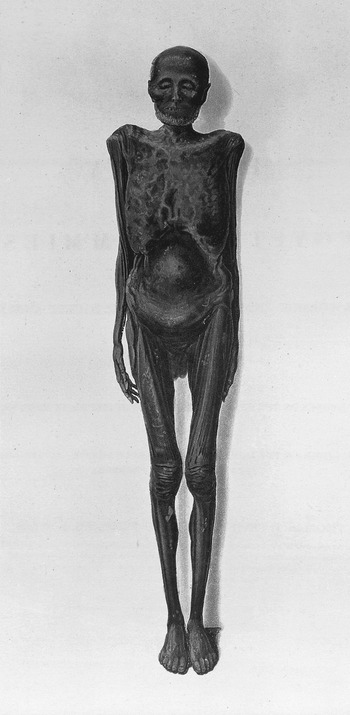
Thus the social capital accumulated by the performance of mummy unrollings and gifting of tickets of admission was monetized: Dawson estimates that Pettigrew obtained around £750 from subscriptions to the book, although much of this would have gone into printing costs, including the plates by George Cruikshank (Figure 2), who later illustrated the works of Charles Dickens.Footnote 82
‘Græco-Egyptian mummy unrolled April 6th, 1833’ by George Cruikshank. Frontispiece of Pettigrew's 1834 History of Egyptian Mummies. Source: Wellcome Library, London.

History of Egyptian Mummies remains an interesting and well-written work, with a conversational style that belies the formidable amount of research that the book presents. One of the only sour notes in the volume is a diatribe against the Trustees of the British Museum who had refused Pettigrew permission to unroll the mummies in their collection, several of which had already been unrolled by Blumenbach in 1794. In typically combative style he refers to the Trustees ‘to whom I made application to be permitted to examine one or two of the specimens contained in that national establisment [sic]. The Trustees were of opinion that it would destroy the integrity of the collection!’Footnote 83 This scorn in the face of an apparently entirely reasonable concern is echoed by the reviewer for the Monthly Review. Two years later Pettigrew returned to the question of the British Museum's mummies, an issue that clearly vexed him, suggesting that the mummies be displayed partially unrolled in a series, thereby showing the stages of mummification.Footnote 84
Aside from his capacity to bear a grudge, this highlights most clearly Pettigrew's interest in mummification as a process, one that he studied historically using ancient texts and archaeologically through an examination or reverse-engineering of the end products. Pettigrew's mastery of the process that Egyptian embalmers employed was put into practice in 1852 when he mummified the Egyptophile Duke of Hamilton, an ardent admirer of Pettigrew's work.Footnote 85 Pettigrew used original techniques for the mummification and the duke's embalmed body was placed in an Egyptian sarcophagus in the purpose-built and still impressive Hamilton Mausoleum in Lanarkshire.
Royal Institution, May 1836
The question that arises most persistently in studies of mummy unrolling events concerns the intellectual context of the performance space: in what ways and by whose authority was knowledge created in the space between the unroller and his audience? In an account published in 1836 Pettigrew offers a fascinating and revealing insight into this dimension of his work. In the years following the publication of History of Egyptian Mummies Pettigrew carried out a number of mummy unrollings, most of which are attested by news reports. The longest and most detailed report that he himself produced was an account of an unrolling at the Royal Institution in May 1836, published in the second volume of the short-lived Magazine of Popular Science and Journal of Useful Arts. The bulk of this long article is devoted to the history of mummification as revealed by ancient texts and modern archaeological sciences, while the last two pages alone detail the findings of the autopsy. The first page, however, provides an extraordinary level of detail regarding the epistemic significance of the mummy unrolling performance. Pettigrew (referring to himself throughout in the third person) describes the opening of the event:
The lecturer stated that he had availed himself of the opportunity afforded by the Royal Institution to display the mummy to the members and their numerous visitors, in obedience to the solicitations of several distinguished scholars and antiquarians, and had overcome his own scruples in appearing before his audience in a public character, believing, as he did, that such an effort might be found useful in exciting a spirit of inquiry into an object of interest connected with Egyptian antiquities, and calculated to prove advantageous in assisting to demonstrate the certainty of hieroglyphical research, which he regretted to say, notwithstanding the great advances made in the course of a few years, had not yet, in the minds of many, sufficiently established its claim to truth and authenticity, and was still treated as being almost wholly speculative and conjectural. Mr. P., therefore, felt peculiarly happy in the present opportunity of putting this subject to the test, in the presence of nearly all those who have been in any way distinguished for their knowledge of hieroglyphical literature, and whose labours have tended so much to illustrate this curious branch of literary history; and to whom he was willing, on the present occasion, to submit the translation he had made of some of the principal passages depicted on the cases of the mummy, feeling satisfied with the decision of such competent judges; and deeming it of importance to show to those who may be sceptical on the matter, that when so many persons of known attainments can be brought together to agree as to the interpretation of the inscriptions, the basis upon which they are made must necessarily and obviously be founded in truth; and, therefore, likely to lead to important and correct results.Footnote 86
In the lecture theatre of the Royal Institution, before a sizeable audience, Pettigrew laid out his case for mummy unrolling as an experimental proof of Champollion's translation of hieroglyphics. He proposed, in summary, to personally translate the texts that appeared during the autopsy and to submit these translations to his Egyptological peers gathered in the theatre so that, by their approval given in the presence of a public audience, the means of translation would be established as a public fact.
Setting aside his dubious claims at reticence, Pettigrew's statement offers a glimpse into the mind and motivations of a nineteenth-century man of public science while shedding light on the various dimensions of the autopsy as performance. The location of this unrolling in the Royal Institution aimed to don the trappings of authority that this space enjoyed at the time as a birthplace for scientific knowledge and its capable and reliable dissemination to the public. Pettigrew acknowledges this, as well as the importance of the scheduling of the event, in the very first sentence of the article: ‘One of the Friday evenings so judiciously set apart by the managers of the Royal Institution for the communication of useful knowledge, has lately been devoted to the consideration of the mummies of the Ancient Egyptians’.Footnote 87
Second only to the place, the authority of the event rested upon the scholars Pettigrew had accumulated for the occasion, those men ‘distinguished for their knowledge of hieroglyphical literature’, whom he helpfully lists in a footnote as ‘Mr. Wilkinson, Mr. Burton, Dr. Leemans, Lord Prudhoe, Rev. Mr. Tattam, Mr. Cullimore, &c.’.Footnote 88 The validity of hieroglyphic translation rested upon the audience's recognition of these men's abilities and their capacity to demonstrate them by reading newly revealed texts or giving their assent to Pettigrew's reading. Pettigrew staked his hard-won and hotly contested authority upon the abilities (or perhaps merely the assent) of his Egyptological colleagues and friends. The scholars joined the mummy as foci for the performance.
The inscription of the event as a public experiment gives us cause to reconsider the object of the mummy. What had appeared at Charing Cross Hospital as a medical specimen was now a manufactured object. The mummy was a black box, a sealed text or context, a cypher to be cracked by an unsealing that must be publicly witnessed and acknowledged: beyond its technological complexity the mummy in the Royal Institution had been reduced to a sealed envelope containing the clue to a riddle.
Amidst the audience and the distinguished scholars of hieroglyphics present at the Royal Institution that evening was a young man named Samuel Birch. Pettigrew's friend and fellow numismatist Charles Barnwell, the ‘hard-working, slightly monomaniacal’Footnote 89 assistant keeper of antiquities at the British Museum, had prevailed upon Pettigrew to admit him:
My dear Pettigrew,
Doubleday is gone to Canterbury, which will make at least one vacancy in your room tomorrow evening. May I beg the favour of you to supply his place with a very clever young man, who is at present engaged as an assistant in our department at the museum, and is extremely keen on the subject of Egyptian Antiquities? If it is not inconvenient to you have the goodness to send the order of admission to Mr Saml. Birch, 45 Long Acre. He is the oldest son of an old fellow-collegian of mine, D. Birch, Prebendary of St Pauls.Footnote 90
Samuel Birch remained at the British Museum until his death almost half a century later, by which time he had revolutionized the study of ancient Egypt from textual sources. Birch established dynastic chronologies from the papyri in the museum collections and produced a dictionary and grammar of ancient Egyptian, as well as extensive commentaries and translations. In 1836 Birch was still a junior member of staff at the museum with an emerging interest in ancient Egypt: in these circumstances Barnwell's introduction demonstrates a nineteenth-century social and intellectual network in action. Birch's subsequent correspondence with Pettigrew initially focused on translations of texts found in the latter's unrollings, but soon turned to the unrollings themselves, which Birch was keen to undertake in his own right.Footnote 91 In 1842 he wrote to politely rebuff Pettigrew's offers of assistance with the unrolling in Shrewsbury of a mummy that had belonged to the bishop of Lichfield. Birch evidently felt confident in conducting the unrolling himself, assuring Pettigrew, ‘I do not anticipate that it will present any serious difficulties’.Footnote 92 In 1850 Birch unrolled a mummy belonging to Lord Londesborough at his lordship's home on Piccadilly.Footnote 93 Printed invitations for this event depicted a reclining mummy and announced, ‘A Mummy from Thebes to be unrolled at half-past two’.Footnote 94 The last recorded mummy unrolling conducted by Birch took place at Stafford House in 1875 and was recorded in the Transactions of the Society of Biblical Archaeology that he had founded in 1870.Footnote 95
Exeter Hall, March and April 1837
Earlier in his medical career Pettigrew had augmented his often meagre income by lecturing on a range of topics for organizations such as the Surrey Institution, either single talks or lecture series. In early 1837 he devised and delivered a series of six lectures on Egyptian antiquities at the Exeter Hall on the Strand, a popular venue more famously associated with the anti-slavery movement. Having been fired by the Charing Cross Hospital in 1836 for corruption, Pettigrew was, at this point, dependent upon his earnings from private medical practice and this may have prompted him to seek alternative forms of income. The syllabus for the lecture series is reprinted by Dawson and resembles the content of Pettigrew's History of Egyptian Mummies published three years earlier.Footnote 96 The Literary Gazette noted the good attendance at these lectures, remarking that ‘it is a good sign of the taste of the times, and increasing desire for information, to notice [that they] were well attended by persons of both sexes, and of various ranks of life’.Footnote 97 The seventh and final part of the course was the unrolling of a mummy, preceded by a short lecture recapitulating the principal points of the series. While the audience apparently greeted the performance with enthusiasm, Pettigrew had been unable, in the time available, to complete the unrolling. Perhaps in recognition of this he drew attention in his closing remarks of the planned unrolling of another mummy in the same venue, a rare specimen from Memphis in the possession of Giovanni d'Athanasi, a former employee of Henry Salt.
Like Pettigrew, d'Athanasi's intention was principally commercial, and in marketing the event he emphasized the rarity of mummies from Memphis and the frequency with which jewels and treasures were found within their wrappings. Pettigrew was again called upon to supervise the unrolling, which in the event proved even less successful than the previous. The audience numbered between five and six hundred, of whom only a few could see the mummy adequately, and the space was ill-designed for the purpose, being a meeting room rather than an anatomy theatre. The greatest hindrance, however, was the thick and resilient bituminous layer discovered in the wrappings of the mummy, and according to The Times ‘it became a work of absolute labour to Mr. Pettigrew and his assistants, by dint of cutting, hammering, and chopping, with very strong tools, to remove the impediments which intervened between them and the object they were seeking to expose’.Footnote 98 After several hours the attempts were abandoned and the audience was assured that ticket-holders would be admitted to view the mummy once it had been fully uncovered.
The spectre of failure haunted every unrolling event and highlights a number of significant points. Where natural philosophers could perfect and rehearse the phenomena they exhibited to their audiences, the archaeological nature of the mummy rendered the outcome uncertain. In some respects this uncertainty worked in the performer's favour, allowing them to speculate about rich ornaments that might be discovered. In other respects it constituted a risk, and one multiplied by the number of paying spectators. Aside from their obvious aesthetic impact, the elaborate stage dressings that Pettigrew routinely employed, including previously unrolled mummies, can be regarded as strategies to mitigate that risk by offering distractions during what might otherwise have become a somewhat tedious process. The habit of handing samples of mummy cloth around the audience can also be seen in this light. While most reports of unsuccessful or partially successful unrollings were largely sympathetic, a few were less so. In the aftermath of the unrolling of d'Athanasi's mummy the magazine Figaro in London published a vicious and illuminating attack on Pettigrew under the heading ‘Scientific mummery’:
Some nasty beasts met together on Saturday last to indulge in the disgusting amusement of unrolling a mummy. Our old friend Pettigrew, commonly called Mummy Pettigrew, was the principal unroller on this filthy occasion. Pettigrew seems positively to do nothing else but unroll mummies; and, whenever the dirty process is to be gone through, he is pitched upon as naturally as when nightwork is to be done one sends for the scavenger. Pettigrew positively glories in the unclean process, and pulls about the encrusted carcase with a fervour of purpose which may be scientific, but which is nonetheless nasty in the extreme. Our private opinion of the proceeding is, that it amounts to a public nuisance … A considerable mob was in attendance to witness the offensive process, and Pettigrew, after fiddling about over the dried-up carcase, and picking a bit of the bandages here, and a bit off the skin there, and in turns confounding and disgusting the lookers on, then announced (in imitation of the man who shows Punch, when the hat has been handed round in vain for copper) that it was all over.Footnote 99
This attack on Pettigrew, his work, the practice of mummy unrolling and its ‘mob’ of an audience illuminates a number of points that help to situate them in their social, cultural and intellectual contexts. The emphasis on the uncleanliness of mummy unrolling and its practitioner – including the analogy with working with human waste – exemplifies William Miller's conflation of moral opprobrium and sensory disgust in his The Anatomy of Disgust.Footnote 100 Alberti has identified the delicate balance of anatomical knowledge and disgust in public reactions to anatomy museums in nineteenth-century Britain, noting a growing discomfort with viewing dead and dissected bodies and a ‘widespread expansion of disgust since the eighteenth century’.Footnote 101 Alberti's analysis shows that curators such as Joseph Kahn faced the same challenges as Pettigrew: to generate and disseminate legitimate scientific knowledge through affective spectacles of the human body without being deemed sensationalist, obscene, dirty or disgusting.
Figaro's attack also highlights the enduring tension in nineteenth-century scientific practice between the natural philosopher as gentleman scholar and the experimenter as technician. It was aimed in part at placing Pettigrew firmly on the rude mechanical end of the scientific scale. It is worth noting that Pettigrew had been employed by d'Athanasi to unroll his mummy, as he had previously been employed by John Davidson and others who might perhaps have recoiled from the dirty, dusty business of hacking through bandages and sawing open crania.Footnote 102 It is unclear, too, whether Pettigrew was regarded in these settings as an esteemed expert and colleague or as a reliable assistant: one of the ‘invisible technicians’ who abound in the history of science.Footnote 103 Pettigrew's profession of surgery, specifically high-society surgery, further reinforced his ambiguous place on the social scale. The first half of the nineteenth century saw a gradual rise in the standing of surgeons, a topic of much concern to the royal surgeon Sir Astley Cooper. At the start of the nineteenth century, surgeons were ‘marginal gentlemen’ at best: by 1843 the Admiralty had begun giving their surgeons commissions as officers.Footnote 104 The 1832 Anatomy Act began to remove the stain of grave-robbery and murder around the medical schools but the social standing of surgeons remained perilous.Footnote 105 The society surgeon, like the society scientist, was a precarious social position that Faraday famously managed with a subtlety and caution that Pettigrew notably lacked.
Finally, Figaro's attack also suggested that the failure of the unrolling at the Exeter Hall to reveal the body was a fraud committed against the paying audience. No such attacks, it should be noted, were made when mummy unrollings were, as at Charing Cross Hospital, conducted in private for an invited audience of elite men. Mummy unrollings for the masses, the aforementioned ‘persons of both sexes, and of various ranks of life’,Footnote 106 could not generate scientific knowledge: as The Times stated in their otherwise favourable account of the first Essex Hall unrolling, ‘The mummy was not a very fine specimen … and from what transpired during the unrolment [sic] cast little new light upon the science of hieroglyphics or the nature of embalming’.Footnote 107
Conclusions
In this paper, mummy unrollings have been revealed as complex and multifaceted events that illuminate the interfaces between science, culture and society in nineteenth-century Britain. In my attempt to examine the nature, forms, contexts and meanings of mummy unrollings I have reviewed a sample of episodes from the career of one nineteenth-century mummy unroller: clearly this is the opening up of a field of study rather than the last word. My aim in this study has been to examine the nature of the mummy unrolling and its place within the histories of science and archaeology. Following the framework of method and analysis developed from the works of Shapin, Lightman, Livingstone and Morus I have tried to understand these events in their multiple contexts. I have traced the movement of mummy unrollings from private spaces to public theatres, examining the social and financial values of the tickets and invitations to attend. This in turn highlighted the value of a place in the audience for a mummy unrolling as social capital to be gifted or distributed to reinforce networks of friendship and obligation. At many events the best seats, those closest to the stage, were reserved for aristocrats and other members of the social elite; at others the cognoscenti of British Egyptology took the front rows. In either case the value of the event was enhanced: in the former case as a prestigious and fashionable form of entertainment and edification; in the latter as a weightier and epistemologically significant scientific space.
The venues Pettigrew employed provide the clearest contexts for his performances: the Royal College of Surgeons and the Royal Institution were bastions of intellectual respectability that lent prestige to the unrollings. The Charing Cross Hospital and similar venues were more often employed out of convenience or, where the host was the donor of the mummy, necessity. The adornment of the performance spaces with Egyptological images, texts and artefacts was a recurring theme in Pettigrew's performances: these materials served as illustrations in the lectures that preceded the unrollings as well as atmospheric backdrops. In cases where the mummy could not be fully unrolled the presence of previously autopsied mummies served to mitigate the audience's disappointment. The format of the event with a lecture followed by a performance and commentary was well established in the public sciences of the period and Pettigrew's anatomy teaching would have followed a similar pattern. Pettigrew's formidable knowledge of the history of medicine probably explains the resemblance between his unrollings and the Renaissance anatomy theatres, just as they explain his naming his son William Vesalius.
Perhaps the most fascinating and thus far neglected element of the performance was the Egyptian mummy at its centre. The display, discussion, deconstruction and disposal of each of these intriguing artefacts was just one episode in a life story spanning millennia, while the layered meanings of the unrolling event as entertainment, excavation, spectacle and autopsy are matched by the multiple meanings these processes inscribed upon the mummy. Egyptian mummies were exotic objects, souvenirs, museum exhibits, scientific or medical specimens, experimental objects, archaeological sites, texts, cadavers and finally individuals: like the relics of saints, mummies were both people and things, parts and wholes.Footnote 108 To describe the unrollings as ‘spectacles’ risks eliding the role of the other bodily senses in the relationship between the mummy, the unroller and the audience. Mummy fragments and pieces of mummy cloth were touched, smelt and tasted as part of the processes of analysis and description, both during the unrolling when they were frequently handed around the room, and in subsequent studies. The full complexity of the mummy-as-artefact requires a study in its own right, one that would be better placed than this one to examine the discourses of gender, race, religion and orientalism that naturally abound in this research.Footnote 109 But to paint mummy unrollings as reifications of European dominance of Egypt in the age of empires would elide the pettier, more immediate processes of domination and resistance that they also encoded. For Thomas Pettigrew mummy unrollings were a practice that satisfied his antiquarian and scientific research interests while providing him with the social capital to enhance his status; expand his social network; and gain credibility and respectability in his professional, social and intellectual worlds. The attacks he endured against himself and his work, while often well earned and vigorously reciprocated, highlight the fragility of his hard-won position.
While place played a vital role in the epistemic value afforded to mummy unrollings it was the constitution of the audience more than any other factor that appears to have inscribed them as scientific or otherwise. The most notable traces of this process are the lists of attendees printed in press reports and in Pettigrew's own writings. These names conferred authority in a form that transcended the rhetorical; by reporting not only those present but their reactions to the event they encoded the social and intellectual value of the mummy unrollings. Thus in History of Egyptian Mummies Pettigrew describes an unrolling ‘at the Royal Institution in the presence of the Duke of Somerset, the President, and a very large attendance of the members of the Institution and other literary and scientific characters’.Footnote 110 Of the mummy he tells us very little. The presence of prominent Egyptologists at Pettigrew's unrollings ascribed authority not only to Pettigrew but to the intellectual foundations of Egyptology on which his intellectual edifice was built: this use of mummy unrollings as experimental proofs of hieroglyphic scholarship is amongst the most interesting findings of this study.
The study of Egyptian mummies in European science and culture remains ripe for research. This paper has examined the nature of mummy unrollings in the time, space, society and scholarship of early nineteenth-century London. In the process it has brought to the surface questions and concepts that will continue to illuminate these objects and the practices and processes they incurred in other times, other places and other hands.