




No CrossRef data available.
Article contents
Significant familial differences in the frequency of abortion and Toxoplasma gondii infection within a flock of Charollais sheep
Published online by Cambridge University Press: 18 April 2005
Abstract
A study was carried out to investigate the frequencies of abortion and congenital Toxoplasma gondii infection within 27 families (765 individuals) of a pedigree Charollais sheep flock maintained on a working farm in Worcestershire, UK, since 1992. Pedigree lambing records were analysed to establish the frequency of abortion for each family. The frequency of congenital infection was determined for each family by PCR analysis of tissue samples taken from newborn lambs. A total of 155 lambs were tested for congenital T. gondii infection, which were all born during the study period 2000–2003. Significant differences in the frequency of abortion between sheep families within this flock were observed with frequencies ranging between 0% and 48% (P<0·01). Significantly different infection frequencies with T. gondii were also observed for different families and ranged between 0% and 100% (P<0·01). Although the actual cause of each abortion was not verified, a highly significant positive correlation was found to exist between the frequency of abortion and the frequency of T. gondii infection in the same families (P<0·01). The data presented here raise further questions regarding the significance of congenital transmission of T. gondii within sheep populations, the possible successive vertical transmission of T. gondii within families of sheep, and the potential role of inherited genetic susceptibility to abortion with respect to T. gondii infection. This work invites further study into the epidemiology of ovine toxoplasmosis and may have implications for sheep husbandry methods in the future.
Information
- Type
- Research Article
- Information
- Copyright
- 2005 Cambridge University Press
INTRODUCTION
Toxoplasma gondii is a coccidian protozoan parasite that can infect a range of warm-blooded animals and has a worldwide distribution. Infection by T. gondii can lead to congenital disease, abortion and stillbirth in humans and livestock (Dubey & Beattie, 1988; Tenter, Heckeroth & Weiss, 2000). In an agricultural setting, the disease has considerable economic importance, especially with ovine species, which are particularly susceptible to infection (Beverley & Watson, 1971; Buxton, 1990).
There are 3 mechanisms of T. gondii transmission: the ingestion of oocysts shed by the definitive host (species of Felidae) which contaminate the environment (Hutchinson, 1965); the ingestion of raw or undercooked meat that contains tissue cysts (Aspinall et al. 2002) and transplacental transmission of chronic infections (Beverley, 1959; Owen & Trees, 1998). The ingestion of contaminated raw meat is an insignificant route of transmission with respect to the infection of herbivores such as sheep. Historically, ingestion of oocysts from the natural environment is considered the most likely route for ovine toxoplasmosis (Blewett & Watson, 1984). Controversy surrounds the importance of the congenital route in the transmission of T. gondii (Dubey et al. 1997; Johnson, 1997) and this has been highlighted by work in our laboratory that suggests that the congenital route of T. gondii transmission may be more significant than previously thought (Duncanson et al. 2001; Williams et al. 2005).
In this study, we set out to investigate further the significance of congenital T. gondii transmission. If transmission occurred by contamination by infective oocysts, it would be predicted that families of sheep at a sympatric location, such as on the same farm, would have similar levels of infection and abortion. However, if congenital transmission is a significant route with respect to ovine toxoplasmosis we would predict that there may be differences in levels of T. gondii infection and abortion between different families. To investigate this, we have carried out a study on the frequency of abortion within family lines in a Charollais pedigree sheep flock using data taken from lambing stock records over the period 1992–2003, and have compared this with the T. gondii infection levels in the same families over the study period 2000–2003.
MATERIALS AND METHODS
A Charollais pedigree flock of sheep has been maintained on our study farm, a working sheep farm in Worcestershire (UK), for the period 1992–2003. Two criteria were set out for the inclusion of family groups: (1) families must extend over more than 1 generation; (2) families must have some members born within the T. gondii study period 2000–2003 so that their infection status at birth can be determined. Families were selected on these criteria only. All families fitting the criteria were included, a total of 27 families comprising 765 individual sheep and representing 70% of the entire flock at the farm (1992–2003). All ewes within the flock have been kept under similar environmental conditions. For example communal food pellets, hay, silage, water were all taken from the same source; ewes were grazed/housed in the same field/barn at the same time; sheep husbandry practices were the same for all ewes. Domestic cats have never been kept on the farm; however, the possibility of feral or domestic cats straying onto the farm cannot be ruled out. Detailed breeding and lambing records for the flock have been kept and these records were used to produce family trees. Animal ear tag numbers were taken from the pedigree records and then coded, for anonymity, before inclusion in family trees. Tissue sampling was carried out at lambing time (January of each year 2000–2003) and the sampler was present for all lamb births, taking cord samples from all lambs from as near to the lamb as possible. Brain, tongue, heart and cord tissue was taken from aborted lambs. Samples were not allowed to come into contact with other samples or with maternal tissue and tissue collections or dissections were carried out using fresh, sterile instruments each time to reduce the risk of contamination. Instruments were washed thoroughly in Miltons solution and sterilized using a portable steam sterilizer or immersed in alcohol and flame treated. Samples were kept in separate sterile tubes and frozen immediately after collection.
All samples were transported to laboratories at Salford Unversity where DNA was isolated from tissue samples by standard phenol/chloroform extraction and detected using the SAG1 nested PCR system as described previously (Duncanson et al. 2001; Terry et al. 2001; Williams et al. 2005) with the following modifications. Each 25 μl PCR mixture contained 2·5 μl of Bioline PCR buffer (excluding MgCl2), 2·5 μl of β-mercaptoethanol (50 mM), 1 μl of MgCl2 (50 mM), 0·25 μl of deoxynucleotide triphosphate mix (25 mM each), 1·25 μl of each oligonucleotide primer (10 pM/μl), 14·75 μl of water, 0·5 μl of Taq DNA polymerase (5 units/μl) and 1 μl of DNA template. Amplifications were carried out as follows: 95 °C for 5 min, then 40 cycles of (1) 95 °C for 40 s (2) 63 °C for 40 s and (3) 72 °C for 1 min 10 s, finally 1 cycle of 72 °C for 10 min. The reliability of the SAG1 PCR system was accepted following a number of experiments. Firstly, mice experimentally infected with reference isolates of T. gondii (JES, Leeds) showed SAG1 PCR amplification when internal tissues were analysed from infected but not from uninfected mice. Secondly, SAG1 nested PCR was shown to be specific for T. gondii when compared to other apicomplexans (Neospora, Sarcocystis, Hammondia) where no amplification was observed. Thirdly, SAG1 PCR amplification was successful for various hosts including sheep, fox, mouse, Apodemus and human DNA spiked with low concentrations of Toxoplasma DNA. No amplification was observed when host DNAs were spiked with Neospora DNA. The reliability of lamb cord as an indicator of the positivity of internal tissues was verified. In a sample of 42 aborted lambs, 36 (86%) were either positive (n=29) or negative (n=7) for both, while the remaining 6 were only positive in the internal tissues. Comparison of PCR positivity of 3 internal tissues tested (brain, heart and tongue) showed that these were well correlated within each animal again demonstrating the consistency of the PCR. This suggests that PCR amplification from lamb cord is a good indicator of the PCR status of internal tissues and may well underestimate PCR positivity.
Statistical analysis was carried out using Spearman's Rank Correlation Co-efficient and the G test.
RESULTS
Using selection criteria that families must have more than 1 generation and must also have members that have been born between 2000–2003, we identified 27 families for analysis. These families were not specifically selected on the basis of either abortion or T. gondii infection. The 27 families analysed are listed in Table 1 and comprise 765 individual sheep representing 70% of the entire Charollais flock, 1992–2003. The remaining 30% of the flock were in family groups of 1 generation or less, or in family lines that ended before the tissue sampling began in 2000. A significant difference was found between frequencies of abortion in families (G adjusted=48·9, D.F.=25, P<0·01) compared to expectations in the absence of familial association. A similar significant difference was observed between frequencies of T. gondii infection between families (G adjusted=20·29, D.F.=22, P<0·01) with respect to expectations in the absence of familial association. For example, Family A901 has an abortion frequency of 48% and an infection frequency of 100%, while a comparable sized family AA891 has an abortion frequency and an infection frequency of 0%. In addition, a highly significant positive correlation was found to exist between the frequency of abortion and the frequency of T. gondii infection (Correlation coefficient=0·89, n=27, P<0·01).

Examples of family trees are shown for 3 families with high (>25%) (Fig. 1), medium (11–24%) (Fig. 2), and low (<10%) (Fig. 3) abortion frequencies. Family G921 (Fig. 1) was found to have a high frequency of both abortion (40%) and Toxoplasma infection (86%). Family J921 has a similar number of members to Family G921, 30 and 37 respectively. However, Family J921 (Fig. 3) was found to have a very low frequency of abortion (3%), and infection (0%). Family I921 was also of a similar size to Families G921 and J921 and was found to have a medium frequency of abortion (20%) and infection (20%) (Fig. 2).
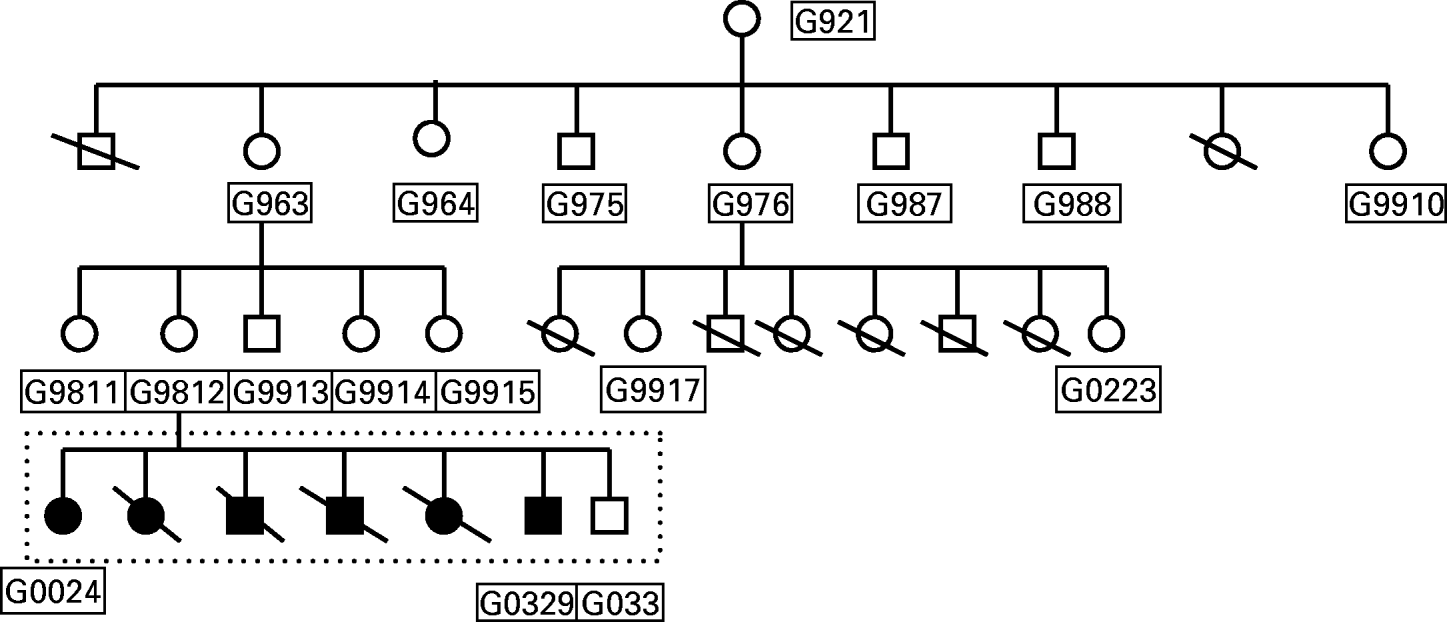
Fig. 1. Tree for family G921 showing a high frequency of abortion and Toxoplasma gondii infection. Female; ○ Known infected female; [bull ] Aborted female; Aborted and infected female; Male; □ Known infected male; [squf ] Aborted and infected male, Aborted male; Sex not recorded. [utri ] Individuals inside the box, were tested for congenital T. gondii infection. Numbers allocated to animals are derived from pedigree records but coded for anonymity.

Fig. 2. Tree for family I921 showing a medium frequency of abortion and Toxoplasma gondii infection. See Fig. 1 legend for key to symbols.
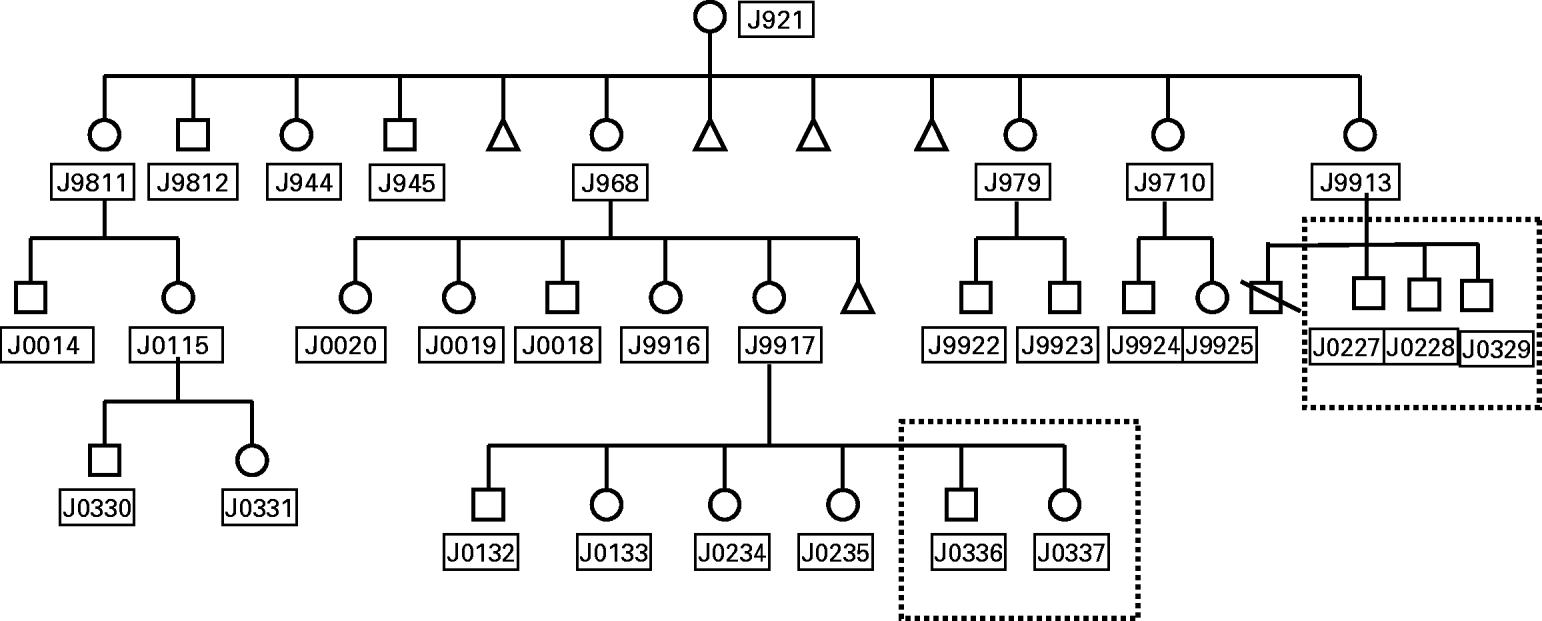
Fig. 3. Tree for family J921 showing a low frequency of abortion and Toxoplasma gondii infection. See Fig. 1 legend for key to symbols.
DISCUSSION
This study has shown that the frequency of abortion and infection varies significantly between Charollais pedigree families belonging to one sheep flock. Although the exact cause of each abortion is not known, the data show a highly significant positive correlation between abortion and infection. This suggests that the presence of T. gondii can cause elevated levels of abortion within some families. Differences in infection frequency between families was observed despite all individuals experiencing uniform environmental conditions (pasture, hay, feed, water, grazing, housing, husbandry practices etc), and thus being at equal risk of exposure to oocysts within the environment. This suggests that infection by environmental contamination from oocysts is infrequent, as a more random distribution of infection rates between families would be expected. As infection by carnivory is unlikely in sheep, our data lend weight to the evidence for the transplacental route as the main mechanism for T. gondii transmission (Duncanson et al. 2001; Williams et al. 2005).
One hypothesis to explain the observed familial differences is that some families of Charollais sheep are genetically more susceptible to infection by T. gondii and/or abortion and this is a trait passed through the generations. To date, little is known about differences in host susceptibility to T. gondii. There are earlier studies in mice that have shown that there are genetic influences that determine host susceptibility or resistance and some of the probable loci have been identified (Johnson et al. 2002). However, it is not clear whether similar genetic influences are present within other species, including sheep. Further work is needed to investigate these questions.
A second hypothesis is that vertical transmission of T. gondii is occurring from generation to generation following a primary infection, resulting in the maintenance of high levels of infection in some families whilst not in others. This pattern is mimicked by abortion incidence in the same families because of the strong correlation between infection and abortion. The belief that T. gondii can be transmitted to the progeny of infected family lines over successive generations is a contentious one, but should not be ruled out. High levels of congenital transmission have been reported (Duncanson et al. 2001; Williams et al. 2005) although vertical transmission (i.e. over several generations) is still to be established. Similar high levels of congenital transmission have recently been reported in other mammals (Mus domesticus and Apodemus sylvaticus) (Owen &Trees, 1998; Marshall et al. 2004). Furthermore, it is well understood that serial vertical transmission of the closely related parasite Neospora caninum occurs in cattle families (Schares et al. 1998; Davison, Otter & Trees, 1999) and congenital transmission has been demonstrated in sheep (McAllister et al. 1996). Could such a parallel exist with T. gondii?
The work reported here lends weight to the argument that congenital transmission of T. gondii may be the route for the majority of cases of toxoplasmosis within sheep flocks, and may well be the mechanism by which infection levels are maintained within family lines. Further work must be carried out to determine whether host genetic susceptibility could be playing a role in the epidemiology of toxoplasmosis.
Whatever the precise reason for these familial differences in T. gondii infection and abortion, practical implications of this study in relation to animal husbandry methods needs to be explored further.
We would like to acknowledge The Perry Foundation, The Wellcome Trust, The University of Salford and the Yorkshire Agricultural Society for funding this work. We are also grateful for assistance given by Allan Maiden and family and Miss Sarah Lowe.
References
REFERENCES
ASPINALL, T. V.,
MARLEE, D.,
HYDE, J. E. &
SIMS, P. F. G. (
2002).
Prevalence of Toxoplasma gondii in commercial meat products as monitored by polymerase chain reaction – food for thought?
International Journal for Parasitology 32,
1193–1199.Google Scholar
BEVERLEY, J. K. A. (
1959).
Congenital transmission of toxoplasmosis through successive generation of mice.
Nature, London 183,
1348–1349.CrossRefGoogle Scholar
BEVERLEY, J. K. A. &
WATSON, W. A. (
1971).
Prevention of experimental and of naturally occurring ovine abortion due to toxoplasmosis.
Veterinary Record 88,
39–41.CrossRefGoogle Scholar
BLEWETT, D. A. &
WATSON, W. A. (
1984).
The epidemiology of ovine toxoplasmosis III. Observations on outbreaks of clinical toxoplasmosis in relation to possible mechanisms of transmission.
British Veterinary Journal 140,
54–63.Google Scholar
BUXTON, D. (
1990).
Ovine toxoplasmosis:a review.
Journal of the Royal Society for Medicine 83,
509–511.CrossRefGoogle Scholar
DAVISON, H. C.,
OTTER, A. &
TREES, A. J. (
1999).
Estimation of veritcal and horizontal transmission parameters in Neospora caninum infections in dairy cattle.
International Journal for Parasitology 29,
1683–1689.CrossRefGoogle Scholar
DUBEY, J. P. &
BEATTIE, C. P. (
1988).
Toxoplasmosis of Animals and Man.
CRC Press,
Boca Raton, FL,
USA.
DUBEY, J. P.,
SHEN, S. K.,
KWOK, O. C. H. &
THULLIEZ, P. (
1997).
Toxoplasmosis in rats (Rattus norvegicus): congenital transmission of first and second generation offspring and isolation of Toxoplasma gondii from seronegative rats.
Parasitology 115,
9–14.CrossRefGoogle Scholar
DUNCANSON, P.,
TERRY, R. S.,
SMITH, J. E. &
HIDE, G. (
2001).
High levels of congenital transmission of Toxoplasma gondii in a commercial sheep flock.
International Journal for Parasitology 14,
1699–1703.CrossRefGoogle Scholar
HUTCHINSON, W. M. (
1965).
Experimental transmission of Toxoplasma gondii.
Nature, London 206,
961–962.CrossRefGoogle Scholar
JOHNSON, A. M. (
1997).
Speculation on possible life cycles for the clonal lineages in the genus Toxoplasma.
Parasitology Today 13,
393–397.CrossRefGoogle Scholar
JOHNSON, J.,
SUZUKI, Y.,
MACK, D.,
MUI, E.,
ESTES, R.,
DAVID, C.,
SKAMENE, E.,
FORMAN, J. &
McLEOD, R. (
2002).
Genetic analysis of influences on survival following Toxoplasma gondii infection.
International Journal for Parasitology 32,
179–185.CrossRefGoogle Scholar
OWEN, M. R. &
TREES, A. J. (
1998).
Vertical transmission of Toxoplasma gondii from chronically infected house (Mus musculus) and field (Apodemus sylvaticus) mice determined by polymerase chain reaction.
Parasitology 116,
299–304.CrossRefGoogle Scholar
MARSHALL, P.,
HUGHES, J. M.,
WILLIAMS, R. H.,
SMITH, J. E.,
MURPHY, R. G. &
HIDE, G. (
2004).
Detection of high levels of congenital transmission of Toxoplasma gondii in natural urban mouse populations of Mus domesticus.
Parasitology 128,
39–42.CrossRefGoogle Scholar
MacALLISTER, M. M.,
McGUIRE, A. M.,
JOLLEY, W. R.,
LINDSAY, D. A.,
TREES, A. J. &
STOBART, R. H. (
1996).
Experimental neosporosis in pregnant ewes and their offspring.
Veterinary Pathology 33,
647–655.CrossRefGoogle Scholar
SCHARES, G.,
PETERS, M.,
WURM, R.,
BARWALD, A. &
CONRATHS, F. J. (
1998).
The efficacy of vertical transmission of Neospora caninum in dairy cattle analysed by serological techniques.
Veterinary Parasitology 80,
87–98.CrossRefGoogle Scholar
TENTER, A. M.,
HECKEROTH, A. R. &
WEISS, L. M. (
2000).
Toxoplasma gondii: from animals to humans.
International Journal for Parasitology 30,
1217–1258.CrossRefGoogle Scholar
TERRY, R. S.,
SMITH, J. E.,
DUNCANSON, P. &
HIDE, G. (
2001).
MGE-PCR a novel approach to the analysis of Toxoplasma gondii strain differentiation using mobile genetic elements.
International Journal for Parasitology 31,
155–161.CrossRefGoogle Scholar
WILLIAMS, R. H.,
MORLEY, E. K.,
HUGHES, J. M.,
DUNCANSON, P.,
TERRY, R. S.,
SMITH, J. E. &
HIDE, G. (
2005).
High levels of congenital transmission of Toxoplasma gondii in longitudinal and cross-sectional studies on sheep farms provides evidence of vertical transmission in ovine hosts.
Parasitology 130,
301–307.CrossRefGoogle Scholar
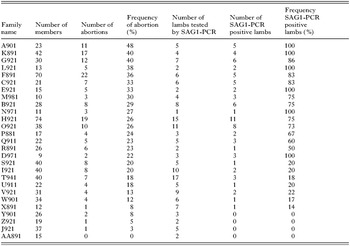
Table 1. Frequency of abortion and infection with Toxoplasma gondii for families belonging to a Charollais pedigree flock
Fig. 1. Tree for family G921 showing a high frequency of abortion and Toxoplasma gondii infection. Female; ○ Known infected female; [bull ] Aborted female; Aborted and infected female; Male; □ Known infected male; [squf ] Aborted and infected male, Aborted male; Sex not recorded. [utri ] Individuals inside the box, were tested for congenital T. gondii infection. Numbers allocated to animals are derived from pedigree records but coded for anonymity.
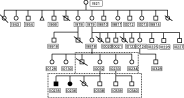
Fig. 2. Tree for family I921 showing a medium frequency of abortion and Toxoplasma gondii infection. See Fig. 1 legend for key to symbols.
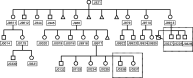
Fig. 3. Tree for family J921 showing a low frequency of abortion and Toxoplasma gondii infection. See Fig. 1 legend for key to symbols.
 You have
Access
- 47
- Cited by