Introduction
Rock art is one of the earliest and most widely distributed manifestations of human creativity in the world (Aubert et al. Reference Aubert2018; Hoffmann et al. Reference Hoffmann2018). Research in rock art has focused on the motifs depicted, their geographic distribution and chronology. While the question of authorship arouses intense interest amongst researchers, it is one that poses the greatest challenges for scientific investigation. Determination of the sex and age of the author (or authors) of rock art would allow to us to define the social context in which it was made with greater accuracy and to understand whether it was created as an individual act or as part of a communal event. It would also shed light on the symbolic systems used by prehistoric populations (Snow Reference Snow2006; Wang et al. Reference Wang, Ge, Snow, Mitra and Giles2010). Previous analyses of rock art authorship have focused primarily on Upper Palaeolithic hand stencils (for a comprehensive overview, see Nelson et al. Reference Nelson, Hall, Randolph-Quinnery and Sinclair2017). These studies have used a variety of techniques to measure the hand stencils and compare them with both modern populations and ethnographic evidence, making it possible to determine the sex of the authors of the handprints at prehistoric sites in Europe, Asia, Australia and North America. This research indicates, for the first time, that both sexes, including adults and sub-adults, participated in this activity, challenging popular assumptions of male authorship that have not previously been addressed scientifically. The authorship of other styles and chronologies of rock art, however, remains unresolved due to a lack of reliable diagnostic traits. A powerful new methodology is now set to address this issue and to transform our understanding.
Palaeodermatoglyphs are fingerprints found in archaeological contexts. These ancient impressions may be left accidentally or voluntarily by their author, and are found on a variety of materials, including on fired clay surfaces such as that of the Upper Palaeolithic Venus of Dolní Vestonice in Moravia (Czechia; Králík & Novotný Reference Králík and Novotný2003) and on pottery sherds such as from Bronze Age Catalonia or among the Pueblo people of the American Southwest (Míguez et al. Reference Míguez, Ibanez-Gimeno, Carreras, Liria and Malgosa2016; Kantner et al. Reference Kantner, Mckinney, Pierson and Wester2019). Ancient fingerprints, however, tend to be partial, and it is often impossible to identify the specific area of the finger used to make the print (Králík & Novotný Reference Králík and Novotný2003; Králík et al. Reference Králík, Novotna and Oliva2003; Králík & Nejman Reference Králík and Nejman2007; Míguez et al. Reference Míguez, Ibanez-Gimeno, Carreras, Liria and Malgosa2016). Very occasionally, palaeodermatoglyphs have allowed researchers to determine both the sex and the age of their authors by analysis of the ridges present. Sexual dimorphism may be reflected in the number of ridges present (Acree Reference Acree1999; Nayak et al. Reference Nayak, Rastogi, Kanchan, Lobo, Yoganarasimha, Nayak and Menezes2010; Gutiérrez-Redomero et al. Reference Gutiérrez-Redomero, Alonso-Rodríguez, Hernández-Hurtado and Rodríguez-Villalba2011; Eshak et al. Reference Eshak, Zaher, Hasan and Ewis2013; Gutiérrez-Redomero & Alonso-Rodriguez Reference Gutierrez-Redomero and Alonso-Rodriguez2013; Krishan et al. Reference Krishan, Kanchan and Ngangom2013; Rivaldería et al. Reference Rivaldería, Sanchez-Andres, Alonso-Rodriguez, Dipierri and Gutierrez-Redomero2016), and it appears that males have broader ridges than females (Gutiérrez-Redomero et al. Reference Gutiérrez-Redomero, Alonso, Romero and Galera2008; Mundorff et al. Reference Mundorff, Bartelink and Murad2014; Míguez et al. Reference Míguez, Ibanez-Gimeno, Carreras, Liria and Malgosa2016). Differences between adults and sub-adults have also been documented across different populations. Although fingerprint patterns do not change during an individual's lifetime, the distance between the ridges increases during growth, becoming permanent in adulthood. Some research even suggests that there is a standard interval between ridges at certain ages (David Reference David1981; Kamp et al. Reference Kamp, Timmerman, Lind, Graybill and Natowsky1999).
In the Los Machos rockshelter in Zújar-Granada in southern Spain, we have identified two fingerprints, representing exceptional, uniquely personal traces left by the author(s) of paintings associated with a panel of Western Mediterranean Schematic art. The ‘Schematic’ style is one of the three rock art categories defined in the later prehistoric Iberian Peninsula, the others being ‘Levantine’ and ‘Macro-Schematic’. These styles are crucial to our understanding of late prehistory and the process of Neolithisation in Iberia (Cruz & Vicent Reference Cruz-Berrocal and Vicent-García2007; Rojo-Guerra et al. Reference Rojo-Guerra, García-Martínez de Lagrán and Royo-Guillén2018). While Schematic art appears across the whole of Iberia (Acosta Reference Acosta1968; Martínez García Reference Martinez García, Martínez and Hernández2006), it predominates in the south, particularly in the Betic Cordillera. Rockshelters with Schematic art are often found in mountainous environments, especially along the natural corridors that connect basins and valleys with mountain pastures, or may be associated with striking natural topography or features (e.g. Fernández et al. Reference Fernández Martín, Martínez-Sevilla and Lozano Rodríguez2017; Morgado et al. Reference Morgado, García-Alfonso, García Del Moral, Benavides, Rodríguez-Tovar and Esquivel2018; Rogerio-Candelera et al. Reference Rogerio-Candelera2018), as at Los Machos. These sites provide unique insights into the populations inhabiting each region.
The post-Palaeolithic rock art chronology of the Iberian Peninsula is the subject of current debates focusing on the challenges of applying direct, absolute dating techniques. The dating of Schematic art in the eastern mountain ranges of Cuenca and Cataluña suggests a long tradition ranging from c. 4500–2000 BC (Ruiz-López et al. Reference Ruiz-López, Rowe, Hernanz, Gavira, Viñas-Valverdú, Rubio, López, Valle and Matamoros de Villa2009, Reference Ruiz-López, Hernanz, Armitage, Rowe, Viñas, Gavira-Vallejo and Rubio2012), which corresponds to the Early to Late Neolithic periods. In the south of Iberia, shelters containing Schematic rock art dated by absolute methods show similar chronologies (Morgado et al. Reference Morgado, García-Alfonso, García Del Moral, Benavides, Rodríguez-Tovar and Esquivel2018; Rogerio-Candelera et al. Reference Rogerio-Candelera2018). Likewise, absolute dates from paintings associated with megalithic monuments in both north-eastern and southern Iberia have a comparable chronological range (Steelman et al. Reference Steelman, Carrera, Fabregas, Guiderson and Rowe2005; Bueno Ramírez et al. Reference Ramírez, R, Behrmann, Barroso, Martínez García and Hernández Pérez2013). Moreover, analyses of Neolithic pottery decoration advanced the chronological contextualisation of Schematic art in the Iberian Peninsula (e.g. Carrasco Rus et al. Reference Carrasco Rus, Navarrete Enciso, Pachón Romero, Martínez and Hernández2006, Reference Carrasco Rus, Martínez-Sevilla, Pachón Romero and Gámiz2015; Rojo-Guerra et al. Reference Rojo-Guerra, García-Martínez de Lagrán and Royo-Guillén2018). Currently, it is assumed that Schematic art first appeared in the Early Neolithic and persisted throughout the Late Neolithic and Copper Age (fourth and third millennia BC) (e.g. Escoriza Mateu Reference Escoriza Mateu2002; Carrasco Rus et al. Reference Carrasco Rus, Navarrete Enciso, Pachón Romero, Martínez and Hernández2006, Reference Carrasco Rus, Martínez-Sevilla, Pachón Romero and Gámiz2015; Cruz & Vicent-García Reference Cruz-Berrocal and Vicent-García2007; Fernández Martín et al. Reference Fernández Martín, Martínez-Sevilla and Lozano Rodríguez2017; Rojo-Guerra et al. Reference Rojo-Guerra, García-Martínez de Lagrán and Royo-Guillén2018).
In this article, we investigate the biological profile of the author(s) of the Los Machos paintings by analysing the breadth of the ridges present on fingerprints on its rock art panel. In addition, we investigate the painting technique using high-resolution photography and statistical analysis of stroke width.
The shelter: geological and archaeological context
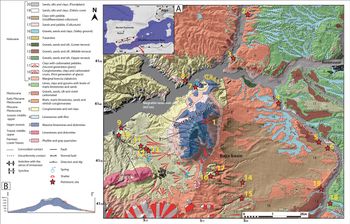
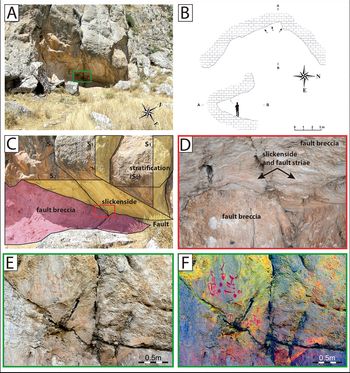
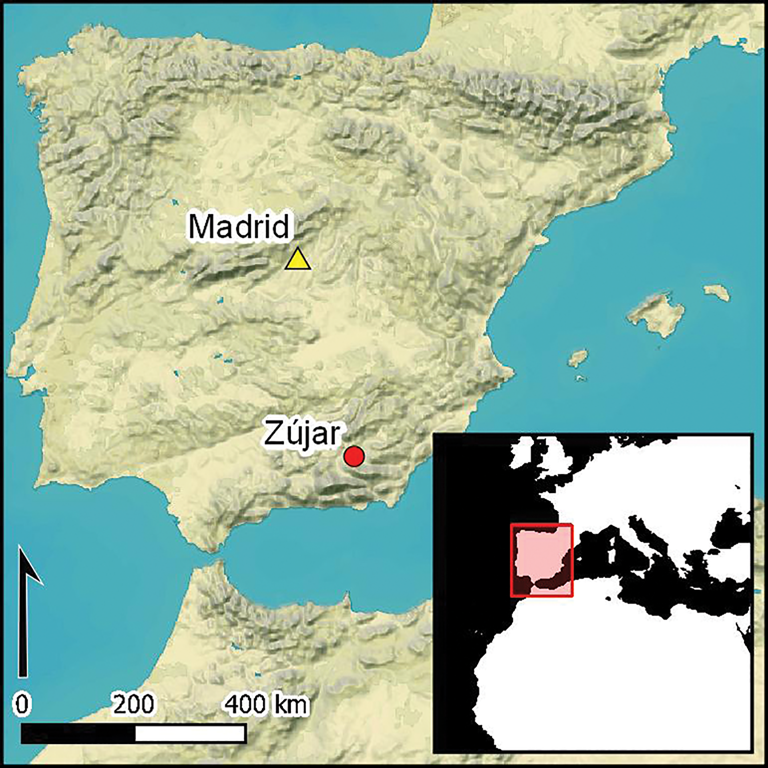
Los Machos shelter is located on the eastern slope of the Cerro de Jabalcón Mountain (37°34′14.82″ north, 2°48′23.09″ west), at an elevation of 1335m asl (Figure 1). The shelter, discovered during fieldwork carried out between 2004 and 2005, has an east-facing opening within an almost vertical limestone wall of around 100m in height, offering extensive views across the Baza Basin. This area is formed from Triassic and Lower Jurassic limestones and dolomites topped by Middle and Upper Jurassic flint-bearing limestone (Figure 1A–B). The shelter is shallow and open, measures 13m across the exterior part and is 4m deep. The roof is formed by a reverse fault plane with a 28° dip towards the north-west, with zones of fault mirror or slickenside (the smooth, polished surface caused by friction along two sides of a fault) and fault gap (Figure 2D). The rock art panel is located in the deepest part of the shelter, on the upper area of the wall (Figure 2B). The motifs are predominantly on the fault mirror or slickenside, as has been documented in other Schematic rock art panels (e.g. at Cerro del Castillejo in the Sierra Nevada: Fernández Martín et al. Reference Fernández Martín, Martínez-Sevilla and Lozano Rodríguez2017). Being oriented towards the east, and given that the prevailing wind and rain come from the west, the shelter has been subject to neither wind erosion nor carbonate dissolution by rain. As the wall also exhibits no large areas of carbonate precipitation, the panel is probably almost completely preserved (Figure 2E–F).
A) Geological map showing prehistoric sites in the area surrounding the Los Machos rockshelter (1); 2) Cañada de la Torre 1; 3) Los Términos; 4) Bastida 1; 5) Cortijo Vallejo 3; 6) Cortijo Vallejo 1; 7) Puntal de la Granja; 8) Rambla de la Higuera 1; 9) Loma Vieja; 10) Rambla Esparteros 2; 11) Barranco del Tío Melón 2; 12) Barranco del Tío Melón 1; 13) Barranco del Tío Melón 3; 14) Cerro del Hambre; 15) Cerro Montesinos; 16) Cejo de Catín; 17) Cueva de Gil; 18) Cerro del Huerto 1–2; 19) Venta Madama (Caballero Reference Caballero Cobos2014); B) cross section through the Sierra de Jabalcón (I–I’ on map) (figure by J.A. Lozano Rodríguez).

A) Front view of Los Machos rockshelter; B) plan and section (arrows indicate the position of the rock art panel; C) geological stratification S0, fracture S1 and dip fault with fault breccia; D) slickenside and fault striae on which most of the motifs are located; E) rock art panel without computer processing; and F) panel processed with ImageJ® software (figure by J.A. Lozano Rodríguez & F. Martínez-Sevilla).

Los Machos shelter is sited in a prominent location in relation to the wider Baza Basin (Figure 1). Evidence of prehistoric activity in this area is scarce and limited to surface surveys. Nineteen archaeological sites have been recorded in the 10km radius surrounding Los Machos; they date, on the basis of the material found there, to the Neolithic and Bronze Age (Caballero Cobos Reference Caballero Cobos2014: 187). Although they cannot be categorically linked to the Los Machos art, they indicate that the area must have seen significant late prehistoric occupation.
Methodology
Our study of the Los Machos rock art panel involved several techniques. Digital tracings of the panel were produced (using Adobe Photoshop®) from photographs taken with a Nikon® D5000 camera and NIKKOR AF-S DX 18–55 mm VR lens, and details were recorded with a Canon® EOS 1200D with an EF 100mm f/2.8 USM macro lens. The images were processed using the D-Stretch® plug-in for ImageJ® to emphasise otherwise imperceptible details in the originals.
The techniques used for painting the panel were examined by two methods. First, traces left on the limestone wall were analysed using the detailed photographs and digitally enhanced images; second, stroke width was analysed statistically. The latter was carried out for motifs exhibiting regular and defined strokes. Between four and ten measurements were taken for each motif, depending on their state of preservation. The mean widths of the strokes were compared with the 50th percentile of fingertip median of adults (18–65 years), according to the German industry standard DIN 33 402 Part 2 (Jürgens Reference Jürgens2004) (Table 1).
Measurement of modern adult fingerprints (18–65 years) according to the 50th percentile of DIN 33 402 part 2 (Jürgens Reference Jürgens2004).

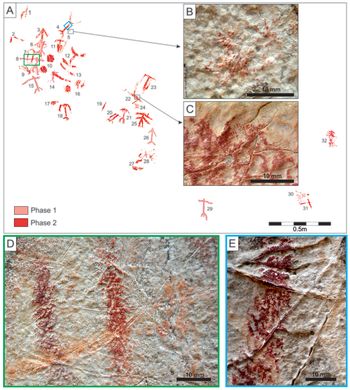
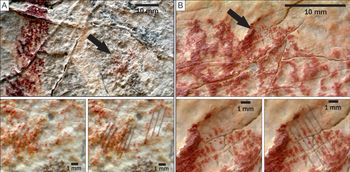
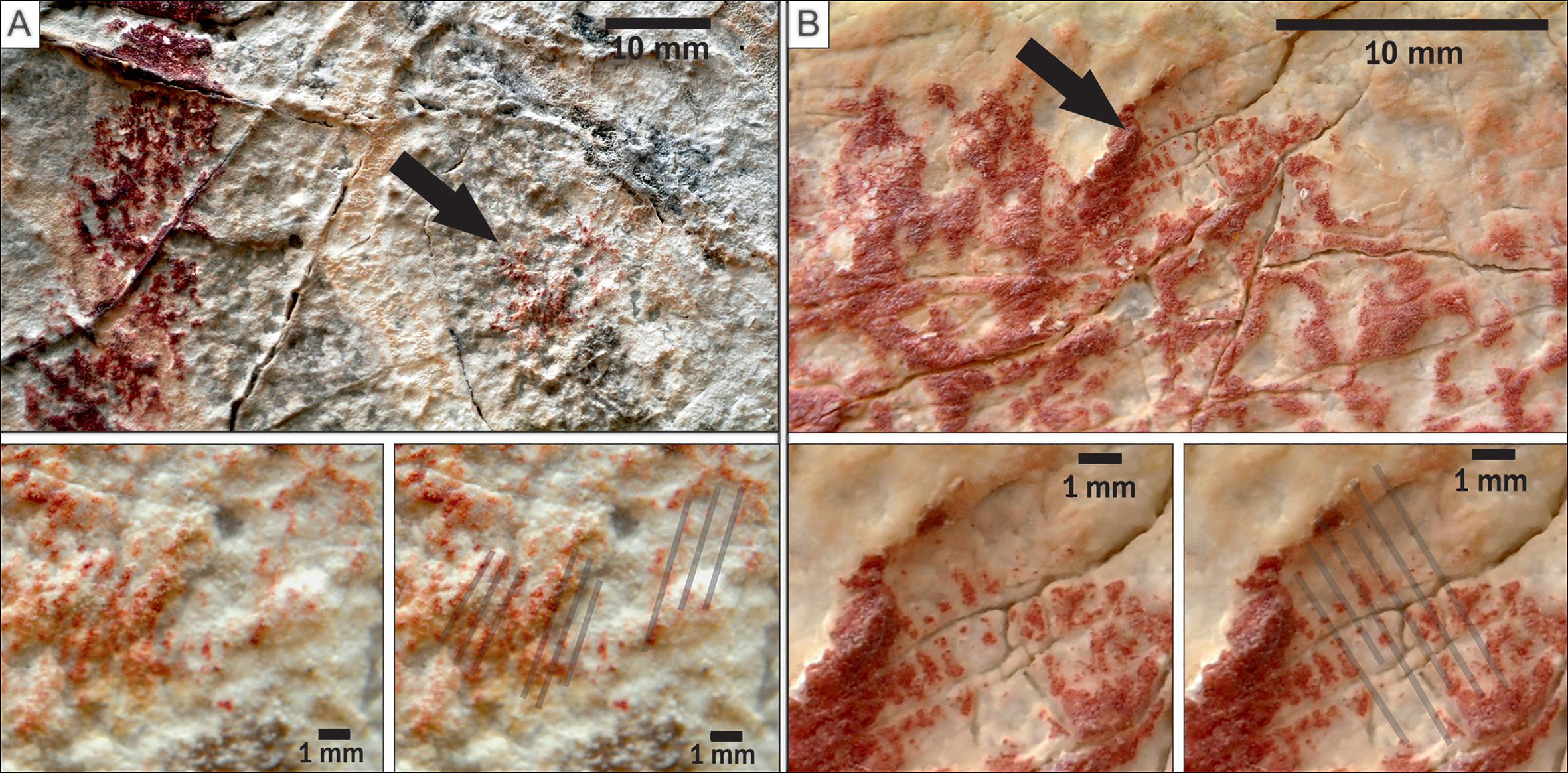
The sex and age of the author(s) were determined for two fingerprints found on two different motifs. Fingerprint 1 (Figure 3A: 5), which possibly corresponds to an accidental imprint (Figure 3B), is a single print next to an anthropomorphic motif (Figure 3A: 4). Fingerprint 2 is associated with a set of indeterminate lines (Figure 3A: 22; Figure 3C). The epidermal ridge breadth, defined as the distance from the edge of the shadow of one ridge to the edge of the shadow of the next (Králík & Novotný Reference Králík and Novotný2003), was measured for both fingerprints. To obtain an accurate measurement, we used the average of ten ridges, or those that were available. To achieve this, we drew a transverse line from the edge of the first ridge to the edge of the tenth ridge. This line allows for calculation of the average value of ridges per millimetre (Králík & Novotný Reference Králík and Novotný2003; Arqués Planas Reference Arqués Planas2017). For each fingerprint, three measures in different regions were obtained and averaged (Figure 4).
A) Digital tracings of the Los Machos rockshelter art panel (for a description of the motifs, see Table 3); B) fingerprint 1; C) fingerprint 2; D) detail of superimposition between two figures of phase 2 (darker ochre) over phase 1 (dull ochre); E) detail of the digital tracing technique used in the paintings. Note the accumulation of pigments in the irregularities of the limestone (figure by F. Martínez-Sevilla).

Palaeodermatoglyphs identified and analysed: A) fingerprint 1; B) fingerprint 2. The grey lines enable better detection of the fingerprint ridges (figure by M. Arqués, X. Jordana & A. Malgosa).
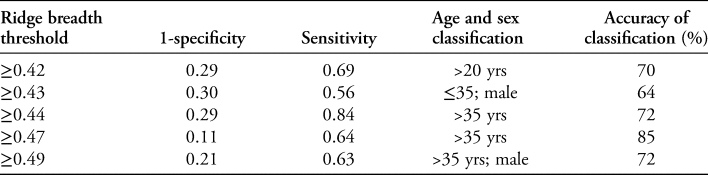
To determine the age and sex of the people to whom the Los Machos fingerprints belonged, we used the threshold values and regression formulae established by García (Reference García2018). These were obtained from the analysis of 546 fingerprints from the index finger of the right hand of modern Spanish juvenile and adult individuals (304 females and 242 males). The ridge-breadth measurements were taken using the same method described here. The threshold values of the ridge-breadth measurements for age and sex classification were calculated using the receiver operating characteristic curve analysis, a statistical technique based on the sensitivity and the specificity of the test being carried out (García Reference García2018). The sensitivity refers to the accuracy of allocation to a group using a threshold value; for example, the number of cases from group ‘A’ that are correctly classified as ‘A’. The specificity is the number of cases from group ‘B’ that are correctly identified using the same threshold value. The ‘1-specificity’ is the proportion of cases of group ‘B’ that are classified as ‘A’. García (Reference García2018) presents different threshold values of ridge breadth for three age groups (juveniles, adults ≤ 35 years, and adults >35 years) and, within each adult age group, for both sexes. For our work, we used the threshold values of ridge breadth showing the highest sensitivity and lowest ‘1-specificity’ (Table 2). In addition, the regression formula for age determination in juveniles (García Reference García2018) was also used ([age in years = −18.68+77.59*ridge breadth]; SEE = 3065 years; R2 = 0.366; p<0.001).
Threshold values of ridge breadth (mm) for age and sex determination taken from García (Reference García2018).

Results: motif analysis, technique and authorship
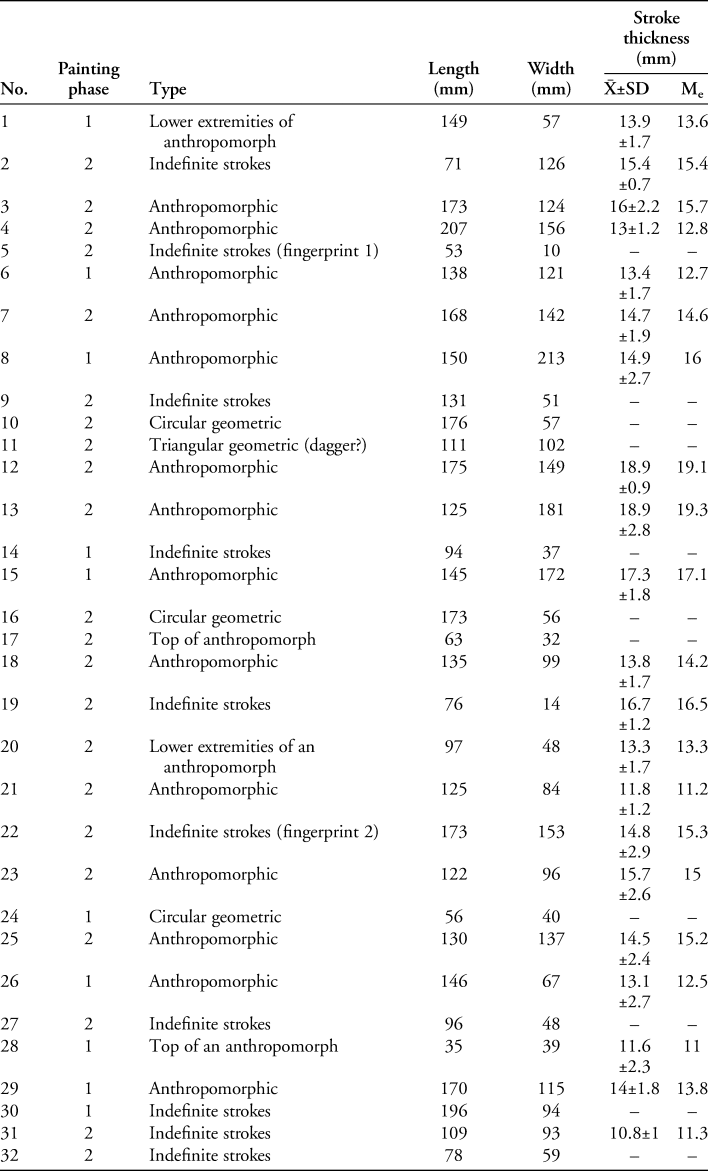
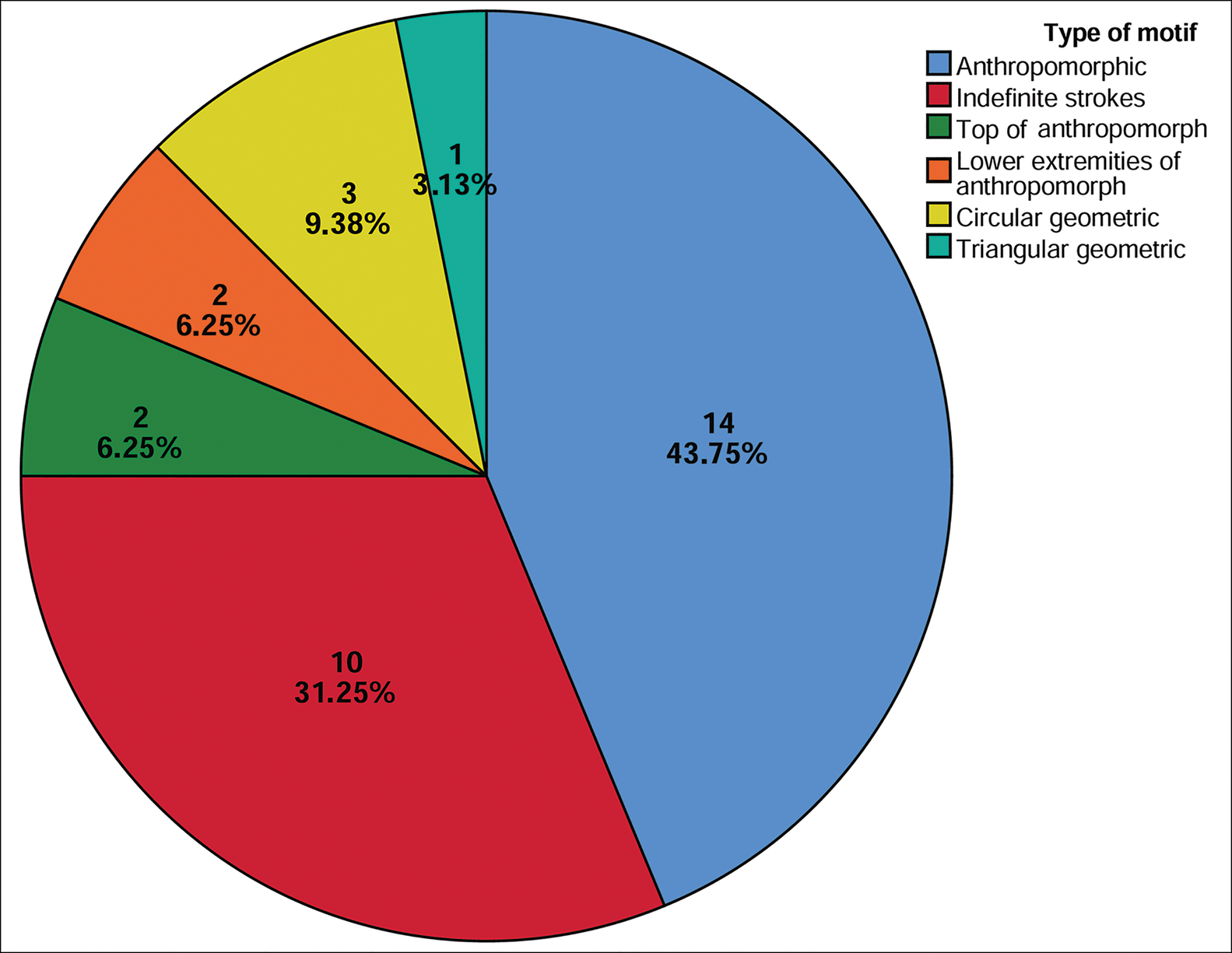
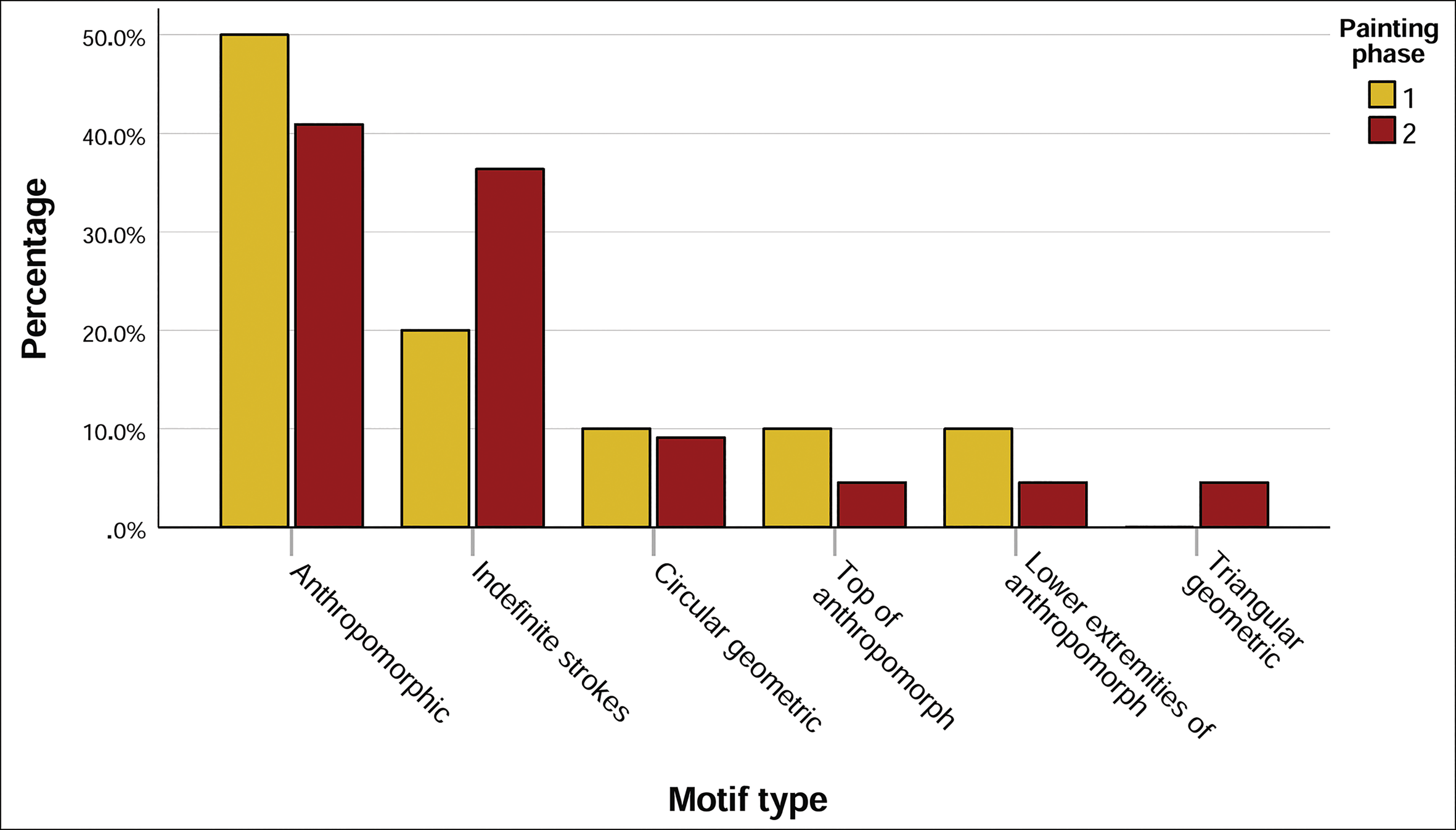
We were able to identify 32 painted motifs at Los Machos (Table 3). Superimposition of the figures and the different pigment colours indicate the presence of two phases of painting that could represent two distinct chronological episodes. The most recent addition (phase 2) is a dark ochre pigment, while the older paint (phase 1) has a lighter colour (Figure 3D). Phase 1 comprises ten motifs: seven anthropomorphic figures, five complete and two partial representations, two indeterminate strokes and a circular motif (Figure 3A). Phase 2 comprises 22 motifs: 11 anthropomorphic figures, nine complete and two partial, eight indeterminate strokes and three geometric motifs (Figure 5). Fingerprints 1–2 both belong to the second phase.
Description of motifs identified in the Los Machos rock art panel (No. represent the numbering in Figure 3A).

Numerical and percentage representation of different motif types in both painting phases (figure by F. Martínez-Sevilla).
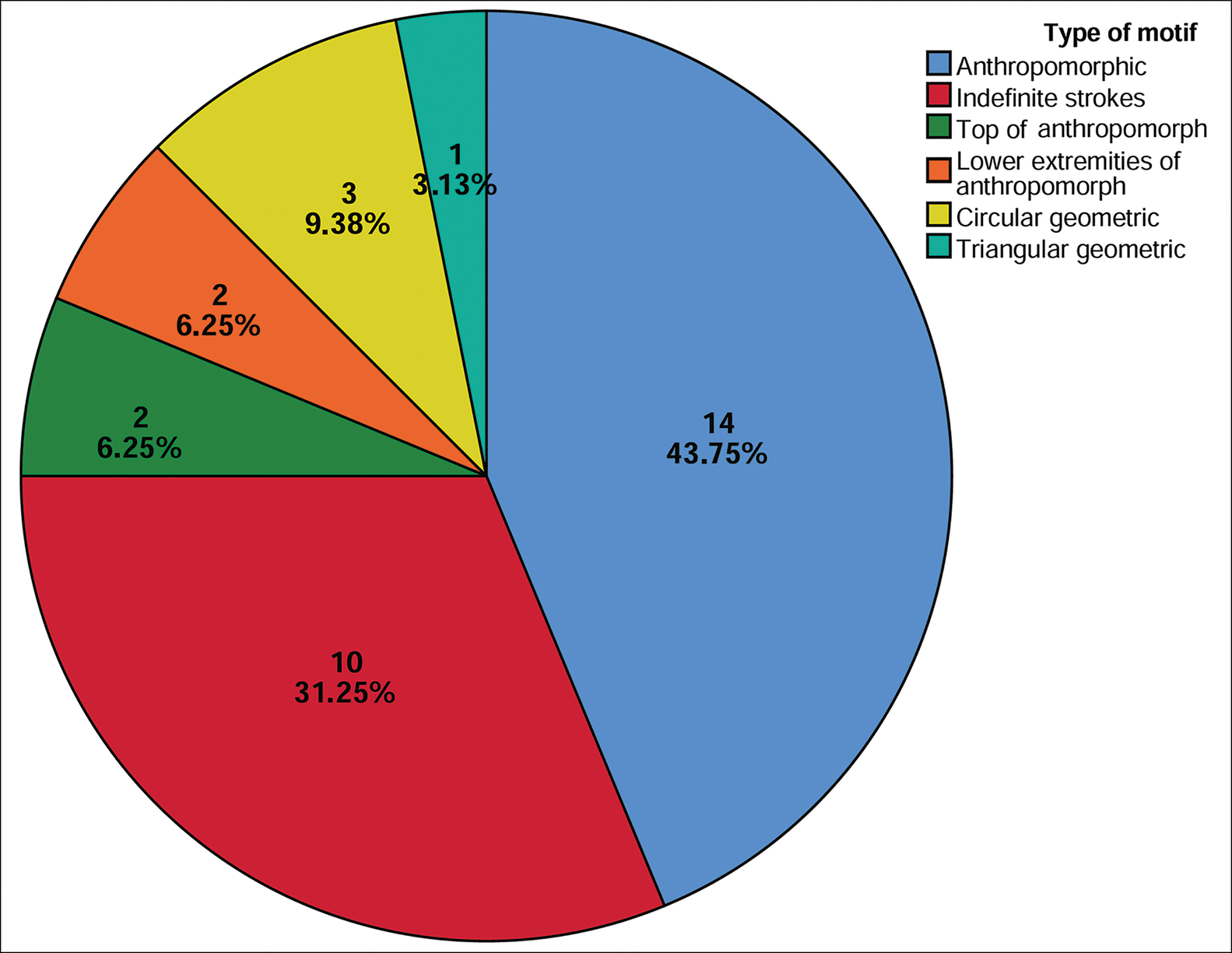
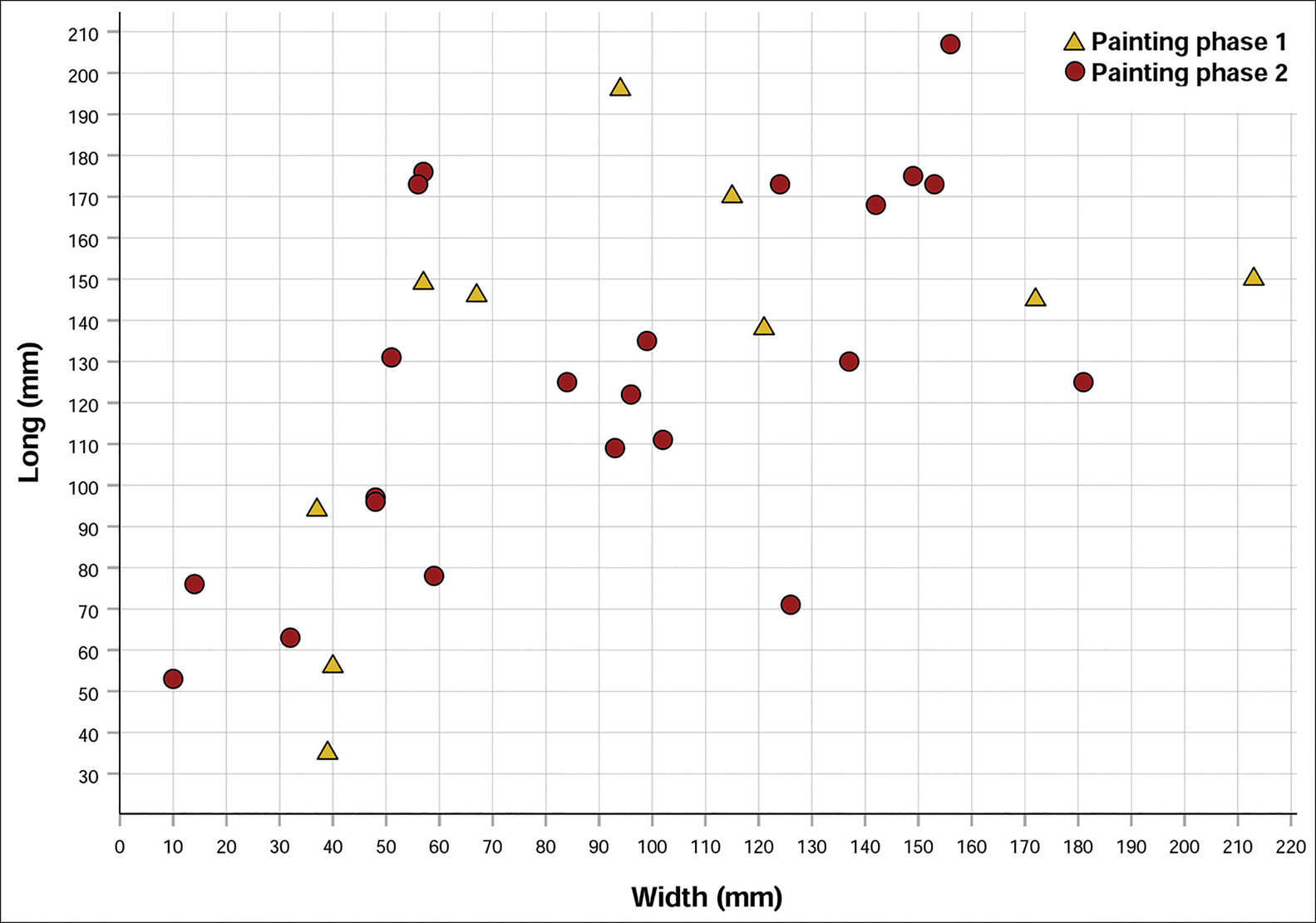
The number of each type of figure represented is similar in both phases (Figure 6). The dimensions of complete figures are also comparable in both phases, with sizes varying widely according to the type of motif (Figure 7). Figures include male and female representations exhibiting clear sexual attributes: breasts (Figure 3A: 18 & 21) and penises (Figure 3A: 4, 6, 15 & 29); other figures have no obvious sexual attributes (Figure 3A: 12, 25 & 26).
Percentage of motifs according to the two defined painting phases (figure by F. Martínez-Sevilla).
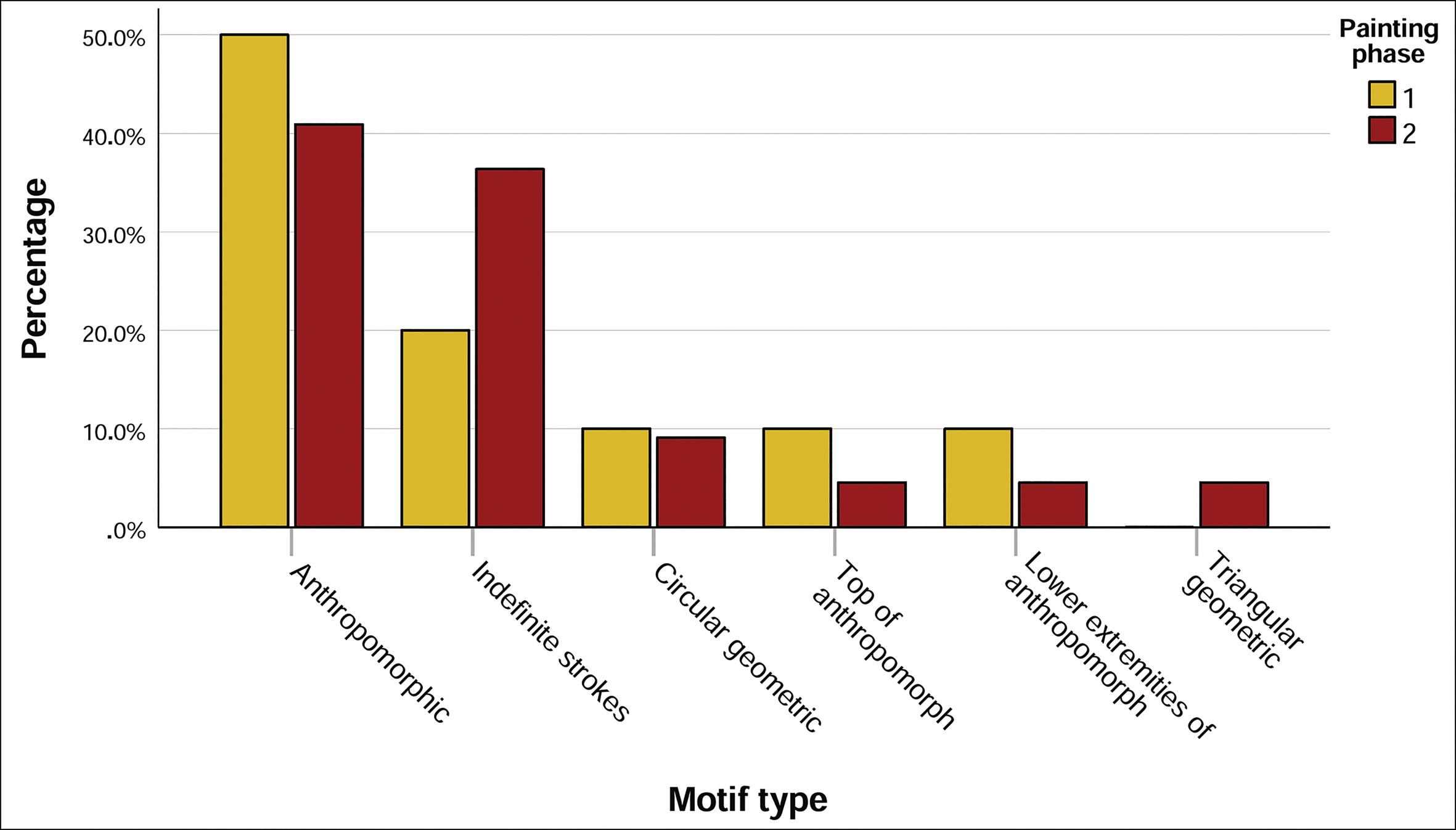
Comparison of dimensions according to the two defined painting phases (figure by F. Martínez-Sevilla).

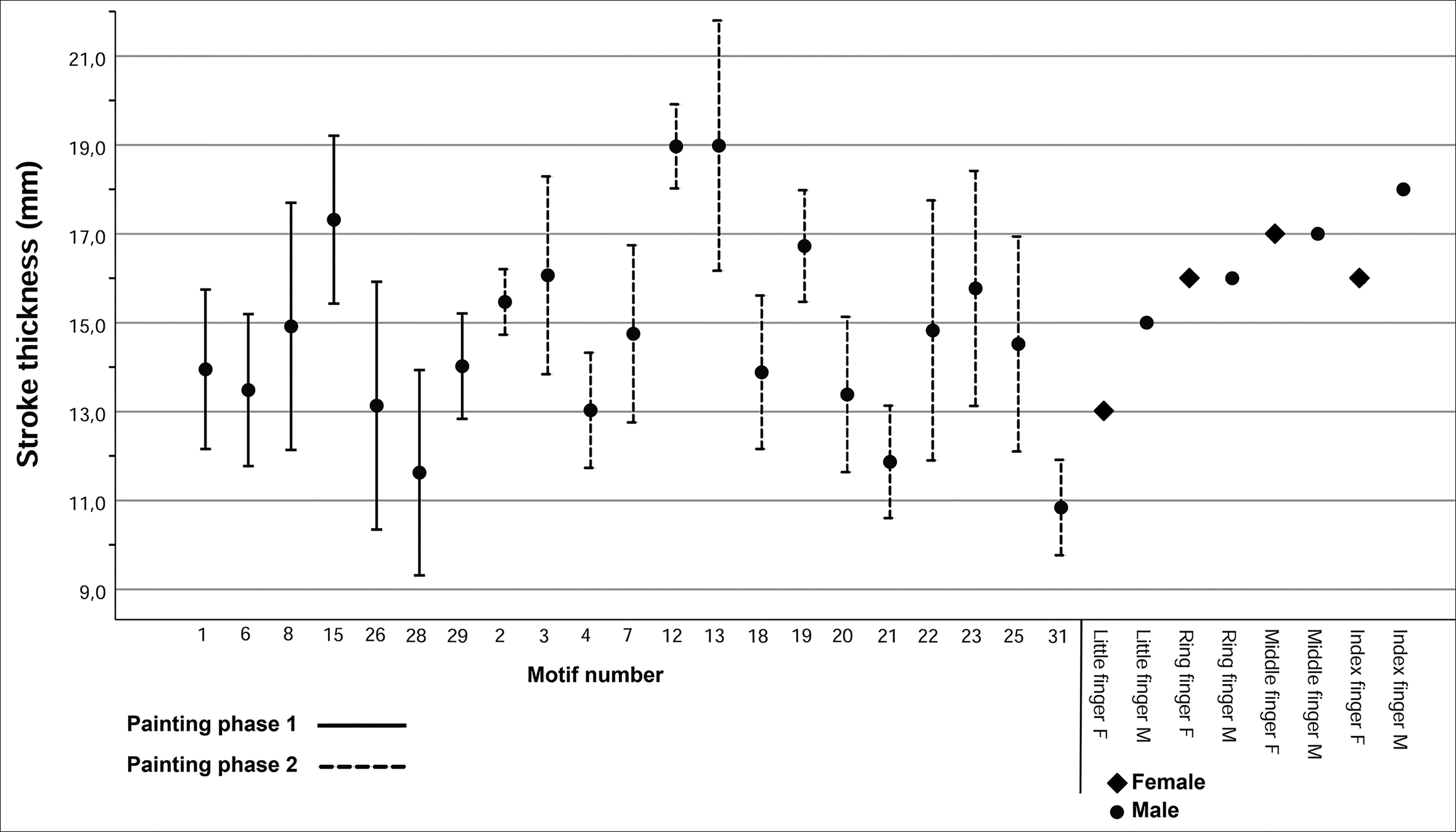
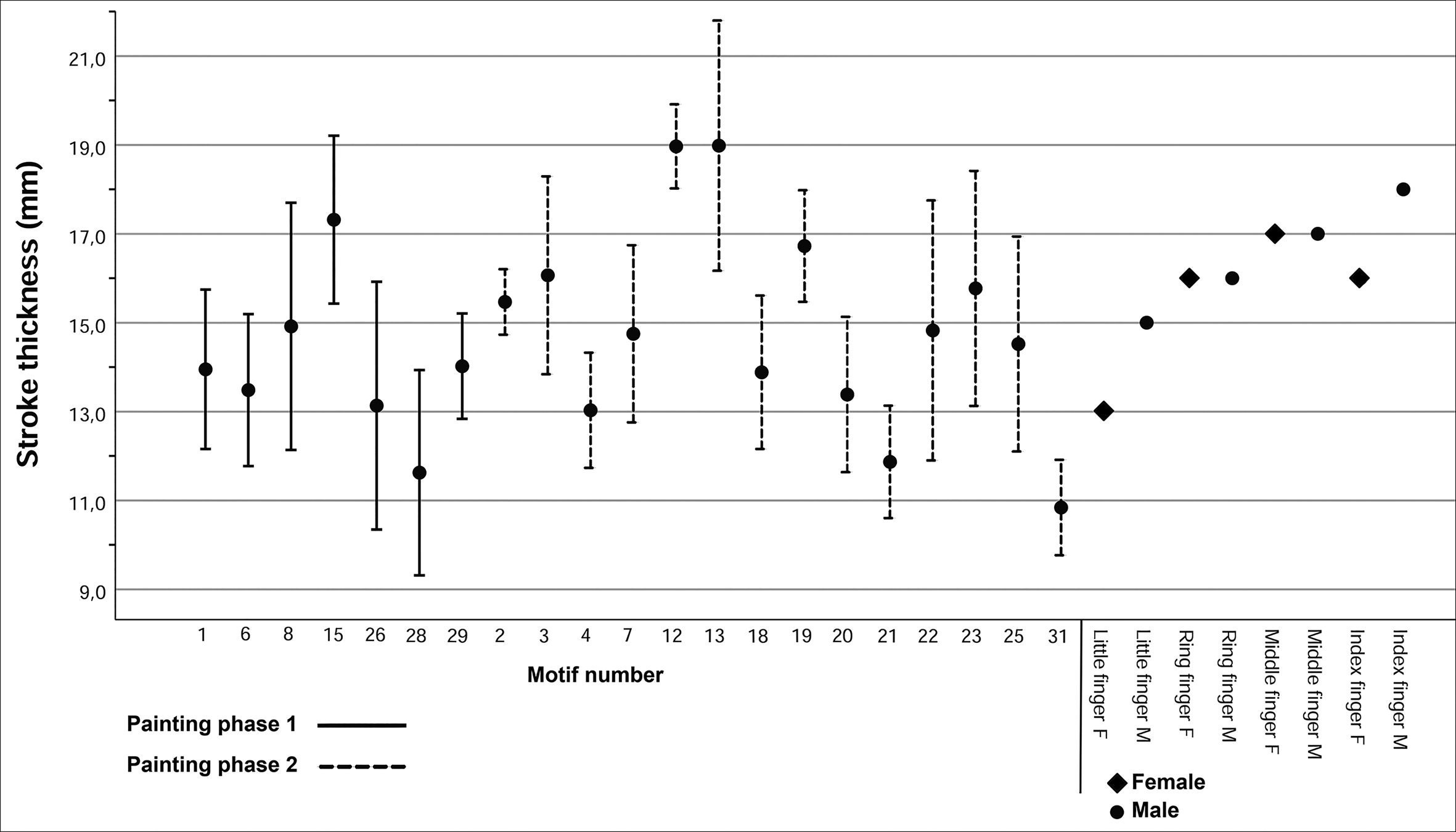
The motifs were made using continuous vertical strokes drawn from top to bottom, as indicated by pigment accumulations in the wall's irregular surface (Figure 3E). We compared the stroke thicknesses in the best-preserved motifs with the standard dimensions of modern adult fingers (Table 1). The maximum standard deviation of the painted strokes was ±2.9mm. This could be due to several factors that affect the stroke thickness, such as finger size, strength used in pigment application, pigment quantity and consistency, wall surface irregularities and preservation. Despite these factors, the strokes’ mean and the anatomical finger medians show a correlation of between 13 and 18mm (Figure 8). Given the variables that affect it, this method does not allow us to attribute strokes to a specific finger, or to determine the sex of the author. The method does, however, confirm that the motifs were finger-painted.
Error bars graphic of motif stroke width and comparison with the measurements of modern adult fingerprints (18–65 years) according to the 50th percentile of DIN 33 402 Part 2 (Jürgens Reference Jürgens2004; figure by F. Martínez-Sevilla).
The dimensions of fingerprint 1 are 7.92 × 12.55mm (Figure 4A), and 3.47 × 2.46mm (Figure 4B) for fingerprint 2. It was possible to identify 12–14 and 6 ridge lines respectively, although some lines were difficult to define. Ridge breadth was calculated only on the well-defined lines (Table 4). According to García (Reference García2018), a mean ridge breadth of 0.47 or greater indicates an age of 36 years or older (at 85 per cent accuracy). Additionally, a value >0.49 corresponds to males (at 72 per cent accuracy). The ridges of fingerprint 1 have a mean ridge breadth of 0.54mm, suggesting that the fingerprint belongs to an adult male at least 36 years of age. The ridges of fingerprint 2 have a mean ridge breadth of 0.41mm. According to García (Reference García2018), a mean ridge breadth of under 0.44 indicates an age of 35 or younger (at 71.9 per cent accuracy); a mean ridge breadth below 0.43 would represent a female (at 64 per cent accuracy). A mean ridge-breadth value of under 0.42 gives a 70 per cent probability that the individual is younger than 20 years. Thus, we also used the regression equation to determine age from mean ridge breadth, constructed for individuals under 20 for both sexes (García Reference García2018). The result shows that fingerprint 2 could have been produced by an individual aged 13±3 years.
Mean breadth ridge (mm) for the two groups of dermatoglyphs from the Los Machos rock art panel.

In summary, the mean ridge-breadth values indicate that the fingerprints were produced by two different individuals: an adult male over 36 years of age, and possibly a young adult female or, more probably, a juvenile individual.
Discussion
A large quantity of data has been amassed from rock art sites around the world. Researchers now have access to detailed information concerning the repertoire of motifs, the styles and techniques employed in their creation, and, more recently, the chronologies of artistic episodes and the compositions of pigments used (e.g. Hunt et al. Reference Hunt, Thomas, James, David, Geneste, Delannoy and Stuart2016; Lycett & Keyser Reference Lycett and Keyser2017; Riemer et al. Reference Riemer, Kröpelin and Zboray2017). Yet the true value of rock art lies in how it represents a direct expression of the thought processes of the people who created it. These individuals are very often missing from discussions of rock art sites, despite efforts to reconstruct the processes and performances surrounding the creation of such art (e.g. Jones Reference Jones, Cochrane and Jones2012; Díaz-Andreu & Matioli Reference Díaz-Andreu and Matioli2017; Nash & Troncoso Reference Nash and Troncoso2017). Ethnographic analogies provide valuable insights into a wide spectrum of human artistic engagement and expressions, and the motivations and beliefs of art-producing communities (for a comprehensive overview, see Blundell et al. Reference Blundell, Chippindale and Smith2016). But they cannot reveal the identities of the prehistoric creators of the motifs—the individuals who collected pigments, made paint and applied it to the surfaces of sites such as the Los Machos shelter. It is their thoughts and their personal perspectives and physical engagements with the world that archaeologists seek to understand.
One tangible link to those who made the representations is provided by the corpus of Palaeolithic hand stencils and ‘finger-fluting’ impressions. Walker et al. (Reference Walker, Clinnick and Pedersen2018) highlight the unique properties of the human hand that make it a universally recognisable image that transcends cultural divisions. Hand stencils and finger flutings are also permanent records of the moment of direct physical contact between artist and ‘canvas’, offering clues to the identity and physical presence of the authors, such as age and sex, right- or left-handedness, and missing or bent fingers (e.g. Sahly Reference Sahly1966; Rouillon Reference Rouillon2006; Sharpe & van Gelder Reference Sharpe and van Gelder2006; Pettitt et al. Reference Pettitt, Castillejo, Arias, Pedro and Harrison2014). We have shown here that the Los Machos fingerprints provide a similar, albeit more limited, opportunity to reveal aspects of the identity of the people who made them.
Our analyses have also revealed elements of the artistic process. Collective participation is present at two levels: multiple authors contributed to the painting process, and the paintings portray numerous figures of both sexes, points that have also been suggested for Levantine rock art (Escoriza Mateu Reference Escoriza Mateu2002). These actions probably relate to daily life, and are the materialisation of symbolic elements understood by the communities that inhabited the area around Los Machos in the sixth to third millennia BC. This collective, social participation in the creation of Schematic rock art is similar to that previously observed for other Palaeolithic rock art traditions of the Iberian Peninsula, where artistic creation is also shared by different individuals (e.g. Pettitt et al. Reference Pettitt, Castillejo, Arias, Pedro and Harrison2014; Rabazo-Rodríguez et al. Reference Rabazo-Rodríguez, Modesto-Mata, Bermejo and García-Díez2017).
Conclusions
This article presents the first application of the study of palaeodermatoglyphs to prehistoric Schematic rock art, illustrating the potential value of the technique to rock art studies. Observations relating to pigment and superimposition indicate two painting phases at Los Machos, with two identified fingerprints belonging to its second, most recent phase. Analysis of stroke width has allowed us to confirm that the pigment was applied by finger painting. By measuring the fingerprints’ mean ridge breadth, we have been able to estimate the sex and age of two individuals: an adult male and a young adult female or juvenile, who took part in the creation of the Los Machos Schematic art, which itself represents both sexes. The ability to identify individuals potentially allows new inferences to be made about the site and the people that created its art. The research into authorship, using the methodology applied here, could reveal further complex social dimensions at other rock art sites worldwide.
Acknowledgements
This article was developed as part of the project ‘Iberismo y romanización en el área nuclear bastetana’ directed by Andrés M. Adroher Auroux, who allowed us to study the Los Machos rockshelter. This work was funded by a postdoctoral research grant from the University of Granada (Plan Propio de Perfeccionamiento de Doctores) and the project AGAUR of Generalitat de Catalunya (2017-SGR-1630); analyses were carried out in the Department of Archaeology, Durham University. Our thanks also go to the anonymous reviewers for their insightful comments.