

Present-day Mesoamerica is home to over 1,190 different bird species, making them nearly twice as species rich as other classes of vertebrate fauna (Montagnini Reference Montagnini, Kumar and Nair2006:64). There are few organisms in the natural world that rival birds in variety and color (Serjeantson Reference Serjeantson2009:186), and unlike most other animals, birds are capable of flight. For these qualities, they have been revered around the world by ancient and contemporary populations alike.
Birds in ancient Mesoamerica possessed economic, social, symbolic, and ritual value. They were hunted, raised, and domesticated; their feathers were used for decoration; they were ritually killed and buried; and their likeness was manufactured in many different media (Benson Reference Benson1997:68–92). Given their cross-cultural and longstanding significance, they are an ideal faunal class through which to study many aspects of prehistoric life.
Despite their explanatory potential, avifaunal remains are seldom the focus of zooarchaeological analyses. Their identification to species takes greater-than-average effort because birds as a class are species rich, because morphological variation between species is relatively less pronounced than in some other classes, and because analysis requires an extensive comparative collection. Taphonomic processes can decrease the likelihood that avifaunal remains—which are often less robust than mammalian remains—can be identified to the species level. Avifaunal remains also are susceptible to being overlooked in excavation due simply to inadequate screen sizes. We hope here to demonstrate their analytical value.
This paper addresses avian use at Paso de la Amada, an Early Formative period (1900–1000 BC) site on the coast of Chiapas, Mexico. We seek to elucidate what motivations drove bird capture and to understand how bird use articulated with emerging social inequality. The residents of Paso de la Amada were interested in local birds as a food source, for their feathers and bone, and for use in ritual. Although the first two of these uses does not appear to have been affected by emerging social inequality, the latter was an avenue through which aggrandizers could affirm their status at the most elite residence at the site. Here, the taxonomic identifications of previously reported avifaunal material from Paso de la Amada (Lesure et al. Reference Lesure, Wake, Steadman and Lesure2009; Steadman et al. Reference Steadman, Tellkamp and Wake2003) are updated with newly identified specimens and are analyzed to address new questions.
Site and Study Region
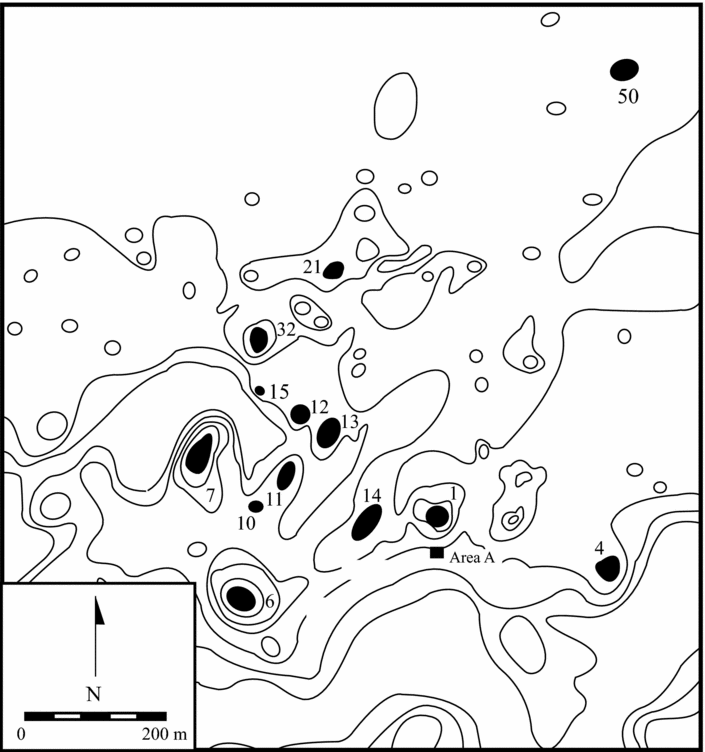
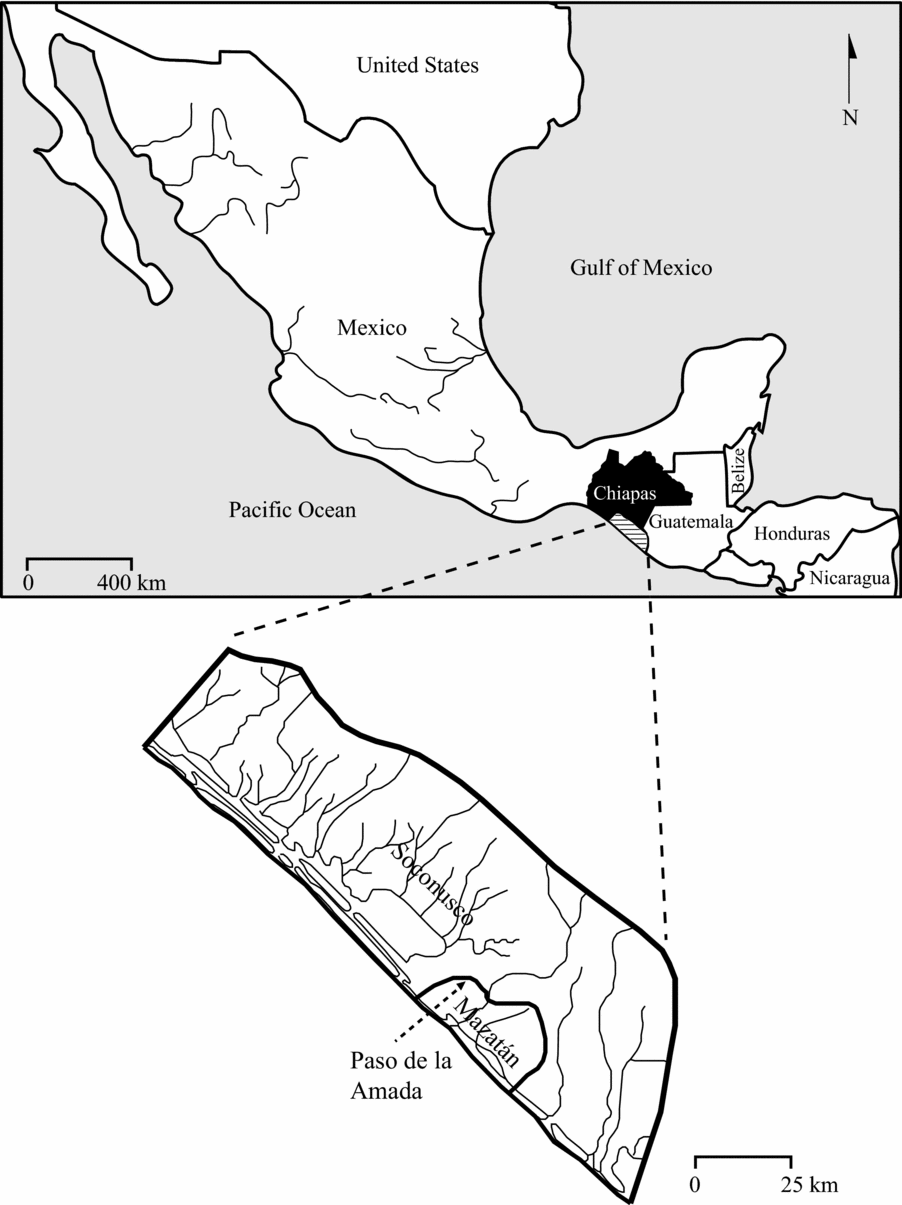
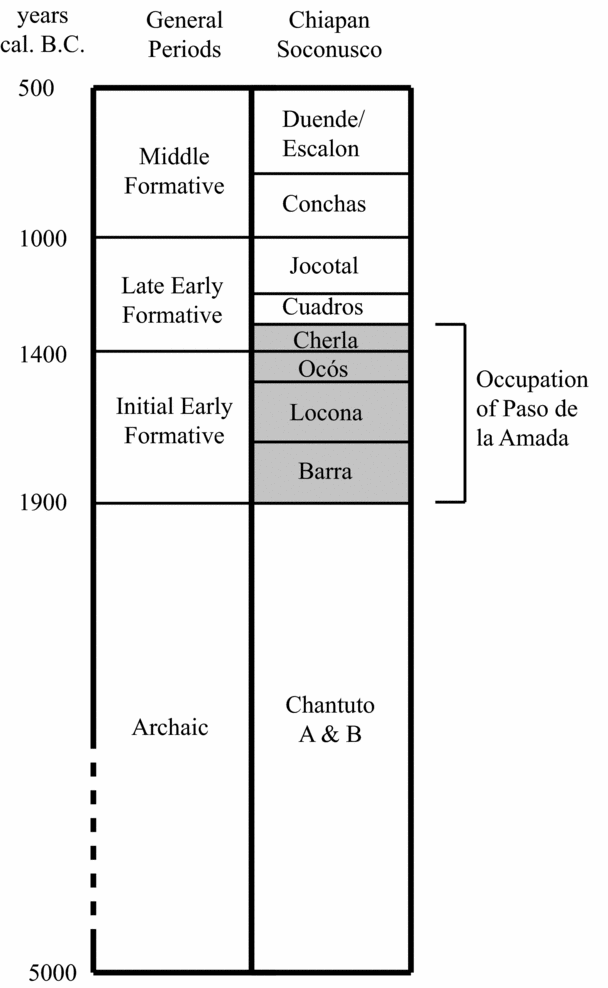
Paso de la Amada is located in the Mazatán municipality of the Soconusco region (Figures 1 and 2; Clark Reference Clark1994). Occupied from the 19th century BC until the beginning of the Late Early Formative (Figure 3; Clark Reference Clark, Hendon and Joyce2004; Lesure Reference Lesure and Lesure2011a:13), it is recognized as one of the earliest ceremonial centers in Mesoamerica. Clark has argued that the site layout required significant planning, involving standard units of measure, with attention to orientation, alignment, spacing, and size of the buildings, plaza, and ball court (Clark Reference Clark, Hendon and Joyce2004:59). A quadripartite vision may have informed the construction of a southern plaza, foreshadowing a prominent cosmological organizing principle in later Mesoamerican ideology, guided by the belief that the world was structured by four corners and an axis mundi (Clark Reference Clark, Hendon and Joyce2004:59–60). The earliest known ball court marks Paso de la Amada as participant in broader Mesoamerican traditions (Hill et al. Reference Hill, Blake and Clark1998; Lesure Reference Lesure and Lesure2011b:119).
Map of Paso de la Amada, showing mounds excavated in black. Adapted from Lesure Reference Lesure and Lesure2011b: Figure 6.2.

Study area. Adapted from Clark Reference Clark1994:45.

Phases mentioned in the text. Adapted from Lesure Reference Lesure and Lesure2011a: Figure 1.3.

In Mazatán, ranked society is evident by the Locona phase (1650 BC), indicated by the onset of a two-tiered settlement pattern, craft specialization, differential mortuary practices, unequal access to sumptuary goods, and elite and nonelite domestic architecture (Clark Reference Clark, Hendon and Joyce2004:53; Clark and Blake Reference Clark, Blake, Brumfiel and Fox1994:22). Hereditary status may have developed as a result of aggrandizers attempting to increase their own prestige (Blake and Clark Reference Blake, Clark and Blake1999; Clark and Blake Reference Clark, Blake, Brumfiel and Fox1994).
That status was architecturally expressed at Paso de la Amada has been demonstrated by an analysis of platform and non-platform residences, which are generally—but not strictly—synonymous with higher- and lower-status (Blake Reference Blake and William1991; Lesure and Blake Reference Lesure and Blake2002). Mound 6 (Figure 1) has been interpreted as a chiefly residence with six or more sequential structures, occupied for at least 300 years, and is the most elaborate example of a platform residence at the site (Blake Reference Blake and William1991, Reference Blake and Lesure2011:99–109; Blake and Clark Reference Blake, Clark and Blake1999). The continual reinvestment in residences at Mound 6, and maintenance of their position and orientation through time, has been taken to suggest the presence of hereditary inequality (Clark Reference Clark, Hendon and Joyce2004:57). Although the structures at Mound 6 possessed domestic features and refuse deposits like those of neighboring households, they received greater architectural investment than non-platform residences (Blake et al. Reference Blake, Lesure, Hill, Barba, Clark, Christie and Sarro2006). Their features, coupled with their large size, suggest that they were both residences and the loci of chief-sponsored gatherings and ceremonial events (Blake and Clark Reference Blake, Clark and Blake1999:67).
Previous research on the vertebrate fauna from Paso de la Amada has indicated that hunting was not highly organized (Wake Reference Wake and Emery2004). High species richnessFootnote 1 and low minimum number of individuals (MNI) values suggest that residents relied opportunistically on local fauna to supplement the unpredictable availability of agricultural products. Avifauna formed a small part of this supplement.
Birds in Ancient Mesoamerica
Birds in prehistoric Mesoamerica were sources of food, bone for raw material, and feathers for decoration. They were incorporated into dedicatory, foundation, and closure deposits, served as components of ritual performance (e.g. López Luján Reference López Luján, de Montellano and de Montellano1994; López Luján et al. Reference López Luján, Balderas, Zúñiga-Arellano, Molina and Maldonado2012), and were domesticated, tamed, and kept as pets (Álvarez et al. Reference Álvarez, Solano, Gomez and Azúa2005; Corona Martínez Reference Corona Martínez, Götz and Emery2013). Their significance is evident in ethnographic and contact-period literature, their depiction in the codices, their iconographic representation through time, and their incorporation in primary archaeological deposits (Aguilera Reference Aguilera1985:45–70; Benson Reference Benson1997:68–92; Careta Reference Careta2001:113–116; Corona Martínez Reference Corona Martínez2002, Reference Corona Martínez2008, Reference Corona Martínez, Götz and Emery2013; Sharpe Reference Sharpe2014).
Different types of birds in Mesoamerican religion and mythology symbolized characters, deities, places, abstract ideas, days, and individuals. Early Spanish chroniclers recorded in detail the ways in which they were used in Mexican society (Sharpe Reference Sharpe2014:318; see Hernández Reference Hernández1888 [Reference Hernández1615]; Sahagún Reference Sahagún, Dibble and Anderson1963 [Reference Sahagún, Dibble and Anderson1569], Reference Sahagún1997, Reference Sahagún and Temprano2001 [Reference Sahagún and Temprano1577], Reference Sahagún, Anderson and Dibble2002 [Reference Sahagún, Anderson and Dibble1569]). Their significance is clearly demonstrated in the Aztec and Mixtec codices, where they were depicted in association with directions, in day signs and in name signs for people and locations, and as companions of the 13 Day Lords (Boone Reference Boone2000; Sharpe Reference Sharpe2014).
The Soconusco region is particularly rich in bird species. The Codex Mendoza details that feathers made up the bulk of the tribute exacted by the Aztec empire from this region, with 8,000 “bunches” of feathers required yearly (Códice Mendocino Reference Núñez1964:102–103). At Early Formative period Paso de la Amada, some birds were eaten, while others may have been valued for their feathers. The involvement of whole birds or their parts in ritual, in tandem with the manufacture of their likeness as effigies, confirms that birds were an important component of ideology.
Analytical Strategy
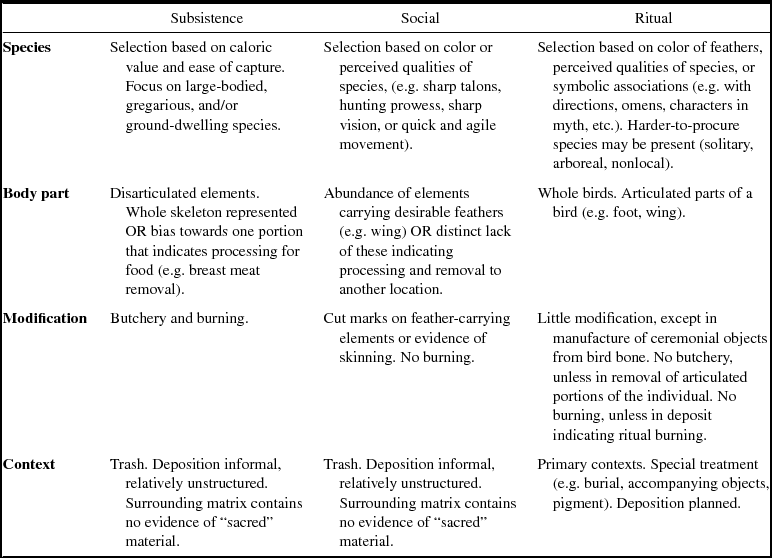
We develop an analytical model that considers three possible motivations for bird use: subsistence strategies, social use, and ritual engagement. A subsistence-driven strategy is concerned with the desire for birds as food. A social strategy involves the desire for bird feathers, skins, or bone for the manufacture of decorative objects used in displays of status. A ritual strategy is driven by the desire for whole birds or special parts as components of ritual activity. Each of these strategies has distinct archaeological correlates that can be used to facilitate their identification in archaeological contexts.
Like other material resources, birds and their primary and secondary products are controllable. Sumptuary rules prohibit the consumption or use of certain types of animals by subsets of the population, and non-local birds acquired through long-distance exchange can be controlled as prestige goods. Restricting access is a means of excluding others, in order to create and maintain social differences. All taxa recovered from Paso de la Amada are presently or were likely to have been locally available. If sumptuary rules were employed, we should expect access to the most desirable birds (i.e., the ‘tastiest,’ those with the most desirable feathers, or those of symbolic significance) to have been controlled by social aggrandizers.
Three Motivations of Bird Capture
The three strategies discussed here—subsistence, social, and ritual—are seldom completely distinct. Although each motivation for bird capture may be unique, capture is often motivated by more than one goal. This can result in a confusing amalgam of the material correlates of more than one strategy in an assemblage, making it difficult to isolate these motivations. To distinguish among them, we distilled a series of material correlates for each use strategy from reports of the avifaunal remains from a number of archaeological sites; examples are provided below. For analytical purposes, we give four aspects of data particular attention: species selected, body part distribution, modification of the remains, and the context from which remains were recovered. For each strategy, these criteria form a set of expected material correlates that can be identified in the archaeological record (Table 1).
Archaeological Correlates of Three Motivations for Bird Capture.

Subsistence Pursuits
Both ecological and nutritional factors motivated the capture of birds for subsistence. Large-bodied, easier-to-capture species are the most desirable relative to the energy expended in capture (Serjeantson Reference Serjeantson2009:231; Tivoli Reference Tivoli, Prummel, Zeiler and Brinkhuizen2010:133). Less time is spent processing one large bird than is spent processing many small birds, and it is more efficient to capture birds in multiples (Serjeantson Reference Serjeantson2009:233-236; Ugan Reference Ugan2005). Considerations in ease of capture include sociality, habitat, and seasonality. Ground-dwelling, gregarious species that flock in large numbers, or that are available year-round, are the easiest and most efficient to capture (e.g. certain quail, doves, grebes, ducks). Fattier than other birds, seabirds may be targeted in coastal settings (Serjeantson Reference Serjeantson2009:233). At Quebrada Tacahuay, on the south coast of Peru, nearly 99 percent of identified avifaunal remains are cormorant (Phalacrocorax spp.), booby (Sula spp.), or pelican (Pelecanus sp.; deFrance et al. Reference deFrance, Keefer, Richardson and Alvarez2001:420; Keefer et al. Reference Keefer, deFrance, Moseley, Richardson, Satterlee and Day-Lewis1998:1833–1834). Similarly, procurement at Watmough Bay in the Pacific Northwest focused on ducks (Anatidae; Bovy Reference Bovy2012). At Tlacuachero, an Archaic period shell-mound on the coast of the Soconusco, bird procurement targeted cormorants (Wake and Voorhies Reference Wake, Voorhies and Voorhies2015).
Because most birds weigh less than 100 pounds, captured individuals are easily transported. We expect, therefore, to find all portions of the skeleton represented in collections resultant from subsistence pursuits. Remains should be recovered in a disarticulated state because of cooking and consumption processes. When birds (especially large-bodied) are captured in numbers, we may expect differential body-part representation indicating separate processing and consumption areas. At Watmough Bay, a preponderance of wing elements and an absence of other portions indicate that birds were processed and consumed at the capture site, while their skins were brought back to the community (Bovy Reference Bovy2012:2057).
In a collection resultant from subsistence pursuits we may find evidence of both butchery and heat treatment, but these may be relegated to the remains of large birds. Large birds may be dismembered with tools, leaving cut marks (Serjeantson Reference Serjeantson2009:132). Subsequent cooking may leave burn patterns indicative of heat treatment. Many small birds, however, can be dismembered by hand or cooked whole without dismemberment (Serjeantson Reference Serjeantson2009:144, 153). Cooking methods such as boiling and stewing leave no visible traces on bones (Serjeantson Reference Serjeantson2009:153; Steadman et al. Reference Steadman, Plourde and Burley2002). At Quebrada Tacahuay, an abundance of butchery marks on forelimb and axial elements indicates the removal of breast meat (deFrance et al. Reference deFrance, Keefer, Richardson and Alvarez2001:241; Keefer et al. Reference Keefer, deFrance, Moseley, Richardson, Satterlee and Day-Lewis1998:1834). Avifaunal remains from a subsistence strategy should be encountered in a disarticulated state in unstructured trash deposits, reflecting informal refuse disposal.
Social Use
The term “social use” is employed here to indicate the capture and use of birds for their feathers or bone for the manufacture of objects of personal adornment. These objects can be involved in the creation and reaffirmation of status through social display. Feathers and bird bone also may be used in the manufacture of utilitarian objects, ritual paraphernalia, and in ritual practice. These uses should be considered apart from a social strategy.
Although feathers are rarely preserved in archaeological contexts, evidence of an interest in feathers can be inferred. In an avifaunal assemblage resultant from a social strategy, species selection should be based on color or the perceived qualities of a given bird. Birds may be subjected to “selection by association” (Serjeantson Reference Serjeantson2009:186), where a bird is chosen because it is believed that in wearing its feathers, its qualities are bestowed upon the wearer. Eagle feathers, for example, have been prized throughout the world because they reference skill in hunting (Serjeantson Reference Serjeantson2009:186). In the Pueblo world, raptorial birds have been revered for their power, sharp vision, and hunting prowess, and are associated with the world above (Tyler Reference Tyler1991).
Another equally strong selection criterion is feather color, particularly where color is symbolic of a meaningful idea (Serjeantson Reference Serjeantson2009:186–187). The extensive use of feathers in social display has been documented in the Pacific Islands, where feathered clothing became a chiefly symbol, and access to feathers was controlled (Kirch Reference Kirch1985:6; White Reference White1985:57). Red was highly valued because it was associated with chiefly status and prestige (McGovern-Wilson Reference McGovern-Wilson, Grupe and Peters2005:210). At Kahikinui on the Hawaiian island of Maui, bird remains are more densely concentrated in elite areas, where certain colorful, passerine species were exclusively found (Kirch and O'Day Reference Kirch and O'Day2003:493). At the Washpool Midden site in New Zealand, birds with red and white feathers were valued (Leach Reference Leach and Anderson1979; McGovern-Wilson Reference McGovern-Wilson, Grupe and Peters2005:212).
Evidence of the processing of birds for feathers can be seen in the proportional presence or absence of feather-bearing elements in a collection. An overabundance of feather-bearing elements, especially from the wing (ulna, elements of the manus), may indicate the removal of portions of the body to create portable units of feathers. These elements may also include the cranium (supporting crest semiplumes) and the pygostyle (supporting rectrices). Similarly, a lack of feather-bearing elements may indicate the removal of body portions from a processing location to a consumption area (Serjeantson Reference Serjeantson2009:200-201). Such was the case at the Washpool Midden site, where parakeet crania were preserved for their red feathers, and the mandibles of Tui birds were disarticulated to preserve white throat feathers (Leach Reference Leach and Anderson1979; McGovern-Wilson Reference McGovern-Wilson, Grupe and Peters2005:212). The differential distribution of the remains of desirable birds across elite and nonelite areas, as well as the exclusive presence of certain species in elite areas, suggests control over access to feathers (Kirch and O'Day Reference Kirch and O'Day2003:493).
Modification of avifaunal remains associated with a social strategy should include evidence of skinning or the disarticulation of feather-bearing elements (Serjeantson Reference Serjeantson2009:202-205), and remains should be characterized by little burning. In general, a social strategy should limit the deposition of avifaunal remains to trash contexts as a byproduct of feather collection.
Objects manufactured from bird bone can also be used in social display. Many avifaunal elements are thin-walled and hollow, making them ideal for the manufacture of cylindrical objects such as beads. Production waste from the manufacture of these objects may be found in trash, while finished objects may be found in a variety of contexts as personal belongings.
Ritual Engagement
The primary motivation of this strategy is to obtain birds for use as offerings in ritual, or whose feathers may be used in the manufacture of ritual costumes and paraphernalia. When involved in ritual performance, birds can be an important component of the visual display of social prestige and the affirmation of authority.
Avifaunal assemblages in a ritual strategy should be dominated by species intentionally selected for their color, the qualities they possess, or their symbolic associations. Energy may be directed towards harder-to-procure birds, such as those that are arboreal, solitary, or even nonlocal. These may include birds of prey and brightly colored species such as parrots, two types of birds valued in the Americas (Serjeantson Reference Serjeantson2009:186–187; Tyler Reference Tyler1991). An assemblage resultant from ritual activity should be dominated by species that are colorful, raptorial, nonlocal, or that held important symbolic associations. At the Templo Mayor of Tenochtitlan, at least 252 birds were buried in temple fill or placed in boxes. The majority are quail, falcon, and golden eagle (López Luján Reference López Luján, de Montellano and de Montellano1994:307–424; 2005:102, 237–338). Raptors and quail were sacrificed as offerings in the Moon and Sun Pyramids at Teotihuacan (Sugiyama et al. Reference Sugiyama, Sommerville and Schoeninger2015), and are known from the codices to have been particularly significant to the Aztecs (Sharpe Reference Sharpe2014:327–333).
In a ritual strategy where birds are interred as offerings, complete or nearly complete articulated skeletons should be present in primary, undisturbed contexts. Alternatively, portions of the skeleton may be offered, such as wings or feet. Evidence of modification such as burning or butchery should be minimal. Remains may receive special treatment, placed as foundation or abandonment offerings, treated with pigment or accompanied by other objects, or incorporated with human burials (Russell Reference Russell2012:54, 80). At Pueblo Bonito in Chaco Canyon, scarlet and military macaws (which are nonlocal) were buried in pits or placed on room floors (Judd Reference Judd1954:263–264, Pepper Reference Pepper1920:194–195; Watson et al. Reference Watson, Plog, Culleton, Gilman, LeBlanc, Whiteley, Claramunt and Kennett2015). In general, the deposition of bird remains in a ritual strategy reflects a level of planning and intentionality absent from a subsistence or social strategy.
The three strategies outlined here are often interrelated. A bird may be captured for the use of its feathers but subsequently eaten. Likewise, a bird may be plucked before being interred. Where evidence of one strategy exists, evidence of another may follow.
Materials and Methods
The majority of taxonomic identifications for the Paso de la Amada avifaunal collection were reported together with those from the nearby site of El Varal by Steadman et al. (Reference Steadman, Tellkamp and Wake2003). Since that study, an additional 142 specimens (32 percent of the total sample) were located and identified by Bishop and Wake. Two comparative collections were used, both at the University of California, Los Angeles: that maintained by the Zooarchaeology Laboratory at the Cotsen Institute of Archaeology, and the Donald R. Dickey Bird and Mammal Collection. This paper provides an updated report of the entire avifaunal sample—all avifaunal remains recovered—from Paso de la Amada, without the inclusion of the El Varal remains (reported separately in Wake and Steadman Reference Wake, Steadman and Lesure2009).
The material discussed here was recovered from excavations between 1985 and 1995, and was screened through four or five millimeter screens or hand-collected (Clark Reference Clark1994; Richard Lesure, personal communication 2014; Steadman et al. Reference Steadman, Tellkamp and Wake2003). The sample is small, species richness high, and preservation in this environment relatively poor. For these reasons we rely on number of individual specimens (NISP; see Emery 2004; Lyman Reference Lyman1994; Marshall and Pilgram Reference Marshall and Pilgram1993; Reitz and Wing Reference Reitz and Wing2008:202–213). MNI is reported for comparison (Supplemental Table 1), and was calculated as the highest number of paired skeletal elements from either side, left or right, or the highest number of an unpaired element, of a given taxon. MNI was calculated by time phase within each mound. The sample was divided by mound, then further subdivided based on the assigned temporal phase of each excavation context, with the assumption that remains from the same species recovered from the same mound and from contexts with the same temporal assignment could realistically have been from the same individual.
Supplemental Table 1 presents the sample, differentiating between primary and secondary context. Primary contexts are structured, undisturbed deposits associated with original surfaces, usually containing partially or wholly articulated bird skeletons. Secondary contexts include mound and platform fill mined from midden material, moved from its original context of deposition and redeposited elsewhere, usually containing disarticulated and unassociated bird remains.
Results
Modern coastal Chiapas is home to at least 487 bird species (Howell and Webb Reference Howell and Webb1995). The inhabitants of Paso de la Amada exploited only 46, less than 10 percent of those likely available to them. The sample is composed of 437 NISP, 173 of which make up four cases of partially or wholly articulated skeletons. All avifaunal remains comprise 1.52 percent of the vertebrate collection (calculated as NISP avian remains over NISP total vertebrates), with an MNI of 79 (Supplemental Table 1). We examine evidence for each strategy in terms of the correlates in Table 1. Unless otherwise noted, we adjusted the NISP value for each of the four articulated cases to one, in order to avoid inflated representation.
Subsistence Pursuits
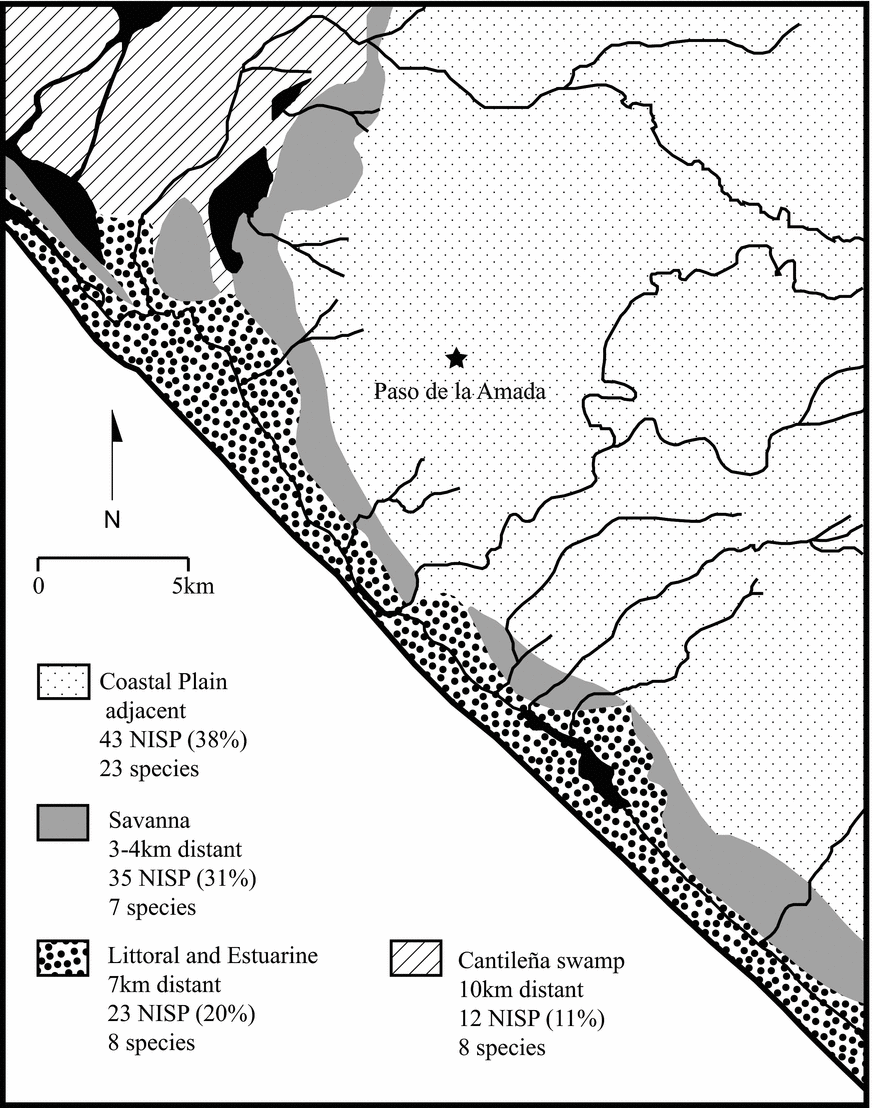
We found scant evidence for intense dietary interest in birds at Paso de la Amada. High species richness suggests that residents did not target a few productive species. Nonetheless, the relationship between intensity of capture (measured as NISP) and distance from the habitats from which birds were collected implies some dietary interest. Four general ecological zones surround the site in decreasing proximity: the coastal plain, the savanna, the littoral/estuary, and the freshwater Cantileña swamp (Figure 4; Clark Reference Clark1994:58–80; Feddema Reference Feddema1993:8–14). Intensity of procurement (measured as the proportion of the avifaunal collection that comes from each ecological zone) decreases with distance from the site (Figure 4). Half of the taxa exploited came from the coastal plain (immediately surrounding the site), while the other half were acquired from the other three, slightly more distant, zones.
Four different ecological zones discussed in the text, showing NISP from each zone, the percent of the total assemblage that that NISP comprises, and number of species from each zone. Percent of overall NISP was calculated by dividing NISP from each ecological zone by the total NISP of specimens that could be identified to species (and thus assigned an ecological zone), excluding remains from primary contexts. Map adapted from Clark Reference Clark1994: Figure 9; Feddema Reference Feddema1993: Figure 1.2.

In the coastal plain, capture focused on what was available at any given moment. High species richness relative to NISP (Figure 4) suggests that no particular type of bird was the focus of procurement in this zone; each species is represented by only one to four NISP. A more intentional selection is evident for the savanna, where capture was biased towards members of the genera Colinus and Ortalis (quail and chachalaca), comprising 86 percent of savanna NISP. Quail are gregarious birds that forage on the ground in groups, making them relatively easy to capture.
In the littoral and estuarine zones, bird capture was more targeted than in the coastal plain, but less than in the savanna. Most of the species from this zone are relatively large-bodied and gregarious, with a focus on migratory winter residents, particularly heron. Procurement from the Cantileña swamp was limited. The majority of specimens representing this zone are muscovy duck, black-bellied whistling duck, and lesser scaup, indicating that ducks were a priority. Birds from the swamp may have been captured during trips to the area for other resources, such as freshwater fish. Overall, capture adjacent to the site was ad hoc, while that in further zones was focused on particular types of birds.
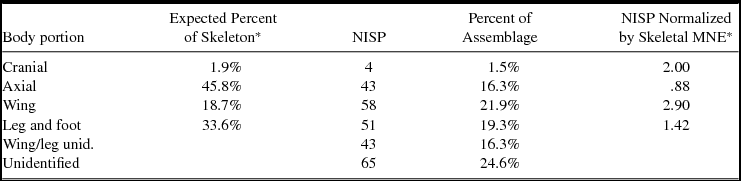
Because all body portions are well represented in the collection, whole birds were likely brought to the site. Table 2 compares body portion representation to expected values by considering the number of elements in each portion of the body of a whole skeleton. Axial elements make up the largest portion of a complete skeleton, but they appear to be underrepresented at Paso de la Amada. This discrepancy may in part be due to the differential survivability of more fragile elements like ribs and vertebrae.
Body Portion Representation.

Note: aExpected percent of skeleton was calculated by taking the number of elements expected for each portion of the body in a whole animal, and dividing that number by the total number of elements in the body. The skeleton of Colinus virginianus (northern bobwhite), the most abundantly represented species in the assemblage, was referenced to generate these numbers.
The largest bird (harpy eagle) in the collection weighs a maximum of 10 kg, thus all species identified at Paso de la Amada were transportable. Only 19 percent of specimens (n=51) are burnt, while 4.5 percent (n=12) exhibit cut marks. Rather than being associated with gamebirds (e.g. quail, chachalaca), cut marks are instead evident on the remains of two raptors (Accipiter striatus, Harpia harpyja) and one parrot (Ara militaris). Sixty-eight percent of all burning (excluding those identified only as Aves), however, is on the remains of water birds, quail, and chachalaca. Cut marks and burning are found throughout the body, rather than focused on particular elements. An absence of burning or butchery does not mean that birds were not consumed, especially in the case of small birds. Rather, most birds that were consumed were likely cooked whole.
The remains of a single sharp-shinned hawk (Accipiter striatus) support the idea that a bird can be used for its feathers and eaten. As meat is heated by fire, it shrinks away from the bone, producing an exposed portion that becomes discolored (Serjeantson Reference Serjeantson2009:153). A unique burning pattern on the right tibiotarsus of this individual indicates roasting of the leg with the meat on. We found a series of scrape marks indicating the removal of skin on the right proximal humerus of this same individual. Because birds possess a desirable layer of fat directly beneath the skin, they are more often plucked in preparation for cooking. Evidence of skinning indicates an attempt to remove the skin for the preservation of feathers (Serjeantson Reference Serjeantson2009:138).
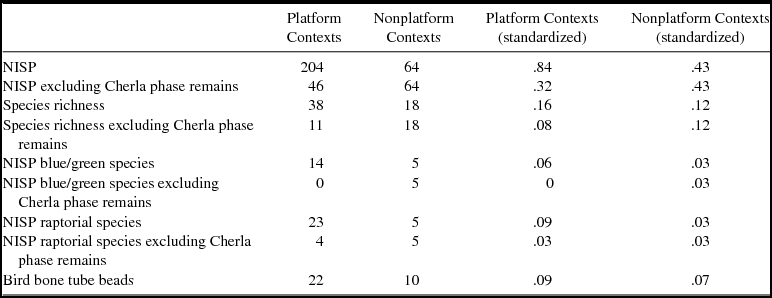
Standard zooarchaeological correlates of status include differential access to type, quality, and quantity of food (deFrance Reference deFrance2009; Emery Reference Emery2003; Masson Reference Masson1999; Pohl Reference Pohl and Brumfiel1994; van der Veen Reference Van der Veen2003). Residents do not appear to have had differential access to birds based on status during the Locona and Ocós phases. Overall, more bird remains, and a greater richness of species, were recovered from platform (elite) contexts (Table 3), but these values are biased by the fact that nearly all excavated Cherla phase material came from platform contexts. When Cherla phase remains are excluded, bird remains are more evenly distributed between platform and non-platform contexts, and species richness is greater in non-platform contexts. These patterns also hold true when values are standardized by excavation volume. Based on these comparisons, there is no evidence of sumptuary rules.
Differences between Platform and Nonplatform Contexts Discussed in the Text. Standardized values are by excavation volume (m3); values are thus densities (NISP per cubic meter, species per cubic meter, etc.)

Social Use
Several indicators suggest that the inhabitants of Paso de la Amada were interested in feathers, although it is unlikely that industrious feather procurement was a goal of bird capture. Many of the species in the collection have blue/green feathers. In comparing the proportion of blue/green species at Paso de la Amada to those available in the local environment, a two-sample independent proportions test revealed that the difference in the proportion of blue/green birds at Paso de la Amada (11/46 = 23.9 percent) compared to the proportion of blue/green birds locally available today in the Soconusco (96/487 = 19.7 percent) is not statistically significant at an alpha of .05 (p = .4966, df = 1, X 2 = .4622). Thus, it is unlikely that the inhabitants of Paso de la Amada exploited blue/green birds for their feathers significantly more than these birds were available in the wild. Similarly, the difference between an elevated proportion of raptorial species—which may have been revered for certain qualities—at Paso de la Amada (7/46 = 15.2 percent) compared to those locally available (37/487 = 7.6 percent) is not statistically significant at an alpha of 0.05 (p = 0.07, df = 1, X2 = 3.2222).
When considering body portion representation (Table 2), elements from the wing make up the greatest proportion of the sample, even though they do not comprise the greatest expected proportion of the skeleton. When forelimb NISP is normalized by the total number of elements in the wing of a complete bird, these elements have by far the highest representation. This may indicate an interest in the collection of remiges (wing flight feathers).
Cutting on the elements of blue/green birds and raptors is not limited to feather-bearing elements, and their remains were not exempt from burning. Birds can, however, be plucked and disposed of or released, leaving no evidence of feather use. The tibiotarsus of one military macaw, recovered from Mound 1, provides evidence of an interest in feathers. The placement and nature of a series of parallel cuts on this bone indicate an attempt to detach the skin from the mid-shaft, which would have then been pulled upwards and off of the body, creating a preserved unit of feathers.
Platform residents do not appear to have had greater access to raptors or blue/green birds than non-platform residents. Although a greater number of remains from these types of birds were recovered from platform contexts (Table 3), these values are again biased by Cherla phase material. Standardized by excavation volume, platform and non-platform contexts yield similar densities of these types of birds. When Cherla phase remains are removed, and values standardized by excavation volume, non-platform contexts have a greater density of blue/green birds than platform contexts, and the two have identical densities of raptor remains. Feather collection was likely important to the inhabitants of Paso de la Amada, but the use of feathers may have been egalitarian.
Other Social Uses
Tubular beads are another display item, and 35 were recovered from Paso de la AmadaFootnote 2. Standardized by excavation volume, there is limited difference in their densities between platform and non-platform contexts (Table 3). The ulnar shaft of a harpy eagle, scored and snapped on both ends, was recovered from Ocós phase deposits at Mound 6. A series of vertical striations on the bone reflect the removal of the periosteum, a layer of connective tissue, suggesting that this bone was worked fresh. This indicates that this species was intentionally selected to provide the raw material for the manufacture of a cylindrical object, potentially for symbolic associations related to power or hunting.
Ritual Engagement
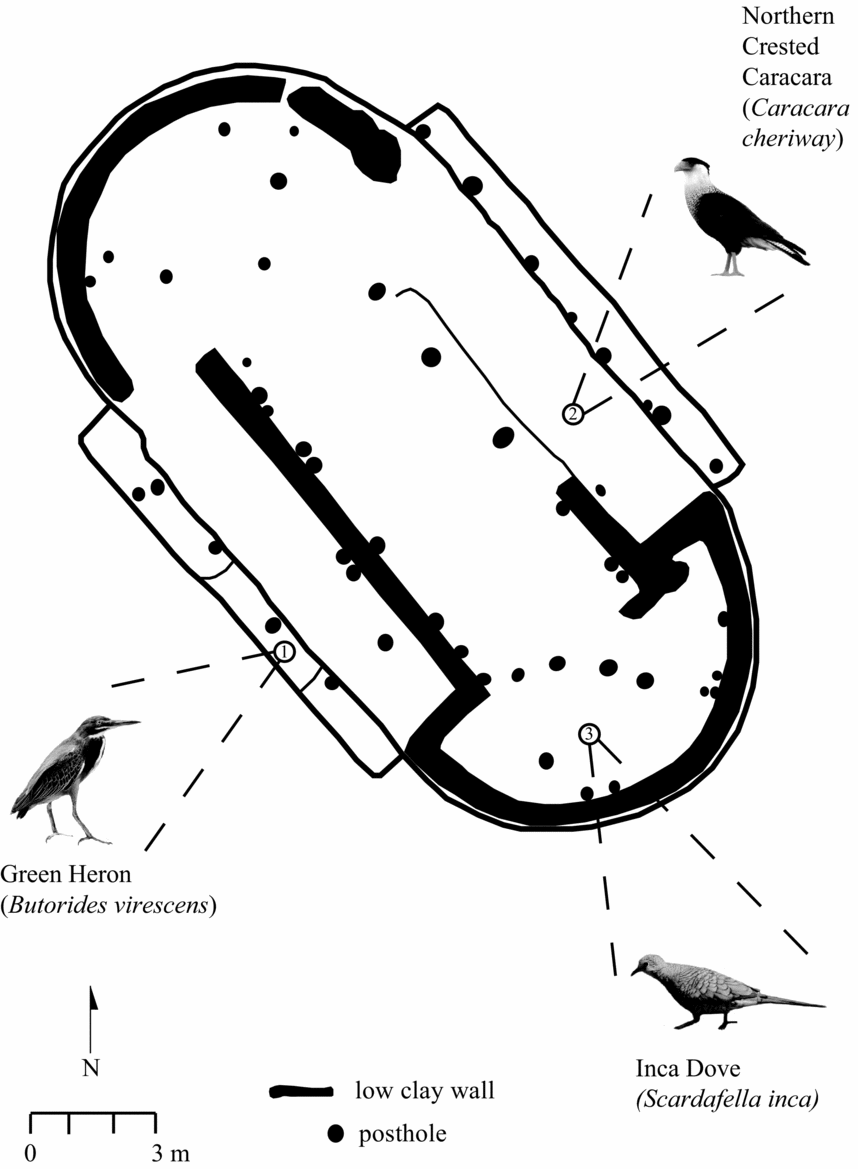
Four birds at Paso de la Amada were deposited wholly or partially articulated as offerings and were recovered from primary contexts, either on or beneath structure floors. Structure 4 in Mound 6, dating to the Locona phase, contained three of these individuals (Blake Reference Blake and Lesure2011:105; Blake et al. Reference Blake, Lesure, Hill, Barba, Clark, Christie and Sarro2006:197). This structure consisted of a well-prepared, rectangular clay floor, 20 postholes, and two hearths, situated atop a 1-meter-tall platform. A low clay wall flanked the perimeter of the floor, forming a semicircle at either end of the building (Figure 5), and on either side was constructed a porch and a long step (Blake Reference Blake and Lesure2011:103–105). As Structure 4 was closed and the platform for Structure 3 that overlaid it was prepared, three birds were deposited on top of the clay floor. The nearly complete skeleton of a green heron (Butorides virescens) was found on the southwest step, and that of an Inca dove (Columbina inca) came from the southern area of the building. The left foot of a northern crested caracara (Caracara cheriway) was placed on the northeast porch (Clark Reference Clark1994: Figure 95). Two other offerings were recovered from Mound 6: a greenstone celt from beneath Floor 5 or 6, and a carved deer scapula covered in red pigment from beneath Floor 2, both placed in the center of the building and dating to the Locona phase (Blake Reference Blake and William1991:39–42, Reference Blake and Lesure2011:107).
Structure 4, Mound 6, showing locations of bird offerings (Clark Reference Clark1994: Figure 95). Plan adapted from Blake Reference Blake and Lesure2011: Figure 5.2.

An additional bird offering comes from Mound 13, where the left and right wings of a yellow-headed or yellow-naped amazon (Amazona oratrix or Amazona auropalliata) were deposited immediately prior to the preparation of a clay floor (Floor 1). This floor appears to overlie a 1-meter-tall Locona phase platform (Richard Lesure, personal communication 2014). The elements present and the absence of cut marks suggest that the wings were removed by hand and involved in a dedicatory ritual related to this floor.
Layout of the Offerings
The significance of a quadripartite directional system and a layered cosmos in Mesoamerican cosmology is well established (Rice Reference Rice2004:19–20; Thompson Reference Thompson1970:194–196). These organizational principles were routinely and ritually reflected in the built environment at many levels, through the deposition of artifacts, in building and site layout, even on a regional scale (Broda Reference Broda, Aveni and Urton1982, Reference Broda and Boone1987; Coe Reference Coe1965:107–109; Jones Reference Jones1998:69–101; Mathews and Garber Reference Mathews and Garber2004; Rice Reference Rice2004:20), through intentional alignments and the use of symbolically associated materials (Rice Reference Rice2004:19–20; Thompson Reference Thompson1970:194–196).
The vertical ordering of the cosmos was often expressed in the organization of artifacts and space in ancient Mesoamerica (Broda Reference Broda and Boone1987; López Austin and López Luján Reference López Austin and Luján2009; Mathews and Garber Reference Mathews and Garber2004:51–53). The deposition of the three birds at Structure 4 may have been intended to map the three most basic vertical layers: the upper, middle, and lower realms. In Maya cosmology, north symbolized the sky and the celestial realm, and south was associated with the watery underworld (Ashmore Reference Ashmore, Hanks and Rice1989; Reference Ashmore1991:201; Coggins Reference Coggins1980; Mathews and Garber Reference Mathews and Garber2004:50). On the front, northeast porch of Structure 4, facing the Sierra Madre Mountains and the Tacaná Volcano, was offered the foot of the caracara. The green heron was placed on the back step, facing its watery habitat to the southwest. The Inca dove, a ground-dwelling species, was placed in the interior of the building. Thus, a sky-soaring species was offered to the north (NE), facing the mountains, the volcano, and the direction associated with the celestial realm; an aquatic species was offered to the south (SW), facing its watery habitat and the direction associated with the watery underworld; and a ground-dwelling species, occupying this world, was offered in the interior of the structure between these two conceptual layers.
After their deposition, Structure 4 was covered with a meter-tall platform that served as the foundation for Structure 3. Vertical layering and the division of the world into four quadrants are important components of Mesoamerican creation stories. The recreation of the vertical cosmos beneath Structure 3 would have marked its inhabitants as incredibly powerful, “animating” or “activating” this sacred space and legitimizing the authority of its re-creators (Mathews and Garber Reference Mathews and Garber2004:53, 56).
Ritualization at Paso de la Amada
Ritual is one means of both creating and enforcing differences in status. The location of ritual activity can distinguish it from other acts, and ritual activity can distinguish the physical space in which it occurs. In an analysis inspired by the work of Catherine Bell (Reference Bell2009a, Reference Bell2009b), Lesure (Reference Lesure and Lesure2011b) reframes the traditional public/private and temple/residence dichotomies as formal and informal space. Space can be formalized through the differential use of certain architectural features (e.g., size, platforms). This formalization elevates the status of the activities taking place in these spaces, and certain activities further distinguish the space as special. In turn, both the nature of the space and certain activities differentiate the inhabitants of that space. The formalization of space can thus promote authority and reproduce social power (Lesure Reference Lesure and Lesure2011b:122). All four bird offerings were deposited in formal (platform) spaces, creating a contrast with informal spaces that would have distinguished their deposition.
Bell (Reference Bell2009a) considers ritual through the eyes of practice theory, as ritualization, a process through which particular social actions are differentiated in relation to other actions (Bell Reference Bell2009a:74). In this sense, ritual is constituted in contrast to other activities in strategic ways. Action is ritualized through six potential mechanisms, including formalism mentioned above. Five of these mechanisms are discernible in the bird offerings at Paso de la Amada: formalism, traditionalism, rule-governance, sacral symbolism, and performance. The use of these mechanisms confirms that the deposition of the offerings was an act strategically distinguished from other acts, marking the bird offerings as products of ritual action. We refer the reader to Bell (Reference Bell2009a, Reference Bell2009b) for an explanation of each of these mechanisms, and to Bishop (Reference Bishop2014) for a more thorough discussion of their evidence in the offerings.
Bird Imagery
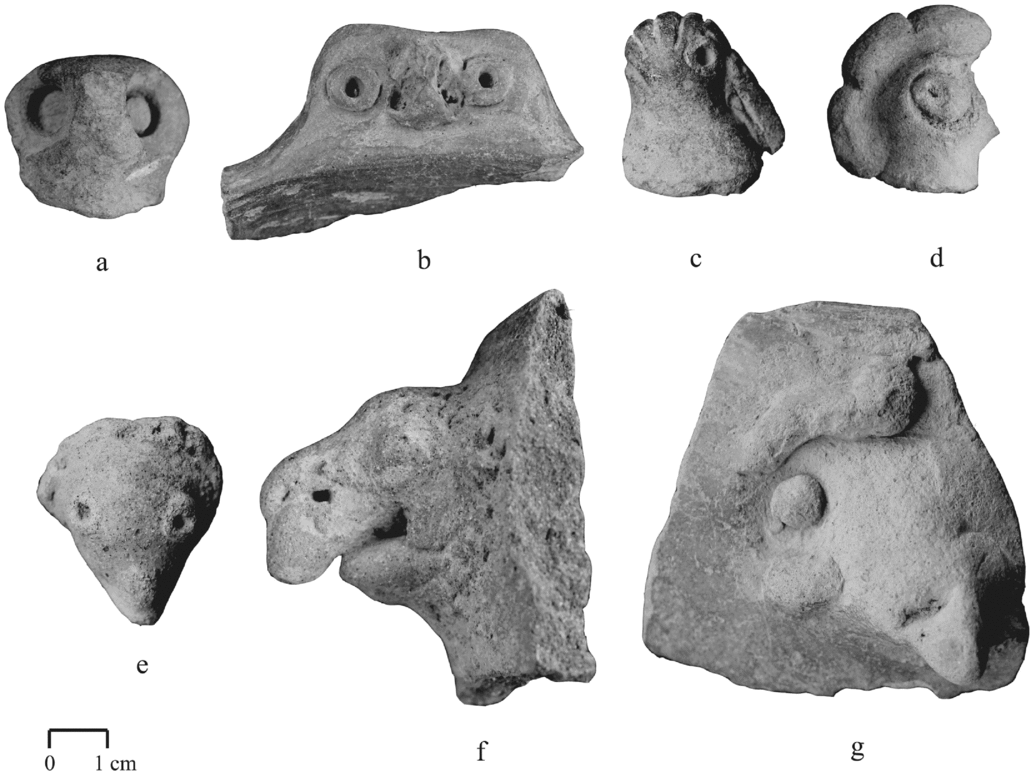
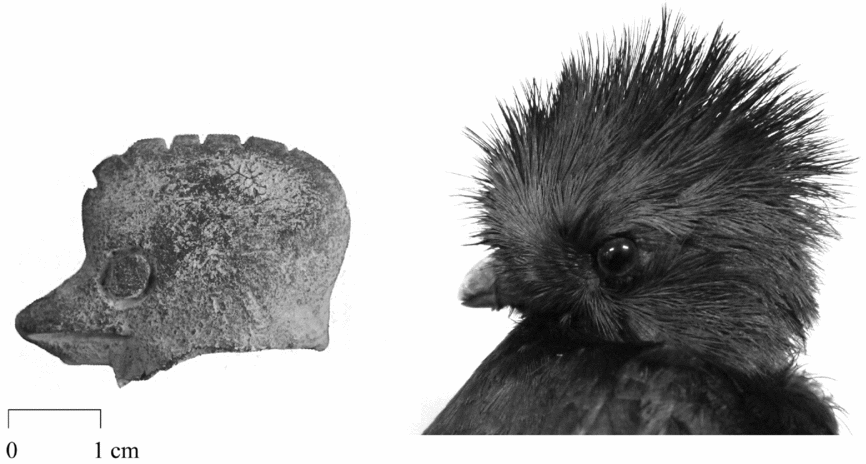
The manufacture of ceramic bird effigies at Paso de la Amada also illustrates their symbolic importance. That these effigies are “naturalistic” rather than stylized (Lesure Reference Lesure, Clark and Pye2000) allows them to be identified as depicting certain types of birds, often showing great detail in the eye and beak. Birds depicted at Paso de la Amada include owls, waterfowl, crested birds, turkeys, vultures, and raptors (Figure 6). Lesure (Reference Lesure, Clark and Pye2000) concludes that the frequency with which different types of animals (bird, mammal, fish, reptile) are modeled as effigies does not match their proportional representation in the faunal sample. A preliminary analysis of the bird effigies supports this conclusion. The most frequently depicted bird types, for example, are raptors, turkeys, and crested birds. This lack of correlation suggests that bird depiction was not a simple reflection of subsistence reliance, but of a more symbolically significant intent. At least one effigy likely represents a resplendent quetzal (Pharomachrus mocinno; Figure 7). Later, quetzal feathers became an important tribute item from the Soconusco region paid to the Aztec empire (Gasco and Voorhies Reference Gasco, Voorhies and Voorhies1989:88–89).
Examples of bird effigies from Paso de la Amada. (a,b) owl, (c) waterfowl, (d) crested bird, (e) turkey, (f) vulture, (g) bird of prey. Photographs by Richard Lesure.

Crested bird effigy and head of Resplendent Quetzal (Pharomachrus mocinno). Effigy photograph by Richard Lesure; quetzal photograph by lead author, specimen provided by the University of California, Los Angeles, Donald R. Dickey Bird and Mammal Collection.

Interpretation and Discussion
Local bird capture at Paso de la Amada was driven by three different motivations to varying degrees: subsistence, social display, and ritual performance. Comprising less than 2 percent of the vertebrate sample, birds were not a significant contribution to diet. Typically, they were brought to the site and cooked whole, and residents of platform contexts do not appear to have had greater access to or control over birds in either quantity or type.
A social strategy is difficult to isolate, because some correlates overlap with those of subsistence and ritual strategies, and indirect evidence must be used to infer feather use. Intensive processing for the feathers of colorful birds or raptors did not occur at Paso de la Amada. Nonetheless, because feather use was so important in later time periods, it is probable that they were valuable in the Early Formative period as well. If so, access to certain types or colors of birds was not restricted by any subset of the population.
In a site-wide artifact analysis comparing platform and non-platform contexts, Lesure and Blake (Reference Lesure and Blake2002:22) tentatively suggest that inequality at Paso de la Amada was encoded in residential architecture and control over ritual activity, rather than based on the distribution of wealth goods. The lack of control over birds as a source of food and feathers supports their conclusion.
That birds were an important component of ritual at Paso de la Amada is evidenced by the presence of four whole or partially articulated individuals in primary contexts at Mounds 6 and 13. The deposition of these birds was differentiated from other activities through many of the mechanisms of ritualization outlined above (Bell Reference Bell2009a, Reference Bell2009b). The use of these birds at Structure 4 to represent the vertical cosmos also supports Lesure and Blake's (Reference Lesure and Blake2002:19) suggestion that claims to authority were based in control over ritual activity and sacred knowledge. This ritual activity was a public affirmation of status through performance, sanctifying the space in which it was performed, and the authority of its performers.
Five of the six offerings recovered from Paso de la Amada (including the celt and scapula) were found at high-status residences at Mound 6, again supporting the suggestion that authority was ritually based and architecturally expressed. These residences were the largest and most architecturally substantial at Paso de la Amada.
That all known offerings date to the Locona phase is significant in consideration of temporal changes in the nature of ceremonialism at Paso de la Amada (Lesure Reference Lesure and Lesure2011b). During the Ocós phase, the differential formalism that characterized architectural space in Locona times began to “erode” (Lesure Reference Lesure and Lesure2011b:140). Spaces that were previously formal became largely informal (Lesure Reference Lesure and Lesure2011b:137–140). At the same time, the prestige of the inhabitants of formal spaces continued to increase, and specially built structures replaced high-status residences as the loci of public ritual (Lesure Reference Lesure and Lesure2011b:144). This change explains the decrease in the intensity of offering activity at Mound 6 near the end of the Locona phase, and an absence of Ocós offerings. As the venue for public ritual changed, fewer offerings were made at high-status residences. The offering of animals and objects appears to have ceased at this time, indicating that it was a domestic practice intended to display the status of platform residents.
Conclusions
Birds as a resource are susceptible to manipulation by potential aggrandizers and can be a means of creating and affirming status differences. At Paso de la Amada, the use of birds in ritual was an important tool for prestige building. In these early stages of the emergence of hereditary inequality, however, bird consumption and feather use were still relatively informal, rather than tools used by platform-resident aggrandizers to create and affirm their status. In any situation of emergent inequality, we might expect some combination of the three strategies, rather than a full-fledged system of their manipulation, to have been used for the creation and maintenance of social prestige.
Analysis of the avifaunal remains from Paso de la Amada shows a combination of the three bird-use strategies, with a focus on the involvement of birds in ritual activity. An extensive, encompassing, and repetitive ritual complex such as that at Tenochtitlan is not mirrored at Paso de la Amada, but we may see the beginnings of a ritual interest in birds for the creation and maintenance of status and prestige in the Early Formative.
The approach used here is intended to be holistic, and its value is three-fold. First, it focuses on an under-studied class of fauna. Second, too frequently, faunal studies focus on only one of the three strategies explored here, usually dietary, to the exclusion of others. This limited scope does not do justice to the explanatory potential of animal bones. Examining all three strategies in zooarchaeological analyses provides a more comprehensive understanding of human-animal interaction. Lastly, studies of the emergence of inequality are often limited to one avenue of inquiry. An artifact- (or ecofact-) centered approach that explores all possible uses of that material can explain the various ways in which prestige may have been accumulated by social aggrandizers. The approach used here explores three possible motivations for the use of birds to provide a holistic understanding of how one class of artifact may have been manipulated in multiple ways to suit the needs of aggrandizers. This approach highlights the different ways—not just economic—that prestige could have been accumulated.
We hope that this demonstration, along with other studies discussed here, of the importance of avifauna in prehistory and the explanatory potential of their remains will inspire otherwise disinclined researchers to give adequate time to their identification. With these identifications, avifaunal collections can inform research on many aspects of prehistoric life. Studies of avifaunal collections can contribute to a more robust understanding of the early ritual, symbolic, dietary, and social importance of avifauna in Mesoamerica.
Acknowledgements
Richard Lesure, Gregson Schachner, Jeanne Arnold, and Alan Farahani contributed insightful comments on earlier drafts of this paper. Original excavations were carried out by Michael Blake, John Clark, Richard Lesure, and others, and prior avifaunal analyses were performed by David Steadman, Markus Tellkamp, and Thomas Wake. We thank Kitty Emery, Ashley Sharpe, Susan deFrance, Rick McGovern-Wilson, and Angelica Tivoli for providing direction. Diana Moreiras graciously translated the abstract. We thank the editors and several anonymous reviewers for suggestions that greatly improved this manuscript. Funding for this analysis was provided by the University of California, Los Angeles Department of Anthropology and the University of California, Los Angeles Graduate Division.
Data Availability Statement
The majority of the data discussed here were previously published in Steadman et al. (Reference Steadman, Tellkamp and Wake2003). New taxonomic identifications that were made in the intervening years are presented, along with previously published data, in Supplemental Table 1. The physical material is housed at the Cotsen Institute of Archaeology at the University of California, Los Angeles.
Supplemental Materials
For supplementary material accompanying this paper, visit https://doi.org/10.1017/laq.2018.3.
Supplementary Table 1. Avian taxa identified at Paso de la Amada