Introduction
Feeds are primarily produced to optimise the growth potential of the target animal through a defined nutritional specification. However, feeds need to satisfy other criteria including feed safety, which is becoming an important priority, and physical quality. Overall, these requirements have led to the development of increasingly sophisticated technologies to produce feeds. During their manufacture, poultry feeds are subjected to an array of unit operations and these include grinding, mixing, thermal treatments (extrusion/expansion), conditioning and pelleting. Each of these operations can affect, either negatively or positively, the feed quality and subsequent bird performance (Ravindran and Amerah, Reference RAVINDRAN and AMERAH2008). Of these unit operations, grinding and pelleting are likely to have the greatest influence on feed quality. However, increasing conditioning temperature during pelleting to reduce potential levels of salmonella, for example, may reduce the availability of nutrients (Lahaye et al., Reference LAHAYE, GANIER, THIBAULT and SÈVE2004). The increasing use of enzymes in-feed faces similar technological challenges, with increasing conditioning temperatures being one, which require a more sophisticated response from feed enzyme manufacturers.
Exogenous enzymes have been used commercially in poultry diets for over 20 years and their use is now a routine practice. Microbial phytases and non-starch polysaccharide (NSP) degrading enzymes are the most widely used types of feed enzymes. Microbial phytases have been in practical use for nearly two decades, and their use in the poultry industry, as a means of improving phosphorus (P) bioavailability and reducing P excretion in manure, continues to grow. The efficiency of microbial phytases to release the phytate-bound P and to improve the utilisation of P in plant-derived ingredients for poultry is now well documented (Selle and Ravindran, Reference SELLE and RAVINDRAN2007). The NSP degrading enzymes are mainly used in viscous grain based diets, such as wheat, triticale and barley.
As previously mentioned, in the feed production process a number of processes occur starting with grinding of the feed ingredients. Published data on the influence of feed form and particle size on broiler performance and nutrient digestibility have been recently reviewed (Amerah et al., Reference AMERAH, RAVINDRAN, LENTLE and THOMAS2007a), but data on the optimum particle size of different grains have been contradictory. The results are confounded by a number of factors including feed physical form, complexity of the diet, grain type, endosperm hardness, grinding method, pellet quality and particle size distribution. In recent years, there has also been some interest in investigating the interaction between feed particle size and exogenous enzyme supplementation.
Pelleting per se involves extrusion of conditioned hot mash through a die of particular length and diameter. In the conditioner, steam is introduced under pressure, which subjects the mash to high temperatures, prior to entering the pellet die. The mash temperature at the exit point of the conditioner is referred to as the conditioning temperature (Ravindran and Amerah, Reference RAVINDRAN and AMERAH2008). The conditioner temperatures in feed mills may be 95°C, with the feed industry tending to move to even higher and harsher feed processing to control food borne pathogens such as Salmonella and Campylobacter (Jones and Richardson, Reference JONES F.T. and RICHARDSON2004; Doyle and Erickson, Reference DOYLE and ERICKSON2006). The move towards higher temperatures during feed processing in an effort to reduce feed contamination can result in longer retention times in the conditioner (i.e. more exposure to steam) and increased steam pressures being used. Moderate, pelleting temperatures are known to positively influence the degree of starch gelatinisation, feed throughput and possibly pellet quality (Ravindran and Amerah, Reference RAVINDRAN and AMERAH2008). On the other hand, higher feed processing temperature can affect nutrient availability through protein denaturation, maillard complexing and loss of feed additives, including vitamins, enzymes and synthetic amino acids. During feed processing, several factors can lead to the denaturation of the proteins, and these include pressure, heat, retention time and moisture level (Thomas et al., Reference THOMAS, VLIET and and VAN DER POEL1998). When a protein is denatured the three dimensional structure of the protein breaks down and unravels, and which can affect the functionality of the protein. Enzymes are a good example of a protein losing its activity during processing (Spring et al., Reference SPRING, NEWMAN, WENK, MESSIKOMMER R. and VRANJE1996; Silversides and Bedford, 1999). If the unfolding affects the shape of the active site, then the ability of the enzyme to bind its substrate will be affected. Furthermore, heat processing solubilises fibre components (Fadel et al., Reference FADEL, NEWMAN, NEWMAN and GRAHAM1988) which may increase digesta viscosity and reduce nutrient digestibility (Bedford and Schulze, Reference BEDFORD and SCHULZE1998). The aims of the present paper are to review available data on the effects of grain particle size reduction and pelleting temperature on the efficacy of exogenous enzymes. In addition, new technologies in the development of thermostable enzymes will also be discussed.
Feed particle size and exogenous enzyme
In recent years, particle size in poultry feeds has become more topical, as the feed industry continues to search for ways of optimising feed utilisation and improving production efficiency. However, it is not the aim of this paper to review the effect of feed particle size on poultry performance as this subject was recently reviewed by Amerah et al. (Reference AMERAH, RAVINDRAN, LENTLE and THOMAS2007a). Briefly, the main goals of grain processing are to disrupt the seed coat and cell walls, and reduce the particle size to enable increased exposure of nutrients in the endosperm to enzymes in the digestive tract of the animal. Other benefits include ease of handling, better mixing properties, increasing the bulk density of some ingredients and facilitating further processes such as extrusion and pelleting.
Recent research has looked at possible interactions between particle size and the efficacy of exogenous enzyme supplements. Amerah et al. (Reference AMERAH, RAVINDRAN, LENTLE and THOMAS2008a) examined the interaction of wheat particle sizes (GMD, medium 618 μm and coarse 882 μm) and xylanase (endo-1, 4-ß-xylanase produced by Trichoderma viride) supplementation (without or with 1000 xylanase units/kg diet). It was reported that xylanase supplementation had no effect on digesta viscosity, but improved the apparent metabolisable energy (AME) at both particle sizes and the feed efficiency of birds fed the coarse diets. In pigs, Kim et al. (Reference KIM, MULLAN and PLUSKE2005) similarly found no effect of wheat particle size, enzyme supplementation (endo-1,4-ß-glucanase and endo-1,4-ß-xylanase) or any interaction of particle size and enzyme on growth performance. It was, however, observed that the enzyme supplementation increased digestible energy to a greater extent in wheat-based diets with a larger particle size than those with a finer particle size. The findings of these two studies lend support to the mechanisms based on the physical barrier of endosperm cell wall and nutrient encapsulation theories (Bedford and Schulze, Reference BEDFORD and SCHULZE1998). A considerable amount of starch surrounded by intact cell walls in the intestinal digesta of broilers fed wheat-based diets has been previously reported (Bedford and Autio, Reference BEDFORD and AUTIO1996). The cell walls of coarsely ground wheat are less disrupted and this may explain the greater efficacy of cell wall degrading enzymes in coarse or whole wheat diets. Furthermore, it has been proposed that xylanase supplementation acts, in part, on gel barriers formed by partial solubilisation of NSPs on digesta particles (Amerah et al., Reference AMERAH, RAVINDRAN, LENTLE and THOMAS2008a). Previous reports have suggested that the enzyme does not directly physically disrupt the cell walls, but rather peels away a layer of cell wall matrix (Bedford and Schulze, Reference BEDFORD and SCHULZE1998). An alternative theory is that the presence of larger particles in the digesta may increase the digestive efficiency of enzyme by increasing the permeability of digesta (Lentle, Reference LENTLE2005) by increasing the void spaces between adjacent particles (Dullen, Reference DULLEN1979). The limited available data, therefore, suggest that xylanase efficacy appears to be affected by wheat particle size in both pig and broiler diets. Further studies to determine the underlying reasons for the better enzyme efficiency with coarse particles will be of practical interest.
Whole wheat inclusion in poultry diets is a common practice in many countries and getting wider acceptance. In addition to cost savings, the inclusion of whole grains increases the coarseness of the diet. Wu and Ravindran (Reference WU and RAVINDRAN2004) reported that the when whole wheat was used in the place of ground wheat it resulted in improved feed efficiency and that this improvement was further augmented by supplementation with xylanase (endo-1, 4-ß-xylanase produced by Aspergillus niger). Interestingly, whole wheat inclusion usually increases digesta viscosity (Wu et al., Reference WU, RAVINDRAN, THOMAS, BIRTLES and HENDRIKS2004; Engberg et al., Reference ENGBERG, HEDEMANN, STEENFELDT and JENSEN2004). Consequently, the response to xylanase supplementation with whole wheat inclusion was reported to be higher (Wu et al., Reference WU, RAVINDRAN, THOMAS, BIRTLES and HENDRIKS2004; Engberg et al., Reference ENGBERG, HEDEMANN, STEENFELDT and JENSEN2004). It has been suggested that this ‘apparent additivity’ of whole wheat and supplemental xylanase is a consequence of increased grinding activity of the larger gizzard in birds fed whole wheat and enhanced mixing of the substrate with the supplemental enzyme (Wu and Ravindran, Reference WU and RAVINDRAN2004).
Endosperm hardness in wheat cultivars is known to influence the milling outcome. The hardness or softness of a grain is defined as the relative resistance of the grain to deformation or crushing when an external force is applied (Turnbull et al., Reference TURNBULL, MARION, GABORIT, APPELS and RAHMAN2002). A harder endosperm gives larger particles with more irregular shapes, while a soft endosperm will produce smaller size particles (Rose et al., Reference ROSE, TUCKER, KETTLEWELL and COLLIER2001). Amerah et al. (Reference AMERAH, RAVINDRAN and LENTLE2009) reported that the response of broilers to xylanase supplementation (endo-1, 4-ß-xylanase produced by Trichoderma viride) is influenced by wheat hardness and that wheat hardness may be an important criterion to consider when choosing a wheat cultivar for inclusion in broiler diets. Interactions were observed between wheat hardness and xylanase supplementation for weight gain, feed per gain and AME. Xylanase supplementation increased weight gain in the soft wheat-based diet but not in the hard wheat diet. Feed per gain was lowered and AME was improved by the enzyme in the hard wheat-based diet, while no enzyme effect was observed in the soft wheat diet. These improvements with xylanase supplementation in the hard wheat diet were concomitant with higher gizzard weights and gizzard digesta contents, which may have caused better and longer mixing of the xylanase with the substrate. The lower relative gizzard weights and digesta contents in birds fed the soft wheat diets suggest that feed passed quickly through the gizzard.
In hard wheat based diets, proteolytic enzymes supplementation may have a beneficial effect on starch digestibility by improving the accessibility of amylolytic enzymes to starch granules in the endosperm. It has been suggested that the interaction between the starch granules and the surrounding protein matrix may reduce the accessibility of amylolytic enzymes to starch granules in hard wheat (Guerrieri et al., Reference GUERRIERI, AYNARD, LAVELLI and CERLETTI1997; Peron et al., Reference PERON, GOMEZ, MIGNON-GRASTEAU, SELLIER, BESNARD, DEROUET, JUIN and CARRÉ2006). A negative relationship between wheat hardness and the digestibility of starch in pelleted diets has been reported (Carre et al., Reference CARRE, MAISONNIER, MELCION, OURYT F.X., GOMEZ and PLUCHARD2002; Reference CARRE, MULEY, GOMEZ, OURYT, LAFFITTE, GUILLOU and SIGNORET2005; Peron et al., Reference PERON, GOMEZ, MIGNON-GRASTEAU, SELLIER, BESNARD, DEROUET, JUIN and CARRÉ2006). However, fine grinding of hard wheat was reported to improve starch digestibility in broilers fed pelleted diets (Peron et al., Reference PERON, BASTIANELLI, OURY, GOMEZ and CARRE2005). Interactions between enzyme cocktail supplementation and wheat hardness need to be elucidated in future studies.
In contrast to the studies on wheat, studies examining the interaction between maize particle size and supplemental phytase are scant and contradictory. Kasim and Edwards (Reference KASIM and EDWARDS2000) examined the effect of maize particle size (GMD, fine 484 μm; medium 573 μm; and coarse 894 μm) on the efficacy of a 3-phytase produced by Aspergillus niger (0 and 600 FTU/kg diet). Maize particle size had no effect on weight gain at 16 days of age, but phytase supplementation improved weight gain across all maize particle sizes. An interaction between maize particle size with phytase supplementation was observed for feed per gain, with medium particle size having the greatest reductions with added phytase.
As a comparison, a recent study (Amerah and Ravindran, Reference AMERAH and RAVINDRAN2009) that evaluated the effects of maize particle sizes (GMD, medium 611 μm and coarse 849 μm) on the efficacy of a 6-phytase produced by Schizosaccharomyces pombe (0 and 500 FTU/kg diet), reported that phytase supplementation improved feed intake, weight gain and feed per gain in both medium and coarse particle size diets. Coarse grinding improved weight gain, but had no effect on feed intake and feed per gain. The authors concluded that the effectiveness of supplemental phytase on broiler performance is not influenced by the particle size of maize. Interestingly, in this study, phytase supplementation was reported to increase ileal phosphorus digestibility and toe ash content of birds fed the medium particle size diet, but had no effect in those fed the coarse particle size diet. However, Kasim and Edwards (Reference KASIM and EDWARDS2000) reported that coarse grinding and phytase supplementation increased the retention of calcium and phosphorus and no particle size and phytase supplementation interaction was observed for these parameters.
The effect of particle size of grain legumes and enzyme supplementation on broiler performance was examined by Daveby et al. (Reference DAVEBY, RAZDAN and AMAN1998). In this study, the effect of milled or crushed dehulled peas with or without pectinase or α-galactosidase supplementation on the nutrient digestibility and performance of broiler starters (1-15d post-hatch) was examined. During the experimental period, no effect of enzyme supplementation or particle size on weight gain or feed per gain was observed. However, a particle size x enzyme interaction was observed for feed intake. Feed intake was highest in milled diets with α-galactosidase supplementation, whereas no effect of α-galactosidase was obtained for the crushed diets. Supplementation with α-galactosidase or pectinase had no effect on apparent ileal digestibility of organic matter, starch, crude protein, crude fat and ash. On the other hand, particle size significantly influenced nutrient digestibility with more intact cell walls in the crushed diets restricting digestibility. These results are in agreement with most published data that have shown coarse grinding of grain legumes to reduce energy utilisation and digestibility coefficients of nutrients (Carre, Reference CARRE2004; Amerah et al., Reference AMERAH, RAVINDRAN, LENTLE and THOMAS2007a).
Based on the limited published data reviewed thus far, it can be concluded that the efficacy of enzymes is influenced by the degree of grinding and grain hardness, and these factors should be taken into consideration when attempting to predict the response of broilers to supplemental enzymes. It should be noted that interactions of feed particle size and enzyme supplementation may vary depending on the feed form (mash or pellet). It is well documented that the pelleting process modulates particle size post-pelleting (Svihus et al., Reference SVIHUS, KLOVSTAD, PEREZ, ZIMONJA, SAHLSTROM and SCHULLER2004; Amerah et al., Reference AMERAH, RAVINDRAN, LENTLE and THOMAS2007b; Reference AMERAH, RAVINDRAN, LENTLE and THOMAS2008b), which suggests that the response to enzyme supplementation will depend on diet particle size distribution post-pelleting. Further studies are warranted to explore the interaction effects of feed form, diet particle size and enzyme supplementation on broiler performance and nutrient utilisation.
Pelleting temperature and exogenous carbohydrases
As previously eluded to, another factor that can influence feed digestibility and the efficacy of endogenous enzymes is heat treatment of feed. The practice of heat treating feeds has grown in prevalence due to an increased focus on food hygiene, with mash feeds now being subjected to heat conditioning treatments in some countries. The heat treatment of feeds can involve heat alone or a combination of both heat and pressure. The most common form of thermal treatment in the manufacture of poultry feeds is pelleting. The pelleting process first involves the mash feed passing through a conditioner. In the conditioner the cold feed is exposed to dry steam which is added under pressure, this process helps to improve pellet durability and also increases mill throughputs and reduces energy consumption. Following conditioning feed is forced through a pellet die. Broiler feeds are predominantly offered in pellet form and the wide acceptance of pelleting is mainly due to the fact that the cost of pelleting is more than offset by the associated performance and energy saving benefits. From the performance perspective, pelleting is known to improve weight gain, feed intake and feed efficiency of broilers, which are attributed inter alia to higher nutrient density, improved starch digestibility resulting from chemical changes during pelleting, increased nutrient intake, changes in physical form, reduced feed wastage and decreased energy spent for eating (Amerah et al., Reference AMERAH, RAVINDRAN, LENTLE and THOMAS2007a).
Despite its importance, the effect of pelleting temperatures and conditioning practices on poultry performance has not received much attention (Cutlip et al., Reference CUTLIP, HOTT, BUCHANAN, RACK, LATSHAW and MORITZ2008). Moderate pelleting temperatures (65-85°C) usually result in improving the availability of nutrients due to the gelatinization process of the starch, rupture of the cell wall matrix (Pickford, Reference PICKFORD1992) and deactivation of enzyme inhibitors present in cereals (Saunders, Reference SAUNDERS1975). However, there is a wide range of temperature and time combinations used in the commercial feed milling (McCracken, Reference MCCRACKEN2002). Therefore, the effect of heat processing on nutrient availability will vary depending on the processing conditions (Vranješ et al., Reference VRANJEŠ, PFIRTER and WENK1994; McCracken, Reference MCCRACKEN2002). This may explain, to a degree, the contradictory results observed in the literature on the effect of thermal processing in broiler diets. It is not the aim of the review to discuss the effect of thermal processing on nutrient digestibility in details. The reader is referred to comprehensive reviews on this subject by McCracken (Reference MCCRACKEN2002) and Svihus et al. (Reference SVIHUS, UHLEN and HERSTAD2005). Briefly, it is generally considered that thermal processing, to a point, improves nutrient value of broiler diets which usually results in beneficial effects on performance (McCracken, Reference MCCRACKEN2002). However, these effects of thermal processing may vary depending on the type of cereal used (Jimenez-Moreno et al., Reference JIMENEZ-MORENO, GONZALEZ-ALVARADO, LAZARO and MATEOS2009; Zimonja and Svihus, Reference ZIMONJA and SVIHUS2009), processing method (Plavnik and Sklan, Reference PLAVNIK and SKLAN1995; Garcı´a et al., 2008; Zimonja and Svihus, Reference ZIMONJA and SVIHUS2009), age of the birds (Gracia et al., Reference GRACIA, LATORRE, GARCI´A, LA´ZARO and MATEOS. G.G.2003; Reference GRACIA, LAZARO, LATORRE, MEDEL, ARANIBAR, JIMENEZ-MORENO and MATEOS2009; Garcı´a et al., 2008), steam added and conditioning time (Svihus et al., Reference SVIHUS, UHLEN and HERSTAD2005). Zimonja and Svihus (Reference ZIMONJA and SVIHUS2009) reported that severe processing treatments, such as extrusion, may have beneficial effects on starch digestibility for diets containing wheat, although this effect was not found in oat due to high availability of oat starch. Gracia et al. (Reference GRACIA, LATORRE, GARCI´A, LA´ZARO and MATEOS. G.G.2003) and Garcı´a et al. (2008) found that heat processing of barley increased body weight gain of chicks for the first week of life but not thereafter. Gracia et al. (Reference GRACIA, LAZARO, LATORRE, MEDEL, ARANIBAR, JIMENEZ-MORENO and MATEOS2009) reported worse feed per gain and higher intestinal viscosity in chicks fed cooked flaked maize from 1 to 4 days of age.
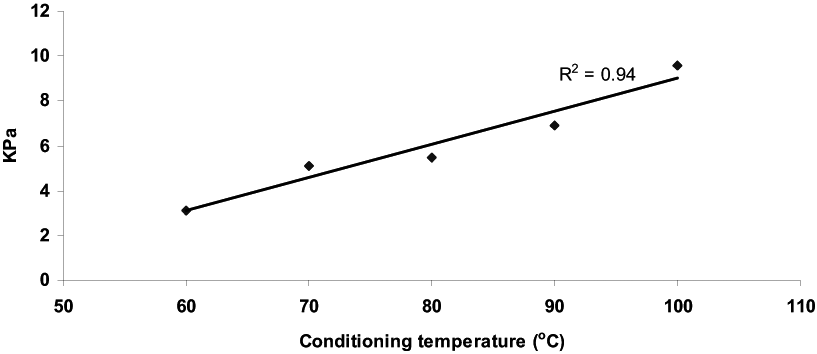
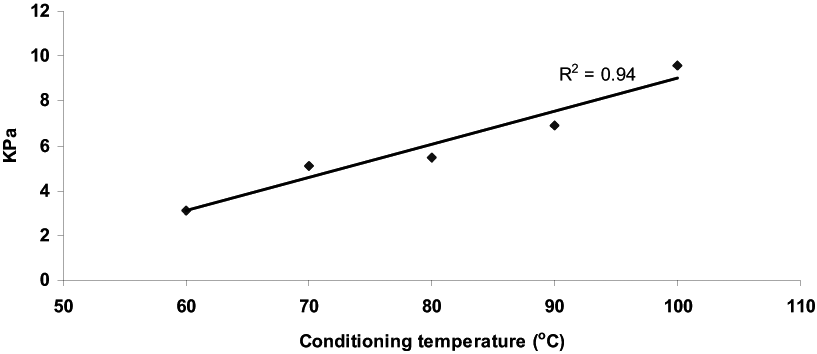
The use of high conditioning temperature may have beneficial effects on the efficiency of thermo-mechanical processing and pellet quality (Cutlip et al., Reference CUTLIP, HOTT, BUCHANAN, RACK, LATSHAW and MORITZ2008). Cutlip et al. (Reference CUTLIP, HOTT, BUCHANAN, RACK, LATSHAW and MORITZ2008) reported that broilers fed pellets conditioned with high steam temperature (93.3 vs. 82.2°C) demonstrated decreased feed intake and feed conversion ratio without effect on amino acid and energy availability. High pelleting temperature was reported to increase pellet hardness (Figure 1; Spring et al., Reference SPRING, NEWMAN, WENK, MESSIKOMMER R. and VRANJE1996). This effect on pellet quality may explain, partly, the better performance response associated with higher pelleting temperature observed in some studies. On the other hand, a combination of excessive heat and shear pressure increases the likelihood of the loss of available nutrients through protein denaturation and maillard complexing and destruction of feed additives, including vitamins, enzymes and crystalline amino acids (Björk and Asp, Reference BJÖRK and ASP1983; Wiseman et al., Reference WISEMAN, JAGGER, COLE and HARESIGN1991; McCracken, Reference MCCRACKEN2002; Ravindran and Amerah, Reference RAVINDRAN and AMERAH2008). The effects of thermal processing on the stability of heat labile nutrients in feed were reviewed by (Pickford, Reference PICKFORD1992) and will not be covered in this paper.
A comparison of six separate trials, involving pelleting temperatures from 65 to 105°C, has shown that higher temperatures were associated with poorer growth and feed efficiency in broilers (Creswell and Bedford, Reference CRESWELL and BEDFORD2006), possibly due to the destruction of heat labile nutrients. It is often believed that high pelleting temperatures are necessary for feed hygiene, specifically to control salmonella, and to destroy anti-nutritive factors found in certain ingredients. However, salmonella control only requires 80 to 85°C for 30 seconds (Veldman et al., Reference VELDMAN, VAHL, BORGGREVE and FULLER1995; Creswell and Bedford, Reference CRESWELL and BEDFORD2006; Jones and Richardson, Reference JONES F.T. and RICHARDSON2004); thus it appears that pelleting temperatures over 85°C could be avoided. Furthermore, it should be noted that most starches will gelatinise upon heating to above 80°C in excess water (Svihus et al., Reference SVIHUS, UHLEN and HERSTAD2005). Commercially, however, concerns over food safety and feed hygiene have resulted in feed mills using pelleting temperatures of 90-95°C and sometimes beyond. In order to reach these high temperatures, feed mills have introduced measures such as increased conditioning times, double conditioning, double pelleting, expansion and hygenisers or extruders for the manufacture of poultry diets.
In addition to its negative effect on heat labile nutrients and feed additives, processing at high temperatures is known to increase intestinal digesta viscosity by increasing starch gelatinisation and fibre solubility (Mateos et al., Reference MATEOS, LÁZARO and GRACIA2002; Svihus, Reference SVIHUS2006; Gracia et al., Reference GRACIA, LATORRE, GARCI´A, LA´ZARO and MATEOS. G.G.2003; Garcı´a et al., 2008) and destruction of endogenous enzymes (Silversides and Bedford, 1999). Viscosity is known to increase microbial activity in the small intestine and is associated with poor growth performance in broilers (Langhout et al., 1999; Engberg et al., Reference ENGBERG, HEDEMANN, STEENFELDT and JENSEN2004). Therefore, it appears that the effort to sterilise the feed with high pelleting temperatures may indirectly increase the risk of microbial infection due to higher digesta viscosity (Creswell and Bedford, Reference CRESWELL and BEDFORD2006). A number of studies have shown that this effect of heat treatment on digesta viscosity in wheat (Scott et al., Reference SCOTT, SWIFT and BEDFORD1997, Silversides and Bedford, 1999; Cowieson et al., Reference COWIESON, HRUBY and ISAKSEN2005; Svihus, Reference SVIHUS2006) and barley (Gracia et al., Reference GRACIA, LATORRE, GARCI´A, LA´ZARO and MATEOS. G.G.2003; Garcı´a et al., 2008) based diets can be alleviated by supplemental NSP enzymes. Scott et al. (Reference SCOTT, SWIFT and BEDFORD1997) reported that expansion followed by pelleting of feed resulted in increased digesta viscosity compared to pelleting only and that liquid enzyme supplementation (endo-1,4-ß-xylanase and endo-1,3(4)-ß-glucanase produced from Trichoderma longibrachiatum) counteracted the increased viscosity associated with expanded feed. Expansion significantly improved feed per gain, AME and N retention in diets supplemented with enzymes. However, in unsupplemented diets, expansion reduced body weight gain and AME at 21d but improved body weight gain at 42 d.
Effect of pelleting temperature on pellet hardness (From Spring et al., Reference SPRING, NEWMAN, WENK, MESSIKOMMER R. and VRANJE1996).
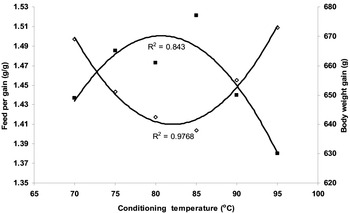
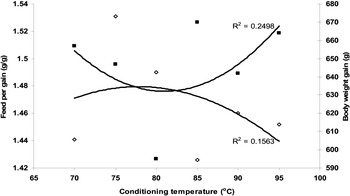
Silversides and Bedford (1999) reported a linear increase in intestinal viscosity when conditioning temperature was increased from 70 to 95°C in both enzyme-supplemented and unsupplemented feeds, and this was four times greater for unsupplemented feeds than it was for feeds supplemented with enzyme. Enzyme addition (endo-1, 4-ß-xylanase produced from Trichoderma reesei) had a greater positive effect on digesta viscosity in diets conditioned at higher temperatures as evidenced by the significant temperature x enzyme interaction. With regard to performance, this study suggested that the processing period (55s vs. 140s) and conditioning temperature (70, 75, 80, 85, 90 and 95°C) had no effect on BW gain or feed per gain at 21d of age. Interestingly, at 55s when enzyme was added before pelleting, the higher processing temperature decreased enzyme activity in a linear fashion (R2 = 0.97) while quadratic regression lines were observed for BW gain and feed per gain on temperature (R2 values of 0.84 and 0.98, respectively) and the fitted regression lines reached a maximum BW gain and minimum feed per gain at a processing temperature between 80 and 85°C (Figure 2). However, at 140s the higher processing temperature also decreased enzyme activity in a linear fashion (R2 = 0.97) while quadratic regression lines of BW gain and feed per gain on temperature produced lower R2 values (0.24 and 0.15, respectively) compared to those obtained at 55s conditioning time (Figure 3). Similarly, Bedford et al. (Reference BEDFORD, PACK and WYATT1997) found a linear reduction of enzyme activity at increasing pelleting temperatures with best birds performance between 81-83°C. It has been suggested that the effect of enzyme addition in heat treated feed must be measured by broiler performance or digesta viscosity rather than in feed activity (Sabatier and Fish, Reference SABATIER A.M. and FISH1996; Bedford et al., Reference Bedford, SILVERSIDES and COWAN2001). Spring et al. (Reference SPRING, NEWMAN, WENK, MESSIKOMMER R. and VRANJE1996) reported that, although an exogenous enzyme lost 90% of its assayed activity when the diet was being pelleted above 80°C, the enzyme still reduced the viscosity of the digesta.
Effect of pelleting temperature on feed per gain (◊) and body weight gain (■) in 21d old broilers at 55 second conditioning time. (From Silversides and Bedford, 1999).

Effect of pelleting temperature on feed per gain (◊) and body weight gain (■) in 21d old broilers at 140 second conditioning time. (From Silversides and Bedford, 1999).

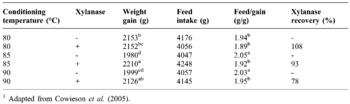
Cowieson et al. (Reference COWIESON, HRUBY and ISAKSEN2005) found that increasing conditioning temperature from 80°C to 90°C increased the in vitro viscosity of wheat-based diets by 6 centipoise and reduced the weight gain of broilers by 7%. However, in contrast to Spring et al. (Reference SPRING, NEWMAN, WENK, MESSIKOMMER R. and VRANJE1996), Bedford et al. (Reference BEDFORD, PACK and WYATT1997) and Silversides and Bedford (1999), in vitro testing showed that enzyme activity remained after pelleting (Table 1). A significant conditioning temperature x xylanase (intrinsically thermostable, endo-1, 4-ß-xylanase produced from Trichoderma reesei) interaction was observed, with a proportionately greater positive response to added xylanase in the diets pelleted at higher temperatures (Table 1). The addition of exogenous xylanase was more efficacious in the diets pelleted at 85 and 90ºC than in the diet pelleted at the more moderate 80ºC. These authors (Cowieson et al., Reference COWIESON, HRUBY and ISAKSEN2005) hypothesised that high conditioning temperature may destroy cell walls, releasing nutrients that were previously inaccessible to the exogenous enzyme. In contrast to this hypothesis, Amerah et al. (Reference AMERAH, RAVINDRAN, LENTLE and THOMAS2008a) suggested that the cell walls of coarsely ground wheat are less disrupted and this may explain the greater efficacy of cell wall degrading enzymes in coarse particle size diets. These results (Cowieson et al., Reference COWIESON, HRUBY and ISAKSEN2005) are in accordance with those reported by Nissinen (Reference NISSINEN1994) who found that moderate conditioning less than 85ºC was optimal for broiler performance and high conditioning temperature at 95ºC resulted in poorer body weight gain and feed conversion ratio.
Effect of conditioning temperature and xylanase addition on the weight gain, feed intake and feed/gain of birds fed on wheat-based diets1.

1 Adapted from Cowieson et al. (Reference COWIESON, HRUBY and ISAKSEN2005).
In barley-based diets, Garcı´a et al. (2008) studied the influence of β-glucanase and xylanase produced from Aspergillus niger supplementation and heat processing (micronisation vs. expansion) on the performance and nutrient utilisation of broilers. Enzyme inclusion improved the weight gain, feed efficiency, total tract retention of nutrients and reduced the intestinal viscosity at 7 and 28 days of age with higher responses observed for the micronised barley. These results were in agreement with Gracia et al. (Reference GRACIA, LATORRE, GARCI´A, LA´ZARO and MATEOS. G.G.2003), who found that cooking and flaking of barley and enzyme supplementation of the diet improved apparent retention of nutrients and villus height. It was concluded that broiler performance was improved by heat processing of barley at early ages and by enzyme supplementation of the diet throughout the trial periods. In an earlier study, Pettersson et al. (Reference PETTERSSON, GRAHAM and AMAN1991), who fed a mixed grain diet based on barley (40%), wheat (25%) and rye (7%), reported that steam pelleting at 70°C significantly increased the incidence of sticky droppings in 7-d-old chicks compared to dry pelleting at 50°C and this effect was significantly reduced by enzyme supplementation (β-glucanase and xylanase). However, there were no obvious differences between the two pelleting temperatures in performance and nutrient digestibilities.
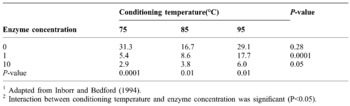
A study by Inborr and Bedford (Reference INBORR and BEDFORD1994) examined the effects of adding ß-glucanase (300U/g) to a barley-based diet at 0, 1 and 10 g/kg diet that had been pelleted after conditioning at 75, 85 or 95°C for either 30 s or 15 min. Conditioning time reduced the enzyme activity, but had no influence on the digesta viscosity or performance. Conditioning at 85°C resulted in the best growth performance, lowest digesta viscosity values and lowest incidence of vent pasting of birds fed the unsupplemented diets. At higher conditioning temperatures, increasing enzyme concentrations decreased digesta viscosity in a linear fashion suggesting a possible benefit of using higher enzyme dose levels in feeds subjected to higher conditioning temperatures. In addition, digesta viscosity decreased linearly with increased enzyme inclusion rates at all conditioning temperatures employed (Table 2). In contrast, Al Bustany (Reference AL BUSTANY1996) found that supplementation with an enzyme cocktail containing ß-glucanase, cellulase, xylanase, pectinase and amylase was more effective in mash diets than in diets pelleted at 70°C for improving the feed efficiency and reducing the incidence of sticky droppings. This discrepancy may be attributed to differences in the source (bacterial vs. fungal) of enzymes and their inherent thermostability.
Effect of conditioning temperature and enzyme concentration (g/kg diet) on digesta viscosity (cPs)1, 2.
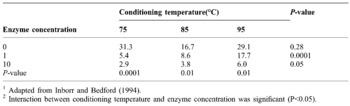
1 Adapted from Inborr and Bedford (Reference INBORR and BEDFORD1994).
2 Interaction between conditioning temperature and enzyme concentration was significant (P<0.05).
Similar to the results observed with wheat- and barley-based diets, the response to exogenous enzymes has been shown to be greater in thermal processed maize-based diets. Gracia et al. (Reference GRACIA, LAZARO, LATORRE, MEDEL, ARANIBAR, JIMENEZ-MORENO and MATEOS2009) found that the beneficial effects of xylanase (endo-1, 4-ß-xylanase produced from Trichoderma reesei), protease (produced from Bacillus subtilis) and amylase (produced from Bacillus amyloliquefacien) supplementation on intestinal viscosity and nutrient digestibility were more pronounced in diets based on cooked-flaked maize (145◦C for 10 min) than in diets based on unprocessed maize. However, broiler performance was not affected by cooking and flaking of maize or by enzyme supplementation of the diet, except from 1 to 4 days of age during which gain and feed efficiency were improved with added enzyme.
The available data suggests that the effects of exogenous enzymes on intestinal viscosity are greater in feeds processed at higher temperatures. There is also general agreement that, for optimum broiler performance, conditioning temperatures over 85°C should be avoided, taking into consideration that most starches will gelatinise upon heating to above 80°C with excess water (Svihus et al., Reference SVIHUS, UHLEN and HERSTAD2005). Furthermore, diet type, heat processing method conditioning time, temperature used, applied moisture and age of the birds should be considered in any model attempting to predict the response of broilers to added enzymes. More stringent reporting of the processing conditions used in the literature is needed (McCracken, Reference MCCRACKEN2002) for better comparison and understanding of this subject. Data on the effects of conditioning time on enzyme recovery and broiler performance are scarce, and need to be evaluated in future studies.
New technologies to improve enzyme thermostability
Exogenous enzymes are known to be susceptible to high processing temperatures and pressures generated during the feed manufacturing process, and this can markedly reduce the safety margins incorporated into the feed formulation. Therefore, liquid enzymes have routinely been sprayed onto the feed after pelleting. Although engineering technology is rapidly improving, applying liquid enzymes accurately after pelleting can be a complex and costly procedure. Accurate application of the liquid enzyme, as with some other liquid micro-ingredients, requires specialised spraying equipment, which often needs to be specially designed for an individual feed mill, requiring expert engineering advice. To address these issues, enzyme manufacturers have developed technologies to coat their dry enzyme products in order to protect them from the heat, moisture and high pressures generated during feed processing.
Selle and Ravindran (Reference SELLE and RAVINDRAN2007) laid out the characteristics for an ideal feed enzyme, namely;
1) a high specific activity per unit of protein,
2) good thermostability during feed processing,
3) high activity in the typical pH range of the animal gut,
4) resistance to gastric proteases, and
5) good stability under ambient temperatures.
Considering these parameters in relation to phytases, E. coli phytases, the ‘second generation feed phytases’, have been shown to be superior to the traditional fungal phytases from Peniophora and Aspergillus, with higher specific activities (Wyss et al., Reference WYSS, BRUGGER., KRONENBERGER, REMY, FIMBEL, OESTERHELT, LEHMANN and VAN LOON1999; Leeson et al., Reference LEESON, NAMKUNG, COTTRILL and FORSBERG2000), better pH profile and improved pepsin resistance (Bedford and Cowieson, Reference BEDFORD and COWIESON2009; Igbasan et al., Reference IGBASAN, MANNER, MIKSCH, BORRISS, FAROUK and SIMON2000; Reference IGBASAN, MANNER, MIKSCH, BORRISS, FAROUK and SIMON2001; 2002; Wyss et al., Reference WYSS, BRUGGER., KRONENBERGER, REMY, FIMBEL, OESTERHELT, LEHMANN and VAN LOON1999). Igbasan et al.(2000 and 2001) showed that pepsin and pancreatin had no apparent effect on enzymatic activities of E. coli phytase, whilst almost completely inactivating phytases from Peniophora and Aspergillus. However, thermostability of feed phytases and feed enzymes in general remains an issue and a challenge for enzyme manufacturers.
The increasing trend for feed producers to use harsher feed processing methods to improve feed hygiene is posing greater thermostability challenges for feed enzymes. According to Mascrell and Ryan (Reference MASCRELL and RYAN1997), the effect of pelleting on enzyme stability has to be considered in relation to the following:
1) in the preconditioning chamber, where steam is applied generating an increment in heat and moisture,
2) at the level of the pellet die, where heat is produced while the hot mash is forced through the die, and
3) during the cooling of pellets, where the temperature of the feed must fall rapidly to room temperature.
Of these three steps, it has been suggested that steam application during conditioning is the main factor to consider in enzyme stability (Eeckhout et al., Reference EECKHOUT, DESCHRIJVER and VANDERBEKE1995; Mascrell and Ryan, Reference MASCRELL and RYAN1997). In the pre-conditioning chamber, as the amount of steam applied to prepare the feed for pelleting increases, enzymes become hydrated in such a way that their thermal stability decreases and they become more sensitive to oncoming mechanical stress (Mascrell and Ryan, Reference MASCRELL and RYAN1997). Samborska et al. (Reference SAMBORSKA, GUIAVARC'H, VAN LOEY A. and HENDRICKX2005) reported that the heat stability of the enzyme is significantly increased at reduced moisture contents. In agreement, in vitro data reported by Slominski et al. (Reference SLOMINSKI, DAVIE, NYACHOTI and JONES2007) showed that high moisture conditions facilitated the optimum heat conductivity and thus contributed to a significant enzyme inactivation. However, despite the importance of conditioning practices during the pelleting process on enzyme stability, there is a scarcity of information in the literature and this aspect warrants urgent attention.
The limited data available suggests that phytases have been found to lose significant amounts of activity after temperatures exceed 70°C and for carbohydrases significant losses occur when temperatures exceed 80°C (Gill, Reference GILL1997). Alterations to the wild-type enzymes have resulted in enzymes with improved thermostability, with claims of up to 90-95°C for carbohydrases (Cowieson et al., Reference COWIESON, HRUBY and ISAKSEN2005; Bedford and Cowieson Reference BEDFORD and COWIESON2009). Because the of the issues of post pellet liquid application mentioned previously, three different approaches have been taken to solve the problem of pre-pellet addition of dry products and survival of the enzyme through the pelleting process;
1) coating of the dry enzyme products with a coating which can withstand the heat and moisture employed in feed manufacture,
2) genetically manipulating the enzyme product so that it is more inherently thermostable, and
3) discovery of intrinsically thermostable enzymes (Bedford and Cowieson, Reference BEDFORD and COWIESON2009; Graham and Bedford, Reference GRAHAM and BEDFORD2007).
Coating and genetic manipulation have been the widely employed methods to date, but there are several concerns with these methods that need to be addressed. Firstly, any genetic manipulation of the enzyme to improve thermostability, usually through changes to the amino acid structure, needs to be done carefully to avoid altering the geography of the active site which could reduce the efficacy of the enzyme (Graham and Bedford, Reference GRAHAM and BEDFORD2007). Secondly, while enhancing the thermotolerance of a molecule, it is important that high activity is maintained at around 37-40°C, the body temperature range of target animals (Bedford, Reference BEDFORD2008). Thirdly, the optimal pH of the enzyme needs to be maintained for it to be functional in the digestive tract. Some success has been seen with genetic manipulation of xylanases and phytases for increased thermotolerance, with several intrinsically thermostable enzyme products now being marketed. These genetically modified products are stable enough for most but not all pelleted feeds (Bedford and Cowieson, Reference BEDFORD and COWIESON2009), due to the wide variety of feed processing conditions employed in commercial mills. Factors such as mill equipment, conditioning practices and die friction will vary across feed mills. Cowieson et al. (Reference COWIESON, HRUBY and ISAKSEN2005) studied the effects of pelleting temperature on the post-pelleting recovery and in vivo efficacy of a xylanase that had been genetically modified to improve its thermostability and found that this product could be used in diets pelleted at up to 90°C without prejudicing the broiler performance (Table 1). Xylanases have been viewed as difficult to assay in the past due to binding of the enzyme to the pelleted feed matrix, new xylanases have now been developed that have intrinsic thermostability and which are easier to assay (Bedford, Reference BEDFORD2008). Overall, these recent developments in thermostability should provide enzyme users more confidence and consistency when using the enzymes in pelleted diets.
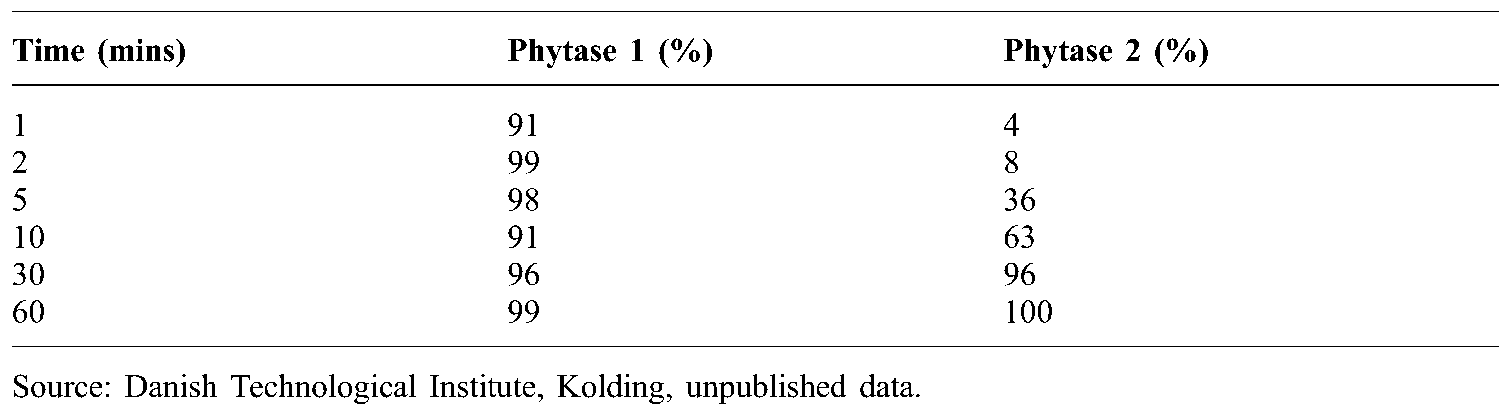
Encapsulation of enzymes to protect them from heat is a method widely used in industries such as textiles and cleaning. An ideal coating for animal feed enzymes needs to protect the enzyme during high feed manufacturing temperatures, but also needs to release the product quickly in the gastro-intestinal tract of the target animal to ensure optimum efficacy. Failure for the enzyme to survive the pelleting process and/or failure of the coating to quickly release the enzyme can result in reduced animal performance. This is especially important for phytase products, where reduced efficacy of the product can result in a negative effect on phosphorus nutrition, skeletal development and the welfare of the animal. Achieving this balance poses a challenge. An in vitro study, where samples of two commercially coated phytases were incubated in acetate buffer at pH 5.5 for 60 minutes and samples of the buffer taken at regular intervals and assayed for phytase activity, has shown differing rates of phytase release (Table 3).
Effect of two commercially coated phytases on relative release (% of total activity) at pH 5.5 as measured in vitro.
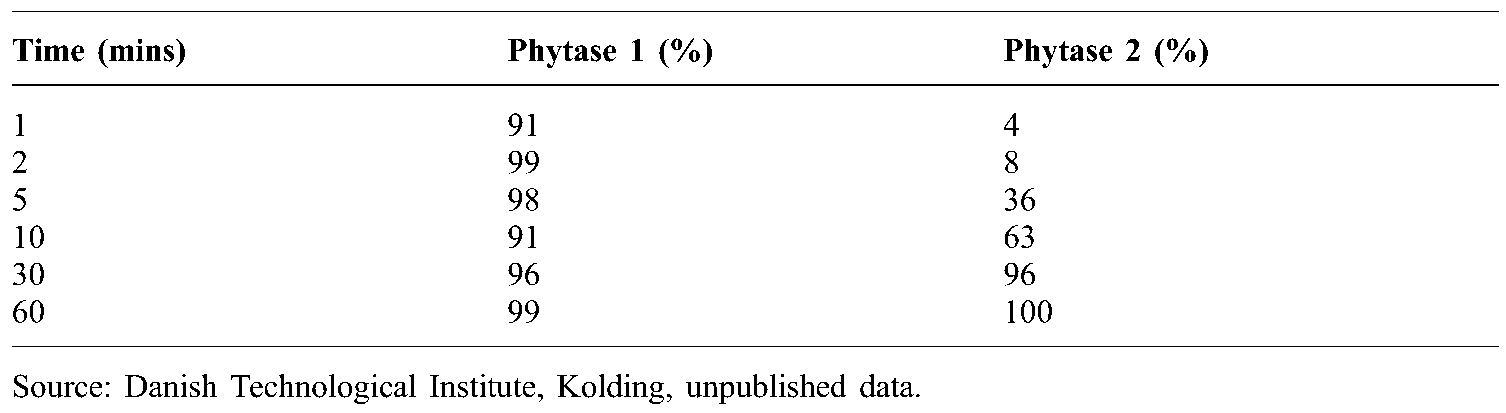
Source: Danish Technological Institute, Kolding, unpublished data.
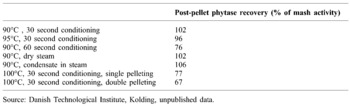
Good post-pelleting recoveries of coated phytases across a range of pelleting temperatures have been reported in several studies. Ward and Wilson (Reference WARD and WILSON2001) measured post-pellet recoveries of a coated Peniophora lycii phytase and reported an average 68% recovery following pelleting at 93°C, and a recovery range of 68-90% over pelleting temperatures from 73 to 99°C. Angel et al. (Reference ANGEL, WARD and MITCHELL2006) also investigated the post-pellet recoveries of the coated P. lycii phytase and showed 77, 67 and 58% retained phytase activity following pelleting at 70, 80, and 90°C, respectively. More recently, Timmons et al. (Reference TIMMONS, ANGEL, HARTER-DENNIS, SAYLOR and WARD2008) compared the post-pellet recoveries (average pelleting temperature, 93.3°C) of a coated P. lycii phytase and a coated E. coli phytase, and found recovery ranges of 64-80% and 70-81%, respectively. Recently extensive tests on an E. coli phytase product, that has been coated using thermo-protection technology, have demonstrated good protection under a variety of feed processing conditions (Table 4). Results showed full recovery of the phytase enzyme when pelleted at 90°C with a 30 second conditioning time and 96% recovery when pelleted at 95°C. Even when the diets containing this phytase were subjected to 100°C and double pelleting 67% of the original activity remained.
Influence of processing conditions on the post-pelleting phytase recovery of a coated E. coli phytase using 29 psi inlet steam pressure and 3 mm pellet diameter.
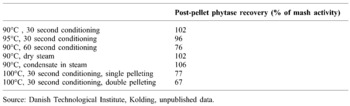
Source: Danish Technological Institute, Kolding, unpublished data.
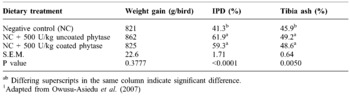
Some studies, however, have suggested that the coating of enzymes can reduce the efficacy of the product, compared to an uncoated version of the same product. Kwakkel et al. (Reference KWAKKEL, VAN DER TOGT and KLEIN HOLKENBORG2000) tested an uncoated and fat-coated fungal phytase, and observed that the weight gain and tibia ash of broilers were reduced by 40% when fed diets containing the fat-coated compared to the uncoated product. This finding was attributed to delayed release of the phytase from the coated product in the digestive tract of the animal. In contrast, a coated E. coli phytase has been shown to release quickly under in-vitro conditions and also to have no detrimental effect on the efficacy of the product when compared with an uncoated version of the same enzyme (Owusu-Asiedu et al., Reference OWUSU-ASIEDU, GILBERT, SIMMINS and NYACHOTI2007; Table 5). However, as coating technology continues to evolve in line with increasingly severe processing conditions, the biggest challenge is in keeping the cost of production down to enable these products to be sold at commercially-acceptable prices.
Effect of coating bacterially-derived, non-intrinsically thermostable, phytase product on weight gain (g/bird), ileal phosphorus digestibility (IPD) and toe ash content (%) of broilers (d 1-21 posthatch)1.

ab Differing superscripts in the same column indicate significant difference.
1Adapted from Owusu-Asiedu et al. (Reference OWUSU-ASIEDU, GILBERT, SIMMINS and NYACHOTI2007)
Conclusions
Feed processing technology has continued to evolve and conditions have become more challenging as feed safety concerns have appeared to outweigh other beneficial factors from its use. Enzymes are used in most broiler feeds worldwide, and their use is on the increase, especially as more by-products are used in formulations. The present paper reviewed available data on the effects of grain particle size reduction and pelleting temperature on the efficacy of exogenous enzymes. New technologies in the development of thermostable enzymes are also discussed. Based on limited published data, it can be concluded that the efficacy of enzymes is influenced by degree of grinding and grain hardness, and these factors should be taken into consideration when attempting to predict the response of broilers to added enzymes. Available data also suggest that the effects of exogenous enzymes on intestinal viscosity are greater in feeds processed at higher temperatures. There is general agreement that, for optimum broiler performance, conditioning temperatures over 85°C should be avoided. These findings imply that type of the diet, heat processing method, conditioning time, moisture employed, temperature used and age of the birds should be considered in any model attempting to predict the response of broilers to added enzymes. Data on the effects of conditioning practices on enzyme recovery and broiler performance are scarce, and need to be evaluated in future studies. Due to the difficulties associated with post pelleting application of liquid enzymes, technologies are being evolved to maintain enzymes activity in their dry product form in order to protect them from the heat, moisture and high pressures generated during feed processing.