CHD is the most common birth defect with an incidence of 75 per 1000 live births and a prevalence of more than 2 million patients in the United States of America, excluding bicuspid aortic valves. Reference Hoffman and Kaplan1,Reference Hoffman, Kaplan and Liberthson2 Many children will require surgical repair in infancy and early childhood with younger and more complex patients surviving hospital discharge due to advances in diagnosis, monitoring, and surgical and perfusion techniques. Reference Erikssen, Liestol and Seem3–Reference Burstein, Rossi and Jacobs6 Post-operative care has also improved with advances attributed to modifying factors such as case volume and creating dedicated pediatric cardiac ICUs. Reference Jacobs, He and Mayer4,Reference Tabbutt, Schuette and Zhang7,Reference Pasquali, Li and Burstein8
Advances in drug development in this population have not kept pace, leading to a paucity of dosing guidance, as well as safety and efficacy standards. Reference Tweddell and Hoffman5,Reference Burstein, Rossi and Jacobs6,Reference Torok, Li and Kannankeril9–Reference Beke, Braudis and Lincoln12 A lack of clear medication guidelines leaves treatment decisions up to clinical experience, findings from small observational studies, and extrapolation from adult data rather than relying on robust clinical trial evidence. Reference Milojevic, Pisano, Sousa-Uva and Landoni13,Reference Li, Cohen-Wolkowiez and Pasquali14 This exponentiates variation in post-operative medical management, and the lack of definitive data to support medication use puts children at risk for adverse events and denies them potential therapeutic benefits. Reference Turner, Nunn, Fielding and Choonara15–Reference Conroy17 Clear medication guidelines may help minimise practice variation and ultimately improve the quality of care these children receive.
Drug trials in critically ill infants and children with CHD are challenging due to a limited number of eligible patients and the need to address substantial pathophysiologic and age-related variability in drug disposition, efficacy, and safety. Reference Torok, Li and Kannankeril9,Reference Li, Cohen-Wolkowiez and Pasquali14,Reference Zimmerman, Gonzalez, Swamy and Cohen-Wolkowiez18,Reference Li, Colan and Sleeper19 Legislative and scientific initiatives in the United States of America, such as the Best Pharmaceuticals for Children Act and the Pediatric Research Equity Act, and in Europe, such as requirement of the Pediatric Investigation Plan, have encouraged paediatric drug development, but have had limited success in the CHD population. Reference Torok, Li and Kannankeril9,Reference Field and Boat20 This lack of success may be due to a limited ability to extrapolate adult efficacy data, necessitating population-specific trials, which are challenging to conduct. Reference Tweddell and Hoffman5,Reference Bronicki and Chang11 Recently, the United States of America Food and Drug Administration has recognised the benefit of real-world data collected routinely from a variety of sources, such as the electronic health record, to generate real-world evidence that can guide clinical practice. 21 While randomised controlled trials remain the gold standard, practical approaches using RWD to generate RWE in the CHD population can inform targeted drug development efforts. Reference McMahon and Dal Pan22–Reference Lasky, Carleton and Horton24 In combination, these efforts will lead to more robust evidence, which may inform medication use guidelines and clinical practice.
In order to identify major gaps in knowledge that can be addressed by drug development efforts and provide a rationale for current clinical practice, we aim to systematically evaluate the evidence behind the most common medication classes used post-operatively in children with CHD undergoing surgery with cardiopulmonary bypass. We intend this article to serve as a broad overview with in-depth analyses of each medication class provided in subsequent articles.
Methods
Search strategy
We searched PubMed and EMBASE (2000–2019) to identify papers that studied medication use in the post-operative period in children with CHD undergoing cardiopulmonary bypass. Search terms were developed in conjunction with a Duke University Medical Center librarian. We defined our patient population by using a controlled vocabulary and keywords related to post-operative care, heart surgery, and cardiopulmonary bypass in the paediatric population (birth to 18 years). We then searched this population for each medication class: “steroid,” “diuretic,” “anticoagulant OR thrombin inhibitor,” “analgesics OR sedation,” “anesthetics,” “vasodilator agents OR vasorelaxant,” “cardiotonic agent OR inotrope OR cardiac stimulants,” “hypoglycemic agent OR insulin OR thyroid OR calcium,” “anti-arrhythmia agents OR antiarrhythmic.” Animal studies, pre- or intra-op medication administration, studies in languages other than English, and case reports, letters, editorials, and comments were excluded. The search strategies are shown in the Appendix. References from searched articles were also considered and cited if they met the aforementioned criteria.
Study selection
The final search results were compiled and imported into EndNote (Clarivate Analytics, Philadelphia, PA, United States of America). Studies were deemed eligible if they focused on medication administration in the post-operative period for children undergoing cardiopulmonary bypass. Two reviewers independently screened and reviewed titles and study abstracts to assess their eligibility. Full-text articles were retrieved if the abstract provided insufficient information to establish eligibility or if the article passed the first eligibility screening.
Data extraction and synthesis
A standardised data collection form was used to extract the relevant data from each eligible study. The following data were collected: key characteristics of the study (e.g. study year, study design), characteristics of the study population (e.g. age, cardiac defect), intervention, and findings.
Results
Our literature search resulted in 2594 studies across all medication classes, of which 127 met inclusion criteria. This included 9 diuretic studies, 31 vasoactive studies, 13 sedative studies, 14 analgesic studies, 15 antiarrhythmic studies, 24 studies regarding pulmonary vasodilators, 7 studies about the coagulation system, 10 steroid studies, and 4 studies about other endocrine drugs. A total of 51,573 patients were included in these studies over the 19-year time period.
Diuretics
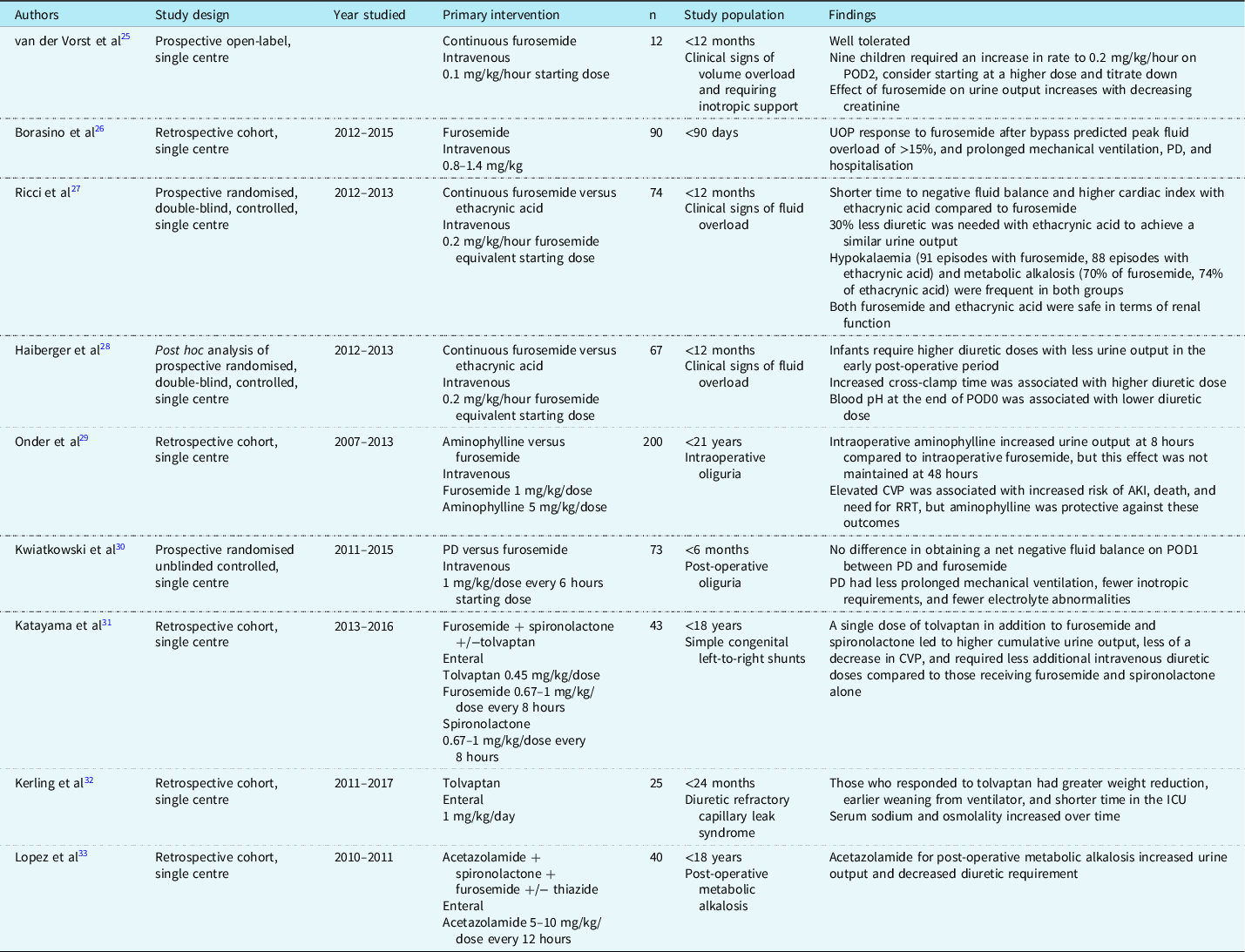
Out of the 110 records retrieved by the systematic search in PubMed and EMBASE, 9 studies met the inclusion criteria and included a total of 624 patients (Table 1). There were five retrospective studies, two prospective randomised controlled studies, one open-label prospective study, and one post hoc analysis of a randomised controlled study. Reference van der Vorst, van Heel and Kist-van Holthe25–Reference Lopez, Alcaraz, Toledo, Cortejoso and Gil-Ruiz33 Medications included in these studies were loop diuretics (furosemide [89%], ethacrynic acid [22%]), vasopressin antagonists (tolvaptan [22%]), aldosterone antagonists (spironolactone [22%]), carbonic anhydrase inhibitors (acetazolamide [11%]), and methylxanthines (aminophylline [11%]).
Characteristics of post-operative diuretic studies and study populations

AKI = acute kidney injury; CVP = central venous pressure; PD = peritoneal dialysis; POD = post-operative day; RRT = renal replacement therapy; UOP = urine output
All included studies were single centre and at least partly studied furosemide. While electrolyte abnormalities were described, such as hypokalaemia or metabolic alkalosis, all medications studied were safe with regard to haemodynamics. Furosemide pharmacokinetics has been studied in children, but there continues to be a lack of consensus on the nuances of dosing in the post-cardiopulmonary bypass setting, particularly regarding intermittent versus continuous diuretic infusion, and whether to start at higher doses of diuretic and titrate down, or start low and increase the dose. Response to diuretics also may predict outcomes – two studies showed that children who responded to diuretics were less likely to develop post-operative morbidities, such as acute kidney injury, fluid overload >15%, and need for peritoneal dialysis, prolonged mechanical ventilation, and prolonged hospitalisation – although the response to diuretics is likely confounded by several operative and post-operative characteristics. Reference Borasino, Wall and Crawford26,Reference Kerling, Toka and Rüffer32 Some studies suggest that ethacrynic acid may be a better alternative to furosemide in obtaining negative fluid balance with less drug. Reference Ricci, Haiberger, Pezzella, Garisto, Favia and Cogo27,Reference Haiberger, Favia, Romagnoli, Cogo and Ricci28 Medications such as acetazolamide or tolvaptan may be beneficial to augment diuretic effects post-operatively. Reference Katayama, Ozawa, Shiono, Masuhara, Fujii and Watanabe31–Reference Lopez, Alcaraz, Toledo, Cortejoso and Gil-Ruiz33 There are a lack of multicentre randomised trials to determine optimal dosing and efficacy of post-operative diuretics.
Vasoactives
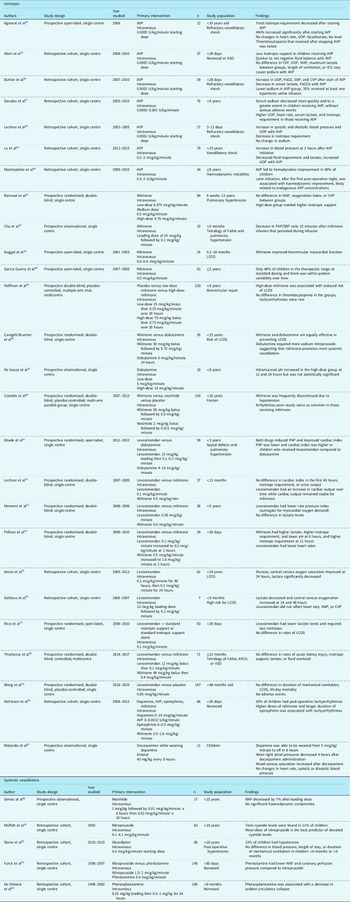
Overall, 423 records retrieved by the systematic search in PubMed and EMBASE, 31 studies met the inclusion criteria and included a total of 1866 children (Table 2). Reference Agrawal, Singh, Varma and Sharma34–Reference De Oliveira, Ashburn and Khalid64 Due to different pharmacologic properties, we classified vasoactive medications into two groups: inotropes and systemic vasodilators.
Characteristics of post-operative vasoactive studies and study populations including inotropes and systemic vasodilators

ASO = arterial switch operation; AVCD = atrioventricular canal defect; AVP = arginine vasopressin; CVP = central venous pressure; LCOS = low cardiac output syndrome; MAP = mean arterial pressure; PAP = pulmonary artery pressure; SBP = systolic blood pressure; UOP = urine output; VCD = ventricular septal defect
Inotropes
There were a total of 26 inotrope studies that included 1467 children. Reference Agrawal, Singh, Varma and Sharma34–Reference Costello, Dunbar-Masterson and Allan48,Reference Ebade, Khalil and Mohamed51–Reference Watarida, Shiraishi and Sugita61 All but two studies were single centre. There were nine retrospective cohort studies; nine prospective, randomised, blinded studies; five prospective open-label studies; and three prospective observational studies. Three studies included a placebo arm. Inotropes included in these studies were adrenergic modulators (dobutamine [12%], docarpamine [4%], epinephrine [4%], dopamine [4%]), vasopressin (31%), calcium modulators (levosimendan [35%]), cyclic guanosine monophosphate modulators (nesiritide [3%]), and cyclic adenosine monophosphate modulators (milrinone [42%]).
The optimal dose for these medications remains unknown: only 48% of children were in the therapeutic range with milrinone, and there was patient variability over time. Reference Garcia Guerra, Joffe, Senthilselvan, Kutsogiannis and Parshuram44 A prospective, double-blind, placebo-controlled, multiple-arm, multicentre trial of different milrinone dosing regimens suggest high-dose milrinone is associated with reduced risk of low cardiac output syndrome in children with biventricular repairs, although other studies have shown the need for higher inotropic support with high-dose milrinone in children with pulmonary hypertension. Reference Barnwal, Umbarkar, Sarkar and Dias41,Reference Hoffman, Wernovsky and Atz45 The nuances of disease-specific alterations in drug disposition make general dosing guidelines difficult, possibly support age- and disease-specific dosing guidelines, and highlight the need for studies to uncover what drives variability in drug disposition. Levosimendan appears to have some beneficial effects including improved cardiac output and lower heart rates, when compared to other inotropes, such as milrinone or dobutamine, Reference Ebade, Khalil and Mohamed51,Reference Lechner, Hofer and Leitner-Peneder52,Reference Pellicer, Riera and Lopez-Ortego54 However, other endpoints, such as lactate, central venous pressure, and LCOS, showed no difference between medications. Reference Momeni, Rubay and Matta53,Reference Osthaus, Boethig and Winterhalter56 There is conflicting evidence regarding the association of inotropic medications and tachyarrhythmias. Reference Hoffman, Wernovsky and Atz45,Reference Costello, Dunbar-Masterson and Allan48,Reference McFerson, McCanta and Pan60
The majority of studies used mean arterial pressure, central venous pressure, and lactate as endpoints to evaluate the efficacy of vasoactive medications. Other endpoints were studied, such as occurrence of LCOS, but varied widely, which makes comparisons across studies difficult. While there were some studies that evaluated different dosing regimens and compared one or two inotropes, there continues to be a lack of validated endpoints for evaluating inotropic efficacy and a lack of multicentre randomised controlled trials comparing different classes of inotropes.
Systemic vasodilators
There were a total of 5 studies of systemic vasodilators that met inclusion criteria and included 399 children. Reference Simsic, Scheurer and Tobias49,Reference Moffett and Price50,Reference Stone, Kelly, Mistry, Buck, Gangemi and Vergales62–Reference De Oliveira, Ashburn and Khalid64 All studies were single centre. Four studies were retrospective cohort studies, and one study was a prospective observational study. Medications included in these studies were adrenergic modulators (phenoxybenzamine [20%], phentolamine [20%]), calcium channel blockers (nicardipine [20%]), and cyclic guanosine monophosphate modulators (nesiritide [20%], nitroprusside [40%]).
Systemic vasodilators are used to manage hypertension in the post-operative period. Most studies used a decrease in mean arterial pressure as an endpoint. Overall, the systemic vasodilators were well tolerated post-operatively. The most common side effects were hypotension, and nitroprusside led to toxic cyanide levels in 11% of children. Reference Moffett and Price50 Only one study compared medications in this class, and no studies were multicentre.
Sedatives
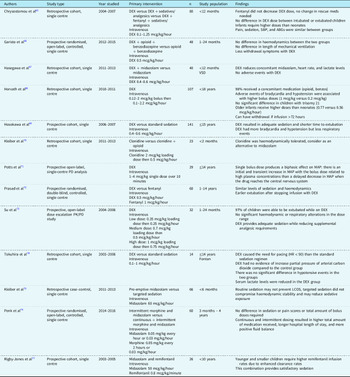
Out of the 316 records retrieved by the systematic search in PubMed and EMBASE, 13 studies met the inclusion criteria and included a total of 726 children (Table 3). Reference Chrysostomou, Sanchez De Toledo and Avolio65–Reference Rigby-Jones, Priston and Sneyd77 All studies were single centre. There were four retrospective cohort studies; one retrospective case–control study; one prospective cohort study; two prospective open-label PK/pharmacodynamics studies, and two prospective, randomised controlled studies. All medications studied were alpha-2 adrenoreceptor agonists (dexmedetomidine [80%], clonidine [10%]) and benzodiazepines (midazolam [40%]). The majority of studies evaluated the use of sedatives in conjunction with an analgesic, such as an opioid.
Characteristics of post-operative sedative studies and study populations

DEX = dexmedetomidine; LCOS = low cardiac output syndrome; MAP = mean arterial pressure; PD = pharmacodynamics; PK = pharmacokinetics; VSD = ventricular septal defect
Children receiving dexmedetomidine receive concomitant sedation or analgesic medications 98% of the time. Reference Horvath, Halbrooks, Overman and Friedrichsdorf68 Dexmedetomidine may reduce the amount of concomitant benzodiazepine needed, but there is conflicting evidence if there is a reduction in the amount of concomitant sedation or length of mechanical ventilation. Reference Garisto, Ricci, Tofani, Benegni, Pezzella and Cogo66–Reference Horvath, Halbrooks, Overman and Friedrichsdorf68,Reference Prasad, Simha and Jagadeesh72,Reference Su, Nicolson and Zuppa73 Multiple studies showed that infants require higher doses than neonates. Reference Horvath, Halbrooks, Overman and Friedrichsdorf68,Reference Chrysostomou, Beerman, Shiderly, Berry, Morell and Munoz78 These medications were well tolerated as continuous infusions, but higher dose boluses led to hypotension and bradycardia, and long-term (>72 hours) exposure led to withdrawal. Reference Horvath, Halbrooks, Overman and Friedrichsdorf68 One study related sedation to clinical outcomes (LCOS) and showed that pre-emptive midazolam did not prevent LCOS, but that targeted use of midazolam may reduce total sedative exposure. Reference Kleiber, de Wildt and Cortina75 While intraoperative anaesthetics, particularly volatile agents, have been linked to lower neurodevelopmental outcome scores in children undergoing cardiopulmonary bypass, there is a paucity of data regarding anaesthetic or sedative management in the post-operative period and how this may be related to long-term outcomes. Reference Andropoulos, Ahmad and Haq79
Analgesics
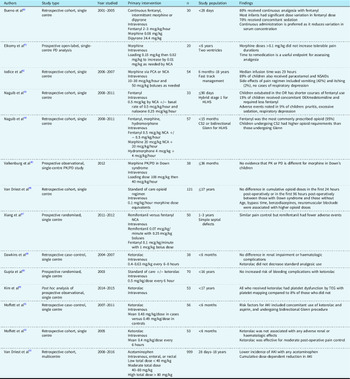
Out of the 308 records retrieved by the systematic search in PubMed and EMBASE, 14 studies met the inclusion criteria and included a total of 1672 children (Table 4). All but one study was single centre. There were seven retrospective cohort studies; two prospective PD studies; two retrospective case–control studies; two prospective, randomised studies; and one post hoc analysis of a prospective observational cohort study. Reference Bueno, Kimura and Pimenta80–Reference Van Driest, Jooste and Shi93 Medications included in these studies were opioids (morphine [43%], fentanyl [29%], hydromorphone [7%], remifentanil [7%]), and non-steroidal anti-inflammatory drugs (ketorolac [36%], acetaminophen [7%]).
Characteristics of post-operative analgesic studies and study populations

AKI = acute kidney injury; CS2 = comprehensive stage 2; HLHS = hypoplastic left heart syndrome; NCA = nurse-controlled analgesia; NSAIDs = non-steroidal anti-inflammatory drugs; PCA = patient-controlled analgesia; TEG = thromboelastography
Opioid medications are well tolerated with the most common side effects being vomiting, pruritus, and (rarely) respiratory depression. Reference Iodice, Thomas, Walker, Garside and Elliott82,Reference Naguib, Dewhirst, Winch, Simsic, Galantowicz and Tobias83,Reference Xiang, Cai and Song87 Fentanyl is the most commonly prescribed opioid post-operatively used in as many as 90% of patients. Reference Naguib, Dewhirst, Winch, Simsic, Galantowicz and Tobias84 There is wide dose variation in children to achieve optimal pain management, and most children receive concomitant sedative medications. Reference Bueno, Kimura and Pimenta80–Reference Naguib, Dewhirst, Winch, Simsic, Galantowicz and Tobias84 Two studies studied the effect of opioid medication in children with Down syndrome and found no difference in opioid requirements for those with Down syndrome compared to those without, with no difference in PK or PD. Reference Valkenburg, Calvier and van Dijk85,Reference Van Driest, Shah and Marshall86 Ketorolac is a non-steroidal anti-inflammatory drug that is used as an adjunct for post-operative pain control. Multiple studies found no increase in adverse renal or haematologic events except when ketorolac was administered in conjunction with aspirin, even in children <6 months old, although there was evidence of platelet dysfunction. Reference Dawkins, Barclay, Gardiner and Krawczeski88–Reference Moffett, Wann, Carberry and Mott92 In addition to pain control, acetaminophen may be protective against acute kidney injury. Reference Van Driest, Jooste and Shi93
Antiarrhythmics
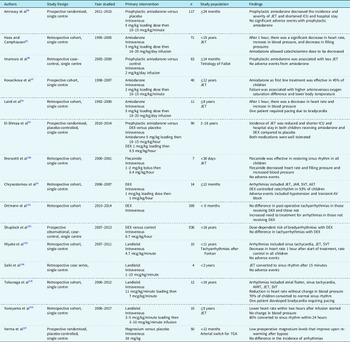
Out of the 96 records retrieved by the systematic search in PubMed and EMBASE, 15 studies met the inclusion criteria and included a total of 1744 children (Table 5). Reference Chrysostomou, Beerman, Shiderly, Berry, Morell and Munoz78,Reference Amrousy, Elshehaby, Feky and Elshmaa94–Reference Verma, Chauhan, Gharde, Lakshmy and Kiran107 All studies were single centre. There were nine retrospective cohort studies and one retrospective case–control study. The other five were prospective: one randomised, two randomised, and placebo-controlled, one case-controlled, and one observational. Medications included were potassium channel blockers (amiodarone [40%]), sodium channel blockers (flecainide [7%]), alpha 2 adrenoreceptor agonists (dexmedetomidine [27%]), selective beta 1 adrenoreceptor antagonists (landiolol [27%]), and magnesium (7%).
Characteristics of post-operative antiarrhythmic studies and study populations

AET = atrial ectopic tachycardia; AVRT = atrioventricular reciprocating tachycardia; DEX = dexmedetomidine; ICU = intensive care unit; JAR = junctional accelerated rhythm; JET = junctional ectopic tachycardia; SVT = supraventricular tachycardia; TGA = transposition of the great arteries
Overall, amiodarone was well tolerated, significantly decreased the rate and severity of junctional ectopic tachycardia, and improved haemodynamics in post-operative children whether used as prophylaxis or treatment. Reference Amrousy, Elshehaby, Feky and Elshmaa94–Reference Laird, Snyder, Kertesz, Friedman, Miller and Fenrich98 Similarly, a study of flecainide showed efficacy without adverse events in 7/7 cases. Reference Bronzetti, Formigari, Giardini, Frascaroli, Gargiulo and Picchio100 Landiolol shows promise for the treatment of tachyarrhythmias with rare adverse events. Reference Miyake, Fujita and Yoshizawa103–Reference Yoneyama, Tokunaga and Kato106 Dexmedetomidine, while typically used as a sedative, has also been studied in preventing tachyarrhythmias. Evidence is conflicting regarding its efficacy for treating tachyarrhythmias. Reference Chrysostomou, Beerman, Shiderly, Berry, Morell and Munoz78,Reference El-Shmaa, El Amrousy and El Feky99,Reference Shuplock, Smith and Owen102 However, dexmedetomidine is also known to cause bradyarrhythmias in a dose-dependent fashion. Reference El-Shmaa, El Amrousy and El Feky99,Reference Shuplock, Smith and Owen102
Because of the generally low incidence of post-operative arrhythmias, quality studies to provide conclusive evidence for medication use are challenging. However, post-operative arrhythmias can lead to haemodynamic instability, longer ICU stays, longer hospitalisations, and increased mortality. Reference Bronzetti, Formigari, Giardini, Frascaroli, Gargiulo and Picchio100 Therefore, studies should continue to evaluate the efficacy, optimal dosing regimen, and adverse events in the post-cardiopulmonary bypass population through multisite, longitudinal pragmatic trials.
Pulmonary vasodilators
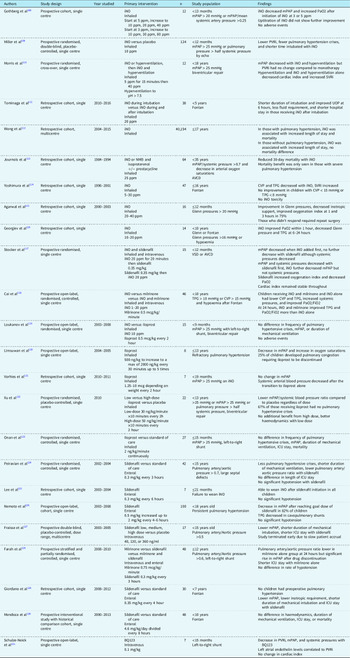
Out of the 271 records retrieved by the systematic search in PubMed and EMBASE, 24 studies met the inclusion criteria and included a total of 40,960 children (Table 6). Reference Göthberg and Edberg108–Reference Schulze-Neick, Li, Reader, Shekerdemian, Redington and Penny131 The majority of studies were prospective (63%), and two trials were multicentre (8%). Medications included were inhaled nitric oxide (50%), inhaled prostacyclin analogs (iloprost [21%]), phosphodiesterase inhibitors (sildenafil [33%], milrinone [8%]), and endothelin receptor antagonists (BQ123 [4%]).
Characteristics of post-operative pulmonary vasodilator studies and study populations

AVCD = atrioventricular canal defect; CVP = central venous pressure; iNO = inhaled nitric oxide; mPAP = mean pulmonary artery pressure; PaO2 = arterial partial pressure of oxygen; PVRi = indexed pulmonary vascular resistance; SVRi = indexed systemic vascular resistance; TPG = transpulmonary gradient; UOP = urine output; VSD = ventricular septal defect
Due to its delivery, inhaled nitric oxide acts locally without systemic effects, Reference Stocker, Penny, Brizard, Cochrane, Soto and Shekerdemian117 decreasing mean pulmonary artery pressures at low doses, without further effect at higher doses. Reference Göthberg and Edberg108 In addition, inhaled nitric oxide has been associated with a shorter duration of mechanical ventilation and ICU stays, with decreased mortality for those with severe pulmonary hypertension. Reference Göthberg and Edberg108–Reference Morris, Beghetti, Petros, Adatia and Bohn110,Reference Journois, Baufreton, Mauriat, Pouard, Vouhé and Safran113–Reference Georgiev, Latcheva, Pilossoff, Lazarov and Mitev116 Several smaller studies showed shorter hospital stays with inhaled nitric oxide, although a large retrospective cohort found that inhaled nitric oxide was associated with an increased length of hospital stay. Reference Tominaga, Iwai and Yamauchi111,Reference Wong, Loomba, Evey, Bronicki and Flores112 Inhaled nitric oxide in combination with other medications may have an additive effect. Reference Stocker, Penny, Brizard, Cochrane, Soto and Shekerdemian117,Reference Cai, Su and Shi118 Iloprost is appealing because it can be administered via inhalation; however, studies have shown unfavourable haemodynamics and pulmonary congestion. Reference Loukanov, Bucsenez and Springer119–Reference Onan, Ozturk, Yildiz, Altin, Odemis and Erek123 Systemic medications such as sildenafil and BQ123 lower pulmonary vascular resistance, but also cause systemic effects such as hypotension. Reference Fraisse, Butrous, Taylor, Oakes, Dilleen and Wessel127–Reference Schulze-Neick, Li, Reader, Shekerdemian, Redington and Penny131
Pulmonary hypertension is a significant post-operative complication that can have high mortality. Reference Journois, Baufreton, Mauriat, Pouard, Vouhé and Safran113 Nevertheless, large prospective studies in this population are difficult to complete, as evidenced by a multicentre randomised, double-blind, placebo-controlled trial evaluating three doses of intravenous sildenafil in children <17 years for the treatment of post-operative pulmonary hypertension that terminated early due to slow patient accrual. Reference Fraisse, Butrous, Taylor, Oakes, Dilleen and Wessel127 Novel trial designs are needed to improve post-operative outcomes.
Coagulation system
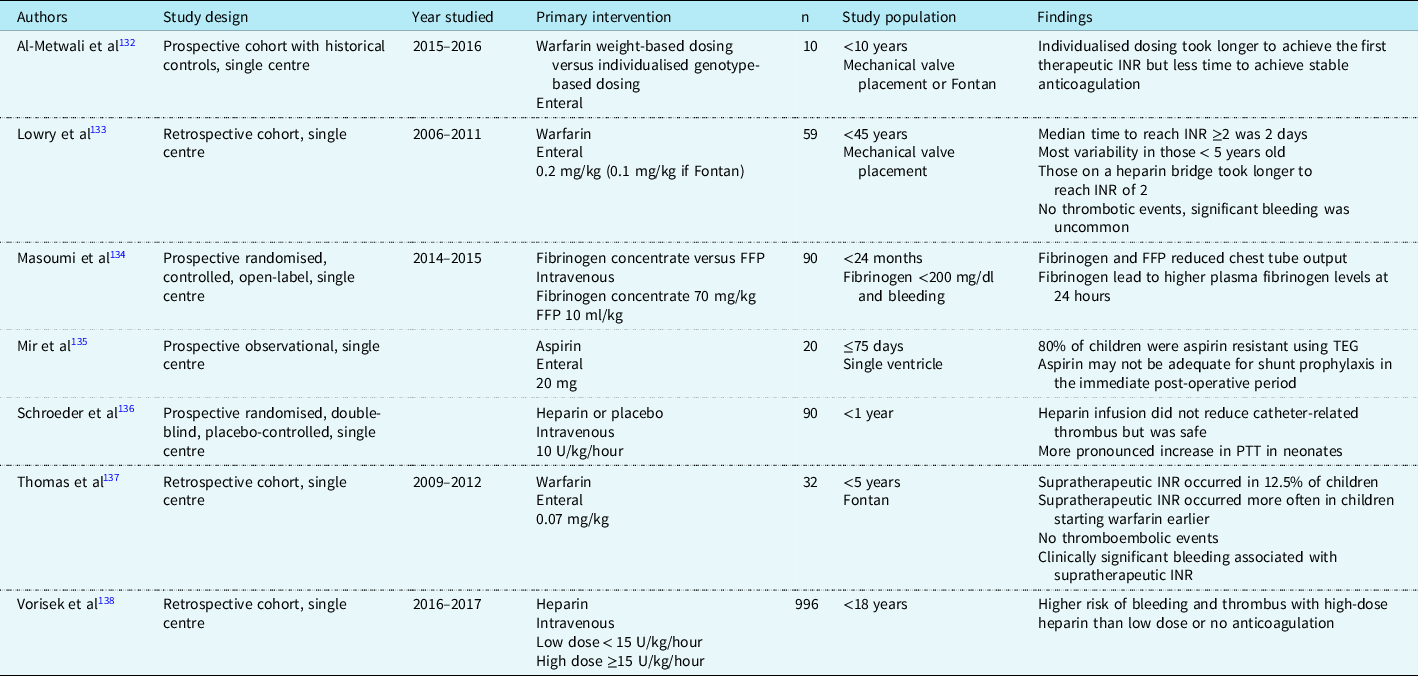
Out of the 383 records retrieved by the systematic search in PubMed and EMBASE, 7 studies met the inclusion criteria and included a total of 1297 children (Table 7). Reference Al-Metwali, Rivers, Goodyer, O'Hare, Young and Mulla132–Reference Vorisek, Sleeper and Piekarski138 All studies were single centre. There were three retrospective cohort studies; one prospective observational study; one prospective cohort with historical controls; and two prospective, randomised controlled studies. Medications included were vitamin K antagonists (warfarin [43%]), thromboxane inhibitors (aspirin [14%]), factor Xa inhibitors (heparin [29%]), and fibrinogen concentrate (14%).
Characteristics of post-operative anticoagulation studies and study populations

FFP = fresh frozen plasma; INR = international normalized ratio; PTT = partial thromboplastin time; TEG = thromboelastography
Regardless of medication used, the studies included here show that younger children have more variability in how they respond to anticoagulants and highlight the need for further investigation into age-related dosing guidelines. Reference Mir, Frank and Journeycake135–Reference Thomas, Taylor, Schamberger and Rotta137 After single-ventricle palliation with shunt placement, 80% of neonates and infants were resistant to aspirin based on thromboelastography in the immediate post-operative period. Reference Mir, Frank and Journeycake135 Starting warfarin early post-operatively in children with mechanical valves or Fontan circulation was associated with supratherapeutic international normalised ratio, but there were no reports of thrombotic events while waiting for warfarin to become therapeutic. Reference Lowry, Moffett, Moodie and Knudson133,Reference Thomas, Taylor, Schamberger and Rotta137 Variations in enteral absorption may contribute to variable responses in different age groups in the post-operative period, which should be further studied. For catheter-associated thrombus, heparin at low doses was safe, but did not decrease the incidence. Reference Schroeder, Axelrod, Silverman, Rubesova, Merkel and Roth136 Both fresh frozen plasma and fibrinogen concentrate were effective to decrease post-operative bleeding. Reference Masoumi, Mardani, Musavian and Bigdelian134
Steroids
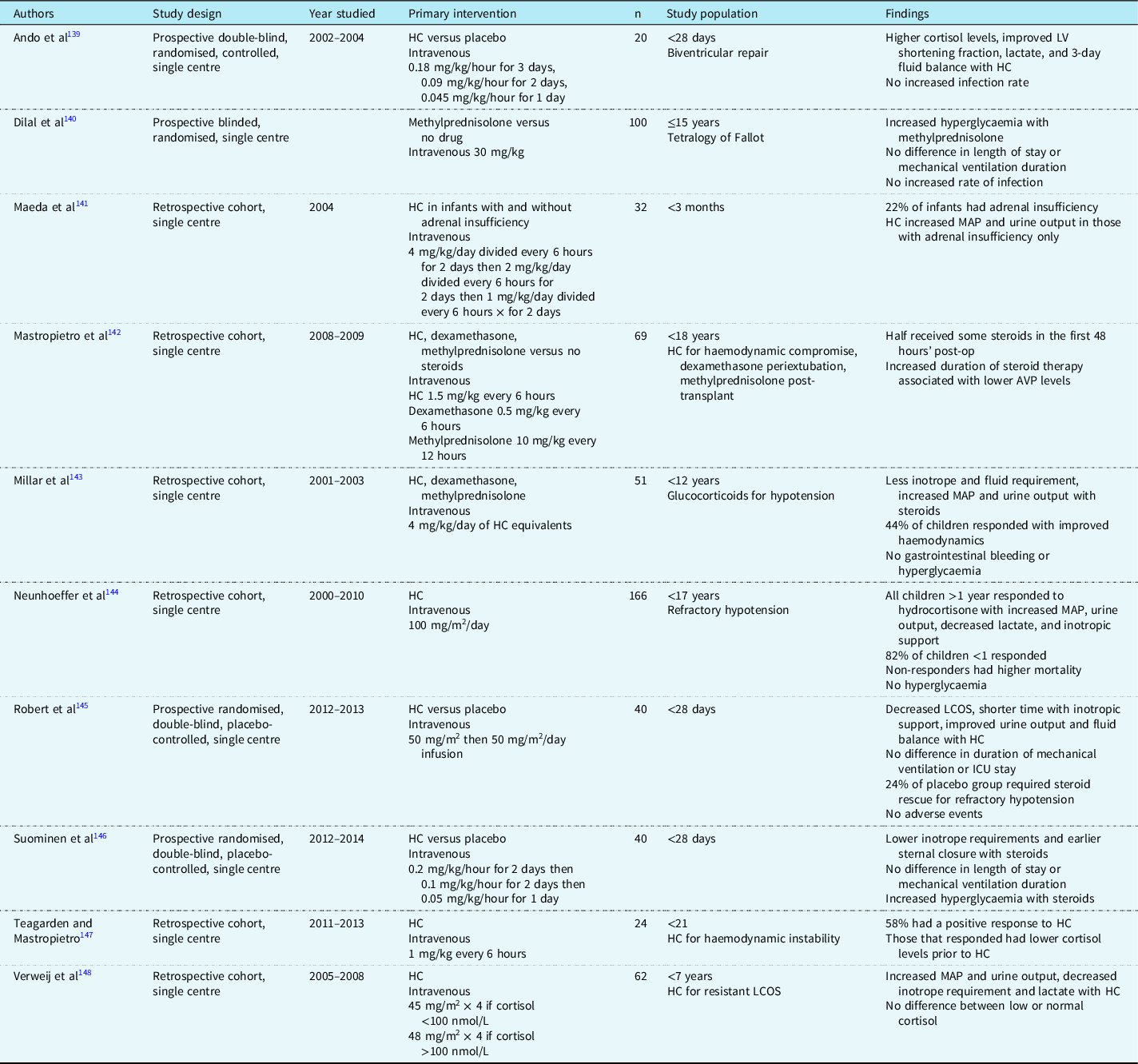
Out of the 267 records retrieved by the systematic search in PubMed and EMBASE, 10 studies met the inclusion criteria and included a total of 604 children (Table 8). Reference Ando, Park, Wada and Takahashi139–Reference Verweij, Hogenbirk, Roest, van Brempt, Hazekamp and de Jonge148 All studies were single centre. There were six retrospective cohort studies and four prospective, randomised, double-blind, placebo-controlled studies. Steroids included in these studies were hydrocortisone (90%), methylprednisolone (30%), and dexamethasone (20%).
Characteristics of post-operative steroid studies and study populations

AVP = arginine vasopressin; HC = hydrocortisone; ICU = intensive care unit; LCOS = low cardiac output syndrome; LV = left ventricular; MAP = mean arterial pressure
Hydrocortisone was the most common steroid given to children post-operatively, either prophylactically or for the treatment of unfavourable haemodynamics. Reference Ando, Park, Wada and Takahashi139,Reference Maeda, Takeuchi, Tachibana, Nishida, Kagisaki and Imanaka141,Reference Neunhoeffer, Renk and Hofbeck144,Reference Robert, Borasino, Dabal, Cleveland, Hock and Alten145 There were no increased rates of infection and hyperglycaemia was only seen in neonates. Reference Suominen, Keski-Nisula and Ojala146 Most children respond positively to steroids; this response was more likely in children found to have some degree of adrenal insufficiency. Reference Maeda, Takeuchi, Tachibana, Nishida, Kagisaki and Imanaka141,Reference Millar, Thiagarajan and Laussen143–Reference Robert, Borasino, Dabal, Cleveland, Hock and Alten145,Reference Verweij, Hogenbirk, Roest, van Brempt, Hazekamp and de Jonge148,Reference Teagarden and Mastropietro149 Those who do not respond have higher mortality. Reference Neunhoeffer, Renk and Hofbeck144 Longer duration of steroids is associated with lower vasopressin levels. Reference Mastropietro, Barrett and Davalos142 While there have been multiple prospective, randomised, double-blind, placebo-controlled trials regarding steroids, there is still a need to a priori define a patient population that will benefit the most from steroids.
Other endocrine medications
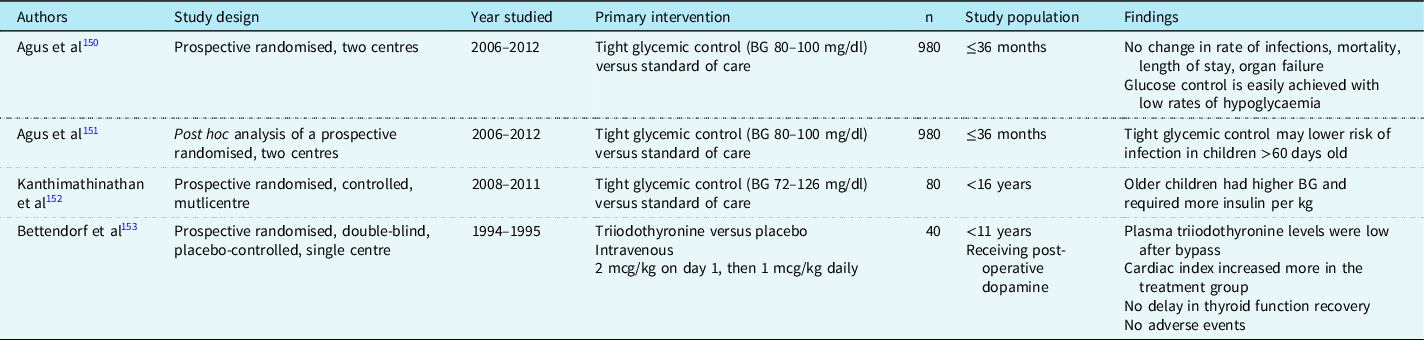
Out of the 162 records retrieved by the systematic search in PubMed and EMBASE, 4 studies met the inclusion criteria and included a total of 2080 children (Table 9). Reference Agus, Steil and Wypij150–Reference Bettendorf, Schmidt, Grulich-Henn, Ulmer and Heinrich153 Most studies were multicentre (75%), and all studies were prospective, with one being a post hoc analysis of a prospective, randomised controlled trial. Medications included were insulin to maintain tight glycemic control (75%) and triiodothyronine (25%).
Characteristics of other post-operative endocrine studies and study populations

BG = blood glucose
Tight glycemic control was robustly studied in prospective, randomised, large, multicentre trials. Reference Agus, Steil and Wypij150–Reference Kanthimathinathan, Sundararajan, Laker, Scholefield and Morris152 Although hyperglycaemia has been associated with worse outcomes and tight glycemic control is easy to achieve, it has not been shown to meaningfully improve outcomes and is associated with a higher incidence of iatrogenic hypoglycaemia. Reference Agus, Steil and Wypij150–Reference Kanthimathinathan, Sundararajan, Laker, Scholefield and Morris152 Overall, older children had higher blood glucose and required more insulin per kg. Reference Agus, Steil and Wypij150–Reference Kanthimathinathan, Sundararajan, Laker, Scholefield and Morris152 Other studies have shown derangements in pituitary hormones such as growth hormone and thyroid hormone after cardiopulmonary bypass. Reference Balcells, Moreno, Audi, Roqueta, Iglesias and Carrascosa154,Reference Dagan, Vidne, Josefsberg, Phillip, Strich and Erez155 One study evaluated the effects of triiodothyronine in children after bypass and showed an increase in contractility and cardiac index. Reference Bettendorf, Schmidt, Grulich-Henn, Ulmer and Heinrich153 Endocrine medications have the potential to significantly alter post-operative outcomes and should be investigated further.
Discussion
Current knowledge gaps
We identified 127 studies in 51,573 children across all medication classes. Overall, most studies were small, single-centre cohorts without standardised endpoints. A lack of standardised endpoints makes comparisons between studies difficult. For example, inotropic study endpoints included various combinations of central venous pressure, urine output, lactate levels, mean arterial pressure, partial pressure of arterial oxygen, oxygenation index, cardiac index, and LCOS. Which endpoints translate to meaningful clinical outcomes are unknown, and acceptable endpoint values may vary by age and disease state. Reference Pappachan, Brown and Tibby156
In all medication classes, drug dose and interval varied widely, in part due to lack of label or other consensus-based recommendations. This complicates the evaluation of dose–efficacy and dose–safety relationships in this population. Reference Pasquali, Hall and Slonim157 For example, with diuretics, there is a lack of consensus of starting low or high dose, or as continuous versus intermittent intravenous dosing. Because fluid overload has been associated with increased mortality, optimal dosing may have a significant impact on outcomes. Reference Lex, Toth and Czobor158
In an attempt to overcome limited enrolment, many studies include patients of different ages and with varying cardiac lesions. While information from combined populations may be helpful to guide overall practice, significant physiologic differences (e.g. between infants with systemic right versus left ventricles) may induce biases that, if left unadjusted, obscure drug efficacy or safety signals. While studies of frequently used medications, such as vasoactives, may enrol sufficient numbers to identify age- and disease-related differences, other less commonly used drugs, such as antiarrhythmics or pulmonary vasodilators, require innovative approaches. These may include studies that use available RWD, such as dosing and demographic information from the electronic health record, combined with standardised master protocols and advanced PK/PD modeling to inform drug dose–exposure–response relationships. These studies may identify age- and disease-related factors that affect drug disposition, and decrease the number of patients needed for prospective validation, safety, and efficacy trials. Reference Gonzalez, Laughon and Smith159,Reference Hornik, Benjamin and Smith160
Limitations
Our study is not without limitations. In order to broadly classify post-operative medication management, our inclusion criteria were narrow. Studies investigating medications in all critically ill children (not just those with CHD undergoing repair or palliation with cardiopulmonary bypass) were excluded. Trials in children without CHD may offer important insight into the impact the disease has on drug disposition and should be explored further. Additionally, we only included studies published from 2000 to 2019. This potentially biases our search towards newer medications, as evidenced by few studies of epinephrine or dopamine, two of the more commonly used vasoactive medications. However, it is important to compare newer medications with older, “standard of care” drugs, to continue to investigate how older drugs are affected by development and disease process, and to ensure safety and efficacy of these drugs in the context of modern perioperative management. Therefore, we hope that the years included in our systematic literature review have appropriately captured studies that are reflective of our patient population in the context of current practice.
Future directions
To close existing knowledge gaps in post-operative pharmacotherapy, novel approaches that facilitate enrolment in meaningful clinical trials or alternative evidence generation methods are needed. One major limitation in the current body of evidence is the inability to definitively conclude the efficacy or safety of medications due to inconsistent, non-validated endpoints and variable inclusion and exclusion criteria.
Hard clinical endpoints, such as cardiac output or mortality, are difficult to measure or require large sample sizes to identify a treatment effect. In paediatric trials, surrogate or composite endpoints are an attractive alternative, Reference Li, Cohen-Wolkowiez and Pasquali14 but are not always validated. With the increase in the collection of haemodynamic data post-operatively and availability of biomarkers, surrogate endpoints are more readily available. Studies validating these data as surrogate endpoints are needed so that feasible, clinically meaningful endpoints can be included in trial design. Reference Torok, Li and Kannankeril9 Consistent inclusion and exclusion criteria that are broad enough to account for age- and disease-related effects on drug disposition, but narrow enough to not obscure efficacy or safety signals should also be defined. Reference Skarsgard161
The infrastructure and flexibility of master protocols combined with RWD collection may be one way to remedy the current challenges of post-operative pharmacotherapy trials. Master protocols consist of a standardised trial network infrastructure, and the use of a common protocol. Reference Woodcock and LaVange162 While this requires upfront planning and resources, it allows for a long-term standardised protocol structure that is easily translatable to multiple diseases or medications. This could be implemented alongside current collaborations, such as the Pediatric Cardiac Critical Care Consortium (PC4) and the Pediatric Acute Care Cardiology Collaborative (PAC3), whose data collection platforms and site penetration may provide the numbers needed to study relatively rare disease processes while minimising duplicate data collection efforts. These valuable collaborations have already highlighted the variation in care across centres and even suggest that collaboration and transparency play a role in improving outcomes. Reference Gaies, Pasquali and Banerjee163,Reference Hoerst, Bakar and Cassidy164 Additionally, the post-operative setting generates innumerable RWD points including laboratory values and haemodynamic parameters that, when collected in an accessible manner, can provide valuable evidence for clinical trials. A master protocol geared towards the post-operative setting could easily be tailored to drug-, disease-, or age-specific parameters and use the data already collected post-operatively to inform clinical practice. Drug development efforts using novel trial design should focus on this complex, heterogeneous population so that drugs can be used efficaciously and safely in the high-risk post-operative period.
Supplementary material
To view supplementary material for this article, please visit https://doi.org/10.1017/S1047951121001463.
Acknowledgements
The authors would like to acknowledge Duke Pediatric Research Scholars.
Financial support
This research received no specific grant from any funding agency, commercial, or not-for-profit sectors.
Conflicts of interest
EJ Thompson reports no relevant disclosures. HP Foote reports no relevant disclosures. C King reports no relevant disclosures. S Srinivasan reports no relevant disclosures. EC Ciociola reports no relevant disclosures. D Leung reports being sponsored by a T32 grant, award number T32HD094671. AT Rotta reports being the scientific advisor for Vapotherm Inc., and Breas US, and has received honoraria for producing educational materials for these companies. Dr Rotta also receives royalties from Elsevier for editorial services. KD Hill reports no relevant disclosures. M Cohen-Wolkowiez receives support for research from the National Institutes of Health (1R01-HD076676-01A1 and 1K24-AI143971), National Institute of Allergy and Infectious Diseases (HHSN272201500006I and HHSN272201300017I), NICHD (HHSN275201000003I), United States of America Food and Drug Administration (5U18-FD006298), and industry for drug development in adults and children. CP Hornik receives salary support for research from National Institute for Child Health and Human Development (NICHD) (1K23HD090239), the National Heart Lung and Blood Institute (NHLBI) (R61/R33HL147833), the United States of America Food and Drug Administration (1R01-FD006099, PI Laughon; and 5U18-FD006298, PI: Benjamin), the United States Government for his work in paediatric clinical pharmacology (Government Contract HHSN275201800003I, PI: Benjamin under the Best Pharmaceuticals for Children Act), the non-profit Burroughs Wellcome Fund, and other sponsors for drug development in adults and children (https://dcri.org/about-us/conflict-of-interest/).
Ethical standards
All procedures performed in studies involving human participants were in accordance with the ethical standards of the institutional and/or national research committee and with the 1964 Helsinki declaration and its later amendments or comparable ethical standards.