

INTRODUCTION
Between 1955 and 2005 southern Sudan witnessed one of Africa's longest conflicts. In January 2011, following a six-year interim period stipulated by the Comprehensive Peace Agreement (CPA) of 2005, a referendum was held to decide whether the southern region would remain as a semi-autonomous region within the Sudan or separate completely and gain independence as Africa's 54th fully recognised state. Following a 98·8% popular consensus to separate, South Sudan gained its independence on 9 July 2011. This not only meant that post-conflict reconstruction could continue – a process started after the 2005 Peace Agreement – but also that a new state came into existence. South Sudan's recently acquired independence and its lack of a consistently formalised state regulatory framework does not, however, imply that it started with a ‘clean slate’. As Thomas Bierschenk (Reference Bierschenk2010: 2) highlights, African statehood is path-dependent, and its bureaucracies best resemble ‘never-finishing building sites’. This is clearly the case for South Sudan, which may have inherited more laws, acts, provisions and ordinances than most stable African countries. Due to almost 50 years of violent conflict and historically embedded resistance to centralised control (associated with attempts by repressive regimes to subjugate the South), the regulatory framework has become immensely complex, overlapping and inconsistent. In other words, South Sudan witnessed a unique combination of post-conflict reconstruction and the birth of a new state, in which old policies were re-activated, new policies introduced, previously considered non-state actors became state actors (and vice versa), while donor agencies and international non-governmental actors became increasingly involved in providing technical assistance and ‘building’ the institutional capacity of the state. In this context, the breadth of regulatory measures has increased markedly, and state officials are able to rely on a wide variety of rules and regulations – at times contradictory – in attempting to pursue their interests. As will be shown, these contradictory rules and regulations may allow state actors to define one and the same practice as both legal and illegal. Under these circumstances, not all regulations are applied and followed, while some actors may be more successful in implementing or resisting particular regulations. Put differently: a wide range of regulations, and regulatory actors, are in place in South Sudan, but the mere existence of these regulations does not mean that these will be applied and have an actual effect. An important question that this paper sets out to answer is: what determines which regulations are implemented and accepted, and which other regulations fail to be implemented?
By looking at a number of taxation and private sector regulation reforms in South Sudan from after the 2005 peace agreement, the paper will show how the patchy, overlapping and often contradictory regulatory frameworks of the state provide the setting for ‘institutional bricolage’ by a range of actors. While taxation and private sector regulations are a clearly limited empirical focus, taxation is central to the functioning (and building) of the state, and is instrumental in multiple processes, from economic growth to the forging of social contracts (Lough et al. Reference Lough, Mallett and Harvey2013: 1). It therefore offers key insights into the involvement and interaction between state and non-state actors, and the general functioning of the state and its interface bureaucrats. Particular, but not exclusive, attention will be given to the interface bureaucrat,Footnote 1 a person employed by the stateFootnote 2 who is in direct contact with the state's ‘users’ and who plays an important role regarding the way in which a rule or regulatory measure is implemented. In this respect, the interface bureaucrat functions as an institutional ‘bricoleur’, who, through appropriation, reconfiguration and amalgamation of an existing set of rules that individually retain their appearance as ‘state’ rules, becomes the master of state embodiment. In this process, the lack of a coherent regulatory framework and overlapping formal narratives do not hinder the functioning of the state agent, but actually enable him to configure and signify his or her position as an agent of the state.
Importantly, the paper will show how this increased regulatory breadth does not mean that different actors have absolute freedom in pursuing their ‘bricolage’ strategies. While this multiplication of rules and regulations in theory allows a bewildering number of options and actions, older practices of authority continue to play a dominant role in structuring regulatory realities, particularly regarding taxation. Concretely, it will be shown how pre-existing arrangements by the politico-military elites dating back to both before and after the CPA play an important role in shaping and reshaping regulatory practices at different levels of the state bureaucracy. In doing so, regulatory measures will serve as an important lens to understand state-building and war to peace transitions.
This article is based on ongoing qualitative fieldwork conducted in South Sudan since October 2010 up to July 2015. Data collection methods include content analysis of legal documents, news reports, repeat interviews with a diverse group of over 50 ‘interface bureaucrats’, state officials that interact with citizens on a daily basis, as well as with approximately 30 higher-level state officials in the County, State and National levels of government. Furthermore, more than 100 interviews, a dozen focus group discussions and continuous qualitative (participant) observations were conducted among traders and the general public on topics of taxation and insurance.
In the next section, we begin by describing the regulatory framework of South Sudan, and offer an overview of the country's fiscal regulation system. We then provide the analytical background for the study and introduce the concept of the ‘institutional corridor’, through which we describe three case studies. This allows us to draw some general conclusions about bricolage and regulation.
A SPRAWLING COLLECTION OF RULES AND REGULATIONS
The South Sudanese regulatory framework for taxation and private sector regulation is a haphazard amalgamation composed from three main policy sources: older Anglo-Egyptian policies dating from before 1956; legislation enacted by successive regimes in Khartoum, which was asymmetrically administered in the southern states (Benson Reference Benson2015); and the provisional orders of the SPLA/M. To further complicate the picture, a fiscal decentralisation trend – rooted in the SPLA/M's promotion of decentralised civil governance following the movement's first National Convention in Chukudum, in 1994 (Chol Reference Chol1996; Rolandsen Reference Rolandsen2005; Walraet Reference Walraet2008) – has yielded a process of rejecting, adapting, and/or composing new local tax arrangements in response to national legislation. The result is the bewildering landscape of South Sudan's tax and business regulation system.
Furthermore (and typical for the early-recovery phase of a post-conflict state), international donors and financial institutions have compounded this pre-existing complexity by insisting on a torrent of aid-conditional generic reforms. Since the CPA of 2005, a number of these reforms have led to new bills and acts, such as the Local Government Act and the Taxation Act of 2009. Not all the reforms have passed; some were rejected by parliament, while others remain tabled until further notice.
The tax regulatory framework does not stop here: since the semi-autonomous government of Southern Sudan first presented its ‘Growth Strategy’ in late 2008,Footnote 3 there have been a series of policies, official communiques and addresses issued by the central government in which South Sudan's private sector is heralded as the driver of economic diversification, tasked with increasing domestic production (particularly in the agricultural sector), and, most importantly, with increasing the government's non-oil revenue tax base.Footnote 4 At the time of writing however, domestic production and manufacturing were almost non-existent, and the government's only sources of non-oil revenues remain international aid, foreign loans and international import taxation.
Not only is there a wide range of rules and regulations, there is also a wide range of institutional structures, which have authority in taxation and private sector regulation: due to its decentralised system of governance at three legislative levels (National, State and County) with corresponding revenue raising powers,Footnote 5 national, sub-national and local-level administrations retain their claim to tax these international imports in one way or another. Historically rooted in South Sudan's asymmetric relationship with oppressive and exploitative centralised regimes from Khartoum which conceived the South as a peripheral backwater (Johnson Reference Johnson2003), this decentralised disposition of governance imposed a heavy administrative burden that ‘sharply enhances the need for revenue generation just to finance the administrative structure of government at three levels' (World Bank Group 2010: viii), thereby creating a precarious competition for revenues.
This institutional competition for revenues can be observed between different levels of government, as well as between revenue authorities of the different states and between the different counties within those states. Since the main source of tax revenue in South Sudan comes from taxing (cross-border) trade, a county or state's geographic location vis-à-vis an international border and its supply routes is key. Attempts to address inequalities between States to raise their own revenue from border-trade include the 2006 interstate taxation agreementFootnote 6 stipulating that goods in transit could be taxed at the international point of entry, as well as at every subsequent State border. In addition, there exists a persistent competition over revenue collection between different levels of government; the national, the sub-national and the local. Characterised as ‘complex, uncoordinated and unharmonised’ (Selassie Reference Selassie2009: 16), the Government of South Sudan (GoSS) Intergovernmental Fiscal Relations Task Force (IGFR) introduced a proposal in late 2011 to align the multitude of different State taxes into a common taxonomy and centralise it to the national level of government.Footnote 7 Despite initial scepticism about the feasibility of such a proposal,Footnote 8 the centralisation of border trade taxation was implemented by the end of 2012 against the backdrop of high demands by the central government for non-oil revenues to cover the country's budget deficit resulting from the January 2012 oil-shutdown,Footnote 9 which deprived the young nation of 98% of its revenues.
In sum, there are a whole range of administrative actors and regulations, all of which have the authority to intervene in taxation, and which often go in competition with each other. In the next sections, we aim to explain how efforts to regulate taxation are being implemented and negotiated on different levels.
BRICOLAGE AND THE INSTITUTIONAL CORRIDOR
As the above section illustrates, South Sudan's regulatory landscape of taxation and private sector regulation are a far cry from being a coherent formalised set of rules. As one regional South Sudanese trader noted, and as will be shown in detail below, ‘We have so many rules, but none that apply [the same way] to everyone. It all just depends [on] who you know and what they can do for you …’Footnote 10 Major progress in understanding the functioning of the state and the processes of regulatory authority, particularly in fragile and conflict-affected areas, has been made by conceptualising the state as mediated (Menkhaus Reference Menkhaus2006) or negotiated (Hagmann & Péclard Reference Hagmann and Péclard2010) within broader non-state institutional domains, producing a type of hybrid political order (Boege et al. Reference Boege, Brown, Clements and Nolan2008). One major implication of this view is that rather than labelling such states as ‘failed’ or ‘fragile’ based on a Weberian ideal-type, research and policy should focus on the strength of weak states (Meagher Reference Meagher2012), working with the grain (Booth & Golooba-Mutebi Reference Booth and Golooba-Mutebi2011) of local institutional realities rather than against it. What all of the aforementioned concepts have in common is that statehood and everyday governance is the outcome of an on-going interaction – or ‘negotiation’ – between state and non-state actors. Regulatory practices constitute an important part of this negotiation, which as Bierschenk & Olivier de Sardan (Reference Bierschenk and Olivier De Sardan1997) highlight, takes place between different ‘poles of power’ which do not have equal power. As a result, the state does not necessarily have a monopoly on regulation (Hagmann & Péclard Reference Hagmann and Péclard2010).
In this literature, the main focus has been on negotiation between different poles of power on a macro- or meso-level, such as rebels and traders (Raeymaekers Reference Raeymaekers2012), the state and civil society organisations (Raeymaekers et al. Reference Raeymaekers, Menkhaus and Vlassenroot2008), the state and the church (Titeca & De Herdt Reference Titeca and de Herdt2011), and so on. By placing ourselves in this literature, we are able to see how regulation, and taxation regimes are influenced by negotiations over power and authority, in which different categories of actors – state and non-state, local, national and international – are involved in processes of ‘negotiation, contestation and bricolage’ (Hagmann & Peclard Reference Hagmann and Péclard2010: 539). However, it is firstly important to mention that these negotiations do not only happen between poles of power (e.g. between churches and the state), but also within these poles of power, a question which is largely neglected in this literature. The state is not a unitary actor; for example, state officials at different levels and locations might have different competing interests, and the state as a pole of power might itself be a site of negotiation. In this paper, we want to analyse how the South Sudanese state in itself is negotiating its regulatory framework among its different levels and locations. Secondly, these poles of power do not only exist, and negotiate, on a macro- or meso-level (the church, rebel groups, the state, and so on), but also on a micro-level: local-level individual actors play an important role in the negotiation of the regulatory framework and the day-to-day governance of the state.
This is also, or particularly, the case in South Sudan, where state actors play an important role in the application of the state regulatory framework and in defining how statehood itself is negotiated. From the perspective of the ‘interface bureaucrat’ in South Sudan – the tax collector, the revenue official, or the clerk at the licensing office in the central bank – this wide array of inconsistent and overlapping rules provides a diverse toolbox of institutional devices with which he can configure his position vis-à-vis his ‘users’, and through which he is potentially able to declare one particular action at the same time legal or illegal, depending on how he wishes to use this particular toolbox. Although one may be tempted to assume a large degree of agency on behalf of the interface bureaucrat, in reality the space for improvisation and selective application of rules is limited by a number of factors, which can be explored using the literature on institutional bricolage.
The concept of bricolage was introduced by Lévi-Strauss, and he broadly defined it as ‘making do with the resources at hand’ (Lévi-Strauss Reference Lévi-Strauss1962: 17; Miner & Bassoff Reference Miners and Bassoff2001: 314). Resources can take a variety of forms: acquired skills, social contacts, financial resources and so on. ‘Making do’ refers to the ‘continuous combination, re-combination and re-deployment of different practices, organizational forms, physical resources, and institutions’ (Mair & Marti Reference Mair and Marti2009: 431). ‘Bricoleurs’ continuously try to cobble together solutions by looking through their available resources which constitute the ‘rules of the game’ (Lévi-Strauss Reference Lévi-Strauss1962: 17; Berk & Galvan Reference Berk and Galvan2009: 568).
Frances Cleaver (Reference Cleaver2002: 16) introduced the concept of institutional bricolage to specifically refer to ‘mechanisms for resource management and collective action [that] are borrowed or constructed from existing institutions, styles of thinking and sanctioned social relationships’. By using this term, she highlights how individual action is characterized by both agency and structural constraint: they are ‘conscious and unconscious social agents, deeply embedded in their cultural milieu but nonetheless capable of analyzing and acting upon the circumstances that confront them’ (Cleaver Reference Cleaver2002: 16). Cleaver gives the example of water management in Zimbabwe, where people consciously draw on and adapt existing norms and mechanisms for new purposes, while at the same time, pre-existing customs and practices confer new arrangements with the legitimacy of ‘tradition’ (Cleaver Reference Cleaver2002: 16). In doing so, bricolage implies an active assembling of particular parts (norms, values and arrangements) to suit a new purpose which involves ‘both a conscious scrutiny of some beliefs, and an unconscious acceptance of others in the formation of institutions’ (Cleaver Reference Cleaver2002: 20). Applying these insights to our case-study, this has several consequences highlighting this tension between agency and broader structural constraints.
The first is that the state official is still bound by the rules he chooses to apply; interface bureaucrats rarely ‘make up’ rules or simply ask for money without any justification. This is very clear in the examples below where officials legitimise the taxes they collect or the rules they apply by referencing various legal texts of the state such as the Constitution, a county ordinance or a state law, informal as those taxes might actually be. In this respect, the interface bureaucrat is truly an institutional bricoleur: one who can improvise a creative solution by using pre-defined components by which he is constrained (Cleaver Reference Cleaver2001), and in which the possible outcomes are predicated on ‘what's available’ in a setting that he/she did not create or control (Lévi-Strauss Reference Lévi-Strauss1962). When the bricoleur is an agent of the state, his or her toolbox contains a heterogeneous set of formal regulations that emanate from ‘the state’, providing each individual rule with an authoritative power vis-à-vis the ‘users’, even when such practices are actually outside the domain of the state. In other words, the power the official wields to legitimate his practices is derived from the formal discursive language of the state. This argument is in line with the literature about hybrid governance (Titeca & De Herdt Reference Titeca and de Herdt2011; Meagher et al. Reference Meagher, de Herdt and Titeca2014) and the notion that state institutions (and their language) are not redundant in a context of state fragility or failure, but become locally anchored and enmeshed with informal non-state institutions (Titeca & De Herdt Reference Titeca and de Herdt2010; Cleaver et al. Reference Cleaver, Franks, Maganga and Hall2013).
The second factor that limits the selective application of rules by the official is what we refer to as the ‘institutional corridor’. In similar fashion to Sehring's comparative analysis on institutional reform, the institutional corridor comprises
the context for the implementation of the reform, the main actors, interests, power relations, institutional setting; this is not a catchall phrase for all societal phenomena but is restricted to those institutional arrangements that influence the implementation in the field under consideration, the institutional corridor the implementation process has to go through. (Sehring Reference Sehring2009: 52)
In other words, the institutional corridor refers to the actual available options for bricolage, or the space which allows actors to modify pre-existing institutions. Moreover, instead of referring to the general structural circumstances, the term institutional corridor specifically refers to the political space through which institutional reforms pass, and in which powerful authoritative resource are located.
Applying this concept to the situation in South Sudan, it becomes apparent that a context in rapid transformation does not necessarily present a situation where institutions are completely in flux and easily changed. Path-dependent continuities play an important role, often rooted in pre-existing institutional arrangements. In South Sudan, many of these continuities are embedded in SPLM/A power networks and in local-national power plays that pre-date the signing of the CPA in 2005. The institutional corridor in South Sudan (i.e. the range of options the institutional setting leaves for interface bureaucrats' choices), is in fact quite narrow, as will be demonstrated in the following cases. There is, nevertheless, some space for actors to modify these path-dependent continuities. These can be changed in what we referred to above as ‘open moments’ (Lund Reference Lund1998) in which the social order is re-arranged.
The third factor limiting the selective application of rules is the fact that institutional bricolage is not ubiquitous among different bricoleurs, as the position and by extension the toolbox of each individual actor varies. In other words, not every bricoleur has equal bargaining power. This power is largely dependent on the number, and power, of authoritative resources which are allocated to, and mobilised by, the actor. These authoritative resources can take various forms: they can be financial power, or power through access to political or kinship networks (Cleaver Reference Cleaver2002: 16–17; de Koning Reference de Koning2011: 227–8).
In the next sections, we will look at two cases in which reform was appropriated and/or subverted through processes of bricolage to re-effectuate pre-existing arrangements, suggesting that the institutional corridor was very narrow. A third example will be provided to indicate that under certain circumstances change is possible through an ‘open moment’ that can broaden the institutional corridor and allow for significant reform to aggregate.
COUNTY AND STATE TAXATION OF INTERNATIONAL TRADE
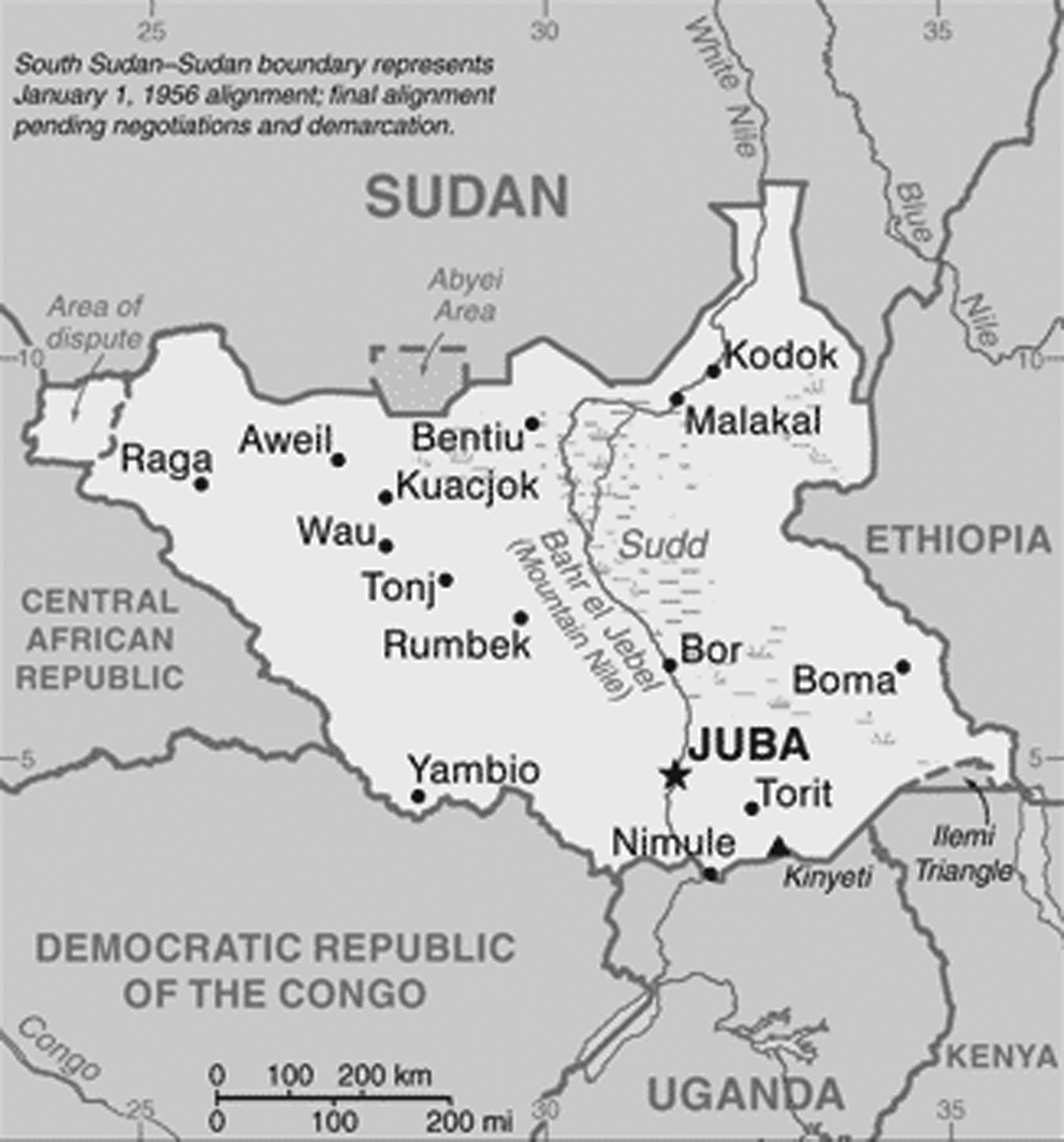
We will start by analysing the bricolage practices of county tax-collectors from Magwi County in Nimule, the largest border crossing in terms of traffic of people and goods in South Sudan, located in the Eastern Equatoria State (EES) (see Figure 1). Nimule thrives off international trade flows, and prior to the aforementioned Customs and taxation reforms implemented in mid-2012, there were as many as 11 different authorities to consider when crossing the border,Footnote 11 ranging from Customs to Immigration, from the Bureau of Standards to county tax collectors, and from the Eastern Equatoria EESRA to the Commerce and Supply import license authorities. The presence of these actors leads to a bewildering number of taxes. Not all of these taxes are effectively implemented, and some of these taxes can be legal and illegal at the same time. The so-called ‘Gibana’Footnote 12 tax illustrates this process well. This tax was introduced between 2009 and 2010 in many counties in South Sudan: some imposed the tax simply on domestic goods transiting through a county (Selassie Reference Selassie2009: 47), others levied it as a local excise tax (Solomon & Bell Reference Solomon and Bell2011). In the case of Magwi however, the Local Government Council proposed something else: considering its geographic advantage of comprising several major border crossings, it levied the tax at the border directly upon entry into South SudanFootnote 13 and therefore gave the tax a very different application than elsewhere in South Sudan.
Importantly, up to the time of writing, this proposal has never been passed by a legislative body. Notwithstanding, Gibana tax has been and is still being levied in a relatively uniform way across all four border crossings in Magwi County: our field research shows how in practice, all county tax-collectors at the border levy a 2% ad valorem County tax on the value of goods being imported into South Sudan by local traders indigenous to Magwi County, on the condition that these traders do not move beyond the County borders.Footnote 14 In exchange, the local traders are exempted from paying cross-border taxes to the national government.Footnote 15 As explained by one of the EESRA officials stationed at the Owinkibul border crossing in February 2011, ‘Gibana is just a a local tax between these local Magwi traders and the County. They get exemption from the rest because they just move within here [Magwi County] … It is only us [the EESRA] and the County who collect from them.’Footnote 16 When we asked officials about the legal basis of this tax, we found that manyFootnote 17 cite the 2009 Local Government ActFootnote 18 (although this bill does not specify what this tax exactly entails), or the transitional constitution which states that ‘Local governments shall have powers to levy, charge, collect and appropriate fees and taxes in accordance with the law’ (RSS Legislative Assembly 2011: Article 165, clause 7). When we visited the much smaller and remote Poge border crossing in Magwi County in early 2012, we observed that the county tax collector had photocopied and framed the relevant pages of these two texts, and displayed them on the wall of his small office. As another County official explained in November 2011, ‘This constitution is for all the South Sudanese … [As] an independent nation we can collect our own taxes, even the Gibana is there.’Footnote 19 In other words, a wide variety of legal references are invoked to implement this tax. However, an equal amount of legal references could be used to declare this tax illegal. As demonstrated above, it has not been officially passed by the local government council, nor does it feature in the County budget.Footnote 20 In addition, levying Gibana on international border trade is in violation of the 2009 taxation act that stipulates only national and State-level authorities can impose taxes on international border trade (Government of South Sudan 2009b). In other words, the County interface bureaucrats collecting taxes are openly selective about which rules they choose to use and what rules they omit from their day-to-day practices.
But how is it determined what rules can or cannot be used to collect these taxes that are ‘state’ in their appearance but clearly ‘non-state’ in their practices, since there was no record of Gibana tax in the County treasury, and they are at the same time illegal? In other words, what is the power base of the County official's ability to successfully engage in these bricolage practices?
The Republic of South Sudan, with its southernmost border town of Nimule and the State Capital of Eastern Equatoria State, Torit.Footnote 21

We distinguish three authoritative resources that played an important role in the County officials' ability to collect this ‘illegal’ tax. The first is rooted in pre-CPA SPLM/A practices along the same border whereby traders were taxed using percentage charts issued by local SPLA commanders between the mid-1990s and 2005 as part of a trend to boost the Movement's decentralised civil governance capabilities. As early as 1997, local SPLA authorities carried a laminated chart of ‘customs’ rates for the greater Equatoria Region (before the establishment of the 10 states) which is the basis for today's 2% Gibana tax collected by county interface bureaucrats (as well as a number of other border taxes). On two occasions during data collection, taxation officials presented these same laminated cards that they were still using to legitimise the taxes being levied, something which was also confirmed by other research.Footnote 22 In this manner, local officials have reproduced wartime SPLM/A practices by appropriating aspects of post-CPA legislation.
The second authoritative resource employed by officials entails the element of enforcing rents through ‘consultations’ with the local community. Before the CPA, the region now known as Magwi County was rife with armed groups with which the SPLM/A had to compete for legitimacy among the local populace. All groups imposed their burdens on the local communities through taxation, plunder, and (forced) recruitment. One of the outcomes of the 1994 SPLM convention was that SPLM/A commanders were expected to invest more in community relations, providing some rudimentary level of civil administration and actively involving the local communities in decision-making processes regarding how taxes were to be negotiated and administered. As one local trader who had been active in trading medical supplies across the border during the conflict in the late 1990s noted: ‘After ‘94, Dr John Garang was telling the SPLA to discus with us about exemption [from taxation] for medicines; we were even trading with them more [than before] …’.Footnote 23 In a similar fashion, the present-day Gibana tax levied by county officials was set at 2% through a consultation meeting with the local chamber of commerce, which represented indigenous traders who had voiced concerns and protested the tax increases levied by officials between 2006 and 2009. The chairman of the local chamber of commerce described the process as follows:
When more of us [local cross-border traders] started coming back [from exile in Northern Uganda] and doing business in Magwi, taxation was too much … Then they called for a meeting. Those of Torit [EESRA] were there, even the County and the Payam collectors had to be there. That is when they agreed Torit would take 5% and the County would take 2%.Footnote 24
This ‘formalisation’ of tax collection into a set figure of 2% was welcomed by the traders who felt their concerns had been taken into account, signifying a degree of ownership in the formalisation of the institutional arrangements of the state, and also signifying the relative power of the traders: tax collectors could not simply impose random taxes on the traders. As one trader noted: ‘Yes, it [the 2% Gibana rule] is good! We cannot just pay whatever they say, it has to be calculated from the bill.’Footnote 25
A third authoritative resource relates to justifications for the deliberate evasion of national legislation prohibiting local government officials from levying taxes on international border trade. This prohibition features in a wide range of agreements: for example, the CPA, the Interim Constitution and in the 2009 Taxation Act, all of which forbid local governments to levy ‘border trade charges’. The County tax officials however overcame this legal discrepancy by relying on the legal authority of the next level of government in the hierarchy, the Eastern Equatoria State Revenue Authority (EESRA). This State government has effectively sanctioned the levying of Gibana. This arrangement was made during the same meeting in 2009 referenced above with the local chamber of commerce, whereby the State and the County revenue officials agreed to a 70–30% split of the taxes levied upon local traders. As one of the EESRA officials explained:
We normally collect the Torit [Eastern Equatoria State capital] taxes from traders at the border in Nimule. Some percent[age] of that money is given to all the Counties, so indirectly they also receive [tax] revenues. But they [the Counties] don't believe we are sending them all [that] they are supposed to receive. … [I]nstead we agreed that for those local local traders we will collect 5%, instead of that 7% we were collecting before, and now they [County tax officials] can collect that 2% directly from them.Footnote 26
This arrangement signifies a long-standing practice (pre-dating even the 1994 SPLM/A convention) in local civil administration, whereby national level measures or commands can be circumvented by sanctioning the evasion through the next-highest level of authority – in this case, the state governments. In other words, because a state government is institutionally closer to a local government than to the national government, national legislation is more easily evaded on the basis of states' permission. Under these circumstances, distance and proximity are important authoritative resources: the national government is more distant than the state-level government, whose capacity of legalising particular actions holds more power than the national government.
In sum, although particular taxes are illegal from a national perspective, the sub-national actors involved creatively relied on a number of resources to enact their legality. In analysing these authoritative resources, we gained a better idea of the institutional corridor on which actors can rely. The high level of path dependency in these resources is important: they are largely pre-CPA SPLM/A practices that determine which elements were appropriated into local practices, and which were rejected. This is further elaborated in the next case study.
INSURANCE INDUSTRY LICENSING PRACTICESFootnote 27
The second case-study relates to regulatory reform in one of the fastest growing industries in South Sudan in which there is an increasing involvement of regional and global competition: the insurance sector. As both private and corporate demands increase to insure property, freight, the wellbeing of one's employees, third party liability and more, regional and global insurance companies are starting to establish themselves in Juba and in several other state-capitals throughout South Sudan. These multinational firms compete with two other categories of insurance providers for local market share: locally established insurance companies and local branches of insurance companies that formerly operated in South Sudan from Khartoum. At the time of writing, there were four international firms operating in South Sudan (three of which were operational), three Sudanese companies (which had been operated in South Sudan from Khartoum before independence, and were in the process of changing their license), and seven local companies.
The regulatory framework for the insurance industry in South Sudan is confusing to say the least; since the supervisory authority shifted from Khartoum to Juba in late 2011, it has been a challenge to establish provisional working modalities. Strictly legally speaking, the regulation of the insurance industry in South Sudan is contingent on the Insurance Act of 2003, which was signed by the then chairman of the SPLM, Dr John Garang de Mabior (Stitt Reference Stitt2012). Although it was termed an ‘Act’ it was more of a provisional order, meaning that it still had to be endorsed by an elected legislature. After the signing of the CPA in 2005, this endorsement was deprioritised and instead a new bill was drafted in 2010 to replace the 2003 act. The formalisation of this bill has been a protracted process since 2010 and remains tabled at the Ministry of Justice awaiting endorsement by Parliament (Stitt Reference Stitt2012). In reality, while the insurance sector is governed by certain aspects of the 2003 Act, other aspects are provisionally borrowed from the 2010 draft bill, and in some cases neither of the two is applied. The Central Bank of South Sudan (BoSS) has been designated as the regulatory authority, although government officials emphasise that this is a temporary measure.Footnote 28 The BoSS lacks both the proper legal grounds to regulate the industry and the resources and capacity to do so, even if the bill is passed.Footnote 29 Additionally, the close relationship between the BoSS and the national government has raised concerns about a conflict of interest, since the government is a majority shareholder in at least two of the insurance companies active in South Sudan.Footnote 30
As this brief overview of the regulatory framework for the insurance sector suggests, there are in fact many rules and regulations that can be used to govern access by international corporations, which are beyond the legal text of the (pendingFootnote 31) new insurance bill. For the interface bureaucrats – more particularly the officials within the Ministry of Finance and Economic Planning (MoFEP) and within the Bank of South Sudan (BoSS) tasked with registering services, issuing permits, licenses and conducting audits with service providers – this lack of transparency creates the ideal circumstances to hand-pick the rules as they see fit to further their interests. As this article argues, however, this bricolage is by no means arbitrary but is strictly governed by a narrow institutional corridor.
Insurance in South Sudan itself is a relatively new phenomenon. Public awareness about insurance is very low and is concentrated among returnee communities that repatriated from urban settings in East Africa, Khartoum, Cairo and the West. One of the major difficulties that international insurance firms encounter in South Sudan is the lack of confidence and understanding by the general public.Footnote 32 This resonates with findings from focus group discussions conducted in four major urban hubs in South SudanFootnote 33 which showed that a majority had no knowledge of the insurance services provided in South Sudan at all and had never been insured to their knowledge. The only type of insurance that most people were familiar with was the compulsory 3rd party liability insurance needed to register a vehicle or motorcycle in South Sudan. However, the notion that an insurance company would pay claims to the insured remained largely absent.
As a result, most South Sudanese, including business owners and traders, regard insurance more as a compulsory tax. Since this ‘tax’ is administered by companies with branches located within the traffic police departments responsible for issuing vehicle registration and number plates, they are often seen by the public as semi-governmental. The companies (mostly local, including formerly Khartoum-based firms) represented at traffic police stations provide insurance for very low premiums but with a remarkably low settlement rate. Consequently, most people will opt for the lowest premium since the prospect of reaching a settlement is extremely unlikely.Footnote 34
This practice causes concern for the international firms whose services are tailored to a more informed public that may choose to pay a higher premium for better coverage and reliable settlement schemes. They regard the low premiums offered by local companies as unfair competition, since they would never be able to offer such low premiums whilst offering the quality services and reasonable settlement rate that their international reputation is contingent upon.Footnote 35
In 2011, threeFootnote 36 of the international firms used the Insurance Association – a business forum under the South Sudan Business Forum (SSBF) – to voice concerns about an upcoming insurance bill. They insisted that the bill include, among other things, a stronger regulating authority that would conduct audits annually and compulsory licensing with high capital requirements.Footnote 37 The licensing through capital requirement was considered a crucial aspect of the bill, since it would determine the type of players active in the market and subsequently influence the public's perception of – and trust in – the industry's integrity.Footnote 38 One of the international firms' managing directors noted: ‘Especially in a setting where the insurance market is in its infant stages and general awareness about insurance is very limited, it is important to set the right precedence.’Footnote 39
When the BoSS began issuing licences for insurance companies in South Sudan in 2009, it selectively applied an entry capital requirement of US$4.5 million: the licensed international firms were forced to abide by the requirement, but the local companies were somehow exempted. However, when the bill was drafted in 2010, the capital requirement had been reduced to just 100,000 South Sudanese pounds – approximately US$30,000 at the official exchange rateFootnote 40 or 150 times less than the bank was (officially) requiring at the time.Footnote 41 This dramatic decrease incited concern and protest from the three international firms who had actively lobbied for the US$4.5 million threshold. Around the same time, in 2012, a fourth major international insurance company was in the final stages of obtaining an operating licence in South Sudan from the BoSS, for which the capital requirements were set at US$4.5 million with an additional 30% security deposit.Footnote 42 In other words, very different capital requirement rules were being applied for international and local firms. Apart from this inconsistent application of capital requirements, the supervisory authority's proximity to government and the current lack of resources further contribute to a grim outlook for reform: officials within the BoSS as well as within the Ministry of Finance and Economic Planning (MoFEP) have openly stated that such reforms are not feasible with limited resources and staffing.Footnote 43
This case demonstrates that even if the proposed reform is implemented, the supervisory authority will certainly not be able to enforce it. The legal ambiguity of the capital requirements, especially, provides interface bureaucrats in the licensing department of the BoSS with the ideal conditions to circumvent this reform. An important factor in explaining this situation lies again in pre-CPA SPLM/A practices. The dominant political movement has historically made use of private sector firms, such as insurance companies and foreign exchange bureaus, as resources to reward service in the movement before the signing of the CPA. South Sudan's economic governance remains predicated on pre-CPA practices, characterised by the creation, seeking, distribution and utilisation of rents along a logic that has colloquially been termed the ‘big tent’ strategy, i.e. buying off loyalty from a broad and vastly heterogeneous range of actors within South Sudan's political marketplace (De Waal Reference de Waal2009; Garang Reference Garang2013).Footnote 44 Insurance companies are also used in this strategy: most of the local insurance companies, as well as the local branches of the firms formerly operating from Khartoum, are owned by SPLA veterans and their close relatives who accumulated significant political capital through their loyalty and sacrifice during the war. A number of informants from within the insurance sector explainedFootnote 45 that since these former commanders and their families were not able to benefit from any type of pension plan after the signing of the CPA, alternative pensions were awarded by means of shares in local SPLM-owned firms or licences to operate, among other possibilities, a foreign exchange bureau or an insurance company. ‘It is a way to keep the comrades happy … [T]o reward them for their sacrifices … But it is not business.’Footnote 46 Or, in the words of a senior branch manager at a newly established insurance company (which had branched off from a Khartoum-based firm) during an interview conducted in April 2012:
Many of us [local insurance companies] are not interested in these other kinds of insurance, like life, health, or property insurance. … [W]e deal only in the one that is compulsory [mandatory 3rd party liability insurance for vehicle registration]. This is steady income that will always be there, this is what they [the owners of the insurance companies] want; they are not interested in doing business. Most of them are too old for this … some of them, they cannot even read or write.Footnote 47
In other words, local insurance companies have little interest in other insurance products, since many of these companies are primarily a rent distribution mechanism for the SPLA/M elite. The delay and institutional ambiguity of the current efforts to regulate the insurance industry are better understood in relation to the advantages for SPLA/M actors intent on preserving this informal rent distribution system. Similar to the previous case of state officials subverting tax reform, the actors involved in insurance reforms have little incentive to enforce regulations or pass reforms in a timely manner. The institutional corridor has been narrowed down by pre-existing arrangements, which prevent reform efforts from aggregating in any meaningful or consistent way.
AN OPEN MOMENT FOR CUSTOMS REFORM?
As the previous two examples have indicated, the space for reform in South Sudan appears to be quite limited. The toolboxes of the different political and administrative bricoleurs – such as interface bureaucrats or insurance companies – comprise an array of heterogeneous regulatory arrangements, suggesting a large degree of freedom and space for institutional reform and innovation. However, the underlying arrangements appear to be quite rigid and fixed along the lines of pre-existing power configurations. The high degree of path-dependency bodes ill for effective reform, suggesting that the institutional emergence of the state is, in fact, merely a façade behind which older practices continue to be reproduced.
This assumption, however, would be misguided on the premise that the examples above illustrate a context that is relatively stable. Local practices evolve gradually, since national reform progresses slowly and interface bureaucrats must adjust their appropriation, contestation or subjugation of reform into local realities within a relatively fixed frame of informal networks. However, to this perspective of gradual structuration must be added the notion of ‘open moments’ (Lund Reference Lund1998: 2). These are ‘… occasions when the social rules and structures are suddenly challenged and the prerogatives and legitimacy of politico-legal institutions cease to be taken for granted’ (Lund Reference Lund1998: 2). For political elites, ‘open moments’ may offer a double-edged possibility of reassertion or erosion of power, or, as noted by Bastiaensen et al. such moments may also provide the momentum for the elites to ‘open a window of opportunity to grant greater political leeway’ (Bastiaensen et al. Reference Bastiaensen, De Herdt and D'Exelle2005: 981).
In the case of South Sudan, we argue that when the institutional arrangements that delineate the institutional corridor come under stress from power struggles within the politico-military command structures of the SPLM/A surrounding a particular event, such a window of opportunity may present itself.Footnote 48
In early 2012, the government of South Sudan shut down the country's oil production, as a result of a deadlocked negotiation process with Sudan over oil transfer fees through the pipeline to northern Sudan. At this point, South Sudan effectively lost 98% of its revenues, which was expected by many to result in economic collapse. The World Bank argued that it ‘has never seen a situation as dramatic as the one faced by South Sudan’.Footnote 49 Considering that the government's main source of revenue after the oil rents was from taxes levied on imports, reforming the South Sudan Customs Service became a national priority in a matter of months.
Previously, customs interface bureaucrats based their conduct on a number of practical norms at the border in relation to the traders (Twijnstra et al. Reference Twijnstra, Hilhorst and Titeca2014), in which not all traders were charged equally. The most striking manifestation of this unequal treatment was the allocation of ‘tax exemptions’ that were often formally sanctioned by officials within the ministry of Finance and Economic Planning (MoFEP) in Juba. These formal exemptions provided duty-free clearance for certain traders or certain loads altogether. Acquiring a letter of tax exemption from the MoFEP was a procedure initially reserved for humanitarian agencies, but also became accessible for large-scale traders who were involved in multiple government procurement contracts in 2007. Based on statements by Customs Director Fredrick Lokule, media sourcesFootnote 50 report that tax exemptions in early 2012 may have amounted to 100 million South Sudanese pounds per month (c. US$25 million). Although such estimates are ambiguous since recordkeeping was highly inconsistent at this time, it illustrates how a small group of traders and their counterparts in the MoFEP and SPLA/M elites benefitted from the weak regulatory framework for tax exemption.
In this way, the trade sector, and particularly trade supplies to the public sector, had become a source of self-enrichment for SPLA/M elites or for actors with close ties to these elites. After the oil-shutdown, customs revenues were to be collected from all traders, irrespective of who the trader was or the nature of his/her connection to the SPLM/A. All prior tax exemptions were revised by presidential decree, as noted in the Public Financial Management Action Plan Progress Report for November 2011–June 2012:
During the planning and budget process for the 2012/13 fiscal year, there has been an emphasis on greater political engagement. … [A]n Austerity Measures Committee (AMC) was empowered by Presidential Decree to decide austerity budget ceilings … [and to] streamline and regularize the process of granting exemptions and provide transparent reporting on exemptions …’ (Government of South Sudan MoFEP 2012: 21, 23)
Moreover, according to sources within the National Customs Service at the border in Nimule, as well as within the local branch of Commerce and Supply from MoFEP, a substantial number of officials were replaced.Footnote 51 This was corroborated by observations that within six months after the oil shutdown, at least ten of the officials working in these offices in Nimule who had previously been interviewed for our study had been reassigned to Juba or to other posts across South Sudan. Furthermore, donors assisted by providing consultants to implement a computerised system to monitor revenues, and the security forces at the border were instructed to monitor the conduct of customs officials. As a result, within six months after the oil shut down, customs revenues at the Nimule border crossing had allegedly increased by 1,100% compared with 2011.Footnote 52 Confirmed by interviews with more than 30 different large-scale cross-border traders,Footnote 53 the room for negotiation with customs officials in Nimule had been reduced dramatically. This reform did not seem to be temporary; unlike previous reforms, which were only implemented briefly, customs rates remained fixed, and relatively transparent and registered. One of the most affluent traders interviewed for this study noted:
Usually when the government acts it is harsh and short-lived, things go back to the way they were within weeks. At the border it's different, things have changed permanently. But it's not because of those consultants,Footnote 54 it's because the oil money is gone and they need income. At the border, they comply because the future of the SPLM depends on that revenue.Footnote 55
What this example indicates is that at a time when the survival of the state – or, more precisely, the configuration of the political marketplace in a way that is relatively stable and appears monolithic – was threatened, space for reform was created. This ‘open moment’ had the effect of almost instantly breaking open the institutional corridor, which had remained narrow under the stable context of abundant oil rents that kept customs revenues from becoming a priority. The national reform was effectively implemented and aggregated into the institutional corridor.
In this respect, the top SPLM/A leadership's ability to defy Khartoum and legitimise the oil shut-down reveals an authoritative resource far more powerful than those described above, such as the primacy of local arrangements over national legislation. One could argue that the success of the Customs Service reform lies in the fact that the formal content of the reform was synonymous with the most important authoritative resource to effect institutional change in South Sudan, namely explicit resistance to northern pressure.
CONCLUSIONS
By discussing a number of case-studies on taxation and state reform in South Sudan, this article has shown how the space for regulatory reform is quite narrow: the institutional corridor is contingent on pre-existing SPLM/A power structures, as well as a deep-rooted resistance to centralised control. As these two elements constitute the most powerful institutional resources at stake, they need some more elaboration.
First, the paper has shown how different bricoleurs have different resources at hand. For example, the international insurance companies have a more limited institutional toolbox: they can rely on the Insurance Association, but this proves to be a weak resource when compared with the resources on which local insurance companies can rely. More generally, SPLA/M power structures play an important role. At the national level, international donors and international insurance companies have shown themselves to be incapable of influencing the regulatory practices of the insurance sector. These practices mirror existing power relations and structures of authority in which the international actors clearly have much less leverage than national actors; decision-making is largely monopolised by SPLA/M actors with an interest in maintaining a situation of ambiguity. Also illustrated in the first example, local-level county interface bureaucrats rely on a variety of institutional resources in which various (unspecific) legal references play an important role, as well as past SPLM/A practices of taxation. Yet, the example also shows how officials do not have unlimited power: analogous to how the SPLM/A acquired their local legitimacy for taxation before the CPA, county officials had to compromise with the traders, who were able to contest these practices. This compromise in turn became an important resource in legitimising an illegal tax. In other words, processes of reshaping and reinventing are not linear, but involve a constant negotiation and contestation between different ‘authoritative actors’ around particular issues (Cleaver Reference Cleaver2012). It is important to mention that this process is nothing new: during the war, the SPLM/A itself was not a uniform or coherent institution, but rather a circumstantial and haphazard amalgamation of rapidly changing local and regional interests that provided a platform for local elites to pursue their own objectives. These practices, however fragmented and localised, nevertheless had a profound impact on regulatory practices at various levels, as described throughout the paper.Footnote 56
A second important issue determining the institutional corridor is the disparity between national policies and local implementation. This is a result of the large distance which existed during the war between the national state and the sub-national levels, as well as between the SPLA/M leadership and the lower ranked commanders on the ground. This is clearly shown in the first example, which shows how national-level policies are subverted by local (county and state) actors through a creative re-combination of different legal processes. In other words, while a whole range of new measures are taken at the national level (often under pressure from international donors), these often have a limited impact on the lower levels of government. Particular measures are introduced, and can in reality be used by different levels of the state, but their power is limited; it has been shown that these measures have not reached their original objective, instead leading to a further fragmentation of the formal regulatory space, which does not fundamentally impact the institutional corridor.
These conclusions are not only limited to South Sudan, but speak to more general discussions about state reform in post-conflict states. More specifically, it offers insights into how post-conflict governance is characterised by a simultaneous expansion and contraction of the regulatory space.
On the one hand, while recent literature on statehood in Africa has shown how statehood is profoundly negotiatedFootnote 57, this literature also shows how negotiation is not consistent, as particular periods are characterised by stronger negotiation than others. Periods of conflict, but also of post-conflict reconstruction, are highly contested periods through which there is increased room for negotiation and political redefinition. These are periods of rapid political and social change, during which a multitude of actors enter the negotiation arena.Footnote 58 In addition to the state, which tries to re-establish its regulatory authority, new actors, hoping to capitalise on social and political capital accumulated during the conflict, and international donors looking to engage in post-conflict reconstruction also enter the arena (Hagmann & Péclard Reference Hagmann and Péclard2010: 555–6). On the other hand, post-conflict reconstruction does not only expand the negotiation arena, but is itself path-dependent on previous governance practices. The literature on war economies, in particular, has shown the existence of a large degree of overlap between periods of conflict and post-conflict reconstruction, as ‘political and economic interests and agendas pursued through war are typically carried over into peacetime’ (Cramer Reference Cramer, Paris and Sisk2009: 133; Titeca & de Herdt Reference Titeca and de Herdt2011). This holds true for regulatory practices in general, as wartime regulation continues to impact on the post-conflict situation. In other words, post-conflict governance is characterised by a simultaneous expansion and contraction of the regulatory space.
In line with these insights, this paper has shown how there was a clear expansion of the negotiation arena in South Sudan, as a wide range of regulatory measures were introduced and numerous actors became involved: intense negotiations took place between traders and the state (in the first and third case-study) and between foreign insurance companies and the state (in the second case-study). Yet, the most important interactions have taken place within the state: our cases, which illustrate taxation practices at different levels of the state (national, state, and county level), show that intense negotiations take place between different categories of state actors. Central to these negotiations is a profound legal ambiguity: a wide range of rules and regulations are at the disposal of state officials. These rules at times contradict and overlap, allowing contradictory interests to be represented – certain practices can at the same time be declared legal and illegal. As a result, the way in which taxation – and the state as a whole – is being governed is necessarily patchy and the regulation of taxation in South Sudan has a distinctly plural character. This does not mean that taxation is not being organised, but it does signify that certain rules and regulations are more successful in regulating behaviour than others.
At the same time, a contraction of the regulatory space takes place in South Sudan, as certain rules and regulations are more successful in regulating behaviour than others. This is related to the ability of different actors to engage in processes of bricolage, which – as we have shown – is shaped by relations of power (Cleaver Reference Cleaver2012) and the institutional corridor. The cases described above overwhelmingly show the large continuity of wartime practices in the post-conflict state. New actors might enter the institutional arena – such as international donors or international insurance companies – and try to influence decision-making in a particular direction. But, despite the potentially transformative role of these measures, wartime relations of authority and patronage persist, through which the institutional corridor remains quite narrow (Sehring Reference Sehring2009). In other words, the pervasive ambiguity of formal institutional arrangements does not suggest that bricolage is arbitrary; our examples clearly show that these practices take place in ‘an already established network of power and representations’ (de Certeau Reference de Certeau1984: 18), which both limit and enable these practices along path-dependent logics. These dynamics have been demonstrated for a number of domains in South Sudan, such as border security (Schomerus & de Vries Reference Schomerus and de Vries2014), foreign policy (LeRiche & Arnold Reference LeRiche and Arnold2013), land governance (Badiey Reference Badiey2013, Reference Badiey2014), local governance (Leonardi Reference Leonardi2013), and so on. All of these show the large continuity of wartime practices in the post-conflict state, or how ‘a peacetime project is run as a wartime project‘(Schomerus & Titeca Reference Schomerus and Titeca2012), and how various categories of actors are able to function in these circumstances.
Importantly, we have shown how these pre-established networks, relations of authority and patronage and the practical norms they reproduce, are not entirely fixed. When an event occurs that precipitates an ‘open moment’ – an intense period of rearrangement of social order – these institutional arrangements are also in flux. A severe economic shock like the 2012 oil shutdown constitutes such an open moment, which may provide a window of opportunity for certain reforms to be implemented that under previous circumstances would have been circumvented or appropriated differently to simply reproduce a previous status quo. It also must be noted that this open moment is not a catch-all phenomenon that describes the general ability of the state to overcome a legacy of ambiguity and entrenched patterns of local interest and behaviour. In this specific case, we have shown how an elite cadre of decision makers have intervened, allowing reforms to take place. Strategies that were used included the forceful replacement of a number of interface bureaucrats that had been instrumental in upholding previous practices, as well as leveraging the interests and resources of external actors (donors and consulting agencies) to enforce a more stringent and computerised system of registering revenues. In line with the overall patchy and negotiated character of the regulatory space, these strategies did not necessarily take place in a coordinated or structural way, but were effective nonetheless.Footnote 59