Introduction
The environmental changes experienced by today’s world and the research conducted on this subject show that the occurrence and impact of disasters are increasing day by day, depending on their type. 1 This situation requires individuals, organizations, communities, states, and global bodies to be prepared for disasters. The Maraş earthquakes, described as the disaster of the century in Turkey, occurred on February 6, 2023, as two earthquakes measuring 7.7 and 7.6 on the Richter scale, with their epicenters in the Pazarcık and Elbistan districts of Kahramanmaraş. According to official records, the earthquakes resulted in the loss of over 48,000 lives; over half a million buildings were damaged, communication and energy infrastructure were disrupted, and significant material losses occurred. 2 The Maraş earthquakes, in particular, have once again demonstrated the need for society to be prepared in every respect.
Health organizations may face uncertainties and unexpected events at any time. Prehospital emergency medical services, in particular, are constantly exposed to dynamic and unpredictable situations. The key issue here is how organizations respond to these processes, how they tolerate potential impacts, and how they overcome them. Reference Anca-Ioana3,Reference Harraf, Wanasika and Tate4 An organization’s capacity to cope with challenges is closely linked to its inherent attributes, resources, and operational capabilities.Reference Bek Yağmur and Aydıntuğ Myrvang 5 Health care workers often find themselves on the front lines, making life-or-death decisions while performing their duties. In the event of a disaster, the health sector, which plays a key role in dealing with the affected population, bears the greatest burden of disaster relief. Reference De La Garza and Lot6,Reference Gordon, Poncelet and Dubouloz7
Organizational Agility (OA)
The concept of OA, initially addressed as agile manufacturing in the manufacturing sector and subsequently expressed in different ways in different fields, has emerged as one of the fundamental issues attracting the attention of researchers and practitioners. Reference Harraf, Wanasika and Tate4,Reference Yusuf, Sarhadi and Gunasekaran8,Reference Wendler9 OA is defined as an organization’s ability to perceive environmental changes and respond to them efficiently and effectively.Reference Ashrafi, Xu and Sathasivam 10 The main driving force behind agility is change, and agile organizations must adapt quickly to changes in their environment. Reference Yusuf, Sarhadi and Gunasekaran8,Reference Sharifi and Zhang11 Consequently, agility is now regarded as essential for organizational survival rather than an optional attribute.Reference Harraf, Wanasika and Tate 4 Although different researchers have defined different dimensions of OA in the literature, the core competencies expressed by Sharifi and Zhang as “responsiveness, competence, flexibility, and speed” have gained widespread acceptance. Responsiveness: determining the situation and providing an appropriate response; competence: efficiency and effectiveness in performing activities; flexibility: capability to manage and adapt to different processes; and speed: the ability to accomplish tasks in the shortest possible time.11 Agility essentially means the ability to do whatever is deemed necessary quickly.Reference Tolf, Nyström and Tishelman 12 In this context, it can be seen that agility in different types of disaster situations can play an important role in organizational structure as a key feature for surviving under the pressure of unforeseen changes and difficulties and for demonstrating more efficient performance.
Organizational resilience is another strategic capability linked to organizational agility that supports the sustainability of organizations in times of disaster, uncertainty, and crisis. Organizational agility refers to the capacity to quickly perceive changes, make decisions, and adapt, while organizational resilience refers to the organization’s ability to sustain its functions, recover, and regain strength in the face of crises, disasters, or unexpected situations.Reference Bhamra, Dani and Burnard 13 Although both concepts show similarities in terms of flexibility, adaptation, and learning capacity, agility focuses more on acting proactively and responding quickly to opportunities, whereas resilience is associated with developing resistance to crises and the capacity to recover.Reference Cui 14 –Reference Khan, Afridi and Ibrahim 16Recent studies emphasize that organizational agility is an important factor that strengthens organizational resilience. Reference Bek Yağmur and Aydıntuğ Myrvang5,Reference Duchek17
Disaster Preparedness
Disaster management is a process that encompasses activities before, during, and after a disaster, aimed at preventing disasters, mitigating their effects, and recovering from losses. The disaster management process generally consists of four main stages: “mitigation, preparedness, response, and recovery.”Reference Poser and Dransch 18 The mitigation and preparedness phases cover the predisaster process, whereas the response and recovery phases cover the postdisaster process.Reference Khan, Vasilescu and Khan 19 Today, the focus in the field of disaster management has largely shifted from postdisaster response and recovery phases to predisaster phases.Reference Harrison and Johnson 20 Any preventive and mitigating activities carried out before a disaster and investments made in this area directly affect the success of postdisaster response.Reference Bek Yağmur, Sezgin, Sart and Karabetyan 21
Within the Hyogo Framework for Action, disaster preparedness is described as the development of skills, knowledge, and capacities among governments, professional response agencies, communities, and individuals to anticipate and respond effectively to potential, imminent, or ongoing hazardous events and conditions. The framework further emphasizes the necessity of being prepared at all levels. 22 Individuals working in institutions that manage the provision of health care services must be prepared for disasters. This is because the continuity of health care services can only be ensured by the presence of health care professionals. Although personnel in the affected area are considered disaster victims after a disaster, they must be self-sufficient until external support teams arrive. There is undoubtedly a need for health care professionals in the disaster area to provide effective and rapid medical response in order to ensure that arriving teams are directed correctly.Reference Bek Yağmur 23
Prehospital Emergency Medical Services
EMS can be described as a structured system responsible for organizing and delivering medical care in prehospital and out-of-hospital contexts.Reference Tintinalli, Cameron and Holliman 24 Prehospital EMS are an essential component of the continuity of emergency health care services. They are generally initiated by a call to an emergency call center and involve the provision of triage, treatment, and urgent care to patients/injured individuals by professional emergency medical teams (physicians, paramedics, nurses, emergency medical technicians, etc.), using appropriate air, sea, or land ambulances, followed by their transport to an appropriate health care facility. 25 In Türkiye, prehospital EMS are provided by the 112 Ambulance Service organization. EMS teams consist of specially trained personnel, predominantly doctors, paramedics, and emergency medical technicians. 26 Prehospital EMS personnel are the team that arrives first at the scene of an illness or injury and initiates medical care. Therefore, EMS serve as a critical foundation for disaster response efforts and the handling of mass casualty situations. 25 EMS teams provide prehospital care as the first responders in disaster areas. They are the first to recognize the severity of a disaster and play a key role in the initial acute response.
OA and Disaster Preparedness in Prehospital Emergency Medical Services
The uncertainty and unpredictability regarding where and when disasters will occur require responses characterized by appropriate flexibility and adaptability. Dahiyat emphasizes that agility in health care organizations is essential for responding effectively to unexpected changes and environmental uncertainties that influence health care institutions.Reference Dahiyat 27
In this context, studies in the literature related to these concepts were first reviewed. Although the concept of OA in the health care field has been addressed more frequently in recent years, it is understood that agility has been analyzed mainly within the context of hospital structures.Reference Tolf, Nyström and Tishelman 12 , Reference Ghodrati and Zargarzadeh 28 –Reference Moheimani, Sheikh and Hosseini 32Recent studies have focused on OA and disaster preparedness across various fields.Reference Harrald 33 –Reference Yazıcı and Mugumbate 35 In addition, it is observed that the element of agility is addressed more in supply and distribution activities during the postdisaster response phase.Reference Upadhyay, Mukhuty and Kumari 36 –Reference John 40However, no study has been identified that examines the OA and disaster preparedness process of prehospital emergency health services, which constitute one of the most critical components of the response phase.
Based on the existing body of research, theoretical and empirical investigations examining the influence of OA on disaster preparedness remain limited. Accordingly, this study seeks to address this gap by focusing on public health care institutions. With the expectation of contributing to the existing literature, the study aims to assess the level of OA in prehospital emergency health care services and to examine its impact on the disaster preparedness perception of personnel working in prehospital emergency health services (DPWES).
Methods
Research Design
This observational, cross-sectional study employed a correlational design based on a survey methodology. The research is grounded in the premise that organizational agility has a significant influence on perceptions of disaster preparedness. The research hypothesis is: H1: Organizational agility has a significant and positive effect on the perception of disaster preparedness.
Population and Sample
The study population comprises health care professionals employed in the 112 Ambulance Service, which provides prehospital emergency health care in Istanbul. The total number of health care professionals (physicians, paramedics, and emergency medical technicians [EMTs]) employed by this institution during the study period was 4852. The research sample was determined to be 384 individuals for a sampling error of 0.05, p = .50 and q = .50, as developed in the table by Yazıcıoğlu and Erdoğan.Reference Yazıcıoğlu and Erdoğan 41 Convenience sampling was used as the sampling method in this study. Convenience sampling is a common type of nonprobability sampling in which participants are selected for the sample based on their availability.Reference Haşıloğlu, Baran and Aydın 42 This sampling method was applied to ensure faster access to staff working in EMS within the province of Istanbul. Considering the wide geographical area of İstanbul province, convenience sampling was used to conduct the study both face-to-face and online, based on the principles of voluntariness and accessibility. During the face-to-face data collection process, participants who were reachable by the researcher and willing to take part in the study were included. In the online data collection process, the questionnaire was shared via relevant institutions and professional communication groups; the responses of health care workers who accessed the link (each participant could complete it only once) and voluntarily took part in the survey were included.
Data Collection Process
Following the approval of the ethics committee and the relevant institutional permissions, the study was conducted between November 2024 and April 2025. Data were obtained from health care professionals who participated voluntarily and provided informed consent. Both online questionnaires and face-to-face data collection methods were employed. Data collection took approximately 10-15 minutes per participant.
Data Collection Instrument
The instrument used for data collection comprises 3 main sections: “Personal Information Form,” which contains questions designed to assess the sociodemographic and occupational characteristics of the participants, the “Organizational Agility Scale” and the “Disaster Preparedness Perception Scale of Personnel Working in Prehospital Emergency Health Services.” The scales contain 5-point Likert-type items (1 = strongly disagree, 2 = disagree, 3 = neither agree nor disagree, 4 = agree, and 5 = strongly agree), and their validity and reliability have been proven. Reference Akkaya and Tabak43,Reference Tercan and Şahinöz44
The Personal Information Form includes 10 items designed to obtain information about the participants: “age, gender, marital status, educational status, professional experience (years), duration of work in the current institution (years), position in the institution, economic status, disaster experience, and whether or not they have participated in disaster response efforts.” Sociodemographic variables are commonly used in research to define the sample group and to assess individual differences that may affect research variables.Reference Creswell and Creswell 45 In this study, sociodemographic variables that are predicted to have an effect on the scales have been identified.
The Organizational Agility Scale was originally developed by Sharifi and Zhang and later adapted into Turkish by Akkaya and Tabak. The scale comprises 17 items distributed across four dimensions: competency (8 items), flexibility (3 items), responsiveness (3 items), and speed (3 items).Reference Akkaya and Tabak 43 No items are reverse scored. The reported Cronbach’s α coefficient for the overall scale is 0.92. In the present study, the overall Cronbach’s α coefficient was 0.968.
The Disaster Preparedness Perception Scale for Personnel Working in Prehospital Emergency Health Services is a self-report instrument developed by Tercan and Şahinöz to measure the disaster preparedness perceptions of personnel employed in prehospital emergency health services. The scale consists of 28 items grouped under five dimensions: “willing (3 items), importance (5 items), self-efficacy (8 items), intervention skills (8 items), and benefit (4 items).” The scale’s reliability and validity have been established,Reference Tercan and Şahinöz 44 with an overall Cronbach’s α coefficient of 0.92. In the present study, the total Cronbach’s α coefficient was 0.978.
Data Analysis
Statistical Package for the Social Sciences (SPSS) version 26.0 and AMOS 24.0 programs were used to evaluate the data obtained from the research. The data were found to be normally distributed, with skewness and kurtosis coefficients ranging from −1.5 to +1.5.Reference Tabachnick and Fidell 46 In SPSS 26.0, descriptive statistics, Cronbach’s α coefficient for the internal consistency of the scales, difference tests between scale variables and demographic variables (independent-samples t test and one-way analysis of variance), and the Tukey post hoc test were used to determine differences between groups. The relationships between the scale variables were examined using Pearson’s correlation coefficient. The effect of OA on DPWES was tested using the SEM approach with the AMOS 24.0 program. The lower and upper bounds of the beta coefficients were examined using bootstrapping (5000 bootstrap samples). The results were estimated within bootstrap confidence intervals. The confidence interval was set at 95% and did not include zero. The statistical significance level was set at P < .05.
Ethical Considerations
For the research, ethics approval (decision date: September 11, 2024; number: 2024.09.183) was obtained from the University of Health Sciences Kanuni Sultan Süleyman Training and Research Hospital Scientific Research Ethics Board, and permission was obtained from the public health institutions where the research was conducted (official letter date: November 4, 2024; number: 2024/16). Permission was also obtained from the researchers who adapted the scales. The necessary information was provided to the participants, and their informed consent was obtained.
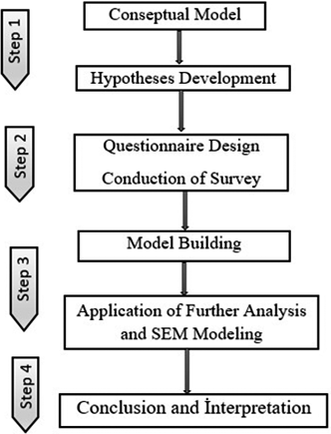
The research was completed by following the procedural flow illustrated in Figure 1, through which the study results were generated.
The research process flowchart.

Results
The evaluation of OA and DPWES according to sociodemographic variables is presented in Table 1.
Evaluation of OA and DPWES according to sociodemographic variables

Table 1. Long description
The table consists of 8 columns: Variables, N, percentage, Organizational Agility (mean plus or minus s s, and Test and P value), and Perception of Disaster Preparedness (mean plus or minus s s, and Test and P value).
Key findings include:
* Gender: Female (n=230, 49.1%) and Male (n=238, 50.9%) showed no significant difference in either metric (P = .241 and P = .859).
* Educational background: Significant differences were found in disaster preparedness (P = .001), with Master’s degree holders scoring highest (4.13 plus or minus 0.59).
* Professional experience: Significant differences in both Organizational Agility (P = .010) and disaster preparedness (P = .006). Those with 1 to 5 years of experience scored higher in agility than those with 6 to 10 years.
* Duration of employment: Significant differences in both metrics (P = .004 and P < .001), with those employed 11 or more years scoring highest in disaster preparedness (4.37 plus or minus 0.57).
* Economic status: Significant difference in Organizational Agility (P = .027), where those with income equal to expenses scored higher than those with income less than expenses.
* Disaster response: Involvement in disaster response significantly improved the perception of disaster preparedness (P = .022), with participants scoring 4.16 versus 3.96 for non-participants.
*P < .05. EMT, emergency medical technician.
A total of 510 questionnaires were distributed to people working in EMS, and the questionnaires were returned in their entirety from 468 of them. Of the questionnaires, 379 were collected face-to-face and 89 online. While the questionnaire return rate was expected to be 75% based on the determined sample size, it was quite high at 92%. A total of 468 health care professionals participated in the study, exceeding the determined sample size.
A significant difference was found between OA and total years of professional experience (P = .010), length of service at the current institution (P = .004), and economic status (P = .027). OA is significantly higher among those with 1-5 years of total professional experience, 11 years or more of service at their institution, and an economic status of income-expenditure balance.
There was no significant difference in OA with respect to gender (P = .241), marital status (P = .510), age (P = .170), education (P = .129), role within the institution (P = .814), disaster experience (P = .147), and involvement in disaster response (P = .472).
Significant differences were observed in DPWES according to education (P = .001), total years of professional experience (P = .001), length of service at their institution (P = .006), and involvement in disaster response (P = .022). It was found that DPWES scores were significantly higher among those with a master’s degree, those with 11 or more years of total professional experience and service at their institution, and those involved in disaster response.
There was no significant difference in the DPWES in terms of gender (P = .859), marital status (P = .601), age (P = .889), position in the institution (P = .608), economic status (P = .293), and disaster experience (P = .059) (Table 1).
Statistics on the average scores for OA and DPWES are presented in Table 2.
Results of Pearson correlation analysis and average scores

Table 2. Long description
The table consists of 9 columns and 11 rows. The columns are labeled: Variables, a blank column for statistical markers, P D P, Willing, Importance, Self-efficacy, Intervention skill, Benefit, and x-bar plus or minus s s.
Row 1: Organizational agility. r values range from .631 to .755, all with P less than .001. The mean score is 3.65 plus or minus 0.83.
Row 2: Competency. r values range from .577 to .709, all with P less than .001. The mean score is 3.60 plus or minus 0.88.
Row 3: Flexibility. r values range from .569 to .680, all with P less than .001. The mean score is 3.63 plus or minus 0.96.
Row 4: Responsiveness. r values range from .574 to .688, all with P less than .001. The mean score is 3.63 plus or minus 0.94.
Row 5: Speed. r values range from .561 to .692, all with P less than .001. The mean score is 3.72 plus or minus 0.86.
The final row provides the average scores (x-bar plus or minus s s) for the column variables:
- P D P: 4.00 plus or minus 0.71
- Willing: 3.90 plus or minus 0.85
- Importance: 4.30 plus or minus 0.81
- Self-efficacy: 3.75 plus or minus 0.85
- Intervention skill: 4.12 plus or minus 0.80
- Benefit: 3.94 plus or minus 0.83.
Double asterisks indicate P less than .01.
**P < .01.
The results of the Pearson correlation analysis between OA and the DPWES are shown in Table 2.
OA (r = 0.755), competency (r = 0.709), flexibility (r = 0.680), responsiveness (r = 0.688), and speed (r = 0.692) were found to have a significant and positive relationship with the DPWES (Table 2). The effect of OA and its subdimensions on the DPWES was examined using the AMOS 24.0 program. Two models were created in the AMOS 24.0 program. The first model examined the effect of OA on DPWES. The model fit values obtained for the model were found to be acceptable and well-fit.Reference Karaman 47 (Table 3; Figure 2).
Model fit values

Table 3. Long description
The table consists of 10 columns and 5 rows.
Column headers from left to right: Criteria, chi-squared all over s d, R M R, G F I, A G F I, N F I, I F I, T L I, C F I, and R M S E A 90 percent C I.
Row 1 (Good fit criteria): chi-squared all over s d less than or equal to 3; R M R less than or equal to .05; G F I, A G F I, N F I, I F I, T L I all greater than or equal to .95; C F I greater than or equal to .97; R M S E A less than or equal to .05.
Row 2 (Acceptable fit criteria): chi-squared all over s d less than or equal to 5; R M R less than or equal to .08; G F I, A G F I, N F I, I F I, T L I all greater than or equal to .90; C F I greater than or equal to .95; R M S E A less than or equal to .08.
Row 3 (Figure 2 data): chi-squared all over s d is 2.715; R M R is .020; G F I is .971; A G F I is .946; N F I is .982; I F I is .989; T L I is .983; C F I is .989; R M S E A is .061 with a C I of .043 to .078.
Row 4 (Figure 3 data): chi-squared all over s d is 2.708; R M R is .020; G F I is .975; A G F I is .940; N F I is .985; I F I is .990; T L I is .980; C F I is .990; R M S E A is .066 with a C I of .046 to .085.
CI, confidence interval.
Visual representation of OA in the DPWES.

Figure 2. Long description
A path diagram representing a structural equation model.
On the left, four circular error terms labeled e 1 through e 4 point to four rectangular observed variables: Competency, Flexibility, Responsiveness, and Speed. These four rectangles have double-headed arrows connecting to a central oval labeled Organizational Agility. The standardized loading values for these paths are comma 92, comma 88, comma 88, and comma 87 respectively.
A central horizontal arrow points from Organizational Agility to a second oval labeled D P W E S with a path coefficient of comma 79. A circular error term labeled e 5 points down into the D P W E S oval.
On the right, the D P W E S oval points to five rectangular observed variables: Willing, Importance, Self-Efficacy, Intervention Skill, and Benefit. The standardized loading values are comma 76, comma 84, comma 81, comma 93, and comma 85 respectively.
To the far right, circular error terms e 6 through e 10 point to these rectangles. There are curved double-headed arrows indicating correlations between error terms: one between e 7 and e 9 with a value of minus comma 20, and another between e 6 and e 9 with a value of minus comma 41.
It was determined that OA has a significant and positive effect on the DPWES (β = 0.787) and that the explained variance value (R2) is 0.619 (Table 4; Figure 2).
Analysis results of the effect of OA and its subdimensions on the DPWES

Table 4. Long description
A table presenting regression analysis results for five variables impacting P D P. The columns are Variables, S C, U S C, S E, T, P, R super 2, and a 95 percent confidence interval with Lower bound, Upper bound, and P value.
* Organizational agility to P D P: S C .787, U S C .673, S E .043, T 15.795, P less than .001, R super 2 .619, C I .737 to .834, P value .010.
* Competency to P D P: S C .220, U S C .161, S E .049, T 3.306, P triple asterisk, C I .102 to .325, P value .010.
* Flexibility to P D P: S C .180, U S C .120, S E .040, T 2.994, P .003, R super 2 .582, C I .081 to .294, P value .022.
* Responsiveness to P D P: S C .193, U S C .132, S E .041, T 3.229, P .001, C I .090 to .295, P value .010.
* Speed to P D P: S C .241, U S C .180, S E .044, T 4.097, P triple asterisk, C I .162 to .332, P value .010.
Footnote: P less than .05. S C is standardized coefficients, U S C is unstandardized coefficients, S E is standard error, C I is confidence interval, and P D P is perceptions of disaster preparedness.
P < .05; ***p <. 001; SC, standardized coefficients; USC, unstandardized coefficients; SE, standard error; CI, confidence interval; PDP, perceptions of disaster preparedness.
Competency (β = 0.220), flexibility (β = 0.180), responsiveness (β = 0.193), and speed (β = 0.241) were found to have a significant and positive effect on the DPWES, with an explained variance value (R2) of 0.582 (Table 4; Figure 3).
Visual representation of the DPWES regarding the subdimensions of OA.

Figure 3. Long description
A path diagram with three main sections.
On the far left, four rectangular boxes are stacked vertically: Competency, Flexibility, Responsiveness, and Speed. Double-headed curved arrows on the left of these boxes indicate correlations with values ranging from ,76 to ,82. Single-headed arrows point from these four boxes toward the center, labeled with path coefficients of ,22, ,18, ,19, and ,24 respectively.
In the center is a light purple oval labeled D P W E S. A vertical arrow points down into this oval from a small circle labeled e 5.
On the right, five rectangular boxes are stacked vertically: Willing, Importance, Self-Efficacy, Intervention Skill, and Benefit. Single-headed arrows point from the central D P W E S oval to each of these boxes with factor loadings of ,76, ,84, ,81, ,93, and ,85 respectively. To the right of these boxes, five small circles labeled e 6 through e 10 are connected to the rectangles by single-headed arrows. Two double-headed curved arrows on the far right indicate correlations between e 6 and e 9 with a value of -,41, and between e 7 and e 8 with a value of -,20.
Discussion
This study investigated the effect of OA on DPWES and the relationship between these concepts. No study has been found in the literature that examines these two variables together in prehospital emergency health care organizations. However, it has been observed that these variables have been examined with different concepts. Our results demonstrate that OA has an impact on the perception of disaster preparedness and that these concepts are interrelated.
This study found that the overall average score for OA was high. This finding indicates that prehospital emergency health care workers view their organizations as structures capable of adapting rapidly to changing conditions, operating flexibly and maintaining strong coordination. This finding is consistent with recent studies in the health care sector. Reference Yao, Zhang and Li48,Reference Akkaya and Mert49 However, some studies have reported that health care workers’ level of organizational agility is moderate. Reference Ismael, El-kholy and Abd-Elrhaman31,Reference Zeid, Mostafa and Zoromba50 This study found that the overall average score for perceptions of disaster preparedness was also high. This indicates that workers positively assess their knowledge, awareness, preparedness, and response capabilities regarding disasters. This finding is consistent with recent studies conducted in the health care sector. Reference Goniewicz and Goniewicz51,Reference Nofal, Alfayyad and Khan52 However, some studies have reported that health care workers’ level of disaster preparedness is moderate.Reference Skaff, Jarrah and Nasrallah 53 –Reference Okan, Kavici Porsuk and Yıldırım 55 Differences in disaster preparedness levels between communities or groups may stem from potential differences in disaster risk, the policies pursued, preparedness, mitigation strategies, and perspectives.
The findings indicate that OA and its subdimensions—competency, flexibility, responsiveness, and speed—are associated with PDP (Perceptions of Disaster Preparedness). Higher levels of organizational competency, flexibility, responsiveness, and speed may contribute to improved disaster preparedness perceptions and more effective disaster management. This situation can be attributed to the dynamic processes inherent in the nature of emergency health services organizations and their need to take rapid action. Al-HusainReference Al-Husain 56 found that organizational characteristics are related to the disaster preparedness process and disaster management, and that the type of organization, its location, and the sector in which it operates significantly influence the disaster management phases of preparedness, response, and recovery. In this regard, the structure of EMS also forms the basis for effective disaster response and the management of mass casualty incidents.Reference Mehmood, Rowther and Kobusingye 57
It has been determined that OA has a meaningful and positive effect on the DPWES. This finding is consistent with previous studies in the literature on OA and disaster management. Research on OA and disaster preparedness has found a significant positive relationship between OA and disaster preparedness, determining that increasing agility also increases the level of disaster preparedness and contributes to the effectiveness of disaster management. Reference Moheimani, Sheikh and Hosseini32,Reference Harrald33,Reference Upadhyay, Mukhuty and Kumari36,Reference Mutebi, Muhwezi and Byarugaba58 It is important for institutions located in disaster-prone areas to possess OA.Reference Diharto, Resmi and Siswanti 34 The level of agility of organizations involved in emergency and disaster response, particularly their flexibility, responsiveness, and creativity in unforeseen circumstances, enables them to respond effectively to events and increases the effectiveness of disaster response.Reference Harrald 33 While the agile approach benefits all stages of disaster management, it is seen to be most beneficial in the response stage.Reference Upadhyay, Mukhuty and Kumari 36 Mutebi et al.Reference Mutebi, Muhwezi and Byarugaba 58 state that OA is closely related to developing the disaster and emergency response capacity of health care institutions. Other studies indicate that OA affects organizational crisis preparedness and that agility absorbs the high level of environmental uncertainty in disaster situations, thereby enabling organizations to cope with increasing complexity. Reference El Idrissi, El Manzani and Ahl Maatalah59,Reference Manyoma, Reyes and Bohorquez60
In the study, the effect of participants’ demographic variables on the research variables was also evaluated.
The analysis revealed a significant variation in OA according to total years of professional experience, duration of employment at the institution, and economic status. OA is significantly higher among those longer tenure at their current institution. This result of the study can be attributed to employees with more professional experience and who have worked at the same institution for a long time having a closer understanding of both the corporate and organizational structures, as well as possessing accumulated experience and knowledge about the organization. Moreover, since professional experience is gained through a master-apprentice relationship in health care organizations, it is an expected outcome that organizational agility levels are higher among those with longer professional experience and longer tenure at the institution. It can therefore be stated that as health care professionals’ professional experience increases, their level of OA also increases. This result of the study is consistent with the results of similar studies in the literature. Reference Ghodrati and Zargarzadeh28,Reference Şen and İrge61,Reference Sever and Paksoy62 Economically, it is seen that OA levels are higher among those with equal income-expense perceptions, which is consistent with studies in the field.63 In this case, it can be said that OA levels increase as income perceptions reach a sufficient level for employees.
No significant difference was found between OA and gender, marital status, age, education, position in the institution, disaster experience, and involvement in disaster response. These results are consistent with the literature,Reference Sever and Paksoy 62 although some studies have found higher agility in women, married individuals, and older individuals. Reference Şen and İrge61,Reference Sağır and Gönülölmez63 Given the position in the institution, disaster experience, and involvement in disaster response, differences were actually expected; however, the study results did not meet this expectation.
A significant difference was found between the DPWES and their education, total years of professional experience, and length of service at the institution. The finding that individuals with higher levels of education Reference Okan, Kavici Porsuk and Yıldırım55,64 and those with more years of professional experience Reference Nofal, Alfayyad and Khan52,Reference Zhang, Yang and Cao54,Reference Stanley65 have a higher perception of disaster preparedness is consistent with the literature.
The finding that participants who had previously worked in disaster relief had significantly higher perceptions of disaster preparedness than those without such experience is consistent with similar studies in the health field Reference Zhang, Yang and Cao54,Reference Okan, Kavici Porsuk and Yıldırım55,Reference Ünal, Işık and Şahin66,Reference Koçak, Çalışkan and Kaya67 and in different sample sizes.Reference Paul and Bhuiyan 68 –Reference Sun and Xue 71However, the study found no significant difference in the perception of disaster preparedness among participants who had experienced a disaster, that is, those who had previously experienced any kind of disaster. It would have been expected that disaster experience would affect the level of preparedness. Similar findings in the literature Reference Kapucu72,Reference Alam73 also indicate that, despite past disaster experiences, individuals may remain indifferent to disaster preparedness. While direct experience of hazard consequences may increase hazard awareness and a more accurate perception of the risks they pose, this does not necessarily mean better preparedness.Reference Paton 74 This supports the findings of the study.
No significant difference was observed between the DPWES and their gender, marital status, age, role within the institution, and economic status. However, similar studies have shown that disaster preparedness levels are higher with age, Reference Okan, Kavici Porsuk and Yıldırım55,Reference Ünal, Işık and Şahin66,Reference Koçak, Çalışkan and Kaya67 with increasing income level, 64 among married individuals,Reference Paul and Bhuiyan 68 and among men compared to women. Reference Zhang, Yang and Cao54,Reference Okan, Kavici Porsuk and Yıldırım55,Reference Ünal, Işık and Şahin66,Reference Koçak, Çalışkan and Kaya67,Reference Thomas, Leander-Griffith and Harp75 Increased knowledge, awareness, and experience with age may increase the tendency to be prepared, but the fact that the majority of participants in this study were in the younger age range (20-30 years old; 80.5%) may have prevented a statistically significant difference from emerging. Furthermore, when teamwork is carried out in the field during emergencies and disasters and joint field training is provided, there may be no significant difference in the perception of disaster preparedness according to one’s role/title within the institution.
OA is particularly important during disasters and crises for health organizations to maintain their existence and service continuity. They must establish and/or strengthen OA to sustain their operations. There are a limited number of studies in the literature on the preparedness of emergency health services for disasters. Therefore, more research is needed, particularly in countries affected by disasters and in regions with a high risk of disasters.
Limitations of the Study
The generalizability of the findings is limited because, in this study, participants were recruited using convenience sampling on the basis of accessibility and voluntary participation, and the data are based on the individual self-reports of the health care professionals included in the sample. The combined use of face-to-face and online data collection methods in the study may have led to differences in participant profiles and response behavior. Furthermore, the discussion of the results is constrained by the limited number of studies addressing organizational agility and disaster preparedness in the health care sector.
Conclusions and Recommendations
For health care organizations, exposure to disasters and their potential consequences is largely inevitable. In line with the findings of this study, it is therefore crucial for organizations to demonstrate rapid and agile responses during disaster situations and to ensure preparedness for the postdisaster period through predisaster planning. These results are noteworthy in that they demonstrate the significant role of OA in the disaster management process of prehospital emergency health organizations.
It is recommended that health care organizations enhance their levels of OA to achieve greater effectiveness in disaster management. Considering OA as a central variable may open new avenues for research aimed at strengthening disaster management capacity. To assess the impact of organizational agility on the level of disaster management more comprehensively, it is recommended that future studies examine different health care institutions, different geographical regions, and different health care professional groups in a comparative manner. By conducting longitudinal studies, it is possible to assess the impact of changes in organizational agility over time on the level of disaster preparedness. Providing disaster-related training, simulations, and drills can be seen as an effective way of preparing health care workers for disaster management and response. Nevertheless, additional studies are required to identify the factors that support health care professionals’ preparedness and readiness for disaster situations.
Data availability statement
The data that support the findings of this study are available from the corresponding author upon reasonable request.
Acknowledgments
The author thanks all the health care professionals who participated in the study.
Author contribution
Study conception and design, data acquisition, data analysis and interpretation, and drafting of the article: ÖBY.
Funding statement
This research did not receive any specific grant from funding agencies in the public, commercial, or not-for-profit sectors.
Competing interests
The author declares that they have no known conflict of interest or personal relationship that could affect the study reported in this article.
Ethical standard
The study was approved by the Ethical Committee of Health Sciences University Kanuni Sultan Süleyman Training and Research Hospital Scientific Research Ethics Board, on September 11, 2024 (number 2024.09.183).
Submission declaration
This study has not been published elsewhere before.