


The wars of independence in Spanish America marked not only the decline of the largest European overseas empire of the time, but also the end to what had been the most far-flung monetary and fiscal union in the world.Footnote 1 For three centuries, the Spanish Crown had maintained a common bimetallic monetary standard (silver and gold) in the metropolis, throughout its vast territories in the New World and as far as the Philippines. But from the early nineteenth century fundamental changes began to take place in the world economy that signaled the decline of the silver peso and, on the contrary, the rise of other currencies that became the most widely used in trade finance, notably the pound sterling, the French franc and, quite soon, the dollar. In turn, the circulation of metallic currencies was soon complemented in Europe and the United States by the increasing use of banknotes, accompanied by the exponential multiplication of bills of exchange, cheques and commercial paper. As the economist Robert Triffin argued, the nineteenth century was characterized by the gradual euthanasia of gold and silver money and, at the same time, by the rise of paper money as well as new credit instruments.Footnote 2
Adapting to this new monetary and financial world proved to be an exceptional challenge for the region that had been the world’s largest producer of silver and gold bars and coin for three centuries. After achieving independence, each of the new Latin American states sought to assert not only political autonomy but also monetary sovereignty.Footnote 3 The colonial heritage was so strong that it determined that the new currencies of the Spanish American nations – the Mexican, Colombian, Central American, Peruvian, Chilean and Argentinean pesos – would have, in principle, the same value as their predecessor, the silver peso of the Spanish Empire, so highly valued in the world economy for centuries. For this reason, most of the old mining countries, such as Mexico, Peru, Bolivia and Chile, remained on the silver standard, which had been dominant for hundreds of years.Footnote 4 But the multiplication of mints during the wars of independence in many regions led to the adulteration of coinage and to struggles for control over monetary sovereignty between central governments and local administrations. On the other hand, in countries where metallic currency was scarce, experiments with the issue of paper money took place, as was the case in Brazil between 1808 and 1829 and in the State of Buenos Aires during the 1820s and 1830s. In short, the unified monetary systems of the Spanish and Portuguese Empires tended to be replaced by monetary fragmentation throughout Latin America.Footnote 5
The passage from colonies to nations reflected the financial, monetary and economic complexity of transitions to new political regimes at a time of social and military struggles in most countries of Latin America. Progress was slow and contradictions abounded. Rural society experienced significant changes, despite the fact that peasant production remained extensive. Wage relations became more common in agriculture and ranching, although servile relations continued in numerous haciendas where landowners continued to pay salaries in kind, or used debt instruments that nailed workers to their rural establishments in large parts of Mexico and the Yucatán, in Central America and throughout large swaths of South America. While slavery was abolished in Haiti as of 1804, and after 1810 in Argentina, Chile, Mexico and Venezuela, the fact was that simultaneously slave production expanded with great force in the coffee fazendas of Brazil and the sugar plantations of Cuba.Footnote 6 Meanwhile, wage relations were introduced gradually in cities and large towns, but artisanal production continued to dominate most local manufactures. In summary, the persistence of colonial institutions in agriculture, mining and artisanal production, as well as in some commercial spheres, coexisted alongside diverse economic innovations, all of which suggests that capitalism could only expand slowly.
In order to explain the evolution of Latin American societies and economies in the first half of the nineteenth century, this chapter adopts an approach that focuses on the diverse role of credit and finance during the first half of the nineteenth century in the new nations that were emerging throughout the western hemisphere. Everywhere, the wars of independence and the collapse of imperial rule created a host of fiscal and monetary difficulties.Footnote 7 Such circumstances had negative consequences for public and private economies, especially because of the way in which expectations and transaction costs were altered. So much uncertainty affected decision-making by both economic and political actors, reducing the availability of credit, making it more expensive and risky. As a result, the creation of modern entities, such as commercial banks, was truly a quixotic undertaking. Political stability and institutional transparency were required to generate the confidence of potential clients, conditions that were difficult to achieve in Latin America during the first half of the century.
The contrast with the contemporary experience of the United States was striking since independence in that new republic favored a financial revolution that would drive sustained and surprisingly rapid economic growth.Footnote 8 The benefits of a remarkable set of monetary and fiscal reforms ratified from as early as the 1790s by Alexander Hamilton, the young secretary of the Treasury, spurred the rapid expansion of banks and financial markets in the rising nation. These transformations included reforms that helped the new government restructure and stabilize the public debt, create a national bank and launch the dollar as a strong currency within very few years. At the same time, early capital markets emerged in cities such as Boston, Philadelphia and New York, providing the impetus for the proliferation of joint-stock companies that constituted a new form of business organization, instruments of key importance for a burgeoning capitalist regime. At the local level, a multitude of banks began to emerge in dozens of towns and cities in the Northeast as well as a smaller but significant number of banks across the Mid-Atlantic territories of the new nation, as well in the slave states of the South.Footnote 9
Economic historian Howard Bodenhorn has demonstrated that before the financial panic of 1837, there were already in operation more than 800 local banks in the United States. The State of Massachusetts had 116 banks, the State of Pennsylvania 49 banks and New York 98 banks, doing business in small districts and towns because American legislation severely restricted the geographical jurisdiction of bank activities.Footnote 10 These restrictions corresponded to a model of agrarian democracy in many regions because the creation of a multitude of small, independent banks allowed rural producers and local merchants to defend themselves against powerful business groups in the cities. Despite the strong degree of atomization of the banking system that exhibited considerable volatility from an early date, the North American model ensured ample sources of credit for broad sectors of the population and stimulated rapid, horizontal capitalist development in numerous regions.
In contrast, the political independence of the new Latin American nations did not usher in modern capitalism since economic stagnation and the repressed nature of financial markets were evident from the 1820s and 1830s in most countries. Liberal constitutions and laws were put in place but did not produce positive financial results since successive fiscal reforms did not prove successful in the establishment of stable public debt systems – except in the case of Brazil – nor did they facilitate the expansion of incipient capital markets.
The establishment of parliamentary regimes in all states spurred a great deal of new legislation of a frankly liberal character from the 1820s, but the introduction of modern civil and commercial codes took much longer and would not be ratified until after the middle of the century.Footnote 11 Perhaps this delay may be explained by the fact that the traditional mercantile regulations of the colonial regimes and their complex credit systems had effectively fulfilled multiple functions for centuries in the spheres of commerce, agriculture and mining. These old norms had long offered a remarkable degree of stability as regards business activity and contributed to relative stability of interest rates in credit operations. Consequently, after independence, leading merchants in countries such as Mexico and Peru continued to confide in the traditional corporate courts for the handling and resolution of commercial and credit disputes, carrying on secular practices that had functioned for centuries.Footnote 12 In such cases, the transition from monarchical to republican rule did not seem to offer a guarantee of greater security for business, but rather the opposite. As a result, legal and practical instruments of credit and commercial regulations in practice before independence were often retained until the mid-nineteenth century.
The secular imprint of the institutional frameworks characteristic of the old colonial regime did not facilitate the introduction of new business models but rather hindered the establishment of joint-stock companies or commercial banks, both essential to capitalist development. Furthermore, the enormous weight of a great volume of unpaid colonial debts created obstacles to the reconstruction of financial markets. The bulk of these debts were composed of loans that had been extended by wealthy elites in Spanish America to help pay for the numerous wars of the Spanish Crown from the late eighteenth century down to the surge of the wars of independence.Footnote 13 These elites opposed insurgent revolution and from 1815 participated in a massive process of capital flight. As a result, by the early 1820s, the newly independent states were starved for cash and were obliged to turn to the London market for a set of early foreign loans payable in sterling, on which they would soon default. Only Brazil was able to avoid bankruptcy and exclusion from international capital markets.
In sum, the political changes that came with the liberal reforms after independence in Latin America did not generally translate into modern financial institutions. This helps to explain the delay in the ratification of banking and monetary laws until after 1850. In addition, the civil and military conflicts following independence led to the weakness of judicial systems, fostered the corruption of many officials and contributed to the arbitrary exercise of political and military power. Such circumstances generated uncertainty and steep risks for economic actors, whether merchants, landowners, miners, artisans, ranchers or peasants in most countries of the region. All these conditions were reflected in the very high interest rates that became common for decades in almost all Latin American credit markets, limiting innovations, entrepreneurship and economic dynamism. Consequently, the process of creating banks in the subcontinent was slow and haphazard. Indeed, only three banks of some importance were established in Latin America during the first third of the nineteenth century, namely at Buenos Aires, Rio de Janeiro and Mexico City, but all of them were relatively short-lived. These experiments and others, even more ephemeral, are of interest in terms of financial history, but above all they reflect the fragility underlying the emergence of the new nations and their economies throughout the vast subcontinent. In the pages that follow we begin by reviewing features of some of the earliest banking initiatives, and follow up with a description of the complex evolution of Latin American credit markets in this age of transition.
Banking Experiments after Independence
In the early nineteenth century mercantile and political elites in Latin America displayed considerable awareness of banking developments in Europe and the United States. Rather surprisingly, very soon after independence, a considerable number of banking projects were broached in various countries, reflecting the desire to accompany political liberalization with financial modernization. In Peru, at the very moment when independence was proclaimed in 1822, General San Martin proposed the creation of a “Bank of Emancipation,” also known as the Banco Auxiliar de Papel Moneda (Auxiliary Bank of Paper Money). Historian Dionisio Haro has analyzed this project, noting that: “The projected model of a fiduciary system aspired to emulate European financial and credit systems as an initiative that could do more than simply cover some of the fiscal urgencies caused by the war.”Footnote 14 The merchants of Lima promised to make investments in the purchase of shares of the new bank, but their intentions were frustrated when it was confirmed that the government would not make capital contributions to the new entity. Without sufficient funds to operate as a commercial bank, the new institution was reduced to a simple fiscal office and soon disintegrated at the end of 1823.
In Chile a banking project proposed by Anselmo De la Cruz, secretary of the merchant guild, was debated as early as January 11, 1811, four months after the first revolutionary Junta de Gobierno was installed in the capital city of Santiago.Footnote 15 Other projects included one presented in 1820 to the head of the independent government, Bernardo O’Higgins, another financial scheme proposed in 1823 by Camilo Henríquez, the founder of the newspaper La Aurora de Chile, as well as an early banking enterprise that failed in 1829. But none of these initiatives prospered and, as a result, the main transactions of credit and finance in Chile continued to be handled by several dozen merchant houses in Santiago de Chile and Valparaíso, until the middle of the century.Footnote 16
In the case of Mexico, the creation of a banking institution was also proposed following independence in 1821. The first experiment was based on a financial project authored in 1822 by a clerical ideologue, Severo Maldonado, who urged the establishment of a Banco Nacional Imperial, after the declaration of independence by General Agustín Iturbide, who had arbitrarily named himself emperor of the new nation. A second project was formulated by Francisco de Paula y Tamariz and published in 1822, calling for the creation of the Gran Banco del Imperio Mexicano (Great Bank of the Mexican Empire).Footnote 17 Although the objective of the latter proposal was apparently to set up a commercial bank, it did not address the issue of banknotes and was designed simply as an establishment that would support the government’s weak finances. The capital of this enterprise was to be raised from old Jesuit properties that were managed by the government, while deposits were expected to come from the savings of public employees who would be obliged to deposit 10 percent of their salaries in the entity. Not surprisingly, this peculiar financial entity never took off.
Despite the failure of the early projects mentioned, three different banking experiments in Latin America did manage to operate for a time during the postindependence era, albeit each one of them with sui generis norms in terms of organization and trajectories (see Figure 2.1). For this reason, it is useful to focus attention on the experience of Brazil, Argentina and Mexico, successively, as they highlight the distinctive facets of the earliest banking entities that are worth reviewing because of their originality. We shall begin with Brazil, where the first bank in Latin America began to operate in 1808.

Figure 2.1 Long Description
A horizontal timeline (1808 to 1842) compares the founding and operation periods of early national banks. Brazil: Banco do Brasil spans from 1808 to 1829, marked by a square at each end. Banco Comercial do Rio de Janeiro spans from 1838 to 1842, also marked with squares. Argentina: Banco de Descuentos de Buenos Aires runs from 1822 to 1826, shown with diamond markers. Banco Nacional spans from 1826 to 1834, also with diamonds. Mexico: Banco de Avío spans from 1830 to 1837, shown with triangles. Amortización del Cobres spans from 1837 to 1841, also marked with triangles. Bolivia: Banco Nacional de Rescates spans from 1830 to 1838, shown with circles. Banco de Refacciones spans from 1838 to 1842, also with circles. Peru: Banco Auxiliar de Papel Moneda spans from 1822 to 1824, marked with small squares. The countries are listed on the left, with dotted horizontal guidelines extending across the timeline. A year scale runs along the bottom from 1808 to 1842.
The Banco do Brasil (1808–1829), an Early Banking Experiment
Before Brazil formally obtained independence in 1822, a novel banking institution had already been created and baptized as the Banco do Brasil.Footnote 18 This entity was established in Rio de Janeiro in 1808 when the Portuguese monarch, his ministers and the entire royal court were transported in a great fleet from Lisbon to the Brazilian capital as a result of the invasion of the Iberian Peninsula by the Napoleonic army. The monarch brought with him a large volume of gold, silver and jewels that eventually were to serve as nominal reserves of the new bank established in Rio de Janeiro. The early Banco do Brasil had private shareholders but was essentially an instrument of the imperial government since its activities were largely focused on financing the government and court of the king, Joao VI (1808–1821), and later of his son, the first emperor of independent Brazil, Pedro I (1822–1831).Footnote 19
The creation of this banking enterprise in the Brazilian capital and leading port coincided with a free trade decree ratified in October 1808, impelling some two-dozen British mercantile firms to open offices in Rio de Janeiro. The dynamism of the local economy was remarkable, as illustrated by the fact that the foreign trade of Brazil enjoyed the highest volume and value of all the countries of Latin America during the first three quarters of the nineteenth century. Exports were relatively varied and included sugar, cotton, gold, hides, furs, tobacco, cocoa and, above all, coffee, the production of which leaped up from 1830 onwards.Footnote 20 In turn, this vast country was the largest market in Latin America for European manufactures, especially English cottons, including the cheap fabrics that clothed the hundreds of thousands of slaves who worked on plantations, in addition to the cloth consumed by popular sectors in towns and cities, while textiles of higher quality were sold to the middle and upper classes.Footnote 21
Considering such mercantile dynamism, it could be assumed that the new Banco do Brasil would have played an important role in the commercial sphere, but the scant historical evidence suggests that its role was rather marginal.Footnote 22 This financial enterprise was created as a private deposit and discount bank with the privilege of printing bank bills, yet its rules were lax since no limits were set on banknote issues nor was there a clear reserve policy. It was assumed that the treasury of the Portuguese monarch in the Brazilian capital (made up largely of silver and gold holdings) would serve as a guarantee for the banknotes circulated by the institution, but this eventually proved to be a chimera.
The initiative of the new bank was greeted with great fanfare by the Gazeta do Rio de Janeiro at the end of 1808, accompanied by a declaration in favor of public banks, stating that such entities facilitated mercantile circulation and helped lower interest rates. In its early years, the new private-public enterprise was active in discounting commercial bills and had the novelty of being the first limited liability company in Brazil (and Latin America). It also helped to stimulate the parallel establishment of a handful of insurance and shipping companies in Rio in those years.Footnote 23 From 1808 onwards the board of directors of the first Banco do Brasil was composed of the leading businessmen of Rio de Janeiro, although the representatives of the monarch and the government exercised a strong influence on its management. In its beginnings, the bank had only forty-two shareholders, which speaks of its status as an instrument of the capital’s wealthiest elite. This semi-official bank received the exclusive privilege of trading in certain special commodities on its own account, such as diamonds and brazilwood, but little information has yet been found on the extent of its activity in these sectors. In any case, the bank paid regular dividends on a capital that increased from 116 contos de réis in 1808 to 3,600 contos de réis in 1825.Footnote 24
Before 1814, the official Brazilian bank hardly exercised its right to issue paper money, but after that date it flooded the market with banknotes, as can be seen in Figure 2.2. But unexpectedly, in 1821 King Joao VI left for Portugal to assume the crown in Lisbon and took with him virtually all the metallic reserves in the bank, creating a serious dilemma for the Brazilian bank that now confronted the virtual inconvertibility of its banknotes. The monarch’s son and successor, Pedro I, declared Brazil’s independence shortly thereafter and, by all accounts, his advisers were more careful in the management of the bank. Considerable prudence was reflected in the policy adopted of withdrawing some banknotes already in circulation, a measure aimed at recovering public confidence in this key institution. Nevertheless, the outbreak of war with Argentina, involving numerous naval battles in the Rio de la Plata between 1826 and 1829, as well as a series of confrontations on land in Uruguay, obliged the Banco do Brasil to cover military expenses and growing deficits with the issue of substantial quantities of paper money. The result was inevitable: the banknotes lost value, prompting thousands of holders to present their bills for collection, and soon the bank’s already scarce cash reserves began to evaporate. Finally, the government was forced to close the bank in 1829.

Figure 2.2 Long Description
Each year displays two bars: a small light-grey bar for metallic reserves and a much larger dark-grey bar for banknotes issued. Metallic reserves rose gradually from about 329,000 in 1822 to about 1.08 million in 1829. Banknotes issued increased from about 9.17 million in 1822 to a peak of about 21.57 million in 1827 to 1828 before falling slightly to about 19.17 million in 1829. The y-axis ranges from 0 to 25 million; years appear along the x-axis.
Despite the closure of the official bank, the banknotes previously issued did not disappear from circulation in the capital and province of Rio de Janeiro since they enjoyed fiscal and mercantile acceptance for a time. Gradually, the old bank bills were replaced by public treasury notes. In any case, after the liquidation of the Banco do Brasil in 1829, the Brazilian economy did not have any major banking institutions until the launching of the Banco Comercial de Rio de Janeiro in 1838, a private company, to be followed by the creation of a series of small financial firms in various regions: the Banco de Ceará (1836–1839), the Banco Comercial de Bahia (1845) and the Banco Comercial do Maranhão (1847). These initiatives demonstrate that the history of banking in Brazil is among the earliest in Latin America.Footnote 25
The Commercial Bank of Rio de Janeiro was a relatively small, private company that opened its offices in 1838, near the customs office and the port: it served merchants in the capital city engaged in the coffee export business and participated in the slave trade and the finance of textile imports. The firm paid high interest rates on deposits, attracting a significant number of account holders and customers. According to its bylaws, this joint-stock company had the right to carry out various operations, receiving deposits in cash or securities, and also allowed customers to open current accounts and to discount domestic bills of exchange as well as bills on foreign markets. This private bank was also authorized to provide short-term cash-based loans, although, significantly, government securities and “shares of the Bank itself or of any company” could also be used for these purposes. Although the imperial government decreed that the bank could not issue vouchers (bills) with a redemption of more than ten days, or with values of less than 500 reais, in practice these bills soon came to play the role of paper money and served as a means of payment within the high commerce of the city of Rio de Janeiro.Footnote 26
The incipient financial markets in Brazil also fostered the creation of a number of savings banks that catered to a diverse public, including leading investors and merchants, but also a diverse set of small savers. A particularly striking example was the Caixa Econômica do Rio de Janeiro, founded in 1831, the first savings bank in Latin America. It was largely inspired by the French experience of the Caisses d’épargne, which had been founded in 1818 and served as the model for more than a hundred such savings institutions established in France by 1830. The directors of the early Brazilian savings bank sought to give their entity a popular, moralizing and paternalistic character. One of its objectives was to attract the savings of the popular strata of Rio de Janeiro, a city that had some 120,000 inhabitants, of whom at least 56,000 were slaves. The early depositors were quite varied and actually included some slaves who were artisans, as well as minors and women who were allowed to open accounts “with the permission of their respective lords, fathers and husbands.” The entity soon gained a good reputation in the city and was also able to attract members of the middle classes as clients. At the same time, the Caixa Econômica proved to be an important vehicle for investment in government securities, particularly the reputable ápolices, bonds of the imperial state’s public debt, in which it invested actively until the late 1850s.Footnote 27
In short, it is possible to argue that financial innovations in Brazil in the first half of the nineteenth century were the most varied in Latin America during that period, since not only did this nation have the first official bank in this era, but it was also the only country that could count on a modest network of commercial banks and savings banks during the years 1838–1850. Even so, these firms – all of them quite small – had significant limitations and it was not until later that more modern financial markets and institutions would emerge with strength.
Banking Experiments in Argentina: The Bank of Buenos Aires (1822–1825) and the National Bank (1826–1834)
Another story that reveals considerable complexity in the handling of early experiments with paper money and banking was the Argentine experience, as demonstrated by the history of the Banco de Descuentos de Buenos Aires (Discount Bank of Buenos Aires), founded in 1822 by a consortium of prosperous merchants, barely a decade after independence was ratified. The minister of foreign affairs, Bernardino Rivadavia, and the minister of finance, Manuel José García, had proposed the creation of a bank of issue in 1821 with two ostensible purposes.Footnote 28 In the first place, they thought it would be beneficial to introduce paper money in a province like Buenos Aires, which suffered from a shortage of metallic currency. In this respect it should be noted that for many decades, Bolivian silver pesos remained the dominant currency in the western Argentine provinces such as Córdoba, Mendoza, La Rioja, Salta and Jujuy, but such metallic coin was quite scarce in eastern sections of the country. In the second place, the ministers at Buenos Aires considered that a bank could help to create a market for the discounting of commercial bills and for the placement of the first public debt securities.Footnote 29
In spite of official support, the new Banco de Descuentos de Buenos Aires was strictly a private enterprise, the largest in the Rio de la Plata at the time, with a nominal capital of 5 million silver pesos, a very considerable figure at that time. On January 15, 1822, the bank held its inaugural stockholders’ assembly in the building of the Consulado de Comercio de Buenos Aires (the old merchant guild), reflecting its deep links to the high commerce of colonial roots. The statutes were drafted by the prosperous trader and landowner Juan José Cristobal de Anchorena, who had as his main allies the wealthy merchant Juan Pedro Aguirre and the lawyer Vicente López, who would later become the institution’s manager. Nevertheless, a group of shareholders headed by an ambitious local entrepreneur, Braulio Costa, soon also gained strength within the board of directors. Costa was allied with several English houses based in the port, including the Parish Robertson brothers, who were active in the negotiation of the Argentine government’s first foreign loan.Footnote 30
The Buenos Aires Bank operated between 1822 and 1825 as a commercial enterprise but also as an institution closely linked to the government. It received a large part of the deposits from the foreign loan issued in London by the firm Baring Brothers in 1824. With substantial cash reserves, the new bank was able to successfully issue convertible paper money during four years, contributing to a brief but important mercantile boom in the city of Buenos Aires and its hinterland.Footnote 31 It should be added that the money raised by the British loan was originally intended to help finance port works in Buenos Aires but, in practice, the funds were mostly used to cover the expenses of the naval war against Brazil between 1826 and 1828, and as a result, metallic reserves soon evaporated (see Figure 2.3).
Banco de Descuentos de Buenos Aires: banknotes issued and metallic reserves, 1823–1826 (Argentine pesos*).

Figure 2.3 Long Description
For each date, a large dark bar represents banknotes issued, and a smaller light bar shows metallic reserves. Banknotes issued rise steadily from about 291,000 in August 1823 to about 2.69 million in February 1826. Metallic reserves fluctuate between roughly 154,000 and 285,000 over the same period, remaining far lower than notes issued. Dates along the x-axis are August 31, 1823; February 28, 1824; August 31, 1824; February 28, 1825; August 31, 1825; and February 28, 1826.
As in the case of the Banco do Brasil, the military conflict provoked the bankruptcy of the Banco de Buenos Aires, and as a result, this private firm was nationalized in late 1826 and was renamed the Banco Nacional, with the right to continue issuing banknotes, but which were no longer convertible into gold.Footnote 32 Subsequently, the local government began to experiment with the circulation of paper money without metallic backing. The circulation of these inconvertible notes depended essentially on the confidence of merchants in the government and its tax collection capacities. But soon inflation took off (see Figure 2.4). Paper money lost value against gold and impelled the expansion of issue of bank bills that were appropriated by the government to cover the deficits caused by wars. In 1827, the accounts of the Banco Nacional registered the circulation of 15 million paper pesos, which included 11 million pesos in loans made to the government. Only four years later, in 1831, the government’s debts had risen to more than 19 million paper pesos.

Figure 2.4 Long Description
Stacked bars represent paper pesos (bottom) and cumulative bonds (top), rising gradually then sharply after the 1850s. A black line tracks the exchange rate, which fluctuates heavily, spiking around 1838, dipping in the early 1840s, then trending upward to over 400 pesos per ounce by 1862. Y-axes display pesos or bonds on the left and the gold exchange rate on the right, with years labelled along the bottom.
Finally, in May 1836, the powerful governor of the State of Buenos Aires, Juan Manuel de Rosas, dissolved the Banco Nacional. His administration declared that the currency would henceforth be guaranteed by the provincial government and that the sole agency responsible for the issue and/or withdrawal of banknotes would be the Mint (Casa de Moneda), which would have the authority to print paper money. During the following fifteen years – from 1836 to 1851 – the government, headed by the despotic caudillo Rosas, used the Mint to cover state deficits and proceeded to issue its notes on a large scale, although it must be recognized that these monetary instruments also served many commercial transactions in the port and the province.
The minister of finance of the Rosas administration, Manuel José García, relied on customs duties as the fiscal backbone of the State of Buenos Aires, supplemented by the issue of paper money and small quantities of treasury bonds that were issued when customs collections declined.Footnote 33 The advantages of this system became evident especially during times of naval blockades and war. During the French naval blockade of the port of Buenos Aires in 1838–1840 and again during the Anglo-French blockade in 1845–1848, the government resorted to the issue of paper money to cover deficits that reached between 60 and 80 percent of total government expenditures. This procedure tended to be inflationary but to a lesser degree than was expected, a trend probably explained by the dynamism of the provincial economy that required an abundance of monetary instruments for mercantile transactions.
The relative success of the fiscal and monetary policies of the Rosas regime allowed this system of fiat paper money to last for a long time. Historian Alejandra Irigoin has argued that such a situation demonstrated that the State of Buenos Aires was financed with a kind of inflationary tax during the period 1835–1854.Footnote 34 Paper money (nonconvertible) became the basis of circulation for payments for domestic transactions throughout the province. Metallic coins did not disappear, although their circulation was much more common in Uruguay and in the western provinces of Argentina. This experiment with a bimonetary (but not bimetallic) system was an extraordinary phenomenon in the financial history of the time, although it should be remembered that it had been common in the thirteen Anglo-American colonies between 1690 and 1775.Footnote 35
The high interest rates on credits (issued and circulating in Buenos Aires) constituted a kind of insurance against the depreciation of paper money, rather than a real shortage of capital.Footnote 36 The nonexistence of banks after 1835, and for another two decades, did not reflect a lack of demand but rather the monetary instability that characterized the sui generis system of government financing. At the same time, both merchants and rural landowners continued to extend personal credits and promoted a considerable diversity of economic activities. They retained a certain amount of liquidity in the form of paper money, although this kind of currency was quite risky to hold due to the volatility of its value. Therefore, merchants, politicians, professionals and ranchers preferred to invest mostly in land, livestock and metallic coin to secure and expand their fortunes.Footnote 37 At the same time, trading houses were able to use their holdings of gold and silver to act as lenders to landowners. In short, the greater Buenos Aires region proved to be a dynamic livestock-based economy with a high level of commercial activity, albeit subject to a monetary and financial regime that could be volatile and was, in many ways, premodern.Footnote 38
Mexico: Early Experiments with Paper Money and the Failure of the Banco de Avio
A review of the early banking experiments in Argentina and Brazil suggests that while paper money was introduced there as postcolonial credit markets slowly recovered, this did not imply that institutional reform was sustained, nor that the foundations for a future takeoff of banking could be assured. In the case of Mexico, the obstacles to financial modernization were even more severe than in Argentina or Brazil. Desires for innovation were perceptible from an early date both in the press and in the legislature as confirmed in the publication of several banking projects after the declaration of Mexican independence in 1821. For example, in late 1822, the new government headed by General Agustín Iturbide (who had proclaimed himself emperor of the new nation) authorized the issue of peculiar monetary instruments in order to solve the problem of scarce means of payment that the government was facing: in principle, the promissory notes he issued would have values of one, two and ten pesos and constituted an early attempt to issue paper money in Mexico, but they were a failure.Footnote 39 Contemporary Mexican bank projects also foundered, including one brought to the fore in 1829 by the governor of the State of Zacatecas, who pushed for the creation of a national bank to provide credit to state governments in various provinces. This proposal was soon abandoned, but the idea was taken up again in 1833 by the liberal ideologue José María Luis Mora, with a scheme to create an institution that could provide a solution to the national debt and contribute to the incipient process of disentailment of Church properties.Footnote 40 This plan, however, was not put into practice.
Of all the banking projects and experiments launched in Mexico after independence, only one, the Banco de Avío (1830–1840), can be considered partially successful. It was a highly original initiative formulated by Lucas Alamán, a distinguished intellectual, mining entrepreneur and conservative politician who, as minister of foreign affairs, succeeded in launching an ambitious plan for the creation of an authentic investment bank to support the development of national industry. The authorized capital of the Banco de Avío was 1 million pesos provided by the government in the form of import certificates that were to be acquired by merchants from Mexico and Veracruz to cover the payment of customs duties. Alamán’s objective was to help finance the import of machinery (mainly from England) in order to stimulate the creation of modern textile factories, foundries and paper mills. Between 1830 and 1832, the Banco del Avío granted 200,000 pesos in credits to fourteen companies that were established at that time (see Figure 2.5). However, progress was slow since the outbreak of a civil war in Veracruz in late 1832 had a negative impact on commerce and production, while rebel forces appropriated a large part of the bank’s funds. The financial entity recovered after 1835 when General Santa Anna assumed the presidency of the government and reappointed Lucas Alamán as minister in his centralist and conservative administration. In a period of five years the bank granted almost 300,000 pesos in loans for textile factories, but also a huge loan of 100,000 pesos to the general and former president, Guadalupe Victoria, who requested funds to invest in a large agricultural hacienda of his property.Footnote 41 This was clearly an early example of crony capitalism!
Banco de Avío de México: loans approved in silver pesos, 1830–1840.

Figure 2.5 Long Description
Values rise sharply in 1831 (224,430), fall in 1832 (141,000), peak again in 1835 (207,008), then drop steeply in 1836 (2,000). Issuance partially recovers in 1837 (60,000) and 1838 (96,000) before declining to very low levels in 1839 (4,167) and 1840 (11,500). The y-axis ranges up to 300,000; years appear along the x-axis.
In sum, the Banco de Avío contributed significantly to an early industrial boom in Mexico that was unparalleled in the rest of Latin America in the 1830s. Nonetheless, the early Mexican development bank went bankrupt as a result of nonpayment of most outstanding loans by its debtors – almost all influential businessmen and politicians. In 1840, the Banco de Avío closed its doors, concluding one of the most original banking financial experiments of the era.
Money, Taxes, and Credit in the Postcolonial World
In order to explain why the establishment of banks and of stable, public and private credit systems after independence proved so difficult, it must be recognized that the obstacles to economic modernization in Latin America were truly formidable. Political instability as well as successive external and internal wars exercised negative influences, making it almost impossible for entrepreneurs to start up business in the form of private joint-stock companies. In these circumstances few firms had the chance of producing regular profits or even of surviving for more than a short while. Furthermore, a complex set of fiscal and monetary problems contributed to the high degree of financial risks in the postcolonial world.
One of the most severe impacts of the wars of independence was the collapse of major pillars of taxation and state finance that had long supported colonial regimes in Mexico, Central America and South America. The transition from the well-organized, if exploitative, colonial tax systems to the weaker fiscal structures of the independent states of Spanish America was characteristic of both centralist and federalist regimes. In order to compensate for the abolition of many colonial taxes, the political elites of the new Latin American governments approved measures to make trade tariffs on imports and exports the backbone of the new fiscal systems. Once again, the United States served as a model in this key reform, but the results were not satisfactory. While customs receipts increased markedly in the years 1822–1825, in many cases they later declined. Economic historian Bulmer-Thomas has argued that the lack of diversity and stagnation of Latin American foreign trade in these years was a major cause of slow economic growth and, hence, underdevelopment.Footnote 42
Another key feature that undermined economic recovery after the wars was the disintegration of public credit, which also affected private capital markets and made the creation of banks unfeasible. The bankruptcy of the Spanish monarchy after 1808 led to the complete suspension of payments on the substantial colonial loans that had been supplied to assist the Crown in its numerous wars during the late eighteenth century.Footnote 43 The defaults of the Spanish government on these debts after 1808 wiped out this capital and made the subsequent recovery of domestic financial markets in Latin America extremely difficult. In turn, the weakening of the Church’s finances dealt another profound blow to postcolonial credit markets. The wars of independence thus left a heavy legacy as they meant that thousands of private creditors in Spanish America, including a multitude of merchants, miners, landowners and rentiers, lost much of their capital. Such dramatic circumstances radically reduced the possibility that the newly independent governments could obtain domestic financing on the scale they required, and made it difficult for local entrepreneurs to find funds for private investments.
Military expenditures soon exceeded the ordinary income of governments, and as deficits surged, the new political leaders sought external financial support. Between 1822 and 1825, the new heads of state, Simón Bolívar in Gran Colombia, General San Martín in Peru, Bernardino Rivadavia in Argentina and Bernardo O’Higgins in Chile, took advantage of a brief but intense boom on the London Stock Exchange to negotiate a series of important external loans. At the same time, the leaders of the federal republics of Mexico and Central America also contracted loans in England. Yet despite the arrival of these early external capital flows, they did not contribute to stability in Latin American finances, but rather led to increasing volatility. This first boom cycle of foreign loans and investments was cut short as a result of a stock market crisis in London in early 1826, followed by a cascade of debt suspensions by almost all the governments of the region in the years 1827 and 1828. The majority of the defaults proved difficult to reverse and excluded most states from international capital markets until the middle of the century.Footnote 44
One notable exception was Brazil, where the political and social changes brought about by independence were less radical than in the Spanish American nations, and allowed for the establishment of a fiscal and financial regime with a reasonable degree of equilibrium. In these decades Brazilian exports were quite dynamic, a fact that favored the local economy and contributed to fiscal expansion.Footnote 45 The increase in customs revenues attracted the attention of the directors of the Rothschild banking house in London, who agreed to promote two Brazilian foreign loans in 1824 and 1825 on which debt payments were not suspended. The Brazilian government enjoyed an increase in public income and a degree of financial stability that favored a gradual expansion of the domestic market for the placement of public debt. In a recent work, economic historian William Summerhill has described the exceptional success of the administrations of the imperial government of Pedro I (1822–1831), the regency of 1831–1841, as well as the long reign of Pedro II (1842–1889) in creating a market for domestic debt securities that served as a fundamental support for what was the most stable and strongest state in Latin America during most of the nineteenth century.Footnote 46
Apart from Brazil, the reader is forewarned that major questions remain unanswered about the relationship between the establishment of the new political regimes in the Spanish American republics and their fragile fiscal and financial foundations. Especially grave was the impact of civil wars and foreign blockades on monetary regimes. In the first place, the conflicts affected mining production, and therefore minting of silver and gold coins declined dramatically. In the second place, insurgent armies circulated a large volume of new coins (including debased silver currency or copper coins) as well as other monetary instruments (promissory notes known as vales). As a result, after the wars there emerged a set of diverse monetary systems with multiple mediums of exchange: old silver and gold coins from the colonial era, debased coins minted during the years of insurgency, considerable amounts of government promissory notes and an increasing inflow of foreign coins (mainly European), after the introduction of free trade.
The dramatic changes wrought by war posed great problems for the new states and their political leaders. Three centuries of monetary stability had not prepared local elites for the reform or adoption of new monetary standards. Debates in the 1820s in the young Latin American legislatures on financial reforms and practical policies were as yet not well informed. Postindependence monetary experiments with paper money and the issue of copper coin for fractional currency were common, but were generally failures in these early years. Nonetheless, several representative examples are well worth reviewing in the light of the region’s subsequent financial history.
Political and military risks after independence increased the cost of money and were reflected in high interest rates on loans of all kinds, features that were not conducive to rapid economic growth. Interest rates tended to be liberalized, but the segmentation of credit markets made for extreme variations. Studies based on notarial records indicate that during the 1830s and 1840s, interest rates on local commercial loans in many countries of Latin America ranged between 12 and 24 percent per year, but the variability was extreme. Even more marked were the differentials in interest rates paid on public debts in different countries. In Mexico, interest on emergency loans to the government in the 1830s was contracted at rates of up to 50 percent per year.Footnote 47 In sharp contrast, in Brazil government bonds were placed at rates of approximately 6 percent per year.Footnote 48
Mexico deserves special attention in this story because it remained the world’s leading supplier of silver coinage.Footnote 49 For three centuries the Mexico City Mint had been one of the most important sources of silver coin production in the world, along with the mints of Lima and Potosí. The wars of independence between 1810 and 1820 broke the old colonial monopoly of minting in the Mexican capital, as a series of new mints were established in the cities of Chihuahua, Durango, Guadalajara, Guanajuato, San Luis Potosí and Zacateca. These establishments had served to finance the royalist armies during the wars, but later they fell into the grasp of caudillos and regional power groups that gained strength after the establishment of the federal republic in 1824.Footnote 50
A particularly striking example was that of Zacatecas, where the local government combined the management of the local mint with state control of the most productive silver mine, called El Fresnillo.Footnote 51 The precious metals provided the local government with the monetary resources that allowed it to finance a regional army, with more than 5,000 men in the 1830s, threatening the hegemony of the military authorities of the national government based in Mexico City. Finally, the federalists of Zacatecas were defeated by the centralists, led by General Santa Anna in 1835, but their example left a strong imprint on local politics. In sum, monetary disarticulation contributed to political fragmentation and was reflected in weak national administrations that suffered from the short tenure of presidents and the even greater instability of other high offices. Between 1824 and 1860, the Mexican government had a total of nearly 100 finance ministers, reflecting the chronic administrative instability, the fiscal fragility of the state and, consequently, its political and military weakness.Footnote 52
Peru also was an important silver exporter, but the high levels of coin production declined dramatically after 1820 in the midst of the wars between insurgents and royalists.Footnote 53 When General San Martin decreed independence in July 1821, he found his government without monetary resources, so he accepted the proposal to create a financial entity that was authorized to circulate bills of various denominations as of 1822. However, its early failure left the government with no other option than to return to a regime of metallic currency.Footnote 54 In the 1830s several regional mints were established in the cities of Cerro de Pasco, Trujillo and Arequipa, which began to compete with the mint at Lima. At the same time a small colonial mint survived in the city of Cuzco, although Lima maintained hegemonic control over the bulk of production of silver coins. In any case, the rural communities in the Andean valleys and highlands did not participate very actively in the circulation of silver currency, which tended to be monopolized by large merchants. Inevitably, peasants continued to use informal instruments of exchange known as ají or ranti for small transactions.Footnote 55
In the case of Chile, the monetary problems and fiscal deficits generated by the wars between 1810 and 1819 forced local military authorities to issue a considerable amount of credit bills or vouchers to pay the salaries of the armed forces and to cover their supplies of food, horses and weapons.Footnote 56 These promissory notes were accepted because they were issued against customs revenues and could be used by merchants to pay taxes. In fact, this type of public credit instruments became very common in most Spanish American countries during the wars of independence, between 1810 and 1824.
The circulation of vouchers and promissory notes issued by governments and armies in different countries also expanded during the civil wars of the 1830s and 1840s. These financial instruments were a cross between paper money and public debt, but became increasingly devalued. The precise volume of these instruments circulating in the different Latin American countries – which can also be qualified as fiat money – cannot be easily established, but it is clear that the greatest beneficiaries were certain groups of traders who speculated on the fall or rise of the paper, buying or selling according to expectations of being able to negotiate their payment with the government of the day.Footnote 57
In addition to the problems generated by the issue of inconvertible paper money, it is important to consider those derived from the adulteration of silver coins and the increase in the circulation of copper coins, especially for retail transactions. The effects of instability and/or scarcity in the circulation of silver and gold coins have been described by economists in terms of Gresham’s Law, which clarifies why bad currency can drive good currency out of circulation. When studying the finances of the Republic of Gran Colombia during the years from 1824 to 1838, several economic historians have spoken of the “monetary chaos” that was unleashed after the wars of independence. Adolfo Meisel has pointed out that there were, in fact, three factors that explained Colombia’s cash flight, as postulated by Gresham’s Law. First of all, hoarding contributed to the growing scarcity of silver and gold in domestic circulation. Second, the export of gold dust and coins continued as it had in colonial times. Third, while high-grade silver pesos continued to circulate, a growing quantity of adulterated coins also did so, gradually expelling the more valuable currency.Footnote 58
As a consequence of the shortage of good-quality silver and gold coinage, numerous private actors and some ministers of finance resorted to the minting of copper coins in various Latin American countries. The increase in the use of copper was especially widespread in the 1830s. It became common for mint masters in various regions to argue that copper coinage was increasingly necessary to meet the demands of consumers and merchants for fractional coinage. But, in addition, part of the copper was used to pay the weekly salaries of soldiers and minor officials, especially when government coffers were empty. This demand for fractional currency evokes an ancient problem in world monetary history, which did not really have a solution until the middle of the nineteenth century.Footnote 59 That such circumstances manifested themselves almost simultaneously in several Latin American nations tells us of important parallels in the peculiar and volatile dynamics of regional monetary systems after independence. Even in Brazil, which boasted the most advanced financial regime in the region, copper minting reached high levels, especially between 1826 and 1832.Footnote 60
In the case of Mexico, the circulation of copper currency was so considerable that in 1837 the centralist government decided to create a singular banking institution, called the Banco Nacional de Amortización del Cobre, with the specific objective of withdrawing copper coins and seeking to return to a system of exclusively silver pesos and reales. This peculiar bank received income from the state tobacco monopoly, but in practice faced enormous difficulties in its tasks.Footnote 61 Mexican consumers as well as thousands of employees and soldiers began to protest because they suffered the serious problem of being forced to accept copper currency instead of silver in commercial transactions and/or in the payment of salaries. Violent riots erupted in Mexico City on several occasions from 1835 to 1842 and seriously threatened the government. The major dilemma was that good coins could not be distinguished from the counterfeit since the workshops of the “coin counterfeiters” multiplied with incredible rapidity. By 1835, it was estimated that almost 7 million pesos in copper coins were in circulation in Mexico (see Figure 2.6). However, not only private actors were responsible; the government also minted a large part of the copper currency, making large profits. This corresponds to the phenomenon described by modern economists as seigniorage rents, allowing for profits derived from the difference between the nominal value and the intrinsic value of the coins. The consequences were grave and generated substantial inflation that aggravated the economic crisis of 1837 in Mexico.Footnote 62

Figure 2.6 Long Description
The Colonial Period includes values for 1814 (103,555), 1815 (101,356), 1816 (125,281), 1817 (12,700), and May to June 1829 (4,750). The Independent Period shows steadily increasing revenues from Jul 1829 to Jun 1830 (123,862), Jul 1830 to Jun 1831 (256,000), Jul 1831 to Jun 1832 (180,000), Jul 1832 to Jun 1833 (491,300), Jul 1833 to Jun 1834 (628,100), Jul 1834 to Jun 1835 (1,005,500), Jul 1835 to Jun 1836 (1,122,200), Jul 1836 to Jun 1837 (857,572), and 1842 (263,586). The Independent Period bars are generally much taller, showing a rise in revenue after independence, peaking in 1836.
A different but parallel case of manipulation of metallic currency occurred in the young republic of Bolivia, a country that remained a major producer and exporter of silver coins between 1830 and 1870. There, a series of financial entities of colonial origin continued to provide short-term finance to the miners of Potosí and other regions. Particularly active was the famous Banco de San Carlos, which had been founded in the mid eighteenth century and was a financial branch of the legendary Potosí Mint. After independence, the political control of this institution became a matter of dispute. Bolivian government authorities benefited from the monopoly over the minting of coins but also from heavy taxation on the transport and export of silver bars and coins.
Bolivia had long been a source of silver currency for a set of economies that were commercially intertwined since colonial times within the Andean heartland of South America, including Bolivia, northeastern Argentina, northern Chile as well as the valleys and sierras of the Peruvian Andes.Footnote 63 But this system was deeply affected by a monetary reform in 1829 when the new head of government, Andrés de Santa Cruz (1829–1839), authorized the mints, particularly the largest one at Potosí, to produce a combination of two types of pesos: on the one hand, high-grade silver pesos would continue to be coined while, on the other, the mints were authorized to coin an increasing quantity of pesos febles (weak pesos), with 20 percent less silver content, since portions of copper and tin were also used to produce these weak pesos. The intention was that the strong pesos should be used to pay for European imports, while the pesos febles could be expended to cover administrative and military expenses.
The wide diffusion of the adulterated Bolivian silver coins facilitated the business of domestic producers of textiles and agricultural goods in several Andean regions but, in contrast, import merchants complained bitterly, claiming that they were harmed by the devaluation of the local currency, forcing them to restrict purchases of foreign goods that had to be settled in strong pesos. The flight of good-quality silver coins contributed to the extensive use of pesos febles, which soon came to dominate domestic circulation (see Figure 2.7). By the 1840s and 1850s, the minting of high-grade silver was surpassed in volume by adulterated silver, a circumstance that caused severe problems, generating many disputes between local producers and import merchants.
Silver pesos and pesos febles in Bolivia, 1830–1870.

Figure 2.7 Long Description
Silver Pesos generally remain higher in the early decades, peaking around 1840, then decline sharply after the mid-1850s before rising again around 1860. Pesos Febles start much lower, rise gradually through the 1830s and 1840s, spike dramatically in the early 1850s, fluctuate through the 1860s, and fall again by 1870.
Trade Credit after Independence: A Contradictory Picture
The difficulties in establishing stable monetary systems, reforming tax structures and modernizing finance were legion in early independent Latin America. It should also be noted that the obstacles to set up banks cannot be attributed simply to a lack of urban development or mercantile activity, since cities such as Mexico, Lima or Rio de Janeiro had a dense commercial infrastructure, albeit debilitated by the wars of independence. The traditional merchant houses, which survived the years of conflict, formed the essential nucleus of the commercial credit markets that supplied loans on a regular basis to clients in the ports of Buenos Aires, Montevideo, Veracruz, Valparaíso, Rio de Janeiro, Bahía and Havana during the first half of the nineteenth century. On the other hand, they were also soon joined by foreign firms that soon began opening offices in all these ports. Most of the credit operations carried out after the 1820s consisted of short-term commercial loans extended by individual lenders to reliable merchants, mostly engaged in the export/import trades. Commercial credit was especially dynamic in Brazil, Cuba and Chile, where exports surged in this period, while in Mexico, Peru, Ecuador, Bolivia, Colombia and Venezuela, domestic credit markets were weak since foreign trade stagnated.
A number of historical studies have shed light on the nature of the commercial credit provided by foreign trading houses in Latin America after independence. British merchants were pioneers in setting up shop in many Latin American ports and capitals, although they were soon followed by dozens of French, German and North American traders.Footnote 64 Most of these firms operated as commission agents for European houses, providing them with attractive financial margins, especially in the import business.Footnote 65 On the other hand, in order to gain presence in the export of primary commodities, foreign merchants sought to establish alliances with local mercantile houses. For this reason the impact of the new firms in cities such as Buenos Aires, Montevideo, Santiago or Valparaíso was dynamic and allowed for the reconstruction of new networks of mercantile and credit links with domestic wholesale and retail traders, although political, military and commercial instability did not necessarily guarantee success.Footnote 66
Studies on key facets of commercial credit provided by British trading houses in Buenos Aires after independence explain how internal and external trade was financed through the use of new types of bills of exchange (quite different from the colonial libranzas), issued locally and/or against foreign houses.Footnote 67 Mercantile firms whose owners were of European origin had greater possibilities of working with international bills of exchange. Among these enterprises, the English firms stood out, and at least two-dozen opened offices in the port of Buenos Aires during the 1820s, while by midcentury some fifty foreign houses were operating in that city and in Montevideo.
On the import side, the principal business consisted in the purchase of English cotton, linen and wool textiles. A question that arises is: how did importers finance purchases of these goods? One method adopted after 1810 by a wide range of merchant and manufacturing firms in Manchester, Liverpool and London was to designate their correspondents as “commission houses” financing shipments of textiles to Buenos Aires and other Latin American ports on their own account.Footnote 68 The metropolitan firms extended credits to the importing firms at relatively long terms – between four and eight months – accepting promissory notes or bills of exchange. Most of these advances were provided to British merchants based in South American ports with whom they had connections and, therefore, assured confidence in their ability to pay. The commissions charged to these importers averaged only 2 percent more than the prevailing interest rates in England. In the case of the larger English firms in Buenos Aires, there was also the option of acting directly as consignees for Manchester textile manufacturers, who often agreed to receive payments on longer terms, pending the realization of retail sales of the textiles, shirts, pants, hats, blouses, skirts, sweaters, blankets, sheets and the many other items, including ponchos, that were shipped out to the River Plate region.
In a highly cited study on British textile exports from Chile and Argentina between 1820 and 1860, attention has been drawn to the intensity of the use of bills of exchange drawn on diverse firms in European markets. In contrast to Buenos Aires, where the discounting of bills of exchange on London was constant, in the case of the dynamic port of Valparaíso, Chile, this practice was more infrequent, possibly because of the distance in transport, although it also was influenced by the fact that many British exporters preferred cash payments in a silver-producing country. Nevertheless, the vitality of the networks of British merchants in Valparaíso and in Santiago de Chile were remarkable since it has been demonstrated that a total of some 250 English merchant firms opened offices in the cities and ports of the Southern Cone at different moments between 1810 and 1850.Footnote 69
The historical studies on the Chilean and River Plate trades clarify the functioning of the credit mechanisms that were essential to commerce in all the Atlantic economies of the time.Footnote 70 In order to finance mercantile transactions, bills of exchange were essential. They were generally extended for periods of ninety days, but on other occasions for longer periods. In their simplest form, these were promises of payment that the drawer (debtor) promised to transfer to the creditor for a certain sum at a future date. The drawer “accepted” the bill by signing it, and was contractually obligated to cover this debt in a timely manner. The merchant who bought the bill of exchange could keep it until the date on which the drawer was to pay it in cash, or else could discount it in case he found another merchant or a financial institution willing to acquire the bill, generally for a small discount of the principal, minus the interest rate.
Bills of exchange were the most widely used instruments in international trade during the first half of the nineteenth century, before the establishment and multiplication of commercial banks. But it is important to note that they anticipated the essential antecedents of the banking business that would take off in Latin America from the 1850s onwards, since the main activity of the early commercial banks consisted precisely in discounting mercantile bills of exchange. This also helps to explain why most of the first banking firms in the southern hemisphere were created by groups of merchants who were already operating in their respective markets with these credit instruments, negotiating them through their networks of international correspondents and bankers. At the same time, and, as in colonial times, many local transactions depended on personal and family relationships that were founded on the trust between restricted groups of individuals who formed social and economic networks that participated in a good number of business transactions. In most cases, therefore, personal credit still fulfilled many of the essential functions of financing trade before 1850, without the intervention of a more impersonal institution such as joint-stock banks.
In Brazil, the changes that came with independence were relatively milder than in many Spanish American countries since the ties between Brazilian and Portuguese merchants were not severed so brutally. The commercial houses of Rio de Janeiro and Salvador de Bahia, as well as those of Recife, São Luis and Belem, maintained close ties with their correspondents in Lisbon and Porto: they continued to dominate the dynamic foreign trades, which was driven by exports of sugar, cocoa, cotton, but also, and increasingly, by coffee destined for Europe and the United States. The vitality of Brazilian foreign trade was such that its volume exceeded that of all other Latin American states for more than half a century. In fact, the growth rate of Brazilian exports was higher in the postindependence era than in any other period of the nineteenth century, according to recent studies by Antonio Tena-Junguito and Christopher Absell, based on a series of careful statistical studies.Footnote 71
The lists of merchants in the port of Rio de Janeiro from 1808 and up to midcentury testify to the presence of a large number of Portuguese merchant and shipping houses operating in the leading Brazilian port. A significant number were dedicated to the traffic of slaves from Africa, as well as to the traditional sugar business. These firms would continue to be very active even after the proclamation of independence in 1822, although the English merchants who settled in several Brazilian ports soon took the lead in the textile import business and the export of coffee, in addition to participating in the cotton and sugar trades. The high volume of mercantile activity was complemented by an expansion of credit operations, which may help to explain Brazil’s precociousness in the creation of commercial banks, although this would not occur on a significant scale until after 1850.
The British firms did not limit their activities to Rio de Janeiro but also entered with force into the ports of the Brazilian northeast. As early as 1825, there were sixty English houses active in Rio de Janeiro, twenty in Bahia, sixteen in Pernambuco and five or six in Pará.Footnote 72 This profusion was not surprising, since Brazil was the customer for almost half of the British exports (mostly textiles) destined for Latin America at the time. In the case of trading houses that were engaged in Brazilian exports, it is noteworthy that firms such as Edward Johnston & Co. shipped a variety of products from various Brazilian ports to ever more diverse markets: in the early 1840s this merchant house chartered fifty-five ships to Baltimore, forty-six to New York and twenty-four to New Orleans, while contracting a somewhat smaller number of vessels bound for London, Liverpool, Antwerp, Copenhagen and other European ports, with cargoes of hides and coffee.Footnote 73 Not surprisingly, due to its numerous loans and intense use of bills of exchange, the Johnston family firm was soon to participate in the establishment of two of the first commercial banks in Rio de Janeiro.Footnote 74
A certain number of foreign traders in Latin America operated directly with manufacturing firms in Europe, many of which provided them with facilities for payment in stages. But, generally speaking, connections with leading London merchant banking firms were also essential for many mercantile and financial operations. The London private bankers maintained links to a great number of the leading merchant houses in the different Latin American ports, providing them with discount facilities at low interest rates. Among the best known London firms that began to operate in Latin America from 1820 onwards were those of Schröders, Baring Brothers, Huth and Co., Antony Gibbs and Glynn Mills, whose activities in the southern hemisphere have been described in considerable detail by historians.Footnote 75 Within this influential circle, the banking house of the Rothschilds also stood out, as it was active throughout the nineteenth century in the silver and mercury trade in Mexico and Chile, the sugar trade in Cuba, as well as the gold and diamond trade in Brazil.Footnote 76
In the case of some nations such as Mexico, resistance to free trade proved quite strong since local merchants there did not respond enthusiastically to the new liberal policies. This was understandable since ten years of wars and the rupture of relations with Spain had drastically weakened the complex networks of traders, shipowners and insurance agents that long characterized exchange on both sides of the Atlantic, as well as the financial networks that sustained them. Furthermore, the sudden entry of foreign merchant houses contributed to the weakening and bankruptcy of old and powerful merchant guilds, the Consulados of the cities of Mexico City, Veracruz and Guadalajara, dismantling fortunes and undermining secular networks of exchange and credit.
As a result, in Mexico some local merchants adopted strategies that allowed them to resist the imperious advances of foreign mercantile houses or, alternatively, to ally with them. One of the most illuminating studies on this subject is a uniquely detailed study of the operations of the Martinez del Río house in Mexico between 1830 and 1860 that was carried out on the basis of its business archives, which have fortunately been preserved.Footnote 77 The documents of this firm reveal the use of a great diversity of credit instruments in both international and domestic business. Initially, in the 1830s, the Martínez del Rio firm specialized in the import trade of English, French and German textiles, in close collaboration with Guillermo Drusina, a Hamburg merchant based in Mexico. The bulk of their operations were financed with bills of exchange drawn on commercial and financial houses in different parts of the Atlantic world, as can be seen in Map 2.1.

Map 2.1 Long Description
The map of Mexico credit networks of the Martinez del Rio house between Mexico City and numerous regional cities, including Toluca, Cuernavaca, Morelia, Querétaro, Guanajuato, San Luis Potosí, Durango, Mazatlán, Tepic, Chihuahua, and others. Flow lines vary in thickness, indicating different magnitudes of operations. Mexico City, marked with the largest circle, sends multiple thick flows toward Tampico and Veracruz. An inset list identifies foreign destinations linked to these routes: cities in the United States (New Orleans, Philadelphia), Germany (Hamburg, Landeshut, Lübeck, Bremen, Waldenberg, etc.), France (Paris, Montjoie, Aachen), and Britain (London, Manchester, Sheffield, Glasgow, and others). A note states that Mexico City includes surrounding towns and cities.
Over time, however, Martínez del Río tended to disengage from the import business and came to specialize instead in personal loans granted to a broad universe of landowners in Mexico, as well as in mining and public debt speculation. This was due to the search for higher profits since loans to landowners, miners and industrialists could be highly lucrative during the early Mexican republic, with annual interest rates ranging from 12 to 30 percent during the years 1835–1837.
In the case of Mexico, a select number of wealthy entrepreneurs managed to extract high profits from silver mining in the decades spanning 1830 to 1870, since after independence silver remained the most important of Mexican exports. The renewed mining boom allowed the emergence of a small nucleus of local merchant lenders who took advantage of their business skills and political contacts to quickly consolidate as the richest and most powerful capitalists in the republic.Footnote 78 This new mercantile oligarchy owned large retail stores and warehouses in Mexico City, which allowed them to supply correspondents in all the main cities and ports of the country. Some of the best known firms operating at that time were those of the financiers Gregorio Mier y Terán, Martínez del Río Hermanos, Cayetano Rubio, Manuel Lizardi, Antonio Garay, Francisco Manuel Iturbe, Manuel Escandón, Juan Antonio Beístegui and Manning and Mackintosh.Footnote 79 These entrepreneurs took advantage of their role as large moneylenders to gain control of much of the silver and quicksilver trade, but also to monopolize other highly lucrative activities: mints, the tobacco monopoly, supplies for armies and the management of public debt operations.
The trajectories of several of Mexico’s most prominent businessmen in this era have been described as speculators (agiotistas) because of the high interest rates they charged for their loans to both individuals and the government. They generally operated on the basis of individual or family firms, often with only two or three partners. After accumulating significant amounts of capital as a result of their commercial and lending activities, their main challenge was to diversify their investments to ensure survival in a time of extreme political, military and financial instability in Mexico. One of the most lucrative sectors for speculative investors was in the mining sector, as is illustrated by the case of the firm of Agüero y González. In 1835, the partners of this company managed to obtain control of the previously state-owned Fresnillo mine that produced 35 percent of the silver in Zacatecas, a contract they obtained in exchange for extending a loan of 1.3 million pesos to General Santa Anna, the strong man of the moment in Mexico, who urgently required funds to pay his soldiers and officers. The returns from this mine yielded high profits and its importance was reflected in the fact that one of the main partners of the Agüero firm, González, was elected governor of Zacatecas in 1850.Footnote 80 At the same time, unstable and highly politicized circumstances condemned most of Mexico’s commercial firms to lethargy. It was not surprising, therefore, that with depressed and asymmetric markets, the figure of the merchant/lender (typical of colonial times) had not yet evolved into that of the modern banker.
In summary, case studies of commercial firms in the different Latin American countries indicate that the use of different instruments of mercantile credit was widespread and important, but that the supply of finance was quite variable. In this respect, two elements are particularly striking, both applicable to the great majority of Latin American countries in the nineteenth century before the banking era, and both indicative of slow economic growth. The first element was the that cost of money (the usual interest rates on personal loans or mortgages) tended to be much higher than in most of Western Europe or the United States at the time. We have already noted that notarial records indicate that during the 1830s and 1840s, interest rates on local commercial loans in most of Latin America ranged between 12 and 24 percent per year, although the variability was extreme. Furthermore, the interest rate differentials between different regions or between different types of loans were very marked, suggesting that segmented markets were common, without much possibility of integration in the short term. This speaks of credit and financial markets that were not yet fully developed, which was quite logical in a pre-banking era, a subject that requires much future research.
Continuity and Changes in Rural Credit Systems
While there was a gradual recovery of foreign trade and of mining sectors after independence, the basic performance of the Latin American economies depended largely on agricultural sectors that engaged most of the active population and made up the bulk of the gross domestic product. It is therefore essential to consider the evolution of rural credit from independence onwards in order to understand economic trends at that time. Rural credit experienced a double movement, of decline and recovery. Wealthy traders, entrepreneurs and professionals granted long-term personal loans to owners of real estate on the basis of mortgages that were recorded by notaries, stipulating the periods and guarantees of repayment. Such credits circulated among rather restricted local elites and were often based on family or political alliances, but they reflected considerable economic activity at local levels by midcentury.
While the destructive impact of the wars between royalists and insurgents and of subsequent conflicts was profound, it may be argued that the consequences were relatively localized and circumstantial. Indeed, in certain regions neither agricultural/livestock production, nor handicraft/manufacturing, nor mining were paralyzed. On the other hand, the vast ranches of the plains of Venezuela were almost wiped clean of millions of horses and cattle, while in the rich silver mining regions of Mexico, agricultural production fell abruptly. Even so in the zones most affected by conflicts, there was a gradual recovery of economic activities, which can be explained in part by the appearance of new private actors.Footnote 81 The relatively scarce historical studies on local and rural credit after independence suggest the importance of taking a closer look at the economic and financial evolution of those haciendas, estancias and ranches that experienced recovery.Footnote 82
What were the main changes in rural credit after independence? At first sight, the forms of financing large rural haciendas that had been customary in the long colonial period did not change too radically in countries such as Mexico or Peru, something that could be attributed to the traditional weight of colonial corporations or, alternatively, to the strong resistance to liberalization of their economies. In general terms, however, the world of credit ceased to be dominated by the old corporate bodies since private lenders – merchants, moneylenders, landlords and real estate owners, widows and lawyers – assumed greater prominence. Most rural credit depended on the sources of capital available in cities and towns, since it was most common for loans to be extended by wealthy urban residents, many of whom showed interest in the purchase and exploitation of agrarian or ranching properties. It is also worth noting that the reforms of the rules regarding rural property rights progressively exerted a strong influence on shifts in the structures of the landowning classes, which were changing in some cases rather rapidly.
In the case of Mexico, a country with some 7.5 million inhabitants in 1830, rural credit survived the prolonged wars of independence, but with numerous difficulties. The Mexican republic had one of the most complex economies due to the diversity of its geographical areas, the vitality and multiplicity of its local markets and the different types of agricultural and livestock production units. A key aspect of Mexican agrarian history in the postcolonial period concerns the diverse evolution of credit in rural areas. Undoubtedly, the financial weakening of Church institutions – particularly convents and pious charities – caused a decline in traditional credit operations, a phenomenon described in detailed studies of the Puebla region during the first half of the nineteenth century.Footnote 83 Several factors contributed to this decline, most prominently the decrease in Church income, both because of the fall in the collection of tithes and the growing reluctance of a good number of debtors to repay the loans they owed to ecclesiastical institutions. These changes were partly related to the weight of new liberal legislation but also to the rupture of the old corporate and social order of the colonial era. In Mexico – as in much of the rest of Latin America – the abolition of tithes was accompanied by legislation leading to the sale of ecclesiastical properties. In October 1833, the Mexican federal government abolished coercion in the payment of tithes, although it is clear that this measure responded to the fact that in some areas some large landowners as well as smaller rural proprietors had already anticipated the reform and had stopped paying these ecclesiastical taxes.
Despite adverse circumstances, in a few regional cases it has been established that the Catholic Church implemented successful strategies to ensure the preservation of at least part of its capital and rental income. The region of Michoacán has been especially well studied by historians and demonstrates that there was a cycle of deep crisis followed by recovery.Footnote 84 The wars of independence initially caused an economic depression in this agricultural and commercial province, as shown by indexes of farm rents, rural and urban property sales, as well as the volume of loans and personal wealth figures that were registered by inheritance inventories. Nonetheless, the collapse of Michoacán’s economy between 1810 and 1820 was later followed by a slow but fairly sustained recovery over the next four decades. In fact, by midcentury, this regional economy was surpassing the levels of activity reached at the end of the colonial era.
In the case of Michoacán, it is worth asking: what were the strategies of the Church in this region to ensure the preservation of its capital? During the wars and the 1820s, the local ecclesiastical institutions preserved most of their properties and continued to administer outstanding loans with meticulous care, while extending some new credits to landowners in serious difficulties. As of 1822 there were 333 haciendas, 1,356 ranches and 110 estancias in Michoacán, and almost all of them continued to pay a good proportion of tithes, although this source of income ended after 1833.Footnote 85 At the same time, most of the haciendas continued to pay interest on the old censos, derived from ecclesiastical credit. Subsequently, the ecclesiastical institutions took advantage of a gradual improvement in the regional economy to recover liquidity by adopting a policy of selective seizures of mortgaged properties that were no longer servicing their debts and, in some cases, Church functionaries began sales of mortgaged rural and urban properties.Footnote 86
In the Veracruz region, one detailed study demonstrates that after independence there continued to operate a complex rural credit system, based on personal loans and mortgages. After conducting a thorough review of the old mortgage and loan books at the property registry archives of Orizaba and Cordoba, historian Eugene Wiemers came to the conclusion that credit was one of the fundamental instruments that sustained regional production, agriculture, livestock and primitive manufactures in the region, and that a good part of it came from local landowners. The same author stated that between 1822 and 1870 in the regions of Orizaba and Córdoba, a functional credit market operated in which debtors complied with the conditions stipulated in mortgages. Furthermore, he added: “the ability of most debtors to meet those terms was well-defined and related to risk.”Footnote 87
Landowners were the main borrowers (60 percent of mortgage loans) in Veracruz, but large rural proprietors were also the main source of credits, providing some 30 percent of loans granted in the region. They were followed in importance by merchants, small ranchers and professionals. The guarantees of loans usually consisted of a mortgage on an urban property, although rural estates could also be offered as backing. In general, the bulk of rural loans were destined to the purchase of agricultural land, at a time of strong expansion of tobacco, cotton, sugar and coffee production in the region. On the other hand, smaller amounts of the recorded loans were channeled to the incipient textile industry that was emerging in the city of Orizaba.Footnote 88
Until 1860, the laws against usury remained in force in Mexico, formally prohibiting loans with interest rates higher than 6 percent, but in practice these limitations had long since been disregarded. After 1861, under the presidency of Benito Juárez, a liberal politician, old regulations were discarded and norms more favorable to financial and commercial liberalization were gradually introduced. These measures were complemented by the policies adopted from 1856 that forced the Church to hand over a large portion of its urban and rural properties to the State, which were auctioned off to private individuals. These changes severely affected Church finances, although they proved favorable for those property owners who still owed old loans and colonial censos belonging to the religious entities since they were generally released from their payment. On the other hand, for those individuals who wished to obtain credit at low interest rates from the ecclesiastical corporations, the new circumstances were not beneficial to them.
In Peru, the evolution of rural credit followed a relatively similar path to that of Mexico. In the first place, it is necessary to take into account the great weight of the outstanding stock of colonial credit, particularly ecclesiastical credit, although it was rapidly reduced by the new republican regime after 1825. In an essay reviewing Peruvian agrarian history in the first half of the nineteenth century, one historian has estimated the value of the censos (debts of colonial origin) still in force at the time of independence: “Probably, the total value of binding impositions in Peru amounted to some 20 million silver pesos around 1820, if one takes into account the censos belonging to the Church, as well as the loans extended by the Indian town funds, guilds, town councils, universities, hospitals, hospices and private individuals.”Footnote 89 Starting in 1825, the republican government in Lima implemented a policy of expropriations directed against the rural estates of royalist and emigrant landowners, but also against the Church, since “59 convents were suppressed, 27 in the diocese of Lima, 14 in Trujillo, 7 in Huamanga, 5 in Cuzco, 4 in Arequipa and 1 in Chachapoyas.”Footnote 90 At the same time, the new political and military elites appropriated the bulk of community funds of the Indian villages, which had been important sources of local credit during the colonial regime, and simply turned them into fiscal funds or political booty. The result was a notorious weakening of the financial autonomy and resources of peasant communities throughout Peru.
Until January 1833, the laws against usury in the private credit market in Lima remained in force, but soon President Agustín Gamarra ratified legislation repealing the colonial norms. As a consequence, there was a colossal jump in interest rates on loans from the traditional 5 percent charged during the colonial regime to an average of 17 percent on loans registered in the Peruvian capital in the 1830s. Recent research by Luis Felipe Zegarra, based on a review of more than 1,000 notarial contracts between 1825 and 1849, shows that the size and total number of loans decreased and the volume of credit available to sectors of the traditional Lima elite was reduced. At the rural level, notarial contracts indicate that landowners were able to obtain mortgage loans but with relatively short terms for repayment and high interest rates that averaged 16.3 percent per year, varying greatly depending on the loan and the client.Footnote 91 Moreover, most credit tended to go to the most important landowners, leading to a renewed concentration of agrarian property.
The main circles of wealthy families or individuals with capital to lend were found in cities and towns in the mid-nineteenth century. They maintained close relations with notaries who acted as intermediaries with debtors and inspired confidence in the repayment of loans, since they ensured the legality of the operations through the notarial acts. The historical studies of loans registered by notaries in Lima, Peru before the appearance of banks in 1863 illustrate in great detail the sociology of creditors and debtors at that time, as well as the issues concerning the asymmetry of information and the influence of proximity, due to family ties or employment. Historian Zegarra states: “If information costs were high, one would find systematic differences in interest rates between personal loans and other loans. But consistently, on average, loans within the same family were associated with lower interest rates. For the entire sample, average interest rates were 12% for family loans and 15.4% for nonfamily loans.”Footnote 92
These practices are powerfully reminiscent of the European and, in particular, the French experience of dynamic of private credit markets, especially of mortgages, before the emergence of banks in France.Footnote 93 Researchers Hoffman, Postel Vinay and Rosenthal have argued that during the ancien régime, notaries served as key financial intermediaries both in urban and rural areas, serving as liaisons between those requiring credit and merchant lenders or others with capital available for medium- and long-term loans. What is interesting is that even after French banking took off from the third and fourth decades of the nineteenth century, these forms of personal and local credit continued to be of importance, especially for mortgages on urban real estate and rural estates. The same was true in Latin America, which clearly suggests that there are lessons to be learned from reading European financial history to deepen the understanding of the comparative evolution of local credit in different regions of the world.
From the 1820s onwards, it is possible to identify a marked intensification of the use of new forms of credit in wheat-producing regions like that of the central valley of Chile. Historical studies demonstrate that the mortgage credit mechanisms of the colonial era were still in force, although this changed with the introduction of laws such as the Priority of Credits in 1845 and later with the Civil Code ratified in 1856.Footnote 94 In any case, from the 1830s primary credit markets operated in the departments of Talca and Caupolicán, especially in the fertile Central Valley, where finances for the wheat producers were sustained by mortgages, although it was only after 1860 that that the loans would really take off. In the words of historian Arnold Bauer:
Before a formal system of lending developed, the merchants of Santiago and Valparaíso were the main source of credit for Chilean agriculture. The merchants rarely provided money to the hacienda owners; rather, they advanced a certain sum for which the landowners could draw drafts to pay imports or settle other accounts held in the merchants’ warehouses. Since the export of the hacienda’s products was often managed by the merchant himself, the credit operation consisted merely of an advance on the harvest. In other words, the merchant became the sales agent, shipper, accountant and cashier.Footnote 95
In the River Plate zone, credit extended by merchants was also important for the expansion of the business of cattle ranchers and rural landowners after independence. Although the expansion of finance in the economy of Buenos Aires is usually considered to be a nineteenth-century novelty, the fact is that there was a long colonial tradition with mercantile and mortgage credit. Notarial archives contain extensive registries of the use of such loans in Buenos Aires from as early as the first decades of the seventeenth century.Footnote 96 As a result, real estate mortgages were already a time-honored tradition by the time of independence. However, interest rates rose rapidly after 1810 and fluctuated between 2 and 3 percent per month, exceeding the usual levels of colonial times. In the pampas, the credit extended by leather and cattle merchants to the owners of the estancias was fundamental, illustrating the considerable complexity of an extensive ranching economy that required diverse financing mechanisms to ensure production and sales.Footnote 97
The most unique aspect of finance and credit in the city and the extensive rural hinterland of Buenos Aires was the early use of paper money, most notably after 1823 with the issue of banknotes by the Banco de Descuentos de Buenos Aires. They began to circulate widely but after 1826 they began to lose acceptance in the merchant community because of inflation. According to historian Samuel Amaral, high inflation had profound effects on the relative prices of different goods, including imports and exports.Footnote 98 Other researchers have analyzed this problem in depth and argued that traders, landowners and other economic actors responded to these circumstances in a variety of ways. Importers were greatly affected by the depreciation of the local paper currency and therefore had to make constant price adjustments to avoid bankruptcy. Exporters, on the other hand, benefited since they received gold for their goods sent abroad, while their costs tended to remain in paper money. Meanwhile, most urban employees and urban and rural workers experienced a reduction and erosion of their incomes due to inflation.Footnote 99
In circumstances of monetary and financial instability, merchants and landowners were forced to choose between different ways to conserve their capital and increase wealth.Footnote 100 One of the most effective was to invest in the purchase of land – especially cattle ranches – since their value was not affected by the depreciation of paper money, and real estate prices tended to rise regularly in real terms. Hence, inflationary financing favored the consolidation of a cattle-raising oligarchy in the province of Buenos Aires, whose members were able to resort to merchants in order to obtain short-term credit, which was guaranteed by the export of primary goods.Footnote 101 At the same time, exchange insecurity made the availability of other types of credit such as mortgages irregular, as they were very difficult to manage due to inflation. In any case, finance and politics at that time manifested peculiar and unstable characteristics that were not conducive to the creation of stable, impersonal or deep financial markets. This situation was not to change substantially until after the mid 1850s.
In our very rapid review of rural credit in different geographical areas, it is especially important to pay attention to the most dynamic economies of Latin America in the first half of the nineteenth century, Cuba and Brazil, both dependent on slave regimes that produced the bulk of agricultural export commodities. In the case of Brazil, especially in the region of Rio de Janeiro, the expansion of coffee production was financed by a variety of trading houses, agents and brokers.Footnote 102 The capitalization strategies of rural landowners were varied and required diverse credit instruments. In the first place, landowners resorted to inheritance and/or marriage to obtain capital with which to make the heavy investments required for the purchase of slaves and the setting up of coffee tree plantations. Second, in order to finance plantings and harvests, planters established ties with prominent local merchants who, in turn, maintained alliances with coffee consignees, or commisarios, in the port of Rio de Janeiro, in charge of placing local commodities with exporters. A study of the activities of the wealthy Teixera Leito family of the municipality of Vassouras demonstrated that they provided short-term credit as well as mortgages to dozens of local landowners from the 1830s onwards. In the case of these loans – granted by the Texeira family as well as other merchant lenders – the credits had to be paid off once the harvest was realized, but the interest rates were high, reaching between 12 and 18 percent, and inevitably bankruptcies were not uncommon among coffee landowners.Footnote 103
The gradual deregulation of the colonial credit norms in Brazil stimulated the development of a self-regulated credit market with free-floating interest rates.Footnote 104 This liberalization provoked strong speculation on the part of lenders and, as a result, in the early 1840s average interest rates charged on private loans in Rio de Janeiro reached a maximum of 20 percent per year, although subsequently there was a downward trend as shown by the fact that between 1835 and 1889, the overall average interest rate charged on all loans in Rio was 12.4 percent.Footnote 105 In summary, the most detailed studies of credit in the province of Rio de Janeiro during the nineteenth century have found that the personal (nonbank) mortgage credit markets developed quite rapidly and continued in parallel to the subsequent expansion of banks. In short, as in other Latin American economies, the old forms of credit were not suddenly supplanted by modern ones, but tended to coexist for a long time. Simultaneously, new credit instruments multiplied, especially following the creation of banks, as shown in Figure 2.8.

Figure 2.8 Long Description
The flowchart diagram illustrates financial relationships between rural coffee plantations, the city of Rio de Janeiro, and the world economy. The plantation issues a bill of exchange to obtain cash or credit through a factoring agent. Factoring and private bankers send bills of exchange to commercial banks, which then forward them to foreign banks. Cash or credit flows back through commercial banks, private bankers, and factoring agents to the plantation. The diagram shows two-way exchanges of bills, cash, credit, and payments across all actors.
In the case of the island of Cuba – still under Spanish colonial rule – credit mechanisms also expanded from the early nineteenth century, in the midst of an extraordinary boom in sugar cane exports that increased from barely 30,000 tons of annual production in 1800 to over 400,000 tons yearly by midcentury.Footnote 106 Nonetheless, innovations in the sphere of rural credit took time. As had been the case since the end of the eighteenth century, the large commercial houses in Havana continued to provide the bulk of the loans required by plantation owners for planting and harvesting sugar cane as well as subsequent commercialization. Even more important than credit for crops was the financing of the trafficking and importation of more than half a million Africans slaves that were forcibly transported and sold on the island between 1800 and 1850. The huge size and value of this business in the purchase and sale of human beings has been documented by historians who have calculated that, in toto, it approached 100 million dollars, a colossal figure for that time.Footnote 107 The merchants involved in the contraband slave trade for Cuba included groups of diverse nationalities: Spaniards, North Americans, Dutch and Portuguese, in addition to Cuban slavers. Frequently the contracting of the hundreds of ships that left for Africa bound for Cuba required the support of important private banking houses in London, as is illustrated by the case of the Spanish firm of Zulueta & Co. This influential Anglo-Spanish merchant house provided a large amount of international credits to numerous merchants in order to pay freight, to cover the costly insurance for the slave ships and for the purchase of tens of thousands of human beings, forcibly subjected and acquired in African ports and transferred to the Caribbean. Not surprisingly, various members of the Zulueta family became owners of a number of Cuban plantations and sugar mills and were founders of two of the first commercial banks on the island after 1860.Footnote 108
Quite different in its operations was the banking and trading company known as Almacenes de Depósito de Regla, established at Havana in 1842.Footnote 109 Its objective was to facilitate the export business by financing the storage in great warehouses of the more than half a million boxes of sugar that arrived from the plantations each year, to be subsequently exported. Soon this early corporation began to practice loans and discounts, almost like an embryonic bank, but in reality it was nothing more than a credit association of some of the island’s wealthiest merchants and planters.Footnote 110 In short, despite some institutional innovations before the 1850s, Cuban credit operations were performed basically by the traditional merchant/lenders, who fulfilled a variety of functions. This recalls the penetrating observations of Alfred Chandler on the operations of merchant houses at that time in the United States – in both the North and South – in terms of accounting methods, credit operations and connections with European merchant houses and merchant bankers.Footnote 111 In the Cuban case, it is not surprising that due to the growing volume of the export business, the Havana houses that specialized in the financing of the sugar trade found it essential to build up correspondent networks with mercantile firms in New York, London and Hamburg, among other international centers. Almost logically, after midcentury some of the most dynamic groups of these Cuban merchant bankers would create the first commercial banks on the island.
Conclusions
In this chapter, we have proposed a financial and monetary approach as one way to the understanding of some of the uneven trajectories of Latin American economies after the end of the colonial regime and the wars of independence (1810–1825). The transition from colonial regimes to an emerging capitalist system was slow and full of obstacles. The brutal impacts of the wars of independence on colonial credit systems and capital markets led to widespread deficits and help explain why early governments came to rely on foreign loans in the 1820s. Fiscal reforms of a liberal character were not successful in providing funds for the maintenance of service on old and new debts leading to defaults by all states, except in the case of Brazil. Exclusion from foreign capital markets meant that local economies and governments could only rely on domestic finance for decades, quite insufficient to promote growth during subsequent civil wars and foreign military interventions. These circumstances also contributed to the failure of the earliest banking experiments in Latin America during the 1820s and 1830s.
Our text therefore questions a series of controversial propositions on political, economic, social and institutional “backwardness” in the region. For a number of social scientists, the main explanation is attributed to the colonial heritage, together with defects in the design of institutional frameworks of the independent governments of the new Latin American nations.Footnote 112 But a key question is whether legal reforms could automatically usher in a successful process of capitalist modernization. Our argument is that the neoinstitutional arguments, which postulate almost immediate benefits from the modernization of norms and laws, are not convincing, nor should they be applied mechanically.Footnote 113 Consider, for example, the fact that the end of the colonial regime was followed by the establishment throughout Latin America of sovereign governments, all of which ratified liberal constitutions and laws.Footnote 114 The majority of the new states therefore did not cling to old political models but adopted the most advanced ones of the time, including constitutionalism, liberalism and parliamentarianism. Yet, paradoxically, the practical economic effects were very different from what took place, for example, in the United States.
In short, the liberal political and institutional reforms put in place immediately after independence in no way guaranteed economic success. It is true that trade reforms, based on a series of free trade treaties ratified by virtually all Latin American governments from the mid 1820s, led to a commercial opening that fostered a brief expansion of import and export activity, but these trends soon lost momentum. It is also true that there were a few exceptional cases, such as Brazil, Chile and Cuba, that should be highlighted, due to their relatively prosperous foreign trade. But even there, little financial modernization took place. In this regard, it is important to ask if repressed and small financial systems set limits to the expansion of credit and investment and were therefore detrimental to capitalist growth. These are the kind of questions raised by classic works on the relationship between economic growth and financial development as evoked by economists such as Edward Shaw, Hugh Patrick and Chul Park.Footnote 115 In truth, a new set of institutional and political reforms that would favor a process of truly capitalist transformations did not take place until the 1850s. It was only then that the takeoff of commercial banks and the initial modernization of financial markets in Latin America gained strength, a subject covered in the next chapter of this book.
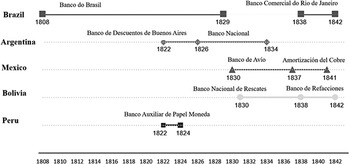
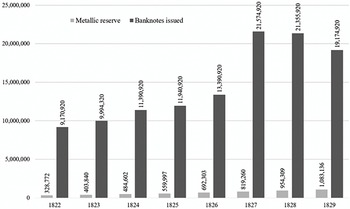
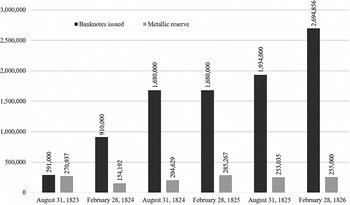
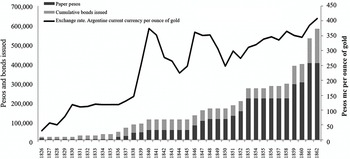
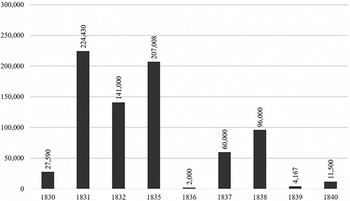
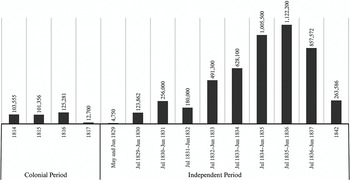
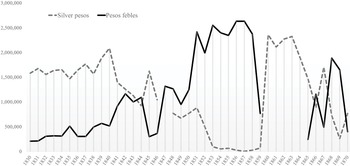
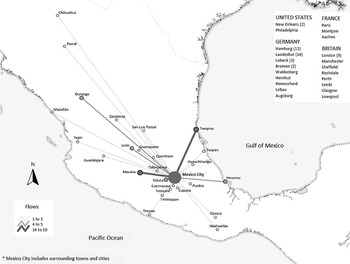
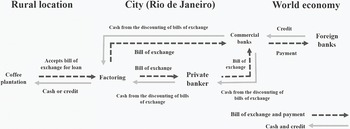

 Open access