


Introduction
Post-traumatic stress disorder (PTSD) is the second most common anxiety disorder treated in NHS Talking Therapies for anxiety and depression (NHSTT) services in England. In 2023–24, more than 41,000 completed treatments were carried out in NHSTT services where the presenting problem was PTSD (NHS Digital, 2024). The National Institute for Health and Care Excellence (NICE) recommends two main psychological treatments for treatments for PTSD in adults: interventions within the trauma-focused CBT class and, for non-combat related trauma, eye movement desensitisation reprocessing (EMDR) (NICE, 2018). The number of EMDR treatments for PTSD carried out by NHSTT services has grown significantly over recent years, but trauma-focused CBT remains the primary treatment (NHS Digital, 2021; NHS Digital, 2024).Trauma-focused CBT is an umbrella term for a range of therapies including cognitive processing therapy, cognitive therapy for PTSD, narrative exposure therapy and prolonged exposure therapy (National Institute for Health and Care Excellence, 2018). Cognitive therapy for PTSD (CT-PTSD), based upon the Ehlers and Clark (Reference Ehlers and Clark2000) cognitive model of PTSD, is the most widely used approach in NHSTT services (Belli et al., Reference Belli, Howell, Grey, Tiraboschi and Sim2025). Much of the evidence base for CT-PTSD comes from UK trials (National Institute for Health and Care Excellence, 2018) and the training and the supervision infrastructure is much better established than for other trauma-focused CBT therapies (Murray et al., Reference Murray, Grey, Warnock-Parkes, Kerr, Wild, Clark and Ehlers2022). Comparisons with prolonged exposure therapy and cognitive processing therapy suggest that all three therapies are effective, but that CT-PTSD offers more flexibility for NHS contexts (Moshier et al., Reference Moshier, Mahoney, Bovin, Marx and Schnurr2024; Schnurr et al., Reference Schnurr, Chard, Ruzek, Chow, Resick, Foa and Shih2022) and has lower dropout rates (Imel et al., Reference Imel, Laska, Jakupcak and Simpson2013; Penix-Smith and Swift, Reference Penix-Smith and Swift2025). The growth of EMDR treatment is supported by the growing evidence base and also by increased client demand that can be partly traced to the endorsement of public figures such as Prince Harry (Somerville, Reference Somerville2024).
A key measure of treatment effectiveness in NHSTT services was the proportion of clients who move from being in caseness at the start of treatment to no longer being in caseness at the end of treatment, based upon clients’ scores on standarised self-report measures of anxiety and depression (National Collaborating Centre for Mental Health, 2024). This is known as the recovery rate, and the national target was a 50% attainment. This outcome measure was replaced in 2024 by reliable improvement, a measure that assessed whether the size of score reduction exceeded measurement error on the questionnaires, and a combining of the two measures in reliable recovery (National Collaborating Centre for Mental Health, 2024). The recovery rate for treatment of PTSD in 2023–24 was 41% (NHS Digital, 2024). This rate is below the NHSTT target and the outcomes are probably poorer than those reported in the research literature on PTSD (Murray et al., Reference Murray, Grey, Warnock-Parkes, Kerr, Wild, Clark and Ehlers2022) and in specialist clinics (Ehlers et al., Reference Ehlers, Hackmann, Grey, Wild, Liness, Albert, Deale, Stott and Clark2014). Generally, investigations of the ‘research gap’ in outcomes have identified therapist adherence to treatment protocols as a key limiting factor (Murray et al., Reference Murray, Grey, Warnock-Parkes, Kerr, Wild, Clark and Ehlers2022). For example, in an effectiveness study of CT-PTSD in routine clinical care, Ehlers et al. (Reference Ehlers, Grey, Wild, Stott, Liness, Deale, Albert, Hackmann, Clark and Manley2013) found that treatment was less trauma-focused for patients with multiple traumas and social problems, and that more of their sessions dealt with non-trauma-related problems compared with other patients. The role of client factors such as shame and related self-critical cognitions have also been highlighted as reducing the effectiveness of trauma-focused therapies (Brady et al., Reference Brady, Warnock-Parkes, Barker and Ehlers2015; Harman and Lee, Reference Harman and Lee2010).
Adherence to treatment protocol has also been linked to the size of treatment effect in EMDR (de Jongh et al., Reference de Jongh, de Roos and El-Leithy2024). In a meta-analysis of the impact of methodological strengths and weaknesses on outcomes in EMDR studies, Maxfield and Hyer (Reference Maxfield and Hyer2002) found that a criterion of treatment fidelity measures moderately predicted larger treatment effects for adults with PTSD. The fidelity measures reported were intended to ensure adherence to the Shapiro 8-stage protocol (Carlson et al., Reference Carlson, Chemtob, Rusnak, Hedlund and Muraoka1998; Lee and Gavriel, Reference Lee and Gavriel1998; Rothbaum, Reference Rothbaum1997; Wilson et al., Reference Wilson, Becker and Tinker1995). Lee and Cuijpers (Reference Lee and Cuijpers2013), in a meta-analysis of the impact of bilateral eye movements on emotional memory processing, reported a similar impact in increasing effect size for study designs that promoted treatment fidelity through such measures as using a treatment manual, specifying therapist training and ensuring protocol adherence. A meta-analysis by Rasines-Laudes and Serrano-Pintado (Reference Rasines-Laudes and Serrano-Pintado2023) suggested a dose effect for EMDR, with bigger effect sizes associated with longer session length and greater session numbers. In both treatments, then, adherence to an active treatment protocol in which memory processing is a key active agreement is associated with better outcomes.
Like other trauma-focused therapies, EMDR involves revisiting traumatic memories and their associated meanings, emotions, and bodily sensations. Exposure to trauma memories can be difficult for clients to tolerate and may result in greater dropout, perhaps through symptom exacerbation (Pitman et al., Reference Pitman, Altman, Greenwald, Longpre, Macklin, Poiré and Steketee1991; Tarrier et al., Reference Tarrier, Pilgrim, Sommerfield, Faragher, Reynolds, Graham and Barrowclough1999). Psychological therapies that do not focus upon the trauma memories may be more easily tolerated but the absence of a trauma focus is associated with poorer outcomes (Bisson et al., Reference Bisson, Andrew, Roberts, Cooper and Lewis2013; Bradley et al., Reference Bradley, Greene, Russ, Dutra and Westen2005; Jonas et al., Reference Jonas, Cusack, Forneris, Wilkins, Sonis, Middleton, Feltner, Meredith, Cavanaugh, Brownley, Olmsted, Greenblatt, Weil and Gaynes2013). Concern about clients’ ability to tolerate memory processing had led to the advocacy of stabilisation phases at the start of treatment, but this is now seen as a delay to active intervention and is not recommended for either CT-PTSD (Murray et al., Reference Murray, Grey, Warnock-Parkes, Kerr, Wild, Clark and Ehlers2022) or EMDR (Boterhoven de Haan et al., Reference Boterhoven de Haan, Lee, Fassbinder, van Es, Menninga, Meewisse, Rijkeboer, Kousemaker and Arntz2020).
Unlike CT-PTSD, the focus on the trauma in EMDR is internal to the client and does not require explicit verbalisation to the therapist of the details of a traumatic incident (Shapiro, Reference Shapiro2018). Some adaptations, such as processing ‘blind to therapist’, allow EMDR to proceed with little or no disclosure by the client of the details of traumatic incidents that may be experienced as shaming (Blore and Holmshaw, Reference Blore and Holmshaw2013). Whilst there is not currently empirical evidence to suggest that EMDR is more effective for clients who are more reluctant to engage with explicit reliving, this view has become part of received clinical wisdom (Two Lights Therapy, 2025).
Although active treatment is evidently desirable, dropout is a significant negative treatment event. There is substantial evidence of poorer treatment outcomes when clients withdraw from therapy (Ehlers et al., Reference Ehlers, Grey, Wild, Stott, Liness, Deale, Albert, Hackmann, Clark and Manley2013). Studies of dropout in PTSD treatment have suggested an overall rate of around 18%, with a higher dropout amongst treatment modalities that involve memory-focused work (Lewis et al., Reference Lewis, Roberts, Gibson and Bisson2020). Hayward et al. (Reference Hayward, Richardson, Beattie and Bayliss2023) found some evidence that disengagement from therapy was associated with depressed mood and stressors related to living conditions. Evidence on dropout is confounded by the absence of agreed definitions and the paucity of reliable information, with some studies linking dropout to symptom worsening and others to symptom improvement (Lewis et al., Reference Lewis, Roberts, Gibson and Bisson2020). To start to build a more reliable evidence base, Lewis et al. recommended the systematic collection of symptom severity at the point of dropout.
Qualitative studies of clients’ experience of trauma focused psychological therapy have highlighted ambivalence around engaging in therapy, with clients reporting feeling hopeful but also daunted by the demands of therapy (Shearing et al., Reference Shearing, Lee and Clohessy2011; Vincent et al., Reference Vincent, Jenkins, Larkin and Clohessy2013). In a study of the experience of receiving treatment for PTSD from childhood trauma, both clients and therapists highlighted the importance and challenge of directly processing trauma memories, with therapists commenting on the difficulty of sticking to the treatment protocol and the temptation to avoid trauma processing (Boterhoven de Haan et al., Reference Boterhoven de Haan, Lee, Correia, Menninga, Fassbinder, Köehne and Arntz2021).
Meta-analyses comparing the effectiveness of trauma-focused CBT and EMDR have generally suggested that they have similar effectiveness (Bisson et al., Reference Bisson, Andrew, Roberts, Cooper and Lewis2013; Seidler and Wagner, Reference Seidler and Wagner2006; Wright et al., Reference Wright, Karyotaki, Cuijpers, Bisson, Papola, Witteveen, Suliman, Spies, Ahmadi, Capezzani, Carletto, Karatzias, Kullack, Laugharne, Lee, Nijdam, Olff, Ostacoli, Seedat and Sijbrandij2024). Some have found a slight superiority in impact for EMDR (Chen et al., Reference Chen, Zhang, Hu and Liang2015; Hudays et al., Reference Hudays, Gallagher, Hazazi, Arishi and Bahari2022). Although NICE (2018) recommends an identical 8 to 12 session treatment length for EMDR and CT-PTSD, there is also some evidence that EMDR is a more efficient treatment, achieving a significant effect in fewer treatment sessions (Mavranezouli et al., Reference Mavranezouli, Megnin-Viggars, Grey, Bhutani, Leach, Daly, Dias, Welton, Katona, El-Leithy, Greenberg and Stockton2020) The increasing role of EMDR in treatment for PTSD sometimes presents therapists with a dilemma about which therapy to recommend.
This study examines all clients with a presenting problem of PTSD who ended treatment with a South London NHS Talking Therapies for anxiety and depression service between April 2021 and March 2022. The host borough has an ethnically diverse population and was ranked in the highest centile for deprivation (Ministry of Housing, Communities & Local Government, 2019). The service offers two treatments for PTSD: cognitive therapy for PTSD (CT-PTSD) and EMDR. The service has expanded its EMDR offer, with all experienced high intensity therapists offered training and ongoing specialist supervision in this modality.
This study extends previous work such as Belli et al. (Reference Belli, Howell, Grey, Tiraboschi and Sim2025) by offering a detailed examination of the effectiveness of CT-PTSD and EMDR in routine practice for a wide range of demographic groups and focal traumas. It focuses specifically on two key aspects of treatment effectiveness: memory processing and therapy completion.
Method
Implementing CT-PTSD and EMDR in the service
All therapists delivering interventions in the service were either BABCP-accredited CBT practitioners (predominantly high-intensity CBT therapists or clinical psychologists), or trainees working towards accreditation. They received weekly supervision from supervisors who were BABCP-accredited practitioners. All therapists received additional monthly supervision for CBT cases from the Centre for Anxiety Disorders and Trauma, a specialist NHS service for the CBT treatment of anxiety disorders. Therapists who provided EMDR had additional supervision from an accredited EMDR supervisor once per month.
Settings and measures
NHSTT services routinely collect a minimum dataset for all clients, including demographic information and scores on standardised clinical measures at each contact (Clark, Reference Clark2018). A key measure of clinical outcome performance in services is the recovery rate: the proportion of clients moving from clinical caseness at the start of treatment to non-caseness at the end of treatment (National Collaborating Centre for Mental Health, 2024). Caseness is based on client self-reported scores on standardised measures of symptoms of depression and anxiety, the Patient Health Questionnaire-9 (PHQ-9; Kroenke et al., Reference Kroenke, Spitzer and Williams2001) and the Generalised Anxiety Disorder-7 (GAD-7; Spitzer et al., Reference Spitzer, Kroenke, Williams and Löwe2006). If clients present with symptoms of PTSD, then alongside the PHQ-9, the score on the PTSD Checklist for DSM-5 (PCL-5; Blevins et al., Reference Blevins, Weathers, Davis, Witte and Domino2015) is used to determine clinical caseness and recovery rather than the GAD-7. The PHQ-9, GAD-7 and PCL-5 are collected at every appointment.
Procedure and design
We used electronic healthcare records from the services to compare the clinical outcomes of clients who were discharged between 1 April 2021 and 31 March 2022. The patient record system was IAPTUS, provided by Mayden. Following the export of data from IAPTUS, the research team, made up of clinicians from the service, manually looked through each case and reviewed clinical as well as non-clinical notes, to extract further information regarding session content.
We used the following definitions to extract information from the clinical records.
Recovery
The recovery calculations followed the guidance in the NHSTT manual (National Collaborating Centre for Mental Health, 2024). Where a client had completed two or more PCL-5 questionnaires, the PHQ-9 and PCL-5 were used to calculate recovery. Where a client had completed fewer than two PCL-5 questionnaires, the PHQ-9 and GAD-7 were used.
Dropout
A dropout was defined as any client who terminated therapy early without agreement with the therapist, having attended at least two treatment sessions but less than nine. Any client who had nine or more attended sessions was analysed as though they had completed treatment. This rule was applied on the basis that a client attending nine sessions would have experienced a substantial intervention, and to avoid counting as dropouts clients who missed their final session, a not uncommon pattern towards the conclusion of therapy.
Treatment modality
Treatment modality was determined by the content of session and supervision notes as indicated below.
Assessment: where a decision on treatment modality within service was not made, and the client was either referred on or dropped out, having had a maximum of two sessions in addition to the initial triage appointment.
EMDR and CT-PTSD: where the session notes and/or supervision notes indicated that a trauma-focused treatment was intended, including where clients dropped out of treatment. This group included a small number of cases where some elements of CT-PTSD were undertaken, for example grounding and stimulus discrimination, but no trauma memory updating.
Non-Trauma-Focused treatment (NTFT): either counselling or a CBT intervention for depression.
Presenting problem
In addition to the requirement of exposure to a major traumatic event, three symptoms are central to a decision to offer a treatment for PTSD: re-experiencing the traumatic event, avoiding reminders of the trauma, and alterations in arousal and reactivity (American Psychiatric Association, 2013). References to those symptoms in treatment or supervision notes were recorded.
Treatment content
Memory-focused work: the research team reviewed the notes to check for presence of memory-focused work and to review the number of sessions in which this was undertaken. This was later validated by a second member of the research team (N.L. or N.M.) to ensure the reliability of ratings . For CT-PTSD, the presence of memory-focused work was inferred from references in the notes to reliving of trauma memories, including creating a trauma narrative, and reliving with updating of hotspots. For EMDR, it was taken from references to memory processing, flashforward or future template procedures. Preparatory EMDR procedures such as establishing a safe (calm) place and resource installation were not recorded as memory processing.
During the analysis stage, a member of the research team (N.L.) extracted the data and disseminated descriptive outcomes to the research team. The dataset was then analysed using JASP 0.19.3.0 software (Goss-Sampson, Reference Goss-Sampson2025).
Participants
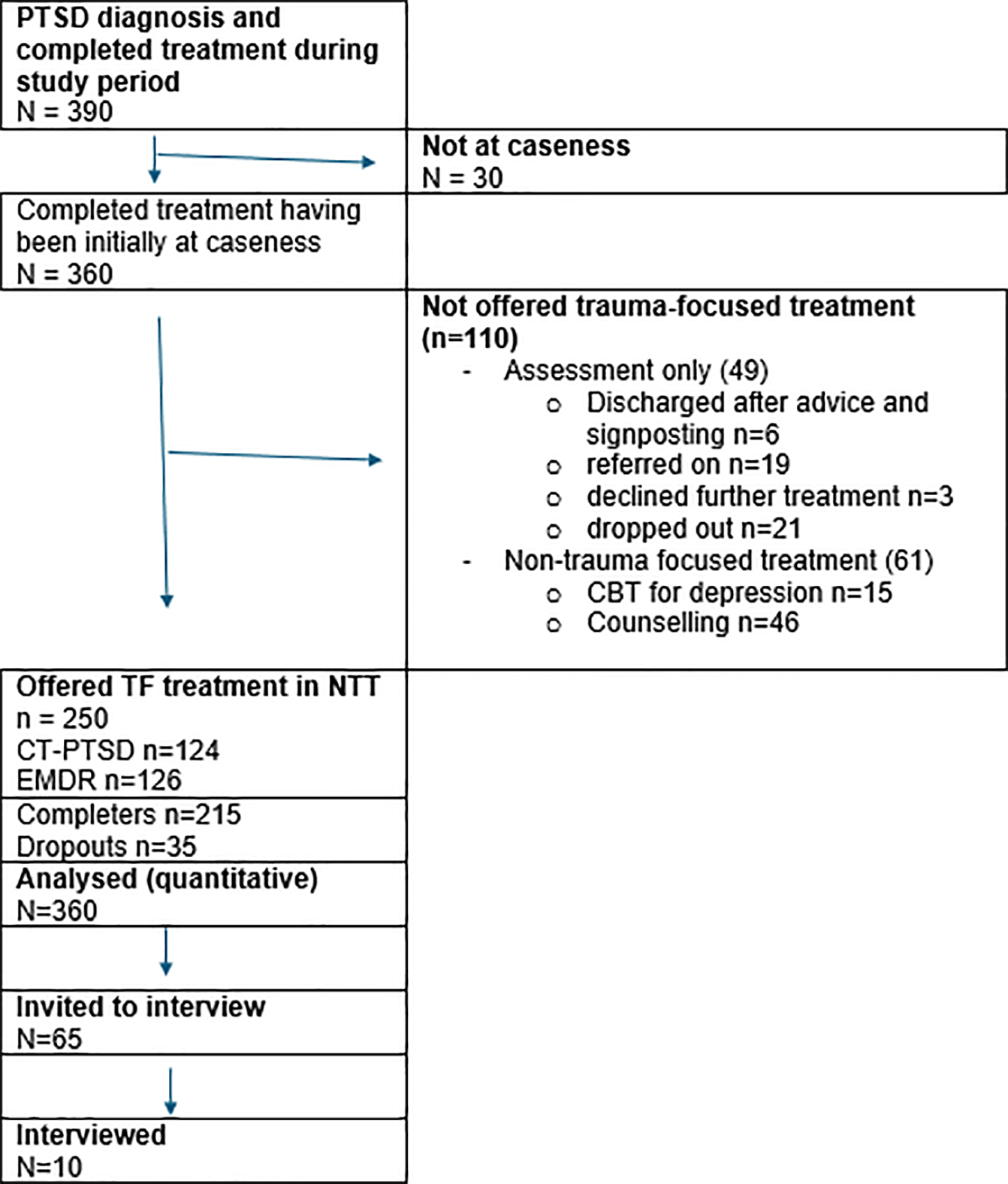
The study included all clients discharged between April 2021 and March 2022 with a problem descriptor of PTSD, who ended treatment having attended at least two sessions coded as ‘treatment’, including the initial triage. Clients who were not at ‘caseness’ at first session were excluded from the analysis, on the basis that they could not be included in recovery calculations. The participant numbers are shown in Fig. 1.
Patient flow.

Analysis
Differences in score changes were assessed across a range of variables, including trauma type, ethnicity, gender, and the presence of multiple traumas, using independent t-tests.
To evaluate differences in recovery rates, we employed a chi-square goodness of fit test or a Fisher’s exact test.
An analysis involving one-way ANOVA and subsequent post-hoc testing was conducted to examine variations in the average number of sessions attended among different ethnic groups.
Results
1. Who receives trauma treatment?
We were interested in whether there were any systematic differences between clients who completed treatment in which a trauma-focused treatment recommended by NICE was attempted (TFT) and those clients who undertook a non trauma-focused treatment within the service (NTFT) or only received an assessment. Of the 360 clients, 250 (69.4%) received a NICE recommended therapy, evenly split between CT-PTSD (124, 34.4%) and EMDR (126, 35%); 49 (13.6%) received an assessment only and 61 (16.9%) received a non-trauma focused treatment. The assessment-only group included 19 clients (5.3%) who were referred to more specialist treatment and 24 (6.7%) who dropped out after assessment or who declined treatment. The majority of the clients in the NTFT group received counselling (46, 12.8%), with a further 15 (4.2%) receiving CBT for depression.
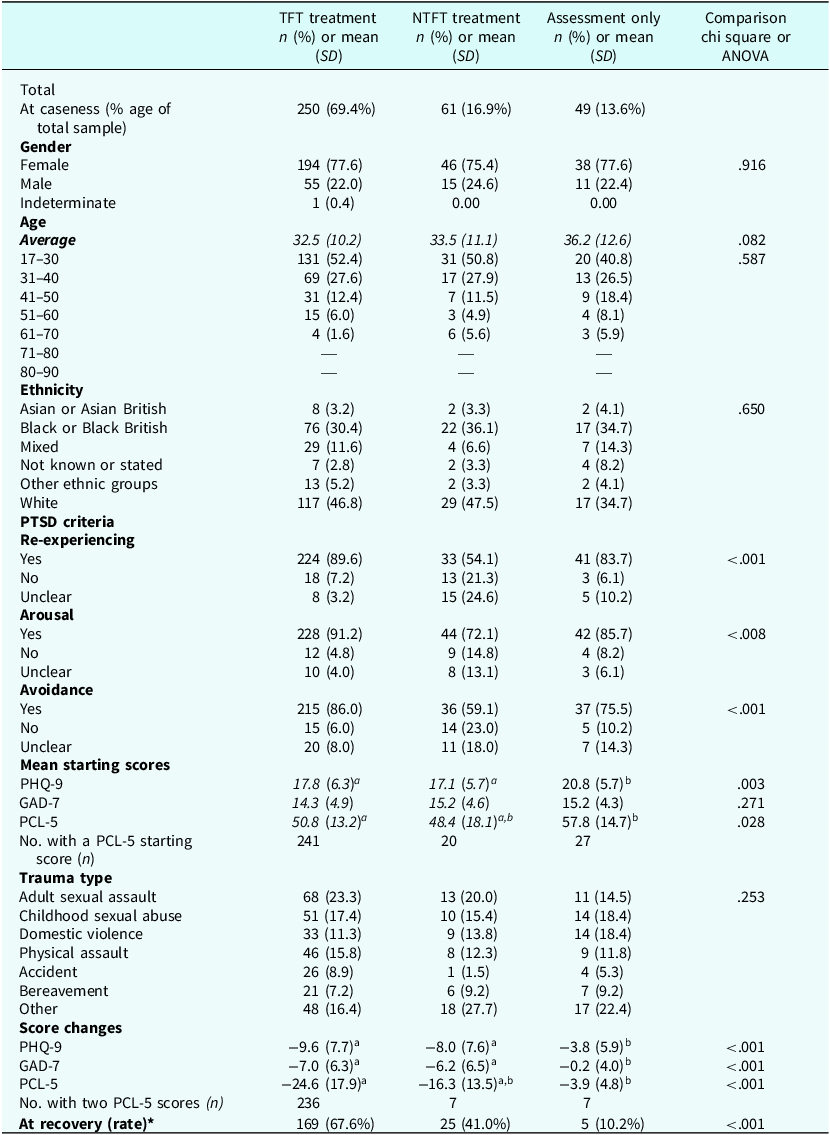
As Table 1 shows, there were no significant differences in gender, age or ethnicity between the TFT and the NTFT and assessment groups, or in focal trauma type.
TFT vs NTFT treatment

Table 1. Long description
The table compares PTSD treatment, non-PTSD treatment, and assessment only across various categories. It has 20 rows and 5 columns. The columns are labeled PTSD treatment, Non-PTSD treatment, Assessment only, and Comparison. The rows are labeled with categories such as Total, Gender, Age, Ethnicity, PTSD criteria, Mean starting scores, Trauma type, and Score changes. Each row provides data in percentages or mean (SD) for each category. Notable trends include higher percentages of caseness in the PTSD treatment group compared to non-PTSD treatment and assessment only groups. The table also shows mean starting scores and score changes for various criteria.
Superscripts indicate post-hoc comparisons. Shared superscripts indicate no significant difference.
There were some significant differences between the groups of clients. The proportion of clients whose records document the three main diagnostic criteria of re-experiencing, arousal and avoidance was significantly lower for the assessment and particularly the NTFT groups. For example, re-experiencing was reported in 89.6% of TFT clients but in 54.1% of NTFT clients and 83.7% of assessment clients (χ2 (4,N=360)=47.75, p<.001).
Whilst mean starting scores for general anxiety were similar, the assessment-only group had a significantly higher mean depression score (M=20.8, SD=5.7) than both the NTFT group (M=17.1, SD=5.8; p=.005) and the TFT group (M=17.8, SD=6.3; p=.005) as indicated by a one-way ANOVA F 2 357=5.86, p=.003). The assessment-only group had a significantly higher score on the PTSD symptom measure (M=57.8, SD=14.7) than the TFT group (M=50.8. SD=13.2, p=.034). However, whilst initial PCL-5 scores were recorded for 242 (97%) of TFT clients, they were only recorded for 20 (33%) of NTFT clients and 27 (55%) of assessment-only clients.
Clients receiving CT-PTSD or EMDR experienced similar reductions in depression and general anxiety scores as NTFT clients, significantly greater than those in the assessment group (p<.001). Post-hoc Tukey comparisons revealed that the TFT group (M=–25.7, SD=0.73) showed significantly greater reductions on the PCL-5 than both the NTFT group (M=−2.7, SD=8.0), p<.001), and the assessment group (M=−3.4, SD=4.7), p=.001) albeit only seven (11%) of NTFT clients had two or more PCL-5 scores compared with 94% of TFT clients. TFT clients (67.6%) were significantly more likely to reach recovery than NTFT clients (41.0%, χ2(2,N=360)=60.67, p<.001).
As Table 2 shows, this pattern of significant score reduction short of recovery for NTFT is maintained when the current Talking Therapy outcome measures are used, with EMDR (64.3%) and CT-PTSD (66.9%) resulting in significantly higher reliable recovery than NTFT and assessment-only (38.3%, p<.001). Although reliable improvement rates were higher for EMDR (80.2%) and CT-PTSD (84.7%) than NTFT and assessment-only (77.0%), the difference is not significant (p=.079).
Reliable improvement and reliable recovery

Table 2. Long description
The table compares the effectiveness of EMDR, CT-PTSD, and NTFT and assessment therapies for PTSD recovery. It has four rows and five columns. The columns are labeled EMDR n (%), CT-PTSD n (%), NTFT and assessment n (%), and p. The rows are labeled Total cases, Recovered, Reliably improved, and Reliably recovered. Row 1: Total cases, EMDR 126, CT-PTSD 124, NTFT and assessment 110. Row 2: Recovered, EMDR 82 (65.1 percent), CT-PTSD 87 (70.2 percent), NTFT and assessment 25 (41.0 percent). Row 3: Reliably improved, EMDR 101 (80.2 percent), CT-PTSD 105 (84.7 percent), NTFT and assessment 47 (77.0 percent). Row 4: Reliably recovered, EMDR 81 (64.3 percent), CT-PTSD 83 (66.9 percent), NTFT and assessment 24 (39.3 percent). The p-values are provided for each comparison.
Outcomes based on PHQ-9 and PCL-5 scores for 118 (93.7%) of EMDR cases, 118 (95.2%) of CT-PTSD cases and 14 (12.7%) of NTFT cases. The remainder are based upon PHQ-9 and GAD-7 scores.
2. Who is offered EMDR compared with CT-PTSD?
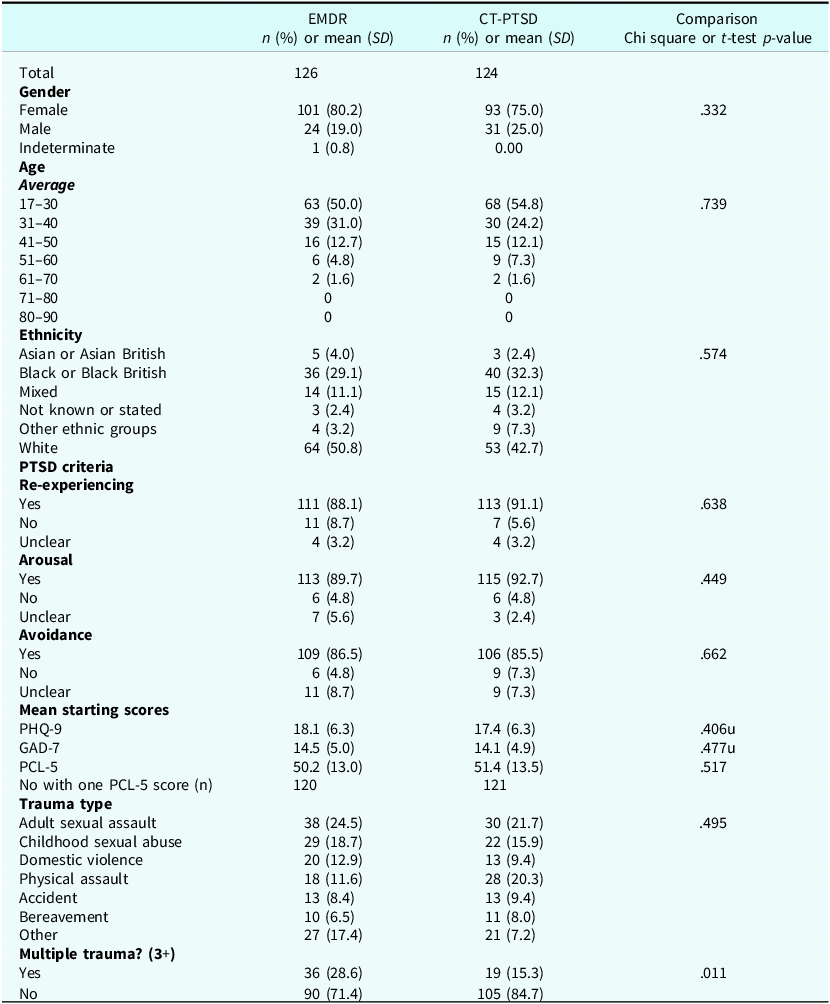
As Table 3 shows, there were no significant differences between the two trauma-focused treatment groups in terms of demographics, key diagnostic markers, presenting trauma or mean starting scores. The only significant difference between the two treatment groups was that a higher proportion of clients who were offered EMDR had reported PTSD symptoms to 3+ traumatic experiences than clients who were offered CT-PTSD (χ2 (1,N=250)=6.40, p=.011).
EMDR clients vs CT-PTSD clients, presentation and demographics

Table 3. Long description
A table comparing demographics, diagnostic markers, and trauma experiences between EMDR and TfCBT treatment groups. The table has 18 rows and 5 columns. Column headers are EMDR, TfCBT, Comparison, Chi square or t-test p-value. Row labels include Total, Gender, Age, Ethnicity, PTSD criteria, Mean starting scores, Trauma type, and Multiple trauma. Each row provides data for both EMDR and TfCBT groups, along with comparison values. Notable trends include the higher proportion of clients with PTSD symptoms related to 3 traumatic experiences in the EMDR group compared to the TfCBT group.
All at caseness.
3. CT-PTSD vs EMDR
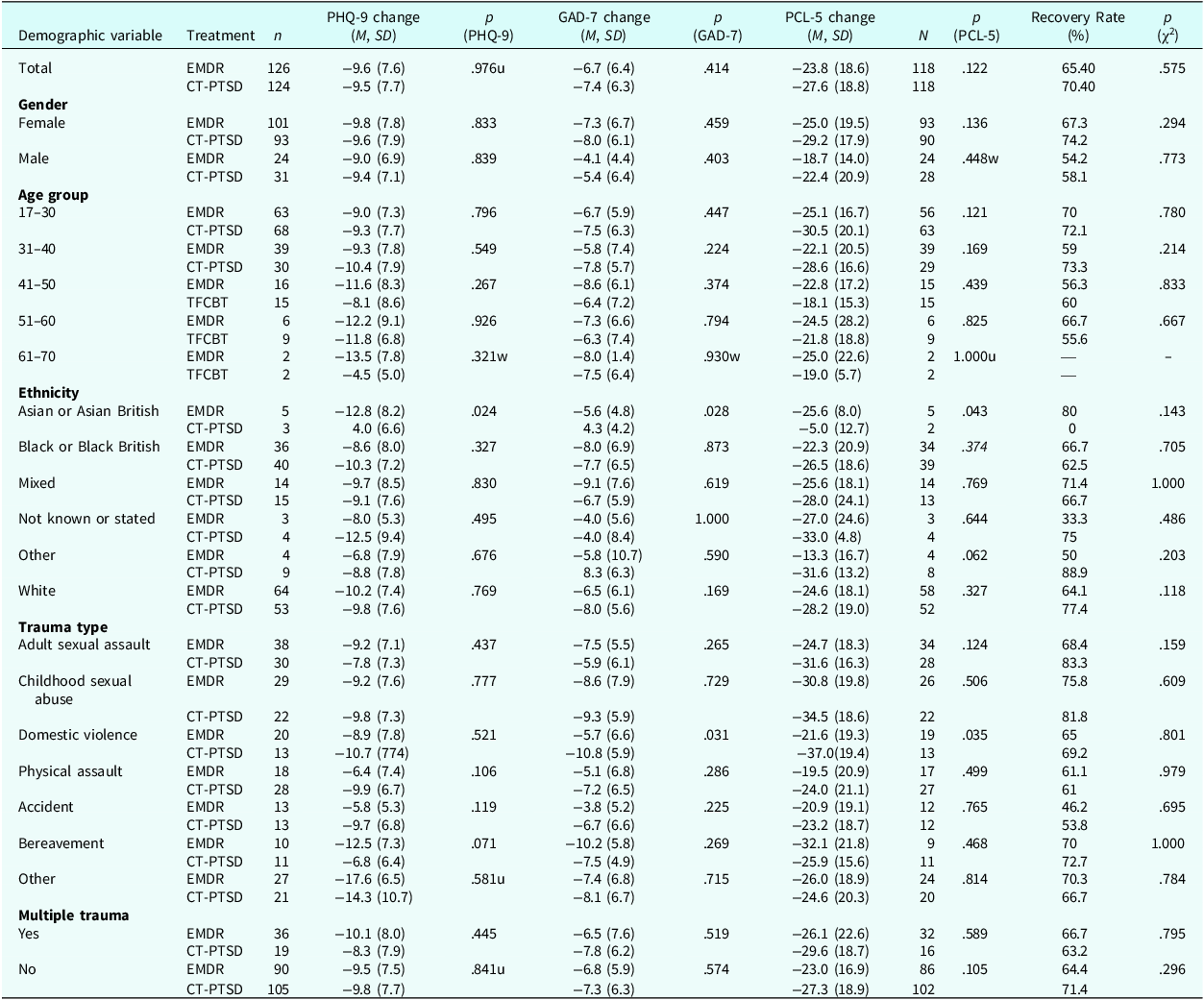
Recovery calculations were based upon PHQ-9 and PCL-5 scores for 118 (94%) of EMDR and 118 (95%) of CT-PTSD clients, with the PHQ-9 and the GAD-7 used for the remainder. As Table 4 shows, there was no association between modality of trauma-focused treatment and outcome: CT-PTSD (70.2%) and EMDR (65.1%) had similar overall recovery rates (χ2 (1,N=263)=0.31, p=.575) and there were no significant differences in the score changes on PHQ-9, GAD-7 and PCL-5. There were no significant differences in recovery rate or symptom score reduction by gender, age or ethnicity, except for Asian British clients where the sample size was too small to draw conclusions. There were also no significant differences in outcome by focal trauma type, with the sole exception of a greater reduction in scores with CT-PTSD where the trauma was domestic violence on both the GAD-7 (t 31=2.26, p=0.031, d=0.81) and the PCL-5 (t 30=2.21, p=.035, d=0.79). Clients reporting intrusive memories from multiple traumas did equally well under each modality.
EMDR was on average 1.2 sessions (M=11.9, SD=4.3) longer than CT-PTSD (M =10.8, SD=4.1; U=8953.5, p=.045). A comparison of clients who moved to recovery with clients who did not was made, excluding clients who had dropped out and those who did not undertake memory processing. In this comparison, EMDR clients at recovery had on average 1 more memory-focused session (M=6.8, SD=3.2) than non-recovered clients (M=5.8, SD=3.3; U=1284.5, p=.046). For CT-PTSD clients, there was no significant difference in memory-focused session numbers between recovered (M=4.6, SD=1.9) and non-recovered clients (M=4.5, SD=2.9, U=735.5, p=.554).
4. Clients who did not complete therapy
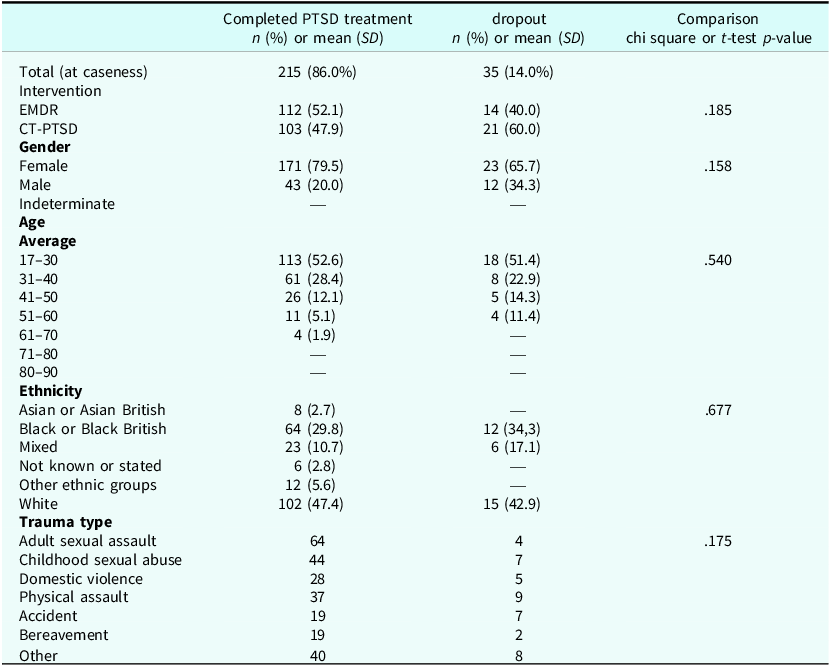
Of the 250 clients who began EMDR or TCBT, 35 (14.0%) dropped out of treatment. A higher proportion of CT-PTSD clients (21, 16.9%) dropped out of treatment than EMDR clients (14, 11.1%) but this difference was not significant. As Table 5 shows, there were no significant demographic differences between dropouts and completers, nor of focal trauma.
EMDR vs CT-PTSD outcomes

Table 4. Long description
The table compares EMDR and CT-PTSD treatments across various demographic variables and outcomes. It includes columns for treatment type, sample size, PHQ-9 change scores, GAD-7 change scores, PCL-5 change scores, recovery rates, and p-values for each comparison. The table is divided into rows for different demographic variables such as gender, age group, ethnicity, trauma type, and multiple trauma. Each row provides specific data points for EMDR and CT-PTSD treatments, including mean and standard deviation for change scores, and recovery rates. Notable trends include variations in recovery rates and change scores across different demographic groups and trauma types.
*all at caseness.
PCL-5 change scores exclude cases where there was no second score.
u, Mann–Whitney U-test.
W, Welch test.
Demographics of dropouts vs completed treatments

Table 5. Long description
The table compares demographics of dropouts versus completed PTSD treatments across various categories. It has 12 rows and 5 columns. The columns are labeled Completed PTSD treatment, dropout, and Comparison. The rows are labeled Total, Intervention, EMDR, CT-PTSD, Gender, Female, Male, Indeterminate, Age, Average, 17-30, 31-40, 41-50, 51-60, 61-70, 71-80, 80-90, Ethnicity, Asian or Asian British, Black or Black British, Mixed, Not known or stated, Other ethnic groups, White, Trauma type, Adult sexual assault, Childhood sexual abuse, Domestic violence, Physical assault, Accident, Bereavement, Other. Row 1: Completed PTSD treatment, 215 (86.0 percent); dropout, 35 (14.0 percent); Comparison, chi square or t-test p-value. Row 2: Intervention, blank; dropout, blank; Comparison, blank. Row 3: EMDR, 112 (52.1 percent); dropout, 14 (40.0 percent); Comparison, 0.185. Row 4: CT-PTSD, 103 (47.9 percent); dropout, 21 (60.0 percent); Comparison, blank. Row 5: Gender, blank; dropout, blank; Comparison, blank. Row 6: Female, 171 (79.5 percent); dropout, 23 (65.7 percent); Comparison, 0.158. Row 7: Male, 43 (20.0 percent); dropout, 12 (34.3 percent); Comparison, blank. Row 8: Indeterminate, blank; dropout, blank; Comparison, blank. Row 9: Age, blank; dropout, blank; Comparison, blank. Row 10: Average, blank; dropout, blank; Comparison, 0.540. Row 11: 17-30, 113 (52.6 percent); dropout, 18 (51.4 percent); Comparison, blank. Row 12: 31-40, 61 (28.4 percent); dropout, 8 (22.9 percent); Comparison, blank. Row 13: 41-50, 26 (12.1 percent); dropout, 5 (14.3 percent); Comparison, blank. Row 14: 51-60, 11 (5.1 percent); dropout, 4 (11.4 percent); Comparison, blank. Row 15: 61-70, 4 (1.9 percent); dropout, blank; Comparison, blank. Row 16: 71-80, blank; dropout, blank; Comparison, blank. Row 17: 80-90, blank; dropout, blank; Comparison, blank. Row 18: Ethnicity, blank; dropout, blank; Comparison, 0.677. Row 19: Asian or Asian British, 8 (2.7 percent); dropout, blank; Comparison, blank. Row 20: Black or Black British, 64 (29.8 percent); dropout, 12 (34.3 percent); Comparison, blank. Row 21: Mixed, 23 (10.7 percent); dropout, 6 (17.1 percent); Comparison, blank. Row 22: Not known or stated, 6 (2.8 percent); dropout, blank; Comparison, blank. Row 23: Other ethnic groups, 12 (5.6 percent); dropout, blank; Comparison, blank. Row 24: White, 102 (47.4 percent); dropout, 15 (42.9 percent); Comparison, blank. Row 25: Trauma type, blank; dropout, blank; Comparison, 0.175. Row 26: Adult sexual assault, 64; dropout, 4; Comparison, blank. Row 27: Childhood sexual abuse, 44; dropout, 7; Comparison, blank. Row 28: Domestic violence, 28; dropout, 5; Comparison, blank. Row 29: Physical assault, 37; dropout, 9; Comparison, blank. Row 30: Accident, 19; dropout, 7; Comparison, blank. Row 31: Bereavement, 19; dropout, 2; Comparison, blank. Row 32: Other, 40; dropout, 8; Comparison, blank.
All at caseness.
Chi-square tests were used for categorical variables (e.g. gender, age group, ethnicity, trauma type).
Depression (PHQ-9) scores
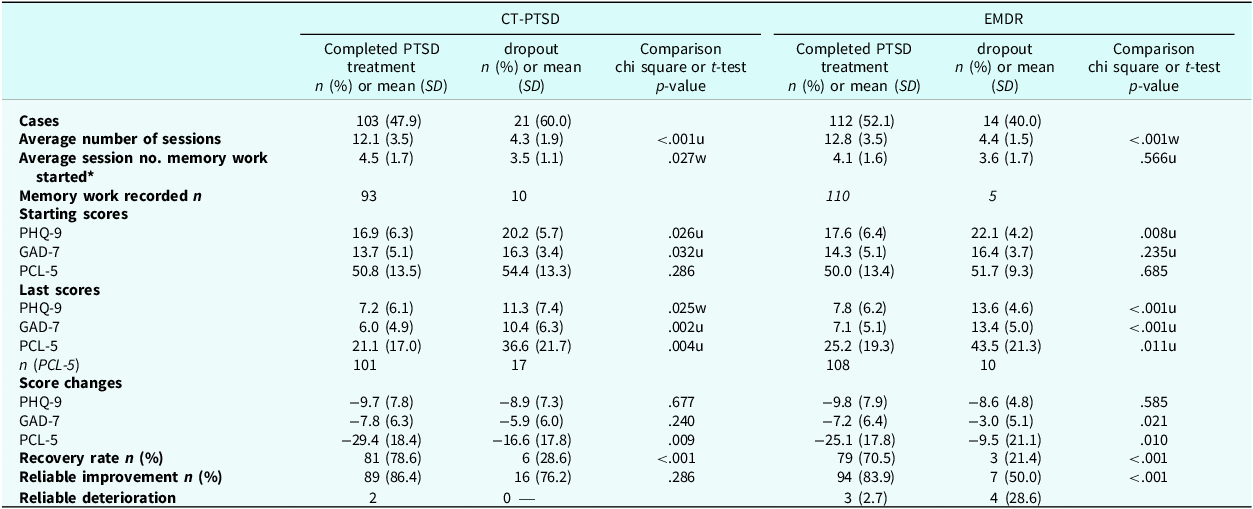
Table 6 shows that clients who dropped out had significantly higher depression scores at the start of treatment than completing clients for both CT-PTSD (M=20.2 vs M=16.9, U=746.5, p=.026) and EMDR (M=22.1 vs M=17.6, U=444.5, p=.008). Score reduction on the PHQ-9 was similar for dropouts and completers in both treatments. However, final PHQ-9 scores were significantly higher for dropouts for both treatments (CT-PTSD, M=11.3 vs M=7.2, t 25.75=−2.38, p=.025; EMDR, M=13.6 vs M=7.8; U=302.0, p<.001).
General anxiety (GAD-7) scores
Dropouts from CT-PTSD but not EMDR scored significantly higher on the GAD-7 (M=16.3, SD=3.4) at the start of treatment than those who completed treatment (M=13.7, SD=5.1; U=760.0, p=.032). Completing EMDR clients but not CT-PTSD clients saw a significantly greater reduction in their GAD-7 scores (M=−7.2 vs M=–3.0, t 124=−2.34, p=.021). Final GAD-7 scores were significantly higher for dropouts for both treatments (CT-PTSD, M=10.3 vs M=6.0, U=628.0, p=.002; EMDR, M=13.4 vs M=7.1, U=284.0, p<.001).
PTSD (PCL-5) scores
There was no significant difference in the starting PCL-5 scores between completers and dropouts for either treatment but there was a significantly greater reduction in both interventions for clients completing treatment than for clients dropping out (CT-PTSD, M=−29.4 vs M=−16.6, t 116=−2.66, p=.009; EMDR; M=−25.1 vs M=−9.5, t 116=−2.61, p=.010).
Recovery and reliable improvement
There was a significant difference in recovery rates between completers and dropouts in both CT-PTSD (78.6% vs 28.6%; χ2 (1,N=124)=20.89, p<.001) and EMDR (70.5% vs 21.5%; χ2 (1,N=126)=13.21, p<.001. There was also a significant difference in reliable improvement rates in EMDR (83.9% vs 50.0%); χ2 (1,N=126)=17.37, p<.001), but not in CT-PTSD.
Treatment content
For CT-PTSD, dropouts received memory-focused interventions earlier in treatment (M=3.5, SD=1.1) than completers (M=4.5, SD=1.7, t 14.6=2.46, p=.027). The difference was not significant for EMDR.
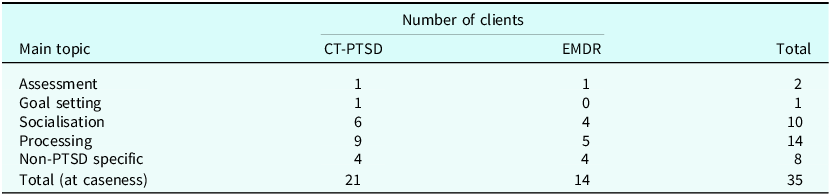
The main topics of the final session before dropout are given in Table 7. In 24 cases (68.6%) the content was either a memory-focused intervention or preparing for memory-focused treatment.
Treatment pattern and score changes for dropouts vs completed treatments by intervention

Table 6. Long description
The table compares treatment patterns and score changes for dropouts versus completed treatments by intervention, specifically CT-PTSD and EMDR. It has 21 rows and 10 columns. The columns are labeled as Completed PTSD treatment, dropout, Comparison for CT-PTSD, and Completed PTSD treatment, dropout, Comparison for EMDR. The rows include Cases, Average number of sessions, Average session no. memory work started, Starting scores (PHQ-9, GAD-7, PCL-5), Last scores (PHQ-9, GAD-7, PCL-5), Score changes (PHQ-9, GAD-7, PCL-5), Recovery rate, and Reliable improvement. Each cell contains values or mean scores with standard deviations where applicable. Notable trends include higher recovery rates and reliable improvement percentages for completed treatments compared to dropouts in both interventions.
*Excludes where memory session work did not start. For continuous variables, independent samples t-tests, Welch or Mann-Whitney U-tests were applied as appropriate.
Content of session preceding dropout

Table 7. Long description
A table comparing the number of clients by main topic and treatment type. The table has 6 rows and 4 columns. The columns are labeled ‘Main topic’, ‘Number of clients’, ‘CT-PTSD’, ‘EMDR’, and ‘Total’. The rows are labeled ‘Assessment’, ‘Goal setting’, ‘Socialisation’, ‘Processing’, ‘Non-PTSD specific’, and ‘Total (at caseness)’. Row 1: Assessment, 1, 1, 2. Row 2: Goal setting, 1, 0, 1. Row 3: Socialisation, 6, 4, 10. Row 4: Processing, 9, 5, 14. Row 5: Non-PTSD specific, 4, 4, 8. Row 6: Total (at caseness), 21, 14, 35.
Discussion
This retrospective study examined the experience of clients with a diagnosis of PTSD ending treatment during 2021–22 in a South London NHS Talking Therapies for anxiety and depression service, combining demographic, treatment and outcomes data.
Who receives trauma-focused therapy?
In this study, there were no significant demographic differences between clients receiving a trauma-focused treatment and those who did not. The non-trauma-focused treatment group had the lowest proportion of client records noting the key diagnostic criteria for PTSD. It is likely therefore that some of these clients were incorrectly recorded with a presenting problem of PTSD, representing weaknesses in the service procedures for reassessing and revising the recorded presenting problem. Limitations in the accuracy of presenting problems recorded in Talking Therapy services have been raised in a number of studies, including unrecorded co-morbidity (Hepgul et al., Reference Hepgul, King, Amarasinghe, Breen, Grant, Grey, Hotopf, Moran, Pariante, Tylee, Wingrove, Young and Cleare2016), misdiagnosis of medically unexplained symptoms (Geraghty and Scott, Reference Geraghty and Scott2020) and unidentified relational and interpersonal issues (Zavlis, Reference Zavlis2023). The preference for a non-trauma-focused treatment may also reflect client choice or lack of readiness for what has been described in some patient experience studies as a daunting task of processing trauma memories (Shearing et al., Reference Shearing, Lee and Clohessy2011; Vincent et al., Reference Vincent, Jenkins, Larkin and Clohessy2013). It is also worth noting that in this type of retrospective study, the accuracy of the information is dependent upon the completeness of clinician records, and false negatives cannot be discounted.
In terms of outcomes, the counselling and CBT for depression clients saw similar reductions in their depression and general anxiety scores, but their higher starting depression scores resulted in a lower recovery rate. A second PTSD measure was only completed in a small proportion of cases, but showed a significantly smaller reduction than the trauma-focused treatments. These findings are consistent with the accumulation of evidence suggesting that trauma-focused therapies are more effective in reducing specific trauma symptoms than non-trauma-focused therapies (e.g. Bisson et al., Reference Bisson, Andrew, Roberts, Cooper and Lewis2013; Bradley et al., Reference Bradley, Greene, Russ, Dutra and Westen2005; Jonas et al., Reference Jonas, Cusack, Forneris, Wilkins, Sonis, Middleton, Feltner, Meredith, Cavanaugh, Brownley, Olmsted, Greenblatt, Weil and Gaynes2013). It also suggests that the depression and general anxiety measures are less sensitive in detecting change in PTSD symptoms, supporting the emphasis in the national programme on using anxiety disorder specific measures (National Collaborating Centre for Mental Health, 2024).
How do EMDR and CT-PTSD compare?
The two treatment groups were very similar in terms of demography, focal trauma, diagnostic completeness and starting severity on self-report measures. CT-PTSD and EMDR were similarly effective, with very similar overall recovery rates and mean score changes, and no significant differences in outcome based on gender, age, ethnicity or presenting trauma. This finding in routine practice is consistent with most findings from comparison trials and meta-analyses (Wright et al., Reference Wright, Karyotaki, Cuijpers, Bisson, Papola, Witteveen, Suliman, Spies, Ahmadi, Capezzani, Carletto, Karatzias, Kullack, Laugharne, Lee, Nijdam, Olff, Ostacoli, Seedat and Sijbrandij2024).
The similar size and makeup of the two treatment groups occurred without intentional design. The service had issued no specific guidance on when to use each treatment approach, encouraging therapists to decide the modality in consultation with their clients. One therapist preference revealed by the study was for offering EMDR in cases of multiple focal traumas. This preference was not, however, supported by the treatment outcomes, which were very similar. Overall, the very similar outcomes and resource use here suggest that a pragmatic treatment allocation strategy based upon client preference and therapist training needs is appropriate. This is particularly important because, as the results on dropout suggest, avoiding a premature end to therapy is a key step towards a better outcome, and giving the client an open choice of therapies could be a helpful part of engagement A meta-analysis by Swift et al. (Reference Swift, Callahan, Cooper and Parkin2018) found a modest but significant effect in reducing dropout and increasing the likelihood of benefit from giving clients their choice of therapies.
In terms of resource use, EMDR treatments took on average 1.2 sessions longer than CT-PTSD, a finding that was surprising to local practitioners (personal communication) and not in line with reports of greater efficiency for EMDR (e.g. Mavranezouli et al., Reference Mavranezouli, Megnin-Viggars, Grey, Bhutani, Leach, Daly, Dias, Welton, Katona, El-Leithy, Greenberg and Stockton2020). Given the relatively high probability value (p=.045) this is only a tentative finding, but it was consistent with the recent analysis by Belli et al. (Reference Belli, Howell, Grey, Tiraboschi and Sim2025) which found clients in routine practice receiving EMDR treatment had a mean 2.3 sessions more. In this study, recovery in EMDR treatment was associated with higher numbers of sessions in which memory processing had taken place. Again, this is a tentative finding not far below the significance cut-off (p=.035) but it is consistent with the dose effect suggested by Rasines-Laudes and Serrano-Pintado (Reference Rasines-Laudes and Serrano-Pintado2023). This combination of higher average sessions and the importance of a high proportion of memory-processing sessions in EMDR treatment can be taken together with the evidence about the association between fidelity to the Shapiro protocol (Maxfield and Hyer, Reference Maxfield and Hyer2002) as a reminder about the danger of therapist drift that has been noted both in PTSD treatment (Ehlers et al., Reference Ehlers, Grey, Wild, Stott, Liness, Deale, Albert, Hackmann, Clark and Manley2013) and more widely in psychological therapies (Waller, Reference Waller2009).
However, this support for therapists to focus on delivering the active elements of treatment needs to acknowledge the nuanced findings around dropout. Dropout tended to occur early in treatment, by the stage that most clients in this study had seen some improvement in symptoms and was often associated with preparation for or the start of memory-focused work. For CT-PTSD, there was a tentative finding (p=.027) that treatment completers started memory-focused work later than dropouts. Together with the qualitative reports of client apprehension about memory work (Boterhoven de Haan et al., Reference Boterhoven de Haan, Lee, Correia, Menninga, Fassbinder, Köehne and Arntz2021) and evidence that this phase of treatment can produce initial symptom deterioration (Tarrier et al., Reference Tarrier, Pilgrim, Sommerfield, Faragher, Reynolds, Graham and Barrowclough1999), it is a reinforcement of the need for careful preparation with clients before starting memory work. This is not advocacy for a stabilisation phase – the mean session difference was one session – but a suggestion that time spent eliciting client fears about the impact of revisiting memories, sharing the possibility of short-term symptom exacerbation and developing coping strategies in advance could be valuable.
Strengths and limitations
It was a strength of this study that the sample was all clients consecutively discharged in a single service over 12 months. The sample was ethnically and socio-economically diverse and included clients with a wide range of traumas. Therapists with different levels of experience and training delivered the therapy in routine clinical care. These factors increase the generalisability of the findings.
The research was based upon a notes audit and is therefore subject to limitations of accuracy and completeness in therapist recording. A specific limitation of this method is the possibility of false negatives: for example, where clinical interventions were delivered but not recorded. The notes audit was carried out by a team of researchers, so inconsistencies in data collection cannot be ruled out, although sample checks were carried out to minimise this risk. The research itself highlights limitations in the accuracy of diagnosis within the service.
Practice implications
The findings that EMDR and CT-PTSD were similarly efficacious regardless of client demography and presenting trauma are important for services and therapists in planning treatment, suggesting that where both therapies are available, client preference can be a key factor in determining choice of intervention. The study suggests that the start of memory-processing work is a period of heightened risk for client dropout, and that therapists should take steps to mitigate this outcome.
Key practice points
-
(1) EMDR and CT-PTSD appear similarly effective across different client groups and trauma type.
-
(2) Client preference is an important factor in deciding between CT-PTSD or EMDR.
-
(3) The start of memory-focused work is a moment of vulnerability to dropout and should be well-prepared for.
-
(4) Future research should further focus on the factors which contribute to engagement and therapeutic alliance in trauma-focused therapy.
Data availability statement
The data that support the findings of this study are available on request from the corresponding author, N. McNulty.
Acknowledgements
None.
Author contributions
Nadia Lohawala: Conceptualization (equal), Data curation (lead), Formal analysis (lead), Investigation (lead), Methodology (equal), Project administration (supporting), Software (lead), Validation (equal), Visualization (equal), Writing - original draft (lead), Writing - review & editing (equal); Alexis Baker: Data curation (supporting), Methodology (supporting), Project administration (supporting), Validation (supporting), Writing - review & editing (supporting); Hinde El-Ghaly: Data curation (supporting), Formal analysis (supporting), Methodology (supporting), Project administration (supporting), Writing - review & editing (supporting); Marvey Ghani: Data curation (supporting), Formal analysis (supporting), Methodology (supporting), Project administration (supporting), Writing - review & editing (supporting); Anne Sophia Hendy: Data curation (supporting), Formal analysis (supporting), Methodology (supporting), Project administration (supporting), Writing - review & editing (supporting); Sam Howells: Data curation (supporting), Formal analysis (supporting), Methodology (supporting), Project administration (supporting), Writing - review & editing (supporting); Carl Leckstein: Data curation (supporting), Formal analysis (supporting), Methodology (supporting), Project administration (supporting), Writing - review & editing (supporting); Maeve O’Driscoll: Data curation (supporting), Formal analysis (supporting), Methodology (supporting), Project administration (supporting), Writing - review & editing (supporting); Nicholas McNulty: Data curation (equal), Formal analysis (equal), Funding acquisition (equal), Investigation (equal), Methodology (equal), Project administration (lead), Resources (equal), Supervision (lead), Validation (equal), Visualization (equal), Writing - original draft (equal), Writing - review & editing (lead).
Financial support
This research received no specific grant from any funding agency, commercial or not-for-profit sectors.
Competing interests
The authors declare none.
Ethical standards
The authors have abided by the Ethical Principles of Psychologists and the Code of Conduct as set out by the BABCP and the BPS. The project received ethical approval from the Clinical Governance and Audit Committee of the Psychological Medicine and Older Adults Directorate of South London and the Maudsley NHS Foundation Trust.


 Open access


Comments
No Comments have been published for this article.