Introduction
Forests and rural landscapes are a storehouse of many wild edible fruits collected by local communities. These wild fruits are known to supplement nutritional requirements (Balemie and Kebebew, Reference Balemie and Kebebew2006; Seal, Reference Seal2011) and many are traded to subsidize family income (Falconer and Koppell, Reference Falconer and Koppell1990; Seal et al., Reference Seal, Pillai and Chaudhuri2014) contributing to as much as 15.40% to total household earnings (Mahapatra and Panda, Reference Mahapatra and Panda2012). With the growing significance of these forest products to the rural communities, worldwide there is an ongoing process of documentation, understanding consumption patterns and traditional usage of wild fruit species. Simultaneously, activities on species characterization, value addition and domestication of potential tree crop species have greatly increased (Sardeshpande and Shackleton, Reference Sardeshpande and Shackleton2019).
Species genetic improvement is one of the activities under a tree domestication programme. A number of wild edible fruits have been prioritized for domestication across the globe and variability studies have always been a dominant area of work (Leakey et al., Reference Leakey, Weber, Page, Cornelius, Akinnifesi, Roshetko, Tchoundjeu and Jamnadass2012). Morphological studies in fruits of Irvingia gabonens (Anegbeh et al., Reference Anegbeh, Usoro, Ukafor, Tchoundjeu, Leakey and Schrecbenberg2003), Sclerocarya birrea (Leakey et al., Reference Leakey, Pate and Lombard2005), Adansonia digitata (Assogbadjo et al., Reference Assogbadjo, Glele, Edon, Kyndt and Sinsin2011) in Africa and the aromatic pickle mango of Western Ghats India (Ashine et al., Reference Ashine, Vasudeva, Sthapit, Parthasarathy, Reddy and Rao2015) revealed high tree to tree as well as site to site differences, suggesting the potential of achieving high genetic gains through classical tree breeding and vegetative propagation. Variability studies on the biochemical properties of Vitellaria paradoxa (Maranz et al., Reference Maranz, Kpikpi, Wiesman, De Saint Sauveur and Chapagain2004) and A. digitata (Parkouda et al., Reference Parkouda, Diawara, Lowor, Diako, Saalia, Annan, Jensen, Tano-Debrah and Jakobsen2011) fruits demonstrated moderate to high levels of variation between populations. These variations are known to be highly influenced by the environment such as soil type, water or sunlight intensity (Parkouda et al., Reference Parkouda, Diawara, Lowor, Diako, Saalia, Annan, Jensen, Tano-Debrah and Jakobsen2011), leading to the formation of clines and geographic races (Chapman and Reiss, Reference Chapman and Reiss2000) for physical as well as economic traits.
In Arunachal Pradesh, India, Phoebe cooperiana U.N Kanjilal Ex A. Das (Family Lauraceae) yields an edible fruit of high economic value. The tree is distributed in the sub-tropical broadleaved forest of the state between 140 and 1600 msl. Fruits are sold at prices ranging from $8 to $9 for 100 fruits or privately owned trees are leased at $250–$300 for a single season to local traders and middlemen. The fruit is a berry, ellipsoid in shape, turns black when ripened, and has a characteristic aroma and bitter taste. The fruit can be eaten raw or cooked with chilli, ginger and served with rice or local beverages. In recent years, the natural population size of the species has drastically reduced due to felling for timber (Payum et al., Reference Payum, Das, Ramashankar, Tamuly and Hazarika2013) and fruit collections have disrupted the natural regeneration process (Narang et al., Reference Narang, Lyngdoh, Bishwapati Devi and Hazarika2019). Consequently, few remnant trees of natural origin are found in forest and some scattered within the villages. Yet, population rejuvenation efforts in natural forests for this species are still non-existent.
In recent years, we are witnessing a farmer-driven domestication initiative of P. cooperiana in the state primarily triggered by huge fruit demand and scarcity of fruits that can be collected from the wild. Hence, many farmers are planting the species in their farmlands and homegardens, and some have also raised nursery plants for sale. Drawing from their lead, our endeavour was to integrate scientific approach and technology to this farmer-driven domestication initiative so that they are able to obtain better produce for enhanced livelihood and for the ecological stability of the species. Unfortunately, we are still ignorant about many aspects of the species – silviculture, biology, genetics and above all the morphological and nutritive attributes that are so crucial to the consumer as well as to the domestication process. Therefore, as part of our initiative under an in-house project on the domestication potentials of P. cooperiana, we attempt to characterize the morphological and biochemical parameters of its fruits and to quantify the variation for those characters across the state of Arunachal Pradesh with an aim to identify promising traits and populations for future selection and improvement.
Materials and methods
Sample collection
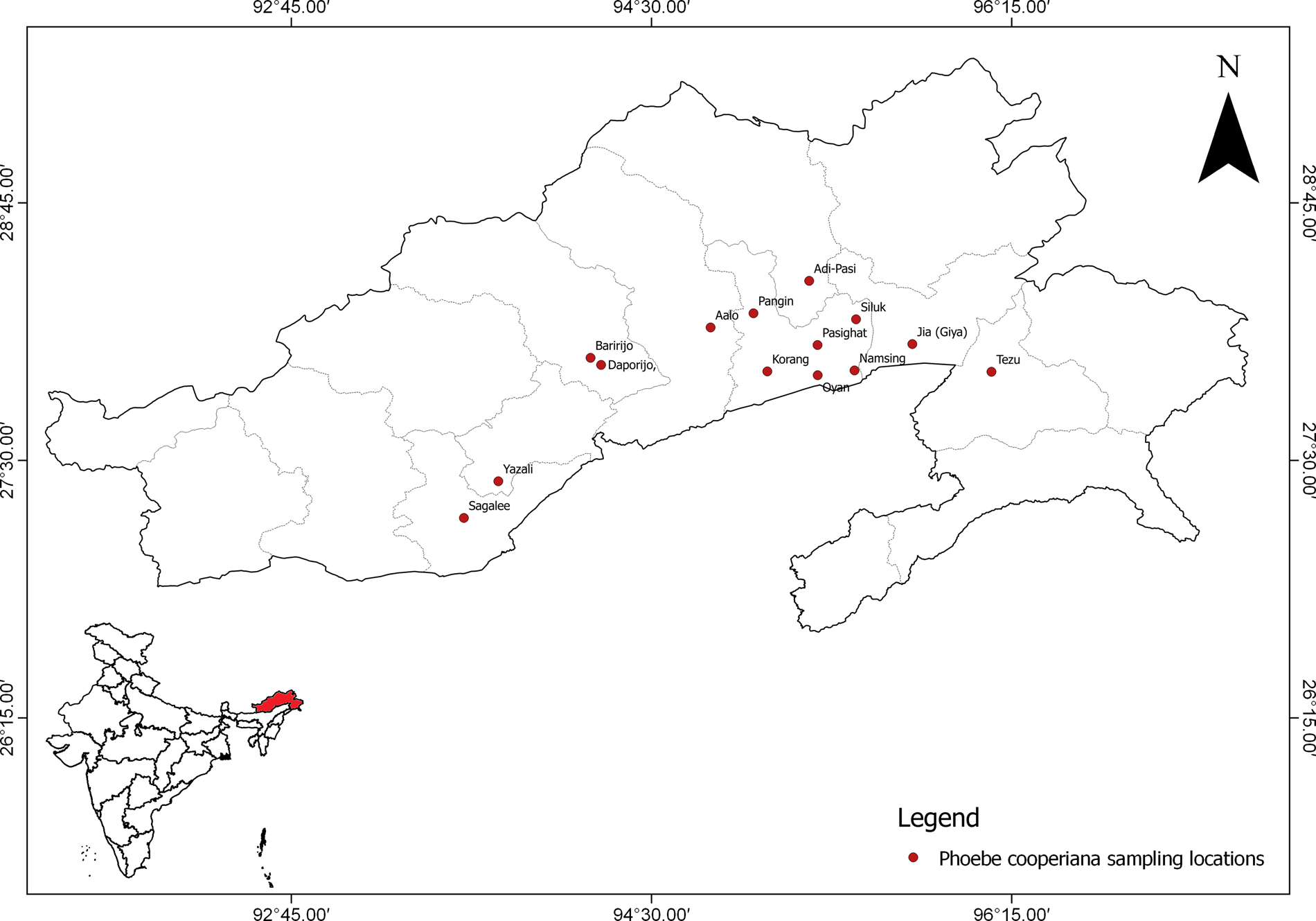
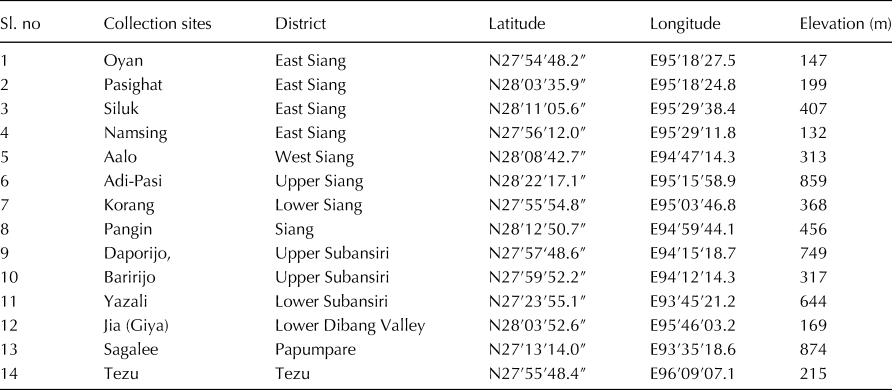
Samples were collected from 14 populations spread across 10 districts of the state of Arunachal Pradesh, India as indicated in Table 1 and Fig. 1. From each population, five trees were randomly selected and a minimum of 30 fruits were collected from each tree during the month of September 2017. Only trees of wild origin were selected, either from the forest or within the village area. Fruits were harvested by engaging climbers who would shake the branches and fallen fruits were collected. The number of trees sampled and fruits collected were constrained by the small number of remnant trees of wild origin and early harvest of fruits by the local community. Fruits from all five trees were then mixed to constitute one population. One hundred fruits were separated and divided into four replications for morphological studies, while the remaining fruits were used for biochemical analysis.
Source of collection of Phoebe cooperiana and geographical location of 14 populations in Arunachal Pradesh.

Source of collection of Phoebe cooperiana and geographical location of 14 populations in Arunachal Pradesh, India

Morphological analysis
One hundred fruits were used for characterizing fruit morphological parameters. Fruit dimensions and weight were measured during the day of collection. The weight was measured using electronic (digital) balance and expressed in gram (g). The fruit length is the linear extended space from top point of the fruit to bottom point of the fruit apex. Fruit length and diameter were measured at the longest and widest point using Digital Calliper and expressed in centimetre (cm). Separation of pulp from the fruit was done the following day for measuring seed parameters. Seed weight was taken using electronic balance and expressed in gram (g). Seed length and diameter were measured at the longest and widest point using Digital Calliper and expressed in centimetre (cm). Further pulp weight, pulp thickness and pulp fruit ratio were calculated.
Biochemical analysis
For the biochemical analysis, the pulp was separated from the seed and was mixed together. The composite sample was then divided into three replications. The samples were then stored under −20°C for future analysis. The biochemical parameters analysed were total carbohydrate, starch, cellulose, pectin, crude pectin, vitamin A, vitamin E, vitamin C, cyanogen, phytic acid, phenol and 2,2-diphenyl-1-picrylhydrazyl (DPPH) activity. The protocol followed for each analysis is given in online Supplementary Table S1.
Statistical analysis
A complete randomized design was used for all parameters and statistical analyses were performed using one-way analysis of variance. The amount of variation (%) for a trait was obtained by calculating the difference between the highest and lowest mean values divided by the average of the two and then multiplied by 100. Simple correlation coefficient was used to determine the degree of association among all the characters for all the populations. The values were calculated using the formula given by Weber and Moorthy (Reference Weber and Moorthy1952) which is
 $${\rm rp\ } = {\rm Covp\ }\lpar {XY} \rpar \, / \, \surd \sigma 2 \,p \lpar X \rpar \,x\sigma 2 \,p \lpar Y \rpar \comma \;$$
where rp = phenotypic correlation; Covp (XY) = phenotypic co-variance between the character ‘X’ and ‘Y’; σ2pX = phenotypic variance of ‘X’; σ2pY = phenotypic variance of ‘Y’.
Results and discussion
Besides documentation of wild edible fruit genetic resources, characterizing morphological and biochemical parameters has become a familiar exercise. It not only contributes to the existing knowledge on wild edible fruits useful to consumers as well as researchers, but also is valuable information if domestication processes are contemplated. Consequently, this has been addressed in a number of species such as Garcinia (Gogoi, Reference Gogoi2015), S. birrea subsp. caffra (Leakey et al., Reference Leakey, Pate and Lombard2005), Irvingia species (Vihotogbe et al., Reference Vihotogbe, van den Berg and Sosef Marc2013) and Ceratonia siliqua (El Kahkahi et al., Reference El Kahkahi, Zouhair, Diouri, AitChitt and Errakhi2015). In the state of Arunachal Pradesh, India, fruits of P. cooperiana are commonly traded from August to November in all markets. The local communities have developed a strong affinity towards it and collection of fruits from the wild is highly competitive. In this paper, we report for the first time the phenotypic variation in fruits and seed morphology as well as the biochemical properties of the pulp of P. cooperiana and the extent of variability across its natural distribution range in Arunachal Pradesh.
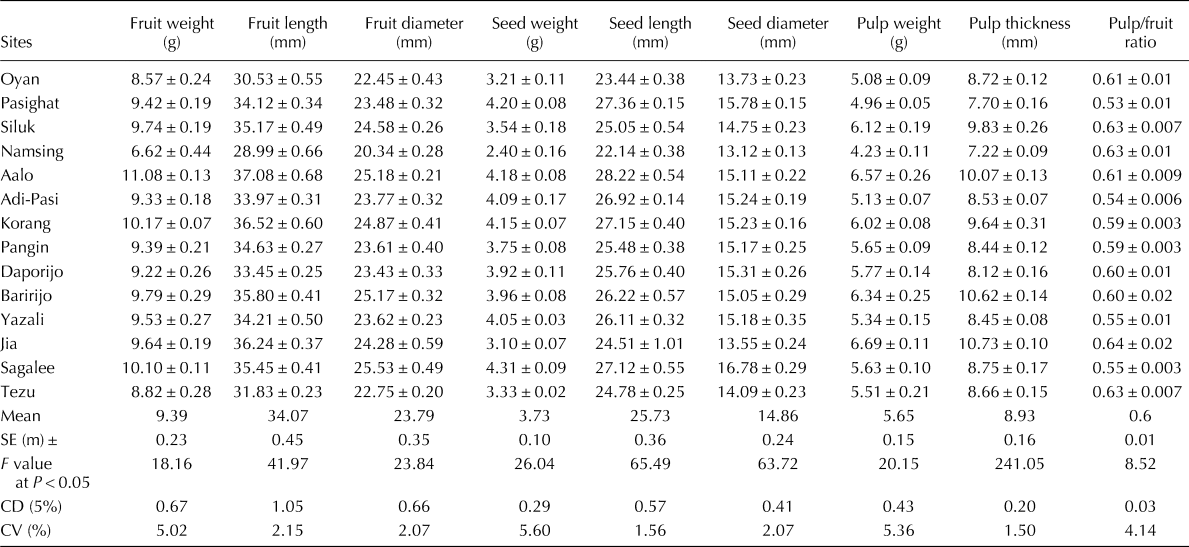
The average fruit weight across 14 sites for the 100 fruits was found to be 9.39 ± 0.23 g with 34.07 ± 0.45 mm fruit length and 23.79 ± 0.35 mm fruit diameter while seed weight, seed length and seed diameter were found to be 3.73 ± 0.10 g, 25.73 ± 0.36 mm and 14.86 ± 0.24 mm, respectively (Table 2). Average pulp weight, pulp thickness and pulp fruit ratio was found to be 5.65 ± 0.15 g, 8.93 ± 0.16 mm and 0.60 ± 0.01, respectively (Table 2), and the highest values were obtained in fruits from Jia (6.69 ± 0.11 g, 10.73 ± 0.10 mm and 0.64 ± 0.02). These characters increase the marketability of the fruit. For all the measured traits, fruits from Namsing had the lowest values (Table 2). However, the pulp fruit ratio was high (0.63 ± 0.01) which can be attributed to the small dimensions of the seed, low seed weight and altitude effect, all negatively correlated with pulp fruit ratio (seed length r = −0.71, P < 0.01; seed diameter r = −0.76, P < 0.01; seed weight r = −0.75, P < 0.01; elevation r = −0.61, P < 0.5; online Supplementary Table S2).
Fruit and seed morphological parameters of fruits of Phoebe cooperiana collected from 14 populations in Arunachal Pradesh, India

All the fruit and seed traits showed a significant level of variation among the populations (Table 2). Among population, variation has been commonly reported for different fruit-related traits (García et al., Reference García, Zamora, Gómez, Jordano and Hódar2000; Buckley et al., Reference Buckley, Downey, Fowler, Hill, Memmot, Norambuena and Wittenberg2003; Munthali et al., Reference Munthali, Chirwa and Akinnifesi2012; Mkwezalamba et al., Reference Mkwezalamba, Munthali and Missanjo2015). The variation likely represents the inherent genetic differences between population sites and responses to microsite environmental conditions (Izhaki et al., Reference Izhaki, Tsahar, Paluy and Friedman2002; Munthali, Reference Munthali2012).The mean fruit weight ranged from 6.62 to 11.08 g, fruit length from 28.99 to 37.08 mm and fruit diameter from 20.34 to 25.53 mm with the highest coefficient of variation (CV) being obtained in fruit weight (5.02%). Among the seed parameters, the highest CV was obtained for seed weight (5.60%) followed by seed diameter (2.07%) and seed length (1.56%). Pulp weight had a CV value of 5.36% and pulp fruit ratio 4.14%. Higher CV values have been reported for similar fruit and seed parameters among 18 provenances of S. birrea in Africa which ranged between 10.60 and 20.80% (Mkwezalamba et al., Reference Mkwezalamba, Munthali and Missanjo2015) and among four populations of Balanites aegyptiaca from the Maradi region of Niger ranging between 11.45 and 26.23% (Abasse et al., Reference Abasse, Weber, Katkore, Boureima, Larwanou and Kalinganire2011). We suspect that there is low genetic variation that now exists among the few naturally occurring trees in all populations and the small sample size (only five trees per population) that has been considered in the present study due to sampling constraints has further narrowed down the existing variation that can be captured. Nevertheless, there is scope of achieving higher genetic gains through provenance selection for some of the economically important traits such as fruit weight, pulp weight and pulp thickness. This is evident from the amount of variation that exists among provenances for these traits which were 50.39, 40.05 and 39.10%, respectively.
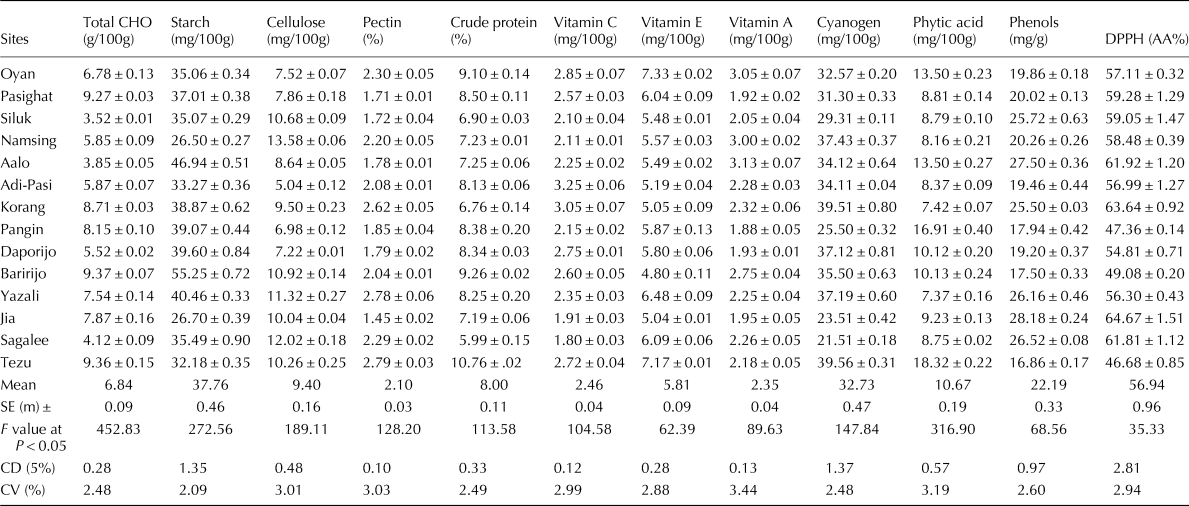
Among the biochemical parameters, eight were nutritional whose mean values and range across 14 populations are shown in Table 3. The mean total carbohydrate and digestible starch content was found to be low (6.84 ± 0.09% and 37.76 ± 0.46 mg/100 g) as compared to banana (27.2% and between 3 and 5%, respectively; Gopalan et al., Reference Gopalan, Rama and Balasubramaniam1971). The indigestible part of carbohydrates consists of dietary fibres such as cellulose, lignin, chitin, pectin, β glucans and oligosaccharides. Dietary fibres add bulk to the diet, retain water in the contents of the colon, and assist in the passage of materials through the intestinal tract. Two dietary fibres were analysed for which cellulose content was very low (9.40 ± 0.15 mg/100 g) as compared to common fruits and vegetable (apple: 8.81 g/100 g, carrot: 10.01% and cucumber: 16.13%, Gopalan et al., Reference Gopalan, Rama and Balasubramaniam1971). However, pectin content was observed to be high with a mean value of 2.10 ± 0.03%, comparable with that of oranges (2.34–2.38%) and lemon (2.80–2.99%; Campbell and Palmer, Reference Campbell and Palmer1978) which are the commercial sources of pectin. Evidence suggests that dietary supplementation with pectin may reduce levels of blood cholesterol and slow down the absorption of glucose in the serum of diabetic and obese patients (Trumbo et al., Reference Trumbo, Schlicker, Yates and Poos2002). The highest pectin content was reported for the population from Tezu (2.79 ± 0.03%) and lowest from Jia (1.45 ± 0.02%). This range between the highest and lowest values is considerably large (63.20%), indicating high variation for this trait, which was also reported to be significant among populations (F = 128.20, P < 0.05%; Table 3).
Biochemical (nutritional and anti-nutrtional) parameters of fruits of Phoebe cooperiana collected from 14 populations in Arunachal Pradesh, India

In general, protein content of different fruits is not greater than 3.5% (Carr, Reference Carr2020). However, the mean crude protein content of P. cooperiana fruits showed high values (8.00 ± 0.11%) – much higher than encountered in most common fruits and vegetables such as apples, mango, cabbage and cauliflower (Seal et al., Reference Seal, Pillai and Chaudhuri2014), and comparable to some other minor fruits such as Terminalia bellirica (8.74 ± 0.04%), Hippophae rhamnoides (10.32%) and Elaegnus latifolia (7.80%; Sundriyal and Sundriyal, Reference Sundriyal and Sundriyal2001). The current international Recommended Dietary Allowance (RDA) for protein is 0.8 g/kg of body weight, regardless of age (WHO, 2007). Based on the average total protein content (8.00 ± 0.11%) and the average pulp weight (5.65 ± 0.16 g), a single fruit of P. cooperiana can provide 1.13% of the daily protein requirement to a body weighing 50 kg. This amount is quite significant in terms of the contribution to the daily protein requirement of local people, especially to those in remote areas of the state where proteinaceous foods such as pulses are not consumed on a regular basis.
Significant variation was observed among the populations for three important vitamins analysed (vitamin A, C and E – Table 3) with highest values obtained for populations from Aalo (3.13 ± 0.07 mg/100 g), Adi Pasi (3.25 ± 0.06 mg/100 g) and Oyan (7.33 mg/100 g). The mean vitamin E content was 5.81 mg/100 g – much higher than that reported for avocado (2.7 mg/100 g; USDA, 2011) and also showed positive correlation with crude protein content (r = 0.49, P < 0.05; online Supplementary Table S2). Vitamin A was also reported to be high (2.35 ± 0.04 mg/100 g), which is comparable with some varieties of mango such as Safeda (2.37 mg/100 g), Chausa (2.67 mg/100 g) and Dusheri (3.03 mg/100 g) (Ram et al., Reference Ram, Khan and Singh2017). Vitamins have an important function in the human body. They regulate metabolism, help convert fat and carbohydrates into energy and assist in forming bone and teeth. The variation present for vitamin E and A was 41.71 and 49.90%, respectively, which indicated ample scope for selecting site specific fruits for higher nutrient content. Vitamin C was however low in the fruit with a mean value of only 2.46 ± 0.04 mg/100 g as compared to some of the well-known fruits with high vitamin C content such as Phyllanthus emblica (600 mg/100 g) and Psidium guajava (212 mg/100 g) (Anon, 1976).
Among the anti-oxidizing parameters analysed in the fruit, we encountered low phytic acid content (10.67 ± 0.19 mg/100 g; Table 3), much lower than some of the commercial fruits such as guava (0.8 mg/g), mango (0.86 mg/g) and pineapple (0.90 mg/g) (Suree et al., Reference Suree, Surat and Akekachai2004). Phenol content, on the other hand, was found to be high and significant among populations (F = 68.56 at P < 0.05) with a mean value of 22.19 mg/100 g. In fact, Payum et al. (Reference Payum, Das, Ramashankar, Tamuly and Hazarika2013) reported much higher phenol content (33.93 mg GAE/g) for the same species. High phenol content may also be the reason for the DPPH radical-scavenging potential of the fruit which was positively correlated (r = 0.61, P < 0.05; online Supplementary Table S2) and showed a mean value of 56.94 ± 0.96%. Phenolic content has been reported to be an indicator of antioxidant properties in many plant systems (Piluzza and Bullitta, Reference Piluzza and Bullitta2011).
Wild edible fruits are known to play a significant role in the food and nutrient security of rural poor. However, with the nutritional qualities that are attached to the fruits, anti-nutritional elements are commonly present for which characterizing their level is important. Cyanogen content was found to be considerably high in the fruits of P. cooperiana with an average value of 32.73 ± 0.47 mg/100 g (Table 3), which is comparable to that of cassava (15–400 mg/kg; Padmaja and Steinkraus, Reference Padmaja and Steinkraus1995), although much lower than reported for bamboo shoot (36.32–1951.49 kg/kg of fresh weight; Rawat et al., Reference Rawat, Nirmala and Bisht2015). The permissible limit of cyanogen content in food is 500 mg/kg (Anon, 2005). Therefore, it is advisable to process the fruits prior to consumption. Reduction in cyanogen level can be achieved by several processing methods such as slicing, peeling, soaking, cooking (boiling, roasting), fermentation, drying and canning, as seen in bamboo (Rawat et al., Reference Rawat, Nirmala and Bisht2015).
Phoebe cooperiana fruit is consumed primarily because of its peculiar taste. The local people are not aware of the nutritional and anti-nutritional properties of the fruit nor do they attach any medicinal value to it. The results of the present study have shown that the fruits are rich in pectin, protein, vitamin A, vitamin E, phenol and cyanogen. With these newly found attributes, the fruit can be popularized as one of the functional foods in the region. Beside the economically important morphological traits, these biochemical parameters should now be included as focal traits for improvement. However, it is important to strike a balance between the nutritional and anti-nutritional components, such as that seen between pectin content and cyanogen (r = 0.53, P < 0.05%), while developing ideal fruit types that can be more preferred by the community and best for human consumption.
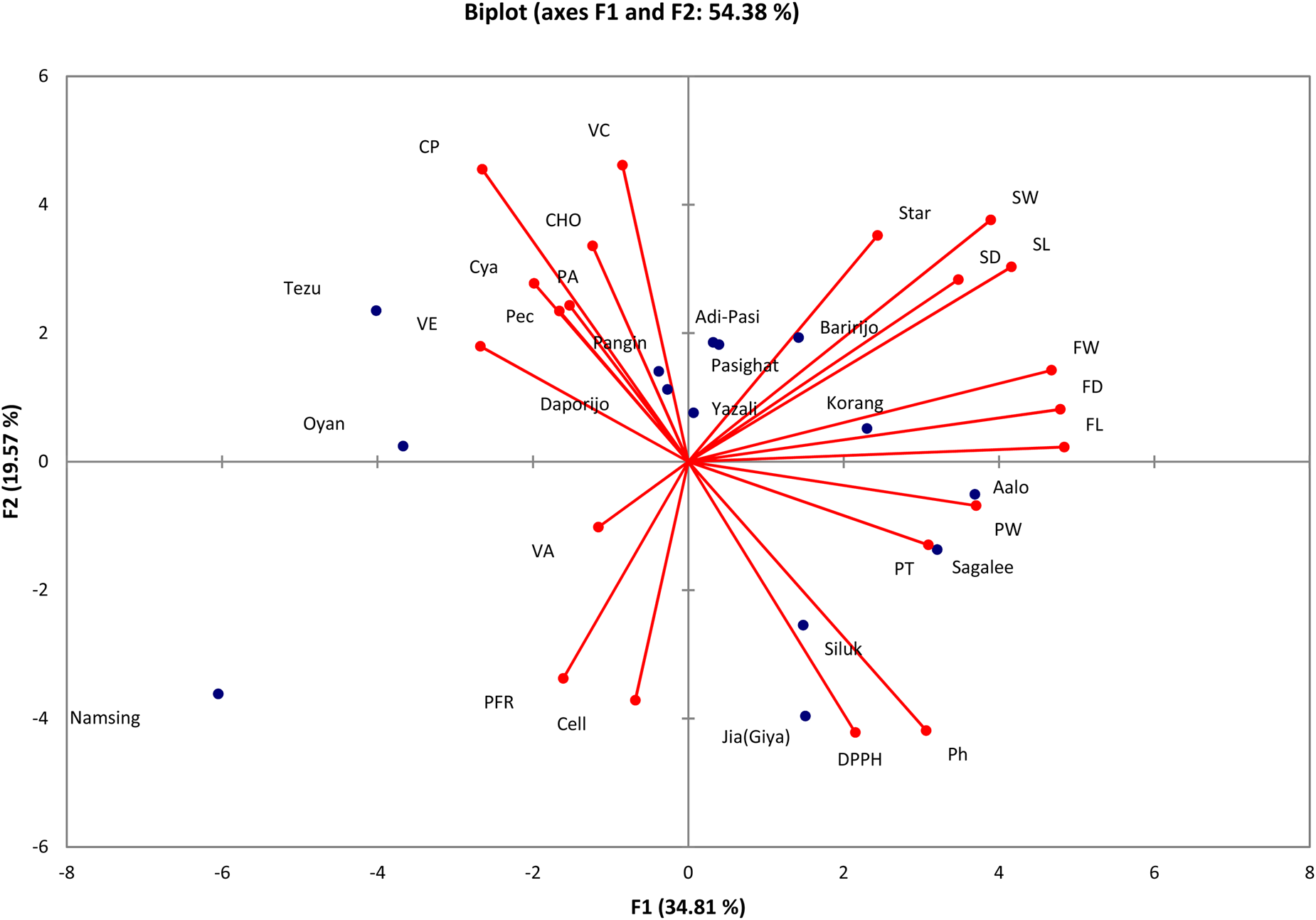
Principal component analysis (PCA) is a data analysis tool usually used to reduce the dimensionality (number of variables) of a large number of inter-related variables, while retaining as much of the information (variation) as possible. In this study, a PCA was performed considering nine morphological fruit and 12 biochemical characters. According to the scree plot method, a total of six principal components were found to be relevant (i.e. having Eigen values of more than 1). The six principal component axes accounted for 88.85% of the total multivariate variation among populations. However, here we considered only the first two components, which accounted for 54.37% of the variation. The first component was positively correlated to fruit (FW: fruit weight, FL: fruit length, FD: fruit diameter, PW: pulp weight and PT: pulp thickness) as well as seed traits (SL: seed length, SW: seed weight, SD: seed diameter) indicating morphological characters as major contributors to the variation. In the second component, biochemical characters such as total carbohydrates (CHO), starch (Star), crude protein (CP), vitamin C (Vit C) and cyanogen (Cya) were also seen to contribute significantly to the variation, apart from the seed traits (seed weight, seed length and seed diameter). The biplot constructed using the first two components showed that six populations clustered around the origin of both the axes, indicating average values in both morphological and biochemical parameters. The populations from Tezu, Oyan, Jia, Sagalee, Aalo and Namsing were positioned individually in different quadrats (Fig. 2). These populations are characterized by certain distinctive features such as those from Jia characterized by high anti-oxidizing activity while Aalo had high pulp weight and Tezu had high vitamin E content. The population from Namsing remained isolated with contrasting morphological and biochemical properties as compared to other populations. Tree breeders should consider such contrasting populations in the domestication process if improvement of economic traits is contemplated.
Biplot of loadings and score values of PC1 and PC2 for combined morphological and biochemical parameters of Phoebe cooperiana fruits. FW, fruit weight; FL, fruit length: FD, fruit diameter; SW, seed weight; SL, seed length; SD, seed diameter; PW, pulp weight; PT, pulp thickness; PFR, pulp fruit ratio; CHO, total carbohydrates; Star, starch; Cell, cellulose; Pec, pectin; CP, crude protein; VC, vitamin C; VE, vitamin E; VA, vitamin A; CY, cyanogen; PA, phytic acid; Ph, phenol.

There exists large potential for domestication of the P. cooperiana in the state because people have started raising seedlings and taken up planting on a large scale. However, planting material is still scant because matured seeds are hardly available. Standardization of vegetative propagation techniques and propagation of selected individuals shall ensure better quality fruits within a much shorter period of time. During our survey, we encountered very few trees in natural forests, which according to the local people have been felled for timber, and natural regeneration is disturbed due to fruit collection. Although planting activities are routinely being taken up by the local communities inside private land, it is imperative to maintain populations in the wild that can regenerate and evolve naturally for the long-term survival of the species. Population enrichment through artificial regeneration within protected areas and declaring them conservation sites can be an ideal strategy for in situ conservation of the species. Simultaneously, ex situ conservation should also focus on the identification of diverse phenotypes and populations across its distributional range. In addition, variability within planted populations can also be increased by incorporating planting materials with a broad genetic base so that the goals of conservation can also be achieved within the domestication process.
Conclusion
This study is the first to report on the variation of fruit and seed morphological parameters of P. cooperiana in the state of Arunachal Pradesh, India and also generate information on the biochemical properties of the pulp. The existence of significant variation among the 14 populations for all morphological and biochemical parameters is encouraging, although the variation found was low. The CV obtained for different fruit and seed traits were between 1.50 and 5.60% and between 2.09 and 3.44% for biochemical traits. Alternatively, low CV can also be indicative of strong genetic control of the characters (Kimmins, Reference Kimmins1987), which then makes phenotypic selection more effective. Nevertheless, the percent variation obtained for some economically important traits such as fruit weight, pulp weight, vitamins and phenols provide sufficient scope for improvement of these traits through provenance selection. Further significant correlations between desirable characters shall facilitate multi-trait selection for greater marketability of the product. The populations from Aalo, Jia and Sagalee can be targeted for selection due to their superiority in terms of fruit morphology and anti-oxidizing properties.
Tree domestication involves a long-term iterative and integrated strategy for species improvement, propagation promotion, use and marketing of selected products and their integration into agroforestry practices (Akinnifesi et al., Reference Akinnifesi, Kwesiga, Mhango, Chilanga, Mkonda, Kadu, Kadzere, Mithofer, Saka, Sileshi, Ramadhani and Dhliwayo2006). Phoebe cooperiana is an indigenous fruit tree that carries huge economic potential to farmers of the region. However, many of its aspects such as genetics, reproductive biology, propagation methods, socio-economic role and market potentials remain to be scientifically explored and investigated to support the domestication initiative of the local people. Simultaneously, concrete steps should be taken to revive the population status of the species in its natural habitat in order to conserve the wild genepool. Perhaps, what is most vital is knowledge sharing, linkage and active involvement of the local communities throughout the domestication process so that the goals of sustained economic benefits and ecological prosperity are achieved concurrently.
Supplementary material
The supplementary material for this article can be found at https://doi.org/10.1017/S1479262120000210.
Acknowledgements
The authors acknowledge the research grant from the Central Agricultural University, Imphal under the Intra Mural Research Project Scheme vide grant No.CAU-DR/3-3(Horti.)/2010/Vol. III 657 dated Imphal 29 June 2017.