Introduction
The discipline of poultry nutrition has undergone remarkable changes during the past 50 years. Nutritional requirements have changed substantially due to dramatic changes in the genetics of the birds used (Havenstein et al., Reference HAVENSTEIN, FERKET and QURESHI2003), and due to improved nutritional knowledge. The structure of the diet has also undergone major changes during this period. The use of mash diets, often combined with whole cereals either mixed with the mash or fed separately, was the standard feeding method in the first half of the past century. Pelleting was however gaining grounds, not the least for turkey, where one major advantage, curiously enough, was fewer losses for turkeys raised at windy locations (Ewing, Reference EWING1951). Although a fine grinding of the ingredients did not appear to be favoured in scholarly poultry nutrition textbooks, the beneficial effect of fine grinding on pellet quality, concurrent with an increasing interest in pelleting of diets for broilers, and the concern about feed segregation in mash diets, gradually made fine grinding of ingredients a dominating principle. Simultaneously, fibre-rich ingredients such as green fodders and oats became less used, and layers were increasingly raised in cages where no litter material was available. In recent years, a coarser structure of the diet has received renewed interest in the scientific community and in the industry, not the least stimulated by a commercial practice of using whole wheat in many European countries, and due to literature reporting beneficial effects of whole wheat on performance. The gizzard obviously plays a key role, and thus the issue of diet structure has resulted in a renewed interest in nutritional effects of diets which stimulate development and function of the gizzard. This review is an attempt to summarize some available literature on the interaction between diet structure and the gizzard.
Anatomy and function of the gizzard
The digestive tract of poultry has a number of distinctive traits compared to other domestic animals, such as the crop, caeca and cloaca. The adaptation to grinding food particles in the digestive tract through development of a very large mass of strongly myolinated smooth muscles immediately posterior to the glandular stomach, is another unique feature. The resulting specific organ – the gizzard – is not unique to poultry, and has been found in a number of other taxa including arthropods such as centipedes (Koch et al., Reference KOCH, PÄRSCHKE and EDGECOMBE2009) and fish species such as the herbivorous family of gizzard shads (Schmitz and Baker, Reference SCHMITZ and BAKER1969). The galliforms, however, have a particularly large and muscular gizzard as an adaptation to a large quantity of hard and durable feed particles in their diet. Although Klasing (Reference KLASING2005) states that Gallus gallus and Meleagris gallopavo are omnivorous and not granivorous as often stated, the diet of the wild ancestors to our commercial chickens and turkeys still contain a considerable quantity of coarse particles which requires grinding, such as nuts and other seeds, insects and fibrous material.
The main body of the gizzard comprises two thick, opposed lateral muscles and two thin anterior and posterior muscles. Relative to the long-axis of the gizzard, thick and thin muscles are asymmetrically arranged, resulting in a rotary as well as crushing movement when the gizzard contracts. A thick layer of glyco-proteins that is hardened by the low pH covers the inside of the gizzard. The koilin layer is continuously renewed as it is worn by secretions from glands, crypt and surface epithelial cells, with the hardened rods formed from 5 to 6 glands and the softer koilin layer between the rods formed by epithelial cells (Akester, Reference AKESTER1986). Some birds, however, are known to shed the whole koilin layer at intervals (McLelland, Reference MCLELLAND1979). None of the domesticated bird species have been reported to have such behaviour, but unpublished observations of gizzards lacking the koilin layer in our laboratory indicate that this may happen in turkeys. The rod-like hardened glycoprotein will stand out from the remaining glyco-protein matrix and will give the surface its characteristic sand-paper like appearance (Hill, Reference HILL1971).
Grinding activity and the regulation of this activity in the gizzard has been described in detail by Duke (Reference DUKE1992), and will only be briefly outlined herein. The grinding cycle begins with contraction of the thin muscles, followed by opening of the pylorus and a powerful peristaltic contraction in the duodenum. The pair of thick muscles contract immediately after the commencement of the duodenal contraction, which results in some gastric material being pushed into the duodenum and some material entering the proventriculus. As the thick muscles begin to relax, the proventriculus contracts and returns content to the gizzard. This contraction cycle takes place up to four times per minute and grind material due to rubbing against the koilin layer on the inside of the gizzard and against other particles in the gizzard during contraction of the large muscles, while the small muscles move material towards the grinding zones between contractions of the large muscles.
Coarse feed particles need to be ground to a certain critical size before they can leave the gizzard (Clemens et al., Reference CLEMENS, STEVENS and SOUTHWORTH1975; Moore, Reference MOORE1999). As has been shown by Moore (Reference MOORE1999) for geese, the folds and the small opening of the pylorus functions as a sieve which does not allow too much and too large particles from being squeezed through during contractions. According to Ferrando et al. (Reference FERRANDO, VERGARA, JIMÉNEZ and GOÑALONS1987), the threshold size for being constrained from leaving the gizzard in chickens is between 0.5 and 1.5 mm. Data from Hetland et al. (Reference HETLAND, SVIHUS and OLAISEN2002; 2003) and Amerah et al. (Reference AMERAH, RAVINDRAN, LENTLE and THOMAS2008) indicate that a majority of the particles entering the duodenum are smaller than 0.1 mm, even when considerable amounts of whole wheat or coarse cereal particles are added to the diet.
Although the proventriculus is a distinct compartment anterior to the gizzard where pepsinogen and hydrochloric acid are secreted, the small volume of this compartment results in a very short retention time. The majority of the digestive action of these secretions therefore takes place in the gizzard. Since material is refluxed into the proventriculus during contractions of the large gizzard muscles, this will allow for additional secretions to be added to the contents (Duke, Reference DUKE1992). Therefore, the proventriculus and gizzard can be considered as integral parts in relation to gastric digestion. Mean retention time in the proventriculus and gizzard has been estimated to vary between half an hour and an hour (Shires et al., Reference SHIRES, THOMPSON, TURNER, KENNEDY and GOH1987; van der Klis et al., Reference VAN DER KLIS, VERSTEGEN and DE WIT1990; Dänicke et al., Reference DÄNICKE, VAHJEN, SIMON and JEROCH1999). This seems to be in accordance with the results by Svihus et al. (Reference SVIHUS, HETLAND, CHOCT and SUNDBY2002), where 50% of the feed had passed the gizzard within two hours. It has been shown that the volume of the gizzard may increase substantially when structural components are added to the diet, sometimes increasing to more than the double (Amerah et al., Reference AMERAH, RAVINDRAN, LENTLE and THOMAS2008; Reference AMERAH, RAVINDRAN and LENTLE2009b). Data have shown that larger particles are selectively retained in the gizzard (Hetland et al., 2003) and that passage rate of a non-structural marker, such as titanium oxide, is the same, independent of diet structure (Svihus et al., Reference SVIHUS, HETLAND, CHOCT and SUNDBY2002). Although this indicates divergent passage rate for different particles, it is obvious that mean retention time of feed particles will increase substantially under such conditions. If retention time is close to one hour for a standard commercial diet with few structural components, mean retention time can be assumed to approach two hours if gizzard development is stimulated by structural components. Selective retention in the gizzard will also result in some particles having an extremely short gizzard retention time. Svihus et al. (Reference SVIHUS, HETLAND, CHOCT and SUNDBY2002) showed that considerable amounts of feed had passed the gizzard within 30 minutes of feeding. This is in accordance with results obtained by Jackson and Duke (Reference JACKSON and DUKE1995).
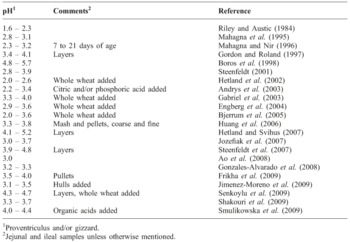
The gastric juice secreted by the proventriculus has been reported to be around pH 2 (Duke, Reference DUKE1986). However, the amount, retention time and chemical characteristics of the feed in the gizzard/proventriculus region will result in a more variable and usually higher pH. In a recent experiment at our lab, for example, pH of gizzard contents from broiler chickens varied between 1.9 and 4.5, with an average value of 3.5. As summarized in Table 1, most of the recent average values recorded for broiler chickens are reported to be between pH 3 and 4 for normal pelleted diets, with an average pH value as high as 4.2 and 5.7 even reported in some cases (Smulikowska et al. (Reference KA, LINDBERG, STROMSTEDT, FITZSIMMONS, LINDQVIST, LUNDEBERG, SIEGEL, ANDERSSON and HALLBOOK2009) and Boros et al. (Reference BOROS, MARQUARDT and GUENTER1998), respectively). Some of the data, particularly older ones, seem to show a somewhat lower pH value between 2 and 3 (Farner, Reference FARNER1960; McLelland, Reference MCLELLAND1979; Riley and Austic, 1984; Mahagna et al., Reference MAHAGNA, NIR, LARBIER and NITSAN1995; Mahagna and Nir, Reference MAHAGNA and NIR1996; Hetland et al., Reference HETLAND, SVIHUS and OLAISEN2002). Due to high calcium carbonate content in the diet, pH values for gizzard contents are commonly between 4 and 5 for layer hens (Hetland and Svihus, Reference HETLAND and SVIHUS2007; Steenfeldt et al., Reference STEENFELDT, KJAER and ENGBERG2007; Senkoylu et al., Reference SENKOYLU, SAMLI, AKYUREK, OKUR and KANTER2009), although a pH around 3.5 has also been reported for laying hens (Gordon and Roland, Reference GORDON and ROLAND1997).
Overview of published data showing pH in the gizzard/proventriculus of poultry (broiler chickens unless otherwise mentioned).

1Proventriculus and/or gizzard.
2Jejunal and ileal samples unless otherwise mentioned.
Due to the close interaction between the secretory proventriculus and the voluminous gizzard, the efficiency with which pepsin and hydrochloric acid will degrade feed nutrients will be dependent on functionality of the gizzard in terms of contraction intensity and retention time. Also, since the low pH caused by the hydrochloric acid is considered to potentially have a beneficial effect on gut health through the sterilizing properties, functionality of the gizzard may also affect gut health.
Although not studied extensively, the gizzard has been assumed to have an important role as a feed intake regulator. For example, the gizzard regulates flow of feed from the crop (Chaplin et al., Reference CHAPLIN, RAVEN and DUKE1992). In other species such as man and pigs, the stomach is known to have a prominent role in feed intake regulation. Similarly, the proventriculus/gizzard segment of the digestive tract can be assumed to have such a role in poultry. Satiety can be induced by this segment through vagal signals induced by stretch and muscular activity (Denbow, Reference DENBOW1994), or through humoral signals such as ghrelin, gastrin and cholecystokinin (Richards and Proszkowiec-Weglarz, Reference RICHARDS and PROSZKOWIEC-WEGLARZ2007). Even if satiation signals are indeed overridden by appetite in modern broilers, as proposed by Siegel and Dunnington (Reference SIEGEL and DUNNINGTON1987) and substantiated in recent work (Ka et al., Reference KA, LINDBERG, STROMSTEDT, FITZSIMMONS, LINDQVIST, LUNDEBERG, SIEGEL, ANDERSSON and HALLBOOK2009; Cline et al., Reference CLINE, NANDAR, BOWDEN, CALCHARY, SMITH, PRALL, NEWMYER, ROGERS and SIEGEL2010), a well-functioning gizzard may hinder feed overconsumption simply due to the physical constraints in gizzard volume combined with limitations to feed passage from the gizzard to the duodenum, as mentioned above. The hyperphagia followed by poor feed efficiency observed for ad libitum fed broiler chickens selected for a high growth rate (O'Sullivan et al., Reference O'SULLIVAN, DUNNINGTON and SIEGEL1992; Siegel et al., Reference SIEGEL, CHERRY and DUNNINGTON1984) may only be possible when the gizzard is underdeveloped due to lack of structural components in the diet. This hypothesis is supported by data from Péron et al. (Reference PÉRON, BASTIANELLI, OURY, GOMEZ and CARRÉ2005), where food-deprived broiler chickens on a finely ground wheat diet exhibited reduced starch digestibility immediately after given access to feed, presumably due to overconsumption.
In most animals, flow of material out of the stomach is synchronized with digestion and absorption in the small intestine, such that digestion is maximized and the capacity of the small intestine to digest and absorb nutrients is not exceeded. The major stimuli causing an increased enzyme secretion by the pancreas are the vagus nerve and cholecystokinin (CCK). Cholecystokinin is mainly produced in the pyloric region of birds (Denbow, Reference DENBOW2000), and acts together with the vagus nerve to stimulate pancreatic enzyme secretion (Li and Owyang, Reference LI and OWYANG1993). Thus, a stimulating effect of an increased gizzard activity on bile and enzyme secretions, as observed by Svihus et al. (Reference SVIHUS, JUVIK, HETLAND and KROGDAHL2004a) and Hetland et al. (2003), may be due to gizzard-mediated vagovagal reflexes and increased CCK release in the pyloric region, although Murai et al. (Reference MURAI, SATOH, OKUMURA and FURUSE2000) found CCK to play a more moderate role as a pancreas-stimulating hormone than for mammals.
Effect of diet structure on gizzard development and function
It is a well established fact that the digestive tract adapts rapidly to changes in diet composition. Studies of wild birds with large variations in their diet throughout the year, for example, show that both the small intestine and the caeca fluctuate in size (Klasing, Reference KLASING1998). The gizzard is known to respond particularly rapidly to changes in the diet, something noted amongst others by Charles Darwin during his studies of pigeons (Farner, Reference FARNER1960). This is first of all a consequence of changes to the structure of the diet.
Structure can be defined as the size and internal binding strength of feed particles. The feed particles as they appear after grinding and mixing are often loosely moulded into pellets as a means of increasing feed intake and improving technical properties of the diet. This introduces a second level of structure which can be termed macrostructure. The pellet will normally dissolve rapidly when moistened and physically stressed in the anterior digestive tract, exposing the microstructure in the form of the particles which make up the pellet. Due to the rapid dissolution of the pellet after consumption, the macrostructure will usually not affect gizzard development or have other nutritional effects apart from increasing feed intake, as indicated by the significant reduction in relative gizzard size when mash diets are replaced by pelleted diets (Engberg et al., Reference ENGBERG, HEDEMANN and JENSEN2002; Svihus et al., Reference SVIHUS, KLØVSTAD, PEREZ, ZIMONJA, SAHLSTRÖM, SCHULLER, JEKSRUD and PRESTLØKKEN2004b). However, the pelleting process will result in a finer microstructure due to the grinding effect of the rolls in the pellet press, an effect which has been shown to be particularly large for diets containing large particles (Engberg et al., Reference ENGBERG, HEDEMANN and JENSEN2002; Svihus et al., Reference SVIHUS, KLØVSTAD, PEREZ, ZIMONJA, SAHLSTRÖM, SCHULLER, JEKSRUD and PRESTLØKKEN2004b). Thus, structure in the context of this review concerns particle size and internal binding strength of the particles remaining after the feed has been dissolved following consumption, i.e. the microstructure of the diet.
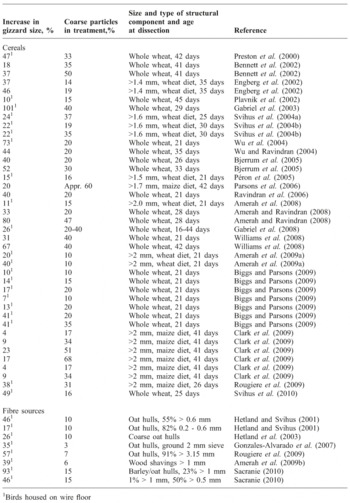
A rapid and conspicuous enlargement in size of the gizzard is observed when structural components such as hulls, wood shavings or large cereal particles are included in the diet (Table 2). Accordingly, Biggs and Parsons (Reference BIGGS and PARSONS2009) observed a large increase in gizzard size already at 7 days of age when whole wheat was added to the diet of day-old broiler chickens. A similar rapid increase in the size of the gizzard with contents was observed after a high-fibre diet was given to quails for 14 days, and a similarly rapid decrease in size of the gizzard was observed after switching to a low-fibre diet for 14 days (Starck, Reference STARCK1999). The increase in size of the gizzard is a logical consequence of an increased need for particle size reduction, due to the stimulative effect of the increased grinding activity on size of the two pairs of gizzard muscles. As shown in Table 2, gizzard size may increase to over 100% of its original size when structural components are added to the diet.
Overview of published literature showing significant effect of extent of grinding or coarse fibres on empty gizzard size of broiler chickens.

1Birds housed on wire floor
It has also been shown that the volume of gizzard content increases substantially when diets with whole cereals or insoluble fibre are fed (Hetland et al., 2003; Bjerrum et al., Reference BJERRUM, PEDERSEN and ENGBERG2005; Gonzales-Alvarado et al., Reference GONZALES-ALVARADO, JIMENEZ-MORENO, VALENCIA, LAZARO and MATEOS2008; Amerah et al., Reference AMERAH, RAVINDRAN, LENTLE and THOMAS2008; Reference AMERAH, RAVINDRAN and LENTLE2009b). In fact, the magnitude of increase in weight of gizzard contents is usually much larger than the increase in size of the gizzard, with more than two-fold increases in weight of contents frequently observed. Thus, structural components do not only increase the size of the gizzard, but also results in a large increase in holding capacity of the gizzard.
A pertinent question which has not been adequately addressed is whether the small gizzard often observed in birds fed diets lacking structural components represents an abnormal situation, and thus may result in suboptimal performance. The wild ancestors to our domesticated poultry species have a diet consisting of a large amount of structural components such as seeds and durable fibrous materials (Klasing, Reference KLASING2005). Also, the grit stones contained in the gizzard of these birds will further stimulate gizzard development and function. It is therefore logical to conclude that even domesticated poultry species are evolutionary adapted to a diet with a large content of structural components. O'Dell et al. (Reference O'DELL, NEWBERNE and SAVAGE1959) not only found that the gizzard was underdeveloped when diets lacking structural components were fed, but also showed that lack of structural components was linked to a large incidence of proventricularitis among chicks. Proventricularitis is characterised by an enlargement of the proventriculus and a widening of the gastric isthmus, and is an abnormality which increases condemnation due to rupture of the proventriculus in the processing plant (Dormitorio et al., Reference DORMITORIO, GIAMBRONE and HOERR2007). Accordingly, Jones and Taylor (Reference JONES and TAYLOR2001) observed reduced incidence of a proventricular dilation when whole grain was fed. These observations in fact suggest that the proventriculus/gizzard area is dependent on structural components to develop normally.
In the wild, many birds will consume small stones from the environment to aid grinding in the gizzard. In fact, even birds which do not consume coarse and fibrous feed materials, such as penguins, have been shown to consume large quantities of grit stones (Beaune et al., Reference BEAUNE, LE BOHEC, LUCAS, GAUTHIER-CLERC and LE MAHO2009). In a survey of 1440 gizzards from 90 American bird species, grit stones were found in the gizzard of 69% of the species, with highest prevalence for granivorous birds (Gionfriddo and Best, Reference GIONFRIDDO and BEST1996). For example, all the 37 gizzards from ring-necked pheasants contained grit stones, with median amount of stones being as high as 88 and average diameter being 2.3 mm. Similarly, Norris et al. (Reference NORRIS, NORRIS and STEEN1975) found the gizzard of wild ptarmigans to contain an average of more than 100 gizzard stones during the fall.
Early data showed a clear beneficial effect of grit stones on performance of both broiler chickens and layer hens, particularly when whole grains were used in the diet (Balloun and Phillips, Reference BALLOUN and PHILLIPS1956; Scott and Heuser, Reference SCOTT and HEUSER1957). More recent experiments, however, have failed to detect any beneficial effects of access to grit stones on performance of both layers and broiler chickens, even when whole cereals were included in the diet (Svihus et al., Reference SVIHUS, HERSTAD, NEWMAN and NEWMAN1997; Waldenstedt et al., Reference WALDENSTEDT, ELWINGER, HOOSHMAND-RAD, THEBO and UGGLA1998; Bennett and Classen, Reference BENNETT and CLASSEN2003; Hetland et al., 2003; Garipoglu et al., Reference GARIPOGLU, ERENER and OCAK2006). Surprisingly enough when considering that genetic selection most probably have taken place on a finely ground diet, the gizzard of modern broiler chickens therefore appears to have a very high capacity to grind large cereal particles and fibrous material down to a very small size, and that gizzard stones are not required for this to happen. Hetland et al. (2003), however, found a significant reduction in duodenal particle size when grit stones were used. A beneficial effect could thus possibly materialize with ingredients which dispose for nutrient entrapment by large particles entering the small intestine, such as observed for hard wheat (Péron et al., Reference PÉRON, SVIHUS, GABRIEL, BÉROT, TANGUY, BOUCHET, GOMEZ and CARRÉ2007).
Calcium carbonate grit in the form of coarsely ground shells or limestone was shown to be unsuitable as grit stones in the early experiments where beneficial effects of other types of grit stones such as granite and feldspar were seen (Scott and Heuser, Reference SCOTT and HEUSER1957). This is due to the low pH of the gizzard, which will dissolve the calcium carbonate too rapidly for any grinding effects to materialize (Guinotte et al., Reference GUINOTTE, GAUTRON, NYS and SOUMARMON1995). Large calcium carbonate particles have still been found to be beneficial for calcium retention, bone strength and eggshell quality in laying hens due to the ability of the bird to identify and consume a relatively larger portion of these conspicuous particles in the afternoon for storage in the crop, followed by gradual deposition and dissolution of the calcium in the gizzard (Guinotte and Nys, Reference GUINOTTE and NYS1991; Zhang and Coon, Reference ZHANG and COON1997).
Effect of diet structure on nutrient utilisation
A number of studies have shown improved nutrient utilisation when birds are switched from diets lacking structure to diets with structural components such as coarsely ground cereals or coarse fibre material. These data have been summarised in Table 3. Data for feed efficiency measured as amount of feed consumed relative to weight gain have been less conclusive, with a number of experiments showing no improvements with structural components in the diet (Bennett et al., Reference BENNETT, CLASSEN and RIDDELL1995; Uddin et al., Reference UDDIN, ROSE, HISCOCK and BONNET1996; Nahas and Lefrancois, Reference NAHAS and LEFRANCOIS2001; Banfield and Forbes, Reference BANFIELD and FORBES2001; Bennett et al., Reference BENNETT, CLASSEN and RIDDELL2002). However, the fact that feed efficiency is strongly affected by weight gain differences makes this parameter less valuable as a measure of fundamental effects of diet changes. Also, poultry have been shown to consume significant amounts of litter material (Santos et al., Reference SANTOS, SHELDON, SANTOS and FERKET2008), and the level of consumption has been shown to be dependent on the texture of the litter material (Malone et al., Reference MALONE, CHALOUPKA and SAYLOR1983). Hetland et al. (Reference HETLAND, SVIHUS and CHOCT2005) and Hetland and Svihus (Reference HETLAND and SVIHUS2007) found similar results, but also showed that consumption of litter material increased with decreasing coarseness of the diet. This indicates that birds have a desire for structural components, and that birds will search for structural components in the environment in a situation where the diet has a low content. Litter material used as bedding in floor systems may be such an alternative source for structural components. Therefore, to test the effect of structural components, the environment in which the birds is raised should not contain litter or other sources of structural components, as has been the case in some of the aforementioned studies where no effect of structural components have been found (Nahas and Lefrancois, Reference NAHAS and LEFRANCOIS2001; Bennett et al., Reference BENNETT, CLASSEN and RIDDELL2002).
The capacity of modern poultry strains to handle structural components has not been extensively studied, but anecdotal data indicate a surprisingly large capacity to handle both large cereal particles and fibrous ingredients. Uddin et al. (Reference UDDIN, ROSE, HISCOCK and BONNET1996) force-fed adult cockerels a diet solely consisting of whole wheat, and found only 2% reduction in metabolisable energy content compared to ground wheat. Hetland et al. (Reference HETLAND, SVIHUS and OLAISEN2002) showed that while addition of up to 30% whole wheat did not result in more large particles entering the duodenum, addition of up to 44% whole wheat resulted in a significant reduction in duodenal concentration of particles smaller than 0.04 mm. Although feed utilisation was not negatively affected even with this high inclusion level of whole wheat, inclusion of up to 60% whole wheat resulted in a reduction of weight gain and a poorer feed utilisation. A similar reduction in performance was found by Biggs and Parsons (Reference BIGGS and PARSONS2009) when whole wheat inclusion increased from 35 to 50%. Addition of fibrous structural material such as oat hulls or wood shavings may also be deleterious for performance at too high levels, but mainly because of a slowing down of performance due to a reduced nutrient intake (Leeson et al., Reference LEESON, CASTON and SUMMERS1996; Denstadli et al., Reference DENSTADLI, BALLANCE, KNUTSEN, WESTERENG and SVIHUS2010). Experiments where high levels of fibre or fibre-rich materials have been added to the diet have not been able to detect a deleterious effect on nutrient utilisation (Panigrahi and Powell, 1991; Ibrahim and El Zubeir, Reference IBRAHIM and EL ZUBEIR1991; Hocking, Reference HOCKING2006).
From the above it can be concluded that there is an upper limit to amount of coarse cereal particles due to capacity limitations of the gizzard which will result in reduced nutrient availability, while inclusion level of fibre materials is mainly limited by the dilution effect and thus a limited potential for an increase in feed intake. At high fibre inclusion levels, a decreased feed intake would even be expected due to the need for the gizzard to grind fibre material before it passes through the gizzard. Denstadli et al. (Reference DENSTADLI, BALLANCE, KNUTSEN, WESTERENG and SVIHUS2010) did not observe any reductions in feed intake even when 40% barley spent grains, resulting in an increase in dietary fibre content from 10 to 20%, was added to the diet. However, Panigrahi and Powell (1991) observed a significant reduction in feed intake when 50% of high-fibre palm kernel meal was added in an isoproteinous and isoenergetic fashion to pelleted diets. This indicates that at very high fibre inclusion levels, feed intake may be adversely affected.
Studies showing significant (p<0.05) improvement in nutrient utilisation when structural components have been added to the diet.

1Corrected for fibre dilution
2Data obtained with broiler chickens unless otherwise mentioned
Causes for improvement in nutrient digestibility with structural components
It has been shown that particle size of material entering the small intestine is smaller for a diet containing large amounts of structural components than for the same diet containing a smaller amount of structural components (Hetland et al., Reference HETLAND, SVIHUS and OLAISEN2002, 2003; Amerah et al., Reference AMERAH, RAVINDRAN and LENTLE2009a). This apparently counterintuitive result may simply be due to the fact that a well-developed gizzard will result in an improvement in grinding capacity which will outweigh the increased need for grinding due to a larger number of coarse particles. Using scanning electron microscopy, Péron et al. (Reference PÉRON, SVIHUS, GABRIEL, BÉROT, TANGUY, BOUCHET, GOMEZ and CARRÉ2007) observed constituents such as starch granules entrapped in large particles in the small intestine. Thus, the reduced amount of coarse particles entering the small intestine when gizzard development has been stimulated due to structural components may be contributing to increased nutrient availability. However, it is worth noting that for wheat, a very fine grinding of a hard wheat variety which exhibited low starch digestibility resulted in improved starch digestibility (Péron et al., Reference PÉRON, BASTIANELLI, OURY, GOMEZ and CARRÉ2005). This indicates that the stimulatory effect of the hard wheat particles on gizzard development and thus on grinding capacity of the gizzard did not outweigh the larger grinding requirement for this type of wheat diet. Thus, a fine grinding combined with structural components in the form of fibres would possibly be more effective with a diet based on hard wheat.
It has been shown repeatedly that when structural components such as whole or coarsely ground cereals or fibre materials such as hulls or wood shavings are added, pH of the gizzard content decreased by a magnitude of between 0.2 and 1.2 units (Gabriel et al., Reference GABRIEL, MALLET and LECONTE2003; Engberg et al., Reference ENGBERG, HEDEMANN, STEENFELDT and JENSEN2004; Bjerrum et al., Reference BJERRUM, PEDERSEN and ENGBERG2005; Huang et al., Reference HUANG, LI, XING, MA, LI and LV2006; Gonzales-Alvarado et al., Reference GONZALES-ALVARADO, JIMENEZ-MORENO, VALENCIA, LAZARO and MATEOS2008; Jimenez-Moreno et al., Reference JIMENEZ-MORENO, GONZALEZ-ALVARADO, LAZARO and MATEOS2009; Senkoylu et al., Reference SENKOYLU, SAMLI, AKYUREK, OKUR and KANTER2009). The logical explanation for this is an increased gizzard volume and thus a longer retention time which allows for more hydrochloric acid secretion, combined with a stimulative effect of gizzard activity on acid secretion. Since feed usually has a pH between 5.5 and 6.5 (Bolton, Reference BOLTON1965; Yi and Kornegay, Reference YI and KORNEGAY1996; Carlson and Poulsen, Reference CARLSON and POULSEN2003; Partanen et al., Reference PARTANEN, JALAVA and VALAJA2007; Ao et al., Reference AO, CANTOR, PESCATORE and PIERCE2008), a high feed intake can be expected to result in an elevated gizzard pH unless gastric juice secretion is able to increase in accordance with intake. This is probably the main cause for that gizzard pH is reported to be higher with pelleted diets when compared to mash diets (Engberg et al., Reference ENGBERG, HEDEMANN and JENSEN2002; Huang et al., Reference HUANG, LI, XING, MA, LI and LV2006; Frikha et al., Reference FRIKHA, SAFAA, SERRANO, ARBE and MATEOS2009), although less structure due to the grinding effect of pelleting will also contribute to this effect (Svihus et al., Reference SVIHUS, KLØVSTAD, PEREZ, ZIMONJA, SAHLSTRÖM, SCHULLER, JEKSRUD and PRESTLØKKEN2004b). In addition to the indirect potential beneficial effects of a reduced pH due to less pathogenic microflora in the digestive tract, a reduced pH may also contribute to an improved gastric digestion. An adequate question is whether exogenous enzymes will be affected negatively by the proteolytic activity of the gastric region. This seems not to have been studied extensively, but the few data that exist specifically for poultry seem to indicate that although enzyme activity is reduced after incubation in gastric juices, a majority of the activity remains after incubation. Almirall and Esteve-Garcia (Reference ALMIRALL and ESTEVE-GARCIA1995) found that after incubation at pH 3.2 with pepsin present, a β-glucanase retained its activity even after 90 minutes. Vahjen and Simon (Reference VAHJEN and SIMON1999) found the activity of a number of xylanases to be between 60 and 95% of their original activity after 30 minute incubation in avian gastric digesta.
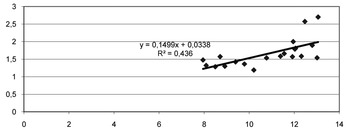
When broiler chickens are fed a diet with a low amount of structural components, a negative correlation between feed intake and nutrient utilisation for individual birds have been observed (Svihus, Reference SVIHUS2006). Furthermore, a large improvement in starch digestibility and an elimination of individual birds with very low starch digestibility was observed by Svihus and Hetland (Reference SVIHUS and HETLAND2001) when whole wheat replaced ground wheat, leading to a hypothesis that some birds may adapt a habit of over-consuming feeds when the gizzard is underdeveloped. In a recent experiment, four out of ten ad libitum fed broiler chickens on a finely ground wheat diet showed signs of being feed over-consumers, characterised by a normal weight gain, a higher than average feed intake, and an AMEn value below 10.3 MJ/kg, while addition of whole wheat eliminated birds showing these indications of feed over-consumption (Svihus et al., Reference SVIHUS, SACRANIE, DENSTADLI and CHOCT2010). Furthermore, AMEn for individual birds on the finely ground wheat diet was significantly correlated to relative empty gizzard weight, as shown in Figure 1. In fact, all birds exhibiting a low AMEn were characterized by having a rather small gizzard. Thus, these recent data support the hypothesis of feed over-consumption which is linked to a dysfunctional gizzard. The hypothesis is that structural components in the diet will result in a larger and more properly functioning gizzard which will be better able to act as a feed intake regulator, thus inhibiting the over-consumption of feed. This proposed mechanism may also explain why the effect was so large in the aforementioned experiment, as birds were raised on wire floor with no access to litter material. Previous results indicate that birds eat litter to compensate for lack of structure in the diet (Hetland et al., Reference HETLAND, SVIHUS and CHOCT2005).
An increased amylase activity and bile acid concentration may also be part of the cause for improvements in nutritive value associated with structural components, as discussed above.
Correlation between AMEn (horizontal axis, g) and relative size of the empty gizzard (g/ kg live weight, vertical axis) for 20 individually caged broiler chickens receiving a wheat-based diet (adapted from data by Svihus et al., Reference SVIHUS, SACRANIE, DENSTADLI and CHOCT2010).

Quantifying the optimal poultry diet structure
Since no systematic studies have been undertaken to quantify the optimal amount of structural components in poultry diets, a discussion of an optimal poultry diet structure cannot be concluded with firm recommendations. One possible approach is to try to establish the minimum requirements regarding structural components for gizzard size stimulation by different types and levels of structural components. Since the physiochemical properties of fibrous particles and cereal particles are very different, as well as their gizzard stimulating properties, it is most appropriate to discuss these separately.
For cereal particle size, the first question may be related to the minimal size required to stimulate gizzard development. Amerah et al. (Reference AMERAH, RAVINDRAN and LENTLE2009b) found no response in gizzard development when the only difference between the diets was 5% more particles between 0.5 and 1 mm in size. Similarly, a correlation analysis of particle size and gizzard size for the 10 diets assessed by Svihus et al. (Reference SVIHUS, KLØVSTAD, PEREZ, ZIMONJA, SAHLSTRÖM, SCHULLER, JEKSRUD and PRESTLØKKEN2004b) showed that there was no positive correlation between particles smaller than 1 mm in size and development of the gizzard. Contrary to this, Rodgers (Reference RODGERS2008) found a significant reduction in gizzard size when sorghum diets were ground to have 5% less particles between 1 and 1.6 mm in size and 10% less particles between 0.5 and 1 mm in size, thus indicating that particles between 0.5 and 1 mm may have some gizzard stimulating effects. All particle size classes larger than 1 mm in the data from Svihus et al. (Reference SVIHUS, KLØVSTAD, PEREZ, ZIMONJA, SAHLSTRÖM, SCHULLER, JEKSRUD and PRESTLØKKEN2004b), however, were positively correlated to gizzard development, with the highest correlation to gizzard development for particles larger than 2.8 mm in size. The conclusion that particles should be larger than 1 mm to stimulate gizzard development is supported by data from Nir et al. (Reference NIR, HILLEL, SHEFET and NITSAN1994), who found a significant 26% increase in gizzard size when the only difference between diets were 25% more particles between 1.18 mm and 1.7 mm in size. Thus, a possible recommendation could be at least 20% cereal particles larger than 1.5 – 2.0 mm in size or at least 30% particles larger than 1 mm in size.
With coarse insoluble fibres such as hulls, particles have a stimulatory effect at a considerably smaller size than for coarse cereal particles. Hetland and Svihus (Reference HETLAND and SVIHUS2001) observed a 17% increase in size of the gizzard when 10% oat hulls were added despite the fact that less than 1% of the finely ground oat hull particles were larger than 0.6 mm. Similarly, in another experiment, gizzard size increased 46% when 15% hulls were added, despite the fact that less than 1.5% of the hull particles were larger than 1 mm (Sacranie, Reference SACRANIE2010). Denstadli et al. (Reference DENSTADLI, BALLANCE, KNUTSEN, WESTERENG and SVIHUS2010) showed that gizzard size did not increase further above addition of 10% insoluble barley fibre. Very fine fibre particles do not stimulate gizzard development, as shown when cellulose has been added to diets (Amerah et al., Reference AMERAH, RAVINDRAN and LENTLE2009b; Svihus and Hetland, Reference SVIHUS and HETLAND2001), and when shredded paper have been given to layers (Hetland et al., Reference HETLAND, SVIHUS and CHOCT2005). Despite these beneficial effects of insoluble fibre even at small particle size, both Hetland and Svihus (Reference HETLAND and SVIHUS2001), Sacranie (Reference SACRANIE2010) and Denstadli et al. (Reference DENSTADLI, BALLANCE, KNUTSEN, WESTERENG and SVIHUS2010) showed that gizzard size increased considerably more when coarse oat hulls were used, with gizzard size increasing between 46 and 93% with coarse oat hulls. The marked stimulatory effect of insoluble fibre can also be observed indirectly by studying gizzard development with cereals containing hulls and cereals not containing hulls. Hetland et al. (Reference HETLAND, SVIHUS and OLAISEN2002) observed a 50% increase in weight of the gizzard with contents when 12.5% ground oats replaced ground wheat in diets for broiler chickens. This level of ground oats is equivalent to approximately 3% oat hulls.
Gonzales-Alvarado et al. (Reference GONZALES-ALVARADO, JIMENEZ-MORENO, VALENCIA, LAZARO and MATEOS2008) showed that the source of fibre is important. Inclusion of 3% oat hulls resulted in a 32% increase in gizzard size, while 3% soy hulls did not affect gizzard size at all. A similar result was observed by Gonzales-Alvarado et al. (Reference GONZALES-ALVARADO, JIMENEZ-MORENO, VALENCIA, LAZARO and MATEOS2007). Amerah et al. (Reference AMERAH, RAVINDRAN and LENTLE2009b) showed that inclusion of 5% wood shavings with a size between 1 and 2 mm resulted in a 39% increase in gizzard, thus demonstrating that wood shavings also have a strong gizzard stimulatory effect even at low inclusion rates. Similarly, Rougiere et al. (Reference ROUGIERE, GOMEZ, MIGNON-GRASTEAU and CARRÉ2009) showed that inclusion of 7% coarse oat hulls increased gizzard size 56%. Thus, it appears that coarse and durable fibres such as oat hulls will result in a adequate gizzard stimulation even at inclusion levels as low as 3%.
Thus, a practical recommendation could be to ensure that the diet either contains a sufficient amount coarse cereal particles, or that the content of coarse and durable fibres such as oat hulls are included at minimum 3% of the diet.