INTRODUCTION
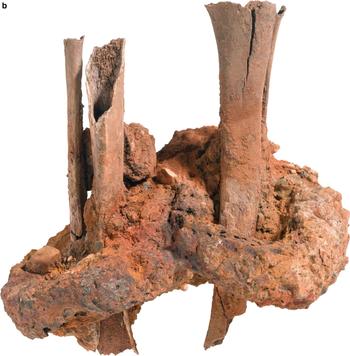
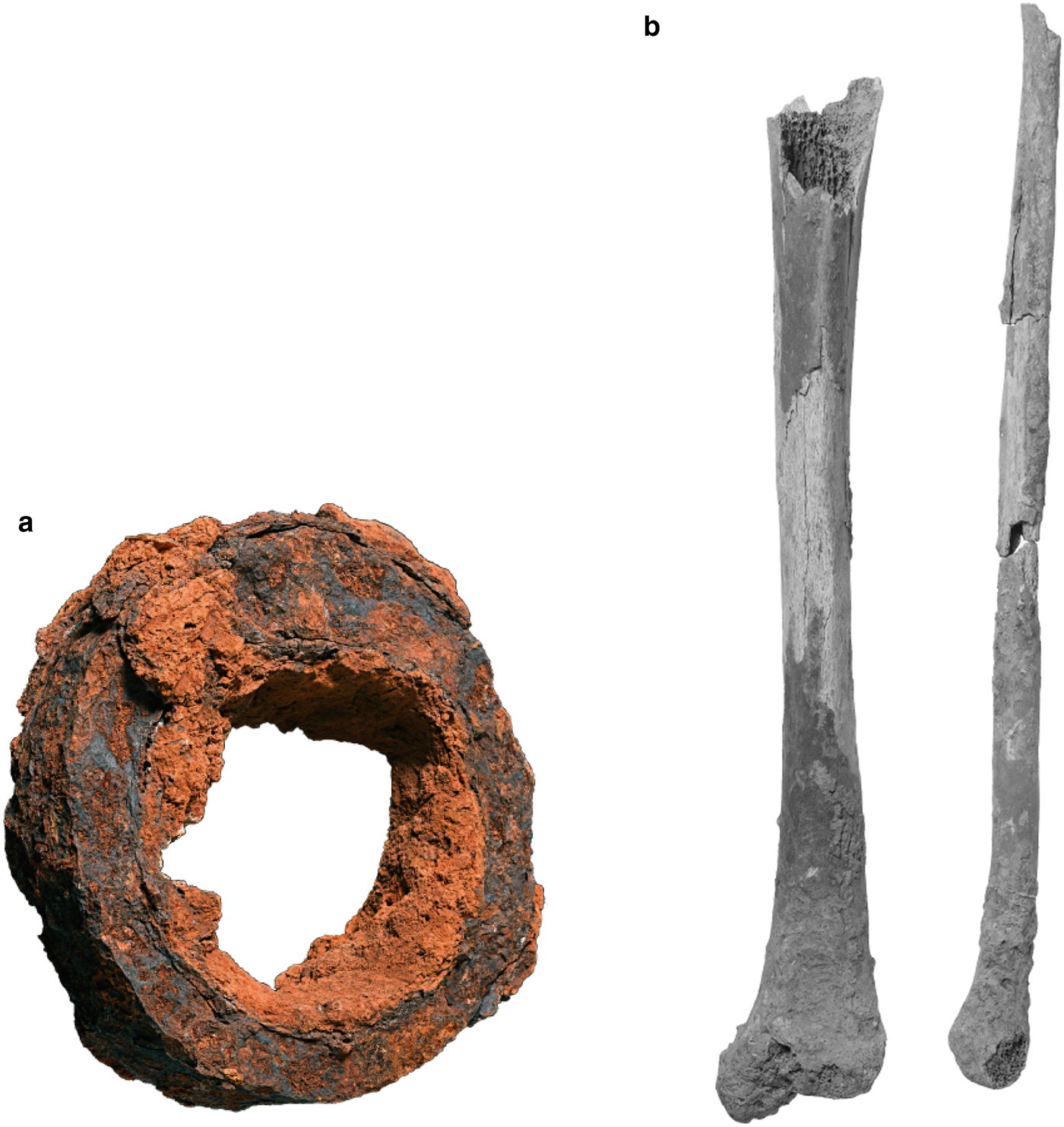
The enslavedFootnote 1 of Roman Britain represent many hundreds of thousands of people who were captured and transported from their place of origin,Footnote 2 but only very rarely is direct evidence recovered in the form of skeletons with the bonds of slavery still present (figs 1 and 2).Footnote 3 This research focuses on the majority who remain ‘unseen’ in the archaeological record and uses a bioarchaeological approach to attempt to engage with this under-studied aspect of life. The aim is to contribute a new perspective to the extensive scholarship on slavery in the Roman world, which has used material culture, inscriptions, funerary practices and primary sources to understand this diverse group of people.Footnote 4 It draws on the growing body of bioarchaeological evidence from the New World which uses patterns of physiological stress and disease to help identify captured and enslaved people in Pre- and Post-Contact societies, and tentatively proposes how we can use bioarchaeological data from Britain in our endeavours to ‘see’ the enslaved in this territory of the Roman Empire.
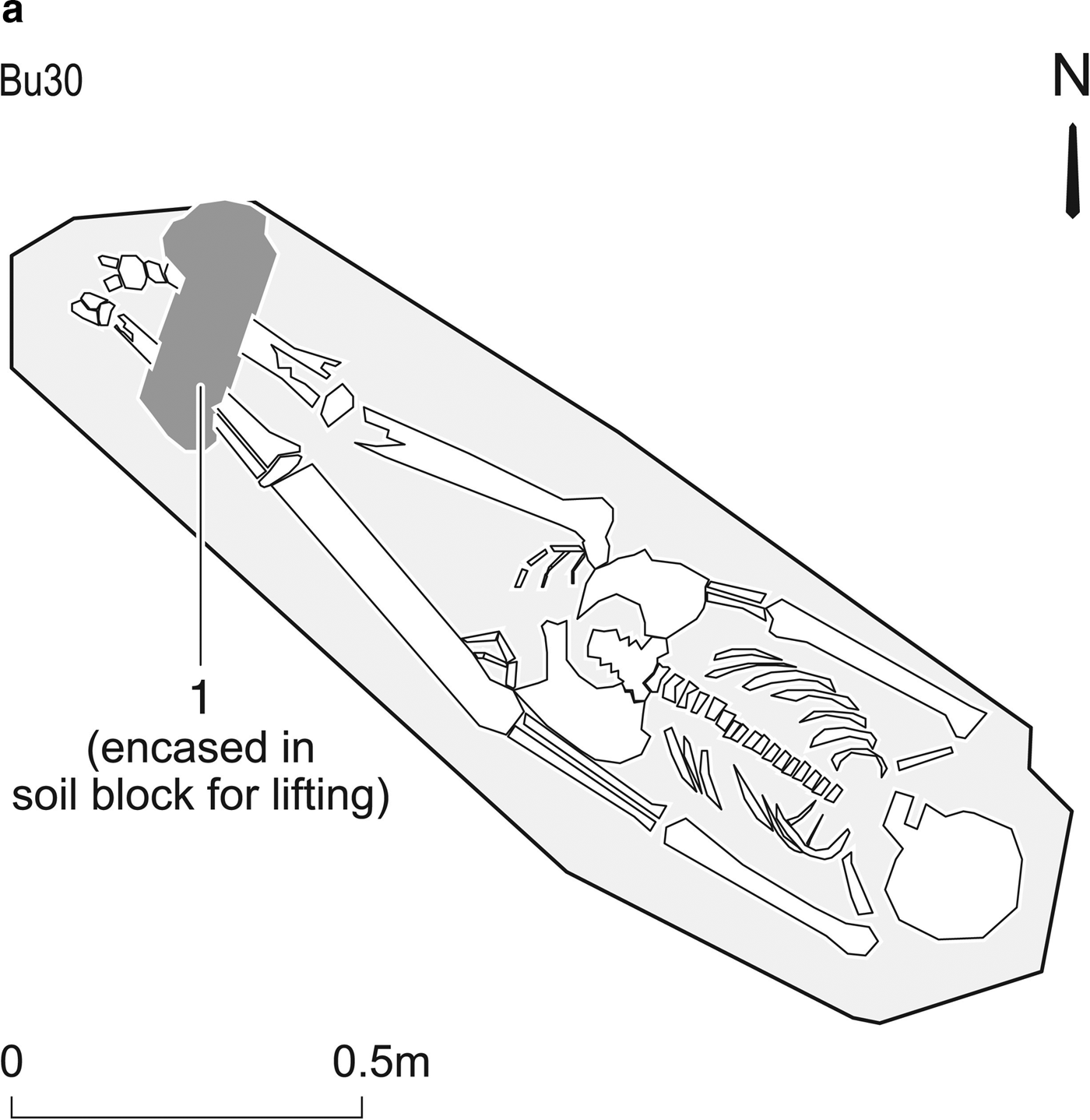
Grave of the adult male burial (ENS03 sk347 BU30) with iron rings from London. (Harward et al. Reference Harward, Powers and Watson2015, 145, fig. 108. © MOLA (Museum of London Archaeology))
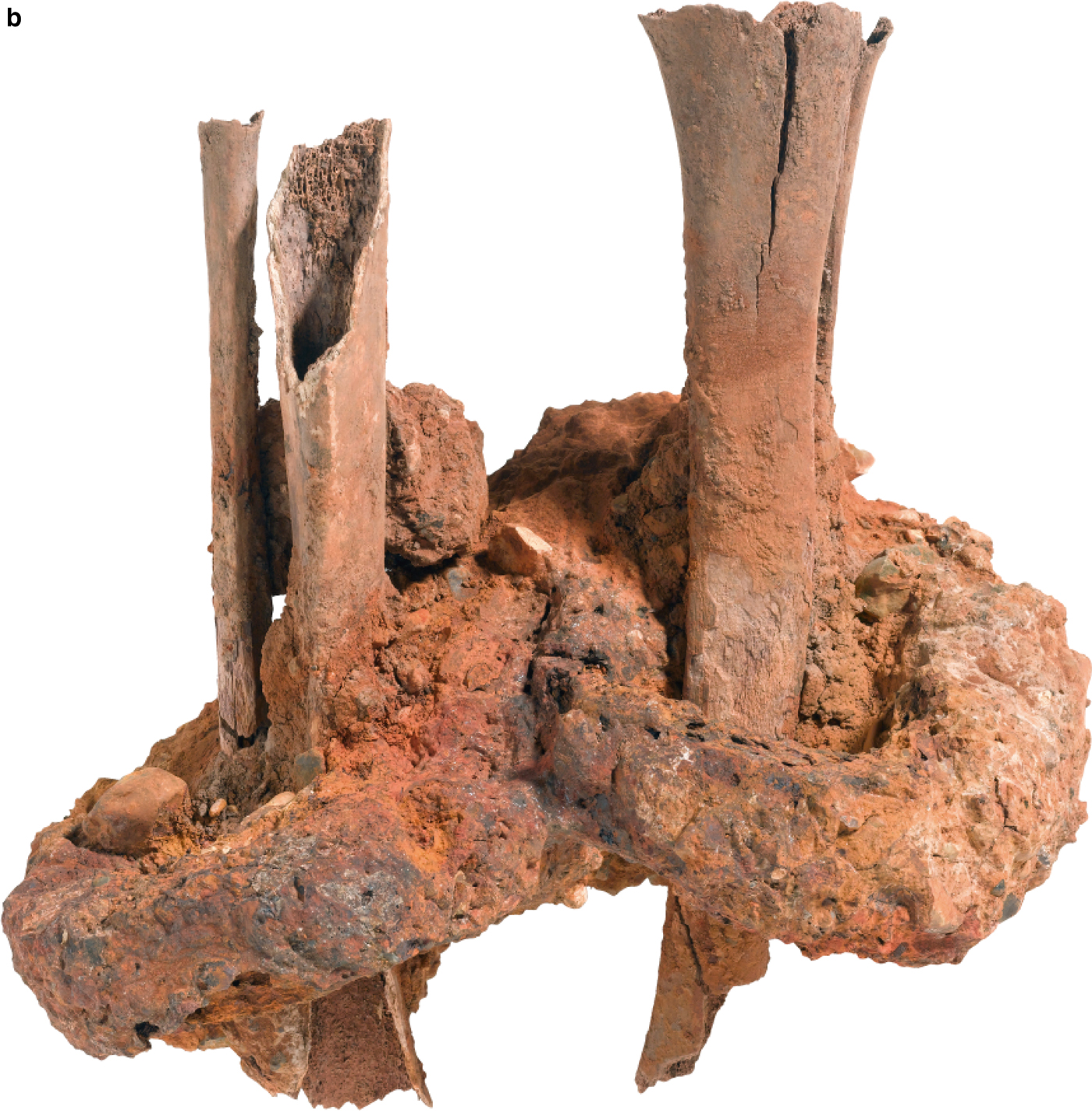
Anterior view of the tibiae of an adult male (ENS03 sk347 BU30) with the iron rings in situ. (Harward et al. Reference Harward, Powers and Watson2015, 145, fig. 108. © MOLA (Museum of London Archaeology))
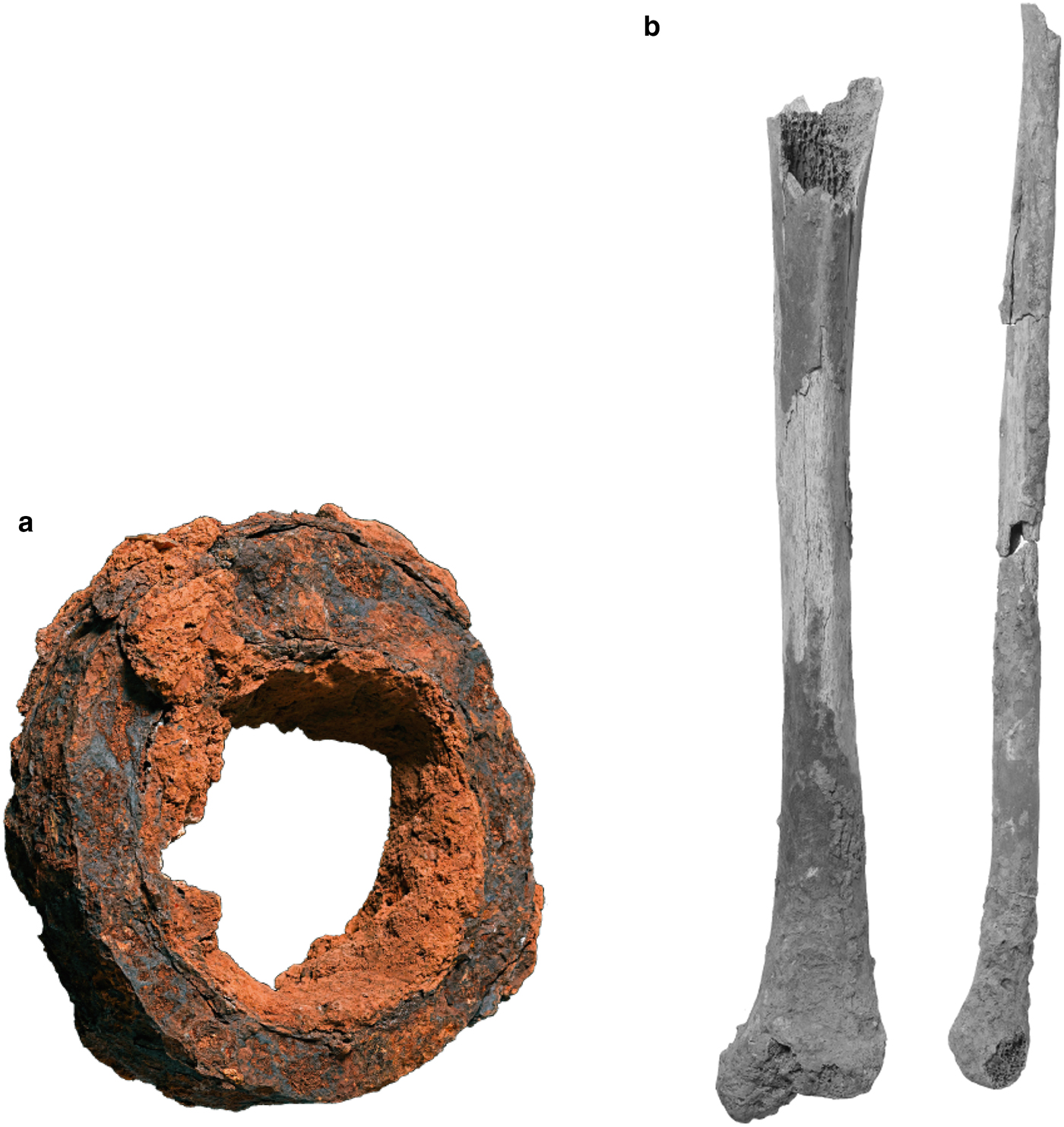
(a) Example of an iron ring from London found on the left lower leg of an adult (ELD88 sk 216 BU 73). (Harward et al. Reference Harward, Powers and Watson2015, 149, fig. 115. © MOLA (Museum of London Archaeology)); (b) Anterior view of the left lower leg bones of an adult. (Harward et al. Reference Harward, Powers and Watson2015, 145, fig. 108. © MOLA (Museum of London Archaeology))
The use of comparative evidence from different periods and locales to explore enslavement remains under-utilised in Roman archaeology, despite strong advocacy over the years by Webster.Footnote 5 In contrast, within the discipline of bioarchaeology, cross-cultural and temporal comparisons of disease are a standard and robust aspect of practice, such as the Global History of Health Project.Footnote 6 Nevertheless, this research does not propose that a particular suite of disease variables and other archaeological data are incontrovertible evidence for enslavement, as Handler and Lange observe.Footnote 7 Instead, as they suggest, if historical sources provide evidence for the existence of slavery in a society, archaeological and bioarchaeological data can provide new perspectives on these sources. Without the historical sources, these datasets will not be able to independently identify slavery because, ‘Slavery is an institution of variable structure that cannot be inferred, deduced or otherwise from purely archaeological remains’.Footnote 8
VICTIMS OF STRUCTURAL VIOLENCE: CAN WE TELL THEM APART?
Structural violence is a distinct form of violence, which is embedded in existing social, cultural and economic systems; it governs the allocation of resources and determines agency, and because the inequalities it creates are often very long-lasting, individuals and communities may be blind to them. Farmer et al. describe it as ‘one way of describing social arrangements that put individuals and populations in harm's way’.Footnote 9
It is attested in the disease inequalities and disparities experienced by different socio-economic groups, arising from historical, cultural and political frameworks which create and perpetuate these hierarchies.Footnote 10 In many different time periods, the poor and bonded labourers, as well as the enslaved, were victims of structural violence, with primary sources revealing that the daily lives and standards of living of these different, but similarly marginalised groups were comparable.Footnote 11
This is also true of the Roman period, where many writers observed that the lives of the urban poor and bonded labourers could be as bad as those working in mines or other hazardous enslaved occupations.Footnote 12 This perspective was reinforced by the huge variation in slave experience both in terms of occupation but also location within the Empire. The consequences of being poor and disenfranchised are proven by the osteological analyses of Roman cemetery populations from impoverished urban and suburban areas in Italy. These have shown that their demographic profiles are dominated by young and middle-aged adults who displayed high rates of degenerative osteoarthritis, suffered from high rates of dental disease, had physiological indicators of stress, sustained injuries caused by assault, and had high rates of non-specific infection.Footnote 13 The subadult osteological and dental evidence from these populations reveals poor growth, indicators of stress and metabolic diseases.Footnote 14 All these changes reflect lives dominated by poor nutrition, frequent disease events, inadequate living environments and hard labour — changes also found in the skeletons of the enslaved.Footnote 15
Untangling the lives of these victims is difficult, because people (in any time period) can move up and down the social ladder over their life-time; nor is health a static phenomenon, as it changes according to environment, age, diet and life-style.Footnote 16 We have to accept that we may never be able to tell the different victims of structural violence apart, unless we are fortunate enough to discover their remains in a context which unequivocally describes or reveals their status.Footnote 17 As the work of Handler and Lange reminds us, this problem is not limited to the Roman period;Footnote 18 nevertheless, it still remains the case that victims of structural violence are overlooked in the archaeological record. Unless we employ novel strategies in an attempt to search for them in the extant evidence, then we are overlooking and excluding a significant portion of the population, who were vital to sustaining the Roman Empire.Footnote 19
SLAVERY IN THE ROMAN WORLD
The origins of the enslaved were incredibly diverse, reflecting military campaigns and trading connections with bordering territories and parts of Asia and Africa. Many also became enslaved because they were born to an enslaved person, were a foundling, or were made slaves as a judicial punishment; some people even sold themselves to survive.Footnote 20 Slaves could be owned by the emperor and state, or another slave or a free-person, as attested in funerary epitaphs.Footnote 21 Imagery from public architecture suggests that in military campaigns, women and children were more likely to be enslaved than men, because they were considered to be less of a physical threat;Footnote 22 however, they were capable of immense resistance, as Cassius Dio observed of a group of German women and children who had been sold by the emperor Caracalla and committed mass-suicide to avoid enslavement.Footnote 23 Nevertheless, the general consensus is that the majority of enslaved people were male and numbered in their millions, with some estimates proposing that between 250,000 and 400,000 new slaves would be required every year.Footnote 24
Bradley describes the relationship of enslaved and owner as ‘consent, coercion and resistance … threads woven inextricably together’,Footnote 25 a view reinforced by their legal status as a type of property, known as res mancipi, alongside working animals in the agricultural economy.Footnote 26 The range of occupations undertaken by slaves was vast, with many focused on the creation and support of elite life-styles and identities, ranging from maintaining their owner's physical appearance to being a lamp-bearer.Footnote 27 These occupations and tasks were created by their owners,Footnote 28 but funerary epitaphs show that many enslaved people acknowledged the relationship between their identity and their occupation. However, in reality, occupations and daily tasks would have been very fluid unless they had received training in a specific skill, such as medicine or accountancy.Footnote 29 For example, an elite Julio-Claudian funerary monument from Rome contained numerous epitaphs of the enslaved household, whose occupations included weavers, a midwife, clothes-menders, accountants and Germanic bodyguards.Footnote 30 Many children and adults were also kept as pets (deliciae) by their owners, usually for sexual labour, but it was illegal to buy a person for prostitution.Footnote 31 Elite households also divided the enslaved into familia urbana and rustica groups reflecting where they were housed (urban versus rural) and what occupations they performed. However, these were changeable and often arbitrary divisions, as the enslaved frequently had the same occupation regardless of where they lived.Footnote 32 Nevertheless, the sources do paint a picture of harder conditions and work in a rustica setting.Footnote 33 All sources agree that those involved in mining had the most arduous conditions.Footnote 34 In the Roman world, careers could be upwardly and downwardly mobile but for many, particularly those owned by the Imperial family, they could be much better than the lives of many freemen.Footnote 35
Many of the enslaved across the Empire are considered to have been employed in agriculture; however we are reliant on farming manuals written by elites to understand the roles and activities they performed.Footnote 36 From such texts we learn that they were often kept in underground prisons and made to work in chain-gangs.Footnote 37 It should be noted that the agricultural economy also employed many tenant farmers and other labourers, who were not enslaved but performed the same tasks.Footnote 38 McCarthy's research on Romano-British peasants suggests that their activities would have involved walking long distances over rough terrain, clearing land, digging and lifting.Footnote 39 He also makes the important point that in a rural setting other occupations would also have been arduous, such as quarrying, mining and salt extraction.Footnote 40
The duration of a person's enslavement is a contested topic, but the epigraphic evidence suggests that there were gendered differences regarding when people were freed. CiceroFootnote 41 states that a good slave could be manumitted after six years; however, the consensus within scholarship is that enslavement would have been much longer, perhaps 20 years, especially for those in a rural setting, and for some individuals it lasted their entire life-time.Footnote 42 As for the majority of the Roman population, there was no retirement, and for the enslaved elderly this was a precarious stage of their lives, sadly one for which there is a paucity of information.Footnote 43 The limited primary sources give the impression that it was not acceptable practice to sell the infirm and elderly enslaved, one underlined by a legal principle established by the emperor Claudius that obliged the familia to care for these people.Footnote 44 Sadly, it seems that many owners manumitted the older enslaved in order to avoid caring for them; it was an expense they could not afford.Footnote 45 However, many older or impaired slaves were assigned lighter duties and continued to be fed and housed by their owners.Footnote 46 Reviews of the primary sources suggest that older women were a particularly vulnerable group, subject to physical and verbal abuse which focused on their physical appearance and frailty.Footnote 47
SLAVERY IN ROMAN BRITAIN
Discussions of slavery in the Roman world acknowledge that the majority of evidence pertains to the Mediterranean, with other territories poorly understood and explored. In rural areas, on the margins of the Empire, it has been posited that earlier systems of labour continued during Roman occupation.Footnote 48 The Roman primary sources and Iron Age material culture show that slavery was a well-established trade between Britain and the Empire before the conquests of Caesar (55–54 b.c.) and Claudius (a.d. 43), with Caesar stating that the only booty from the territory was slaves.Footnote 49 However, post-conquest, the scale of this trade must have escalated considerably, especially with the development and expansion of the agricultural economy.Footnote 50 In discussing the evidence from Britain, Mattingly argues that the territory was a ‘slave-using’ society rather than a ‘slave society’, one constructed around slavery and reliant upon enslaved labour, with people being transported in and out of the territory.Footnote 51
In Britain, epigraphic evidence reveals the presence of the enslaved, for example a tombstone from London which is dedicated to the wife of a slave, ‘To the spirits of the departed … Anencletus, slave of the province (set this up) to his most devoted wife’,Footnote 52 and also writing-tablets, including new finds from Bloomberg, London.Footnote 53 The names of many enslaved in these sources are indigenous.Footnote 54 There are also small finds depicting shackled and bound individuals, as well as finds of manacles and fetters,Footnote 55 the latter only very rarely recovered in situ on a skeleton.Footnote 56 Webster concedes that much of the evidence for the enslaved is most likely to be found by using archaeological data, primarily buildings and material culture, which raises the importance of studying human remains and cemeteries, though she acknowledges that we have yet (and still have) to identify a slave cemetery in Britain.Footnote 57
ENSLAVED ROMAN BODIES
From the moment of capture to their eventual demise, bodies of the enslaved were controlled, manipulated and marked by their owners, as remarked upon in a funerary inscription from Gaul: ‘Gaius Ofilius Arimnestus … a barbarian land gave me birth. Profit handed me over to undeserved slavery so that my whole being changed … I obtained my freedom with my own money.’Footnote 58 As in later periods, natal origins were transformed to fulfil the owner's desire; the emperor Caligula, for instance, transformed Gaulish slaves into ‘Germans’ as he had recently campaigned against these communities.Footnote 59 Ethnic origins did have to be stated by the seller, because some groups were more desirable than others — a point which should not be confused with proto-racism,Footnote 60 rather Roman society had stereotypes regarding the suitability of different groups for certain jobs, while people were urged not to have lots of slaves from a particular locale in order to avoid domestic unrest.Footnote 61
At the point of sale, vendors had to state if the slave suffered from a disease or defect, though pregnancy, seen as a natural state, was not considered to detract from their value.Footnote 62 Their hair could be shaved, they could be tattooed, tortured and beaten; their passive status meant that they could be victims of sexual abuse and labour.Footnote 63 Harper goes so far as to say, ‘abuse of the slave's body was built into Roman society’.Footnote 64 Bodies were also valued differently according to physical appearance. The number of enslaved Black and Asian people has been reckoned as lower than that of White European slaves, a factor which is thought to have contributed to them being prized as ‘exotic’, allowing their owner to increase their display of status and wealth.Footnote 65 Physically attractive slaves (children and adults) were valuable commodities, whose owners used them to serve and entertain guests at functions; they could use their physical capital to improve their standing within the household by becoming a favourite.Footnote 66 They could also be chosen for sexual labour either for their owner or as ‘reward’ for male agricultural slaves.Footnote 67 Green makes the important observation that the control and use of slave bodies by owners was frequently depicted in the frescos of many homes, an art form that both unequivocally reinforced their subjugation and humiliation and reflected their owner's wealth and status.Footnote 68
The sources contain many examples of harsh physical treatment and abuse towards slaves by their owners, such as the medic Galen,Footnote 69 who observed that many were physically maimed by their owners; they could also be slapped, bitten or whipped, as Ovid says, ‘What free man would willingly have sex with a house-slave and grab a back scarred by the whip?’.Footnote 70 The reasons for these punishments were varied, such as causing family disharmony or breaking their owner's possessions, but the general consensus is that they were beaten and abused because their owner wanted to and could do so on a whim.Footnote 71 The sources also describe the physical appearance of slaves engaged in hard manual labour: ‘Their skins were seamed all over with the marks of old floggings … they had letters tattooed on their foreheads, and their heads were half-shaved, and they had irons on their legs. Their complexions were frighteningly yellow.’Footnote 72
Scheidel suggests that their risk of disease was no greater than that of their owners or those living in poverty, because they were living in the same environment.Footnote 73 At face-value this statement has merit but when viewed from a health perspective is problematic. It does not acknowledge the effect that capture and transport would have had on health, whereby people would have experienced psychological and physical traumas, compromised nutrition and exposure to new diseases.Footnote 74 Neither does it take into account the considerable amount of clinical and bioarchaeological data for the intergenerational consequences of poor health, with a mother's health-status having health and mortality consequences for her own offspring, as well as for her grandchildren and their descendants.Footnote 75
BIOARCHAEOLOGY OF SLAVERY
Roman archaeology has called for stable isotopes and aDNA to be used when exploring enslavement, but is cautious about the extent to which science is a ‘magic bullet’;Footnote 76 sadly, also, despite a plethora of new bioarchaeological studies proving otherwise,Footnote 77 the belief that the extant datasets are too limited and biased to be of value still persists.Footnote 78 Over the decade or so since these calls were made, the discipline of bioarchaeology has significantly developed its approaches to the reconstruction of the lives of past individuals and communities, particularly because it now draws on multiple datasets to establish past experiences and is more thoroughly embedded in theoretical discourse.Footnote 79 The study of a person's skeleton creates a narrative, with the bioarchaeologist ‘reading’ the remains to establish aspects of their identity,Footnote 80 a strategy also used in ancient history, with Holmes suggesting that bodies ‘become legible only in the presence of readers’.Footnote 81 A central concept in my work on Roman individuals is the recognition that a skeleton is not merely the physical remains of a person; it is a reflection of their social identity and shaped by the environment and culture that they inhabited.Footnote 82 The body categories suggested by Scheper Hughes and LockFootnote 83 are ingrained in this review of the osteological evidence for enslavement, as these categories make clear that the body is regulated and controlled by others, and can be negatively impacted by structural violence.Footnote 84
BIOARCHAEOLOGICAL PERSPECTIVES FROM THE NEW WORLD
Bioarchaeological research of the African Diaspora and Pre- and Post-Contact societies in the New World has analysed many diverse populations of the enslaved and has repeatedly identified compromised and stressed childhoods, which are reflected in the evidence for poor growth and development, the presence of infectious and metabolic diseases, injuries, poor dental health, indicators of physiological stress and high mortality rates.Footnote 85 This evidence is also found in adults who show high mortality rates for younger age-groups, injuries and musculoskeletal changes associated with high rates of physical activity,Footnote 86 evidence for assault injuries,Footnote 87 syphilis and metabolic diseases.Footnote 88 Sex differences are attested in many populations, with males experiencing the highest burden of injuries and activity changes, while females have high rates of syphilis and mortality during young adulthood.Footnote 89 Harrod and MartinFootnote 90 propose that non-lethal injuries are positively associated with capture and subordination, and emphasise the importance of injury recidivismFootnote 91 as an integral aspect of a person's general health status.Footnote 92
Although these bioarchaeological studies have identified the same diseases and lesions in the remains of the enslaved regardless of location within the New World, they have also found diversity, reflecting the inherent heterogeneous experience of capture and enslavement.Footnote 93 This is illustrated by the analysis by Owsley et al. of a cemetery from New Orleans (USA), dating from 1720–1810.Footnote 94 Here, the non-White European individuals had poorer health than the White Europeans buried in the cemetery. Some Black males had experienced assault and undertaken hard physical labour, while one had a chronic osteomyelitis (infection) of their tibia, suggesting they had worn a shackle. However, in comparison to enslaved individuals excavated from plantation cemeteries, they appeared to have ‘lived slightly better lives’,Footnote 95 which the authors suggest reflects the less arduous roles they performed in urban households.Footnote 96
The patterning and distribution of injuries reported for enslaved people vary between cemetery populations, but for the most part reflect a combination of fractures produced by assault, abuse and accidental mechanisms, because of their work on plantations, in agriculture and with livestock. There are no consistent trends between the sexes, and injuries (assault and accidental) are reported in all age-groups, from children to older adults.Footnote 97 For example, in a population from Monserrat (Caribbean), six adult males and six adult females were excavated, but only the females had evidence for healed fractures, affecting the left metacarpals, one right fibula and one right tibia, all of which are likely to have been produced by accidental mechanisms.Footnote 98 In contrast, individuals interred at the New York African Burial Ground had evidence for healed fractures to the vertebrae and extremities, suggestive of manual labour, and peri-mortem fractures to the skull, torso and limbs produced by violent mechanisms in adults of both sexes and one subadult, which may have contributed to their death.Footnote 99
Nevertheless, in the majority of cases, these are the remains of people who had been born into slavery or had been sold to an owner.Footnote 100 Very few known cases of captured people have been identified; their remains provide a window into a very specific part of the enslavement experience.Footnote 101 One unique mid-nineteenth-century cemetery population was excavated on the island of St Helena,Footnote 102 where a burial ground was established for first-generation transported Africans who had been released from their slaving vessels by the British Navy; they had been captured and been at sea for several weeks. The excavation recovered 325 individuals, the majority of whom were less than 18 years old.Footnote 103 Four adult males had sustained peri-mortem injuries to the ribs and hand, with one having evidence for a sharp-force weapon injury to their shoulder blade,Footnote 104 injuries that could only have been acquired during capture and transport. Metabolic diseases were also encountered, with nine people suffering from active rickets (vitamin D deficiency) at the time of death, while 20.87 per cent of the sample had lesions indicative of scurvy (vitamin C deficiency), which was most frequent in males and children, aged 7–12 years old, and may reflect the perils of a long sea voyage but also their living conditions during capture.Footnote 105
The literature has also reported discrepancies between the historical accounts of slave health and the diseases observed in their skeletons. The primary difference is in mortality profiles, particularly of infants and young adults, whose high death rates were recorded in the historical sourcesFootnote 106 but are not always encountered in the archaeological record. Nevertheless, some scholars suggest that this discrepancy must not be taken at face-value, because many cemeteries have not been fully excavated, while many of the enslaved and their owners did not know their chronological age — as in Roman funerary inscriptions, this was rounded-up.Footnote 107 For example, the English eighteenth-century Jamaican plantation worker Thomas Thistlewood recorded in his diaries that there were 153 pregnancies on his plantation which resulted in 121 live births; of the 66 of these who could be traced in his diaries, 51 died before the age of seven and only 15 lived longer.Footnote 108
The prevalence of infectious diseases, particularly tuberculosis and leprosy,Footnote 109 is also lower than reported in the sources; however this is not unexpected, particularly for tuberculosis, because only a small portion of those infected will develop a skeletal response.Footnote 110 Both diseases can be incubated for several years before developing and therefore a person may die before any changes are initiated in their skeleton.Footnote 111
More recently, bioarchaeological studies have utilised aDNA techniques to better understand mobility and ancestry in the New World and when full genomic sequencing is employed these studies have been very successful in identifying people who originated from Africa.Footnote 112 For example, the work by Schroeder et al. on three enslaved individuals from St Martin (Caribbean) was able to identify connections to Ghana, Nigeria and northern Cameroon.Footnote 113 Stable isotopic studies of diet and mobility are also contributing to our understanding of the life-ways of transported individuals and their descendants, as illustrated in the study of 25 enslaved individuals excavated from the Newton Plantation (Barbados).Footnote 114 For some, their dietary isotopes differed between their teeth and bones, showing that their diet had significantly shifted between childhood (teeth) and adulthood (bone). These individuals also had non-local mobility isotope values, which showed diverse origins within Africa, thus reflecting their capture, transport and eventual enslavement on Barbados.Footnote 115
ROMAN BIOARCHAEOLOGICAL EVIDENCE FROM CONTINENTAL EUROPE
The cautious approach advocated by Handler and LangeFootnote 116 is most pertinent to this section, as although epigraphic evidence has identified the cemeteries and burials of slaves and freedmen,Footnote 117 there is a dearth of accessible or published osteological data. Bioarchaeological studies have been undertaken on this material, but these have focused on certain aspects of skeletal and dental biology, such as morphology.Footnote 118 The evidence presented below reflects data from populations considered to have slaves present.
Excavations of the cemetery on the Imperial rural estate at Vagnari (Puglia, Italy) have uncovered the remains of 108 individuals buried between the first and fourth centuries. Although research on these human remains is ongoing, it appears that the cemetery was used to bury infants, children and adults of both sexes, the majority of whom were furnished with grave goods.Footnote 119 Preliminary bioarchaeological analysis has found evidence that both sexes have multiple fractures present, with males having the highest rates and more lower-limb fractures. In contrast, females sustained fractures to the vertebrae and upper limbs. Prowse et al. suggest that the patterning of injuries in this population reflects their activities in iron-working, tile production, animal husbandry and agriculture.Footnote 120 Also present were Schmorl's nodes and ‘muscle tears’, again suggestive of strenuous work.Footnote 121 Dental enamel hypoplastic defects and carious lesions likewise showed different prevalence rates between the sexes suggesting that food-ways on the estate were gendered.Footnote 122
Analysis of the human remains from Pompeii (Italy) provides an unrivalled insight into the lives of urban-dwellers but because of its catastrophic destruction in a.d. 79, identifying who could be a slave is highly subjective, particularly given the poor post-excavation organisation of this material.Footnote 123 However, some evidence may point to differences in the burden of disease and in medical treatment between individuals. Lazer's research identified people with such poorly reduced leg fractures that they would have had considerable leg-length discrepancies; she also identified individuals with chronic degenerative osteoarthritis, poor dental health, physiological indicators of stress, and dental wear patterns suggestive of using teeth as tools in occupational activities, noting that one example was supposed to have been caused by a boy working in the fishing industry.Footnote 124 Although Lazer challenges earlier work which claimed to have identified sex labourers in the sample excavated from the town,Footnote 125 the body of a female found in a caupona near Pompeii has been the focus of debate, as a bracelet found on her arm has an inscription on its inner surface which reads, ‘The master to his very own slave-girl’.Footnote 126 The female was aged c. 30 years old when she died and was found in association with another adult female and three children; however no pathological changes were reported.Footnote 127
At the Italian cemetery of Lucus Feroniae (near Capena, north of Rome), Sperduti's examination of the human remains excavated from this low-status burial ground identified many individuals, usually male, who had musculoskeletal markers, degenerative osteoarthritis to their joints and vertebrae, and healed fractures indicative of accidental injury, which she suggests are associated with their engagement in heavy labour and manual occupations.Footnote 128 Similar osteological changes have been reported for the populations excavated from the cemeteries at Ostia and Portus (Italy).Footnote 129 There, studies have reported a demographic bias towards males aged 20–40 years old, who have musculoskeletal markers suggestive of hard manual labour, occupational injuries and degenerative osteoarthritis. This is not surprising given that this was the harbour used by the city of Rome and an area where salt was extracted.Footnote 130
Unfortunately, only a limited number of aDNA and stable isotope studies of mobility have been conducted on Continental populations; these have found evidence for within region/country migration,Footnote 131 while only the mtDNA study by Prowse et al. at Vagnari has identified a person whose maternal line showed evidence for long-distance mobility, as their haplotype is found in modern Asian populations.Footnote 132 These findings support the evidence from the primary sources and inscriptions for the origins of enslaved people.Footnote 133
SLAVE BODIES IN ROMAN BRITAIN
The bioarchaeological data from the New World emphasise a diverse range of palaeopathological evidence for enslavement. Using these findings to re-examine the evidence from Roman Britain obliges us to think again about the reasons why certain patterns of diseases, physiological indicators of stress and dietary stable isotope results are found,Footnote 134 as well as suggesting that we should be less reticent about proposing slavery as causality. One such disease is scurvy, which is a disease caused by a person having a diet lacking or with limited quantities of fruit or vegetables for several monthsFootnote 135 and for which the prevalence rates dramatically increase from the Iron Age.Footnote 136 At London, two cases were reported in infants less than a year old. Stable isotope analysis demonstrated that both were still being breastfed, which should have prevented them from developing the condition.Footnote 137 The identification of scurvy in this age-group shows us that whoever was nursing them was low in vitamin C which impacted on the vitamin levels in their breastmilk,Footnote 138 which as in the New World examples, perhaps reflects poverty or enslavement.Footnote 139 Although no adults have been identified with scurvy in Roman London, this does not mean that the disease was absent in this population, as people can have low levels but not become critically ill enough to initiate a bony response.Footnote 140 Therefore, because most of an infant's nutritional needs are met through breastmilk, the possibility is raised that their nurses had compromised nutrition, potentially implying that they (and their nurslings) may have been enslaved.
Another area which deserves closer scrutiny is rural-urban health inequalities, where slavery has been suggested as one of a number of causative factors,Footnote 141 but because data have typically been pooled and examined at the regional or national level, subtle trends within a locale, as well as individual experiences, will be masked.Footnote 142 Also to consider is the evidence for fracture treatment, as cemetery reports and regional studies reveal considerable variation in injury outcomes between individuals; this evidence, when combined with evidence for other disease and physiological indicators of stress, could provide new insights.Footnote 143
Stable isotope analyses of diet using bone collagen have been undertaken on many hundreds of inhumed individuals from Roman Britain derived from rural, urban and military funerary contexts.Footnote 144 These results have shown that there is an increase in nitrogen values (δ15N) compared to late Iron Age individuals,Footnote 145 which is typically explained as an increase in the consumption of marine resources, reflecting how food-ways were transformed from the late Iron Age.Footnote 146 Interestingly, a similar result has been observed in both individuals and populations who have experienced physiological stress, such as victims of famine and abuse, because when a person's body enters a catabolic state, the nutritional stress causes the δ15N values to rise but the carbon values (δ13C) typically remain the same.Footnote 147 A study by Redfern et al. has examined the relationship between dietary stable isotopes and mortality risk for Roman Britain and found sex differences in the median values of δ13C and δ15N, which they propose reflect the lower socio-economic status of many females post-conquest, and that individuals with elevated δ15N levels had an increased mortality risk which in some individuals may not indicate diet, but rather physiological stress, perhaps associated with enslavement.Footnote 148
Focusing on specific burials, in Britain there are several instances where human remains have been uncovered with restraints in situ, but the majority are unlinked iron rings around the lower legs; whether or not these rings are actually restraints is debated in the literature.Footnote 149 If indeed they are, then these may well be the bodies of enslaved individuals and a vital source of evidence.Footnote 150 In London, where epigraphic and material culture finds attest to enslavement in the city, two burials have been encountered that may be of enslaved people. One male, aged 18–25, was excavated with iron rings around his ankles, one being welded around each leg (fig. 1).Footnote 151 This male only had two reported pathologies: Schmorl's nodes to the thoracic and lumbar vertebrae and dental calculus.Footnote 152 Schmorl's nodes have multifactorial origins, including congenital factors, trauma and degenerative osteoarthritic changes.Footnote 153 The second example of iron rings around a person's ankles was found on the heavily truncated remains of an adult, for whom only the lower legs survived; no pathology was reported (fig. 2).Footnote 154
In the cemetery at 3 Driffield Terrace in York,Footnote 155 a male (3DT37), aged 26–35, from a double burial, was interred with an iron ring around each ankle and had been decapitated. Analysis of his skeleton revealed that he had degenerative osteoarthritis to his spine and other joints, evidence for trauma to his head, teeth, hand and a leg, developmental changes to his spine and right shoulder joint, non-specific evidence for infection to his ribs and sacrum, active new bone present to his legs and evidence for a reduction in tooth size and over-crowding.Footnote 156
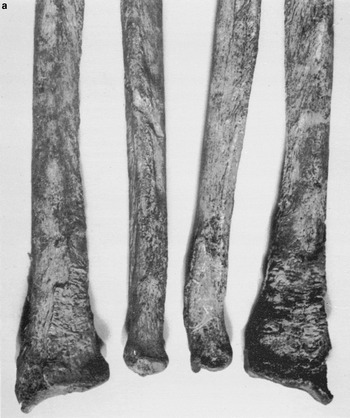
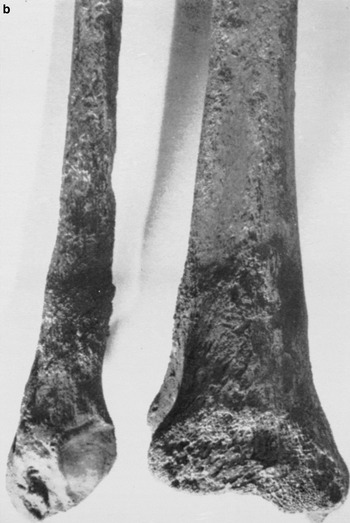
In 1976, Calvin Wells suggested that the severe infection (osteitis) affecting the distal portion of the forearm bones and the distal portion of the left lower leg which had formed into a ‘ring shaped zone’ in an ‘elderly man’ (Burial 6) (fig. 3) from the cemetery at Icklingham, Suffolk,Footnote 157 may have developed in response to the use of shackles. He went on to suggest that new bone formation to the wrist and ankle area of a ‘middle-aged woman’ (Burial 35) and osteitis at the distal portion of the right lower leg in a middle-aged man (Burial 38) may also have developed in response to being shackled.Footnote 158 While Wells was renowned for ‘pushing the envelope’ on interpretation, in the author's experience these changes are as Wells describes them, ‘exceedingly puzzling … very perplexing … I have never previously seen such a group as these’.Footnote 159
Severe infection of the lower portion of the forearms of an older adult male from Icklingham, Suffolk. (West and Plouviez Reference West and Plouviez1976, 112, pl. IV lower. © East Anglian Archaeology)
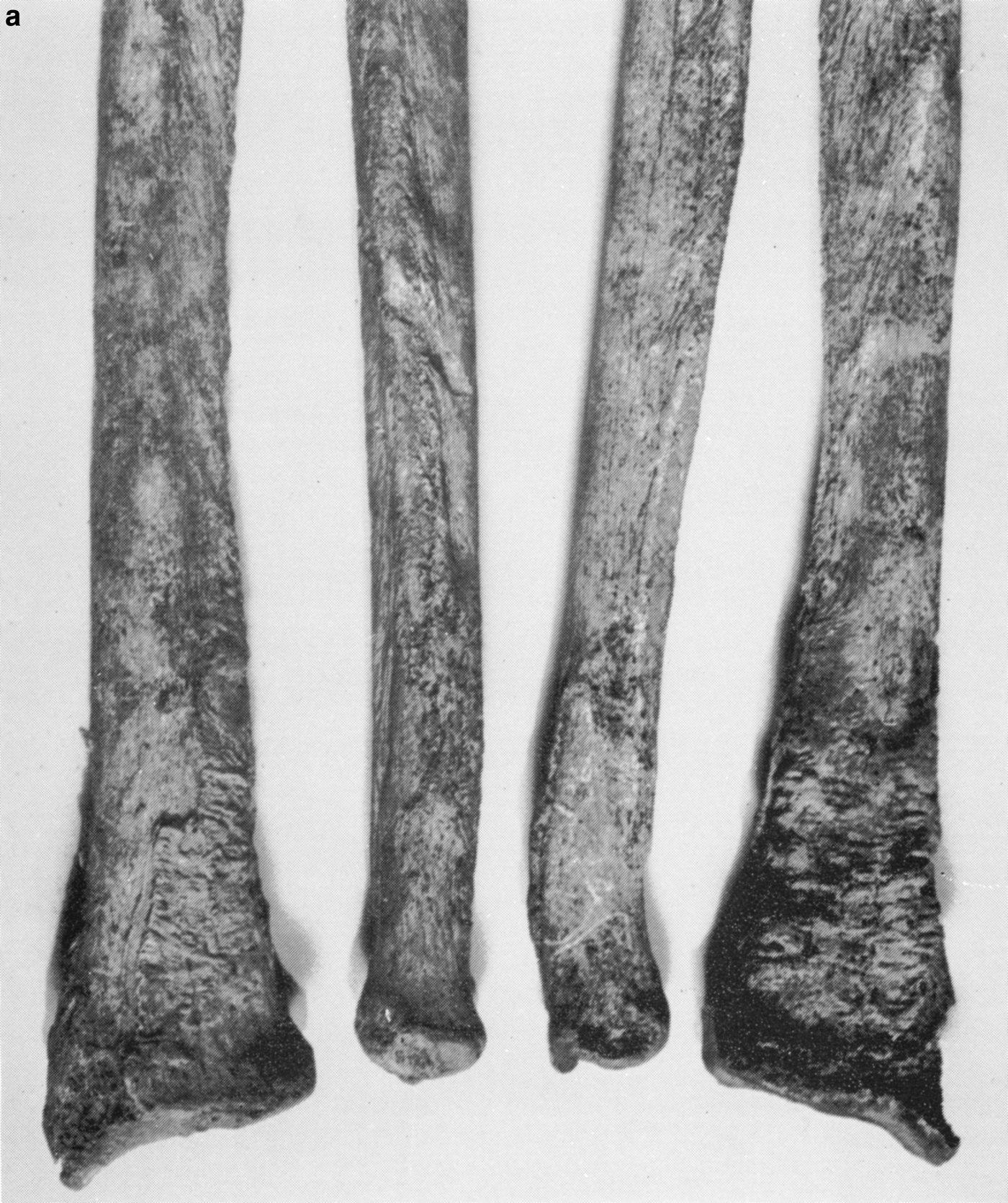
Example of the severe infection to the left lower leg of an older adult male from Icklingham, Suffolk. (West and Plouviez Reference West and Plouviez1976, 113, pl. V. © East Anglian Archaeology)

Other cases suggestive of an enslaved status can be proposed though this is by no means the only interpretation. For example, at the same cemetery, another potential enslaved elderly person could be Burial 1, a female described as ‘relatively advanced [in] years’, who had mild congenital kyphoscolosis, and a poorly reduced fracture to the distal end of her right clavicle that also resulted in considerable ossification of the surrounding tissue, a healed fracture to the proximal third of her left fibula, degenerative osteoarthritis to her shoulder, knee joints and first metatarsal-phalanx joints, and ‘gross thinning of the symphyseal surfaces of both pubic bones … with the L. side obliquely overlapping the R.’.Footnote 160 Her skeleton has many of the conditions associated with enslavement,Footnote 161 particularly the degenerative osteoarthritic changes showing that these joints were used and she was mobile, but the changes to the pubic bones are harder to understand and may well reflect a subluxed (partially dislocated) joint, again related to occupation.Footnote 162 The location of these fractures corresponds to accidental injury mechanisms that may be related to her spinal condition but also to agricultural work.Footnote 163
Excavations at Oxford Road (Gloucester) recovered two individuals from a mass pit who are tentatively thought by Márquez-Grant to have suffered from congenital syphilis.Footnote 164 The first is a subadult (sk 1277) who had very severe enamel hypoplastic defects to their deciduous dentition and unerupted permanent dentition.Footnote 165 Unfortunately, their skeleton was incomplete and cribra orbitalia (indicative of anaemia) was the only observable pathology.Footnote 166 The second individual is an adolescent (sk 1672), aged 15–18, with dental changes identified by Márquez-Grant as mulberry molars and notched incisorsFootnote 167 — dental changes caused by congenital syphilis.Footnote 168 These are the earliest cases of congenital syphilis in Britain and, at present, the only cases from the Roman period.Footnote 169 The incomplete nature of their skeletons and the lack of associated bony lesions is problematic, but the extant lesions and dental morphology do conform to the late-onset changes described in the clinical literature.Footnote 170 The presence of these two potential cases provides a window into sexual health at this time and could reflect that their mothers were victims of sexual violence or their involvement in sexual labour.
Work by Eckardt et al. Footnote 171 has spearheaded the use of mobility isotopes in Britain, with their work focusing on diaspora communities, predominantly analysing cemeteries from Yorkshire and Hampshire, which identified migrants from within Britain but also from the Continent. Their stable isotope studies were supplemented by ancestry assessment of skull metrics in a number of populations, which revealed the presence of people with mixed White European and Black ancestries, as well as Black ancestries.Footnote 172 Recent stable isotope studies of individuals from London have identified migrants from Rome, the Continent and the southern Mediterranean, with assessments of ancestry based on craniofacial morphology identifying White European and African people.Footnote 173 Only a small number of aDNA studies have been published from Britain;Footnote 174 these have revealed Continental and Middle Eastern relationships.Footnote 175 These are fascinating results, but on their own do not provide evidence of enslavement, as many different groups of people were mobile within the Empire, not just the enslaved.Footnote 176 It is only at the individual level that these results combined with other bioarchaeological data can contribute to reconstructing an osteobiography that may suggest enslavement.
CONCLUSIONS
This review suggests that an osteobiographical approach affords us the opportunity of identifying the enslaved of Roman Britain. Such an approach needs to be multidisciplinary, drawing on work undertaken in the New World and elsewhere in the Roman Empire.Footnote 177 However, the literature shows that enslavement does not create specific or unique health and disease patterns. Instead, it recognises that the ‘body politic’ records these insults and suffering, and it is this evidence which allows us to identify victims of structural violence.Footnote 178 Now, more than at any other time, bioarchaeology, aDNA and stable isotopes are able to provide a unique insight into Romano-British enslavement. British bioarchaeology has a robust and strong theoretical grounding and recognises that the valuable research by New World scholars should inform our practice rather than acting as a universal template for past communities. Above all, bioarchaeology has the potential to ‘see’ the enslaved of Roman Britain through the careful consideration of the person's burial context, their identity, health and genetics.Footnote 179
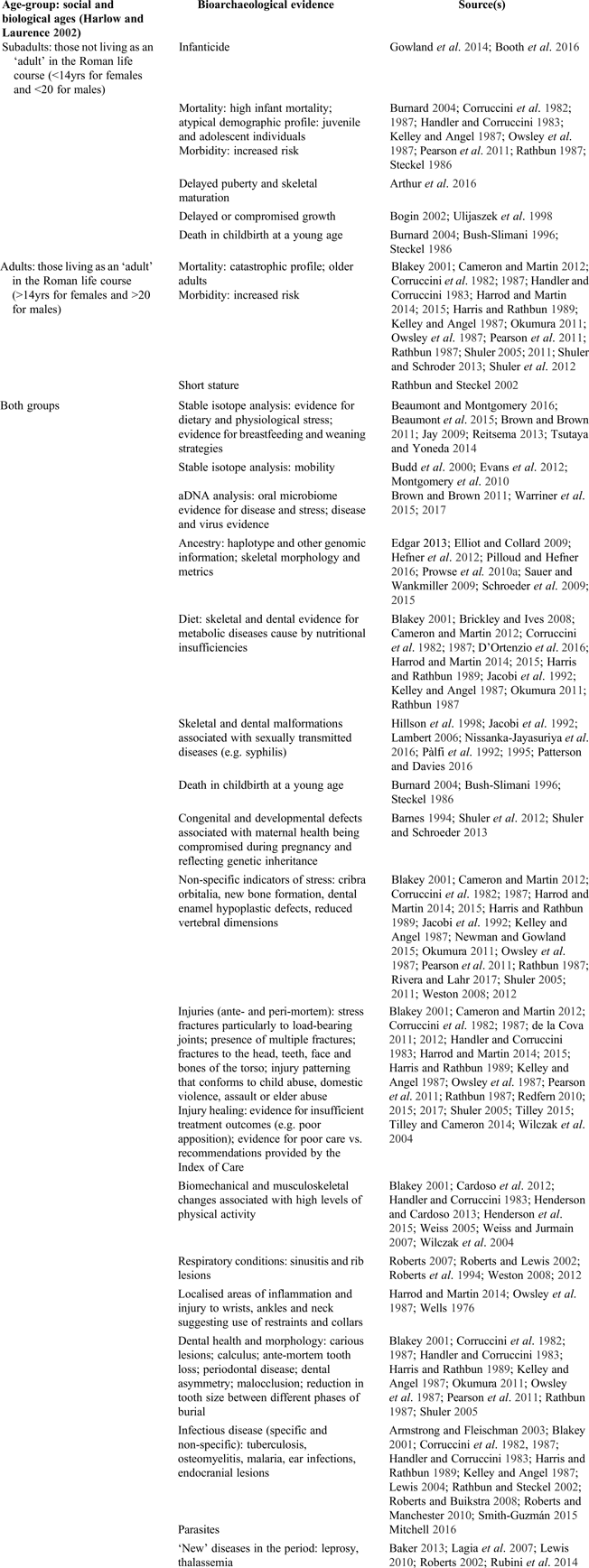
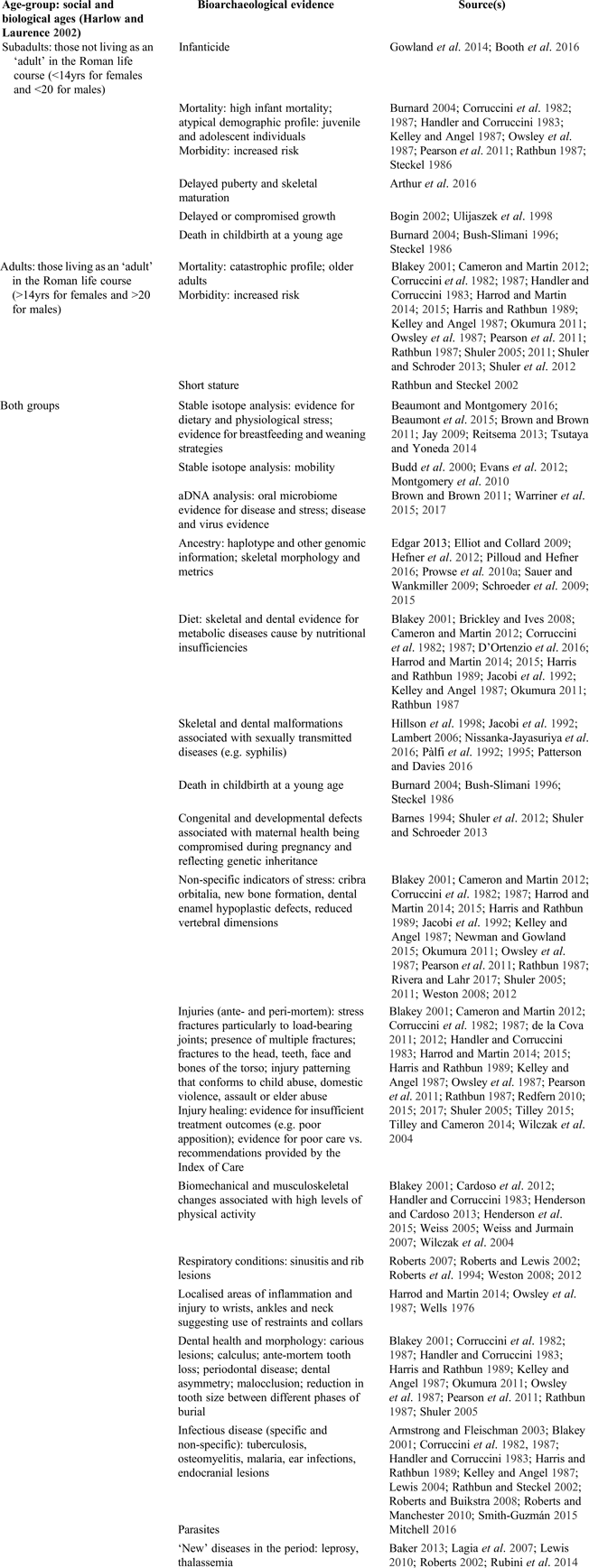
BIOARCHAEOLOGICAL EVIDENCE ASSOCIATED WITH CAPTIVITY AND ENSLAVEMENT
ACKNOWLEDGEMENTS
The genesis for this work began many years ago after hearing a talk by Jane Webster, but it could not have reached this stage without the editorial assistance of Becky Gowland, the help of Don Walker (MoLA), who shared information about the London burials, and Chris Chinnock (MoLA North), who helped me as much as client confidentiality would allow! I would also like to thank John Pearce (King's College London) who provided many insights and help on this topic — dont le française est beaucoup mieux que le mien! Also skål to Anna Kjellström (Stockholm University) for her guidance on the Ostia material, and to Tracy Prowse (McMaster University) for sending me information about the Vagnari project. I am most grateful to David Bowsher and Andy Chopping (MoLA) for providing images and to Jenny Glazebrook (Norfolk County Council Historic Environment Service) and Richard Hoggett (Suffolk County Council Archaeological Service) for granting permission to reproduce two figures.