INTRODUCTION
Animal movement is a key determinant of population viability and species dynamics in response to spatially and temporally structured habitats (Tilman, Reference Tilman1994; Chapman, Reference Chapman2000a; Morales & Ellner, Reference Morales and Ellner2002). The assessment of animal movement requires an understanding of how animal behaviour is affected by fluctuations in the abiotic and biotic properties of the environment and how animals make decisions about moving across different habitats (Chapman, Reference Chapman2000a). For instance, in fluctuating habitats (e.g. influenced by diel, tidal and seasonal cycles) animals often alternate space use patterns in a predictable way. On a seasonal scale, responses often include switching between localized resource utilization and large-scale movements driven by migration (Bergman et al., Reference Bergman, Schaefer and Luttich2000; Laidre et al., Reference Laidre, Heide-Jørgensen, Logsdon, Hobbs, Dietz and VanBlaricom2004). Behavioural responses may also be driven by local processes such as habitat heterogeneity (Tews et al., Reference Tews, Brose, Grimm, Tielbörger, Wichmann, Schwager and Jeltsch2004), intra- and inter-specific competition (Fausch, Reference Fausch1998; Craig et al., Reference Craig, Itami, Shantz, Abrahamson, Horner and Craig2000; Bolnick, Reference Bolnick2001), predation (Lima, Reference Lima2002), endogenous rhythms, physiological states and gender (Seuront et al., Reference Seuront, Hwang, Tseng, Schmitt, Souissi and Wong2004). Behavioural changes resulting in differential movement patterns may also be a response to habitat structure (Morales & Ellner, Reference Morales and Ellner2002; Haynes & Cronin, Reference Haynes and Cronin2006) and maintain physiological performance particularly in ectothermic organisms (Bennett & Huey, Reference Bennett, Huey, Futuyma and Antonovics1990).
Intertidal invertebrates are particularly well suited to study the impact of abiotic and biotic processes on behavioural patterns as they must survive wave action (Helmuth & Denny, Reference Helmuth and Denny2003; Ríos-Jara et al., Reference Ríos-Jara, Cedillo, Carrillo and Padilla2004; Pardo & Johnson, Reference Pardo and Johnson2006; Chapperon & Seuront, Reference Chapperon and Seuront2009), desiccation during low tide (Bazterrica et al., Reference Bazterrica, Silliman, Hidalgo, Crain and Bertness2007; Przeslawski & Davis, Reference Przeslawski and Davis2007), predation (Dix & Hamilton, Reference Dix and Hamilton1993; Fernandes et al., Reference Fernandes, Huxham and Piper1999) and competition for space (Byers, Reference Byers2000; Rajasekharan & Crowe, Reference Rajasekharan and Crowe2007). Each of these factors may determine the activity patterns of species such as gastropod herbivorous grazers, which have a strong influence on community structure and function (Chapman, Reference Chapman2000a). Their behavioural responses to a wide range of cues (i.e. chemical cues; Chapperon & Seuront, Reference Chapperon and Seuront2009) influence their patterns of distribution and dispersion (Chapman, Reference Chapman2000a; Stafford & Davies, Reference Stafford and Davies2005), as well as their local abundance and diversity (Chapman, Reference Chapman2000a; Kerr et al., Reference Kerr, Riley, Feldman and Bohannan2002; Davidson et al., Reference Davidson, Crook and Barnes2004). However, to our knowledge little is still known about what determines gastropod behaviour and whether it is: (i) an acquired behaviour, such as the use and development of spatial memory (Rajasekharan & Crowe, Reference Rajasekharan and Crowe2007); or (ii) an innate behaviour, which might be more related to mechanisms needed for directional and complex movements exhibited during annual migration and food foraging (Byers, Reference Byers2001). In addition, the causes and consequences of individual variability have barely been explored as most behavioural studies have been conducted at discrete scales (e.g. Chapman, Reference Chapman2000b; Seuront et al., Reference Seuront, Duponchel and Chapperon2007) that are not compatible with the behaviour of individual organisms. A better understanding of the individual variability can occur only if we investigate behavioural properties at an appropriate scale, more precisely at the scale individuals perceive and react to their immediate environment (Nams, Reference Nams2005). These issues are particularly pertinent for understanding the ecology of gastropod species that share the same environment and food resource but exhibit different behaviours (Chapman, Reference Chapman2000b). In this context, we investigated the properties of the motion behaviour and the potential for innate behavioural properties of three species of intertidal grazers that commonly co-occur on South Australian intertidal rocky shores: Nerita atramentosa, Austrocochlea porcata and Bembicium melanostomum. More specifically, the objectives of this study were: (i) to assess if these species resume a common behaviour in the absence of any abiotic and biotic cues; (ii) to infer potential differences between species; and (iii) to investigate the nature and extent of the observed individual variability.
MATERIALS AND METHODS
Studied species and sampling area
This study focused on three species of intertidal prosobranch gastropods; two species found only in Australia, Austrocochlea porcata (Adams, 1851) and Bembicium melanostomum (Gmelin, 1791), and one species that occurs both in Australia and New Zealand, Nerita atramentosa (Reeve, 1855). These herbivorous grazers are commonly found from the mid to the high intertidal levels on most Australian rocky shores (Edgar, Reference Edgar1997), and as such are expected to potentially compete for food and space.
All the individuals tested were collected in February 2007 at low tide from the midshore levels of a moderately exposed rocky shore located in Marino Rocks, South Australia (35°02′40S–138°30′30E). The individuals used in the experiments were sampled on a platform characterized by a relatively simple topography with a flat, smooth rocky substrate with a few shallow pits and crevices. The potential effect of size on behavioural properties (Byers, Reference Byers2000; Pardo & Johnson, Reference Pardo and Johnson2004) was avoided using snails belonging to the same size-class for each species, i.e. 14.1 ± 0.38 mm (mean ± standard deviation), 17.1 ± 0.31 mm and 14.1 ± 0.38 mm in N. atramentosa, A. porcata and B. melanostomum, respectively.
Experimental procedures and behavioural observations
Individuals were acclimatized for 36 hours as preliminary experiments only showed statistical differences (P < 0.01) in the motion behaviour of individuals acclimatized for less than 36 hours. Individuals were kept in different aquaria with aerated seawater in the temperature and salinity conditions of the behavioural experiments.
All the experiments were conducted under controlled conditions of temperature (19°C) and salinity (38 PSU) in an opaque tank (2 × 1.10 m) in order to eliminate the potential bias related to phototaxis (Petraitis, Reference Petraitis1982; Rossetti & Cabanac, Reference Rossetti and Cabanac2006). The only light source was a dim light (0.32 µE s−1 m−2) positioned above the tank. The water level was consistently kept at a depth of 4 cm to completely submerge the individuals and simulate high tide conditions, when they are more active (Chapman, Reference Chapman2000a). Between each test, the tank was emptied, washed with a scraper, thoroughly rinsed and refilled with fresh seawater in order to remove the mucus trails and chemical cues of the tested individual, which could bias the motion behaviour of the next individual tested (Erlandsson & Kostylev, Reference Erlandsson and Kostylev1995; Edwards & Davies, Reference Edwards and Davies2002).
For each species, the movements of 10 individuals were individually recorded for one hour using a digital camera (DV Sony DCR-PC120E) placed above the centre of the tank. Each individual was placed in the centre of the field of view, and videorecording started when the individual started to move. Each snail was only used once. Displacements were recorded while individuals were present in the field of view, viewed on a TV screen, the positions of the individuals were plotted every 15 seconds on tracing paper attached to the TV screen and the trajectories were subsequently computerized using a scaling factor of 2 which corresponds to the ratio between the distances observed in the tank and on the screen. Note that the resolution was specifically chosen as this is the highest resolution at which direction changes relate to actual motion behaviour, and are not contaminated by local re-orientation of the shell performed at very low velocity and did not relate to the direction of travel.
Quantifying gastropod motion behaviour
The motion behaviour of gastropods has previously been investigated using a wide range of parameters (e.g. speed, direction, tortuosity and sinuosity of motion). In this study, we considered a series of parameters that quantify both the level of activity of individual gastropods and the complexity of their motion behaviour.
ACTIVITY INDEX
The level of activity of a gastropod was estimated as the percentage of time allocated to movements. The activity index A i was subsequently defined as:
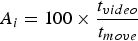
where t video and t move are the duration of the video observation and the time a gastropod spent moving, respectively.
SPEED
The distance d (cm) between two successive positions was calculated from the x and y coordinates as:

where (x t, y t) and (x t+1, y t+1) are the positions of a gastropod at time t and t + 1, respectively. The movement speed v (cm min−1) was subsequently estimated as:

where f is the frequency of observation (15 sec). Mean speeds and standard deviations were calculated for each individual and each species.
NGDR (NET-TO-GROSS DISPLACEMENT RATE)
The NGDR provides a measure of the relative linearity of a gastropod path as:

where ND is the net displacement (cm), i.e. the linear distance between the beginning and end of the observed displacement and GD is the gross displacement (cm), corresponding to the actual distance travelled by the individual. A NGDR value of 1 indicates a linear displacement, and the NGDR decreases as the path tortuosity increases.
TURNING ANGLE
The turning angle θ e is defined as the net direction between two successive moves following (Jerde & Visscher, Reference Jerde and Visscher2005):
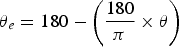
where θ is given by:

where (p 1p 3), (p 1p 2) and (p 2p 3) are respectively the distances between the positions p 1 and p 3, p 1 and p 2, and p 2 and p 3. A low mean turning angle indicates that the general individual displacement is smooth and the successive moves are straight. In contrast, a higher mean angle show strong direction changes between the successive moves.
Statistical analyses
Non-parametric statistical tests were used as all the parameters did not follow a normal distribution (Lilliefors test, P < 0.05). Intraspecific and interspecific comparisons of speed and turning angle were done with the Kruskal–Wallis test (KW test hereafter). Interspecific differences in NGDRs values were carried out with the KW test, and a subsequent multiple comparison procedure based on the Tukey test was used to identify distinct groups of measurements (Zar, Reference Zar1996). Correlations between the parameters were tested using Spearman's coefficient of rank correlation. The individual variability in speed, NGDR and turning angle was expressed using the coefficient of variation CV (CV = SD/ ), where SD is the standard deviation and x the mean of the distribution. Skewness (i.e. measure of symmetry of the distribution) and kurtosis (i.e. measure of flatness of a distribution compared to a normal distribution) were calculated to characterize the variability. Coefficient of variation, skewness and kurtosis of speed and turning angle values were compared between species using the KW test. The Kolmogorov–Smirnov test was used to compare speed and turning angle coefficients of variation, skewness and kurtosis between individuals.
RESULTS
Inter-specific variability in motion behaviour
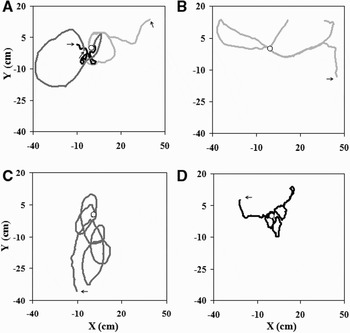
The displacements of A. porcata, N. atramentosa and B. melanostomum consistently exhibited different levels of complexity, for both short observations (Figure 1A) and long observations (Figure 1B–D). Austrocochlea porcata and N. atramentosa trajectories (Figure 1A–C) were mainly rectilinear and characterized by the presence of large loops. In contrast, the movement pathways of B. melanostomum (Figure 1A, D) were much more convoluted and characterized by small loops. As a consequence, N. atramentosa and A. porcata moved farther than B. melanostomum over shorter or similar durations (Figure 1).
Individual movement pathways of Nerita atramentosa (A: light grey; B), Austrocochlea porcata (A: dark grey; C) and Bembicium melanostomum (A: black; D). Time of observation: 14 minutes (A), 36 minutes (B), 52 minutes (C), 55 minutes (D). The start and the end of trajectories are respectively represented by a white dot and a black arrow.

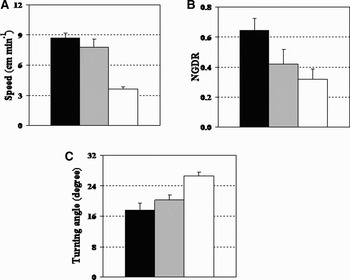
Nerita atramentosa, B. melanostomum and A. porcata were found to be very active and respectively moved during 99.4%, 98.3% and 93.7% of the observation periods. No significant differences were found between species (KW test, P > 0.05). Mean movement speeds were, however, significantly different between species (P < 0.01). More specifically, B. melanostomum moved significantly slower (P < 0.05) than N. atramentosa and A. porcata (Figure 2A). Significant differences between species were also found between NGDR values (P < 0.05). The trajectories of B. melanostomum were significantly (P < 0.05) less rectilinear than those of N. atramentosa. The NGDR of A. porcata was not significantly different from the other species (P > 0.05; Figure 2B). The three gastropods also exhibited significant interspecific differences in turning angles (P < 0.01). Changes in direction were significantly higher in B. melanostomum trajectories than those of N. atramentosa and A. porcata (P < 0.05). Turning angles of A. porcata were not significantly different from those of N. atramentosa (Figure 2C). Mean speeds of species were positively correlated with NGDR values (P < 0.05) and negatively correlated with turning angle values (P < 0.05).
Mean speed (A), NGDR (B) and turning angle (C) of the motion behaviour of Nerita atramentosa (Na, black), Austrocochlea porcata (Ap, grey) and Bembicium melanostomum (Bm, white). The error bars are the standard errors, N = 10.

Inter-individual variability in motion behaviour
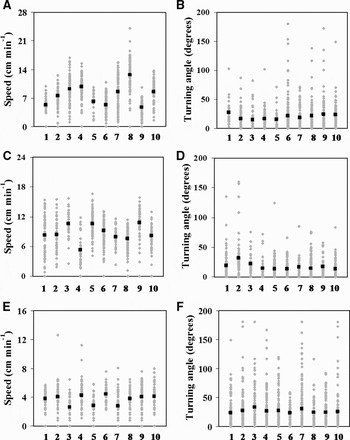
Besides the interspecific differences observed in their movement pathways (Figure 1) and behavioural properties (Figure 2), N. atramentosa, B. melanostomum and A. porcata individuals exhibited a strong inter-individual variability (Figure 3). Speed and turning angle were significantly different between conspecifics (KW test, P < 0.05; Figure 3). More specifically, the variability observed in movement speed was higher for A. porcata (CV = 0.32) than for both B. melanostomum (CV = 0.18) and N. atramentosa (CV = 0.19). This results in the speed of A. porcata individuals ranging on average from 4.7 cm min−1 to 12.7 cm min−1 (Figure 3A). In contrast, the speed of N. atramentosa and B. melanostomum individuals ranged on average from 5.3 cm min−1 to 10.7 cm min−1, and from 2.6 cm min−1 to 4.4 cm min−1, respectively. In contrast, turning angles were more variable for N. atramentosa (CV = 0.32) than for A. porcata (CV = 0.20) and B. melanostomum (CV = 0.12). Mean turning angles ranged from 13.4 to 31.8 degrees for N. atramentosa, 15.2 to 27.3 degrees for A. porcata, and 23.5 to 33.6 degrees for B. melanostomum.
Inter-specific variability in speed (A, C, E) and turning angle (B, D, F) for Austrocochlea porcata (A, B), Nerita atramentosa (C, D) and Bembicium melanostomum (E, F). The grey and black points are the observed and mean values, respectively.

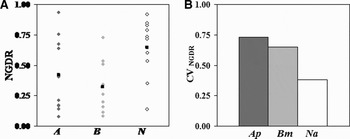
Finally, NGDR values were highly variable between individuals (Figure 4A). The strongest variability was observed for A. porcata (CV = 0.73; Figure 4B), with NGDR values ranging from 0.08 (i.e. highly convoluted) to 0.93 (i.e. highly linear; Figure 4A).
Inter-specific variability in NGDR observed for Austrocochlea porcata (Ap, grey), Bembicium melanostomum (Bm, light grey) and Nerita atramentosa (Na, white) (A) and coefficient of variation of NGDR (CVNGDR) per species (B). Grey, light grey and white points are the observed values per individual, black points are the mean values observed per species.

Intra-individual variability in motion behaviour
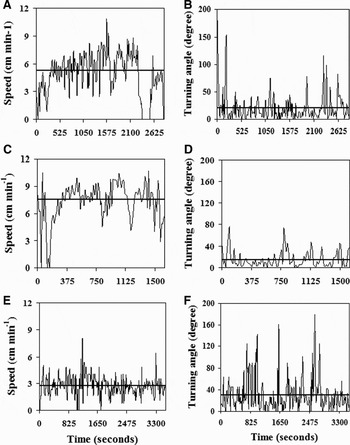
Successive individual moves (i.e. recorded every 15 seconds) were characterized by strong fluctuations in speed (Figure 5A, C, E) and turning angle (Figure 5B, D, F). This variability resulted in individual speed varying from 0.8 to 10.9 cm min−1 for A. porcata (Figure 5A), 1.1 to 10.7 cm min−1 for N. atramentosa (Figure 5C) and 0.8 to 8.0 cm min−1 for B. melanostomum (Figure 5E). Similarly, individual turning angles ranged between 0 and 180, 0 and 76 and 0 and 180 degrees for A. porcata (Figure 5B), N. atramentosa (Figure 5D) and B. melanostomum (Figure 5F), respectively.
Intra-individual variability in speed (A, C, E) and turning angle (B, D, F) observed in Austrocochlea porcata (A, B), Nerita atramentosa (C, D) and Bembicium melanostomum (E, F). Durations of observations were respectively 53, 27 and 62 minutes for A. porcata, N. atramentosa and B. melanostomum. The black lines represent mean values.

More specifically, movement speeds were characterized by marked long-term fluctuations in the baseline values of A. porcata and N. atramentosa (Figure 5A, C), and resulted in elevated mean speeds. Bembicium melanostomum speeds were more symmetrically distributed around the mean and mainly exhibited short-term fluctuations (Figure 5E). In contrast, turning angles were consistently characterized by very intermittent distributions, i.e. a few high values greater than the mean over a wide range of low density values smaller than the mean (Figure 5B, D, F).
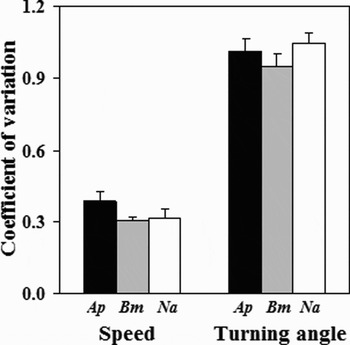
The quantitative nature of these distributions has further been assessed using the coefficient of variation CV, and the skewness and kurtosis coefficients g 1 and g 2 (Table 1). The coefficients of variation estimated for both speed and turning angle were not significantly different between species (P > 0.05; Figure 6). The CVs estimated from the distribution of turning angles were, however, significantly higher (P < 0.01) than the speed variation for the three species (Figure 6). On average, the speed distributions of A. porcata and N. atramentosa were negatively skewed while those of turning angle were positively skewed. Both distributions were positively skewed for B. melanostomum (Table 1). Speed distributions were generally characterized in each species by a few fast moves over a wide range of slow moves and turning angle distributions showed a few sharp turning angles over a wide range of smoother turning angles (Figure 5). Positive kurtosis values observed for turning angle and speed are indicative of distributions with more peaks than expected in the case of normality. However, the much higher g 2 values observed for turning angles (Table 1) indicated that sharp changes in direction were far more frequent than sharp changes in speed. Furthermore, significant differences (P < 0.05) were found between the skewness and kurtosis of speed and turning values in the three species. Most turning angle distributions were characterized by significantly (P< 0.05) more elevated skewness and kurtosis values (Table 1) than those of speed distributions. No inter-specific differences were found for the skewness and the kurtosis values of speed and turning angle distributions.
Mean coefficient of variation of speed and turning angle observed in Austrocochlea porcata (black bars), Bembicium melanostomum (grey bars) and Nerita atramentosa (white bars). The error bars are the standard errors.

Skewness (g 1) and kurtosis (g 2) mean values of speed and turning angle distributions of Nerita atramentosa, Austrocochlea porcata and Bembicium melanostomum. Values are means ± standard errors (SE), N = 10 individuals.

DISCUSSION
Inter-specific variability in motion behaviour as an adaptation to the spatial distribution of the food
Inter-specific differences in the motion behaviour of intertidal gastropod species (i.e. A. porcata, N. atramentosa and B. nanum) have previously been found in the field over different periods of time (48 hours, Underwood, Reference Underwood1977; 24 hours, 1 and 2 weeks, Chapman, Reference Chapman2000b) and have mainly been related to topographic complexity (Chapman, Reference Chapman2000b) and feeding activities (Underwood, Reference Underwood1977). However, the inter-specific differences identified here cannot be related to any environmental factors, since the experiments were conducted in controlled conditions in the absence of any cues after 36 hours of starvation. Instead, this suggests that the processes driving the observed motility pattern continue to operate in the absence of sensory cues, hence involving the presence of an innate determinant to motion behaviour (Bell, Reference Bell1991). While this issue has still barely been investigated in gastropod ecology, it has been previously shown that innate information can be genetically determined and/or transferred through heredity or derived from exogenous sources (Bell, Reference Bell1991). This is consistent with the inter-specific behavioural differences observed in this study which can be thought as a reminiscence of the previous trophic conditions encountered in the field.
Feeding activity patterns are influenced by the distribution of resource items and their space–time availabilities. Nerita atramentosa and A. constricta (a congeneric species of A. porcata) mainly graze on microalgae (Underwood, Reference Underwood1978; Quinn & Ryan, Reference Quinn and Ryan1989), a resource typically distributed in small-scale patches (Seuront & Spilmont, Reference Seuront and Spilmont2002; Seuront & Leterme, Reference Seuront, Leterme, Kromkamp, de Brouwer, Blanchard, Forster and Créach2006; Klaassen et al., Reference Klaassen, Nolet, Van Gils and Bauer2006). In contrast, B. nanum (a congeneric species of B. melanostomum) typically feeds on macroalgae (Quinn & Ryan, Reference Quinn and Ryan1989), a resource intrinsically limited in space to the surface of macroalgae blades. Nerita atramentosa and A. porcata are then expected to have developed extensive foraging strategies. In contrast, B. melanostomum is likely to have developed intensive foraging strategies. This is consistent with both the highly convoluted paths of B. melanostomum, and the more rectilinear paths of N. atramentosa and A. porcata, as more rectilinear paths will cover larger areas over the same duration (Figures 1 & 2). In addition, when an animal does not get any information from the environment, like in our experiments, it should adopt a strategy which optimizes the probability to encounter food and reduces the chance to move in an area already explored (Bell, Reference Bell1991). This is in concordance with N. atramentosa and A. porcata behaviours as they were found to exploit rapidly and extensively the experimental arena using successive randomly orientated straight long moves as well as big loops. This foraging pattern, previously qualified as transecting (Bell, Reference Bell1991), is considered as the most efficient strategy to locate food patches such as microalgae (Hugues, Reference Hugues1980; Erlandsson & Kostylev, Reference Erlandsson and Kostylev1995). In contrast, B. melanostomum was slower and explored the area more intensively and tortuously, which can be considered as a restricted area search strategy optimised to exploit spatially-localized food items (Pyke, Reference Pyke1984; Bell, Reference Bell1991). This strategy is consistent with the feeding ecology of B. melanostomum which concentrates its effort in situ on the spatially limited surface of macroalgae blades; mechanisms such as looping, zigzag motion patterns and short move length then constitute an efficient strategy (Bell, Reference Bell1991).
Inter-specific differences in motion behaviour suggest that each species has its own behavioural repertoire, a repertoire being constituted by the range of speed and turning angle values observed (Figure 2A, C). This can likely be the result of natural selection through the selection of the searching strategy that is best adapted to the ecological niche of each species. To some extent, the motion behavioural patterns observed in this study might be related to the optimal searching foraging that the different species could exhibit in an ideal environment (e.g. absence of intraspecific competition). The differences observed in the motion behaviour of A. porcata and N. atramentosa, both grazers of microalgae, even in the absence of biotic and abiotic cues might constitute a niche differentiation that favours coexistence through resource partitioning and the subsequent reduction of resource competition.
Inter-individual variability in motion behaviour as an adaptation to long-term environmental fluctuations
Besides the inter-specific variability discussed above, we identified a strong inter-individual variability in the motion behaviour of A. porcata, N. atramentosa and B. melanostomum (Figure 3). Phenotypic differentiation, which gives information about the potential behavioural ability of a species to respond and react to long-term changes, may have caused the observed differences in motion property and performance within a given species. This is consistent with the assumption that animal fitness is generally associated to the foraging behaviour and the assumption of a heritable component in foraging behaviour (Pyke, Reference Pyke1984). The inter-individual variability observed in the three species investigated here then may relate to different phenotypes, and be thought of as an evolutionary adaptation to fluctuating environmental conditions to increase the chances of species persistence throughout a period of changes.
Intrinsic characteristics of individuals such as body size, sex, parasite load but also reproductive, nutritional and physiological states (Pardo & Johnson, Reference Pardo and Johnson2004) may also explain the observed intra-specific differences as individuals belonging to different categories do not favour the same fitness components (i.e. survival and reproduction). Albeit body size and starvation cannot influence the motion behaviour observed in our experiments since individuals belong to the same size-class and were not starved, further investigations are nevertheless still required to determine the effect of gender, maturity and parasitism on the motion patterns of the studied species.
In this study, variability among individuals could not be related to abiotic (i.e. temperature, humidity) and biotic (i.e. food quality and quantity, competition) factors since our experiments were conducted in the absence of any cues. However, the innate properties of the motion behaviour could be altered by the history of each individual considered. Individuals may gather distinct information directly from the same environment or indirectly through social influence (Keppel & Scrosati, Reference Keppel and Scrosati2004). This may have influenced the behaviour of distinct individuals and cause a deviation from the inborn behaviour common to the species. Nevertheless, the impact of past experiences on the present behaviour is dependent on the individual's ability to learn (e.g. social learning; Keppel & Scrosati, Reference Keppel and Scrosati2004), store (i.e. long term memory) and process information (Pyke, Reference Pyke1984; Vásquez et al., Reference Vásquez, Ebensperger and Bozinovic2002; Turner et al., Reference Turner, Turner and Lappi2006). At this stage, still little is known about learning and memory abilities of gastropods (Turner et al., Reference Turner, Turner and Lappi2006).
Intra-individual variability in motion behaviour as an adaptation to short-term environmental fluctuations
Individuals of A. porcata, N. atramentosa and B. melanostomum exhibited an ability to drastically change their speed and direction at very short time scales (i.e. 15 seconds). Each individual used a different repertoire of speed and turning angle values (Figures 3 & 5) within the species repertoire (Figure 2). However, the extent to which the repertoire was used was not significantly different between individuals of the three species. This suggests a strong and similar flexibility in the motion behaviour within the three species that may be seen as an adaptation to short-term environmental changes.
This behavioural flexibility is essential to the survival of gastropods inhabiting extreme habitats such as intertidal rocky shores since they have to respond to rapid environmental fluctuations that are either predictable (i.e. tide) or unpredictable (i.e. weather conditions, predators) in both space and time (Underwood & Chapman, Reference Underwood and Chapman2000). In addition, individuals were more flexible when it comes to a change of direction rather than a change of speed. This is consistent with the optimal foraging theory (Pyke, Reference Pyke1984) that predicts that optimal movements (i.e. optimal speed and directionality) minimize the rate of energy expenditure, mainly due to the mucus produced to crawl (which can be about twenty times more costly than the muscular mechanical work (Denny, Reference Denny1980a, Reference Dennyb; Lauga & Hosoi, Reference Lauga and Hosoi2006)) while searching for food and maximize the energy gained by its consumption.
CONCLUSION
The movement patterns and the related behavioural variability observed in the intertidal gastropods Austrocochlea porcata, Nerita atramentosa and Bembicium melanostomum in the absence of abiotic and biotic cues were shown to reflect both innate and acquired properties related to both: (i) the optimal foraging strategies for each species; and (ii) an adaptation to both short- and long-term space–time environmental fluctuations. This work has stressed the need to identify which component of behavioural variability is innate and/or acquired through heritability and past history. Bridging this gap in intertidal gastropod behavioural ecology is, however, critical to increase our understanding of how these organisms can survive into a continually changing environment. This may be particularly relevant in predicting whether they may be able adjust to long-term ecological changes, such as global climate fluctuations.
ACKNOWLEDGEMENTS
This work was supported by the Flinders University (Australia) and under the Australian Research Council's Discovery Projects funding scheme (projects number DP0664681 and DP0988554). Professor Seuront is the recipient of an Australian Professorial Fellowship (project number DP0988554). We acknowledge Dr S.C. Leterme, Dr K. Benkendorff and K. Burke da Silva for their critical comments and suggestions on an earlier version of this work. Two anonymous referees are acknowledged for their criticisms and comments. Experiments were conducted in accordance with current laws in Australia.