





Introduction
Invasive plants are regarded as a key driver of environmental change and biodiversity loss worldwide, contributing to approximately 60% of documented global plant and animal extinctions and threatening native ecosystems across all continents (IPBES 2023). In addition to their ecological impacts, invasive species impose substantial economic costs, estimated at more than US$423 billion annually worldwide (IPBES 2023). In particular, the ability of seeds to germinate and establish across diverse environmental conditions is a key mechanism influencing the rate of spread and population growth of invasive alien plant species. These environmental conditions include variation in temperature, soil moisture, light availability, and soil properties, all of which can directly affect germination and establishment success (Chauhan et al. Reference Chauhan, Gill and Preston2006). Seed germination and seedling emergence represent critical and vulnerable stages in a weed’s life cycle, with successful establishment depending on complex interactions between internal seed traits and external environmental factors (Sohrabi et al. Reference Sohrabi, Ghanbari, Mohassel, Gherekhloo and Vidal2016; Yu et al. Reference Yu, Sharpe and Boyd2020). Consequently, the capacity of seeds to germinate and emerge under variable environmental conditions strongly determines the spread and population dynamics of invasive species (Gioria and Pyšek Reference Gioria and Pyšek2017; Grewell et al. Reference Grewell, Gillard, Futrell and Castillo2019; Ottavini et al. Reference Ottavini, Pannacci, Onofri, Tei and Kryger Jensen2019).
Sticky nightshade (Solanum sisymbriifolium Lam.) is a highly invasive weed native to South America (Hill Reference Hill1994; Symon Reference Symon1981). It has expanded its distribution and is now naturalized across multiple continents, including North America, Europe, Africa, Asia, and Australasia, where it occurs under a range of climatic conditions (EPPO 2008; Hill and Hulley Reference Hill and Hulley1995; Islam et al. Reference Islam, Broster, Wu and Asaduzzaman2025; Sydes Reference Sydes2023). Although distribution records clearly indicate ongoing range expansion, quantitative estimates of spread rate (e.g., hectares invaded per year) are currently unavailable for this species. The species is currently considered invasive in Australia, South Africa, the United States, Cuba, Hungary, Italy, Spain, China, and Japan (Rojas-Sandoval Reference Rojas-Sandoval2020). In Australia, S. sisymbriifolium was first recorded in 1920 in the Toowoomba region of Queensland. According to Sydes (Reference Sydes2023), the species was likely introduced into the Central Tablelands of New South Wales in the 1980s via contaminated fodder. Since then, it has expanded locally, with isolated infestations now reported across several regions of New South Wales (Islam et al. Reference Islam, Broster, Wu and Asaduzzaman2025; NSW DPI 2021; Sydes Reference Sydes2023). In its native range, S. sisymbriifolium is typically found in temporarily disturbed areas, such as farmland, roadsides, and wastelands, where it has caused a variety of negative impacts on cropland and pasture (Shukla et al. Reference Shukla, Srivastava and Dvivedi2015; Sydes Reference Sydes2023). It aggressively competes for resources, leading to reduced crop yields and displacement of native plants (Rojas-Sandoval Reference Rojas-Sandoval2020; Shukla et al. Reference Shukla, Srivastava and Dvivedi2015). Moreover, the plant serves as an alternate host for pests and diseases affecting solanaceous crops and releases allelopathic chemicals that inhibit the germination of other plants (Barber Reference Barber1933; Debnath et al. Reference Debnath, Debnath and Paul2016). Its sharp thorns and toxic steroidal glycoalkaloids pose risks to livestock and make it difficult to manage, causing injuries and complicating harvest (NSW DPI 2021; Symon Reference Symon1981). Control of S. sisymbriifolium is expensive, largely due to the intensive labor required for management, particularly manual removal and repeated herbicide application, with some landholders reportedly spending $80,000 to $300,000 each summer on control measures, though costs per hectare remain undocumented in the current literature (Sydes Reference Sydes2023).
Solanum sisymbriifolium is a perennial shrub that reproduces primarily through prolific seed production, which plays a key role in its spread and establishment (Hill and Hulley Reference Hill and Hulley2000; Sydes Reference Sydes2023). The species commonly invades pastures, roadsides, riparian zones, waste areas, and other disturbed habitats in Australia (Sydes Reference Sydes2023). Under favorable summer conditions, flowering can commence within 6 wk of seedling emergence, and fruits typically mature 12 to 15 d after flowering (Moumita and Datta Reference Moumita and Datta2017; Sydes Reference Sydes2023). Each plant can produce up to 45,000 viable seeds annually, owing to high fruit and seed production, with approximately 80% of seeds viable (Hill and Hulley Reference Hill and Hulley2000).
Seeds are the primary propagule for dispersal, facilitating local spread via agricultural machinery and livestock and regional spread through contaminated hay and fodder (Baskin and Baskin Reference Baskin and Baskin2001; Cousens et al. Reference Cousens, Dytham and Law2008). Consequently, large seed inputs to the soil seedbank can contribute to continued recruitment and spread of the species across a range of environments.
Understanding the germination biology of S. sisymbriifolium under varying environmental conditions is therefore essential for explaining its invasion success and informing sustainable management strategies. A recent review by Islam et al. (Reference Islam, Broster, Wu and Asaduzzaman2025) synthesized information on the biology, distribution, invasion ecology, dispersal mechanism, and germination ecology of S. sisymbriifolium. The review highlighted substantial knowledge gaps regarding quantitative germination responses to key environmental factors, including temperature, light, moisture stress, salinity, pH, and seed burial depth, limiting the ability to predict establishment, spread, and effective management of this invasive species. This study aimed to investigate the effects of key environmental factors, including temperature, light, osmotic stress, pH, salinity, and burial depth, on the germination and emergence of S. sisymbriifolium to better understand its invasion potential.
Materials and Methods
Plant Material and Germination Process
Seeds of S. sisymbriifolium were collected on December 16, 2024, from a riverside infestation at Canowindra, NSW, Australia (−33.593033, 148.905450). Mature berries were collected in paper bags and transported to the laboratory at the NSW Department of Primary Industries and Regional Development, Wagga Wagga, NSW, Australia. Seeds were then extracted, cleaned, air-dried, and stored in a glass jar at room temperature. Experiments were carried out from January 2025 to December 2025 at the facilities of both the NSW Department of Primary Industries and Regional Development, Wagga Wagga, and Charles Sturt University, Wagga Wagga. During preliminary trials under day/night temperatures of 30/15 C and a 16/8-h photoperiod on moist filter paper, S. sisymbriifolium seeds exhibited dormancy, with a germination percentage of 56% after 30 d. Various dormancy-breaking treatments were tested, including gibberellic acid (GA3), fluctuating temperatures, sandpaper scarification, smoke water, end-cutting, and water soaking. Among these treatments, soaking seeds overnight in 2,000 ppm GA3 was the most effective, resulting in the highest germination percentage and the fastest, most uniform germination. Consequently, this treatment was used in all subsequent germination experiments. The first temperature experiment was conducted using 1-mo-old seeds, whereas the subsequent experiments (osmotic stress, salinity, pH, and burial studies) were conducted using seeds that were 3-mo post-collection. All experiments were conducted using a randomized complete block design with six replicates. The entire study was repeated once, with the second run initiated within 1 wk of completing the first.
Unless otherwise stated, all laboratory germination experiments were conducted under the following conditions. Six replicates of 30 S. sisymbriifolium seeds were placed in 9-cm diameter petri dishes containing a single layer of Whatman No. 1 filter paper. The filter paper was moistened with 5 ml of either distilled water or the specific test solution used in each experiment (e.g., solutions with varying salt concentrations or pH levels). Filter papers were remoistened with the corresponding solution as required to maintain adequate moisture throughout the experiment. Petri dishes were sealed with Parafilm® (American National, Greenwich, CT, USA) and placed in an incubator (Thermoline Scientific, Smithfield, NSW, Australia). In the temperature experiment, seeds were exposed to seven alternating temperature regimes under a 16/8-h light/dark cycle. Based on the results of the temperature experiment, the alternating temperature regime 35/15 C achieved optimum germination of S. sisymbriifolium and was thus used for all subsequent germination experiments unless otherwise stated. Light intensity in the incubator was 4.84 × 10³ lx. For the temperature experiment, germination was assessed daily for 30 d to determine cumulative germination and germination dynamics. For all other germination experiments (osmotic stress, salinity, pH, and light), germination was assessed every 3 d over a 30-d incubation period. A seed was considered germinated when the radicle had protruded at least 2 mm through the seed coat. Germinated seeds were counted and removed after each assessment.
Effects of Temperature and Light on Germination
Thirty GA3 pretreated seeds of S. sisymbriifolium were placed in petri dishes and incubated under seven constant temperature conditions (5, 10, 15, 20, 30, 35, and 40 C) and seven alternating day/night temperature regimes (15/15, 20/10, 30/10, 30/15, 35/10, 35/15, and 35/20 C). These temperature treatments were selected based on preliminary experiments and climatic data from the seed collection site and represent the range of temperatures typically experienced by the species in its native range. To assess the effect of light on germination, seeds were incubated under two light conditions: (1) a 16-h light/8-h dark photoperiod (light treatment); and (2) continuous darkness (dark treatment), where petri dishes were wrapped in two layers of aluminum foil. All other conditions followed the general germination procedure described previously. The non-germinated seeds from the lowest (5 C) and highest (40 C) constant temperatures were subsequently transferred to the alternating regime (35/15 C), which produced the highest germination in the temperature experiment, to assess seed viability and to determine whether the induced dormancy under temperature extremes could be alleviated under favorable conditions.
Effects of Salt Stress on Germination
Solanum sisymbriifolium seeds were incubated in nine sodium chloride solutions (NaCl, Chem-Supply, Gillman, SA, Australia) with concentrations of 0, 10, 25, 50, 75, 100, 125, 150, and 200 mM to assess the effect of salinity on germination. Each treatment consisted of 30 seeds per petri dish with six replicates. Salt solutions were prepared by dissolving NaCl in deionized water to obtain the desired concentrations, and 5 ml of solution was added to each petri dish (Ahmed et al. Reference Ahmed, Opeña and Chauhan2015; Asaduzzaman et al. Reference Asaduzzaman, Koetz and Rahman2019).
Effects of Osmotic Potential on Germination
The effect of osmotic stress on germination was evaluated by incubating S. sisymbriifolium seeds in polyethylene glycol (PEG) solutions adjusted to defined water potentials to simulate soil water deficit during germination. Solutions with osmotic potentials of 0 MPa (control), −0.1, −0.2, −0.4, −0.6, −0.8 and −1.0 MPa were prepared using PEG 8000 (Applichem, D-64291 Darmstadt, Germany). Each treatment consisted of 30 seeds per petri dish with six replicates. The required quantities of PEG were dissolved in 80 ml of distilled water to achieve each target osmotic potential, following the guidelines of Michel (Reference Michel1983). The solutions were stirred thoroughly until the PEG was fully liquefied before use.
Effects of pH on Germination
The impact of pH on the germination of S. sisymbriifolium seeds was evaluated using distilled water adjusted to pH values (pH in water) ranging from 4 to 10. This pH range represents values commonly observed in Australian soils (Caritat et al. Reference Caritat, Cooper and Wilford2011). The solutions were adjusted to pH of 4, 5, 6, 7, 8, 9, and 10 with either 1 M HCl or 1 M NaOH, following the procedure of Wu et al. (Reference Wu, Stanton and Lemerle2019). The pH of all solutions was confirmed using a benchtop pH meter (pH 50 Benchtop Meter Kit, Westlab, Ballarat, VIC, Australia). For each treatment, six replicate petri dishes containing 30 seeds each were placed on moistened filter paper and supplied with 5 ml of the appropriate pH solution. Seeds were incubated under the standard germination conditions described earlier, and germination was monitored throughout the experimental period.
Emergence Response to Seed Burial Depth
Experiments were conducted in a glasshouse at the Department of Primary Industries and Regional Development, Wagga Wagga, to assess the effect of soil burial depths on the seedling emergence of S. sisymbriifolium. Fifty seeds per plastic pot (20-cm diameter) were sown in a 1:1 mixture of potting mix and field soil, with six replicate pots per treatment. Seeds were placed individually on the soil surface and then covered with the same soil to achieve burial depths of 0, 2.5, 5, 7.5, 10, 15, and 20 cm. Pots were initially watered manually with an overhead sprinkler and subsequently irrigated with an automated sprinkler irrigation system. Emerged seedlings were recorded and removed weekly for up to 120 d, until no further emergence was observed.
Statistical Analysis
Data were analyzed using the statistical methods described for each experiment. For all experiments, there was no significant effect of trial, and treatment responses were consistent between the two experimental runs (Supplementary Appendix Tables A1–A6). Therefore, the data from both runs were pooled for analysis, resulting in 12 replicates per treatment (6 replicates per run across two runs). A three-parameter Gaussian model (Equation 1) was used to describe germination responses under constant temperature, different pH buffer solutions, and seed burial depth:
 $y = a{e^{ - 0.5{{({{x - b}\over c})}^2}}}$
In this model, a represents the maximum germination (the peak of the curve); b indicates the temperature, pH, or burial depth at which maximum germination occurs (the center of the curve); and c describes the spread or width of the curve (spread of germination around the optimum).
An exponential decay model (Equation 2) was applied to describe germination responses under salt stress:
 $G\left( C \right) = {G_{{\rm{max}}}}.{e^{ - kc}}$
where G represents germination, C is the salt concentration, G max is the maximum germination, and k is the decay constant. A four-parameter log-logistic model (Equation 3) was used to describe seed germination responses at different osmotic potentials (MPa).
 $G\left( x \right) = {{{d - c}}\over{{1 + {e^{b\left( {{\rm{log}}x - {\rm{log}}e} \right)}}}}} + c$
where G(x) is germination (%) at osmotic potential x; d and c are the upper and lower limits of germination, respectively; e is the osmotic potential causing 50% inhibition (ED50); and b represents the slope of the curve.
Cumulative germination over time under optimal alternating temperature conditions was described using three sigmoidal models: logistic, Gompertz, and Richards functions. These models were used to characterize germination dynamics and assess the robustness of parameter estimates.
Data normality and homogeneity of variance were evaluated using residual plots. Differences among treatment means were determined using Tukey’s honest significant difference (HSD) test at a significance level of P < 0.05. Statistical analyses, including model fitting and data summarization, were conducted using R v. 4.5.1 (R Core Team 2025) within RStudio v. 2025.5.1.513 (Posit Software, PBC, Boston, MA, USA). Dose–response models were fit using the drc package (Ritz and Streibig Reference Ritz and Streibig2008), and treatment means were compared using the agricolae package (Mendiburu Reference Mendiburu2017).
Results and Discussion
Temperature Regime
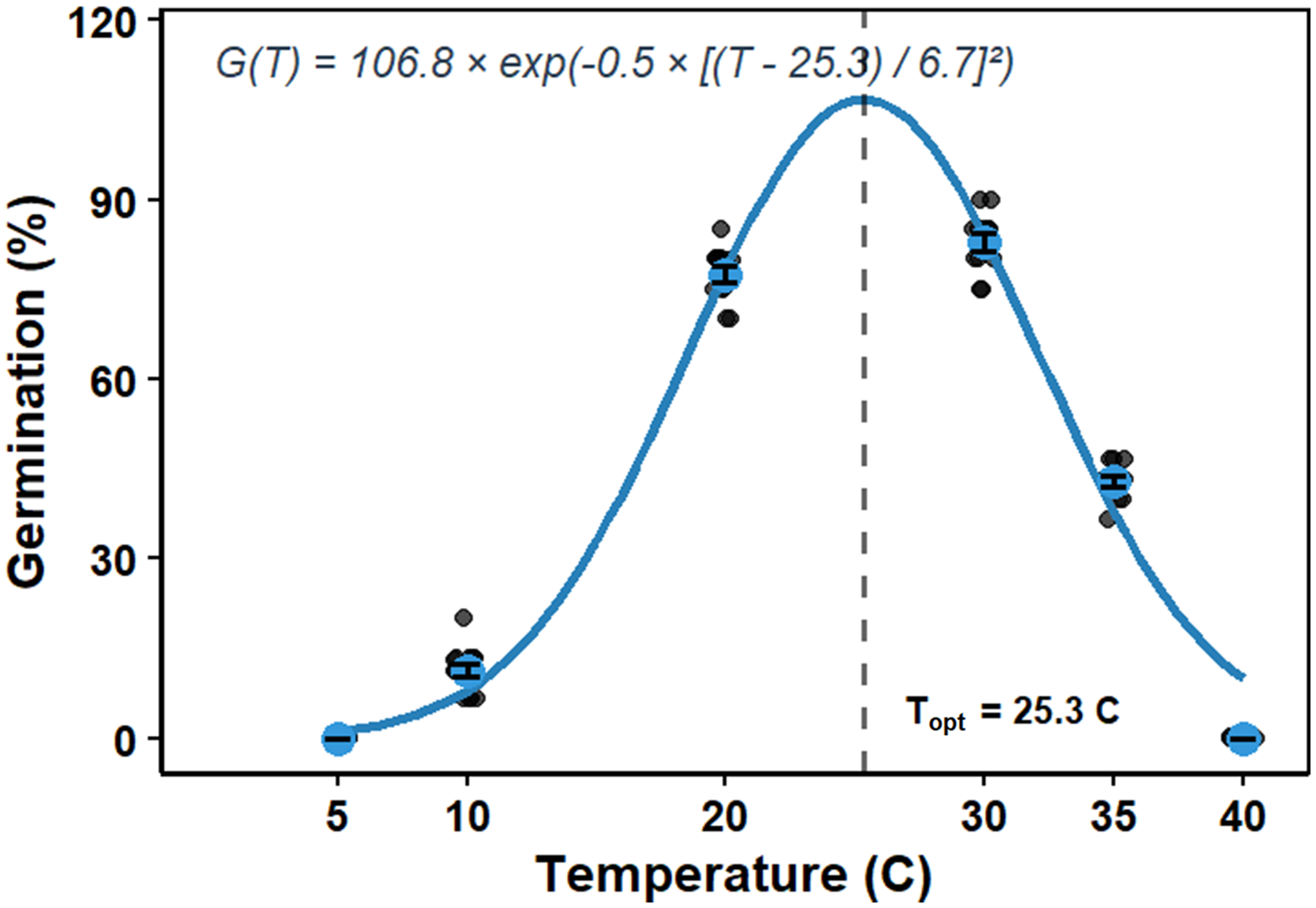
The germination of S. sisymbriifolium was strongly influenced by both temperature level and whether temperatures were constant or alternating. Under constant temperatures, germination followed a unimodal response, with minimal germination at cooler temperatures (≤10 C), a rapid increase at intermediate temperatures and a peak (82.9%) at 30 C, followed by a decline at higher temperatures (Figure 1). A Gaussian model explained 98.2% of the variation (R2 = 0.982) and identified an optimal germination temperature (T opt) of 25.3 C.
Seed germination (%) of Solanum sisymbriifolium under different temperature conditions. Large solid points represent mean germination ± SE, and small black points show individual observations. The curve is a fitted Gaussian model, which explained 98.2% of the variation (R2 = 0.982), and the dashed vertical line indicates the estimated optimal temperature (T opt = 25.3 C).

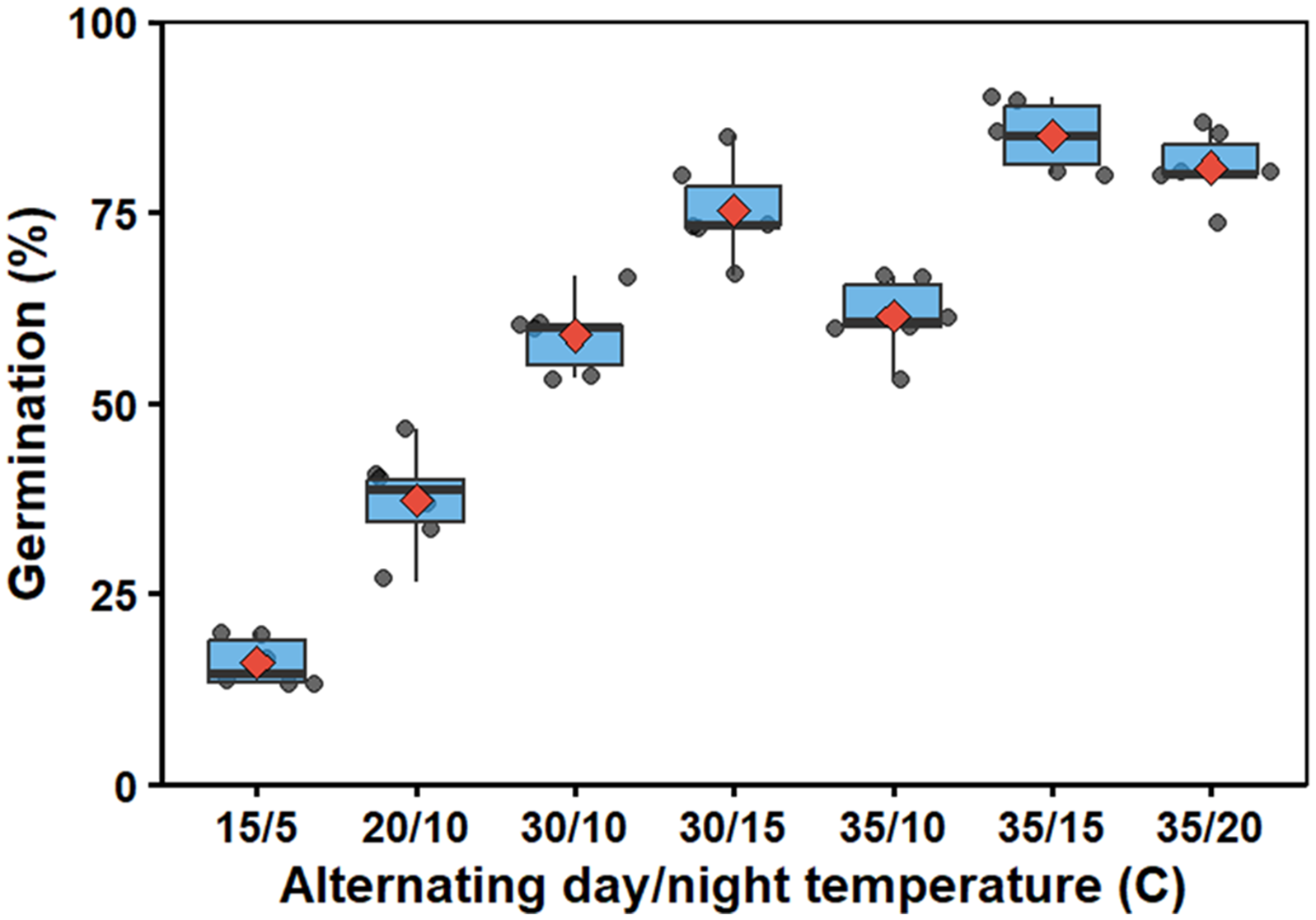
When alternating temperatures were imposed, germination was generally higher than under corresponding constant temperatures, with the highest germination (85.58%) occurring at 35/15 C (Figure 2). A significant (P < 0.05) interaction was observed between temperature regime (constant vs. alternating) and temperature level regarding the overall germination of S. sisymbriifolium.
Seed germination (%) of Solanum sisymbriifolium under seven alternating day/night temperature regimes. Boxes represent the interquartile range, the bold horizontal line within each box indicates the median, and whiskers extend to the data range excluding outliers. Black points show individual observations, and red diamonds denote treatment means.

Seeds that failed to germinate at 5 C and 40 C showed substantial recovery when transferred to the optimal alternating regime (35/15 C), with mean germination of 70% and 55%, respectively. This reversible inhibition suggests that germination is suppressed under unfavorable thermal conditions but resumes when conditions become favorable.
Alternating day/night temperatures enhanced germination in S. sisymbriifolium, indicating that thermal fluctuations act as an environmental cue for seedling establishment in disturbed habitats. The high germination observed at 35/15 C suggests that the species can readily germinate under warm spring and summer conditions typical of southeastern Australia, particularly following rainfall events that provide adequate soil moisture. These conditions are common in regions where S. sisymbriifolium currently occurs in New South Wales and may facilitate seedling recruitment, population establishment, and further spread. From a management perspective, these findings indicate that monitoring rainfall and temperature conditions could help optimize the timing of weed surveillance and control before seedlings become established. These findings are consistent with earlier reports that S. sisymbriifolium exhibits a pronounced temperature response, with germination being strongly promoted at optimal temperatures but significantly reduced under both low- and high-temperature extremes (Timmermans et al. Reference Timmermans, Vos, Van Nieuwburg, Stomph and Van Der Putten2007), and are also in line with the general patterns summarized by Islam et al. (Reference Islam, Broster, Wu and Asaduzzaman2025). A similar germination pattern has been documented in related Solanum weeds and other Solanaceae species, which often show enhanced germination under warm, alternating temperatures, reflecting adaptation to disturbed and open environments (Akanda et al. Reference Akanda, Mullahey and Shilling1996; Chauhan and Johnson Reference Chauhan and Johnson2010; Patterson et al. Reference Patterson, Mcgowan, Mullahey and Westbrooks1997; Stanton et al. Reference Stanton, Wu and Lemerle2012; Taab and Andersson Reference Taab and Andersson2009). Such thermal responses are common among invasive or highly problematic weed species, including redroot pigweed (Amaranthus retroflexus L.), common lambsquarters (Chenopodium album L.), and barnyardgrass [Echinochloa crus-galli (L.) P. Beauv.], where alternating day/night temperature regimes (typically differing by 10–20 C) enhance germination by signaling favorable microsite conditions for emergence (Baskin and Baskin Reference Baskin and Baskin2001; Benech-Arnold et al. Reference Benech-Arnold, Sánchez, Forcella, Kruk and Ghersa2000). The suppression of germination at extreme constant temperatures, together with the recovery observed under favorable conditions, suggests the induction of secondary (environmentally induced) dormancy. This mechanism enables seeds to persist in the soil seedbank until conditions become suitable for germination. Temperature-induced dormancy is a well-recognized mechanism contributing to seedbank persistence in many weed species (Baskin and Baskin Reference Baskin and Baskin2001; Benech-Arnold et al. Reference Benech-Arnold, Sánchez, Forcella, Kruk and Ghersa2000; Finch-Savage and Leubner-Metzger Reference Finch-Savage and Leubner-Metzger2006) and may partially explain the successful establishment and spread of S. sisymbriifolium across variable environments.
Germination Dynamics and Speed under Optimal Alternating Temperature
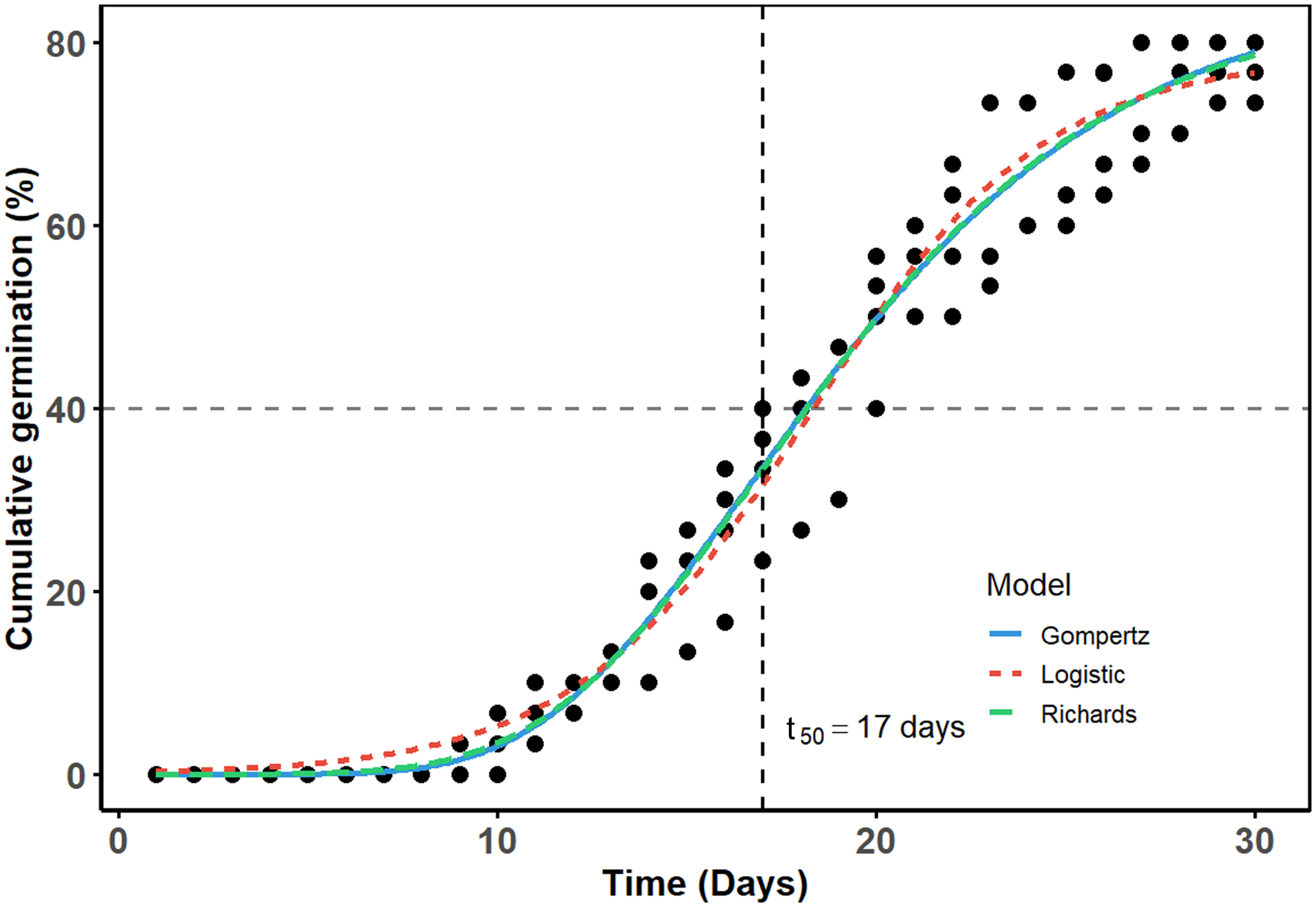
The cumulative germination pattern of S. sisymbriifolium under the optimal alternating temperature regime (35/15 C) followed a sigmoidal trend over time (Figure 3). Cumulative germination reached approximately 80% by day 30 after sowing. The median germination time (t50) was estimated at 17 d after sowing, indicating that half of the viable seeds germinated by this point. All three models, Gompertz, Richards, and logistic, provided a good fit to the observed germination data. The Gompertz and Richards curves closely followed the observed germination, particularly in the early and mid-phases, whereas the logistic model slightly underestimated germination during the initial phase but aligned well during later stages.
Cumulative germination percentage of Solanum sisymbriifolium under the optimal alternating temperature regime (35/15 C) as a function of time (days). Black points show observed cumulative germination, and curves were fit using the Gompertz, Richards, and logistic models.

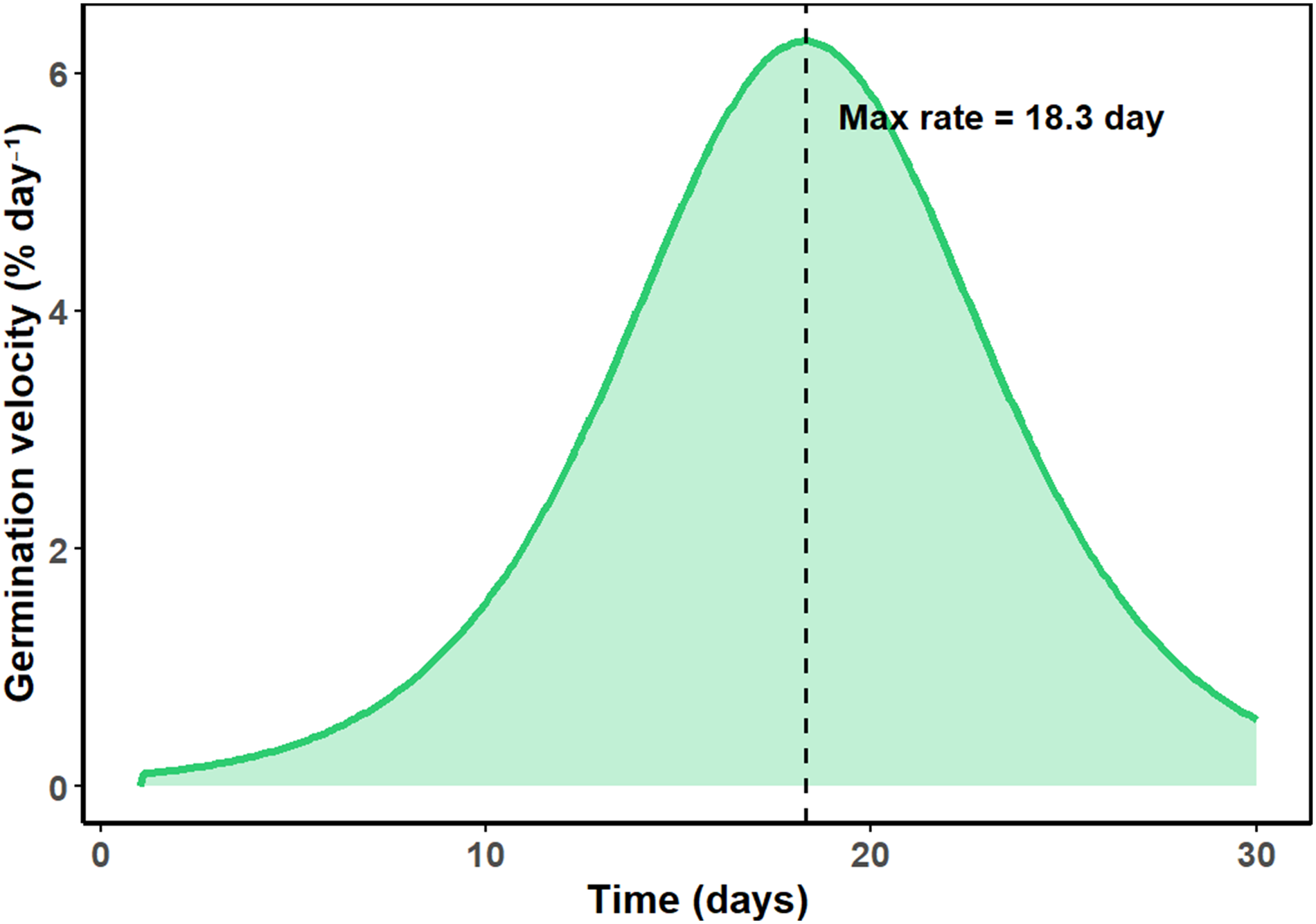
The germination dynamics curve describes changes in germination rate over time (Figure 4). The maximum germination rate occurred at 18.3 d, corresponding closely to the t50 value. Germination increased slowly during the initial 10 to 12 d, rose sharply between day 15 and day 20, and subsequently leveled off as most seeds completed germination.
Germination velocity (% d−1) of Solanum sisymbriifolium under the optimal alternating temperature regime (35/15 C) as a function of time (days). The shaded area represents the velocity curve, and the dashed vertical line indicates the day of maximum germination rate (18.3 d).

The sigmoidal germination pattern and the synchronized peak in germination velocity indicate that the seed lot is uniform and highly viable under the tested alternating temperature regime. The close match between t50 and the maximum germination rate suggests a rapid transition from the lag to linear phase, which is characteristic of seeds optimized for germination under favorable conditions (Bradford Reference Bradford2002; Bewley et al. Reference Bewley, Bradford and Hilhorst2013). The use of multiple models provided consistent estimates of germination dynamics, indicating that the observed patterns were robust to model choice.
Understanding germination timing is valuable for predicting field emergence and planning effective weed management. Seedling emergence in S. sisymbriifolium is strongly regulated by temperature and soil moisture conditions, suggesting that emergence patterns are closely linked to seasonal weather dynamics. Therefore, local weather data, such as soil temperature, rainfall events, and degree-day accumulation, could potentially be used to predict periods of peak emergence and improve the timing of herbicide applications. For example, in S. nigrum, aligning herbicide application with peak seedling emergence significantly increased control efficiency compared with untimed applications (Roberts and Lockett Reference Roberts and Lockett1978). Similarly, Brown et al. (Reference Brown, Gallandt, Ditommaso, Salon, Smith, Ryan and Cordeau2022) reviewed how synchronizing weed control with emergence peaks can enhance overall management success. These findings suggest that precise knowledge of germination dynamics in S. sisymbriifolium could allow optimized timing of control measures, although further field-based studies are required to confirm emergence patterns and refine control strategies.
Light
Solanum sisymbriifolium seed germination was not affected by the absence of light during incubation, with a similar germination percentage observed under both light and dark conditions. As no significant difference was detected between treatments, the results are not shown.
The lack of light sensitivity suggests that S. sisymbriifolium germination is largely light insensitive, which is consistent with other Solanum weeds, such as black nightshade (Solanum nigrum L.) (Dong et al. Reference Dong, Ma, Wu, Jiang and Ma2020) and silverleaf nightshade (Solanum elaeagnifolium Cav.) (Stanton et al. Reference Stanton, Wu and Lemerle2012). Light insensitivity may allow seeds to germinate under variable soil and stubble cover, increasing their ability to establish in both exposed and shaded microsites (Baskin and Baskin Reference Baskin and Baskin2001; Fenner and Thompson Reference Fenner and Thompson2005). This trait could enhance survival and establishment in agricultural and disturbed habitats.
Salt Stress
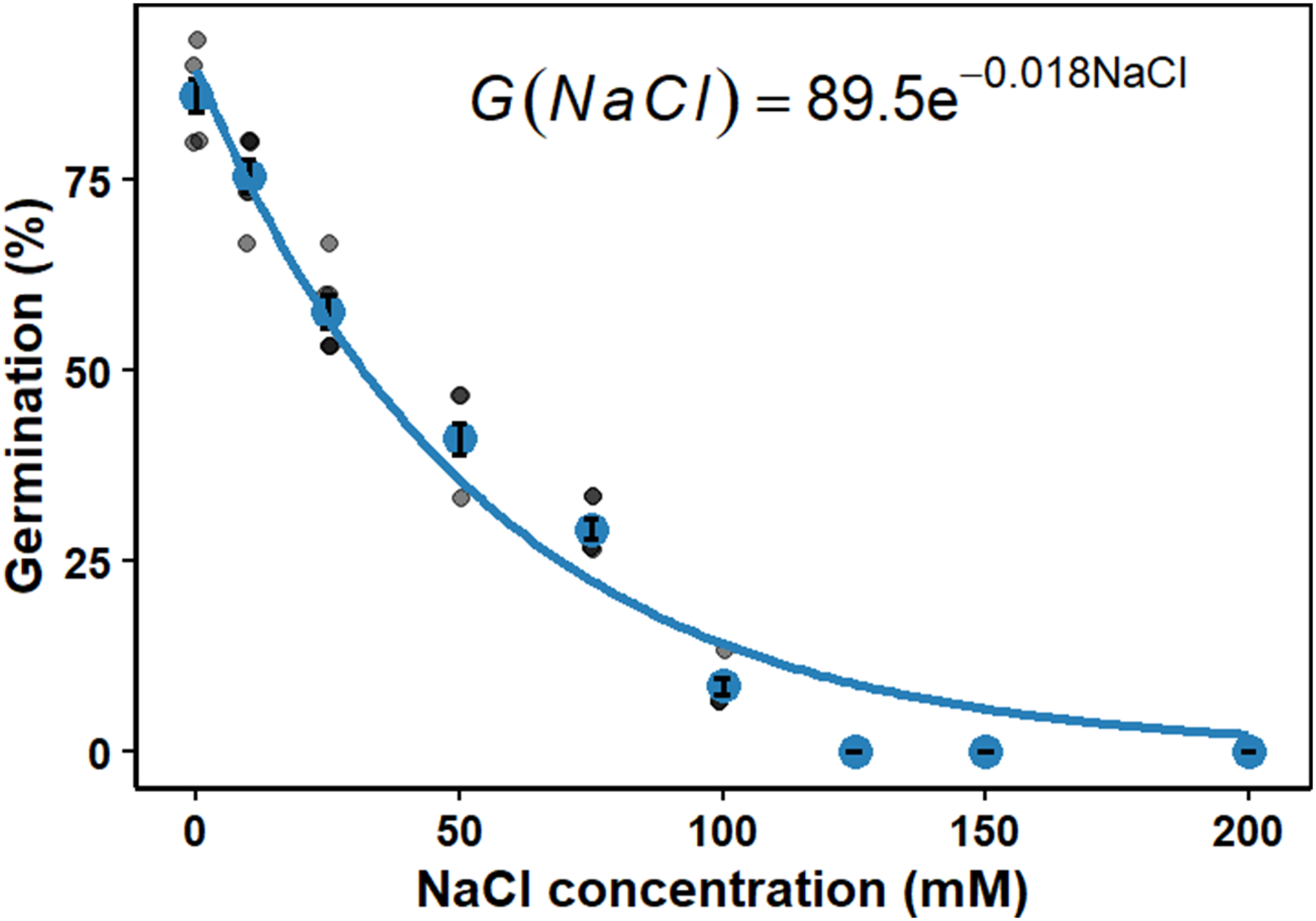
The germination of S. sisymbriifolium declined markedly with increasing salinity. Increasing NaCl concentration progressively reduced germination, with no germination observed at 125 mM NaCl or higher (Figure 5). An exponential decay model effectively described the relationship between salinity and germination: G (NaCl) = 89.8e−0.018NaCl. The estimated concentration required to inhibit 50% of maximum germination (IC50) was approximately 40 mM, indicating moderate tolerance to salinity during germination.
Effect of sodium chloride (NaCl) concentration on seed germination (%) of Solanum sisymbriifolium. Large solid blue points represent observed mean germination ± SE; black points indicate individual observations; and the curve represents a fitted exponential decay model, illustrating the progressive inhibition of germination as salinity increases from 0 to 200 mM.

The progressive decline in germination with increasing NaCl indicates that S. sisymbriifolium is sensitive to saline conditions, similar to other Solanum weeds. Germination decreased from 84.1% at 0 mM NaCl to 40% at 50 mM NaCl, showing a substantial reduction in response to salinity stress. For example, S. elaeagnifolium shows sharp germination declines above 50 mM NaCl (Stanton et al. Reference Stanton, Wu and Lemerle2012), and S. nigrum exhibits substantial reductions above 40 to 60 mM NaCl (Dong et al. Reference Dong, Ma, Wu, Jiang and Ma2020). Reduced germination under salinity reflects the osmotic and ionic inhibitory effects on water uptake and early metabolic activation (Baskin and Baskin Reference Baskin and Baskin2001; Benech-Arnold et al. Reference Benech-Arnold, Sánchez, Forcella, Kruk and Ghersa2000). The IC50 of ∼40 mM NaCl corresponds roughly to an electrical conductivity (EC) of 4 to 5 dS m⁻1, which is within the range of moderately saline soils in some Australian regions affected by secondary salinization (Munns and Tester Reference Munns and Tester2008; Rengasamy Reference Rengasamy and Stevens2006; Shabala and Munns Reference Shabala, Munns and Shabala2017). These results suggest that high salinity may limit germination and early establishment, while low to moderate salinity levels commonly encountered in Australian agricultural and natural systems are unlikely to fully prevent recruitment.
Osmotic Stress
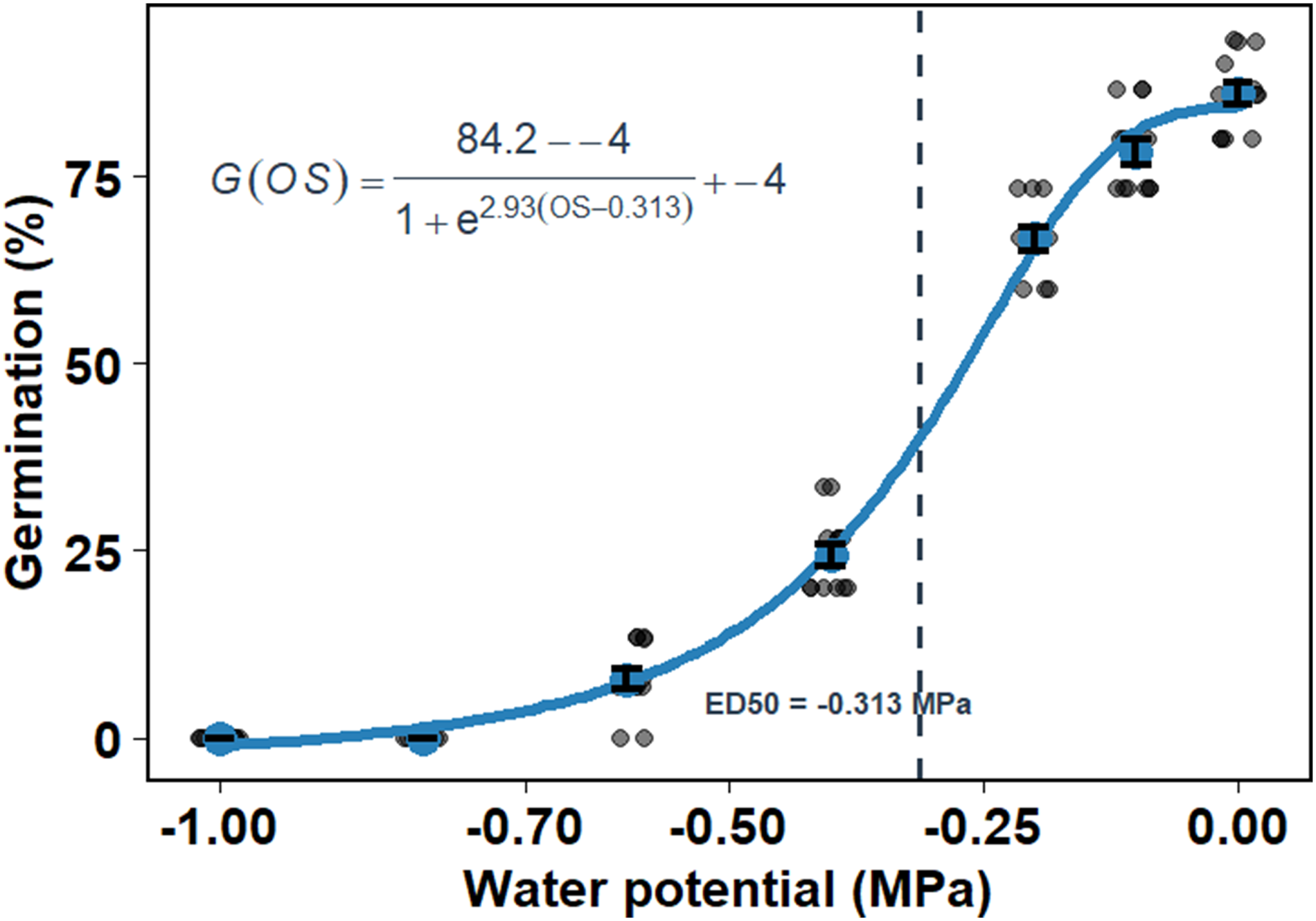
Germination of S. sisymbriifolium was highly sensitive to water stress, declining sharply from 85.1% at 0 MPa to zero at −0.8 MPa (Figure 6). A four-parameter log-logistic model described this response well, with an IC50 of −0.313 MPa, indicating that S. sisymbriifolium seeds have low tolerance to water deficit during germination. There was no significant effect of trial on germination (P = 0.2152; Supplementary Appendix Table A4). Therefore, data from both experimental runs were pooled for subsequent analysis. Osmotic stress (P < 0.001) and replication (P = 0.0103) had significant effects on germination, whereas the trial by osmotic stress interaction was not significant (P = 0.966). The similar germination observed in the untreated controls suggests that the trial effect was unlikely to be attributable to changes in seed dormancy. The low tolerance to osmotic stress suggests that S. sisymbriifolium germination and early seedling establishment are likely limited under dry soil conditions. This aligns with previous findings for S. sisymbriifolium, in which emergence was highest under moderate temperatures and mild water stress (−0.0026 to −0.21 MPa) but declined sharply under more severe moisture limitation, with almost no emergence at −0.96 MPa (Timmermans et al. Reference Timmermans, Vos, Van Nieuwburg, Stomph and Van Der Putten2007). Similar patterns have been reported for other Solanum species. Optimum germination of hoe nightshade (Solanum sarrachoides Sendtn.; syn.: Solanum physalifolium Rusby) occurred between 0 and −0.2 MPa (Zhou et al. Reference Zhou, Deckard and Ahrens2005), and S. elaeagnifolium germination declines progressively with increasing osmotic stress across a range of temperatures, indicating strong sensitivity to water limitation (Stanton et al. Reference Stanton, Wu and Lemerle2012). Conversely, periods of higher soil moisture, such as following rainfall events or during wetter seasons, may promote successful germination and emergence. Although this study did not explicitly model field emergence using local climatic data, the laboratory-derived moisture thresholds indicate that seedling recruitment is likely to be episodic and closely linked to rainfall events coinciding with favorable temperatures, as reported for other invasive weed species (Baskin and Baskin Reference Baskin and Baskin2001; Chauhan and Johnson Reference Chauhan and Johnson2008). In southeastern Australia, where S. sisymbriifolium is currently established, these conditions commonly occur during spring and summer and may facilitate seedling recruitment. Consequently, monitoring rainfall events and controlling seedlings soon after emergence may improve management and reduce establishment. The similar germination observed in the untreated controls suggests that seed dormancy did not change between experimental runs.
Seed germination (%) of Solanum sisymbriifolium under different osmotic stress conditions. Large solid points represent mean germination ± SE, and small black points show individual observations. The curve was fit using a four-parameter log-logistic model (upper = 84.2%, lower = −4%, osmotic potential causing 50% inhibition [ED50] = −0.313 MPa). The dashed vertical line indicates the ED50.

pH
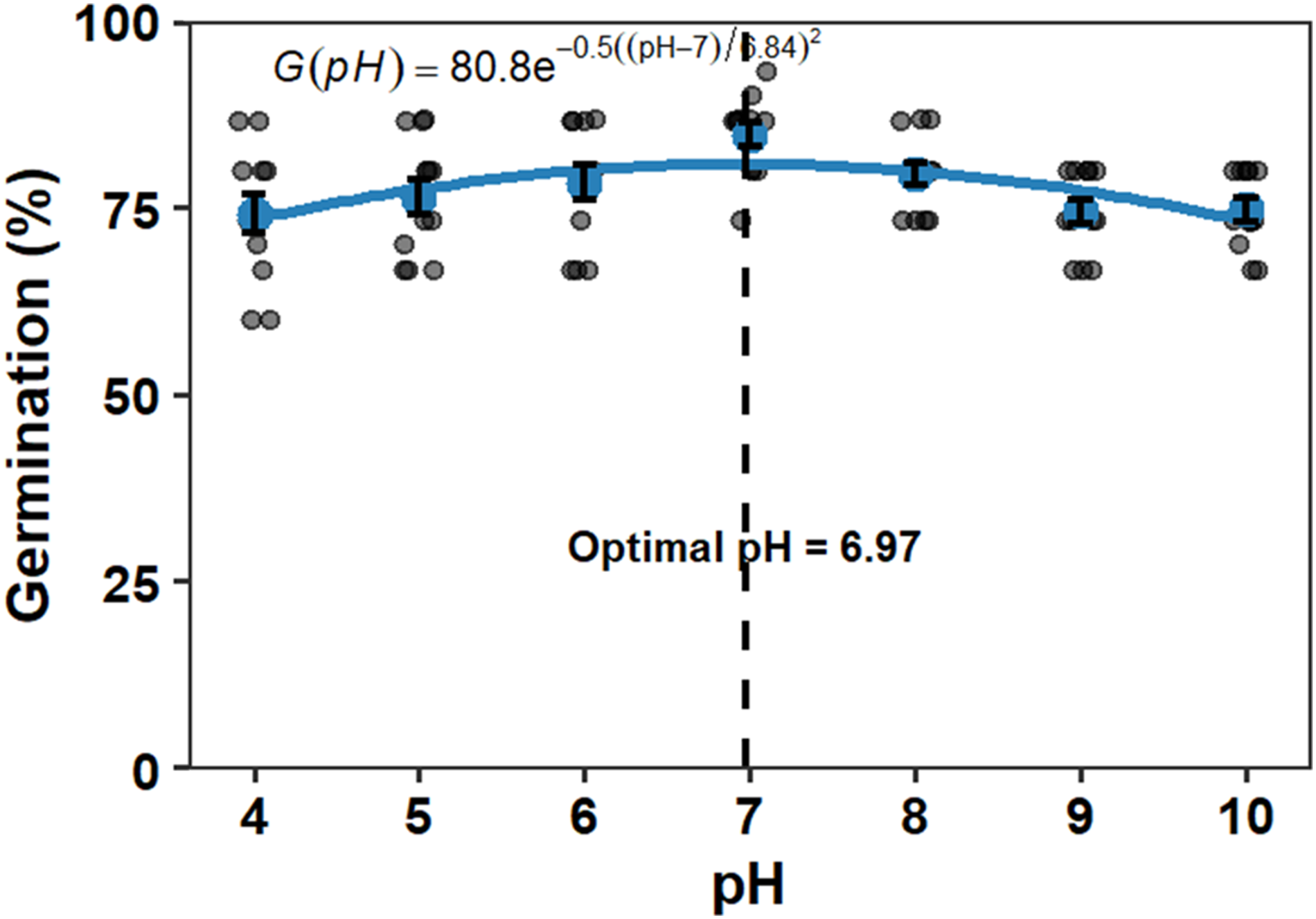
Solanum sisymbriifolium seeds showed a moderate to high germination response across all tested pH values, with germination consistently exceeding 74% (Figure 7). The germination reached a maximum of 84.7% under neutral conditions and a minimum of 74% at both pH 4 and pH 10, indicating only minor variation across the pH gradient. The relatively stable germination across a wide pH range suggests that S. sisymbriifolium is tolerant of both acidic and alkaline conditions. Similar responses have been reported for other Solanum species, including S. elaeagnifolium, which also exhibits broad pH tolerance during germination (Stanton et al. Reference Stanton, Wu and Lemerle2012).
Seed germination (%) of Solanum sisymbriifolium at different pH levels. Large solid points represent mean germination ± SE, while small black points show individual observations. The curve was fit using a Gaussian model. The model explains 65% of the variation, and the dashed vertical line indicates the optimal pH for germination (6.97).

The tested pH range (4 to 10) encompasses the soil pH conditions found in regions where S. sisymbriifolium is currently established in New South Wales and in many other agricultural and natural ecosystems across southeastern Australia (Hazelton and Murphy Reference Hazelton and Murphy2025; Rengasamy and Olsson Reference Rengasamy and Olsson1991). These findings suggest that soil pH is unlikely to limit germination or early establishment, indicating that other environmental factors, such as soil moisture and temperature, are more likely to determine the species’ distribution and seasonal recruitment. The control efforts should therefore focus on periods when or regions where favorable temperature and moisture conditions prevail.
Seed Burial Depth
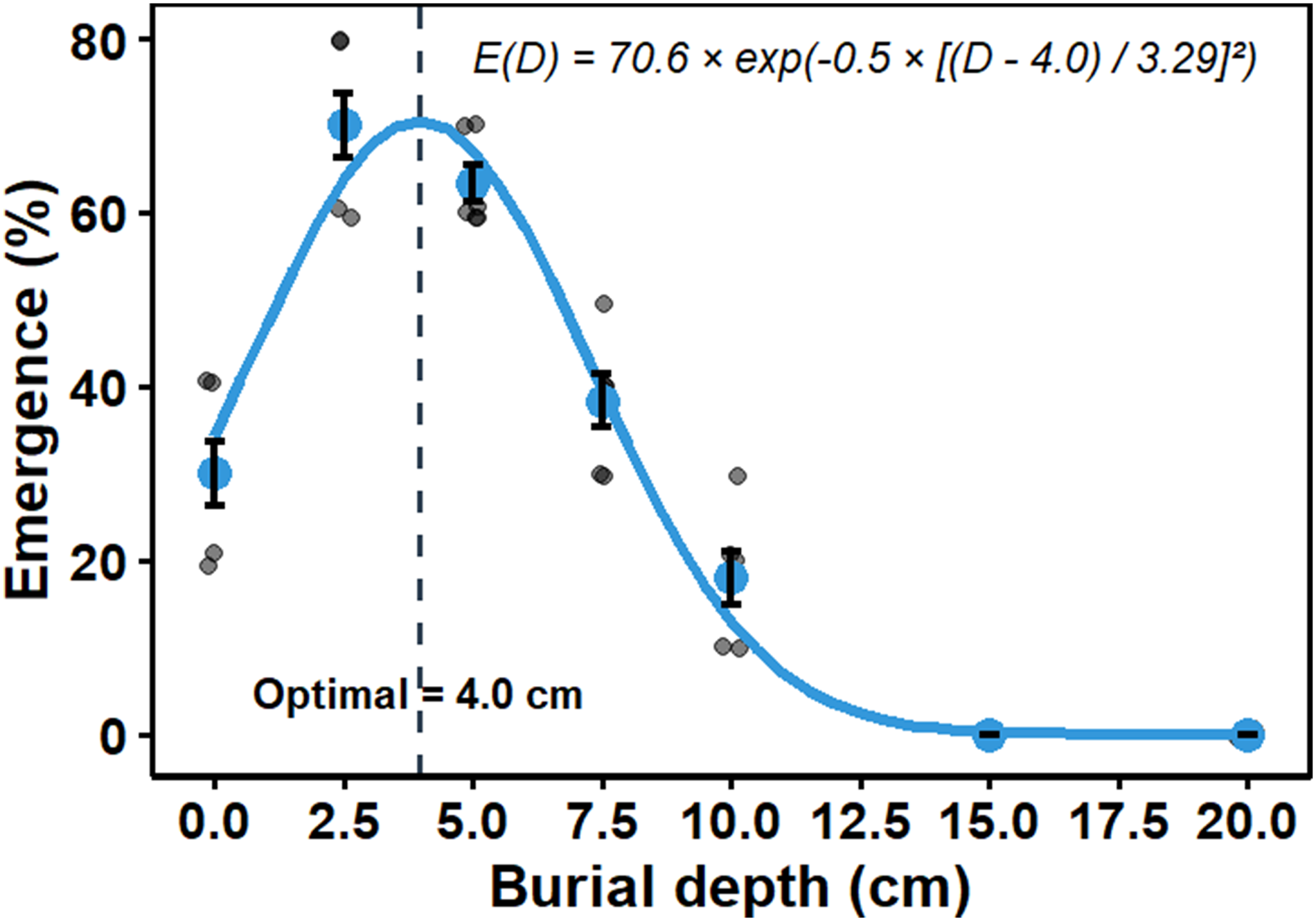
Seedling emergence of S. sisymbriifolium declined markedly with increasing burial depth. Emergence increased to a maximum of 72.4% at 2.5-cm burial depth and then declined progressively with increasing depth. Emergence was less than 20% at 10 cm and zero at 15 cm (Figure 8). Surface-sown seeds (0 cm) exhibited lower emergence than seeds buried at 2.5 cm. ANOVA showed that neither the main effect of trial (P = 0.5721) nor the trial by burial depth interaction (P = 0.8917) was significant (Supplementary Appendix Table A6). Burial depth had a significant effect on seedling emergence (P < 0.001), and this response was consistent across both trials. The observed emergence pattern reflects a typical response to burial depth seen in other Solanum species, such as S. sarrachoides (Zhou et al. Reference Zhou, Deckard and Ahrens2005) and tropical soda apple (Solanum viarum Dunal) (Akanda et al. Reference Akanda, Mullahey and Shilling1996). Similar trends occur in many invasive weeds, with deeper burial reducing emergence due to increased soil mechanical barrier to seedling emergence, reduced oxygen availability, and depletion of seed energy reserves before reaching the soil surface (Chu et al. Reference Chu, Gao, Chen, Mccullough, Jespersen, Sapkota, Bagavathiannan and Yu2022; Farooq et al. Reference Farooq, Onen, Tad, Ozaslan, Mahmoud, Brestic, Zivcak, Skalicky and El-Shehawi2021; Zhang et al. Reference Zhang, Nipapan, Li, Fu and Tang2021).
Seedling emergence (%) of Solanum sisymbriifolium at different burial depths (cm). Large solid points represent mean emergence ± SE, and small black points show individual observations. The blue curve is a fitted Gaussian model; the dashed vertical line indicates the burial depth associated with maximum emergence. The model predicts a maximum emergence of 70.6% at an optimal depth of 4.0 cm.

Lower emergence of surface seeds compared with shallowly buried seeds may result from limited soil–seed contact and reduced water availability, which can exacerbate stress during early germination (Amini et al. Reference Amini, Gholami and Ghanepour2017, Reference Amini, Ebrahimi and Dabbagh Mohammadi Nasab2021). These findings also align with osmotic stress results, indicating that successful germination depends on sufficient moisture availability and favorable microsite conditions rather than exposure at the soil surface. Shallow burial may enhance germination by improving seed–soil contact and maintaining higher moisture levels, thereby reducing desiccation stress. In Australia, S. sisymbriifolium commonly invades pastures, roadsides, riparian areas, and other disturbed habitats where cultivation, sowing pasture renovation, road grading, or livestock activity can place seeds at shallow depths favorable for emergence. Therefore, management practices should minimize shallow seed burial to reduce new seedling emergence. Additionally, deep inversion burial through a moldboard plow could be strategically used to restrict seedling emergence. The main effect of trial on S. sisymbriifolium seedling emergence was not significant. However, in both trials, burial depth significantly influenced seedling emergence, with increasing burial depth (>5 cm) reducing seedling emergence.
Implications for Management
This study demonstrates that S. sisymbriifolium exhibits broad environmental adaptability during germination and seedling emergence, which is likely to contribute to its establishment across a range of agricultural and natural environments in southeastern Australia. High germination under warm alternating temperatures, tolerance to a wide soil pH range, and successful emergence from shallow burial depths indicate considerable ecological flexibility. In contrast, reduced germination under low soil moisture, high salinity, and deeper burial depths identifies environmental conditions that may help limit seedling recruitment. These findings suggest that surveillance and control efforts should be prioritized during warm spring and summer periods following rainfall, when germination is most likely to occur. Preventing seed production and controlling seedlings soon after emergence should reduce replenishment of the soil seedbank. Where appropriate for the production system, management practices that minimize shallow seed placement or strategically bury seeds deep in the soil may further reduce establishment. Overall, integrated management combining cultural, mechanical, and chemical control measures will be required to limit the spread of S. sisymbriifolium and progressively deplete the soil seedbank.
Supplementary material
To view supplementary material for this article, please visit https://doi.org/10.1017/wsc.2026.10140
Acknowledgments
We gratefully acknowledge the support provided by the Gulbali Institute for Agriculture, Water and Environment, Charles Sturt University, and the New South Wales Department of Primary Industries and Regional Development. We also acknowledge Sher-e-Bangla Agricultural University, Bangladesh, for granting Md Shoriful Islam study leave to undertake this Ph.D research. We thank Sujeewa Rathnayake, Michael Hopwood, and Adam Shephard for their assistance with the research. AI-based tools were used to assist with language editing and improving the clarity of the manuscript. All content was reviewed and verified by the authors.
Funding statement
This research was supported by funding from Newmont Corporation through the New South Wales Department of Primary Industries and Regional Development, in collaboration with Charles Sturt University.
Competing interests
The authors declare that they have no conflict of interest.


 Open access

