INTRODUCTION
Neospora caninum is a tissue cyst-forming coccidian parasite closely related to Toxoplasma gondii that causes reproductive failure in cattle worldwide (Dubey et al. Reference Dubey, Schares and Ortega-Mora2007; Dubey and Schares, Reference Dubey and Schares2011). The pathogenesis of bovine neosporosis depends on several factors related to the host (e.g. infection route, immune responses of the pregnant cow and fetus and stage of gestation) and factors related to the parasite (parasite stage, dosage and isolate) (Dubey et al. Reference Dubey, Buxton and Wouda2006). In particular, it has recently been shown that N. caninum intraspecific diversity is a determinant of parasite virulence and in vitro parasite behaviour. Intra-specific diversity was first evidenced by genetic differences found among N. caninum isolates (Schock et al. Reference Schock, Innes, Yamane, Latham and Wastling2001; Regidor-Cerrillo et al. Reference Regidor-Cerrillo, Pedraza-Díaz, Gómez-Bautista and Ortega-Mora2006; Al-Qassab et al. Reference Al-Qassab, Reichel, Ivens and Ellis2009; Basso et al. Reference Basso, Schares, Barwald, Herrmann, Conraths, Pantchev, Vrhovec and Schares2009; Pedraza-Díaz et al. Reference Pedraza-Díaz, Marugán-Hernández, Collantes-Fernández, Regidor-Cerrillo, Rojo-Montejo, Gómez-Bautista and Ortega-Mora2009). Later, several authors reported the influence of the N. caninum isolate used on the outcomes of infection and the immune responses to the infection in murine and bovine experimental models (Miller et al. Reference Miller, Quinn, Windsor and Ellis2002; Quinn et al. Reference Quinn, Miller, Ryce, Windsor and Ellis2002; Collantes-Fernández et al. Reference Collantes-Fernández, López-Pérez, Álvarez-García and Ortega-Mora2006; Rojo-Montejo et al. Reference Rojo-Montejo, Collantes-Fernández, Blanco-Murcia, Rodríguez-Bertos, Risco-Castillo and Ortega-Mora2009; Pereira García-Melo et al. Reference Pereira García-Melo, Regidor-Cerrillo, Collantes-Fernández, Aguado-Martínez, Del Pozo, Minguijon, Gómez-Bautista, Aduriz and Ortega-Mora2010; Regidor-Cerrillo et al. Reference Regidor-Cerrillo, Gómez-Bautista, Del Pozo, Jiménez-Ruiz, Aduriz and Ortega-Mora2010; Caspe et al. Reference Caspe, Moore, Leunda, Cano, Lischinsky, Regidor-Cerrillo, Alvarez-Garcia, Echaide, Bacigalupe, Ortega Mora, Odeon and Campero2012). Indeed higher anti-N. caninum IgG1-IgG2a humoral immune responses were induced by high virulence isolates than by isolates with low-to-moderate virulence (Pereira García-Melo et al. Reference Pereira García-Melo, Regidor-Cerrillo, Collantes-Fernández, Aguado-Martínez, Del Pozo, Minguijon, Gómez-Bautista, Aduriz and Ortega-Mora2010; Regidor-Cerrillo et al. Reference Regidor-Cerrillo, Gómez-Bautista, Del Pozo, Jiménez-Ruiz, Aduriz and Ortega-Mora2010). However, the host- and parasite-dependent mechanisms responsible for these differences have not been determined although several proteins (NcMIC1, NcNTPase, NcROP40, aspartyl tRNA synthetase and G6PD) have been identified as being more abundant in highly virulent isolates (Regidor-Cerrillo et al. Reference Regidor-Cerrillo, Álvarez-García, Pastor-Fernández, Marugán-Hernández, Gómez-Bautista and Ortega-Mora2012). One approach to determine the mechanisms behind the differing immune response is to investigate the proteins involved in the tachyzoite lytic cycle because high virulence isolates have displayed significantly higher invasion and proliferation rates in in vitro assays (Regidor-Cerrillo et al. Reference Regidor-Cerrillo, Gómez-Bautista, Sodupe, Aduriz, Álvarez-García, Del Pozo and Ortega-Mora2011). However, bradyzoite-specific proteins are also interesting candidates because these proteins seem to be involved in the evasion of host immune response and persistence within the host tissues by T. gondii (Kim and Boothroyd, 2005; Kim et al. Reference Kim, Karasov and Boothroyd2007). Interestingly, cystogenic isolates such as Nc-Liverpool and Nc-Spain 7 have proven to be virulent (Collantes-Fernández et al. Reference Collantes-Fernández, López-Pérez, Álvarez-García and Ortega-Mora2006; Pereira García-Melo et al. Reference Pereira García-Melo, Regidor-Cerrillo, Collantes-Fernández, Aguado-Martínez, Del Pozo, Minguijon, Gómez-Bautista, Aduriz and Ortega-Mora2010; Regidor-Cerrillo et al. Reference Regidor-Cerrillo, Gómez-Bautista, Del Pozo, Jiménez-Ruiz, Aduriz and Ortega-Mora2010). In this sense, 4 proteins (NcGRA7, NcSAG4, NcBSR4 and NcSRS9) that are considered likely to be related to these 2 important processes (lytic cycle and persistence) were chosen in order to accomplish this work.
NcGRA7 is a dense granule protein involved in invasion and parasite proliferation that is expressed in both the tachyzoite and bradyzoite stages (Hemphill et al. Reference Hemphill, Gajendran, Sonda, Fuchs, Gottstein, Hentrich and Jenkins1998; Álvarez-García et al. Reference Álvarez-García, Pitarch, Zaballos, Fernández-García, Gil, Gómez-Bautista, Aguado-Martínez and Ortega-Mora2007; Aguado-Martínez et al. Reference Aguado-Martínez, Álvarez-García, Schares, Risco-Castillo, Fernández-García, Marugán-Hernández and Ortega-Mora2010). NcSAG4 is an early-expressed bradyzoite-specific protein, and NcBSR4 and NcSRS9 are late-expressed bradyzoite-specific proteins (Fernández-García et al. Reference Fernández-García, Risco-Castillo, Zaballos, Álvarez-García and Ortega-Mora2006; Risco-Castillo et al. Reference Risco-Castillo, Fernández-García, Zaballos, Aguado-Martínez, Hemphill, Rodríguez-Bertos, Álvarez-García and Ortega-Mora2007, Reference Risco-Castillo, Marugán-Hernández, Fernadez-García, Aguado-Martínez, Jiménez-Ruiz, Rodriguez-Marco, Álvarez-García and Ortega-Mora2011).
The aim of the present study was to investigate the relationship between the specific humoral immune responses directed against rNcGRA7, rNcSAG4, rNcBSR4 and rNcSRS9 and the virulence of the parasite. To this end, differences in the kinetics and specific antibody levels against these proteins were analysed in mice inoculated with 10 N. caninum isolates, which differ in their virulence. Additionally, the association of these differences with in vivo and in vitro parameters was investigated.
MATERIALS AND METHODS
Parasites
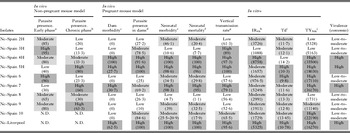
The N. caninum isolates used in this study are shown in Table 1 and were classified into 2 groups (low-to-moderate and high virulence isolates) according to their in vivo and in vitro behaviour described in previous works (Pereira García-Melo et al. Reference Pereira García-Melo, Regidor-Cerrillo, Collantes-Fernández, Aguado-Martínez, Del Pozo, Minguijon, Gómez-Bautista, Aduriz and Ortega-Mora2010; Regidor-Cerrillo et al. Reference Regidor-Cerrillo, Gómez-Bautista, Del Pozo, Jiménez-Ruiz, Aduriz and Ortega-Mora2010, Reference Regidor-Cerrillo, Gómez-Bautista, Sodupe, Aduriz, Álvarez-García, Del Pozo and Ortega-Mora2011). These isolates were maintained in monolayer cultures of the monkey kidney cell line MARC-145, as previously described (Pérez-Zaballos et al. Reference Pérez-Zaballos, Ortega-Mora, Álvarez-García, Collantes-Fernández, Navarro-Lozano, García-Villada and Costas2005). All isolates used to infect mice were synchronized and tachyzoites were recovered from 3-day growth cultures when the greater part of them was still intracellular (at least 80% of undisrupted parasite vacuoles in the cell monolayer in order to maintain parasite viability). Moreover, isolates were collected when they were in a similar low number of passages with the purpose of minimizing its potential changes in virulence (Bartley et al. Reference Bartley, Wright, Sales, Chianini, Buxton and Innes2006). Tachyzoite number was determined by Trypan blue exclusion followed by counting in a Neubauer chamber, and the parasites were re-suspended in PBS at the required dose in a final volume of 200 μl per mouse. Mice were inoculated within 1 h of tachyzoite collection.
In vivo and in vitro potential virulence-related parameters measured in 10 Neospora caninum isolates and their consensus classifications according to virulence
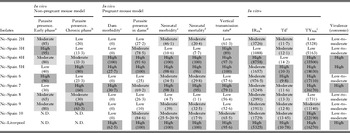
a Parasite presence in the lungs during the early phase of N. caninum infection (1–8 days p.i.; average percentages).
b Parasite presence in the brain during the chronic phase of N. caninum infection (16–64 days p.i.; average percentages).
c No. of dams with clinical signs/no. of dams (percentage).
d No. of nested-PCR positive dams at day 30 p.p./no. of dams in the group (percentage).
e No. of pups with clinical signs from day 3 to 30 p.p./no. of pups (percentage).
f No. of pups dead from day 3 to 30 p.p./no. of pups (percentage).
g No. of nested-PCR positive pups/no. of pups per group (percentage).
h Invasion rate measured as the median number of intracellular parasites/scan area at 4 hours post-infection (average).
i Doubling time (average hours).
j The tachyzoite yield was defined as the average value of the number of tachyzoites quantified by qPCR at 56 h p.i.
N.D., not determined.
Mice and experimental design
Seven-week-old female BALB/c mice were obtained from a commercial supplier (Harlan Interfauna Ibérica, Barcelona, Spain). They were free of common viral, parasite and bacterial pathogens according to the results of the routine screening procedures performed by the manufacturer. The mice were fed ad libitum in a controlled environment with cycles of 12 h of light and 12 h of dark. All of the protocols involving animals were approved by the Animal Research Committee of Complutense University, Madrid, Spain, following the proceedings described by the Regulation of Internal Regime for Animal Research Committee (published at BOUC, no. 2, on 9 February 2006) and EU legislation (Council Directive 86/609/EEC).
Inoculations of 10 N. caninum isolates in non-pregnant and pregnant BALB/c mouse models of neosporosis have been published by Pereira García-Melo et al. (Reference Pereira García-Melo, Regidor-Cerrillo, Collantes-Fernández, Aguado-Martínez, Del Pozo, Minguijon, Gómez-Bautista, Aduriz and Ortega-Mora2010) and Regidor-Cerrillo et al. (Reference Regidor-Cerrillo, Gómez-Bautista, Del Pozo, Jiménez-Ruiz, Aduriz and Ortega-Mora2010). Briefly, the mice in both experimental models were examined daily for clinical signs indicative of neosporosis (rough hair coats, inactivity, anorexia and neurological signs consisting of head tilting, walking in circles, ataxia, pelvic limb weakness and paralysis). Severe, clinically affected mice were sacrificed by CO2 inhalation.
In the non-pregnant mouse model, the mice were inoculated with sterile PBS (control group) or with 106 tachyzoites per mouse by an intra-peritoneal route (Table 1). Five mice from the N. caninum-inoculated groups and 3 mice from the control group were randomly sacrificed by CO2 inhalation on 1, 2, 4, 8, 16, 32 and 64 days post-inoculation (p.i.) except for the Nc-Spain 5H-infected group, for which the 64 day p.i. time-point was not performed.
For the pregnant mouse model, the mice in all of the groups were subcutaneously (s.c.) inoculated with 2 × 10⁶ tachyzoites of different N. caninum isolates (Table 1) or with sterile PBS (control group) by the subcutaneous route at day 7 of pregnancy. The neonates were housed with dams until day 30 post-partum (p.p.) when both neonates and dams were sacrificed by CO2 inhalation. Blood samples from non-pregnant and pregnant mice were collected by cardiac puncture at necropsy. Sera were aliquoted and preserved at −80 °C for analysis by ELISA.
Cloning and purification of recombinant proteins
cDNAs used for cloning NcGRA7, NcSAG4, NcBSR4 and NcSRS9 were obtained from Nc-Liverpool isolate. In previous studies, no differences in nucleotide sequence were observed among isolates (Walsh et al. Reference Walsh, Vemulapalli, Sriranganathan, Zajac, Jenkins and Lindsay2001; Fernández-García et al. Reference Fernández-García, Risco-Castillo, Zaballos, Álvarez-García and Ortega-Mora2006; Risco-Castillo et al. Reference Risco-Castillo, Fernández-García, Zaballos, Aguado-Martínez, Hemphill, Rodríguez-Bertos, Álvarez-García and Ortega-Mora2007, Reference Risco-Castillo, Marugán-Hernández, Fernadez-García, Aguado-Martínez, Jiménez-Ruiz, Rodriguez-Marco, Álvarez-García and Ortega-Mora2011). Both the rNcGRA7 and rNcSAG4 proteins were produced in the pET-45b (+) (Novagen, Germany) prokaryotic expression vector system following previously described procedures, with a few modifications (Fernández-García et al. Reference Fernández-García, Risco-Castillo, Zaballos, Álvarez-García and Ortega-Mora2006, Álvarez-García et al. Reference Álvarez-García, Pitarch, Zaballos, Fernández-García, Gil, Gómez-Bautista, Aguado-Martínez and Ortega-Mora2007, Jiménez-Ruiz et al. Reference Jiménez-Ruiz, Álvarez-García, Aguado-Martínez, Salman, Irache, Marugán-Hernández and Ortega-Mora2012). rNcBSR4 and rNcSRS9 were cloned into the prokaryotic expression vector pRSET-C (Invitrogen, USA) as previously described (Risco-Castillo et al. Reference Risco-Castillo, Fernández-García, Zaballos, Aguado-Martínez, Hemphill, Rodríguez-Bertos, Álvarez-García and Ortega-Mora2007, Reference Risco-Castillo, Marugán-Hernández, Fernadez-García, Aguado-Martínez, Jiménez-Ruiz, Rodriguez-Marco, Álvarez-García and Ortega-Mora2011). After the bacteria were lysed, rNcGRA7 was purified from the soluble fraction by immobilized metal ion-affinity chromatography (IMAC) using HisTrapHP columns (GE Healthcare, USA) (Álvarez-García et al. Reference Álvarez-García, Pitarch, Zaballos, Fernández-García, Gil, Gómez-Bautista, Aguado-Martínez and Ortega-Mora2007). rNcSAG4, rNcSRS9 and rNcBSR4 were extracted from inclusion bodies and denatured with a binding buffer containing 20 mM phosphate salts, 8 M urea and 40 mM imidazole (Aguado-Martínez et al. Reference Aguado-Martínez, Álvarez-García, Fernández-García, Risco-Castillo, Arnaiz-Seco, Rebordosa-Trigueros, Navarro-Lozano and Ortega-Mora2008). These recombinant proteins were obtained using an on-column refolding and purification procedure based on a method previously reported (Zhao et al. Reference Zhao, Zhao, Wang and Gao2005).
The concentration and purity of the recombinant proteins were determined by sodium dodecyl sulphate-polyacrylamide gel electrophoresis (SDS-PAGE) with a standard BSA scale (Roche, Switzerland) and by Western blotting with a monoclonal anti-T7 tag antibody (Novagen, Germany) and polyclonal anti-rNcGRA7, rNcSAG4, rNcBSR4 and rNcSRS9 mouse sera (Fernández-García et al. Reference Fernández-García, Risco-Castillo, Zaballos, Álvarez-García and Ortega-Mora2006; Aguado-Martínez et al. Reference Aguado-Martínez, Álvarez-García, Fernández-García, Risco-Castillo, Arnaiz-Seco, Rebordosa-Trigueros, Navarro-Lozano and Ortega-Mora2008; Risco-Castillo et al. Reference Risco-Castillo, Fernández-García, Zaballos, Aguado-Martínez, Hemphill, Rodríguez-Bertos, Álvarez-García and Ortega-Mora2007, Reference Risco-Castillo, Marugán-Hernández, Fernadez-García, Aguado-Martínez, Jiménez-Ruiz, Rodriguez-Marco, Álvarez-García and Ortega-Mora2011). The protein concentrations were measured using Quantity One software (v. 7.2, Bio-Rad, USA). All of the proteins were stored at −80 °C until use.
Analysis of the humoral immune response
The ELISAs for detecting specific IgGs developed against rNcGRA7, rNcSAG4, rNcBSR4 and rNcSRS9 were carried out as described previously (Rojo-Montejo et al. Reference Rojo-Montejo, Collantes-Fernandez, Rodriguez-Marcos, Perez-Zaballos, Lopez-Perez, Prenafeta and Ortega-Mora2011). Briefly, 96-well plates were coated with 0·1 μg/well of rNcGRA7 or rNcSAG4 and 0·2 μg/well of rNcBSR4 or rNcSRS9. The serum samples were applied at a 1:100 dilution and an anti-mouse IgG peroxidase-conjugated antibody (Sigma, USA) was used at a 1:3000 dilution. For the non-pregnant mouse model, only sera from 8, 16, 32 and 64 days p.i. were analysed because the production of specific antibodies against N. caninum and against rNcGRA7 occurs from 8 days p.i. onwards and the production of those against rNcSAG4 occurs from 14 days p.i. onwards (Collantes-Fernández et al. Reference Collantes-Fernández, López-Pérez, Álvarez-García and Ortega-Mora2006; Aguado-Martínez et al. Reference Aguado-Martínez, Ortega-Mora, Álvarez-García, Rodríguez-Marco, Risco-Castillo, Marugán-Hernández and Fernández-García2009a ). Control group samples for each day were also analysed.
Sera from mice immunized with rNcSAG4, rNcGRA7, rNcBSR4 and rNcSRS9 in previous studies were employed as positive controls, whereas sera from non-immunized uninfected mice were used as negative controls in each plate (Aguado-Martínez et al. Reference Aguado-Martínez, Álvarez-García, Fernández-García, Risco-Castillo, Marugán-Hernández and Ortega-Mora2009b ; Jiménez-Ruiz et al. Reference Jiménez-Ruiz, Álvarez-García, Aguado-Martínez, Salman, Irache, Marugán-Hernández and Ortega-Mora2012). Serum samples were analysed in duplicate. The threshold value (cut-off) was defined arbitrarily to discriminate between ‘positive’ and ‘negative’ by adding 2 standard deviations to the mean A405 value of sera from non-immunized uninfected mice. The cut-off values corresponded to 0·27, 0·29, 0·24 and 0·42 optical density (O.D.) values for the rNcGRA7, rNcSAG4, rNcBSR4 and rNcSRS9 ELISA tests, respectively.
The ELISAs for detecting specific IgG1 and IgG2a against N. caninum extract were performed by Pereira Garcia-Melo et al. (Reference Pereira García-Melo, Regidor-Cerrillo, Collantes-Fernández, Aguado-Martínez, Del Pozo, Minguijon, Gómez-Bautista, Aduriz and Ortega-Mora2010) and Regidor-Cerrillo et al. (Reference Regidor-Cerrillo, Gómez-Bautista, Del Pozo, Jiménez-Ruiz, Aduriz and Ortega-Mora2010). Briefly, an ELISA was developed with soluble N. caninum tachyzoite antigen (0·5 μg in 100 μl/well) using diluted serum samples (1:100) and anti-mouse IgG2a or IgG1 antibody (1:5000; Southern Biotechnology, Birmingham, AL, USA). Serum samples were analysed in duplicate.
Statistical analysis
A one-way ANOVA followed by Duncan's multiple range tests was employed to compare specific antibody levels (measured as optical density (O.D.) values) developed against the 4 recombinant proteins included in this study. In the non-pregnant model, comparisons were performed between groups inoculated with low-to-moderate vs high virulence isolates for each day evaluated (8, 16, 32, 64 days p.i.). Moreover, different day p.i. samples were also compared for each isolate. In the pregnant model, the specific antibody levels were compared between groups of mice inoculated with different isolates or grouped in virulence categories (low-to-moderate vs high virulence isolates). The significance for these analyses was established at P < 0·05.
Spearman's rank correlation coefficient (ρ) was applied to investigate the potential association between the specific antibody levels and different parameters of isolate virulence reported in previous studies. In the non-pregnant mouse model, the percentages of mice with parasites present in the brain at 8, 16, 32 and 64 days p.i. for each inoculated group were compared with median O.D. values of specific antibodies developed against each recombinant protein (Pereira García-Melo et al. Reference Pereira García-Melo, Regidor-Cerrillo, Collantes-Fernández, Aguado-Martínez, Del Pozo, Minguijon, Gómez-Bautista, Aduriz and Ortega-Mora2010). Because no morbidity and mortality rates were recorded, correlation analyses were not performed. In the pregnant mouse model, parameters related to virulence in dams (morbidity and parasite presence) and in pups (neonatal morbidity and mortality and vertical transmission rates) (Regidor-Cerrillo et al. Reference Regidor-Cerrillo, Gómez-Bautista, Del Pozo, Jiménez-Ruiz, Aduriz and Ortega-Mora2010) were compared with the median values of the specific antibodies developed against the recombinant proteins. The O.D. values of IgG1 and IgG2a antibodies against the N. caninum soluble extract detected in the non-pregnant model at 8, 16, 32 and 64 days p.i. by Pereira García-Melo et al. (Reference Pereira García-Melo, Regidor-Cerrillo, Collantes-Fernández, Aguado-Martínez, Del Pozo, Minguijon, Gómez-Bautista, Aduriz and Ortega-Mora2010) were correlated with the corresponding individual values of specific antibodies against the recombinant proteins. Similar analyses were conducted for the pregnant model (Regidor-Cerrillo et al. Reference Regidor-Cerrillo, Gómez-Bautista, Del Pozo, Jiménez-Ruiz, Aduriz and Ortega-Mora2010).
Additionally, in vitro parameters such as the invasion rate at 4 h (IR4h), doubling time (Td) and tachyzoite yield at 56 h (TY56h) obtained in another recent study (Regidor-Cerrillo et al. Reference Regidor-Cerrillo, Gómez-Bautista, Sodupe, Aduriz, Álvarez-García, Del Pozo and Ortega-Mora2011) were compared with the median specific anti-rNcGRA7 antibody values detected in the non-pregnant and pregnant models for each isolate. In this analysis, the antibody levels against bradyzoite-specific proteins were not included because the in vitro assays were carried out exclusively with tachyzoites.
All statistical analyses were performed and graphics generated using IBM SPSS Statistics v.19 software.
RESULTS
Non-pregnant mouse model
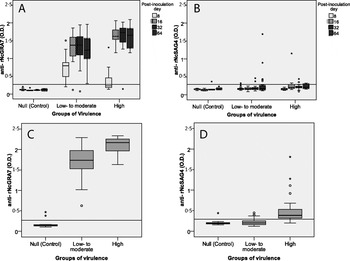
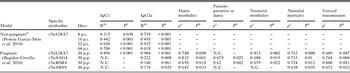
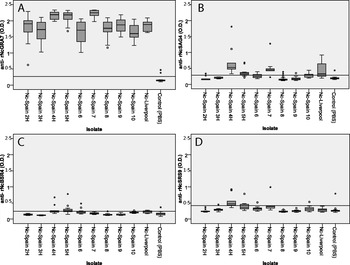
All of the groups inoculated with the N. caninum isolates developed specific antibodies against rNcGRA7 (Fig. 1A). When the immune responses were analysed to compare days p.i. within each group, the anti-rNcGRA7 levels were higher during the chronic infection in all groups (16, 32 and 64 days p.i.) (P < 0·05) compared with acute infection (8 days p.i.), but no differences were detected between the different days of chronic infection. Additionally, higher O.D. values of specific anti-Neospora IgG1 and IgG2a antibodies were correlated with higher specific anti-rNcGRA7 levels at each day p.i. analysed (Table 2).
Box-plot graphs representing the median, lower and upper quartiles (boxes), non-outlier minimum and maximum (whiskers), and outlier (°; values 1·5-fold more than the inter-quartile range away from the quartiles) and extreme (*; values 3-fold more than the inter-quartile range away from the quartiles) optical density (O.D.) values obtained with rNcGRA7 (A) and rNcSAG4 (B) from non-pregnant mice sera at different days post-infection and rNcGRA7 (C) and rNcSAG4 (D) from pregnant mice sera at day 30 post-partum. Mice were inoculated with isolates of low-to-moderate virulence (Nc-Spain 2H, Nc-Spain 3H, Nc–Spain 6, Nc-Spain 8 and Nc-Spain 9), high virulence (Nc-Spain 4H, Nc-Spain 5H, Nc-Spain 7) or with PBS (control group). The horizontal lines represent the cut-off point for each test.

Correlation analyses of specific antibody values against rNcGRA7, rNcSAG4, rNcBSR4 and rNcSRS9 with anti-IgG1 and IgG2a values and in vivo parameters measured in both the non-pregnant and pregnant mouse models
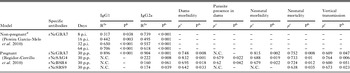
a R2 of Pearson.
b P-value (two-tailed).
c Spearman rho coefficient.
d Morbidity and mortality rates were not recorded and correlation analyses were not performed.
N.C., no correlation.
When the specific anti-rNcGRA7 antibody levels were compared between the low-to-moderate and high virulence groups, significant differences were observed (Fig. 1A). During the early infection (8 days p.i.), the levels of anti-rNcGRA7 were higher in the low-to-moderate virulence groups (P < 0·05). In this case, the isolates Nc-Spain 2H, 3H, 6 and 8 produced a significantly higher humoral immune response against rNcGRA7 than Nc-Spain 4H, 5H and 7 (P < 0·05). On the contrary, during the late infection (16, 32 and 64 days p.i.), the highest anti-rNcGRA7 levels corresponded to the high virulence isolate group with significant differences between 16 and 64 days p.i (P < 0·05). The Duncan post-hoc test identified the isolates that produced the lowest antibody response at 16 days p.i. (Nc-Spain 3H), 32 days p.i. (Nc-Spain 2H, 3H) and 64 days p.i. (Nc-Spain 2H, 3H and 8).
Regarding the bradyzoite stage-specific proteins, no antibody levels against rNcSAG4 (Fig. 1B), rNcBSR4 or rNcSRS9 (data not shown) were observed over the cut-off values for each test. Therefore, no further comparisons were performed for these proteins in the non-pregnant model.
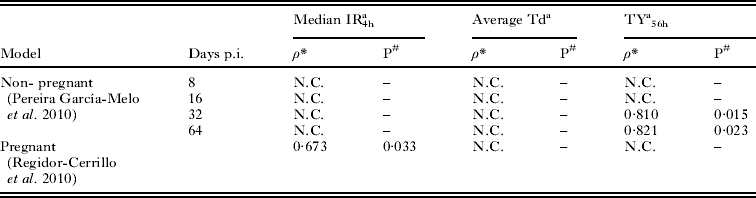
The correlation analyses between parasite presence and specific antibody levels against rNcGRA7 were not significant at any period of time (data not shown). Moreover, significant correlations could be found between the average values of the in vitro parameter TY56h and median values of specific antibodies against rNcGRA7 at 32 days p.i. and 64 days p.i. (Table 3).
Spearman correlation analyses of median values of specific antibodies against rNcGRA7 and the in vitro parameters for each isolate

a In vitro parameters reported by Regidor-Cerrillo et al. Reference Regidor-Cerrillo, Gómez-Bautista, Sodupe, Aduriz, Álvarez-García, Del Pozo and Ortega-Mora2011.
IR4h, invasion rate at 4 h.
Td, doubling time.
TY56h, tachyzoite yield at 56 h.
* Spearman rho coefficient.
# P-value (two-tailed).
N.C., no correlation.
All statistical analyses were also performed with normalized ELISA data measured as relative index per cent (R.I.P.C. = (O.D. sample – O.D. negative control)/(O.D. positive control – O.D. negative control) × 100). The results with R.I.P.C.s data showed similar significant variations to the results obtained with data not normalized but for TY56h and specific antibodies against rNcGRA7 at 64 days p.i. (Supplementary Table 1 and Table 2, online version only).
Pregnant mouse model
All of the mice inoculated with any of the N. caninum isolates developed specific antibodies against rNcGRA7 above the cut-off value. The high virulence isolate group developed significantly higher specific antibody levels against rNcGRA7 than the low-to-moderate virulence group (Fig. 1C, P < 0·05). In the case of rNcSAG4, 16·7% and 84·1% of the samples belonging to the low-to-moderate and high virulence groups, respectively, showed detectable specific antibody levels that were significantly higher in the high virulence group compared with the low-to-moderate virulence group (Fig. 1D, P < 0·05). The antibody levels against the late-expressed bradyzoite stage-specific proteins rNcBSR4 and rNcSRS9 were close to the cut-off values (data not shown). However, specific antibody levels above the cut-off were detected in 6·4% and 47·6% of mice for rNcBSR4 (P < 0·0001; Fisher's exact test) and 3·8% and 37·2% for rNcSRS9 (P < 0·0001; Fisher's exact test) in the low-to-moderate and high virulence isolate groups, respectively.
Higher levels of anti-rNcGRA7 antibodies were detected in the mice that were inoculated with the Nc-Spain 4H, Nc-Spain 5H and Nc-Spain 7 isolates (P < 0·05) (Fig. 2A). Regarding rNcSAG4, dams inoculated with the high virulence isolates (Nc-Spain 4H, Nc-Spain 5H, Nc-Spain 7 and Nc-Liverpool) developed specific antibodies above the cut-off point, whereas the dams inoculated with the low-to-moderate virulence isolates (Nc-Spain 2H, Nc-Spain 3H, Nc-Spain 8 and Nc-Spain 9; Fig. 2B) remained seronegative (P < 0·05). Only some mice from the groups inoculated with Nc-Spain 4H (50%), Nc-Spain 5H (70·6%), Nc-Spain 6 (25%) and Nc-Liverpool (37·6%) showed a specific response against rNcBSR4 above the cut-off value (Fig. 2C). Additionally, some mice inoculated with the high virulence isolates, such as Nc-Spain 4H (80%), Nc-Spain 5H (29·4%) and Nc-Spain 7 (37·5%), recognized rNcSRS9, but no rNcSRS9-specific antibodies were developed by mice inoculated with the low-to-moderate virulence isolates, such as Nc-Spain 2H, Nc- Spain 3H, Nc-Spain 8 and Nc-Spain 9 (Fig. 2D).
Box-plot graphs representing the median, lower and upper quartiles (boxes), non-outlier minimum and maximum (whiskers), and outlier (°; values 1·5-fold more than the inter-quartile range away from the quartiles) and extreme (*; values 3-fold more than the inter-quartile range away from the quartiles) optical density (O.D.) values obtained with rNcGRA7 (A), rNcSAG4 (B), rNcBSR4 (C) and rNcSRS9 (D) antigen-based ELISAs from serum samples of mice inoculated with different isolates (Nc-Spain 2H (n = 11), Nc-Spain 3H (n = 14), Nc-Spain 6 (n = 12), Nc-Spain 8 (n = 19), Nc-Spain 9 (n = 10) and Nc-Spain 10 (n = 13) low-to-moderate virulence isolates- and Nc-Spain 4H (n = 10), Nc-Spain 5H (n = 17), Nc-Spain 7 (n = 9) and Nc-Liv (n = 8) high virulence-) or with PBS (control group) in the pregnant mouse model. The samples were taken at day 30 post-partum from mice inoculated at day 7 of gestation. The horizontal lines represent the cut-off point for each test.

Moreover, the IgG1 and IgG2a individual values were highly correlated with the levels of specific antibodies against rNcGRA7 (Table 2). Almost all of the virulence parameters analysed correlated with the specific antibody levels against the 4 recombinant proteins (ρ > 0·6; P < 0·05; Table 2). Additionally, regarding the in vitro parameters, the median IR4h could be correlated with the median specific antibody levels against rNcGRA7 (ρ = 0·673; P = 0·033). There was no correlation between any of the specific antibody responses analysed and the other in vitro parameters (Table 3).
All statistical analyses were also performed with normalized ELISA data measured as relative index per cent (R.I.P.C. = (O.D. sample – O.D. negative control)/(O.D. positive control – O.D. negative control) × 100). The results with R.I.P.C.s data showed similar significant variations to the results obtained with data not normalized except for a few exceptions: anti-rNcSAG4 antibody levels correlated with anti-N. caninum IgG1 antibody levels. In a similar way anti-rNcBSR4 antibody levels correlated with both anti-N. caninum IgG1 antibody levels and neonatal morbidity. On the other hand, anti-rNcBSR4 antibody levels did not correlate with parasite presence in dams. However, the ρ value was low in case of both late-expressed bradyzoite proteins (Supplementary Table 1, online version only). Moreover, the same variation was observed in the case of anti-rNcGRA7 antibody levels developed by pregnant mice vs IR4h (Supplementary Table 2, online version only).
DISCUSSION
The specific antibody responses against proteins involved in the lytic cycle (NcGRA7) and the tachyzoite-bradyzoite transition (NcSAG4, NcBSR4 and NcSRS9) were investigated for the first time and were shown to be correlated with virulence in mice infected with N. caninum. Differences in virulence-related parameters such as morbidity, mortality and abortions between different N. caninum isolates have been observed in previous in vivo experiments (Miller et al. Reference Miller, Quinn, Windsor and Ellis2002; Quinn et al. Reference Quinn, Miller, Ryce, Windsor and Ellis2002; Collantes-Fernández et al. Reference Collantes-Fernández, López-Pérez, Álvarez-García and Ortega-Mora2006; Rojo-Montejo et al. Reference Rojo-Montejo, Collantes-Fernández, Blanco-Murcia, Rodríguez-Bertos, Risco-Castillo and Ortega-Mora2009; Regidor-Cerrillo et al. Reference Regidor-Cerrillo, Gómez-Bautista, Del Pozo, Jiménez-Ruiz, Aduriz and Ortega-Mora2010; Pereira García-Melo et al. Reference Pereira García-Melo, Regidor-Cerrillo, Collantes-Fernández, Aguado-Martínez, Del Pozo, Minguijon, Gómez-Bautista, Aduriz and Ortega-Mora2010; Caspe et al. Reference Caspe, Moore, Leunda, Cano, Lischinsky, Regidor-Cerrillo, Alvarez-Garcia, Echaide, Bacigalupe, Ortega Mora, Odeon and Campero2012). These findings correlate with specific antibody responses because high virulence isolates (i.e. Nc-Spain 5H, 7 and Nc-Liverpool) induced higher levels of anti-N. caninum IgG1 and IgG2 than low-to-moderate virulence isolates (i.e.: Nc-Spain 3H, 2H and 9) (Regidor-Cerrillo et al. Reference Regidor-Cerrillo, Gómez-Bautista, Del Pozo, Jiménez-Ruiz, Aduriz and Ortega-Mora2010). Interestingly, Regidor-Cerrillo et al. (Reference Regidor-Cerrillo, Álvarez-García, Pastor-Fernández, Marugán-Hernández, Gómez-Bautista and Ortega-Mora2012) recently used a proteomics approach to show that some proteins are more abundant in highly virulent N. caninum isolates. However, Neospora virulence factors remain to be elucidated, and the host- and parasite-dependent mechanisms responsible for the differences observed in the humoral immune responses developed by mice inoculated with isolates that differ in virulence have not been identified.
When the specific antibody levels against rNcGRA7, rNcSAG4, rNcBSR4 and rNcSRS9 developed by both pregnant and non-pregnant mice inoculated with 9 different bovine Spanish isolates and the Nc-Liverpool isolate were studied in the present work, significant correlations between the specific humoral immune responses developed against these proteins and several in vivo and in vitro parameters were observed.
The specific antibody responses developed against rNcGRA7 were correlated with virulence parameters in both non-pregnant and pregnant mouse models. It has been postulated that a higher parasite burden of the high virulence isolates increases the exposure of the mice to the protein and, consequently, a major production of specific anti-rNcGRA7 immunoglobulins (Aguado-Martínez et al. Reference Aguado-Martínez, Ortega-Mora, Álvarez-García, Rodríguez-Marco, Risco-Castillo, Marugán-Hernández and Fernández-García2009a ). However, the tendency of the high virulence isolates to produce higher levels of antibodies against rNcGRA7 was reversed in non-pregnant mice during the early infection (8 days p.i.) when low-to-moderate virulence isolates showed higher levels of anti-rNcGRA7 antibodies. This result is in accordance with the higher parasite burden observed in the blood and lungs of mice inoculated with low-to-moderate virulence isolates during the acute phase of infection reported by Pereira García-Melo et al. (Reference Pereira García-Melo, Regidor-Cerrillo, Collantes-Fernández, Aguado-Martínez, Del Pozo, Minguijon, Gómez-Bautista, Aduriz and Ortega-Mora2010). In this case, it is thought that the low-to-moderate virulence isolates could be more exposed to the host cellular and humoral immune responses during the parasitaemia period that is evidenced by higher levels of N. caninum-specific antibodies and may lead to a faster clearance of the parasite. On the other hand, the highest levels of anti-rNcGRA7 detected in sera from mice inoculated with high virulence isolates corresponded to the chronic phase of infection (16–64 days p.i.) in the non-pregnant model and day 30 p.p. in the pregnant model when the morbidity and mortality rates were recorded. Moreover, the pattern of recognition of rNcGRA7 observed in our study was in accordance with the results observed previously by Aguado-Martinez et al. (Reference Aguado-Martínez, Ortega-Mora, Álvarez-García, Rodríguez-Marco, Risco-Castillo, Marugán-Hernández and Fernández-García2009a ), who reported higher levels of anti-rNcGRA7 antibodies in mice inoculated with the Nc-Liverpool isolate compared with mice inoculated with the Nc-1 isolate. However, virulence-related parameters such as dam morbidity, neonatal morbidity and mortality and vertical transmission were correlated with specific anti-rNcGRA7 antibody levels. In addition, a correlation between the N. caninum-specific IgG1 and IgG2a antibodies and the production of specific antibodies against rNcGRA7 was observed in both the non-pregnant and pregnant mouse models. This result is in accordance with previous mouse assays that reported high morbidity rates in mice when high anti-N. caninum IgG1 and IgG2a and anti-rNcGRA7 responses were detected in response to a high virulence isolate (Aguado-Martínez et al. Reference Aguado-Martínez, Ortega-Mora, Álvarez-García, Rodríguez-Marco, Risco-Castillo, Marugán-Hernández and Fernández-García2009a ). In this sense, higher levels of anti-rNcGRA7 antibodies induced by high virulence isolates could be explained by increases in the parasite dissemination and growth rate in host tissues compared with low-to-moderate virulence isolates because a correlation with the TY56 h values was detected. This hypothesis is supported by several different findings. It is known that the highly immunogenic dense granule protein NcGRA7 is involved in invasion and is associated with the active replication of the parasite as well as the establishment of the parasitophorous vacuole in the host cell (Hemphill et al. Reference Hemphill, Felleisen, Connolly, Gottstein, Hentrich and Muller1997; Aguado-Martínez et al. Reference Aguado-Martínez, Álvarez-García, Schares, Risco-Castillo, Fernández-García, Marugán-Hernández and Ortega-Mora2010). Moreover, in a recent study of in vivo N. caninum dissemination, low-to-moderate virulence isolates showed a lower efficiency of transmigration within dendritic cells and a lower gliding motility than high virulence isolates (Collantes-Fernandez et al. Reference Collantes-Fernandez, Arrighi, Alvarez-Garcia, Weidner, Regidor-Cerrillo, Boothroyd, Ortega-Mora and Barragan2012). Therefore, the differences observed between the infected groups could reflect the different abilities of the isolates to replicate and disseminate within the host, in agreement with the correlations found between the in vivo virulence parameters and the in vitro parasite invasion and proliferation rates reported by Regidor-Cerrillo et al. (Reference Regidor-Cerrillo, Gómez-Bautista, Sodupe, Aduriz, Álvarez-García, Del Pozo and Ortega-Mora2011). However, the outcome of a N. caninum infection is affected by a combination of host and parasite factors, whereas in vitro parameters are only parasite dependent, so associations between the in vitro and in vivo behaviour of N. caninum isolates should be considered with caution.
Regarding the bradyzoite stage-specific proteins, no specific antibodies against the immunogenic protein rNcSAG4 in the non-pregnant mouse model were detected, contrary to the results obtained by Aguado-Martínez et al. (Reference Aguado-Martínez, Ortega-Mora, Álvarez-García, Rodríguez-Marco, Risco-Castillo, Marugán-Hernández and Fernández-García2009a ); this difference might be due to a lower parasite dose employed since a dose of 106 tachyzoites per mouse was used in our study vs a dose of 2 × 10⁶ tachyzoites per mouse used by Aguado-Martínez et al. Reference Al-Qassab, Reichel, Ivens and Ellis2009. On the other hand, there was a higher number of mice inoculated with high virulence isolates that showed specific anti-rNcSAG4 antibodies in the pregnant mouse model. Similarly, antibodies against rNcBSR4 and rNcSRS9 were only detected by some dams inoculated with high virulence isolates, such as Nc-Spain 4H, Nc-Spain 7 and Nc-Liverpool, although specific antibodies against these two proteins were not detected in the non-pregnant model. Because NcSAG4 is expressed early during the tachyzoite-bradyzoite conversion (Fernández-García et al. Reference Fernández-García, Risco-Castillo, Zaballos, Álvarez-García and Ortega-Mora2006), this protein could be exposed to the host immune system. On the contrary, the bradyzoite-specific late-expressed proteins NcBSR4 and NcSRS9 have only been detected in mature cysts within host tissues (Risco-Castillo et al. Reference Risco-Castillo, Fernández-García, Zaballos, Aguado-Martínez, Hemphill, Rodríguez-Bertos, Álvarez-García and Ortega-Mora2007, Reference Risco-Castillo, Marugán-Hernández, Fernadez-García, Aguado-Martínez, Jiménez-Ruiz, Rodriguez-Marco, Álvarez-García and Ortega-Mora2011). In this sense, NcBSR4 and NcSRS9 would be only exposed to the host immune system after a cyst ruptured to reactivate the infection. In accordance with this model, several experiments with TgSRS9 in transgenic parasites demonstrated that this protein plays a role in parasite persistence and posterior parasite reactivation (Kim and Boothroyd, Reference Kim and Boothroyd2005; Kim et al. Reference Kim, Karasov and Boothroyd2007). Indeed, whereas both N. caninum proteins were detected by immunohistochemical techniques in tissue cysts of cattle congenitally infected with the Nc- Spain 7 isolate, these proteins have rarely been detected in in vitro assays in which mainly vacuoles with a mixture of tachyzoites and bradyzoites instead of mature cysts were obtained (Risco-Castillo et al. Reference Risco-Castillo, Fernández-García, Zaballos, Aguado-Martínez, Hemphill, Rodríguez-Bertos, Álvarez-García and Ortega-Mora2007, Reference Risco-Castillo, Marugán-Hernández, Fernadez-García, Aguado-Martínez, Jiménez-Ruiz, Rodriguez-Marco, Álvarez-García and Ortega-Mora2011). The detection of these 3 bradyzoite-specific proteins by a few mice from groups inoculated with high-virulence isolates for which morbidity and mortality were recorded could be due to a spontaneous rupture of the cysts (Rettigner et al. Reference Rettigner, De Meerschman, Focant, Vanderplasschen and Losson2004). The serological differences observed between the infections with the low-to-moderate virulence isolates and the high-virulence isolates might be not only attributed to their intra-organic distribution during infection and the final parasite burden in brain, but also to their different capacities for the tachyzoite-bradyzoite switch (Collantes-Fernández et al. Reference Collantes-Fernández, López-Pérez, Álvarez-García and Ortega-Mora2006; Pereira García-Melo et al. Reference Pereira García-Melo, Regidor-Cerrillo, Collantes-Fernández, Aguado-Martínez, Del Pozo, Minguijon, Gómez-Bautista, Aduriz and Ortega-Mora2010). Therefore, further investigations would be needed to clarify the differences in conversion rates among this panel of N. caninum isolates.
This association of virulence with the specific immune response observed in N. caninum infections is in accordance with the results obtained in studies of the closely related parasite T. gondii. Regarding the humoral immune response, Pardini et al. (Reference Pardini, Maksimov, Herrmann, Bacigalupe, Rambeaud, Machuca, More, Basso, Schares and Venturini2012) have recently reported that a high virulence strain in mice (RH; type I) induced earlier and more specific antibody levels against TgSAG1 compared with type II and type III strains in infected pigs. Moreover, Sousa et al. (Reference Sousa, Ajzenberg, Vilanova, Costa and Darde2008) reported that TgGRA6 could potentially be used to serotype different T. gondii strains in human samples because higher antibody levels against TgGRA6 were detected in sera from patients infected with the high virulence strains (type I). Interestingly, Hill et al. (Reference Hill, Gouffon, Saxton and Su2012) reported that a higher number of genes involved in the host immune and inflammatory responses were up-regulated in mice infected with a type I strain. In fact, several T. gondii proteins have been identified as virulence factors, particularly the rhoptry protein kinases and pseudokinases that modulate pro-inflammatory host cytokine IL-12 and interferon-gamma (IFN-γ) responses (Saeij et al. Reference Saeij, Boyle, Coller, Taylor, Sibley, Brooke-Powell, Ajioka and Boothroyd2006).
In conclusion, NcGRA7 and NcSAG4 are proteins clearly correlated with virulence, and, to a lesser extent, NcBSR4 and NcSRS9 proteins. Further analyses should be performed in order to verify the usefulness of NcGRA7 and NcSAG4 as predictive markers for virulence in an experimental bovine model of neosporosis. However, the utility of these proteins as serological markers in naturally infected cattle might be difficult to analyse due to several variables that may have an influence on the serological response (e.g. circulating isolate in the herd, parasite burden and parasite stage). Moreover, antibodies against anti-bradyzoite-specific late expressed proteins seem also to be related to virulence. Further functionality and host cellular immune response studies should be conducted, and other proteins involved in the tachyzoite lytic cycle (i.e. proteins involved in adhesion and invasion processes like surface proteins -NcSAG1, NcSRS2- dense granules -NcGRA1, NcGRA2, NcGRA6- microneme – NcMIC1, NcMIC3- and rhoptry -NcROP2- proteins) as well as proteins more abundant in high-virulence isolates (Regidor-Cerrillo et al. Reference Regidor-Cerrillo, Álvarez-García, Pastor-Fernández, Marugán-Hernández, Gómez-Bautista and Ortega-Mora2012) should also be considered for their potential roles in virulence.
ACKNOWLEDGEMENTS
We gratefully acknowledge Carmen Cuevas and Vanesa Navarro for their excellent technical assistance. We thank Diana Williams (Liverpool School of Tropical Medicine, Liverpool, UK) for kindly providing the Nc-Liverpool isolate.
FINANCIAL SUPPORT
This work was supported by the Spanish Ministry of Economy and Competitivity (M.I.N.E.C.O.; grant number AGL2010-22191/GAN). E. J.R. was supported by a fellowship from M.I.N.E.C.O. (grant number BES-2008-005403).