Introduction
Worldwide, an increasing proportion of people are living with chronic health conditions including asthma, cancer, cardiovascular disease (CVD) and diabetes. (Cho et al., Reference Cho, Shaw, Karuranga, Huang, da Rocha Fernandes, Ohlrogge and Malanda2018; Global Burden of Disease Collaborators, 2016; Laslett et al., Reference Laslett, Alagona, Clark, Drozda, Saldivar, Wilson and Hart2012; Torre et al., Reference Torre, Siegel, Ward and Jemal2016) While managing the physical consequences of these conditions is a key function of each country's health system, there is increasing recognition that both receiving a chronic disease diagnosis and then living with and managing the condition are associated with significant psychological sequalae that also need to be managed. Recent studies have highlighted high levels of distress in people living with various chronic health conditions, including both disease-specific distress associated with coping with a demanding chronic condition (Fisher et al., Reference Fisher, Hessler, Polonsky, Strycker, Masharani and Peters2016) and co-morbid clinical and sub-clinical levels of anxiety and/or depression (Cohen et al., Reference Cohen, Edmondson and Kronish2015; Roy & Lloyd, Reference Roy and Lloyd2012). For example, a systematic review examining anxiety and depression levels in people with inflammatory bowel disease estimated that 21 and 15% experienced anxiety and depressive symptoms respectively (Neuendorf et al., Reference Neuendorf, Harding, Stello, Hanes and Wahbeh2016), while a study of 10 153 people with cancer found 36% had symptoms of clinical or subclinical anxiety and 30% had clinical or subclinical depression (Linden et al., Reference Linden, Vodermaier, Mackenzie and Greig2012). As depression and anxiety have been associated with reduced treatment engagement (Bouwman et al., Reference Bouwman, Eeltink, Visser, Janssen and Maaskant2017; Crawshaw et al., Reference Crawshaw, Auyeung, Norton and Weinman2016), increased symptom severity (Koloski et al., Reference Koloski, Jones, Kalantar, Weltman, Zaguirre and Talley2012; Mikocka-Walus et al., Reference Mikocka-Walus, Pittet, Rossel and von Kanel2016), and morbidity and mortality (Chan et al., Reference Chan, Wan Ahmad, Yusof, Ho and Krupat2015; de Groot et al., Reference de Groot, Anderson, Freedland, Clouse and Lustman2001; Park et al., Reference Park, Katon and Wolf2013), ensuring the good mental health of people with chronic health conditions is paramount.
Face-to-face psychological interventions, particularly those based on cognitive behavioural therapy (CBT), are effective in reducing symptoms of depression and anxiety in the general population (Karyotaki et al., Reference Karyotaki, Riper, Twisk, Hoogendoorn, Kleiboer, Mira and Cuijpers2017; Newby et al., Reference Newby, McKinnon, Kuyken, Gilbody and Dalgleish2015) and in individuals with different chronic conditions (Ghielen et al., Reference Ghielen, Rutten, Boeschoten, Houniet-de Gier, van Wegen, van den Heuvel and Cuijpers2019; Li et al., Reference Li, Xu, Hu, Tan, Zhang, Li and Chen2017; Ye et al., Reference Ye, Du, Zhou, Zhou, Shou, Hu and Liu2018). Despite this, many people who may benefit from these therapies do not participate in them. Barriers to participation have been identified including lack of clinician referral, scheduling, costs, and inability to travel due to health reasons (Kazdin, Reference Kazdin2017; Mosher et al., Reference Mosher, DuHamel, Rini, Li, Isola, Labay and Redd2010). The internet's ability to deliver interactive services and tools to individuals at a time and location convenient to them can overcome many of these barriers (Firth, Torous, Nicholas, Carney, Pratap, Reference Firth, Torous, Nicholas, Carney, Pratap, Rosenbaum and Sarris2017a; Firth, Torous, Nicholas, Carney, Rosenbaum, Reference Firth, Torous, Nicholas, Carney, Rosenbaum and Sarris2017b). With developments in technology and greater access to the internet, the past decade has seen a rapid rise in online psychological programs designed to address the needs of people with chronic health conditions, including helping them to reduce symptoms of depression, anxiety or distress.
A recent meta-analysis of 25 internet-based CBT interventions (iCBT) which aimed to improve the psychological health of people with chronic health conditions found small effects in terms of reducing anxiety and depression symptoms, with slightly stronger effects found when interventions included a facilitator (Mehta et al., Reference Mehta, Peynenburg and Hadjistavropoulos2019). These findings are consistent with findings from earlier reviews involving 12 (Cuijpers, van Straten, & Andersson, Reference Cuijpers, van Straten and Andersson2008a) and 23 (van Beugen et al., Reference van Beugen, Ferwerda, Hoeve, Rovers, Spillekom-van Koulil, van Middendorp and Evers2014) trials of iCBT interventions in people with chronic health conditions. However, as only half of the online interventions for people with chronic health conditions use a CBT approach (Beatty & Lambert, Reference Beatty and Lambert2013) reviewing only CBT-based, internet-delivered interventions limits our understanding of the effectiveness of the broader range of online programs.
With the number of studies testing the effect of online interventions growing rapidly in recent years (Beatty & Lambert, Reference Beatty and Lambert2013) this systematic review updates the evidence regarding the efficacy of online interventions for reducing symptoms of anxiety, depression and distress (both general and disease-specific) in people with chronic health conditions. We have not restricted the review to one specific chronic health condition as we aim to determine the potential of these types of interventions for addressing depressive and anxiety symptoms across the range of chronic health conditions. Previous reviews (Beatty & Lambert, Reference Beatty and Lambert2013; van Beugen et al., Reference van Beugen, Ferwerda, Hoeve, Rovers, Spillekom-van Koulil, van Middendorp and Evers2014) have shown a similarity across health conditions in the elements included in online psychological interventions addressing anxiety and depressive symptoms (especially those based on CBT), with an early meta-analysis suggesting iCBT interventions are effective across chronic health conditions (van Beugen et al., Reference van Beugen, Ferwerda, Hoeve, Rovers, Spillekom-van Koulil, van Middendorp and Evers2014). In this paper, we describe the characteristics of the interventions tested for the different health conditions and assess the influence of a subset of characteristics (CBT-based or not; the presence of a facilitator, using the modular format for content delivery and screening for distress for participant inclusion), on the impact of the intervention across health conditions and for each different condition.
Method
We used the PRISMA (Preferred Reporting Items for Systematic Reviews and Meta-Analyses) checklist for reporting (Moher et al., Reference Moher, Liberati, Tetzlaff and Altman2010). The protocol was registered in PROSPERO (CRD42018107609).
Search strategy
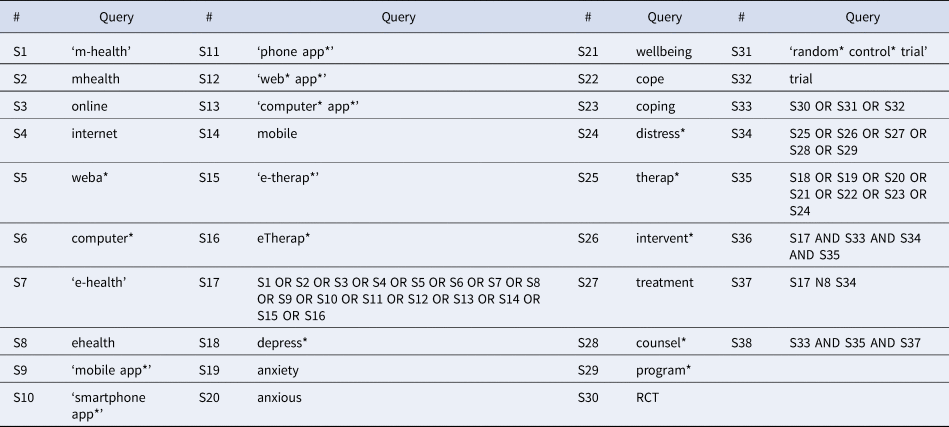
We searched Medline, PsycINFO, CINAHL, EMBASE databases and the Cochrane Database to identify studies meeting our eligibility criteria. Search terms combined index terms and text words relating to online interventions, distress outcomes, illness conditions and study design. Search terms included: (mhealth OR ‘m-health’ OR online OR internet* OR web* OR computer* OR ‘e-health’ OR ehealth OR mobile OR eTherap* OR ‘e-therap*’ OR ‘mobile app*’ OR ‘phone app*’ OR ‘smartphone app*’ OR ‘web app*’ OR ‘computer app*’) AND (therap* OR intervent* OR treatment OR counsel*) AND (anxiety OR anxious* OR depress* OR distress* OR wellbeing OR ‘well-being’ OR coping OR cope) AND (RCT OR ‘random* control* trial’ OR trial). Following Beatty and Lambert (Beatty & Lambert, Reference Beatty and Lambert2013), we did not restrict searches to specific health conditions to ensure all relevant studies in all potential chronic health populations could be identified. Appendix 1 shows a search strategy for one database.
Database searches were supplemented by searching references of relevant published reviews and articles included in our review. Studies in previous reviews (Beatty & Lambert, Reference Beatty and Lambert2013; Mehta et al., Reference Mehta, Peynenburg and Hadjistavropoulos2019) were included to enable meta-analyses of all relevant data. Searches were conducted between 29 August and 6 September 2018, and updated to 1 May 2019.
Eligibility criteria
Study design
Eligible studies were randomized controlled trials (RCTs) of online (web-based) psychological interventions that aimed to improve anxiety, depression or distress (including general and disease-specific). Exclusion criteria were: RCTs that did not have a waitlist or usual care control group (i.e. studies comparing internet therapy to another active treatment condition), did not report outcomes related to depression, anxiety, or distress and were not published in English. Studies not reporting data needed to calculate effect sizes were excluded from the meta-analyses.
Participants
Eligible studies targeted adults (aged ⩾18 years) with a current chronic health condition defined as a physical disease which persists for at least 3 months. Studies targeting children or adolescents (aged <18 years) or adults without a chronic health condition were excluded.
Intervention types
Eligible studies involved psychologically-based interventions (e.g. CBT, problem-solving therapy); online (web-based/internet) delivery, with or without facilitator involvement where facilitators could be someone interacting with the participant in a supportive or therapeutic way (study staff providing technical advice regarding accessing the intervention were not considered facilitators). Studies were excluded if the intervention involved only: online peer support (e.g. chatrooms, noticeboards, online groups), contact with health professionals (e.g. email questions to health professionals), and processes to navigate health system/care pathways.
Comparators
Usual care or waitlist control group. Studies comparing the intervention only to an active treatment condition (e.g. comparative effectiveness trials) were excluded.
Outcomes
Primary outcomes were symptoms of anxiety, depression or distress measured using a validated scale. Secondary outcomes were adherence to the intervention, including completion of at least one or all sections of the intervention.
Multiple papers from one study
Where one study generated more than one publication, the paper reporting findings relating to the immediate effect of the intervention (i.e. assessment closest to the end of the intervention period) was included.
Data extraction and management
Authors JES, VW, EHT and LO reviewed abstracts and full-text papers to assess eligibility against the inclusion criteria. Each abstract and paper was read by two reviewers with disagreements resolved by discussion or referral to a third reviewer, with subsequent discussion until consensus reached.
For each eligible paper, the full text was read by two reviewers independently, who extracted the following data: target chronic condition, country of origin, year of publication, whether potential participants were screened in based on threshold anxiety/depression scores, time since diagnosis (if relevant), the aim of intervention, description of intervention, theoretical basis for intervention, study-specific or existing intervention, components of intervention, facilitator involvement, outcome measures, intervention adherence measures. Study results relating to anxiety, depression and distress were extracted in the form of means and standard deviations when available, or, if not available, effect sizes.
Quality assessment and data extraction
A modified version of the Cochrane Risk of Bias Tool assessed the quality of RCTs. The four Cochrane criteria used were: adequate generation of allocation sequence, referring to assigning participants to conditions on the basis of a chance process (i.e. unpredictable); concealment of allocation to study conditions to study staff, referring to those involved in the trial not knowing which condition a participant will be allocated to; blinding of outcome assessors or use of self-report questionnaires (when self-report measures were used, this was assessed as low risk because no direct contact with an assessor is required); and dealing appropriately with incomplete data, use of appropriate statistical techniques for intention-to-treat analyses (ITT; i.e. missing data imputed to ensure all randomized participants included in analyses). For each domain, a rating of low (+), high (−) or unclear (?) was made for each trial. Only trials receiving a low-risk rating on all four criteria were considered low risk of bias, consistent with previous meta-analyses (Cuijpers, van Straten, & Andersson, Reference Cuijpers, van Straten and Andersson2008a,; Linardon et al., Reference Linardon, Cuijpers, Carlbring, Messer and Fuller-Tyszkiewicz2019).
Meta-analytic procedure
For each comparison between an internet-based intervention and a control condition, the effect size was calculated by dividing the difference between the two group means by the pooled standard deviation at post-test. The standardized mean difference (d) was then converted to Hedges' g to correct for small sample bias (Hedges & Olkin, Reference Hedges and Olkin1985). If means and standard deviations were not reported, effect sizes were calculated using conversion equations from significance tests (e.g. t or F statistics). To calculate a pooled effect size, each study's effect size was weighted by its inverse variance. A positive g indicates that the internet-based intervention had better outcomes (i.e. lower depression, anxiety, and distress scores) than the control condition. Effect sizes ⩾0.8 are assumed to be large, while effect sizes between 0.5 and 0.79 are moderate, and those between 0.2 and 0.49 are small (Cohen, Reference Cohen1992). If data from both ITT and completer analyses were presented, the former was extracted and analysed. If multiple measures of a particular outcome variable were used, the mean of the effect sizes from each measure was calculated, before the effect sizes were pooled, an approach consistent with prior meta-analyses (Cuijpers et al., Reference Cuijpers, Berking, Andersson, Quigley, Kleiboer and Dobson2013; Cuijpers, van Straten, Andersson, van Oppen Reference Cuijpers, van Straten, Andersson and van Oppen2008b; Linardon et al., Reference Linardon, Wade, de la Piedad Garcia and Brennan2017). In a few studies, two internet-based interventions were compared to one control conditionFootnote 1. While comparisons for both interventions were included in the overall meta-analyses, including both may artificially reduce the heterogeneity estimate and affect the pooled effect size as the two comparisons were not independent. To assess this, two sets of sensitivity analyses were run: (i) only the comparison with the smallest effect size included in the analysis, and (ii) only the comparison with the largest effect size included.
Comprehensive Meta-Analysis Version 3.0 was used for the analyses (Borenstein et al., Reference Borenstein, Hedges, Higgins and Rothstein2010). Since we expected considerable heterogeneity among the studies, random-effects models were employed. Heterogeneity was examined by calculating the I 2 statistic, which quantifies heterogeneity revealed by the Q statistic and reported how much overall variance (0–100%) is attributed to between-study variance. Subgroup analyses were conducted to explore sources of heterogeneity under a mixed-effects model, which pools studies within a subgroup using a random-effects model, but tests for significant differences between subgroups using fixed-effects models. Univariate meta-regressions explored whether participant sex (expressed as the percentage of females in each sample) was associated with the pooled effect size, as indicated by a regression coefficient (b) and associated p value. Publication bias was examined through the trim-and-fill procedure (Duval & Tweedie, Reference Duval and Tweedie2000).
Results
A total of 3096 unique citations were identified through the database searches with 30 additional papers identified through reference lists of similar systematic reviews. Seventy studies were included in the systematic review with 63 (90%) included in the meta-analysis. The number of papers included/excluded at each stage are shown in online Supplementary Fig.e S1.
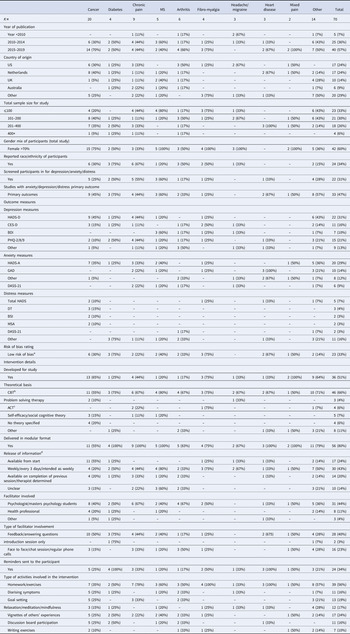
Studies were identified across 17 conditions which were not evenly distributed with the majority involving people with cancer (k = 20), followed by chronic pain (k = 9) arthritis (k = 6) and multiple sclerosis (MS) (k = 5) (see Table 1 for a summary of study characteristics and Table 2 for study details). The four studies involving fibromyalgia are reported separately to chronic pain studies to reflect this separation in the literature. The ‘other’ disease group included HIV (k = 2), tinnitus (k = 2), metabolic syndrome (k = 3), other hearing problems (k = 2), epilepsy (k = 2), with one study each for psoriasis, chronic fatigue and spinal cord injury. The number of studies published increased over the time period. Most studies were from the USA and the Netherlands. Across all health conditions, total sample size ranged between 51–100 (k = 18), 101–200 (k = 21) and 201–400 (k = 18). In most studies, the majority of participants were women. Only 24 studies (34%), mostly from the USA, reported participants' race or ethnicity, with non-Hispanic whites the majority in all studies (Table 2). Twenty-two studies (31%) screened participants in for elevated levels of depression or anxiety symptoms. Anxiety and/or depression were primary outcomes in 47% of studies, with the Hospital Anxiety and Depression Scale (HADS) the most common tool for assessing these outcomes. For most studies involving individuals with chronic pain, fibromyalgia, MS or headaches, mean baseline anxiety or depression scores were elevated. However, for cancer and diabetes studies, mean baseline depression and anxiety scores were generally within normal levels as defined for the assessment scales (See online Supplementary Table S1). Twenty-three studies (33%) were rated low risk of bias (Tables 1 and 2).
Summary of study characteristics including country of origin and publication year and characteristics of the intervention by type of chronic health condition

K, number of studies; MS, multiple sclerosis; HADS, Hospital Anxiety and Depression Scale; CES-D, Centre for Epidemiology Studies-Depression; BDI, Beck Depression Index; PHQ, Patient Health Questionnaire; DASS-21, Depression, Anxiety, Stress Scale 21; GAD, Generalized Anxiety Disorder; IES, Impact of Events Scale; DT, Distress Thermometer; BSI, Brief Symptom Inventory; MSA, Memorial Symptom Assessment Scale.
a Low risk of all four measures: random allocation sequence; allocation assignment concealed at randomisation; blinding of outcome assessment; and intention-to treat analyses.
b CBT, Cognitive Behaviour Therapy.
c ACT, Acceptance and Commitment Therapy.
d One paper (Atema et al., Reference Atema, van Leeuwen, Kieffer, Oldenburg, van Beurden, Gerritsma and Hunter2019) had two intervention arms, strategies for both arms are counted.
Characteristics of studies and interventions included in the review

NR, not reported; HADS, Hospital Anxiety and Depression Scale; CES-D, Centre for Epidemiology Studies-Depression; BDI, Beck Depression Index; PHQ, Patient Health Questionnaire; DASS-21, Depression, Anxiety, Stress Scale 21; GAD, Generalized Anxiety Disorder; DT, Distress Thermometer; MADRS, Montgomery-Asberg Depression Scale; HHEI, Hearing Handicap Inventory for the Elderly.
For the quality column a positive sign (low risk), a ‘?’ (unclear), or a negative sign (high risk) is given for the four items of risk of bias: random allocation sequence; allocation assignment concealed at randomisation; blinding of outcome assessment; and intention-to treat analyses.
a Included in meta-analysis.
Interventions in 46 (66%) studies were based on CBT principles while the 34 non-CBT-based interventions were most commonly based on self-efficacy/social cognitive theory (k = 5), Acceptance and Commitment Therapy (k = 4), problem-solving (k = 3) (see Table 2 for a summary of intervention characteristics). However, many CBT and non-CBT interventions included other components (e.g. access to patient vignettes, meditation or mindfulness, psycho-education). Interventions in 29 (41%) studies involved some level of tailoring to participants. Across health conditions, interventions most commonly utilized a modular structure, most often involving 4-8 modules. There was a mix of procedures for module release, with modules released at a regular interval (most commonly weekly) in 30 (43%) studies. A facilitator, generally a psychologist or psychology student, was involved in 42 (60%) studies. While the facilitator generally provided answers to questions or feedback via text, in 12 studies the facilitator had more contact including regular phone calls (Table 2). Homework, vignettes of other patients' experiences, goal setting, mindfulness, diarising symptoms and discussion boards were common intervention elements across the health conditions (Tables 1 and 2). CBT-based interventions commonly included: relaxation, cognitive reframing/restructure, challenging negative thoughts, distraction, and relapse prevention (see online Supplementary Table S2).
Methods for reporting intervention completion rates varied between studies. While some studies reported the proportion of participants completing each module in the intervention, others reported the average number of modules completed, or the proportion not completing all modules (See online Supplementary Table S3 for a description of adherence outcomes for each study). Of 53 studies using a modular intervention format, 17 reported at least 70% of participants completed the entire program or were defined as completers. Compared to the 19 studies involving a modular intervention with lower completion rates, studies with greater adherence levels more frequently included emails/reminders (59% v. 37%), feedback (47% v. 11%) and goal setting (35% v. 16%) as intervention components.
Meta-analysis results
A total of 63 studies were suitable for inclusion in the meta-analysis (Table 3). Of these 17 (27%) (Andersson et al., Reference Andersson, Stromgren, Strom and Lyttkens2002; Buhrman et al., Reference Buhrman, Fältenhag, Ström and Andersson2004, Reference Buhrman, Nilsson-Ihrfeldt, Jannert, Ström and Andersson2011; Chiauzzi et al., Reference Chiauzzi, Pujol, Wood, Bond, Black, Yiu and Zacharoff2010; Compen et al., Reference Compen, Bisseling, Schellekens, Donders, Carlson, van der Lee and Speckens2018; Dear et al., Reference Dear, Gandy, Karin, Staples, Johnston, Fogliati and Titov2015, Reference Dear, Titov, Perry, Johnston, Wootton, Terides and Hudson2013; Ferwerda et al., Reference Ferwerda, van Beugen, van Middendorp, Spillekom-van Koulil, Donders, Visser and Evers2017; Friesen et al., Reference Friesen, Hadjistavropoulos, Schneider, Alberts, Titov and Dear2017; Migliorini et al., Reference Migliorini, Sinclair, Brown, Tonge and New2016; Newby et al., Reference Newby, Robins, Wilhelm, Smith, Fletcher, Gillis and Andrews2017; Peters et al., Reference Peters, Smeets, Feijge, van Breukelen, Andersson, Buhrman and Linton2017; Shigaki et al., Reference Shigaki, Smarr, Siva, Ge, Musser and Johnson2013; Trudeau et al., Reference Trudeau, Pujol, DasMahapatra, Wall, Black and Zacharoff2015; Vallejo et al., Reference Vallejo, Ortega, Rivera, Comeche and Vallejo-Slocker2015; Williams et al., Reference Williams, Kuper, Segar, Mohan, Sheth and Clauw2010; Wilson et al., Reference Wilson, Roll, Corbett and Barbosa-Leiker2015) were included in a previous meta-analysis. (Mehta et al., Reference Mehta, Peynenburg and Hadjistavropoulos2019)
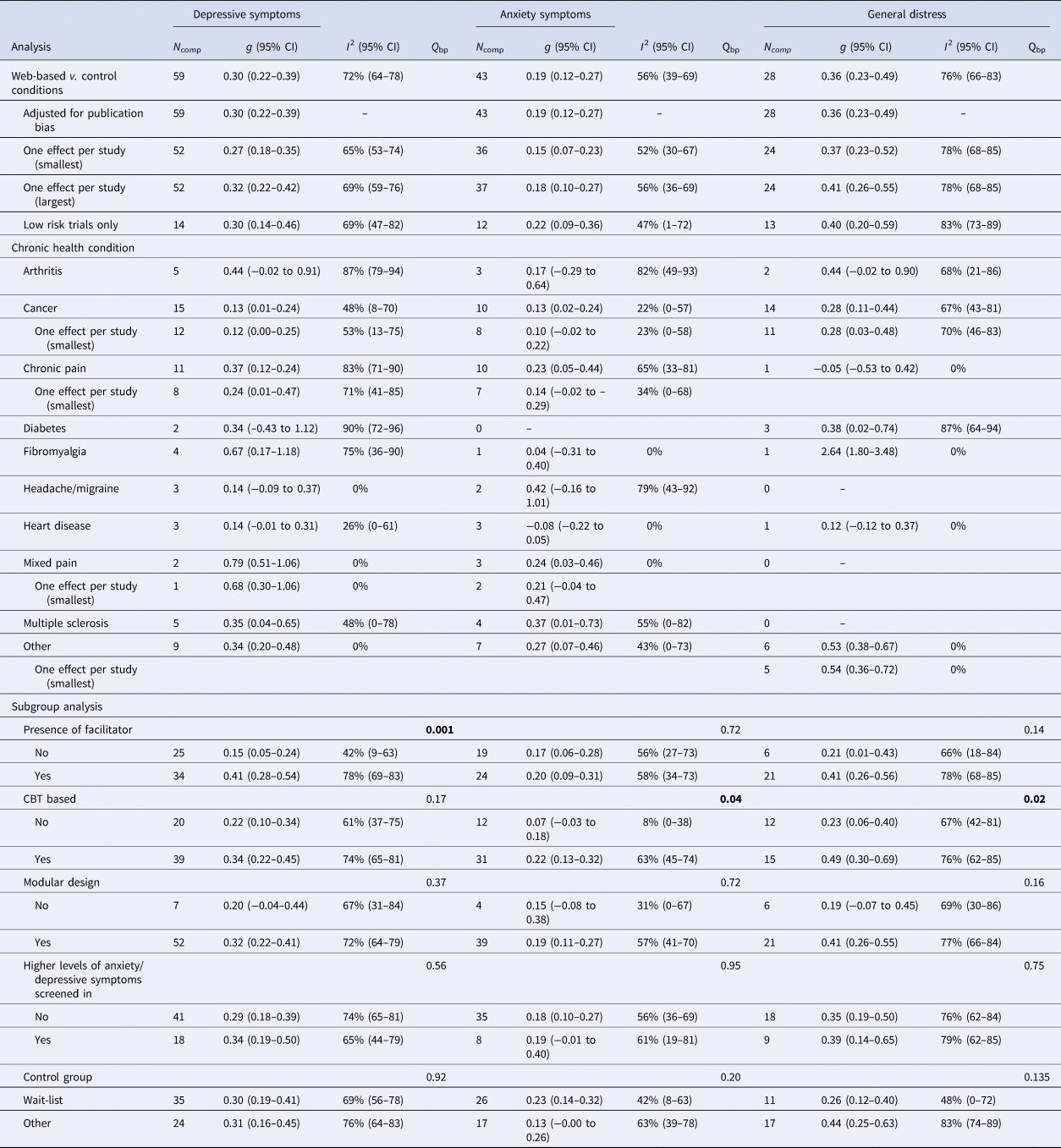
Meta-analysis comparing internet-based interventions to control conditions on depression, anxiety, and distress outcomes

g = Hedges' g; I 2 statistic, quantifies heterogeneity as found by the Q statistic and reported by overall variance (0–100%); Obp = p value for the observed effect, Ncomp-number of comparisons included in the analysis; CI, confidence intervals.
Depressive symptoms
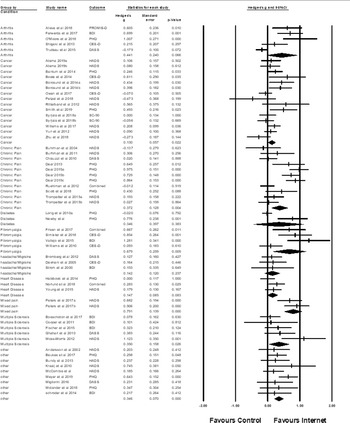
The pooled effect size for the 59 comparisons between internet-based therapy and control conditions on depressive symptoms was g = 0.30 (95% CI 0.22–0.39), with high heterogeneity (I 2 = 72%; 95% CI 64–78%). This effect size remained identical after adjusting for any potential publication bias and when restricting the analyses to low risk of bias trials (Table 3). The sensitivity analyses yielded a pooled effect size highly similar to the overall effect (Table 3). Figure 1 shows a forest plot of data for studies included in this analysis.
Forest plot demonstrating effect size for intervention relative to control on depression symptoms overall and by health condition.

Pooled effect sizes for each chronic health condition varied, ranging from g = 0.14 (95% CI −0.09 to 0.37) (headache/migraine) to g = 0.79 (95% CI 0.51–1.06) (mixed pain), although the number of studies for some chronic conditions was low, and results were sometimes unstable when analyses were restricted to one effect per study (see Table 3).
Subgroup analyses revealed one statistically significant moderator for depressive symptoms; with interventions including a facilitator associated with significantly larger effect sizes compared to those that did not incorporate a facilitator. The pooled effect size was not significantly related to the type of internet program (CBT or not), the type of control group, whether the intervention was delivered using a modular program or whether participants were screened in for elevated anxiety or depression. Meta-regression analyses revealed no statistically significant effect of percentage of females (b = 0.00, 95% CI −0.01 to 0.00, p = 0.205) on the pooled effect size.
Anxiety symptoms
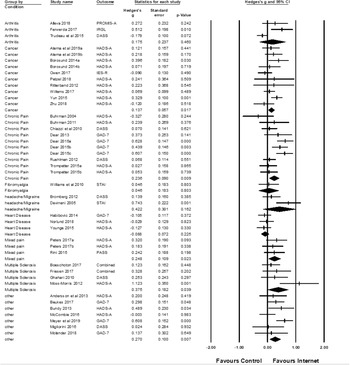
The pooled effect size for the 43 comparisons between internet-based therapy and control conditions on anxiety symptoms was g = 0.19 (95% CI 0.12–0.27), with moderate heterogeneity (I 2 = 56%; 95% CI 39–69%). This effect size remained identical after adjusting for any potential publication bias and was slightly larger when restricting the analyses to low risk of bias trials (g = 0.22). When examining the pooled effect size for each chronic health condition, effect sizes ranged from g = −0.08 (95% CI −0.22 to 0.05) (heart disease) to g = 0.42 (95% CI −0.16 to 1.01) (headache/migraine, other conditions). Significant effects were found for cancer, chronic pain, multiple sclerosis, and mixed pain conditions, although confidence intervals were wide (Table 3, Fig. 2).
Forest plot demonstrating effect size for intervention relative to control on anxiety symptoms overall and by health condition.

Subgroup analyses revealed only one moderating variable. Studies using a CBT-based intervention produced significantly larger effect sizes than studies not using a CBT-based intervention (Table 3). Meta-regression analyses revealed no association between the percentage of females (b = 0.00, 95% CI −0.00, 0.00, p = 0.093) on the pooled effect size.
Psychological distress symptoms
The pooled effect size for the 28 comparisons between internet-based therapy and control conditions on distress symptoms was g = 0.36 (95% CI 0.23–0.49), with high heterogeneity (I 2 = 76%; 95% CI 66–83%). This effect size remained identical after adjusting for possible publication bias and was slightly larger when restricting the analyses to low risk of bias trials (g = 0.40). When examining the pooled effect size for each target chronic health condition, the effect sizes varied, ranging from g = −0.05 (95% CI −0.53 to 0.42) (chronic pain) to g = 2.64 (95% CI 1.80–3.48) (fibromyalgia) (See Supplementary Materials, Figure 2).
Subgroup analyses revealed only one significant moderating variable. Studies using a CBT-based intervention produced significantly larger effect sizes than studies not using a CBT-based intervention (Table 3). There was no association between the percentage of females (b = 0.00, 95% CI −0.00, 0.00, p = 0.213) and the pooled effect size.
Discussion
Our systematic review identified 70 RCTs that had tested the efficacy of a self-guided, online psychological intervention against a usual care or waitlist control group for reducing symptoms of depression, anxiety, and distress in people living with a chronic health condition. The majority of interventions were based on CBT principles, utilized a modular delivery format and involved a facilitator (42/70). Sixty-three studies were included in our meta-analysis with results aggregated across chronic health conditions showing that participation in self-guided, online interventions was associated with a small but significant reduction in symptoms of depression (g = 0.30), anxiety (g = 0.19) and distress (g = 0.36), with effects being robust after restricting analyses to low risk of bias trials. Importantly, the use of CBT-based interventions and the presence of a facilitator were associated with larger effects for certain mental health symptoms, consistent with previous work in this area (Mehta et al., Reference Mehta, Peynenburg and Hadjistavropoulos2019; van Beugen et al., Reference van Beugen, Ferwerda, Hoeve, Rovers, Spillekom-van Koulil, van Middendorp and Evers2014). However, other intervention (i.e. screening criteria, type of control group, modular-based program) and study characteristics (participant sex, ethnicity) were not associated with pooled effect sizes.
Evidence from our review and meta-analysis regarding the efficacy of online psychological interventions for improving depression, anxiety or distress symptoms in specific chronic health conditions is mixed. For some chronic health conditions (i.e. cancer, chronic pain, mixed pain, MS, fibromyalgia and diabetes), small but statistically significant effect sizes were observed in favour of online interventions for at least one outcome, suggesting the usefulness of these low cost, easily accessible, and highly scalable interventions for these groups. However, for other chronic health conditions (i.e. arthritis, heart disease and headache/migraine), the meta-analysis included too few studies to draw conclusions regarding the efficacy of online interventions for these conditions. Therefore, while our overall findings suggest online interventions can help to alleviate symptoms of depression, anxiety or distress in people with chronic health conditions, we cannot yet conclude that these types of interventions are effective for all chronic health conditions. Given the relatively high incidence of depression, anxiety and distress symptoms in people with chronic health conditions (Cohen et al., Reference Cohen, Edmondson and Kronish2015; Fisher et al., Reference Fisher, Hessler, Polonsky, Strycker, Masharani and Peters2016; Linden et al., Reference Linden, Vodermaier, Mackenzie and Greig2012; Neuendorf et al., Reference Neuendorf, Harding, Stello, Hanes and Wahbeh2016), and that so few of these individuals have access to or receive standard face-to-face mental health treatment (Kazdin, Reference Kazdin2017), it is imperative that more high-quality RCTs are conducted to evaluate the efficacy of online interventions for different health conditions. Attrition and adherence rates have been noted as a problem for e-health interventions (Linardon & Fuller-Tyszkiewicz, Reference Linardon and Fuller-Tyszkiewicz2020). We found substantial variation in reporting intervention completion rates across studies, with only 17 of the 56 interventions involving multiple modules reporting at least 70% of participants completed the intervention or were completers as defined by the study. While adherence rates found here were better than reported in some intervention studies [e.g. pharmacotherapy interventions to stop smoking in pregnant women (Claire et al., Reference Claire, Chamberlain, Davey, Cooper, Berlin, Leonardi-Bee and Coleman2020)], more work is needed to increase participants engagement with online interventions. Our results suggest that including feedback, using reminders/emails and including goal setting may help to increase adherence.
Our review is the most comprehensive completed to date. We included 46 more studies than identified in the 2013 systematic review (Beatty & Lambert, Reference Beatty and Lambert2013), that also included CBT and non-CBT based interventions and 14 more studies reporting CBT-based interventions than a recent meta-analysis that focused on iCBT interventions in people with chronic health conditions (Mehta et al., Reference Mehta, Peynenburg and Hadjistavropoulos2019). However, despite a large number of studies included, only three directed their intervention at participants with a clinical assessment of a depression disorder (Meyer et al., Reference Meyer, Weiss, Holtkamp, Arnold, Bruckner, Schroder and Nestoriuc2019; Newby et al., Reference Newby, Robins, Wilhelm, Smith, Fletcher, Gillis and Andrews2017; O'Moore et al., Reference O'Moore K, Newby, Andrews, Hunter, Bennell, Smith and Williams2018). While some other studies screened in participants with high levels of depressive or anxiety symptoms, none used a clinical assessment to direct the intervention or assess its efficacy. This may suggest that the interventions reviewed aimed to prevent the onset of major depression or anxiety disorders in a specific population rather than treat a current disorder.
While we found that online interventions, in general, can reduce symptoms of anxiety, depression and distress in people with chronic health conditions, our study also showed a stronger effect on anxiety and distress symptoms when the intervention was CBT-based. The effect size we found for depressive symptoms is similar to findings from a meta-analysis of the effect of self-guided iCBT interventions (g = 0.27) on depressive symptoms (Karyotaki et al., Reference Karyotaki, Riper, Twisk, Hoogendoorn, Kleiboer, Mira and Cuijpers2017). Our findings are also consistent with those of previous meta-analyses (Mehta et al., Reference Mehta, Peynenburg and Hadjistavropoulos2019; van Beugen et al., Reference van Beugen, Ferwerda, Hoeve, Rovers, Spillekom-van Koulil, van Middendorp and Evers2014) showing small but significant effects of internet-delivered CBT-based interventions in improving anxiety and depressive symptoms in people with chronic health conditions. Both previous meta-analyses included a smaller number of trials than the current review. This difference is seen most strikingly in the number of cancer papers included in our review (k = 20) compared to previous reviews [K = 1 in both studies (Mehta et al., Reference Mehta, Peynenburg and Hadjistavropoulos2019; van Beugen et al., Reference van Beugen, Ferwerda, Hoeve, Rovers, Spillekom-van Koulil, van Middendorp and Evers2014)]. We identified 34 non-CBT-based interventions. While few used the same underlying theoretical principles in designing these interventions, similar intervention elements were found including goal setting and homework. The heterogeneity in the theoretical approach taken in the non-CBT-based intervention is likely to have weakened the possible effect of these types of interventions. While our findings suggest that to maximize their effectiveness, online interventions should be based on CBT principles further work is needed to determine whether other psychological theories might also be useful in designing online self-directed interventions for people with chronic health conditions.
Others have shown that involving a facilitator in online interventions can lead to better participant retention and intervention adherence (Newman et al., Reference Newman, Szkodny, Llera and Przeworski2011; Palmqvist et al., Reference Palmqvist, Carlbring and Andersson2007). More than half the studies in our review involved a facilitator, which was associated with a stronger intervention effect on depression, but not anxiety or distress. Including a facilitator did not influence adherence to the modular-based interventions reviewed here. As a facilitator increases the cost of online interventions, cost-effectiveness studies are needed to determine the benefit of a facilitator. A minimally effective online intervention that reached a large number of people at a very small cost may have substantial public health benefits for people with chronic health conditions.
Studies are needed to identify the effective components of complex interventions such as psychological therapy (Butow & Smith, Reference Butow and Smith2015). As many interventions in this review used multiple intervention components (e.g. homework, discussion forums, patient vignettes etc.) there is considerable scope to examine the impact of different components. While some trials in our review did test different intervention components (Atema et al., Reference Atema, van Leeuwen, Kieffer, Oldenburg, van Beurden, Gerritsma and Hunter2019; Dear et al., Reference Dear, Gandy, Karin, Staples, Johnston, Fogliati and Titov2015; Everitt et al., Reference Everitt, Moss-Morris, Sibelli, Tapp, Coleman, Yardley and Little2013; Syrjala et al., Reference Syrjala, Yi, Artherholt, Romano, Crouch, Fiscalini and Leisenring2018), more work is needed, especially since, to date, some findings are inconsistent (Pasarelu et al., Reference Pasarelu, Andersson, Bergman Nordgren and Dobrean2017; Qan'ir & Song, Reference Qan'ir and Song2019; Radhakrishnan, Reference Radhakrishnan2012).
Most interventions followed the traditional form of in-person interventions utilizing ‘weekly’ sessions along with homework and practice. The low adherence rate for many interventions suggests alternative designs may be needed to ensure ongoing engagement in internet-delivered interventions. Studies making greater use of the interactivity of the internet to tailor interventions to the participant including regarding content, delivery mechanism and timing of modules and using different media for providing information are needed. If internet interventions are to achieve their potential of reaching a wide range of people, future studies need to ensure interventions are relevant and effective with a range of populations, including males and different cultural groups. The low proportion of non-white/Caucasian participants included in the studies reviewed meant we could not examine whether intervention effectiveness differed by ethnicity. More work is needed in this area. While we did not find an impact of gender on our overall meta-analysis results, as the majority of participants in most studies were female, further research is needed to examine the effectiveness of online interventions for males.
A number of limitations to our study should be noted. We excluded studies that involved an active treatment comparison group; thus our study is unable to determine whether internet-based interventions are more effective than other types of interventions. We also excluded studies using attention-control comparison groups, although we note our search strategy only identified two relevant studies that used an attention-control group (Beatty et al., Reference Beatty, Koczwara and Wade2016, Reference Beatty, Kemp, Coll, Turner, Butow, Milne and Koczwara2019). Given concerns that comparisons to waitlist controls may over-estimate an intervention's impact (Patterson et al., Reference Patterson, Boyle, Kivlenieks and Van Ameringen2016), greater use of attention-control groups is needed in this area. While we assessed the impact of modular compared to non-modular programs, relative to control we did not examine whether the number of modules had an impact on the intervention's effectiveness. Although completion rates for the interventions were suboptimal, we did not assess the impact of this in our meta-analysis. Finally, we excluded non-English language papers.
Despite these limitations, our findings provide support for the potential of online psychologically-based interventions to reduce anxiety, depression and distress in people with chronic health conditions overall. While our study also suggests that these interventions can be effective for some specific chronic health conditions (e.g. cancer, chronic pain, MS, diabetes), conclusions for other health conditions are limited due to the low number of studies conducted for these conditions. Further trials are needed to determine whether online psychologically-based interventions can reduce symptoms of anxiety, depression and distress across the range of chronic health conditions or are only effective for certain conditions.
Data
No additional data are available.
Supplementary material
The supplementary material for this article can be found at https://doi.org/10.1017/S0033291720002251.
Acknowledgements
We would like to acknowledge the work of Mr Christopher Todaro who assisted in the identification and data extraction for the paper. Funding for this work was made available through Deakin University. EHT, CH and JS are supported by the core funding to the Australian Centre for Behavioural Research in Diabetes provided by collaboration between Diabetes Victoria and Deakin University. The funding bodies had no role in the formation of the study question, study design, interpretation of results.
Author contributors
VW, EHT, JS, CH, AMW, SE and LO conceived the study. VW, EHT, JS, CH, AMW, SE, JES and JL developed the design and methodology of the study. All authors were involved in data extraction, analysis, or interpretation of data. VW and JL drafted the manuscript and all authors critically reviewed it for intellectual content. All authors provided approval of the version of the paper to be submitted and published. VW and JL are guarantors. The corresponding author attests that all listed authors meet authorship criteria and that no others meeting the criteria have been omitted.
Conflict of interests
All authors have completed the ICMJE uniform disclosure form at www.icmje.org/coi_disclosure.pdf and declare no support from any organisation for the submitted work; no financial relationships with any organisations that might have an interest in the submitted work in the previous 3 years; no other relationships or activities that could appear to have influenced the submitted work.
Ethical standards
Not required.
Transparency
The lead author (VW) affirms that the manuscript is an honest, accurate, and transparent account of the study and that no important aspects of the study have been omitted.
Appendix 1. Overview of search string in Medline database
Database- MEDLINE Complete, Interface- EBSCOhost Research Databases Search Screen – Advanced Search