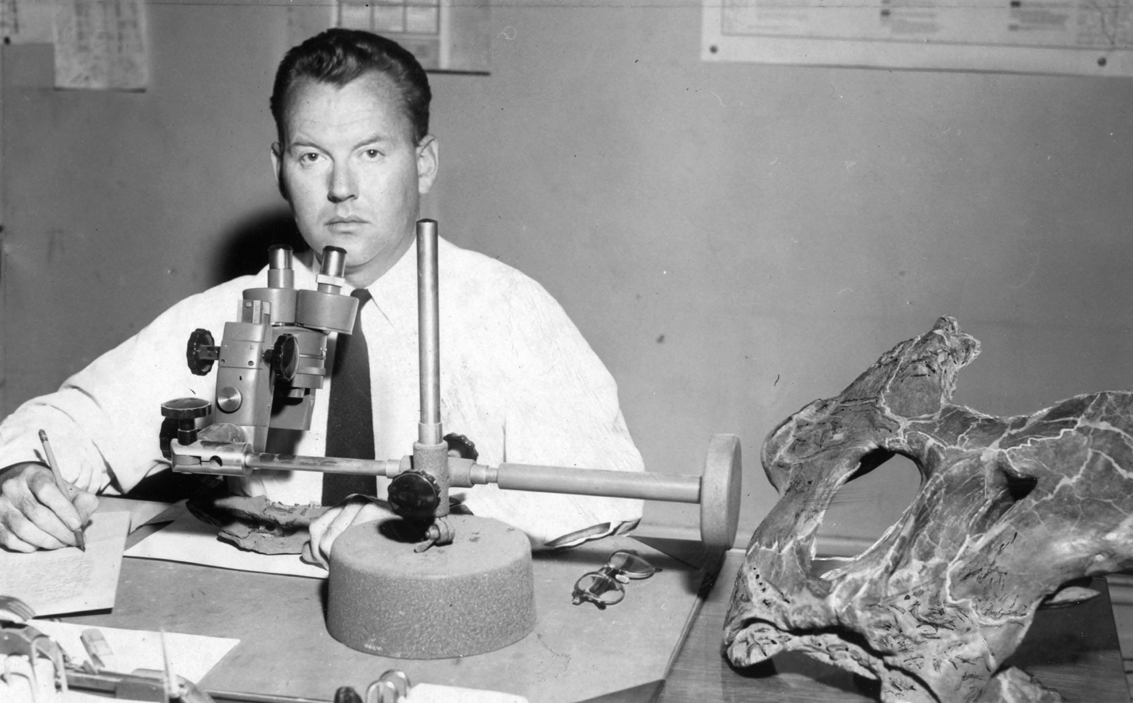
Wann Langston Jr. was born on 10 July, 1921 in Oklahoma City, Oklahoma. He was the only surviving son of Wann Langston and Myrtle Fanning Langston, who died in childbirth as his life began. Three previous children all died young. The derivation of the name “Wann” is not fully known, but appears to have been the patronymic of an itinerant, African-American Baptist preacher who visited Wann's grandfather and made a sufficiently strong impression that he named his son Wann. Middle names were not used in the family.
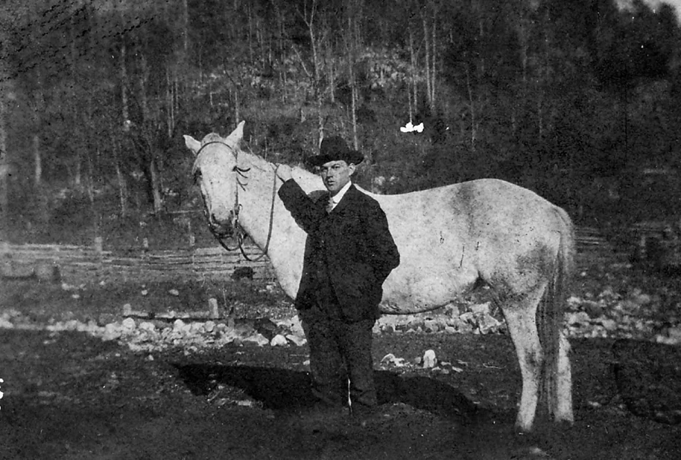
Wann's father was a strong supporter of his son's endeavours. He was himself the youngest of several siblings, and had an early career as a schoolteacher near the Alabama border in southern Tennessee. He went to university in Tennessee when he was in his 30s; when he left, he rode his horse to catch a train, then turned it loose to return home (Fig. 1). He went on to medical school and became an MD, later joining the military and running a laboratory in France during World War I. He stayed in the Army Medical Corps for approximately 20 years and retired as a Major. He held positions as Superintendent of the University of Oklahoma Teaching Hospital and then as Dean of the OU Medical School, and late in life went into private practice as a cardiologist.
Dr. Wann Langston, Sr., and his horse Polly.

Until he was three years old, Wann Jr. was raised by his maternal aunt, who was a nurse. Then his father married another nurse, Clara Louise Jones. Wann was, thus, raised in a family in which higher education, and specifically medical and anatomical training, was common to both parents. Clara's father was the headmaster of Salado College and was a Regent of The University of Texas, where Wann later spent much of his professional career as a palaeontologist. Clara was a gifted linguist, with an especial passion for Greek (although she did not know the word ‘palaeontologist’; Wann remembers her calling him a “boneologist”).
His parents encouraged his interest in science, which developed at an early age. As a young boy, he had little interest in anything outside of palaeontology. His earliest memories of ‘palaeontological moments’ are of events that occurred on a family trip to Europe when he was four years old. In the natural history museum in Vienna, he stood under a mounted skeleton of Diplodocus and looked up with fascination into the gigantic rib cage. He turned five while overseas, and made a visit to the British Museum. He was so captivated by the dinosaur skeletons that he failed to notice the museum closing around him. He was locked inside, and the night watchman found a totally unconcerned Wann looking at dinosaur skeletons. Apart from that one-year trip to Europe, he did not travel much until he was a teenager, but there were many outlets to channel his interests in palaeontology after he returned home.
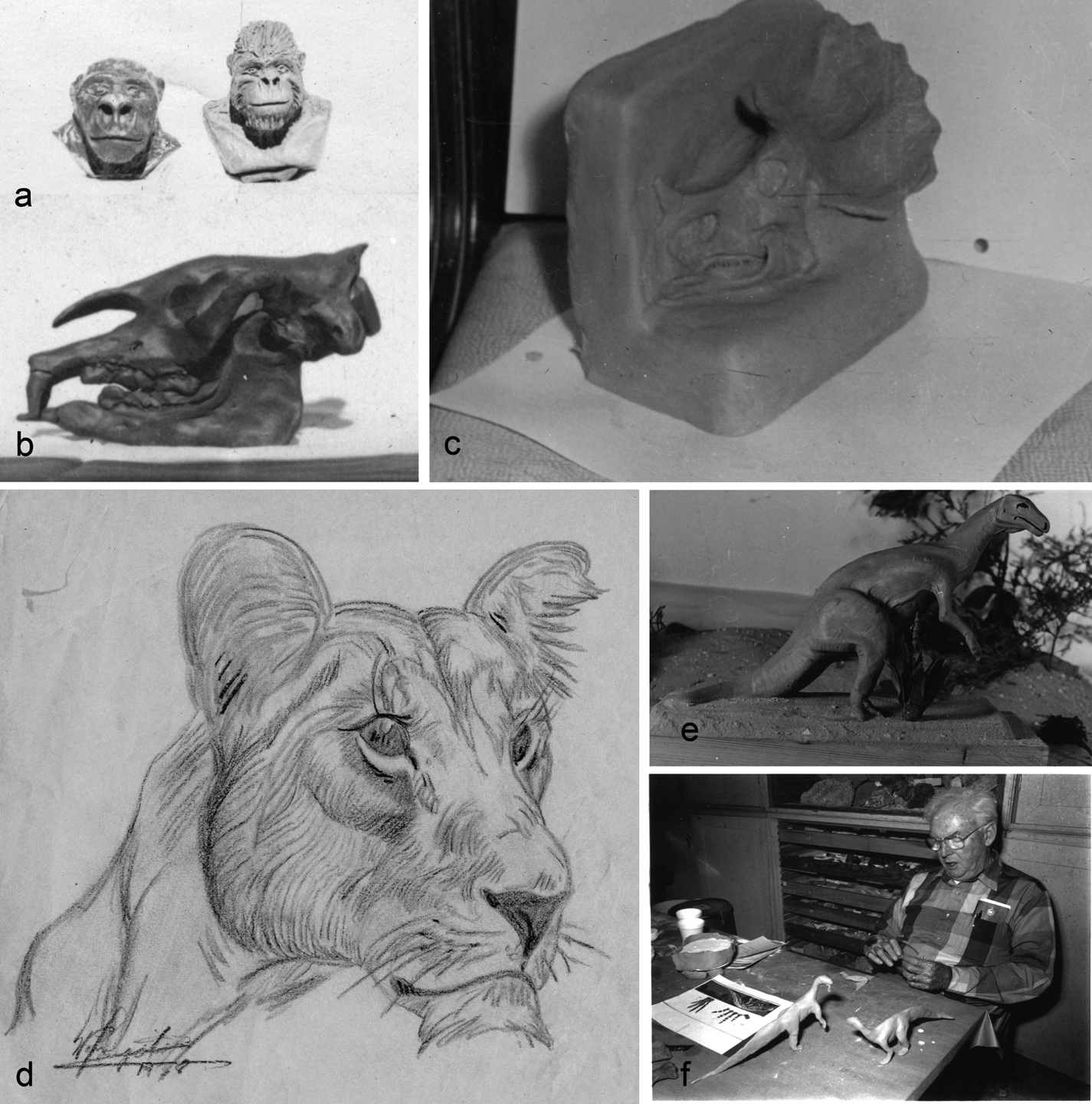
He admits that he was not particularly good in school, mostly because he hated it. His father was somewhat chagrined by his poor academic skills, and sometimes shut him in his room in an effort to force the boy to study algebra. Instead, Wann dedicated his time to drawing and sculpting (Fig. 2). While staying with an uncle in New York City, he would spend his days with a lump of clay at the American Museum of Natural History, recreating the animals he saw there. Wann would bring his day's labour home for his uncle to critique. His sculpting proclivities became a habit, and continued to serve Wann throughout his career as a palaeontologist. He has been observed ‘doodling’ with clay during staff meetings at the Vertebrate Paleontology Laboratory at The University of Texas, and consequently producing nice models of dinosaurs. It is this talent, combined with his profound knowledge of anatomy, which results in the beautiful and accurate mounts of dinosaurs and other skeletons for which Wann is well known.
Anatomical studies by Wann Langston, Jr.: (a) two primates and (b) Baluchitherium grangeri in clay, all attributed to “13 yr old Wann Langston.”; (c) a ceratopsian skull in clay, no date; (d) portrait of a lion in pencil, dated 1938; (e) undated dinosaur in diorama; (f) Langston sculpting maquettes.
The daily presence of this young fossil enthusiast quickly drew the attention of museum staff at the American Museum. During his numerous childhood visits to that museum, Wann met many collectors, including Carl Akeley (a meeting that took place at such a young age that Wann's memory of it is not clear), Barnum Brown and Roy Chapman Andrews. It was Akeley's mounted specimen of a mountain gorilla, the “Old Man of Mikeno,” that captivated the young sculptor above all other exhibits in the museum.
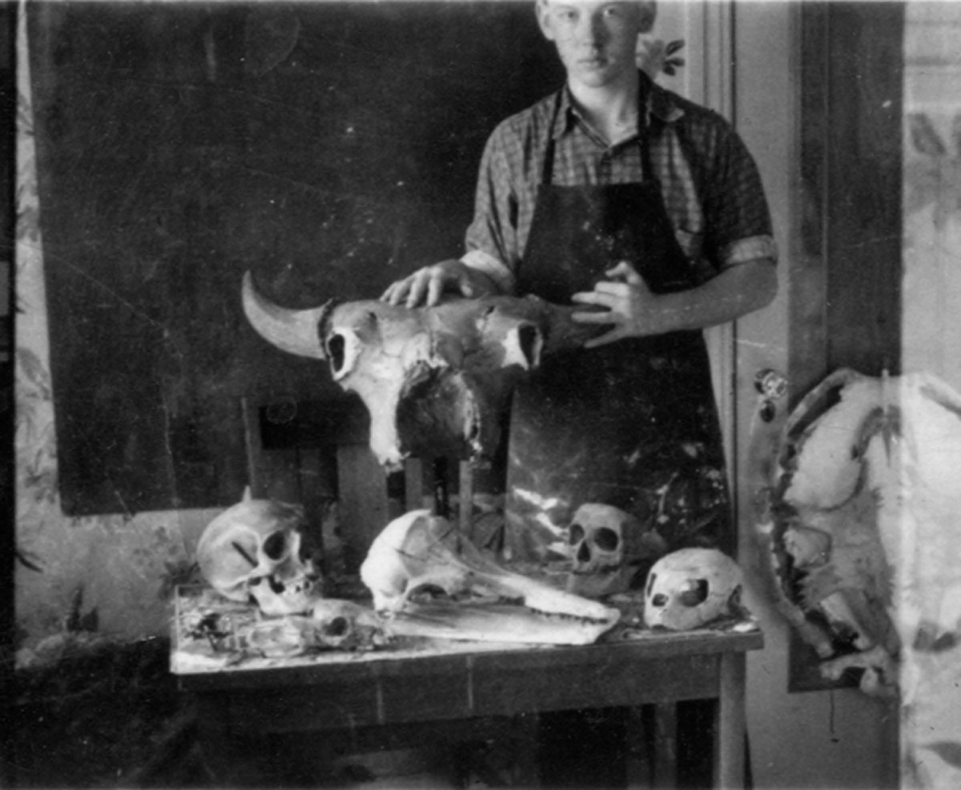
Wann also began collections of his own at a young age. At the age of nine he began to build his library of palaeontological and anatomy publications, some of which he obtained from medical students. His father bought him his first book on palaeontology, The Earth for Sam (Reed Reference Reed1930). In an attempt to train Wann to read from cover to cover, instead of centering all attention on dinosaurs, his father placed rubber bands around the latter portions of the volume. Nonetheless, when his father removed the bands some time later, he discovered a finger-stained and obviously well-caressed plate depicting the skeleton of Tyrannosaurus. With financial assistance from his father, Wann soon made his first major technical book purchase, the English translation of the Fish and Reptiles volume of Zittel's Grundzüge der Paläontologie (Zittel Reference Zittel and Charles1902). By the age of 12, he was collecting skeletons and had mounted the skeleton of a cat (his sister's former pet – exhumed, cleaned and mounted without permission). During weekends while he was in high school, he dug up horse bones at an old trash pit site at the Oklahoma City Zoo; his mother brought him out to the site, and he added the bones to a constantly growing skeletal collection that he kept for many years (Fig. 3).
Langston with some of his personal collection, 1930s.
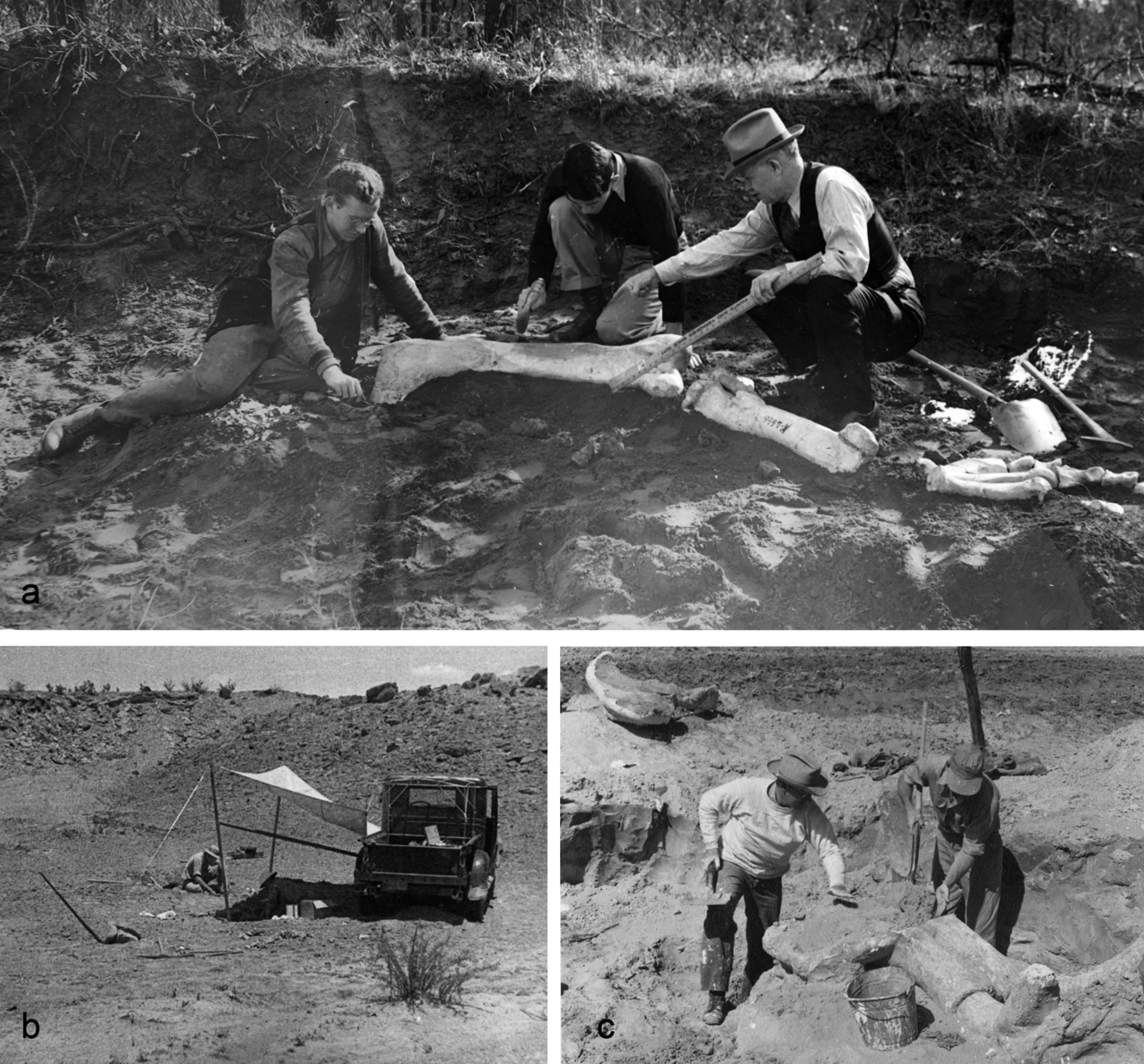
At about this time, he met J. Willis Stovall, then newly hired at the University of Oklahoma. They immediately struck up a professional relationship that lasted until Stovall died in 1953 (Fig. 4). Stovall had a room full of bones – mostly of mammoths and mastodons – that was a magnet for Wann's attention. Under the watchful and patient eye of Stovall, Wann learned about preparing, curating and identifying fossil bones. The first fossils that he ever prepared were a Leptoreodon and a mosasaur; the latter is still on exhibit in the Sam Noble Museum of Natural History in Norman, Oklahoma. Those museum experiences and skills would prove integral to his chosen career path.
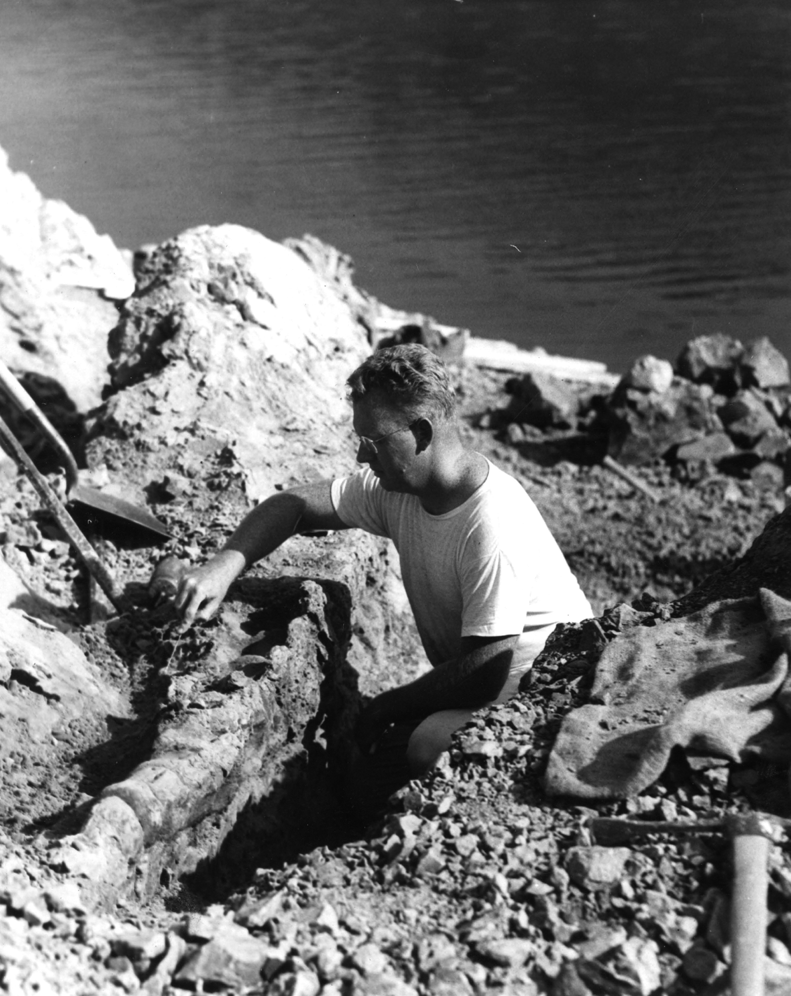
(a) Langston (left) in the field with Stovall (right). (b) Excavating in the Big Bend, June 1938. Wann in the shade, McAnulty in the sun; photo by Savage. (c) Langston excavating a mammoth skull in North Texas. This specimen is still in the original field jacket in the collections of Texas Tech University.
Wann's early passion for museums, and his persistence, gained him special entry into other institutions. Stovall received a letter dated 24 June, 1936 in which Wann was discussed at some length.
“Saturday aft. a young red headed chap by the name of Langsford [sic] from Okla. City came down and said you had promised him he could take pictures of dinosaur bones to model from. I was doubtful whether to let him do it at first but that boy is persistent and he assured me that the pictures would be for his use, only. He appears to be nothing short of nuts on the subject and showed me pictures of bones he had modeled. So I let him take a few snaps. He is really a smart boy but rather too smart to be pleasant. Wants to come down here this summer for the experience but I told him he would have to see you about that on your return. He is already an authority on paleontology and objects to the methods you are using in restoring bones, preferring as he says, the American Museum methods. Now just imagine such a 14-year-old boy.”
The author of that letter was Ralph Shead, the supervisor for the Works Progress Administration project surveying the State of Oklahoma; (a copy is on file in the archives of the Vertebrate Paleontology Laboratory in Austin; minor typographical errors in the original were corrected above).
On a trip to Chicago in 1933, Wann spent a full week visiting the Geology Department of the Field Museum of Natural History, where he passed the time with Elmer Riggs, and preparators John Abbott and James Quinn (who would later become John A. Wilson's first PhD student at The University of Texas). Procedure for visitors was to announce oneself to the security guard at the main entrance, who then called a staff member down from the palaeontology laboratory for escort upstairs to the department. After several days of this routine, Wann took the liberty of bypassing the guard, stepping over the rope and ascending the stairs to the 4th floor. Intending this to save staff time and effort, Wann nevertheless met with the ire of Riggs, who found him navigating the halls without a chaperone.
He also met other vertebrate palaeontologists when they visited Oklahoma, including Lewellyn Price, Theodore (Ted) White and Al Romer. As he neared the completion of his high school education, he saved his money in order to afford a copy of the AMNH Memoir by H. F. Osborn and C. C. Mook on sauropod dinosaurs (Osborn & Mook Reference Osborn and Mook1921), and eagerly awaited its delivery. After obtaining it and reading it, he was delighted to have the opportunity to make a trip to the American Museum of Natural History in New York City to meet Mook … who kindly gave him a copy of the Memoir as a parting gift!
Wann made his next serious step towards building a research library before he graduated from high school. He purchased a set of all available publications on vertebrate palaeontology from Yale University. Books eventually became a passion for Wann, who recently noted that book collecting was “the nearest thing to a hobby I ever had.” His continuing efforts to build a library, begun at the age of ten, resulted in one of the world's finest private libraries on vertebrate palaeontology, now housed at the Vertebrate Paleontology Laboratory at the University of Texas at Austin.
At the age of 17, Wann accompanied University of Oklahoma students Don Savage (Stovall's graduate student) and Noel McAnulty (who next would supervise the field collection and preparation of thousands of fossils for a Works Progress Administration project at The University of Texas) on a field expedition to Big Bend Park in Texas. Stovall paid Wann's expenses, but Wann later learned that his father had given Stovall about $200 to offset costs. They passed through Austin, Texas, on their way to the park, in what was Wann's first introduction to the collections in Austin, where he later became firmly established. Wann remembers drinking a lot of ‘sotol’ on the trip – an alcoholic drink made from the desert spoon or common sotol plant. He was also slightly annoyed by the fact that they left the field every two weeks or so to go to Alpine to retrieve love letters for Savage. William Strain obtained WPA funds to work in the Big Bend through a programme established to support collection of minerals and fossils. He helped Langston, Savage and McAnulty to identify areas for prospecting, and to find localities.
Wann found his first dinosaur specimen along the Rio Grande in the Big Bend, while using maps from the War Department that dated back to the days of Pershing's pursuit of Pancho Villa. The specimen was a partial skeleton of Agujaceratops, recovered from the Aguja Formation (Fig. 4b). The team spent two months in the Big Bend, and all materials they collected were sent to Norman, Oklahoma. Langston's field notes (VPL archives) reflect the spartan entries common to those first field trips. Nonetheless, they document details familiar to all field palaeontologists – heavy rain, vehicle trouble, number of rattlesnakes encountered (and killed), extreme heat. Also included are the names and addresses of locals, geological waypoints, directions to localities measuring distance between fences and old windmills, and inventories of specimens. Completing the field experience was entertainment; on the 20th of June, during an overnight supply run to Alpine, the group caught a “picture show in evening. Dr. Rhythm,” a Bing Crosby film. On the night of the 22nd, they drove 15 miles out of camp to listen to Joe Louis defend his World Heavyweight title against Max Schmeling, and the entry of June 26th merely reads “slept most of day.”
In 1939, Wann went to Central State College (now University of Central Oklahoma) in Edmond, Oklahoma. He moved to the University of Oklahoma in 1940 and worked towards a BS Degree in Geology. Wann was a student there when the United States declared war against Japan, following the attack on Pearl Harbor in December 1941. The father of one of his fraternity brothers chaired the local draft board, and gave all the boys academic exemptions from Selective Service conscription until their degrees were completed. Wann completed his BS degree in June 1943, and three days later was on a train to an induction centre. By the time they got to him, the draft quota for the Army that day had been filled, so Wann was given a choice: he could join the Marines or the Navy. He chose the Navy.
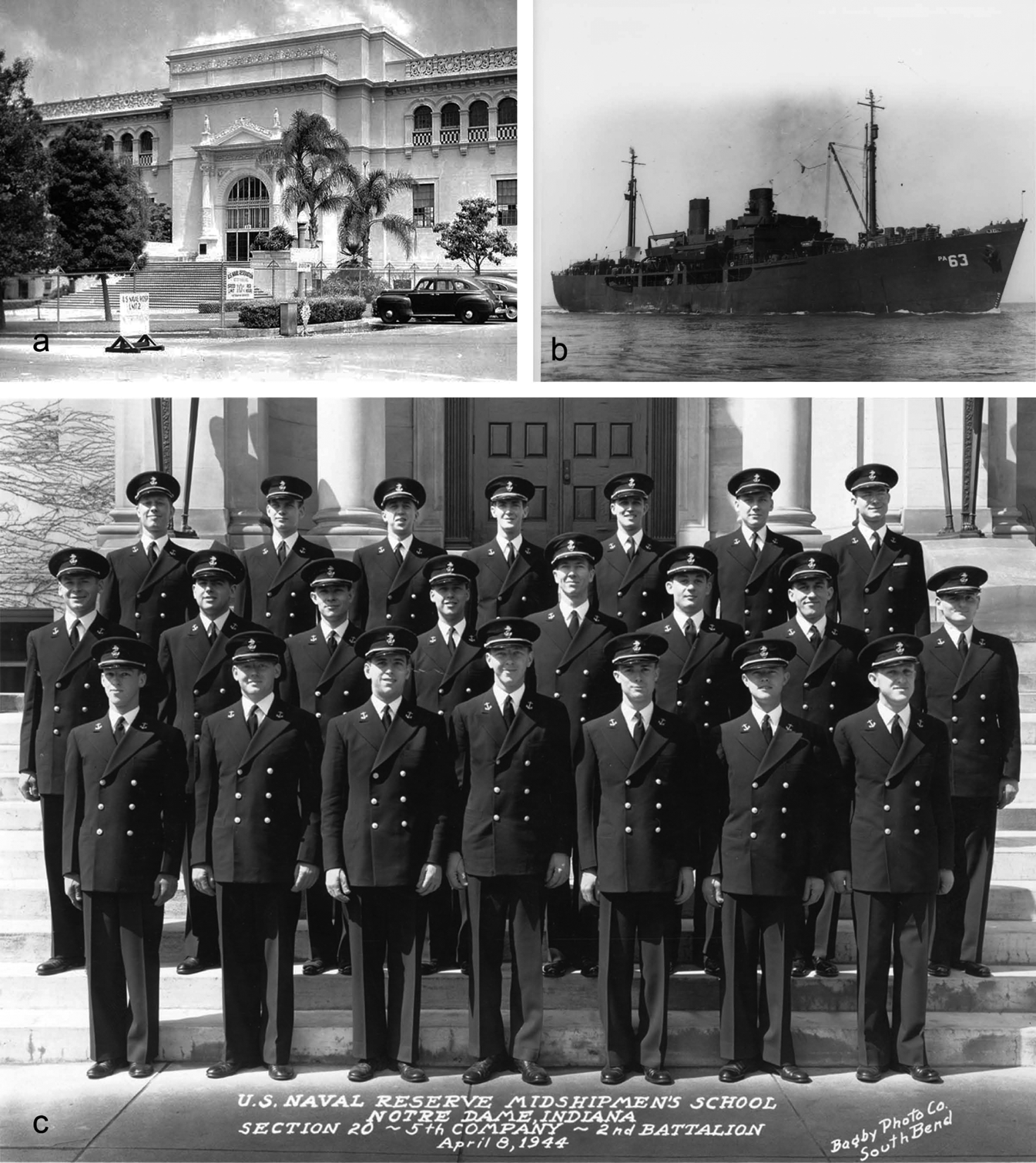
During his induction interview, he revealed that he knew some anatomy and physiology and, when asked, was able to explain the difference between systolic and diastolic blood pressure. He began his training in San Diego, but did not finish boot camp because he was given a Hospital Corpsman rating. He was assigned to a naval hospital in San Diego and rose in rank from Seaman to Pharmacist's Mate. The San Diego Natural History Museum was utilised as a naval hospital facility for infectious diseases in March 1943 (Fig. 5a). Some of the collections were still held in the building, but were compressed into a tighter arrangement to save space. Wann was assigned to night duty on the deck for senior officers, but found time to tour the collections areas. During his six-month stay in San Diego, he also toured the zoo at Balboa Park.
(a) The San Diego Natural History Museum, converted for wartime use; the sign in front reads “U.S. Naval Hosp. Unit 2.” (b) The recently commissioned USS Bladen. (c) Wann Langston, Jr., front row, second from left.
He applied for Midshipmen's School, and studied trigonometry at night to sharpen his quantitative skills, assuming they would be useful for navigation and other things. While Wann waited for his application to Midshipmen's School to be approved, he went each week to the bulletin board where notice was posted of Navy Corpsmen who were drafted to serve with the Marines. The United States Marine Corps had no medical personnel of its own during the war, and drafted Navy Corpsmen to serve with USMC units during combat and field operations. His name appeared on the draft list just when his approval came, and Midshipmen's School had priority over the draft. He went to Midshipmen's School at Notre Dame, and after four months of study was commissioned as an Ensign in the Navy (Fig. 5c). Wann was interested in ships and had a quick eye, so he applied and was accepted for two months additional training in Columbus, Ohio on aircraft and ship recognition.
He was assigned as an assistant gunnery officer on the USS Bladen (Fig. 5b), an attack transport ship that was still under construction in Long Beach, California. Wann missed being a founding member of the Society of Vertebrate Paleontology by a little over one year. He was in the Navy when the Society was formed, and during a review he received the highest score for appearance and received a 48-hour pass – he used his time off to meet Chester Stock at Cal Tech, and Stock sponsored his membership in SVP. The only book Wann carried with him on board was Field Geology by Frederic H. Lahee (Reference Lahee1941); he had the opportunity to use it whilst on Hawaii. The ship was launched in May 1944, and on 27 January 1945, the ship sailed for Iwo Jima by way of Saipan. From 19 to 28 February, the Bladen provided support for combat operations on Iwo Jima. During the battle, the officers' wardroom on the Bladen was turned into an operating room for Marine casualties brought off the island. They departed Iwo Jima and returned to Saipan, where they began preparations for the invasion of Okinawa. In early April, the ship provided logistical support for the early stages of the operations on Okinawa in the Ryukyu Islands, handling ship-to-shore transports for several days, bringing wounded aboard and transferring them to a hospital near the galley. From Okinawa, the ship returned to Saipan (for six weeks), then to the Solomon Islands and New Caledonia, eventually returning to San Francisco in late July, where Wann remembers being when the Japanese surrender was announced.
When the war ended he returned to the University of Oklahoma to work on an MSc degree. He met Marietta Evans (1924–2012) there and they were married in 1946. His MSc Thesis research centred on a description of Acrocanthosaurus from southeastern Oklahoma. Before he finished the Thesis, he began teaching at Texas Technological College in Lubbock, Texas. He completed his Masters in 1947, and finished out the academic year of 1947–1948 teaching at Texas Tech (Fig. 4c). Whilst at Texas Tech he published his first papers, on the post-war state of the Division of Paleontology at Tech (1947), field collection methods (1948) and a description of a phytosaur skull from Scurry County, Texas (1949; now recognised as a new taxon; see Stocker Reference Stocker2013, this volume).
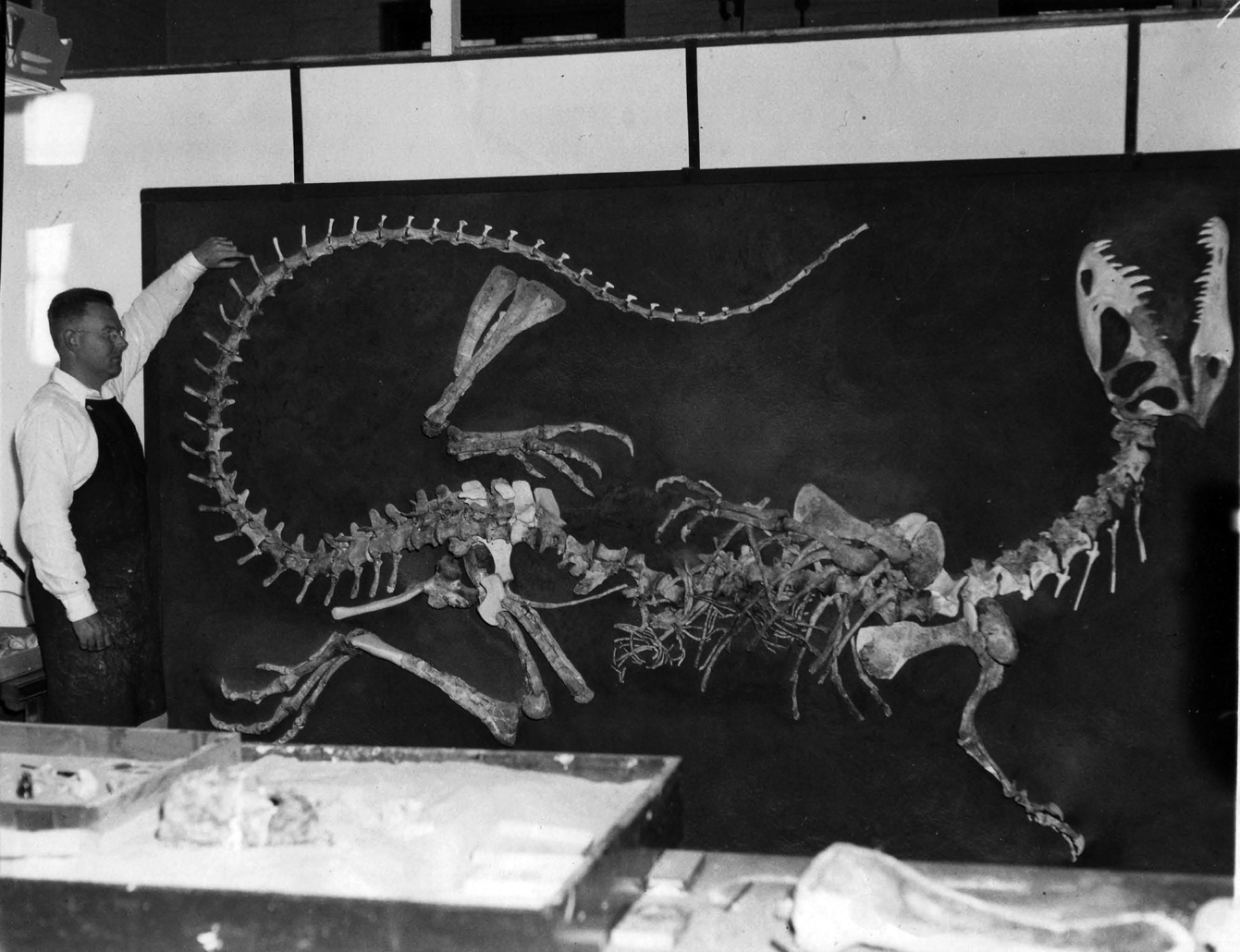
He entered the University of California at Berkeley in 1948, and began work on Permian vertebrates from New Mexico for his PhD under the supervision of Charles Camp and his other committee members, invertebrate palaeontologist J. Wyatt Durham, and herpetologist Robert C. Stebbins. Within a year of arriving in Berkeley, he assumed the position of Principal Museum Preparator at the University of California Museum of Paleontology, a position he retained until he left California (Fig 6). He was reunited at Berkeley with Don Savage, from whom he learned more about fossil preparation. During that time, he completed the final stages of preparation of Dilophosaurus wetherilli, and sculpted missing material. He panel-mounted the specimen, overriding the initial objections of the Museum's Director, Ruben A. Stirton. When Stirton went to South America for six months of fieldwork, they finished the mount and Charles Camp gave them permission to move it to the rotunda of the Hearst Mining Building (Fig. 7). A cast of that specimen is on display at the California Academy of Sciences in San Francisco.
Langston collecting a specimen along the San Pablo Reservoir, near Berkeley, CA. Originally thought to be Desmostylus, this specimen was later described as a cetacean.
Langston posing in the preparation laboratory at the University of California, Berkeley, next to his reconstruction of Dilophosaurus weatherilli.
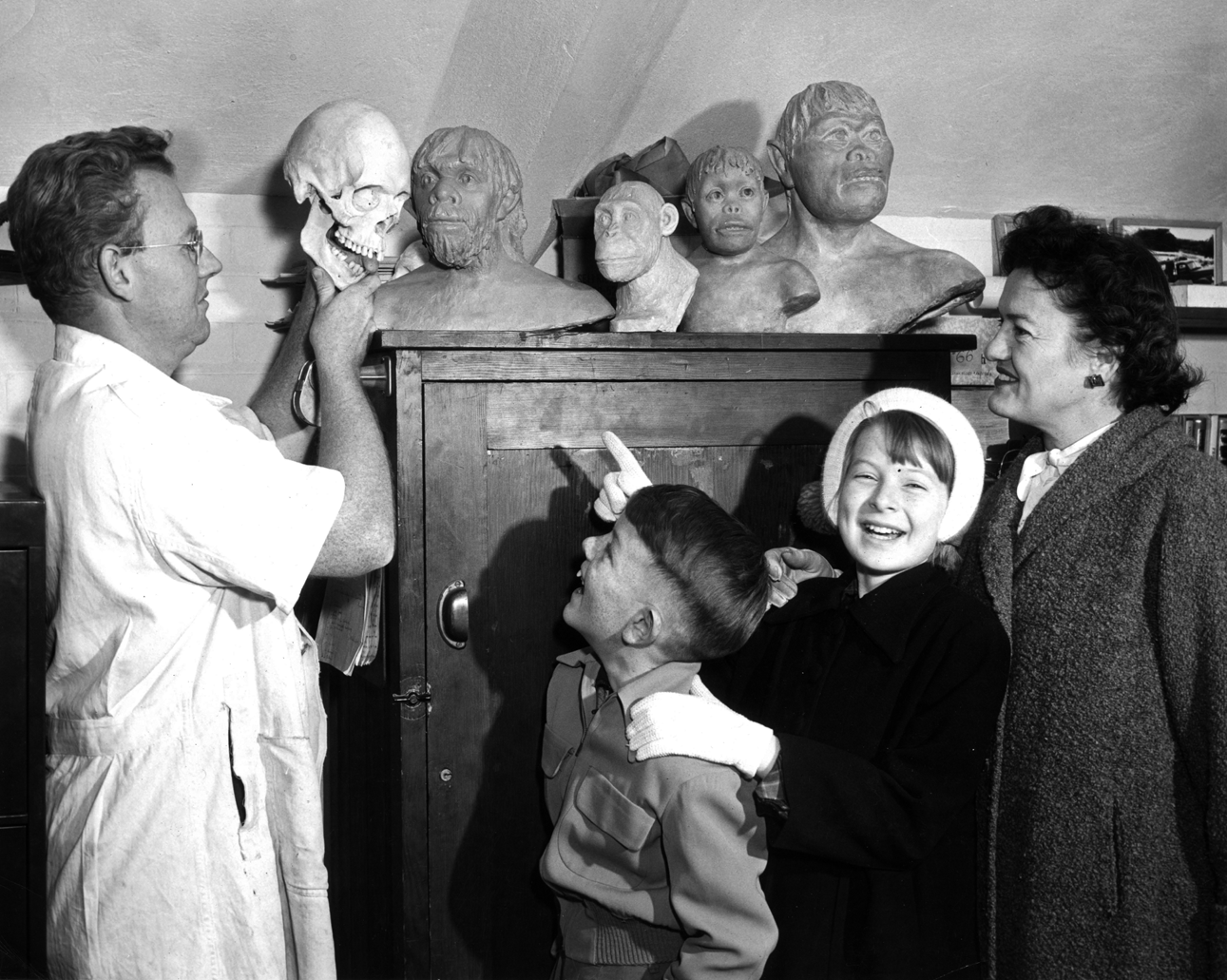
To further raise the profile of the palaeontology programme, Savage exhibited an interathere (Notoungulata), and Wann arranged for the transfer from the Carnegie Museum of a femur from a sauropod dinosaur. If Stirton was angry when he returned from Colombia and saw the exhibits, Langston and Savage “never heard a word about it.” Wann completed his PhD in 1952, but remained in Berkeley for a time as a Lecturer (Fig. 8) and stayed active in research, gathering data for a monograph on crocodilians from South America. Wann and Marietta's first daughter, Karen, was born in California in 1953.
Dr. Langston brings hominid evolution to life for laboratory visitors.
Loris S. Russell convinced Wann to move to Ottawa, Canada, and in 1954 he was appointed Curator of Vertebrate Paleontology at the National Museum of Canada (now the Canadian Museum of Nature). “It didn't take much convincing to get me to go to Canada,” Wann noted. “They had one of the world's best collections of dinosaurs … and there was no teaching involved” (Fig. 9). During almost nine years in Ottawa, he spent every summer in the field. In 1955, he visited Alberta for the first time with Loris Russell, and returned there annually for four years, then shifted his focus to the ‘red beds’ on Prince Edward Island.
Curator of Vertebrate Paleontology at the National Museum of Canada.
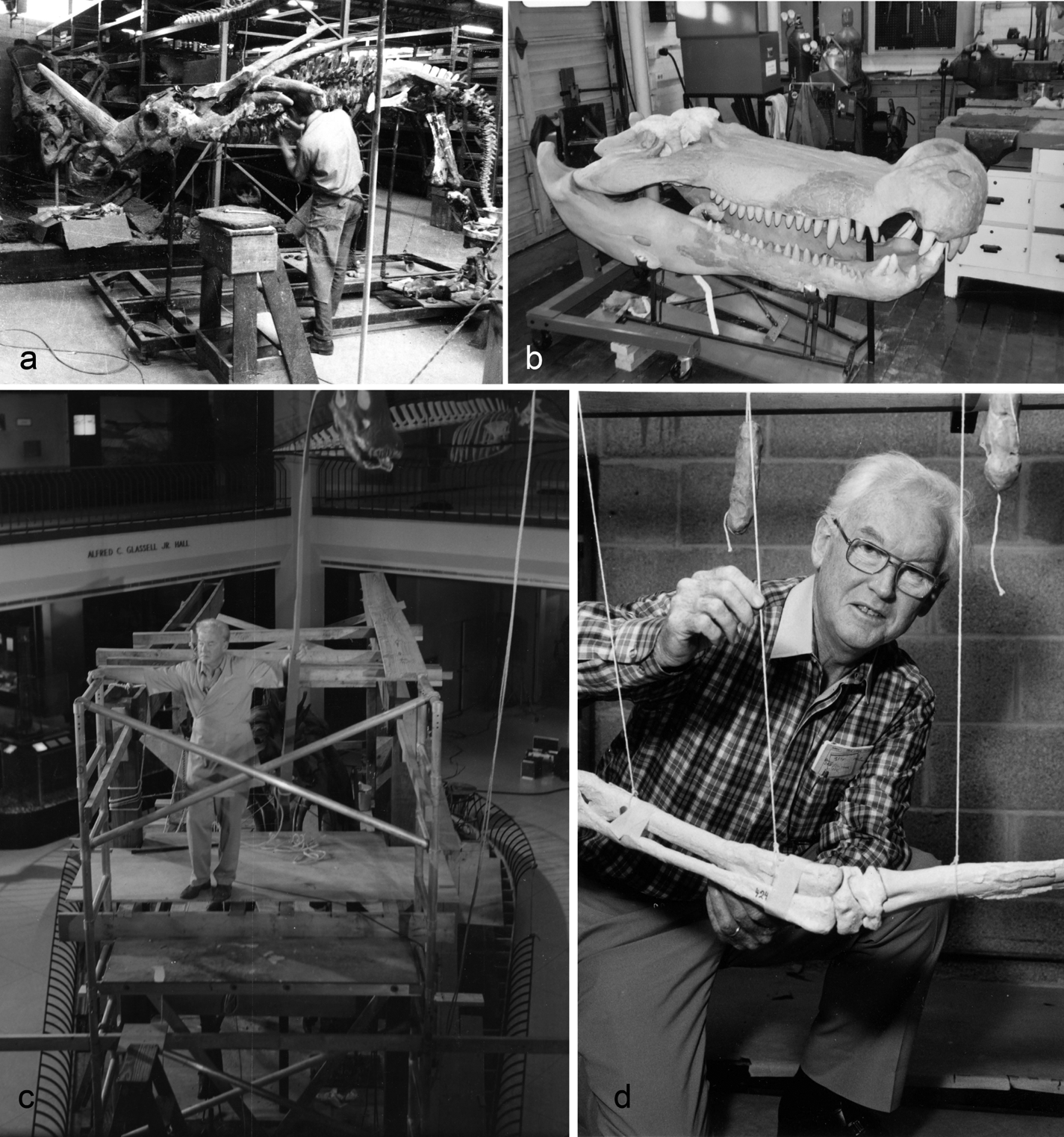
Wann's work in western Canada resulted in the collection of a number of dinosaur skeletons, including Edmontosaurus, Triceratops and Chasmosaurus. During those years, he was involved in the design of the Dinosaur Hall at the National Museum of Canada and supervised the mounting of the skeletons of Daspletosaurus, Hypacrosaurus, Pachyrhinosaurus and the postcranial skeleton of Styracosaurus (Fig. 10a). He published numerous papers on dinosaurs, a group that remained a major focus of his work. It was during this time that he collected the skeleton of a ceratopsian dinosaur; it was not a priority at the time, but was recently named as a new taxon (Currie et al. Reference Currie, Langston, Tanke, Currie, Langston and Tanke2008) and is on exhibit in the Canadian Museum of Nature. He became a major figure in vertebrate palaeontology in western Canada during that time and remains influential there today.
A legacy of fossil reptile reconstruction: (a) Styracosaurus in the mount shop at the National Museum of Canada, 1960s; (b) Langston's reconstruction of Deinosuchus based on material that he collected in Big Bend National Park, 2000s; (c) Posing on the scaffolding surrounding the mount of Diplodocus in Houston. The skull is top of frame, the cervical vertebrae have not yet been mounted, 1970s; (d) Langston assembling casts of a juvenile Quezalcoatlus from the Big Bend, 1980s.
In 1962, Wann moved with his family (which now included daughter Sandra, born in 1957) to Austin, Texas, where he took a position as a Research Scientist at the Texas Memorial Museum. In the summers, he taught courses on vertebrate palaeontology at Berkeley, and taught on an irregular basis at UT Austin. In 1964, he was appointed as Lecturer in the Department of Geological Sciences at the University of Texas at Austin and, in 1969, he succeeded Jack Wilson as Director of the Vertebrate Paleontology Laboratory of the Texas Memorial Museum, a position he held until his retirement in 1986. In 1975, he was appointed Professor at UT Austin, and in 1984 he was appointed as the first Mr and Mrs Charles E. Yager Professor of Geological Sciences; he currently carries that title in Emeritus status. Wann developed and taught several courses on palaeontology and vertebrate anatomy whilst at Austin, and supervised 12 Masters students and three PhD students (see Appendix 1).
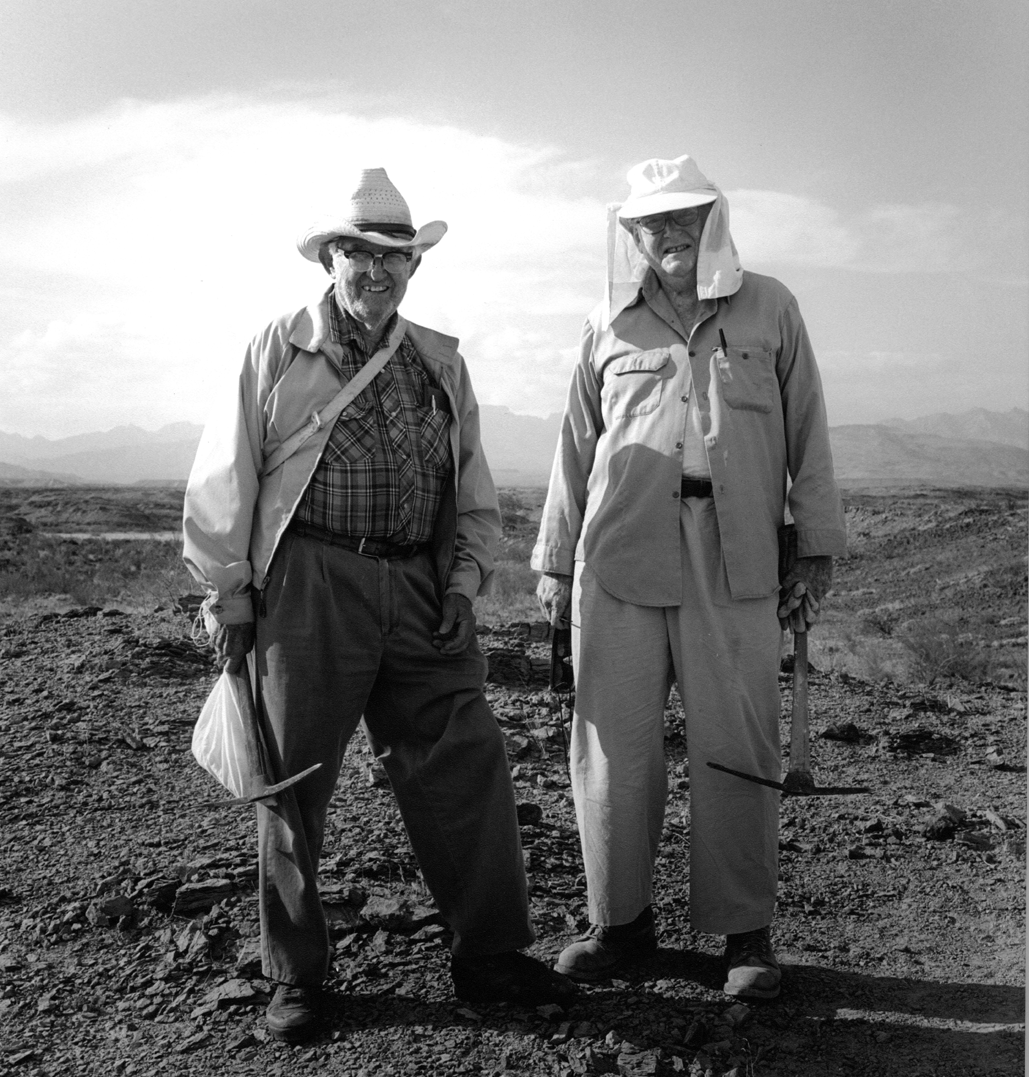
While at Austin, he and his students contributed significantly to our understanding of the vertebrate palaeontology of the Big Bend area of Texas, returning to the same areas in which Wann did his first professional fieldwork. Along with Jack Wilson (Fig. 11), who worked on Cenozoic mammals, Wann restudied the dinosaur material that had been collected in the 1930s and collected considerable additional material that added extensively to our knowledge of the dinosaur fauna of that region. The work in Big Bend resulted in the collection of more complete material of the giant crocodylian Deinosuchus. This huge animal became a major focus for Wann in the mid–late 2000s, when he laboured to craft a masterful model of the skull for moulding and casting (Fig. 10b). He could be found in the lab on many days, working clay into desired shapes and making small ‘tweaks’ to portions of the skull already completed.
Jack Wilson and Wann in the field, on Jack's last field trip to the Big Bend region.
Another important result of the Big Bend work was the discovery in 1971 of the gigantic pterosaur, Quetzalcoatlus northropi, by one of Wann's graduate students, Douglas Lawson. Enough postcranial material was collected to reconstruct the skeleton of the large individual and, from that material, Wann helped to generate a life-sized reconstruction of the animal. In the course of his work on Quetzalcoatlus, Wann became a world authority on pterosaurs. Between 1981 and 1985, he worked closely with Dr. Paul B. McCready of AeroVironment Inc., in the construction of the life-sized flying replica of the Texas pterosaur, which was featured in IMAX theatres around the world in the film On the Wing. A cast of the fully-reconstructed skeleton hangs now in the main lobby of the Texas Memorial Museum in Austin. Wann also appeared in numerous other television productions, including ABC's 20/20 and, with Sir David Attenborough, in a documentary for Attenborough's BBC series Lost Worlds – Vanished Lives.
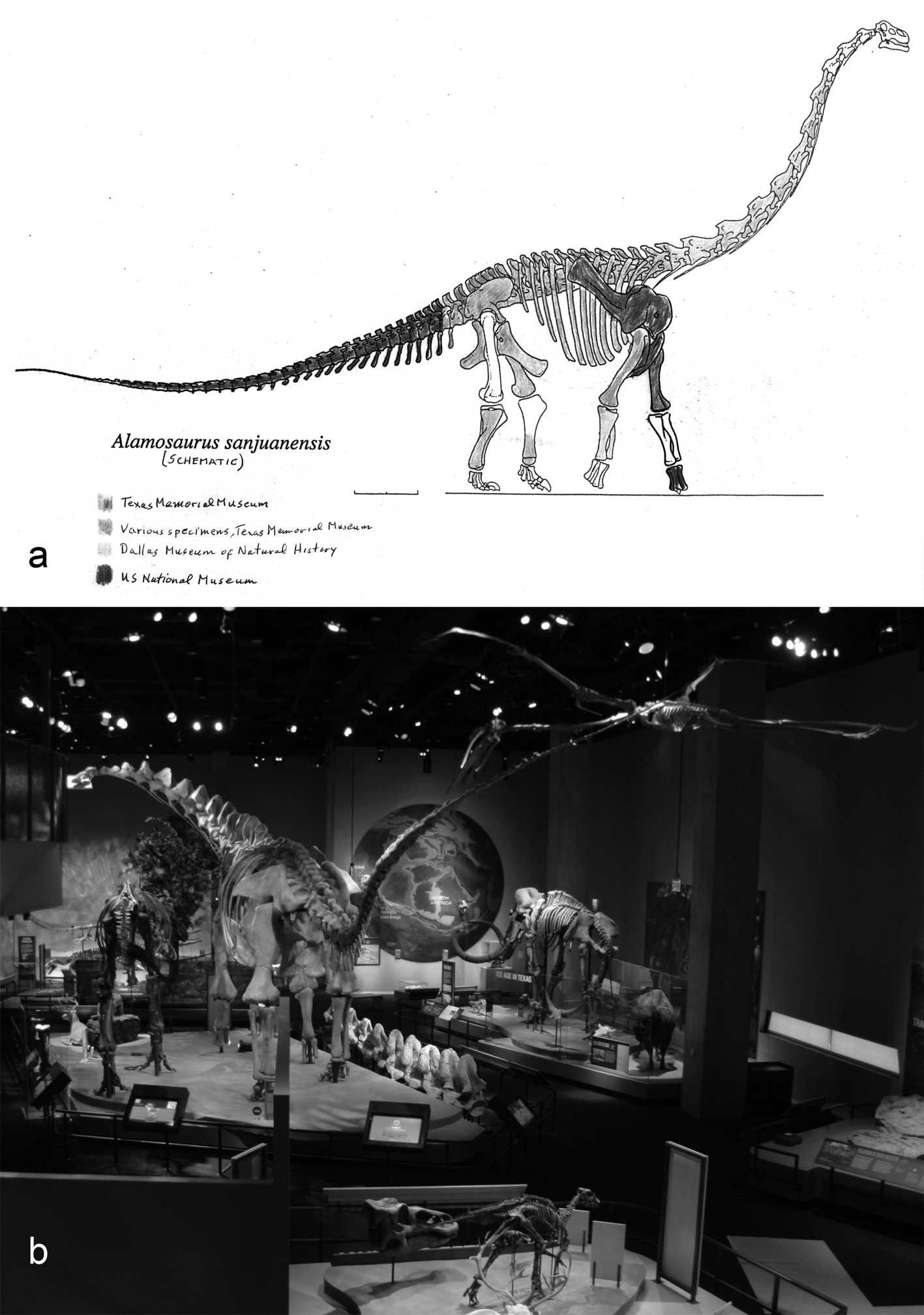
Wann is known for his imaginative reconstructions of the fossilised skeletons of prehistoric animals. In addition to the skeletons in the Ottawa museum, he mounted a number of skeletons for other museums. Notable amongst these are an 80-foot long Diplodocus in the Houston Museum of Natural Science (Fig. 10c), a mosasaur (Tylosaurus) and the small dinosaur Tenontosaurus in the Dallas Museum of Natural History, a duck-billed dinosaur in the Royal Tyrrell Museum in Drumheller, Alberta (that specimen now dismantled), and the Onion Creek mosasaur and the reconstructed skeleton of Quetzalcoatlus (Fig. 10d) for the Texas Memorial Museum. The mosasaur in the Texas Memorial Museum has long been an iconic exhibit; Wann's original mounting was redone by his former student Kyle Davies, now Museum Preparator at the Sam Noble Museum in Norman, Oklahoma. In 2012, the Dallas mosasaur and Tenontosaurus were remounted in the new Perot Museum of Nature and Science, alongside Quetzalcoatlus and another Big Bend giant, the sauropod Alamosaurus (Fig. 12b).
(a) Langston's plan for a composited mount of Alamosaurus. The darkest bones represent the holdings of the National Museum of Natural History (caudal vertebrae, pectoral girdle, and partial forelimb), the medium grey tone highlights material collected by Wann (dorsals, pelvic girdle, partial hindlimbs and humerus), and the lightest in colour (cervicals) were collected by the Dallas Museum of Natural History (now The Perot Museum of Nature and Science); (b) The T. Boone Pickens Life Then and Now Hall, at The Perot Museum of Nature and Science, featuring five mounted fossil reptiles that Wann Langston influenced heavily – Alamosaurus, Tylosaurus, Quetzalcoatlus, Tenontosaurus and Quetzalcoatlus. Image courtesy of Ron Tykoski.
In 1973, Wann and a team from the Vertebrate Paleontology Laboratory in Austin excavated and collected over 10,000 pounds of field jackets containing skeletal elements of Alamosaurus, bringing them back to Austin in an old UT dump truck borrowed from the Facilities Department. At least four times during the trip, the heavily-laden truck broke down on the highway, and VPL fossil preparator Robert Rainey was called on to make impromptu repairs on the roadside. When the bones finally made it to the laboratory, the field jackets were lowered through a hatch into the basement for storage, until the last block, containing the pelvic girdle, burned out the clutch on the hoist. That left the 2,600-pound jacket suspended in mid-air until a solution could be found. Wann had long dreamed of preparing and mounting the bones of Alamosaurus. Because the UT specimen represented approximately one-third of an animal, he developed a plan to make a composite of material collected by the then Dallas Museum of Natural History and the National Museum of Natural History (Fig. 12a), each of which had collected the respective missing thirds of other individuals. The requisite funding to carry out the plan to prepare, collate, cast and mount the relevant materials was finally obtained and, 35 years later, a multi-institutional collaboration resulted in a magnificent mount now displayed at the Perot Museum of Nature and Science.
Wann is extraordinarily generous with his time and talents, and also is quietly generous with financial support for palaeontology. For years he has provided financial support for academic programmes in palaeontology at The University of Texas, and for many initiatives of the Society of Vertebrate Paleontology. He served the Society of Vertebrate Paleontology (SVP) as Vice-President in 1974 and as President in 1975. He was Editor of the SVP News Bulletin in 1977 and 1978, and also served as Associate Editor for the Journal of Vertebrate Paleontology. He chaired the host committee for the annual meeting of the SVP in 1962, and again in 1989. He served as chair of two committees for the SVP in the 1970s, one that was charged with assessing the state of vertebrate fossil conservation in the US (1972) and a second that provided a visionary report on systematic resources in vertebrate palaeontology for the National Science Foundation (1978). His many contributions to the Society were formally recognised in 2007, when he was awarded the Romer–Simpson medal, the highest honour bestowed by the Society of Vertebrate Paleontology.
Wann's many interests are reflected, in part, by his published work (Appendix 2). That body of work earned him an international reputation as an expert on dinosaurs, crocodilians and pterosaurs. He also served as a historian for two of the institutions to which he dedicated so much of his life. He authored a report on the history of, and challenges facing, the Vertebrate Paleontology Laboratory at The University of Texas at Austin (1980) and an in-depth history of vertebrate palaeontological research at the University of Oklahoma (1989). Neither of those was formally published, but copies are available at the Vertebrate Paleontology Laboratory in Austin, and at the Sam Noble Museum in Norman, Oklahoma.
Wann maintains a quiet and unassuming manner in his science and, although there is no false modesty about his accomplishments, he keeps them in a healthy perspective. Illustrative of this is a response that he sent in regard to a paper published in Science with co-workers in 1976 (Dawson et al. Reference Dawson, West, Langston and Hutchison1976), when he wrote: “I regard this as one of my most significant papers – especially because I had so little to do with it.” This quotation also brings out an often-overlooked feature of Wann's character, namely an acute sense of humour! This is always best experienced in personal interactions with him (one of us once retaliated to being named “The Bunny Lady” by christening Wann as “Smiley”), but hints of it also are scattered in his published works, and in published comments about him (see especially Wright Reference Wright1983). The Mustang, the now-nearly-forgotten newsletter of the Texas Memorial Museum, reflects the playful side of Wann Langston, and his ability to marry that with serious scholarship and professional ability. He published seven contributions in The Mustang, and his informative history of the UT Austin Vertebrate Paleontology Laboratory appeared under the amusing title “What's a veepee lab? Here's what, and how” (Langston Reference Langston1975). The editors of The Mustang (W. W. Newcomb and W. C. Adams), in introducing the second part of Wann's contribution on Texas dinosaurs, wrote, “It took The Mustang's editors weeks of persuasion to wring a dinosaur story out of paleontologist Wann Langston, Jr. … When Langston finally agreed, it was soon obvious that the editors would have a difficult time halting his hot flow of words. This effort was not too successful…”
When asked his perception of what other people see as his major contributions to palaeontology, Wann paused for a few moments, then said “I have not done all the things I should have done – but there were always extenuating circumstances I could cook up to keep from doing them. I'm probably best known for my South American croc monograph, and my work on the Permian of New Mexico. That's fine, because I'm more interested in the object than the philosophy behind it … I think because I'm ignorant or lazy. But I've had excellent students.”
Wann can look back over a long career in vertebrate palaeontology, and notes that “with eighty years of active involvement, I've been through most of the revolutions.” He is optimistic about the future of the discipline, but harbours concerns about people selling fossils, and frustrations with land-owners who do not cooperate with palaeontologists. Through it all, he measures success by one central criterion: “Enjoying myself!” He notes with satisfaction “I've enjoyed everything I've done in paleontology. I always tried to avoid altercations with colleagues because it's vertebrate paleontology – I like it all! I try to know it all! I'm not a deep thinker, I just do my thing.” And he does it well.
Acknowledgements
Dennis Tromabatore helped us to track down, and verify citations to, Wann's publications. Early versions of this biographical sketch were improved by comments and suggestions received from Christopher Jass and Michelle Stocker. We thank Wann Langston, Jr. for his friendship, sense of humour, and passionate dedication to the field of palaeontology.
Note added in proof
After an illustrious life and career, Wann Langston, Jr. passed away on April 7, 2013.
Appendix 1. Graduate Degrees supervised by Wann Langston, Jr. at The University of Texas at Austin
Ralph E. Molnar, 1969. Jaw Musculature and Jaw Mechanics of the Eocene Crocodilian Sebecus icaeorhinus. (MA)
Peter Parks, 1969. Cranial Anatomy and Mastication of the Triassic Reptile Trilophosaurus. (MA)
James G. Mead, 1971. Paleontology of the Sid McAdams Locality (Permian) Southern Taylor County, Texas. (MA)
Douglas A. Lawson, 1972. Paleoecology of the Tornillo Formation, Big Bend National Park, Brewster County, Texas. (MA)
Clair R. Ossian, 1974. Paleontology, Paleobotany and Facies Characteristics of a Pennsylvanian Delta in Southeastern Nebraska. (PhD)
Walter C. Parrish, 1975. Paleoenvironmental Analysis of a Lower Permian Bonebed and Adjacent Sediments, Wichita County, Texas. (MA)
Marc R. Gallup, 1975. Lower Cretaceous Dinosaurs and Associated Vertebrates from North-Central Texas in the Field Museum of Natural History. (MA; Zoology Department Thesis)
Arthur B. Busbey III, 1977. Functional Morphology of the Head of Pristichampsus vorax (Crocodilia, Eusuchia) from the Eocene of North America. (MA)
Ruth L. Elder, 1978. Paleontology and Paleoecology of the Dockum Group, Upper Triassic, Howard County, Texas. (MA)
Glenn W. Storrs, 1981. A Review of Occurrences of the Plesiosauria (Reptilia: Sauropterygia) in Texas with Description of New Material. (MA)
Thomas M. Lehman, 1982. A Ceratopsian Bone Bed from the Aguja Formation (Upper Cretaceous) Big Bend National Park, Texas (MA)
Kyle L. Davies, 1983. Hadrosaurian Dinosaurs of Big Bend National Park, Brewster County, Texas. (MA)
Paul M. Sander, 1984. Depositional Environment and Taphonomy of Some Fossil Vertebrate Occurrences in Lower-Permian Redbeds. (MA)
Thomas M. Lehman, 1985. Stratigraphy, Sedimentology and Paleontology of Upper Cretaceous (Campanian–Maastrichtian) Sedimentary Rocks in Trans-Pecos Texas (PhD; co-supervised by Gary Kocurek and Wann Langston)
Jeffrey G. Pittman, 1992. Stratigraphy and Vertebrate Ichnology of the Glen Rose Formation, Western Gulf Basin, USA. (PhD; co-supervised by Wann Langston and Timothy Rowe).
Appendix 2. Publications by Wann Langston, Jr.
Wann maintained a list of his scientific publications as a section of his professional CV, but included only citations to his papers that appeared in peer-reviewed and mainstream outlets (even a few of those were left out inadvertently). All efforts to maintain a list ended when he retired. We have attempted to provide a complete listing of all of Wann's written works, but we caution that this list must be viewed as containing only those of which we are aware. To facilitate ease in finding the material, we provide complete citations to all entries here, including issue numbers and total pagination. Citations are listed chronologically.