Introduction
Co-Phenylcaine™ Forte is a nasal spray commonly prescribed by otolaryngologists in Australia. It is used prior to nasendoscopy, as the active agents of Co-Phenylcaine Forte – lignocaine (5 per cent) and phenylephrine (0.5 per cent) – have anaesthetic and vasoconstrictive properties that improve visual clarity and reduce discomfort in patients undergoing nasendoscopy.Reference Douglas, Hawke and Wormald 1 , Reference Lennox, Hern, Birchall and Lund 2 Co-Phenylcaine Forte is considered favourable to cocaine spray, particularly because it is not a controlled drug.Reference Lennox, Hern, Birchall and Lund 2 , Reference Smith and Rockley 3
Patients have reported that Co-Phenylcaine Forte routinely leaves an unpleasant, bitter taste in the throat. Consistent with this anecdotal evidence, several studies have demonstrated that patients receiving lignocaine nasal spray report an unpleasant taste, which may contribute to overall discomfort.Reference Georgalas, Sandhu, Frosh and Xenellis 4 , Reference Frosh, Jayaraj, Porter and Almeyda 5 Formulations such as Xylocaine 10 per cent Pump Spray (AstraZeneca, Sydney, Australia) have had banana essence added to improve the taste.
This study aimed to determine if the addition of a flavour and masking agent to Co-Phenylcaine Forte would improve overall patient satisfaction and taste, without affecting its efficacy.
Materials and methods
A single-centre, randomised, double-blind, crossover trial was conducted at the Princess Alexandra Hospital, Brisbane, Australia (trial registered at www.ANZCTR.org; trial number ACTRN12616001335482). The ethics committee approved the study protocol (number: HREC/15/QPAH/640) prior to the initiation of the study.
Participants
Eligible participants were healthy, male and female employees of the hospital, aged between 18 and 60 years, recruited as a convenience sample. Participants were required to be available to undergo the second treatment no earlier than 6 hours after the first spray and no later than the end of the following day. Exclusion criteria were nasal surgery within the previous three months, or the daily use of topical steroids or decongestants. Smokers, pregnant women and those with a history of cardiac disease were also excluded. Written informed consent was obtained from each patient prior to the study.
Study design
A standard 50 ml bottle of Co-Phenylcaine Forte was titrated using different combinations of a vanilla concentrate additive (L-132184) and a masking agent (50105AB) until the desired clinical effect was achieved. The Co-Phenylcaine Forte formulation, with L-132184 and 50105AB (KF Specialty Ingredients, Sydney, Australia) solution titrated to 4 per cent, was designated Co-Phenylcaine Zest.
The formulation was prepared and randomised by an external party; the labels were removed from both formulations and labelled ‘A’ or ‘B’. Pre-treatment screening confirmed participant eligibility. Eligible patients were allocated a study number and assigned, using balanced computer randomisation, to one of two treatment groups. The Co-Phenylcaine Forte followed by Co-Phenylcaine Zest group received two actuations (100 µl/spray) of Co-Phenylcaine Forte from a plain bottle labelled ‘B’ and a second treatment of two actuations (100 µl/spray) of Co-Phenylcaine Zest in each nostril from a plain bottle labelled ‘A’. The Co-Phenylcaine Zest followed by Co-Phenylcaine Forte group received two actuations (100 µl/spray) of Co-Phenylcaine Zest from a plain bottle labelled ‘A’ and a second treatment of two actuations (100 µl/spray) of Co-Phenylcaine Forte in each nostril from a plain bottle labelled ‘B’.
Following the first treatment, participants underwent the second treatment no earlier than 6 hours following the initial spray and no later than the end of the following day.
The primary outcome assessed was the participants’ overall spray preference: A, B or no preference. Participants made their selection after the second treatment arm. Secondary outcomes assessed included: spray satisfaction, scent, initial taste, aftertaste, nasal irritation and improvement in nasal patency. Participants recorded each answer on a seven-point (numbered 0–6) ordinal scale. The sample size was estimated based on similarly designed studies.Reference Frosh, Jayaraj, Porter and Almeyda 5 Participants and the investigators were blinded to the formulation of each bottle.
Statistical analysis
The statistical analyses were performed by the Metro South Health Biostatistics Clinic using SPSS® Statistics software, version 23. The neutral category of overall spray preference (less than 5 per cent) was dropped, and an exact binomial test was performed with a null hypothesis of no difference between the two spray groups. The limited range and non-normal nature of the seven-point ordinal scale meant that it was collapsed to either a two- or three-group categorical variable (preferred, not preferred or neutral), and analysed using the student's t-test. A linear or ordinal test was not used because of the small size of the neutral group. The difference between two ordinal scales gave a 15-point range, which generally approached a normal distribution, and was analysed using a one-sample t-test with a null hypothesis of zero difference.
Results
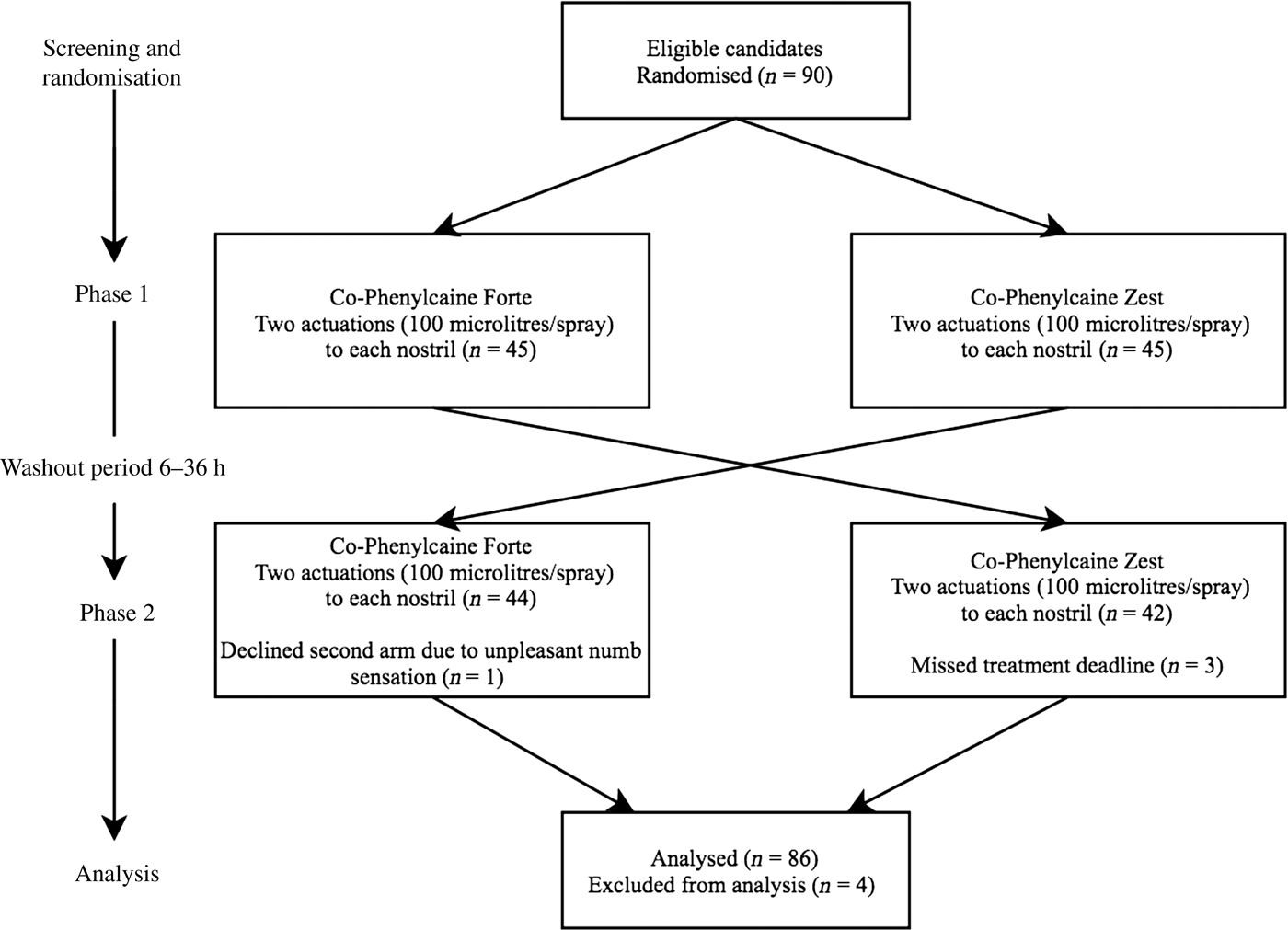
A total of 90 participants (68 females and 22 males) were randomised in a 1:1 ratio to 1 of 2 treatment arms. There were 86 participants included in the final analysis (Figure 1). Suitable participants were recruited from February to March, 2016.
Participant flow diagram. H = hours

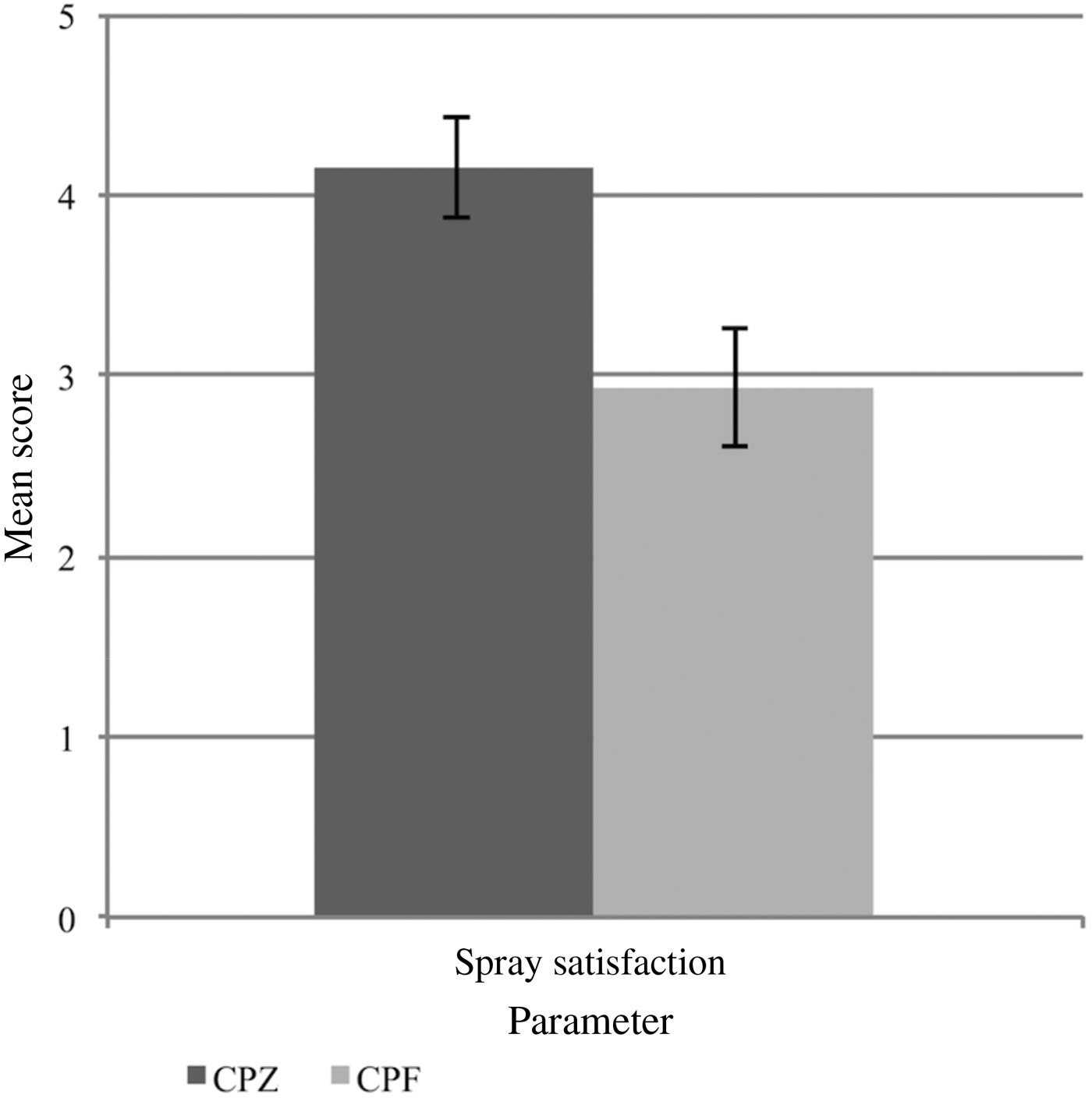
Most of the participants preferred Co-Phenylcaine Zest (74 per cent) to Co-Phenylcaine Forte (21 per cent), with 5 per cent of patients reporting no preference (p < 0.001; 95 per cent confidence interval (CI) = 0.674, 0.864). Participants reported greater satisfaction with Co-Phenylcaine Zest than with Co-Phenylcaine Forte, with an increase in satisfaction of 1.22 points (p < 0.001; Cohen's d = 1.22; 95 per cent CI = 0.85, 1.59) (Figure 2).
A comparison of the mean scores for overall satisfaction between Co-Phenylcaine Zest (CPZ) and Co-Phenylcaine Forte (CPF) (error bars ± 2 standard errors). 0 = very dissatisfied, 1 = quite dissatisfied, 2 = somewhat dissatisfied, 3 = neither satisfied or dissatisfied, 4 = somewhat satisfied, 5 = quite satisfied

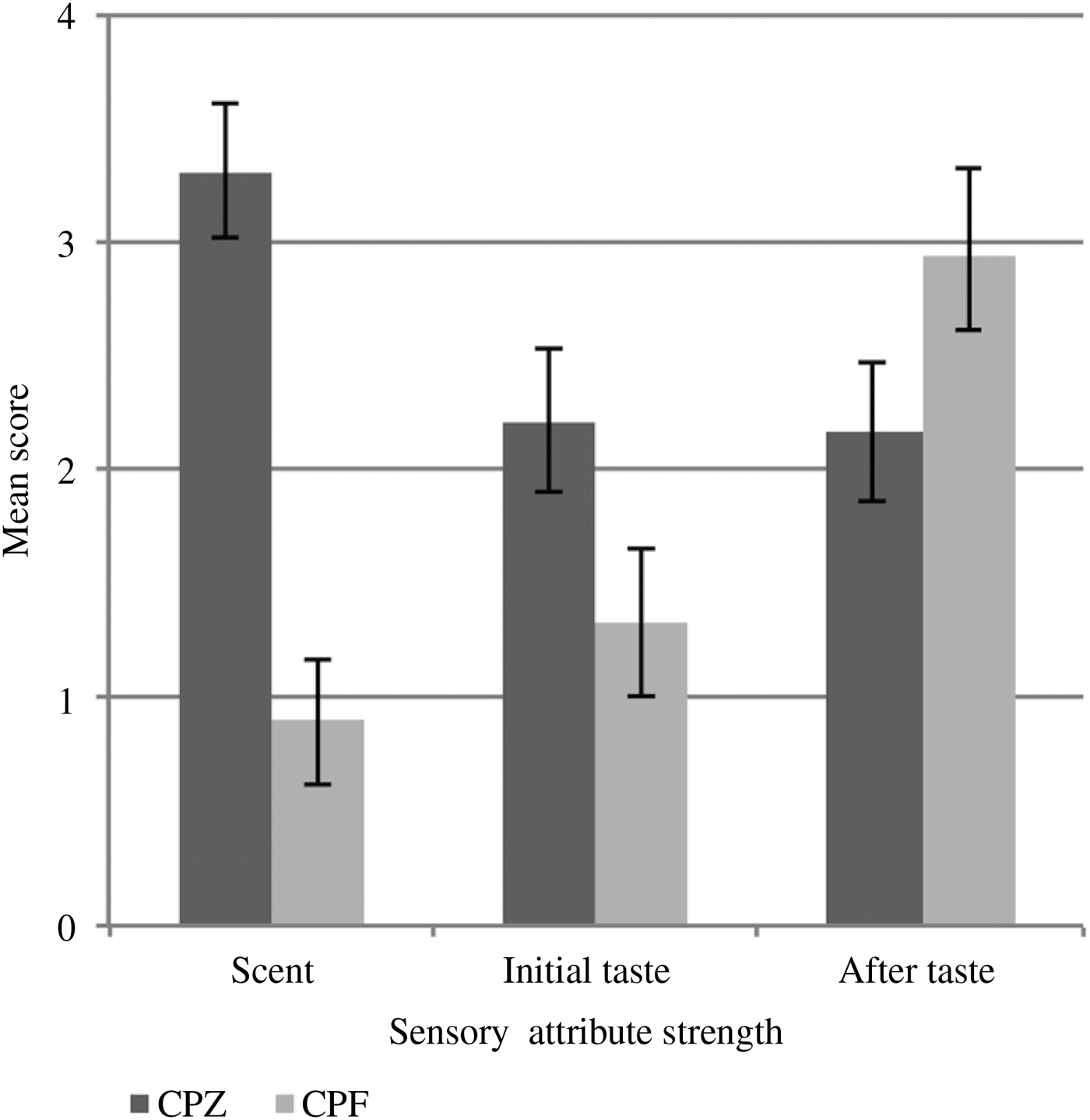
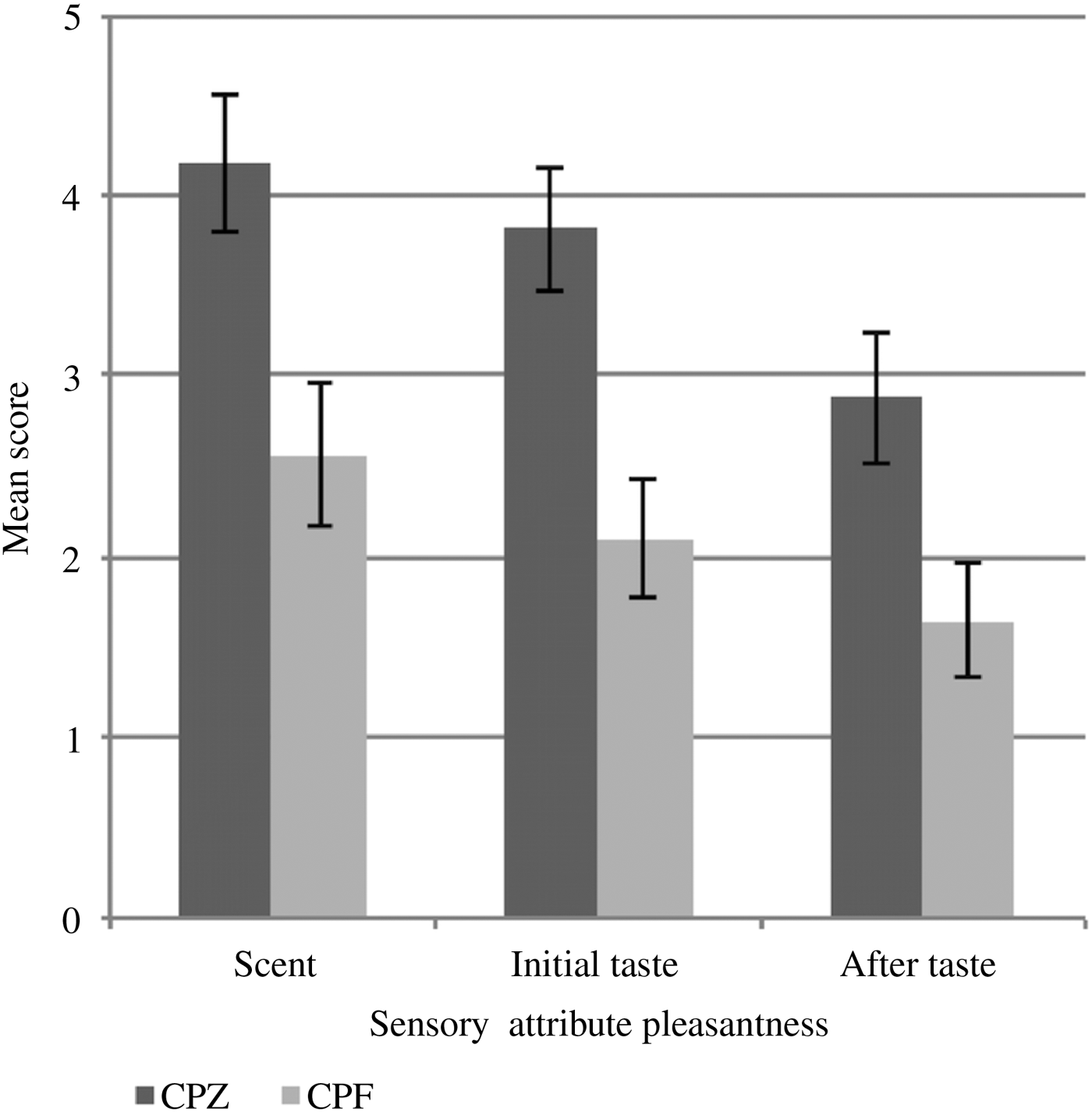
Co-Phenylcaine Zest had a significantly stronger scent (p < 0.001; Cohen's d = 2.4; 95 per cent CI = 1.94, 2.86) and initial taste (p < 0.001; Cohen's d = 0.87; 95 per cent CI = 0.45, 1.29) than Co-Phenylcaine Forte, whereas participants found the aftertaste significantly weaker (p = 0.0027; Cohen's d = −0.77; 95 per cent CI = −1.18, 0.36) (Figure 3). In addition, patients reported a significantly more pleasant scent (p < 0.0001; Cohen's d = 1.62; 95 per cent CI = 1.17, 2.07), initial taste (p < 0.0001; Cohen's d = 1.7; 95 per cent CI = 1.25, 2.15) and aftertaste (p < 0.0001; Cohen's d = 1.22; 95 per cent CI = 0.78, 1.66) with Co-Phenylcaine Zest than with Co-Phenylcaine Forte (Figure 4).
A comparison of the mean scores for strengths of each sensory attribute between Co-Phenylcaine Zest (CPZ) and Co-Phenylcaine Forte (CPF) (error bars ± 2 standard errors). 0 = none, 1 = minimal, 2 = mild, 3 = moderate, 4 = somewhat marked

A comparison of the mean scores for pleasantness of each sensory attribute between Co-Phenylcaine Zest (CPZ) and Co-Phenylcaine Forte (CPF) (error bars ± 2 standard errors). 0 = very unpleasant, 1 = quite unpleasant, 2 = somewhat unpleasant, 3 = neither pleasant or unpleasant, 4 = somewhat pleasant, 5 = quite pleasant

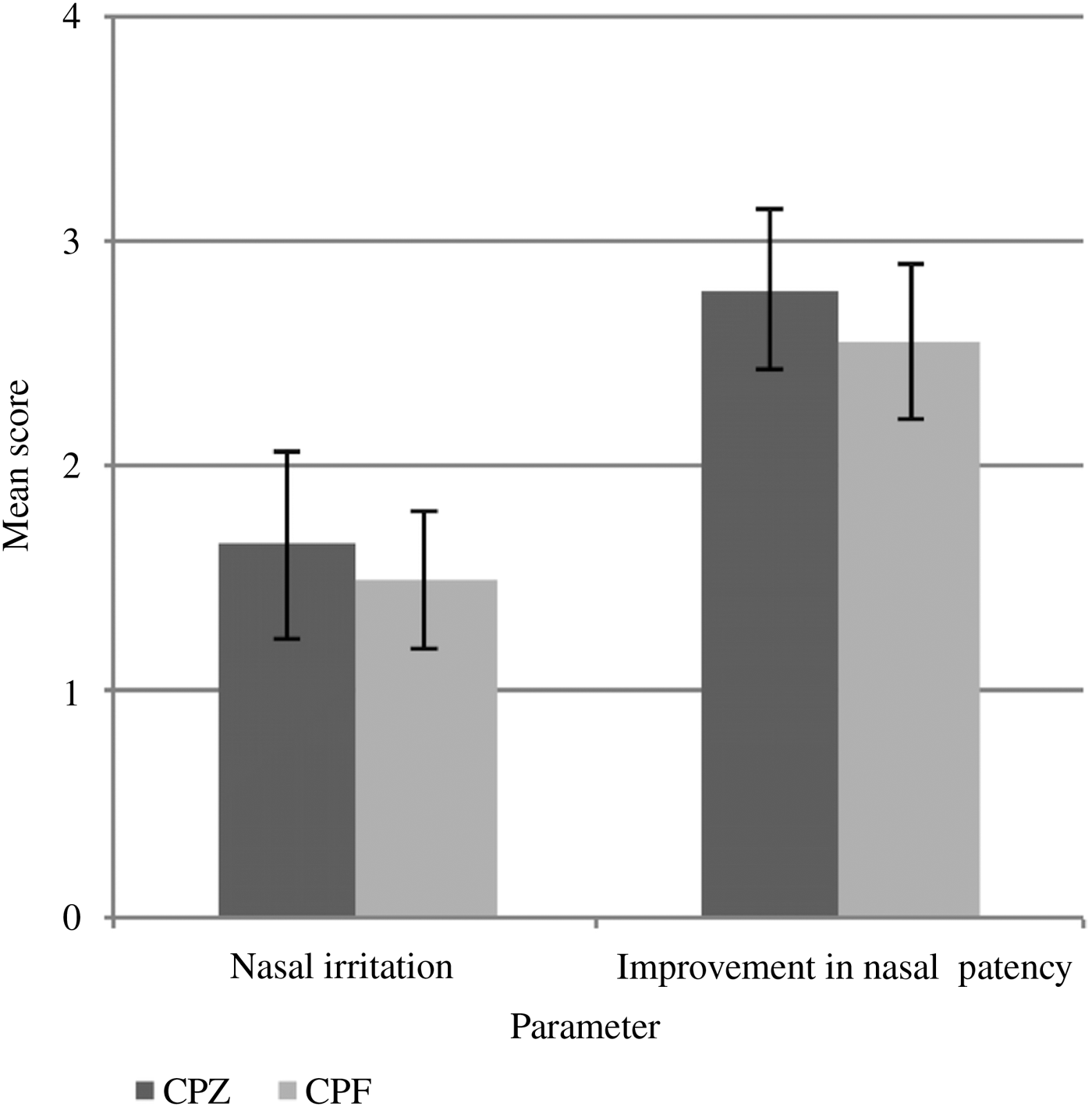
There was no statistically significant difference in reported nasal irritation between the two formulations (p = 0.39; Cohen's d = 0.16; 95 per cent CI = −0.21, 0.54). Participants reported similar levels of improvement in nasal patency following both sprays (p = 0.1; Cohen's d = 0.23; 95 per cent CI = −0.05, 0.51) (Figure 5).
A comparison of mean scores for the level of nasal irritation and improvement in nasal patency between Co-Phenylcaine Zest (CPZ) and Co-Phenylcaine Forte (CPF) (error bars ± 2 standard errors). 0 = none, 1 = minimal, 2 = mild, 3 = moderate, 4 = somewhat marked

The overall incidence of adverse events was 12.64 per cent (11 out of 87). Following the administration of Co-Phenylcaine Forte, three patients reported persistent rhinorrhoea, two reported nausea and one reported headache. Following the administration of Co-Phenylcaine Zest, two patients reported persistent rhinorrhoea, two reported nasal congestion and one reported nausea.
Discussion
This study aimed to determine if modifying the flavour of Co-Phenylcaine Forte would improve the patient experience, particularly with respect to the bitter taste. Significantly more patients preferred the formulation of Co-Phenylcaine Zest and the flavour profile was improved. Importantly, the additives did not appear to have a statistically significant impact on nasal irritation or patency, and they were not associated with an increase in the incidence of adverse events.
Most patients preferred the novel formulation; however, there were some that preferred Co-Phenylcaine Forte. These individuals may have found the flavour or scent overpowering; individual preferences may have included a dislike for vanilla flavouring. Unfortunately, identifying a universally enjoyed flavour is challenging, and is an inherent challenge of flavouring a medication.
Although the addition of the flavour and masking agent improved the aftertaste of Co-Phenylcaine Zest, it did not entirely abolish the bitterness of lignocaine. The bitter taste may be related to the structural similarity of lignocaine to denatonium benzoate. The latter is recognised as the bitterest compound available. Denatonium benzoate is a commonly used aversive agent added to products such as methylated spirits and antifreeze to prevent ingestion. 6 Given the close structural relation to this agent, completely abolishing the bitter taste of lignocaine will likely remain an inherent challenge.
The main limitation of this study is that, because of resource limitations and patient concerns, nasendoscopy was not performed after each formulation was administered, and the clinical efficacy of Co-Phenylcaine Zest could not be evaluated.
-
• Otolaryngologists in Australia commonly prescribe Co-Phenylcaine Forte prior to nasendoscopy
-
• The taste of Co-Phenylcaine Forte is widely recognised as unpleasant
-
• Participants preferred and were more satisfied with a Co-Phenylcaine Forte formulation containing an added flavour and masking agent
-
• The modified Co-Phenylcaine Forte formulation aftertaste was weaker and more pleasant
-
• There were no differences in efficacy between the modified and standard Co-Phenylcaine Forte formulations
Several studies have previously evaluated the efficacy and sensory attributes of various topical formulations and Co-Phenylcaine Forte prior to nasendoscopy;Reference Conlin and McLean 7 however, this is the first study to compare the standard Co-Phenylcaine Forte spray to a flavoured alternative. The use of flavoured additives is one of many methods used to improve the taste profile of pharmaceuticals.Reference Sharma and Chopra 8 The routine use of Co-Phenylcaine Forte in otolaryngology practice and its well-documented unpleasant taste make it an ideal candidate for reformulation. In the present study, patients preferred the vanilla flavoured co-phenylcaine spray.
Conclusion
This study supports the hypothesis that patients prefer and are more satisfied with a Co-Phenylcaine Forte formulation with a modified flavour. Because Co-Phenylcaine Forte is routinely used in clinical practice, efforts to generate new Co-Phenylcaine Forte formulations merit further investigation.
Acknowledgement
Thank you to the Metro South Health Biostatistics Clinic run by ‘QFAB@QCIF’ (the Queensland Facility for Advanced Bioinformatics at the Queensland Cyber Infrastructure Foundation, based at the Institute of Molecular Biology, the University of Queensland) for performing the statistical analysis.