INTRODUCTION
Tritrichomonas foetus is an extracellular protozoan parasite that colonizes the urogenital tract of cattle. This parasite is the etiological agent of bovine trichomoniasis, a venereal disease responsible for important production losses in livestock due to reproductive failures (BonDurant, Reference Bondurant2005; Rae and Crews, Reference Rae and Crews2006). Infected bulls are commonly asymptomatic, whereas cows present a complex symptomatology ranging from oligosymptomatic infections to severe complications including vaginitis, cervicitis, endometriosis, transient or permanent infertility and abortion (Parsonson et al. Reference Parsonson, Clarck and Dufty1976; Rae and Crews, Reference Rae and Crews2006).
During its life cycle, T. foetus possesses a trophozoite stage that is characterized by a pyriform body with three anterior flagella and one recurrent flagellum that is incorporated into an undulating membrane (Pereira-Neves et al. Reference Pereira-Neves, Ribeiro and Benchimol2003; Honigberg and Brugerolle, Reference Honigberg, Brugerolle and Honigberg1990). Under unfavourable growth conditions the typical pear-shape trophozoites internalize their flagella and adopt a spherical or ellipsoid shape referred as the endoflagellar form (EFF) or pseudocyst, as it does not possess a true cyst wall (Granger et al. Reference Granger, Warwood, Benchimol and De Souza2000; Pereira-Neves et al. Reference Pereira-Neves, Ribeiro and Benchimol2003, Reference Pereira-Neves, Nascimento and Benchimol2012; Andrade Rosa et al. Reference Andrade Rosa, De Souza and Benchimol2015). This form is also observed, although in low proportion, under in vitro axenic culture conditions (Pereira-Neves et al. Reference Pereira-Neves, Campero, Martínez and Benchimol2011). Transformation of typical trophozoites to pseudocysts has also been observed in other species of Trichomonadidae such as Trichomonas vaginalis, a human pathogen of the urogenital tract (Pereira-Neves et al. Reference Pereira-Neves, Ribeiro and Benchimol2003; Benchimol, Reference Benchimol2004; De Jesus et al. Reference De Jesus, Cuervo, Junqueira, Britto, Silva-Filho and Soares2007; Afzan and Suresh, Reference Afzan and Suresh2012), Tritrichomonas muris, rodent gut colonizers (Lipman et al. Reference Lipman, Lampen and Nguyen1999) and Trichomonas tenax, a commensal organism (Ribeiro et al. Reference Ribeiro, Santos and Benchimol2015).
Tritrichomonas foetus exhibits multiple granular organelles called hydrogenosomes that evolved from the same ancestral than mitochondria (Müller et al. Reference Müller, Mentel, Van Hellemond, Henze, Woehle, Gould, YU, Giezen, Tielens and Martin2012), and a complex cytoskeleton composed of a variety of structures such as a microtubular pelta-axostilar system and costa (Honigberg and Brugerolle, Reference Honigberg, Brugerolle and Honigberg1990; Müller, Reference Müller1993; Benchimol, Reference Benchimol2009). This trichomonad possesses the glucose metabolism compartmentalized in the cytoplasm and hydrogenosomes (Cerkasovova et al. Reference Cerkasovova, Cerkasov and Kulda1984; Lindmark et al. Reference Lindmark, Eckenrode, Halberg and Dinbergs1989; Ali and Nozaki, Reference Ali and Nozaki2007). Crucial steps of hydrogenosomal metabolism are mediated by iron–sulphur proteins (Müller, Reference Müller1988; Ellis et al. Reference Ellis, Williams, Cole, Cammack and Lloyd1993; Payne et al. Reference Payne, Chapman and Cammack1993; Townson et al. Reference Townson, Hanson, Upcroft and Upcroft1994), which explains the high iron nutritional requirements of this parasite.
Iron is an essential element for in vitro and in vivo survival and proliferation of trichomonads. This metal plays important roles during host–parasite interaction, such as modulating the expression of crucial metabolic and proteolytic enzymes and regulating immunological processes mediated by adhesins and extracellular matrix proteins (Alderete et al. Reference Alderete, Provenzano and Lehker1995; Crouch et al. Reference Crouch, Benchimol and Alderete2001; Ryu et al. Reference Ryu, Choi, Min, Ha and Ahn2001; Melo-Braga et al. Reference Melo-Braga, Rocha-Azevedo and Silva-Filho2003). In addition, iron regulates the expression of several genes at transcriptional and post-transcriptional levels (Torres-Romero and Arroyo, Reference Torres-Romero and Arroyo2009, Horváthová et al. Reference Horváthová, Safaríková, Basler, Hrdý, Campo, Shin, Huang, Huang, Lin, Tang and Tachezy2012; Beltrán et al. Reference Beltrán, Horváthová, Jedelský, Sedinová, Rada, Macinciková, Hrdý and Tachezy2013). To supply the high amount of iron required, T. foetus acquires it from different host sources such as lactoferrin, transferrin and haeme (Tachezy et al. Reference Tachezy, Kulda, Bahniková, Suchan, Rázga and Schrével1996; Tachezy, Reference Tachezy1998). The parasite may also obtain iron via endocytosis and pinocytosis of siderophores (Sutak et al. Reference Sutak, Tachezy, Kulda and Hrdý2004).
This study investigates the role of iron in regulating the life cycle and ultrastructure of T. foetus. Using the iron chelator 2,2-dipyridyl it was demonstrated that iron depletion from culture medium (named TYM-DIP inducer medium) interrupts parasite proliferation and induces a morphological transformation from pyriform trophozoites to spherical, non-replicative and non-motile pseudocysts. Inoculation of pseudocysts into iron-rich medium (standard TYM medium), or addition of a high concentration of FeSO4 to a TYM-DIP inducer medium, causes reversion of pseudocysts back to original pyriform morphology. These findings support previous studies that suggest pseudocysts are viable forms of the parasite and indicate that iron modulates the morphological transformation process.
MATERIALS AND METHODS
Chemicals
Trypticase peptone was purchased from Becton Dickinson (São Paulo, SP, Brazil), yeast extract, D-maltose, cysteine, potassium chloride, potassium phosphate monobasic, potassium phosphate dibasic and iron sulphate were purchased from Sigma (St. Louis, MO, USA); potassium carbonate and ascorbic acid were purchased from Merck (São Paulo, SP, Brazil). Milli-Q-purified water (Millipore Corp., Bedford, MA, USA) was used for all solutions. The iron chelator 2,2-dipyridyl is an organic, synthetic, membrane-permeable compound that associates with extracellular and intracellular iron (Breuer et al. Reference Breuer, Epsztejn and Cabantchik1995; Thompson and Carabero, Reference Thompson and Carabero2011).
Parasite culture
Tritrichomonas foetus K strain (Silva-Filho et al. Reference Silva-Filho, Elias and De Sousa1986) was used throughout. The parasites were axenically maintained at 37 °C in trypticase yeast extract maltose medium, (TYM: trypticase peptone 20 g L−1, yeast extract 10 g L−1, D-maltose 5 g L−1, cysteine 1 g L−1, potassium chloride 1 g L−1, hydrogenated potassium carbonate 1 g L−1, potassium phosphate monobasic 1 g L−1, potassium phosphate dibasic 0·5 g L−1, iron sulphate 0·1 g L−1, ascorbic acid 0·2 g L−1) pH 6·6 (Diamond, Reference Diamond1957), supplemented with 10% heat-inactivated bovine serum and 0·6 mm FeSO4 (standard TYM medium). For pseudocyst induction, parasites were cultivated in the TYM medium, pH 6·6, supplemented with 10% heat-inactivated bovine serum plus 300 µ m 2,2-dipyridyl (TYM-DIP inducer medium). In all assays, parasites viability was estimated by using the Trypan blue dye-exclusion test [0·4% in sterile phosphate-buffered saline (PBS)].
Effect of iron chelator on parasite proliferation and morphology
To evaluate the influence of iron chelation on parasite proliferation, 1 × 10⁵ parasites were inoculated in a standard TYM medium and a TYM-DIP inducer medium and incubated at 37 °C for 72 h. Cellular density and morphotypes were evaluated daily by counting in a haemocytometer. Tritrichomonas foetus cultivated for 48 h at 37 °C in the TYM-DIP inducer medium were harvested by centrifugation and washed twice with PBS, pH 7·2. Parasite morphotypes were analysed by differential interference contrast microscopy [interference contrast microscopy (DIC)].
Analysis of phenotype reversibility and the effect of FeSO4 on iron-depletion-induced pseudocysts
To evaluate whether iron-depletion-induced pseudocysts are viable and reversible forms, parasites cultivated in the TYM-DIP inducer medium at 37 °C for 48 h were collected by centrifugation at 2500 × g for 5 min, washed twice with PBS pH 7·2, resuspended in the standard TYM medium and incubated at 37 °C for 48 h.
Alternatively, to demonstrate that maintenance of the typical pear-shaped trophozoite morphology of T. foetus is dependent on iron, parasites were cultivated for 48 h in the TYM-DIP inducer medium and then 1·2 mm FeSO4 was added and incubated for additional 24 h. Parasite morphology was examined by light microscopy and morphotypes were counted using a haemocytometer.
Scanning electron microscopy (SEM) and transmission electron microscopy (TEM) analyses
Parasite trophozoites (5 × 10⁶ cells mL−1) were cultivated in the standard TYM medium or the TYM-DIP inducer medium for 48 h at 37 °C. The parasites were then fixed with 2·5% glutaraldehyde in 0·1 M Na-cacodylate buffer (pH 7·2) at room temperature for 1 h at 25 °C and post-fixed with a solution of 1% OsO4, 0·8% potassium ferricyanide and 2·5 mm CaCl2 in the same buffer for 1 h at 25 °C. The samples were dehydrated in an ascending acetone series, dried by the critical point method with CO2, mounted on aluminium stubs, coated with a 20 nm thick gold layer and examined using a Jeol JSM6390LV scanning electron microscope (Tokyo, Japan). For TEM analysis, after the dehydration step, the samples were embedded in PolyBed 812 resin and the ultrathin sections obtained were stained with uranyl acetate and lead citrate. The examination was performed in a Jeol JEM1011 transmission electron microscope (Tokyo, Japan).
Statistical analysis
Growth assays were carried out in triplicate. Statistical analyses were performed with GraphPad Prism (GraphPad software, San Diego, CA). The Student t test was used to analyse differences between parasite morphotypes. The data are presented as means ± s.d.
RESULTS
Iron-depletion-inhibited T. foetus growth and induced pseudocyst formation
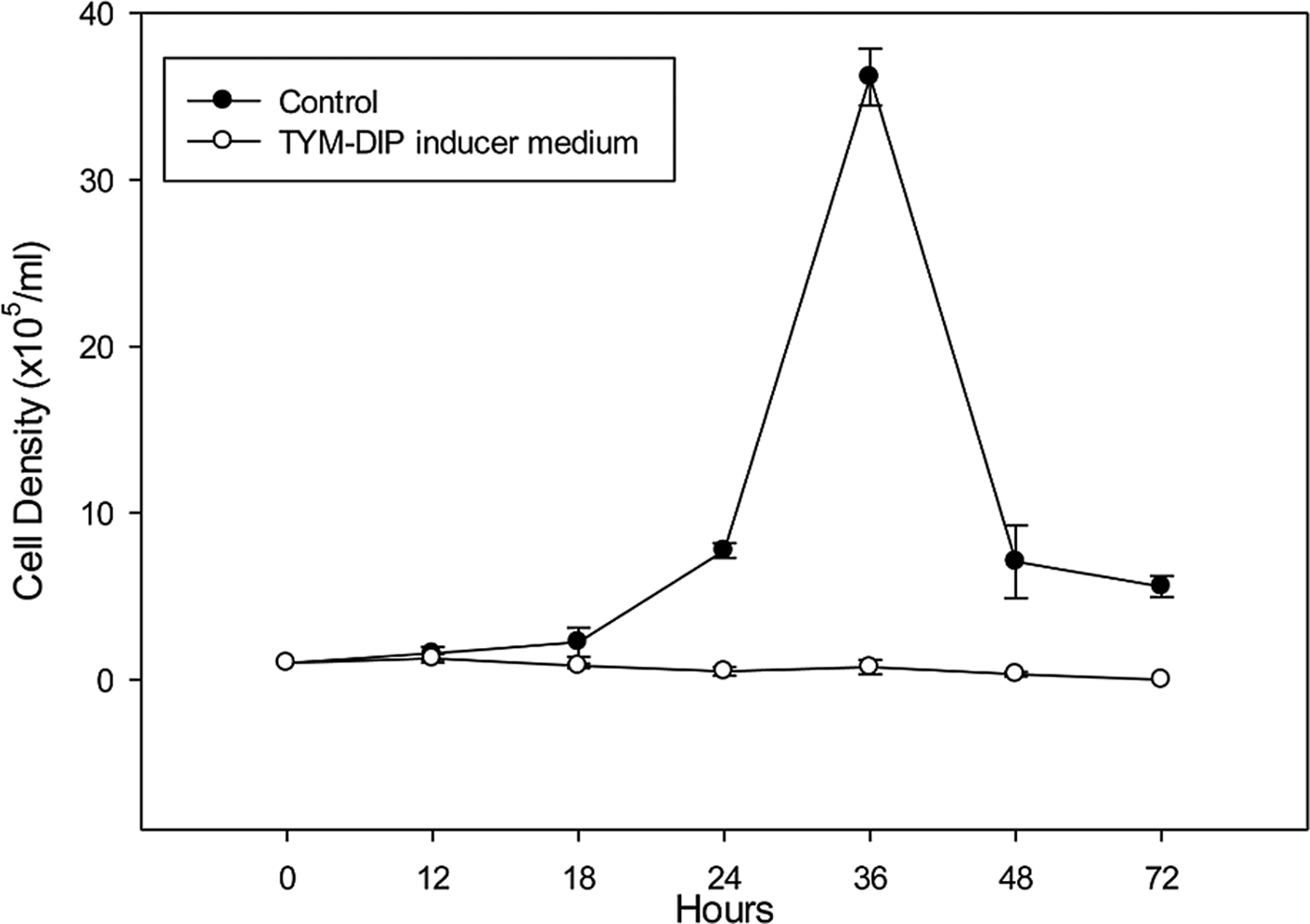
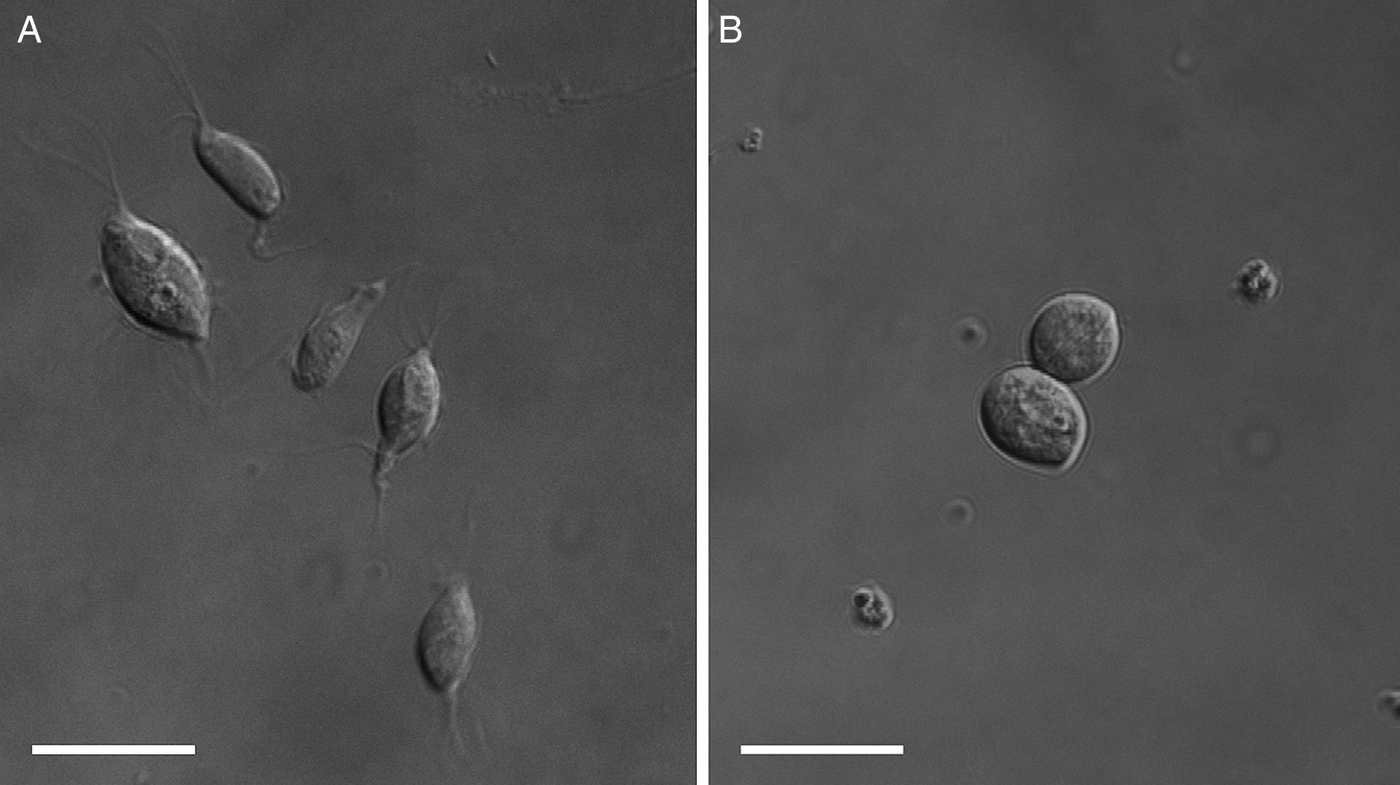
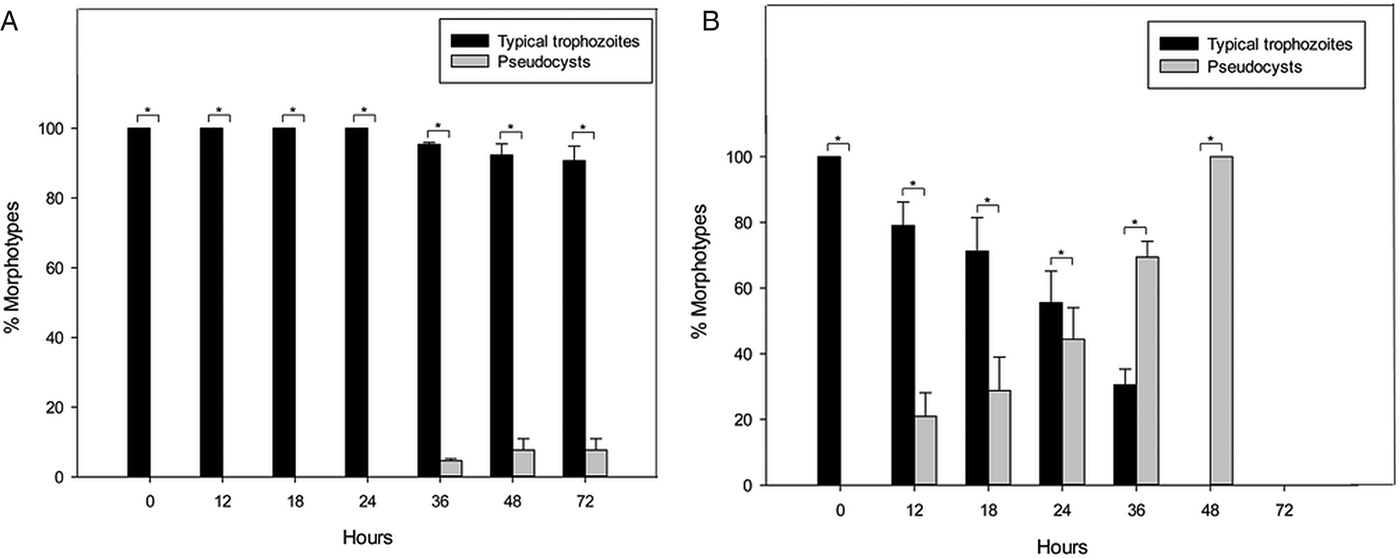
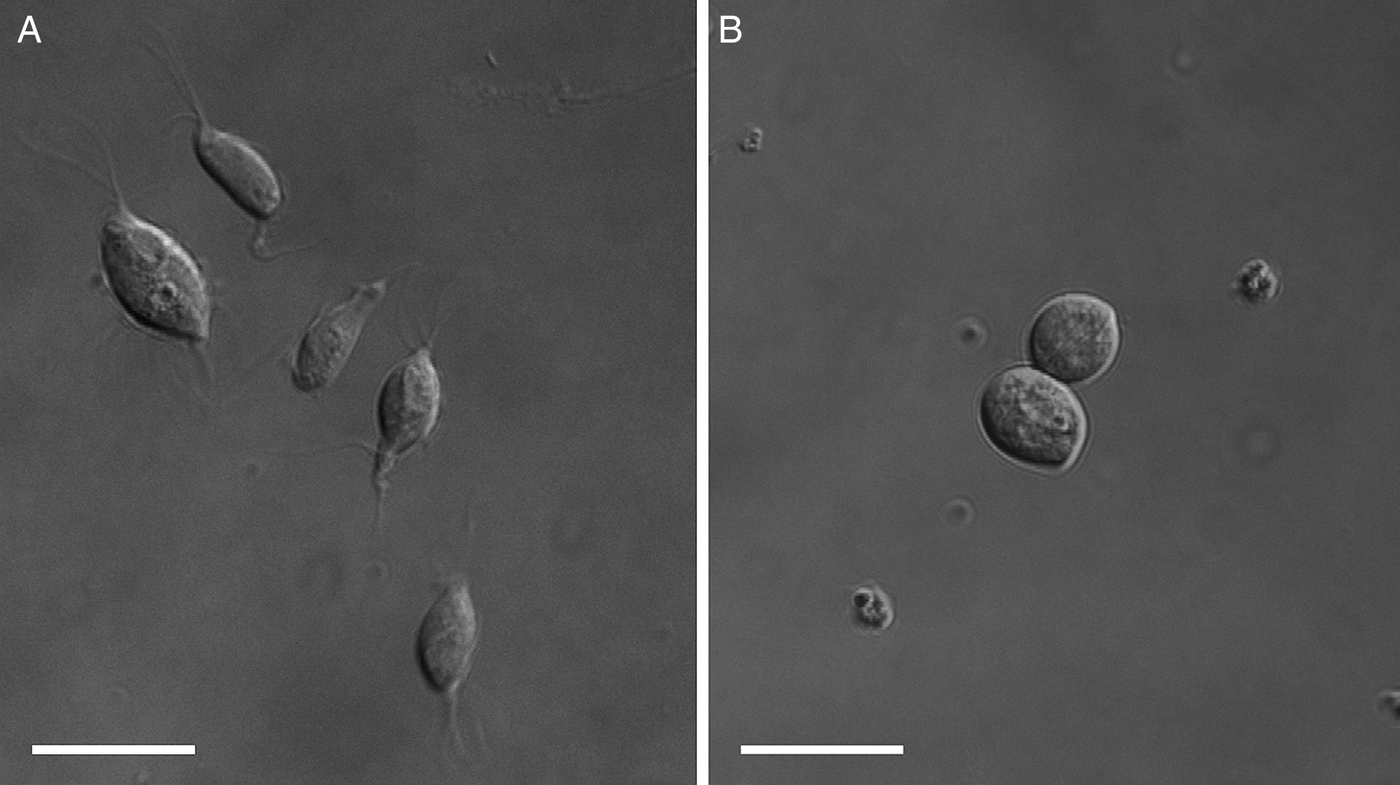
Parasites cultivated in a standard medium, rich in iron, reached the late logarithmic phase of growth at 36 h with a maximum cell density of ~3·8 × 106 parasites mL−1. In contrast, parasites inoculated into the TYM-DIP inducer medium did not proliferate, indicating that iron depletion inhibits T. foetus proliferation (Fig. 1). Light microscopy analysis of parasites cultivated in the standard TYM medium showed that up to 24 h of culture all parasites were motile pear-shaped trophozoites, whereas from 36 to 72 h of culture, 5–8% of the parasites displayed a spherical form without external flagella, resembling pseudocysts (Fig. 2A and Fig. 3A, Supplementary material 1). Drastic effects were observed on the morphology of parasites cultivated in the TYM-DIP inducer medium. Between 12 and 36 h of culture, increasing non-motile pseudocyst formation was observed concomitant with a decreasing typical pear-shaped trophozoite population (Fig. 2B; Fig. 3B, Supplementary material 1). At 48 h of culture in the TYM-DIP inducer medium, all cells exhibited the pseudocyst form, while no viable parasites were observed at 72 h (Fig. 3B).
Effect of iron depletion on T. foetus growth curve. Parasites were cultivated in the standard TYM medium (control – ●) or the TYM-DIP inducer medium (300 µ m 2,2-dipyridyl – ○) for 72 h at 37 °C. Counting of parasites was performed in triplicate by using a haemocytometer. Bars represent means ± s.e. from three independent experiments.

Differential DIC of the effect of iron depletion on T. foetus morphology. Parasites were cultivated for 48 h in the standard TYM medium (A) or the TYM-DIP inducer medium (B). Typical pear-shaped trophozoites are observed in A, whereas pseudocysts are observed in B. Bar = 20 µm.
Effect of iron depletion on T. foetus phenotypes. Parasites were cultivated for 72 h in the standard TYM medium (A) or the TYM-DIP inducer medium (B). Counting of parasites was performed in triplicates by using a haemocytometer. Results are presented as means and s.e. from three independent experiments. *Significant differences between morphotypes (P < 0·001).

Iron-depletion-induced alteration of ultrastructure organization of T. foetus
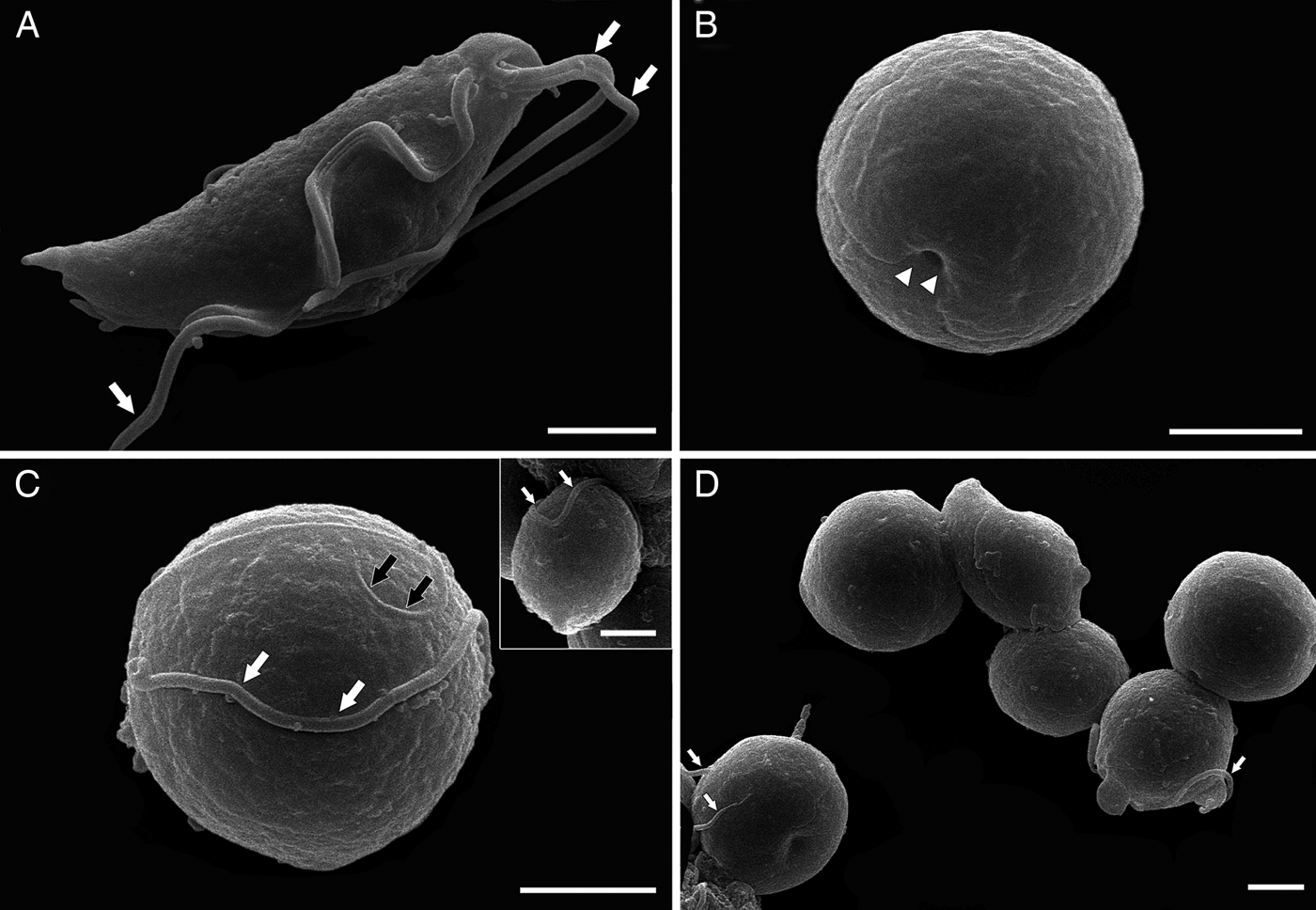
SEM analysis of parasites cultivated for 48 h in the standard TYM medium showed that the population is mainly composed of typical pear-shaped trophozoites with evident axostyle at the posterior region of the body, three anterior flagella and one recurrent flagellum (Fig. 4A). In contrast, parasites cultivated for 48 h in the TYM-DIP inducer medium showed a population mainly composed of spherical pseudocysts with all flagella internalized (Fig. 4B) and some oval or spherical pseudocysts at different stages of flagella internalization (Fig. 4C and D).
SEM analysis of the effect of iron depletion on T. foetus morphology. T. foetus cultivated in the standard TYM medium (A) or the TYM-DIP inducer medium (B–D). Typical pear-shaped elongated trophozoites; arrows show multiple externalized flagella (A). Pseudocysts obtained by iron depletion show rounded forms with all flagella internalized (B, D) and membrane invaginations (arrowheads – B) or exhibiting distinct stages of flagella internalization (arrows – C, D). Bars = 2 μm.

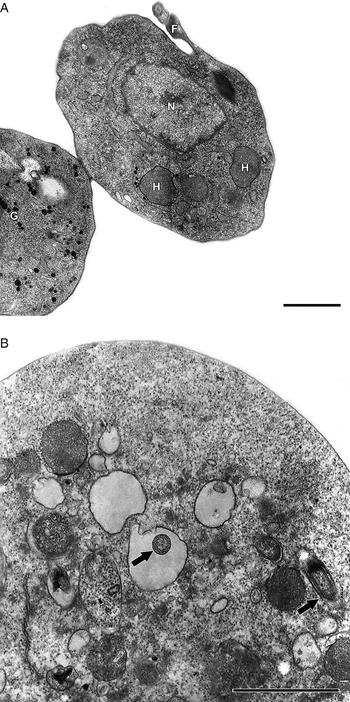
TEM analysis of parasites cultivated in the standard TYM medium showed typical trophozoites with externalized flagellum, and common subcellular organization with one anterior nucleus and hydrogenosomes (Fig. 5A). On the other hand, analysis of T. foetus cultivated in the TYM-DIP inducer medium revealed parasites with internalized flagella, clearly visible in the cytoplasm, surrounded by a membrane (Fig. 5B).
TEM analysis of the effect of iron depletion on T. foetus ultrastructure. T. foetus cultivated in the standard TYM medium (A) or the TYM-DIP inducer medium (B). (A) Trophozoites with typical morphology, H, hydrogenosomes; G, granules of glycon; N, nucleus and F, flagellum. (B) Parasites cultivated in the presence of iron chelator exhibit internalized flagella (black arrows). Bars = 1 µm.

Iron-depletion-induced pseudocysts are viable and reversible forms
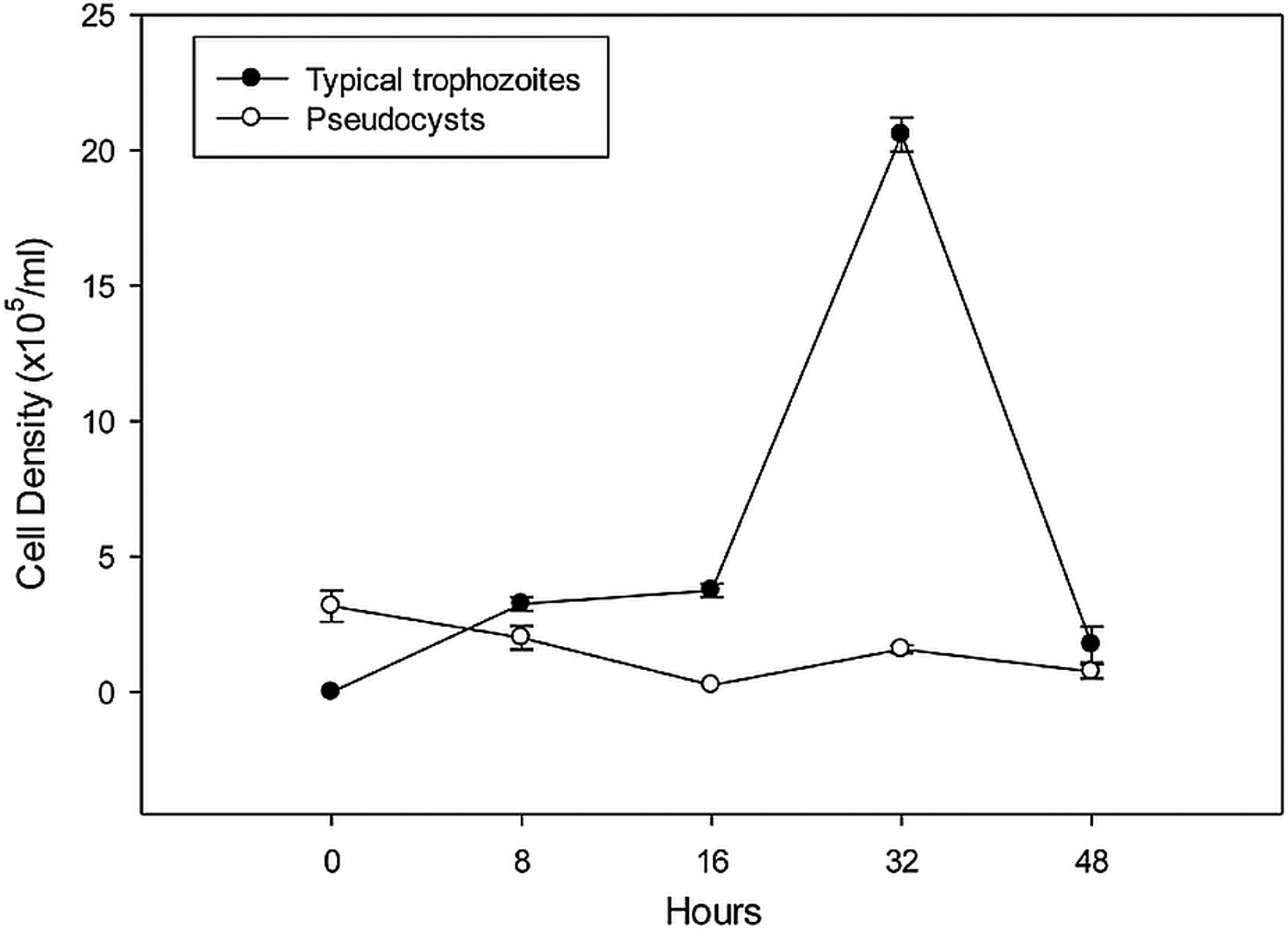
To verify whether pseudocysts induced by iron depletion are viable forms and if this morphological change is reversible, parasites cultivated for 48 h in the TYM-DIP inducer medium were reinoculated into the standard TYM medium and cultivated for an additional 48 h. A progressive increase in the flagellated trophozoite population was observed over time, reaching a maximum density at 32 h concomitant with a drastic decrease in the number of pseudocysts. At 48 h, a drastic decrease in the trophozoite population was observed, whereas no pseudocyst forms were detected (Fig. 6).
Analysis of phenotype reversibility of iron-depletion-induced pseudocysts. Parasites maintained for 48 h in the TYM-DIP inducer medium were collected, washed in PBS, and transferred to a fresh standard TYM medium. Cell density and parasite morphotypes were monitored for 48 h by counting with a haematocytometer. Data obtained from three independent experiments are presented as mean ± s.e.

Addition of FeSO4 to the TYM-DIP inducer medium reverted pseudocysts to trophozoites and recovered the parasites proliferation capability
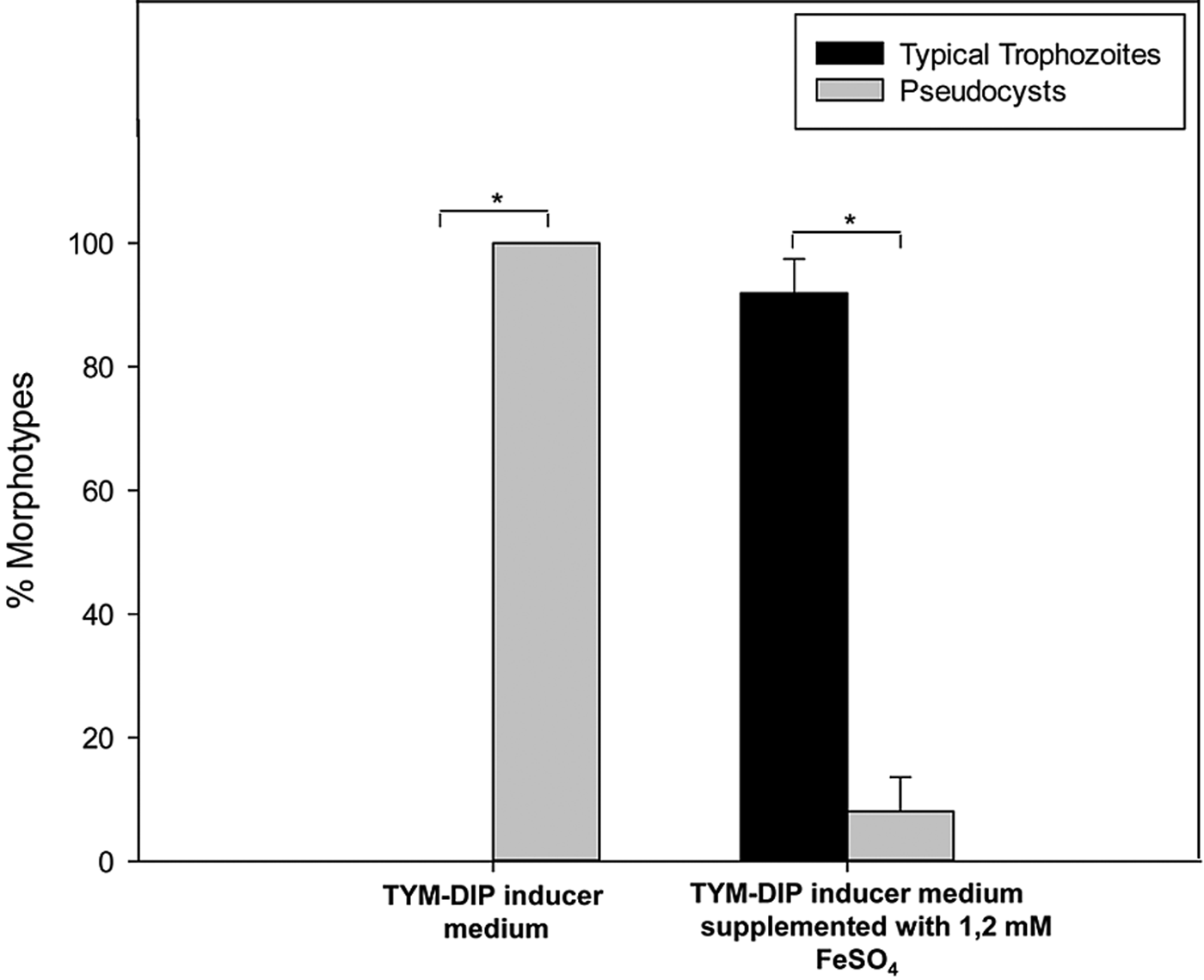
To determine whether trophozoite transformation to pseudocysts is an iron-dependent phenomenon, TYM-DIP inducer medium containing fully transformed pseudocysts was supplemented with 1·2 mm FeSO4. After 24 h of iron supplementation, ~90% of the pseudocysts recovered their typical pear-shape trophozoite form whereas ~10% remained in the pseudocyst form. In addition, pseudocysts maintained in the TYM-DIP inducer medium without FeSO4 supplementation did not exhibit morphological transformation to trophozoites (Fig. 7).
Effect of FeSO4 on iron-depletion-induced pseudocyst. Parasites were cultivated in in the TYM-DIP inducer medium for 48 h or the TYM-DIP inducer medium for 48 h, and then supplemented with 1·2 mm FeSO4 and cultivated for an additional 24 h. Parasite morphotypes were estimated by counting in a haematocytometer. Data obtained from three independent experiments are presented as mean ± s.e. *Significant differences between morphotypes (P < 0·001).

DISCUSSION
The importance of iron to many cellular processes of parasitic protozoa has been extensively documented (Loo and Lalonde, Reference Loo and Lalonde1984; Atkinson et al. Reference Atkinson, Bayne, Gordeuk, Brittenham and Aikawa1991; Merschjohann and Steverding, Reference Merschjohann and Steverding2006; De Jesus et al. Reference De Jesus, Cuervo, Junqueira, Britto, Silva-Filho and Soares2007; Lee et al. Reference Lee, Park and Yong2008). In trichomonads, the presence of iron in the culture medium is essential for the cell metabolism, phosphohydrolase activities and hydrogenossomal metabolism as well as for the expression of crucial proteins involved in adhesion and cytotoxicity to host cells (Alderete et al. Reference Alderete, Provenzano and Lehker1995; Vanacová et al. Reference Vanacová, Rasoloson, Rázga, Hrdý, Kulda and Tachezy2001; De Jesus et al. Reference De Jesus, Ferreira, Cuervo, Britto, Silva-Filho and Meyer-Fernandes2006; Hsu et al. Reference Hsu, Ong, Lee and Tai2009; Torres-Romero and Arroyo, Reference Torres-Romero and Arroyo2009; Horváthová et al. Reference Horváthová, Safaríková, Basler, Hrdý, Campo, Shin, Huang, Huang, Lin, Tang and Tachezy2012; Beltrán et al. Reference Beltrán, Horváthová, Jedelský, Sedinová, Rada, Macinciková, Hrdý and Tachezy2013). We previously demonstrated that iron depletion alters global protein expression in Tritrichomonas vaginalis and induces morphological changes to the parasite resulting in cell forms similar to pseudocysts (De Jesus et al. Reference De Jesus, Cuervo, Junqueira, Britto, Silva-Filho and Soares2007). Light microscopy revealed unusual morphological alterations in T. foetus cultivated in the absence of iron (Melo-Braga et al. Reference Melo-Braga, Rocha-Azevedo and Silva-Filho2003). In this study, iron depletion inhibited parasite proliferation and induced the transformation of pyrifom trophozoites into viable, non-replicative pseudocysts. Although the withdrawal of iron from the culture medium using 2,2-dipyridyl immediately inhibited parasite growth, the population remained viable for 48 h after treatment. These results are in agreement with previous reports that demonstrated that iron depletion affects the proliferation of other protozoan parasites including, T. foetus, T. vaginalis, Leishmania braziliensis, Leishmania major, Leishmania infatum, Plasmodium falciparum and Trypanosoma cruzi (Lalonde and Holbein, Reference Lalonde and Holbein1984; Atkinson et al. Reference Atkinson, Bayne, Gordeuk, Brittenham and Aikawa1991; Lehker and Alderete, Reference Lehker and Alderete1992; Soteriadou et al. Reference Soteriadou, Papavassiliou, Voyiatzaki and Boelaert1995; Melo-Braga et al. Reference Melo-Braga, Rocha-Azevedo and Silva-Filho2003; Mesquita-Rodrigues et al. Reference Mesquita-Rodrigues, Menna-Barreto, Sabóia-Vahia, Da Silva, De Souza, Waghabi, Cuervo and De Jesus2013). These data suggest that the mechanisms underlying iron regulation of cell proliferation may be similar among the different species of pathogenic protozoa.
Inhibition of T. foetus proliferation by iron depletion could be a result of direct or indirect mechanisms of cell growth regulation mediated by the metal. Parasites require high iron concentrations for the correct synthesis and function of Fe–S enzymes involved in hydrogenosomal energy metabolism, such as pyruvate: ferredoxin oxidoreductase (PFO), ferredoxin and [FeFe]-hydrogenase. Consequently, the absence of iron would impede the production and function of these enzymes, resulting in inhibition of hydrogenosomal function followed by a decrease in ATP production (Vanacová et al. Reference Vanacová, Rasoloson, Rázga, Hrdý, Kulda and Tachezy2001). In T. vaginalis, iron depletion downregulated the expression of PFO and ferredoxin and induced parasite transformation to spherical forms (De Jesus et al. Reference De Jesus, Cuervo, Junqueira, Britto, Silva-Filho and Soares2007). Downregulation of metabolic in T. foetus and T. vaginalis cultivated in iron depleted medium supports the theory that inhibition of parasite proliferation could occur by an uncharacterized, indirect mechanism such as negative feedback (Gorrell, Reference Gorrell1985; Tachezy et al. Reference Tachezy, Kulda, Bahniková, Suchan, Rázga and Schrével1996; Vanacová et al. Reference Vanacová, Rasoloson, Rázga, Hrdý, Kulda and Tachezy2001; De Jesus et al. Reference De Jesus, Cuervo, Junqueira, Britto, Silva-Filho and Soares2007). Alteration of hydrogenosomal metabolism could signal a decrease in cell proliferation and induce a lethargic state, which would avoid the production and accumulation of potentially toxic secondary metabolites. On the other hand, iron could also regulate parasite proliferation by a direct mechanism mediated by iron-responsive elements (IREs), located in untranslated regions (UTRs) of target mRNAs that control gene expression at the post-transcriptional level (Ong et al. Reference Ong, Huang, Líu and Tai2004; Solano-González et al. Reference Solano-González, Burrola-Barraza, León-Sicairos, Avila González, Gutiérrez-Escolano, Ortega-López and Arroyo2007; Torres-Romero and Arroyo, Reference Torres-Romero and Arroyo2009). It was recently shown that iron regulates the expression of only some copies of paralogous genes in T. vaginalis whereas other copies are not regulated by iron, indicating that iron regulatory mechanisms are even more complex than previously thought (Beltrán et al. Reference Beltrán, Horváthová, Jedelský, Sedinová, Rada, Macinciková, Hrdý and Tachezy2013).
Inhibition of T. foetus proliferation by iron depletion was followed by drastic morphologic changes. SEM analysis revealed that parasites cultivated for 48 h in iron-depleted medium acquired a spherical form with internalized flagella, resembling pseudocysts, also known as EFF. Intermediate forms exhibiting partial internalization of flagella were also observed. Flagella internalization in T. foetus pseudocysts induced by low temperature seems to follow a temporal dynamic in which the three anterior flagella are internalized together followed by the recurrent flagellum (Granger et al. Reference Granger, Warwood, Benchimol and De Souza2000; Pereira-Neves et al. Reference Pereira-Neves, Ribeiro and Benchimol2003). Flagella internalization seems to occur by processes similar to receptor-mediated endocytosis (Granger et al. Reference Granger, Warwood, Benchimol and De Souza2000; De Jesus et al. Reference De Jesus, Cuervo, Junqueira, Britto, Silva-Filho and Soares2007), as active endocytic machinery has been observed on the cell surface of trophozoites undergoing transformation to pseudocysts (Benchimol et al. Reference Benchimol, Batista and De Souza1990; Affonso et al. Reference Affonso, de Almeida and Benchimol1997). It was previously demonstrated that pseudocyst formation in T. vaginalis induced by iron depletion involves rearrangement of cytoskeletal structures along with the overexpression of actin genes, which may allow rapid morphological change to occur when exposed to different stimuli (De Jesus et al. Reference De Jesus, Cuervo, Junqueira, Britto, Silva-Filho and Soares2007). Tritrichomonas foetus seems to respond in a similar way when exposed to drugs or drastic temperature variation, internalizing flagella and becoming spherical (Granger et al. Reference Granger, Warwood, Benchimol and De Souza2000; Ribeiro et al. Reference Ribeiro, Pereira-Neves and Benchimol2002; Pereira-Neves et al. Reference Pereira-Neves, Ribeiro and Benchimol2003; Pereira-Neves and Benchimol, Reference Pereira-Neves and Benchimol2009; Pereira-Neves et al. Reference Pereira-Neves, Gonzaga, Menna-Barreto and Benchimol2015). TEM analyses corroborated the SEM results, revealing internalized flagella located in independent membrane invaginations, reinforcing that spherical forms induced by iron depletion are pseudocysts.
A recurrent question in the literature has surrounded the significance of pseudocysts of trichomonads: are these degenerative forms or are they viable intermediate forms resistant to variation in environmental conditions (Wenrich, Reference Wenrich1939; Samuels, Reference Samuels1957; Honigberg and Brugerolle, Reference Honigberg, Brugerolle and Honigberg1990; Petrin et al. Reference Petrin, Delgaty, Bhatt and Garber1998; Mariante et al. Reference Mariante, Lopes and Benchimol2004). This study demonstrated that the induction of pseudocysts by iron depletion is a reversible process such that spherical, non-replicative, non-motile forms recovered their typical pear-shaped and replicative trophozoite form after inoculation into the standard TYM medium. The growth of these trophozoites was similar to that observed in control parasites cultivated in the standard TYM medium. These results show that pseudocysts obtained by irondepletion are resistant, viable, non-replicative forms of the parasite, which revert back to the trophozoite form when conditions become favourable. Therefore, we postulate that formation of pseudocysts with such characteristics could confer to the parasite an additional capability for dissemination and host infection. In addition, pseudocysts maybe part of the normal T. foetus life cycle within the host, as small numbers of pseudocysts were observed in control cultures in this study as well as other studies (Pereira-Neves et al. Reference Pereira-Neves, Campero, Martínez and Benchimol2011). The term ‘pseudocyst’ has been historically used to describe rounded forms of the parasite with internalized flagella with a regular cellular membrane, in contrast to true cysts, such as those from Entamoeba spp. and Giardia spp., which possess a true cyst wall (Chatterjee et al. Reference Chatterjee, Bandini, Motori and Samuelson2015). Pioneering investigators considered pseudocysts as irreversible and degenerative forms of the parasite (Wenrich, Reference Wenrich1939; Samuels, Reference Samuels1957). It has since been established that these forms are viable and reversible as demonstrated in this study and by other investigators (Pereira-Neves and Benchimol, Reference Pereira-Neves and Benchimol2009).
The existence of several parasitic or free-living trichomonads that possess pseudocysts such as Trichomitus batrachorum, Trichomitus sanguisugae and Ditrichomonas honigbergii (Mattern et al. Reference Mattern, Honigberg and Daniel1973; Brugerolle, Reference Brugerolle1975; Farmer, Reference Farmer1993), reinforce the hypothesis that pseudocysts are intermediary forms that are resistant to variations in the environment. It was demonstrated that in preputial secretions from infected bulls, the pseudocyst form of T. foetus occurs more frequently than the pear-shaped parasites (Pereira-Neves et al. Reference Pereira-Neves, Campero, Martínez and Benchimol2011). Additionally, pseudocysts of T. foetus are more cytotoxic to Madin-Darby Canine Kidney (MDCK) epithelial cells than are trophozoites (Pereira-Neves et al. Reference Pereira-Neves, Nascimento and Benchimol2012). Pseudocysts of T. muris released in hamster feces and pseudocysts of trichomonads from the intestinal tract of birds were described as viable and infective forms (Pereira and Almeida, Reference Pereira and Almeida1940; Mattern and Daniel, Reference Mattern and Daniel1980; Friedhoff et al. Reference Friedhoff, Kuhnigk and Müller1991; Lipman et al. Reference Lipman, Lampen and Nguyen1999). It has been suggested that the ubiquitin–proteasome pathway, which is required for the cell cycle, may play an important role in the transformation of T. foetus trophozoites into pseudocysts (Pereira-Neves et al. Reference Pereira-Neves, Gonzaga, Menna-Barreto and Benchimol2015). Additionally, microtubules and calcium play important roles in the process of morphological reversibility of pseudocysts, participating in the mechanism of flagella externalization and restoration, resembling a process of exocytosis (Granger et al. Reference Granger, Warwood, Benchimol and De Souza2000). In this study, iron depletion triggered the morphological transformation of T. foetus from replicating trophozoites to non-replicative pseudocysts, confirming, that iron also behaves as a modulator in this process.
While iron is necessary for T. foetus survival, it was observed in this study that short term iron depletion does not cause cell death in all parasites, but instead induces phenotypic alterations, probably in order to allow the parasite to survive conditions of nutritional stress. The precise mechanism by which iron modulates pseudocyst formation requires further exploration.
SUPPLEMENTARY MATERIAL
The supplementary material for this article can be found at http://dx.doi.org/10.1017/S0031182016000573.
ACKNOWLEDGEMENTS
We are grateful to Plataforma de Microscopia Eletrônica, IOC FIOCRUZ for technical assistance.
FINANCIAL SUPPORT
This work was supported by the Fundação de Amparo à Pesquisa do Estado de Rio de Janeiro – FAPERJ (JCNE E-26/201·545/2014 to P.C.). JBJ and P.C. are CNPq PQ-fellows (J.B.J. PQ Process No. 308679/2012-1; P.C. PQ Process No. 306393/2014-0).
CONFLICTS OF INTERESTS
The authors declare that they have no competing interests.
AUTHORS’ CONTRIBUTIONS
CLFC and JBJ designed the study. CLFC, RFSMB, NSF, CB, LSV and GDL performed the experimental work. CLFC, RFSMB, PC and JBJ analyzed the data. CLFC, RFSMB, PC and JBJ prepared the manuscript. All authors read and approved the final manuscript.