Allergic respiratory disease (ARD) such as allergic rhinoconjunctivitis and/or asthma (a-RC/asthma) is a significant public health problem in industrialized countries (Reference Jarvis, Luczynska and Chinn13;Reference Linneberg, Gislum and Johansen17). Because allergy clinics compete with other healthcare providers for resources, knowledge about the costs and benefits of interventions is a prerequisite for optimal resource allocation.
Intervention against ARD manifestations can be done by allergen avoidance, pharmacological treatment, and by allergen-specific immunotherapy. Allergen avoidance is very difficult, and the effect has been questioned. Pharmacological treatment reduces symptoms, but has no long-term or disease-modifying effects. Allergen-specific subcutaneous injection immunotherapy (SCIT) also called “allergy-vaccination,” has shown a long-term effect after discontinuation of treatment (Reference Durham, Walker and Varga9;Reference Jacobsen, Niggemann and Dreborg12), and represent the only treatment with disease modifying effect. SCIT includes weekly injections with increasing doses of specific allergens until a maintenance dose is reached. The maintenance dose is given at 6 ± 2 weeks intervals for 3 to 5 years. Controlled studies have documented that SCIT significantly increases the quality of life (Qol), reduces symptoms and use of medication, and reduces the risk of developing new allergies and asthma (Reference Calderon, Alves and Jacobson7;Reference Des Roches, Paradis and Menardo8;Reference Pajno, Barberio, De Luca, Morabito and Parmiani19;Reference Walker, Pajno and Lima25). SCIT is a reimbursed treatment in Denmark with a co-payment for the medicine of approximately DKK 4,500 (exchange rate, €7.50) over a 3-year period. Behavioral aspects are interesting in relation to SCIT because this treatment represents an intervention requiring a large investment of time and effort from the patient. Consequently, one may assume that there are significant sociodemographic barriers to access.
In this study, we focus on measuring the potential health gains associated with SCIT in a cohort of respondents suffering from a-RC/asthma. Moreover, we measure the value of the potential health gain in monetary terms by use of stated preference willingness-to-pay (WTP) questions. We further focus on the characteristics of those patients who state that they are interested in SCIT and willing to pay to verify whether disease burden or other sociodemographic characteristics determine the interest in SCIT.
OBJECTIVES AND HYPOTHESES
First, we want to elicit WTP for SCIT in a cohort of respondents suffering from a-RC/asthma. Second, to investigate the extent to which patients self-select to SCIT according to need or other sociodemographic characteristics, such as income, education, age, and gender. Third, by benchmarking hypothetical and revealed demand, to determine whether barriers for obtaining SCIT exist.
We chose to measure the need for SCIT in terms of RC classification, self-reported allergy in years, number of contacts with general practitioner (GP), number of respondents who had received alternative treatments over the past year and number of sick days. Potential barriers to access were identified as income, level of education, age, and gender.
We hypothesized that the stated hypothetical demand for SCIT would be a function of need and that demand would increase with severity of the allergy. We also hypothesized that a high level of education would increase demand, because SCIT represents a long-term investment, equivalent to the long-term investment in education. We thus expected a correlation between willingness to invest in SCIT and willingness to invest in education where both preferences rest on the individuals’ time preference (Reference Folland, Goodman and Stano10). We expected that a low level of education is associated with a reduced awareness of SCIT as an alternative to symptom relief and that being less educated decreases the individual's ability to communicate and enforce a demand for SCIT. We further expected that higher income would facilitate demand for SCIT.
METHODS
Respondents
The respondents were recruited from a general population study, the Helbred2006 study. Data collection for Helbred2006 took place between June 2006 and June 2008 and included 3,471 persons aged 18–69 years randomly selected from the general population of Copenhagen, Denmark.
Helbred2006 respondents reporting a-RC/asthma symptoms completed an additional questionnaire about Qol and classified their RC severity according to the Allergic Rhinitis and its Impact on Asthma (ARIA) Guideline as Intermittent or Persistent and as Mild or Moderate-Severe (Reference Bousquet, Khaltaev and Cruz2). The respondents also classified a possible asthma according to the Global Initiative for Asthma (GINA guideline) as Intermittent, Mild Persistent, Moderate Persistent, or Severe Persistent (Reference Bousquet, Clark and Hurd6). The respondents who completed the additional questionnaire were selected for this study if they had not received any allergy-specific immunotherapy treatment.
We assessed respondents’ Qol by way of a disease-specific questionnaire, the Rhinoconjunctivitis Quality of Life Questionnaire (RQLQ) (Reference Juniper, Thompson and Ferrie14) and the generic EQ-5D instrument (Reference Kind, Dolan and Gudex15).
The Questionnaires
The RQLQ consists of twenty-eight items distributed across seven domains: Activities, sleep, non–nose-eye problems, practical problems, nasal symptoms, eye symptoms, and emotional problems. The domain score is the average score within each domain. Each item is divided into seven levels on an ordinal scale with zero denoting “Not troubled” and six denoting “Extremely troubled.” Patients were asked to fill in the RQLQ items for a typical day with allergic symptoms, instead of the last week as prescribed by the standard RQLQ.
The EQ-5D is an instrument for describing and valuing Qol as numerical scores representing patient valuation of different health conditions. It consists of five items: mobility, self-care, usual activities, pain/discomfort, and anxiety/depression. Each item is divided into three levels: no problems, some problems or extreme problems, thus defining 243 possible health states to which has been added “unconscious” and “dead” for a total of 245 in all. The single index score was obtained by incorporating Danish population preference weights provided by the EuroQol-Group (Reference Pedersen, Wittrup-Jensen and Brooks20).
Potential Quality-Adjusted Life-Year Gain
For the EQ-5D items, respondents were asked to report their general health state on a “typical day with allergy symptoms” as well as on a “typical day without allergy symptoms,” instead of “today” as prescribed by the standard EQ-5D. Asking respondents to report their Qol in both settings enables estimation of the maximal potential quality-adjusted life-year (QALY) gain that can be obtained by SCIT. The respondent's potential QALY gain per year was derived as the difference between perceived health with and without a-RC/asthma multiplied by the reported number of days with allergy during the past year.
Between June 2006 and September 2007, the first of 452 consecutive respondents reporting symptoms of a-RC/asthma from the Helbred2006 study were asked to participate and complete the additional questionnaire, 317 (70.1 percent) completed it.
Willingness-to-Pay Methods
WTP valuations were derived using a dichotomous choice question (DC-q), which was followed up by an open ended WTP question (o-WTP-q) (Reference Bateman, Carson and Day4). Before presented with these WTP questions, respondents were asked whether they would consider accepting SCIT treatment if a specialist doctor judged that it could alleviate their symptoms. The introductory text and the screening question were as follows.

Respondents, who stated that they were willing to consider SCIT treatment, were subsequently presented with a DC-q with the following phrasing.
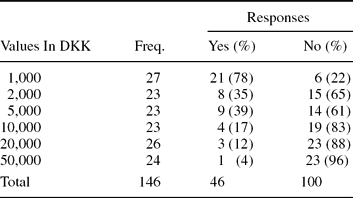
Respondents were presented with a randomly drawn out-of-pocket payment for a complete SCIT treatment, and asked to state whether they would pay the offered price. The price bids presented to respondents by random allocation were DKK; 1,000, 2,000, 5,000, 10,000, 20,000, or 50,000.
Subsequently, we presented respondents with an o-WTP-q to derive a maximum WTP estimate for each individual. An additional question was posed in the case of zero bid responders to evaluate their justification for this response. The questions are presented below.
The responses to the DC-q were analyzed by way of logistic regression analysis where the dependent variable is choice (= 1 if yes; = 0 if no) and the only explanatory variable is the price bid that the respondent faces. The logistic regression analysis provides two coefficients: a coefficient associated with price reflecting the expected negative association between a yes response and the price bid, and a constant coefficient reflecting the propensity to accept the intervention on offer irrespective of price. The average maximum WTP across all respondents is derived by estimating the price at which the negative utility associated with price exactly negates the (expected) positive utility associated with the intervention per se. This estimate is derived by dividing the constant coefficient with the nominal value of the price coefficient.
Revealed Participation Versus Hypothetical Participation
To benchmark the characteristics of the hypothetical participants with the characteristics of actual current participants in SCIT programs, participants from another study, the SABAL study, were used. The SABAL study consists of 254 patients having started SCIT against grass pollen and/or house dust mite allergy in 2005–06 (Reference Petersen, Kronborg and Gyrd-Hansen22).
Statistical Analyses
Statistical analyses were performed in STATA 9.2 (StataCorp LP, College Station, TX, USA). Continuous variables are presented as mean ±1 standard deviation (SD) and categorical variables are presented with frequencies. Student's t test was used to compare mean values on continuous variables. Chi-squared test was used to test differences on categorical variables. All p values of less than 0.05 were considered statistically significant. For the WTP estimates based on the DC-q, we calculated 95 percent confidence limit (CL) using the delta method (Reference Green11). The DC-q responses were analyzed using logistic regression. When analyzing the association between maximum WTP and the sociodemographic characteristics of respondents as well as allergy profile, we used linear regression analysis with the logarithm of WTP as the dependent variable.
RESULTS
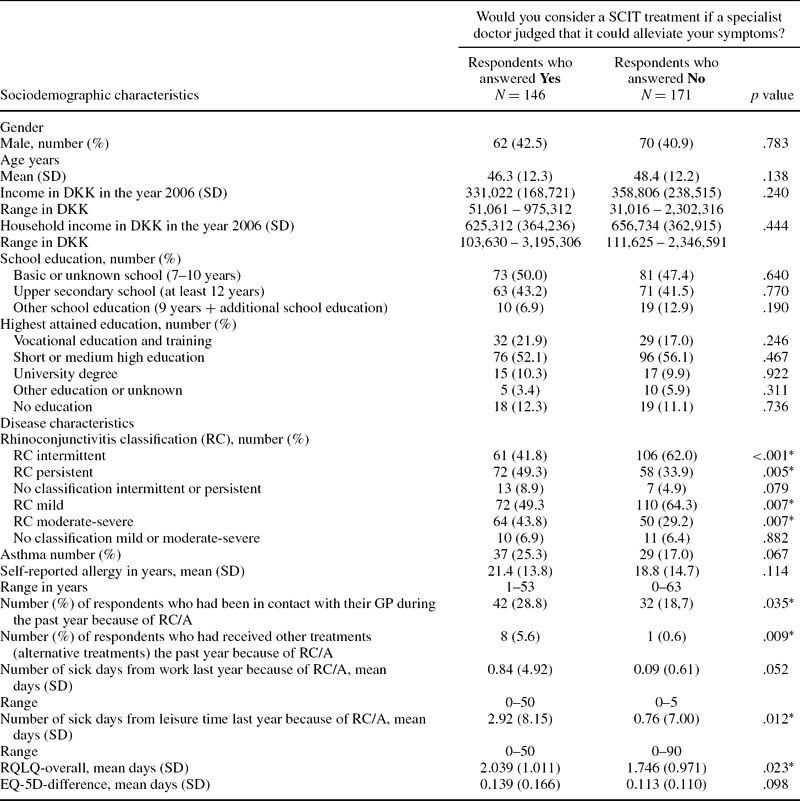
Of the 317 respondents, 185 (54.4 percent) were women. The average age of the study participants was 47.4 years, 146 (46.1 percent) would consider SCIT if a specialist doctor judged that it could alleviate their symptoms. Sociodemographic and clinical characteristics of the yes/no-respondents to this initial question are outlined in Table 1.
Baseline Characteristics of the Participants: Bivariate Analyses

*A p value less than 0.05.
RC/A, rhinoconjunctivitis/asthma; GP, general practitioner; RQLQ, Rhinoconjunctivitis Quality of Life Questionnaire; EQ-5D-difference, difference in health-related quality of life score between days without allergy compared to days with allergy symptoms.
As shown in Table 1, there were no differences in the sociodemographic characteristics of the yes/no respondents. Concerning the disease characteristics, there were more yes-responders among respondents with the most severe RC diagnoses, a higher RQLQ score, allergy related visits to their GP, alternative treatments, and more sick days. This result suggests that interest in SCIT is a function of need rather than sociodemographic background.
Of the 146 respondents who would consider SCIT, 99 respondents indicated that they were willing to pay a positive amount for SCIT, while 47 respondents had a WTP of zero DKK. Of the ninety-nine respondents, ninety-seven (98.0 percent) were sure, very sure, or quite sure and two (2.0 percent) were unsure or very unsure they would in fact be willing to pay the amount stated. Of the forty-seven respondents with a zero WTP response, thirty (64 percent) thought that health services should be free of charge, two (4 percent) thought that the SCIT treatment would not do them any good, one (2 percent) did not know why, seven (15 percent) wrote other reasons and seven (15 percent) had not stated any reason for their zero response. In the following analysis of WTP for SCIT, we exclude all zero bidders. The argument behind this is that the 64 percent can be categorized as protest bidders (i.e., their response does not reflect their valuation of SCIT, but their attitude to out-of-pocket payment) and the remaining responders must be categorized as nonparticipants and should in retrospect have declined the offer of SCIT in the initial screening question. Therefore, in fact the corrected number of 129 respondents (40.7 percent) would consider SCIT.
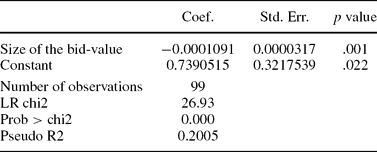
The results of the logistic regression of the responses given by the remaining ninety-nine respondents are given in Table 2a. A mean estimate of WTP for SCIT is amounting at DKK 6,774 (95 percent CL, 2,607–10,940). For distribution of the yes/no responses to the DC-q bids, see Table 2b.
Logistic Regression of Acceptance of SCIT. Explanatory Variable: Price

Distribution of the Closed-Ended WTP Bids

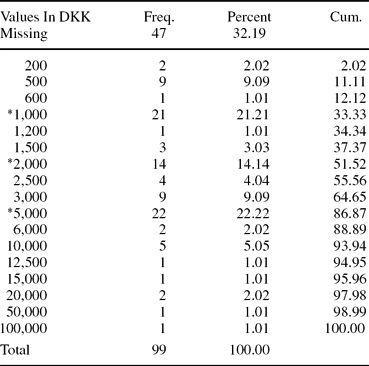
From the o-WTP-q, the mean WTP for SCIT was estimated to DKK 4,916 (min–max DKK, 200–1,000,000; median DKK, 2,000), for distribution see Table 2c. Exclusion of the two respondents who were unsure or very unsure they would in fact be willing to pay the amount stated did not affect the results.
Distribution of the Open-Ended WTP Question

*58% of the respondents have the following three WTP digits; DKK 1,000, 2,000 and 5,000.
Percentiles of the open-ended question 10% 25% 50% 75% 90%
In DKK: 500 1,000 2,000 5,000 10,000
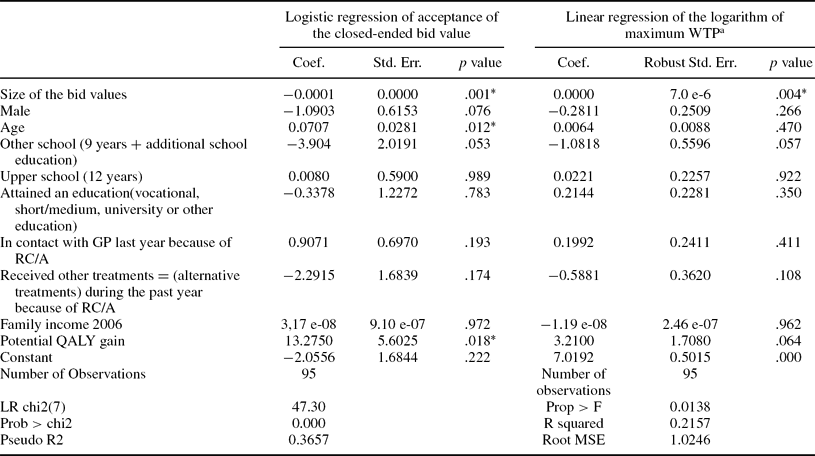
Table 3 presents an extended analysis where sociodemographic variables (gender, age, years of school education, respondents who had attained an education, family income) are included as well as variables that indicate behavioral patterns (in contact with GP; received alternative treatments during the past year because of a-RC/asthma) as potential explanatory variables. We further include potential QALY gain as a composite score for need.
Multivariate Logistic and Linear Regression of WTP (Based on Discrete Choice and Open-Ended Questions) on the Sociodemographic, Health Behavior- and Expected Potential Health-Related Quality of Life Gain Variables

*p value < .05.
aIn order to ensure normal distribution of the residuals the logarithm of the open-ended WTP was used as dependent variable.
RC/A, rhinoconjunctivitis/asthma; GP, general practitioner; QALY, quality-adjusted life-year.
Generally, few associations between WTP for SCIT and the investigated variables in Table 3 were found with the exception of a positive correlation between WTP for SCIT and age, and WTP for SCIT and potential QALY gain for the DC-q. Correspondingly, a marginal positive correlation was found between WTP for SCIT and potential QALY gain for the o-WTP-q (p = .064). In the o-WTP-q, there was starting point bias (p = .004), but because the respondents were randomly allocated to different bid values, this was not considered a problem.
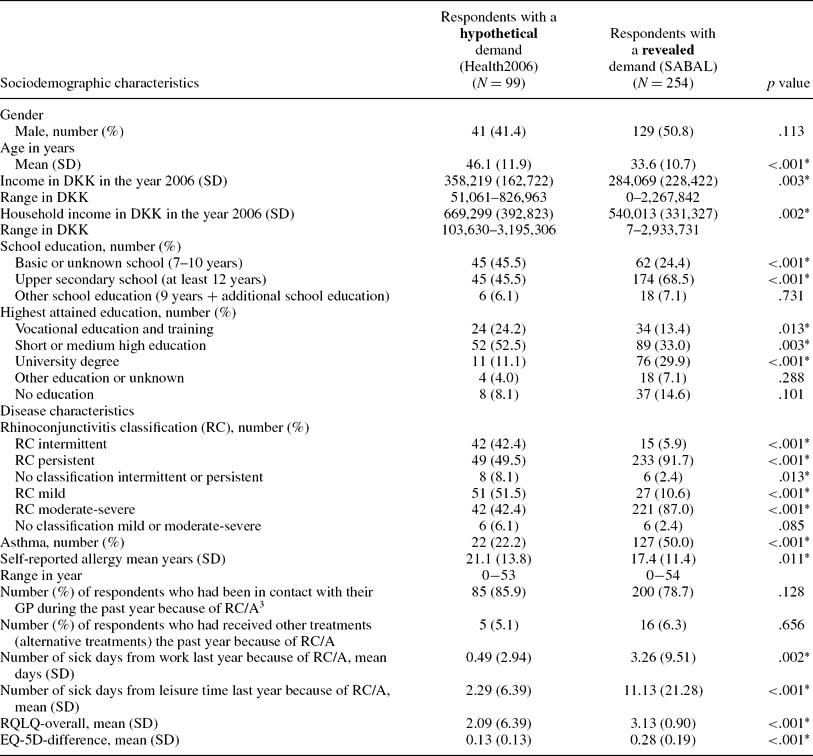
In Table 4, the characteristics of the ninety-nine respondents, who have stated that they associate a positive value with SCIT, are compared with respondents, who have actually demonstrated a demand for SCIT (Reference Petersen, Kronborg and Gyrd-Hansen22).
Characteristics of the Respondents, Hypothetical versus Revealed Demand: Bivariate Analyses

*A p value less than .05.
RC/A, rhinoconjunctivitis/asthma; GP, general practitioner; RQLQ, Rhinoconjunctivitis Quality of Life Questionnaire; EQ-5D-difference, difference in health-related quality of life score between days without allergy compared to days with allergy symptoms.
Table 4 shows that respondents stating a positive hypothetical WTP for SCIT are older, richer, and less educated than respondents who actually initiate a demand for SCIT. The results in Table 4 also clearly show that income is not a barrier to demand SCIT, because those who actually generate a demand have a lower income than those who merely state a hypothetical WTP. The results further indicate that patients who have realized their demand for SCIT have more severe RC diagnoses, are more likely to have an asthma diagnosis; their Qol is lower and number of sick days greater.
DISCUSSION
In a cohort of allergy sufferers randomly selected from the general population, 40.7 percent were potentially interested in undergoing SCIT treatment and these respondents were clearly those who had more severe a-RC/asthma symptoms. Because SCIT is indicated for patients with moderate and severe allergic rhinitis as well as for patients with mild and moderate asthma, only a fraction of the sample would be expected to be candidates for SCIT. The results suggest that respondents do well in self-selecting themselves to SCIT on the basis of need. Need is here defined as disease burden measured in terms of RC classification, RQLQ-score, number of contacts with GP due to symptoms, number of respondents who had received alternative treatments the past year because of a-RC/asthma, and number of sick days due to allergy. All these factors play a statistically significant role in explaining an interest in SCIT, while sociodemographic characteristics have no statistically significant explanatory power. Likewise, sociodemographic background does not explain a respondent's maximum WTP for SCIT, while potential QALY gain has a statistically significant impact.
When comparing indicators of need and sociodemographic characteristics among those respondents having a hypothetical interest in SCIT with the characteristics of patients actually having managed to receive SCIT, however, a different result is obtained. This analysis reveals that sociodemographic characteristics may play a major role in explaining discrepancies between hypothetical demand and revealed demand. Income is not a barrier to demand SCIT, whereas being older and having low education appears to be barriers. The underlying reasons for these barriers cannot be verified in this study, but we hypothesize that individuals with lower education are less knowledgeable about treatment options in general and of SCIT in particular. Moreover, it may be more difficult for respondents with lower education to express their demand for SCIT and to overcome institutional barriers. Because we are comparing two groups to which respondents self-select themselves, unobserved characteristics may represent important explanatory factors in the selection process, and these characteristics may correlate with one or more of the observed factors (e.g., age and education).
A mean estimate derived on the basis of the association between price bid and probability of acceptance amounts to €903 (95 percent CL, 348–1,459). When respondents were directly asked to indicate their maximum WTP for SCIT the mean estimate is lower at €665 (with a median of €267). The distribution is strongly skewed to the right as is frequently the case with WTP bids. The advantage of analyzing closed-ended WTP is that this procedure minimizes nonresponses and avoids outliers. In this study, there were very few outliers in the o-WTP-q, two respondents would pay €27 and one would pay €13,333. However, it has previously been observed that WTP estimates derived from DC-q are significantly and substantially larger than those resulting from comparable o-WTP-q (Reference Ajzen, Brown and Carvajal1;Reference Bateman, Carson and Day4). This observation is in accordance with the results of the present study.
The majority (98 percent) of the respondents were sure, very sure, or quite sure that they would in fact be willing to pay the stated amount, which suggests that the estimated value of €665 is a robust estimate. In contrast to other studies (Reference Bala, Wood and Zarkin3;Reference Smith23) and despite the relatively small sample size, a correlation is observed between WTP and QALY gains, when WTP is based on the DC-q. We find a near statistically significant correlation when the context is the o-WTP-q.
A potential bias in this study is whether respondents understand and take note of the information that is provided to them. In the introductory text given to respondents, it is not explicitly stated that SCIT may protect against development of asthma. Nor do we provide information on the newest evidence indicating that the remission rate of a-RC seems to be lower than previously anticipated (Reference Bodtger and Linneberg5), and that the natural course of the disease may involve development of new allergies (Reference Linneberg, Nielsen and Madsen18). The preventive aspects of SCIT on potential disease aggravation may not have been appreciated by respondents. Lack of explicit description of these issues may results in an underestimated WTP. Framing of the description of the potential benefits of SCIT will clearly affect WTP. We chose to present a short description of the most important effect of SCIT to minimize the cognitive burden on respondents. Whether a more lengthy and detailed description of SCIT benefits would have provided WTP values of a significantly different magnitude cannot be verified. A long and detailed description may, however, have introduced anchoring on specific items of information, e.g., information mentioned first or last. By keeping the information in short form we have avoided this problem (Reference Bateman, Carson and Day4).
The average income of the respondents’ in the DC-q study is higher (DKK 358,000) than the income level of the average tax payer, which in 2006 was DKK 262,000. Hence, the WTP figures presented here may be biased by a marginal utility of income that is lower than the marginal utility of income of the average taxpayer. This is not a problem if SCIT is solely financed by user charges, but may be problematic if SCIT is partly or fully financed by means of taxes as in the case of SCIT. That personal and household income is not associated with WTP does however suggest that marginal utility of income does not affect WTP in the present context. The lack of association is strongly indicated by the very high p values (Table 3). The fact that income is not statistically significantly related questions the validity of the elicited maximum WTP estimates. To the extent that individuals may have anchored their responses to their knowledge of the actual out-of-pocket price for SCIT or their perception of a reasonable out-of-pocket expense, this invalidates the valuation assessment. By presenting respondents with price-bids that varied from DKK 1,000 to DKK 50,000 such anchoring was potentially avoided, but the present analysis cannot verify whether the strategy had an impact. Two alternative possible explanations are (i) that respondents—perhaps due to the high process costs in terms of time and effort—generally do not value SCIT highly and that the relatively low valuation implies that expressed WTP is not influenced by ability to pay; and (ii) that the value of time varies positively with income, causing the net-benefit to decrease when income increases.
In the present study, we elicit patient preferences. One may argue that ideally the public's ex ante valuations should guide prioritization of public funds, because we thereby avoid adaptation (and thus under valuation of health improvements) and include option value. In the present context, we judged that presentation of insurance questions to elicit WTP by way of insurance premiums would constitute unrealistic hypothetical scenarios (Reference Ubel, Loewenstein and Jepson24).
A previous Danish study (Reference Petersen, Gyrd-Hansen and Dahl21) estimated the mean net healthcare cost of a 4-year SCIT treatment to be €1,385 (present value in 2007 prices) based on register and survey data. The maximum WTP for SCIT estimated in the present study suggests that when comparing WTP with healthcare costs alone, benefits do not exceed costs (although the net cost does lie within the 95 percent confidence interval of WTP). There is, however, a minority (6.1 percent; Table 2c) who stated a WTP higher than €1,385 and for these individuals SCIT is associated with a net utility gain.
The general conclusion, however, is changed when including productivity gains in terms of reduced sick leave due to SCIT. Inclusion of productivity gains rendered SCIT cost saving already after 1 year of treatment in the previous study. This result suggests that SCIT is welfare improving for all individuals who wish to participate (i.e., all who have a WTP > 0). The conclusion of whether SCIT is cost beneficial clearly rests on whether one adheres to the human capital approach or the friction cost method's argument that short-terms absence from work is not associated with a welfare loss (Reference Koopmanschap, Rutten and van Ineveld16).
POLICY IMPLICATIONS
That mean WTP does not exceed net healthcare cost may be explained by the process disutility associated with SCIT in terms of the time and effort required; however, it may also be a result of market price anchoring. Analysis of the characteristics of those respondents who are willing to consider SCIT and willing to pay for the treatment suggests that allergy sufferers appropriately select themselves according to need and not to other characteristics, such as income or education. Further analysis does, however, suggest that there is a significant discrepancy between those who hypothetically consider SCIT and those who demand SCIT in real life. Our analysis suggests that there are barriers to entry related to age and education. Our results do, however, also suggest that these barriers ensure that those most in need are the ones who succeed in obtaining SCIT, albeit the distribution is not entirely equitable because those who are better educated are more likely to demand SCIT.
CONTACT INFORMATION
Karin Dam Petersen, MDSc, MPH, PhD (Karin.Petersen@stab.rm.dk), Part-time lecturer, Institute of Public Health, University of Aarhus, Nordre Ringgade 1, byg. 1264, Aarhus, DK-8000, Denmark; Senior Research Associate, Department of Research and Development, MarselisborgCentret, P. P. Ørumsgade 11, byg. 8, Aarhus, DK-8000, Denmark
Dorte Gyrd-Hansen, MSc, PhD (dgh@dsi.dk), Professor, Health Economics Unit, Institute of Public Health, University of Southern Denmark, Campusvej 55, Odense, DK-5000; Director of Research; Danish Institute for Health Services Research, Dampfærgevej 27–29, Østerbro, DK-2100, Denmark
Allan Linneberg, MD, PhD (alli@glo.regionh.dk), Associate Professor, Institute of Public Health, University of Copenhagen, Blegdamsvej, Copenhagen, DK-2200; Deputy Head, Research Centre for Prevention and Health, Glostrup Hospital, 69 Nordre Ringvej, Building 84/85, Glostrup, DK-2600, Denmark
Ronald Dahl, MD, dr.med sci (ronadahl@rm.dk), Professor, Aarhus University Hospital, Norrebrogade, DK 8000 Aarhus C, Denmark; Consultant, Department of Respiratory Diseases, Aarhus University Hospital, Norrebrogade, DK-8000, Aarhus, Denmark
Jørgen Nedergaard Larsen, PhD (jnldk@alk-abello.com), Senior Scientist, ALK-Abelló, Hørsholm, Bøge Allé 1, DK-2970, Hørsholm, Denmark
Henning Løwenstein, DSc, PhD (hl@henninglowenstein.com), Associate Professor, Protein Laboratory, University of Copenhagen; Consultant, R&D Department, ALK-Abelló, Bøge Alle 1, DK-2970, Hørsholm, Denmark
Christian Kronborg, MSc, PhD (cka@sam.sdu.dk), Associate Professor, Institute of Public Health, Research Unit of Health Economics, University of Southern Denmark, J.B. Winsløws Vej 9, Odense 5000, Denmark