





Impact statement
This research proposes scalable biodesign approaches that integrate photosynthetic microorganisms into architectural materials, fabrication processes and cultivation infrastructures. By positioning living microbes as active agents in carbon fixation and material formation, it advances a broader framework for regenerative construction and low-carbon building practices.
Introduction
The building sector is a major contributor to global greenhouse gas emissions, with cement manufacturing accounting for nearly 8% of global emissions (Beatty et al. Reference Beatty, Williams and Srubar2022). In light of this, recent research efforts have prioritized the development of environmentally responsible material systems as alternatives to conventional construction practices (Beatty et al. Reference Beatty, Williams and Srubar2022). Biodesign recognizes the significant potential of leveraging and interacting with living systems within material development. By integrating biological processes directly into material production, biodesign introduces new forms of material intelligence capable of carbon fixation, self-repair and biological growth, while reducing energy consumption, potentially mitigating the environmental footprint of the built environment (Dade-Robertson Reference Dade-Robertson2020; Myers and Antonelli Reference Myers and Antonelli2019).
Photosynthetic microorganisms, particularly cyanobacteria and microalgae, have gained increasing attention for their capacity to sequester carbon while facilitating the formation of structural minerals through biocementation. Photosynthetic biocementation, also known as biomineralization, is emerging as a promising biodesign strategy for achieving climate targets within the construction industry. This process relies on natural microbial activities to induce calcium carbonate (CaCO3) precipitation while simultaneously fixing CO2, offering a biologically driven, low-energy alternative to carbon-intensive building materials. Its environmental potential has been widely recognized in recent research on sustainable construction systems (Armaly et al. Reference Armaly, Iliassafov, Kirzner, Kashi and Barath2023b; Heveran et al. Reference Heveran, Williams, Qiu, Artier, Hubler, Cook, Cameron and Srubar2020; Jang et al. Reference Jang, Park, Son, Min, Park and Yi2023; Qiu et al. Reference Qiu, Artier, Cook, Srubar, Cameron and Hubler2021).
Recent advances further demonstrate that photosynthetic microorganisms can sustain long-term metabolic activity and carbon fixation when embedded within engineered matrices such as hydrogels (Dranseike et al. Reference Dranseike, Cui, Ling, Donat, Bernhard, Bernero, Areeckal, Qin, Oakey, Dillenburger, Studart and Tibbitt2025). Although these laboratory-scale studies confirm the durability and sequestration potential of photosynthetic living materials, their translation into architectural contexts remains limited. Therefore, at the material scale, maintaining long-term microbial viability within building components, particularly under fluctuating environmental conditions, remains a key research challenge.
At the fabrication scale, additive manufacturing (AM) presents complementary opportunities for working with biomaterials. Robotic deposition allows precise control over material placement, minimizing waste and enabling innovative design strategies for optimizing mechanical performance, thermal behavior and acoustic control (Cohen and Barath Reference Cohen and Barath2023; Jain et al. Reference Jain, Austern and Barath2025; Mehrpouya et al. Reference Mehrpouya, Vosooghnia, Dehghanghadikolaei, Fotovvati, Gupta and Salonitis2021; Schuldt et al. Reference Schuldt, Jagoda, Hoisington and Delorit2021). Robotic AM also mitigates constraints inherent in casting-based processes that restrict light exposure and metabolic activity, and it overcomes scalability limitations typical of laboratory bioprinting setups. While bioprinting workflows have been established for 3D printing small-scaled cyanobacteria and microalgae hydrogels (Kim et al. Reference Kim, Shim, Kim, Hwang, Park, Booth, Bae, Kim, Oh, Chae, Jeon, Lee, Lee, Chae, Choi, Kim, Lee, Kang, Park, Kim, Lee, Kim, Kim, Choi, Sun, Kramer-Bottiglio, Ok, Kim, Hyun, Lee, Kim, Kim, Kaltenbrunner and Kang2026; Reinhardt et al. Reference Reinhardt, Ihmann, Ahlhelm and Gelinsky2023), design-led architectural biofabrication workflows with photosynthetic microbe-based materials that systematically align geometry, printability and biological requirements at scale remain underdeveloped (Armaly et al. Reference Armaly, Iliassafov, Kirzner, Kashi, Barath, Turrin, Andriotis and Rafiee2023a).
At the infrastructural scale, another gap emerges. While industrial cyanobacteria and microalgae cultivation is well established for biofuels and specialty chemicals (Guieysse and Plouviez Reference Guieysse and Plouviez2024; Novoveská et al. Reference Novoveská, Nielsen, Eroldoğan, Haznedaroglu, Rinkevich, Fazi, Robbens, Vasquez and Einarsson2023; Schmelling and Bross Reference Schmelling and Bross2024), these systems are optimized for centralized biomass production under controlled conditions and are structurally separated from construction workflows. In architectural biodesign, laboratory studies often depend on tightly regulated environments that diverge from real-world building contexts, limiting their translational applicability potential. Consequently, cultivation and construction remain spatially and operationally disjointed.
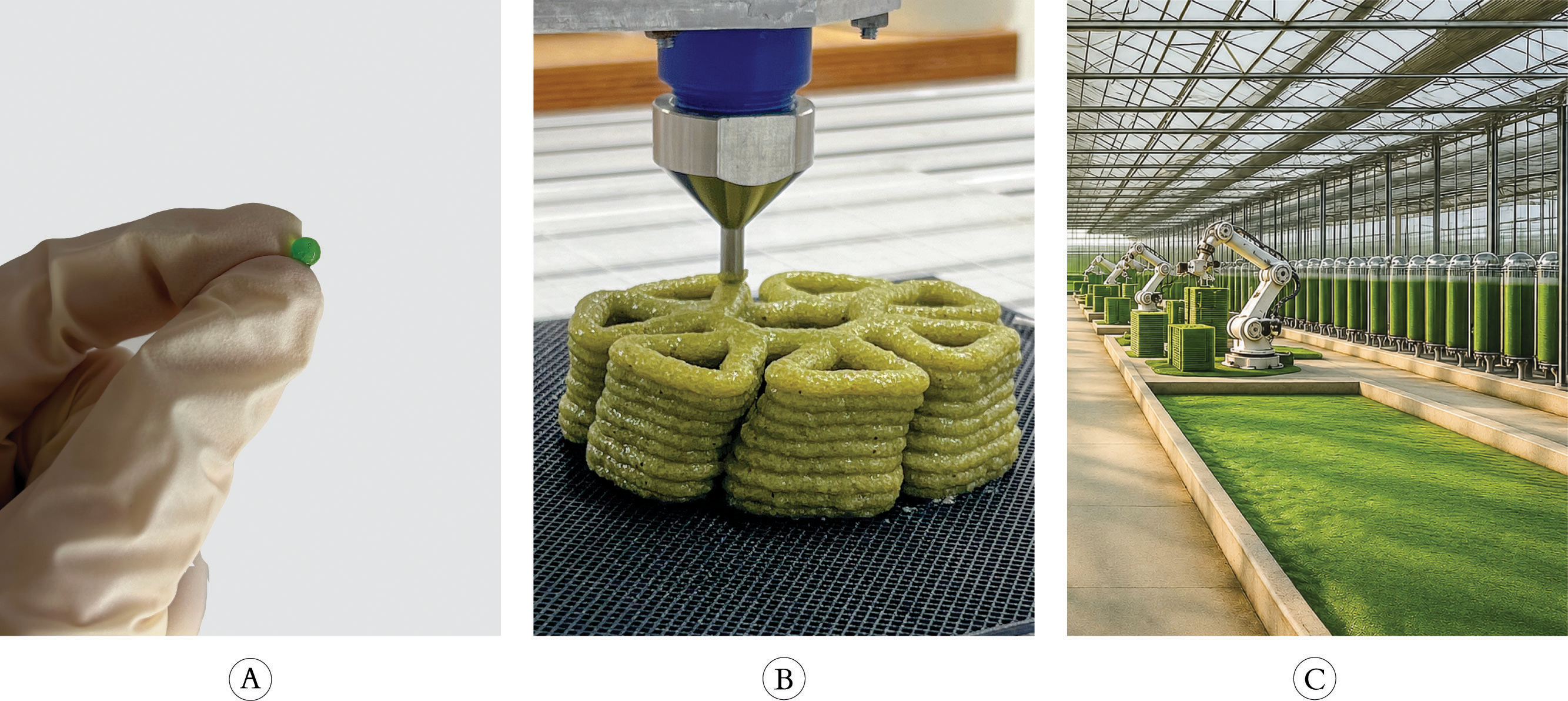
Taken together, these gaps reveal a multi-scalar disconnect: material durability and metabolic longevity remain unresolved; architectural biofabrication workflows are insufficiently integrated with microbial behavior; and cultivation infrastructures are rarely aligned with construction processes. This paper addresses these challenges by investigating biodesign approaches for integrating photosynthetic microorganisms into architectural production across three scales (Figure 1). The first approach adopts biomedical encapsulation techniques to develop long-term cellular viability and material durability within architectural applications. The second explores a design-to-manufacturing workflow aligned with microbe-based materials. The third explores site-specific cultivation strategies that address infrastructural and environmental conditions of architectural deployment, envisioning an integrated conceptual model of living building materials agriculture. Together, the presented case studies aim to bridge laboratory biology and architectural manufacturing, advancing a scalable framework for photosynthetically mediated, carbon-efficient construction systems.
Representative images of the three case studies. (A) Case Study 1: hydrogel-based encapsulation strategy for sustaining photosynthetic bead viability and long-term durability. (B) Case Study 2: robotic additive manufacturing of microbe-based building materials. (C) Case Study 3: conceptual model of building materials agriculture, depicting the co-site of cultivation and fabrication systems (generated using AI tools).

Figure 1. Long description
This figure presents three representative visuals corresponding to the three case studies. Panel A shows a close-up of a small green hydrogel bead held by a gloved hand, representing the encapsulation strategy. Panel B shows a robotic extrusion nozzle depositing a green microbe-based material into a layered porous structure, representing the additive manufacturing workflow. Panel C shows an AI-generated greenhouse-like environment containing green cultivation systems, vertical tank-like vessels, and robotic fabrication arms, representing the conceptual integration of cultivation and fabrication systems.
First case study: photobeads – encapsulation toward long-term viability
This case study explores encapsulation as a strategy to maintain the long-term viability and photosynthetic activity of the cyanobacterium Synechococcus elongatus PCC 7942 by developing translucent PhotoBeads. Exploring a Design-to-Maintenance framework, this approach employs hydrogel-based encapsulation techniques, adapted from biomedical practice (Al-Someidae Reference Al-Someidae2023), to create a controlled microenvironment that supports photosynthetic life and explores potential material applications.
Two systems are introduced, each tailored for different durations: (1) For long term viability, the translucent PhotoBeads system utilizes photosynthesis for organic CO2 cycling, employing a pure hydrogel encapsulation to control the immobilization of photosynthetic cells, regulate light and nutrient diffusion and mitigate dehydration stress and (2) for short term viability, a sand-hydrogel matrix is developed to promote biocementation, stabilizing carbon in an inorganic form. This separation differentiates biological functionality through spatial morphology, enabling cyclical photosynthesis in the exposed, soft layer, versus stable carbon precipitation in the inner core to gain structural integrity. Therefore, this study proceeds through three phases:(1) PhotoBead formation and activity assessment, (2) Integration within a sand hydrogel matrix and (3) the exploration of fabrication strategies for hybrid systems.
Phase 1: bead formation and photosynthetic activity
The carrier: fabrication protocol and geometry
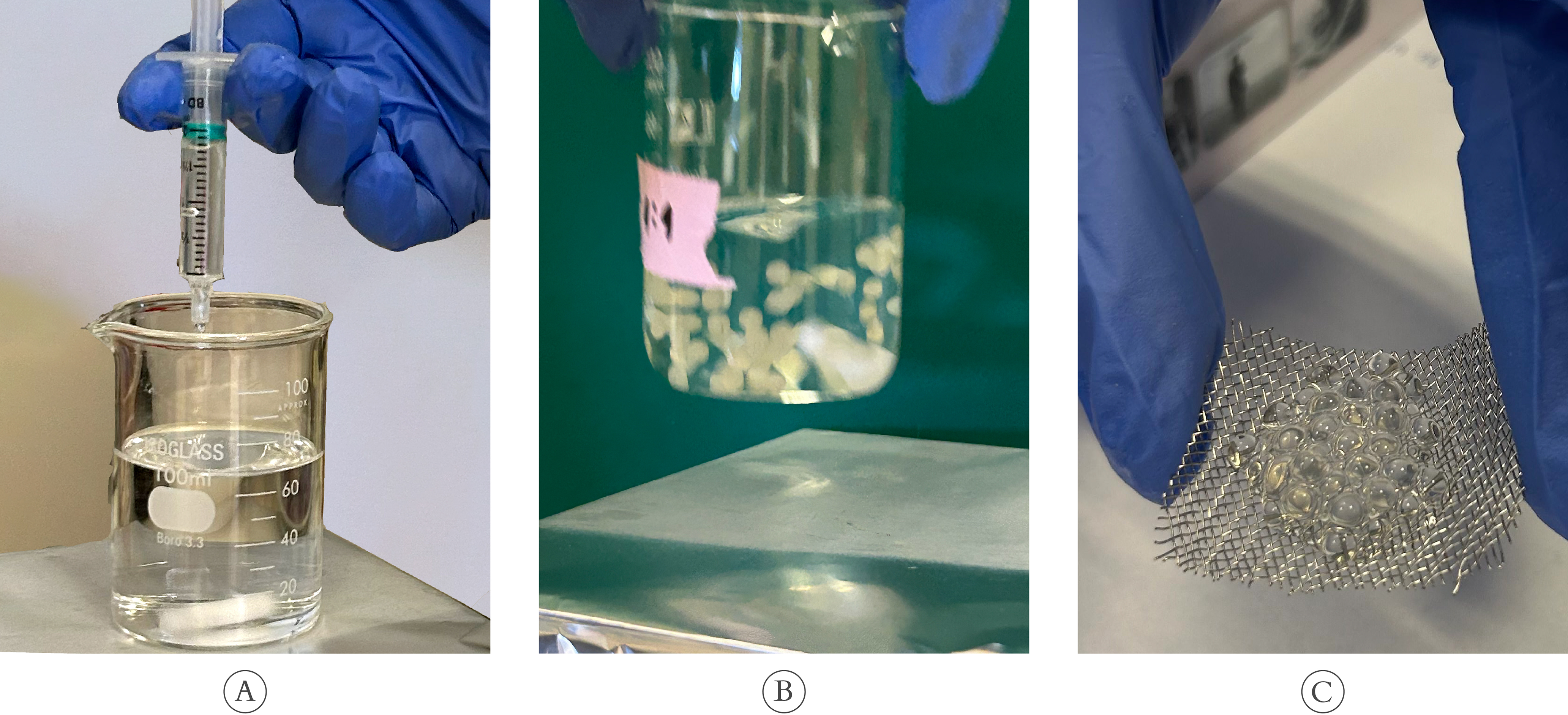
The initial experimental phase examined the feasibility of encapsulation to achieve spatial control over the distribution of the photosynthetic microbe, maintain its long-term viability and establish a functional nutrient environment. The objective was to develop extrusion techniques to produce uniform spherical beads with a diameter of 2–3 mm, optimizing the surface-area-to-volume ratio, to ensure the efficient light penetration and gas exchange required for sustained cell viability. To determine the optimal extrusion parameters, we varied nozzle diameters (1.5–2.6 mm) and agitation methods within a crosslinking bath. These tests aimed to prevent clustering and ensure consistent bead geometry. Cell-free (abiotic) encapsulation trials demonstrated manufacturing repeatability by achieving uniform crosslinking and dimensional control. Additionally, crosslinking parameters were fine-tuned, primarily by calibrating the calcium chloride (CaCl2) concentration to 0.1 M and adjusting the dispensing rate, to optimize both rheology and morphology for the subsequent integration of living cells (Figure 2).
Development and optimization of abiotic hydrogel beads, establishing the material baseline for future photosynthetic cell encapsulation. (A) Extrusion of the hydrogel precursor via the syringe. (B) Ionic crosslinking within a calcium bath. (C) Fully crosslinked abiotic beads on a grid.

Figure 2. Long description
Panel A shows a liquid gel mixture being pushed out of a syringe. Panel B shows the gel droplets submerged in a liquid calcium bath to harden. Panel C shows a collection of the finished, solid round beads resting on a grid surface.
Biological integration: defining the bead interface
Following the establishment of the abiotic beads, the second step investigated the survival of cyanobacterial cells during encapsulation and determined the bead composition. A comparative viability test was conducted to assess two bead configurations, both containing living cells: (1) a pure alginate hydrogel matrix and (2) an alginate–sand matrix. The aim was to monitor cell viability over an extended period (exceeding 28 days) in both bead types and to test the hypothesis that sand aggregates might compromise cell viability by attenuating light transmission.
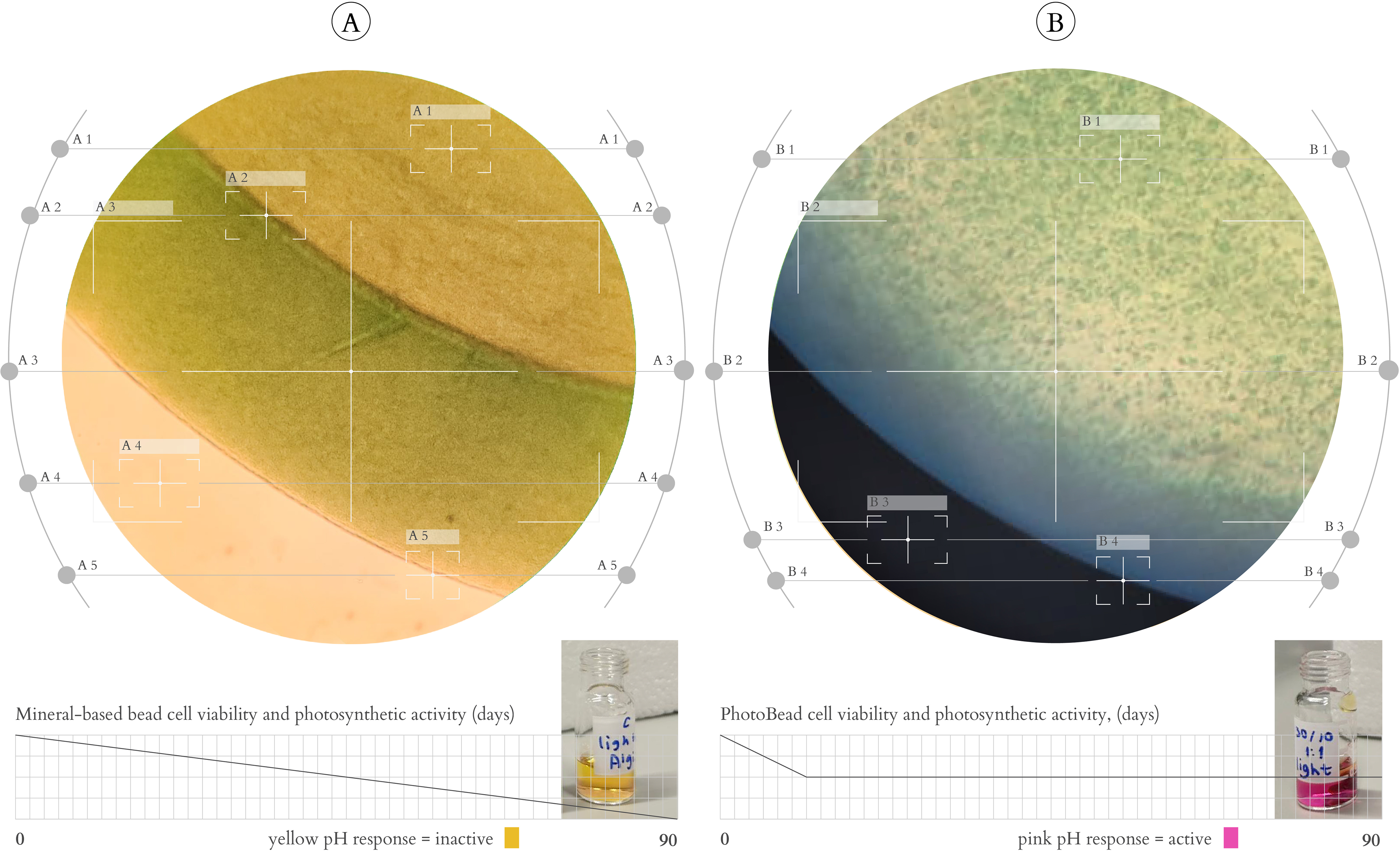
Monitoring revealed two distinct performance profiles correlated with matrix transparency and aggregate content. In the translucent PhotoBeads, the hydrogel microenvironment maintained a stable photosynthetic signal (Figure 3B), with green pigmentation remaining unchanged from day 0 for over 90 days. To verify that this pigment stability reflected active metabolism rather than passive preservation, continuous pH monitoring was conducted. The beads exhibited a consistent pH increase under illumination, indicating alkalization driven by photosynthetic CO2 fixation and acidification in the dark due to respiratory CO2 release. These findings confirmed sustained metabolic function. Conversely, in the sand beads (Figure 3A), biocementation was evidenced by a whitish surface deposition, bead stiffening and grain adhesion, suggesting mineral binding. However, cell survival and visible pigmentation declined during the first week, likely due to light attenuation by the sand aggregates. Ultimately, in both systems, encapsulation stabilized the microenvironment and enabled a controlled comparison of long-term viability.
Cross-sectional micrographs (20× magnification) of a sand-based bead (A) and a PhotoBead (B). (A) Non-viable cells: In the sand-based bead, the yellow pH indicator reflects the absence of metabolic activity after 90 days. (B) PhotoBead viable cells: Surviving cells are indicated by pink pH response, demonstrating sustained photosynthetic CO2 fixation beyond 90 days. Annotated features: (A1) bead interior (sand). (A2) cell accumulation at the boundary for light access. (A3) cells. (A4) bead exterior. (A5) bead boundary. (B1) cells. (B2) bead interior. (B3) bead exterior. (B4) bead boundary.

Figure 3. Long description
A diagram illustrating the composition and structural variations of photosynthetic beads, comparing it with and without sand: a combination of cyanobacteria, alginate, CMC to form a 2 to 3-millimeter bead. It compares two fabricated structures: a sand-based bead and a PhotoBead. The bottom part shows a graph describing viability test results using a pH test. It extends from day 0 to 90, showing a degraded viability in the Sand bead versus extended viability in the PhotoBead. Annotated features: (A1) bead interior (sand). (A2) cell accumulation at the boundary for light access. (A3) cells. (A4) bead exterior. (A5) bead boundary. (B1) cells. (B2) bead interior. (B3) bead exterior. (B4) bead boundary.
Matrix optimization: optical and dimensional stability
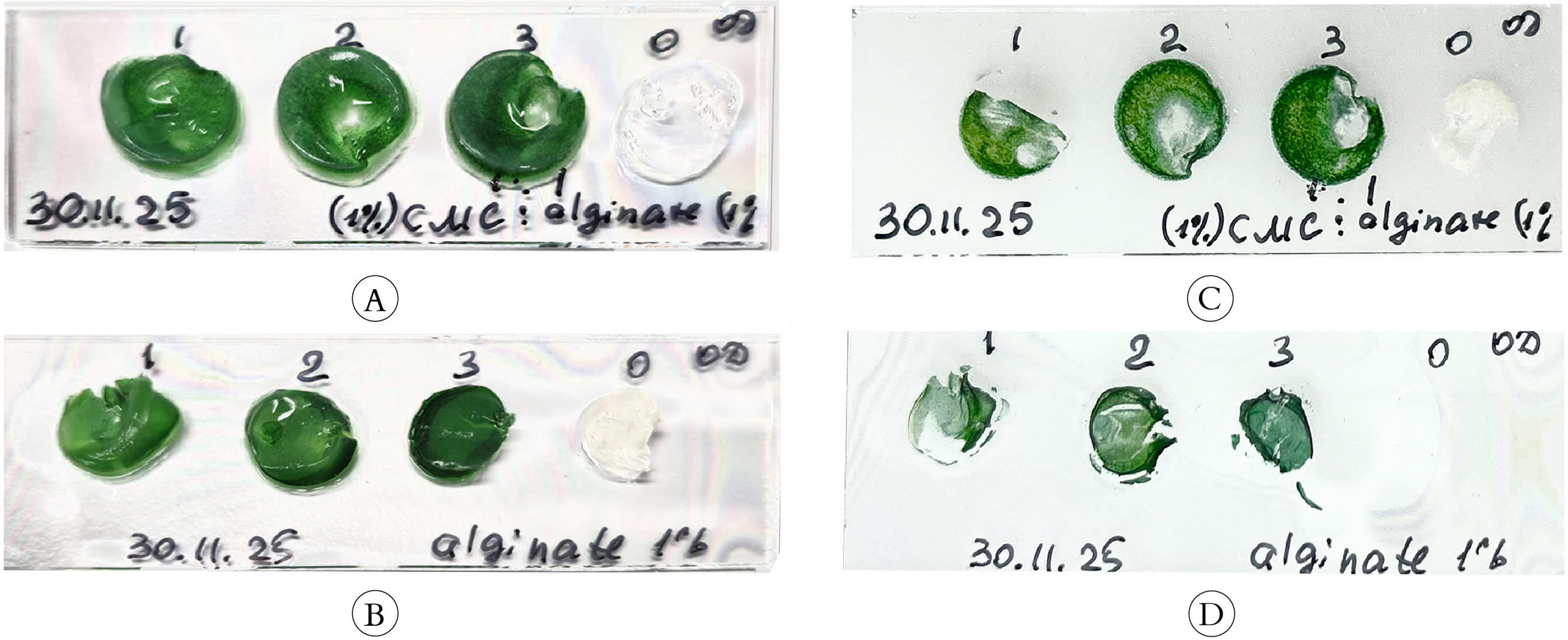
The third step focused on refining the composition of the hydrogel matrix. Initial assessments of pure alginate beads revealed significant dehydration and shrinkage, compromising their ability to protect cells by reducing surface area and internal volume. Thus, this experiment aimed to develop an improved matrix with enhanced water retention and optical transmission properties to support sustained photosynthesis. We compared the shrinkage percentages and drying patterns of two compositions: (1) 100% alginate and (2) 50% alginate–50% carboxymethyl cellulose (CMC) blend. The objective was to determine which matrix better maintained its initial translucency and morphology over time, thereby providing a superior microenvironment for biological processes. Morphological and optical assessments showed improved performance in the alginate–CMC hydrogels (Figure 4A, C) compared to the pure alginate hydrogels (Figure 4B, D). Visual inspection indicated that the alginate–CMC matrix successfully preserved its translucency and structural integrity over time by yielding greater optical stability and significantly reducing surface deformation and shrinkage (Figure 4).
Visual comparison of 50:50 alginate-CMC and pure alginate hydrogel matrices before (A, B) and after (C, D) drying at room temperature. The alginate-CMC blend demonstrates enhanced morphological stability and more effectively retains its initial translucency (C), whereas the pure alginate exhibits significant volumetric shrinkage and deformation (D).

Figure 4. Long description
Panel A show a sample in its initial wet state: a 50:50 mix of alginate and CMC. Panel B show a sample in its initial wet state: a pure alginate sample. Panel C show the same sample of A, the mixed alginate-CMC sample, after drying at room temperature, which retained water for longer time and has kept its original shape better compared with the pure alginate sample. Panel D show the same sample of B, the pure alginate sample, after drying at room temperature, which has shrunk significantly in size and is visibly warped and deformed compared to its original shape.
Phase 2: Integrating photosynthetic beads into a sand-based substrate
Material integration: challenges in synthesizing hydrogel – sand matrix
Supported by previous experiments, preserving photosynthetic viability requires the dense sand matrix to remain external to the beads. This dictated a spatial division of biological activities: prolonged photosynthesis occurs inside the bead, whereas short-term photosynthesis and biocementation take place outside it. Therefore, Phase 2 introduces a dual metabolic design utilizing S. elongatus: photosynthesis is maintained in the light-exposed periphery via PhotoBeads, while biocementation occurs in the sand matrix to provide structural integrity.
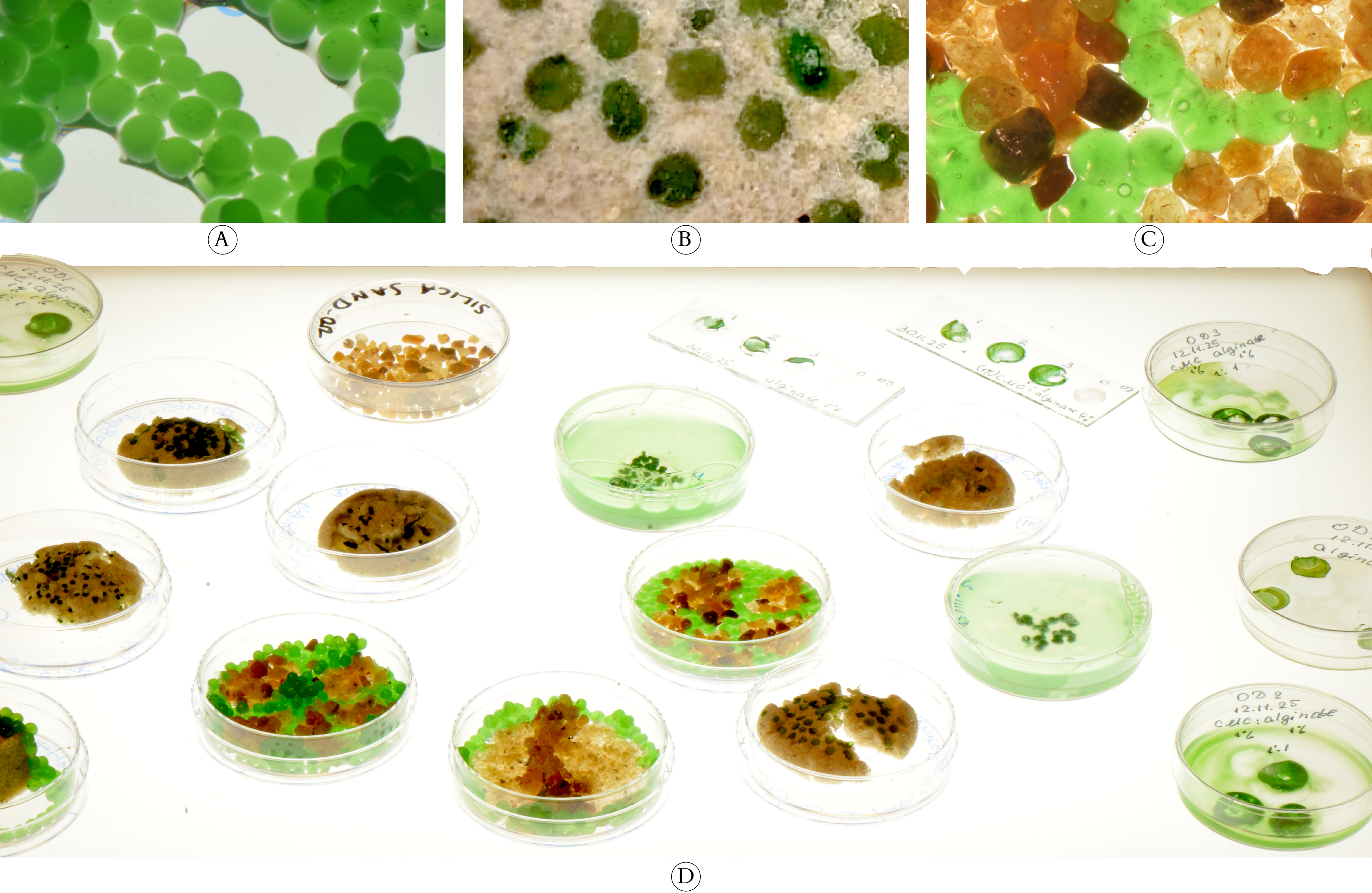
To evaluate this design methodology, subsequent experiments focused on morphologies that support this framework. PhotoBeads, embedded as biological units within the sand-based matrix, contained hydrogel loaded with free cells of S. elongatus (Figure 5D). Controlling the quantity and strategic spatial distribution of the PhotoBeads enabled the maximization of surface exposure to light (Figure 5A). Integration of the PhotoBeads with the sand-based matrix was tested across three bead formulations: (1) abiotic alginate beads, (2) living alginate beads and (3) living alginate–CMC beads. A standardized procedure for bead placement, sand mixture deposition and crosslinking was established. Additionally, two crosslinking methods, spray nebulization and immersion-bath curing, were compared to evaluate the stabilization of the matrix. A comparison of CaCl2 spray and bath crosslinking showed no significant difference, though visual inspection indicated a minor advantage for the spray method in minimizing matrix deformation and shrinkage. Consistent with previous results, alginate–CMC beads demonstrated superior performance, significantly reducing syneresis and morphological distortion. Manual mixing yielded more homogeneous matrices than vortex mixing, which caused sand–hydrogel segregation due to density differences, although further optimization of mixing protocols is required.
Compositional and geometric variations in early-stage material experiments. Prototypes testing different strategies for spatially dispersing PhotoBeads within different sand-based matrices. (A) PhotoBeads only. (B) PhotoBeads within a fine sand-hydrogel matrix. (C) PhotoBeads within a coarse sand-hydrogel matrix. (D) A catalog of prototypes from various developmental stages, evaluating overall structural integrity and biological viability.

Figure 5. Long description
Panel A shows a loose cluster of small, round beads on their own. Panel B shows these beads mixed evenly into a gel-sand matrix. Panel C shows the beads placed into a of coarse sand. Panel D displays a larger collection of different test models in shades of brown and green. These models have different textures, ranging from clusters to solid to highly porous and spread.
The integration of hydrogel and sand-based matrix introduced new physical dynamics. Thus, the hydrogel matrix was re-evaluated to address two main challenges: (1) evaluating the PhotoBead interface to avoid water retention and bead dehydration and (2) optimizing the sand mixture to equalize humidity and avoid syneresis. The tests re-evaluated the hydrogel composition at the interface with the sand matrix, comparing pure 100% alginate beads and a 50% alginate:50% CMC blend. The 50:50 blend consistently minimized dehydration shrinkage when embedded within sand-based matrices and reduced the risk of interfacial delamination between the bead surface and sand substrate during curing. To further avoid segregation and improve adhesion, the sand composition was refined. Fine sand aggregates (0.3–0.6 mm) were compared with mixtures incorporating coarser sand aggregates (2.5–3.5 mm and 0.64–0.84 mm) (Figure 5B, C). The introduction of graded aggregates to improve particle packing density established a rigid internal skeleton that minimized volumetric shrinkage and deformation during drying. Incorporating coarser sand particles with fine-sand particles significantly reduced post-crosslinking deformation. Geometric stability assessments confirmed that the graded matrix mitigated volumetric loss by relying on the aggregate framework rather than the hydrogel phase for dimensional stability. Crucially, this matrix also remained biocompatible and supported sustained metabolic activity, enabling biocementation by S. elongatus, which bound aggregates into a cohesive structure. CaCO3 content was examined to quantitatively assess biocementation. Using the Bernard calcimeter method (in accordance with the ASTM D4373 standard), a volumetric analysis of the CO2 released upon applying hydrochloric acid (HCl) to the matrix carbonates was conducted. A comparison between biotic and abiotic samples demonstrated that S. elongatus PCC 7942 enhanced CaCO3 accumulation, reaching 8.72 mg CaCO3 g− 1 compared to 7.66 mg CaCO3 g− 1 in the abiotic control. This indicates that cyanobacteria actively modified their surrounding microenvironment to promote mineral precipitation. Specifically, photosynthetic CO2 uptake elevated the local pH, shifting the carbonate equilibrium toward carbonate ions and favoring CaCO3 formation. These results support the occurrence of microbially induced biocementation.
Phase 3: An outlook toward fabrication strategies for self-sustaining materials
Material heterogeneity: morphologies and spatial distribution
Future research demands a transition from manual prototyping to automated digital fabrication to fully realize the matrix’s spatial and structural potential. While initial prototypes demonstrated the underlying logic, the manual assembly of mineral and hydrogel-based units is labor-intensive and impedes scalability. As optimizing performance requires intricate morphologies that challenge traditional casting, subsequent phases will leverage digital manufacturing. This shift will enable the programmable distribution of biological elements, facilitating the production of potentially large-scale material architectures.
Post-fabrication: design-to-maintenance
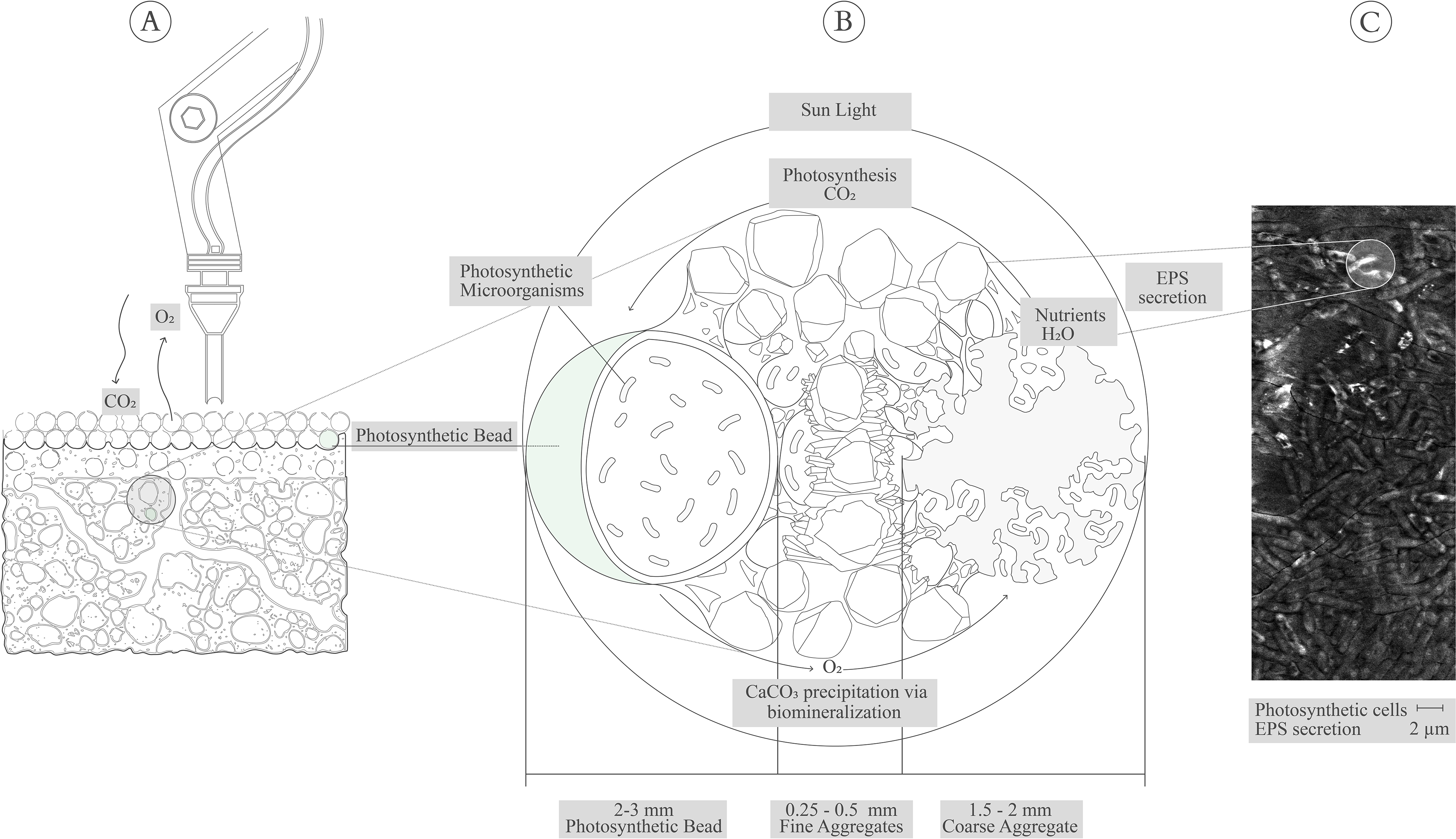
The scalable development of these biomaterials also requires the design of post-fabrication curing protocols, as the preliminary evaluations indicate that regulated high-humidity incubation substantially enhances morphological stability relative to ambient drying conditions. This insight establishes a critical baseline: the hydrogel matrix functions effectively as a transient scaffold only under controlled humidity, preserving structural integrity until biocementation secures the final mechanical strength. Scalable manufacturing, therefore, requires automated systems, like fog curing, to maintain bacterial metabolism during the critical window between material deposition and complete mineralization. Ultimately, synchronizing the high-resolution digital manufacturing of functionally graded materials with controlled curing is a key step toward the scalable production of photosynthetically active living building materials, converging microbiology and architecture (Figure 6).
Proposed multiscale workflow toward self-sustaining, long-term viable architectures, integrating microbial, material and fabrication scales. (A) 3D printing of a functionally graded biocemented component, utilizing spatially varied density to optimize both biological and architectural performance. (B) Internal metabolic loops and interactions between PhotoBeads, fine sand aggregates and coarse sand aggregates. The matrix is bound by hydrogel and biogenic EPS, culminating in biocementation via CaCO3 precipitation. (C) SEM image of the biofilm formed by photosynthetic microorganisms.

Figure 6. Long description
Panel A shows a 3D-printing nozzle placing round photosynthetic beads onto a grainy base, with arrows showing carbon dioxide entering and oxygen leaving. Panel B zooms in on a 2 to 3-millimeter bead surrounded by small (0.25 to 0.5 millimeter) and large (1.5 to 2 millimeter) grains. Arrows map out a cycle: sunlight and food enter, and the microbes release a sticky gel and natural cement (calcium carbonate) to bind the grains. Panel C is a zoomed-in microscope photo at a 2-micrometer scale showing the tightly packed cells and the biological glue they produce (EPS).
Second case study: biologically informed design-to-fabrication
This study advances an alternative to cement-based materials by addressing the challenge of translating photosynthetic biocementation from laboratory-scale experimentation into architectural biofabrication workflows. Although microbial biocementation has demonstrated material strengthening under controlled conditions, its integration into industry-relevant printing processes remains limited. The objective is to establish a reproducible design-to-manufacturing framework that embeds living photosynthetic microorganisms directly within architectural-scale biofabrication. A design-led fabrication methodology is therefore adopted to integrate microbial activity, material formulation and robotic 3D printing into a unified workflow. Computational design functions not only as a geometric tool, but it is a biologically informed mediator between biological and structural requirements. Given the difference between microbial growth conditions and architectural production environments, material rheology, printing parameters and biomass concentrations are iteratively calibrated to balance mechanical stability with microbial viability. This case study establishes a reproducible workflow in which biological activity and digital fabrication are co-designed. By integrating microbial biocementation into AM, it advances a scalable pathway toward carbon-attentive, mineral-based building components that partially substitute cement-intensive systems.
Development of printable formulations
Material formulation
Synechococcus elongatus PCC 7942 was cultivated in large Erlenmeyer flasks and monitored for 5 to 7 days. After reaching saturation, cultures were prepared for material integration. Biomass was first concentrated via centrifugation, separating excess liquid from the cell pellet. Thereby, enabling the integration of primarily biological matter into the sand–based mixture. The resulting material served not only as a printing formulation but also as a growth habitat. To identify suitable formulations for 3D printing, a series of material compositions was developed and tested. The process began by hydrating and heating the biobased and commercially available starch flour to activate its gelatinization properties, thereby forming a biodegradable hydrogel binding agent. A range of flour-to-water ratios, from 1% to 20%, was tested to determine optimal concentrations for gel formation and workability. Once a stable gel was obtained, it was mixed with quartz silica sand (particle size 0.6–0.84 mm) in different ratios to assess printability and material consistency. Gel-to-sand ratios were tested in a range from 20% to 100%, allowing for evaluation of the mixture’s cohesion, flow characteristics, extrudability and structural integrity post-extrusion.
Evaluation of the material printability
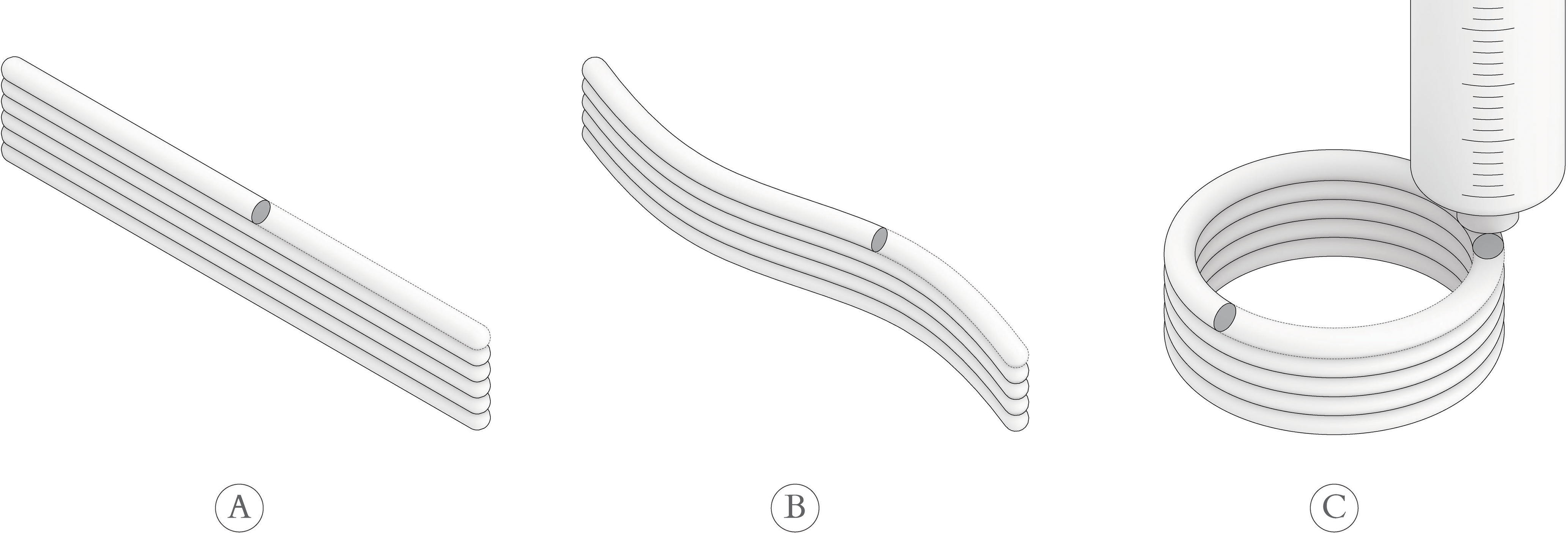
Formulation printability was initially assessed through manual extrusion trials. Using a syringe with a sawed-off tip, simulating a radial printing nozzle, each formulation was extruded by hand onto a flat surface to form predefined shapes, such as lines and circles, that simulated the material behavior under controlled pressure conditions analogous to liquid deposition modeling (LDM) in robotic 3D printing (Figure 7). Printed samples were visually assessed based on four key criteria: shape accuracy and definition, buildability (the material’s ability to maintain form), slumping (post-extrusion deformation) and overall mixture cohesion.
Manual extrusion trials. (A) Line, (B) squiggle and (C) circle tests, each sample length was 30–35 mm.

Figure 7. Long description
The figure shows three side-by-side illustrations of manual extrusion tests used in 3D printing, labeled A, B, and C, each demonstrating a different path pattern created by extruding material in controlled shapes. All samples appear to be short strands of deposited material, each approximately 30–35 mm in length, with a smooth, slightly rounded, filament-like appearance.
Initial tests showed that long straight lines failed to support successive layers, typically collapsing after 5–10 layers due to insufficient interlayer cohesion and lateral stability. Additionally, sharp angular transitions increased instability, resulting in material drag during extrusion and reducing shape fidelity. In contrast, formulations exhibited improved performance when printed along gentle curves or filleted geometries, indicating that toolpath design plays a critical role in material deposition behavior. These preliminary manual tests provided essential insights into flow behavior, buildability and deformation behavior before robotic-scale printing. As a rapid screening protocol, they enabled early identification of printing-compatible material formulations.
Design-to-fabrication: integration of photosynthetic microbes
Identifying compatible printing patterns
Since the developed material is sand-based, identifying compatible toolpaths was essential to evaluate material behavior in relation to geometry. Sand-based formulations present significant extrusion challenges, including internal friction, nozzle clogging and limited cohesion between layers. Initial robotic printing trials, therefore, focused on small-scale, relatively simple geometries designed to address these mechanical constraints while systematically optimizing design parameters.
Custom toolpaths were developed in Rhino and Grasshopper, enabling control over curve continuity, curved trajectories and layer-by-layer build sequences tailored to the rheological properties of the sand composite. Conversion of these curves was done using the Robots plugin for robotic simulation and G-code generation (Deetman et al. Reference Deetman, Rumpf, Wannemacher, Dawod, Akbar and Rossi2026). This digital workflow enabled precise control over robotic motion and extrusion parameters, allowing systematic exploration of geometry–material interactions.
A custom robotic printing setup was developed using a UR5e collaborative robotic arm equipped with a WASP LDM Extruder XL 3.0 mounted via a custom aluminum connector. Material was fed through pneumatic pressure and deposited by a motorized screw within the extruder. This configuration enabled precise control over material deposition along the generated toolpaths while significantly reducing material separation. A conical nozzle with a 6 mm diameter circular tip was selected to optimize the balance between print resolution, material flow and geometric fidelity.
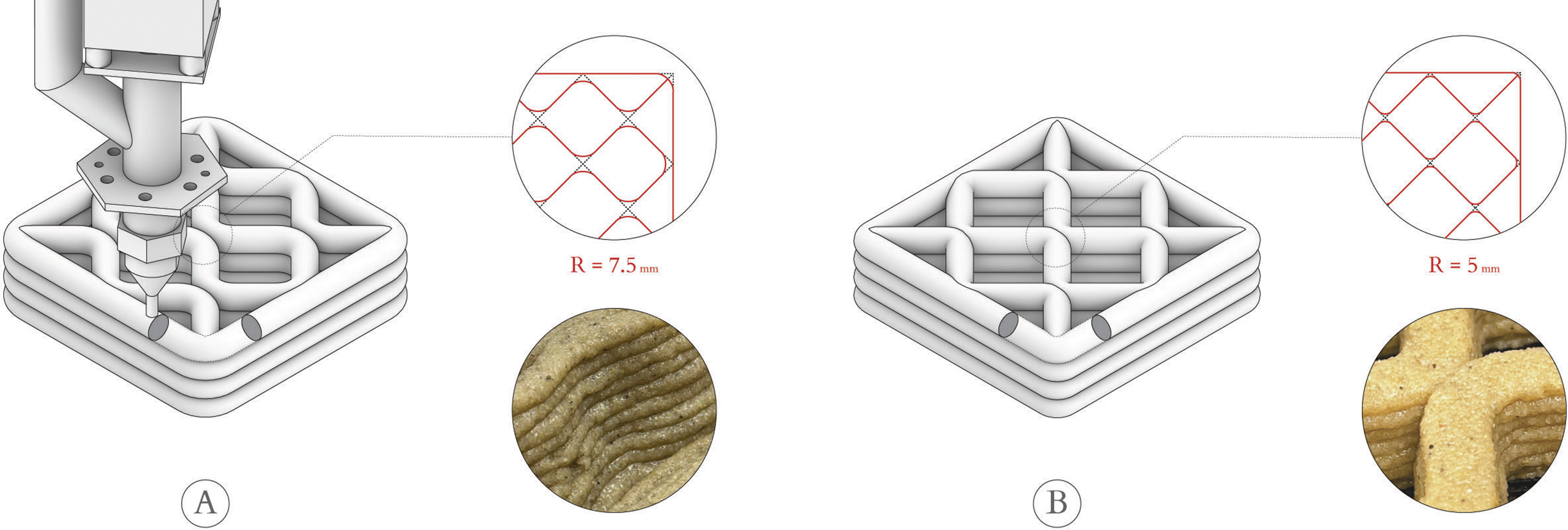
Building on previous manual tests, the increase in scale required a rectilinear shell and a curved infill pattern. This combination allowed for simple, larger shapes to be explored while avoiding the adverse effect of long straight lines. Iterative testing revealed that geometry significantly influenced structural stability during and after deposition. Some circular and curved toolpaths proved more compatible with the material than others. For example, Figure 8 compares two toolpath configurations using a single material formulation. Configuration A, printed with a 7.5 mm corner radius, exhibited poor interlayer adhesion, resulting in low buildability and compromised geometric fidelity. In contrast, configuration B, printed with a reduced 5 mm corner radius, demonstrated significantly improved interlayer coherence and alignment with the intended digital toolpath geometry.
Toolpath-material optimization. (A) Due to a higher toolpath radius, material drag increased while overall shape fidelity reduced, resulting in print failure. (B) Smaller toolpath radius increased shape fidelity and buildability, resulting in comparable total print height without collapse.

Figure 8. Long description
The figure illustrates a comparison of toolpath design and resulting material performance in a multi-layer extrusion-based 3D printing process, shown in two cases labeled A and B. Overall, the figure compares how increasing or decreasing toolpath turning radius affects extrusion behavior: a larger radius (A) leads to increased material drag, reduced geometric fidelity, and print failure tendencies, while a smaller radius (B) improves shape accuracy, stability, and successful buildability without structural collapse.
Importantly, even minor modifications in material processing and toolpath parameters, such as adjusting resting time or reducing corner radius by a few mm, produced significant differences in geometrical fidelity and interlayer cohesion. These results indicate that buildability in sand-based systems is highly sensitive to the interaction between rheology and toolpath curvature. Optimization of both material composition and geometric parameters is therefore required to achieve stable extrusion and shape fidelity.
Designing biologically informed components
Building on the biologically informed design approach developed in Armaly et al. (Reference Armaly, Iliassafov, Kirzner, Kashi, Barath, Turrin, Andriotis and Rafiee2023a), this study explores 3D printing as a fabrication strategy capable of supporting the environmental requirements of photosynthetic microbes. In this framework, the toolpath is treated not merely as a geometric design but as a biologically operative parameter. By reframing toolpath design as a mediator between light exposure, material deposition and microbial mineralization, the fabrication process directly influences both metabolic performance and structural outcomes through photosynthetic biocementation.
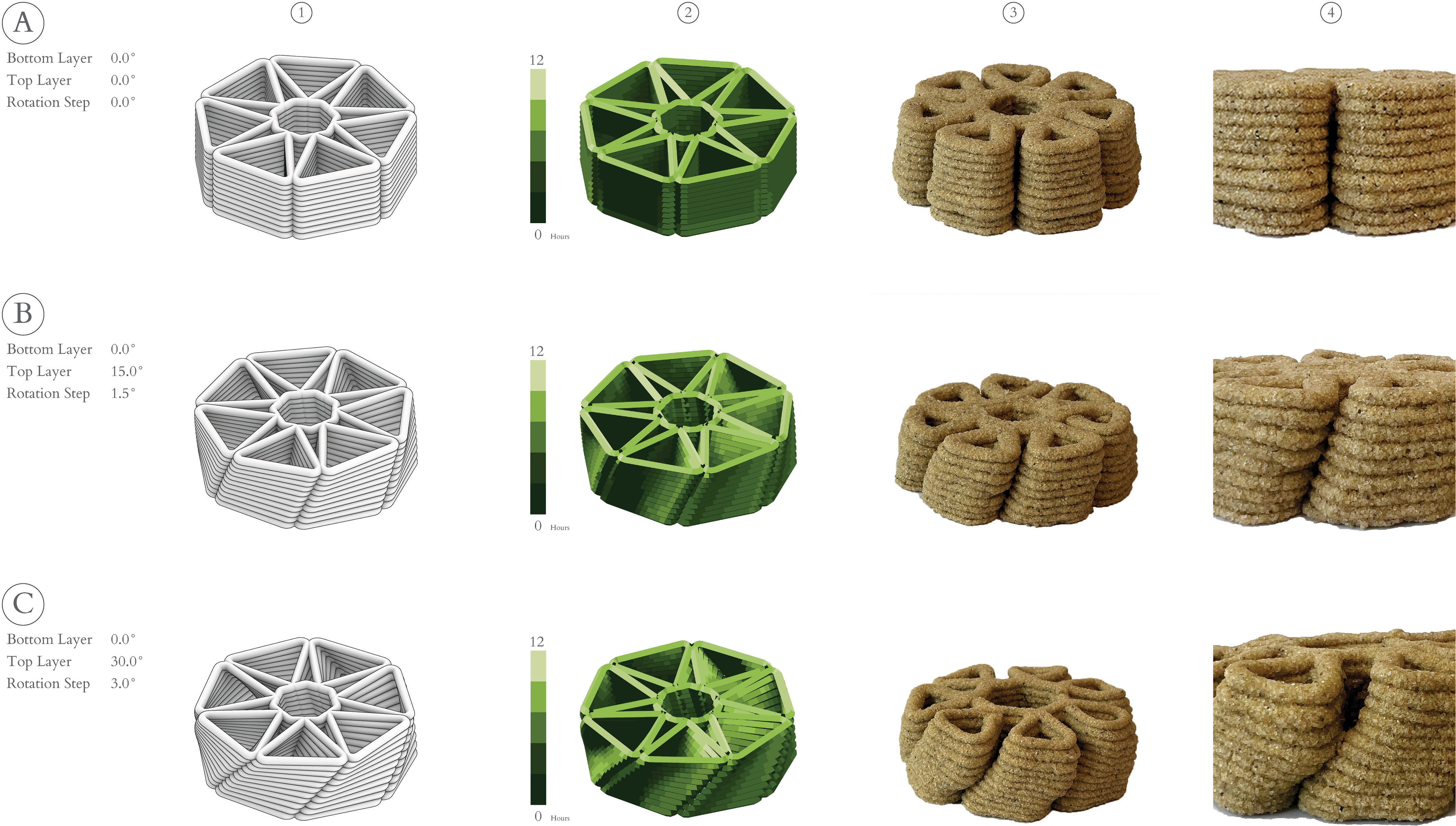
Using parametric toolpath design, a morphological catalog was developed to increase surface area and geometric porosity, two factors critical for enhancing light exposure across the printed component (Figure 9). Light exposure analysis was conducted using the Ladybug plugin to simulate a natural light cycle, enabling quantitative analysis of increased surface area and light exposure across different geometric variations. This allowed for the evaluation of design parameters before fabrication. The morphological catalog was printed using abiotic (non-living material) control formulations at architectural-relevant scales (approximately 5–10 cm components). Each component was printed iteratively two to three times, with live calibration of extrusion rate and printing speed to ensure consistent buildability.
Biologically informed design catalog. The figure compares three toolpath variations, examining the relationship between geometric modification for enhanced light exposure (1&2) and corresponding printing performance (3) in terms of buildability, slumping and shape fidelity (4). (A) Extruded component with no rotation. (B) Extruded component with 1.5° rotational increase. (C) Extruded component with 3.0° rotational increase.

Figure 9. Long description
The figure presents a biologically inspired design catalogue comparing three toolpath variations (A–C) for 3D printed, flower-like lattice structures. It evaluates how increasing rotational offset between layers affects simulated exposure/geometry (represented with a green heat map analysis) and real print outcomes (brown sand samples), focusing on buildability, shape fidelity, and structural stability (e.g., slumping and deformation).
Experimental variations focused on the relationship between geometric manipulation for increased light exposure and material performance. For example, toolpath rotation was systematically tested to evaluate its influence on interlayer adhesion and structural stability. Three variants of a curved toolpath were produced, each incorporating a different degree of rotation (0°, 1.5° and 3°) (Figure 9). The third variation (Figure 9C), which exhibited the highest degree of rotation, proved particularly challenging. Although it optimized light exposure, the increased inclination of successive layers reduced interlayer support, resulting in slumping and localized deformation. To compensate, layer height was gradually reduced and extrusion parameters were adjusted in real time to maintain buildability. This adaptation improved structural coherence but highlighted the trade-off between biological optimization and mechanical performance.
Together, these experiments establish a framework for biologically informed design-to-fabrication. This work is fundamentally important toward biofabricating with living materials at scale; it defines the challenges and optimization strategies required for aligning microbial needs with architecturally relevant AM.
3D printing with microbe-based materials
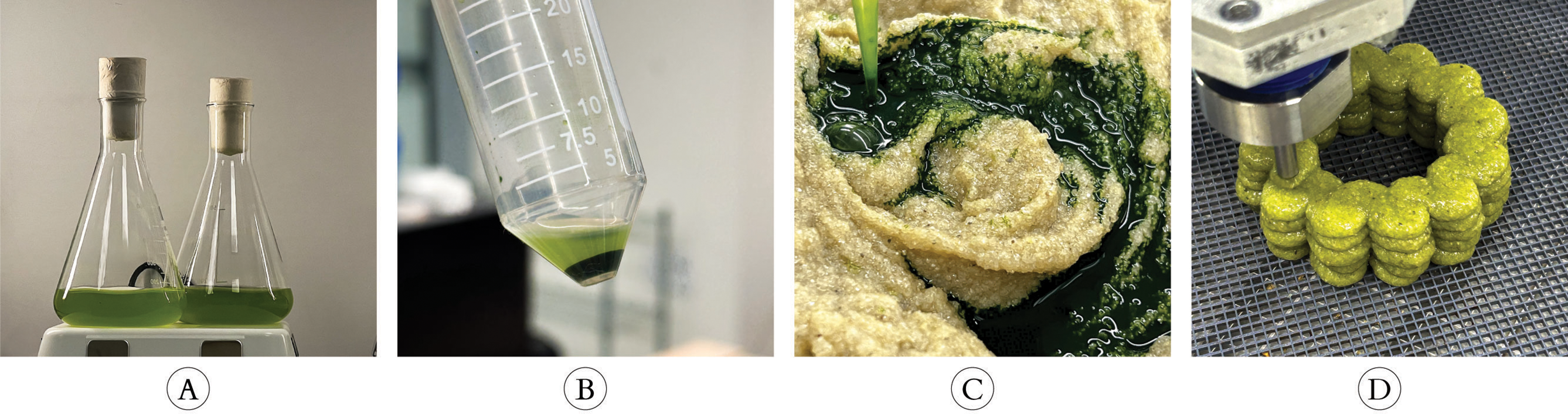
Following abiotic printing trials, the established biofabrication workflow was applied to biotic formulations incorporating S. elongatus (Figure 10). This phase aimed to evaluate the feasibility of robotic extrusion using living building materials and to identify challenges at the material, fabrication and methodological levels.
Biologically informed printing workflow. (A) Cell cultivation on magnetic stirrers. (B) Cell pellet accumulation following centrifugation in a single Falcon tube. (C) Incorporation of concentrated biomass into the mineral-based formulation. (D) Robotic extrusion of the microbe-infused composite.

Figure 10. Long description
This figure presents a biologically informed printing workflow as four sequential steps. Panel A shows green photosynthetic cultures in flasks on magnetic stirrers. Panel B shows a Falcon tube after centrifugation, with a dark green cell pellet at the bottom and lighter liquid above. Panel C shows concentrated green biomass being incorporated into a pale mineral-based formulation. Panel D shows a robotic nozzle extruding green microbe-infused composite into a layered structure on a mesh printing surface. Together, the panels describe the transition from cultivation to material preparation, and robotic additive manufacturing of biotic formulations.
As in the abiotic phase, small-scale curved toolpaths were iteratively printed to assess flow behavior, buildability and structural fidelity. The inclusion of biological material introduced variability in mixture consistency and viscosity, directly affecting extrusion stability and layer adhesion in the fabrication process. Mixture ratios, biomass concentration and extrusion parameters were adjusted to maintain printability while preserving microbial viability, resulting in the identification of a narrower flour-to-water ratio of 6% to 10% depending on the desired printing geometry.
At the methodological scale, a significant mismatch between microbiological preparation protocols and architectural production requirements became evident. Printing multiple components required biomass volumes substantially larger than those of typical laboratory-scale preparation. While standard centrifugation processes operate within 250–500mL per cycle, preparation of approximately 2500 mL of culture required multiple sequential centrifugation rounds. This resulted in extended processing times and labor-intensive pellet collection prior to incorporation into the formulation (Figure 10B).
Through successive iterations, refining material composition and extrusion parameters, a stable fabrication workflow was established. This calibration enabled the first successful robotic extrusion of small-scale photosynthetic building material components. The outcome demonstrates that living biocement-based formulations can be integrated within an architectural robotic printing setup. Future work will focus on expanding biomass processing capacity and advancing toward architectural-scale 3D printing, further promoting the application of carbon-efficient biocementation in architecture.
Third case study: toward the agriculture of living building materials
This case study addresses a central challenge in scaling photosynthetic living building materials: the transition from controlled laboratory cultivation to site-based production under fluctuating environmental conditions. Laboratory environments enable precision and reproducibility; however, they do not reflect the variability inherent in architectural contexts. Diurnal light cycles, seasonal temperature shifts, atmospheric exposure and infrastructural constraints fundamentally influence microbial metabolism and material performance. If photosynthetic microorganisms are to function as a foundation for building-scale material systems, they must function beyond laboratory sterility and climatic stability.
Although industrial cultivation of cyanobacteria and microalgae is well established, these facilities are not configured to explore integration with architectural workflows, construction timelines, or fabrication processes. The critical gap, therefore, lies not in industrial cultivation capacity, but in the absence of translational research environments capable of bridging laboratory biology and construction-scale deployment.
In response, this case study establishes a research-scale living laboratory positioned between academia and industry. Rather than replicating industrial production, it investigates adaptive strategies that enable microbial systems to operate under site-specific environmental variability. The study first examines whether repeated subculturing of microalgae Chlorella under fluctuating conditions can facilitate the transition from laboratory-scale cultivation to natural environmental exposure. It then explores the re-situating of cultivation within architectural infrastructure itself, laying out the conceptual foundation for what we term an agriculture of living building materials.
On-site growth in a greenhouse environment
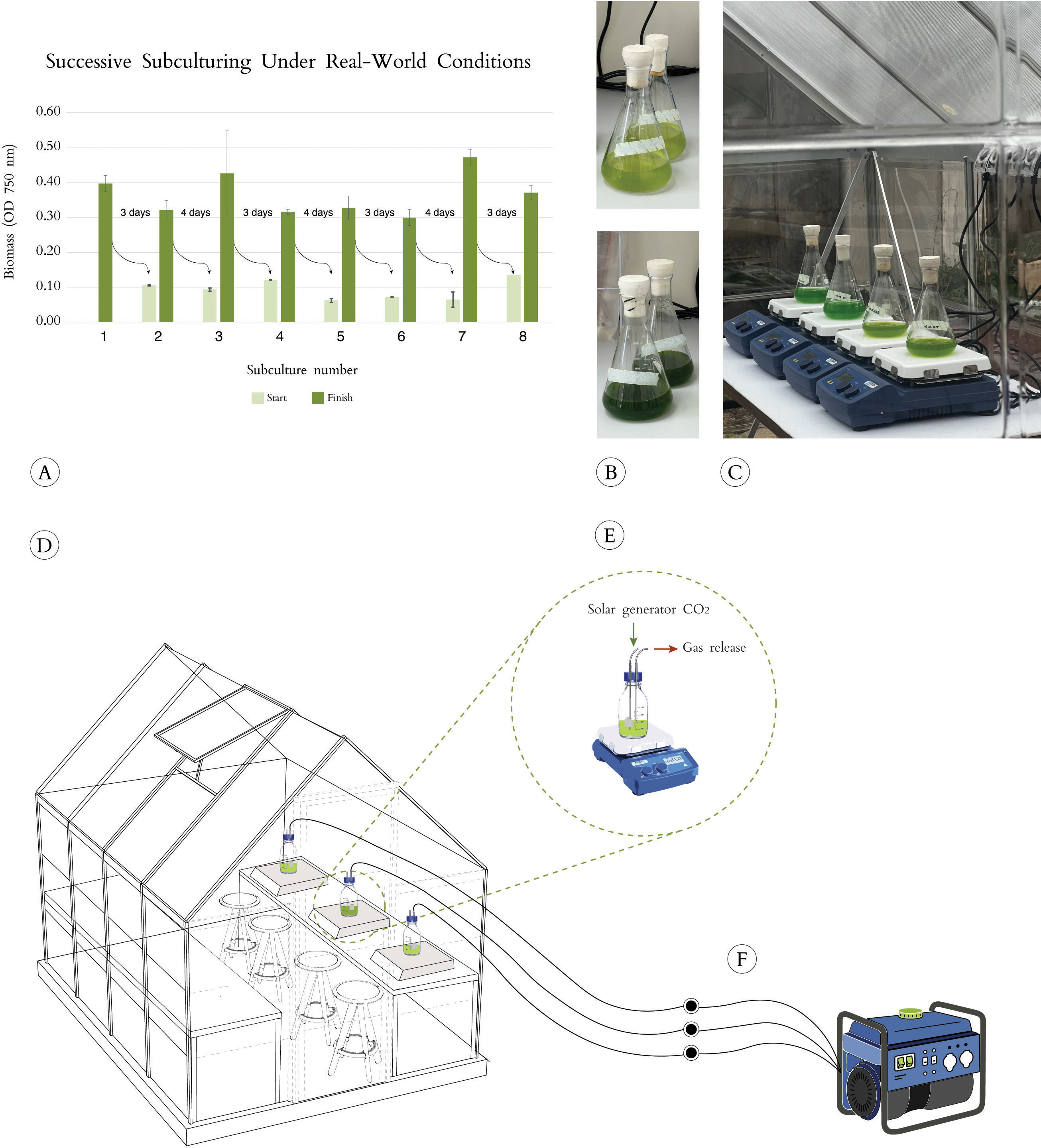
To facilitate the transition from laboratory cultivation to real-world conditions, a transparent greenhouse, referred to as the living lab, was established within a university campus (Figure 11). Unlike climate-controlled incubators, the greenhouse was exposed to natural diurnal cycles and seasonal fluctuations. During the winter and spring months, cultures experienced variable light regimes (5 to 2600 lux) and significant temperature variation (8°C to 60°C). This setting was deliberately selected to evaluate microbial viability under environmentally dynamic, site-based conditions rather than optimized laboratory stability.
(A) Biomass accumulation (OD750) during successive subculturing, demonstrating culture stability under living lab conditions. (B) Representative culture at the beginning of a generation (light green) compared to the same culture after 3–4 days of growth (dark green). (C) Experimental configuration of multiple photosynthetic strains cultivated within the living lab. (D) Schematic representation of the living lab system. (E) Diagram of the gas delivery configuration, illustrating inlet and outlet connections supplying generator exhaust to each culture vessel (F).

Figure 11. Long description
This figure presents living lab cultivation and gas delivery across six panels. Panel A is a bar chart of biomass accumulation, measured as OD7 5 0, across eight successive subcultures. Each subculture has a light green start bar and a darker green finish bar; finish values are higher, indicating growth after 3–4 days. Panel B shows culture flasks at different growth stages, from light green to darker green. Panel C shows multiple green culture flasks on magnetic stirrers inside the living lab greenhouse. Panel D is a schematic of the greenhouse system with culture vessels inside. Panel E diagrams a culture vessel with gas inlet and outlet tubing. Panel F shows a generator connected by tubing to the cultivation setup.
Rather than employing targeted genetic modification to enhance environmental tolerance, the study adopted adaptive subculturing across successive generations (Figure 11). Chlorella cultures were subcultured every 3–4 days over a period of approximately four weeks. Biomass development was monitored using optical density (OD750) measurements, where each culture was evaluated at the end of a growth cycle prior to subculturing and again following inoculation of the subsequent generation. After eight successive subcultures under living lab conditions, the adapted culture was harvested for further experimentation and comparative analysis.
The results demonstrate that Chlorella can maintain viability under substantial environmental fluctuations through adaptive exposure alone. While further investigation is required to comprehensively evaluate the extent and stability of this adaptation, the approach establishes an initial step toward developing environmentally resilient photosynthetic systems capable of operating under the variable conditions inherent to architectural applications.
Growth under gas delivery
Rather than treating carbon emissions solely as an environmental liability, the project approached them as a biological feedstock. Diesel generator exhaust may be used as a controlled polluting air source, providing realistic CO2 streams together with associated polluting agents (Figure 11). A generator was connected to the growth systems through a dedicated pipe network to evaluate the capacity of selected photosynthetic strains to increase biomass while fixing CO2 under emission exposure.
Two gas delivery configurations were constructed. In the first, the exhaust gas exit was connected indirectly to the pipe network to prevent thermal damage to the system caused by high temperatures at the exhaust outlet. In the second configuration, a direct connection was established to improve gas transfer efficiency. A metal intermediary pipe was inserted between the generator exhaust and the polymer pipeline to mitigate heat transfer. During pilot testing, black soot deposition was observed within the growth system. To reduce particulate contamination, a water trap was subsequently integrated at the interface between the generator and the pipe network to partially absorb contaminants prior to gas delivery.
Upcoming experiments will systematically evaluate microbial growth performance across both configurations and define operational parameters for environmentally responsible, emission-coupled cultivation. These investigations frame industry-oriented cultivation not as an isolated biological challenge nor solely an engineering problem, but as a coupled system requiring coordinated biological adaptation and infrastructural optimization. Future work will assess microbial viability across varying culture volumes and examine biocementation performance within the developed building material under the living lab conditions.
Reframing building production as living material agriculture
Large-scale cultivation of cyanobacteria and microalgae is well established within biotechnology, primarily for biofuels, food and specialty chemicals. These systems, whether open ponds or photobioreactors, are optimized for centralized biomass production under either controlled or uncontrolled natural conditions (Novoveská et al. Reference Novoveská, Nielsen, Eroldoğan, Haznedaroglu, Rinkevich, Fazi, Robbens, Vasquez and Einarsson2023). Even when cultivation is scaled, it remains structurally separated from manufacturing: biomass is grown, harvested, transported, processed and then incorporated into supply chains (Guieysse and Plouviez Reference Guieysse and Plouviez2024).
Parallel developments within architecture have explored microbe-based building materials systems coupled with microbial biocementation as potential partial replacements for cement. These systems demonstrate the potential of integrating biological biocementation processes with mineral matrices to generate structurally relevant components (Heveran et al. Reference Heveran, Williams, Qiu, Artier, Hubler, Cook, Cameron and Srubar2020; Jang et al. Reference Jang, Park, Son, Min, Park and Yi2023; Qiu et al. Reference Qiu, Artier, Cook, Srubar, Cameron and Hubler2021). However, such material innovations are typically constrained to laboratory scale, or if industrialized, will need to rely on biomass or microbial inputs produced elsewhere. In other words, the biological and architectural production systems remain spatially and operationally distinct. The critical gap, therefore, is not only biological scalability but systemic integration. Existing cultivation protocols are not designed for alignment with building fabrication workflows and architectural material systems rarely embed cultivation as part of their production logic.
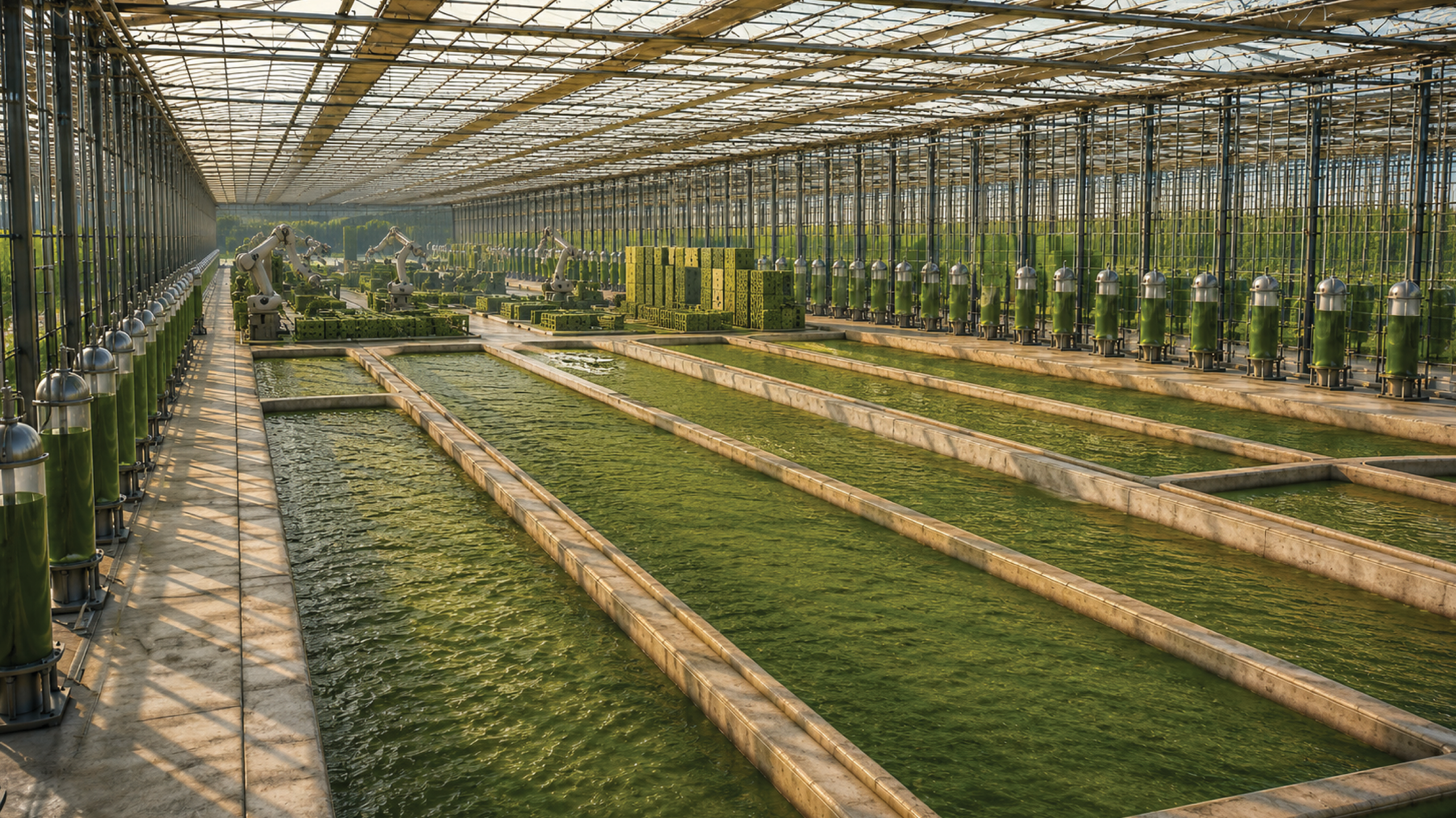
This study proposes a conceptual model for the production of living building materials, in which cultivation and fabrication are co-located and timely aligned. Rather than producing biomass at one site and manufacturing building components at another, we envision a combined site for in situ growth and additive fabrication (Figure 12). The developed mineral-based material is coupled with in situ microbial biocementation and microorganisms are cultivated within the mineral matrix itself, actively bonding and contributing to structural formation. Carbon dioxide from manufacturing processes is biologically fixed and stabilized through mineralization within the same material system. Once the mineral-biological material reaches functional maturity, it is harvested and immediately fabricated on site using AM. Cultivation infrastructure and construction workflow, therefore, operate as a continuous system enabling carbon capture, biomineral growth and component fabrication to occur within a single spatial and operational loop.
Conceptual visualization of a co-located cultivation–fabrication environment for living building materials agriculture, where photosynthetic microorganisms are grown in mineral-based systems and integrated directly with robotic additive manufacturing of customized large-scale building components (generated using AI tools).

Figure 12. Long description
This AI-generated image visualizes a co-located cultivation–fabrication environment for living building materials agriculture. The scene shows a large greenhouse-like interior with long shallow pools filled with green photosynthetic material cultures. Rows of vertical transparent tanks containing green liquid cultures line the sides of the facility. Several robotic arms are positioned at the back of the facility, manufacturing green porous building components. The transparent roof allows daylight into the space. The image represents an integrated production model in which photosynthetic microorganisms are cultivated in mineral-based systems and directly connected to large-scale fabrication.
While large-scale cultivation of microalgae and cyanobacteria is technologically established within industrial biotechnology, economic scalability remains a major challenge for high-volume, cost-sensitive applications (Guieysse and Plouviez Reference Guieysse and Plouviez2024; Novoveská et al. Reference Novoveská, Nielsen, Eroldoğan, Haznedaroglu, Rinkevich, Fazi, Robbens, Vasquez and Einarsson2023). Existing studies emphasize that further scaling is required to reduce production costs and advance microalgal cultivation toward industrial maturity (Guieysse and Plouviez Reference Guieysse and Plouviez2024). Despite significant technological progress, the industry remains limited in scale, constraining the economic viability of applications requiring substantial biomass quantities. In addition, harvesting biomass processes represent one of the major bottlenecks in cultivation economics, accounting for approximately 21% of the total capital cost of open-pond cultivation systems (Novoveská et al. Reference Novoveská, Nielsen, Eroldoğan, Haznedaroglu, Rinkevich, Fazi, Robbens, Vasquez and Einarsson2023). Within this context, the proposed framework explores whether integrating cultivation directly into material production could partially reduce the need for energy- and infrastructure-intensive biomass separation processes. Rather than fully harvesting and drying biomass prior to materialization, the concept envisions the direct incorporation of wet microbial cultures into mineral-based formulations. Such integration may offer potential reductions in downstream processing requirements while simultaneously coupling cultivation and fabrication into a continuous workflow. However, this possibility requires further extensive experimental, technological and economic validation.
A combined model of on-site biological cultivation and architectural manufacturing would require a fundamentally different framework for economic evaluation. In the proposed concept, AM is positioned as the primary fabrication strategy due to its potential advantages, including reduced material waste, elimination of formwork, optimization of material placement and the ability to fabricate customized geometries using non-standard material systems (Silvennoinen et al. Reference Silvennoinen, Honic, Slavkovic, Block and De Wolf2026). Nevertheless, the cost-efficiency of integrating AM with large-scale biotechnological cultivation remains unresolved and would depend on multiple interrelated variables, including project scale, technological maturity, biomass productivity, fabrication rate, operational energy demands and maintenance requirements. While AM has been discussed as a pathway toward reducing material consumption and labor costs, the economic implications of coupling such systems with living material cultivation require substantially broader evaluation.
At this stage, the proposal remains a biodesign vision and a research framework rather than an industrialized production model. The intention is to speculate on how biological growth and architectural manufacturing might become more directly integrated. This closed, green production model reframes architecture as a site of material generation rather than material consumption. Scaling biomass cultivation is redefined from maximizing biomass yield to synchronizing biological growth with material performance and fabrication timelines. By conceptually integrating cultivation directly into construction processes, this approach establishes a pathway toward living building materials produced in situ, potentially reducing dependence on cement-intensive systems.
Discussion
This study explores how photosynthetic microorganisms can be integrated into architectural production across material, fabrication and infrastructural scales. Across the three case studies, the findings suggest that the successful implementation of photosynthetic living materials depends not on a single technological breakthrough, but on the alignment between biological viability, environmental exposure and manufacturing logic.
The first case study reframes durability in living building materials at the material scale. The development of the PhotoBead examines the potential of encapsulation as a strategy for extending the viability of photosynthetic elements, facilitating their integration within a structural matrix. Through iterative experimentation, metabolic processes were translated into spatial architectural units using hydrogel-based encapsulation. Results indicated that encapsulation functions as a regulated environment that mediates the diffusion of light and nutrients, successfully preserving microbial viability over extended periods (exceeding three months). Crucially, the experiments revealed a functional divergence between photosynthesis and biocementation. In the context of bio-architectural design, this means that while encapsulation serves as an effective strategy for sustained photosynthesis, biocementation is optimally achieved outside the beads within a homogeneous hydrogel–sand matrix. By integrating encapsulated living elements within various silica-sand-based substrates, this work demonstrates how metabolic performance and durability can be co-developed within a single matrix system. The proposed Design-to-Maintenance framework suggests that biological durability in architecture cannot be addressed solely through material stabilization but requires continuous maintenance of metabolic conditions. Simultaneously, the work highlights unresolved challenges regarding the autonomy, long-term durability and environmental resilience of the system. Future work will investigate biocementation activity within the sand-based matrix and develop a self-sustaining system capable of regulating its metabolic activity, response to environmental triggers and minimizing external interventions. Furthermore, integrating this knowledge into large-scale fabrication workflows is crucial, requiring a strong emphasis on post-fabrication maintenance to ensure the prolonged viability of these architectural systems.
The second case study highlights the role of design and biofabrication as active mediators of biological performance. At the fabrication scale, the study demonstrates that robotic AM can support the integration of living photosynthetic materials within construction-oriented workflows. The experiments revealed that successful printing depends not only on material composition, but on the calibration between rheology, geometry, extrusion behavior and microbial requirements. Computational design, therefore, emerged not merely as a formal tool but as a mediator between biological and fabrication constraints.
The establishment of a reproducible workflow for robotic extrusion of photosynthetic sand-based composites represents a critical step toward scaling microbial biocementation within architectural manufacturing, enabling carbon fixation and mineral formation to occur concurrently with fabrication. Nevertheless, the experiments also exposed methodological gaps between biological laboratory protocols and construction-scale production, particularly regarding biomass preparation, process standardization and scaling of material handling. Current laboratory cultivation remains insufficient for architectural-scale applications. Architectural biofabrication requires robust preparation systems capable of tolerating environmental variability while processing substantially larger biomass volumes, including workflows for biomass storage, transport and quality control outside controlled laboratory settings. In parallel, material protocols remain highly sensitive to environmental fluctuations; ambient temperature variations, humidity levels, material preparation sequences and standby time between mixing and deposition, all significantly affect material behavior and printability, yet standardized fabrication parameters for these variables remain underdeveloped. Establishing comprehensive biofabrication protocols that account for these interdependencies is therefore essential for future scaling of living building materials. Scaling further presents dual challenges: biological agents require substantial process adaptations to maintain viability at larger volumes, while certain material behaviors demonstrate non-linear responses to scale changes. Future experimentation should therefore focus on adapting both the material formulation and its digital-to-physical fabrication workflow, including feeding equipment, deposition systems and curing environments specifically for bio-integrated building materials. These limitations define critical pathways for advancing living building materials from proof-of-concept demonstrations toward construction-ready systems.
The third case study extends the discussion from fabrication toward infrastructural integration. At the infrastructural scale, the living lab experiment addressed the transition from controlled laboratory cultivation to environmentally variable site conditions. The findings suggest that adaptive subculturing under fluctuating environmental exposure may support microbial resilience without targeted genetic modification. Moreover, the experiments demonstrated the feasibility of coupling photosynthetic cultivation with real emission streams, while simultaneously revealing the infrastructural challenges associated with contaminant management, gas delivery and operational control. These results indicate that industry-oriented cultivation for architecture cannot be understood solely as a biological optimization problem, but as a coupled ecological and infrastructural system. Future work will expand the experimental framework through alternative cultivation strategies, including biofilm-based harvesting for increased biomass concentration, enhanced environmental monitoring of temperature, relative humidity and light exposure and evaluation of living building material performance directly under living lab conditions. Additional experiments will compare the original and adapted cultures, assessing responses to light–dark cycles, phototoxicity thresholds, temperature tolerance, biomass formation and genetic and epigenetic adaptation.
In addition, this work proposes a more integrated framework in which microbial growth, mineralization and architectural production are co-developed. The concept of living building materials agriculture extends this integration by envisioning cultivation and fabrication as spatially and operationally linked processes. While still speculative in parts, the proposed concept of living building materials agriculture opens a direction for future research that situates architecture not only as a site of material consumption, but also as a site of biological material production. Substantial challenges remain before construction-scale implementation can be realized. Future work will therefore require interdisciplinary collaboration across biotechnology, materials science, robotics and architecture to evaluate lifecycle performance, economic feasibility and operational scalability. Within this trajectory, the greenhouse living lab represents an initial translational platform bridging laboratory research and real-world environmental conditions.
This study positions biodesign as an operational bridge between biological research and building industry practices. Through the development and evaluation of three complementary approaches for integrating photosynthetic microorganisms into architectural production, it advances the shift of living building materials from controlled experimentation toward construction-oriented applications.
Data availability statement
The authors confirm that the data supporting the findings of this study are available within the article.
Acknowledgments
We are grateful for the technical assistance of Disrupt. Design Laboratory Manager Matan Sade and researchers Avraham Cohen and Ashish Jain for their support.
Author contributions
Conceptualization: P.A; G.S; Y.B; Y.K; S.B. Methodology: P.A; G.S; Y.B; L.I; K.R; Y.K; S.B. Data curation: P.A; G.S; Y.B; L.I. Data visualisation: P.A; G.S; Y.B; L.I; K.R. Writing original draft: P.A; G.S; Y.B. Funding acquisition: Y.K; S.B. Supervision: Y.K; S.B. All authors approved the final submitted draft.
Financial support
This work was supported by the Climate Solution Prize for Breakthrough Research: KKL – JNF (grant number 2071207); and the Technion Sustainability Frontier (grant number 2071648).
Competing interests
None.
Ethical standards
Ethical approval is not applicable.
Declaration of AI assistance statement
During the preparation of this manuscript, the authors used generative AI to improve the readability and language of the text. ChatGPT was also used to generate Figures 1C and 12. All AI-assisted content was carefully reviewed and edited by the authors, who take full responsibility for the final manuscript and published figure.

 Open access

