Introduction
Tephritid fruit flies are major pests in the mango (Mangifera indica (Anacardiaceae)) industry worldwide. They inflict huge losses in cultivation and export due to reduced fruit quality. The most distressing of the sub-Saharan fruit flies, Bactrocera dorsalis can cause severe losses between 30 and 80% of horticultural crops (Vayssières et al., Reference Vayssières, Korie and Ayegnon2009).
Keitt is a late season mango cultivar, widely cultivated in Ghana due to its versatile nature. It accounts for about 85% of mango production in Ghana (Komayire, Reference Komayire2017). Like other cultivars, Keitt is equally susceptible to fruit fly attack. The flies are reported to account for about 50% damage of total yield losses (Vayssières et al., Reference Vayssières, Korie and Ayegnon2009). Some species of fruit flies recovered from Keitt mangoes include Ceratitis cosyra, Ceratitis anonae, Ceratitis ditissima and Ceratitis fasciventris (Vayssières et al., Reference Vayssières, Korie and Ayegnon2009).
The transition zone of Ghana is noted for contributing substantially to the overall production of mango in Ghana for both export and local markets (Komayire, Reference Komayire2017). The zone is reported to record up to 40% post-harvest losses in mango production seasonally due to fruit flies (Gaveh, Reference Gaveh2016). However, not much has been done in terms of fruit fly monitoring in the zone since the work of Nboyine et al. (Reference Nboyine, Billah and Afreh-Nuamah2012), on the range of fruit fly species present. Some surveys have been conducted in the Guinea Savanna agro-ecological zone in Northern Ghana (Nboyine et al., Reference Nboyine, Abudulai, Nutsugah and Benjamin2013) and in the coastal grassland and moist semi-deciduous forest agro-ecological zones in the Volta region of Ghana (Adzim et al., Reference Adzim, Billah and Afreh-Nuamah2016). The transition zone is lacking in fruit fly monitoring surveys and culprit species assessment. This is key in early forecasting of pest incidence and in the formulation of integrated pest management (IPM) packages for fruit fly management. Phenological stages may be used as indicators of the impact of climate change on plant development. It is also used to determine optimal timing for plant treatment against pests (Meier et al., Reference Meier, Bleiholder, Buhr, Feller, Hack, Heß, Lancashire, Schnock, Stauß, Boom, Weber and Zwerger2009); hence, the need for this study. The objectives of this study were therefore to (i) assess the temporal phenological stages of Keitt mango, (ii) determine culprit species, (iii) assess population fluctuation of culprit species at different phenological stages of Keitt mango and (iv) assess farm level management strategies used by the farmers.
Materials and methods
Study area
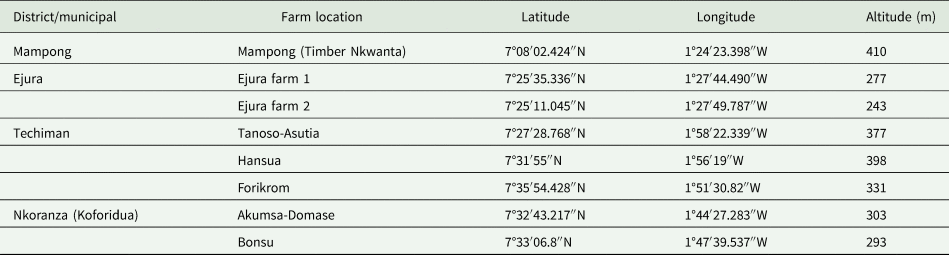
The study was conducted in eight mango orchards in the transition zone of Ghana from November 2017 to October 2019. Details of the locations are outlined in table 1.
Global positioning system co-ordinates of study sites in the transition zone of Ghana

Phenological data
The BBCH (Biologische Bundesantalt, Bundessortenamt and Chemische Industrie) Scale modified by Hernández Delgado et al. (Reference Hernández Delgado, Aranguren, Reig, Fernández Galván, Mesejo, Martínez Fuentes, Galán Saúco and Agustí2011) for mango phenological studies was adopted and adapted for this study. A total of 160 shoots were tagged and weekly observation of the mango crop's developmental stages was recorded for the study duration. Sequential data of different developmental stages (vegetative flush, inflorescence, fruit set and fruit maturity (colour break and ripe)) on each tagged shoot was observed and recorded.
Fruit fly monitoring
Adult fruit fly populations were monitored with methyl eugenol, for attracting Bactrocera species and terpinyl acetate, for Ceratitis species with strips of dimethyl 2,2-dichlorovinyl phosphate added as killing agents. Thirty-two improvised traps were designed from 750 ml water bottles with 2 cm2 holes (windows) on two opposite upper parts of the bottle. Holes were punched at the bottom of the bottle to allow easy drainage of water after rainfall. Four traps (two of each attractant) were deployed in each mango orchard in an alternating manner at a distance of 50 m apart and a height of 1.5–4 m above the ground, depending on the tree architecture (Ekesi and Billah, Reference Ekesi and Billah2007). The traps were hanged on the lower branches of the selected trees with nylon threads strung on the corks. Grease was applied to the proximal part of the nylon thread to prevent ants, from entering the bottles to feed on fruit flies caught in the traps. To prevent trap location from interfering with its performance, trap positions were rotated monthly. The contents of each trap were removed weekly and preserved in vials containing 70% ethanol and labelled appropriately with the collection information. The samples were thereafter transferred to the laboratory for sorting, counting and identification. The traps were recharged every 8 weeks.
Host fruit incubation
Fruits at the colour break and ripe stages were incubated to identify and assess infestation levels of culprit fruit fly species and natural enemies (if any) during the fruiting seasons. Fruit samples were randomly collected from the trees and the ground as windfalls. Thirty tree samples (TS) and 30 ground samples (GS) per study orchard were assessed each season. Fruits were kept in separate boxes and labelled with the orchard name, source (TS or GS), location and date of collection before they were transported to the laboratory for further processing and incubation.
During the second fruiting season of the study (2019), severe premature fruit drop was observed in two orchards (Forikrom and Bonsu) in the month of March. These fruits were either ripening prematurely or were discoloured with black patches. Fifty-two premature windfalls (dropped fruits) were collected and incubated individually to investigate the cause of fruit drop.
Laboratory work
The mean laboratory room temperature was 29.4°C with a photoperiod of 12:12 (L:D). The average relative humidity was 75%. The incubation units were made up of transparent plastic buckets, 29 cm internal diameter and 27 cm high. These were filled with sandy soil to a depth of 8 cm. The soil was cleaned of all debris and grits, washed, dried and sterilized in a Lab-Line Instruments Inc. Imperial Laboratory oven (model number: 3478-1) for 12 h and allowed to cool. Fruit samples were first washed with running water, dried with a clean napkin and weighed. The fruit dimensions (length and breadth) were also measured with a 30 cm ruler and recorded. The mango fruits were placed on the sterilized sand substrate in the plastic containers and covered with a muslin cloth to shield them from other flies and arthropods. The premature dropped fruits were cleaned and weighed. After measuring their dimensions (length and breadth), the fruits were placed in single units on sand substrates at a depth of 3 cm in plastic cups, and covered with a muslin cloth to begin the incubation process.
The incubation units were inspected at 72-h intervals for fruit fly pupae. The pupae were then placed in plastic cups (8 cm diameter and 17 cm height) lined at the bottom with moist tissue paper and covered with a muslin cloth. The seeds from the premature dropped fruits were dissected to ascertain the presence or absence of stone weevils (Sternochetus sp.) before discarding. Emerged flies were released into cages containing their feed made of yeast and sugar in the ratio 1:3 and kept for 5 days to fully mature. Thereafter, the species were counted and preserved in 70% ethanol for later identification. Emerged parasitoids were also released into a separate cage and fed on 10% honey soaked in cotton wool and kept alive for 5 days for full body development. Water was also provided in soaked cotton wool on Petri dishes in the cages (Ekesi and Billah, Reference Ekesi and Billah2007). Each fruit sample was maintained for at least 4 weeks. The fruits were further dissected to ensure that no larva was left within before discarding.
Identification of flies
The insects were examined using a Carl Zeiss stereomicroscope (Stemi 415500-1800-00). Identification of the insects was done using the taxonomic keys developed by the African Fruit Fly Initiative (AFFI) (Ekesi and Billah, Reference Ekesi and Billah2007) and the online Set of Multi-Entry identification Keys to African Frugivorous Flies (Diptera, Tephritidae) by Virgilio et al. (Reference Virgilio, White and De Meyer2014).
Data analysis
The mango phenology data were subjected to online software Mango Phenology Monitoring System. This is a web tool designed by the Department of Biotechnology ICAR, India (https://mangifera.res.in/phenology/) for analysis on the desired phenological stage at definite periods. Fruit fly infestation levels were determined by the mean number of pupa collected per kg of fruits incubated. All fly catches were counted according to the IAEA (2003) specification. The average number of flies captured in one trap in a day that the trap was exposed in the field was determined: ${\rm Relative}\,{\rm fly}\,{\rm density}\,{\rm ( FTD) } = {{{\rm Total}\,{\rm number}\,{\rm of}\,{\rm flies}\,( {\rm F}) } \over {{\rm Number}\,{\rm of}\,{\rm traps}\,( {\rm T}) \times \,{\rm Number}\,{\rm of}\,{\rm trapping}\,{\rm days}\,{\rm ( D) }}}$
Mean monthly trap catches were juxtaposed against the phenological cycle of the Keitt mango crop. Host fruit incubation data were subjected to analysis of variance (ANOVA) for statistical analysis on the differences in infestation levels at two phenological stages (colour break and ripening) for two fruiting seasons (2018 and 2019). Student's test was employed to assess the difference in infestation levels of the culprit species after the data was subjected to Levene's test to check for homogeneity in variance. The statistical differences between the sexes (sex ratio) of the culprit species were assessed with the student's t-test. A one-tailed t-test was also conducted to test for the significant difference between fruit fly and stone weevil infestation in the pre-mature dropped fruits.
Results
Mango phenology
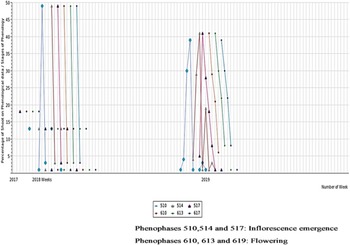
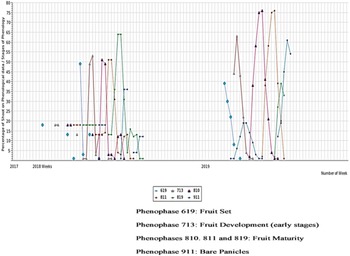
The weekly phenological studies on 160 shoots began in standard week 44 in 2017 and ended in standard week 43 in 2019. Figures 1–3 shows the graphical presentation of the phenological cycle of the mango crop from November 2017 to October 2019. The figures denote weekly percentage shoot development of each of the major phenological stages.
Seasonal occurrence of budding and vegetative shoot phenophases from November 2017 to October 2019.

Seasonal occurrence of desired flowering and fruit set phenophases for 2018 and 2019.

Seasonal occurrence of desired fruit maturity phenophases and senescence for 2018 and 2019.

Culprit species
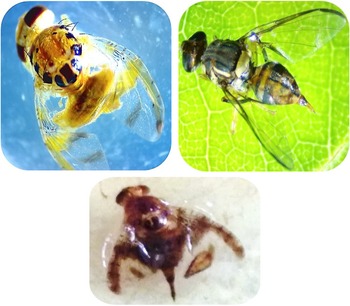
Three fruit fly species (B. dorsalis, C. cosyra and C. ditissima) emerged from the incubated mango fruits (Keitt cv.) during the study period (fig. 4). The alpha level of 0.05 was used in all our statistical tests. A one-way ANOVA revealed that there was a significant interaction among fruit fly species, season, fruit source (ground or tree) and phenological stage (colour break or ripe) of the fruit (P = 0.016). Levene's test showed an unequal variance (F (1,126) = 40.572, P = 3.24 × 10⁻⁹) between B. dorsalis and C. cosyra infestations, while a one-tailed t-test showed a highly significant difference between their infestation levels (P = 2.00082 × 10⁻⁹).
Culprit species: (a) C. cosyra, (b) B. dorsalis and (c) C. ditissima.

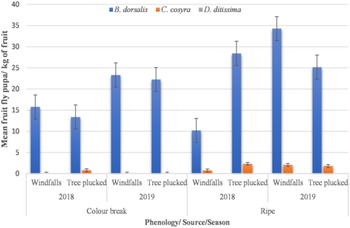
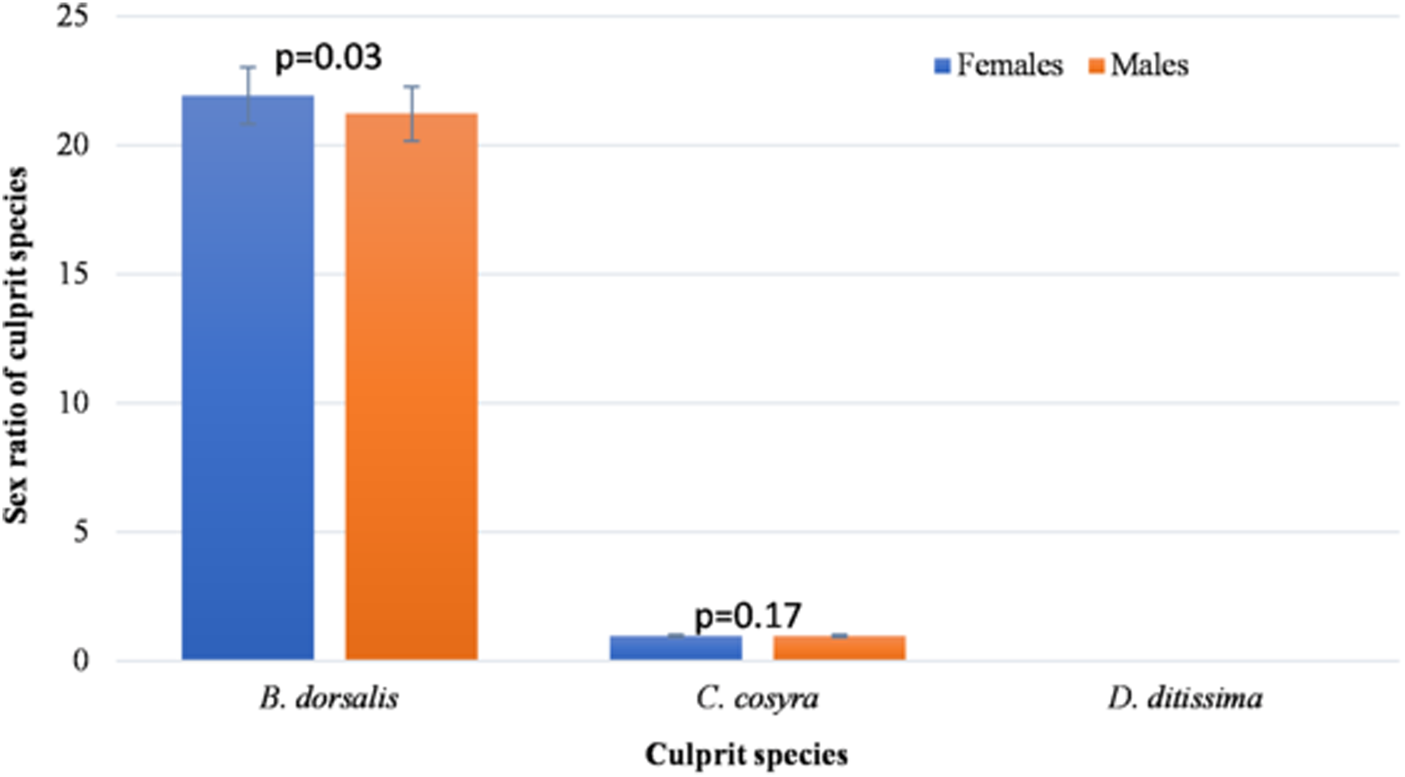
There were significant differences in infestation levels of the flies in 2018 and 2019 (P = 0.04). A further comparison with the Mann–Whitney U test at the 0.05 significant level, showed a significant difference between the infestation levels at the colour break and ripe phenological stages (U statistic = 60, critical U = 75, median = 457.5). Figure 5 shows the variation in the infestation of the three culprit species per kg of fruit collected. A Student's t-test also showed a significant difference between the sex ratios of the B. dorsalis (P = 0.04), but not C. cosyra (fig. 6).
Variation of culprit species infestation at two phenological stages of Keitt mango in the Transition zone of Ghana.

Sex ratio of culprit fruit fly species infesting Keitt mango Transition zone of Ghana.

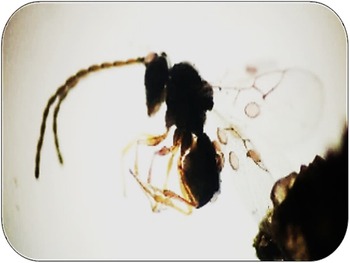
Six individuals of Aganaspis sp. (a parasitoid) were encountered at Mampong during the 2018 incubation period (fig. 7).
Aganaspis sp.

Culprit species dynamics throughout the phenological cycle of Keitt mango
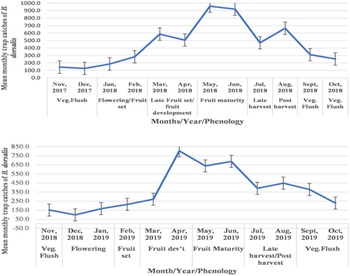
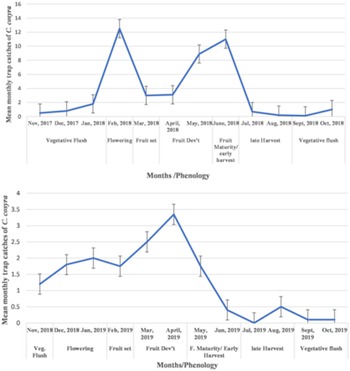
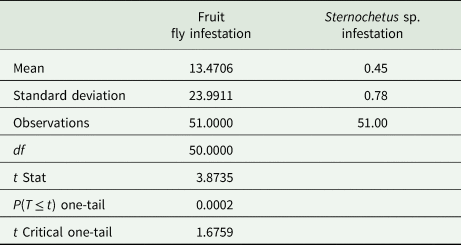
The monitoring (trapping) of the culprit species resulted in two different population growth trends for B. dorsalis and C. cosyra. C. ditissima the third culprit species was not seen during the monitoring phase of the study. Figures 8 and 9 display the population growth trends of two culprit species at the different crop phenological stages. Table 2 shows the infestation levels of fruit flies and Sternochetus species encountered in the premature dropped fruits. The infestation levels of fruit flies assessed from incubated premature fruits were significantly higher than that of Sternochetus sp. (t = 3.87, P = 0.0002).
Seasonal population growth trend of B. dorsalis at different phenological stages of Keitt mango in the Transition zone of Ghana.

Seasonal population fluctuation of C. cosyra at different phenological stages of Keitt mango in the Transition zone of Ghana.

Two-sample t-test

Farm level management practices
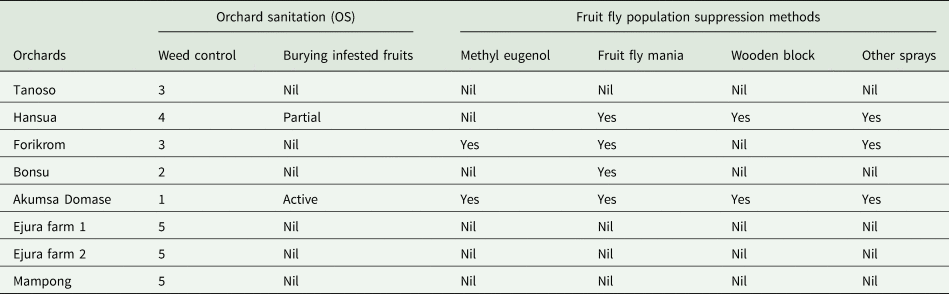
Table 3 shows orchards where sanitation and fruit fly suppression methods were actively carried out. Weed control was assessed on a scale of 1–5, with 5 being the poorest in terms of performance.
Assessment of common farm level fruit fly management practices

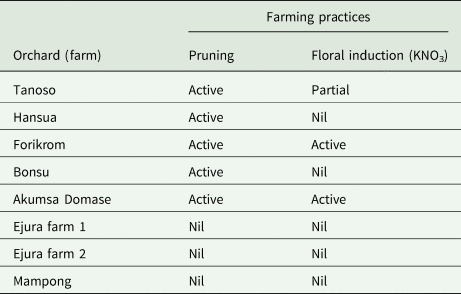
Farming practices that boost some phenological stages like flushing and anthesis were observed in four out of the eight orchards. Table 4 shows orchards where different agronomic practices that promote good crop yield were carried out.
Farming practices

Discussion
Mango phenology
The study of plant developmental stages is guided by phenological scales. The BBCH and the extended BBCH scales are examples of such scales designed for the study of angiosperms. These scales have been adopted in the characterization of phenological stages in various fruit trees including mango. Before the extended BBCH scale (employed in this study), mango phenology had been investigated by several authors (e.g. Schnell and Knight, Reference Schnell and Knight1998). These studies were limited in the sense that most of their findings were grounded on generalizations applicable to most environmental conditions. Phenological stages were described as if they developed in synchrony throughout the tree canopies in the sub-tropical environments. This may not be applicable in different climatic settings. According to Fischer et al. (Reference Fischer, Ramírez and Casierra-Posada2016), mango trees in the tropics or temperate climates may behave differently when exposed to either the warm or cold weather conditions. Tropical mango trees are said to undergo asynchronous growth development with each shoot in the canopy, following an independent growth pattern (Ramírez and Davenport, Reference Ramírez and Davenport2010). This was observed in the asynchronous development of the vegetative flushing that occurred during the study.
The latter part of 2017 recorded about 49% of leaves completely unfolded and expanded from standard weeks 46 to 49. Around the same time in 2018 and 2019, 38% of the tagged shoots had already developed elongated vegetative shoots. Anthesis occurred in a maximum of 19% of tagged shoots in the latter part of 2017, from standard week 44 to 52. Flowers bloomed during the first 10 weeks of 2018 with about 49% of panicles elongated by standard week 4 (SW4). Again, 49% of first panicle flowers opened by the 8th week (SW8), and 30% of panicles fully bloomed in week 10 (SW10). By week 12 about 12.5% of the flowers began to fade. The year 2019 saw a much earlier initiation of flowering in week 1 for about 41% of shoots. Flowers opened in about 41% of shoots in week 3 and 39% of flowers faded in standard week 7. Mature fruit dimensions recorded an average fruit weight of 713 g, length of 13 cm and a width of 9 cm.
Floral events occurred much earlier in 2019 than in 2018. This can be attributed to environmental conditions. According to Dambreville et al. (Reference Dambreville, Lauri, Trottier, Guédon and Normand2013), a plant's architecture is a result of the temporal and endogenous structural components and their combined effects. From the findings of this study, Keitt mango floral anthesis occurs after about 5–6 months period of the vegetative stage. According to Souza et al. (Reference Souza, Sarita, Modesto, Ferraz and Gonçalves2015), flowering under sub-tropical conditions can last for about 56 days, while panicle development lasts for about 45 days. In the case of this present study in Ghana, flowering lasted for an average of 44.5 days. The difference in the flowering period could be attributed to the difference in location, climatic and environmental conditions prevailing at the time the two studies were conducted. Where floral induction becomes necessary, foliar potassium, ammonium or calcium nitrate is known to kindle shoot growth and flowering in the tropics (Núñez-Eliséa and Caldeira, Reference Núñez-Eliséa and Caldeira1988). Maloba et al. (Reference Maloba, Ambuko, Hutchinson and Willis2017) tested the efficacy of KNO3 and ethephon on apple and Ngowe varieties of mango and observed a significant increase in percentage flowering and fruit set for the two varieties of mango. Two out of the eight study orchards observed to have been treated with potassium nitrate during the study period, experienced comparatively better flowering events.
Keitt is a late-season cultivar that matures between May and July in Ghana, unlike other early maturing cultivars like Jaffna and Palmer which mature between January and March. Its fruit size is larger than most mango varieties. Fruit weight is between 510 and 200 g, with a length of about 13−15 cm and a width of about 8.5–10 cm (Knight et al., Reference Knight, Campbell and Maguire2009). These parameters validate the fruit dimensions and weight recorded in this study. Under the sub-tropical climate, fruit abortion normally occurs 40 days after anthesis, while full maturity occurs in 191 days after anthesis (Ramírez et al., Reference Ramírez, Davenport, Fischer, Pinzón and Ulrichs2014). A survey conducted by Vayssières et al. (Reference Vayssières, Sinzogan, Adandonon, Rey, Dieng, Camara, Sangaré, Ouédraogo, N'klo, Sidibé, Keita, Gogovor, Korie, Coulibaly, Kikissagbé, Tossou, Billah, Biney, Nobime and Tamo2014) in West Africa on mango phenology indicated that fruit maturity occurred within a period of 15 weeks, between the months of March and June, confirming the results of this current study.
Population trend of culprit species at different phenological stages
Among the three culprit species encountered B. dorsalis had the highest adult emergence followed by C. cosyra and C. ditissima. B. dorsalis and C. cosyra exhibited different peak periods. A gradual rise of population numbers of C. cosyra and B. dorsalis was recorded at the beginning of flowering through to full floral bloom. Both species were found to infest Keitt mango at both the colour break and ripe phenological stages, but B. dorsalis was present in the orchards throughout the crop phenological cycle. The species is well established as it survives on alternative hosts such as citrus, cashew and some vegetable crops when mango is not in season. B. dorsalis populations peaked during the months of fruit maturity (mature green, colour break and ripe), between April, May and June, due to the availability and abundance of breeding sites and food sources for their progeny. This supports the findings of Ekesi et al. (Reference Ekesi, De Meyer, Mohamed, Virgilio and Borgemeister2016), who reported that fly populations increase when host fruits are in abundance. Subsequently, their populations began to drop during the late harvesting period between the latter part of July and early August. C. ditissima on the other hand was not encountered at all during the monitoring phase of the study.
C. cosyra was encountered in six out of the eight study sites. They were predominantly encountered at the colour break stage. Windfalls (GS) and tree-plucked mango fruits from Tanoso, Ejura farm 1 and Mampong recorded few individuals of C. cosyra during the first season (2018) but none during the second season (2019). Akumsa Domase recorded C. cosyra for both seasons, whilst Hansua recorded none. The population of C. cosyra dwindled considerably during the second season in 2019. This, notwithstanding, C. cosyra populations in the zone peaked during flowering and early harvest in June during the 2018 season. The 2019 season saw a gentle rise in C. cosyra which peaked in April, during the fruit developmental phase. Mango flowers are known to attract Ceratitis adults as well as other fruit fly species (Aluja and Mangan, Reference Aluja and Mangan2008), this could therefore explain the steady rise in population numbers of C. cosyra during anthesis and floral bloom. Nevertheless, fruit fly populations were generally low during the vegetative stages of the phenological cycle.
Although C. ditissima was not sighted in trap collections, the emergence of only three individuals from ripe tree plucked fruits from Ejura suggests low population levels of the species. Furthermore, Nboyine et al. (Reference Nboyine, Billah and Afreh-Nuamah2012) collected a few individuals of C. ditissima from mango orchards in Ejura and Aboasu Wenchi in the transition zone. Aidoo et al. (Reference Aidoo, Kyerematen, Akotsen-Mensah and Afreh-Nuamah2014) also gave an account on the association of mango with C. ditissima infestation in Ghana. Therefore, their emergence from incubated mango (Keitt cv.) fruits in this present study confirms their presence in mango orchards in the transition zone.
In West Africa and other parts of the world, mango is the preferred host of B. dorsalis, and infestation results in extreme losses (McQuate et al., Reference McQuate, Sylva and Liquido2017; Bota et al., Reference Bota, Fabião and De Meyer2020). According to previous studies, the native mango/marula fly C. cosyra is steadily being displaced by the invasive B. dorsalis (Ekesi et al., Reference Ekesi, Billah, Nderitu, Lux and Rwomushana2009). Nevertheless, recent studies in Burkina Faso have reported a relatively stable co-existence between C. cosyra and B. dorsalis (Zida et al., Reference Zida, Nacro, Dabiré and Somda2020). The co-infestation of both species at the colour break phenological stage observed during this study confirms this stable co-existence among these two species depending on favourable environmental conditions. It also confirms the report that B. dorsalis is able to co-infest mango fruits with several Ceratitis species including the native C. cosyra. Ekesi et al. (Reference Ekesi, Billah, Nderitu, Lux and Rwomushana2009) proposed two displacement mechanisms for these two species; larval competition for the same food resource or adult aggressive behaviour that enables female B. dorsalis to lay eggs into fruits that have already been exploited by other fruit fly species. In addition to these two possible mechanisms, the present study also illustrates that, environmental conditions also play a major role in the ability of C. cosyra to compete well with B. dorsalis. This is grounded on the fact that both species peak at different times in the year under different environmental conditions. At the colour break stage when the rains are yet to set in, environmental conditions favour the continuous activity of C. cosyra; therefore, enabling it to actively compete for resources with B. dorsalis. Adults of other fruit fly species that have emerged from incubated mango fruits in other studies include Zeugodacus cucurbitae (exotic) the melon fly, C. ditissima the citrus fly, Ceratitis capitata, Ceratitis silvestrii and Ceratitis quinaria (Nankinga et al., Reference Nankinga, Isabirye, Muyinza, Rwomushana, Stevenson, Mayamba, Aool and Akol2014).
The 2019 season experienced severe fruit drop, right from the beginning of fruit set to fruit maturity. Apart from the trees exhibiting the usual weight shedding of fruit through mechanical fruit drop, two orchards experienced premature ripening of fruitlets and egg-sized fruits. Fruit fly infestation of premature marble and egg-sized fruits observed during the 2019 fruiting season gives a clear indication that not all cases of early fruit drop can be attributed to physiological load shedding or mechanical fruit drop. Fruit fly infestation in premature fruits is possible. This fact is corroborated by studies in Guinea where young fruits were highly infested with fruit fly larvae (Vayssières et al., Reference Vayssières, Adandonon, Sinzogan, Ayegnon, Ouagoussounon and Modjibou2010). In the case of this study premature fruit infested larvae emerged into C. cosyra and B. dorsalis adults, indicating that both species can infest mango at that early stage.
The sex ratio was almost 1:1 with no significant differences among C. cosyra species. B. dorsalis on the other hand recorded a significant difference between the sexes that emerged. There was also a significant difference between the infestation rates of the culprit species encountered, with B. dorsalis contributing to the bulk of damage recorded. Infestation indices at the two fruit phenological stages (colour break and ripe) also showed a significant difference in infestation rates between colour break fruits and ripe fruits, with the ripe fruits recording a higher infestation rate. The only parasitoid species recorded from the study (Aganaspis sp.). Only six individuals emerged from ground samples from Mampong. This is a proof of their presence in the zone.
Orchard sanitation is a key component in IPM of fruit flies. It interrupts the life cycle of the fly and prevents the emergence of adult flies. The assessment of farm level management practices showed that one out of eight farmers actively practiced orchard sanitation. A few other orchards implemented fruit fly population suppression methods with baits and other sprays at the mature green stage when it was too late to suppress the populations. There is the need for management practices to commence at the right phenological stage to ensure effective suppression of population numbers.
Conclusions, implications for management and recommendations
Three species of fruit flies (B. dorsalis, C. cosyra and C. ditissima) were identified as culprit species in the transition zone of Ghana. B. dorsalis recorded residual populations throughout the mango phenological cycle. The species is adapted to a wide range of fruits. Therefore, other horticultural crops around the orchards serve as host reservoirs for fruit fly species when mango is out of season. Mango orchards cultivated with other horticultural crops are a common practice in Ghana. It is therefore one of the key factors to consider in the formulation and implementation of management strategies. The results of this present study indicate that B. dorsalis is well established and has been very competitive against the indigenous species in the Ghanaian mango industry over the last decade. The presence of C. ditissima in a few fruits is an indication of their presence in the zone.
The presence of fruit fly larvae in premature dropped fruits indicates that implementation of management strategies early in the phenological cycle on the Keitt mango will yield good results. This assertion is backed by the evidence of the steady rise in the populations of B. dorsalis and C. cosyra during the flowering phenological stage. Thus, management measures should be intensified at anthesis. As management plans are formulated, attention should not only be on the invasive B. dorsalis but also on the other culprit species. This is to forestall their potential of taking over and increasing their rates of infestation in the event of B. dorsalis suppression.
The results obtained from this study can aid in the forecast of fruit fly population growth trends and the determination of the appropriate time for the implementation of control measures. Furthermore, intensive training and publicity on farm/orchard sanitation practices for farmers is key in the battle against fruit flies and should therefore not be underrated. Also, the presence of Aganaspis species in the zone should be further explored in order to ascertain the particular species, its biology, ecology and its usefulness in the biological control of fruit flies.
Acknowledgement
Our sincere gratitude goes to Mr Anthony Kuunyeh for his invaluable support during the data collection period.
Financial support
CSIR and the West African Fruit Fly Project Committee in Ghana (under the fruit fly project implemented by CORAF) partially contributed towards the successful completion of this research.
Conflict of interest
None.