At the height of Argentina's economic, social and political crisis of the early 2000s, governing elites were the primary targets of public outrage that had reached epic proportions. Citizens blamed the dramatic increase in poverty, which affected 57.5 per cent of the population in 2002, on years of corruption, mismanagement and failed policies.Footnote 1 Many Argentines expressed their discontent with ‘politics as usual’ through contentious forms of mobilisation. Labourers seized businesses that had been abandoned by their owners, establishing hundreds of worker-controlled factories, and unemployed workers joined the ranks of the piquetero movements that had emerged in the 1990s. Meanwhile, citizens filled the void left by failed representative institutions by participating in neighbourhood assemblies, bartering clubs and similar grassroots initiatives as well as in countless protests. The ‘popular insurrection’ prompted observers to conclude that Argentines were reinventing politics.Footnote 2 The masses had spoken, and their message was clear: all politicians and government officials should relinquish power immediately (‘que se vayan todos’).
Although members of NGOs and other civil society organisations (CSOs) were hardly impervious to this sentiment, some found it necessary to interact with the discredited ‘political class’ and signalled their willingness to find common ground in the aftermath of the crisis. The director of a prominent NGO expressed interest in ‘building bridges between political leaders and civil society’ and finding ‘honest and capable’ public officials with whom to collaborate.Footnote 3 A second NGO leader commented that CSOs would benefit from sharing ideas and proposals with government officials instead of simply ‘exchanging them with other groups’.Footnote 4
The purpose of this article is to analyse the strategies of civil societal actors who sought a greater presence in policy debates and decision-making at this critical juncture. In particular, I focus on the efforts of non-profit, public-interest NGOs and community organisations advocating for children's rights and greater transparency in government institutions.Footnote 5 I demonstrate that members of these groups achieved varying levels of involvement during the policy-making process and trace some of this variation to their use of collective action frames. I argue that by devising effective framing strategies, civil societal actors increase their chances of participating in the agenda-setting, formulation and adoption phases of policy-making. Members of CSOs work to arouse moral indignation by exposing a grave injustice or an urgent problem through what is known as motivational framing. However, excelling at this task rarely suffices as a strategy. Frames must also incorporate positive or constructive messages and feasible solutions to the serious problems that activists decry. An ideational explanation of participation helps solve the puzzle of ostensibly weak actors becoming involved in decision-making in democracies where CSOs are not consulted on a regular basis. The evidence suggests that activists do not merely respond to existing political opportunities; they endeavour to create opportunities for participation.Footnote 6
An investigation of the experiences of civil societal actors during the policy-making process reveals much about a democracy's character and quality. Yet despite enduring scholarly interest in such themes, relatively few analysts have focused on the advocacy efforts of CSOs in Latin America. The principal objectives of this article are to contribute to a small but growing body of work on the latter subject and to join conversations occurring within the social sciences about the role of ideas in politics. I begin with a brief review of the existing literature on civil society's actions in the policy realm. Next, I theorise the relationship between framing and participation in policy-making. I then carry out a comparative analysis of two cases of advocacy in Argentina: the campaign for a freedom of information (FOI) law and the struggle for child protection legislation.
Contending Perspectives on Civil Society Participation
CSO participation in policy-making is an emergent area of inquiry within the field of Latin American politics. Numerous studies published in the 1990s and early 2000s suggested that civil society involvement in policy debates and decisions was limited within Latin American democracies. Regional specialists underscored the decline of traditional modes of representation, the paucity of stable channels for articulating demands and interests, and the need for stronger, more institutionalised linkages between civil society and the state.Footnote 7 Additional factors were said to conspire against meaningful participation, including the concentration of decision-making authority in the executive branch and exclusionary, technocratic policy-making processes. According to a diverse group of scholars, the role of CSOs was generally circumscribed: as the state's social welfare responsibilities decreased, programmes were being contracted out to NGOs tasked with implementing policies and providing services. Such groups risked losing their ‘autonomy, initiative, and capacity for critical assessment’.Footnote 8
Other scholars have reached more optimistic conclusions about the political potential of CSOs in the region's democracies. Some have highlighted their competency in monitoring the behaviour of governing elites and holding them accountable; others have explored their capacity to represent societal interests and demands.Footnote 9 Additionally, the international community's enthusiasm for alliances between states and civil societies, citizen participation, and good governance has facilitated the creation of citizens' councils and similar participatory institutions.Footnote 10 These reforms, especially those stipulated by multilateral banks and international donors, theoretically generate opportunities for civil societal actors seeking to influence policy.
No consensus has emerged among scholars regarding the impact of civil society on policy-making in Argentina. There, participatory reforms have been neither as sweeping nor as institutionalised as initiatives undertaken in neighbouring countries such as Brazil, and the government's preferred role for CSOs tends to be policy implementation. Throughout the 1990s, significant internal and external factors hindered CSOs' ability to participate fully in other phases.Footnote 11 More recent studies continue to document the myriad obstacles that groups must overcome to achieve a greater presence in policy-making. At the same time, however, they provide rich empirical evidence of CSO involvement in policy domains as varied as judicial reform, poverty alleviation and reproductive rights.Footnote 12
These analyses do not purport to offer a general theory of civil society influence but instead build on explanatory frameworks developed by scholars of social movement organisations, interest groups, non-profits and think tanks in long-standing democracies. Accordingly, they identify group attributes and resources, including funding, administrative capacity, leadership, expertise and prestige, that are thought to strengthen these organisations' political muscle, a standard approach in diverse bodies of scholarship.Footnote 13 In addition to exploring internal factors such as these, analysts discuss a multitude of exogenous variables that affect the likelihood of group involvement, including the extent to which policy-making processes are porous, the degree of partisan competition, the level of state capacity and other characteristics of the broader political context.Footnote 14 Case studies of advocacy in Argentina also support arguments that recognise allies in key government positions as an important ‘political opportunity’. Scholars of women's movements, for instance, have long analysed the presence of ‘femocrats’ within state agencies who champion the same cause as activists and maintain close ties with movement organisations.Footnote 15 Finally, recent works suggest that global human rights regimes have generated political opportunities for advocates within Argentina. International norms and conventions can strengthen their rights-based claims and help them push for policy reforms.Footnote 16
The analysis presented in this article is not intended to supplant organisational, institutional or elite-centred perspectives. It is clear, for example, that CSOs have brought considerable human and other resources to bear on the advocacy campaigns examined below.Footnote 17 However, these cases demonstrate that activists mobilise ideas as well as resources. Indeed, the strategic use of ideas and discourses can help activists compensate for shortages of material resources. It is also necessary to explore the strategies of civil societal actors in environments where CSOs are not customarily invited to participate in policy-making. Groups do not simply await invitations from above; sometimes they demand to be included in policy debates and decisions. Moreover, certain actors manage to stay involved long after government-led opportunities cease. Thus, echoing the familiar refrain that elites and institutions ‘matter’ only takes us so far. While explanations that privilege political opportunity structure, organisational resources and similar sets of variables are not without their merits, I propose a more dynamic, agency-driven approach. Lastly, although global norms certainly influence domestic advocacy, they are not necessarily the most salient factors shaping activists' framing strategies. Group members do not merely import pre-packaged discourses; because the most effective frames resonate at home, they refashion and reshape ideas in keeping with their own political milieu.
The Power of Ideas
Activists frequently rely on the persuasiveness and strength of their ideas to influence politics. I submit that civil societal actors who devise creative strategies for politicising issues are more likely to capture the attention of government officials and fellow citizens and to shape policy debates and decision-making. These strategies typically entail the use of frames, which encode events, experiences and actions with meaning.Footnote 18 Scholars of social movements have identified three main framing tasks. Diagnostic framing ‘problematizes … an issue, helps shape how the issue is perceived, and identifies who or what is culpable’; prognostic framing offers potential solutions to the problem; and motivational framing provides a rationale for collective action, often by appealing to justice or morality and underscoring a problem's urgency or severity.Footnote 19
These definitions serve as a point of departure for my own arguments. With respect to motivational framing, I propose that members of CSOs who seek to participate in policy-making must provide a dramatic call to arms that can rally both elites and the public to their side. They need to communicate why their cause is worthwhile, pressing and deserving of immediate government action. However, successful motivational framing is rarely sufficient to thrust civil societal actors into the centre of policy debates. It is imperative that these actors attend to the diagnostic and prognostic tasks of framing. Specifically, I argue that policy-friendly frames generally have three additional characteristics: they contain a positive or constructive message, downplay blame and propose feasible solutions to important problems. The more activists incorporate these elements into their diagnostic and prognostic framing, the more effective their strategies will be, thereby increasing the likelihood of being involved in policy-making during the agenda-setting, formulation and adoption phases.
First, an efficacious frame conveys something positive or hopeful. Members of CSOs can take a stance that is as critical or oppositional as they deem necessary on an issue, but they improve their chances of participating by including constructive messages in their frames. Policy-makers may perceive actors who engage solely in oppositional politics as having little to offer, and those actors' role in decision-making is likely to be limited. Even protestors involved in the highly contentious ‘anti-globalisation’ (or global justice) movements in Europe, the Americas and elsewhere have created an upbeat slogan: ‘Another world is possible’. Such activists communicate a sense of optimism as well as the counter-hegemonic alternatives that they envision for the future. Second, frames that emphasise blame can be a hindrance. A dose of caution is politically expedient when articulating who (or what) bears responsibility for social and political ills. For instance, assigning blame to certain powerful actors can threaten these individuals and provoke their active resistance.
Third, organisations enjoy an advantage when their frames suggest feasible remedies for problems. To be sure, public-interest NGOs and other groups often call for ambitious reforms consistent with their mission to promote human rights, justice and democracy. Nevertheless, when participants in CSOs propose a pragmatic solution, their demands appear ‘reasonable’ and realistic, even when couched in more grandiose rhetoric. The policy-making process, usually incremental in nature, can accommodate such inputs. Additionally, it is conceivable that these ideas will be integrated during the design or formulation phase. Members of CSOs thus present policy-makers with a task that they are able to perform. In contrast, less policy-friendly frames communicate that the only acceptable response to a recurrent problem is to dismantle or transform the entire system. However justifiable their criticisms, civil societal actors who underscore the dysfunctional nature of the prevailing political order without offering workable proposals risk being sidelined. Finally, it is beneficial for activists to convince political elites that change is not only possible but also desirable – that undertaking reforms will maximise elites' preferences and advance their own agendas. Activists can make strategic appeals to self-interest or self-preservation along with appeals to altruism.
A group's perceived credibility is also relevant to the framing process.Footnote 20 Integrity as a bearer of ideas can be the result of expertise and a proven track record of monitoring elites and institutions. Civil society's ‘watchdog’ role is widely respected in countries where state security forces have committed egregious human rights violations. Groups experienced in holding leaders accountable for their actions can leverage this credibility while disseminating frames.
An agency-centred, ideational approach sheds light on the ability of some CSOs to overcome obstacles such as resource deficiencies and political ‘weakness’ vis-à-vis other actors, and to play a role in policy-making even in relatively unfavourable institutional contexts. Although the argument outlined here does not constitute a complete theory of policy participation, activists' discursive strategies account for some of the observed variation in the dependent variable in the cases of advocacy analysed in the remainder of the article.
Research Methods
To assess the effectiveness of the framing strategies used during the campaigns for FOI and child protection laws, I look for the characteristics discussed above: positive or constructive messages, feasible remedies to problems, a de-emphasis on blame, and motivational elements. The views of civil societal actors involved in each issue area do not always coincide; I therefore focus on the strategies that predominated among the most active groups during the period in question. My primary sources of data on activists' rhetorical strategies are interviews conducted in 2003 and 2006 with members of CSOs, their press releases, reports, and similar documents, and editorials and commentary that appeared in news media.
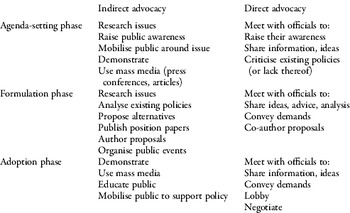
These sources also allow me to determine the extent to which CSOs participated in policy-making, the dependent variable of this study. Participation signifies that group members are exerting some degree of influence during the agenda-setting, formulation and adoption phases. When the agenda is being determined, civil societal actors seek to convince governing elites that a problem requires attention. For instance, group members often disseminate their views in the media to raise awareness. They then endeavour to shape the content of policy during the formulation phase by sharing analysis and weighing the pros and cons of different proposals. Additionally, activists try to persuade and pressure decision-makers to adopt their preferred policies. Varied tactics, such as meeting with policy-makers and organising demonstrations, serve to convey their demands to the authorities and galvanise the public. During all three phases, members of CSOs can engage in direct or indirect advocacy: the former entails interacting with legislators and executive branch officials; the latter involves pressuring those same actors by mobilising certain constituencies and/or the public. Table 1 summarises the dimensions of the dependent variable.
Civil Society Participation in Policy-Making

It should be emphasised that influence during the policy-making process is not equivalent to influence over outcomes. Stated differently, the participation of civil societal actors in decision-making does not automatically lead to the results that they desire. Myriad causal factors shape policy outcomes and outputs: the interests and political will of government officials, institutional configurations such as party systems and executive–legislative relations, and international trends are just a few examples. Furthermore, because the process entails compromise, CSOs' proposals are rarely adopted as they stand, and even if a preferred policy is chosen, it may not be fully implemented. For these reasons, I avoid exaggerating the importance of outcomes and focus more diligently on the role of groups during the policy-making process. In doing so, I am following in the footsteps of scholars who research activism in consolidated democracies and define advocacy as a process whereby actors articulate ‘positions or sets of demands’ without ‘necessarily securing them’.Footnote 21
The fluid and uncertain political environment that CSO members faced during the period under analysis should also caution against any naive assumptions that they would have the final word on policy outcomes. The collapse of the Alianza government in December 2001 had led to a succession of interim presidents as well as disarray within the Unión Cívica Radical (Radical Civic Union, UCR) and the other parties involved in the coalition. Moreover, because the Peronist (Justicialist) Party's internal factions could not agree on a candidate for the 2003 presidential elections, three contenders emerged, including former president Carlos Menem, who was staging a comeback. Even under less chaotic circumstances, the policy-making process is characterised by complexity and contingency.
The campaign for FOI legislation, the first case of advocacy discussed in this article, aptly illustrates how civil society involvement in policy decision-making does not guarantee the desired policy outcome. Members of NGOs achieved high levels of participation in policy-making based on the definition just outlined. In particular, they were active and influential in building support for reform, shaping the content of the legislation, including it on the agenda, and pressuring the lower house of Congress to pass the bill (the Proyecto de Ley Nacional de Libre Acceso a la Información Pública) that they endorsed in May 2003. These efforts notwithstanding, the bill had lost its parliamentary status by 2006. Civil societal actors have continued to clamour for a national law and are currently in the midst of a new campaign, ‘Saber es un derecho: que ahora sea ley’ (‘Knowing is a right: now it should be a law’).
In contrast, child welfare advocates celebrated the passage of a law (Ley de Protección Integral de los Derechos de las Niñas, Niños y Adolescentes, Law 26.061) in 2005 that promised a dramatic reorientation of policies affecting young people. Although this was a momentous year for proponents of children's rights, activists had attained middling levels of policy involvement during the period prior to 2004, which is the focus of the present analysis. A number of civil societal actors were adept at raising public awareness of children's rights and influencing the policy agenda; however, their participation in policy-making – that is, their presence in policy debates and interactions with governing elites – did not rival the intensity of the FOI campaign until 2004–5.
The contrasting levels of involvement in policy-making that we observe in these cases of advocacy are partly the result of the different framing strategies that each set of activists employed. During the FOI campaign, advocates used relatively successful frames, while in the campaign for child protection legislation activists initially resorted to less effective framing strategies. A structured comparison of the two cases thus allows us to analyse the relationship between these variables. Moreover, given that some scholars conclude that the local level is the more propitious environment for citizen involvement in policy-making, a focus on advocacy in favour of national legislation provides a difficult and compelling test of the theory.Footnote 22
Advocating for Freedom of Information
Information on government activities and outputs – on existing and proposed policies, state expenditures, public facilities and public servants – is not especially reliable or consistently available to the public in Argentina. Access has historically depended on the discretion of bureaucrats and elected officials, who often decline or simply ignore requests, and legal action is frequently needed to oblige them to release information. Strong FOI laws establish penalties for such acts of non-compliance and include other provisions that support their implementation and enforcement. Civil societal actors have therefore lobbied for national legislation that will facilitate the process of soliciting and receiving information. The most vocal proponents are members of NGOs who call for institutional reforms, encourage citizen involvement in public affairs, and/or defend citizenship rights. Fellow civil societal actors and the wider public hold several groups in high esteem owing to their experience as watchdogs and/or legal advocates. Poder Ciudadano (Citizen Power), for example, is a well-known foundation that has advocated for citizen participation and control since 1989; one of its areas of expertise is monitoring elected officials and the extent to which they comply with existing ethics and campaign finance laws. The Centro de Implementación de Políticas Públicas para la Equidad y el Crecimiento (Centre for the Implementation of Public Policies Promoting Equity and Growth, CIPPEC) likewise seeks to make information about elites, institutions and the policy-making process widely available and to improve the quality of public administration. The Fundación Ambiente y Recursos Naturales (Environment and Natural Resources Foundation, FARN) also promotes greater transparency and citizen participation in decision-making, especially in matters pertaining to the environment.
Legal advocacy is the forte of the Centro de Estudios Legales y Sociales (Centre for Legal and Social Studies, CELS), a respected human rights organisation created during the 1976–83 dictatorship. In addition to promoting economic, social and cultural rights and continuing to pursue justice for dictatorship-era violations, CELS has been a pioneer in analysing contemporary police brutality and related weaknesses in the country's rule of law. Similarly, the Asociación por los Derechos Civiles (Association for Civil Rights, ADC) has become a leader in the field of public-interest law and gained prominence defending victims of gender-based and other forms of discrimination. In short, the NGOs have established track records in the defence and promotion of citizenship rights. The high quality of their research and professional credentials of their members have further enhanced their credibility. This expertise, legitimacy and visibility proved advantageous as they disseminated their ideas and engaged in framing.
Members of these NGOs, joined by participants in other groups and alliances, vigorously supported FOI legislation through a combination of direct and indirect advocacy.Footnote 23 By the late 1990s, they were publishing research on the subject to raise awareness, to provide rationales for transparency reforms, and to influence the policy agenda at the provincial and national levels of government.Footnote 24 Roberto Saba, of the ADC, drafted an access to information law that the legislature of the Autonomous City of Buenos Aires passed in 1998. This policy then served as a template for the preliminary version of a national bill, which the staff of the Justice and Human Rights Ministry's Anti-Corruption Office authored in 2001.Footnote 25 They implemented a process of participatory rule-making (‘procedimiento de elaboración participada de normas’) to gather feedback from stakeholders and other interested parties. NGO members seized this opportunity to convey their policy preferences during the policy's formulation. Some referred to the Anti-Corruption Office as an ‘oasis’ within the government due to its unusually inclusive style of decision-making, commitment to reform, and sympathetic staff comprised of former NGO members.Footnote 26 Indeed, the agency's personnel described their relationship with CSOs as ‘positive’ and the inclusion of such groups as ‘necessary’.Footnote 27
Civil societal actors thus found like-minded counterparts within the Anti-Corruption Office. However, once the bill was sent to the Chamber of Deputies in early 2002, advocates knew they had to persuade a much more diverse group of political elites in both the executive and legislative branches that reform was necessary. In an attempt to do this, they met with President Duhalde's (2002–3) staff and the justice minister, Juan José Álvarez. They also met with high-ranking members of Congress and legislative committees and other policy-makers, with whom they shared analysis and their ‘minimum requirements’ for a solid law.Footnote 28 In fact, these principles were incorporated into the bill. After lobbying the relevant committees to approve the bill, NGO members turned to the daunting task of pressuring the deputies to embrace reform. As Norberto Borzese, president of the Foro Social para la Transparencia (Social Forum for Transparency), explained, ‘not a day went by without the deputies arriving at their offices to find ten calls from citizens asking that they lend their support’.Footnote 29 Meanwhile, advocates held ‘dozens’ of meetings with legislators and collected signatures endorsing the law from nearly two-thirds of all deputies.Footnote 30
Additionally, participants reached out to an audience beyond the policy-making establishment. By sponsoring conferences and similar events, organising occasional demonstrations and continuing to publish research and editorials, they sought to enlarge their base of public support while simultaneously pressuring decision-makers. Moreover, they coordinated their advocacy efforts through the creation of an informal coalition that successfully combined organisational resources and constituencies. A few NGOs formed the nucleus of the coalition, but the number of people involved in the campaign grew as groups mobilised volunteers and collaborated with other alliances. Civil society ‘pressure and follow-through’ were vital for the advancement of the bill, which the Chamber of Deputies passed in May 2003.Footnote 31 By then, participants in NGOs had already begun to lobby senators; members of the ADC, CIPPEC, FARN and the Foro Social para la Transparencia, for example, had secured commitments from senators as early as September 2002. In short, civil societal actors were highly involved in the policy-making process during this period according to the criteria included in Table 1.
The campaign supports the arguments posited earlier regarding effective frames. To begin with, the activists' motivational framing emphasised the severity of the ongoing political crisis. NGO members succeeded in persuading many deputies that supporting the bill was a necessary measure to address the crisis of representation. Making a case for the urgency of transparency reform was not difficult given the unparalleled levels of outrage directed at politicians and widespread perceptions of corruption run amok: 93 per cent of survey respondents believed that corruption affected political life ‘very significantly’.Footnote 32 Yet instead of echoing popular demands to ‘throw the bums out’, advocates proposed a way for those ‘bums’ to do their part to restore a modicum of credibility to the political leadership and to enhance Argentine democracy. Their frames contained two positive messages. First, they presented the legislation as an opportunity for policy-makers to improve the situation. Second, they discursively linked the reform to building institutions and, more generally, to strengthening democracy. In this way, activists suggested that meaningful reforms could emerge from the crisis and that the cloud hovering over Argentine politics might have a silver lining.
Group members characterised the legislation as a chance for politicians to improve their tarnished public image. They communicated to officials in both branches that adopting the reform would be a crucial step toward recovering some of the legitimacy that had been squandered. This rhetoric proved effective while advocates tried to convince policy-makers to support the bill. The NGOs' constructive and face-saving approach contrasted dramatically with ‘Que se vayan todos’, the more ubiquitous message emanating from civil society at that time. In interviews, leaders criticised the slogan. The director of Poder Ciudadano, for instance, labelled it a ‘useless’ message, and the president of the Foro Social para la Transparencia called for more ‘constructive’ proposals.Footnote 33 That is not to say that NGO members hesitated to criticise politicians and their apparent unwillingness to undertake reforms. Indeed, they chastised politicians for refusing to cease their ‘immoral practices’ and for closing ranks to ‘defend their privileges’.Footnote 34
Nevertheless, the frames did not revolve around the issue of culpability: instead of underscoring the corruption or ineptitude of particular officials, thereby alienating members of the partisan and policy-making establishment, advocates called for stronger institutions. They viewed FOI as a desirable reform that would enhance the quality of Argentina's institutions and make public administration more effective and transparent. Moreover, proponents of reform emphasised the positive association between FOI and democracy. In publications they declared that ‘to deny the right to information is to deny the right to democracy’.Footnote 35 Their rationales for reform spoke to the very essence of democracy in both its representative and participatory forms. Access to information, a tool that would facilitate scrutiny and control of government, was necessary for the smooth functioning of representative democracy. Meaningful citizen control and accountability would never be achieved, they maintained, without greater knowledge of governing elites' actions done ‘in our name and with our resources’.Footnote 36 Many also considered the right to information to be a prerequisite for citizen participation in public affairs. Where the marketplace of ideas is absent, public debate is impoverished and citizens are ill-equipped to make informed decisions about their communities. The ‘semi-direct’ democratic mechanisms included in the Constitution – that is, public hearings, popular initiatives and referenda – are bereft of much meaning without access to information, the FOI proponents argued. Stated briefly, advocates insisted that FOI was closely tied to the fulfilment of other citizenship rights. NGO members asked why Argentina continued to lack legislation so essential for democratic consolidation. They reminded the government and the citizenry of a simple fact: ‘two decades after the democratic transition, and still no law’.Footnote 37
The advocate groups could more easily disseminate these messages thanks to their solid reputations and expertise. Perceptions that they were credible sources of ideas and information helped them persuade the authorities and reach a wider audience. In addition, they regularly invoked global and regional norms of transparency in their publications to lend further legitimacy to their demands. In particular, the CSOs gained credibility while monitoring the domestic implementation of the Inter-American Convention against Corruption (1996), to which Argentina is a signatory. Their involvement in transnational advocacy networks fostered the exchange of ‘principled ideas’.Footnote 38 Poder Ciudadano assumed a leadership role early on (in 1996) by serving as the Argentine chapter of Transparency International. Global norms and discourses strengthened the advocates' frames and reinforced their message that every self-respecting democracy should have an FOI law. These international influences notwithstanding, the activists' frames resonated at the domestic level: their fellow citizens recognised corruption and opaque institutions as eminently Argentine problems.
The activists' frames and ideas motivated a greater number and diversity of political elites beyond the like-minded individuals staffing the Anti-Corruption Office ‘oasis’. Other actors echoed the transparency discourse, promised CSOs that they would advance legislation, and in some cases actually fulfilled that pledge. Activists would later reflect that certain politicians were more receptive; some members of the Afirmación para una República Igualitaria (Affirmation for an Egalitarian Republic Party, ARI) and the UCR, for instance, were more steadfast in their commitment to reform than the Peronists.Footnote 39 Deputy Marcela Rodríguez (ARI) declared the FOI law to be a ‘very important mechanism of control … that will allow transparency to become an effective weapon against corruption’.Footnote 40 Her remarks, which include the language used by civil society advocates, underscore the salience of the pro-transparency discourse. Legislators with different partisan affiliations also responded to the activists' ideas. Their criteria for an effective law were well received in the Freedom of Expression and Constitutional Affairs Committees. Another useful ideational resource was the Leyes de Mayo (May Laws), transparency- and accountability-enhancing reforms put forward by the Foro Social para la Transparencia. According to one participant, ‘high-quality proposals’ such as these were critical for civil societal influence during policy-making.Footnote 41
Additionally, the advocates' frames achieved broad resonance during the aforementioned CSO campaign to gather deputies' signatures. A large majority of the lower chamber aligned themselves with the movement toward greater transparency and higher-calibre democracy. Officials representing diverse parties and ideological currents pledged their support, as evidenced by the more than 160 signatures collected. Activists' threats to ‘name and shame’ legislators who did not endorse the law served as further motivation: they planned a press conference to commend the bill's supporters and expose its opponents.
Moreover, groups leveraged prior commitments to transparency that political leaders had made publicly. A pertinent example is the Argentine Dialogue, convened in 2002 by the United Nations Development Programme and the Catholic Church, with the support of Duhalde. The goal was to set an agenda of ‘governability’ amidst the crisis by consulting representatives from businesses, unions, religious denominations, CSOs and so forth. Numerous political reforms, including greater access to information, were proposed, and hundreds of groups participated in a campaign entitled, ‘More information, less corruption, less poverty’. Transparency was one of the guiding principles of the Dialogue's charter. This is likely one of the reasons why Duhalde supported the law while Congress was considering it and, previously, why NGO members received assurances during meetings with his staff and Ministry of Justice personnel that the bill would be included on the agenda for extraordinary legislative sessions. Although executive branch officials did not ultimately keep this promise, they still felt compelled to make it before a civil society audience.Footnote 42
In summary, advocate groups energised their own memberships and captured the attention of policy-makers by underscoring the severity of Argentina's political crisis. The activists heightened the salience of the transparency issue and thus employed motivational framing. More importantly, they integrated positive and constructive elements into their frames by linking transparency, citizen control and participation, and democratic consolidation, and suggesting that these ‘good things go together’. They framed the legislation as an opportunity for policy-makers to improve their own image while strengthening institutions and democracy itself. Their message of political and institutional renewal conveyed a sense of hope in an environment where disgust and anger were palpable. With respect to prognostic framing, advocates offered feasible remedies for corruption and limited transparency, both seemingly insurmountable obstacles. They tried to send the message that change was both possible and long overdue. They asked policy-makers to pass legislation, a task that the latter were capable of performing. Activists avoided the pitfalls of the blame game and shifted the locus of the discussion away from politicians and their foibles and onto Argentina's institutions.
The CSOs' effective framing was consequential for their involvement in policy. They made significant progress toward persuading legislators and executive-branch officials to support reform. Their strategies for politicising the transparency issue were captivating but also accorded well with the realities of policy-making. In contrast, members of groups advocating for the rights and well-being of children opted for a different approach to framing, as I demonstrate below.
Advocating for Children
A diverse group of Argentine civil societal actors work on issues pertaining to the well-being of children, including education, domestic violence, health and substance abuse.Footnote 43 Some organisations are comprised of lawyers, child psychologists, social workers and similar professionals with expertise that is potentially useful to policy-makers. Examples of such CSOs are the Sociedad Argentina de Pediatría (Argentine Paediatrics Society), Centro de Estudios Legales de Infancia y Juventud (Centre for Legal Studies of Children and Youth, CELIJ) and Centro de Estudios de la Mujer (Women's Studies Centre).Footnote 44 Children's rights advocates have earned credibility due to their specialised knowledge of problems affecting children. They have accumulated this knowledge not only through their technical training, but also from their extensive research on the status of the nation's youth and their day-to-day experiences providing families with services such as counselling, foster care programmes and communal kitchens. Certain groups exist primarily to provide these services; others, most notably the Asociación para los Derechos de la Infancia (Children's Rights Association, ADI), have helped families meet their basic needs while simultaneously producing research on children's themes. The ADI, the Asociación Civil Igualdad de Derechos (Civil Association for Equality of Rights) and a number of additional CSOs have been steadfast in their commitment to promoting a rights-based approach. Several veteran human rights organisations such as the Servicio de Paz y Justicia (Peace and Justice Service, SERPAJ), Asamblea Permanente de Derechos Humanos (Permanent Assembly for Human Rights, APDH) and Abuelas de la Plaza de Mayo (Grandmothers of the Plaza de Mayo) have been active proponents of children's rights. The Abuelas, who are among the most venerated civil societal actors in Argentina, lend a particularly high level of legitimacy to the child advocacy movement.Footnote 45
Like the pro-transparency activists, many children's advocates boast strong credentials as watchdogs of the state and careful monitors of existing institutions and policies. To illustrate, they exercised this responsibility by preparing reports for the United Nations evaluating Argentina's compliance with the Convention on the Rights of the Child (CRC, 1989). The CRC, ratified in 1990 and incorporated into the Constitution in 1994, establishes that children are entitled to certain rights (to health, education and an identity, for example) and protection from discrimination, abuse and exploitation.Footnote 46 The Comité Argentino de Seguimiento y Aplicación de la Convención Internacional Sobre Derechos del Niño (Committee for the Monitoring and Application of the International Convention on the Rights of the Child, CASACIDN), a CSO alliance, was formed in 1991, and its members submitted Argentina's first civil society-authored report for the United Nations on the country's implementation of the CRC. These ‘alternative’ reports have typically challenged the government's official accounts by detailing precisely how the country's legal system and policies fail to accord with international standards. A second alliance, the Colectivo de Derechos de Infancia y Adolescencia (Collective for the Rights of Children and Adolescents), was formed in 2001, also with the initial goal of submitting a report.
These documents, and the activists' skilful use of the mass media more generally, provided children's advocates with an opportunity to influence the public agenda and raise awareness of the grave problems affecting Argentina's youth. Consequently, from the mid-1990s onward, they were quite successful at educating the public on issues relating to the rights and well-being of children.Footnote 47 More significantly, through the preparation of the reports, members of CSOs sought to carve out a ‘space’ from which to generate policy alternatives.Footnote 48 Thus, they clamoured for national child protection legislation and other policy reforms at different levels of government and participated in conferences that facilitated the exchange of ideas and consensus-building among various civil societal and governmental actors. Members of both individual groups and CSO alliances published opinion pieces, petitioned members of Congress and disseminated analyses of competing proposals. Given that some provisions of these bills were at variance with a rights-based approach, activists opposed such reforms while trying to remain involved in the policy process during the early 2000s.Footnote 49
The activists' overall levels of mobilisation and participation during this initial period can be described as middling. Members of CSOs seemed less adept at generating broad support for reform during the period analysed in comparison to FOI proponents. Moreover, their efforts to engage in direct advocacy were not as intense: face-to-face meetings with policy-makers were intermittent, and their relationship with officials in the Consejo Nacional de Niñez, Adolescencia y Familia (National Council of Childhood, Adolescence, and the Family, CONAF), the executive agency charged with promoting child welfare, appeared strained. These intermediate levels of participation were due in part to children's advocates' mixed success with framing. On the one hand, motivational framing was their strong suit. On the other, their diagnostic and prognostic frames did not contain many positive, hopeful elements or feasible solutions. Certain characteristics of their frames, most notably the explicit critiques of the prevailing social and political order, complicated their ability to influence the policy-making process.
With regard first to motivational framing, activists made frequent and impassioned appeals to global norms governing children's rights. The framework of the CRC helped CSOs raise awareness and served as a constant reminder of the government's unmet obligations. The gap between the rhetoric of the CRC and the realities faced by the country's youth was therefore integral to their frames. Defenders of children's rights undoubtedly benefited from the resonance of a human rights ‘master frame’ strengthened by decades of activism in Argentina.Footnote 50 Demands based on social and economic rights also have a long history there. Building on this discursive tradition, some children's advocates attributed the regrettable status of young people to poverty and social exclusion. Between 2001 and 2003, 1,147,836 people aged 17 and under fell beneath the poverty line; by May 2003, seven out of ten children were poor.Footnote 51 Child labour had become more conspicuous as young people took to the streets to collect garbage, sell goods and services, and engage in other types of informal work.Footnote 52 Activist groups called attention to the growing numbers of children who were dropping out of school, suffering from hunger and preventable illnesses and experiencing domestic abuse. In short, civil societal actors successfully heightened the sense of urgency that these problems had generated by emphasising the special vulnerability of children in the midst of a severe economic and social crisis. It seemed as though government officials (and the public) could no longer dismiss such concerns as exaggerated.
Nevertheless, providing a forceful ‘call to arms’ did not suffice as a policy-friendly strategy, and this compels us to examine the diagnostic and prognostic elements of activists' frames. Children's advocates did not often integrate constructive messages into their discourse: rather than looking for a silver lining in the dark clouds of crisis, they conveyed just how ominous a shadow these clouds cast over Argentine youth. Instead of suggesting a series of ‘good things’ that go together, such as transparency, strong institutions and democracy, they offered a sequence of negative associations linking the plight of children to questionable institutions and policies. In essence, the forces shaping the lives of young people were framed as structural and systemic.
Members of CSOs frequently drew connections between the neoliberal model, poverty and the lamentable state of the nation's children, and underscored the precariousness of social and economic rights in the wake of structural adjustment, social spending cuts and widespread unemployment. Additionally, children's advocates were adamant that state institutions and the juvenile justice system deprived children of their rights and jeopardised their well-being.Footnote 53 They supported such claims by observing that penal codes dating to the dictatorship remained in effect and that children accused of criminal activity had fewer rights than children in other Latin American countries. Activists were especially critical of the prevailing culture of tutela (guardianship) and the patronato system.Footnote 54 The 1919 Ley del Patronato de Menores (Guardianship of Minors Law), designed to protect children ‘at risk’, was based on the doctrine of the ‘irregular situation’. This doctrine applied to young people who had committed criminal offences as well as neglected, abandoned, abused and/or economically disadvantaged children. In cases of alleged ‘material’ or ‘moral’ abandonment, family courts asserted the state's right to assume legal guardianship of children, remove them from their families and place them in public or private institutions. Children's advocates commonly voiced concerns over the treatment of young people in such facilities, which they claimed were outdated, overcrowded, lacking in educational opportunities and generally contrary to child development.Footnote 55 In interviews, they described these institutions in unequivocal terms as ‘prisons’.Footnote 56 Members of CSOs maintained that the system was based on a paternalistic view of children as the ‘property of their parents’; the state, ‘embodied by the figure of the judge’, could ‘expropriate’ this property when deemed necessary.Footnote 57
Not surprisingly, members of children's advocacy groups, and champions of the CRC in particular, painted a rather bleak picture. Indeed, a federation of NGOs dismissed the entire system as ‘perverse’.Footnote 58 Most suggested that government practices were at odds with human rights norms, and some concluded further that ‘the state doesn't care about the rights of anyone’. A child was ‘just a number’, and after entering the bureaucratic maze young people would ‘never find their way out’.Footnote 59 Argentina was an example of the ‘tragic’ combination of antiquated laws and strong administrative capacity: the national government was effective at ‘doing what should not be done’ to children, while in contrast, the provinces had more acceptable laws yet lacked the resources needed to fully implement them.Footnote 60 Civil societal actors thus framed existing policies and institutions as harmful to children. Unlike FOI proponents, they did not discursively signal until later that legislation would be an ‘opportunity’ to improve or strengthen institutions.
Activists merged their structural and institutional critiques by deploying a ‘criminalisation of poverty’ frame.Footnote 61 This discourse emphasised the system's failure to distinguish economically disadvantaged children from youth accused of breaking the law. Some children's advocates also linked a perceived increase in ‘punitive policies’ to higher levels of inequality, the state's more limited role in ensuring the social well-being of citizens, and other trends associated with the neoliberal model. Poverty was criminalised, they argued, because the authorities were leaving the main causes of ‘social exclusion’ intact and using the penal system to preserve the status quo. According to members of the Colectivo, for instance, many state authorities and members of the public viewed children as a ‘social menace’ to be ‘controlled through punitive intervention’ rather than citizens who deserve social policies that promote their welfare and development.Footnote 62 A leader in CASACIDN observed that children's issues that ‘should be addressed in the sphere of social policy are instead decided within the penal system’.Footnote 63
This interpretation, which regarded social exclusion and punitive policies as complementary features of a larger system, provided a fairly sophisticated diagnosis of the problems affecting children. Nevertheless, it posed some dilemmas with respect to prognostic framing. In particular, the frames implied that genuine progress would require major changes in economic policies and budgetary priorities as well as a ‘profound’ reorganisation of existing institutions.Footnote 64 Like the NGOs supporting FOI, children's groups generally welcomed legislation as a vehicle for change. At the same time, a new child protection regime would entail significant state commitment and expenditures.
Moreover, children's advocates may have reaped the consequences of assigning blame to certain powerful elites. Their political discourse likely antagonised officials in both the executive branch and the family courts. For example, they consistently targeted for criticism the judges who determined the fate of children at risk, alleging that the state granted them too much discretionary authority. Some also identified CONAF as a potential obstacle: its officials, motivated by the goal of preserving their monopoly, would resist efforts to decentralise and reform child welfare policies. In fact, entrenched actors had already used their political and bureaucratic positions to oppose the activists' proposed reforms.Footnote 65 Further alienating such elites by engaging in the politics of blame seemed a risky strategy. These findings challenge the argument found in existing scholarship that organisations working on ‘threatening’ issues are less likely to cooperate with the government.Footnote 66 At first glance, protecting vulnerable children would appear to be an uncontroversial issue that resonates with deeply ingrained cultural values. However, the extent to which the authorities feel ‘threatened’ may depend more on framing and discursive strategies than on the issue per se.
To summarise, children's advocates made a convincing case for the importance of children's issues by attending to motivational framing. Yet their critiques of existing practices and emphasis on structural and systemic factors, such as neoliberalism, the ‘criminalisation of poverty’ and perverse institutions, complicated their involvement in policy. Identifying these as the main forces harming children was key to diagnostic framing but problematic for prognostic framing. The frames used did not privilege feasible, workable solutions to problems, and they mostly lacked positive messages. Although civil societal actors sought the transformation of institutions and policies, institutional strengthening was not a centrepiece of their frames. Politicising issues in this way was compelling but posed more challenges to the policy-making process than the strategies used by FOI proponents. This mixed success with framing helps explain the children's advocates' middling levels of participation.
In contrast, children's rights activists engaged in both direct and indirect forms of advocacy in 2004 and 2005. A leader in CASACIDN argued that new ‘spaces of articulation’ and dialogue with public officials, lawmakers and other CSOs had opened up. In addition to collaborating with senators on the formulation of the bill that was ultimately passed, members of CASACIDN engaged in joint lobbying with the Colectivo and other NGO coalitions while the reform was under deliberation in the Chamber of Deputies. This inter-organisational cooperation was ‘indispensable’ to the campaign.Footnote 67
According to Grugel and Peruzzotti, activists used a ‘modernisation’ frame during this period by suggesting that Argentina had fallen behind neighbouring countries whose policies accorded with the CRC.Footnote 68 Overturning the patronato was packaged as a way to ‘modernise Argentina's antiquated system of care’ rather than as a ‘radical piece of legislation’. This discourse facilitated interactions with legislators wanting to avoid more contentious issues on the minds of voters, such as juvenile delinquency and crime. The authors also contend that participants in CASACIDN and other advocates exercised considerable leverage over officials involved in the delivery of children's services, because governmental actors ‘had adapted their language’ to the CRC.Footnote 69 Its ratification had discredited alternatives to the rights-based discourse and encouraged all actors to ‘talk rights talk’.Footnote 70
Law 26.061, adopted in September 2005, did indeed modernise the system: it recognised children as rights-bearing individuals, limited the interventions of judges to exceptional cases and clarified that economic hardship within families was no longer a legitimate reason to institutionalise a child. Besides civil society's advocacy efforts, what explains the adoption of this reform? In the next section, I discuss subsequent developments in both cases that reveal a number of additional factors which shape policy outcomes, including changes in leadership, elite interests, and inter- and intra-party dynamics.
Subsequent Policy Activity
Activists have noted the significance of political change and, specifically, interest within Néstor Kirchner's administration (2003–7) in reforms that would bring existing policies in line with the CRC.Footnote 71 Two sources of embarrassment appear to have prompted action: all other Latin American countries, with the exception of Chile and Mexico, had enacted major reforms in this issue area; and provincial governments had adopted their own child protection laws, resulting in a considerable ‘gap between federal and provincial legislation’.Footnote 72 The Kirchner government organised an exploratory congressional committee that welcomed civil society input.Footnote 73 Members of the ARI, the UCR, important Peronist factions (including duhaldismo) and other parties eventually supported the law.Footnote 74 References to reproductive rights for teens were removed from the bill, which helped allay the concerns of Catholic and socially conservative representatives who had opposed previous bills including such language. Considering that cross-party support for a rights-based approach had been elusive during prior congressional sessions, this was a crucial development.Footnote 75
In contrast, several factors conspired against the adoption of the FOI policy preferred by civil societal actors. First, in December 2003, Kirchner issued Decree 1172, which allowed citizens to request information from executive branch agencies and private entities such as private companies and organisations with government contracts functioning under their jurisdiction. Advocates greeted this policy as a step in the right direction yet also continued to push for national legislation that would extend to all branches and spheres of government. Nevertheless, the decree took some pressure off the legislative branch. Moreover, as perceptions of a full-blown political crisis waned within Congress, so too did interest in reform. Deputy Horacio Pernasetti (UCR) opined that the FOI bill was one of the most discussed issues during the crisis, facilitating its passage in the lower chamber, but lawmakers subsequently moved on to other projects.Footnote 76 The political situation generally stabilised, and the sense of urgency surrounding reform diminished.
In December 2004, the Peronist majority in the Senate did pass a bill that, to the activists' chagrin, the Constitutional Affairs Committee had changed substantially. Senator and First Lady Cristina Fernández de Kirchner presided over the committee. Most advocates criticised the modifications as essentially limiting access to information. For example, people requesting information would be required to complete a form equivalent to a sworn statement with their personal information and reason for the request. In an editorial, FOI proponents reminded citizens that they should not have to offer a rationale for claiming what is rightfully theirs.Footnote 77 The preferred bill lost its parliamentary status in February 2006. Its death illustrates a point made earlier: neither successful discursive strategies nor involvement in the policy process guarantees the adoption of civil society-supported reforms. Influence during the process must not be equated with influence over outcomes.
It is likely that some political and bureaucratic actors dragged their feet or actively opposed a strong FOI law. Argentina's intelligence and security forces have historically functioned in relative secrecy, and the Secretariat of Intelligence was excluded from the implementation of Decree 1172. Elected leaders and bureaucrats can profit directly from a lack of transparency by exchanging information for money or favours. Politicians also tend to resist divulging information about campaign finance practices and the negative effects of policies that their parties have supported and which could harm them in subsequent elections. For these reasons, some policy-makers have undermined reforms and/or ensured that they remain superficial.
Ironically, however, this resistance to reform may be generating a backlash against the so-called ‘culture of secrecy.’ Declining confidence in the government's commitment to granting access to information created a political opportunity for activists, who were adept at keeping the issue on the public agenda. In particular, advocates seized upon allegations that data produced by the Instituto Nacional de Estadística y Censos (National Institute of Statistics and Censuses, INDEC) were unreliable and subject to government manipulation and interference. In July 2007, members of the ADC used Decree 1172 to submit a request for information on INDEC's methods for calculating inflation. When a response was not forthcoming, they took legal action. INDEC was ordered to share its methodology, but the government appealed. The following year, a judge upheld the earlier decision and ordered INDEC to divulge the list of 132 goods included in its much-scrutinised consumer price index.Footnote 78 The ADC and other groups took advantage of extensive media coverage of the controversy to note the ‘urgent necessity’ of passing national legislation.Footnote 79 That FOI laws had been adopted in Guatemala, Honduras, Nicaragua, Chile and Uruguay served as a further impetus for reform. As in the issue area of children's rights, activists insisted that Argentina was lagging behind its neighbours. In doing so, they revived the ‘still no law’ frame that they had used previously.
In 2009 and 2010, dozens of bills were introduced in both houses of Congress by lawmakers representing a variety of political blocs. By May 2010, the Constitutional Affairs and Justice Committee in the Chamber of Deputies was working with some 20 bills and inviting experts from the ADC, CELS, Poder Ciudadano, FARN and other NGOs to participate in a series of meetings on the issue. Members of the ADC, CELS and CIPPEC were likewise involved in meetings convened between May and July by the Senate Constitutional Affairs Committee. In addition to influencing these debates and circulating their updated recommendations for an effective law, advocates wrote a flurry of editorials and, in July, launched a new civil society campaign to mobilise the public. At the end of September 2010, the Senate approved a bill that appeared to conform to international standards for FOI. The bill was passed back to the lower house, where it was still stalled in mid-2011.
Conclusion
This article has addressed a lacuna in the Latin American politics scholarship, which offers relatively few explanations of how civil society participates in policy agenda-setting, formulation and adoption. Comparative analysis can account for the varied levels of policy involvement that we observe both within and across nations. The cases discussed here suggest that civil societal actors often rely on the strength of their frames to achieve political relevance. By proposing novel arguments regarding the consequences of framing for policy participation and extending frame analysis to other types of collective action besides mass-mobilising protest movements, I have contributed to the literature on ideational factors that shape politics. Rather than examining ideas per se, however, I have explored the ways in which activists deploy ideas strategically, thereby adopting a dynamic and agency-driven approach.
One key aspect of CSO advocacy is the circulation of people between the NGO sector and the state. This movement helps civil societal and governmental actors find common ground: as mentioned above, several staff members of the Anti-Corruption Office had previously been active in NGOs and shared some of the views and policy goals of participants in CSOs. Indeed, both cases support the idea that activists benefit from the presence of like-minded individuals in government agencies, who are typically more receptive to their recommendations during the decision-making process. Moreover, like their counterparts in civil society, government officials are regularly exposed to ideas and proposals being shared within transnational advocacy networks, epistemic communities, multilateral banks and intergovernmental organisations. Personnel in Argentina's Anti-Corruption Office, for instance, have ties with the United Nations, Organization of American States, World Bank, Inter-American Development Bank and foreign governments. They too are eager to institutionalise the Inter-American Convention against Corruption and international norms in general. This policy network thus straddles local CSOs, national government offices, and international and inter-governmental organisations.
Civil society activity has implications for the quality and/or stability of the region's democracies. Scholars have cautioned against assumptions that CSO involvement in policy is synonymous with more, or better, democracy.Footnote 80 It is questionable whether such groups actually represent or speak on behalf of any identifiable constituency. Professionalised NGOs in particular are criticised for lacking mechanisms of accountability to the grassroots communities that they ostensibly serve.Footnote 81 However, while several of the groups discussed in this article fit the generic profile of a well-resourced NGO staffed by professionals with access to a steady stream of funding, others do not resemble the image of the ‘elite’ NGO that appears in the literature. More importantly, in interviews, participants declined to make claims of representation, which is, theoretically, the function of political parties and elected officials. The director of Poder Ciudadano, for example, was quick to point out that NGOs ‘do not represent anyone’; rather, they mobilise around causes.Footnote 82 In short, some members of organisations are indeed sensitive to these concerns. The ability of civil societal actors to overcome such limitations has significant practical consequences for citizens of new or re-emergent democracies. This is especially the case in Argentina and other countries where vast segments of the populace are disenchanted with institutions and certain that the gulf separating them from the governing elites has grown wider.