About 30 years ago, it was realized that child sexual abuse was much more prevalent than had been previously thought, and research evidence began to accrue indicating that such abuse often had deleterious consequences both during childhood and across later periods of development. There were inconsistencies and large gaps in this knowledge (Trickett & Putnam, Reference Trickett and Putnam1993). This was partly because the research designs at the time were largely cross-sectional studies of acute reactions of children recently reported to authorities for sexual abuse or retrospective studies of adults who in adulthood reported that they had been abused as children. Neither design facilitated understanding of how the experience of child sexual abuse affected development over time.
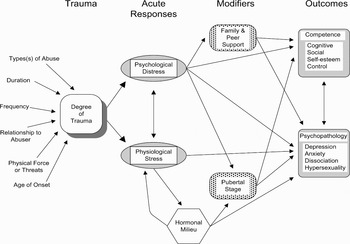
It was in this context that this longitudinal research began in 1987 as a result of a collaboration between a developmental psychologist (P.K.T.) and a psychiatrist (F.W.P.) under the aegis of the National Institutes of Mental Health Intramural Research Program (Putnam & Trickett, Reference Putnam and Trickett1987; Trickett & Putnam, Reference Trickett and Putnam1990–1993). The conceptual framework for this study sought to integrate concepts of psychological adjustment, which were beginning to be established in the child abuse literature, with emerging theory regarding how psychobiological factors, including pubertal development and physiological stress, might impact normative development. As can be seen in Figure 1, the original conceptual model included how acute responses to the trauma of sexual abuse could be thought of as spanning both psychological distress and physiological stress domains. Closely tied to the physiological stress domain was the concept of hormones and how disruptions in various endocrine systems might impact development especially during the pubertal period. The model considered various potential modifiers that would be operating throughout development such as family and peer support as well as the interplay between pubertal stage and timing. Outcomes of interest included competence (in terms of cognitive, social, self-esteem, and locus of control) and psychopathology including depression, anxiety, dissociation, and hypersexuality. Central to the model was the notion that characteristics of the sexual abuse such as duration, frequency, relationship to the abuser, the presence of physical violence, and the age of onset would play a major role in the degree of trauma experienced and in the effects of responses. Over the years of the study, this model was expanded to accommodate emerging theory and has integrated new literature, but the basic tenets of this original conceptual model have driven the bulk of the assessment protocols and the resultant scientific findings that have come to fruition.
The original conceptual model.

Study Design
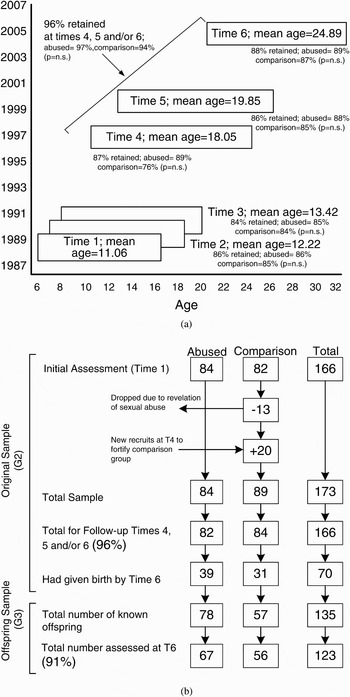
The design of the study was based on a cross-sequential design, with cross-sections of development followed longitudinally (Bell, Reference Bell1953; Schaie & Hertzog, Reference Schaie, Hertzog and Wolman1982). As is illustrated in Figure 2a, the cross-sequential design is overlaid with spread of recruitment of participants. The spread for each time point is represented as a rectangle, the height of which represents the time taken to assess the entire sample and length represents the age range at each assessment. The research thus has become a kind of treasury of biopsychosocial variables pertaining to development across the first 30% of the average life span from age 6 to age 32.
The (a) cross-sequential study design and sample flow and (b) Generation 2 (G2) and Generation 3 (G3) sample flow.

Participants
Study participants span three generations: sexually abused and comparison females comprising the original sample recruited for participation in the longitudinal study, the caregivers (usually the mother) of these females, and the offspring of these females. Henceforth, the caregivers of the original sample will be referred to as the first generation (G1), the original sexually abused and comparison female participants of the longitudinal study will be referred to as the second generation (G2), and the offspring of these original participants will be referred to as the third generation (G3).
Original sample (G2)
Sexually abused females (n = 84) were referred by Child Protective Service (CPS) agencies in the greater Washington, DC, metropolitan area. Eligibility criteria included (a) age 6 to 16; (b) participation within 6 months of disclosure; (c) substantiated contact sexual abuse including genital contact and/or penetration; (d) perpetration by a family member (parent, grandparent, older sibling, uncle); and (e) participation of a nonabusing caregiver who was usually the biological mother (i.e., constituting the G1 sample) to inform on participants' functioning, family environment, demographics, and provide some limited information regarding her own developmental history. CPS records indicated that the median age at onset of abuse was 7.5 years, the median duration was approximately 2 years, 70% experienced vaginal and/or anal penetration, and 60% of perpetrators were the biological father (BF) or other father figure (stepfather or mother's live-in boyfriend). Information about physical abuse reports was also obtained. This information was combined with information about violence occurring as part of the sexual abuse and indicated that 52% of the sample experienced one or both types physical violence. Information about child neglect was not obtained. It is not possible to estimate with precision how similar the sample is to the average caseloads of protective service agencies. However, the information on the perpetrators, the average age of onset, and the average duration is similar to comparable information reported in national surveys of protective services caseloads in years proximal to obtaining the sample (e.g., The National Incidence Study—2; National Center on Child Abuse and Neglect, 1988). Thus, the attained sample was representative with respect to these abuse characteristics.
The comparison sample (n = 82) was recruited via advertisements in community newspapers and posters in welfare, daycare, and community facilities in the same neighborhoods in which the abused participants lived. Comparison families contacted study personnel and were screened for eligibility, which included having no prior contact with protective service agencies and being demographically similar to a same-aged abused participant. At the time of study entry, comparison families were not informed that the study involved sexually abused females; rather, they were told that the study was of “female growth and development.” At the end of the initial interview, however, caregivers were told that the study pertained to sexual abuse, after which, information was obtained about any possible unwanted sexual experiences of the comparison females or other family members. In a few cases (N < 5) families were dropped from the comparison group because some history of sexual abuse was ascertained. Seventy percent of the comparison families resided in the same zip code district, 20% in adjacent districts, and 10% in comparable, nearby districts as did the families of the abused females. Although we did not utilize a one-to-one matching design, comparison females did not differ statistically from abused females in terms of racial/ethnic group, age, predisclosure socioeconomic status (SES), or family constellation (one- or two-parent families). In addition, the groups did not differ statistically from one another regarding a host of nonsexual traumas. At Time 1 (T1) the Diagnostic Interview for Children and Adolescents (Reich, Reference Reich2000) was administered, and it became apparent that the two groups also did not differ significantly with respect to occurrences of other nonsexual traumas including both interpersonal trauma (exposure to family and community violence) and noninterpersonal trauma (accidental injury, natural disasters, witnessing violence/accidents).
All families ranged from low to middle SES, with mean Hollingshead scores of approximately 35 (defined as “blue collar” or working class). Forty-nine percent of the sample was Caucasian, 46% African American, 4% Hispanic, and 1% Asian American. The study design flow is depicted in Figure 2. At the initial assessment (T1), females ranged in age from 5.91 to 16.89 (M = 11.11, SD = 3.02). Five follow-up assessments were conducted (Times 2–6 [T2–T6]) at approximately 1.5, 2.5, 7.0, 9.0, and 13.5 years after T1, respectively. Ages at follow-up assessments were as follows: T2: 6.92 to 18.20 (M = 12.22, SD = 2.96); T3: 7.78 to 20.22 (M = 13.42, SD = 3.00); T4: 10.63 to 25.91 (M = 18.05, SD = 3.42); T5: 13.25 to 26.67 (M = 19.85, SD = 3.24); T6: 18.12 to 32.14 (M = 24.89, SD = 3.51). As is depicted in Figure 2b, during the T2 and T3 follow-up interviews 12 comparison females revealed some form of childhood sexual abuse occurring after T1 and were dropped from the comparison group and delegated to a new group named Group 3 or the “noncriterion abuse” group. These 12 participants are not utilized in the multiple group analyses described below. At T4, 19 new comparison females were recruited (utilizing the original recruitment methods) to fortify the sample for longitudinal follow-up. Over 96% of the total sample was retained and reassessed at T5 and T6 follow-up assessments. By the conclusion of T6, 70 females reported having had at least one child (see Figure 2b).
Offspring sample (G3)
At the conclusion of the T6 assessment there were 135 known offspring; 78 offspring of abused mothers (OA) and 57 offspring of comparison mothers (OC), who ranged in age from 5 months to 11 years 10 months with the mean age being similar across groups (abused: M = 4.60, SD = 3.35; comparison: M = 3.56, SD = 2.57, p = .23) and were 53.66% minority (mostly African American with 3% Hispanic and 1% Asian). There were significantly more minority offspring born to comparison mothers (66.12%) than were born to abused mothers (43.23%), F (1, 133) = 5.61, p < .05. The G3 sample included 76 only children, 18 sibling pairs, 5 sibling trios, 2 families with four siblings, and 0 multiples. Number of siblings did not differ for the offspring of abused or comparison mothers. Of the 135 known offspring, 123 (91%) were assessed as part of the T6 protocol. Hence, G3 outcome information was not available for 12 offspring: 6 were unable to be scheduled (3 abused, 3 comparison), 3 had fathers who expressed their wishes that their children not participate (all 3 abused), and 3 were deceased (all 3 abused). Of the deceased, 2 died due to complications attributable to prematurity and 1 drowned in a bathtub as a result of maternal neglect.
Caregivers of original sample (G1)
Of the participating female caregivers, 96% were biological mothers, 3% were adoptive mothers, and 1% were grandmothers. At T1, the mean age of G1 sample was 35.4 (SD = 5.5), with a range of 24 to 49.
Procedures
Assessments were completed in 3- to 4-hr sessions by trained clinical interviewers. In general, the bulk of assessments were focused on the original G2 sample of abused and comparison females. These assessments were comprehensive and spanned biological, psychological, and social domains. Caregivers of these original participants (G1) functioned mainly as informants of their daughter's functioning, but they also provided limited self-reports of their own functioning and retrospective reports of their past histories. Offspring of the original sample (G3) were assessed as part of the T6 protocol and varied considerably with respect to age and developmental stage, thus resulting in variable assessment tools and variable Ns for offspring outcomes. G1 caregivers provided consent for G2 participants who were under the age of 18, those 18 and over consented for themselves, and those 6–17 also provided assent. G2 mothers provided consent for G3 participants. All participants were awarded monetary compensation at a rate put forth by the National Institutes of Health (NIH) Healthy Volunteer Office. The study received approval from the NIH and University Institutional Review Boards and obtained a Federal Certificate of Confidentiality.
Retention
Retention rates across T2–T6 ranged from 84% to 88% with no significant difference by group (see Figure 2). Although at the last three follow-ups (T4–T6) retention was 87%, 86%, and 88% respectively, over 96% of the total sample was retained and reassessed at T4, T5, and/or T6 facilitating N = 166 for key follow-up analyses and overall growth trajectory models (Noll et al., Reference Noll, Shenk, Yeh, Ji, Putnam and Trickett2010; Noll, Zeller, Trickett, & Putnam, Reference Noll, Zeller, Trickett and Putnam2007; Trickett, Noll, Susman, Shenk, & Putnam, Reference Trickett, Noll, Susman, Shenk and Putnam2010).
Techniques to Maintain and Engage Sample
Maintaining and engaging 96% of the G2 sample over the course of this longitudinal study has been a significant challenge. Several strategies were employed including (a) home visits to those whose telephone service was interrupted or unlisted, (b) monetary incentive for returning phone calls and toll-free numbers and prepaid phone cards to defray long-distance barriers, (c) periodic locating techniques including address tracking software via TransUnion and several Web-based search engines (e.g., WhitePages, reverse address searches, MySpace, and Facebook searches), (d) information for two additional contact persons (family members, friends) who would likely have knowledge of participants' whereabouts, and (e) frequent mailings (quarterly newsletters, birthday, and holiday cards, and congratulations cards for known graduations, births, and weddings) and certified letters to maintain current addresses. We also make it easy for the sample to stay in touch with us providing toll-free phone numbers and E-mail and Web addresses; there were numerous examples of unprompted updates of moves and major life events. Several of these techniques were employed during funding hiatus periods when we continued to utilize these techniques to maintain current addresses but did not have adequate staffing or funds to do so in any systematic, concentrated manner.
We have also employed several intangible approaches to engaging and maintaining the sample. These include (a) communicating the importance of scientific knowledge gained from this type of longitudinal research and (b) fostering considerable participant fulfillment as many participants view the study as a chance to contribute to something bigger than themselves and take tremendous pride in doing so. Finally, the research staff was inordinately cohesive, dedicated, consistent, and diligent. That we were able to assess over 91% of all known offspring at our T6 assessment is also a testament to the G2 sample's commitment to facilitate participation of the G3 sample. We have also gone to great lengths to ensure that assessments are noninvasive, fun and informative for both G3 and G2 participants.
Overcoming some methodological challenges
By and large, longitudinal, prospective studies are rare and follow-up periods are relatively short—and for good reason. There are the obvious difficulties of maintaining enough funding to keep these kinds of studies afloat. What might be less obvious is that long-term and intergenerational studies can be methodological and statistical nightmares. For example, evolving theory, paradigm shifts, and ever-changing technology can result in assessments used early on being deemed invalid or outdated, thus requiring the adoption of new procedures or instruments midway through a study. A good example is how the gold standard for cortisol assessment switched from blood to saliva. During the years spanning the first three time points of the study (1987–1992) serum assessments for cortisol were state of the art. By 1996, at the start of the fourth assessment, salivary cortisol assessments became available and were hailed as significantly less invasive. Given our concern for the ethical treatment of research participants and the minimization of risk to children and adolescents, we opted to abandon our serum cortisol procedures in favor of the more benign salivary cortisol assessments. This switchover resulted in complications for longitudinal analyses given that serum and salivary cortisol assays are assessed on different scales of measurement and have differing ranges of values. This required us to be creative in our approach to data analysis and utilize work from the experts at Salimetrics Laboratories (State College, PA) in order to convert salivary cortisol levels to unbound serum cortisol levels (Trickett et al., Reference Kim2010).
There are scant measurement instruments that span multiple developmental stages, thereby posing significant problems for measurement invariance over time and development. In general, we sought to give the same measures at all time points. In some cases, alternative measurement instruments that were more age appropriate for the developing sample were substituted. For example, the Perceived Competence Scale for Children (Harter, Reference Harter1985) was used to assess global self-esteem and self confidence at T1, T2, and T3. As participants became older and, according to developmental theory, measurement of the construct of self-esteem required a more complex assessment; the Perceived Competence Scale for Adolescence (Harter, Reference Harter1988) was utilized at T4 and T5 in place of the child version. In other cases where constructs were not believed to be qualitatively different for one age group than for another, items that make up a scale were rephrased to be more age appropriate and inclusive. For example, the Child Depression Inventory (Kovacs, Reference Kovacs1981) was used to measure depressive symptoms at T1, T2, and T3. At T4, many of the items were changed to include references to “work” as well as to “school.” An item that previously read, “I have trouble concentrating on my schoolwork” was rewritten as “I have trouble concentrating on my schoolwork/job.” It was reasoned that making items accessible to participants of all ages was better than switching to an adult version of the same or similar construct (i.e., the Beck Depression Inventory) because there are often item number and content discrepancies that make the evaluation of intraindividual continuity difficult. In such cases, we often used clinical cutoff scores to equate constructs over time (Trickett et al., Reference Trickett, Noll, Susman, Shenk and Putnam2010).
In an intergeneration sense, participants in longitudinal cohorts reproduce at differing rates and schedules present unique challenges for multigenerational analyses. Assessment of offspring at different developmental stages (e.g., infants vs. adolescents) can result in substantial measurement challenges. The inclusion of siblings is often preferred because many longitudinal cohort studies begin with relatively low sample sizes that are somewhat attritted and because sibling selection is somewhat arbitrary. Including siblings can inflate intraclass correlations resulting in substantial interindividual dependence and biased estimates. Complications are also introduced when offspring die young, precluding assessment of those who may have been at highest risk for maldevelopment. Finally, although being among the most important models to test, attempts to perform analyses in a multivariate system, that is, where correlated risk factors can be evaluated for their relative importance in predicting deleterious outcome, are exceptionally challenging because of issues related to nonrandom missing data.
Developmental outcomes in childhood, adolescence, and young adulthood
Variability
What follows is a review and summary of our analyses concerning the short- and long-term outcomes for the sexually abused females in our research. What will be clear quickly is that there are many differences between the members of the abuse group and the comparison group some of which manifest early on, others of which emerge over time. It is important to make clear at the outset of this review that not only are there many group differences apparent but also there are considerable individual differences or variability in adverse impact. This was clear to us early on. Thus, for example, Putnam, Helmers, and Trickett (Reference Putnam, Helmers and Trickett1993) found not only a mean difference in dissociation levels at T1 between the sexually abused and nonabused females, but also greater scatter (variability) in the dissociation scores for the abuse group compared with the comparison group. Thus, for dissociation scores a number of members of the abuse group were indistinguishable from the comparison group, whereas others had much higher scores than any member of the comparison group. This has been a common finding in this study, as exemplified by the findings reported in a recent publication (Noll, Trickett, Harris, & Putnam, Reference Noll, Trickett, Harris and Putnam2009) where for 13 outcome variables (e.g., depression, substance abuse), the standard deviation was larger for the abuse group than the comparison group in every instance.
Although this variability among victims of sexual abuse may well be in part due to different levels of vulnerability and resilience of the individuals, we also thought it important to consider another possible source. That is, even though our stringent inclusion criteria (recently disclosed, contact sexual abuse of females by a family member) resulted in an unusually homogenous sample, we speculated that differences in the nature and severity of the sexual abuse experiences could result in different degrees of trauma with resultant differences in impact as posited in Trickett and Putnam (Reference Trickett and Putnam1993) and illustrated in Figure 1.
Some research has been conducted investigating the relationships between certain characteristics of sexual abuse and the impact on development. In an earlier work, Trickett, Reiffman, Horowitz, and Putnam (Reference Trickett, Reiffman, Horowitz, Putnam, Cicchetti and Toth1997) reviewed this research that examined (a) severity of the abusive act (i.e., penetration), (b) duration or frequency, (c) presence of force or violence, (d) relationship to perpetrator, and (e) age at onset of abuse. This review indicated the following: first of all, although in each of these areas there were studies showing the predicted results, in all cases there were studies not showing that association. The characteristics most consistently associated with more adverse impact were found to be longer duration of the abuse, force or violence accompanying the abuse, and father or father figure as perpetrator. But even for these characteristics there is research that did not support the association with more adverse outcomes. All of these studies examined only one characteristic of abuse (i.e., identity of perpetrator or penetration) and none examined whether there was a correlation between any of these characteristics (e.g., whether abuse by a father was associated with earlier onset). If such associations exist, it would be difficult to discern which of the characteristics is having the effect.
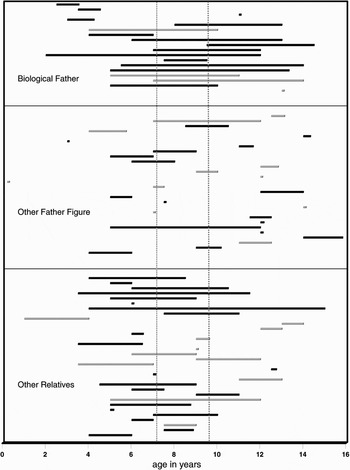
As a result of this review, we examined the interrelationships of abuse characteristics and relationships with demographic characteristics in our sample (Trickett et al., Reference Trickett, Reiffman, Horowitz, Putnam, Cicchetti and Toth1997). We found that, for this sample, early onset of abuse, abuse severity, and duration of abuse were all positively and significantly intercorrelated. Abuse perpetrated by a biological father was associated with earlier onset and longer duration. Of importance, being abused by an “other father figure” (stepfather or mother's live-in boyfriend) was significantly associated with later onset of abuse and shorter duration. Being abused by multiple perpetrators was associated with physical violence. In these analyses we also found relationships between abuse characteristics and ethnic minority status (minority status was associated with later onset of abuse and shorter duration) and SES (higher SES was associated with earlier onset, abuse severity, longer duration, and perpetrators other than fathers or father figures). Figure 3 illustrates these relationships and the degree of variability in the nature of the abuse experiences by our sample.
The age of onset and duration of abuse for sample. Each horizontal line indicates one individual in the sample. The left end of the line indicates the age of onset of the abuse, and the length of the line indicates the duration of the abuse. The black lines indicate abuse with penetration and the grey lines abuse without penetration. The pair of vertical lines indicate the average age of onset of abuse in the sample (line on the left) and the average duration (line on the right indicating 2-year duration).

These complex findings of intercorrelations among abuse characteristics suggested to us the possible usefulness of determining whether within our sample of females abused by a family member, meaningful subgroups of participants could be formed and whether these subgroups would show differences in the nature or severity of developmental outcomes. To accomplish this, a hierarchical cluster analysis was performed in order to determine how the sample might be partitioned into meaningful profile groups based on abuse characteristic measures (age of onset, duration of abuse, perpetrator identity, severity of abuse, multiple perpetrator, and physical violence). For details of this analysis see Trickett, Noll, Reiffman, and Putnam (Reference Trickett, Noll, Reiffman and Putnam2001). A three-cluster solution was supported, which we referred to as subgroups. The first cluster (multiple perpetrator [MP] subgroup) comprised females who had been abused by MPs, none of whom were their biological fathers; the abuse was over a relatively short period of time but was likely to have been accompanied by pronounced physical violence. Approximately one-third of the MP perpetrators were nonbiological father figures (stepfathers or mothers' live-in boyfriends) and the remainder were other relatives. The females of the second cluster (single perpetrator [SP] subgroup) were characterized by abuse by an SP who was not the biological father. For this subgroup, the perpetrator was a nonbiological father figure in about half of the cases and another relative in the other half. Duration of the abuse for this profile was relatively short, and violence was not frequent. The third cluster (BF subgroup) was characterized by abuse by the primary father (in all but three cases the biological father) over a long period, beginning at a relatively young age with little violence. Note that these clusters illustrate the difficulty of conceptualizing a single dimension of severity of abuse. That is, the BF subgroup experienced abuse by a BF over a long period with little violence. In contrast, the MP subgroup experience abuse by more than one perpetrator, but not a BF, for a short period but with a high likelihood of violence.
In multivariate analyses we compared the three abuse subgroups and the comparison group on a number of measures of behavior problems and psychopathology symptoms at T1 and T4 (Trickett et al., Reference Trickett, Noll, Reiffman and Putnam2001). At T1, on nine measures derived from mother report and self-report, we found that the BF subgroup showed the most extreme pattern of behavior problems and maladjustment: this group differed from the comparison group on all nine of the outcome variables and also had scores that were elevated relative to the MP and SP subgroups on eight of the nine variables. That is, the scores obtained by the MP and SP subgroup members were intermediate between the BF subgroup and the comparison group and often significantly different from both. At T4, about 7 years on average after the disclosure of the abuse, there were fewer differences on the nine outcome variables than at T1. However, the BF subgroup continued to be the most different with scores elevated relative to the comparison group on five of the nine outcome variables. At this time point the MP subgroup did not differ from the comparison group on any of the outcome variables. In contrast, the SP subgroup showed elevated scores, relative to the comparison group on four of the nine variables and was indistinguishable from the BF subgroup in levels of depression and dissociation, thus exhibiting elevated symptomatology in comparison with the T1 levels for this subgroup.
In other analyses, we have also found that these three subgroups are differentially predictive in late adolescence on reported health problems (gastrointestinal and gynecological) (Sickel, Noll, Moore, Putnam, & Trickett, Reference Sickel, Noll, Moore, Putnam and Trickett2002); sleep problems (Noll, Trickett, Susman, & Putnam, Reference Noll, Trickett, Susman and Putnam2006); and sexual attitudes (Noll, Trickett, & Putnam, Reference Noll, Trickett and Putnam2003).
Psychopathology and disordered behavior
Psychopathology
The Diagnostic Interview for Children and Adolescents was given at T1, T2, and T3 (Reich, Reference Reich2000). Abused females met criteria for significantly more Diagnostic and Statistical Manual of Mental Disorders (DSM) diagnoses than comparison females. They exhibited greater comorbidity with 53% of the abused females meeting DSM criteria for two or more diagnoses (mean = 3.5 diagnoses) compared with 35% of the comparison females (Jareb, Reference Jareb1995). Batteries of standard self- and parent-report measures of state and trait anxiety, dissociation, posttraumatic stress disorder (PTSD) symptoms, depression, and behavioral problems were also administered across most of the time points. At many points, abused females scored higher on depression, trait anxiety, dissociation, PTSD, and somatic symptoms, as well as behavioral problems such as aggression, delinquent behaviors, and school problems (Bonanno, Noll, Putnam, O'Neill, & Trickett, Reference Bonanno, Noll, Putnam, O'Neill and Trickett2003; Trickett et al., Reference Trickett, Noll, Reiffman and Putnam2001). By adulthood, the major group differences were higher depression and alcohol and drug abuse (Noll et al., Reference Noll, Trickett, Harris and Putnam2009).
Dissociation was assessed at multiple time points using a series of related measures spanning childhood (Child Dissociative Checklist [CDC]; Putnam et al., Reference Putnam, Helmers and Trickett1993), adolescence (Adolescent Dissociative Experiences Scale; Armstrong, Putnam, Carlson, Libero, & Smith, Reference Armstrong, Putnam, Carlson, Libero and Smith1997), and adulthood (Dissociative Experiences Scale; Carlson & Putnam, Reference Carlson and Putnam1993). The sexual abuse group was significantly more dissociative during childhood (Putnam, Helmers, Horowitz, & Trickett, Reference Putnam, Helmers, Horowitz and Trickett1995) and adolescence (Bonanno et al., Reference Bonanno, Noll, Putnam, O'Neill and Trickett2003) than the comparison females. The group difference was no longer significant in adulthood, however (Noll et al., Reference Noll, Trickett, Harris and Putnam2009).
At T1, dissociation was significantly associated with experiences of sexual abuse that were characterized by earlier onsets and multiple perpetrators. At T4 (mean age = 18 years), dissociation was significantly associated with both physical and sexual revictimization, domestic violence, and self-harm, especially self-mutilation (Horowitz, Reference Horowitz1998). Dissociation also predicted sexual ambivalence on the Sexual Activities and Attitudes Questionnaire (SAAQ; Noll, Trickett, et al., Reference Noll, Trickett and Putnam2003). Pathological dissociation, defined by clinical cutoff score on the Adolescent Dissociative Experiences Scale was associated with significantly more PTSD symptoms at T4 (Bonanno et al., Reference Bonanno, Noll, Putnam, O'Neill and Trickett2003). Positive parenting behaviors in G1 mothers were negatively associated with their dissociation scores on the Dissociative Experiences Scale. Harsh discipline and punitive parenting was positively associated with dissociation scores in G1 mothers (Kim, Trickett, & Putnam, Reference Kim, Trickett and Putnam2010). Thus, dissociation, more than depression or anxiety in our sample, is broadly associated with trauma. It is both a sequelae of past trauma and it is associated with the future perpetuation of trauma such as revictimization, self-harm, and harsh parental discipline.
“Unusual” behaviors
In prior research (P.K.T. with physically abused children and F.W.P. researching dissociation in maltreated children) both investigators were impressed by the unusual and sometimes socially inappropriate or precocious behaviors exhibited by the maltreatment participants. One of the secondary aims of this study was to systematically examine verbal and nonverbal behaviors in sexually abused females that might contribute to their problems and symptoms as well as serve as targets for intervention. A number of behavioral scenarios were embedded in T1 to examine the child's responses to structured situations and interpersonal interactions. One of these was the Stranger Task (see Trickett, Reference Trickett1983), which examined how participants responded to an informal interaction with an unfamiliar male interviewer (who was blind to abuse status) during an 8-min warmup procedure prior to the start of psychological testing (Negriff, Noll, Shenk, Putnam, & Trickett, Reference Negriff, Noll, Shenk, Putnam and Trickett2010). The child was seated at the testing table and told she could draw a picture, color in a book, or read a magazine until the interviewer was ready to start. The male interviewer was seated at a desk across the room and busied himself writing and shuffling papers while engaging in light conversation on topics such as school, weather, or sports. After the warmup the child was administered a number of standard tests. Coders blinded to abuse status rated a videotape of the child's behavior during the warmup period for 54 discrete nonverbal behaviors such as “leans toward other,” “legs spread apart,” “crotch touch,” “side head tilt,” and “mouth open.” These behaviors were extracted from anthropological literature as common affiliative and social distancing behaviors (Mausert-Mooney, Reference Mausert-Mooney1992). A factor analysis produced a three-factor solution, wary, affiliative, and coy (internal reliabilities = 0.75, 0.72, and 0.69 respectively).
The abused females were significantly higher on the coy factor, which included simultaneous but contradictory approach and avoidance signals such as full smiling while shrugging their shoulders, or showing their tongues while crossing their legs. Females scoring high on the coy factor at T1 had significantly earlier ages of first consensual intercourse at T4, which was associated with increased sexually transmitted disease (STD) risky behaviors after controlling for sexual abuse status at T4 or T5. In contrast, females scoring high on the affiliative factor manifest healthy patterns of sexual and social interactions.
In a series of studies, Bonanno and collaborators carefully examined the interplay of facial expression with reported affects, level of distress, heart rate, and current and subsequent symptoms and social adjustment (Bonanno et al., Reference Bonanno, Keltner, Noll, Putnam, Trickett and LeJeune2002, Reference Bonanno, Noll, Putnam, O'Neill and Trickett2003, Reference Bonanno, Colak, Keltner, Shiota, Papa and Noll2007; Negrao, Bonanno, Noll, Putnam, & Trickett, Reference Negrao, Bonanno, Noll, Putnam and Trickett2005). Facial expressions were coded using a version (Emotion Facial Action Coding System) of the Facial Action Coding System developed by Ekman (Ekman, Friesen, & Hager, Reference Ekman, Friesen and Hager2002). Expressions of shame, disgust, anger, and humiliation were scored by blinded raters viewing videotapes of an open-ended narrative in which participants are asked to describe a self-selected “most distressing event or series of events” in their life. Interviewers used neutral prompts to keep the participant speaking for at least 6 min. Participants were encouraged to take a moment to think about what they wanted to say and if they drew a blank or ran out of things to say, to take a moment to relax and think about something related to the event.
The nonabused comparison females described the death of a close friend or relative, a divorce or significant family conflict, or a conflict with a close friend in that order. About two-thirds of the sexually abused females described an experience of sexual abuse and were grouped as “disclosers” for purposes of analyses. The final third, the “nondisclosers,” described events that paralleled in nature and frequency the types of traumatic events that the nonabused females described. Child sexual abuse disclosers and nondisclosers differed on facial expressions of disgust, shame, and humiliation. The “disclosers” had more shame, higher levels of PTSD and dissociative symptoms, more polite (non-Duchene) smiles, and earlier onsets of trauma. The “nondisclosers” had more expressions of disgust and scored higher on an index of repressive coping. The comparison participants expressed the highest levels of positive emotion.
Even within the disclosure groups, however, there was significant variability. In the nondiscloser group, females who displayed a greater temporal coherence between their verbal expressions of humiliation and their facial expressions of shame had significantly higher levels of PTSD symptoms. There was also a strong context effect in that a facial expression of positive emotion (Duchene smile) was associated with better social adjustment only if it was appropriate to the topic of the narrative at that moment. Females who displayed Duchene smiles in an inappropriate context (e.g., while describing frightening or repulsive details) had poorer current and subsequent social adjustment. A similar pattern was obtained between a measure of “genuine laughter” and current and subsequent social adjustment.
Sexual distortions and risky sexual behaviors
Through the course of the longitudinal study as participants aged from one developmental stage to another, opportunities to more thoroughly examine aspects of the original conceptual model continually arose. For example, there were questions regarding sexuality that we simply could not address in childhood when participants were younger. There were also questions about sexual activities and attitudes that we did not wish to broach when participants might be in the acute phases of recovery. One advantage of a longitudinal study is that the sample will eventually age into stages where in-depth approaches become appropriate and when sophisticated, more precise assessments can be exercised. Hence, when participants became adolescents, we sought to perform a comprehensive assessment of the development of sexuality. At T4 (mean age = 18), we designed a tool that would assess a wide array of sexual behaviors. Moreover, we understood that many participants would not yet have engaged in sexual activity, but would likely have thoughts and attitudes about sex that we wanted to more fully understand. We learned much from several researchers and theorists about where to start. For example, in their seminal work, Richard Udry, William Friedrich, and colleagues had compiled some questions about sexual attitudes based on work with younger children (Friedrick, Beilke, & Urquiza, Reference Friedrick, Beilke and Urquiza1987; Udry, Reference Udry1988). In 1992, Wolfe and Lehmann produced the Children's Impact of Traumatic Events Scale (Wolfe, Gentile, Michienzi, & Sas, Reference Wolfe, Gentile, Michienzi and Sas1991) that included a subscale specific to attitudes about sex for use with children who had been abused. In the mid-1980s Diana Russell wrote a definitive text portraying the unique emotional and behavioral struggles of incest survivors (Russell, Reference Russell1986).
Our resultant tool, the SAAQ (Noll, Trickett, et al., Reference Noll, Trickett and Putnam2003), is a multimedia instrument assessing a host of sexual activities including age at first intercourse, birth control efficacy, intercourse partners, HIV risk behaviors, STDs, pregnancies and sexual behaviors of peers. Unique to the SAAQ, a large array of sexual attitudes are also assessed including preoccupation, 15 items (α = 0.91) including masturbation, pornography consumption, thinking about sex, and being turned on by sexual themes and fantasies; permissiveness, 12 items (α = 0.96) assessing permissive attitudes toward a relatively normative set of desires and behaviors, including intimate affection, light and heavy petting, and voluntary intercourse; pressure, 6 items (α = 0.70) including gaining maturity and respect from being sexually active and that sex is expected and equated with being loved and wanted; aversion, 10 items (α = 0.85) including sex is dirty and embarrassing, avoidance, loss of respect for self and from friends and worry about STDs and pregnancy; and ambivalence is measured by preoccupation + aversion. The SAAQ factor structure was shown to be invariant across multiple assessments spanning 2 years (Noll, Trickett, et al., Reference Noll, Trickett and Putnam2003) and has been translated into three languages (e.g., Beaudoin, Carbonneau, Godbout, Bouchard, & Sabourin, Reference Beaudoin, Carbonneau, Godbout, Bouchard and Sabourin2007).
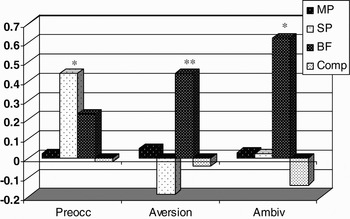
Several of these attitudes can be thought of as constituting “sexual distortions” or disturbances in how sex and sexual feelings are approached and regulated. Our data have illuminated some unique results regarding the developmental precursors to sexual distortions. For example, we have reported that childhood anxiety (Noll, Trickett, et al., Reference Noll, Trickett and Putnam2003) and low quality relationships with males throughout childhood (Noll, Trickett, & Putnam, Reference Noll, Trickett and Putnam2000) were predictive of subsequent sexual preoccupation in adolescence. Childhood sexual behavior problems were predictive of subsequent sexual aversion, and persistent, pathological dissociation predicted sexual ambivalence later in development. As can be seen in Figure 4, within-group analyses showed that those experiencing abuse at young ages by a BF (BF cluster group described above) reported the highest levels of aversion and ambivalence, indicating that abuse perpetrated by a BF may be difficult to overcome especially as regards the development of sexuality (Noll, Trickett, et al., Reference Noll, Trickett and Putnam2003).
The differences in sexual distortion variables across subgroups. BF, biological father subgroup; SP, single perpetrator subgroup; MP, multiple perpetrator subgroup; Comp, comparison group; Preooc, sexual preoccupation; Aversion, sexual aversion; Ambiv, sexual ambivalence. Subjects were different from the comparison group at *p < .05 and different from the SP group at **p < .01.

Furthermore, in another paper (Noll et al., Reference Noll, Trickett and Putnam2000) factors that moderate the relationship between childhood sexual abuse and subsequent sexual activities were identified. For both abused and comparison females a large number of male peers in childhood networks predicted subsequent younger age at first voluntary intercourse, greater numbers of sex partners, and a lack of birth control usage in adolescence. Early sexual relations with boyfriends predicted younger age at first voluntary intercourse. For abused females only, a high quality of relationships with male peers and nonpeers in childhood predicted greater birth control efficacy in adolescence. These results suggest that the emotional depth of a high-quality relationship may be a key component in the cognitive restructuring of relationships with males in terms other than sexual and in the ability to glean emotional, rather than sexual, rewards from romantic attachments. These high-quality relationships may, thus, function to facilitate the reparation of basic trust and the “degeneralization” of all men as abusers.
Data gathered at the T5 assessment indicated that sexually abused females reported significantly higher rates of teen pregnancy (abused = 39%; comparison = 15%; p < .05) and teen motherhood (abused = 23.8%; comparison = 8%; p < .05; Noll, Horowitz, Bonanno, Trickett, & Putnam, Reference Noll, Horowitz, Bonanno, Trickett and Putnam2003; Noll, Newland, & Hulsmann, Reference Noll, Newland and Hulsmann2006, March). Taken together, these results have been instrumental in augmenting a growing body of research focused on how childhood sexual abuse can deleteriously affect optimal sexual development. Sexually abused adolescents report engaging in risky sexual behaviors that are consistent with the contraction of HIV and becoming a teen mother, which are arguably two of the highest priority public heath initiatives facing our youth today. Thus, prevention-focused research that will aid in our understanding of the pathways from childhood abuse to these risk behaviors is vitally important and will likely have a global impact on HIV and teen pregnancy rates.
Revictimization/domestic violence
The prospective, longitudinal nature of our study provided a unique opportunity to contribute to a growing body of literature focused on the continued cycle of violence and the inordinate rates of (re)victimization experienced by women with histories of prior victimization and sexual abuse (Briere & Runtz, Reference Briere and Runtz1987; Messman & Long, Reference Messman and Long1996). Thus, we sought to improve on available assessment tools (e.g., Krinsley et al., Reference Krinsley, Weathers, Vielhauer, Newman, Walker and Kaloupek1994) and devised a measurement instrument that would reliably elicit factual information concerning a comprehensive set of traumatic life events, deduce participants' appraisals of these events, and place these events in developmental context. The resultant Comprehensive Trauma Interview (Barnes, Noll, Putnam, & Trickett, Reference Barnes, Noll, Putnam and Trickett2009) is a semistructured interview that queries specific traumatic experiences across several domains including separations and losses, natural disasters, witnessing violence, physical abuse and/or assault, physical and medical neglect, emotional abuse, self-inflicted harm including suicide attempts, and sexual abuse and/or assault. There are detailed follow-up questions for each traumatic experience including ages and identification of perpetrators, ages at occurrence of events, frequency of occurrence, and extent of victimization. Participants also provide distress ratings for each individual traumatic experience that are anchored to the “worst or most upsetting” event identified at the outset of the interview. Intraclass kappa coefficients showed very high agreement between protective service records and participants' self-reported abuse details 15 years later with respect to severity (i.e., penetration vs. genital contact), age at abuse onset (±1 year), and age when the abuse stopped (±1 year). Moreover, we were able to show remarkable test–retest reliability across two time points occurring 2 years apart (Barnes et al., Reference Barnes, Noll, Putnam and Trickett2009). Not only is the Comprehensive Trauma Interview a highly useful tool for categorizing and contextualizing traumatic life histories, but these reliability and validity results have also been instrumental in reconciling controversy regarding victims' relative ability to recall details of traumatic events (e.g., Fergusson, Horwood, & Woodward, Reference Fergusson, Horwood and Woodward2000; Widom & Morris, Reference Widom and Morris1997; Williams, Reference Williams1994).
Results from T5 and T6 analyses (when participants were mean age 20 and 25, respectively) indicated that sexually abused females were almost twice as likely to have experienced sexual revictimization (odds = 1.99 ± 2.79, p < .05), and physical revictimization (odds = 1.96 ± 2.58, p < .05) compared to victimization rates reported by comparison females. Sexually abused females' revictimizations were also more likely to have been perpetrated by older nonpeers and characterized by physical injury than were victimizations reported by comparison females (Barnes et al., Reference Barnes, Noll, Putnam and Trickett2009). Abused females reported almost four times as many incidences of self-inflicted harm and suicidality (p = .002), and 20% more subsequent, significant lifetime traumas (p = .04) than did comparison females. Sexual revictimization was significantly and positively correlated with PTSD symptoms, dissociation, and sexual preoccupation. Physical revictimization was significantly and positively correlated with PTSD symptoms, dissociation, and sexually permissive attitudes. Self-harm was significantly and positively correlated with dissociation (Noll, Trickett, et al., Reference Noll, Trickett and Putnam2003).
At T6, we also assessed domestic violence using the Domestic Conflict Inventory (Margolin, Burman, John, & O'Brien, Reference Margolin, Burman, John and O'Brien1990), which assesses a host of violent acts (e.g., physically threatened, hit, or beaten) perpetrated by an intimate partner. Domestic violence was defined as having experienced three or more of these acts at the hands of an intimate partner. Results indicate that over 53% of sexually abused females report at least one domestic violence experience compared to 24% of comparison females, F (1, 162) = 9.45, p = .003 (Noll, Barnes, & Trickett, Reference Noll, Barnes and Trickett2010). The Domestic Conflict Inventory also allows categorization of domestic disputes into “mild” (e.g., purposely locked partner out of house; damaged partner's property out of anger) and “severe” (e.g., slapped or physically shaken a partner) incidences and allows quantification of whether the offense was perpetrated on the participant by a partner or whether the participant perpetrated the offense on a partner. Results reported for the first time in this manuscript indicate that, after controlling for age, minority status, SES, and cohabitation status, abused females were more likely to have experienced severe domestic violence perpetrated on them by a partner F (4, 143) = 4.18, p = .04. Further, a significant group interaction was found indicating that abused females who perpetrated mild offenses on a partner where more likely to have a partner perpetrate severe domestic violence, F (7, 143) = 4.79, p = .03. These results indicate that the process of domestic violence may not be a simple one for females with victimization histories. Sexually abused females who have a propensity to enact subtle or mild forms of aggression toward a domestic partner may be the most likely victims of more severe domestic violence.
Taken together, these results suggest that victims of sexual abuse are about twice as likely as comparison females to be revictimized (either sexually or physically) at subsequent times during later adolescence and young adulthood. They also have a propensity to engage in self-harm and suicidal behaviors at higher rates than do their nonabused peers. Severe domestic violence is also a common occurrence for abuse survivors, especially if they engage in subtle forms of perpetration that might provoke extreme responses from domestic partners. Hence, there are likely discernable avenues by which victimization reoccurs and, therefore, the possibility that disruptive processes can be interrupted. To more fully understand these processes and intervene accordingly would likely result in a substantial impact on overall rape and domestic violence rates.
Cognitive development and educational outcomes
As can be seen in our original conceptual model (see Figure 1), one primary outcome of interest was cognitive competence. Evolving theory throughout the course of the study, for example, the theory of developmental traumatology (DeBellis, Reference DeBellis2001), began to highlight that there are finite ways that the brain can respond to chronic stress. Emerging evidence showed that elevated levels of cortisol could lead to adverse brain development (e.g., Dunlop, Archer, Quinlivan, Beazley, & Newnham, Reference Dunlop, Archer, Quinlivan, Beazley and Newnham1997). Hence, we adopted a more fully integrated approach to how both environmental and physiologic impairments might be operating in the lives of sexual abuse victims and could have important implications for long-term cognitive development, global cognitive functioning, academic achievement, educational attainment, and overall quality of life.
At the initial assessment (T1) when the sample was mean age 11, we used data gleaned from school records, teachers' ratings of classroom behavior and performance, parental reports of school performance, and self ratings of cognitive capability, perceived competence, and behavior problems to ascertain the level of classroom performance and competence in the sample. In an early paper (Trickett, McBride-Chang, & Putnam, Reference Trickett, McBride-Chang and Putnam1994) we reported that sexual abuse was negatively associated with indicators of social competence, learner competence, academic performance, and positively related to school avoidant behavior. These results suggested that difficulties within the academic environment can be observable within a few months after the disclosure of sexual abuse. Moreover, the types of behaviors and abilities examined were indicative of global aspects of academic promise suggesting that, over time, more pronounced differences in cognitive performance and academic achievement would likely emerge.
The Peabody Picture Vocabulary Test—Revised (PPVT-R), a measure of receptive language, was administered at T1 through T6 via alternating parallel versions (Dunn & Dunn, Reference Dunn and Dunn1981). In a recent paper we performed growth trajectory analyses of performance data across development from age 6 through age 30 (Noll et al., Reference Noll, Barnes and Trickett2010). Results demonstrated that, despite starting with similar abilities at T1 (intercept), sexually abused females, on average, acquired receptive language skills at a significantly slower rate (linear effect) during development than did comparison females. Moreover, receptive language skills peaked at lower levels (quadratic effect) in development for abused females than for comparison females. Abused females, on average, scored significantly lower than comparison females on the PPVT-R beginning in midadolescence and continued to be lower through the final adulthood assessment. Results also showed that by the T6 assessment, a greater percentage of comparison females graduated high school. On average, the comparison group reported some college education, whereas the abused group reported graduating high school as their highest achievement.
Beginning at the T4 assessment, we added a more comprehensive set of cognitive ability measures in order to better understand gradations in performance and the extent to which differential abilities might be more detrimentally affected by the experience of sexual abuse. Using the Woodcock–Johnson Revised tests, we assessed distinct broad abilities including fluid and crystallized abilities (Cattell & Horn, Reference Cattell and Horn1978), as well as short-term and long-term memory. At the T4 assessment, when the sample was in midadolescence, results showed that abused females scored significantly lower on tests of both fluid and crystallized ability, but did not differ from the comparison group regarding memory functioning (Noll, Reference Noll2004).
Taken together, these results suggest that the experience of childhood sexual abuse is a substantial risk factor for the cognitive maldevelopment and academic underachievement. Starting in childhood, problematic classroom behaviors and low perceived competence can set the stage for academic problems later in life. Childhood is a critical period when rapid and dramatic maturation of the brain occurs and thus any assault, such as the chronic stress associated with childhood sexual abuse, during this critical period has the potential to permanently disrupt neuropsychological development for victims. The implications of this work suggest that interventions involving stress management as well as the encouragement of academic enrichment may be especially important for promoting healthy growth trajectories for victims of sexual abuse.
Psychobiological development and physical health
Although the link between childhood maltreatment and deleterious psychological and social functioning has been fairly well established, more recently there is increasing speculation that childhood maltreatment might also have a detrimental effect on psychobiological development and physical health. A basic tenet of our original conceptual model (see Figure 1), concerned the effects of physiological stress (including stress responsivity) on modifiers and developmental outcomes (Putnam & Trickett, Reference Putnam and Trickett1993). We also, however, imbedded a host of related health indicators in all six assessment protocols that included pubertal staging, height and weight, and other aspects of overall general physical health. This offered us the ability to utilize prospective data and go beyond correlational inference and illuminate how the far-reaching consequences of childhood abuse include long-term health consequences.
Hypothalamic–pituitary–adrenal (HPA) axis/stress responsivity
At the time the study began, there was emerging evidence from rat and nonhuman primate literature showing how maternal separation and/or deprivation could be detrimental to developing physiology with regard to stress hormones (e.g., Gunnar, Gonzalez, Goodlin, & Levine, Reference Gunnar, Gonzalez, Goodlin and Levine1981). Relatively little was known, however, about HPA axis functioning in humans, especially during childhood and adolescence. We had good reason to suspect that an observational study of children exposed to sexual abuse would constitute the means by which to examine the effects of chronic stress on the developing human in a naturalistic and ethical manner.
A subsample of participants from the parent study were given ovine corticotropin-releasing hormone (oCRH) stimulation as part of a separate protocol in order to ascertain HPA axis regulatory systems several years after the disclosure of abuse (De Bellis et al., Reference De Bellis, Chrousos, Dorn, Burke, Helmers and Kling1994). CRH, a 41-amino acid peptide, selectively stimulates and regulates pituitary ACTH secretion. Results indicated that sexually abused and comparison females showed similar basal and overall stimulated plasma cortisol levels, but that the abused females showed significantly reduced total ACTH responses to oCRH stimulation. Attenuated plasma ACTH with corresponding robust plasma cortisol responses to oCRH stimulation suggests a breakdown in the regulatory HPA system. Further, cortisol responses were similar for both groups until about 30 min poststimulation, at which time cortisol levels in the abused group began to attenuate showing signs of decreased responses while the comparison group continued to show marked increases until 60 min poststimulation. This paper provided some of the first evidence for a breakdown in the regulatory HPA system for sexually abused children.
Given the specific function of cortisol in response to stress, we thought that it would be particularly important to understand the developmental course of cortisol within individuals exposed to severe or chronic stress. Accordingly, we sampled resting cortisol at the same time each morning at each of the six time points as an indication of basal or circulating stress hormone. These data provided the first developmental curves for cortisol spanning age 6 through age 32 (Trickett et al., Reference Trickett, Noll, Susman, Shenk and Putnam2010). Our novel findings provided the first longitudinal evidence to support the hypothesis that the “normative” developmental course for nonstress cortisol levels is, on average, a steady increase from middle childhood into early adulthood after which time there is a leveling off. An additional important and unique finding from this analysis was the interaction between childhood sexual abuse and developmental trajectory indicating a developmental transition from higher levels of cortisol (hypercortisol) in childhood to lower levels of cortisol (hypocortisol) by early adulthood. These results may help to reconcile vast discrepancies in the literature stemming from the reporting of disparate findings across developmental stage; for example, studies of abused children and adolescents showing higher cortisol levels (Carrion et al., Reference Carrion, Weems, Ray, Glaser, Hessl and Reiss2002), and studies of adults retrospectively reporting childhood abuse exhibiting a suppression of cortisol production (Bremner, Vermetten, & Kelley, Reference Bremner, Vermetten and Kelley2007). Moreover, these results lend convincing support for the attenuation hypothesis (Susman, Reference Susman2006), suggesting that early and severe stress leads to an initial heightened stress response, which is in turn, suppressed over time. This suppression may be indicative of an adaptive response given the known consequences of chronic exposure to glucocorticoids including deleterious effects on brain structures (Carrion et al., Reference Carrion, Weems, Ray, Glaser, Hessl and Reiss2002). However, such adaptation may come at a cost as low levels of circulating cortisol have been associated with psychosocial problems including PTSD (Miller, Chen, & Zhou, Reference Miller, Chen and Zhou2007) and antisocial behaviors (Bergman & Brismar, Reference Bergman and Brismar1994), as well as physiological health consequences such as immune and cardiovascular functioning, rheumatoid arthritis, chronic fatigue syndrome, and fibromyalgia (Heim, Ehlert, & Hellhammer, Reference Heim, Ehlert and Hellhammer2000; Raison & Miller, Reference Raison and Miller2003; Sternberg & Gold, Reference Sternberg and Gold2002).
A model proposed by Bauer, Quas, and Boyce (Reference Bauer, Quas and Boyce2002) posited an interactive synergy between multiple stress response systems that should function in consort to produce optimal responses to novel or threatening conditions. This model also asserted the possibility that activation can occur in one system and be understimulated or blunted in another. Such asymmetry in stress response patterns could represent an additional indication of global impairment thereby limiting resources to cope effectively with the demands of a stress or threat. In response to this emerging theory and in recognition that the regulation of arousal and stress involves multiple systems, we expanded our assessment of stress responsivity beyond the HPA to include arousal in the autonomic nervous system via indicators such as heart rate and vagal influences. In a recent paper (Shenk, Noll, Putnam, & Trickett, Reference Shenk, Noll, Putnam and Trickett2010) we report longitudinal findings indicating that childhood sexual abuse predicted an asymmetrical stress response, marked by vagal suppression and blunted cortisol reactivity, 7 years after entry into the study at the T4 assessment. This asymmetrical stress response in turn predicted higher levels of depressive symptoms and antisocial behaviors at T6, which was 6 years after stress reactions were assessed. These results remained significant after controlling for prior levels of psychopathology and baseline levels of physiological indicators. These results underscore the importance of assessing multiple biological systems and suggest that interventions with sexually abused females should consider focusing on the management of mild to moderate stress in order to protect against later psychopathology.
Development of obesity
Research in the past 15 years has provided increasing evidence for a potential association between adverse childhood experiences and the subsequent development of obesity. However, the majority of the extant research is cross-sectional using retrospective reports of past abuse (e.g., Williamson, Thompson, Anda, Dietz, & Felitti, Reference Williamson, Thompson, Anda, Dietz and Felitti2002) precluding strong inference about the connection between childhood abuse and obesity. As a broad indicator of overall health, we objectively obtained height and weight measurements at all six time points. Analyses of these data provided some of the first prospective evidence that sexually abused females are at inordinate risk for developing obesity (Noll, Zeller, et al., Reference Noll, Schulkin, Trickett, Susman, Breech and Putnam2007). Although obesity rates via body mass index calculations were not different across groups in childhood or adolescence, by young adulthood (ages 20–27) abused females were significantly more likely to be obese (42.25%) than were comparison females (28.40%). Growth-trajectory analyses indicated that abused female participants, on average, acquired body mass at a significantly steeper rate from childhood through young adulthood than did comparison female participants after controlling for minority status and parity. We compared these growth trajectories to CDC population trends and showed that the average linear trend for comparison females mirrored that of the population falling almost exactly on the 50th percentile. However, the linear trend for sexually abused females was persistently steeper than the CDC population trend across development and exceeded the 75th percentile by young adulthood.
These results provided strong evidence that victims of sexual abuse might readily adopt lifestyles that are consistent with the development of obesity perhaps due to various abuse sequelae such as depression, body image disturbances, poor peer relations, low self-esteem, and/or the development of binge-eating disorders. However, we assert in this paper the further possibility that sexual abuse victims might be predisposed to obesity due to the high concentrations of cortisol in the formative years of adipose tissue development that is largely responsible for abdominal fat in females (Pasquali et al., Reference Pasquali, Cantobelli, Casimirri, Capelli, Bortoluzzi and Flamia1993; Rosmond, Reference Rosmond2003). We suggest that treating early HPA disruption may have an impact on the overall obesity rate.
Puberty
In our 1993 article (Trickett & Putnam, Reference Trickett and Putnam1993), we were one of the first to point out that historically the peak age of onset of sexual abuse for females is prepubertal (7 or 8 years of age) and the average duration tends to be about 2 years. We surmised that that there may be a directly traceable mechanistic link between the impact of sexual abuse on specific biological processes of pubertal development. Consistent with psychosocial acceleration theory (Belsky, Steinberg, & Draper, Reference Belsky, Steinberg and Draper1991) and its extended paternal investment theory (Ellis, McFadyen-Ketchum, Dodge, Pettit, & Bates, Reference Ellis, McFadyen-Ketchum, Dodge, Pettit and Bates1999), we sought to more fully understand how the experience of childhood sexual abuse might regulate pubertal development. To this end, we assessed secondary sexual characteristics via Tanner breast and pubic hair staging at T1 through T5. Given the ordered categorical nature of the Tanner stage data (i.e., ordinal rating scale ranging from 1 to 5), analytic technology has only recently emerged to facilitate this type of complex growth modeling. Longitudinal cumulative logit analysis via generalized linear modeling was utilized to analyze the rapidity of pubertal development for the sample. Probabilistic interpretations of parameter estimates demonstrate that, on average, abused females reached Tanner breast Stage 2 at 7.5 months earlier (p = .009) and Tanner pubic hair Stage 2 at 6 months earlier (p = .01) than comparisons (Noll & Trickett, Reference Noll and Trickett2009, June). These results suggest that the experience of sexual abuse may trigger biological mechanisms, which in turn accelerate pubertal development. Early pubertal maturation in females has been associated with several negative health conditions and psychosocial outcomes including increased body mass index, reproductive system cancers, adolescent pregnancy, mood disorders, and substance abuse (see review by Mendle, Turkheimer, & Emery, Reference Mendle, Turkheimer and Emery2007; our results underscore how early pubertal maturation might exacerbate an already-turbulent development for victims of sexual abuse).
Summary
In addition to the health outcomes discussed above, we have shown that females in the sexually abused group report greater healthcare utilization and gynecological problems (Sickel et al., Reference Sickel, Noll, Moore, Putnam and Trickett2002), more persistent problems with sleep (Noll et al., Reference Noll, Newland and Hulsmann2006), and higher rates of preterm delivery (Noll, Schulkin, et al., Reference Noll, Schulkin, Trickett, Susman, Breech and Putnam2007) than do females in the comparison group. Our research has been instrumental in illuminating the toll that early abuse has on physiological outcomes. With our longitudinal design, well-matched control group and state of the art analytic models, we have provided some of the most definitive evidence by going well beyond cross-sectional studies or adult retrospective studies. Hence, the literature is better poised to support causal inferences about the impact of sexual abuse on health. HPA dysregulation, obesity, cognitive challenges, HIV risk, teen pregnancy, preterm delivery, and early puberty are among our findings in this vein, many of which arguably constitute the major public health concerns of our time.
Intergenerational findings
In the mid-1980s there began to emerge evidence suggesting a persistent cycle of violence perpetrated against women that begins in childhood in the form of sexual abuse or exploitation, reemerges later in adolescence and early adulthood in the form of physical assault/domestic violence or sexual revictimization, and ultimately places the next generation of females at considerable risk for victimization. It had been estimated that as many as 30% of child abuse victims go on to abuse their own children (Kaufman & Zigler, Reference Kaufman and Zigler1987): however, we sought to extend this notion by articulating a model that would posit that the potential for harm to such offspring may extend beyond their risk for being abused and neglected. For example, some of the more common long-term consequences of childhood abuse—such as chronic depression, psychiatric disorders, or substance dependence—may not directly result in the perpetration of child maltreatment, but can have devastating effects on the emotional, psychological, cognitive, and even physical wellbeing of offspring.
The G1/G2 dyad
At T1, we obtained information about G1 mothers' childhood using the Mothers' Developmental History Questionnaire (Trickett & Everett, Reference Trickett and Everett1988), a structured interview protocol developed for this study. From the protocol the variables were derived about the G1s' own childhood abuse histories, their childhood separations from parents, and their reports of their own parents' parenting styles. Other measures obtained at T1 and T2 provided information about G1 mothers' reports of their own parenting styles, family of origin and current family environments, and psychological functioning (depression, anxiety, and dissociation).
Consonant with the findings of others (e.g., Kaufman & Zigler, Reference Kim, Chung and Trickett1987; McCloskey & Bailey, Reference McCloskey and Bailey2000) of an intergenerational association between mothers' childhood sexual abuse and their daughters', we found that almost one-half of the G1 mothers (45%) in the abused sample reported having been sexually abused during their own childhood, whereas 16% of the mothers in the comparison sample did so. Most of this abuse (85%) was reported to be intrafamilial and with mean age of onset of 8.5 years (Kim, Noll, Putnam, & Trickett, Reference Kim, Noll, Putnam and Trickett2007). In order to better understand possible intergenerational mechanisms, analyses were conducted comparing three groups of G1 mothers: (a) mothers of abused daughters who themselves reported childhood sexual abuse, (b) mothers of abused daughters who were not themselves abused, and (c) nonabused mothers of nonabused (comparison) daughters (Kim, Chung, & Trickett, 2007). We found that the mothers of sexually abused daughters who themselves were sexually abused (compared with the other two groups) report the most physical and emotional abuse by their own mothers and fathers; the most separations during childhood from their own mothers; the most residential moves as a child; the lowest current emotional support from their families of origin; the highest (current) depression; and the lowest provision of positive structure to and satisfaction with their daughters. The mothers of sexually abused daughters who were not themselves abused reported the highest use of punitive discipline with their daughters. The mothers of sexually abused daughters (regardless of their own childhood experiences) reported more state and trait anxiety, lower current family cohesion, and higher current family stress (especially stress about financial issues, family violence, and alcohol problems) compared with nonabused comparison group mothers. Thus, these univariate analyses indicate that, as a group, the mothers of the sexually abused females report a lot of current distress (in the 2 years following the disclosure of their daughters' abuse) and problematic parenting, but that those mothers who were themselves sexually abused (i.e., for whom there was an intergenerational association), report the most unstable and harsh childhoods, the most current psychological distress, the least emotional support from family, and the least supportive parenting.
In order to understand further how these many factors might impact on the provision of support and other aspects of parenting, Kim et al. (Reference Kim, Trickett and Putnam2010) examined different explanatory models of the association between G1 mothers' childhood sexual abuse experiences and their later parenting practices (provision of positive structure and use of punitive discipline) using structural equation modeling. In these analyses, the direct effect of mother's childhood sexual abuse on parenting practices was examined while simultaneously controlling for other G1 childhood experiences (harsh upbringing), current resources and problems (satisfaction with social support and level of dissociation), and daughter's sexual abuse status. For the provision of positive structure variable, in these multivariate analyses, there was no direct effect of G1 mother's sexual abuse on parenting. Rather provision of positive structure was predicted by the daughter's sexual abuse status and by the mother's level of dissociation, which was in turn predicted by the mother's harsh upbringing. That is to say, mothers of sexually abused daughters and those with high levels of dissociation reported lower levels of positive structure.
For the parenting variable, punitive discipline, there was a direct, negative effect of G1 mothers' childhood sexual abuse on punitive discipline. There was also a direct, negative effect of satisfaction with social support, and as before a direct effect of level of G1 mothers' dissociation and daughters' abuse group status. Thus, for this parenting variable, G1 mothers reporting childhood sexual abuse, higher levels of satisfaction with social support, and lower levels of dissociation reported lower levels of punitive discipline. In the same multivariate analyses, daughters' sexual abuse predicted higher levels of mothers' punitive discipline. In short these findings show that parenting practices are multiply determined: daughters' child sexual abuse, mothers' childhood experiences (of sexual abuse and of harsh, punitive upbringing), current dissociative symptoms, and current social support were significant predictors of their parenting practices.
Kim (Reference Kim, Noll, Putnam and Trickett2007) also examined the effects of the G1 mothers' social and psychological resources, as reported at T1, on the G2 daughters' behavioral adjustment at T4, at mean age 18 approximately 7 years after the disclosure of childhood sexual abuse. At that time, G2 females reported on their internalizing (i.e., withdrawal/depressed, immature/bizarre symptoms) and externalizing (i.e., delinquent, aggressive behaviors) behavior problems. G1 mothers' reports of support from their family of origin were associated with lower withdrawal/depressed symptoms among comparison females but higher immature/bizarre behaviors among the sexually abused females. The mothers' reported enjoyment of their parental role predicted lower immature/bizarre and aggressive behaviors in the abuse group, whereas such effects were negligible among comparison females. For the sexual abuse group only, the higher the level of the mothers' authoritarian control, the higher the G2 daughters' withdrawal/depressed symptoms.
In sum, these analyses indicate that characteristics of the upbringing of the G1 mothers of the sexually abused and comparison females (including but not limited to their own sexual abuse experiences) are associated with their own mental health and parenting close to the time of their daughters' disclosure of the abuse (T1). In addition, in turn, the G1 mothers' parenting at T1 was related to G2 daughters' mental health symptoms in midadolescence about 7 years later (T4).
The G2/G3 dyad
The prospective nature of our data presented the unique opportunity to demonstrate the inordinate prevalence of various forms of adversity and risk for maldevelopment operating in the lives of offspring born to mothers who experienced childhood sexual abuse. They also could provide a snapshot of the cumulative risk to these offspring, the potential for continued victimization and adversity, and a powerful illustration of the amount of burden that children born into adversity are required to bear. Because of demographic similarities across groups and because these women differed with respect to an objectively determined variable (i.e., substantiated maternal childhood sexual abuse), these data offer inferences about the extent to which offspring burden is at least in partially attributable to maternal childhood abuse. One paper (Noll et al., Reference Noll, Trickett, Harris and Putnam2009) compared the magnitude of the cumulative burden across 91% of all known offspring born to the sample at the T6 assessment. One hundred twenty-three G3 offspring were assessed: 67 born to sexually abused mothers (OA) and 56 born to comparison mothers (OC). Variables examined included various sequelae of childhood sexual abuse that had been upheld in the extant literature as constituting substantial risk to the wellbeing of offspring. Results indicated that the abused G2 mothers were more likely than comparison G2 mothers to have experienced at least one physical victimization, reached clinical cutoff for adult depression, be diagnosed with at least one psychiatric disorder, report a substance dependence, report an alcohol dependence, be a high-school dropout, be the victim of domestic violence, and be obese. G3 offspring born to sexually abused mothers were more likely than offspring born to comparison mothers to have been born to a teen mother, have been born premature, and have been involved in child protective services. The average number of cumulative risks was significantly different across the two groups of offspring; with the OA group averaging 6.88 and the OC group averaging 3.88 F (1, 129) = 5.89, p < .05.
Our intergenerational sample also allowed the unique opportunity to examine the attachment styles of the G2/G3 dyad (Kwako, Noll, Putnam, & Trickett, Reference Kwako, Noll, Putnam and Trickett2010). Utilizing a subset of 35 G2 mothers and their 54 G3 children ranging in age from 11 months to 11.75 years half of whom were female, we performed standard attachment paradigms. We used the Strange Situation procedure classified in two ways: one for infants from 11 to 23 months (Ainsworth, Blehar, Waters, & Wall, Reference Ainsworth, Blehar, Waters and Wall1978), and one for toddlers and preschool-aged children from 2 to 5 years (PAA; Crittenden, Reference Crittenden1992). For children between 6 and 11 years of age, we used the School-Age Assessment of Attachment (Crittenden, Reference Crittenden1997–2005), which is a semiprojective test consisting of picture cards of minor to major threats and coded via a developmentally attuned version of the Adult Attachment Interview discourse analysis (Farnfield, Hautamäki, Nørbech, & Sahhar, Reference Farnfield, Hautamäki, Nørbech and Sahhar2010). Results indicated that children in the OA group were more likely to have extreme strategies of attachment than the children in the OC group typified by anxious attachment.
At the T6 assessment, we also obtained information about the G3 samples' involvement in CPS. Where available, we ascertained this information via local jurisdiction caseworker reports, but for the majority of G3s, we relied on G2 reports. Of the 123 G3 offspring assessed, OA were significantly more likely to have been involved in CPS than were comparison offspring (OA = 17.91%, OC = 1.78%; Noll et al., Reference Noll, Newland and Hulsmann2006, Reference Noll, Trickett, Harris and Putnam2009). The rate of CPS involvement for the OA group was more than twice the national average reported in proximal years. Forty percent of these cases resulted in permanent removal from the G2 home. The majority of the OA cases were neglect cases mostly due to the substance and/or alcohol dependence of the G2. There were two cases of physical abuse perpetrated by the G2 and one case of sexual abuse perpetrated by the maternal grandfather who was the original perpetrator of the G2. To date, we know of three infant deaths, all occurring in the OA group; one died due to complications of prematurity, one died due to being left alone in a bathtub by the G2, and one died shortly after being born to a heroin addicted G2. Overwhelmingly, the strongest predictor of G3 CPS involvement was the teen pregnancy status of the G2 mother with over 57% of CPS cases concerning OA offspring of teen mothers (Noll et al., Reference Noll, Newland and Hulsmann2006). These results highlight the compounded deleterious effects of being born to a teen mother who experienced sexual abuse in her own childhood.
Summary
These intergenerational findings underscore the complex network of risk factors that may be operating in the lives of children born to victims of childhood sexual abuse, as many of these children are at risk for (a) being abused or neglected either at the hands of their own caregivers or by other violent or exploitive individuals who are allowed access to vulnerable children and (b) various deleterious consequences of having a caregiver who suffers from the emotional, psychiatric, and physical sequelae of her own childhood abuse, many of which have health-related implications for offspring. These results also suggest that mothers who were sexually abused do not necessarily become abusers themselves. Most did not abuse or harm their children in any direct manner. Those that did have children involved in CPS were either neglectful (mostly attributable to substance use issues) or in other ways recreated environmental conditions in which abuse was allowed to persist across generations. Our intergenerational results clearly suggest that primary prevention/intervention efforts extending throughout development and focusing on the cumulative risk to offspring (including, but not limited to CPS involvement) will likely improve victim outcomes and curtail intergenerational transmission of violence and adversity.
Discussion and Conclusions
Summation
Appendix A summarizes all the findings reported in this paper. All told, our findings provide strong evidence for the value of long-term longitudinal research spanning multiple developmental stages and generations and using both a developmental and biopsychosocial perspective. The overall picture that emerges when the sexually abused females are compared with the matched comparison females is that females who experienced sexual abuse are different (on average) across many of these biopsychosocial domains. They differ in their interpersonal and sexual behaviors and social networks. They are biologically changed with lower resting levels of cortisol, asymmetrical stress responses, and abnormal physical development including increased rates of obesity and earlier onsets of puberty. They have cognitive deficits in fluid and crystallized abilities. They think about things differently, especially sex. They are more likely to be depressed, to have PTSD and dissociative symptoms, to be physically and sexually revictimized, to be involved with an abusive partner, to become a teen mother and to have a premature baby. They are more likely to engage in self-mutilation, risky sexual activity, abuse drugs and alcohol, experience more lifetime traumas, fail to complete high school, and qualify for at least one DSM diagnosis. As parents, they place their children at increased risk for abuse and neglect and overall maldevelopment as they repeat generational patterns of abuse, neglect, and family dysfunction. There is evidence of immune system dysfunction as well as evidence for increased levels of catecholamines. The abused females had significantly higher levels of somatic symptoms at several assessment points and reported more medical visits, more major illnesses and hospitalizations than comparison females.
Collectively these sexually abused females are by and large tracking life trajectories associated with chronic illness and the leading causes of death and in many ways resemble the high Adverse Childhood Experiences group in the well-known Adverse Childhood Experiences study sample (Felitti et al., Reference Felitti, Anda, Nordenberg, Williamson, Spitz and Edwards1998). Moreover, the complex, multisymptomatic clinical profiles of the sexually abused females are similar to those included under the constructs of “developmental trauma disorder” in children and adolescents and “complex PTSD” in adults (van der Kolk, Reference van der Kolk2005). It is important to reiterate, however, that even though there are many overall group differences reported, there is also a pattern of considerable variability: both variability in response at any point of time and variability that manifests over time.
Strengths and weaknesses of the study
Until recently, much of the evidence for the impact of childhood sexual abuse comprises reports from uncontrolled, correlational studies relying heavily on retrospective self-reports of adults recalling childhood abuse histories. Hence, it has been difficult to evaluate the relative impact of childhood sexual abuse over other potential confounds and to assert strong causal inference about the deleterious effects of childhood sexual abuse. The prospective design of this study, coupled with the inclusion of a comparison group that was recruited to be of similar gender, age range, racial distribution, income level, family constellation and zip code, constitute considerable methodological advances relative to comparable studies examining the developmental sequelae of sexual abuse. Moreover, several of our longer term analyses that span development from childhood through adolescence and into young adulthood, demonstrate that the sexually abused and comparison groups are statistically similar at the start of the study (intercept) only to emerge distinct later in development (e.g., Noll et al., Reference Noll, Barnes and Trickett2010; Noll, Zeller, et al., Reference Noll, Schulkin, Trickett, Susman, Breech and Putnam2007). Short of a controlled study where sexual abuse is randomly assigned (which is beyond currently available methodologies and would be ethically unsound) such results mirror closely standards by which causal inference can be confidently asserted (Hill, Reference Hill1965). Additional strengths include the multigenerational aspect, comprehensive conceptual framework, biopsychosocial assessment battery, and the relatively small attrition rates over almost two decades. As such, results from our study have provided some of the more compelling evidence that inferential assertions for a connection between childhood sexual abuse and subsequent maldevelopment should transcend mere correlation.
The generalizability of our findings could be limited given the relatively small sample size and because we recruited a circumscribed sample of sexually abused females that were quite severely abused. However, the G2 abused sample is highly representative of substantiated sexual abuse cases in terms of aggregate national statistics regarding perpetrator characteristics, the average age of onset, and the average duration of sexual abuse cases in proximal years. Moreover, based on several of our published works, the G2 comparison group is highly similar to the larger US population regarding several key outcomes such as CDC growth trajectories, percentage obese, and teen pregnancy rates. We cannot speak to the developmental challenges that sexually abused boys might face and how these might be vastly different from girls. Although our data could likely speak to these issues, we also have not devoted adequate focus to factors associated with resilience and transcendence from adversity.
Finally, the G3 offspring sample is not randomly selected from the larger population that could introduce bias and truncate generalizability. However, this overall sample is relatively large for an intergenerational study and our assessment battery is comprehensive enough to ascertain limits to generalizability and to control for potential confounds. Moreover, we continue to assert that to study OA underscores the public health and far-reaching impact of child abuse, potentially setting the stage for primary prevention efforts to be more gainfully focused on populations at the highest risk for perpetuating the cycles of adversity and abuse.
What treatment and when
In the late 1980s, when our study began, little evidence existed concerning effective therapy for sexual abuse victims or the extent to which treatment was utilized. We tracked the amount and types of treatment that the sexually abused females received with quarterly questionnaires to their therapists. Although almost all (93.8%) of the abuse sample were referred to treatment by protective services after disclosure of the abuse, the mean number of treatment sessions was only 3.88 (±1.23), which is about half the number found necessary (eight sessions) for meaningful improvement in 50% of adult patients (Horowitz, Reference Horowitz1995). This analysis also indicated that a higher number of treatment sessions were associated with being Caucasian, being more severely abused and having greater amounts of child psychopathology. The number of treatment sessions received by our sexually abused participants has not proven to be a significant predictor in subsequent analyses of outcomes later in adolescence and young adulthood (i.e., at T4–T6). Although it is important to note that the therapies received by our participants were not necessarily evidence-based trauma treatments, the dearth of treatment experienced is remarkable, as is the inferred ineffectiveness of treatment several years postdisclosure, and the large treatment disparities for minorities and those appearing relatively well adjusted in the acute phases of recovery.
In an ideal world, treatment would be readily available and strongly encouraged at the time of disclosure. The past 20 years has seen a host of change regarding trauma treatments. We now have evidence-based treatments, most notably trauma-focused cognitive behavioral therapy, with reasonable efficacy for child sexual abuse and other trauma (Silverman et al., Reference Silverman, Ortiz, Viswesvaran, Burns, Kolko and Putnam2008). These cognitive behavioral based, first-generation therapeutic interventions are most effective for PTSD symptoms (d ~ 0.5) and somewhat less effective for depression (d ~ 0.29), externalizing (d ~ 0.24), and anxiety (d ~ 0.15; Silverman et al., Reference Silverman, Ortiz, Viswesvaran, Burns, Kolko and Putnam2008). High-quality home visitation programs have been shown to be effective at reducing risk for maltreatment and accidental injury and in improving the quality of parenting and home environments. A single randomized control trial evaluation of one program model (Nurse Family Partnership) has demonstrated a significant reduction in official rates of child maltreatment (Olds, Henderson, Chamberlin, & Tatelbaum, Reference Olds, Henderson, Chamberlin and Tatelbaum1986). Several randomized control trial evaluations of other home visiting models have found significant reductions in parent-reported child abuse and neglect, which is often many times higher than official rates (Howard & Brooks-Gunn, Reference Howard and Brooks-Gunn2009). These clinical trials have also demonstrated significant improvements in child health and safety, quality of the home environment, increased parenting sensitivity and reduced parenting harshness, reduced maternal depression, and improved child cognition (Howard & Brooks-Gunn, Reference Howard and Brooks-Gunn2009). Several evaluations of the Nurse Family Partnership program have demonstrated that it increases the interval between the first and second child for adolescent mothers, which is associated with reduced parental stress (Olds et al., Reference Olds, Kitzman, Cole, Hanks, Arcoleo and Anson2010; Rubin et al., in press). Thus, high-quality home visiting programs serving demographically at-risk adolescent mothers could address many of the intergenerational cycle of maltreatment risk factors and mechanisms identified in our longitudinal sample.
Despite the success of some intervention and prevention programs, our results indicate that deleterious symptomatology is not always acutely present and that there is variability regarding the timing and complexity of clinical presentations. In several cases, pathology did not emerge in sexually abused participants until 7 to 10 years postdisclosure, and in some instances, those assumed to be the least severely abused (in the SP cluster as described above) did not manifest symptoms of psychopathology and sexual distortions until later in adolescence and young adulthood. Taken together, our results strongly underscore the high probability of the emergence of sleeper effects and increasingly deviant developmental trajectories. We suggest that treatment of childhood sexual abuse should either continue across development or, at the very least, be revisited at various points in development as the salient tasks of particular developmental stages become reminiscent of the original trauma (e.g., becoming sexually active, becoming a parent, protecting children from abusers). Finally, monitoring victims for the various cognitive and physiological sequelae has been largely overlooked. Standard pediatrician usual care may need to include inquiries regarding the histories of childhood trauma that may be associated with physical health complaints. With adequate child advocacy support, such inquiries may help improve outcomes for victims and their families.
Given the complexity and diversity of sequelae and the variability in outcome within the relatively homogeneous group of sexually abused females, it is likely that no single treatment model will effectively address the different constellations of psychopathology, risky behaviors and global dysfunction found among child sexual abuse victims. Recognizing the therapeutic implications of this multidimensional, developmentally divergent clinical profile, the child trauma treatment field is increasingly moving toward component-based treatment models that provide an armamentarium of tools and techniques for therapists to mix and match according to their client's needs (Layne et al., Reference Layne, Olsen, Baker, Legerski, Isakson and Pašalić2010; Rosen & Davison, Reference Rosen and Davison2003; Roth & Fonagy, Reference Roth and Fonagy2005). Effective intervention/prevention approaches are for the most part lacking for the wide range of deleterious outcomes that we have described here: physiological changes, sexual and reproductive problems, physical health problems, and obesity. Prevention programs that seek to address these risks must take into account the cognitive deficits, differences in sexual (and likely other) attitudes, and altered stress responses that set these children and adolescents apart from their nonabused peers. Interventions that work with the latter are often ineffective with victims of childhood sexual abuse. For example, antidepressant medications are significantly less effective in women with histories of child maltreatment than in nonabused women (Klein et al., Reference Klein, Arnow, Barkin, Dowling, Kocsis and Leon2009; Nemeroff et al., Reference Nemeroff, Heim, Thase, Klein, Rush and Schatzberg2003). Individuals with maltreatment histories are more likely to drop out of substance abuse treatment programs and relapse (Grella & Joshi, Reference Grella and Joshi2003; Neumann et al., Reference Neumann, Ojong, Yanes, Tumiel-Berhalter, Daigler and Blondell2010; Oviedo-Joekes et al., in press). HIV-positive individuals with maltreatment histories have poorer compliance with antiviral medication and are less likely to utilize safe sex practices (Greenberg, Reference Greenberg2001; Pence, Reference Pence2009). There is a clear need for research to ascertain why some generally effective interventions and prevention programs, are not as effective with sexual abuse victims so that modifications can be made or new treatments developed for this especially vulnerable group.
Research on sexual abuse and public health efforts
It is difficult to definitively estimate the annual numbers of children who are sexually abused. The National Child Abuse and Neglect Data System reports a total of 69,184 sexual abuse cases in 2008 (http://www.childwelfare.gov/calendar/materials/ncands_09.cfm) or about 9% of their total number of substantiated maltreatment cases. The rate of sexual abuse reported by the individual states varied enormously, however, from a high of 48.8% of all maltreatment cases in Vermont to a low of 2.3% in neighboring Massachusetts. A random digit dialing survey of child maltreatment in the Carolinas found maternal-reported sexual abuse of their children was 15 times higher than official statistics for the same period (Theodore et al., Reference Theodore, Chang, Runyan, Hunter, Bangdiwala and Agans2005). Thus, the numbers of sexually abused children may be substantially greater than officially documented. What is clear is that even if one accepts the lower annual estimates they still translate into millions of children having experienced sexual abuse, as well as other forms of maltreatment, family dysfunction, and childhood adversity. To the extent that our sample is representative, it is evident that a large percentage of sexually abused females will be at markedly increased risk for perpetuating the next generational cycle of maltreatment and parental dysfunction as they become mothers.
As a public health principle, prevention of a disease, disability, or health risk is generally regarded as being more cost effective than subsequent treatment or other post hoc remediation. The actual degree of benefit, of course, depends on many factors beyond the scope of this paper. Prevention of child maltreatment takes a number of forms including home visiting, parent education, child sex abuse prevention, abusive head trauma prevention, multicomponent interventions, media-based interventions, and support groups A recent comprehensive review finds good evidence that home visiting, parent education, and child sexual abuse prevention programs effectively reduce child maltreatment risk factors (Mikton & Butchart, Reference Mikton and Butchart2009).
The compelling evidence of the deleterious effects of childhood sexual abuse begs the question of whether the majority of resources should be expended on the immediate disease process or whether prevention efforts should extend into (or through) subsequent developmental stages for victims. In general, intervention programs are either primary (targeting general risk factors in order to prevent the occurrence of a condition) or secondary (targeting a high-risk or subclinical group in order to prevent the development of a condition) efforts. There are differential funding priorities and initiatives for each with the majority of large investments having been devoted to primary prevention programs as these are generally thought to impact a greater number of individuals and be more efficacious than secondary efforts in preventing disease. However, we present convincing evidence that childhood abuse is a distal risk factor for later physical, emotional, and psychological problems, and that the sequelae of childhood abuse become the risks for subsequent violence against women and children. Therefore, we assert that intervention programs for child sexual abuse survivors should be characterized as “selective primary prevention efforts” (Teutsch & Harris, Reference Teutsch, Harris, Haddix, Teutsch and Corso2003) that would likely curtail the large public health burden of the various sequelae of childhood abuse as well as the impact on the next generation who are placed at risk due to these various sequelae. Such efforts would likely show increased efficacy over primary prevention programs designed for nonabused individuals at lower risk for maldevelopment.
Next steps for translational research on sexual abuse
The findings from this study further the process of translating basic scientific knowledge into more effective interventions for improving social, educational, medical, and mental health outcomes in females experiencing childhood sexual abuse. Informed by developmental theory, the study integrates well-established measures and methods from a variety of scientific disciplines in a prospective evaluation of some of the most costly long-term outcomes spanning two generations. As a result, a number of generalizations emerge that, with appropriate replication, may serve as translational principles to consider when developing prevention programs and therapeutic interventions.
The first is the finding of significant variability among the sexually abused girls in terms of their outcomes and the within group differences in the relationships of mediator and moderator variables to outcomes. Despite a concerted effort to define and recruit a homogeneous “incest” sample involving genital contact and relationship with the primary perpetrator, other characteristics of the sexual abuse including number of perpetrators, age of onset, duration, use of physical force, or intimidation and other factors contributed to the considerable variability within the sexual abuse group and this variability made a difference for developmental outcomes. The obvious implication for intervention development is that one size may not fit all, and future programs may need a finer grained evaluation to improve fit.
The second generalization is that potent “sleeper effects” emerge over longer developmental time spans than previously documented. Examples include the sexual abuse group's increasing obesity, which crosses the 75th percentile body mass index for the US population at about age 18 years (Noll, Zeller, et al., Reference Noll, Schulkin, Trickett, Susman, Breech and Putnam2007); the reversal from high to low resting cortisol that occurs around age 16 (Trickett et al., Reference Trickett, Noll, Susman, Shenk and Putnam2010); the slower acquisition and ultimately lower scores on the PPVT (Noll et al., Reference Noll, Barnes and Trickett2010) and the high rates of intimate partner abuse in early adulthood (Noll et al., Reference Noll, Trickett, Harris and Putnam2009). All of these effects take time to become evident, but they may have been preventable with appropriate interventions provided years earlier. Thus, it could be important to enroll sexually abused girls into long-term prevention programs when they are first identified by child welfare, mental health, pediatrics, schools, or other child-serving systems. Repeated multidomain reevaluation at pertinent developmental transitions is warranted to detect long-term sleeper effects.
The third generalization reflects the increased risk for maltreatment and maldevelopment that appears in the offspring born to women with histories of child sexual abuse (Noll et al., Reference Noll, Trickett, Harris and Putnam2009). When possible, programs such as home visitation that are designed to reduced maltreatment and improve parenting should evaluate the long-term impact on the offspring of the original children served by the intervention. In some instances, sufficient time has passed that it is possible to determine if the intervention reduced maltreatment and maldevelopment in the next generation. Demonstration of multigenerational protective effects would significantly increase the cost–benefit value of these programs and justify expanded dissemination and support.
Finally, this study identified possible psychological, biological, and social processes that operate over development to increase long-term risk. These include alterations in biological stress responses, persistent dissociation, certain sexual attitudes, social networks dominated by older males, and health-risk behaviors such as poor diet and substance abuse. Interventions specifically designed to directly address these contributing processes can be embedded in treatment and prevention programs for child sexual abuse. A corollary is that universal prevention programs that target teen pregnancy, STDs, obesity, and other health-risk behaviors may need to assess for history of childhood sexual abuse and have program adaptations available that are sensitive to these processes.
Even the most efficacious treatments will do no good if they cannot reach their targeted population. Consistent with basic tenets of translational research, practice-based research is an essential interim step in the process of extending “bedside” observational research into actual clinical practice (Westfall, Mold, & Fagnan, Reference Westfall, Mold and Fagnan2007). Practice-based research provides a laboratory for studying the process of bringing new treatments to the populations for whom they were developed. It considers how treatments are initiated within communities of consumers, monitors how treatments are managed, measures effectiveness for various population factions, addresses barriers to access and utilization, accommodates new clinical questions that arise, and integrates patient knowledge and preferences. Anyone who works on the front lines of CPS, or is engaged in community-based treatment initiatives for at-risk families, understands all too well the dire need for affordable, widely disseminated treatment regimes that can benefit individuals and families who are often difficult to engage, highly volatile and transient, and likely dealing with a host of competing adversities including family disruption and poverty. Practice-based research which is designed to address the practical issues involved in bringing treatment and intervention programs to abuse victims and their families is scant and should be upheld as a priority within the NIH Roadmap initiative.
Appendix A: Developmental Outcomes in Childhood, Adolescence, and Young Adulthood
The following is a summary of the findings in order of appearance in this article.
Variability
• Abused ↑ variability in dissociation scores (Putnam et al., Reference Putnam, Helmers and Trickett1993)
• Early onset of abuse, abuse severity, and duration of abuse were all positively and significantly intercorrelated (Trickett et al., Reference Trickett, Reiffman, Horowitz, Putnam, Cicchetti and Toth1997).
• The BF subgroup showed the most extreme pattern of behavior problems and maladjustment: this group differed from the comparison group on all nine of the outcome variables and had scores that were elevated relative to the MP and SP subgroups on eight of the nine variables (Trickett et al., Reference Trickett, Noll, Reiffman and Putnam2001).
• Three subgroups are differentially predictive in late adolescence of reported health problems gastrointestinal and gynecological (Sickel et al., Reference Sickel, Noll, Moore, Putnam and Trickett2002), sleep problems (Noll et al., Reference Noll, Newland and Hulsmann2006), and sexual attitudes (Noll, Trickett, et al., Reference Noll, Trickett and Putnam2003).
Psychopathology and disordered behavior
Psychopathology
• Abused ↑ comorbidity, meet criteria ≥2 DSM diagnoses (Jareb, Reference Jareb1995)
• Abused ↑ depression, trait anxiety, dissociation, PTSD, and somatic symptoms; aggression; delinquent behaviors; and school problems (Bonanno et al., Reference Bonanno, Noll, Putnam, O'Neill and Trickett2003; Trickett et al., Reference Trickett, Noll, Reiffman and Putnam2001).
• Abused ↑ alcohol and drug abuse (Noll et al., Reference Noll, Trickett, Harris and Putnam2009).
• Abused ↑ dissociation in childhood and adolescence (Bonanno et al., Reference Bonanno, Noll, Putnam, O'Neill and Trickett2003; Putnam et al., Reference Putnam, Helmers, Horowitz and Trickett1995).
• T1 dissociation is significantly associated with earlier onset of sexual abuse and multiple perpetrators (Horowitz, Reference Horowitz1998).
• T4 dissociation is associated with physical and sexual revictimization, domestic violence, and self-harm (Horowitz, Reference Horowitz1998).
• Pathological dissociation at T4 ↑ PTSD symptoms (Bonanno et al., Reference Bonanno, Noll, Putnam, O'Neill and Trickett2003).
• Positive parenting behaviors in G1 mothers were negatively associated with dissociation scores (Kim et al., Reference Kim, Trickett and Putnam2010).
• Harsh discipline and punitive parenting in G1 mothers was positively associated with dissociation scores (Kim et al., Reference Kim, Trickett and Putnam2010).
• Dissociation, more than depression or anxiety in this sample, is broadly associated with trauma.
Unusual behaviors
• T1 abused scored higher on coy factor in Strange Man test = earlier age first consensual intercourse at T4 = increased STD risky behaviors (Negriff et al., Reference Negriff, Noll, Shenk, Putnam and Trickett2010)
• “Disclosers” ↑ shame, ↑ PTSD symptoms, ↑ dissociative symptoms, ↑ polite (non-Duchenne) smiles, earlier onsets of trauma (Bonanno et al., Reference Bonanno, Keltner, Noll, Putnam, Trickett and LeJeune2002, Reference Bonanno, Noll, Putnam, O'Neill and Trickett2003, Reference Bonanno, Colak, Keltner, Shiota, Papa and Noll2007; Negrao et al., Reference Negrao, Bonanno, Noll, Putnam and Trickett2005)
• “Nondisclosers” ↑ expressions of disgust, ↑ repressive coping
• “Nondisclosers” ↑ temporal coherence verbal expressions of humiliation and facial expressions of shame = ↑ PTSD symptoms
• Facial expression of positive emotion = better social adjustment if appropriate to topic
• Facial expression of positive emotion in inappropriate context = poorer social adjustment (Bonanno et al., Reference Bonanno, Keltner, Noll, Putnam, Trickett and LeJeune2002, Reference Bonanno, Noll, Putnam, O'Neill and Trickett2003, Reference Bonanno, Colak, Keltner, Shiota, Papa and Noll2007; Negrao et al., Reference Negrao, Bonanno, Noll, Putnam and Trickett2005)
Sexual distortions and risky sexual behaviors
• Childhood anxiety (Noll, Trickett, et al., Reference Noll, Trickett and Putnam2003) and low quality relationships with males throughout childhood (Noll et al., Reference Noll, Trickett and Putnam2000) predictive of subsequent sexual preoccupation in adolescence
• Childhood sexual behavior problems were predictive of subsequent sexual aversion
• Persistent, pathological dissociation predicted sexual ambivalence later in development
• BF = highest levels of aversion and ambivalence (Noll, Trickett, et al., Reference Noll, Trickett and Putnam2003)
• Abused and comparison = large number of male peers predicted younger age at first voluntary intercourse, greater number of sex partners, lack of birth control usage in adolescence (Noll et al., Reference Noll, Trickett and Putnam2000)
• Early sexual relations with boyfriends predicted younger age at first voluntary intercourse (Noll et al., Reference Noll, Trickett and Putnam2000)
• Abused = high quality of relationships with male peers and nonpeers in childhood predicted greater birth control efficacy in adolescence (Noll et al., Reference Noll, Trickett and Putnam2000)
• T5 abused ↑ teen pregnancy and teen motherhood (Noll, Horowitz, et al., Reference Noll, Horowitz, Bonanno, Trickett and Putnam2003; Noll et al., Reference Noll, Newland and Hulsmann2006, March)
• Abused ↑ HIV risk behaviors
Revictimization and domestic violence
• T5 and T6 abused females were almost twice as likely to have experienced sexual revictimization and physical revictimization perpetrated by older nonpeers and characterized by physical injury (Barnes et al., Reference Barnes, Noll, Putnam and Trickett2009).
• Abused ↑ incidences of self-inflicted harm and suicidality; abused ↑ subsequent, significant lifetime traumas; sexual revictimization was significantly and positively correlated with PTSD symptoms, dissociation, and sexual preoccupation.
• Physical revictimization was significantly and positively correlated with PTSD symptoms, dissociation, and sexually permissive attitudes.
• Self-harm was significantly and positively correlated with dissociation (Noll, Trickett, et al., Reference Noll, Trickett and Putnam2003).
• Abused ↑ domestic violence (Noll et al., Reference Noll, Barnes and Trickett2010, March)
• Abused = victim: severe domestic violence by partner perpetrator; abused = perpetrator: more likely to have partner perpetrate severe domestic violence
• Mild perpetration predicts severe victimization.
Cognitive development and educational outcomes
• Sexual abuse negatively associated with social competence, learner competence, academic performance (Trickett et al., Reference Trickett, McBride-Chang and Putnam1994)
• Sexual abuse positively associated with school avoidant behavior (Trickett et al., Reference Trickett, McBride-Chang and Putnam1994)
• Abused ↓ receptive language acquisition (Noll et al., Reference Noll, Barnes and Trickett2010)
• Abused ↓ educational attainment (Noll et al., Reference Noll, Barnes and Trickett2010)
• Abused ↓ fluid and crystallized ability (Noll, Reference Noll2004)
Psychobiological development and physical health
HPA axis/stress responsivity
• HPA dysregulation (Trickett et al., Reference Trickett, Noll, Susman, Shenk and Putnam2010), HPA attenuation (Susman, Reference Susman2006), autonomic nervous system/HPA asymmetry (Shenk et al., Reference Shenk, Noll, Putnam and Trickett2010)
Obesity
• Abused ↑ (Noll, Zeller, et al., Reference Noll, Zeller, Trickett and Putnam2007)
Puberty
• Abused = accelerated pubertal development (Noll & Trickett, Reference Noll and Trickett2009)
Other
• Abused ↑ healthcare utilization, ↑ gynecological problems (Sickel et al., Reference Sickel, Noll, Moore, Putnam and Trickett2002), ↑ sleep problems (Noll et al., Reference Noll, Newland and Hulsmann2006), ↑ preterm delivery (Noll, Schulkin, et al., Reference Noll, Schulkin, Trickett, Susman, Breech and Putnam2007)
Intergenerational findings
G1/G2 dyad
• G1 mothers of abused ↑ sexual abuse in own childhood (Kim et al., Reference Kim, Noll, Putnam and Trickett2007)
• Intrafamilial
• Mothers of sexually abused daughters who themselves were abused report the most physical and emotional abuse by their own mothers and fathers, the most separations during childhood from their own mothers, the most residential moves as a child, the lowest current emotional support from families of origin, the highest current depression, and the lowest provision of positive structure to and satisfaction with daughters.
• Mothers of sexually abused daughters who were not themselves abused reported the highest use of punitive discipline with daughters.
• Mothers of sexually abused daughters, regardless of their own childhood experiences, reported more state and trait anxiety, lower current family cohesion, and higher current family stress.
• Mothers of sexually abused daughters and those with high levels of dissociation reported lower levels of positive structure.
• G1 mothers reporting childhood sexual abuse, higher levels of satisfaction with social support, and lower levels of dissociation reported lower levels of punitive discipline.
• The characteristics of the upbringing of the G1 mothers of the abused and comparison girls (including but not limited to their own sexual abuse experiences) are associated with their own mental health and parenting close to the time of their daughters' disclosure of abuse (T1).
• G1 mothers' parenting at Time 1 was related to G2 daughters' mental health symptoms about 7 years later (T4).
G2/G3 dyad
• Abused G2 mothers more likely to have experienced at least one physical victimization, adult depression, diagnosed with at least one psychiatric disorder, substance dependence, alcohol dependence, high school drop-out, victim of domestic violence, obese
• G3 OA more likely to have been born to a teen mother, born premature, involved in CPS
• OA ↑ cumulative risks (Noll et al., Reference Noll, Trickett, Harris and Putnam2009)
• OA ↑ extreme strategies of attachment
• OA ↑ anxious attachment
• OA ↑ CPS involvement (Noll et al., Reference Noll, Newland and Hulsmann2006, Reference Noll, Trickett, Harris and Putnam2009)
• Strongest predictor of CPS involvement = G2 mother teen pregnancy (Noll et al., Reference Noll, Newland and Hulsmann2006)
Nomenclature
BF: The BF subgroup is characterized by abuse by the primary father (in all but three cases the BF) over a long period, beginning at a relatively young age with little violence.
SP: The SP subgroup is characterized by abuse by a single perpetrator who was not the BF, the duration of the abuse was relatively short, and violence was not frequent.
MP: The MP subgroup comprises girls who had been abused by multiple perpetrators, none of whom were their BFs; the abuse was over a relatively short period of time but was likely to have been accompanied by pronounced physical violence.
OA: These are the offspring of abused mothers.
OC: These are the offspring of comparison mothers.
G1: These are the caregivers of the original sample who are referred to as the first generation.
G2: These are the original sexually abused and comparison female participants of the longitudinal study who are referred to as the second generation.
G3: These are the offspring of these original participants who are referred to as the third generation.