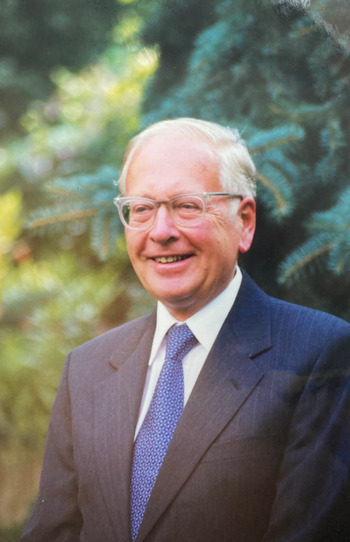
Following some years of declining health, Professor Maurice Crosland passed away on 30 August 2020 at the age of eighty-nine. Author of four influential scholarly monographs, Maurice played major roles in the British Society for the History of Science during the 1960s and 1970s as an active Member of Council, Honorary Editor of the British Journal for the History of Science (1965–71) and Honorary President of the society (1974–6). His academic career began in 1963 with his appointment to a lectureship in the History & Philosophy of Science at the University of Leeds. In 1974 the by-then Reader in History of Science secured a £100,000 Nuffield Foundation Grant with which to establish, for the first time, a dedicated history-of-science group at the University of Kent at Canterbury. Appointed Professor of the History of Science and Director of the Unit for the History, Philosophy and Social Relations of Science (known as the ‘History of Science Unit’ or simply ‘the Unit’), his objectives during the five-year Nuffield-funded period were to focus on promoting the research activities of the new group, build up much-needed library resources in a university which was barely ten years old, and effect a transition to a research and teaching Unit that would offer modules to undergraduates in each of the three principal faculties (Humanities, Natural Sciences and Social Sciences). His own research centred on French science during and after the Napoleonic period, with particular emphasis on the history of chemistry and the formal institutions and informal networks of Parisian science. In 1984 his work was recognized with the American Chemical Society's award of the Dexter Prize, a rare achievement for a British scholar.
Professor Maurice Crosland in 1999.

Maurice offered to immediate colleagues only occasional glimpses into his early life. Son of a French mother and Scottish father, his parentage clearly stood him in good stead for his years of intensive research within the vast Parisian archives pertaining to the history of French science during its most illustrious period. Tales of his maternal grandfather, Jean-Baptiste Mispoulet (1849–1917), inspired Maurice in his youth. A senior civil servant in Paris, Mispoulet had written books on Roman law and history in his spare time.
A north Londoner, Maurice became a child evacuee during the Second World War. With the end of the war, his education in north London resumed, culminating with A levels in the sciences and a place to study at University College London (UCL) for a BSc in chemistry. It was during his later school years that he first developed an interest in the history of the sciences, especially through Dampier's textbook History of Science.
Graduating in 1951, his subsequent MSc (1953) and PhD (1959) were undertaken at UCL, the latter degree pursued part-time while teaching at a grammar school in London (as a junior chemistry master). Students on the master's programme encountered a number of distinguished names from the post-war era in British history and philosophy of science: Angus Armitage (astronomy), Douglas McKie (chemistry), Neils Heathcote (physics), Alistair Crombie (medieval sciences) and Herbert Dingle (philosophy of science).
Maurice's PhD thesis, Historical Studies in the Language of Chemistry, was much indebted to the resources of the British Museum Library, especially with respect to alchemical language. Its rapid publication by Heinemann in conjunction with Harvard University Press underscored the academic and educational value of the work. Meanwhile, the dynamic HPS group at the University of Leeds (including Jerry Ravetz, Piyo Rattansi, Charles Webster and Charles Schmitt) invited applications for a new lectureship in 1963. In later years, Maurice liked to muse on the fact that, in contrast to the severe financial constraints of the 1980s, three candidates were interviewed for the Leeds post and two were appointed: Maurice Crosland and J.E. (‘Ted’) McGuire. The unsuccessful third candidate, however, later became a professor of theology at Oxford.
Maurice and his young family arrived in Leeds, therefore, at just the time history of science was being transformed into a fully professional discipline. Its publications were no longer mainly the preserve of retired science professors. An advanced, twice-weekly undergraduate seminar brought contributions from Rattansi and McGuire on Newton, Webster on seventeenth-century science and Schmitt on Aristotelianism. Ravetz and Alex Dolby addressed questions in the sociology of knowledge, while in due course Bob Olby, Jon Hodge, Geoffrey Cantor and John Christie brought new perspectives on the physical and life sciences. A distinctly ‘northern seminar’ emerged that brought together not only Leeds's HPS and Manchester's history of technology but also Jack Morrell in Bradford and Robert Fox in Lancaster. There were lighter moments too (at least in retrospect) when a respected colleague, most probably carried away by the intellectual excitement of seminars on Newtonian science, was rescued from the bars and pubs of Leeds by an anxious Maurice who, after an intensive but successful search for his ‘missing’ colleague, had the kindness of heart to drive the colleague safely home.
It was during this outstandingly rich intellectual period (1963–74) of serious scholarship in Leeds that Maurice produced his memorable Society of Arcueil (1967), a work that resulted in his promotion to Reader. The book shifted historical study from the internal technicalities of the sciences and from formal institutions to informal networks linking together elite savants as they corresponded and met together at Arcueil. In that respect, it was an epoch-making work, anticipating through a concrete historical case study a major shift in the practice of history of science away from the scientists’ internalist focus, the philosophers’ abstract intellectualist history and the social historians’ rather mechanistic institutional approaches to a new emphasis on human actors and communities interacting in place and time. In 1972, for example, Jack Morrell described the Society of Arcueil as ‘an embryonic research school’.Footnote 1
Successor to the amateurish Bulletin which had appeared rather erratically since at least the early 1950s, the British Journal for the History of Science (later BJHS) began its long run around 1962. Maurice was approached in 1964 as a prospective Honorary Editor and became the first fully fledged professional historian of science to take on the honorary but arduous role. At that time, indeed, the Editor was responsible for handling book reviews as well as articles. And with a society not well endowed financially, each issue was subjected to a strict limit of ninety-six pages. Edited with scrupulous attention to accuracy, the new Editor set the journal's meticulous standards of publication, book reviewing and professional editorship that continue to this day.
Founded in 1965 to nurture and promote interdisciplinary scholarship, the new University of Kent at Canterbury had no formal history-of-science group. But an Oxford-educated chemist who had also taught at Leeds, E.F. (‘Ted’) Caldin, had launched a Science Studies Group with a lively programme of external and internal speakers who interrogated questions related to the history, philosophy and social relations of the sciences. Caldin's commitment to history of science (as he understood it) did not win universal approval. Under his watch, ‘history of science’ became for a time known at Kent as a subject that had been invented by Professor Caldin in order to annoy his colleagues in the Chemistry Laboratory. Moreover, his insistence that the Library Committee authorize the purchase of the complete works of Galileo (in Italian), at the expense of contemporary science texts, confirmed the chemists’ suspicions. When, therefore, Maurice took up the Directorship of the History of Science Unit in September 1974, he and his immediate colleague Alex Dolby, appointed senior lecturer, found themselves treading on eggshells.
Faced with the undesirable prospect of office space either in the Chemistry Building or in the rather isolated Beverley Farm with its adjacent set of portacabins, Maurice successfully negotiated rooms in the centrally located Physics (now Marlow) Building. On 2 January 1975, a third member of the group (Crosbie Smith) arrived to take up a research fellowship, initially for one year but potentially tenable for a further two years. In fact, I remained at Kent until I retired in 2014!
Maurice's strategy was very precise. As a group, we would join the physicists in their fine communal space overlooking the campus for coffee in the mornings and tea in the afternoons. For lunches, we would visit one of the four college dining rooms each day and ensure that we joined a mix of science, humanities or social-science colleagues. The aim of this evangelism was that of engaging them in conversations that would, with luck, show just what history, philosophy and social relations of science could contribute to the enrichment of other academic disciplines. Discussion would continue over coffee in one of the senior common rooms. More formally, and by virtue of the position of the Unit outside the faculty structure, Maurice conscientiously attended the faculty meetings of all three faculties, the regular meetings of Senate, and the boards of study meetings of both History and Economic History. This heavy institutional commitment eased over time as he arranged for his two colleagues to take on some of the faculty- and board-level representation on the understanding that we would afterwards report back to our director on everything of concern to the Unit.
By the late 1970s, with the Nuffield grant still operative thanks to the director's attention to economic detail, the Unit had established an impressive range of modules adapted to very different disciplines: physics, chemistry, biology, history, economic history, English and American literature, philosophy, European studies and a variety of cross-disciplinary social-science subjects. On the research and postgraduate side, Maurice deployed the model of the ‘research school’ from his Arcueil project to supervise and shape a number of doctoral theses on European chemists (Dumas, Wurtz and Marie Curie in particular). In contrast to a still-prevalent culture of gentlemanly scholarship in the humanities, Maurice's commitment to encouraging an annual track record of Unit publication was not then the norm. It was no coincidence either that this research orientation had close parallels (as his own research demonstrated) in the nineteenth-century French Academy of Science in contrast to the less formal, more gentrified Royal Society of London.
Maurice's model of professional research involved a deep level of moral self-discipline. He therefore retained throughout his career a profound suspicion of ‘study leave’ which he never once applied for himself and which he deemed a recipe for idleness in others. Instead, he would unfailingly spend a set part of every Easter vacation in the Paris archives. A postcard addressed to Unit staff would arrive, depicting in sombre sepia tones the inside of a Paris library. A handwritten moral message on the card would reassure us that he was making maximum use of his time by ensuring that, when one archive closed for a generous lunch break, he would forgo lunch in order to transfer to another library whose lunch hours occupied a different period!
The great event of the Unit's first phase was the International History of Science Conference held in Edinburgh over ten days in the late summer of 1977. Maurice briefed Alex and me on the importance of all three of us attending in order to publicize the Unit on an international stage, with each one of us committed to presenting a paper and chairing sessions. He also emphasized that attendance would be a heavy drain on the Nuffield grant. For a young research fellow, however, the meeting proved to be unforgettable, not for the quality of the papers, but for the ‘roll of honour’ of names in the broad field of history of science. It was, to me, rather as though the books and periodicals that had formed the basis of my undergraduate and postgraduate studies in the Whipple Library in Cambridge had suddenly been transmuted into living authors: I.B. Cohen, Richard Westfall, R.V. Jones, Joseph Needham, Erwin Hiebert, Martin Klein, L. Pearce Williams and very many others, especially from North America. While teaching graduates at Cornell and Berkeley in 1967–8, Maurice had familiarized himself with New World authorities on French science, including distinguished Lavoisier scholar Henry Guerlac, as well as the author of a major work on the eighteenth-century Académie des sciences, Roger Hahn. In 1971, he had taught for a semester at the University of Pennsylvania. He was therefore very keen, and eminently well qualified, to introduce Alex and me to as many of the North American delegates as possible over the period of the meeting.
Maurice, however, never forgot to stress that we did not have the unlimited resources of our American colleagues to spend on fine dining and extravagant French wines, not to say Scotch whisky. His room was right next to mine in the university's modern Pollok Halls and one evening he called me in to give me some sage advice, already passed to Alex, on where to obtain value-for-money food. He proudly explained that he ‘dined’ from the common room servery on a ‘Scotch egg’ (a hard-boiled egg encased in sausage meat and rolled in breadcrumbs) for the princely sum of thirty-five pence. Truly this delicacy sounded like the diet of an austere Scots Presbyterian! But then Maurice, despite his love of Paris libraries and French savants, was no aficionado of expensive Parisian restaurants. Breakfast, on the other hand, was priced into the accommodation and so Maurice would arrive at the cafeteria before most conference members had awoken. Never one for casual dress, he would on many such occasions reprimand young delegates for failing to display their name badge, to which one impertinent American youth responded with a commitment forthwith to wear the badge on his pyjamas. Alex and I, sad to say, did not take the Scotch egg advice but opted instead for the new fashion of baked potatoes with a choice of fillings.
With the Unit only just past the end of its five-year Nuffield phase, we received a massive shock in 1980–1 as a consequence of the Thatcher government's deep cuts to university funding. The new vice chancellor, in an address to academic staff, presented two models: one based on inviting voluntary redundancy without much regard for subject; and the other based on a statistical calculation that would show how many staff each subject needed to lose in order to meet the reduced income. When the latter model took shape, the Unit's contribution to cuts came out as 0.40 of a member of staff but, in view of the difficulty of paring down a human being, the Registry then rounded 0.40 up to 1.00 (job-shares and the like were not then an option)! Maurice immediately took on the fight of his life, leaving nothing to chance and calling up every academic with any role in the planning process to force a change of the institutional mind. He also knew how to obtain from Alex Dolby some very original and astute insights into the weaknesses of the university's mathematical, political and social reasoning. As a result, the History of Science Unit remained intact at 3.00.
Maurice took great pride in the L-shaped set of rooms that made up Unit territory. Standing at the corner of the corridor, his office was large enough to allow most of his teaching, and staff–graduate seminars, to take place therein. From his desk, crucially, he could keep an eye on the corridor clock, which therefore served not only as a means of regulating coffee, tea, lunch and even toilet breaks but also of monitoring the arrival and departure of colleagues as they passed below the clock face en route to their offices further along the corridor. Two of the six rooms were given over to postgraduate occupancy and upon first attendance each postgraduate was allocated a desk, though no explicit mention was made of the luxury of a chair.
At a time when there were departmental ‘secretaries’ rather than ‘administrators’, Maurice was involved in the appointment, over a twenty-year period, of a number of Unit secretaries, all of them highly competent and extremely good-humoured, including Veronica Ansley, Veronica Craig-Mair, Yvonne Proctor, Irene Crowe and Trish Hatton. Each secretary had, as a primary and challenging task, the transcription from Maurice's spidery handwriting to traditional typeface, the drafts of Maurice's future articles or book chapters. Irene's typing skills in particular meant that she worked much faster than Maurice could produce, leaving him frantically urging colleagues to find other ways, however trivial, of keeping the Unit secretary from an undesirable state of idleness. Trish later came to play, and continues to play, a key role in administering BJHS editorial business.
All of the office doors had small viewing windows through which the presence or absence of colleagues and postgraduates could be noted. On at least one occasion, a somewhat capricious doctoral student attempted to obscure the view through the window of his office with a coat stand (and later with a portrait of Einstein at the blackboard). The director was believed to have moved the obstruction without delay and thereby restored some degree of departmental decorum. On another occasion, Maurice's bottle of fountain pen ink went missing from his desk. He proceeded to call together all senior members of the Unit in the secretarial office and announce that there appeared to be a thief at large. Everyone looked at each of the others wondering who the criminal might be and if he or she would openly confess. No one did and the thief was never identified.
At the end of the 1980s and in the early 1990s, the Unit's postgraduate taught master's and doctoral research attained a peak of excellence never to be repeated. Maurice's realization of the value of designated postgraduate space certainly facilitated this remarkable period in Unit history. While the students might have complained about the rigours of the directorial regime, they created for themselves a brilliant community of youthful scholars, several of whom currently occupy positions of eminence in UK and overseas universities today: Graeme Gooday, Will Ashworth, Ben Marsden, Jon Agar, Ana Carneiro and Yakup Bektas in particular. From those conversations arose too the 1994 conference and the consequent edited volume Making Space for Science that marked twenty years of the History of Science Unit at Kent. Rebellious as they were, these postgraduates lobbied for, and won, the right to hold regular staff–postgraduate meetings to discuss their suggestions, their plans for seminars and conferences, and their disaffections. In private, their campaign was known as the ‘Movement for Unit Democracy’ or ‘MUD’.
In this period too, a residual £10,000 of the Nuffield Fund, untouched since the formal grant period had ended in 1979, grew by a factor of ten under the wise guidance of one of the university's economics professors. Maurice gained Nuffield's permission for this amount to be used to fund Unit research postgraduates and other related research at a time when publicly funded scholarships for postgraduates were becoming highly competitive. Maurice's prudence had generated a legacy of incalculable benefit to the discipline at Kent. Later, we persuaded Maurice to allow his name to be given to what then became the Maurice Crosland Research Fund. With characteristic self-effacement, he agreed on condition that it would be clearly understood that the fund did not originate from his personal endowment!
A change of vice chancellor in the mid-1990s, however, brought an abrupt end to the university's original, visionary raison d’être of minimizing departmentalization and maximizing interdisciplinary studies. Boards of studies across Humanities and Social Sciences, the high command decided, were to be transformed forthwith into rigid departments. These so-called ‘schools’ were to be concentrated in specific buildings, many of which had been designed in the early 1960s to facilitate cross-disciplinary studies and a breakdown in hierarchies with staff offices and student accommodation in close proximity. Units like ours would simply be integrated into departments where their identity might, or might not, survive. We were transferred into the rebranded School of History within the architecturally ill-suited Rutherford College. The greatest loss we suffered from the beginning was the disappearance of the postgraduate rooms, a loss that took some years to remedy and which had a significant effect on doctoral research and postgraduate well-being.
Already in his early sixties and with twenty years of the Unit complete, Maurice decided to stand down as director and go part-time for three years prior to full retirement. Typical of his lifelong commitment to the discipline, he sought guarantees that he would be replaced by an authentic lecturer in history of science (and not, for example, by a political or military historian with doubtful credentials as a historian of science and technology). His immediate successor was Adrian Johns.
Towards the end of his tenure, Maurice launched a brand new History of Medicine module with a view in due course to appointing a Wellcome Trust lecturer in history of medicine. As the Unit became the Centre for the History of Science within the School of History, we were fortunate in winning a Wellcome University Award. In appointing John Clark to the lectureship, we had someone who promoted history of science and medicine as mutually dependent disciplines over a four-year period. Over the half-dozen years from 1996, centre research projects attracted other large grants from the Royal Society, the Leverhulme Trust, the British Academy and the AHRC. All these played a major role in the School of History's second-equal place in the Research Assessment Exercise (2008) rankings, an achievement that has not to date been repeated by the school.
During much of his retirement, Maurice became a regular, twice-weekly presence in Rutherford College's Senior Common Room. Over coffee, he took considerable pleasure in hearing of these successes of the Centre. However, following the death in 2012 of his wife Joan, an accomplished teacher of German and a very astute observer of academic life, Maurice seemed never fully to recover his own good health. Throughout his career, he was a staunch upholder of European ideals as embodied in the EU, and an opponent of all forms of nationalism. In conversation, I never once heard him speak in favour of any Tory government or of a single one of its policies. In religion, he showed a strong Christian faith and a commitment to St Thomas's Roman Catholic Church in Canterbury. Throughout the four decades or more of living in Kent he resided in a very fine terraced house overlooking the city's walls across Dane John Gardens. The Crosland home, he would always remind me, dated from the same year as the publication of Joseph Fourier's famous Théorie analytique de la chaleur (1822). He is survived by his four children, Peter, Michael, Margaret and Paul, the last of whom cared for him in his final years. To the deep regret of its alumni and all of its dedicated teaching, research and administrative staff over the forty-six years of its wide-ranging contributions to the discipline, the History of Science Centre at the University of Kent closed in the same year that its distinguished founder passed away.