Implications
The conversion of dietary polyunsaturated fatty acids (PUFA) to saturated fatty acids (SFA) by ruminants has important health implications for human health. However, ruminant products are also rich in conjugated linoleic acids (CLAs), which have positive implications for human health. The transformation from PUFA to SFA (biohydrogenation), and the formation of CLA, is catalysed by the microorganisms that inhabit the rumen. Researchers are finding ways to manipulate biohydrogenation, by identifying the microorganisms responsible and by finding feed additives/ingredients that alter their activity. In this way, the healthiness of ruminant products can be improved. Some methods may be doubly beneficial, by decreasing the environmentally damaging methane and nitrogenous emissions from ruminant livestock production.
Introduction
Human diets in industrialised countries are generally characterised by high levels of saturated fat, n-6 fatty acids (FA) and trans-FA, and low levels of n-3 FA (Simopoulos, Reference Simopoulos2004). World Health Organisation (WHO) (WHO, 2003) has recommended that total fat, SFA and trans-FA should contribute <15% to 30%; <10% and <1% of total energy intake, respectively. These recommendations arise from the fact that SFA increase the risk of cardiovascular disease in humans, as well as increased plasma cholesterol levels. In contrast, unsaturated FA (UFA) are known to decrease plasma cholesterol and low density lipoprotein-cholesterol (Givens, Reference Givens2005). Ruminant products are characterised by high concentrations of SFA and low concentrations of UFA, compared with non-ruminants. Hence they are often regarded as detrimental to human health. However, the FA composition of ruminant products can be improved to meet the WHO recommendations. The saturation of fats is a direct consequence of the reduction (biohydrogenation) of UFA by ruminal microorganisms. Thus, improvement of the FA profile of ruminant products can be achieved by two distinct approaches: (i) modification of the FA profile during meat or milk processing or (ii) modification through the changes in animal diet. The latter might simply result in greater bypass of dietary FA from the rumen, or might be a consequence of altered microbial metabolic activity. These will be discussed later in this review.
Ruminant products also contain potentially health-promoting CLA (mainly cis-9,trans-11-18:2). Dietary CLA have been shown in many animal studies to contribute to cancer prevention, decreased atherosclerosis, improved immune response and altered protein/energy metabolism (Whigham et al., Reference Whigham, Cook and Atkinson2000; Pariza, Reference Pariza2004; Palmquist et al., Reference Palmquist, Lock, Shingfield and Bauman2005). CLA are present at higher concentrations in ruminant products than in corresponding meats from non-ruminants or in vegetable oils (Chin et al., Reference Chin, Liu, Albright and Pariza1992; Givens and Shingfield, Reference Givens and Shingfield2004), as they are produced from the partial biohydrogenation of linoleic acid (LA) and linolenic acid (LNA) in the rumen by ruminal microorganisms (Chilliard et al., Reference Chilliard, Glasser, Ferlay, Bernard, Rouel and Doreau2007). The cis-9,trans-11 isomer is generally considered to be the main health-promoting CLA for human consumption (Givens and Shingfield, Reference Givens and Shingfield2004). The trans-11-18:1 FA, vaccenic acid (VA), is also desirable as a product flowing from the rumen because VA acts as a substrate for the formation of cis-9,trans-11-18:2 in the animal’s own tissues (Griinari et al., Reference Griinari, Corl, Lacy, Chouinard, Nurmela and Bauman2000).
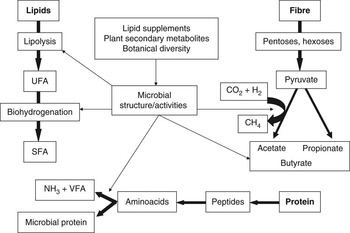
Despite rumen microbial activity, increasing dietary PUFA intake enhances the PUFA content of ruminant meat and milk (Dewhurst et al., Reference Dewhurst, Shingfield, Lee and Scollan2006; Scollan et al., Reference Scollan, Hocquette, Nuernberg, Dannenberger, Richardson and Moloney2006). Different nutritional strategies have been used, such as forage feeding, supply of vegetable oils or oilseeds, marine products or protected fat sources. Antimicrobial feed additives such as monensin may be effective via their influence on the composition of the microbial community. In fact, dietary strategies that involve altering the FA composition of the diet often combine the benefits of bypass and manipulation of biohydrogenating bacteria. UFA have a stronger antimicrobial effect than saturated ones (Harfoot and Hazlewood, Reference Harfoot and Hazlewood1997) and different PUFA have been reported to have differential toxicity toward rumen microorganisms (Maia et al., Reference Maia, Chaudhary, Figueres and Wallace2007; Zhang et al., Reference Zhang, Guo, Yuan, Wu, Wang, Liu and Zhu2008). Therefore, lipid supplementation can lead to a shift in the rumen microbial population. For any dietary strategy to be useful, it must not compromise rumen fermentation and, concomitantly, dry matter intake and animal production and/or performance. Often, studies report the effect of different nutritional strategies on lipid metabolism, but no further information is given on the impact of a particular strategy on the whole ruminal function and processes (Figure 1). Here, we attempt to review the interactions between lipid metabolism, other aspects of rumen metabolic function and the ruminal microbial community, particularly the consequences of strategies that aim to alter biohydrogenation.
Interventions to manipulate lipid metabolism in the rumen inevitably lead to effects on other processes. Sometimes the target organisms have several functions, in other cases the metabolic pathways are linked, for example by the availability of H2. UFA = unsaturated fatty acid; SFA = saturated fatty acid; VFA = volatile FA.

Ruminal microbial processes
The rumen evolved to slow down the passage of fibre-containing foodstuffs through the gut, which enables microbial enzymes time to digest the constituent digestion-resistant polymers, mainly cellulose and xylan (Hungate, Reference Hungate1966). Mammalian enzymes cannot break down cellulose or xylan. To achieve this digestion, the microbes must ferment the released sugars to release ATP, which in turn fuels their growth. In this anaerobic environment, the main products of the metabolic pathways that generate ATP (Figure 1) are volatile FA (VFA), such as acetate, propionate, butyrate, and gases such as CO2 and CH4 (Russell and Wallace, Reference Russell and Wallace1997). CH4 is now well recognised as a greenhouse gas, a significant contributor to global warming (Lassey, Reference Lassey2008). Also essential for microbial growth is nitrogen, mainly in the form of protein in plants that form the bulk of the diet (Figure 1). Thus, proteolysis and amino acid transport are essential for microbial growth. In fact, microbial proteolysis is generally considered wasteful as far as the animal is concerned, because its activity generally exceeds the capability of the microbes to utilise the products of hydrolysis (Walker et al., Reference Walker, Newbold and Wallace2005). The excessive catabolism leads to one of the major nutritional losses (and pollutants) from animal agriculture, namely N excretion (Pfeffer and Hristov, Reference Pfeffer and Hristov2007).
The metabolism of dietary lipid is not, in contrast, seen as an activity essential to provide nutrients to ruminal microorganisms. The microorganisms are capable of synthesising their own FA and indeed do so extensively in the mixed community (Garton, Reference Garton1977). They also cannot derive energy from β-oxidation, which does not occur anaerobically. Lipid metabolism may, therefore, seem to be somewhat peripheral to the main growth-generating activities of the rumen microbial community. Nevertheless, it is extremely important from the microrganisms’ perspective in that it enables some of them to survive what would otherwise be a toxic challenge. It is also fundamental in influencing the nutritional quality of ruminant products.
The main members of the microbial community are bacteria, archaea, protozoa and fungi. Bacteria are the most abundant, followed by archaea (the CH4 producers), ciliate protozoa and in lower numbers the anaerobic fungi. Different species have different roles, which interact and are essential for sustaining the microbial community and its collective activity. Furthermore, with the exception of CH4 formation, individual genera or species seldom have a single role. For example, the Gram-positive bacterium, Butyrivibrio fibrisolvens, is a key player in fibre digestion, but many strains are also highly proteolytic (Stewart et al., Reference Stewart, Flint and Bryant1997). B. fibrisolvens also dominates the community in the biohydrogenation of FA. Thus, targeting one microbial activity for manipulation always has consequences for others. Also, the way in which the manipulation is implemented seldom has influence on only the intended target. Cellulolysis is particularly vulnerable to disruption, for example (Weimer, Reference Weimer1996; Chesson and Forsberg, Reference Chesson and Forsberg1997). Thus, any attempt to alter one aspect of ruminal activity must be accompanied by diligence in monitoring other effects. The secondary effect may not necessarily be detrimental, however. As will be reviewed below, some of the feed composition changes that lead to a better FA flow from the rumen also decrease methanogenesis, which benefits the animal through improved energy retention and benefits the environment by lowering the emission of a greenhouse gas.
Lipase activity in the rumen
Most research on ruminal lipolysis was carried out many years ago. Recently, interest has revived because of the implications of ruminal lipolysis on subsequent biohydrogenation of PUFA and generation of CLA.
Plant and microbial lipases
Lipolysis occurs rapidly in ruminal digesta (Garton et al., Reference Garton, Hobson and Lough1958; Dawson and Hemington, Reference Dawson and Hemington1974; Dawson et al., Reference Dawson, Hemington and Hazlewood1977). In animals receiving cereals and plant oils, the most abundant lipids would be in the form of triacylglycerol. Hydrolysis of triacylglycerol in these diets occurs predominantly by microbial lipases (Dawson et al., Reference Dawson, Hemington and Hazlewood1977). The forage consumed by grazing ruminants in contrast contains little triacylglycerol, comprising mainly galacto-, sulfo- and phospholipids (Harfoot, Reference Harfoot1981). Forage plant tissues are rich in galacto- and phospholipases. These lipases remain active once ingested into the rumen for up to 5 h, suggesting that the plant material itself may contribute to ruminal lipolysis in grazing animals (Omar Faruque et al., Reference Omar Faruque, Jarvis and Hawke1974). Dawson et al. (Reference Dawson, Hemington and Hazlewood1977) challenged this idea and concluded that microbial lipases were more important than plant enzymes. The experiments of Dawson et al. (Reference Dawson, Hemington and Hazlewood1977) used autoclaved grass as substrate, which is not ideal because of the many effects that autoclaving has other than enzyme denaturation, a conclusion made by the authors themselves. More recently, this issue has been revisited by Lee et al. (Reference Lee, Theodorou, Chow and Scollan2002), reporting increased free FA and decreased polar lipids after 6 h incubation of fresh ryegrass leaves in buffer, confirming that plant catalysed lipolysis occurred. Further, Van Ranst et al. (Reference Van Ranst, Fievez, Vandewalle, De Riek and Van Bockstaele2009) reported plant lipolysis up to 60% after 8 h incubation of fresh red clover leaves. Both papers suggested the observed lipolysis to be due to active plant lipases that could have some contribution to the overall ruminal lipolysis, though neither compared plant activity with that of ruminal microorganisms. We believe it is time for this issue to be revisited, given the importance of these esterases in the overall lipid metabolism and its implications for product quality and human health. How important are plant lipases in comparison with microbial lipases in ruminal metabolism? It may be a useful objective to breed forage plants low in lipase activity.
Lipolytic ruminal microorganisms
Among the various types of ruminal microorganisms, the bacteria are considered to be most active in lipolysis. This view was based on experiments with ciliate-free sheep, in which hydrolysis of phosphatidyl choline remained high (Dawson and Kemp, Reference Dawson and Kemp1969), and on fractionations carried out during the PhD studies of Hazlewood (Harfoot and Hazlewood, Reference Harfoot and Hazlewood1997). Again, we believe that it is important to carry out further studies with up-to-date methods to assess again the possible role of protozoa in lipolysis, given their importance in the flow of PUFA, including CLA, from the rumen (Devillard et al., Reference Devillard and Wallace2006; Yáñez-Ruiz et al., Reference Yáñez-Ruiz, Scollan, Merry and Newbold2006). As for the anaerobic fungi, their existence was not known when the vast majority of early studies were carried out. They merit further investigation.
Lipolytic ruminal bacteria and their lipases
The most active bacterial species isolated selectively using triacylglycerol as substrate was Anaerovibrio lipolytica (Hobson and Mann, Reference Hobson and Mann1961; Henderson, Reference Henderson1968). Its lipase activity was investigated in some detail by methods available at the time, the 1970s (Henderson, Reference Henderson1971; Henderson and Hodgkiss, Reference Henderson and Hodgkiss1973). A. lipolytica would be expected to dominate ruminal lipase activity in animals receiving mainly concentrate feeds, but, because A. lipolytica lacks the ability to hydrolyse galacto- and phospholipids, other lipolytic species would be expected to predominate in grazing animals. Nevertheless, Prins et al. (Reference Prins, Lankhorst, Van der Meer and Van Nevel1975) found that A. lipolytica was present at around 107/ml in grazing animals, reflecting perhaps other activities, such as the fermentation of glycerol, that may provide this species with a selective niche (Rattray and Craig, Reference Rattray and Craig2007). Several molecular microbial ecology studies have enumerated A. lipolytica in the rumen under different dietary conditions (Tajima et al., Reference Tajima, Aminov, Nagamine, Matsui, Nakamura and Benno2001; Koike et al., Reference Koike, Yabuki and Kobayashi2007), with similar conclusions. Phospho- and galactolipids seem to be hydrolysed by Butyrivibrio-like species (Hazlewood and Dawson, Reference Hazlewood and Dawson1975 and Reference Hazlewood and Dawson1979). A. lipolytica did not break down phospho- and galactolipids (Henderson, Reference Henderson1971), while the Butyrivibrio spp. did not break down triacylglycerols. The Butyrivibrio spp. appeared to contain all the phospholipase A, phospholipase C, lysophospholipase and phosphodiesterase activities typical of the mixed rumen contents (Harfoot and Hazlewood, Reference Harfoot and Hazlewood1997). The fact that these bacteria also possess the ability to biohydrogenate UFA suggests that the two properties are linked in a way that benefits their ‘biochemical economy’ (Harfoot and Hazlewood, Reference Harfoot and Hazlewood1997). Specifically, because Butyrivibrio S2 was a FA auxotroph, it would require lipase to grow. The toxicity of non-esterifed PUFA (Maia et al., Reference Maia, Chaudhary, Figueres and Wallace2007) released by the lipase would then have to be removed by biohydrogenation. The importance of these various species vis-à-vis other species that may not yet have been isolated remains to be quantified. For example, two lipolytic isolates were obtained from young deer, but they were derived from such low dilutions that their population size may be very small and their importance is uncertain (Jarvis et al., Reference Jarvis, Strompl, Moore and Thiele1998).
Lipolytic ruminal protozoa and their lipases
Evidence of lipolytic activity in protozoa is not very consistent, partly because there have been few recent studies that investigate protozoal lipolysis. Wright (Reference Wright1961) suggested Epidinium spp. to be responsible for 30% to 40% of the lipolytic activity in the rumen. Epidinium ecaudatum was reported to liberate galactose from galactolipids, suggesting galactosidase activity, although lipase activity was not demonstrated (Bailey and Howard, Reference Bailey and Howard1963). Another protozoal species, Entodinium caudatum, was shown to have phospholipase activity (Coleman et al., Reference Coleman, Kemp and Dawson1971), but it is most likely that this activity was more relevant to the internal economy of the protozoa than to the digestion of dietary lipids. The earlier studies to determine the contribution of protozoa to the lipolytic activity in the rumen were carried out with fractionated rumen fluid, with the possibility that lipolytic activity in protozoal fractions was more because of the activity of bacteria that the protozoa had ingested than that of the protozoa themselves.
Lipases from the rumen microbial metagenome
Now we take a huge step forward in time to the present day of pyrosequencing, metagenomics, sequence databases and analogous technologies. Liu et al. (Reference Liu, Wang, Bu, Zhao, McSweeney, Yu and Li2009) screened a metagenomic library from the rumen of grazing Holstein cows for lipase activity, using trioleoylglycerol as substrate. Out of 15 360 bacterial artificial chromosome (BAC) clones, two were found with high lipase activity. This number seems surprisingly small, nevertheless the sequences provided some interesting information. The genes identified and expressed in Escherichia coli coded for esterases with a preference for long-chain FA, indicating that they were genuine lipases, but no further substrate specificity was tested. The likely origin of the genes was investigated, based on the other open reading frames present in the BAC clones. It was impossible to tell the host for the first gene, Rlip1, but the second, Rlip2, gave most similar homologues from Thermosinus carboxydivorans, which has not previously been associated with the ruminal ecosystem. Thus, once again, the importance of these lipases in the overall community is far from certain. Clearly many more lipase sequences must be analysed from the metagenome to understand the true nature of lipolytic enzymes in the rumen. The potential for new discovery seems high, however, because the Rlip1 lipase sequence clustered separately from the eight main families of lipase as identified by Arpigny and Jaeger (Reference Arpigny and Jaeger1999) and may be a member of a new family of lipolytic enzymes. One might argue that going to the metagenome before interrogating the genome of known lipolytic species is premature, and that the pure culture studies should be carried out at least alongside metagenomics.
Biohydrogenating activity in the rumen
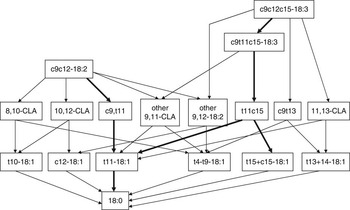
The main FA substrate for biohydrogenation in grazing animals is LNA (cis-9,cis-12,cis-15-18:3), because it is the most abundant FA present in glycolipids and phospholipids of grass and other forages, whereas for animals receiving dietary lipid supplements, LA (cis-9,cis-12-18:2) in the form of triacylglycerols will usually be the main substrate for biohydrogenation. LA metabolism in the rumen involves the transient formation of CLA, mainly cis-9,trans-11-18:2 or rumenic acid, which is then converted to VA, and finally stearic acid (18:0; Figure 2). LNA is metabolised in a similar way (Figure 2), though as there are three double bonds to be reduced the pathway is slightly more complicated (Harfoot and Hazlewood, Reference Harfoot and Hazlewood1997; Jenkins et al., Reference Jenkins, Wallace, Moate and Mosley2008). The main 18:3 intermediate arising from isomerisation of LNA in mixed ruminal digesta was shown recently (Wąsowska et al., Reference Wąsowska, Maia, Niedzwiedzka, Czauderna, Ramalho Ribeiro, Devillard, Shingfield and Wallace2006) to be the conjugated triene, cis-9,trans-11,cis-15-18:3, one of the possible conformations proposed by Wilde and Dawson (Reference Wilde and Dawson1966). Other intermediates identified included trans-9,trans-11,cis-15-18:3 and trans-11,cis-15-18:2. Conjugated trienes may have just as important health implications as CLA (Tsuzuki et al., Reference Tsuzuki, Tokuyama, Igarashi and Miyazawa2004) although much less work has been done on the trienoic than the dienoic fatty C-18 FA.
Biohydrogenation pathways in the rumen. LA – c9c12-18:2; LNA – c9c12c15-18:3; VA – t11-18:1. CLA = conjugated linoleic acid; LA = linoleic acid; LNA = linolenic acid; VA = vaccenic acid. Adapted from Chilliard et al. (2007).

cis-9,trans-11-18:2 is usually the predominant CLA isomer found in the rumen and in milk, but many others are present, with trans-9,trans-11-18:2 usually most abundant of the others (Shingfield et al., Reference Shingfield, Ahvenjarvi, Toivonen, Arola, Nurmela, Huhtanen and Griinari2003; Palmquist et al., Reference Palmquist, Lock, Shingfield and Bauman2005; Chilliard et al., Reference Chilliard, Glasser, Ferlay, Bernard, Rouel and Doreau2007). There are, however, times when the trans-10,cis-12 isomer becomes a major intermediate. This can be precipitated by high-starch feeding or by fish or vegetable oil supplementation (Bauman and Griinari, Reference Bauman and Griinari2001; Shingfield and Griinari, Reference Shingfield and Griinari2007). High concentrations of trans-10-18:1 occur in digesta and consequently in the FA flowing to animal tissues (Offer et al., Reference Offer, Marsden and Phipps2001; Daniel et al., Reference Daniel, Wynn, Salter and Buttery2004; Shingfield and Griinari, Reference Shingfield and Griinari2007). Under these circumstances, milk fat depression occurs, with other consequences to the animal, including lower intake and decreased fibre digestion (Bauman and Griinari, Reference Bauman and Griinari2001). Post-ruminal infusion experiments first indicated that trans-10,cis-12-18:2 exerts anti-lipogenic effects in the lactating cow (Baumgard et al., Reference Baumgard, Corl, Dwyer, Saebø and Bauman2000; Saebø et al., Reference Saebø, Saebø, Griinari and Shingfield2005; Lock et al., Reference Lock, Teles, Perfield, Bauman and Sinclair2006). Recent studies suggest that it may actually be trans-10-18:1 rather than the trans-10,cis-12 CLA that decreases mammary lipogenesis (Shingfield et al., Reference Shingfield, Saebø, Saebø, Toivonen and Griinari2009). It is important, therefore, to understand how these isomers are formed. There are, in addition, other possible pathways of LA metabolism, including hydration and chain elongation or shortening, which may increase in importance depending on the diet. In all these aspects of FA metabolism it is important to understand the role of different microbial species.
Role of ciliate protozoa in biohydrogenation
Up to half of the rumen microbial biomass may be protozoal in origin (Williams and Coleman, Reference Williams and Coleman1992) and about three quarters of the microbial FA present in the rumen may be in protozoa (Keeney, Reference Keeney1970). Thus, protozoa could represent a very important source of CLA and VA. Wright (Reference Wright1959 and Reference Wright1960) concluded that both protozoa and bacteria were involved in biohydrogenation, but the extensive ingestion of bacteria by protozoa was considered by Dawson and Kemp (Reference Dawson and Kemp1969) to cast doubt on this conclusion. Biohydrogenation in ruminal digesta was only slightly decreased after defaunation and the presence of protozoa was not necessary for biohydrogenation to occur (Dawson and Kemp, Reference Dawson and Kemp1969). Girard and Hawke (Reference Girard and Hawke1978) and Singh and Hawke (Reference Singh and Hawke1979) also suggested that the minor contribution of protozoa to the biohydrogenation process was due to the activity of ingested or associated bacteria. It has been known for a long time that protozoal lipids contain proportionally more UFA than the bacterial fraction (Katz and Keeney, Reference Katz and Keeney1966; Harfoot and Hazlewood, Reference Harfoot and Hazlewood1997). Recently, it was established that these UFA include CLA and VA (Devillard et al., Reference Devillard and Wallace2006), further increasing the possible significance of protozoa in the delivery of health-promoting FA from the rumen. Different protozoal species had different composition, with larger species including Ophryoscolex caudatus containing more than 10 times higher concentrations of CLA and VA than some small species, such as Entodinium nannelum (Devillard et al., Reference Devillard, McIntosh, Newbold and Wallace2006). Isotricha prostoma, a large species and the only holotrich examined, had low concentrations of CLA and VA. In incubations with fractionated ruminal digesta, LA metabolism was very similar in strained ruminal fluid and its derived bacterial fraction, while its mixed protozoal fraction had much lower activity. The opposite direction of reaction, namely desaturation, also did not occur in the protozoal fraction. Radioactivity from 14C-stearate was not incorporated into CLA or VA by protozoa. No genes with sequence similarity to FA desaturase genes from other organisms were found in cDNA libraries from ruminal protozoa (E. Devillard, personal communication). Thus, the protozoa are rich in CLA and VA, yet they appear not to synthesise these two FA from LA or stearate, confirming the opinion of Dawson and Kemp (Reference Dawson and Kemp1969).
It might be argued that the high-UFA content of protozoa results from the ingestion of plant particles, especially chloroplasts (Wright, Reference Wright1959; Stern et al., Reference Stern, Hoover and Leonard1977). A recent study by Huws et al. (Reference Huws, Kim, Kingston-Smith, Lee, Muetzel, Cookson, Newbold, Wallace and Scollan2009a) showed that the engulfment of chloroplasts is a major contributor to the high LNA concentration of protozoa. This cannot explain the high concentration of CLA and VA in protozoa, however, as these FA are absent from the plant material. Biohydrogenating activity must be involved. Our investigations suggest that the most likely explanation is that protozoa preferentially incorporate CLA and VA formed by ingested bacteria. The lower conversion to stearate perhaps occurs because the bacteria responsible for conversion of monoenoic acids to SFA are more vulnerable to protozoal digestive activities. A simpler explanation is that the reactions carrying out the early stages of biohydrogenation are much more active than the last one, and that if both are decreased by, say, 95%, by protozoal digestive activities, this may leave remaining enzymic activity sufficient to form CLA and VA from LA, for example, but not enough to form significant amounts of stearate. We believe that the antibiotic treatment described by Or-Rashid et al. (Reference Or-Rashid, Alzahal and McBride2008), which resulted in increased accumulation of CLA in washed protozoa, reflects a similar phenomenon, and is not caused by genuine protozoal activity. Until the genes encoding the enzymes involved in both bacteria and protozoa are identified, it will be difficult to resolve the issue unambiguously, however. A recent paper by Boeckaert et al. (Reference Boeckaert, Morgavi, Jouany, Maignien, Boon and Fievez2009) showed that I. prostoma did not hydrogenate LA, but in view of its low CLA and VA concentrations, this observation can probably not be extrapolated to other species, particularly entodiniomorphs.
These findings imply that the availability of PUFA (including CLA) and VA, for absorption by the host animal could depend more on the flow of protozoa rather than bacteria from the rumen. Some ciliate protozoa are retained selectively within the rumen by a migration/sequestration mechanism that depends on chemotaxis (Abe et al., Reference Abe, Iriki, Tobe and Shibui1981; Ankrah et al., Reference Ankrah, Loerch, Kampman and Dehority1990). As a consequence, protozoal biomass reaching the duodenum is proportionally less than would be expected if they were to flow with the rest of ruminal digesta (Hungate et al., Reference Hungate, Reichl and Prins1971; Weller and Pilgrim, Reference Weller and Pilgrim1974). It might be imagined that this selective retention would be detrimental to the flow of CLA and VA into meat and milk. The flow of microbial N at the duodenum of steers was recently shown to be 12% to 15% protozoal in origin, whereas in terms of FA flow, protozoa accounted for between 30% and 43% of the CLA and 40% of the VA reaching the duodenum (Yáñez-Ruiz et al., Reference Yáñez-Ruiz, Scollan, Merry and Newbold2006). The contribution of protozoa to the flows of 16:0 and 18:0 to the duodenum was less than 20% and 10%, respectively. Thus, even if protozoa do not themselves produce CLA and VA by their own metabolism, nevertheless they might be expected to have a significant influence on CLA and VA available to the host animal.
Biohydrogenating ruminal bacteria
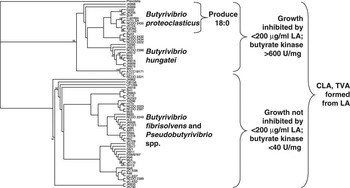
Bacteria play the main role in FA biohydrogenation (Jenkins et al., Reference Jenkins, Wallace, Moate and Mosley2008). In early microbiological studies (Polan et al., Reference Polan, McNeill and Tove1964), B. fibrisolvens was identified to undertake biohydrogenation of FA and to form CLA and VA as intermediates during the biohydrogenation of LA (Polan et al., Reference Polan, McNeill and Tove1964; Kepler et al., Reference Kepler, Hirons, McNeill and Tove1966). Stearic acid was not formed from LA by B. fibrisolvens, however. Later studies (Kemp et al., Reference Kemp, White and Lander1975; Hazlewood et al., Reference Hazlewood, Kemp, Lander and Dawson1976) identified other bacteria that were capable of biohydrogenation, but they did not provide much information about relative activities: the method used radio-labelled substrates and was highly sensitive but the concentrations of labelled acids used as substrates were very low (2 μg/ml), making comparing the activity and quantitative significance of different bacteria difficult. Bacteria carrying out stearate formation were identified as Fusocillus spp. (Kemp et al., Reference Kemp, White and Lander1975). Van de Vossenberg and Joblin (Reference Van de Vossenberg and Joblin2003) isolated from a grazing cow a bacterium, which could also form stearate from linoleate. It was phenotypically similar to ‘Fusocillus’ and their analysis indicated that it was phylogenetically close to Butyrivibrio hungatei. Subsequently, a species named Clostridium proteoclasticum was identified as a stearate producer with morphological and metabolic properties that were indistinguishable from those reported for Fusocillus (Wallace et al., Reference Wallace, Chaudhary, McKain, McEwan, Richardson, Vercoe, Walker and Paillard2006). Moon et al. (Reference Moon, Pacheco, Kelly, Leahy, Li, Kopecny and Attwood2008) renamed C. proteoclasticum as Butyrivibrio proteoclasticus from its 16S rRNA gene sequence. For many years, the bacteria that are involved in the different steps of the biohydrogenation process were classified as group A and B (Harfoot and Hazlewood, Reference Harfoot and Hazlewood1997). Group A bacteria hydrogenated LA and LNA to VA, whereas group B bacteria convert the same FA to stearic acid. We propose that it is now much more appropriate to describe the bacteria based on their correct taxonomy (Figure 3). B. hungatei and B. proteoclasticus groups are much more sensitive to the toxic effects of UFA than the rest of the Butyrivibrio/Pseudobutyrivibrio cluster, such that their isolation from media containing UFA is made very difficult (Wallace et al., Reference Wallace, Chaudhary, McKain, McEwan, Richardson, Vercoe, Walker and Paillard2006; Paillard et al., Reference Paillard, McKain, Chaudhary, Walker, Pizette, Koppova, McEwan, Kopecny, Vercoe, Louis and Wallace2007). They can also be distinguished based on the mechanism by which they form butyrate, their main fermentation product after acetate. B. hungatei and B. proteoclasticus had a butyrate kinase activity >600 U/mg protein, while the others had much lower activity (Figure 3; Paillard et al., Reference Paillard, McKain, Chaudhary, Walker, Pizette, Koppova, McEwan, Kopecny, Vercoe, Louis and Wallace2007). The butyrate kinase gene was present in B. hungatei and B. proteoclasticus but not in the other group. It is tempting to suggest that the different sensitivities to the toxic effects of UFA may be linked to the enzymic mechanism by which butyrate is produced. Intracellular acyl-CoA concentrations, principally the precursors of butyrate, in B. fibrisolvens seem to be particularly sensitive to the effects of LA (Maia et al., Reference Maia, Chaudhary, Bestwick, Richardson, McKain, Larson, Graham and Wallace2010).
Relation between phylogenetic position, formation of biohydrogenation products from LA, sensitivity to growth inhibition and mechanism of butyrate formation in the Butyrivibrio phylogenetic tree. From Wallace et al. (Reference Wallace, Chaudhary, McKain, McEwan, Richardson, Vercoe, Walker and Paillard2006), Maia et al. (Reference Maia, Chaudhary, Figueres and Wallace2007) and Paillard et al. (Reference Paillard, McKain, Chaudhary, Walker, Pizette, Koppova, McEwan, Kopecny, Vercoe, Louis and Wallace2007). CLA = conjugated linoleic acid; VA = vaccenic acid; LA = linoleic acid.

Metabolism of LA by Butyrivibrio results in the formation of cis-9,trans-11 CLA and VA, but no trans-10,cis-12 CLA or trans-10-18:1 is formed (McKain et al., Reference McKain, Shingfield and Wallace2010). The bacteria responsible for milk fat depression must therefore be different to the Butyrivibrio spp. The formation of trans-10,cis-12 CLA also occurs by a different enzymic mechanism to that of cis-9,trans-11 CLA (Wallace et al., Reference Wallace, McKain, Shingfield and Devillard2007). Enrichment cultures with starch carried out by Kim et al. (Reference Kim, Liu, Rychlik and Russell2002) contained abundant large cocci identified as Megasphaera elsdenii that formed trans-10,cis-12 CLA. Our studies indicate that Propionibacterium acnes may be responsible for the formation of trans-10,cis-12-18:2 (Devillard and Wallace, Reference Wallace, Chaudhary, McKain, McEwan, Richardson, Vercoe, Walker and Paillard2006), having been unable to find comparable activity in M. elsdenii. Furthermore, when digesta samples from cows producing high amounts of trans-10,cis-12-18:2 were analysed for M. elsdenii by qPCR of 16S rRNA genes, numbers were <103/g, while much larger numbers of P. acnes were detectable (unpublished observation). P. acnes does not, however, convert trans-10,cis-12 CLA to trans-10-18:1 (McKain et al., Reference McKain, Shingfield and Wallace2010). This can be accomplished by the Butyrivibrio spp. (McKain et al., Reference McKain, Shingfield and Wallace2010). Weimer et al. (Reference Weimer, Stevenson and Mertens2010) observed major changes in the bacterial community associated with cows suffering milk fat depression. A future challenge will be to associate with certainty the role of individual microbial species with this disorder.
There are often significant differences between bacterial communities attached to solids and those ‘planktonic’ communities that inhabit the liquid phase of digesta. The same is true for biohydrogenation, it appears, with the planktonic community carrying out LA metabolism only as far as 18:1 FA while the solids-associated community formed 18:0 (Boeckaert et al., Reference Boeckaert, Morgavi, Jouany, Maignien, Boon and Fievez2009). B. proteoclasticus was present only in the solids-associated community, at 12% of Butyrivibrio-related clones.
Anaerobic ruminal fungi
Although ruminal fungi produce cis-9,trans-11-18:2 from LA (Nam and Garnsworthy, Reference Nam and Garnsworthy2007a and Reference Nam and Garnsworthy2007b), their activity is very low in comparison with B. fibrisolvens (Maia et al., Reference Maia, Chaudhary, Figueres and Wallace2007).
Correlating microbial ecology and biohydrogenation
Attempts to correlate the microbial community composition in vivo with the observed inhibition of biohydrogenation have had limited success. Kim et al. (Reference Kim, Huws, Lee, Wood, Muetzel, Wallace and Scollan2008) and Huws et al. (Reference Huws, Kim, Lee, Pinloche, Wallace and Scollan2009b) used group-specific PCR to analyse the bacterial communities in cattle in which biohydrogenation and the FA composition of digesta had been altered by incremental amounts of fish oil. Only weak correlations were found between numbers of B. proteoclasticus and the duodenal flow of 18:0 in fish oil supplemented diets. Boeckaert et al. (Reference Boeckaert, Vlaeminck, Fievez, Maignien, Dijkstra and Boon2008) performed a similar analysis in dairy cows receiving docosahexaenoic acid (DHA)-containing microalgae. Their dendrogram based on Butyrivibrio-related bacteria indicated that changes occurred in a group from which there are no cultivated strains. These three reports indicate that other, as yet uncultivated, microbial species may be involved in biohydrogenation, particularly the final step, during the conversion of VA to 18:0.
Manipulating ruminal biohydrogenation
Several factors influence the concentration of FA in ruminant food products. The quantity and composition of dietary lipids have a major effect because of the FA that escape ruminal metabolism. FA may also have a direct manipulating effect, however, whereby they inhibit biohydrogenation. Biohydrogenation is affected indirectly too when other activities are changed, because FA metabolism is inextricably linked to other areas of ruminal metabolism, through a common reliance on H2 metabolism and/or the microbial species that are involved in multiple metabolic processes. FA metabolism in animal tissues, particularly the mammary gland, has also been targeted as a means of altering FA composition in ruminant products. Enhancing the activity of mammary Δ9-desaturase activity would increase the conversion of trans-11-18:1 into cis-9, trans-11 CLA. We shall deal only with ruminal events here, focussing on effects on biohydrogenation and microbial ecology.
Lipid supplements
Fats in ruminant diets are used for two main purposes: (i) to increase the energy content of the diet because of their high caloric density or (ii) to manipulate ruminal fermentation because of their antimicrobial effect. The meta-analysis by Glasser et al. (Reference Glasser, Ferlay and Chilliard2008) provides the most comprehensive analysis of oilseed lipid supplements and their influence on milk fat composition. The antimicrobial effect of dietary lipids is associated with the degree of unsaturation of the FA present (Szumacher-Strabel et al., Reference Szumacher-Strabel, Martin, Potkanski, Cieslak and Kowalczyk2004; Váradyová et al., Reference Váradyová, Kišidayová, Siroka and Jalč2007; Zhang et al., Reference Zhang, Guo, Yuan, Wu, Wang, Liu and Zhu2008; Yang et al., Reference Yang, Bu, Wang, Hu, Li, Wei, Zhou and Loor2009). PUFA are more toxic for biohydrogenating bacteria than di- or monoenoic FA (Maia et al., Reference Maia, Chaudhary, Figueres and Wallace2007 and Reference Maia, Chaudhary, Bestwick, Richardson, McKain, Larson, Graham and Wallace2010), thus oils containing PUFA such as LNA would be expected to have a greater effect on rumen biohydrogenation and fermentation processes than those rich in LA or oleic acid. Unsaturated oilseed products, including linseed, soybean and sunflower seeds and oils (including Ca salt and amides), increased trans-18:1 FA, this increase being more pronounced with the oils, particularly linseed and sunflower. cis-9,trans-11 CLA in milk was significantly increased by dietary seeds and oils (Glasser et al., Reference Glasser, Ferlay and Chilliard2008). Oils rich in LA (sunflower and soybean) have been more effective in enhancing milk CLA than oils rich in LNA (linseed; Kennelly, Reference Kennelly1996; Bu et al., Reference Bu, Wang, Dhiman and Liu2007). The same meta-analysis showed that, regarding total 18:2 FA, increases were observed with linseed, soybean and sunflower, for both seeds and oils, whereas 18:3 FA increased with linseed and soybean seeds (Glasser et al., Reference Glasser, Ferlay and Chilliard2008).
Fish oil, rich in long-chain FA, especially 20:5n-3 eicosapentaenoic acid (EPA) and 22:6n-3 (DHA), has been particularly successful in inhibiting the last step of biohydrogenation, the conversion of trans-11-18:1 to 18:0 (Lee et al., Reference Lee, Tweed, Moloney and Scollan2005; Wąsowska et al., Reference Wąsowska, Maia, Niedzwiedzka, Czauderna, Ramalho Ribeiro, Devillard, Shingfield and Wallace2006; Chilliard et al., Reference Chilliard, Glasser, Ferlay, Bernard, Rouel and Doreau2007). EPA and DHA inhibit biohydrogenation directly, possibly by competitive inhibition (AbuGhazaleh and Jenkins, Reference AbuGhazaleh and Jenkins2004; Wąsowska et al., Reference Wąsowska, Maia, Niedzwiedzka, Czauderna, Ramalho Ribeiro, Devillard, Shingfield and Wallace2006). They also inhibit the growth of biohydrogenating bacteria and other bacteria in pure culture (Maia et al., Reference Maia, Chaudhary, Bestwick, Richardson, McKain, Larson, Graham and Wallace2010). As a consequence, bacterial communities are changed significantly in response to dietary fish oil (Kim et al., Reference Kim, Huws, Lee, Wood, Muetzel, Wallace and Scollan2008; Huws et al., Reference Huws, Kim, Lee, Pinloche, Wallace and Scollan2009b). Protozoal numbers may be increased, further restricting biohydrogenation (Loor et al., Reference Loor, Ueda, Ferlay, Chilliard and Doreau2005). In contrast, oil prepared from catfish, a freshwater species, contains little DHA or EPA because the fish do not consume marine algae (Amorocho et al., Reference Amorocho, Jenkins and Staples2009). Catfish oil had no influence on the CLA or VA composition of milk or on protozoal numbers in the rumen.
Microalgae are an alternative, more sustainable, form of additive that contains long-chain PUFA similar to fish oil. The benefits of microalgae to milk fat composition were reported by Franklin et al. (Reference Franklin, Martin, Baer, Schingoethe and Hippen1999). Not only was DHA increased, but CLA and VA also increased. VA increased more when unprotected rather than rumen-protected microalgae were fed, indicating a ruminal effect whereby biohydrogenation of VA was inhibited by the microalgae. Another DHA-containing microalgal preparation inhibited biohydrogenation in vitro (Boeckaert et al., Reference Boeckaert, Vlaeminck, Mestdagh and Fievez2007a) and increased the CLA and VA content of milk (Boeckaert et al., Reference Boeckaert, Vlaeminck, Fievez, Maignien, Dijkstra and Boon2008). Ciliate denaturing gradient gel electrophoresis profiles (uses 18S rRNA genes to assess diversity in the mixed community) suggested a suppression of the protozoal community, with a decreased abundance of the holotrichs, Isotricha prostoma and I. intestinalis, and some entodiniomorphs, Epidinium caudatum, Eudiplodinium maggii and Diplodinium dentatum, in the rumen of algae-fed cows (Boeckaert et al., Reference Boeckaert, Fievez, Van Hecke, Verstraete and Boon2007b). Butyrivibrio-related bacterial community was also changed significantly (Boeckaert et al., Reference Boeckaert, Vlaeminck, Fievez, Maignien, Dijkstra and Boon2008).
Coconut and palm oils are usually considered separately from other oils. Coconut oil is rich in lauric (12:0) and myristic (14:0) acids and palm oil in palmitic acid (16:0). Their main application when supplemented to ruminant diets has been to suppress methanogenesis. It has been suggested that coconut oil could be the natural alternative to ionophores, which decrease ruminal methane and ammonia productions (Yabuuchi et al., Reference Yabuuchi, Matsushita, Otsuka, Fukamachi and Kobayashi2006). Some of the SFA of coconut and palm oils pass into adipose, without affecting total SFA compared with control (Jordan et al., Reference Jordan, Lovett, Monahan, Callan, Flynn and O’Mara2006). Palm oil supplementation increased milk total SFA, while decreasing total monounsaturated FA and cis-9,trans-11-18:2 concentrations (Mosley et al., Reference Mosley, Mosley, Hatch, Szasz, Corato, Zacharias, Howes and McGuire2007). Thus, this group of oils probably do not benefit FA composition of ruminant products, despite the inhibitory effect of lauric acid (12:0) on B. fibrisolvens (Henderson, Reference Henderson1973). In contrast, Goel et al. (Reference Goel, Arvidsson, Vlaeminck, Bruggeman, Deschepper and Fievez2009) found that capric acid (10:0) inhibited biohydrogenation in vitro, as well as lipolysis.
The effectiveness of lipid supplements in controlling biohydrogenation and on nutrition in general varies with the composition of the basal diet, the physical form of the supplement, and the inclusion rate. Negative effects of UFA on ruminal digestion tend to be minimised, if the diet contains a high proportion of forage, because of the ability of forage to promote normal rumen function for maximum biohydrogenation (Palmquist, Reference Palmquist1988). The dietary forage : concentrate ratio, as well as the type and physical state of the forage fed to the animals, will influence ruminal lipid metabolism (French et al., Reference French, Stanton, Lawless, O’Riordan, Monahan, Caffrey and Moloney2000). Milk CLA content is increased to a greater extent by feeding processed seeds compared with feeding intact vegetable oil seeds, in which access by microorganisms to the lipid is restricted (Kennelly, Reference Kennelly1996; Dhiman et al., Reference Dhiman, Satter, Pariza, Galli, Albright and Tolosa2000). The inclusion rate is crucial, as detailed in meta-analyses (Glasser et al., Reference Glasser, Ferlay and Chilliard2008; Schmidely et al., Reference Schmidely, Glasser, Doreau and Sauvant2008). Prolonged lipid supplementation also carries with it the danger that biohydrogenation shifts to the production of trans-10,cis-12-CLA and trans-10-18:1, which in turn leads to milk fat depression (Bauman and Griinari, Reference Bauman and Griinari2001; Shingfield et al., Reference Shingfield, Reynolds, Hervás, Griinari, Grandison and Beever2006; Shingfield and Griinari, Reference Shingfield and Griinari2007), as described above.
Botanical feed additives/ingredients and phytochemicals
In the aftermath of the ban on antimicrobial growth promoters in the EU, much interest has turned to plants and their constituent biologically active chemicals, evolved to resist microbial, insect or animal attack. Biohydrogenation is a particularly appropriate target for these chemicals.
Forage feeding has been described as one of the best strategies to increase n-3 PUFA, VA and cis-9, trans-11-CLA in ruminant milk and meat, partly because forages are a major source of LNA and to a lesser extent LA (Dewhurst et al., Reference Dewhurst, Shingfield, Lee and Scollan2006; Elgersma et al., Reference Elgersma, Tamminga and Ellen2006; Scollan et al., Reference Scollan, Hocquette, Nuernberg, Dannenberger, Richardson and Moloney2006). Particular forages may provide added benefits. Lourenço et al. (Reference Lourenço, Van Ranst, Vlaeminck, De Smet and Fievez2008b) reported botanically diverse pastures to affect FA metabolism in the rumen, with higher rumen outflow of cis-9,trans-11 CLA and VA. It was suggested that changes in the rumen FA metabolism were associated with the presence of plant secondary metabolites in herbs of botanically diverse pastures. Red clover silages result in a higher transfer efficiency of PUFA to the milk and meat of ruminants compared with ryegrass silages (Lee et al., Reference Lee, Harris, Dewhurst, Merry and Scollan2003). This has been related to protein-bound phenols formed by polyphenol oxidase (PPO) that may inhibit the activity of plant lipases (Lee et al., Reference Lee, Winters, Scollan, Dewhurst, Theodorou and Minchin2004; Lourenço et al., Reference Lourenço, Van Ranst and Fievez2005; Van Ranst et al., Reference Van Ranst, Fievez, Vandewalle, De Riek and Van Bockstaele2009). More recently, Lee et al. (Reference Lee, Parfitt, Scollan and Minchin2007) showed lower ruminal biohydrogenation of LNA to be associated with red clover clonal lines with high-PPO activity, although the latter was not confirmed by Van Ranst et al. (Reference Van Ranst, Fievez, Vandewalle, De Riek and Van Bockstaele2009). Chrysanthemum coronarium is another plant that has been described to enhance the CLA composition of milk (Cabiddu et al., Reference Cabiddu, Addis, Pinna, Spada, Fiori, Sitzia, Pirisi, Piredda and Molle2006). In vitro experiments confirmed that C. coronarium inhibited ruminal biohydrogenation, resulting in increased accumulation of VA and decreased stearic acid when LA was incubated with ruminal digesta (McKain et al., Reference McKain, Wood, Shen, Atasoglu and Wallace2008).
Essential oils are steam-volatile or organic solvent extracts of plants, usually herbs (Crozier et al., Reference Crozier, Jaganath and Clifford2006). The effects of essential oils on ruminal fermentation have been variable, depending on the nature of the compounds (Calsamiglia et al., Reference Calsamiglia, Busquet, Cardozo, Castillejos and Ferret2007; Benchaar et al., Reference Benchaar, Calsamiglia, Chaves, Fraser, Colombatto, McAllister and Beauchemin2008), their dose (Castillejos et al., Reference Castillejos, Calsamiglia and Ferret2006 and Reference Castillejos, Calsamiglia, Martín-Tereso and Ter Wijlen2008; Macheboeuf et al., Reference Macheboeuf, Morgavi, Papon, Mousset and Arturo-Schaan2008), the basal diet (Castillejos et al., Reference Castillejos, Calsamiglia, Ferret and Losa2005; Benchaar et al., Reference Benchaar, Calsamiglia, Chaves, Fraser, Colombatto, McAllister and Beauchemin2008), ruminal pH (Spanghero et al., Reference Spanghero, Zanfi, Fabbro, Scicutella and Camellini2008) and adaptation time of ruminal microorganisms to the presence of essential oils (Castillejos et al., Reference Castillejos, Calsamiglia, Ferret and Losa2007; Benchaar et al., Reference Benchaar, Calsamiglia, Chaves, Fraser, Colombatto, McAllister and Beauchemin2008). Essential oils benefit ruminal N metabolism by inhibiting selectively bacteria that ferment amino acids (McIntosh et al., Reference McIntosh, Williams, Losa, Wallace, Beever and Newbold2003). As to the effect of these compounds on ruminal biohydrogenation, Benchaar et al. (Reference Benchaar, Petit, Berthiaume, Whyte and Chouinard2006 and Reference Benchaar, Petit, Berthiaume, Ouellet, Chiquette and Chouinard2007) found no effects of essential oils on milk FA profiles when supplementing dairy cows, whereas Lourenço et al. (Reference Lourenço, Falchero, Tava and Fievez2009), found essential oils rich in the monoterpenes limonene and carvone to result in the ruminal accumulation of cis-9,trans-11 CLA, suggesting some effects of the latter on the extent of ruminal biohydrogenation in vitro. In addition, Durmic et al. (Reference Durmic, McSweeny, Kemp, Hutton, Wallace and Vercoe2008) reported some plant extracts and essential oils to inhibit the growth and/or activity of important ruminal biohydrogenating bacteria such as B. fibrisolvens and B. proteoclasticus. These studies suggest some essential oils to have the potential to manipulate ruminal biohydrogenation because of their antibacterial activity. Nevertheless, the antimicrobial activity of essential oils might not always persist in the ruminal ecosystem because of their degradation (Broudiscou et al., Reference Broudiscou, Cornu and Rouzeau2007; Malecky and Broudiscou, Reference Malecky and Broudiscou2009; Malecky et al., Reference Malecky, Fedele and Broudiscou2009). More studies are required, therefore, to determine if essential oils or essential oil compounds have value in manipulating biohydrogenation.
The effects of saponins on ruminal ammonia concentrations and VFA production were reviewed by Wina et al. (Reference Wina, Muetzel and Becker2005). A major component of their mode of action is their suppression of ruminal protozoa (Makkar et al., Reference Makkar, Sen, Blümmel and Becker1998; Terefedegne, Reference Terefedegne2000). Decreased methane production has been observed (Lila et al., Reference Lila, Mohammed, Kanda, Kamada and Itabashi2003; Hess et al., Reference Hess, Beuret, Lötscher, Hindrichsen, Machmüller, Carulla, Lascano and Kreuzer2004; Pen et al., Reference Pen, Takaura, Yamaguchi, Asa and Takahashi2007), although not always (Sliwinski et al., Reference Sliwinski, Soliva, Mächmuller and Kreuzer2002). Regarding their effects on biohydrogenation, N. McKain (unpublished results) found that a range of saponins inhibited LA metabolism in mixed digesta in vitro. However, Lourenço et al. (Reference Lourenço, Cardozo, Calsamiglia and Fievez2008a) reported no differences in the apparent ruminal biohydrogenation of forage LNA when quillaja saponins were added to continuous culture fermenters. The different results might be explained by different types of saponins used (Lourenço et al., Reference Lourenço, Cardozo, Calsamiglia and Fievez2008a). Wallace et al. (Reference Wallace, Arthaud and Newbold1994) observed that a saponin-rich Yucca schidigera extract inhibited the growth of B. fibrisolvens more than other bacteria, indicating that saponins might be useful in controlling FA biohydrogenation. Whether saponins would be useful in vivo is unclear. Fewer protozoa flowing from the rumen might tend to cancel out any benefit from inhibited bacterial biohydrogenation. Furthermore, the microbial community is known to adapt fairly quickly to metabolise and detoxify saponins (Makkar and Becker, Reference Makkar and Becker1997; Teferedegne et al., Reference Teferedegne, Osuji, Odenyo, Wallace and Newbold1999).
Tannins are polyphenolic substances that bind to protein and that can therefore affect most digestive activities, including biohydrogenation. Tannins may also provide other benefits, including increased milk production and growth rate (Bhatta et al., Reference Bhatta, Krishnamoorthy and Mohammed2000), higher propionate proportions and lower protozoal numbers in the presence of tannins (Makkar et al., Reference Makkar, Becker, Abel and Szegletti1995a and Reference Makkar, Blümmel and Becker1995b) and lower methane emissions (Roth et al., Reference Roth, Steingass and Drochner2001; Woodward et al., Reference Woodward, Waghorn, Ulyatt and Lassey2001 and Reference Woodward, Waghorn, Lassey and Laboyrie2002; Puchala et al., Reference Puchala, Min, Goetsch and Sahlu2005). The inhibitory effect of tannins on ruminal biohydrogenation has only recently been shown (Vasta et al., Reference Vasta, Makkar, Mele and Priolo2009), where the hydrogenation of VA to 18:0 seems to be more affected than the conversion of LA to CLA. The main problem to overcome with tannins is their effects on feed intake, driven partly by their astringent taste and partly by their suppression of fibre digestion (Makkar, Reference Makkar2003).
Lipase as a regulator of biohydrogenation
Intuitively, it would be thought that inhibiting lipase activity would be a strategy to deliver more PUFA from ruminal fermentation, and studies have being carried out with that in mind (Van Nevel and Demeyer, Reference Van Nevel and Demeyer1996; Krueger et al., Reference Krueger, Anderson, Callaway, Edrington, Beier, Shelver and Nisbet2009). Low pH inhibits lipase more than biohydrogenation (Van Nevel and Demeyer, Reference Van Nevel and Demeyer1996), which may be a useful tool if decreased fibre degradation at low pH (Stewart, Reference Stewart1977) can be avoided. However, long-chain PUFA are inhibitory to the biohydrogenation process itself (Wąsowska et al., Reference Wąsowska, Maia, Niedzwiedzka, Czauderna, Ramalho Ribeiro, Devillard, Shingfield and Wallace2006; Fievez et al., Reference Fievez, Vlaeminck, Jenkins, Enjalbert and Doreau2007), and indeed the bacteria that carry out the last step in the conversion of monoenoic FA to fully SFA are extraordinarily sensitive to the toxic effects of PUFA (Wallace et al., Reference Wallace, Chaudhary, McKain, McEwan, Richardson, Vercoe, Walker and Paillard2006; Maia et al., Reference Maia, Chaudhary, Figueres and Wallace2007). Thus, if the concentrations of PUFA can be increased, possibly by increasing lipase activity, VA metabolism may be inhibited, leading to more VA and CLA flowing from the rumen and an end result of higher CLA concentrations in meat and milk.
Defaunation
Defaunation as a means of improving ruminal productivity has been a controversial issue for many years. Most aspects of the impact of defaunation on ruminal productivity have been investigated (Williams and Coleman, Reference Williams and Coleman1992). On the basis of the aforementioned sequestration of UFA and high CLA and VA concentrations in ciliates, one might predict that defaunation would result in increased biohydrogenation and SFA in milk and meat. Early studies of plasma FA concentrations in defaunated sheep indicated that the concentration of SFA in the blood remained the same as in conventional sheep, whereas the concentration of 18:2 and 18:3 tended to increase when the protozoa were removed (Abaza et al., Reference Abaza, Abouakkada and Elshazly1975; Klopfenstein et al., Reference Klopfenstein, Purser and Tyznik1966). More recently, Yáñez-Ruiz et al. (Reference Yáñez-Ruiz, Williams and Newbold2007) found the predicted higher ratio of SFA/PUFA in muscle of defaunated lambs. Also of possible relevance to milk fat depression was an increased content of trans-10,cis-12-CLA in the defaunates.
Do we want less biohydrogenation, or more?
The theme of this review is generally that biohydrogenation should be inhibited, at least partly, to enhance the healthfulness of ruminant products. It is important to note that this is not a universal view. B. proteoclasticus has been viewed by most workers in the field as a target for removal from the rumen microbial population to enhance trans-11-18:1 and cis-9,trans-11-18:2 concentrations in ruminant meat and milk. However, paradoxically, it may be desirable to increase its presence in the rumen to lower the concentration of trans FA in these foods, the consumption of which is a known risk factor for cardiovascular disease (Mensink et al., Reference Mensink, Zock, Kester and Katan2003; Mozaffarian et al., Reference Mozaffarian, Katan, Ascherio, Stampfer and Willett2006). Increasing B. proteoclasticus numbers could also help to avoid milk fat depression in dairy cows.
Interdependence of FA biohydrogenation with other areas of ruminal metabolism
In general, most metabolic processes in the rumen are affected by others, because of common metabolic pathways or common microbial species. Biohydrogenation is particularly dependent on other factors, as is its manipulation. Figure 1 illustrates the interactions between different areas of ruminal metabolism. The common factor of H2 metabolism is an important feature of these interdependencies. H2 is produced by the fermentation of sugars, and used in a number of processes as well as biohydrogenation Interspecies H2 transfer is vital to maintain ruminal fermentation of dietary nutrients because an accumulation of H2 can inhibit the activity of cellulolytic bacteria (Wolin et al., Reference Wolin, Miller and Stewart1997). Indeed, H2 transfer between species fundamentally alters the metabolic routes employed by these species (Wolin et al., Reference Wolin, Miller and Stewart1997). Thus, changes that affect one category of H2-producing or H2-utilizing microorganisms will inevitably lead to changes in the others.
Methane and propionate are the two largest sinks for ruminal H2 (Wolin et al., Reference Wolin, Miller and Stewart1997). When methanogenesis falls, propionate proportions increase, as bacteria such as Selenomonas ruminantium alter their metabolism to dispose of H2 (Latham and Wolin, Reference Latham and Wolin1977). Biohydrogenation was originally proposed to be an alternative H2 sink to methanogenesis or propionigenesis (Lennarz, Reference Lennarz1966). It is now believed that the significance of biohydrogenation to the overall H2 sink is small, in that only 1% to 2% of H2 produced during fermentation is consumed by biohydrogenation (Nagaraja et al., Reference Nagaraja, Newbold, Van Nevel and Demeyer1997). Amino acid deamination is another aspect of ruminal metabolism that depends on H2 metabolism, because the disposal of reducing equivalents and the NADH/NAD ratio are important effectors of branched-chain amino acid fermentation (Hino and Russell, Reference Hino and Russell1985). Thus, methanogenesis, propionigenesis, amino acid metabolism and biohydrogenation are all linked metabolically, although the consequences of changing one of these activities on the others are often not investigated.
The microbial species involved in biohydrogenation carry out other functions as well. Removing microorganisms involved in biohydrogenation might therefore be expected to affect other reactions, and vice-versa. It is often difficult to disentangle metabolic effects from effects on microbial ecology. For example, agents that inhibit other H2-utilizating processes may inhibit biohydrogenation as well, rather than the increased H2 availability stimulating biohydrogenation. The effects of ionophores provide an illustration. In the mixed ruminal community, monensin inhibits methanogenesis and amino acid deamination, and propionigenesis is increased as would be predicted (Bergen and Bates, Reference Bergen and Bates1984), but it also inhibits biohydrogenation (Fellner et al., Reference Fellner, Sauer and Kramer1997). As a consequence, ruminants receiving dietary monensin have higher concentrations of CLA in adipose tissue and milk (Marmer et al., Reference Marmer, Maxwell and Wagner1985; Sauer et al., Reference Sauer, Fellner, Kinsman, Kramer, Jackson, Lee and Chen1998; Da Silva et al., Reference Da Silva, Santos, Branco, Damasceno, Kazama, Matsushita, Horst, dos Santos and Petit2007). The methanogenesis effect is a metabolic one: methanogenic archaea are insensitive to monensin, while H2-producing Gram-positive bacteria are inhibited (Chen and Wolin, Reference Chen and Wolin1979). Monensin also inhibits the growth of Butyrivibrio spp. (Chen and Wolin, Reference Chen and Wolin1979), which is probably more important to biohydrogenation than restricted H2 availability. Similarly, the effect of monensin on amino acid metabolism is due more to the suppression of ‘hyper-ammonia-producing’ bacteria than a metabolic effect (Russell et al., Reference Russell, Onodera and Hino1991). Ciliate protozoa are significant producers of H2 and they host specific methanogens both in the cytoplasm and on the cell surface (Williams and Coleman, Reference Williams and Coleman1997). The loss of these activities by defaunation, as described above, would be expected to impact biohydrogenation as well. This mixture of direct and indirect influences means that the effect of measures that inhibit biohydrogenation will have on the overall fermentation are typically difficult to predict.
Some FA supplements may be doubly beneficial to ruminant nutrition, lowering the environmental damage of methane emissions and improving the supply of UFA in ruminant products. There is substantial overlap between the inhibitory effects of long chain length PUFA and medium chain SFA (10:0 to 14:0) on biohydrogenation (Jenkins et al., Reference Jenkins, Wallace, Moate and Mosley2008; Goel et al., Reference Goel, Arvidsson, Vlaeminck, Bruggeman, Deschepper and Fievez2009), methanogenesis (Martin et al., Reference Martin, Morgavi and Doreau2009) and protozoal growth (Matsumoto et al., Reference Matsumoto, Kobayashi, Takenaka and Itabashi1991; Boeckaert et al., Reference Boeckaert, Fievez, Van Hecke, Verstraete and Boon2007b; Sato and Karitani, Reference Sato and Karitani2009). Henderson (Reference Henderson1973) discovered, in a pure culture study, that both a Butyrivibrio spp. and a ruminal methanogen were inhibited by 10:0 to 14:0, while other Gram-negative species were not. Comparisons in which effects of FA on both biohydrogenation and methanogenesis are measured, such as that carried out by Goel et al. (Reference Goel, Arvidsson, Vlaeminck, Bruggeman, Deschepper and Fievez2009), are rare, however. Goel et al. (Reference Goel, Arvidsson, Vlaeminck, Bruggeman, Deschepper and Fievez2009) found that capric acid (10:0) inhibited both processes. The concentration dependence of how capric acid inhibited biohydrogenation differed from that of methanogenesis, indicating that there were separate sites of action of capric acid, one being methanogenic archaea, the other biohydrogenating bacteria. This is not always the case, however. For example, myristic acid (14:0) inhibited methanogenesis in dairy cows without altering the CLA or VA profile in milk (Odongo et al., Reference Odongo, Or-Rashid, Kebreab, France and McBride2007). The benefits of dietary fish oil supplementation to biohydrogenation have already been described here. Fish oil FA also affect methanogenesis (Dong et al., Reference Dong, Bae, McAllister, Mathison and Cheng1997; Fievez et al., Reference Fievez, Dohme, Danneels, Raes and Demeyer2003 and Reference Fievez, Vlaeminck, Jenkins, Enjalbert and Doreau2007). We need more studies in which both biohydrogenation and methanogenesis are measured for their response to fish oil.
Other interactions or multiple effects of feed additives aimed at biohydrogenation may not be beneficial. Fibre breakdown is particularly vulnerable, partly because Butyrivibrio spp. participate in fibre digestion and partly because of the effects of H2, but mainly because growth of cellulolytic bacteria is affected by long-chain UFA as much as biohydrogenating species (Maia et al., Reference Maia, Chaudhary, Figueres and Wallace2007). Fish oil, for example, when added to continuous cultures of ruminal contents lowered the numbers of both B. fibrisolvens and R. albus (Potu et al., Reference Potu, AbuGhazaleh, Jones, Atkinson, Hastings, Haddock and Ibrahim2009). Linseed oil (rich in LNA) was more inhibitory to the ruminal cellulolytic bacteria, B. fibrisolvens, F. succinogenes and Ruminococcus flavefaciens (Yang et al., Reference Yang, Bu, Wang, Hu, Li, Wei, Zhou and Loor2009) and ruminal VFA production (Szumacher-Strabel et al., Reference Szumacher-Strabel, Martin, Potkanski, Cieslak and Kowalczyk2004) than other vegetable oils. Thus, dietary methods to enhance the healthfulness of ruminant products by inhibiting biohydrogenation should be used with caution, particularly in diets containing a significant proportion of fibre.
Conclusions
Biohydrogenation of UFA in the rumen has a major impact on the product quality from ruminant livestock. Significant advances have been made recently in our knowledge of the microbial ecology of biohydrogenation, though gaps still remain where candidate bacterial species have yet to be cultivated. Identification of the bacteria causing milk fat depression remains only provisional. Major scope exists for dietary manipulation of biohydrogenation. This has been achieved successfully with plant and marine oils, yet some problems remain, particularly where other fermentative activities are affected. Nevertheless, there are strong links between inhibited biohydrogenation and other benefits, including decreased methane emissions. Thus, solutions to improving the FA profile of milk and meat may also benefit the environment. Botanicals and phytochemicals seem to be promising candidates help to achieve these objectives.
Acknowledgements
The Rowett Institute of Nutrition and Health receives funding from the Rural and Environment Research and Analysis Directorate of the Scottish Government. The stay of M. Lourenço at the Rowett Institute of Nutrition and Health was supported by the Fund for Scientific Research – Flanders (Belgium). Post-doctoral grant of M. Lourenço from the Special Research Fund, Ghent University, Belgium. E. Ramos Morales has a TALENTIA scholarship from the Regional Ministry for Innovation, Science and Enterprise, Andalusia, Spain.