1. Introduction
The Tailuko and Yuli metamorphic belts in Taiwan are geographically close to the Pingtan–Dongshan metamorphic belt in SE China (Fig. 1a). Questions with regard to the sources of the metasediments, the timing of metamorphism and the regional tectonic setting remain debated (Chen & Jahn, Reference Chen and Jahn1998; Beyssac et al. Reference Beyssac, Simoes, Avouac, Farley, Chen, Chan and Goffe2007, Reference Beyssac, Negro, Simoes, Chan and Chen2008; Yui et al. Reference Yui, Okamoto, Usuki, Lan, Chu and Liou2009, Reference Yui, Maki, Lan, Hirata, Chu, Kon, Yokoyama, Jahn and Ernst2012). The Pingtan– Dongshan metamorphic belt has previously been considered Palaeozoic in age (Chen et al. Reference Chen, Yang, Wang and Huang2002), but most recently it has been interpreted as an early Mesozoic metamorphic belt (Cui et al. Reference Cui, Zhang, Dong, Jahn, Xu and Ma2013). The depositional age of the protolithic sediments of some marble in the Tailuko belt has been constrained as Permo-Triassic based on isotopic dating (Jahn, Martineau & Cornichet, Reference Jahn, Martineau and Cornichet1984; Jahn, Chi & Yui, Reference Jahn, Chi and Yui1992) and poorly preserved fossils in marble (Yen, Reference Yen1953). However, a recent study of detrital zircon dating reveals that the depositional ages of metasediments in the belt are mostly Cretaceous (Yui et al. Reference Yui, Maki, Lan, Hirata, Chu, Kon, Yokoyama, Jahn and Ernst2012). Could the late Palaeozoic fossils in the marbles represent exotic olistolithic blocks that were added to the section in Mesozoic time? It is therefore necessary to re-examine all aspects of these sedimentary sequences.
Tectonic location of the southeastern China margin and the eastern Taiwan metamorphic belt. (a) Regional tectonic map of the southeastern margin of China.

(Continued) (b) Distribution of metamorphic belts in the marginal areas of mainland China and Taiwan (modified from Ren, Reference Ren2013). CNFZ – Changle-Nanao fault zone; PDMB – Pingtan–Dongshan metamorphic belt in the mainland margin; TMB – Tananao metamorphic belt in Taiwan; TWS – Taiwan Strait. The locations of Figures 2 and 3 are indicated. Also shown is the location of the Chaoshan Depression in SW Taiwan.

It is well known that late Cenozoic arc–continent collision occurred near Taiwan (Ho, Reference Ho1986; Lin, Watts & Hesselbo, Reference Lin, Watts and Hesselbo2003; Huang, Yuan & Tsao, Reference Huang, Yuan and Tsao2006), but whether the Pacific Plate was subducting during Mesozoic time remains speculative (Jahn, Liou & Nagasawa, Reference Jahn, Liou and Nagasawa1981; Ernst & Jahn, Reference Ernst and Jahn1987; Beyssac et al. Reference Beyssac, Negro, Simoes, Chan and Chen2008; Yui et al. Reference Yui, Okamoto, Usuki, Lan, Chu and Liou2009, Reference Yui, Maki, Lan, Hirata, Chu, Kon, Yokoyama, Jahn and Ernst2012). Recent studies have shown that a continuous sequence of sediments, extending from continental Eurasia to the Pacific Plate margin, was deposited during middle–late Mesozoic time (Ren, Reference Ren2013). Thus, there is a need to re-examine the depositional and tectonic history of sedimentary and igneous rocks from the Pingtan–Dongshan belts of southeastern China, to the Tailuko and Yuli belts in eastern Taiwan.
In this paper we reconstruct the sedimentary sequences of the Tailuko and Yuli belts in Taiwan and the Pingtan–Dongshan belt in SE China during Mesozoic–Cenozoic time using field-structural investigations, detrital zircon dating and isotopic geochemical analyses. We also discuss the protolithic sources of these metasedimentary rocks and evaluate their tectonic settings and sedimentary environments.
2. Tectonic background and geological features
2.a. Regional tectonic background
The Pingtan–Dongshan metamorphic belt is located on the southeastern margin of China, and is bound to the west by the sinistral strike-slip Changle–Nanao Fault (Fig. 1b). The Tailuko and Yuli belts are juxtaposed together in eastern Taiwan, but the boundary between them, named the ‘Shoufeng Fault’ (Yen, Reference Yen1963), remains largely unknown in the field, providing for controversial geological interpretations (Ernst & Jahn, Reference Ernst and Jahn1987; Yui et al. Reference Yui, Maki, Lan, Hirata, Chu, Kon, Yokoyama, Jahn and Ernst2012). Recent studies suggest that the boundary is a shear zone about 1–3 km wide (Ho, Reference Ho2007). Both belts are extensively deformed by folding and faulting, and at least three stages of deformation have been recognized (Stanley et al. Reference Stanley, Hill, Change and Hu1981; Faure, Lu & Chu, Reference Faure, Lu and Chu1991; Lin, Reference Lin1999). The Pingtan–Dongshan metamorphic belt was affected by subduction of the Palaeo-Pacific Plate during Mesozoic time and the related metamorphism, magmatism and deformation (e.g. Ernst & Jahn, Reference Ernst and Jahn1987; Li, Reference Li2000; Li & Li, Reference Li and Li2007).
2.b. Geological features
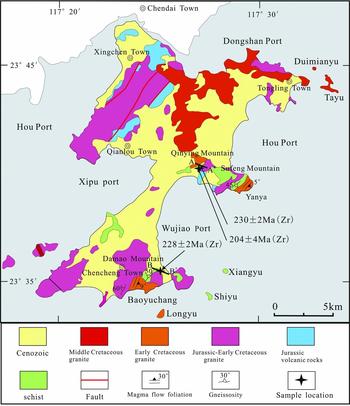
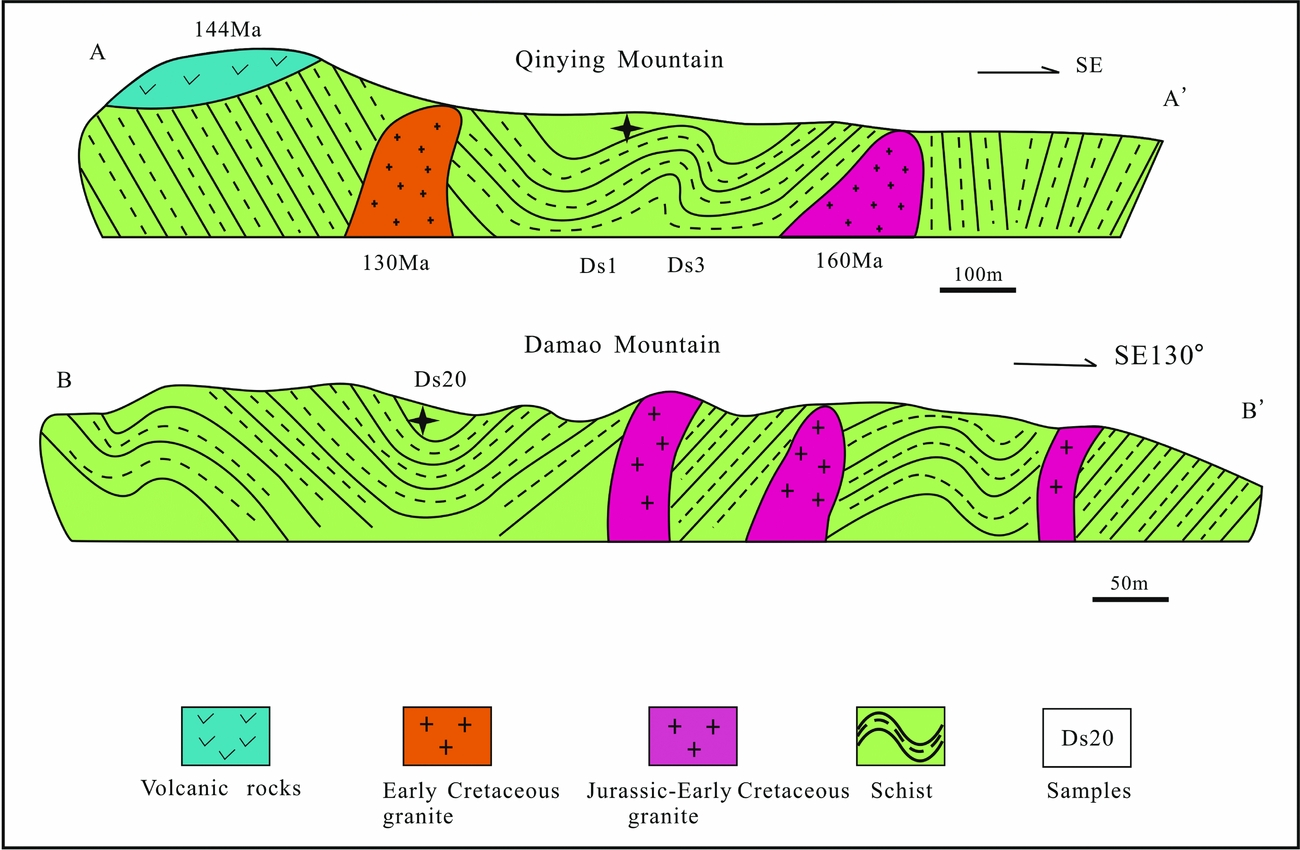
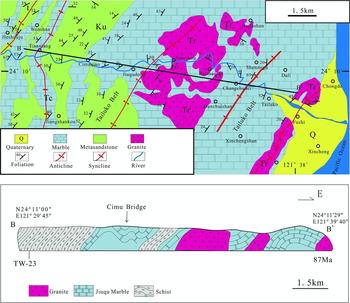
Dongshan Island, part of the Pingtan–Dongshan metamorphic belt, consists mainly of greenschist-facies metamorphic rocks with foliations that dip to the NW or SE (Fig. 2). Metasandstones, marbles and muscovite–quartz schists are exposed. The dominant minerals are quartz, feldspar and muscovite. The metasediments were intruded by Jurassic–Cretaceous granitoids (Fig. 2) and are covered by ~ 150–140 Ma volcanic rocks (this study). The magmatic intrusions yield U–Pb ages of 160 Ma, 120 Ma and 90 Ma (Zhou, Reference Zhou2012; Zhou et al. in press). NW-verging thrust and ductile shearing structures are cut by ~ 130 Ma granitic plutons and dykes (Wei et al. Reference Wei, Faure, Chen, Ji, Lin, Wang, Yan and Hou2015).
Geology of the Dongshan area along the Pingtan–Dongshan metamorphic belt. (a) Local geological map of Dongshan Island (based on the 1:250000 geological map of the Institute of Fujian Geological Survey, 2003). Age data were obtained by the zircon LA-ICP-MS dating.

(Continued) (b) Schematic cross-sections (A–A′, B–B′). The locations of the cross-sections are shown in (a).

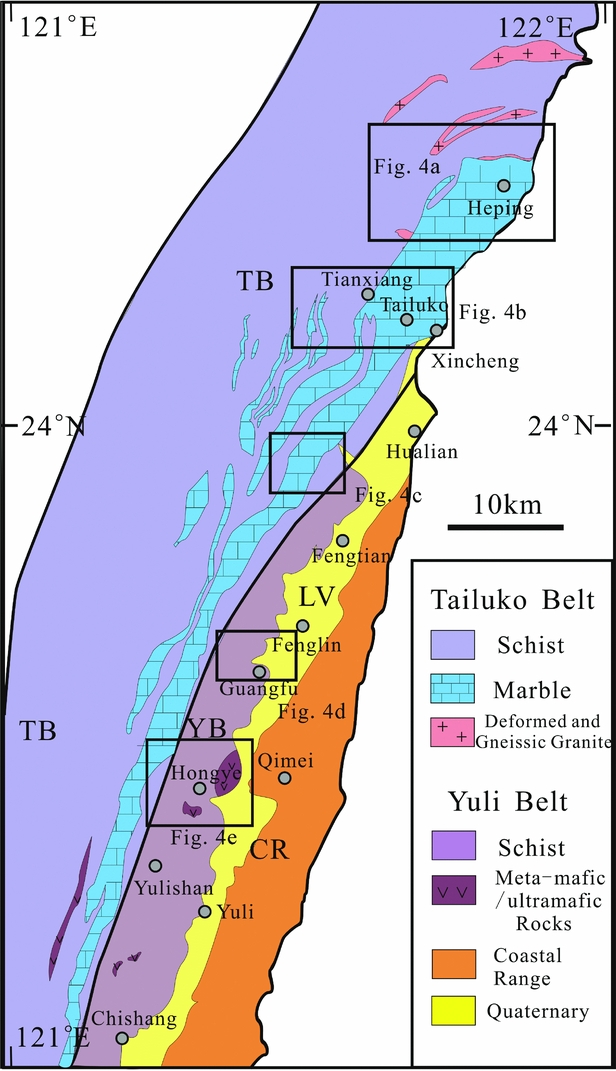
The Tailuko belt represents the eastern–central segment of the Central Range of Taiwan, and it is bound to the east by the Yuli belt (Ho, Reference Ho1986) (Figs 3, 4). The Tailuko belt consists mainly of metapelite, marble, metapsammite, greenschist and metagranitoid, together with minor amounts of amphibolite (Figs 4, 5).
Simplified geological map of metamorphic rocks in eastern Taiwan. TB – Tailuko belt; YB – Yuli belt; LV – Longitudinal Valley; CR – Coastal Range. Rectangles indicate the locations shown in Figure 4a–e.

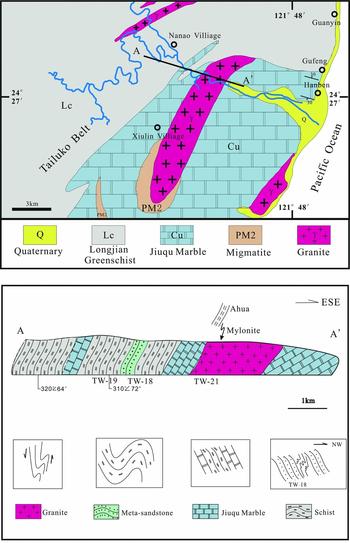
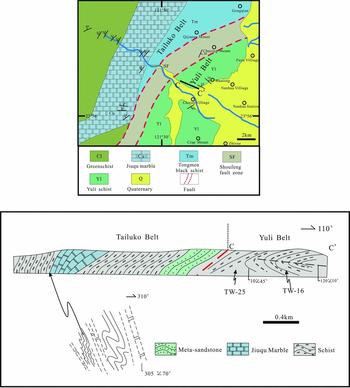
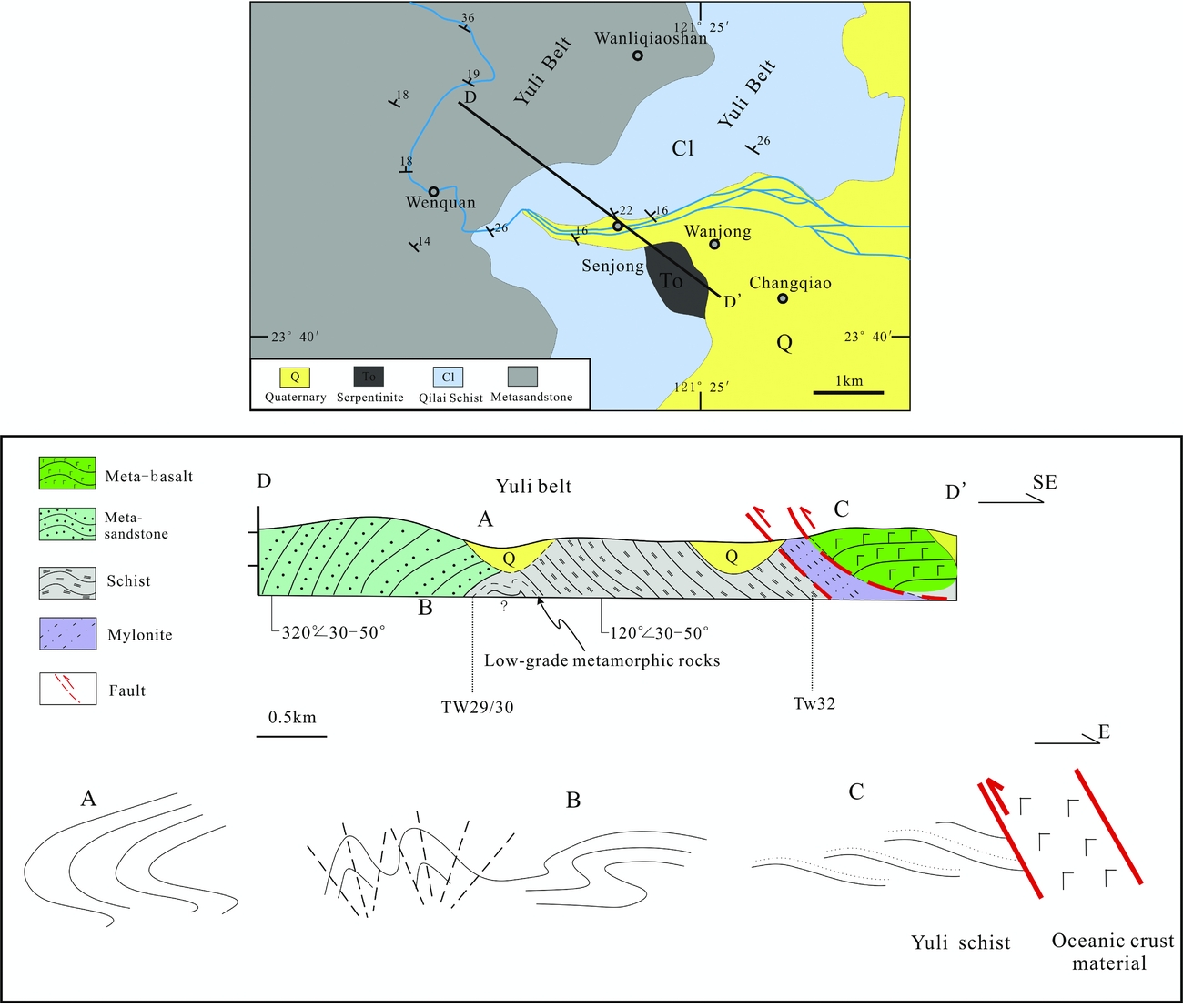
Simplified geological maps and structural cross-sections in the studied areas along the Tailuko and Yuli belts. Sample numbers and age data are from this study. (a) The Hepingxi area in the Tailuko belt (simplified from http://gis.moeacgs.gov.tw).

(Continued) (b) The Tailuko Gorge area in the Tailuko belt (modified from Lo et al. Reference Lo, Liu, Yang and Wang Lee2009).

(Continued) (c) The Muguaxi area, southwest of Hualien (simplified from http://gis.moeacgs.gov.tw).

(Continued) (d) The Wanjong area (modified from Yui et al. Reference Yui, Maki, Lan, Hirata, Chu, Kon, Yokoyama, Jahn and Ernst2012).
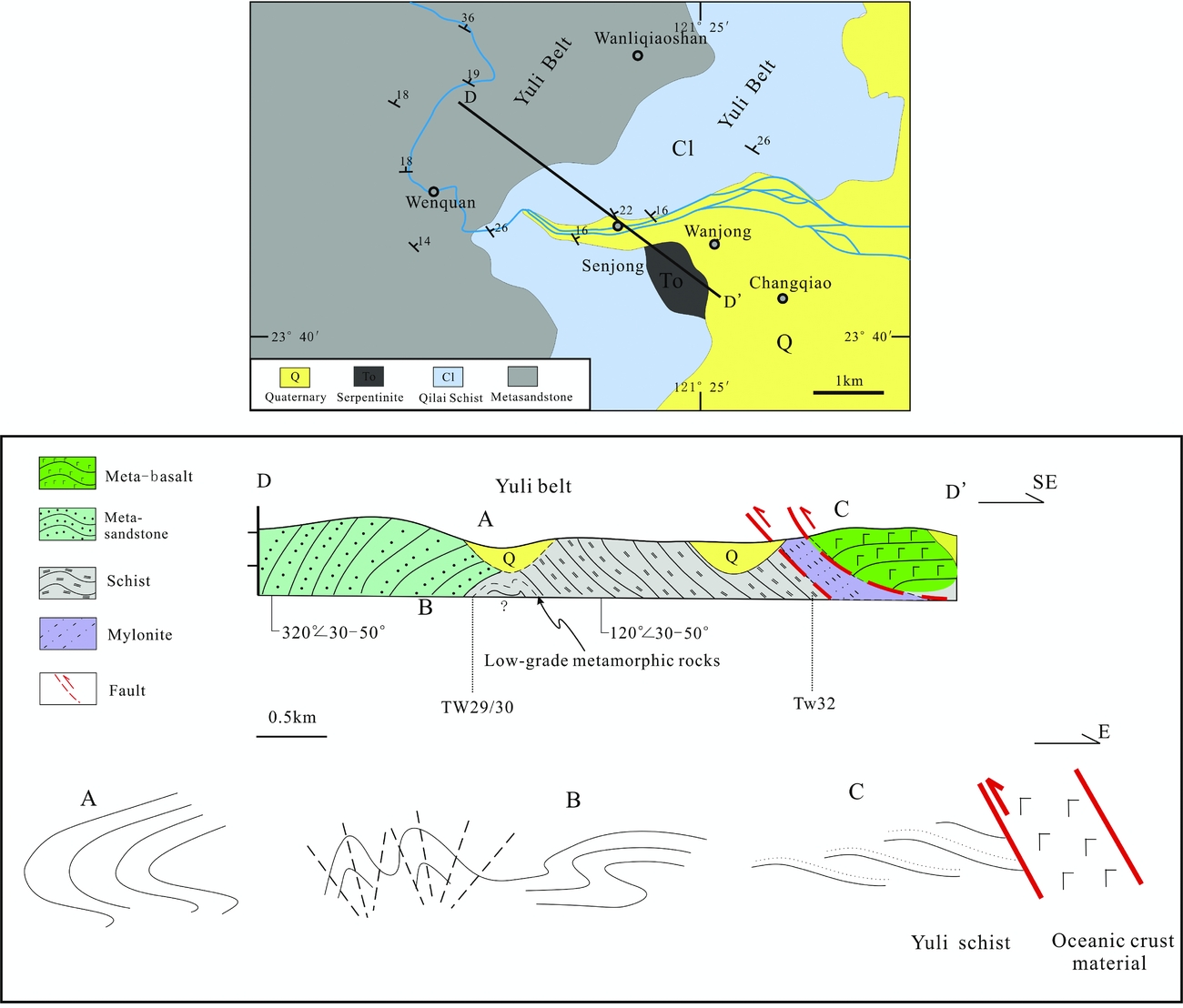
(Continued) (e) The Hongye area (modified from Yui et al. Reference Yui, Maki, Lan, Hirata, Chu, Kon, Yokoyama, Jahn and Ernst2012).

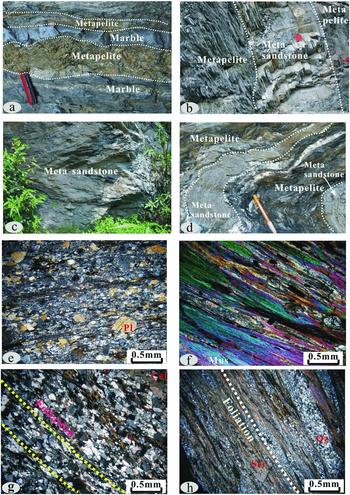
Field photographs and microphotographs showing contacts between metasandstone, metapelite and marble in the Tananao metamorphic belt, Taiwan. (a) Interlayered metapelite and marble from north of Tailuko Gorge Park. (b) Interlayered metapelite and metasandstone. The outcrop is in the Hepingxi area, where sample TW-18 was collected. (c) Deformed metasandstone and fine-layered metapelite from the Wanjong area, where sample TW-29 was collected. (d) Interlayered metapelite and metasandstone from the Muguaxi area, where sample TW-16 was collected. (e) Deformed metasandstone (the sample was collected from the metasandstone shown in (b)) containing recrystallized quartz and rotated feldspar, indicating brittle–ductile deformation. Oriented muscovite and sericite define the foliation and stretching lineation. (f) Muscovite–quartz schist that represents a deformed and metamorphosed mudstone (the sample was collected from the metapelite shown in (b)), with muscovite defining the schistosity. (g) Metamorphosed and deformed sandstone (the sample was collected from the metasandstone shown in (e). Oriented muscovite and recrystallized quartz indicate brittle–ductile deformation. (h) Deformed and metamorphosed mudstone (the sample was collected from the metapelite shown in (d)) in which sericite has grown. Mus – muscovite; Pl – plagioclase; Qz – quartz; Ser – sericite.

The Yuli belt has been ascribed to high-pressure and low-temperature metamorphism, and it consists mainly of metapelite and metapsammite, together with minor greenschist and rare mafic and serpentinite bodies (e.g. Tsai, Lizuka & Ernst, Reference Tsai, Lizuka and Ernst2013). There are virtually no metacarbonates in this belt but the presence of deep-water black shales probably indicates a deeper sea-water environment than that of the sedimentation in the Tailuko belt.
Similar field relationships of the metasediments have been observed in both the Tailuko and Yuli belts (Fig. 5), but a major difference is that the Yuli belt contains tectonic blocks dominated by metabasite, metagabbro and/or serpentinite (Fig. 4d, e). The sequences of sediments in both belts indicate a continental margin environment. All of these metasediments have undergone at least three stages of deformation, and only some of them have retained their sedimentary structures.
2.c. Rock types and analysis of the sedimentary sequences
The Yuli belt does not contain metagranitoids or metacarbonates, whereas these rocks are exposed in the Tailuko belt (Liou & Ernst, Reference Liou and Ernst1984; Fig. 3). Samples collected from the western segment of the Tailuko belt are metasandstones and metavolcanics of various grain sizes and compositions. Layers exposed along the Tailuko Gorge (within the Tailuko belt) include, from west to east, metamorphosed sandstone, mudstone, calcareous mudstone, limestone and metagranitoid (Fig. 4b). Some black schist, marble and deformed metagranitoid also occur, and some of the metasandstones retain their original sedimentary features. The metasandstones contain quartz and feldspar, and the claystone and black shale deposits have been metamorphosed to sericite–muscovite schists in both the Tailuko and Yuli belts (this study).
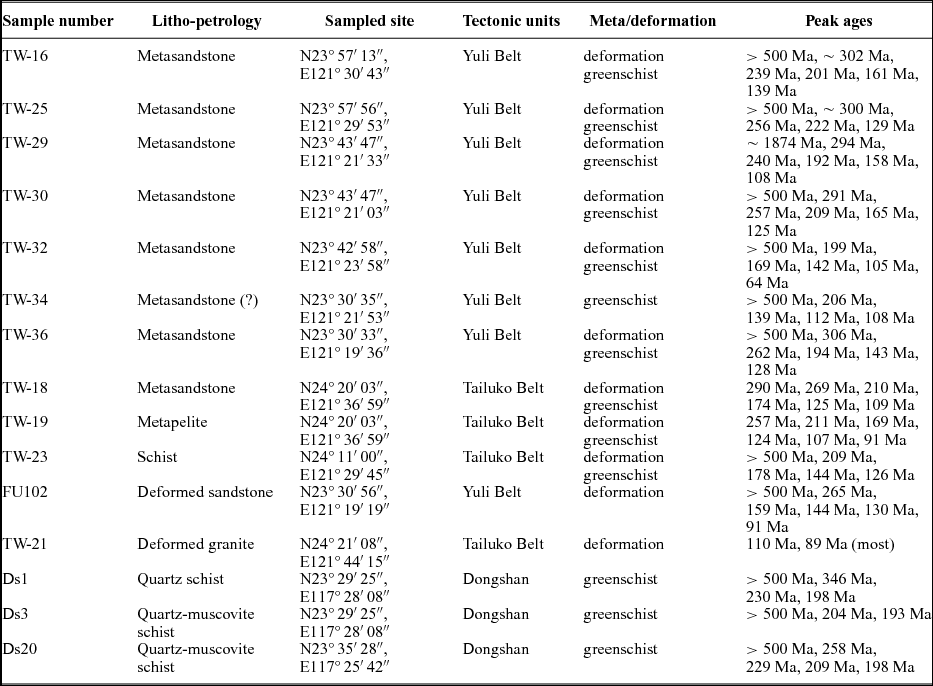
Within the Yuli belt, most of the exposed rocks are metamorphosed mudstone and black shale, whereas along the entire Tailuko belt the rocks are mainly various kinds of green-coloured schist, including metasandstone and metavolcanic rocks. Samples collected from the Yuli belt, such as TW-32, TW-34 and TW-36 (Table 1; Fig. 4), exhibit two stages of metamorphism and deformation. There is no discernible disruption in the pre-metamorphic sedimentary sequences across the so-called Shoufeng Fault, which is the boundary between the belts (Fig. 3; Ho, Reference Ho2007; this study).
Sample descriptions and detrital/igneous zircon U–Pb age data from Pingtan–Dongshan and Tananao belts

The Tailuko marble is interlayered with greenschist, siliceous schist and metasandstone (Figs 4b, 5). Upper Jurassic–Cretaceous cherts, volcanic rocks and radiolarites occur within SW Taiwan, such as in the Chaoshan Depression (Fig. 1a) (Shao et al. Reference Shao, You, Hao, Wu, Qiao and Lei2007).
2.d. Features of the metagranitoid and mylonite
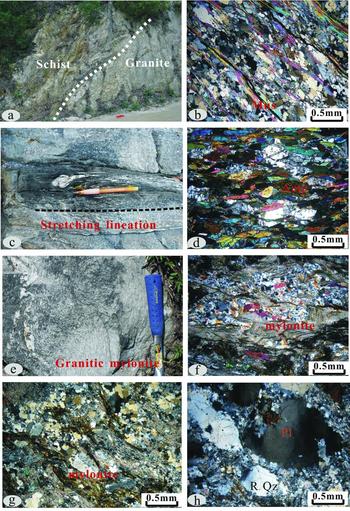
The Tailuko metamorphic belt contains metamorphosed and deformed granitoids (Fig. 6). These rocks had once been considered to represent a basement gneiss (Jahn, Martineau & Cornichet, Reference Jahn, Martineau and Cornichet1984; Jahn et al. Reference Jahn, Martineau, Peucat and Cornichet1986). The foliations in the metagranitoids have variable dips, either to the E or W, and the minerals present are quartz, plagioclase, chloritized biotite and muscovite (Fig. 6). The muscovite grains are arranged parallel to the mylonitic foliation and lineation. In Fenniaolin and the Tailuko National Park in eastern Taiwan, deformed and metamorphosed granitic plutons crop out, and they exhibit intrusive contacts with marble and metasandstone. The deformed and metamorphosed granodiorite contains amphiboles that are aligned parallel to the lineation.
Field photographs and microphotographs of metamorphosed and deformed granite and sandstone in the Pingtan–Dongshan and Tananao metamorphic belts. (a) Contact between a granitic intrusion and muscovite–quartz schist at Dongshan in the Pingtan–Dongshan metamorphic belt. (b) Metamorphosed and deformed muscovite and recrystallized quartz (collected from the outcrop shown in (a) deformed quartz–muscovite schist). (c) Deformed amphibolite (?) at Fenniaolin, north of Yilan, in eastern Taiwan. (d) Hornblende and plagioclase, oriented and parallel to each other (collected from the outcrop shown in (c)). (e) Deformed granitic mylonite from the eastern edge of Tailuko Gorge Park. (f) Recrystallized quartz and deformed sericite, muscovite and hornblende (collected from the outcrop shown in (e)). (g) Mylonitized granite from the eastern section of Tailuko Gorge Park. (h) Recrystallized quartz, feldspar and muscovite in granite–mylonite from Hepingxi, eastern Taiwan. Amp – amphibole; Mus – muscovite; Pl – plagioclase; R.Qz – recrystallized quartz.

Across the Hepingxi area, ductile shear deformation has been observed locally, with the mylonites made up of biotite, recrystallized quartz and deformed feldspar (Wang, Lin & Lo, Reference Wang, Lin and Lo1998); some of the mylonites still retain granitic textures (Fig. 6). These mylonitized granitoids exhibit intrusive relationships with the metasandstone and marble (Fig. 4a).
3. Zircon analyses: methods and results
3.a. Analytical methods
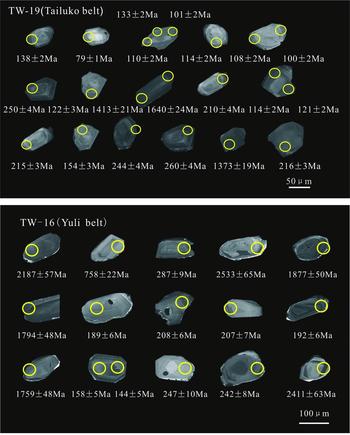
The separation of zircon grains from various rock samples was performed using conventional techniques including heavy liquids, a magnetic separator and hand-picking under a binocular microscope. The zircon grains were mounted in epoxy discs, polished to expose their centres and coated with gold. Prior to analysis, polished surfaces were photographed under transmitted and reflected light to reveal the internal structures of the zircons. Cathodoluminescence (CL) images (Fig. 7; online Supplementary Material available at http://journals.cambridge.org/geo) were obtained to identify internal structures and choose potential sites for U–Pb and Hf isotope analyses.
Typical CL images of detrital and magmatic zircons from the Tailuko and Yuli belts. Images of other zircons examined in this study can be found in the online Supplementary Material available at http://journals.cambridge.org/geo.

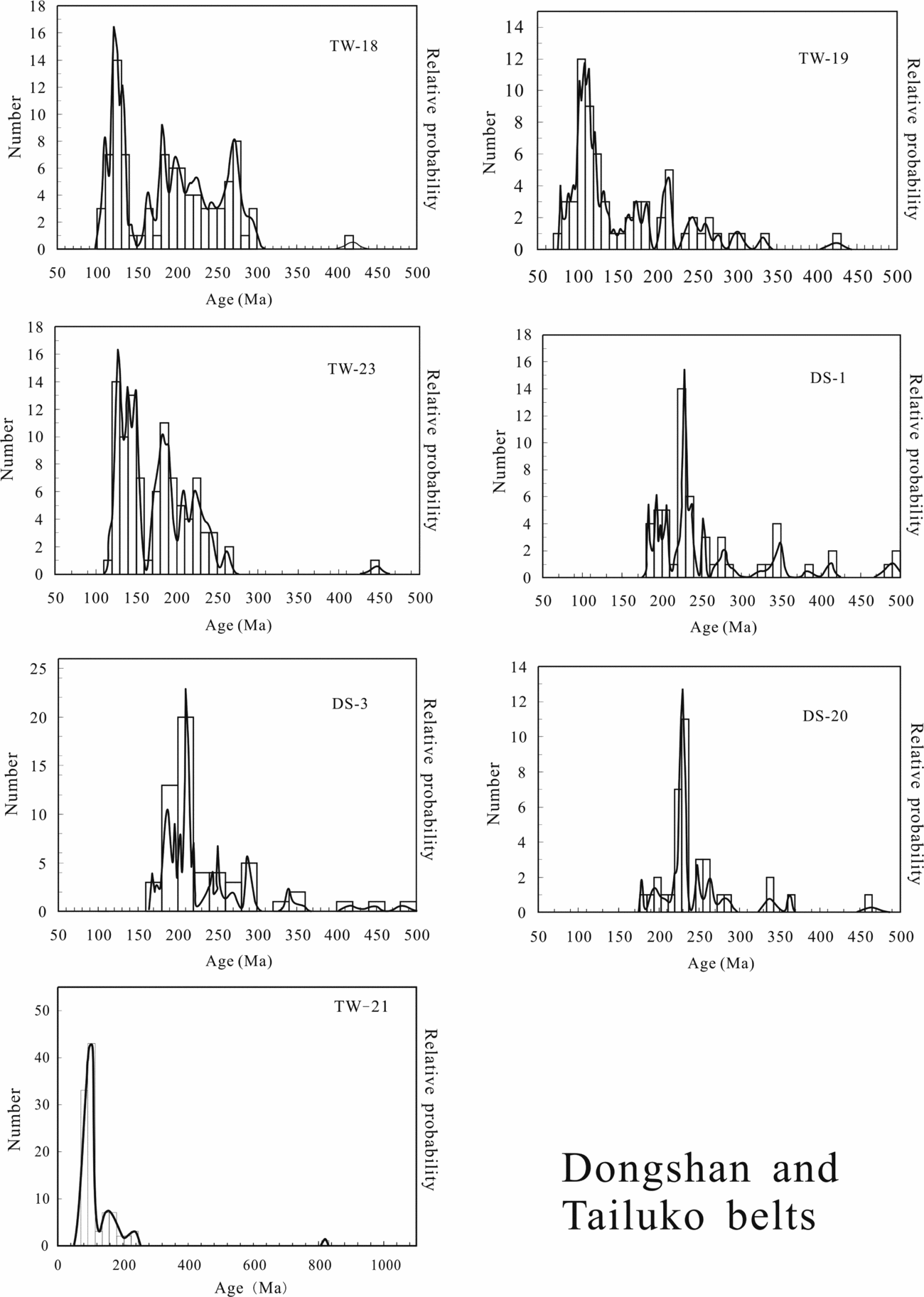
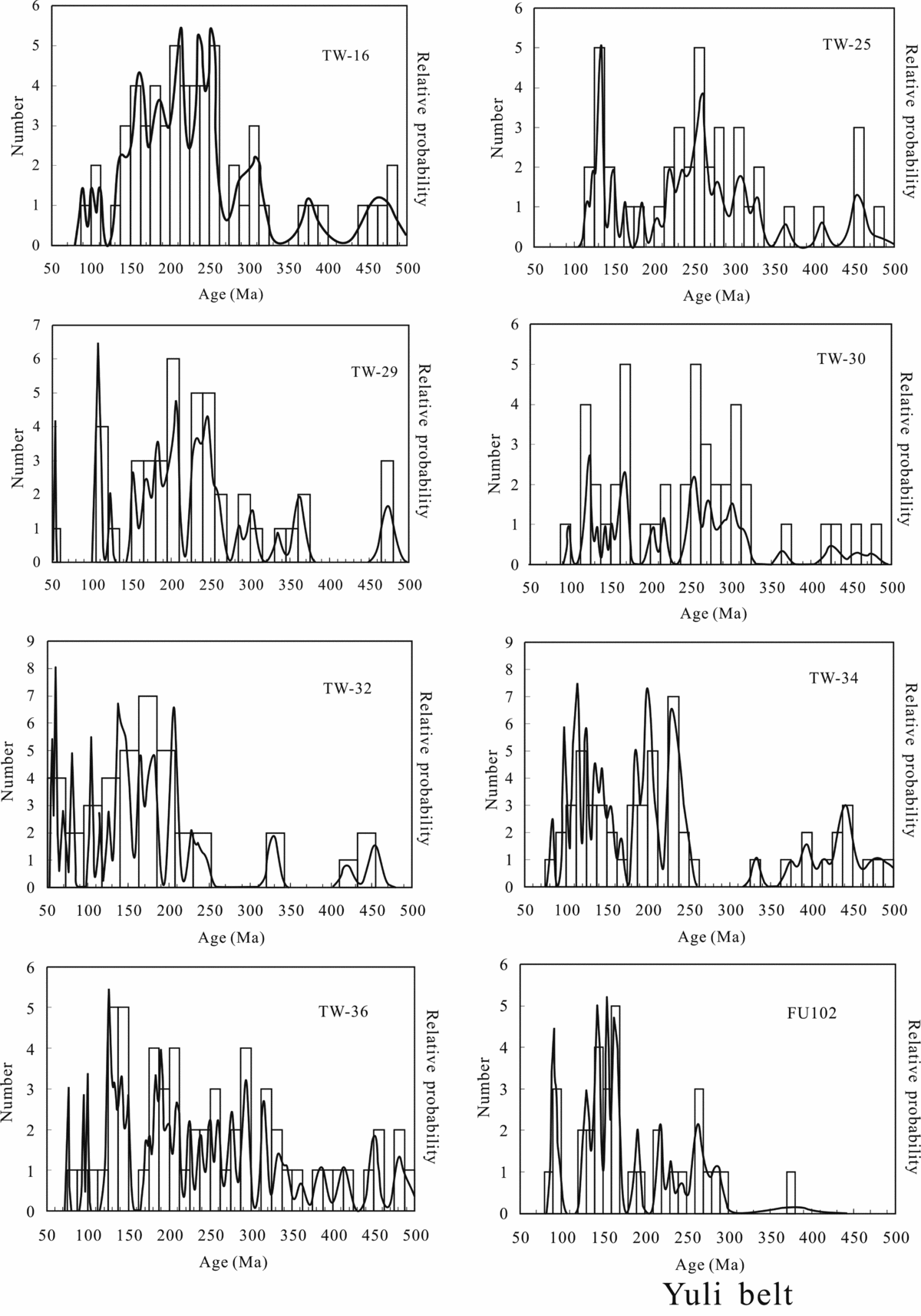
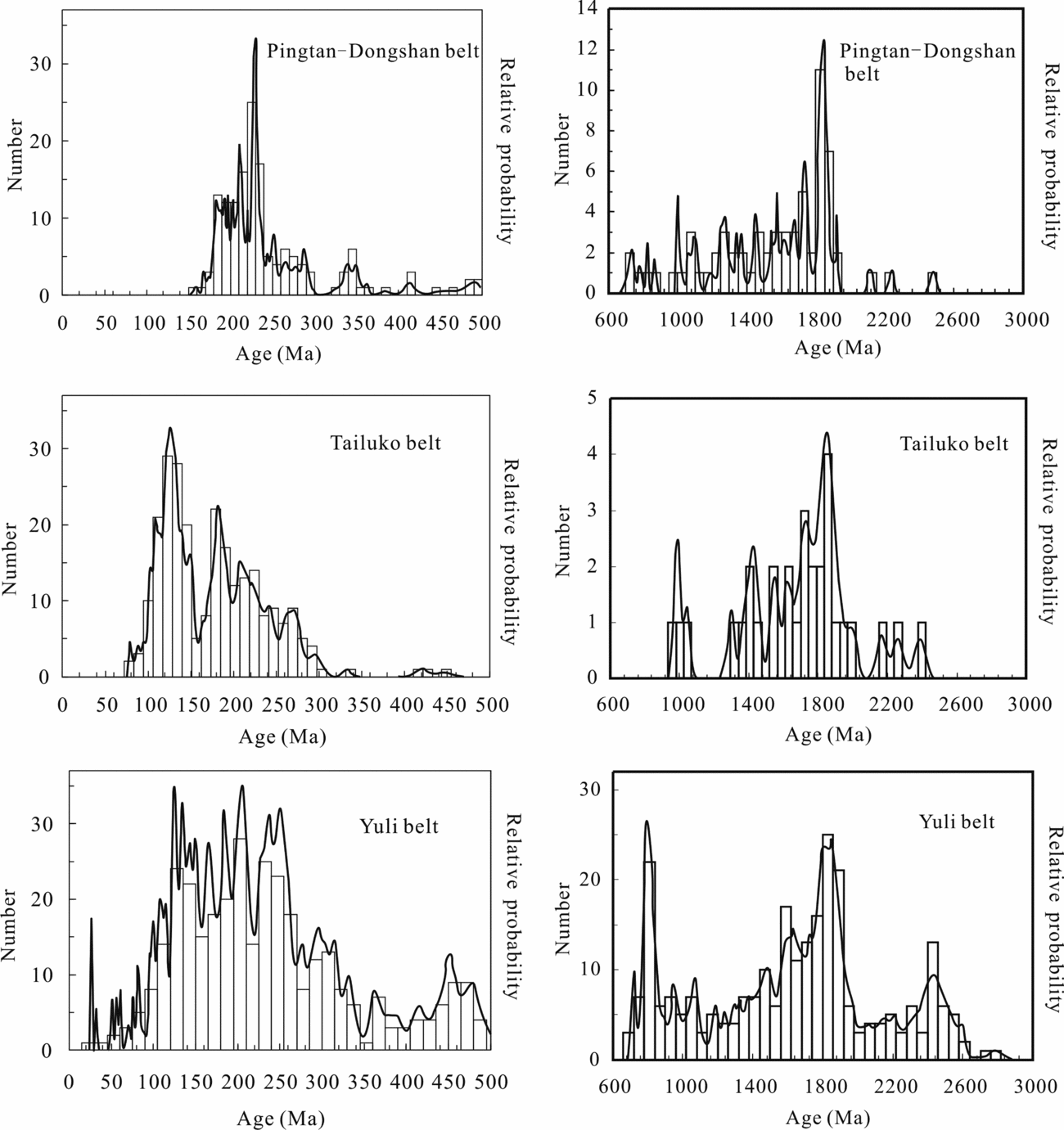
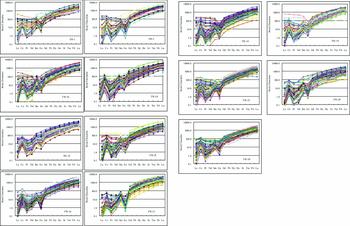
Laser ablation inductively coupled plasma mass spectrometry (LA-ICP-MS) U–Pb analyses of the zircons were performed using an Agilent 7500a ICP-MS equipped with a 193 nm laser at the State Key Laboratory of Continental Dynamics, Northwest University, Xi'an, China. Natural zircons 91500 and GJ-1 were used as external standard references for the matrix-matched calibration of U–Pb dating. NIST SRM 610 reference glasses were analysed as external standards for calibrations of the trace-element contents. The procedure was to analyse 91500, GJ-1 and NIST SRM 610 prior to analysing any of our ten samples. Details of the laboratory procedures are given in Yuan et al. (Reference Yuan, Gao, Liu, Li, Günther and Wu2004). U–Pb concordia diagrams, weighted mean calculations and probability density plots of U–Pb ages were made using Isoplot version 3.23 (Ludwig, Reference Ludwig2005). Sample descriptions are summarized in Table 1. Analytical data are provided in the online Supplementary Material Tables S1 and S2 available at http://journals.cambridge.org/geo, age plots are shown in Figure 8 and summaries of the data are provided in Figure 9. The geochemical data for the single-spot zircon analyses are plotted in Figure 10.
Plots of LA-ICP-MS data for samples of detrital and magmatic zircons from the Dongshan–Pingtan and Tailuko belts. Age data are from this study.

(Continued) Plots of LA-ICP-MS data for samples of detrital and magmatic zircons from the Yuli belt. Age data are from this study.

Summary plots of LA-ICP-MS age data for detrital zircons from the Pingtan–Dongshan, Tailuko and Yuli belts. Age data are from this study. On the figure, 0–500 Ma and 600–3000 Ma age data are plotted separately.

REE geochemical characteristics obtained from single zircon spots for representative analysed samples. Samples are from the Pingtan–Dongshan, Tailuko and Yuli belts.

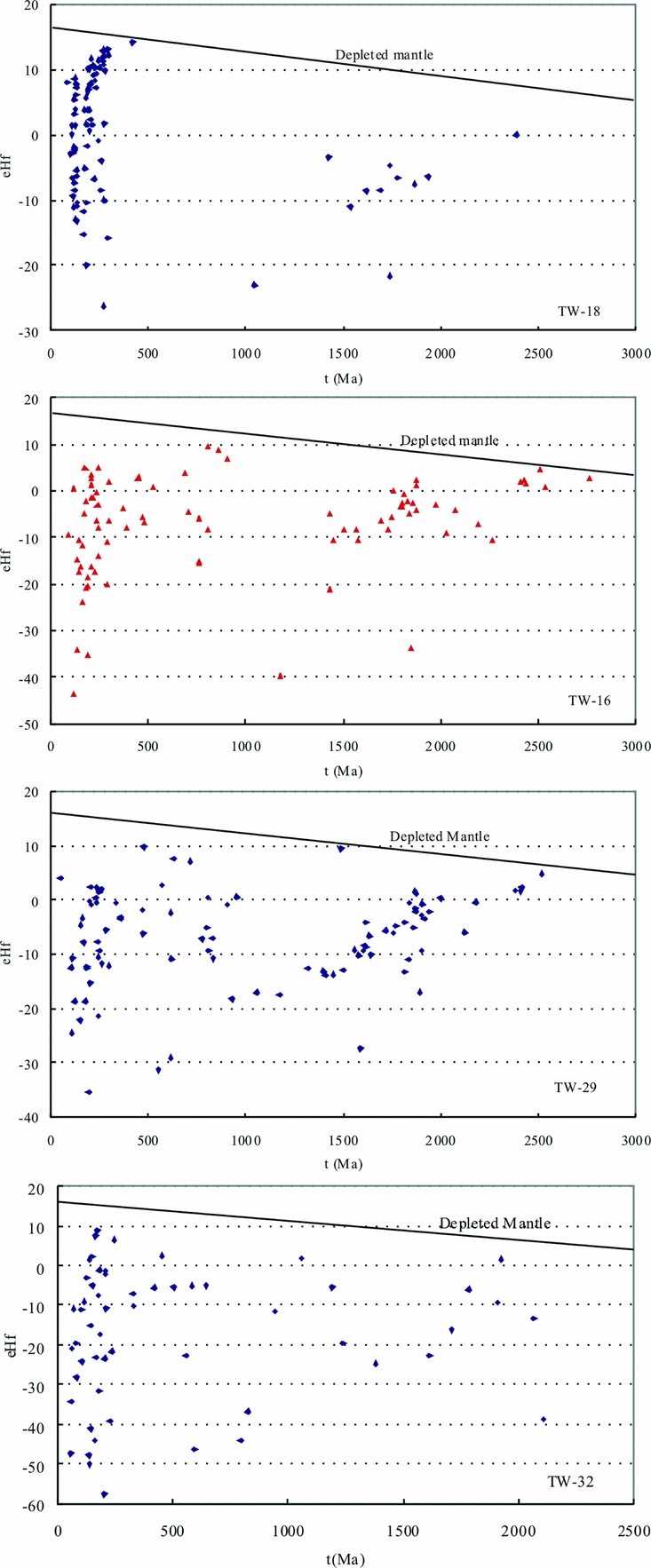
In situ analyses of Hf isotope ratios in the zircons were conducted using a Neptune Plus multi-collector inductively coupled mass spectrometer (MC-ICP-MS) in combination with a Geolas 2005 excimer ArF laser ablation system at the State Key Laboratory of Geological Processes and Mineral Resources, China University of Geosciences, Wuhan, China. All data for the zircons were acquired in single-spot ablation mode with a spot size of 44 μm. Each measurement consisted of acquisition of the background signal for 20 s, followed by acquisition of the ablation signal for 50 s. The details of the operating conditions for the laser ablation system, the MC-ICP-MS instrument and the analytical methods are similar to those described by Hu et al. (Reference Hu, Liu, Gao, Liu, Yang, Zhang, Tong, Lin, Zong, Li, Chen, Zhou and Yang2012). Off-line selection and integration of analytical signals, and mass bias calibrations were performed using ICPMSDataCal (Liu et al. Reference Liu, Gao, Hu, Gao, Zong and Wang2010). The analysed results are presented in online Supplementary Material Table S3 available at http://journals.cambridge.org/geo, and Hf analytical plots are shown in Figures 11 and 12.
Plots of Hf isotope data of detrital zircons. The plots show Hf(t) v. t (Ma) for samples TW-16, TW-29 and TW-32 (Yuli belt) and TW-18 (Tailuko belt).

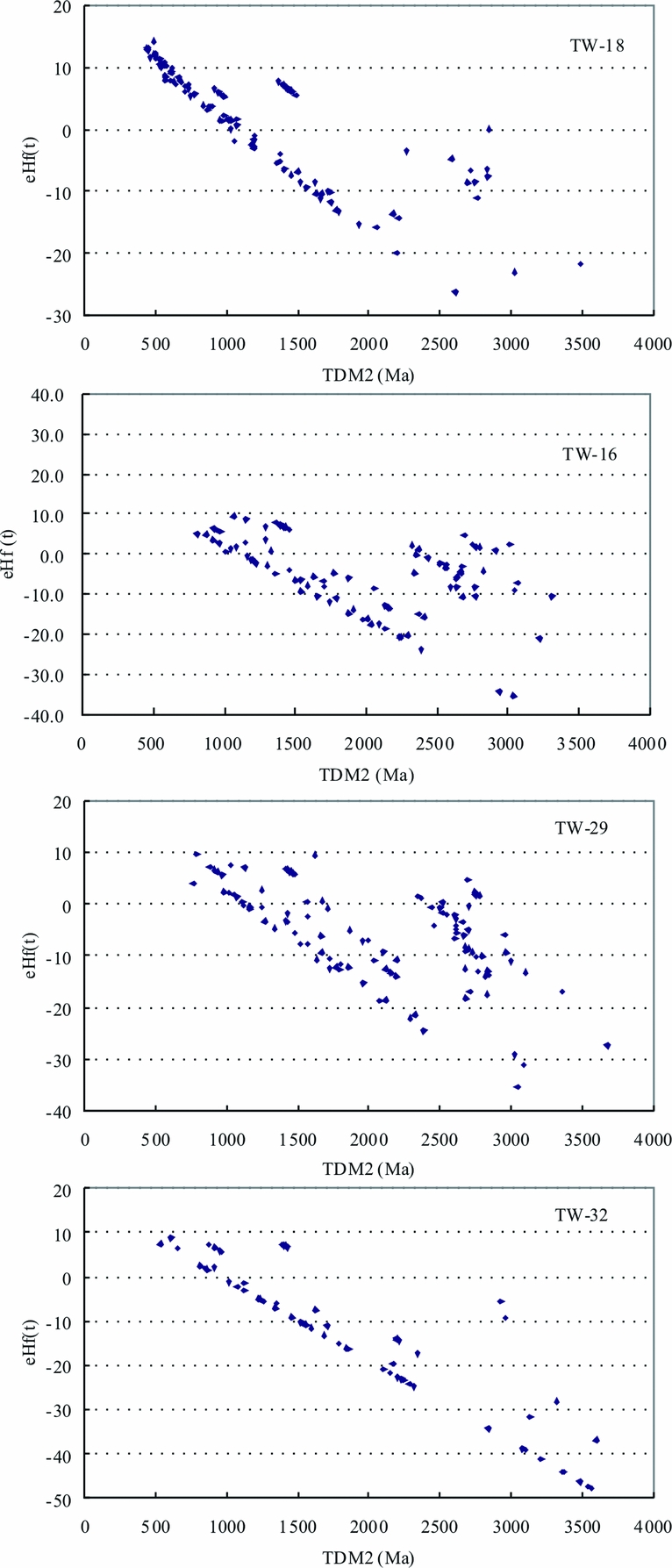
Plots of Hf isotope data of detrital zircons. The plots show Hf(t) v. TDM2 ages (Ma) for samples TW-16, TW-29 and TW-32 (Yuli belt) and TW-18 (Tailuko belt).

3.b. Cathodoluminescence images of zircons collected from the sedimentary sequences
CL images show three types of zircon from the Pingtan–Dongshan belt: detrital, magmatic and metamorphic (Fig. 7; online Supplementary Material available at http://journals.cambridge.org/geo). Most grains show magmatic textures. Along the Tailuko belt of Taiwan, many zircon grains are from igneous sources, as in sample TW-23, and magmatic zircons are also present within the Yuli belt. The fine-grained zircons lack obvious core–rim structures, but the larger grains have distinct cores and rims, and the rims show oscillatory zoning in CL images, indicating a magmatic origin. The distal Yuli belt appears to contain finer-grained, more rounded zircons compared to the proximal Tailuko belt's more euhedral grains, meaning further transport distances. The CL images do not show variations in Pb or Th, but depletion in U is apparent as white–grey areas in the images.
In terms of grain sizes and CL images, there are few obvious differences between the zircons of the Tailuko and Yuli belts. The new dating and microtextural analyses of samples TW-16, TW-25, TW-29 and TW-30, from what was designated as the Yuli belt, show that they are similar to samples from the Tailuko belt.
3.c. Single-spot zircon ages
With regard to the samples from the Pingtan–Dongshan belt, five groups of zircon 206Pb–238U ages have been identified: ~ 2500–1800 Ma, ~ 300 Ma, ~ 220 Ma and, towards the east, ~ 190 Ma. The ~ 2500–1800 Ma age group represents the cores of grains, and the other age groups correspond to the rims.
Within the Tailuko belt, five samples from north to south and from east to west show five groups of ages, four of which (~ 120–110 Ma, ~ 160–150 Ma, 220–200 Ma and 300–290 Ma) are derived from oscillatory-zoned primary magmatic zircons, while the other (~2500–1800 Ma) is derived from inherited rounded cores. The age clusters are similar from east to west, but from north to south there is an increase in the number of older ages (Figs 8, 10).
Seven samples collected from west to east in the Yuli belt yielded similar age clusters of ~ 2400–1800 Ma, ~ 300 Ma, 240–210 Ma, 140–130 Ma and ~ 110 Ma, but four spots gave ages younger than 90 Ma and around 25 Ma, and five spots gave ages of 65–60 Ma for zircons from the footwall of the Wanjong tectonic sheets, which are also part of the Yuli belt (Figs 8, 10).
Some zircon grains collected from the Tailuko belt exhibit magmatic oscillatory zoning in CL images, and may represent either in situ crystals from a volcanic tuff, or rapid erosion and rapid transport of crystals from nearby mountains. The latter is more likely because of adjacent continental orogenic belts, but the presence of tuff is also feasible because there are numerous 170–160 Ma volcanic rocks and granitic plutons along the southeastern continental margin of China. In addition, there are some zircons with ages of 160 Ma in the 120–90 Ma plutons of granite and diorite. In SW Taiwan, in the Chaoshan Depression (Fig. 1), a drillhole intersected Late Jurassic volcanic rocks (Shao et al. Reference Shao, You, Hao, Wu, Qiao and Lei2007).
All the metasedimentary samples from the Tailuko and Yuli belts yielded similar age clusters. Samples TW-16, TW-29/30 and TW-25 were collected from the Yuli belt, and they yield similar age clusters to samples from the Tailuko belt, such as TW-18/19 and TW-23. Samples TW-36, TW-32 and TW-34 from the Yuli belt yielded similar age clusters (Fig. 9).
3.d. Zircon trace elements and Hf isotopes
Comparing the rare earth element (REE) and trace-element distributions within the zircon grains (Fig. 10; online Supplementary Material Table S3 available at http://journals.cambridge.org/geo), the REE patterns of the analysed samples are similar to those of igneous and metamorphic zircons (e.g. Heaman, Bowins & Crocket, Reference Heaman, Bowins and Crocket1990; Hoskin & Ireland, Reference Hoskin and Ireland2000; Hoskin & Schaltegger, Reference Hoskin, Schaltegger, Hanchar and Hoskin2003). The REE patterns of the euhedral magmatic zircons show steeply rising slopes from the light rare earth elements (LREEs) to the heavy rare earth elements (HREEs) with positive Ce and Sm anomalies and negative Pr and Eu anomalies.
In situ zircon Hf isotopic data for four samples (TW-16, TW-29 and TW-32 from the Yuli belt; TW-18 from the Tailuko belt) are listed in online Supplementary Material Table S3 available at http://journals.cambridge.org/geo and plotted on Figure 11. For zircon grains from the Yuli belt (samples TW-16 and TW-32), the > 500 Ma zircons have variable Hf isotopic compositions with εHf(t) values of –39.7 to +9.5, and the ~ 300 Ma zircons have εHf(t) values of –20.3 to +1.8 (Fig. 12). The 240–210 Ma zircons have variable Hf isotopic compositions with εHf(t) values of –20.6 to +5.1, but all the 140–130 Ma zircons have negative εHf(t) values of –35.4 to –12.0. The other Jurassic zircons are dominated by negative εHf(t) values.
For zircon grains from the Tailuko belt (sample TW-18) and the Yuli belt (sample TW-29), the > 500 Ma zircons have negative εHf(t) values of –23.0 to 0. The 300–290 Ma zircons have variable Hf isotopic compositions with εHf(t) values of –26.3 to +13.2, and the 220–200 Ma zircons have mostly positive εHf(t) values, with just a few negative εHf(t) values. The 160–150 Ma zircons have εHf(t) values of –20.0 to +5.6. The other Jurassic–Cretaceous 120–110 Ma zircons have εHf(t) values of –13.2 to +8.6.
The Hf isotope model ages (TDM2) of samples TW-18 from the Tailuko belt and TW-29 from the Yuli belt are ~ 236–3500 Ma and ~ 765–3900 Ma, respectively (Fig. 12). The Hf isotope model ages of samples TW-16 and TW-32, collected from the Yuli belt, are ~ 805–4000 Ma and ~ 530–4000 Ma, respectively (Fig. 12).
3.e. Interpretation of zircon U–Pb ages and Hf isotope data for the Tananao metamorphic rocks
Observations of the metasedimentary rocks in the field, together with an analysis of detrital zircon age clusters and their Hf isotopes, are best able to constrain the sources of the sedimentary rocks, the upper limits of their sedimentary ages and the probable environment of sedimentation (Hanchar & Hoskin, Reference Hanchar and Hoskin2003; Fedo, Surcombe & Rainbird, Reference Fedo, Surcombe, Rainbird, Hanchar and Hoskin2003; Anfinson et al. Reference Anfinson, Leier, Embry and Dewing2012). Samples TW-18 and TW-23 from the Tailuko belt are metasandstones containing quartz, feldspar, biotite and basaltic lithic fragments. Sample TW-19 is a metapelite collected from near sample TW-18 (Fig. 5a, b), and it contains abundant metamorphic muscovite. Samples TW-23 and TW-18 are associated in the field with marbles that are interlayered with the metapelite and metasandstone (Fig. 5).
Zircon samples from the Pingtan–Dongshan (SE China) and Tananao (Taiwan) belts show different age clusters from ~ 2500 Ma to ~ 65 Ma (Fig. 9). The detrital zircons from the Tailuko and Yuli belts lack ages of 90–88 Ma, when the granitic intrusions were subjected to metamorphism and deformation. Several clusters of zircon ages represent a variety of sources: (1) ages of 175–160 Ma, from several areas, represent magmatic zircons from nearby sources; (2) ages older than 200 Ma, including many in the range 240–200 Ma, are similar to zircon ages in the Pingtan–Dongshan area, and these zircons are likely to have been derived from continental areas in South China (this study); (3) ages of 140–110 Ma also indicate an origin from the continental margin of southeastern China, where there are numerous granites and volcanic rocks of this age (140 Ma volcanic rocks, this study; granitic plutons, Li & Li, Reference Li and Li2007); (4) older ages of numerous zircons in the Yuli and Tailuko belts are similar to zircon ages in the Pingtan–Dongshan area (this study), and indicate the transport of sediments along the continental margin; and (5) ages of 65–60 Ma and 29–25 Ma in rocks from the Yuli belt represent basins related to the formation of marginal seas (Wang Lee et al. Reference Wang Lee, Chen, Wang, Yui, Lu and Lo1985; Yang & Wang, Reference Yang and Wang1985; Wang Lee & Wang, Reference Wang Lee and Wang1987; Chen, Lee & Shinjo, Reference Chen, Li and Shinjo2008).
All the εHf(t) values of the Yuli and Tailuko belt zircons lie under the line of depleted mantle (Fig. 12), with a very wide range of values. Older zircon TDM2 ages of ~ 500 Ma to ~ 4000 Ma suggest that the primary sedimentary and volcanic sources of the metamorphic rocks in the Tailuko and Yuli belts were formed by partial melting of an old crust (Stevenson & Patchett, Reference Stevenson and Patchett1990; Wu et al. Reference Wu, Li, Zheng and Gao2007). The data suggest that the Yuli belt was not separated from the Tailuko belt by the subduction zone at which the west Pacific Plate was subducted (Yui et al. Reference Yui, Maki, Lan, Hirata, Chu, Kon, Yokoyama, Jahn and Ernst2012). The Shoufeng Fault, juxtaposing the inboard marble + granite Tailuko belt against the outboard Yuli metaperidotite + blueschist terrane is not a fossil plate boundary because the detrital igneous zircons were mostly derived from volcanic–plutonic (arc?) rocks exposed in SE China.
According to Dickinson & Gehrels (Reference Dickinson and Gehrels2009), zircon populations that are characterized by rounded to sub-rounded grains (Fig. 7; online Supplementary Material available at http://journals.cambridge.org/geo) might represent a multitude of source rocks. Moreover, the different zircon age clusters identified in this study, together with the abrasion of grains, indicate that the transport histories of the individual zircon grains might similarly be highly variable. Thus, most of the detrital zircons have features that represent sedimentary reworking. Some detrital zircon grains have pristine magmatic features that indicate derivation from a tuff or by very rapid erosion and transportation from a nearby igneous source. The ages of the zircon cores do not provide good indications of the source because they were probably derived from multiple sources.
4. Discussion
4.a. Probable timing of sedimentation of the three metamorphic belts
The Tailuko marbles are interlayered with the metapsammites and metapelites which have ages younger than 130–120 Ma (such as samples TW-18, TW-19 and TW-23; Figs 8, 10). Moreover, some of these interlayered metapsammites have relatively young detrital zircon ages of 110 Ma (Fig. 8). The protolithic limestones must therefore be of a similar depositional age, and not Permian or older, as previously thought (Jahn, Martineau & Cornichet, Reference Jahn, Martineau and Cornichet1984; Jahn, Chi & Yui, Reference Jahn, Chi and Yui1992; Jahn & Cuvellier, Reference Jahn and Cuvellier1994). With regard to the earlier reports of Permian fossils (Yen, Reference Yen1953), the later discovery of Cretaceous fossils (Chen, Reference Chen1989) questions the presence of Palaeozoic sediments. Field relationships show that the marbles and metapsammites were intruded by 110–88 Ma granitic plutons (Yui et al. Reference Yui, Maki, Lan, Hirata, Chu, Kon, Yokoyama, Jahn and Ernst2012; this study).
In the zircon U–Pb age system, the loss of Pb during metamorphism and the younger limits of sedimentation are fundamental issues (Hanchar & Hoskin, Reference Hanchar and Hoskin2003), and the youngest zircon ages can constrain the maximum age of sedimentation. Generally speaking, in SE China there has been no regional sedimentation or metamorphism since ~ 160 Ma, except to the east of the strike-slip Changle–Nanao Fault. The younger ages of ~ 210–198 Ma in the Pingtan–Dongshan belt constrain the maximum age of the deformation of the Yanshanian event, but this event did not disturb the zircon ages, as it only resulted in a low-grade greenschist-facies metamorphism.
CL images (Fig. 7; online Supplementary Material available at http://journals.cambridge.org/geo) of detrital zircons from the Tailuko and Yuli belts, especially the Tailuko belt, indicate the presence of numerous relatively pristine magmatic zircons, suggesting that they were derived by rapid erosion and transportation. The detrital zircons in the Tailuko and Pingtan–Dongshan metamorphic belts were not transported over long distances, but were derived rapidly from nearby sources. However, the Yuli belt contains some small, eroded and rounded zircon grains, indicating they have undergone significant transportation before re-deposition (e.g. Dickinson & Gehrels, Reference Dickinson and Gehrels2009). All of these metasedimentary rocks might have been derived from continental-shelf shallow-marine sediments.
Much of the Pingtan–Dongshan belt contains zircons with ages that range from ~ 2500 Ma to ~ 220 Ma, but younger ages of ~ 190 Ma appear towards the east with younging of the sequence. Even in the younger sequences there are still some zircon ages that are older than ~ 1800 Ma, but the data indicate that the sediments are younger than ~ 190 Ma. The Tailuko and Yuli belts also contain zircons with ages of > 500 Ma, and some are as old as ~ 2400–1700 Ma; however, they also contain zircons with ages of ~ 220–200 Ma, and some that are younger than in the Pingtan–Dongshan belt (e.g. 160 Ma, 130 Ma and 110 Ma), and the age clusters are distributed from west to east in four groups, and the age clusters young from west to east. Therefore, the Tailuko and Yuli belts, similar to the Pingtan–Dongshan belt, have a variety of detrital zircon sources that are older than ~ 190 Ma.
The younger ages or age clusters of the detrital zircon grains show that the upper limit of sedimentation must post-date middle–late Mesozoic time, and the age limit youngs from west to east, from Early Jurassic along the margin of the mainland to Middle–Late Cretaceous in the Taiwan region. The present data indicate that regional deformation events and related metamorphism took place at different times in different places, but the general pattern is one of younging to the east, so these events took place at ~ 165–88 Ma on the mainland and as late as 88–80 Ma in the Taiwan region.
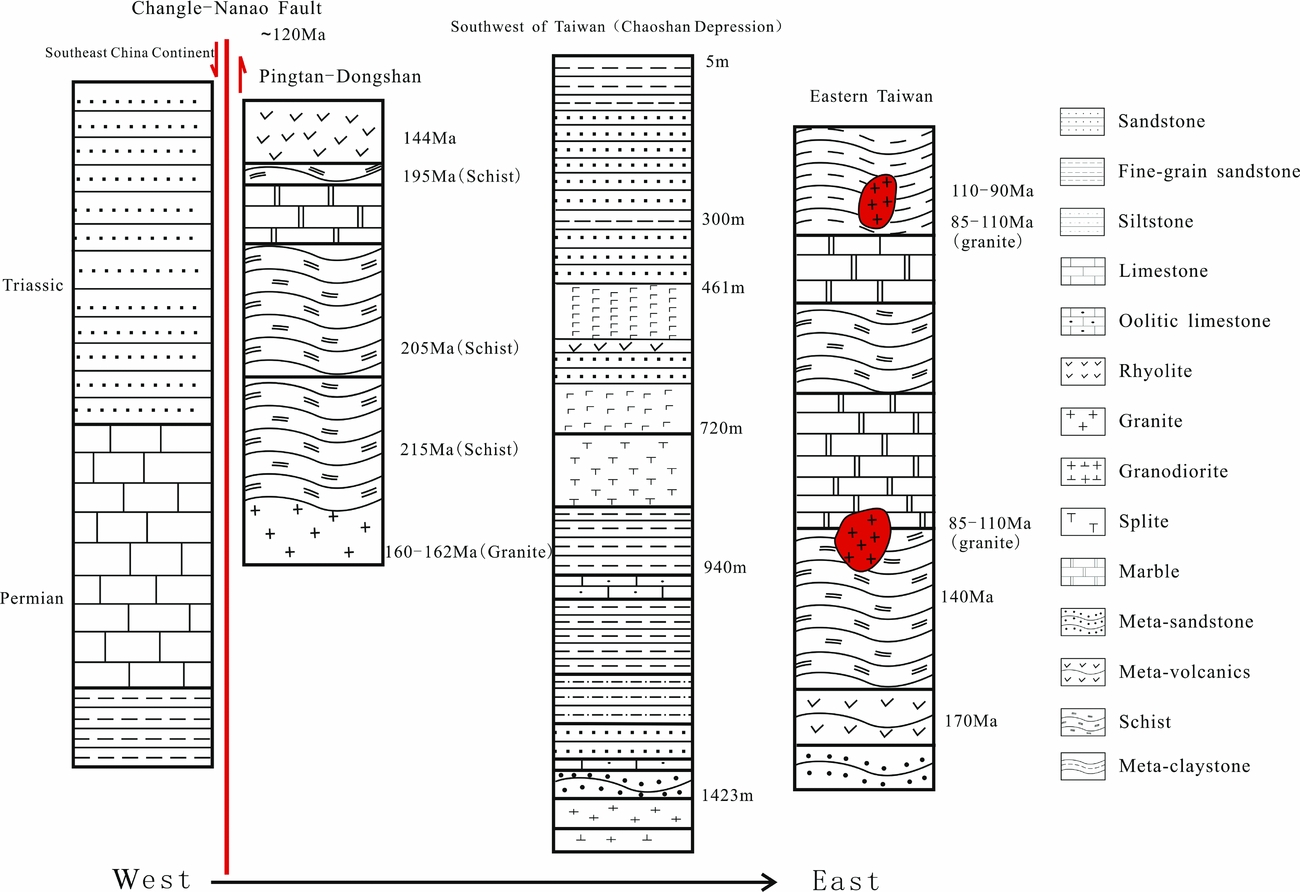
Combined with the data from Yui et al. (Reference Yui, Maki, Lan, Hirata, Chu, Kon, Yokoyama, Jahn and Ernst2012), the younging of our age data from west to east indicates sedimentation took place from ~ 220 Ma to ~ 110–90 Ma (Figs 8, 9, 13). The sedimentary sequences in the Tailuko and Yuli belts have similar profiles, and the zircons (Fig. 10) have similar trace-element and Hf isotope characteristics.
Summary of interpreted sedimentary profiles and metamorphic sequences for the margin of the Chinese mainland and eastern Taiwan. The sedimentary profile for the Chaoshan Depression is based on Shao et al. (Reference Shao, You, Hao, Wu, Qiao and Lei2007). Age data are from this study.

Hence, based on our research, and combined with previous data, we draw the following three conclusions. (1) There is continuity in the protolithic sedimentary sequences of the Tailuko and Yuli belts. From west to east in the Taiwan metamorphic belt, the Upper Jurassic to Upper Cretaceous sedimentary sequence is continuous, and it represents an active continental margin (Fig. 13). (2) Water depths varied from shallow to deep, and there were contemporaneous volcanic eruptions. From the bottom to the top of the sedimentary sequences, the rocks vary from sandstone, mudstone and limestone to black shale (Fig. 13). The intense magmatic activity and the large amounts of volcaniclastic material produced were related to the tectonic and thermal evolution of continental SE China, and granitic rocks were intruded at c. 160 Ma, 120–110 Ma and 90–80 Ma (Li & Li, Reference Li and Li2007; Zhou, Reference Zhou2012). (3) The proposed Jurassic–Cretaceous ages of metasediments in the Tailuko–Yuli belt (Yui et al. Reference Yui, Maki, Lan, Hirata, Chu, Kon, Yokoyama, Jahn and Ernst2012) are confirmed by the present results.
4.b. Where is the basement gneiss?
From this study, we know that the so-called Tananao crystalline basement includes gneiss, schist and marble (Figs 4–6), and that the orthogneiss (granitic gneiss) contains quartz, biotite, plagioclase, muscovite, chlorite and garnet, with relics of granitic textures and local evidence of ductile shear deformation (Fig. 6). The ‘so-called crystalline gneissosity’ is similar to the schistosity in the surrounding schists, and parallel to the mylonitic foliations, and migmatization occurred along the contact between the granitoids and country rocks. All these rocks are strongly deformed, and locally mylonitized (Fig. 6) (Wang, Lin & Lo, Reference Wang, Lin and Lo1998).
Metamorphism in the Tailuko and Yuli belts was accompanied by deformation, including shortening, and our work now shows that the previous designation of the orthogneiss as basement gneiss (Jahn, Martineau & Cornichet, Reference Jahn, Martineau and Cornichet1984; Jahn et al. Reference Jahn, Martineau, Peucat and Cornichet1986) is inappropriate. In fact, these gneissic rocks represent the syntectonically deformed metagranitoids with magmatic crystallization ages of 110–88 Ma (e.g. sample TW-21), and the contemporaneous magmatic and tectonic activity resulted in the development of mylonites and poly-deformed schists (Fig. 6).
Indeed, it is now apparent that the SE China continental margin lacks a gneissic basement, and the metasediments in the Pingtan–Dongshan metamorphic belt were originally interlayered limestones and sandstones. In the Dongshan region of Fujian Province, the so-called crystalline basement (Bureau of Geology and Mineral Resources of Fujian Province, 1985) is composed of quartz–mica schist and two-mica schist (Fig. 6a, b), but detrital zircon ages of 210–190 Ma clearly indicate these rocks were formed during Late Triassic – Early Jurassic time. These rocks contain marble and various fine-grained layers of metapsammite and metapelite, with sedimentary sequences. They were intruded by 160–110 Ma granites and covered by 146–110 Ma volcanic rocks (Fig. 2), but the volcanic and granitic rocks have not been metamorphosed, and the age data therefore indicate that the metamorphism and deformation of the continental margin took place during the period 200–160 Ma. We conclude that there is no pre-Mesozoic crystalline basement exposed in the eastern marginal region of the Pingtan–Dongshan belt, and the rocks at Dongshan previously labelled basement gneiss are simply granites (and diorites) with ages of 110–90 Ma and ~ 160 Ma that were intensively deformed so as to resemble a basement gneiss.
4.c. Primary sources and original sedimentary environments of the metamorphic belts
Most previous workers had suggested that the Yuli schist represents a Mesozoic orogen and locally a late Miocene subduction-zone mélange (Wang Lee & Wang, Reference Wang Lee and Wang1987; Yui & Lo, Reference Yui and Lo1989; Yui, Lu & Lo, Reference Yui, Lu, Lo, Aubouin and Bourgois1990; Yui, Wu & Jahn, Reference Yui, Wu and Jahn1990; Yui et al. Reference Yui, Okamoto, Usuki, Lan, Chu and Liou2009, Reference Yui, Maki, Lan, Hirata, Chu, Kon, Yokoyama, Jahn and Ernst2012; Tsai, Lizuka & Ernst, Reference Tsai, Lizuka and Ernst2013). Most of the evidence now shows that the sediments in the Tailuko belt and in parts of the Yuli belt are Late Jurassic–Cretaceous in age.
Granitic plutons intruded marbles and schists of the Tailuko metamorphic belt at ~ 110–80 Ma. The structural features, sedimentation, metamorphism and magmatism all show that the deformation and metamorphism occurred after Late Cretaceous time. Consequently, it is important to consider whether deformation, plate subduction or a magmatic–thermal event occurred at 90–80 Ma or earlier.
The tectonic blocks that were thrust over the pelitic schists of the Yuli belt include omphacite-bearing metagabbro, serpentinite, epidote blueschist, epidote amphibolite, chlorite schist and greenschist (Yui & Lo, Reference Yui and Lo1989; Beyssac et al. Reference Beyssac, Negro, Simoes, Chan and Chen2008; Tsai, Lizuka & Ernst, Reference Tsai, Lizuka and Ernst2013). Therefore, on the basis of the new field relationships and isotopic age data, the Yuli belt can be divided into two parts: (1) a part that represents continuous sedimentation similar to the Tailuko belt, with deposition either in shallow to deep ocean or in a marginal sea basin; and (2) a part that contains a group of overthrust tectonic blocks that consist of metamorphosed mafic/ultramafic bodies that were tectonically mixed with sediments from a marginal basin.
The intensive deformation was characterized by NW–SE shortening during the period 170–165 Ma, and following that event there was magmatic activity including large volcanic eruptions. Subsequently, sedimentation during the period 120–110 Ma was related to large-scale continental strike-slip movement (Sun et al. Reference Sun, Ding, Hu and Li2007; Wang, Zhou & Li, Reference Wang, Zhou and Li2011), the formation of pull-apart basins, and oblique subduction and transcurrent faulting along the East Asian continental margin during the period 130–80 Ma (Sun et al. Reference Sun, Ding, Hu and Li2007) (Fig. 14). All of these processes were capable of producing an environment in which large volumes of sedimentary material could be supplied to offshore basins. Within the Tananao metamorphic belt, greenschist represents metamorphosed basaltic or volcanic rock. Cenozoic compression and metamorphism strongly influenced the tectonic framework and the sedimentary sequences of the Taiwan region that had formed in late Mesozoic time. Thus, two clusters of zircon ages, at 170–160 Ma and 130–110 Ma, point to two sources in the region, consistent with two important stages of deformation, volcanism and metamorphism.
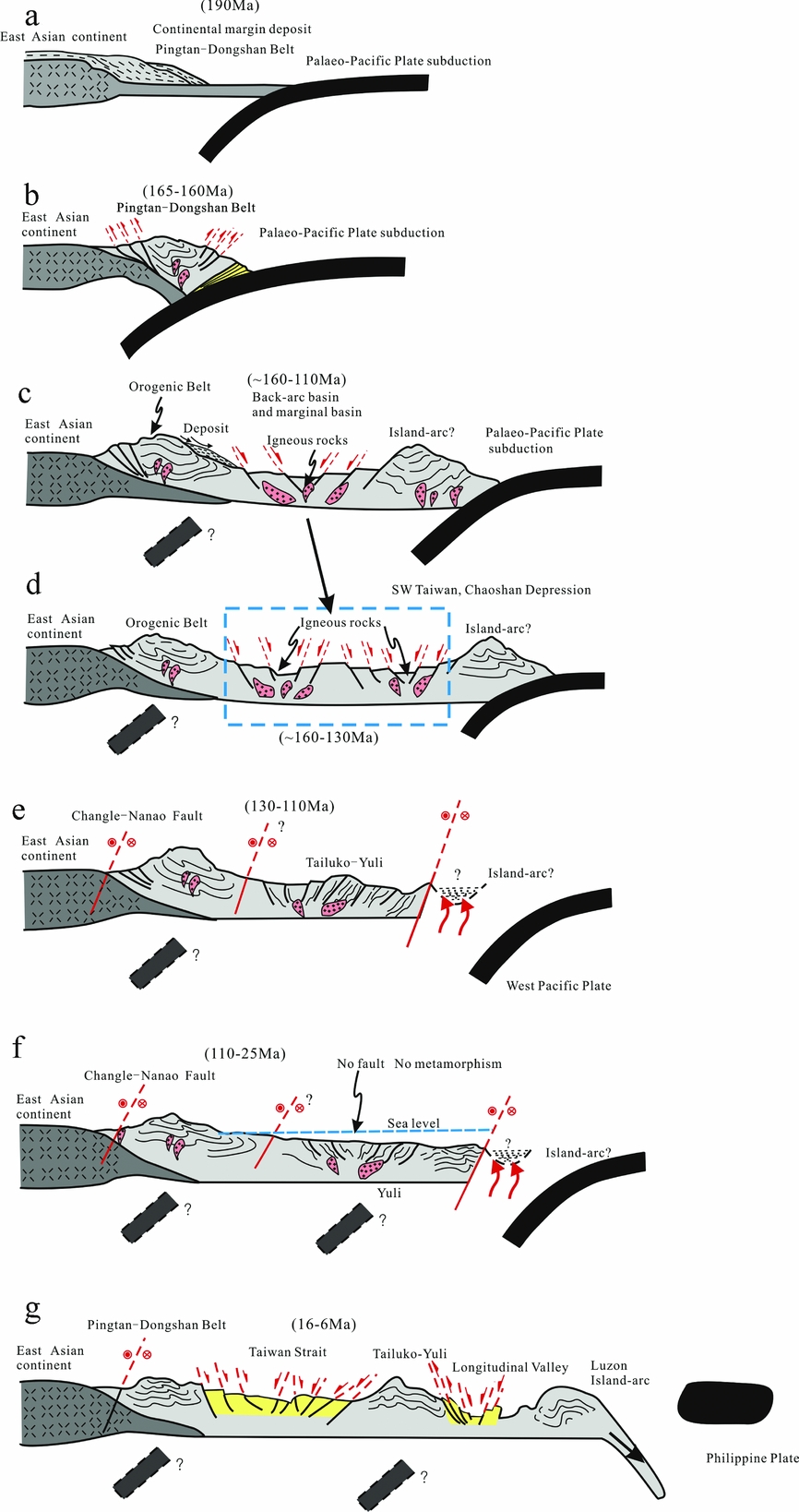
Proposed model for the Early Jurassic – late Cenozoic tectonic evolution of the studied region. (a) During 220–190 Ma, continental marginal sedimentation occurred, and Palaeo-Pacific Plate subduction had just commenced. (b) During 165–160 Ma, Palaeo-Pacific Plate subduction was taking place, and deformation, metamorphism and magmatism occurred within the Pingtan–Dongshan belt. (c) At ~ 160–110 Ma, volcanic eruptions and magmatic intrusions occurred, and sedimentation in the Tailuko and Yuli belts migrated from west to east. (d) At 160–130 Ma, islands and marginal basins formed along the western margin of Taiwan. (e) At 130–110 Ma, rapid and voluminous sedimentation occurred in the Tailuko and Yuli belts. (f) At 110–25 Ma, sedimentation continued. (g) At 16–6 Ma, a new subduction zone formed and arc–continent collision occurred.

Comparisons of the South China margin with the Taiwan metamorphic belts show that on the continental margin of SE China the metamorphic rocks yield younger age clusters of 220–190 Ma. Combined with drilling data from the Chaoshan Depression in SW Taiwan (Fig. 13), it can be seen that the sedimentary sequences young from west to east (Fig. 14), from a continental margin orogenic belt to Taiwan, from shallow to deep ocean, and with volcanic or re-deposited volcanic rocks present. From the active continental facies to the shallow marine sediments, all the rocks provide evidence of a sedimentary setting on an active continental margin, with accompanying volcanic eruptions, deformation and metamorphism (Fig. 14).
If we consider the probable lost belt of the Taiwan Strait, and the area covered by the west Taiwan fore-arc basin, the sedimentary sequences and two stages of magmatic activity would continue from west to east from the Pingtan–Dongshan belt to the Yuli belt. They can be correlated with each other through similar age clusters of ~ 220 Ma, then 190 Ma, 160 Ma, 140–130 Ma and 120–100 Ma. The time sequences and sedimentary stages show a transition from a continental facies to a continental-shelf facies that was first in a shallow sea, then in deeper ocean.
4.d. Tectonic setting of the metamorphic belts along the eastern continental margin
We have also established that at ~ 180–160 Ma the Palaeo-Pacific Plate was being subducted under eastern Eurasia, followed by continental extension and lithospheric thinning during the period ~ 130–110 Ma (Sun et al. Reference Sun, Ding, Hu and Li2007; Wang, Zhou & Li, Reference Wang, Zhou and Li2011). Taiwan and SE China were therefore subjected to a combination of subduction, compression and marginal extension during this time.
During the period 170–160 Ma, intensive deformation and metamorphism occurred along the eastern margin of the Pingtan–Dongshan area, and quartz–muscovite schist and 165–160 Ma granite formed at this time. Thus, intensive deformation and an orogeny along the margin changed the continental margin of South China, whereas in Taiwan the tectonic activity took place at a later time. Subsequently, significant strike-slip motions along NE–SW-trending lines took place along the margin of the west Pacific Plate at 130–120 Ma (Zhou & Li, Reference Zhou and Li2000; Sun et al. Reference Sun, Ding, Hu and Li2007; Zhu et al. Reference Zhu, Niu, Xie and Wang2010). Therefore, we conclude that the sedimentary sequences of Taiwan and the Taiwan Strait, the granitic intrusions, as well the metamorphism, all post-date the period 170–160 Ma. The sequences are marked by rapid sedimentation, either as an immediate result of the initial subduction of the west Pacific Plate or as part of marginal shallow-water sedimentation. Along the SE China margin during the period 130–120 Ma, significant strike-slip motion had a strong influence on the deformation of the continental margin, and large volumes of sediment were produced and transported from west to east, from the continental margin to the margin of the west Pacific Plate. Meanwhile, the East Asian continent underwent E–W extension related to rollback of the west Pacific Plate (Ren et al. Reference Ren, Tamaki, Li and Zhang2002). This may have produced the sediment sources of the Tailuko and Yuli belts in Taiwan. During this period of sedimentation, the major tectonic event was intensive rift-related rollback of the west Pacific Plate. Later changes completely transformed the regional deformation and sedimentary sequences. Thus, during 170–160 Ma and 130–110 Ma, two stages of tectonic activity controlled sedimentation in the Taiwan region, and also controlled the deformation of the continental margin, as well as the accompanying metamorphism and magmatism.
The Tailuko belt is unconformably overlain by Eocene–Miocene strata, and the metagranitoids within the belt have yielded crystallization ages of mostly 110–88 Ma (Jahn et al. Reference Jahn, Martineau, Peucat and Cornichet1986; Ernst & Jahn, Reference Ernst and Jahn1987; Yui et al. Reference Yui, Maki, Lan, Hirata, Chu, Kon, Yokoyama, Jahn and Ernst2012). The relationships between sedimentary sources, granitic intrusions and marginal uplift are recorded at > 200 Ma, 170–160 Ma, 160–130 Ma, 130–110 Ma, 90–88 Ma, 65–60 Ma and 25–20 Ma. Thus, continental margin sedimentation might have occurred in the Taiwan region since c. 80 Ma. The sediments of the Taiwan region that were deposited during Late Jurassic to Cretaceous time, or even later, are unrelated to the North China or Yangtze craton, or to the collision of these two (cf. Yui et al. Reference Yui, Maki, Lan, Hirata, Chu, Kon, Yokoyama, Jahn and Ernst2012), but they are related to the SE China continental margin according to the age data of the metasedimentary rocks that occur in continuous sedimentary sequences. The period 170–160 Ma marked a change in regional tectonics along the eastern margin of the East Asian continent, and the period 130–110 Ma marked a change in the tectonic evolution of the west Pacific Plate from subduction to transcurrent movements, resulting in oblique subduction (e.g. Sun et al. Reference Sun, Ding, Hu and Li2007). The sedimentary and volcanic events in the Taiwan region were related to an active continental margin setting (Fig. 14). Deformation, magmatism and orogenic uplift were all related to the initial subduction of the Pacific Plate (Isozaki, Reference Isozaki1996, Reference Isozaki1997; Wang, Reference Wang2006; Wang & Li, Reference Wang and Li2008; Wang, Zhou & Li, Reference Wang, Zhou and Li2011). Traditionally, the late Mesozoic period of mountain-building in the Taiwan region is called the ‘Nanao Orogeny’ (Ho, Reference Ho1986). However, the Pingtan–Dongshan belt has continental sedimentary features, and the Tailuko belt represents sedimentation along a continental margin during middle–late Mesozoic time that was connected to the shallow marine sedimentation found in the Yuli belt. The belts also record deformation along the margins of a continent. Thus, although there is an important arc–continent collisional belt along the margin of the west Pacific Plate, the so-called continent is actually a tectonic belt formed by Mesozoic sedimentation and magmatism as well as Cenozoic deformation and metamorphism.
The interpretation of Yui et al. (Reference Yui, Maki, Lan, Hirata, Chu, Kon, Yokoyama, Jahn and Ernst2012) regarding the correlation between the tectonic evolution of Taiwan and Japan should be re-evaluated. Yui et al. (Reference Yui, Maki, Lan, Hirata, Chu, Kon, Yokoyama, Jahn and Ernst2012) examined the ages of zircon cores and proposed that these old ages of the metasediments in the Yuli belt were derived from North China. However, we argue that the age data could be interpreted differently. The old ages of 2500–1800 Ma, such as those along the SE China continental margin, represent inherited zircon grains or cores, and an alternative interpretation is that the tectonic evolution of Taiwan was connected to that of the Chinese mainland. Clearly, the features we see represent the evolution of an active continental margin. At c. 120 Ma the current margin developed and the characteristics of sedimentation and the continental margin changed, with strike-slip motions controlling the deformation of the continental margin and the formation of marginal basins (Sun et al. Reference Sun, Ding, Hu and Li2007).
We propose the following tectonic setting and evolution of the region from the SE China margin to Taiwan (Fig. 14). During the period 170–160 Ma, intensive compression, volcanic eruptions, granitic intrusions and metamorphism occurred along the East Asian margin, probably related to subduction of the Palaeo-Pacific Plate (the Yanshanian event). At this time, metamorphism and orogenesis occurred in the Pingtan–Dongshan area. Subsequently, sedimentary sequences were developed and volcanic eruptions took place in west of Taiwan. The sedimentary sources were to the west of Taiwan, especially in the continental margin orogenic belt. Rapid deposition occurred at this time in the western part of the Tailuko belt. During 130–120 Ma, huge sinistral strike-slip displacements occurred along the eastern margin of the SE China continent, and the Pacific Plate underwent transcurrent movement towards the NNE (Sun et al. Reference Sun, Ding, Hu and Li2007; Wang, Zhou & Li, Reference Wang, Zhou and Li2011; Zhou et al. in press). These events resulted in rapidly deposited sedimentary sequences, such as those found in Taiwan. At this time, the basins underwent pull-apart deformation or rifting, accompanied by rapid erosion along the continental margin, normal faulting and granitic intrusions.
5. Conclusions
The metasedimentary rocks of the Pingtan–Dongshan, Tailuko and Yuli belts on the Chinese mainland and in the Taiwan region exhibit the characteristics of continental sedimentation. They all have similar sequences of rapidly deposited sediment, with continental deposits in the west changing to sequences of submarine sedimentation in the east. The youngest detrital zircon ages in the Pingtan–Dongshan belt are ~ 220–190 Ma, and in the Tailuko and Yuli belts they range from 120 to 100 Ma, but there are similar age clusters in all three belts of 300 and 220–200 Ma. There is no evidence of an oceanic trough in the Mesozoic, thereby indicating that the continent and Taiwan were connected prior to ~ 100 Ma. Magmatism, deformation and metamorphism occurred, but in the continental area the age of deformation and metamorphism is restricted to the period ~ 170–160 Ma. The Palaeo-Pacific Plate was subducted westwards during 165–160 Ma, and transcurrent movements along NNE–SSW-trending faults took place in the period 130–110 Ma. Extension then occurred along the margin of the East Asian continent, resulting in rifting and the formation of pull-apart marginal basins.
Acknowledgements
We greatly appreciate the constructive comments and suggestions from editor of Geological Magazine Prof. M. Allen, and two reviewers Prof. W. G. Ernst and Dr G. Shellnutt. This research was supported by the Guangzhou Marine Geological Survey (GZH20110205), the China University of Geosciences (Beijing) (2011TDL001) and the Chinese NSF (90914004). Prof. C. H. Lo is thanked for hosting the first author during several visits to Taipei. We are grateful to Y. J. Lo, G. R. Ho, J. W. Huang, H. T. Huang and W. Keyser for assistance during fieldwork in eastern Taiwan.
Supplementary material
To view supplementary material for this article, please visit http://dx.doi.org/10.1017/S0016756816000741