


%20--%3e%3c!DOCTYPE%20svg%20PUBLIC%20'-//W3C//DTD%20SVG%201.0//EN'%20'http://www.w3.org/TR/2001/REC-SVG-20010904/DTD/svg10.dtd'%3e%3csvg%20version='1.0'%20id='Layer_1'%20xmlns='http://www.w3.org/2000/svg'%20xmlns:xlink='http://www.w3.org/1999/xlink'%20x='0px'%20y='0px'%20width='64px'%20height='64px'%20viewBox='5.5%20-3.5%2064%2064'%20enable-background='new%205.5%20-3.5%2064%2064'%20xml:space='preserve'%3e%3cg%3e%3ccircle%20fill='%23FFFFFF'%20fill-opacity='0'%20cx='37.785'%20cy='28.501'%20r='28.836'/%3e%3cpath%20fill='%23595959'%20d='M37.441-3.5c8.951,0,16.572,3.125,22.857,9.372c3.008,3.009,5.295,6.448,6.857,10.314%20c1.561,3.867,2.344,7.971,2.344,12.314c0,4.381-0.773,8.486-2.314,12.313c-1.543,3.828-3.82,7.21-6.828,10.143%20c-3.123,3.085-6.666,5.448-10.629,7.086c-3.961,1.638-8.057,2.457-12.285,2.457s-8.276-0.808-12.143-2.429%20c-3.866-1.618-7.333-3.961-10.4-7.027c-3.067-3.066-5.4-6.524-7-10.372S5.5,32.767,5.5,28.5c0-4.229,0.809-8.295,2.428-12.2%20c1.619-3.905,3.972-7.4,7.057-10.486C21.08-0.394,28.565-3.5,37.441-3.5z%20M37.557,2.272c-7.314,0-13.467,2.553-18.458,7.657%20c-2.515,2.553-4.448,5.419-5.8,8.6c-1.354,3.181-2.029,6.505-2.029,9.972c0,3.429,0.675,6.734,2.029,9.913%20c1.353,3.183,3.285,6.021,5.8,8.516c2.514,2.496,5.351,4.399,8.515,5.715c3.161,1.314,6.476,1.971,9.943,1.971%20c3.428,0,6.75-0.665,9.973-1.999c3.219-1.335,6.121-3.257,8.713-5.771c4.99-4.876,7.484-10.99,7.484-18.344%20c0-3.543-0.648-6.895-1.943-10.057c-1.293-3.162-3.18-5.98-5.654-8.458C50.984,4.844,44.795,2.272,37.557,2.272z%20M37.156,23.187%20l-4.287,2.229c-0.458-0.951-1.019-1.619-1.685-2c-0.667-0.38-1.286-0.571-1.858-0.571c-2.856,0-4.286,1.885-4.286,5.657%20c0,1.714,0.362,3.084,1.085,4.113c0.724,1.029,1.791,1.544,3.201,1.544c1.867,0,3.181-0.915,3.944-2.743l3.942,2%20c-0.838,1.563-2,2.791-3.486,3.686c-1.484,0.896-3.123,1.343-4.914,1.343c-2.857,0-5.163-0.875-6.915-2.629%20c-1.752-1.752-2.628-4.19-2.628-7.313c0-3.048,0.886-5.466,2.657-7.257c1.771-1.79,4.009-2.686,6.715-2.686%20C32.604,18.558,35.441,20.101,37.156,23.187z%20M55.613,23.187l-4.229,2.229c-0.457-0.951-1.02-1.619-1.686-2%20c-0.668-0.38-1.307-0.571-1.914-0.571c-2.857,0-4.287,1.885-4.287,5.657c0,1.714,0.363,3.084,1.086,4.113%20c0.723,1.029,1.789,1.544,3.201,1.544c1.865,0,3.18-0.915,3.941-2.743l4,2c-0.875,1.563-2.057,2.791-3.541,3.686%20c-1.486,0.896-3.105,1.343-4.857,1.343c-2.896,0-5.209-0.875-6.941-2.629c-1.736-1.752-2.602-4.19-2.602-7.313%20c0-3.048,0.885-5.466,2.658-7.257c1.77-1.79,4.008-2.686,6.713-2.686C51.117,18.558,53.938,20.101,55.613,23.187z'/%3e%3c/g%3e%3c/svg%3e)
%20--%3e%3c!DOCTYPE%20svg%20PUBLIC%20'-//W3C//DTD%20SVG%201.0//EN'%20'http://www.w3.org/TR/2001/REC-SVG-20010904/DTD/svg10.dtd'%3e%3csvg%20version='1.0'%20id='Layer_1'%20xmlns='http://www.w3.org/2000/svg'%20xmlns:xlink='http://www.w3.org/1999/xlink'%20x='0px'%20y='0px'%20width='64px'%20height='64px'%20viewBox='5.5%20-3.5%2064%2064'%20enable-background='new%205.5%20-3.5%2064%2064'%20xml:space='preserve'%3e%3cg%3e%3ccircle%20fill='%23FFFFFF'%20fill-opacity='0'%20cx='37.637'%20cy='28.806'%20r='28.276'/%3e%3cg%3e%3cpath%20fill='%23595959'%20d='M37.443-3.5c8.988,0,16.57,3.085,22.742,9.257C66.393,11.967,69.5,19.548,69.5,28.5c0,8.991-3.049,16.476-9.145,22.456%20C53.879,57.319,46.242,60.5,37.443,60.5c-8.649,0-16.153-3.144-22.514-9.43C8.644,44.784,5.5,37.262,5.5,28.5%20c0-8.761,3.144-16.342,9.429-22.742C21.101-0.415,28.604-3.5,37.443-3.5z%20M37.557,2.272c-7.276,0-13.428,2.553-18.457,7.657%20c-5.22,5.334-7.829,11.525-7.829,18.572c0,7.086,2.59,13.22,7.77,18.398c5.181,5.182,11.352,7.771,18.514,7.771%20c7.123,0,13.334-2.607,18.629-7.828c5.029-4.838,7.543-10.952,7.543-18.343c0-7.276-2.553-13.465-7.656-18.571%20C50.967,4.824,44.795,2.272,37.557,2.272z%20M46.129,20.557v13.085h-3.656v15.542h-9.944V33.643h-3.656V20.557%20c0-0.572,0.2-1.057,0.599-1.457c0.401-0.399,0.887-0.6,1.457-0.6h13.144c0.533,0,1.01,0.2,1.428,0.6%20C45.918,19.5,46.129,19.986,46.129,20.557z%20M33.042,12.329c0-3.008,1.485-4.514,4.458-4.514s4.457,1.504,4.457,4.514%20c0,2.971-1.486,4.457-4.457,4.457S33.042,15.3,33.042,12.329z'/%3e%3c/g%3e%3c/g%3e%3c/svg%3e)
%20--%3e%3c!DOCTYPE%20svg%20PUBLIC%20'-//W3C//DTD%20SVG%201.0//EN'%20'http://www.w3.org/TR/2001/REC-SVG-20010904/DTD/svg10.dtd'%3e%3csvg%20version='1.0'%20id='Layer_1'%20xmlns='http://www.w3.org/2000/svg'%20xmlns:xlink='http://www.w3.org/1999/xlink'%20x='0px'%20y='0px'%20width='64px'%20height='64px'%20viewBox='5.5%20-3.5%2064%2064'%20enable-background='new%205.5%20-3.5%2064%2064'%20xml:space='preserve'%3e%3cg%3e%3ccircle%20fill='%23FFFFFF'%20fill-opacity='0'%20cx='36.924'%20cy='28.403'%20r='28.895'/%3e%3cpath%20fill='%23595959'%20d='M37.442-3.5c8.99,0,16.571,3.085,22.743,9.256C66.393,11.928,69.5,19.509,69.5,28.5c0,8.992-3.048,16.476-9.145,22.458%20C53.88,57.32,46.241,60.5,37.442,60.5c-8.686,0-16.19-3.162-22.513-9.485C8.644,44.728,5.5,37.225,5.5,28.5%20c0-8.762,3.144-16.343,9.429-22.743C21.1-0.414,28.604-3.5,37.442-3.5z%20M12.7,19.872c-0.952,2.628-1.429,5.505-1.429,8.629%20c0,7.086,2.59,13.22,7.77,18.4c5.219,5.144,11.391,7.715,18.514,7.715c7.201,0,13.409-2.608,18.63-7.829%20c1.867-1.79,3.332-3.657,4.398-5.602l-12.056-5.371c-0.421,2.02-1.439,3.667-3.057,4.942c-1.622,1.276-3.535,2.011-5.744,2.2%20v4.915h-3.714v-4.915c-3.543-0.036-6.782-1.312-9.714-3.827l4.4-4.457c2.094,1.942,4.476,2.913,7.143,2.913%20c1.104,0,2.048-0.246,2.83-0.743c0.78-0.494,1.172-1.312,1.172-2.457c0-0.801-0.287-1.448-0.858-1.943l-3.085-1.315l-3.771-1.715%20l-5.086-2.229L12.7,19.872z%20M37.557,2.214c-7.276,0-13.428,2.571-18.457,7.714c-1.258,1.258-2.439,2.686-3.543,4.287L27.786,19.7%20c0.533-1.676,1.542-3.019,3.029-4.028c1.484-1.009,3.218-1.571,5.2-1.686V9.071h3.715v4.915c2.934,0.153,5.6,1.143,8,2.971%20l-4.172,4.286c-1.793-1.257-3.619-1.885-5.486-1.885c-0.991,0-1.876,0.191-2.656,0.571c-0.781,0.381-1.172,1.029-1.172,1.943%20c0,0.267,0.095,0.533,0.285,0.8l4.057,1.83l2.8,1.257l5.144,2.285l16.397,7.314c0.535-2.248,0.801-4.533,0.801-6.857%20c0-7.353-2.552-13.543-7.656-18.573C51.005,4.785,44.831,2.214,37.557,2.214z'/%3e%3c/g%3e%3c/svg%3e)
%20--%3e%3c!DOCTYPE%20svg%20PUBLIC%20'-//W3C//DTD%20SVG%201.0//EN'%20'http://www.w3.org/TR/2001/REC-SVG-20010904/DTD/svg10.dtd'%3e%3csvg%20version='1.0'%20id='Layer_1'%20xmlns='http://www.w3.org/2000/svg'%20xmlns:xlink='http://www.w3.org/1999/xlink'%20x='0px'%20y='0px'%20width='64px'%20height='64px'%20viewBox='5.5%20-3.5%2064%2064'%20enable-background='new%205.5%20-3.5%2064%2064'%20xml:space='preserve'%3e%3cg%3e%3ccircle%20fill='%23FFFFFF'%20fill-opacity='0'%20cx='36.944'%20cy='28.631'%20r='29.105'/%3e%3cg%3e%3cpath%20fill='%23595959'%20d='M37.443-3.5c8.951,0,16.531,3.105,22.742,9.315C66.393,11.987,69.5,19.548,69.5,28.5c0,8.954-3.049,16.457-9.145,22.514%20C53.918,57.338,46.279,60.5,37.443,60.5c-8.649,0-16.153-3.143-22.514-9.429C8.644,44.786,5.5,37.264,5.5,28.501%20c0-8.723,3.144-16.285,9.429-22.685C21.138-0.395,28.643-3.5,37.443-3.5z%20M37.557,2.272c-7.276,0-13.428,2.572-18.457,7.715%20c-5.22,5.296-7.829,11.467-7.829,18.513c0,7.125,2.59,13.257,7.77,18.4c5.181,5.182,11.352,7.771,18.514,7.771%20c7.123,0,13.334-2.609,18.629-7.828c5.029-4.876,7.543-10.99,7.543-18.343c0-7.313-2.553-13.485-7.656-18.513%20C51.004,4.842,44.832,2.272,37.557,2.272z%20M23.271,23.985c0.609-3.924,2.189-6.962,4.742-9.114%20c2.552-2.152,5.656-3.228,9.314-3.228c5.027,0,9.029,1.62,12,4.856c2.971,3.238,4.457,7.391,4.457,12.457%20c0,4.915-1.543,9-4.627,12.256c-3.088,3.256-7.086,4.886-12.002,4.886c-3.619,0-6.743-1.085-9.371-3.257%20c-2.629-2.172-4.209-5.257-4.743-9.257H31.1c0.19,3.886,2.533,5.829,7.029,5.829c2.246,0,4.057-0.972,5.428-2.914%20c1.373-1.942,2.059-4.534,2.059-7.771c0-3.391-0.629-5.971-1.885-7.743c-1.258-1.771-3.066-2.657-5.43-2.657%20c-4.268,0-6.667,1.885-7.2,5.656h2.343l-6.342,6.343l-6.343-6.343L23.271,23.985L23.271,23.985z'/%3e%3c/g%3e%3c/g%3e%3c/svg%3e)
Background
Beta-lactam antibiotics are first-line in the treatment of many infections. Reference Lipsky, Berendt and Cornia1–Reference Holten and Onusko3 However, 5% to 15% of patients are labeled as penicillin allergic, Reference Jeimy, Ben-Shoshan, Abrams, Ellis, Connors and Wong4–Reference Maximos, Pelletier and Elsayed7 which may lead to use of prescribing contrary to good antibiotic stewardship practices and adverse outcomes. This may include longer hospital stays, higher costs, and increased toxicity associated with second-line therapy in individuals with a penicillin allergy label (PAL) compared to those without. Reference Holten and Onusko3 Across various studies, approximately 95% of individuals with a PAL can tolerate penicillins through delabeling interventions. Reference Jeimy, Ben-Shoshan, Abrams, Ellis, Connors and Wong4,Reference Stevenson, Trevenen and Klinken8–Reference Shaker, McWilliams and Greenhawt10 A recent systematic review and meta-analysis estimated that 30% of patients with low risk penicillin allergies could undergo direct delabeling through structured questionnaire or decision tree algorithm use, and over 90% could be delabeled using an oral challenge. Reference Maximos, Pelletier and Elsayed7 However, few epidemiological studies have explored potential sex differences in the prevalence or predictors of a PAL. Reference Park, Matesic, Markus and Li11–Reference Voelker, Gonzalez-Estrada and Park13
Evidence from a small number of studies suggests sex-based variation in PALs, although the findings are inconsistent. Park et al found that female sex was associated with higher odds of a positive penicillin skin test (PST) among adults attending a preoperative clinic (OR 3.6, 95% CI 1.9–7.2), though key confounders such as comorbidities were not controlled for. Reference Park, Matesic, Markus and Li11 Similarly, Voelker et al reported that adult females were 10 times more likely to have a positive PST result in an inpatient setting. Reference Voelker, Gonzalez-Estrada and Park13 In contrast, Fox and Park found no significant sex difference in the prevalence of PST among children with a PAL (P = .5198), suggesting the need for further exploration between factors impacting the difference between adult and pediatric age groups. Reference Fox and Park12 Given the inconsistent results and limited strength of evidence on the correlation between sex and PAL, Reference Park, Matesic, Markus and Li11,Reference Fox and Park12 it remains unclear if true differences that are generalizable exist or if confounding factors account for differences in PAL among females and males. Determining whether other factors can better explain the perceived sex difference in PAL presence could help refine measurement and scoring tools for assessing PALs.
Other risk factors which may be correlated with increased presence of PAL in the general population include multiple allergies on a patient’s profile, Reference Voelker, D’Netto and Park14 older age at presentation of allergic reaction, Reference Voelker, D’Netto and Park14 type of beta-lactam administered, Reference Voelker, D’Netto and Park14 atopic conditions, obesity, Reference Abbassi, Capitle, Trivedi and Wolff15 and potential genetic polymorphisms for cytokines involved in the regulation of immediate hypersensitivity reactions. Reference Voelker, D’Netto and Park14 A challenge in existing literature is inclusion of various confounders and consideration of gender or intersectional factors that may be associated with a PAL. Social and demographic factors, such as age, sex, and race, may also influence the presence, reporting, or classification of PALs. Moreover, intersectionality variables may improve the capture of social and structural factors that influence healthcare access, diagnostic labeling such as PALs, and patient–provider communication. Accounting for PROGRESS factors (Place of residence, Race/ethnicity, Occupation, Gender, Religion, Education, Socioeconomic status, and Social capital) may guide clinicians in determining whether there are any disparities in who receives a PAL and reveals whether certain groups are more likely to be mislabeled, thereby providing opportunities to address equity and accuracy of allergy documentation and subsequent antibiotic use.
The objective of this study is to assess if an independent association exists between sex at birth and presence of a PAL after controlling for potential confounders. Sex differences in the association between other correlates (atopic conditions, autoimmune disorders, obesity, total number of drug allergies) with PAL are assessed along with descriptive analyses related to gender and equity, Reference O’Neill, Tabish and Welch16 where available.
Methods
Study design and source population
This cross-sectional study utilizes de-identified electronic medical record (EMR) data (2015–2024) from adults (≥18 years) with an encounter in an Urgent Medicine Clinic at an Ambulatory Care Hospital located in a large urban center in Ontario, Canada. Exclusion criteria were non-urgent encounters, and patients with missing sex data in the EMR. Non-Urgent Medicine Clinic encounters (procedure room and surgical encounters) include cases that are not intended for the short-stay medical unit which provides urgent assessment, investigation and management of medical conditions. In patients with more than one encounter over the study period, only the first encounter was included. This study received ethics approval from Women’s College Hospital (REB #2024–0055) and the University of Waterloo’s Clinical Research Ethics Board (45818). The Strengthening the Reporting of Observational Studies in Epidemiology (STROBE) reporting guideline for cross-sectional studies was applied to this manuscript. 17
Exposure and outcome variables
The main exposure variable of interest, sex assigned at birth, was defined based on the recorded sex in the EMR: male or female. Due to small sample sizes, intersex or unknown levels of this variable were not included in this analysis.
The primary outcome, PAL presence, was defined as a listed allergy to penicillin in the EMR. All allergy labels were standardized if entered as free text for penicillins (aminopenicillins, antipseudomonal penicillins, antistaphylococcal penicillins, and natural penicillins) and non-penicillin beta-lactams (cephalosporins, carbapenems, and monobactam) (Supplementary Table 1 and 2).
Secondary outcomes were investigated in those with a PAL and included high-severity PAL and the presence of one or more non-PAL medication-related allergy (medications with a drug identification number by Health Canada, excluding natural health products and supplements). PAL severity was defined as low risk (severity not reported or low risk selected) and high risk (moderate or high risk selected), based on documented clinical details at the patient’s encounter.
Comorbidities and other risk factors
Co-morbidities and other risk factors correlated with PAL based on existing literature (presence of multiple medication class allergies, atopic conditions, obesity, and immune-mediated inflammatory conditions), class of beta-lactam administered (penicillins, cephalosporins, carbapenems, and monobactam), were assessed in this study as additional exposures of interest and potential confounders for the association between sex and PAL. The disease co-factors are defined based on the medical problem list on admission in the electronic medical record (EMR) as ICD-10-CA codes (see Table S3), and obesity is defined in keeping with the World Health Organization definition of a BMI over 30 either calculated using height and weight, 18 or if present as a field in the EMR under a diagnostic ICD-10 code.
Statistical analysis
Descriptive statistics were reported to characterize the study population. Counts and percentages were used to describe categorical variables, and continuous variables were reported as means with standard deviations or medians with interquartile range. PROGRESS factors were narratively summarized, where available.
Logistic regression models estimate unadjusted odds ratios and 95% confidence intervals for the association between sex and presence of PAL (primary outcome), and between sex and secondary outcome (severity of PAL and presence of another non-PAL medication-related allergy). Similarly, the association between the presence of comorbidities (atopic, autoimmune inflammatory, and obesity) and PAL were tested using logistic regression. For the metabolic condition variable of obesity, height and weight were available together in the data set for 2% of the population making BMI calculation not feasible; therefore, the ICD-10 codes associated with obesity were used due to missingness. Comorbidity-related associations with PAL were also stratified by sex and reported in a Forest Plot.
Adjusted odds ratios and 95% confidence intervals were estimated for the association between sex and PAL using a multivariable logistic regression model with the following covariates: age, number of drug allergy labels, and comorbidities. Specifically, age at first encounter was operationalized as a categorical variable of <65 years, 65 to 80 years, and >80 years. This approach was taken as PALs may be more correlated with older age Reference Shah, Smith, Norton, Eippert, Borzecki and Blumenthal19 and antibiotic utilization often increases with age. Reference Crosby, von den Baumen, Chu, Gomes, Schwartz and Tadrous20 The number of drug allergy labels was defined using a categorical variable (0–1, 2, or 3+), and the presence of comorbidities in each of the atopic conditions, autoimmune inflammatory conditions, and metabolic conditions, were coded as binary variables (0 = not present, 1 = present).
Firth’s Bias-Reduced Logistic Regression R Package was applied when a logistic regression model failed to converge due to small cell sizes. Data cells with fewer than 6 observations have been suppressed in accordance with the institutional Ethics agreement. All analyses based on small numbers should be interpreted with caution. Model assumptions and diagnostics were checked using standard methods. R Version 4.3.3, R-Studio was used to conduct all analyses. Reference team.21
Results
Population characteristics and allergy label prevalence
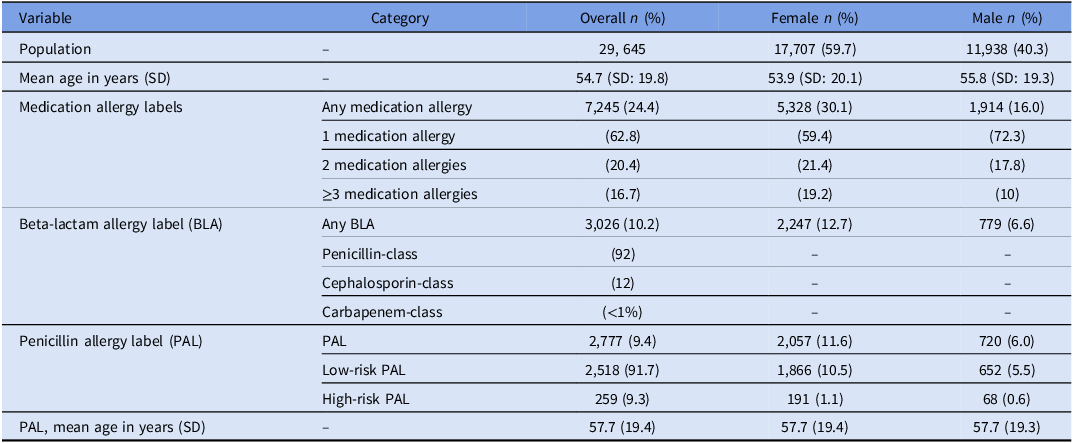
There were 29,645 patients seen at the Urgent Medicine Clinic, including 17,707 females (59.7%). The mean age for patients was 54.7 years (SD = 19.8) with mean age by sex being 53.9 (SD = 20.1) years for females and 55.8 (SD = 19.3) years for males (Table 1). Of the entire cohort, 8.5% had an atopic condition, 5.2% with an autoimmune condition, and 1.6% were living with obesity. Across the entire cohort, 24.4% had a documented medication-related allergy, including PAL (30.1% females, 16% males).
Demographics and allergy labels

Of those with any medication-related allergy, 41.8% (n = 3,026) had a beta-lactam allergy label (BLA). Of the entire cohort, 2,777 (9.4%) patients had a PAL documented on their encounter and females were approximately twice as likely as males to have a PAL (11.6% vs 6.0%; OR = 2.17, 95% CI 2.14–2.19). Of those with BLA that was not a PAL, cephalosporin allergies were reported at 12% and carbapenem allergies were reported at less than 1%. Most patients with a PAL (91.7%) had a low risk allergy (severity not reported or reported as low risk in the EMR). The odds of having a high risk PAL did not differ by sex (1.1% females vs 0.6% males; OR = 1.17, 95% CI 0.84–1.65). The odds of having another mediation allergy for patients with PAL was about twice as high in females than in males (7.0% female vs 2.4% males: OR 2.17, 95% CI 1.83–2.57, P < .001).
Comorbidities associated with penicillin allergy label presence
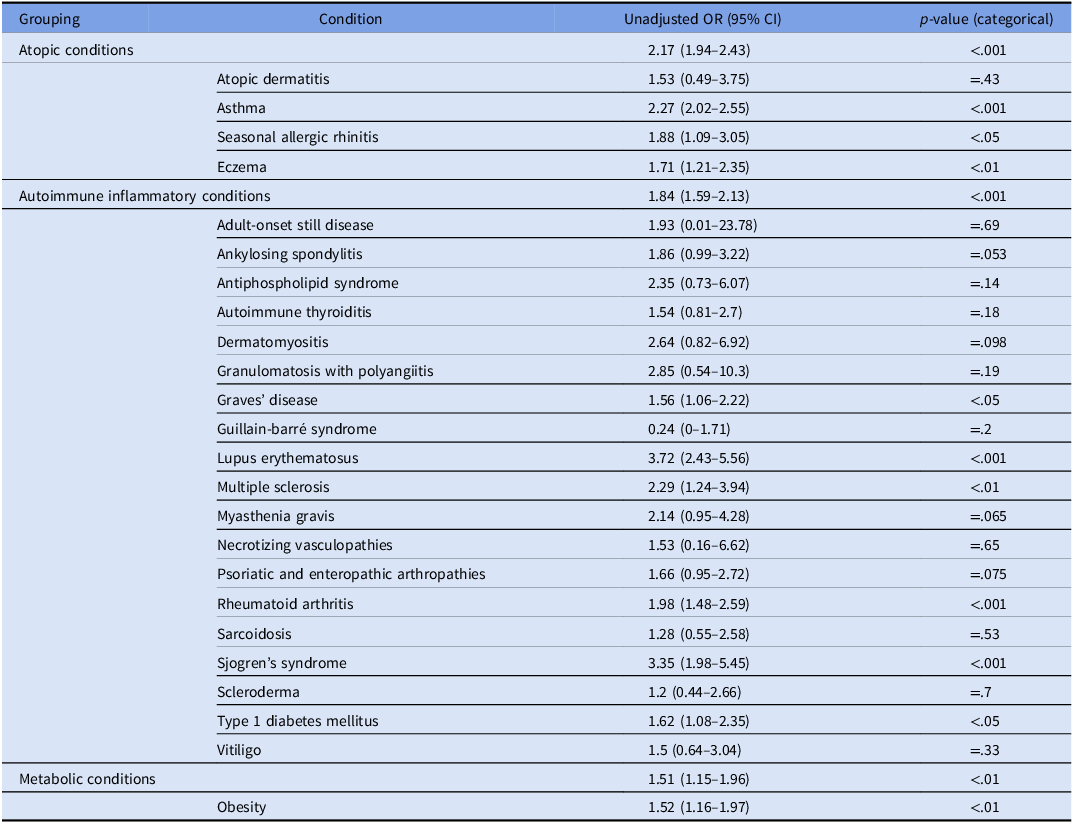
There was a positive association between atopic conditions (unadjusted OR = 2.17, 95% CI 1.94–2.43), autoimmune inflammatory conditions (OR = 1.84, 95% CI 1.59–2.13), and obesity (OR = 1.51, 95% CI 1.15–1.96) and a PAL (Table 2). Specific conditions such as asthma, seasonal allergic rhinitis, eczema, Graves’ disease, type 1 diabetes mellitus, obesity, multiple sclerosis, rheumatoid arthritis, lupus erythematosus, and Sjögren syndrome were also associated with increased odds of PAL, with ORs ranging from 1.52 to 3.72 (P < .05). Table 2 includes results of the analysis with each comorbidity and correlation with PAL presence.
Comorbidities as predictors of penicillin allergy label presence

In the sex stratified models (Figure 1, Table S4), female sex and ankylosing spondylitis, asthma, eczema, lupus erythematosus, myasthenia gravis, rheumatoid arthritis, seasonal allergic rhinitis, and Sjögren syndrome were associated with increased odds of PAL, with unadjusted ORs ranging from 1.39 to 3.29 (P < .05). In males, asthma, multiple sclerosis, and obesity were associated with PAL with unadjusted ORs ranging from 1.86 to 4.05 (P < .05), while other conditions were not statistically significant in either sex.
Association between penicillin allergy label (PAL) presence and pre-defined conditions, by sex assigned at birth.

Multivariable models
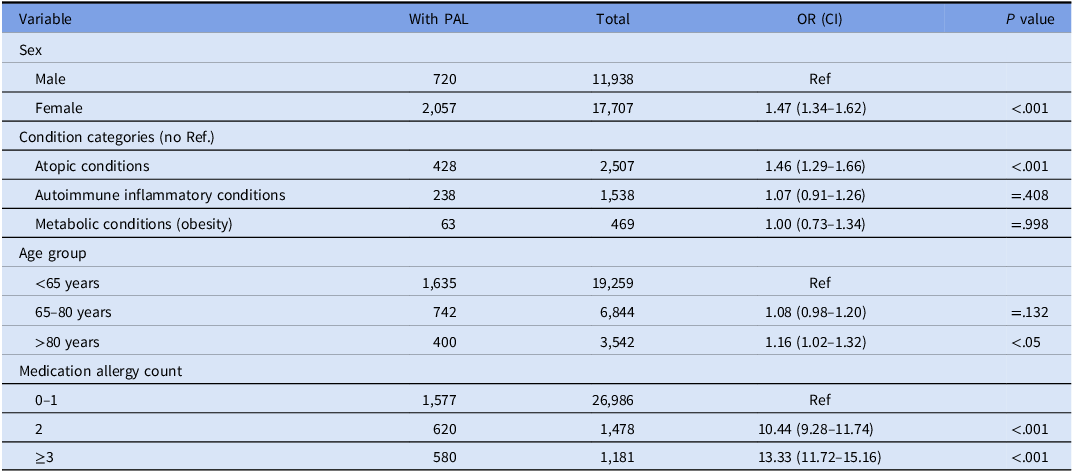
In multivariable logistic regression analysis, several factors were independently associated with the presence of a penicillin allergy label (PAL). Female sex was associated with higher odds of PAL compared with male sex (OR = 1.47, 95% CI 1.34–1.62, P < .001). Atopic conditions were also associated with increased odds of PAL (OR = 1.46, 95% CI 1.29–1.66, P < .001), whereas autoimmune and the metabolic (obesity) condition categories were not (Table 3). Age effects were heterogeneous: patients aged 65–80 years did not have a significant association with PAL presence, whereas patients over 80 years had significantly higher odds (OR = 1.16, 95% CI 1.02–1.32, P < .05). The number of other reported medication allergies was strongly associated with PAL with the reference category being 0–1 allergy: having 2 allergies was associated with a 10.44-fold increase (95% CI 9.28–11.74, P < .001), and 3 or more allergies with a 13.33-fold increase (95% CI 11.72–15.16, P < .001).
Multivariable logistic regression model

Note. 95% Confidence Interval (95% CI); Reference Category (Ref); Not Applicable (NA); Odds Ratio (OR); PAL (Penicillin Allergy Label).
Intersectional variables (PROGRESS factors)
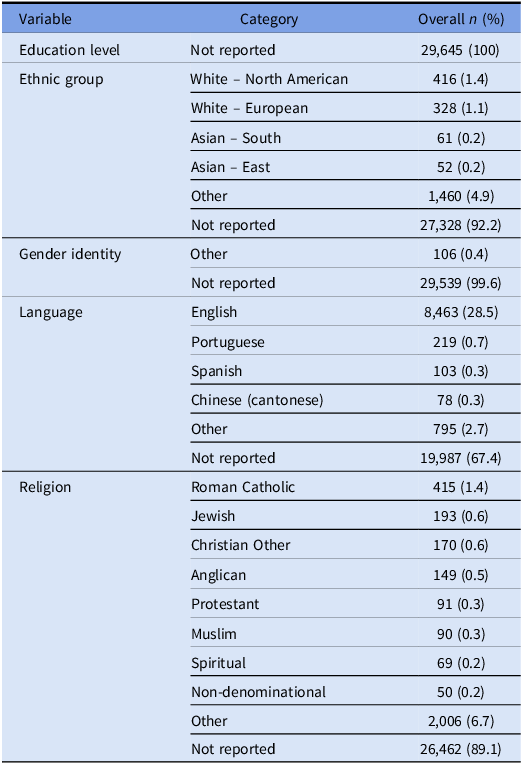
Due to extensive missing data PROGRESS factors, these variables were excluded from analyses and are reported descriptively only, as inclusion or imputation would introduce bias. Gender Identity was missing for 99.6% of patients; the remaining 0.6% identified as cisgender male or female, transgender male or female, or non-binary. Education level was missing for the entire cohort. Language was unreported in 67.4%; 28.5% reported English, 0.7% Portuguese, 0.3% Spanish, 0.3% Cantonese, and 2.7% other. Ethnicity was missing in 92.2%; 2.5% identified as White (North American or European), 0.4% as South or East Asian, and 4.9% as other. Religion was missing in 89.1%, with diverse beliefs comprising the remaining 10.9%. A summary of intersectional and sociodemographic variables is presented in Table 4.
Intersectional and sociodemographic variables

Small sample sizes are combined into an “other” category.
Discussion
In this cross-sectional study of over 29,000 adults attending an ambulatory care hospital, we assessed the association between sex and PAL and explored correlates of PAL by sex. Consistent with previous literature, females were twice as likely to have a PAL as males and more often reported multiple medication allergies. Most PALs were reported as low risk (91.7%), and sex did not significantly influence severity, highlighting a substantial opportunity for targeted delabeling to optimize antimicrobial prescribing. In multivariable analysis, female sex, atopic conditions, older age ( >80 years), and a higher number of other medication allergies (>1) were independently associated with PAL, whereas autoimmune and metabolic conditions were not. These associations may reflect underlying immune-mediated predisposition, cumulative medication-related exposure risk to allergic reactions, and age-related differences in allergy risk, recognition, or documentation.
These findings on sex differences and allergy-related characteristics contextualize prior studies on PAL prevalence and its association with sex. Three studies validating PAL through Penicillin Skin Testing (PST) reported mixed sex-related results by age group but lacked covariate adjustment, limiting validity. In a US preoperative cohort, Park et al found female sex associated with higher odds of positive PST in adults (OR = 3.6, 95% CI 1.9–7.2, P < .001), though factors such as other medication allergies, age, and comorbidities were not assessed. Reference Park, Matesic, Markus and Li11 Fox and Park found no sex difference among patients under 18 years (P = .52), suggesting possible age-related or unmeasured confounding effects; Reference Fox and Park12 however, this present study included only adults. Similarly, Voelker et al found adult females were ten times more likely to have a positive PST in an inpatient setting. Reference Voelker, Gonzalez-Estrada and Park13 Although PST is the gold standard for penicillin allergy validation, these studies may overestimate prevalence, especially among low risk patients, due to false positives. Reference Sousa-Pinto, Tarrio and Blumenthal22 This study builds on prior work by examining outcomes by sex and identifying factors contributing to allergy risk. Stratifying penicillin allergy risk is clinically important, as inaccurate labels increase use of broad-spectrum antibiotics, resistant infections such as C. difficile and MRSA, overall healthcare costs, and morbidity. Reference Sousa-Pinto, Tarrio and Blumenthal22,Reference Lee23 Incorporating intersectional variables such as sex into validated risk tools like PEN-FAST, Reference Trubiano, Vogrin and Chua24 can enhance antimicrobial stewardship and promote equitable care.
In a model considering comorbidities, asthma was strongly associated with PAL in females and males, while seasonal allergic rhinitis and eczema were significant only in females. Autoimmune inflammatory conditions, notably lupus, myasthenia gravis, and rheumatoid arthritis, were linked to PAL in females, whereas most autoimmune conditions were not significant in males. Obesity was associated with PAL in both sexes in this study, reaching significance in males (OR 1.86, P < .05), consistent with a brief report of the US National Inpatient Registry, which found obesity increased the odds of PAL (OR 1.55, 95% CI 1.54–1.56, P < .001). Reference Abbassi, Capitle, Trivedi and Wolff25 Similarly, a cohort of pregnant patients by Buckey et al reported that atopic conditions including rhinitis, asthma, and eczema were associated with higher PAL prevalence in multivariable analysis (OR 1.55 vs none, P < .0005) consistent with our work which found these conditions to be significantly associated with PAL in females, with asthma also significantly associated in males. Reference Buckey, Gleeson, Curley, Feldman, Apter and Fadugba26 Although Buckey et al also reported lower PAL likelihood in Black patients (OR 0.59, P < .0005), prior systematic review evidence from our team found that most patients included in delabeling studies were White, Reference Maximos, Pelletier and Elsayed7 highlighting potential risk of selection bias. In our cohort, ethnicity data were largely missing, and most reported patients were White, limiting assessment of race and PAL risk. Overall, these findings suggest that a complex set of contributors to PAL risk in addition to sex, although effect sizes differ between males and females.
Lastly, we aimed to explore whether severity of illness differed in patients with PAL, given prior studies linking PAL to worse clinical outcomes. Reference Jeimy, Ben-Shoshan, Abrams, Ellis, Connors and Wong4,Reference Kaminsky, Ghahramani, Hussein and Al-Shaikhly27 Although we initially planned to use an adjusted National Early Warning Score (NEWS) Reference Prytherch, Smith, Schmidt and Featherstone28 as a marker of clinical severity, this variable was calculable for only 2% of patients. Consequently, we could not reliably assess the relationship between illness severity, PAL, and sex. Future studies with more complete and validated measures of clinical severity are needed to clarify whether PAL is associated with differences in illness severity and whether these effects vary by sex.
There are several limitations to this study. The cross-sectional design precludes determining whether comorbid conditions preceded PAL, limiting causal inference. PALs and allergy-related data may change over time with testing, delabeling, or documentation updates, which cross-sectional analyses cannot capture. Allergy severity was grouped into high (“High” and “Moderate”) and low (“Null” and “Low”) risk, though the “Null” category may reflect incomplete documentation rather than true low risk, introducing misclassification bias. The absence of standardized definitions for severity levels may create subjective interpretation by clinicians. Small sample sizes for individual conditions required grouping into broader categories, possibly masking condition-specific effects. The data set lacked PROGRESS variables Reference O’Neill, Tabish and Welch16 and information on age of PAL onset or relevant genetic polymorphisms, Reference Wong, Keith and Waserman29–Reference Taylor, Joerger and Li31 limiting intersectional analyses. Comorbidity data could not be validated, introducing potential information bias. Longitudinal studies with validated, detailed data are needed to clarify PAL drivers, social, and biological interactions.
Conclusion
This study adds to our understanding of the relationship between sex and PAL in a large ambulatory adult population within a publicly funded healthcare system. Approximately one in ten patients had a PAL, most were female and most PALs were classified as low risk, with allergy risk category not differing by sex. In the multivariable model, female sex, atopic conditions, older age, and a higher number of other medication allergies emerged as independent predictors of PAL, whereas autoimmune and metabolic conditions were not associated. These findings suggest that PAL presence is influenced by multiple factors that could be considered alongside established tools, such as PEN-FAST, Reference Trubiano, Vogrin and Chua24 to support risk stratification and clinical decision making while considering patient-specific factors. Future research using a longitudinal, prospective design, as well as validated methods for allergy assessment, such as oral challenge for low risk patients and PST for higher risk patients, along with as collection of comprehensive demographic information may better inform equitable and evidence-based approaches to allergy assessment and antimicrobial stewardship practices.
Supplementary material
The supplementary material for this article can be found at https://doi.org/10.1017/ash.2026.10299
Data availability statement
The datasets generated and/or analyzed during the current study are not available. The R Code can be made available upon reasonable request.
Financial support
This work has not received financial support. Mira Maximos has received a CIHR Doctoral award.
Competing interests
The authors have no conflicts of interest to disclose.



 Open access

