INTRODUCTION
Invertebrate harvesting is an important livelihood in developing countries providing food for subsistence and generating important income for fishing communities (Castilla & Defeo, Reference Castilla and Defeo2001). Recently, an increasing number of studies have reported a rapid expansion of invertebrate fisheries (Hobday et al., Reference Hobday, Tegner and Haaker2001; Anderson et al., Reference Anderson, Flemming, Watson and Lotze2011; Fröcklin et al., Reference Fröcklin, de la Torre-Castro, Hakansson, Carlsson, Magnusson and Jiddawi2014), yet this growth has not been supported by management or regulations based on solid scientific knowledge (Defeo, Reference Defeo2003; Fröcklin et al., Reference Fröcklin, de la Torre-Castro, Hakansson, Carlsson, Magnusson and Jiddawi2014). In the absence of appropriate information on the natural history and population biology of target species, the harvesting of invertebrates may result in sharp declines in animal density and biomass over a relatively short period of time (Anderson et al., Reference Anderson, Flemming, Watson and Lotze2011; Fröcklin et al., Reference Fröcklin, de la Torre-Castro, Hakansson, Carlsson, Magnusson and Jiddawi2014). Thus, to support exploitation and management, and for the proposal of effective measures to protect this living resource, it is essential to understand the population dynamics of harvested invertebrate species, which include knowledge about their growth and productivity (Urban & Campos, Reference Urban and Campos1994; Moura et al., Reference Moura, Gaspar and Monteiro2009).
The use of growth parameters is necessary to calculate population mortality and productivity (Brey, Reference Brey2001), and can be used to relate environmental conditions and growth (Metaxatos, Reference Metaxatos2004). They are also useful when determining how much time is required for the target species to reach a certain marketable size (Urban, Reference Urban2000). Secondary production is a composite measure of density, biomass, growth rate, reproduction, survivorship and development time (Benke, Reference Benke1993), and is the primary means by which energy is made available for transmission from one trophic level to the next (Waters, Reference Waters1977; Dolbeth et al., Reference Dolbeth, Cusson, Sousa and Pardal2012). Estimates of growth and secondary production are therefore essential for the reasonable (or sustainable) management of aquatic resources (Petracco et al., Reference Petracco, Veloso and Cardoso2003, Reference Petracco, Cardoso and Turra2013); however, studies investigating the parameters of harvested species are lacking (Turra et al., Reference Turra, Petracco, Amaral and Denadai2014a), thus limiting the knowledge and management of these resources.
The venerid clam Anomalocardia brasiliana (Gmelin 1791) is harvested as a fishery resource from the French West Indies (Mouëza et al., Reference Mouëza, Gros and Frenkiel1999) to southern Brazil. Historically, A. brasiliana has been extracted along the Brazilian coast, where it is an essential resource for economically and socially disfavoured people, and represents the main source of monetary income for entire small traditional communities (Silva-Cavalcanti & Costa, Reference Silva-Cavalcanti and Costa2009; Pezzuto et al., Reference Pezzuto, Schio and Almeida2010; Corte, Reference Corte2015). Despite its importance, there is very little or no control over A. brasiliana fisheries, and no recent information about the amount extracted is available. Over the last decade, however, traditional communities in Brazil have perceived the depletion of A. brasiliana stocks through the decline in shell length and biomass (Silva-Cavalcanti & Costa, Reference Silva-Cavalcanti and Costa2011). Depletion of stocks has also been recorded in field surveys and is frequently linked to overexploitation (Pezzuto et al., Reference Pezzuto, Schio and Almeida2010). To hinder the rational exploitation of this fishery resource, there is a great lack of knowledge about the population biology of A. brasiliana. To date, the population studies focusing on growth and production of this species have been restricted to those conducted by Monti et al. (Reference Monti, Frenkiel and Moueza1991), in the French West Indies, and Mattos & Cardoso (Reference Mattos and Cardoso2012) and Rodrigues et al. (Reference Rodrigues, Borges-Azevedo, Costa and Henry-Silva2013), in Brazil.
The uncontrolled exploitation of A. brasiliana, together with the low number of studies of its population dynamics, is expected to result in negative impacts on this valuable resource. Aiming to enhance the knowledge about this species, we examined its population dynamics over the course of 1 year on a sandy beach in south-east Brazil. At present, this population is subject to a low-level artisanal fishery for personal consumption only. Therefore, we have an opportunity to carry out a baseline study of population dynamics, which will provide information that can facilitate adequate management for future potential commercial exploitation of A. brasiliana.
MATERIALS AND METHODS
Study site and sampling
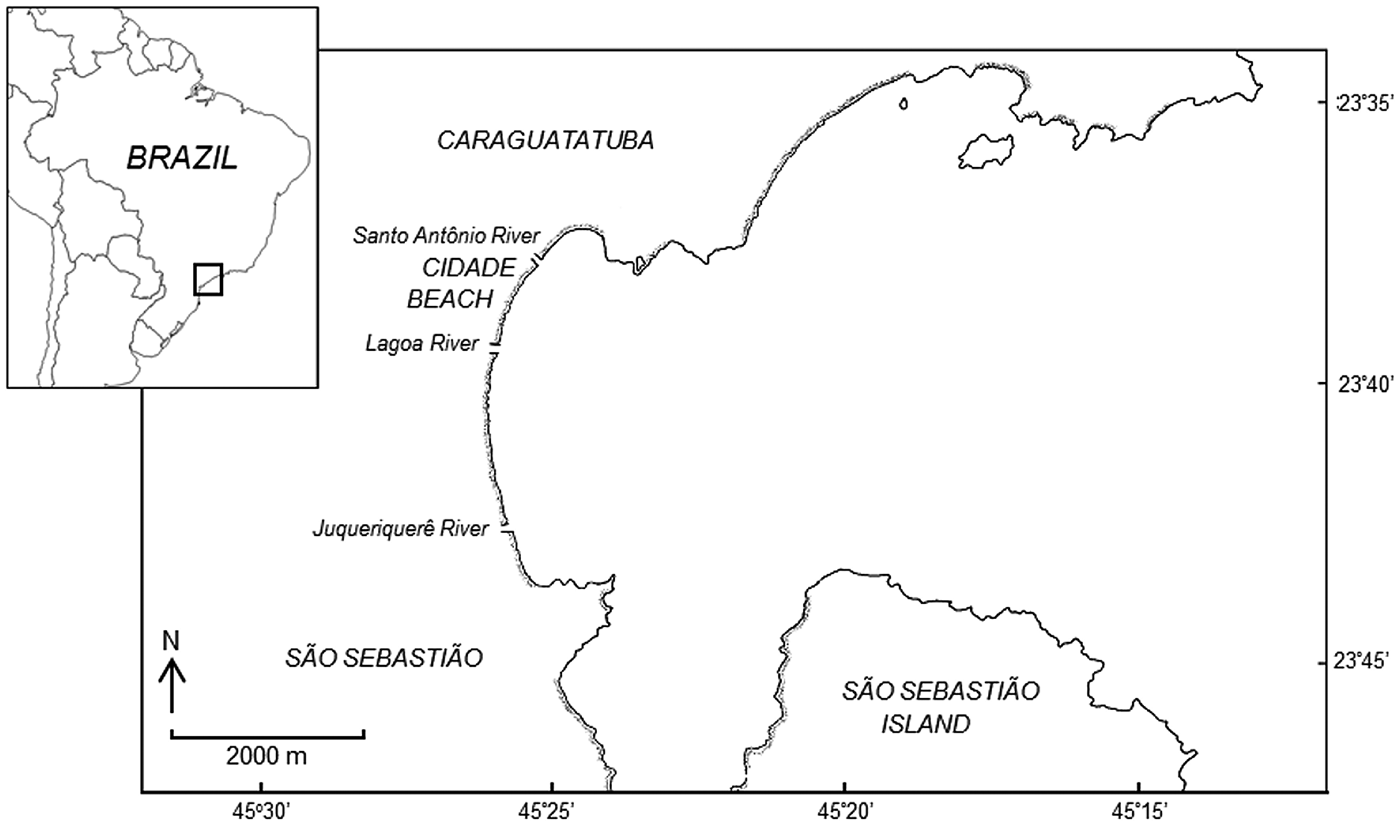
This work was done at Cidade Beach (23°37′S 45°23′W), a sheltered sandy beach with intermediate morphodynamic characteristics (width of the intertidal area ~60 m) and a medium slope (3.5%) (Amaral & Denadai, Reference Amaral, Denadai, Amaral and Nallin2011), located on the Caraguatatuba Bay, northern coast of the state of São Paulo, Brazil (Figure 1).
Map of the location of Cidade Beach on the northern portion of Caraguatatuba Bay, State of São Paulo, Brazil.

Sampling was performed monthly from March 2007 to February 2008 over a 900-m2 sector (30 m per side) from the mid-intertidal zone of the beach. The sampling site was established in an area where a sufficient number of individuals could be removed from the population at random (Brey, Reference Brey2001) based on pilot samples and information from local fishermen. In the sector, three transects were designated at random, perpendicular to the shoreline. Three sample units, spaced 10 m apart, were excavated in each transect to a depth of 10 cm using a 0.25 m2 (0.5 m per side) quadrat. All samples were sieved in situ through a 1 mm mesh.
To quantify temporal environmental differences, three monthly sediment samples were collected with a 3 cm diameter corer to a depth of 10 cm from random locations within the sector for subsequent granulometric analyses. Sediment temperature and interstitial water salinity were measured in situ with a digital thermometer and a refractometer, respectively. Daily sea temperature data were obtained from CEBIMar, the University of São Paulo Marine Biology Centre, located 22 km from Cidade.
Laboratory procedures
The shell length (anteroposterior axis) of each A. brasiliana individual was measured to the nearest 0.01 mm with a digital caliper. Sampled individuals were preserved in 70% ethanol. For biomass analysis, the soft tissue of the clam was removed from the shell and dried at 80°C until it reached a constant weight, yielding the shell-free dry mass (SFDM). The SFDM was then ignited in a muffle furnace at 550°C for 5 h to estimate the ash-free dry mass (AFDM) (Urban & Campos, Reference Urban and Campos1994).
The sediment was oven-dried at 60°C and passed through a series of sieves to determine the mean grain size (Folk & Ward, Reference Folk and Ward1957). Organic matter content was determined by the weight differences between samples that were dried at 60°C for 24 h and then incinerated at 550°C for 6 h. Calcium carbonate content was obtained by HCl 10% attack.
Data analysis
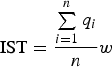
The monthly density of individuals was estimated per metre squared and per running metre (individuals per strip transect (IST), Defeo & Rueda, Reference Defeo and Rueda2002) to facilitate comparisons. To calculate the density per metre squared, at each month, the three sample units in each transect were summed and divided by 0.75 to obtain the mean density (ind. m2) of all samples pertaining to a transect. Then, the mean density of all transects was used as the monthly mean. The IST estimates were calculated by a linear interpolation as follows:
 $${\rm IST} = \displaystyle{{\mathop \sum \limits_{i = 1}^n {q_i}} \over n}w$$
where q is the mean density (ind. m−2) of all samples pertaining to a transect; n is the number of transects (n = 3); and w is the width of the transect (w = 30). Temporal variation of density (ind m−1) was assessed using one-way ANOVA. Normality and homogeneity of variance were assessed using the Cochran test, and data were log transformed to homogenize variances. Tukey's honest significant difference (HSD) test was used a posteriori to assess significant differences among means.
Individuals were grouped into 1-mm size classes. The studied population exhibited bimodal or trimodal population structure throughout the study, therefore, variations in size were illustrated through graphs showing the abundance and size of individuals (length-frequency distributions) per month. The annual recruitment pattern was estimated by observing peaks in the frequency of juveniles in the length-frequency distributions.
Monthly length-frequency distributions were used to estimate the growth parameters as described by Gómez & Defeo (Reference Gómez and Defeo1999) and Defeo et al. (Reference Defeo, Gomez and Lercari2001). This procedure consists of (1) separating the normally distributed components of the length-frequency distributions using the NORMSEP routine in the FISAT program (Gayanilo et al., Reference Gayanilo, Sparre and Pauly2005), (2) assigning absolute ages to cohorts (lengths) from time zero or birth to obtain an age-length key (time zero (t = 0) was defined as the minimum length of recruits found), and (3) using the resulting age-length key to fit the following von Bertalanffy growth function for seasonality (VBGF) (Somers, Reference Somers1988; García-Berthou et al., Reference García-Berthou, Carmona-Catot, Merciai and Ogle2012) using non-linear least squares:
 $${L_t} = {L_\infty} \left\lfloor {1 - {e^{[ - K(t - {t_0}) - (KC/2\pi )sin2\pi (t - {t_s}) + (KC/2\pi )sin2\pi ({t_0} - {t_s})]}}} \right\rfloor $$
where L t is the shell length (mm) at time t, L ∞ is the theoretical maximum shell length (mm) attained by the species, K (year−1) is the curvature parameter, C is a constant for the amplitude of seasonal growth oscillation, t 0 is the age at length zero and t s is the initial point of seasonal oscillation relative to t 0 (Gayanilo et al., Reference Gayanilo, Sparre and Pauly2005). The winter point (WP), i.e. the period of reduced growth expressed as a decimal fraction of the year, was obtained using the equation WP = t s+0.5 (Gayanilo et al., Reference Gayanilo, Sparre and Pauly2005). The growth index phi prime, ϕ′ = 2log10 (L ∞)+log10K (Pauly & Munro, Reference Pauly and Munro1984; Defeo et al., Reference Defeo, Arreguín-Sánchez and Sánchez1992), was used as a measure of overall growth performance. The theoretical lifespan (t max) was estimated using an inverse of the von Bertalanffy growth equation, assuming a maximum shell length of 99% of the asymptotic length (Sparre et al., Reference Sparre, Ursin and Venema1989):
 $${t_{\max}} = \displaystyle{{\left\lfloor {\ln {L_{99\%}} - \ln ({L_\infty} - {L_{99\%}} )} \right\rfloor} \over K}$$
The relationship between length and AFDM was estimated by a non-linear iterative fit to the original data using the following power function:
 $$W = a{L^b}$$
where W is the AFDM of the individual (g), L is the length of the individual (mm), and a and b are constants. Somatic production (P) was estimated by the mass-specific growth rate method (Crisp, Reference Crisp, Holme and McIntyre1984; Brey, Reference Brey2001), from the length–frequency distributions, the von Bertalanffy growth function and the size–mass relation given by the equation
 $$P = \sum {{\,f_i}{G_i}{w_i}\Delta t} $$
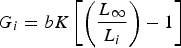
where f i is the mean number of individuals in size class i during period Δt, G i is the mass-specific growth rate in size class i, and w i is the mean weight of the length class. G i was obtained using the following equation:
 $${G_i} = bK\left[ {\left( {\displaystyle{{{L_\infty}} \over {{L_i}}}} \right) - 1} \right]$$
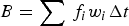
where b is the exponent of the weight-length ratio, K and L ∞ are parameters of the VBGF, and L i is the mean length in size class i. The mean annual biomass was calculated as follows:
 $$B = \sum {{\,f_i}{w_i}\Delta t} $$
Production was expressed in square metres (g m2 year−1) to enable comparison with other production studies. The P/B ratio was calculated as the ratio between annual somatic production (P) and annual mean biomass (B).
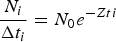
The mortality rate Z was estimated from the overall length-frequency distribution and the von Bertalanffy growth function parameters by a size-converted catch curve (Pauly, Reference Pauly1983; Brey, Reference Brey2001):
 $$\displaystyle{{{N_i}} \over {\Delta {t_i}}} = {N_0}{e^{ - Zti}}$$
where Ni is the number of individuals in size class i, Δt i is the time required to grow through this size class, and t i is the relative age at the mid-size of class i. Mortality Z was determined using the following linear regression:
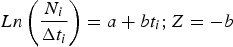 $$Ln\left( {\displaystyle{{{N_i}} \over {\Delta {t_i}}}} \right) = a + b{t_i};Z = - b$$
RESULTS
Population parameters
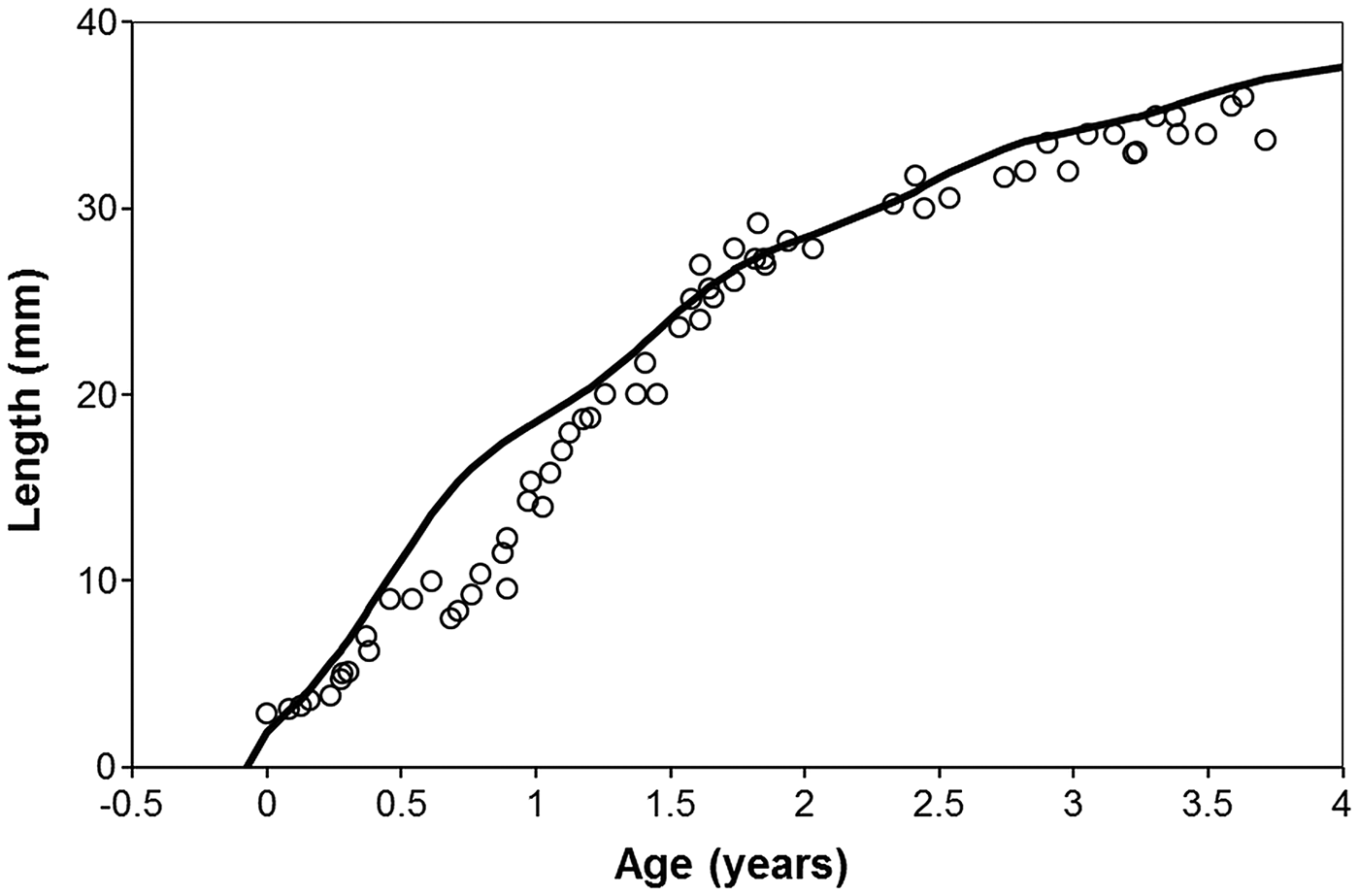
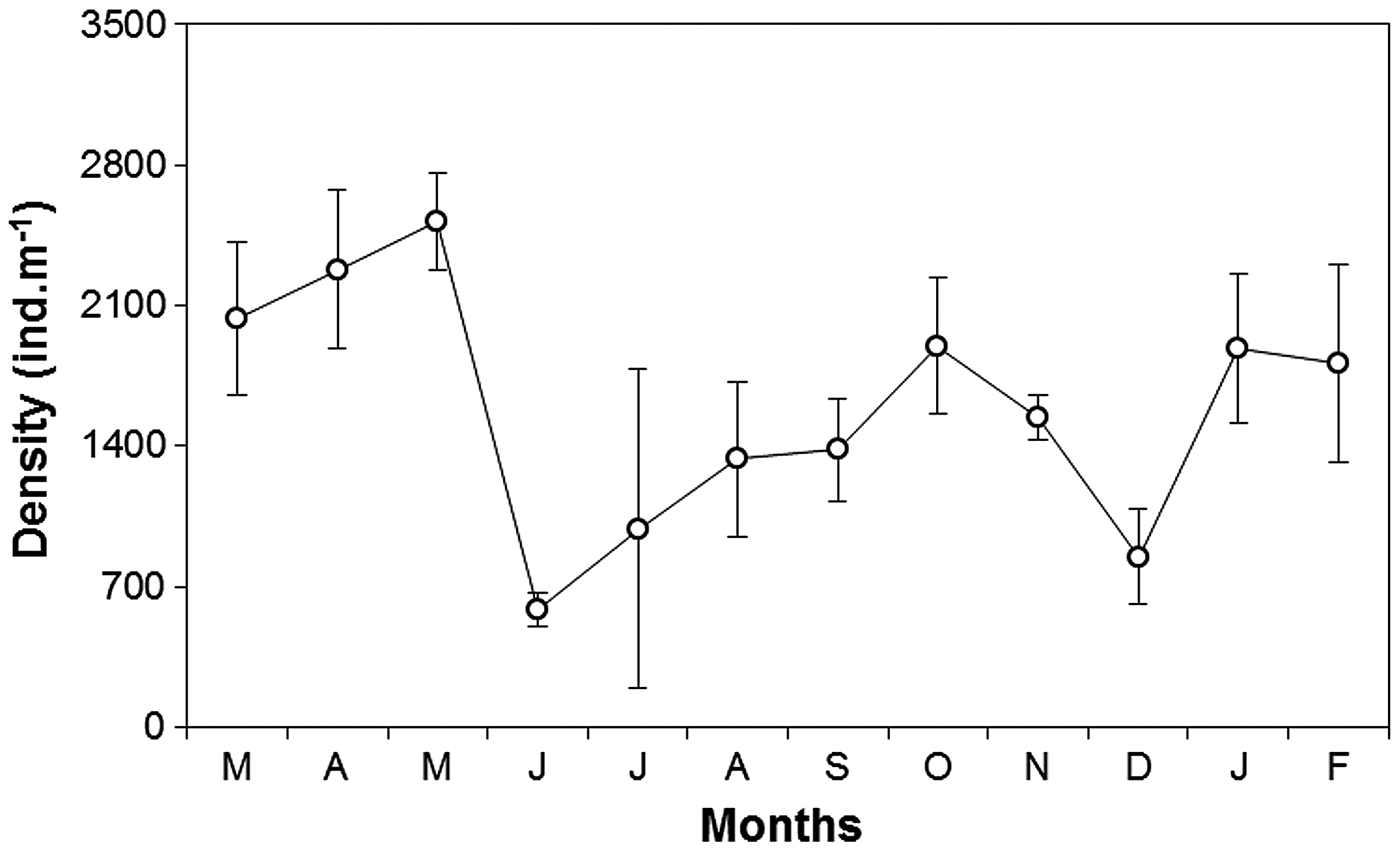
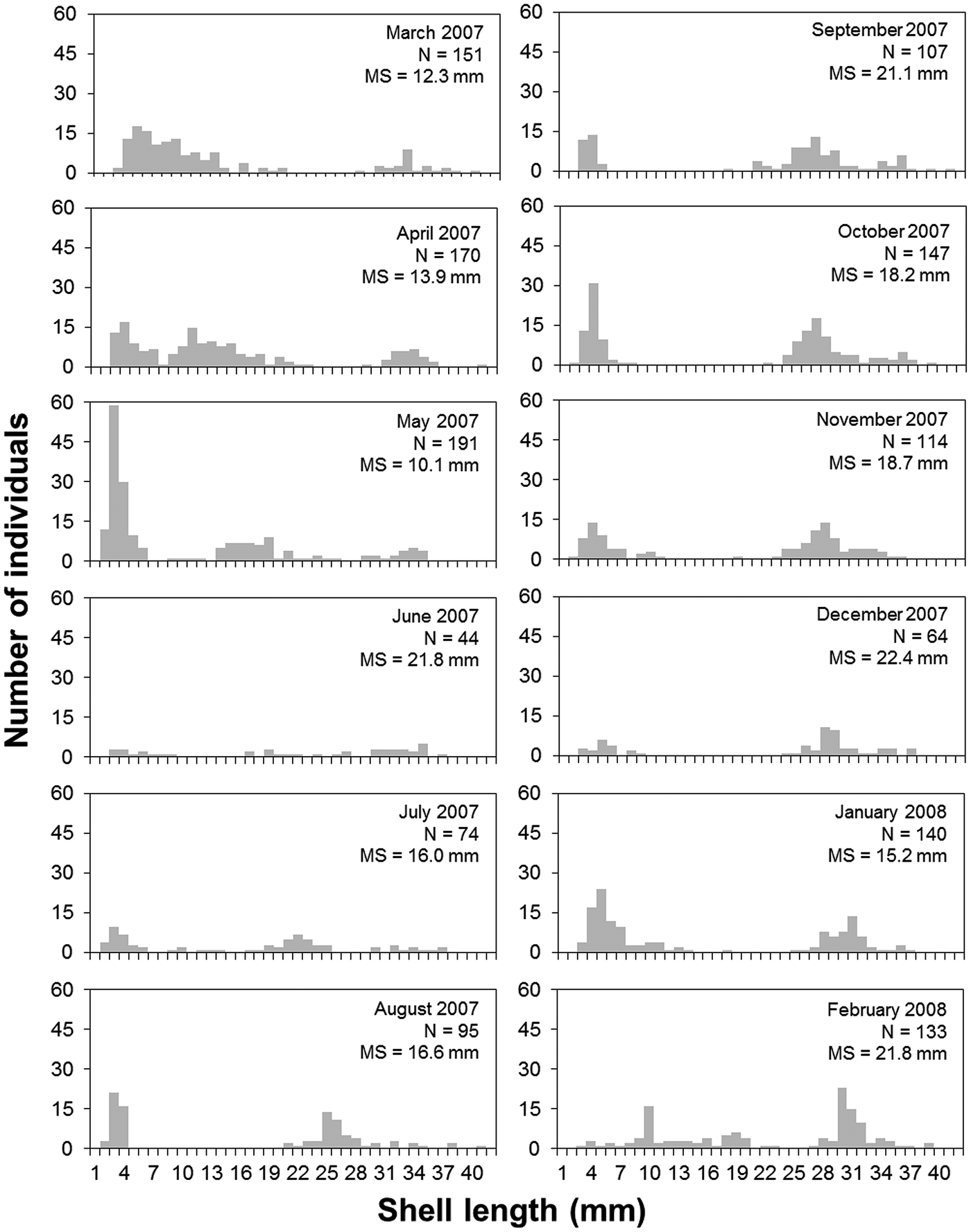
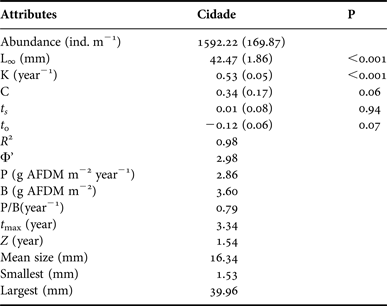
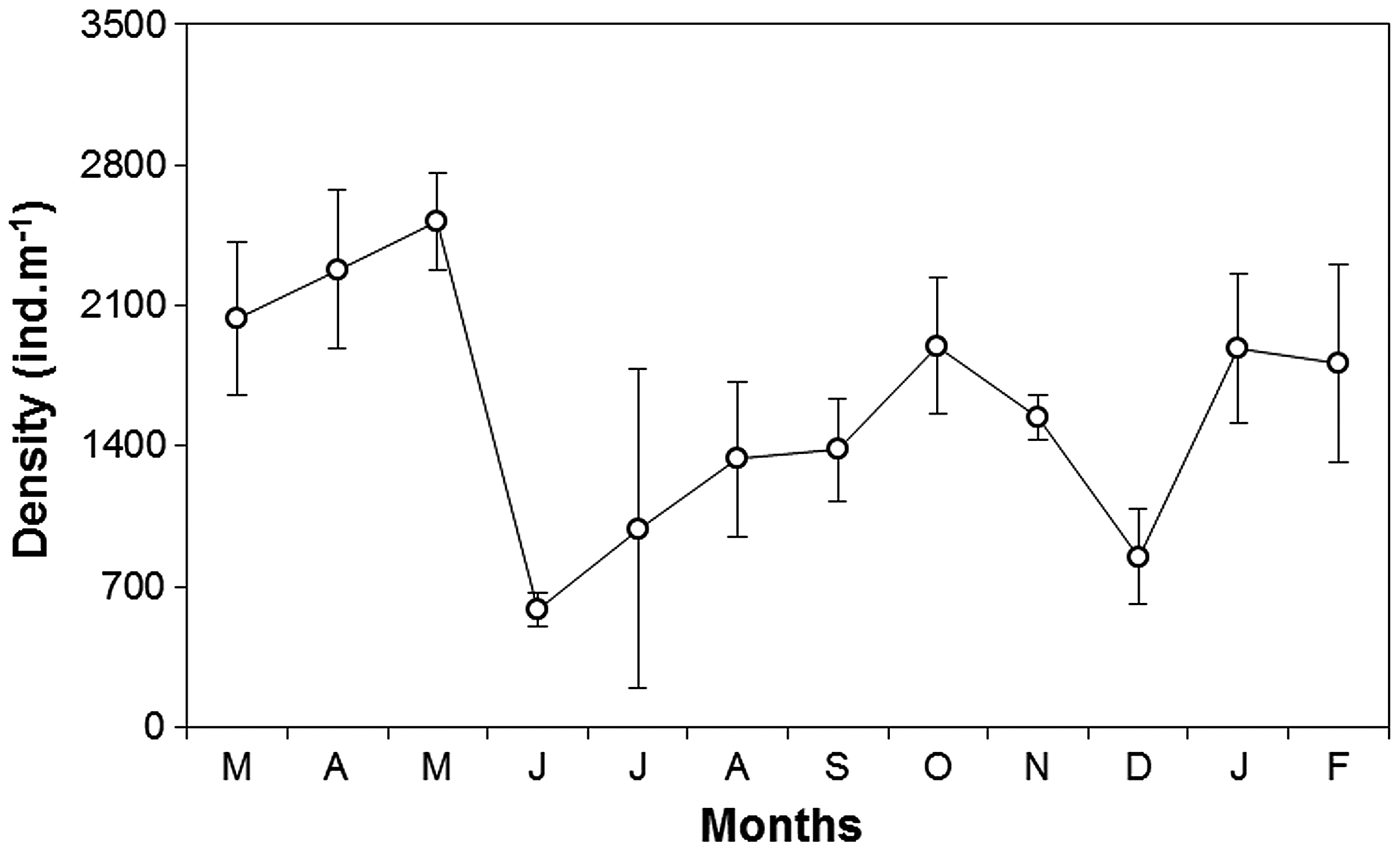
The Anomalocardia brasiliana population at Cidade showed moderate growth and no significant seasonal oscillation (C) was observed (Figure 2, Table 1). The annual mean density in Cidade was 1592.22 ± 169.87 ind. m−1 SE (52.92 ± 5.72 ind. m−2) and was lower in June, July and December (ANOVA; F 11;24 = 7.04; P < 0.001) (Figures 3 and 4). Juveniles – individuals smaller than 20 mm (Barreira & Araujo, Reference Barreira and Araujo2005) – comprised 57.5% of all individuals (N juv = 822). Distinct cohorts were apparent in the length-frequency distributions. Recruitment was continuous; however, lower rates were registered in winter, as was made evident by the low number of individuals during June and July (Figure 4).
Growth curve estimate for Anomalocardia brasiliana.
Mean monthly density of Anomalocardia brasiliana. The vertical bars represent the standard deviation (SD).
Length–frequency distributions of Anomalocardia brasiliana on each sampling date. N: number of individuals; MS: mean size of individuals.
Attributes of the Anomalocardia brasiliana population at Cidade Beach. L ∞, asymptotic length; K, curvature parameter; C, constant for the amplitude of seasonal oscillation of growth; t s, initial point of seasonal oscillation; t 0, theoretical age at length 0; Φ’, standard growth index; P, secondary production; B, biomass; P/B, turnover rate; t max, theoretical lifespan; Z, instantaneous mortality rate. Mean (±SE).
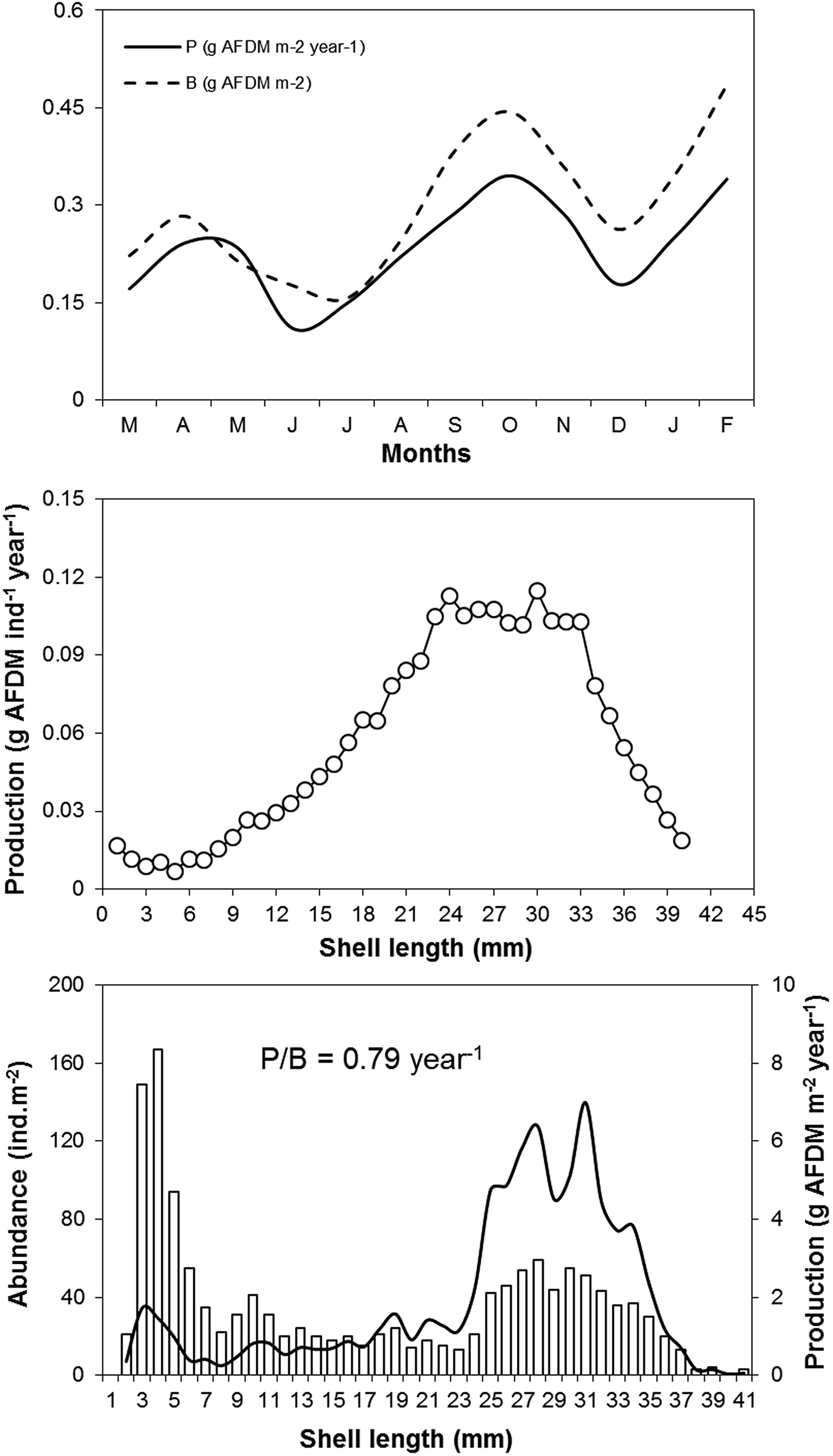
Overall, production and biomass were lower in winter (June and July) and higher in spring and summer (September to February) (Figure 5). The mean biomass was 3.56 g AFDM m−2, and mean production was 2.81 g AFDM m−2 year−1 (W=(8 × 10⁻⁶) L 2.91 (n = 573; r = 0.87; P < 0.001). The turnover rate (P/B) was 0.79 year−1. Individual production peaked at individuals larger than 24 mm in shell length and individuals with lengths from 25 to 35 mm were responsible for most of the estimated production (69%) (Figure 5).
Anomalocardia brasiliana. Production and biomass throughout study period (top). Individual production of soft tissue vs shell length (middle). Distribution of abundance (bars), and corresponding somatic production (line) for different length classes (bottom) at Cidade Beach.
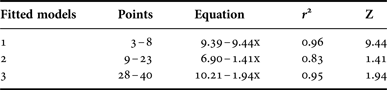
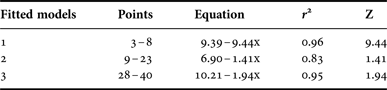
The size-converted catch curve of A. brasiliana on the overall length–frequency distribution and the von Bertalanffy growth function parameters showed no continuously descending right arm, which indicates that the single negative exponential model does not fit the data, and, consequently, the instantaneous rate of mortality Z is not constant over the whole lifespan of the population, i.e. there were two or more subsequent intervals in time with different mortality rates Z (Brey, Reference Brey2001; Lomovasky et al., Reference Lomovasky, Brey and Morriconi2005). Thus, we used the multiple negative exponential mortality model to estimate mortality rate Z. This method is similar to the former, but there are two or more subsequent intervals in time with different mortality rates Z (Brey, Reference Brey2001). This model indicated three mortality events (Table 2). The first event was the most intense, and involved young individuals, with shell lengths from 3 to 9 mm. The second event represented the mortality of young adults, with shell lengths between 9 and 23 mm, and was weaker than the others. The last event was intermediate when compared with the other two and was concentrated in older individuals with shell length larger than 28 mm.
Estimates of mortality (Z: year−1) based on the length-converted catch curve.
Environmental factors
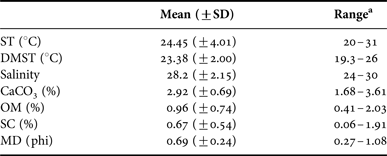
The texture of the sand at Cidade beach was found to be coarse to very coarse and contained low concentrations of silt and clay. The daily mean sea temperature ranged from 19.3°C in August 2007 to 26°C in March 2007 and January 2008. Interstitial salinity ranged from 24 in October 2007 to 30 in September 2007, December 2007 and February 2008 (Table 3).
Environmental variables analysed in the study area. ST, sediment temperature; DMST, daily mean sea temperature; OM, organic matter; SC, silt and clay; MD, mean diameter.
a Range corresponds to the minimum and maximum monthly means.
DISCUSSION
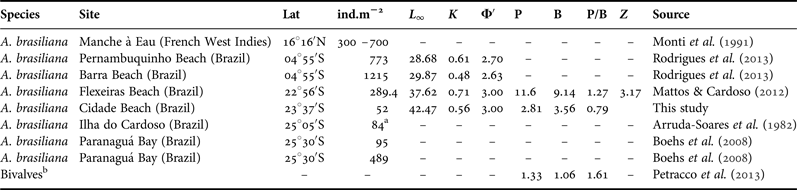
The growth and recruitment of A. brasiliana at Cidade were continuous, reflecting the absence of major fluctuations in limiting factors, such as temperature and food supply (Table 3). Similar results were recorded by Turra et al. (Reference Turra, Petracco, Amaral and Denadai2014a), who analysed the population biology of the venerid clam Tivela mactroides (Born 1778) in a nearby area in Caraguatatuba bay, and found that (i) the temperature fluctuations recorded in this area were not sufficient to alter the metabolic rates of the clams and (ii) the presence of three rivers (Santo Antônio, Lagoa and Juqueriquerê, Figure 1) that flow directly into Caraguatatuba bay provides a constant supply of food to the clams due to the arrival of suspended organic material (Turra et al., Reference Turra, Petracco, Amaral and Denadai2014a). This absence of major fluctuations in the limiting factors at Cidade Beach, however, does not imply that there are no restrictions on the population of A. brasiliana in this area. The mean abundance of A. brasiliana found in the study area was much smaller than densities observed in other areas along the Brazilian coast and in Manche à Eau, French West Indies (Table 4), suggesting that Cidade may not be the most favourable environment for this species.
Summary of published information on population attributes for Anomalocardia brasiliana. Lat, latitude; L ∞, asymptotic length; K, curvature parameter; Φ′, standard growth index; P, secondary production; B, biomass; P/B, turnover rate; Z, instantaneous mortality rate. (–) denotes no data available.
a The authors used a 5 mm mesh.
b Median value.
The smaller abundance of A. brasiliana at Cidade could be a consequence of the beach's physical features, as morphodynamic characteristics have been indicated as a major factor affecting the population attributes of sandy beach macrofauna (McArdle & McLachlan, Reference McArdle and McLachlan1991, Reference McArdle and McLachlan1992; Defeo et al., Reference Defeo, Gomez and Lercari2001, Reference Defeo, Lercari and Gomez2003; McLachlan & Dorvlo, Reference McLachlan and Dorvlo2005; McLachlan & Brown, Reference McLachlan and Brown2006). However, densities of A. brasiliana much higher than the density recorded at Cidade have been registered in contrasting morphodynamic environments, such as on intermediate beaches (Flexeiras Beach, Mattos & Cardoso, Reference Mattos and Cardoso2012) and tidal flats (e.g. Manche à Eau (Monti et al., Reference Monti, Frenkiel and Moueza1991), Paranaguá Bay (Boehs et al., Reference Boehs, Absher and Cruz-Kaled2008) and Barra and Pernambuquinho beaches (Rodrigues et al., Reference Rodrigues, Borges-Azevedo, Costa and Henry-Silva2013; Table 4). Moreover, the general features of Cidade, a sheltered intermediate beach, are similar to those described by Mattos & Cardoso (Reference Mattos and Cardoso2012) for Flexeiras Beach, where A. brasiliana had abundance almost six times higher than recorded at Cidade. Therefore, even though the physical features of sandy beach environments may exert great influence on a range of macrofauna species, they do not appear to be the main factor determining the low abundance of A. brasiliana found at Cidade Beach. Variation in salinity has also been identified as having an influence on the population biology of A. brasiliana, and several studies have reported that fluctuations in salinity associated with intense rainfall can dramatically affect the density and population dynamics of this species (Barreira & Araujo, Reference Barreira and Araujo2005; Boehs et al., Reference Boehs, Absher and Cruz-Kaled2008; Rodrigues et al., Reference Rodrigues, Borges-Azevedo, Costa and Henry-Silva2013). Nevertheless, the variation in salinity recorded at Cidade (24–30) during the period of study was much lower than the variation found in other studies that reported higher abundance of A. brasiliana (variation in salinity: Barreira & Araujo (Reference Barreira and Araujo2005): 15–40; Boehs et al. (Reference Boehs, Absher and Cruz-Kaled2008): 17–35; Rodrigues et al. (Reference Rodrigues, Borges-Azevedo, Costa and Henry-Silva2013): 10–49). Thus, as observed for the morphodynamic characteristics, it is unlikely that salinity can be considered a major factor affecting A. brasiliana at Cidade.
Several field and laboratory studies have reported strong influences of biotic interactions on the life-history traits of sandy beach populations (e.g. Bayne et al., Reference Bayne, Thompson, Widdows and Bayne1976; Woodin, Reference Woodin1976; Peterson, Reference Peterson1982; Olafson, Reference Olafson1989; Seitz et al., Reference Seitz, Lipcius, Hines and Eggleston2001; Schoeman & Richardson, Reference Schoeman and Richardson2002; Mendonça et al., Reference Mendonça, Raffaelli and Boyle2007; Ortega Cisneros et al., Reference Ortega Cisneros, Smit, Laudien and Schoeman2011; Turra et al., Reference Turra, Petracco, Amaral and Denadai2014b). Manipulative studies (Peterson, Reference Peterson1982; Peterson & Black, Reference Peterson and Black1987) showed that when many filter-feeding bivalves inhabit the same area, competition leads to a reduction of food intake, which, if maintained below some critical level, affects abundance, growth, reproduction and survivorship. Whereas A. brasiliana was the dominant mollusc in all areas where its population biology has been studied, Turra et al. (Reference Turra, Petracco, Amaral and Denadai2014b) estimated that, during the length of this study (2007–2008), the venerid clam T. mactroides had an abundance more than 40 times higher (~2240 ind. m−2) than A. brasiliana in Caraguatatuba Bay. Moreover, throughout the study period, there were two beds of the filter-feeding mussel Mytella charruana a few metres away from the sampling sector (Yokoyama & Amaral, Reference Yokoyama and Amaral2011). These mussel beds were about 24 m long × 15 m wide (Yokoyama & Amaral, Reference Yokoyama and Amaral2011) and formed by approximately 2000 living and dead mussels per metre squared (Amaral pers. observ). The extremely high abundance of T. mactroides in Caraguatatuba Bay, and the presence of the two mussel beds near the sampling area, suggest that the reduced abundance of A. brasiliana observed at Cidade may be related to a density-dependent control exerted by interspecific competitors; i.e. the high abundance of filter-feeding species observed during the study period may have led to a lower availability of food resources for A. brasiliana, even with the presence of the rivers in the study area. Reinforcing this idea, despite the constant food supply provided by the rivers flowing into the area, the organic matter content in the sediment recorded in this study was lower than values recorded in nearby areas (Corte et al., Reference Corte, Yokoyama and Amaral2014). In addition to the reduction of food supply, the large abundance of filter-feeding organisms may also affect A. brasiliana abundance by filtering larvae out of the water prior to the establishment of A. brasiliana, resulting in reduced recruitment rates and densities (Woodin, Reference Woodin1976; Olafson, Reference Ortega Cisneros, Smit, Laudien and Schoeman1989).
Besides competition, predation has also been proven to determine abundance and communities structure of intertidal invertebrates (Wilson, Reference Wilson1990), and natural predators, such as shorebirds, demersal fishes and crabs, and fishermen may deeply affect population parameters of marine bivalves (Peterson, Reference Peterson1982; Seitz et al., Reference Seitz, Lipcius, Hines and Eggleston2001, Pezzutto et al., Reference Pezzuto, Schio and Almeida2010). Among those predators, shorebirds and fishermen seem to exert the most pronounced effects on clam populations, and larger-sized individuals were observed to be the most impacted size class, as bigger prey is energetically more profitable and generate higher monetary incomes (Mendonça et al., Reference Mendonça, Raffaelli and Boyle2007; Rodrigues et al., Reference Rodrigues, Borges-Azevedo, Costa and Henry-Silva2013). Thus, the reduced abundance of A. brasiliana at Cidade could be linked to predatory pressure; however, the high asymptotic population length (L ∞), the long lifespan– evidence of low metabolic rates – and the greater mortality rate in smaller specimens than in larger ones seem to reduce the importance of predation over the A. brasiliana population at Cidade, and strengthen the hypothesis that competition may be a more effective factor. Since the asymptotic length and the growth rate are inversely related, the relatively low curvature parameter (K) estimated for A. brasiliana at Cidade (0.56) when compared with the values recorded at Flexeiras (0.71), and Barra and Pernambuquinho (0.61 and 0.48, respectively) may be an additional consequence of lower metabolic rates. Despite the low growth rate, the growth index phi prime recorded at Cidade was equal to the value recorded by Mattos & Cardoso (Reference Mattos and Cardoso2012) and higher than the values found by Rodrigues et al. (Reference Rodrigues, Borges-Azevedo, Costa and Henry-Silva2013). This result demonstrates that, even though A. brasiliana shows reduced growth rate at Cidade, its growth is still effective.
The peak in individual production of A. brasiliana at Cidade occurred in individuals with a 25 mm shell length, and suggests that this is the optimum size to harvest these venerid clams at Cidade. It is important to note that this optimum size is larger than the one recommended by Arruda-Soares et al. (Reference Arruda-Soares, Schaeffrer-Novell and Mandelli1982) (20 mm), for Ilha do Cardoso, south-east Brazil, which is the size commonly used along the Brazilian coast (Pezzuto et al., Reference Pezzuto, Schio and Almeida2010; Silva-Cavalcanti & Costa, Reference Silva-Cavalcanti and Costa2011). The difference in the optimum size estimated in this study and the one proposed by Arruda-Soares et al. (Reference Arruda-Soares, Schaeffrer-Novell and Mandelli1982) highlights that population studies must be constantly performed in all areas where invertebrates are harvested in order to provide accurate information for commercial and management purposes. At Cidade, individuals take approximately 1.2 years to achieve a length of 20 mm and produce 0.0647 g ind.−1 y−1 AFDM, whereas the time to achieve 25 mm is about 1.6 years and the estimated production is 0.112 g ind.−1 y−1 AFDM. Thus, by waiting only a few months more to harvest these clams, production would nearly double, resulting in higher profits. Therefore, we believe this larger size should be recommended as the ideal harvest size for the potential exploitation of this species at Cidade Beach, and further population studies should be conducted at other occurrence areas.
Production was correlated with biomass and showed smaller values in winter (June to August), probably related to lower recruitment rates and abundance of individuals recorded in this period. The annual somatic production, mean biomass and P/B ratio of A. brasiliana were lower at Cidade than was recorded by Mattos & Cardoso (Reference Mattos and Cardoso2012) at Flexeiras Beach (Table 4). These differences can be attributed mainly to the reduced abundance of individuals at Caraguatatuba Bay, and also to the lower values of K found in the present study. In a comparison of the median parameter estimates found by other studies for sandy-beach bivalves (Table 4), production and biomass of A. brasiliana at Cidade was found to be higher, which reinforces the importance for the use of this species as a fishery resource. However, the P/B ratio recorded in this area was much lower, reflecting a reduced turnover rate at Cidade. This lower P/B ratio is related to high juvenile mortality and reduced growth rates (Dolbeth et al., Reference Dolbeth, Cusson, Sousa and Pardal2012), and demonstrates that the A. brasiliana population at Cidade beach will mostly likely not be able to recover rapidly and, therefore, should be used with caution as a fishery resource.
In summary, A. brasiliana showed a moderate and continuous growth, continuous recruitment, and intermediate to long lifespan at Cidade Beach. The reduced abundance, production and turnover rate (P/B ratio) recorded in this study limits the use of this species as a fishery resource in the study area, and is likely related to density-dependent processes. This hypothesis should be properly investigated in manipulative studies and would certainly contribute to the ecological understanding of sandy beach species. To better understand the population dynamics of A. brasiliana and to reasonably manage this resource, it is important that further field evaluations be conducted on the range of its distribution.
ACKNOWLEDGEMENTS
We thank two anonymous referees for useful comments and the Centro de Biologia Marinha (CEBIMar/USP) for providing logistical support and environmental data. We also thank our colleagues, especially Gisele Pelegrini, who helped with the fieldwork and Rebecca Fletcher for the English revision of this manuscript.
FINANCIAL SUPPORT
This study was supported by the Brazilian National Council for Technological and Scientific Development (CNPq Process 131594/2008-7) and São Paulo Research Foundation (FAPESP Process 2008/52392-1).