

Introduction
Before their clinical manifestations, tumors (arising outside the brain and without direct diffusion to it) may elicit changes of neuronal function. Additionally, when facing a patient with clinically manifest cancer, the clinician should remember that the disease might induce distant effects due to nervous system involvement even without direct invasion of the nervous tissue. Finally, several drugs and other treatments used by oncologists can impair brain functions.
Tumor-related alterations cause cognitive, affective, and behavioral manifestations that can, in turn, influence the response of the patient to treatments and worsen the disease burden, ultimately increasing its social cost. Thus, the prompt recognition of tumor-related cognitive, affective, and behavioral abnormalities is important for their appropriate management and treatment.
Here, we review the clinical picture, pathophysiology, diagnosis, and management of the main tumor-related and treatment-related cognitive, affective, and behavioral syndromes in patients with cancer.
Search Strategy
References for this review were identified through searches of PubMed, Google Scholar, and MEDLINE without temporal and language limits, using the following terms in combination: “adjustment disorder,” “affective disorders,” “anxiety,” “behavior,” “behavioral deficits,” “behavioral disorders,” “breast cancer,” “cancer brain connectivity,” “cancer brain imaging,” “cancer brain spectroscopy,” “cancer hormonal mechanisms,” “cancer treatments,” “cancer,” “chemobrain,” “chemofog,” “chemotherapy,” “cognition,” “cognitive changes,” “cognitive effect,” “cognitive impairment,” “depression,” “extracranial cancer,” “inflammation,” “medical decision-making,” “negative emotions,” “neuroendocrinologic,” “neuroimmunologic,” “non brain tumors,” “pancreatic cancer,” “post-traumatic stress disorder,” “prognosis,” “prostate cancer,” “radiotherapy,” “radiotherapy,” “sickness behavior,” “stress.”
Pathogenesis
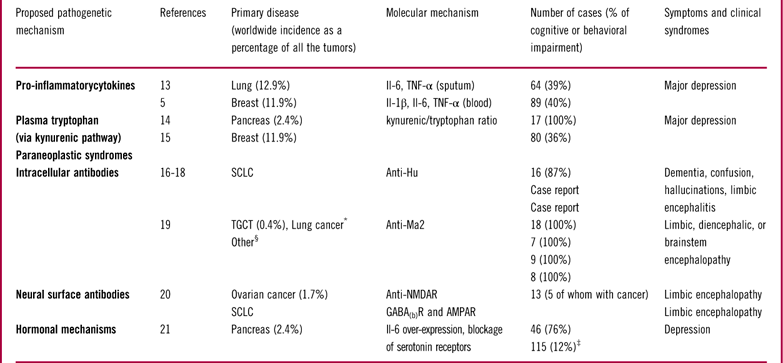
In the absence of any direct brain involvement, cancers may alter its functions through either the induction of a systemic inflammatory response or the action of neural antibodies (see Table 1).
Pathogenetic mechanisms for cognitive and behavioral dysfunction in patients with cancer

SCLC: small cell lung cancer; TGCT: testicular germ cell tumor;
* adenocarcinoma, large-cell carcinoma, and pleural metastasis of adenocarcinoma;
§ breast, parotid gland, ovary, colon, kidney, lymphoma, and extragonadalchoriocarcinoma;
‡ patients who developed pancreatic cancer following the mental illness designation). Incidence is in accordance with data reported by GLOBOCAN 2012.22
A large amount of evidence shows a correlation between cancer and high levels of pro-inflammatory cytokines, suggesting a link between depressive symptoms in cancer patients and their inflammatory status.Reference Dantzer, O’Connor, Freund, Johnson and Kelley 1 – Reference Miller, Ancoli-Israel, Bower, Capuron and Irwin 3 In animal models, depressive-like symptoms were induced by pro-inflammatory cytokines: the administration of IL-1β or TNF-α to rats and mice induced dose- and time-dependent behavioral disturbances (decreased motor activity, social withdrawal, anorexia, increased slow-wave sleep, cognitive alterations, and increased pain sensitivity).Reference Dantzer 4 Bouchard et al Reference Bouchard, Antoni and Blomberg 5 examined the relationship between depressive symptoms and inflammation in women with early-stage breast cancer. They found that depression correlated with increased levels of proinflammatory cytokines such as IL-1β and IL-6 and, in particular, with higher levels of TNF-α. In addition, cytokine administration in patients with melanoma frequently induced depressive symptoms, including suicidal ideation.Reference Schaefer, Horn and Schmidt 6
An interesting finding was that immune system activation resulting from the systemic administration of IL-2 and IFN-α to cancer patients decreased plasma tryptophan levels, and this reduction correlated with the depressive symptoms.Reference Capuron, Ravaud, Neveu, Miller, Maes and Dantzer 7 Decreased tryptophan could be due to the activation (mediated by pro inflammatory cytokines, including IFN-γ and TNF-α) of enzymes involved in tryptophan degradation.Reference Wirleitner, Neurauter, Schrocksnadel, Frick and Fuchs 8 Since tryptofan is the precursor of the neurotransmitter 5-hydroxytryptamine (serotonin), a decreased tryptophan bioavailability can lead to decreased serotonin synthesis. Increased tryptophan catabolism has been found in several malignancies.Reference Denz, Orth and Weiss 9 – Reference Iwagaki, Hizuta, Tanaka and Orita 11
The pathophysiological mechanisms of paraneoplastic syndromes have been also associated with the presence of either intracellular (anti-Hu, anti-Yo, anti-Ma, and Cv2/CRMP5) or neuronal-surface (NMDAR, AMPAR, and GABAbR) antibodies.Reference Zuliani, Graus, Giometto, Bien and Vincent 12 In the first case, because the targets are deeply located within cells, is thought that T-cell cytotoxicity is a key mechanism underlying the neuronal loss.Reference Bernal, Graus, Pifarre, Saiz, Benyahia and Ribalta 23 , Reference Voltz, Dalmau, Posner and Rosenfeld 24 Clinically, these syndromes share common psychiatric manifestations, ranging from short-term memory impairment to depression and hallucinations.Reference Kayser, Kohler and Dalmau 25
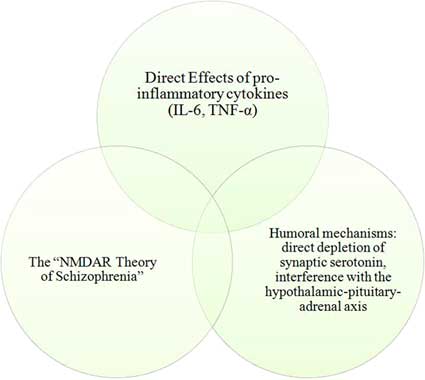
From a cognitive and behavioral point of view, the most paradigmatic and well-known condition is anti-N-methyl-D-aspartate receptor (anti-NMDAR) encephalites. Anti-NMDAR antibodies were first demonstrated in young women with ovarian cancers (eg, teratoma) but have also been identified in patients of both sexes without neoplastic disorders.Reference Irani, Bera and Waters 26 Depletion of NMDAR has dramatic effects on dopaminergic and cholinergic systems, thus leading to autonomic instability and on the ponto-medullary respiratory network, ultimately resulting in hypoventilation.Reference Dalmau, Gleichman and Hughes 27 , Reference Dalmau, Lancaster, Martinez-Hernandez, Rosenfeld and Balice-Gordon 28 More importantly, as a prominent result of the GABAergic dysfunction, patients develop a frontostriatal syndrome with anxiety, mania, paranoia, social withdrawal, and stereotypical behavior (echolalia, echopraxia), in accordance with the so-called “NMDAR theory of schizophrenia.”Reference Olney and Farber 29 , Reference Olney and Farber 30
Hormonal mechanisms might also play an important role in the development of depressive symptoms in cancer patients. For instance, pro-inflammatory cytokines are able to trigger the activation of the HPA axis by increasing the level of CRH and vasopressinReference Holsboer 31 , Reference Swaab, Bao and Lucassen 32 and to induce, in periphery, the glucocorticoid receptor resistanceReference Pace, Hu and Miller 33 and the abolition of the inhibitory effect of glucocorticoids on cytochine production.Reference Raison and Miller 34
Along this view, an intriguing and less known body of research concerns the association between pancreatic cancer and alterations in mood possibly due to multiple mechanisms.Reference Walker, Waters and Murray 35 Depression, anxiety, and suicidal thoughts often precede or accompany the diagnosis. Moreover, depression often occurs before clinical diagnosis; in addition, in later stages of disease, mood disorders are more pronounced in patients with pancreatic cancer than in those with other abdominal tumors.Reference Fras, Litin and Pearson 21 , Reference Fras, Litin and Pearson 36 However, the pathophysiology of this correlation remains largely unknown, possibly comprising tumor-induced changes in the neuroendocrine and acid–base systems.Reference Holland 37 In particular, IL-6 over-expression that is induced by pancreatic cancer is known to down-regulate the synthesis of dopamine and norepinephrine, thus interfering with the HPA axis. In addition, pancreatic cancer cells might secrete antibodies that directly block serotonin receptors or reduce their synaptic availability in the central nervous system (CNS).Reference Green and Austin 38 , Reference Brown and Paraskevas 39
Neuroimaging
Morphological magnetic resonance imaging (MRI) is normal in most cases, with the exception of anti-NMDAR encephalitis, for which approximately 50% of patients show T2 or FLAIR signal hyperintensity in the hippocampus, cerebellar or cerebral cortex, frontobasal and insular regions, and, occasionally, the spinal cord. The findings are usually mild or transient and can be accompanied by contrast enhancement in the meninges.Reference Dalmau, Lancaster, Martinez-Hernandez, Rosenfeld and Balice-Gordon 28
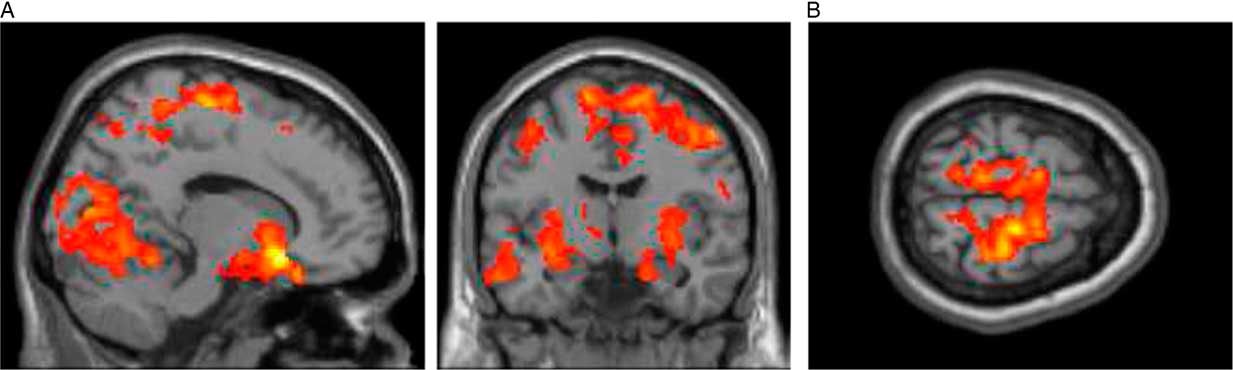
In depressed patients with cancer, brain increased inflammation, as reflected by plasma C-reactive protein and inflammatory cytokine levels, was associated with decreased brain connectivity studied with MRI within reward-related brain regions.Reference Li, Hou and Xu 40 Therefore, cancer-induced inflammatory status might induce decreased motivation, anhedonia, and psychomotor slowing, which are common in depressive syndromes. Furthermore, in breast cancer survivors, a resting state connectivity MRI study showed that fatigued patients exhibited greater connectivity between the inferior parietal lobule (IPL) and superior frontal gyrus (SFG), and between the medial prefrontal area and the IPL, and the degree of this increased connectivity was positively correlated with fatigue score, indicating an altered response of the resting state network to internal sensory input in fatigued subjects.Reference Felger, Li and Haroon 41 In the same patients, functional connectivity in the dorsal attention network decreases at 1 month and recovers 1 year after chemotherapy (CT) treatment in breast cancer survivors (Figure 1).
Possible pathophysiological mechanisms underlying cognitive and behavioral changes in patients with cancer.

Using proton magnetic resonance spectroscopy, differences in brain metabolites were shown in the posterior insula between fatigued and non-fatigued breast cancer survivors.Reference Hampson, Zick, Khabir, Wright and Harris 42
In another interesting study, patients affected by lung cancer before treatment demonstrated an alteration of glutamate concentration in the occipital cortex.Reference Zick, Zwickey and Wood 43 The relevance of this observation stands in the demonstration of an alteration of brain metabolism in cancer patients even before treatment.
Cognitive Changes
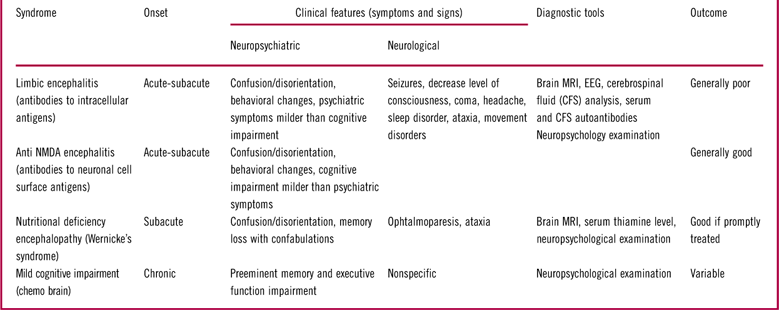
Cancer-related cognitive impairment is observed in severe, subacute clinical conditions (such as immune-mediated encephalitis or vitamin deficiency encephalopathy), or in chronic forms of cognitive decline (see Table 2).
Cancer-related cognitive syndromes

Paraneoplastic limbic encephalitisReference Benveniste, Zhang and Reinsel 44 is characterized by a subacute (days to several weeks) appearance of confusion and memory loss with an inability to remember new information due to dysfunction of the mesial temporal lobe (particularly the hippocampus), behavioral changes, and psychiatric symptoms (including depression, agitation and psychosis, aggression, and compulsive behavior); the latter symptoms are very common and often predominate, especially during the early stages of disease. Altered cognition may fluctuate, and the level of consciousness often declines progressively to coma. Recurrent temporal seizures are frequent and sometimes progress to status epilepticus. When neuronal damage derives from inflammation and necrosis (classic limbic encephalitis with intracellular antibodies), prognosis is usually poor and depends on the extension of cerebral lesions; on the contrary, synaptic interference mediated by cell-surface antibodies is reversible so that neuronal damage is limited and, if treated, anti-NMDA encephalitis has generally a better outcome.Reference Lancaster 46
Wernicke’s encephalopathy is a severe neuropsychiatric syndrome due to thiamine (Vitamin B1) deficiency, usually observed in malnourished alcoholics. It is characterized by a triad of signs including eye movement disorders, cerebellar dysfunctions (ataxia or gait instability), and altered mental status. Disorientation in time and space, confusion, impaired memory, and decreased attention are often described, sometimes evolving to severe and irreversible memory deficit with confabulation (Korsakoff’s syndrome). Cancer patients are at risk of vitamin deficiency for many reasons: thiamine intake could be insufficient due to malnutrition, nausea, vomiting, or prolonged parenteral nutrition; gastrointestinal surgery may induce malabsorption through the loss gastrointestinal surface.Reference Restivo, Carta, Farci, Saiu, Gessa and Agabio 47 A prompt administration of thiamine can lead to excellent clinical improvement.
Estimates vary widely regarding the number of patients who suffer cognitive impairment during the course of the cancer depending on the tissue affected; studies have reported cognitive dysfunction frequencies of 13%–70% in patients after treatment.Reference Ahles, Saykin and Furstenberg 48 , Reference Brezden, Phillips, Abdolell, Bunston and Tannock 49 Indeed, cognitive disorders (observed in up to 75%) appear during treatment and decrease after treatment (by up to 60%). Also, some patients (approximately 40%) exhibit cognitive impairment even before treatment.Reference Wefel, Lenzi, Theriault, Buzdar, Cruickshank and Meyers 50 The risk of cognitive impairment is approximately 3.5 times higher in treated (with chemotherapy) women affected by breast cancer than in untreated patients.Reference van Dam, Schagen and Muller 51 In most studies, the effect of cancer therapy was studied for a relatively short period (1–2 years post treatment); however, cognitive changes in long-term survivors are predictable. Although long-term post-treatment cognitive changes persist only in a minority (17–34%) of cancer survivors,Reference Ahles and Saykin 52 cross-sectional studies indicate that after therapy (up to 20 years) patients continue to exhibit worse cognitive performance than non-cancer controls.Reference Koppelmans, Breteler, Boogerd, Seynaeve, Gundy and Schagen 53
Neuropsychological assessment
Cognitive impairment affects memory and attention. Specifically, patients have difficulties in learning new information and remembering appointments, and exhibit an enhanced forgetfulness that can interfere with key daily living activities. An impairment in executive function also occurs, such as difficulties in planning daily programs or implementing strategies that require mental flexibility to cope with future needs and unforeseen events. This type of memory and attention complication is indicative of a frontal-subcortical profileReference Schagen and Wefel 54 and is suggestive of diffuse brain dysfunction.Reference Schagen, Hamburger, Muller, Boogerd and van Dam 55
Although cognitive impairment in oncological patients has been measured using a variety of tests, the affected domains are consistent: processing speed, executive function, and working memory are most strongly affected.Reference Jansen, Miaskowski, Dodd, Dowling and Kramer 56 An issue that is often discussed in cancer-related cognition assessment is whether cognitive impairments are better measured using self-reporting questionnaires or objective neuropsychological testing. Perceived cognitive impairment (PCI) is one of the most prevalent symptoms, and accurate subjective reports of cognitive impairment might be useful.Reference Jansen, Miaskowski, Dodd, Dowling and Kramer 56 The International Cognition and Cancer Task ForceReference Wefel and Schagen 57 suggested a core battery test that can identify the domains that are mainly affected: the Hopkins Verbal Learning Test-Revised (HVLT-R) to test learning and memory, the Trail Making Test (TMT) to test executive function and attention, and the Controlled Oral Word Association of the Multilingual Aphasia Examination to measure the speed of lexical fluency. The authors added that this basic examination could be completed by additional tests of working memory.
Management
Although modafinil and methylphenidate can improve cognition, they have side-effects. Donepezil has been also tested in cancer patients with cognitive impairment.Reference Jatoi, Kahanic and Frytak 58 Small improvements were described, but these findings require confirmation using larger and more conclusive trials.
Nonpharmacological approaches enhance cognitive performance and perceived cognitive functioning.Reference Von, Storey, Jansen and Allen 59 Rehabilitation programs include direct cognitive rehabilitation or compensatory training that addresses executive functioning and attention, processing speed, working and long-term memory, and visual-spatial skills. Most studies have shown significant improvements in objective and subjective cognitive performance and in quality of life in patients undergoing rehabilitation. Treated patients also showed better improvement in non-trained skills and better managed other psychological symptoms, such as anxiety, depression, and fatigue, and improved sleep quality.Reference Ferguson, Ahles and Saykin 60 Cognitive training appears to be the most effective for groups and individuals.Reference Von, Storey, Jansen and Allen 59 However, coping strategies such as cognitive-behavioral therapy (CBT)Reference Ferguson, Ahles and Saykin 60 or restorative and mindfulness-based stress reduction programsReference Hoffman, Ersser, Hopkinson, Nicholls, Harrington and Thomas 61 have been proposed to improve cognitive functions, and encouraging results emerged. Some improvements were reported with physical exerciseReference Baumann, Bloch and Weissen 62 and yoga practice,Reference Culos-Reed, Carlson, Daroux and Hately-Aldous 63 but these studies involved small sample sizes and different types of exercise programs.
Affective and Behavioral Changes
Patients with cancer are particularly vulnerable to the development of behavioral alterations and psychiatric disorders, which may in turn affect the course and outcome of the primary oncologic disease.Reference Ostuzzi, Benda, Costa and Barbui 64 Therefore, to implement the appropriate therapeutic intervention, it is important to establish a psychopathological diagnosis by differentiating expected emotional reactions from isolated symptoms (eg, anger or irritability) and syndromes (eg, adjustment disorders or major depressive disorder).
Several factors need to be considered regarding the etiology and pathophysiology of the behavioral alterations and psychiatric disorders that occur after cancer diagnosis. For instance, the stress, diagnosis, and treatment of cancer may cause substantial psychiatric morbidity. From a symptomatic perspective, moreover, acute anxiety, depression with despair, agitation, irritability, poor therapeutic adherence, anger, and sleep disturbances may be linked with the emotional and behavioral dimensions of pain.Reference Mehta and Roth 65 In addition, there are established risk factors for affective disorders and behavioral alterations after cancer diagnosis. These may be related to the cancer (eg, advanced cancers, certain types of cancer, being physically weakened by cancer) or not (eg, having a personal history or a positive family history of mental disorders, being unmarried). Finally, family members and caregivers of patients with cancers are also at higher risk for the development of behavioral alterations and mental disorders.
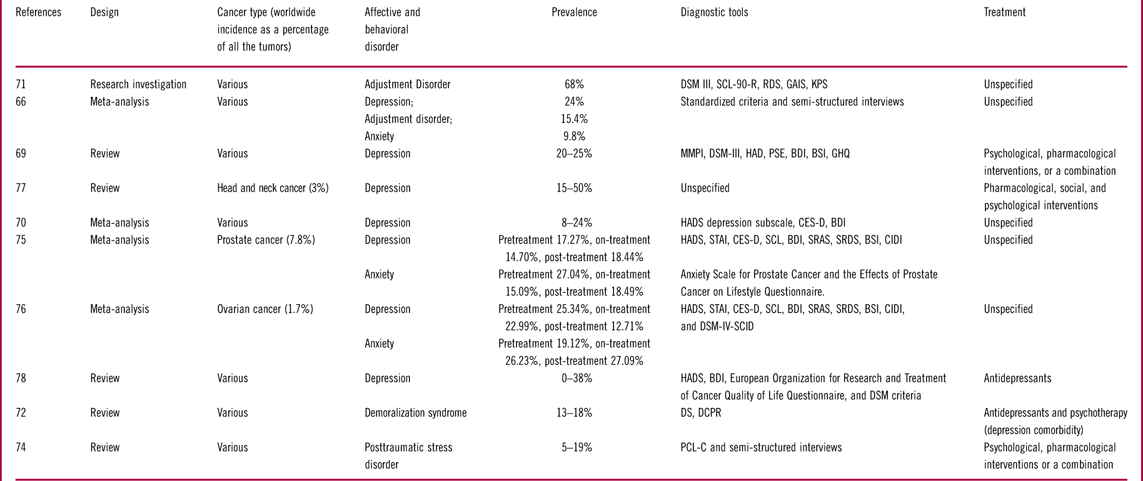
Although the Diagnostic and Statistical Manual of Mental Disorders, Fifth Edition acknowledges the possibility of diagnosing several types of mental disorders in patients suffering from cancer, the most frequently reported conditions are depressive, anxiety, trauma-, and stressor-related disordersReference Mitchell, Chan and Bhatti 66 , Reference Valente, Saunders and Cohen 67 (see Figure 2 and Table 3). Such conditions can occur at different stages of the illness: when patients receive the diagnosis, when they initiate treatment, and after they achieve remission.Reference Mitchell, Ferguson, Gill, Paul and Symonds 68
Functional connectivity in the dorsal attention network (premotor cortex, cuneus, and putamen) decreases at 1 month (A) and recovers 1 year after chemotherapy treatment (B) in breast cancer survivors (averaged images; modified from Dumas et al Reference Cruess, Antoni and McGregor 139 , with permission).

Affective and behavioral disorders in patients with cancer

BDI: Beck Depression Inventory; BSI: Brief Symptom Inventory; CES-D: Center for Epidemiologic Studies-Depression Scale; CIDI: Composite International Diagnostic Interview; DCPR: Diagnostic Criteria for Psychosomatic Research; DS: Demoralization Scale; DSM-III, Diagnostic and Statistical Manual for Disorders, version 3 (Interview assessment); GAIS: Global Adjustment to illness Scale;GHQ: General Health Questionnaire; HAD: Hospital Anxiety and Depression Scale; HADS: Hospital Anxiety and Depression Scale-depression subscale; KPS:Karnofsky performance scale; MMPI: Minnesota Multiphase Personality Inventory; PCL-C: PTSD (Posttraumatic Stress Disorder) Checklist Civilian Version; PSE: Present State Examination; RDS: Raskin Depression screen; SCID: Structured Clinical Interview for DSM; SCL: Symptom Checklist; SRAS: Self-Rating Anxiety Scale; SRDS: Self-Rating Depression Scale; STAI: State-Trait Anxiety Scale. Incidence is in accordance with data reported by GLOBOCAN 2012.22
Prevalence rates of depression in cancer patients ranging from 8% to 25%Reference Bottomley 69 , Reference Krebber, Buffart and Kleijn 70 have been reported. In a recent meta-analytic investigation, Mitchell et al Reference Mitchell, Chan and Bhatti 66 included 24 studies involving 4007 patients across seven countries in palliative-care settings. The pooled prevalence of depressive disorders, as identified through DSM or ICD criteria, was 16.5% (14.3% major depression and 9.6% minor depression); the prevalence of adjustment disorder was 15.4%, and the prevalence of anxiety disorders was 9.8%. Co-occurring diagnoses were common. All types of depression were found to occur in 20.7%, depression or adjustment disorder in 31.6%, and any mood disorder in 38.2% of the patients.Reference Mitchell, Chan and Bhatti 66 Notably, adjustment disorder with depressed and/or anxious mood was the most common diagnosis (68%).Reference Derogatis, Morrow and Fetting 71
Another distinct syndrome to take into consideration when assessing depression is demoralization, which has been described as a specific and different condition of existential distress in individuals at the end of their life. Patients describe feelings of hopelessness and/or helplessness, which are often related to the experience of a loss of meaning in life. Certain symptoms may overlap with major depression. Demoralization in the medically ill population recently showed prevalence rates ranging from 20.6% to 33.3% of cases.Reference Robinson, Kissane, Brooker and Burney 72 Anxiety disorders have been variably associated with the diagnosis and treatment of cancer, and their prevalence can paradoxically increase after the treatment of cancer is concluded, because patients may feel more vulnerable.Reference Miller and Massie 73 The prevalence of posttraumatic stress disorder (PTSD) in cancer patients ranges from 5% to 19%.Reference Rustad, David and Currier 74
The lifetime prevalence rates of affective disorders in patients with ovarian and prostate cancers in pre-, during-, and post-treatment settings range from 8% to 27%.Reference Watts, Leydon and Birch 75 , Reference Watts, Prescott, Mason, McLeod and Lewith 76 Patients with head and neck cancer were found to show the highest rates of major depressive disorder among oncological patients, with an incidence of 15%–50%.Reference Lydiatt, Moran and Burke 77 Previously, depression has been strongly associated with oropharyngeal (22%–57%), pancreatic (33%–50%), breast (1.5%–46%), and lung (11%–44%) cancer, with lower rates in in patients affected by other forms of cancer, such as colon (13%–25%) and gynecological (12%–23%) cancers and lymphoma (8%–19%).Reference Massie 78
In terms of prognosis, evidence showing that depression is responsible for significant suffering and distress, reduces participation in medical care, and can prolong the hospital stay needs to be particularly taken into account.Reference Colleoni, Mandala, Peruzzotti, Robertson, Bredart and Goldhirsch 79 , Reference Prieto, Blanch and Atala 80
The suicide incidence in cancer was found to be approximately double that in the general population.Reference Anguiano, Mayer, Piven and Rosenstein 81 Diagnoses specifically associated with higher suicide rates include prostate, lung, pancreatic, head, and neck cancers, with the first year after diagnosis carrying a higher risk for suicide.Reference Anguiano, Mayer, Piven and Rosenstein 81 , Reference Llorente, Burke and Gregory 82
Management
Though the treatment of major depression and other comorbid psychiatric disorders improves the quality of life in patients with cancer, fewer than half of patients receive psychopharmacological treatment.Reference Valente, Saunders and Cohen 67 , Reference Ryan, Schofield and Cockburn 83
In addition, the treatment of depression has proven to increase patient satisfaction with oncologic treatments and related compliance.Reference Stagno, Stiefel, Rousselle and Guex 84 Recommendations on the use of psychotropic medications in oncologic patients have been formulated by dedicated task forces and guidelines are available.Reference Ramasubbu, Taylor and Samaan 85 , Reference Rayner, Price, Hotopf and Higginson 86 The efficacy of antidepressants in oncology is well established on the basis of randomized, controlled studies.Reference De Fazio, Barberi, Caglioti, Pierfrancesco, Piersandro and Segura-Garcia 87 – Reference Holland, Romano, Heiligenstein, Tepner and Wilson 89 Thekdi et al Reference Thekdi, Trinidad and Roth 90 reported that selective serotonin reuptake inhibitors (SSRIs) represent the first choice for the treatment of depression and generalized anxiety and the prevention of panic attacks in cancer patient.Reference Thekdi, Trinidad and Roth 90 Benzodiazepines are considered well-tolerated, safe, and effective treatments in the short-term, although their long-term use can induce tolerance and reduced efficacy.Reference Thekdi, Trinidad and Roth 90 Other antidepressants, such as mirtazapine and bupropion, were found to effectively target not only depression and anxiety but also symptoms like sleep alterations, nausea, anorexia, fatigue, reduced concentration, and nicotine dependence, even though their tolerability in patients with anxiety may be problematic.Reference Kim, Shin and Kim 91 , Reference Moss, Simpson, Pelletier and Forsyth 92 Several drugs are helpful for the adjuvant treatment of cancer-related symptoms, such as, for instance, psychostimulants for fatigue.Reference Minton, Richardson, Sharpe, Hotopf and Stone 93 Benzodiazepines are particularly useful for the treatment of insomnia and, when combined with anti-emetics, were found to relieve chemotherapy-induced nausea and vomiting.Reference Grassi, Caruso, Hammelef, Nanni and Riba 94 Neuropathic pain may benefit from adjuvant treatment with selective serotonin norepinephrine reuptake inhibitors (SNRIs), low-dose tricyclic antidepressants, and SSRIs.Reference Saarto and Wiffen 95 , Reference Smith, Pang and Cirrincione 96 An effective psychopharmacological integrated treatment is mandatory in cancer patients given the evidence that untreated psychiatric comorbidity is associated with higher disability, poorer quality of life, and reduced adherence to cancer treatment.Reference Kroenke, Theobald, Wu, Loza, Carpenter and Tu 97
If, on one hand, different psychopharmacological treatments can be effective in ameliorating various cancer-related psychiatric symptoms, on the other hand, some commonly used psychotropics can interfere with the progression of specific forms of cancer and with the action of certain antineoplastic drugs. Among the former, for instance, several antipsychotics were shown to increase serum prolactin, and hyperprolactinemia has been linked, in turn, to the development of mammary gland tumors in animal studies.Reference Reutfors, Wingard and Brandt 98 If, in these cases, second generation antipsychotics should be preferred to neuroleptics, nonetheless, more studies and updated recommendations from treatment guidelines are needed to assess pros and cons of undertreatment of serious psychiatric disorders in patients with cancer, based on unproven contraindications to psychiatric medications.Reference Froes Brandao, Strasser-Weippl and Goss 99
Another noteworthy issue is represented by the interaction that some antineoplastic drugs may have with psychotropic drugs that interfere with cytocrome P450 (CYP). One of the most studied cases in the field is represented by tamoxifen, an adjuvant hormonal therapy that is widely used for estrogen receptor positive metastatic breast cancer. Given that tamoxifen is metabolized to its more active form (endoxifen) by CYP2D6, decreases in CYP2D6 activity due to interactions with psychotropic drugs that inhibit it (eg, paroxetine and fluoxetine) may reduce the activity of tamoxifen and confer an increased risk of recurrence.Reference Gaston and Kolesar 100 If, in such contexts, psychotropic drugs that do not interfere with the activity of CYP2D6 should be preferred, recent data in the field have assessed the available evidence in a more balanced way,Reference Nevels, Gontkovsky and Williams 101 recommending caution and considering clinical aspects that vary from case to case.
Over the last several years, novel approaches for the management of behavioral alterations in patients with cancer have been proposed and examined. Among these, ketamine—a dissociative anesthetic psychotropic compound—has been tested in oncologic patients with treatment-resistant depressionReference Thangathurai, Roby and Roffey 102 , Reference Zanicotti, Perez and Glue 103 and suicidal ideationReference Fan, Yang and Sun 104 with encouraging results. As for non-oncologic psychiatric patients, however, it remains to be further clarified whether the role of ketamine is maintained beyond the short-term. Other authors have hypothesized that brain stimulation techniques, particularly non-invasive interventions like repetitive transcranial magnetic stimulation (rTMS) and transcranial direct current stimulation (tDCS), might be helpful for patients with cancer and psychiatric symptoms in light of their selective action, lack of systemic effects, and no interaction with concomitant antineoplastic drugs. However, no controlled investigation is currently available to endorse an approach of this kind.
Chemotherapy- and Radiotherapy-Induced Disturbances
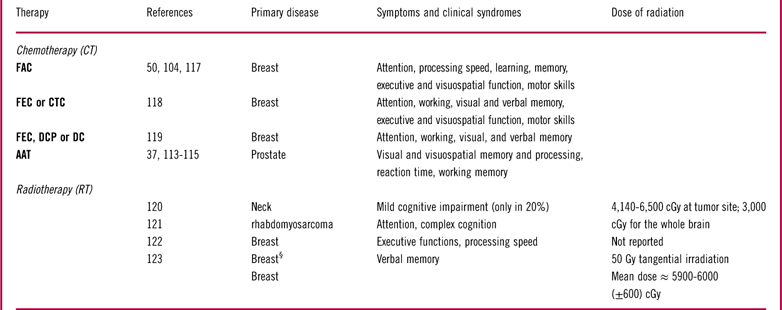
Several studies have shown chemotherapy-related cognitive dysfunction (see Table 4). The design of these studies was mainly cross sectional: the cognitive function of treated patients was compared with matched controls, and the identification of significant cognitive impairments in the chemotherapy groups addressed the pathogenetic role of cytotoxic agents.Reference Ahles, Saykin and Furstenberg 48 , Reference Brezden, Phillips, Abdolell, Bunston and Tannock 49 , Reference van Dam, Schagen and Muller 51 , Reference Schagen, Hamburger, Muller, Boogerd and van Dam 55 , Reference Schagen, van Dam, Muller, Boogerd, Lindeboom and Bruning 105 , Reference Tchen, Juffs and Downie 106 Although such studies were fundamental to validating the cognitive complaints of cancer patients, they did not control for confounding factors. Yet, cancer patients may complain of cognitive symptoms before any treatment. Consequently, more recently the study design changed; dismissing a cross-sectional experimental design, prospective studies were conducted. Regardless of the study design used, breast cancer patients who were treated with cytotoxic agents showed a cognitive decline relative to their pre-treatment cognitive status and to breast cancer patients without chemotherapy and non-cancer controls over the same period.Reference Schagen and Wefel 54 , Reference Schagen, Hamburger, Muller, Boogerd and van Dam 55 , Reference Ahles, Root and Ryan 107 , Reference O’Farrell, MacKenzie and Collins 108 Specific drugs may have different effects. Fluorouracil can induce hyperammonemia,Reference Froes Brandao, Strasser-Weippl and Goss 109 thus causing hyperammonemic encephalopathy, whose clinical manifestations range from psychomotor slowing and flapping tremor to severe consciousness disturbances.Reference Kagawa, Kato and Naito 110 Also, luteinizing hormone-releasing hormone (LHRH) agonists are associated with non-nonsteroidal antiandrogens to obtain a combined androgen blockage,Reference Loblaw, Virgo and Nam 111 , Reference Miyamoto, Rahman and Chang 112 and this treatment can cause neurological disturbances such as visuomotor slowing, slowed reaction times, and impaired working memory.Reference Bussiere, Beer, Neiss and Janowsky 113 – Reference Salminen, Portin, Koskinen, Helenius and Nurmi 115
Chemo- and radiotherapy-associated cognitive impairment

FAC: 5-fluorouracil, doxorubicin, and cyclophosphamide; FEC: 5-fluorouracil, epirubicin, and cyclophosphamide; CTC: cyclophosphamide, thiotepa, and carboplatin; DCP: doxorubicin, cyclophosphamide, and paclitaxel; AAT: androgen ablation therapy; § RT in combination with CT.
Several trials found a correlation between cognitive dysfunction and chemotherapy in women with non-metastatic breast tumors.Reference Ahles, Saykin and Furstenberg 48 , Reference Wefel, Lenzi, Theriault, Buzdar, Cruickshank and Meyers 50 , Reference Schagen, van Dam, Muller, Boogerd, Lindeboom and Bruning 105 , Reference Tchen, Juffs and Downie 106 , Reference Wefel, Lenzi, Theriault, Davis and Meyers 116 This association is termed “chemobrain.” In women receiving a regimen of 5-fluorouracil, doxorubicin, and cyclophosphamide, Wefel et al Reference Wefel, Lenzi, Theriault, Buzdar, Cruickshank and Meyers 50 showed that approximately 60% of patients experienced a cognitive decline with decreased attention, learning, and processing speed, thus suggesting a disruption in frontal network systems. Interestingly, many patients improved 1 year after completing 5-fluorouracil, doxorubicin, and cyclophosphamide (FAC) therapy, especially when work-related abilities were tested. In this context, it is worth noting that before the initiation of systemic adjuvant therapy, women with breast cancer exhibited declines in a wide range of cognitive functions, involving verbal learning, nonverbal memory, confrontational naming, complex visuoconstruction, and fine motor dexterity.Reference Wefel, Lenzi, Theriault, Davis and Meyers 116 Women treated with tamoxifen for breast cancer have lower brain concentrations of myo-inositol.Reference Ernst, Chang and Cooray 124 Tamoxifen induces areas of hypometabolism in the inferior and dorsal lateral frontal lobes and decreases right hippocampal volumes.Reference Eberling, Wu, Tong-Turnbeaugh and Jagust 125
The irradiation of head and neck tumors (in particular cancer of the nasopharynx and paranasal sinuses) might cause radiation-induced vascular damage in the medial temporal lobe, thus affecting memory. Irradiation triggers an inflammatory response with endothelial injury.Reference Abayomi 126 Paulino et al Reference Paulino 120 reported intellectual and academic delays in 3 out of 30 children who had received megavoltage radiotherapy for head and neck rhabdomyosarcoma. A moderate general developmental delay including pronounced motor deficits that were associated with various levels of perceptual and cognitive problems was observed in all children treated with total brain irradiation prior to bone marrow transplantation.Reference Smedler and Bolme 127 Cognitive impairment accompanying radiotherapy has also been reported after the irradiation of body regions that are distant from the brain, in particular for non-metastatic breast cancer treatment,Reference Jim 121 , Reference Phillips 122 , Reference Geinitz, Zimmermann and Stoll 128 , Reference Quesnel, Savard and Ivers 129 possibly by increasing levels of IL-6.Reference Shibayama 123 Radiation dose, site of primary tumor, and the timing of association with chemotherapy (CT) are variable (Table 4), and further studies are needed to assess possible cognitive and behavioral effects induced by tissues irradiation. Overall, while CT has a specific negative effect on verbal fluency, breast cancer treatment in general negatively affects verbal memory. However, cognitive impairment induced by either CT or radiation therapy is probably mild, and difficult to disentangle from that due to primary disease.
Relevance of Neuropsychopathological Abnormalities for the Clinical Outcome
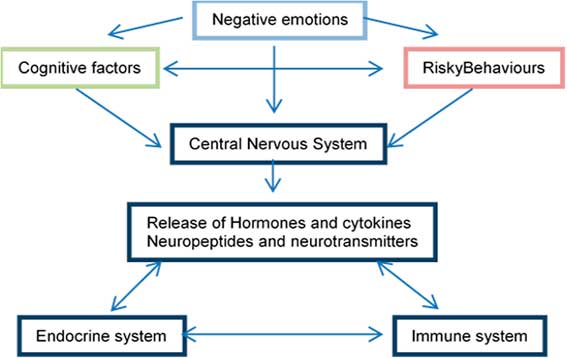
Depressive symptoms and psychosocial stressors can be considered risk factors for cancer incidence and mortality by affecting several neuroimmunological and neuroendocrinological biochemical pathways.Reference Alcorso, Sherman, Koelmeyer, Mackie and Boyages 130 – Reference Moynihan and Ader 132 When a potentially risky event is perceived by the subject as overwhelming the available resources (such as coping strategies and social support), the nervous system activates pathways that release catecholamines, corticosteroids, and opioids.Reference Renzi, Vadilonga and Gandini 133 Because the receptors for these chemical signals (neurotransmitters, neuropeptides, neurohormones, and adrenal hormones) are also located on lymphocytes and macrophages, the release of these cerebral messengers can influence immune and endocrine functionality (see Figure 3) in vivo and in vitro. Reference Ader, Cohen and Felten 134
The interactions between psychological aspects, the CNS, and the endocrine and immune systems.

Through these mechanisms the brain exerts an immunoregulatory role in oncologic diseases.Reference Reiche, Nunes and Morimoto 135 For example, the plasma concentration of epinephrine, which is associated with intense emotions, especially fear, is inversely related to specific immune functions in lymphocytes and monocytes. The experience of stressful events is concomitant with the release of high concentrations of corticosteroids that have important immunosuppressive effects on the functions of lymphocytes and macrophages and might affect their circulation patterns.Reference O’Leary 136 , Reference Segerstrom and Miller 137
In this context, psychological interventions during oncologic treatments are important resources that aim to improve psychological conditions and therefore revert dysfunctional immunological and endocrinal mechanisms with consequent positive effects on the disease. Studies have reported the improvement of immunologic parameters (eg, lymphocyte proliferationReference McGregor and Antoni 138 and their related physiologic values (eg, cortisol levels) in patients who attended psychological support sessions.Reference Cruess, Antoni and McGregor 139 Andersen et al Reference Andersen, Yang and Farrar 140 examined the influences of a psychosocial treatment on survival and recurrence (227 women with non-metastatic breast cancer) immediately after surgery. Psychological intervention included training for relaxation and stress reduction, coping skills implementation, and strategies to change health behavior related to nutrition and physical activity. The treatment group showed a significant decrease in overall and breast cancer–specific mortality rates, and the risk of cancer recurrence was reduced by 45% at a median of 11 years follow-up.Reference Andersen, Yang and Farrar 140
Studies on cancer survivors have emphasized the role of positive emotions, resilience, and optimism in contributing to better adjustment and quality of life.Reference Cohen and Numa 141 , Reference Gotay, Ransom and Pagano 142 Empirical evidence has shown that these protective psychological factors predict better coping among cancer patients.Reference Fioretti and Smorti 143 , Reference Romundstad, Svebak, Holen and Holmen 144
Because stress impacts on neuroendocrine and neuroimmunological mechanisms influencing tumor onset, progression, and recurrence (eg, ovarian cancer),Reference Lutgendorf and Sood 145 psychosocial and psychoeducational interventions must be considered an integral part of cancer treatment.
The integrity of cognitive aspects (such as attention, perception, and thought) may indirectly influence cancer incidence and progression from pre-clinical conditions. For example, conditions of depression and distress may impact on perceptions of risk and on decision-making strategiesReference Schwarz 146 leading to the adoption of risky behaviors (such as smoking, alcohol and drug consumption), which in turn could cause immunological and endocrinal changes.Reference Segerstrom 147 Moreover, a condition of distress and a bad patient–physician relationship has been shown to influence adherence to medical prescriptionReference Pirl and Roth 148 and to interfere with attendance at screening procedures (such as mammography) and with active surveillance of tumors with low metastatic potential.Reference Orom, Homish, Homish and Underwood 149 In conclusion, making decisions, especially about healthcare, is not a linear process; patients’ viewpoints are influenced by cognitive (eg, biases and heuristics) and emotional factors (eg, intense emotional expressions), which modulate the presentation and interpretation of medical information.Reference Renzi, Riva, Masiero and Pravettoni 150 It is extremely important that patients are supported in order to not succumb to cognitive biases and to allocate attention efficiently to improve comprehension and make optimal decisions.Reference Pravettoni, Mazzocco, Gorini and Curigliano 151
Clinical Implications
Cancer can induce neuropsychological and behavioral abnormalities through different mechanisms, with several practical implications. First, every patient reporting an abrupt onset of mood or cognitive dysfunction without a clear hereditary predisposition or other immediately evident environmental or medical cause should be screened also for the possible presence of cancer. Similarly, patients affected by a chronic psychiatric disorder exhibiting a sudden change of their psychopathological or cognitive picture should be screened for cancer also. Yet, as discussed above, several tumors may appear as mild cognitive or psychiatric disturbances months before they become manifest. Second, clinicians should bear in mind that the decision-making capacity in patients with cancer can be impaired, yielding forensic implications. Finally, but perhaps most importantly, the data reviewed above indicated the importance of interventions that aim to restore normal cognitive and behavioral conditions. Because psychological and cognitive wellness importantly contribute to the quality of life in patients with cancer, clinicians, in addition to treating the primary manifestation of cancer, should always carefully search for and treat cognitive and mood abnormalities. Although there are no systematic data, our experience is that patients undergoing chemotherapy should be carefully evaluated for their driving ability.
We therefore propose that every patient accessing a cancer hospital should be formally screened for cognitive, psychiatric, or psychological abnormalities that, if present, should be immediately treated. To ensure this, a multidisciplinary team comprising neurologists, psychiatrists, neuropsychologists, and psychologists is recommended in all cancer centers.
Future Directions
It is fundamental to expand our frame of reference to explore the neurobiological activities that have been related to stress factors and other psycho-social phenomena which may operate in concert with stress-related neuroimmunologic and neuroendocrinologic changes in influencing disease outcomes. Future challenges consist in demonstrating how psychological processes and interventions influence tumor environmental complexity through underlying mechanisms mediated by stress and negative emotionality and related to the clinical course of disease. To understand these phenomena in depth, new study designs and consequent paradigms of cure should be tested.
First, it could be useful to develop a translational human-animal design to investigate specific targets of tumorigenic activity determined by stress using a murine model. Moreover, in everyday clinical practice a new therapeutic approach, which encompasses a stronger neuro-psycho-oncological intervention, should be adopted. As already demonstrated by previous research, stress management interventions for cancer patients have promising effects on psychological aspects, tumor-related factors, and prognosis and should be included in oncologic routine care. Future study designs should focus on ameliorating psychological treatment and support during the management of the oncologic disease. This endpoint could be achieved through the personalization of interventions, which, according to the patients’ needs, could include sessions that enhance decision-making strategies and/or coping skills. In this framework, the assessment of patients’ cognitive and psycho-emotional factors would be important in order to draw individual profiles and customize treatment. Simple interactive tools (ie, an “app” for cell phones and tablets) to explore patients’ preferences giving immediate feedback (for example about drugs characteristics or side effects) to physicians, and to help patients in every day choices regarding the disease, may constitute a useful and innovative way to face the pathology.