Introduction
Recent methodological advances in radiocarbon measurements and their statistical interpretation have led to a profound change in our perception of temporality in past societies (Buck et al., Reference Buck, Kenworthy, Litton and Smith1991; Bronk Ramsey, Reference Bronk Ramsey1995, Reference Bronk Ramsey, Jull and Hattlé2013; Bayliss, Reference Bayliss2009; Bayliss et al., Reference Bayliss, Bronk Ramsey, Van der Plicht and Whittle2007; Scarre, Reference Scarre2010; Whittle et al., Reference Whittle, Healy and Bayliss2011). Accelerator Mass Spectrometry (AMS) dating has made it possible to use smaller samples, thus expanding the pool of datable materials; the standard deviation of measurements is progressively decreasing, and the chronological models—mainly the Bayesian framework—have shown the possibility of narrowing the broad spans of prehistoric chronology to the scale of an individual's lifetime. These developments have provided a great opportunity to create a refined chronological framework that may be crucial, particularly in the study of the megalithic phenomenon, which is characterized in many cases by long periods of use.
The Iberian Peninsula has not benefited from these improvements, at least not in the same way as other European regions. Only a few graves have been dated, with the aim of confirming a broad cultural framework for this phenomenon. Radiocarbon chronology was not an important concern until very recently. That is the case of south-eastern Iberia, which has one of the most important concentrations of megalithic tombs in Western Europe. The lack of radiocarbon dates—just ten up to 2012—has been one of the main factors hindering a better understanding of this phenomenon (Aranda Jiménez, Reference Aranda Jiménez, Berrocal, García Sanjuán and Gilman2013). Our current research hopes to change this situation with new insights into the chronology and temporality of these megalithic monuments. For this purpose, we undertook a radiocarbon dating programme in 2012. It has four main goals: i) to establish the chronology and timing of the megalithic architecture in south-eastern Iberia; ii) to determine the period of construction and use of the different types of megalithic monuments; iii) to establish the timescale and span of funerary use of single megalithic graves; and iv) to explore the continuity and reuse of these ritual spaces (Aranda Jiménez & Lozano Medina, Reference Aranda Jiménez, Lozano Medina, Barceló and Morellforthcoming).
As part of this programme we focused our attention on cemeteries such as El Barranquete (Nijar, Almería) that offer an excellent opportunity to achieve these goals. Instead of several dates from different burials, we found inspiration in the biographical approach to the study of material culture, a useful framework for exploring the active role of megalithic monuments in social life (Holtorf, Reference Holtorf1996; Bradley & Williams, Reference Bradley and Williams1998; Gosden & Marshall, Reference Gosden and Marshall1999; Bradley, Reference Bradley2002; Díaz-Guardamino et al., Reference Díaz-Guardamino, García-Sanjuán and Wheatley2015). A programme was planned to determine the timescale and funerary span of a single megalithic tomb based on the dating of the minimum number of individuals identified by the anthropological study. Temporality was, therefore, not assessed on the basis of one or two dates per tomb, the most common situation in Iberia until now, but by using large radiocarbon series for every ritual space studied. For this purpose, we chose Tomb 11 of the El Barranquete cemetery because the typology of some grave goods led us to suspect that ritual activity expanded during the Early Bronze Age. Thus, in addition to establishing the timespan of the tomb, we had the possibility of assessing its eventual funerary reuse, one of our main goals (Aranda Jiménez & Lozano Medina, Reference Aranda Jiménez and Lozano Medina2014).
According to the anthropological study, the minimum number of individuals identified was twelve (Aranda Jiménez & Lozano Medina, Reference Aranda Jiménez and Lozano Medina2014). This was the criterion used to select the samples to ensure that no individual was dated twice. This pre-condition is very important when taking a Bayesian approach to the interpretation of the chronological data. The algorithm used in this analysis assumes that every date is statistically independent of the others (Bronk Ramsey, Reference Bronk Ramsey2001). The results of the twelve radiocarbon dates and their Bayesian modelling stress three main conclusions: i) the very late construction of Tomb 11 (2452–2316 cal bc, at 68% probability), apparently one of the last megalithic monuments to be built in southern Iberia; ii) the importance attained by funerary practices during the Bronze Age: after a short Chalcolithic phase of interments, the tomb continued in use without any chronological hiatus for a long period until the last centuries of the second millennium cal bc; and iii) the existence of radiocarbon dates for human bones that fall into cultural periods that would be unthinkable if only the typology of their grave goods were analysed (Aranda Jiménez & Lozano Medina, Reference Aranda Jiménez and Lozano Medina2014).
The biographical approach applied to the dating programme has proved to be a powerful tool that contributes new insights and changes many of our current approaches to the megalithic phenomenon. The chronology and temporality of Tomb 11 opened the way for unexpected inquiries. For example, is the timescale of this tomb similar to that of the other burials in the cemetery? Is the continuity of funerary practices during the Bronze Age also characteristic of other tombs? What were the scale and intensity of the reuse practices? Was the deposition of human remains with no related grave goods in cultural periods different from those considered to be part of the construction and use of the cemetery a common ritual behaviour? It soon became clear that a new phase of the dating programme was needed if we really wanted to base our assessments on robust chronological foundations. We expanded the biographical approach to the study of the chronology and temporality of Tombs 8, 9, and 10 at the El Barranquete cemetery. In what follows, the new radiocarbon series will be analysed in a Bayesian framework and their social and cultural implications discussed in the context of the megalithic phenomenon in south-eastern Iberia. First, however, we shall outline the general background of this cemetery.
The Cemetery of El Barranquete
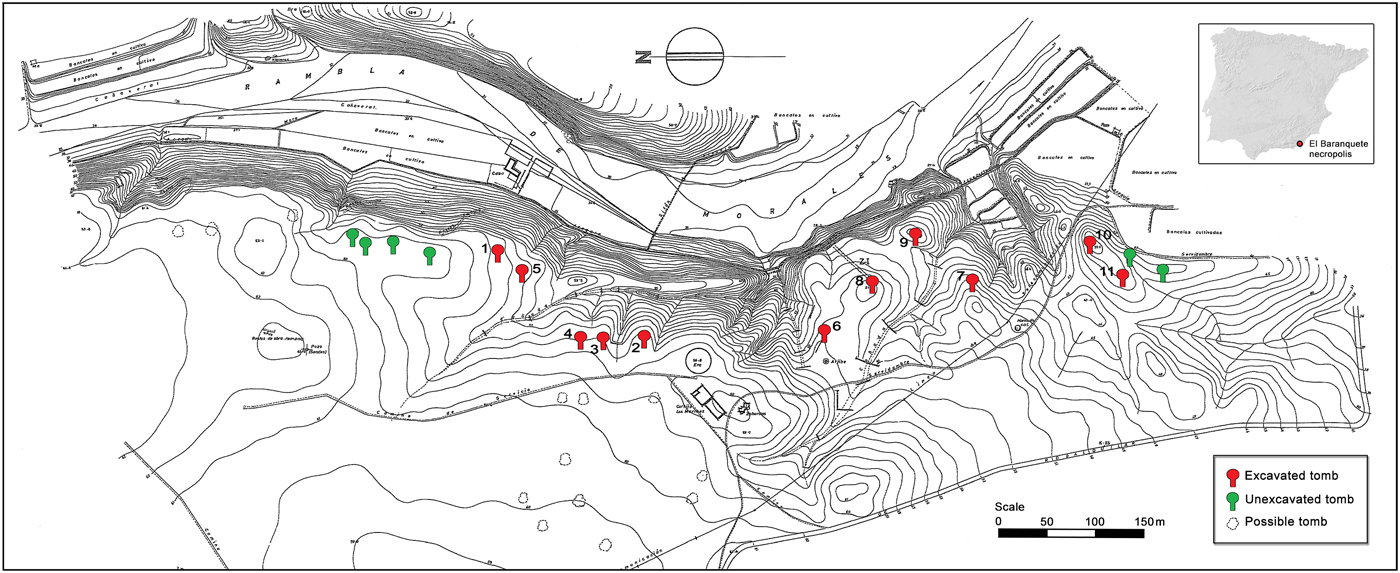
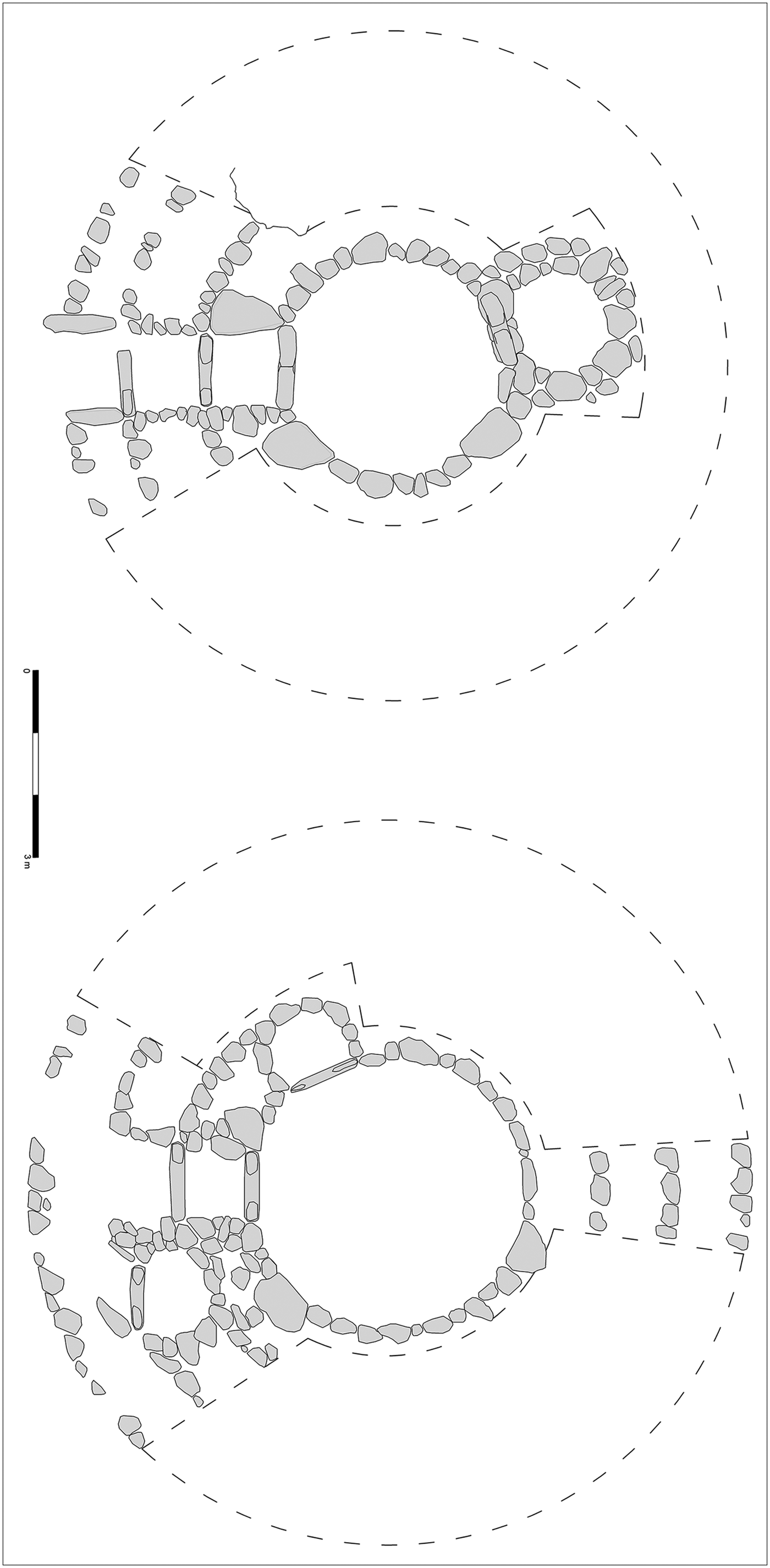
The megalithic cemetery of El Barranquete lies on a plain to the west of a seasonal river, the Rambla de Morales, near the Mediterranean coast in the present-day province of Almería (Figure 1). Discovered in 1968, it was excavated during different fieldwork seasons between 1968 and 1971 and later published in a full report by María Josefa Almagro Gorbea (Reference Almagro Gorbea1973). The investigations revealed at least seventeen megalithic graves, of which eleven were excavated. All the burials conform to the classification of the megalithic type known as tholoi or tombs with chambers covered by false vaults. The funerary chambers, whose shape is circular or oval, were entered through passages that were normally divided into equal segments by slabs with holes in them. Small side-chambers, in both the passages and the main chambers, were also a common feature. These tombs were covered by mounds built with concentric stone walls filled with earth and small stones. Tombs 8, 9, and 10 are good examples of this type of megalithic construction, although Tomb 10 is very poorly preserved (Figure 2) (Almagro Gorbea, Reference Almagro Gorbea1973).
Topographic map of the El Barranquete cemetery with location of the megalithic tombs (after Almagro Gorbea, Reference Almagro Gorbea1973).

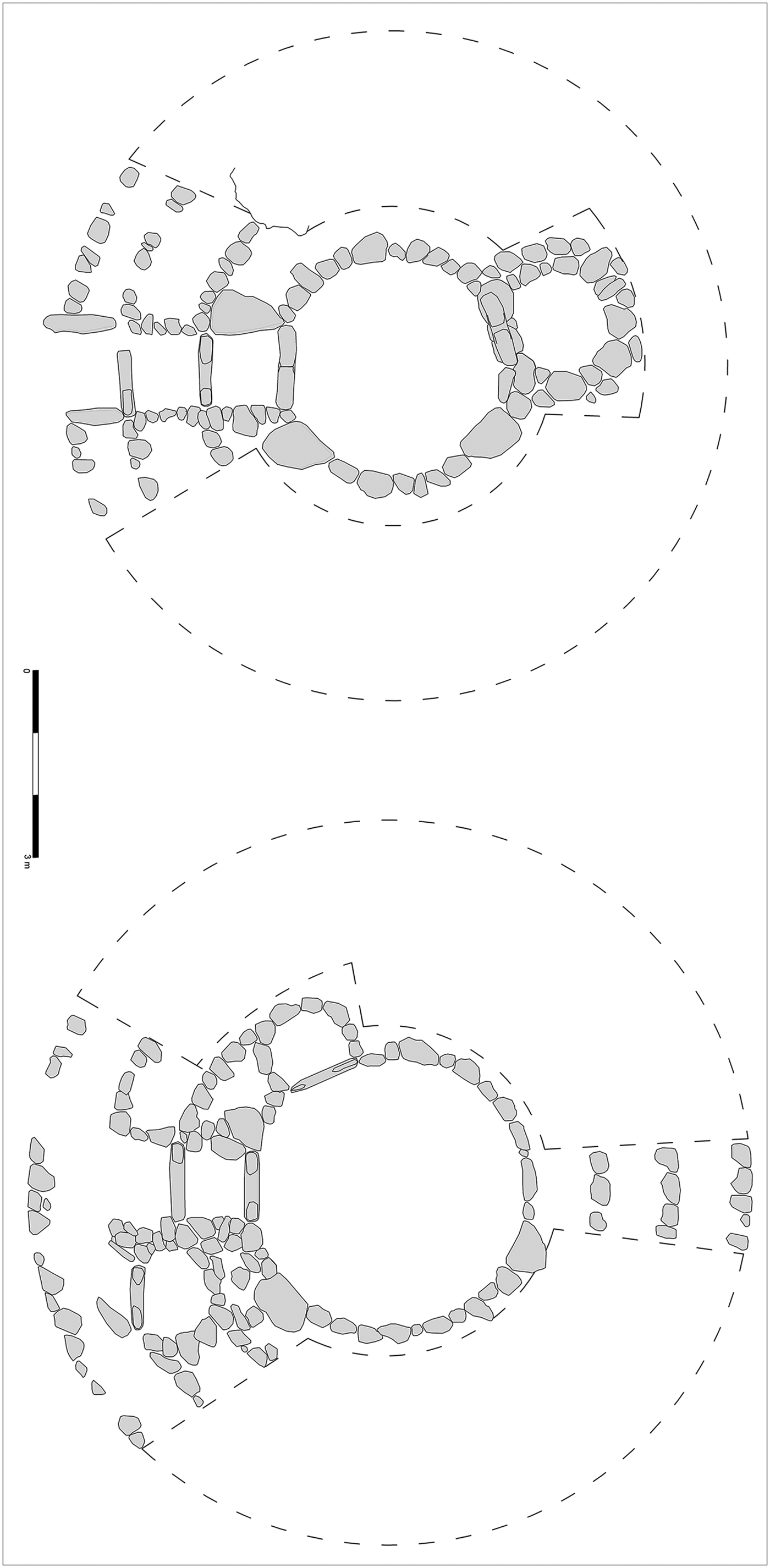
Plans of Tombs 8 and 9 at the cemetery of El Barranquete (after Almagro Gorbea, Reference Almagro Gorbea1973).
Human remains were found in chambers, passages, side-chambers, and, more exceptionally, in the mounds. The mortuary deposits consisted of a mass of stratified, mixed human remains that appear piled on top of each other, overlapping in many cases. Especially in the funerary chambers, the bones are found in a complex stratigraphy that was excavated in different layers. It should be noted that these layers mostly represent the sequential order in which the skeletal remains were excavated. This means that the complex taphonomy that normally operates in such contexts has not been taken into account. Horizontal and vertical displacement, of both individual and grouped bones, is common as a result of different factors such as gravity, successive interments, voids created by the decomposition of soft tissue, or the collapse of the burial chamber vaults and walls.
Skeletal remains were usually found scattered. Complete individuals or specific anatomical parts appeared in an articulated position in a few cases only. That is the case, for instance, of Tomb 8, in which two articulated individuals were recovered in a flexed position. In these cases, they commonly appear in the upper layers of the funerary chambers, as part of the most recent interments. A particular kind of ritual behaviour was also identified from the distribution of the bones inside the chambers. Frequently, skulls and long bones had been carefully deposited and individualized by different stones being placed around them. These ‘bone packages’ tended to be located next to the chamber walls. It seems likely that they were collected and placed in this manner once the bodies had lost their ligaments and soft tissue. Moreover, some of the bones found in these tombs appeared to be partially burnt (Díaz-Zorita Bonilla et al., Reference Díaz-Zorita Bonilla, Aranda Jiménez, Escudero Carrillo, Robles Carrasco, Lozano Medina, Sánchez Romero and Alarcón García2016). The use of fire inside the tombs seems to have been a widespread practice that is also evidenced by ash and burn marks on the chamber floors. Traits on the burnt bones indicate that they had been exposed to fire when the bodies were already skeletonized, as happened in the nearby megalithic cemetery of Los Millares (Peña Romo, Reference Peña Romo, González Martín, Cambra-Moo, Rascón Pérez, Campo Martín, Robledo Acinas, Labajo González and Sáchez Sánchez2011).
Hence, the ritual behaviour in these megalithic constructions can be considered a very complex matter. As a general rule, skeletal remains seem to be primary depositions that were disturbed by later activity in the chambers, mainly subsequent burials. Such activity would have involved moving and reorganizing the earlier human remains in the form of ‘bone packages’ and the occasional use of fire to burn them. The good representation of all anatomical body parts also supports this hypothesis (Díaz-Zorita Bonilla et al., Reference Díaz-Zorita Bonilla, Aranda Jiménez, Escudero Carrillo, Robles Carrasco, Lozano Medina, Sánchez Romero and Alarcón García2016). Nevertheless, on the data currently available, we cannot rule out the possibility that human remains previously interred elsewhere were subsequently placed in these tombs, or even the opposite scenario, that bones were removed from these tombs to be deposited in other places. We will return to this point below.
Grave goods were also found mixed with the human remains. They consist mainly of pottery vessels; metal objects, such as axes, awls, knives, earrings, rings, etc.; and flint flakes and arrowheads. Objects made of bone and polished stone were less common. Especially noticeable are the seashells and faunal remains. The deposition of certain skeletal portions, in some cases in an articulated state (as in Tomb 8), was a widespread ritual practice in most of the tombs. The main animal species identified was cattle; although sheep, goats, and pigs, together with Cardium edule and Ostrea edulis, were also found (von den Driesch, Reference von den Driesch1973; Díaz-Zorita Bonilla et al., Reference Díaz-Zorita Bonilla, Aranda Jiménez, Escudero Carrillo, Robles Carrasco, Lozano Medina, Sánchez Romero and Alarcón García2016).
Materials and Methods
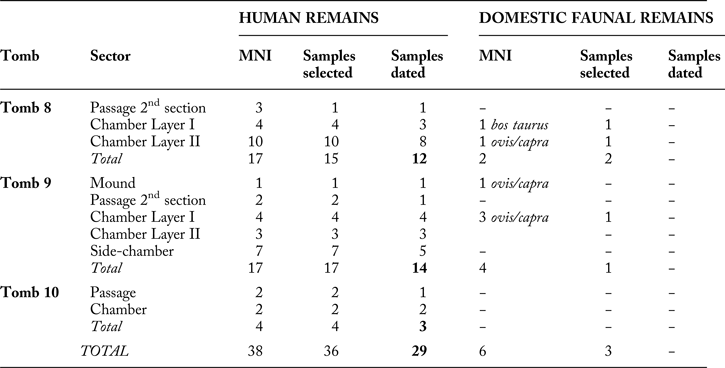
As stated, the finds analysed came from Tombs 8, 9, and 10 at the El Barranquete cemetery. They are currently deposited at the Museum of Almería and have been studied from an anthropological and zooarchaeological point of view (Díaz-Zorita Bonilla et al., Reference Díaz-Zorita Bonilla, Aranda Jiménez, Escudero Carrillo, Robles Carrasco, Lozano Medina, Sánchez Romero and Alarcón García2016). According to this study, the Minimum Number of Individuals (MNI) identified was thirty-eight in the case of human beings and six in the case of domestic animals (cattle and ovicaprines), plus seashells.Footnote 1
Their distribution by tomb is as follows: Tomb 8 consists of a circular chamber, c. 3.5 m in diameter, with an oval side-chamber, a passage divided into three sections, and a mound around 10 m in diameter. The MNI identified by the anthropological study was seventeen, with three individuals in the second section of the passage and fourteen in the chamber (Figure 3). Tomb 9 is a little larger than Tomb 8, although very similar in its architectural features. It comprises a circular funerary chamber, c. 4.10 m in diameter, a side-chamber, a passage divided into two sections, and a mound some 12 m in diameter. This tomb stands out for a feature that has not been found in any other tholos. It consists of an outside chamber built on the mound next to the passage. Its size and shape are similar to the side-chambers previously described. The estimated MNI was also seventeen: seven individuals from the chamber, seven from the side-chamber, two from the passage and one from a pit burial found in the mound (Figure 4). Finally, Tomb 10 consists of a circular chamber and a passage divided in two sections. The identified MNI was four, two individuals in the chamber and two more in the passage.
Plan of Tomb 8 including the human remains (after Almagro Gorbea, Reference Almagro Gorbea1973).

Plan of Tomb 9 including the human remains (after Almagro Gorbea, Reference Almagro Gorbea1973).

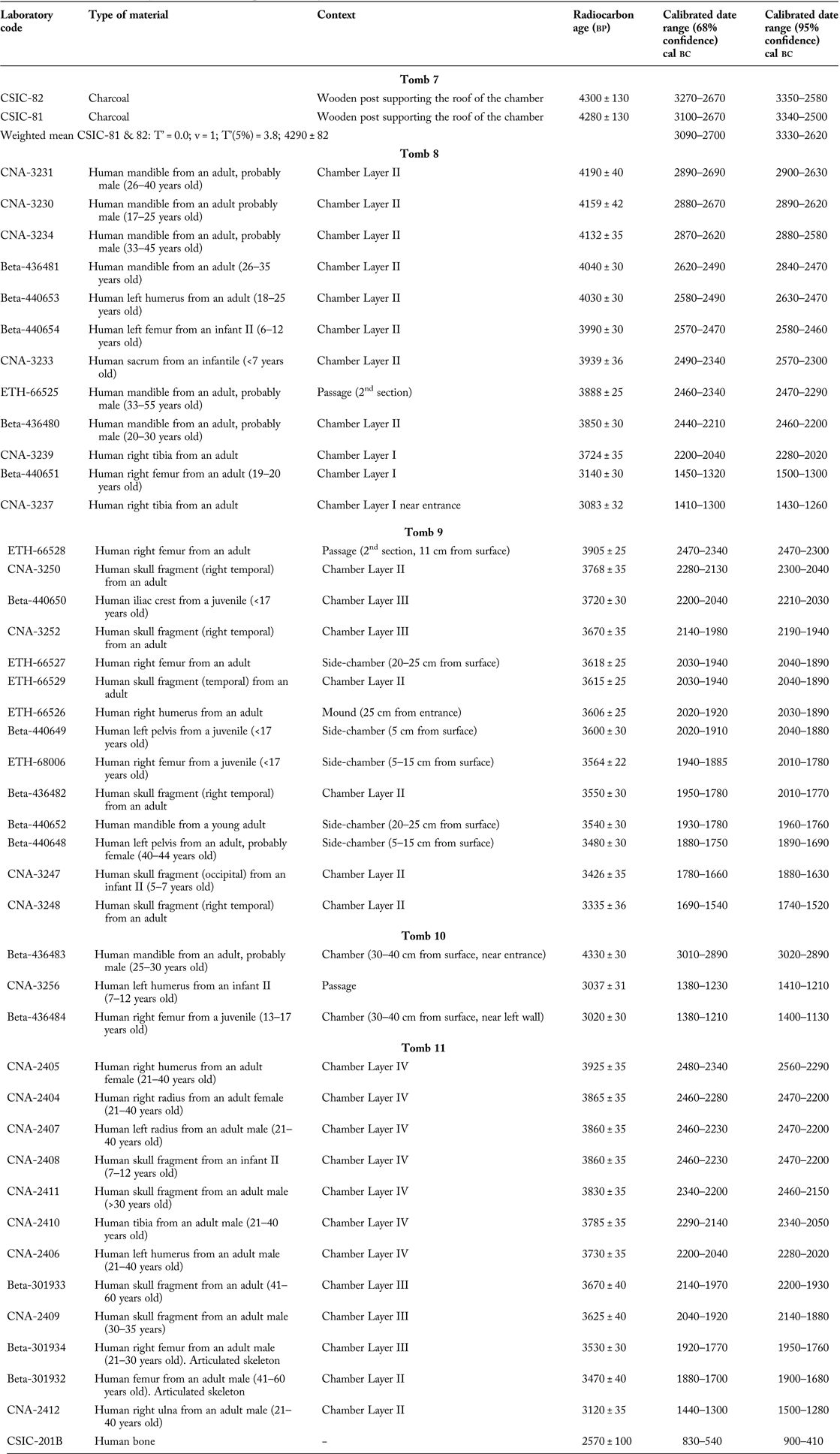
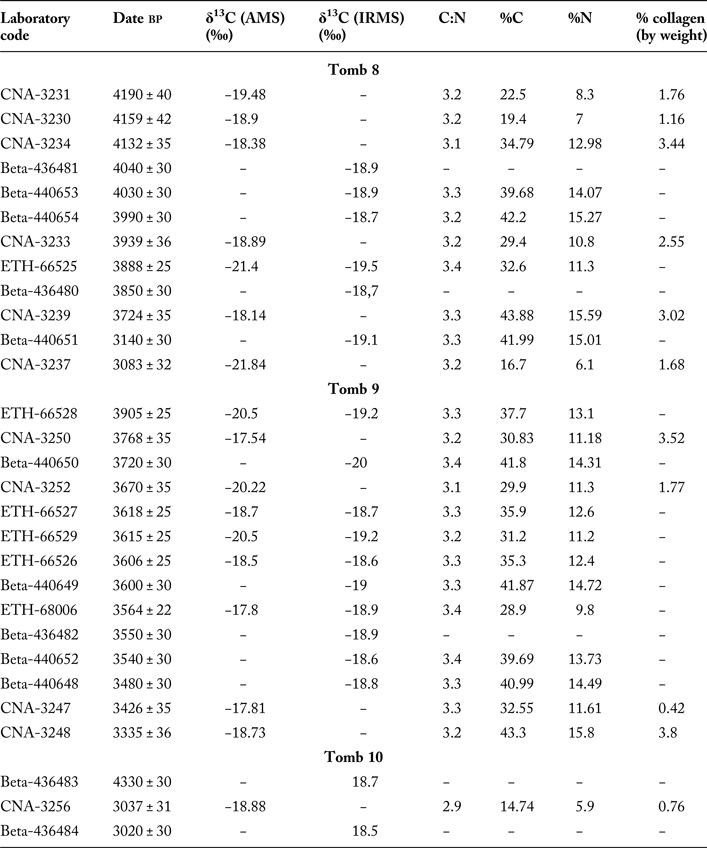
All the MNI were selected to be dated, except for two individuals from Tomb 8 which had insufficient bone for 14C measurements (Table 1). Additionally, three more samples of faunal remains were considered, one from Tomb 9 and two from Tomb 8. Thus, thirty-nine samples were sent to three different laboratories for radiocarbon dating: Beta Analytic Ltd. (Beta) (USA), the National Accelerators Centre (CNA) (Spain), and the Swiss Federal Institute of Technology (ETH) (Switzerland). Ten of the samples could not be dated due to poorly preserved collagen, which meant that radiocarbon dates were obtained in twenty-nine cases (see Tables 1 and 2 for details). All samples were measured using AMS.
NMI of the human and faunal remains identified in Tombs 8, 9, and 10 and the number of individuals sampled and dated.

Radiocarbon dates from the El Barranquete cemetery.

The following pre-treatment methods were used: Beta Analytic extracted the collagen with alkali prior to the combustion and graphitization of the samples according to the Manning and Reid (Reference Manning and Reid1977) and Vogel et al. (Reference Vogel, Southen, Nelson and Brown1984) protocols, respectively. The collagen extraction of the samples measured by the ETH was carried out by the Department of Geosciences at the University of Tübingen following the method described by Longin (Reference Longin1971), DeNiro and Epstein (Reference DeNiro and Epstein1981), and Bocherens et al. (Reference Bocherens, Billiou, Patou-Mathis, Bonjean, Otte and Mariotti1997). The measurement method can be found in Bonani et al. (Reference Bonani, Beer, Hoffmann, Synal, Suter, Wölfli, Pfleiderer, Junghans and Münnich1987), Synal et al. (Reference Synal, Stocker and Suter2007), and Hajdas (Reference Hajdas2008). The CNA follows the pre-treatment protocols established by Longin (Reference Longin1971), Arslanov and Svezhentsev (Reference Arslanov and Svezhentsev1993), and Piotrowska and Golsar (Reference Piotrowska and Goslar2002), and is the only laboratory that uses ultrafiltration prior to the combustion and graphitization of the samples (Santos et al., Reference Santos Arévalo, Gómez Martínez and García León2009) that are measured according to Klein et al. (Reference Klein, Mous and Gottdang2006, Reference Klein, van Staveren, Mous and Gottdang2007).
Radiocarbon dates were calibrated using the internationally agreed atmospheric curve, IntCal13 (Reimer et al., Reference Reimer, Bard, Bayliss, Beck, Blackwell, Bronk Ramsey, Grootes, Guilderson, Haflidason, Hajdas, Hatt, Heaton, Hoffmann, Hogg, Hughen, Kaiser, Kromer, Manning, Niu, Reimer, Richards, Scott, Southon, Staff, Turney and van der Plicht2013), and the OxCal v4.2 computer program (Bronk Ramsey, Reference Bronk Ramsey2001, Reference Bronk Ramsey2009). Calibrated ranges were obtained using the probability method (Stuiver & Reimer, Reference Stuiver and Reimer1993) and the endpoints were rounded off by ten years when the error was greater than or equal to twenty-five years and by five years when the error was less than twenty-five years (Stuiver & Polach, Reference Stuiver and Polach1977; Millard, Reference Millard2014). The quality of the collagen of the dated samples can be checked in Table 3. The new radiocarbon series provided a coherent sequence of dates, in which the results of the different laboratories were very well integrated. To analyse the chronological data, different Bayesian models were built using the OxCal program (Bronk Ramsey, Reference Bronk Ramsey2001, Reference Bronk Ramsey2009).
Quality markers of the bone collagen from the radiocarbon dating series of Tombs 8, 9, and 10.

Finally, one important concern, especially in cases such as the El Barranquete cemetery that are near the Mediterranean Sea, is to determine the type of diet of the people sampled for dating. If marine resources had made up a large part of their diet, the radiocarbon measurements could be strongly influenced by the reservoir effect. Thirty-four samples, twenty-nine from human beings and five from faunal remains, were selected from Tombs 8, 9, and 10 to measure the stable isotope δ13C and δ15N. The preliminary resultsFootnote 2 show that most of the individuals had a diet based on plants and terrestrial animals with very little seafood input, which agrees with the isotope study of the nearby megalithic cemetery of Los Millares (Waterman et al., Reference Waterman, Beck, Thomas and Tykotforthcoming). Therefore, it is safe to assume that the Chalcolithic populations buried in these sites are not significantly influenced by the reservoir effect and, thus, that the radiocarbon dates from human bone samples can be considered to be accurate estimates.
Results and Discussion
The dating programme now contains forty-one radiocarbon measurements, to which we can add four more dates determined in the early 1970sFootnote 3: two from a timber post that supported the mortuary chamber roof in Tomb 7 and two more from human bones belonging to Tomb 11. The samples from Tomb 7 produced statistically very consistent radiocarbon dates, although with a large standard deviation (CSIC-81 4280 ± 130, 3340–2505 cal bc at 95% probability and CSIC-82 4300 ± 130, 3345–2580 cal bc at 95% probability). Conversely, the radiocarbon measurements from Tomb 11 were very recent and at the time were considered to be completely inappropriate for the cultural context analysed (CSIC-201B, 2570 ± 100, 900–410 cal bc at 95% probability and CSIC-201A, 840 ± 100, 990–1390 cal ad at 95% probability) (Almagro Gorbea, Reference Almagro Gorbea1973). Given the Late Bronze Age radiocarbon dates from other tholoi, the CSIC-201B date is currently taken to be the result of the ritual reuse of these megalithic tombs (Castro Martínez et al., Reference Castro Martínez, Lull and Micó1996; Lorrio Alvarado & Montero Ruiz, Reference Lorrio Alvarado and Montero Ruiz2004; García Sanjuán et al., Reference García Sanjuán, Wheatley, Costa Caramé, Sanjuán, Scarre and Wheatley2011; Aranda Jiménez, Reference Aranda Jiménez, Berrocal, García Sanjuán and Gilman2013; Aranda Jiménez & Lozano Medina, Reference Aranda Jiménez and Lozano Medina2014). Therefore, we now have a radiocarbon series with forty-four dates, an unprecedented situation in the study of the megalithic phenomenon in Iberia that provides robust empirical foundations on which to discuss their chronology and timespan (Table 2).
The Bayesian framework has emerged as an excellent choice for building an accurate chronological interpretation of this radiocarbon series (Buck et al., Reference Buck, Kenworthy, Litton and Smith1991, Reference Buck, Litton and Smith1992, Reference Buck, Cavanagh and Litton1996; Bronk Ramsey, Reference Bronk Ramsey1995; Christen & Litton Reference Christen and Litton1995; Christen et al., Reference Christen, Clymo and Litton1995; Bayliss et al., Reference Bayliss, Bronk Ramsey, Van der Plicht and Whittle2007; Bayliss, Reference Bayliss2009, Reference Bayliss2015; for the Iberian Peninsula, Lull et al., Reference Lull, Micó Pérez, Rihuete Herrada and Risch2013; Robles Heriques et al., Reference Robles Henriques, Monge Soares, Alves António, Curate, Valério, Peleja Rosa, Ávila, Bustamante and Cabezas2013; Aranda Jiménez & Lozano Medina, Reference Aranda Jiménez and Lozano Medina2014; Jover Maestre et al., Reference Jover Maestre, López Padilla and García-Donato Layron2014; Balsera et al., Reference Balsera, Bernabeu Aubán, Costa Caramé, García Sanjuán and Pardo2015; Fano et al., Reference Fano, Cubas and Wood2015; Gibaja et al., Reference Gibaja, Subirà, Terradas, Santos Arévalo, Agulló, Gómez-Martínez, Allièse and Fernández-López De Pablo2015; Aranda Jiménez et al., Reference Aranda Jiménez, Lozano Medina, Escudero Carrillo, Sánchez Romero, Alarcón García, Fernández Martín, Díaz-Zorita Bonilla and Barba Colmenero2016; Bayliss et al., Reference Bayliss, Beavan, Bronk Ramsey, Delgado-Huertas, Díaz-Zorita Bonilla, Dunbar, Fernández Flores, García Sanjuán, Hamilton, Mora-González, Whittle, Flores, Sanjuán and Bonilla2016). This methodology combines evidence of absolute chronology with other forms of chronological information, such as the stratigraphic relationships between the archaeological contexts that contain the dated samples.Footnote 4 In accordance with these prior beliefs, this technique calculates a shorter probability distribution for every radiocarbon measurement,Footnote 5 and estimates the dates for the beginning and end of the phases or events in which the dates are clustered. Furthermore, by comparing these probability distributions, it is also possible to measure in numbers of years the length of each phase or the hiatus between different periods (Bronk Ramsey, Reference Bronk Ramsey1995; Bayliss et al., Reference Bayliss, Bronk Ramsey, Van der Plicht and Whittle2007).
In our case study, the conditions are far from ideal, with several limitations that affect the degree of resolution that can be achieved by Bayesian modelling. As noted above, the MNI was the criterion used to select the datable samples to ensure that no individual is dated twice. As a result, the low MNI identified—further reduced because of the poor preservation of collagen in some samples—is one of the main drawbacks. Furthermore, the uneven distribution of the MNI between the phases identified and their scattering around the different funerary spaces inside each tomb can be considered another important limitation. Despite these limiting factors, Bayesian analysis is still the best option for building a detailed and more secure chronology and for improving chronological assessments that do not take into account the statistical spread of the radiocarbon dating probability intervals.
The informative prior beliefs used to build the Bayesian model came from those stratified mortuary spaces found principally in the chambers of the different tombs. It should be noted that the archaeological information available does not allow us to order stratigraphically the funerary depositions within each phase, which means that we must assume that they correspond to a phase of continuous activity with an unknown internal order. The Bayesian modelling incorporates a statistical element known as the index of agreement, which calculates the reliability of the model and provides useful information for identifying, for instance, samples whose archaeological taphonomy has not been properly characterized. This index estimates a figure of how well any posterior probability distribution agrees with the relative sequence of information. If the index of agreement falls below 60%, the radiocarbon measurement should be considered somewhat problematic (Bronk Ramsey, Reference Bronk Ramsey1995: 427–28).
The general model built for the El Barranquete radiocarbon series shows a good overall agreement (Aoveral = 80.6%), which indicates that the radiocarbon dates conform to the archaeological information incorporated in the Bayesian analysis (Figure 5). According to this model, the first bodies to be deposited in this cemetery were placed there between 3260 and 2925 cal bc (at 68% probability; Boundary Start) and the last between 1245 and 875 cal bc (at 68% probability; Boundary End), which implies a very long period of use without any perceptible hiatus, except for a short period around 1500 cal bc (see below for further discussion). Assuming that most of the human remains were deposited in the megalithic tombs soon after death, the interments are principally concentrated in two main periods: i) the second half of the third millennium and the first centuries of the second millennium cal bc; and ii) the second half of the second millennium cal bc.
Probability distribution of dates from the El Barranquete cemetery. Each date shows two distributions: light grey represents the radiocarbon calibration and dark grey indicates the result of the Bayesian model (posterior density estimates). Distributions other than those relating to particular dates correspond to aspects of the model. The square brackets down the left-hand side and the OxCal keywords define the overall model exactly. The Bronze Age period (c. 2200–850 cal bc) is highlighted in colour.

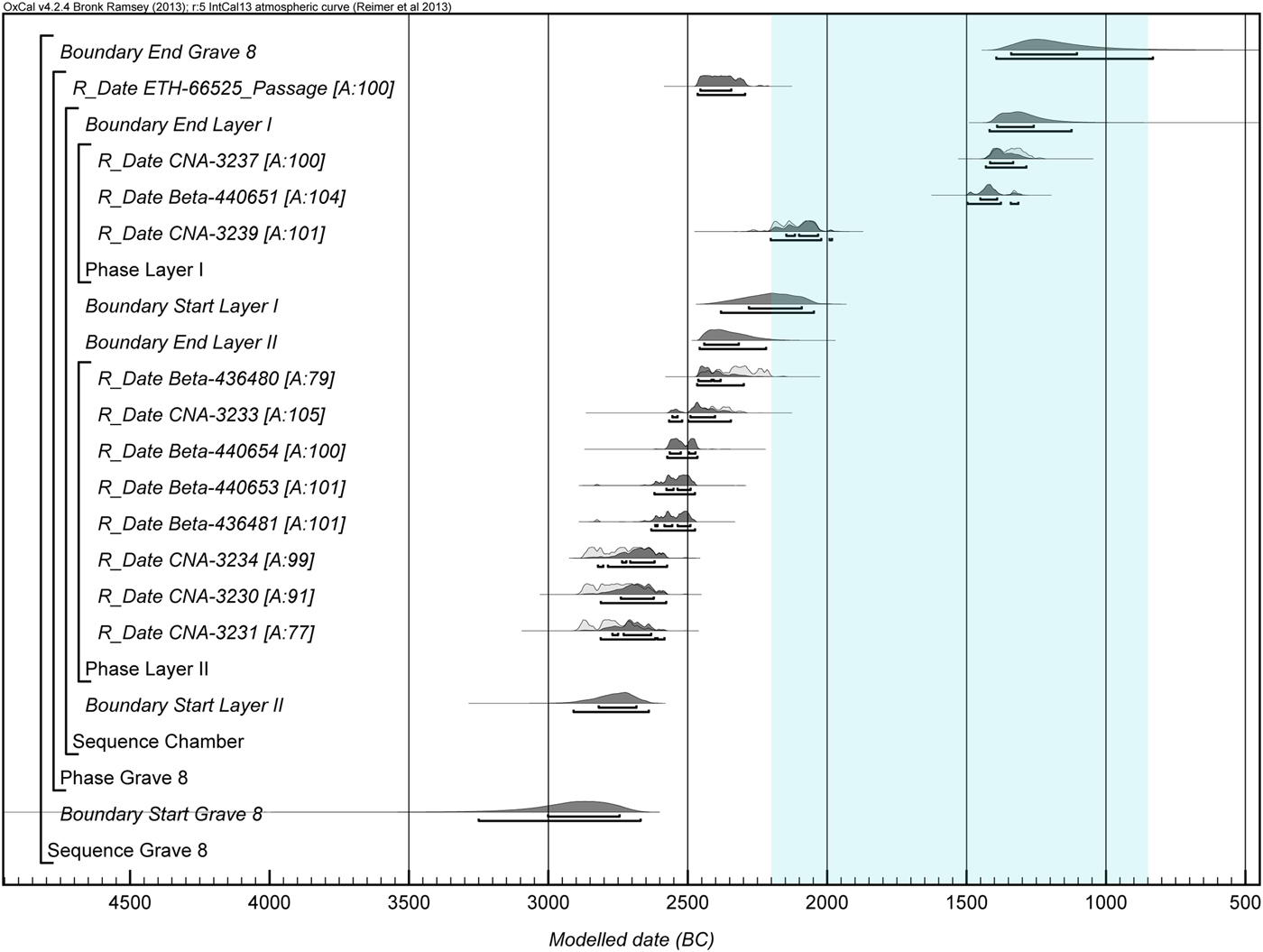
We now move on to discuss the Bayesian modelling of each megalithic tomb. Of the twelve radiocarbon dates available for Tomb 8, one belongs to the passage and eleven to the chamber, which was excavated in two layers. Three dates came from Layer I found 1.30 m below the surface and eight from Layer II at a depth of 1.50 m, just above the floor of the chamber (Figure 6). The oldest mortuary activity in the tomb (Layer II) started in 2915–2640 cal bc (at 95% probability), probably in 2820–2680 cal bc (at 68% probability), and ended in 2460–2215 cal bc (at 95% probability), possibly in 2445–2315 cal bc (at 68% probability). The difference between the most recent and the earlier radiocarbon dates of this phase shows a considerable period of use of 185–495 years (at 95% probability; Difference First & Last), probably around 235–400 years (at 68% probability). The dating of the passage agrees with the most recent interments of this phase of activity in the chamber (ETH-66525, 2465–2295 cal bc at 95% probability or 2455–2340 cal bc at 68% probability).
Probability distribution of dates of Tomb 8 obtained from the general modelling of Figure 5. The Bronze Age period (c. 2200–850 cal bc) is highlighted in colour.

The burial activity in the second phase (Layer I) began in 2205–1980 cal bc (at 95% probability) or in 2150–2030 cal bc (at 68% probability), which is consistent with the date of c. 2200 cal bc, traditionally considered as a benchmark for the end of the Copper Age and the beginning of the Early Bronze Age, known as the Argaric culture in south-eastern Iberia (Aranda Jiménez et al., Reference Aranda Jiménez, Montón-Subías and Sánchez Romero2015). It is unclear whether there is a hiatus between the phases. Just considering the most recent date from Layer II and the earliest from Layer I, this appears to be well defined (an interval of 150–420 years at 95% probability; Difference First & Last, or 240–385 years at 68% probability). Nevertheless, these data must be handled with great caution due to the very small number of radiocarbon dates analysed. The end of this phase occurred in 1430–1285 cal bc (at 95% probability), probably in 1415–1315 cal bc (at 68% probability). Nevertheless, radiocarbon dates within this phase do not show continuous funerary activity throughout the period. There seems to be a hiatus that occupied most of the first half of the second millennium. Again, the limited number of measurements available prevents us from reaching any conclusion.
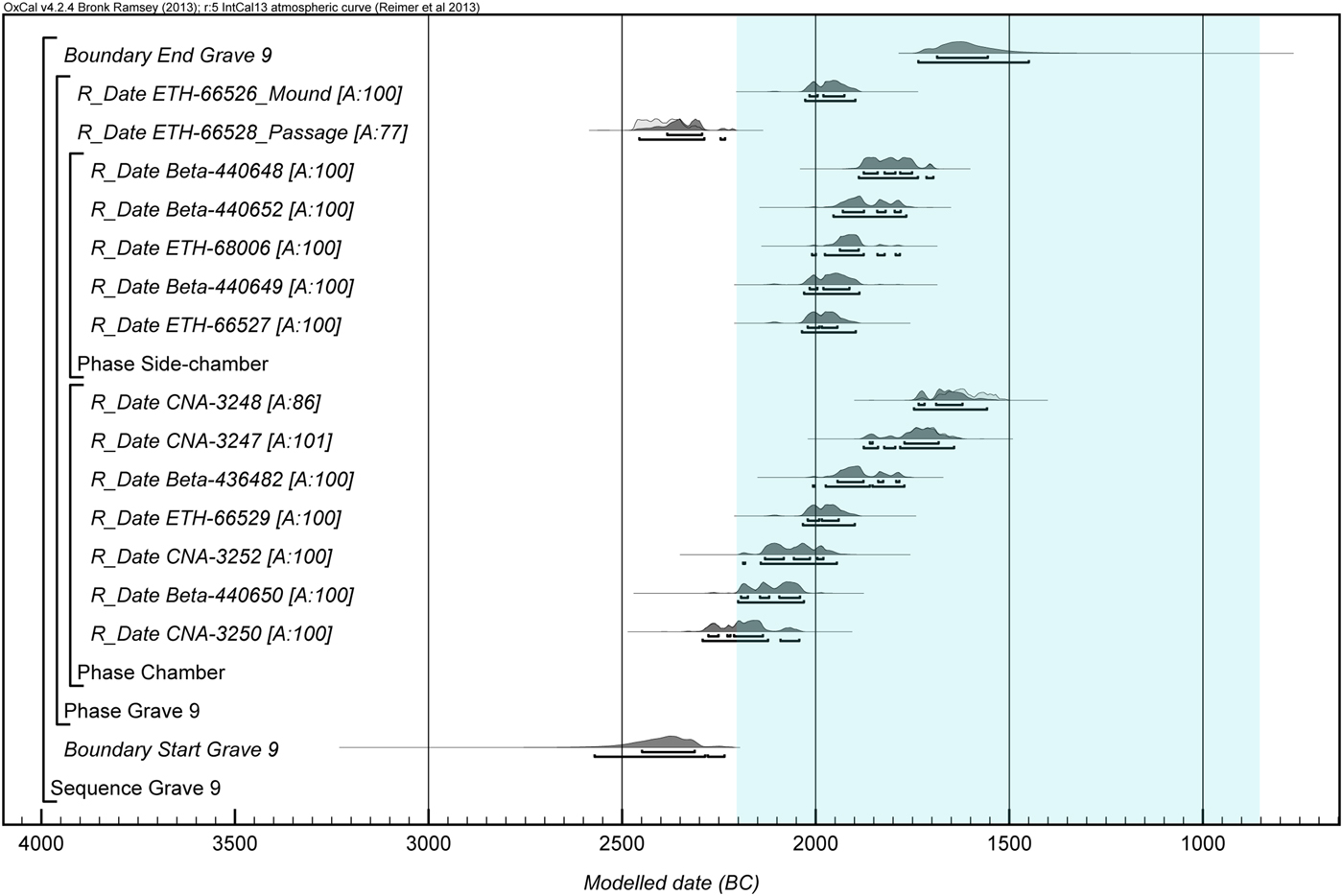
There are fourteen radiocarbon dates from Tomb 9: one date was obtained from a pit burial found in the mound, one from the second section of the passage, five from the side-chamber and seven from the main chamber. The last two mortuary spaces were excavated in two and four layers, respectively. In the side-chamber, Layer I was found 5–15 cm below the surface and Layer II at a depth of 20–25 cm. In the case of the main chamber, the MNI that was dated belongs to Layer II, found 55–75 cm below the surface (four dates), and Layer III at 80–90 cm (three dates).Footnote 6 Three main reasons have prevented the modelling of the dates according to this stratigraphic sequence: the small number of dates, their uneven distribution between the layers of the chamber, and the low index of agreement eventually reached by the Bayesian model. The latter was due to the appearance of outliers, such as the oldest date of the chamber appearing in the most recent layers. We will return to the discussion when comparing the radiocarbon series of Tombs 8 and 11. Therefore, in the Bayesian modelling of Tomb 9 every funerary space was taken to represent a single phase (Figure 7).
Probability distribution of dates of Tomb 9 obtained from the general modelling of Figure 5. The Bronze Age period (c. 2200–850 cal bc) is highlighted in colour.

According to the radiocarbon series of this tomb, it is very surprising that only one date from the passage falls completely within the Copper Age (ETH-66528, 3905 ± 25, 2470–2300 cal bc at 95% probability). The remaining dates belong to the Early Bronze Age, except for CNA-3250, whose interval of probability falls between the two cultural periods (3768 ± 35, 2300–2040 cal bc at 95% probability). Taking into account the whole series, the mortuary activity began in 2580–2235 cal bc (at 95% probability), probably in 2450–2310 cal bc (at 68% probability). Alternatively, it is also possible to establish the start dates by excluding the ETH-66528 date whose archaeological context appears to indicate a secondary deposition of probably ancestral remains (the sample was located in the passage, 11 cm below the surface). If this were the case, the interments began in 2295–2045 cal bc (at 95% of probability) or in 2210–2070 cal bc (at 68% probability).
At the other end of the spectrum, the last bodies were deposited in Tomb 9 between 1735 and 1445 cal bc (at 95% probability), probably in 1690–1555 cal bc (at 68% probability). Without taking into account the ETH-66528 date, the funerary activity spans a period of between 310 and 610 years (at 95% of probability; Difference First & Last), or more probably of 375–530 years (at 68% probability). The burials in Tombs 9 seem to have been deposited only during a short period of time matching with the Argaric Bronze Age (c. 2200–1550 cal bc). If we assume a figure of twenty-five years per generation, this would indicated that individuals were buried in this tholos over fifteen to twenty-one generations, coinciding with the time in which individual inhumations inside settlements are acknowledged as the norm for the Argaric cultural period (Aranda Jiménez et al., Reference Aranda Jiménez, Montón-Subías and Sánchez Romero2015). As we will discuss in the conclusions, this is a hitherto completely unknown situation that raises fresh questions and even shakes up traditional assumptions.
Finally, Tomb 10 is very poorly preserved, as has been stated. The MNI identified is only four and there are only three available dates, one from the passage and two from the chamber. Nevertheless, the three dates are located at each end of the new radiocarbon dating series; Beta-436483 is the earliest (4330 ± 30, 3020–2890 cal bc at 95% probability) and CNA-3256 (3037 ± 31, 1400–1210 cal bc at 95% probability) and Beta-436484 (3020 ± 30, 1395–1190 cal bc at 93.8% probability) are the most recent dates. We shall now discuss all these results in a more general cultural context.
Conclusions
The biographical approach applied to the study of the megalithic phenomenon has turned out to be a very useful framework for exploring the temporality of these monuments. Thanks to the radiocarbon dating programme, it is now possible to base cultural assessments on more robust chronological foundations.
The El Barranquete radiocarbon series began at the end of the fourth millennium (3260–2925 cal bc at 68% probability; Boundary Start), coinciding with the beginning of the so-called Copper Age, a period characterized by important cultural innovations, such as a remarkable population growth and aggregation, the intensification of agriculture, the appearance of copper metallurgy, and the expansion of supra-regional exchange networks. In this context of increasing social complexity, the emergence of tholos-type cemeteries such as El Barranquete would have been associated with very dynamic communities that were increasingly tied to the landscape and were shaping new social relationships.
The end of the El Barranquete radiocarbon series occurred in the last centuries of the second millennium (1245–875 cal bc at 68% probability), which means a very long period of funerary activity (1780–2405 years at 68% probability; Difference Boundary Start & End), only broken by a short hiatus around 1500 cal bc. This is not a feature specific to this cemetery. The same pattern also emerges when all the radiocarbon dates of tholos-type tombs in Iberia are considered (Lozano Medina & Aranda Jiménez, Reference Lozano Medina and Aranda Jiménez2017). This hiatus is fully consistent with the cultural changes that occurred in Bronze Age societies and is especially noticeable in south-eastern Iberia. At that time, the distinctive Early Bronze Age society known as the Argaric culture (c. 2200–1550 cal bc) suddenly disappeared for reasons that are not well understood (Aranda Jiménez et al., Reference Aranda Jiménez, Montón-Subías and Sánchez Romero2015). Mortuary rituals in megalithic cemeteries such as El Barranquete also seem to have been influenced by these changes and stopped for a short period.
The new radiocarbon series from Tombs 8, 9, and 10 have also strengthened one of the main conclusions we had reached in previous studies: the unexpected importance attained by the continuity of ritual practices during the Bronze Age (c. 2200–850 cal bc) (Aranda Jiménez, Reference Aranda Jiménez, Berrocal, García Sanjuán and Gilman2013; Aranda Jiménez & Lozano Medina, Reference Aranda Jiménez and Lozano Medina2014). As in Tomb 11, in the three new tombs the mortuary rituals can be considered one of the main features of this period. This is particularly noticeable in Tomb 9, in which almost all the dates fall completely within the Early Bronze Age. Of the forty-four dates in the whole radiocarbon series, 48% (twenty-one dates) have intervals of probability at 95% in the Bronze Age, a situation barely imaginable before this radiocarbon dating programme had been carried out.Footnote 7
This ritual continuity reached its peak during the Early Bronze Age, without any hiatus between it and the Copper Age. The scale achieved by this phenomenon has made it possible to formulate a fresh hypothesis that has shattered traditional assumptions, such as the supposed cultural uniformity of Argaric societies and the sharp discontinuity with the previous Chalcolithic communities. The mortuary activity in the megalithic tombs during the Argaric period has been considered to have formed part of the strategies of resistance to the process of social differentiation that characterized Argaric communities. The collective values materialized in these megalithic monuments were confronted with a process of social individualization, the most conspicuous evidence of which is a funerary ritual characterized by individual inhumations inside settlements with significant differences in their grave goods (Aranda Jiménez, Reference Aranda Jiménez, Berrocal, García Sanjuán and Gilman2013, Reference Aranda Jiménez2015; Aranda Jiménez & Lozano Medina, Reference Aranda Jiménez and Lozano Medina2014).
Attempts to consolidate deep social asymmetries would have conflicted with the desire to maintain ancestral cultural forms that opposed social division in favour of relational identities. Individuals engaged in these practices would conform to a different social group and would not self-identify as Argaric people; they used the collective ritual spaces as the perfect setting for manifesting their differentiated identity. The continuity of use of megalithic monuments would have emphasized a type of commemoration based on the invocation of the past and memory as a way of understanding the world; and it would have allowed these people to claim a more collective identity that excluded from their rituals the most characteristic symbols of the Argaric social elites, such as swords, halberds, axes, and diadems (Aranda Jiménez, Reference Aranda Jiménez, Berrocal, García Sanjuán and Gilman2013). Argaric times can, therefore, be seen as characterized by significant social tension between endeavours to create a new social structure based on the emergence of a social elite and persistent resistance to this process.
After the end of the Argaric period and the short hiatus around 1500 cal bc in megalithic mortuary practices, the reuse of these tombs returned with a remarkable intensity that continued until the last centuries of the second millennium bc. Unlike the situation in the Early Bronze Age, in which some of the grave goods found in the different tombs at El Barranquete led us to suspect that ritual activity may have expanded at that time, the appearance of interments during the Late Bronze Age was a complete surprise. There is no archaeological evidence that would lead us to suspect mortuary activity in the second half of the second millennium bc; it is only thanks to the radiocarbon dating programme based on human remains that this important phenomenon has come to light. The occurrence of radiocarbon dates that fall into cultural periods that would be unthinkable if only the grave goods were taken into account challenges traditional approaches that only consider typological criteria for dating megalithic monuments. Although more chronological studies are needed, it is possible to believe that many mortuary rituals, conducted in cultural periods other than the Copper Age, could lie completely hidden in many megalithic tombs.
These general trends can be further explored by looking at the radiocarbon series from Tombs 8, 9, and 11 from a comparative perspective. Tombs 8 and 11 show many similarities. The radiocarbon sequences are very consistent with the order in which the different layers of the funerary chambers were excavated, which would support the notion that most of the human remains were not very ancient when interred. In both cases two phases could be distinguished. The earliest phase includes most of the dated MNI that fall completely within the Copper Age, although with different timespans; Tomb 8 has a longer period of use, beginning in 2915–2640 cal bc and ending in 2460–2215 cal bc; by contrast, Tomb 11 was used over a shorter period, beginning later in 2551–2242 cal bc and ending in 2283–2054 cal bc.Footnote 8 The difference between the first interments in these tombs suggests an interval of 210–515 years (at 95% probability; Difference First Tombs 8 & 11), most probably 275–430 years (at 68% probability). If we assume that mortuary activity began just after construction, these tombs were built at very different times. In the second and most recent phase, all the interments date to the Bronze Age, although in different configurations. Most radiocarbon dates concentrate in the Early Bronze Age in Tomb 11 and in the Late Bronze Age in Tomb 8. Nevertheless, the small number of measurements available for each phase prevents us from drawing any conclusion.
In comparison with Tombs 8 and 11, Tomb 9 shows a very different picture. All the dates fall into the Early Bronze Age, except one whose archaeological context establishes it as among the most recent depositions in the passage and which is likely to be a secondary burial probably of ancestral remains. If this were the case, any funerary activity would have taken place during the Chalcolithic period, in contrast to what has been documented in other tombs. If we assume that the first bodies were deposited just after the tomb was built, we must conclude that this grave was built and used only during the Early Bronze Age. Alternatively, it is also possible that at some point in the biography of Tomb 9 human remains were removed to be deposited in other places, which would imply that a hypothetical Chalcolithic phase of interments has been lost. In that case, the outliers previously noted could be explained by these disturbance activities.
This scenario brings us face to face with the complexity of the ritual behaviour performed in these megalithic constructions. Most of the evidence found in these tombs, such as the close correspondence between the radiocarbon series and the stratigraphic sequence, as well as the finds of skeletal remains in anatomical connection, supports the hypothesis that most of the interments were primary depositions. Later activity in the chambers, especially subsequent burials, would have involved reorganizing the earlier human remains in the form of ‘bone packages’ and the occasional use of fire. The data from Tomb 9 suggest that these later activities could also have included the removal of bones to be placed elsewhere and even the secondary deposition of ancestral remains. If this were the case, these ritual practices challenge the assumption that links the dates of the first burials to the construction of the tombs.
Although the radiocarbon dating programme has led to a remarkable improvement in our understanding, we are still far from fully comprehending the chronology and temporality of these ritual practices. The discussion above has made it clear that we are dealing with a phenomenon of unexpected complexity. The radiocarbon series from El Barranquete documents not only a long period of use, but also the intricate biography of each tomb. As is usual, rather than providing certainty, the results of this study show the need for further research and new dating programmes if we really wish to understand megalithic monuments, one of the most widespread and long-lasting cultural manifestations of humankind.
Acknowledgments
This article was written as part of the following research projects: ‘Everything Has Its Own Time. The Chronology and Temporality of the Megalithic Societies in South-Eastern Iberia’ sponsored by the Banco Bilbao Vizcaya Argentaria (BBVA) Foundation (Grants for Researchers and Cultural Creators 2015), and ‘Innovation, Continuity and Hybridisation. The Copper and Bronze Age Societies in the Southern Iberian Peninsula’ (HAR2013-42865-P) funded by the Spanish Ministry of Economy and Competitiveness. We would also like to thank the Almería Museum staff for their kind support.