Introduction
Seed germination and early seedling growth are important stages of crop production which are very susceptible to abiotic stress including saline conditions (Ibrahim, Reference Ibrahim2016; Shu et al., Reference Shu, Qi, Chen, Meng, Luo, Shuai, Zhou, Ding, Du, Liu, Yang, Wang, Liu, Yong, Wang, Feng and Yang2017). The root system is firstly and/or directly damaged under salinity stress leading to impaired plant growth as a result of reduction in water availability and increased ion toxicity (Munns and Tester, Reference Munns and Tester2008). Under salt stress, reactive oxygen species (ROS) such as singlet oxygen (1O2), superoxide radical (O2•−), hydrogen peroxide (H2O2) and hydroxyl radical (OH•) are over-produced in the chloroplasts, mitochondria and peroxisomes, resulting in damage of cellular components and then plant cell death (Mittova et al., Reference Mittova, Guy, Tal and Volokita2004; Van Breusegem and Dat, Reference Van Breusegem and Dat2006; Das and Roychoudhury, Reference Das and Roychoudhury2014). Plants may adapt to salinity stress using various intricate mechanisms, including the ROS eliminating system (Ibrahim, Reference Ibrahim2016). For example, peroxidases (PODs) are capable of scavenging excess hydrogen peroxide (H2O2) produced in plants during abiotic stress conditions (Bose et al., Reference Bose, Rodrigo-Moreno and Shabala2014; Das and Roychoudhury, Reference Das and Roychoudhury2014).
Seed priming has been considered as one of the practical, low risk and cost-effective technologies to mitigate abiotic stress on plant growth (Jisha et al., Reference Jisha, Vijayakumari and Puthur2013). Physiological changes are thought to be promoted following seed priming for the protection of seed germination and early seedling growth under salinity, drought, cold and heat stresses (Chen and Arora, Reference Chen and Arora2013; Jisha et al., Reference Jisha, Vijayakumari and Puthur2013). For example, under salinity stress, there were higher levels of soluble proteins, phenolics, protease and amylase activities in wheat plants raised from seeds primed with CaCl2 compared with unprimed seeds (Jafar et al., Reference Jafar, Farooq, Cheema, Afzal, Basra, Wahid, Aziz and Shahid2012).
Amino acids are needed for seed germination and seedling establishment, as they are the building blocks of proteins and act as precursors of various compounds including nucleotides, chlorophyll, hormones and secondary metabolites (Tegeder, Reference Tegeder2012; Pratelli and Pilot, Reference Pratelli and Pilot2014). Cheng et al. (Reference Cheng, Tiana and Zhang2016) found that germination rate of Arabidopsis thaliana seeds was greatly reduced when incubated in 150 mM NaCl. However, exogenous application of amino acids such as cysteine, glycine, methionine and serine to the NaCl solution stimulated a higher germination rate. The response of wheat to salinity stress after seed priming with proline was found to be genotype-dependent (Shafiq et al., Reference Shafiq, Raza, Bibi, Khan and Iqbal2018). In another study, pre-treatment of wheat seeds with 0.01 μM cysteine for 24 h before sowing was found to reduce the negative effects of salinity on early seedling growth (Nasibi et al., Reference Nasibi, Kabantari, Zanganeh, Mohammaad-Nejad and Oloumi2012). Magnetopriming of barley seeds with tryptophan resulted in a higher germination rate, better seedling growth and higher POD activity than unprimed seeds (Hozayn and Ahmed, Reference Hozayn and Ahmed2019). However, little is known about priming Lolium multiflorum seeds with protein amino acids to protect seedling growth under salinity stress.
Casein hydrolysate (CH) consists of calcium (Ca2+), phosphate (PO43−), several microelements, vitamins and a mixture of up to 18 amino acids according to Sigma-Aldrich. The addition of CH to tissue culture medium has been shown to be beneficial in some studies, for example, enhancement of embryo maturation and plantlet regeneration in okra (Abelmoschus esculentus L.) (Daniel et al., Reference Daniel, David, Caesar, Ramakrishnan, Duraipandiyan, Ignacimuthu and Al-Dhabi2018). There is, however, no prior study on using CH as a seed priming agent of L. multiflorum seeds or any other seeds.
Italian ryegrass (L. multiflorum L.) is a commercial pasture grass species in New Zealand and other countries for production of forage, livestock silage and dry grass (Hunt and Easton, Reference Hunt and Easton1989; Thom and Prestidge, Reference Thom and Prestidge1996; Li et al., Reference Li, Ishii, Idota, Tobisa, Niimi, Yang and Nishimura2019). Salinization-associated problems could arise and affect pasture production involving Italian ryegrass (Takahashi et al., Reference Takahashi, Oishi, Ebina, Komatsu and Takamizo2010). For sustainable production of Italian ryegrass under such unfavourable condition, a physiological approach such as seed priming may be used to improve tolerance of Italian ryegrass to salt stress, particularly during seed germination and early seedling growth. The objective of this present study was to investigate the efficacy of priming Italian ryegrass seeds with each of the 20 protein L-amino acids and CH (a mixture of 18 amino acids) on protecting early post-germinative seedling growth under salinity stress. The following parameters were studied: seed germination, radicle length (RL), POD activity associated with antioxidative defence and malondialdehyde (MDA) content, a marker of oxidative stress in the roots. In particular, it was of interest to determine if the efficacy of seed priming would be in the following order: priming with amino acids and CH > hydropriming (HP) > non-priming (NP).
Materials and methods
Seed and priming treatments
Italian ryegrass (L. multiflorum L.) seeds were obtained from the field service centre, Lincoln University, New Zealand. Twenty protein amino acids and CH with a mixture 18 L-amino acids were purchased from Sigma-Aldrich St. Louis, Missouri, USA (Product Number C0626) for seed priming experiments. The presence of vitamins in CH was confirmed by the manufacturer, but their quantity was not reported.
HP (or seed priming with deionized [DI] water only) and NP control treatments were included for comparisons with seed priming using the amino acids and CH dissolved separately in DI water. Seeds were imbibed in DI water (HP) or 1 mM each of the 20 protein amino acids or 200 mg l−1 CH dissolved in DI water for seed priming in the dark for 24 h. After this, the seeds were air-dried for 24 h in the same dark growth room.
Salt stress experiments
To study the effects of salinity on seed germination, RL and POD activity, there were four replicate Petri dishes (90 mm diameter) each with 20 seeds placed on a layer of Whatman No. 1 filter paper wetted with 10 ml of DI water, 60 or 90 mM NaCl made up in DI. All experiments were repeated at least twice. The number of germinated seeds in each Petri dish was counted after 4 d at 25°C in a dark growth room. The germination percentage (GP) of the seeds was calculated using the following formula:
 $${\rm Germination}\,{\rm percentage}\;( \% ) = \displaystyle{{{\rm The\;number\;of\;germinated\;seeds}} \over {{\rm Total\;number\;of\;seeds}}} \times 100\;\% $$
From each Petri dish, the RL of 10 randomly selected seedlings with RL greater than 2 mm extruded from the seed coat was measured.
POD (EC 1.11.1.7) activity in root extracts of Italian ryegrass seedlings was determined as described in Wang et al. (Reference Wang, Wu, Cheng and Meng2015b). The method was based on monitoring the rate of hydrogen peroxide (H2O2) decomposition by POD using guaiacol as an aromatic electron donor. The reaction mixture contained 50 mM of phosphate buffer (pH 6.59), 2 μl of guaiacol (Sigma), 5 μl of 3% (v/v) H2O2 and 50 μl enzyme extract or 50 μl of phosphate buffer (enzyme control). The reaction was stopped after 5 min at 25°C, and the increase in absorbance of oxiguaiacol at 470 nm was measured using a spectrophotometer. POD activity was expressed as absorbance units per protein content (units/mg protein), and the protein content in the enzyme extracts was determined using Bradford's protein-dye binding assay (Bradford, Reference Bradford1976).
MDA content in the root tips of 4-d-old Italian ryegrass seedlings was determined based on the method as described in Kovács et al. (Reference Kovács, Nyitrai, Czövek, Óvári and Keresztes2009). About 30 mg of root tips from 4-d-old seedlings were homogenized with 680 μl of 10% trichloroacetic acid (TCA) in a mortar and pestle at 4°C. The homogenate was centrifuged at 10,000 g at 4°C, for 10 min, and the supernatant obtained was used for MDA determination. The mixture consisting of 250 μl of the supernatant and 750 μl of 20% TCA containing 1% thiobarbituric acid (TBA) was heated in a water bath at 95°C for 30 min. After heating, the reaction mixture was cooled for 5 min on ice before absorbance was read at 532 and 600 nm using a spectrophotometer (Novaspec III, Amersham Science, USA). The amount of MDA was calculated using the molar-extinction coefficient (155 mM−1 cm−1) and expressed as micromole per root fresh weight (μmol g−1 FW).
Statistical analysis
In this study, Mini-tab 16 statistical software was used for all statistical analysis. All the data were analysed using one-way analysis of variance (ANOVA). Statistical significance in the means of all data between treatments was estimated using Fisher's exact test at the five percent probability (P < 0.05). There were four replicates in each treatment, and all the experiments were repeated at least two times.
Results
Seed germination
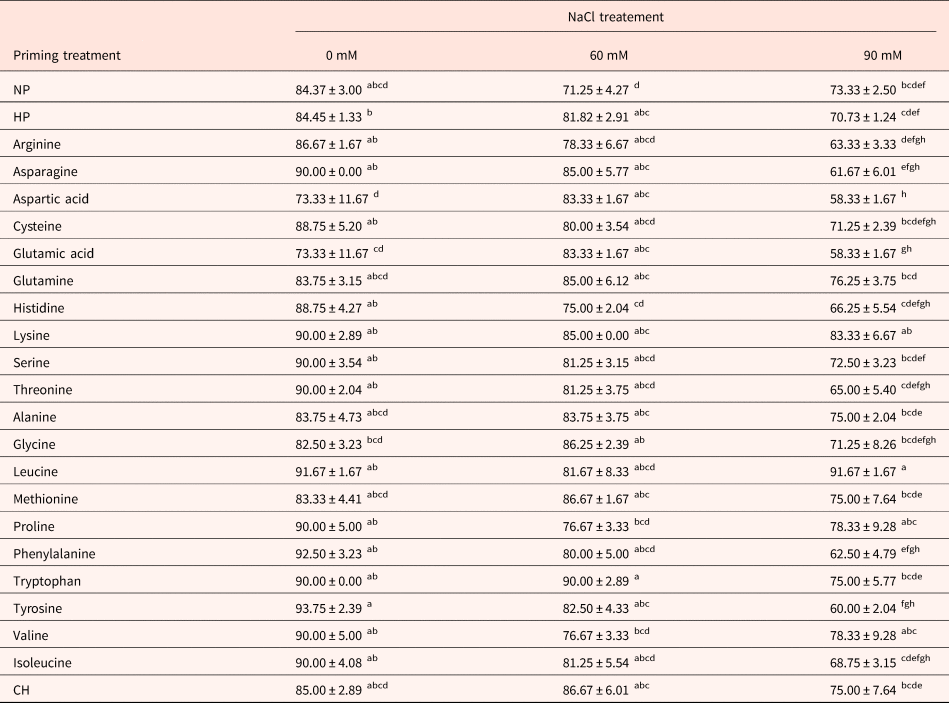
The percentage of seed germination (GP) in non-primed Italian ryegrass seeds incubated in water was higher than those incubated in 60 and 90 mM NaCl (Table 1). The GP of the seeds in the HP treatment was only significantly different (higher) than that of the seeds in NP treatment incubated in 60 mM NaCl (P < 0.05). There was no difference between NP and HP treatments in relation to the GP of the seeds incubated in water or 90 mM NaCl. The GP of the seeds primed with water (HP) or any of the 20 protein amino acids or CH was not different from that of non-primed seeds when they were germinated in water (Table 1).
Germination percentages (%) in the different seed priming treatments. Data presented are mean ± SE (n = 8). Within each NaCl concentration, different letters indicate significant difference by Fisher's range test at P < 0.05. NP: no priming; HP: hydropriming

The seeds in HP treatment or those that were prior primed with asparagine, aspartic acid, glutamic acid, glutamine, lysine, alanine, glycine, tryptophan, methionine and tyrosine exhibited a higher GP than those in NP treatment when they were germinated in 60 mM NaCl. When seeds were incubated in 90 mM NaCl, only those primed with leucine exhibited significantly higher GP than those in NP and HP (P < 0.05) treatments (Table 1).
Radicle length
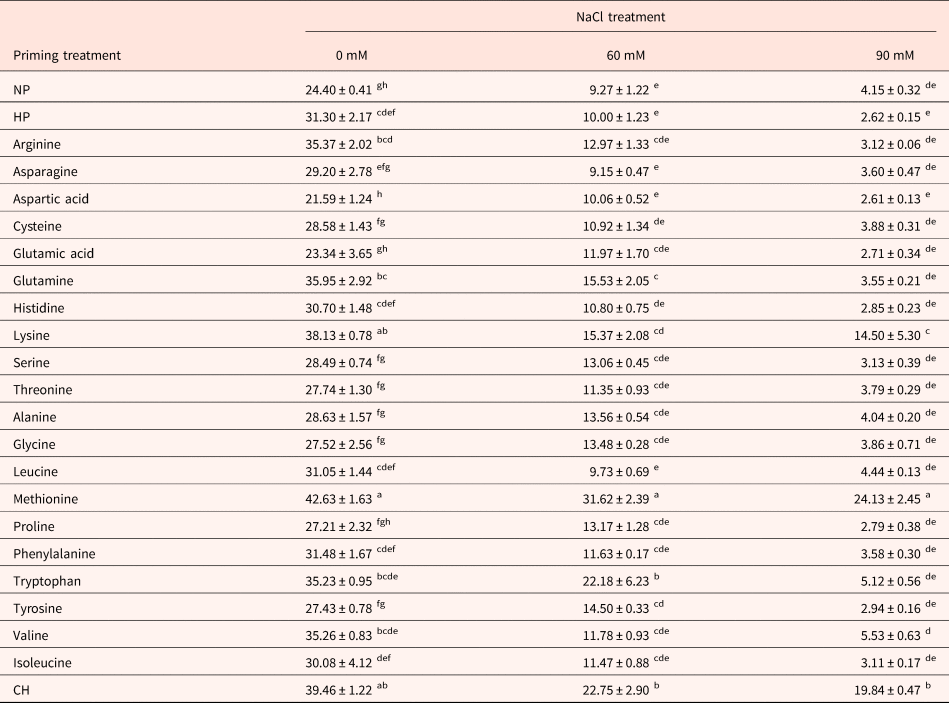
RL of the seedlings in HP treatment was greater than those in NP treatment in the absence of salinity stress (control). Seedlings developed from seeds that were prior primed with lysine, methionine or CH, but not other amino acids, exhibited greater RL than those in HP treatment when they were incubated in water (Table 2).
RL (in mm) in the different seed priming treatments. Data presented are mean ± SE (n = 8). Within each NaCl concentration, different letters indicate significant difference by Fisher's range test at P < 0.05. NP: no priming; HP: hydropriming

There was a similar dose-dependent inhibition in RL of Italian ryegrass seedlings developed from non-primed seeds compared with those in HP treatment when they were incubated with increasing NaCl concentrations (Table 2). Upon incubation in 60 mM NaCl, the seedlings in the treatment of seed priming with glutamine, lysine, methionine or tryptophan and CH exhibited significantly greater RL than those in the NP and HP treatment (Table 2). When the seedlings were grown at 90 mM NaCl, the RL of the seedlings in seed priming treatment with lysine, methionine and CH was greater than those in NP and HP treatment (Table 2).
POD activity
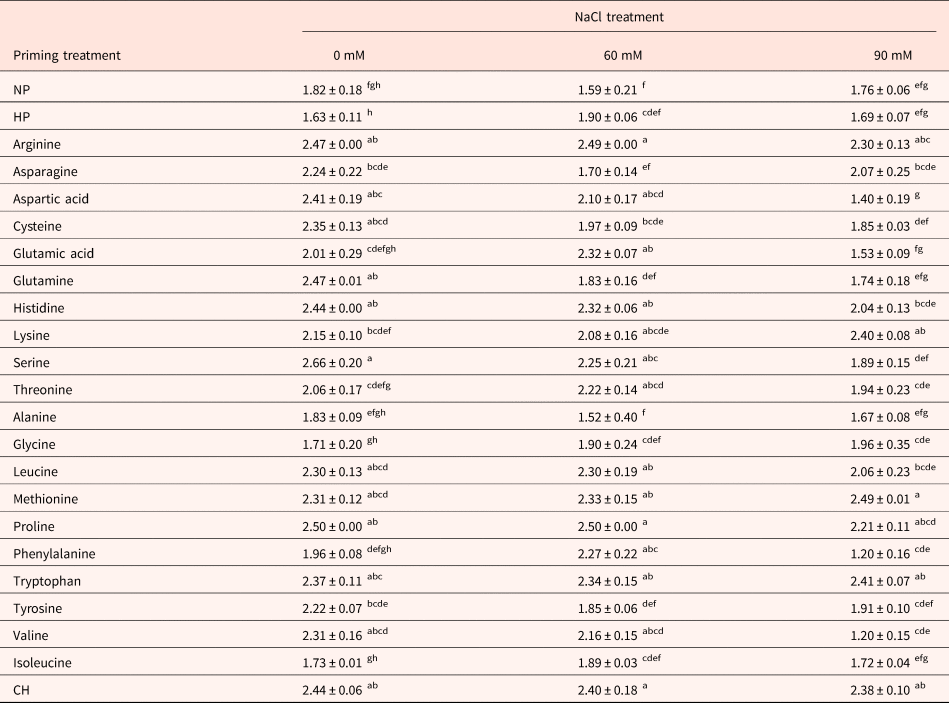
There was no difference in the POD activity in the roots of 4-d-old Italian ryegrass seedlings in both NP and HP treatments when the seedlings were grown in 0, 60 and 90 mM of NaCl (Table 3). When the seedlings were grown in the absence of salinity stress (water only), POD activity in the roots of those in the seed priming treatment with many of the 20 common amino acids and CH, except glutamic acid, lysine, threonine, alanine, glycine, phenylalanine and isoleucine, was higher than NP and HP (Table 3). When the seedlings were grown in 60 mM NaCl, POD activity in the roots of those in the seed priming treatment with arginine, glutamic acid, histidine, alanine, leucine, methionine, proline, tryptophan and CH was higher than those in NP and HP. When the seedlings were grown in 90 mM NaCl, POD activity in the roots of those in the seed priming treatment with arginine, lysine, methionine, proline, tryptophan and CH was higher than those in NP and HP treatment.
POD activity (unit/mg protein min) measurements in the different treatments. Data presented are mean ± SE (n = 8). Within each NaCl concentration, different letters indicate significant difference by Fisher's range test at P < 0.05. NP: no priming; HP: hydropriming

Overall effect of seed priming with 20 different amino acids
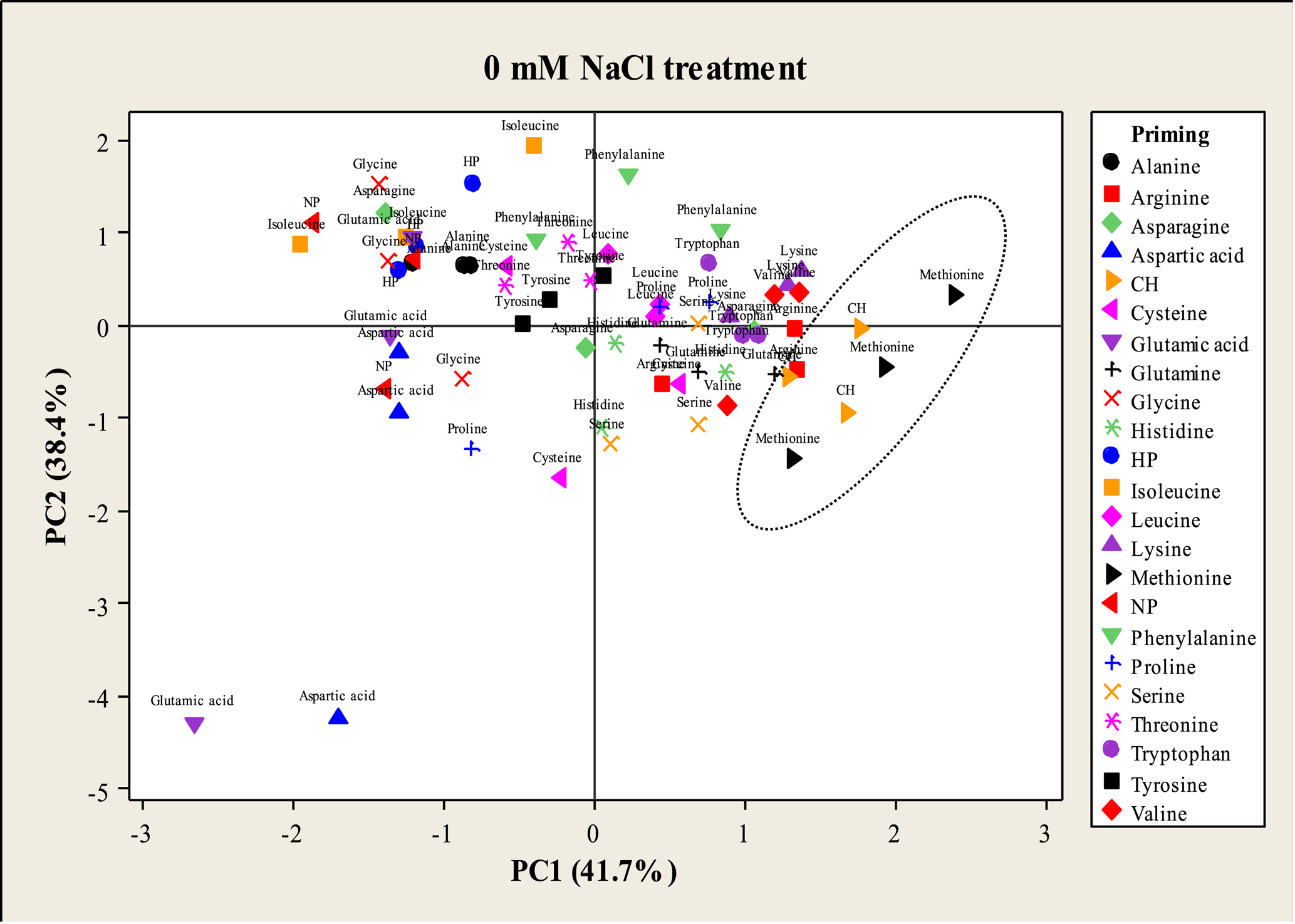
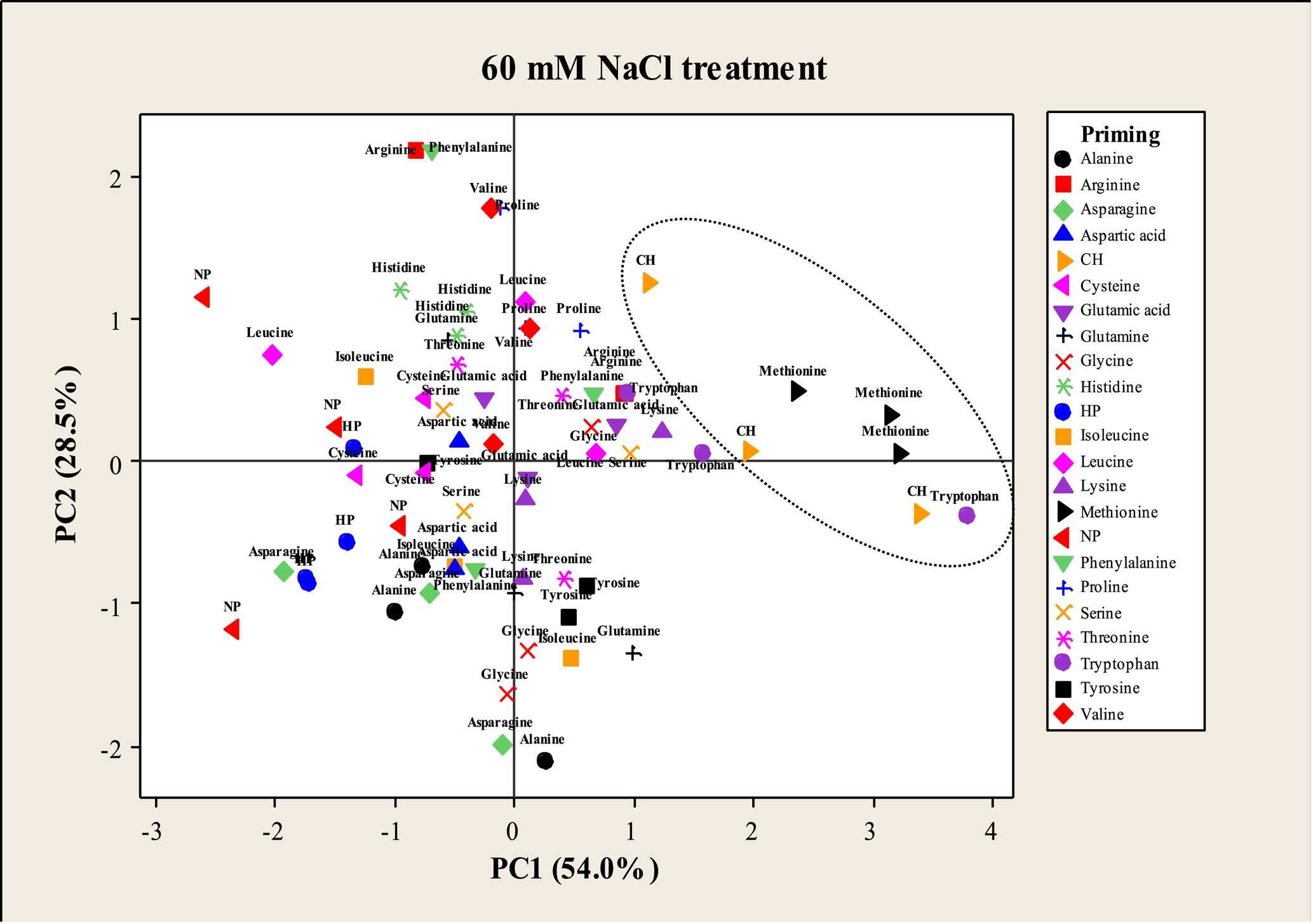
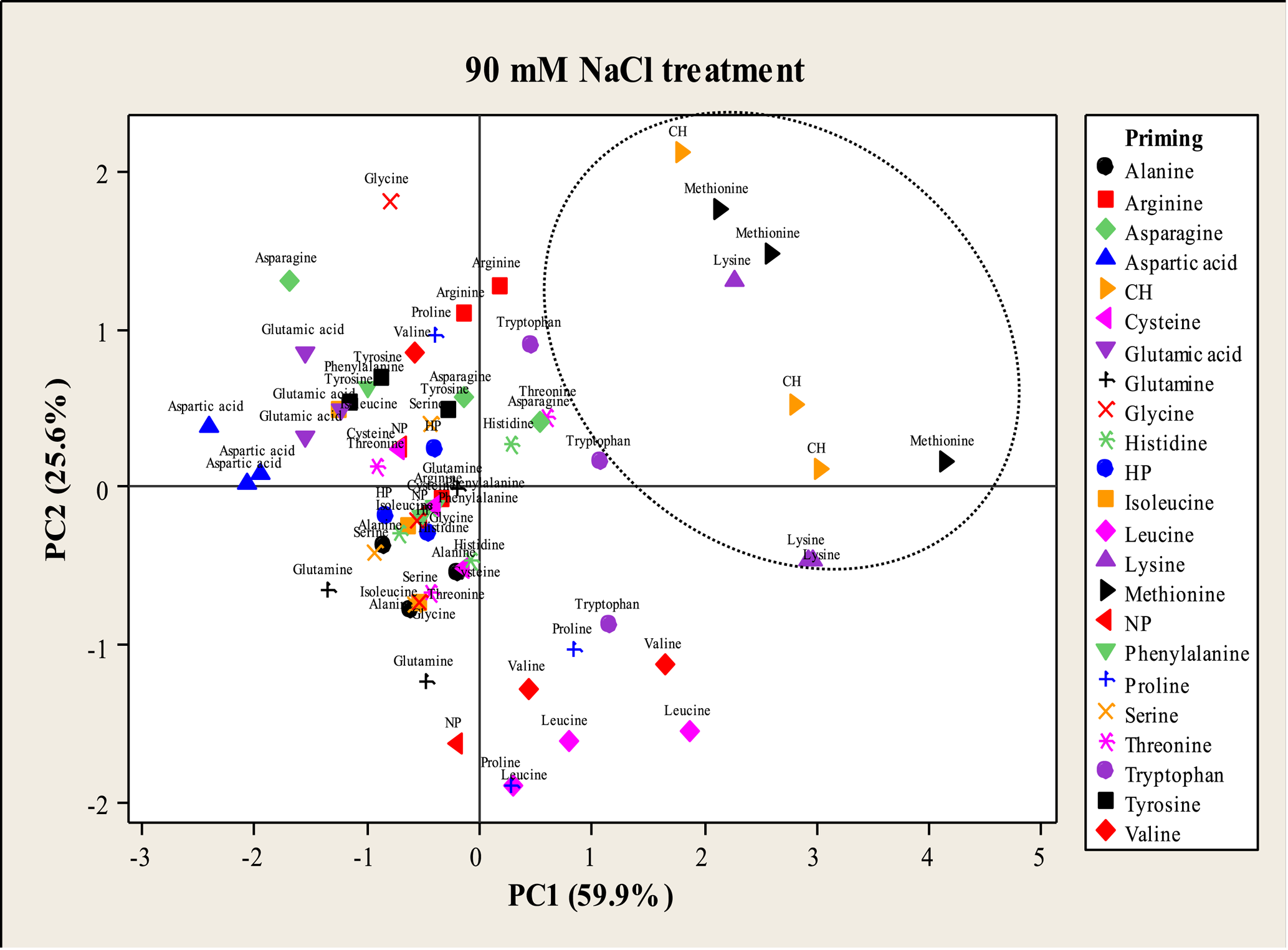
Multivariable analysis was conducted to interpret the overall effects of seed priming with 20 L-amino acids and CH on Italian ryegrass seedlings incubated under salt stress. Based on principle component analysis (PCA) of data for GP, RL and antioxidant enzyme (POD) activity, different seed priming treatments exhibited different physiological effects on Italian ryegrass seedlings under salt stress (Figs. 1, 2 and 3). Along Axis 1, seed priming treatments with CH and L-methionine were markedly separated from other priming treatments and exhibited significant positive associations with RL and POD enzyme activity in Italian ryegrass seedlings incubated in 0–90 mM NaCl.
PCA of seed germination, RL and POD activity of Italian ryegrass seedlings grown in the absence of salt (0 mM NaCl treatment) following seed priming with 20 L-amino acids and CH.

PCA of seed germination, RL and POD enzyme activity of Italian ryegrass seedlings under salt stress (60 mM NaCl treatment) following seed priming with 20 L-amino acids and CH.

PCA of seed germination, RL and POD enzyme activity of Italian ryegrass seedlings under salt stress (90 mM NaCl treatment) following seed priming with 20 L-amino acids and CH.

Counteracting oxidative stress by seed priming with CH
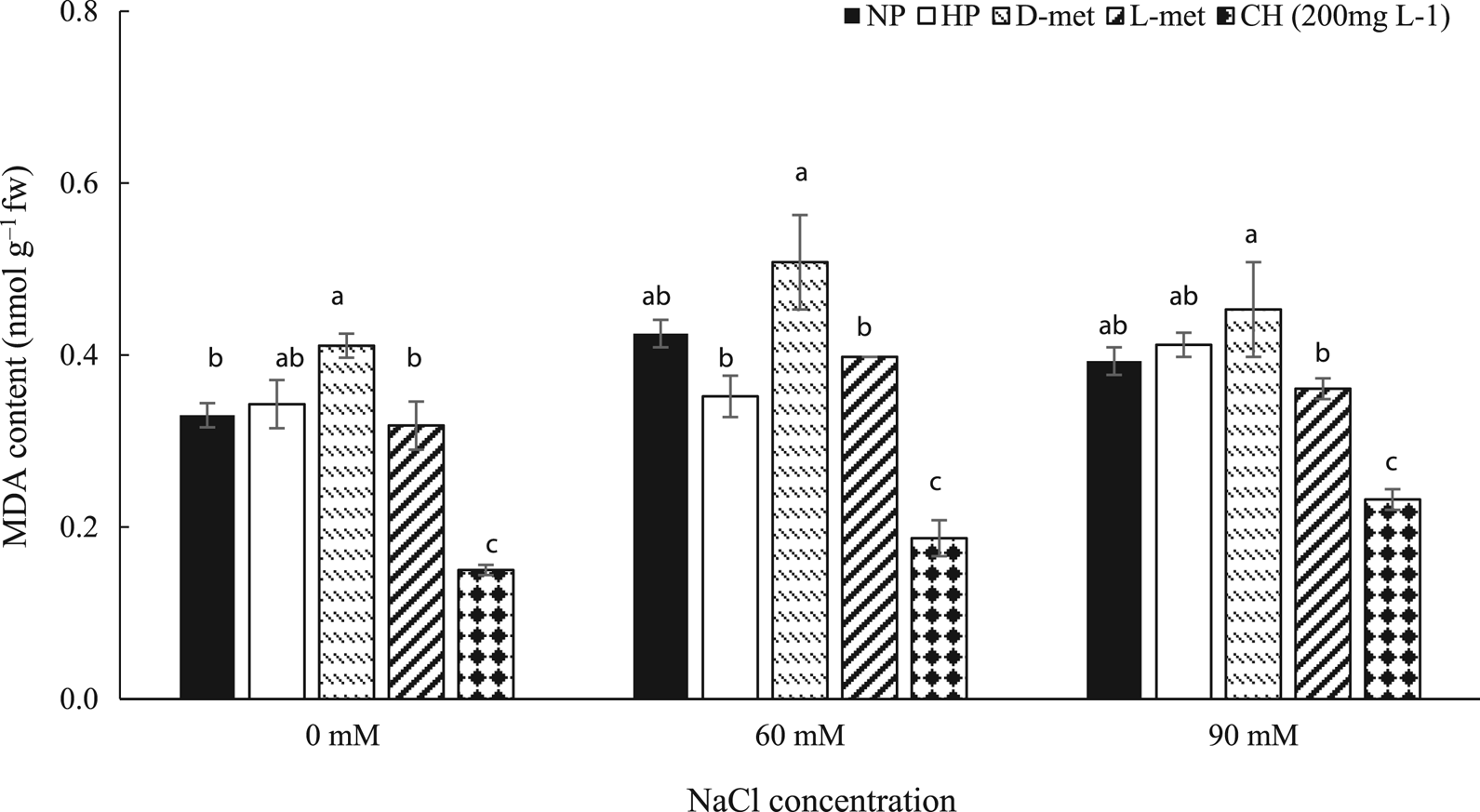
Overall, when the seedlings from the seeds of the different seed priming treatments were incubated in 60 and 90 mM NaCl, the MDA contents in the root tips of 4-d-old seedlings were higher than those incubated in DI water (Fig. 4). The root tips of the seedlings developed from the seeds in the non-priming (NP), HP and L-methionine (L-met) priming treatments did not exhibit any difference in their MDA contents, an oxidative stress marker, when the seedlings were germinated in DI water, 60 or 90 mM NaCl (Fig. 4). Interestingly, there was a slight increase in the MDA content in the root tips of the seedlings from seeds primed with D-methionine (D-met), a non-protein amino acid form of L-met. In contrast, there was a large reduction of the MDA content in the root tips of the seedlings from the seeds primed with CH compared with those from the other seed priming treatments in this experiment.
MDA content (μmol g−1 FW) in roots of 4-d-old seedlings of L. multiflorum in different seed priming treatments: priming with dionized water (HP), CH, L-methionine, and D-methionine and control (NP). The seedlings were grown in different concentrations of NaCl (0, 60 and 90 mM). Data represent the mean of each treatment with standard errors (SE) (n = 8). Same letters indicate no difference in each NaCl concentration (P < 0.05).

Discussion
HP of many seeds, for example, Medicago sativa (Li et al., Reference Li, Min, Chen, Chen and Hu2017), fenugreek (Mahmoudi et al., Reference Mahmoudi, Ben Salah, Zaouali, Hamrouni, Gruber, Ouerghi and Hosni2019) and melon (Oliveira et al., Reference Oliveira, Steiner, Zuffao, Zoz, Alves and De Aguiar2019), is known to be beneficial for germination and seedling growth under salinity stress. In this study, HP of Italian ryegrass seeds resulted only in a higher GP than non-primed seeds incubated in 60 mM NaCl, but had no protective effect on root growth of 4-d-old seedlings compared with that of those from unprimed seeds incubated in 60 and 90 mM NaCl.
There are many seed priming agents/methods that could be more effective in protecting seedling root growth under salinity stress than HP (Amjad et al., Reference Amjad, Ziaf, Iqbal, Ahmad and Riaz2007; Moreno et al., Reference Moreno, Seal and Papenbrock2018). In addition, the results here showed that out of the 20 common protein amino acids investigated, seed priming with only a few of them, particularly methionine, could ameliorate the negative effect of salinity stress (60 and 90 mM NaCl) on root growth of Italian ryegrass seedlings. Moreover, seed priming with CH was also as effective as seed priming with methionine. In a study of fennel (Foeniculum vulgare L.) seedlings, there were also positive effects of seed priming with methionine on plant height, fresh and dry weights (El-Awadi and Hassan, Reference El-Awadi and Hassan2010). In plants, methionine is used to produce S-adenosylmethionine which is a precursor of several metabolites such as glycinebetaine, methylated polyols, polyamines and ethylene in higher plants (Ogawa and Mitsuya, Reference Ogawa and Mitsuta2012). In Arabidopsis, saline conditions induced production of methionine and other metabolites including ethylene and resulted in increased salt stress tolerance by regulating osmotic balance, cell proliferation and enzyme activities (Ogawa and Mitsuya, Reference Ogawa and Mitsuta2012). It would be interesting to determine changes in methionine level in response to salinity stress in Italian ryegrass seedlings since priming with methionine yielded positive effect on protecting Italian ryegrass seedlings to salinity stress. Some methionine might be taken up during seed priming which would be involved in ethylene biosynthesis as shown in Arabidopsis (Ogawa and Mitsuya, Reference Ogawa and Mitsuta2012). It seems, therefore, worthwhile in future studies to investigate this possible involvement of ethylene synthesis/action in methionine-primed Italian ryegrass and other seeds under salinity stress. It seems also worthwhile to investigate further if the same or other amino acids would also be useful for priming seeds of other plants for the protection of seedlings under salinity stress.
CH was also a better seed priming treatment than HP as far as better seedling growth and higher POD activity in the root of Italian ryegrass seedlings were concerned. It could be because one of the amino acids in CH was methionine. It would also seem that the other amino acids and other components in CH did not influence the positive effect of methionine as a seed priming agent for salinity stress protection in Italian ryegrass seedlings. In future studies, it is of interest to investigate if other protein hydrolysates which are likely to contain some methionine, particularly some biological wastes such as fish blood from processing plants, could be used as a possible seed priming agent.
An increase in proline level has often been associated with response of plants to abiotic stress including salinity stress (Hayat et al., Reference Hayat, Hayat, Alyemeni, Wani, Pichtel and Ahmad2012; Wang et al., Reference Wang, Tang, Wang and Shao2015a). Presumably, one of the roles of increased proline is in osmotic adjustment in cells to cope with stress environment. It has been shown that exogenous application of proline enhanced the growth of rice under salinity stress (Roy et al., Reference Roy, Basu, Bhunia and Banerjee1993). There did not appear to be any protective effect of priming Italian ryegrass seeds with proline against salinity stress, however. It remains to be determined if proline or any of the amino acids investigated could have accumulated to an appropriate physiological level in the seeds during priming.
Amino acids dissolved in DI water may vary in their pH which influence the effectiveness of an amino acid for seed priming. The pH values of methionine (1 mM) and 200 mg l−1 CH were 6.08 and 5.98, respectively, and both were effective seed priming agents in protecting Italian ryegrass seedlings under salinity stress. Other amino acids at 1 mM such as phenylalanine and threonine, with similar pH values (5.93 and 6.02) were, however, not effective as seed priming agents. These findings suggest that pH of these amino acids at the seed priming step might not be critical for their effectiveness for the protection of the seedlings developed from the primed seeds under salt stress.
Under salinity stress, the roots of 4-d-old seedlings developed from the seeds primed with L-methionine (L-met) and CH exhibited a higher level of POD activity than those from NP and HP. This suggests that there was an increase in antioxidative defence associated with seed priming using L-met and CH. This is consistent with a higher level of MDA, an oxidative stress marker, in the root tips of the seedlings under salinity stress. Interestingly, unlike seed priming with CH, seed priming with L-methionine did not seem to have any influence on an increase in MDA content in the root tips of the seedlings induced by salinity stress. It is worthwhile to investigate more closely in future studies the relationship between salinity-triggered oxidative stress and seed priming with L-met.
Conclusion
The main effect of priming with water only (HP) was in protecting Italian ryegrass seed germination in 60 mM NaCl but not in 90 mM NaCl compared with NP. HP was also not effective in protecting seedling root growth in 60 and 90 mM NaCl compared with NP. Priming with any of the 20 common amino acids or CH was not better than HP in protecting seed germination in 60 mM NaCl, but when seeds were incubated in 90 mM NaCl, only the seeds primed with leucine exhibited significantly higher GP than those in NP and HP. Other amino acids, particularly seed priming with methionine and CH resulted in better seedling root growth compared with NP and HP when the seeds were incubated in 0, 60 and 90 mM NaCl. The enhanced protection of seed germination and early post-germinative seedling growth (mainly seedling root elongation) seems to be associated with POD activity (a marker of antioxidative defence in many plant cells) in the root of 4-d-old Italian ryegrass seedlings. It is of interest to investigate using specific amino acids in priming other seeds for better protection against salinity than HP. Moreover, it is also of interest to investigate in future studies in more detail about the relationship between oxidative stress and antioxidative defence following seed priming with specific amino acids.