




No CrossRef data available.
Article contents
Neurological, neuropsychological, and psychosocial outcome following treatment of unruptured intracranial aneurysms: A review and commentary
Published online by Cambridge University Press: 06 February 2004
Abstract
Thirty studies published between 1977 and 2001 that focus on outcome following unruptured intracranial aneurysm (UIA) treatment are reviewed. Although findings from these studies suggest outcome from UIA treatment is reasonably good (between 5% and 25% morbidity and between 0–7% mortality), many of the complex issues associated with the treatment of UIAs remain controversial. Most of the studies reviewed address outcome in terms of mortality and neurological morbidity. Very few studies exist which include measures of outcome such as cognitive status, psychosocial functioning and quality of life. Given that patients facing treatment tend to be healthy middle-aged adults with many years of active working and social life ahead of them, it is important to take into account the long-term consequences of either harboring an UIA, or having it treated. The small number of studies that include cognitive, psychosocial and quality of life outcomes are reviewed in some detail and suggestions made for improving future UIA outcome research. (JINS, 2004, 10, 114–134.)
Keywords
Information
- Type
- CRITICAL REVIEW
- Information
- Journal of the International Neuropsychological Society , Volume 10 , Issue 1 , January 2004 , pp. 114 - 134
- Copyright
- © 2004 The International Neuropsychological Society
INTRODUCTION
Recent articles have extensively reviewed the literature on the treatment of unruptured cerebral aneurysms (UIAs). The Stroke Council of the American Heart Association provides guidelines for the management of UIAs (Bederson et al., 2000), but many of the complex issues associated with the decision to treat UIAs remain controversial. This is readily apparent from the detailed comments of a number of experts published in a recent issue of the Journal of Neurosurgery (Dumont et al., 2002; Juvela, 2002; Weir, 2002; Weir et al, 2002; Wiebers et al., 2002). There is agreement regarding the treatment and management of some patients with UIAs but minimal consensus is found in the literature regarding the treatment of patients in the 40 to 70 year age group with unsymptomatic UIAs less than 10 mm in diameter, especially if they have not suffered a previous subarachnoid hemorrhage (SAH).
The crucial question is whether a patient will be better off if an aneurysm is left untreated, with the patient followed-up at regular intervals and advised to reduce risk factors, or if the aneurysm is occluded. The obvious risks of surgery include the manipulation of the brain during clipping, and potential surgical complications. Coiling carries a high risk that the aneurysm will not be completely occluded, as according to a review by Brilstra et al. (1999) only 54% are completely occluded, in addition to the uncertainty about the long-term effects of coiling. Rupture of the aneurysm is a risk of both types of treatment.
Given that the patients for whom treatment decisions are most difficult tend to be healthy middle-aged adults with many years of active working and social life ahead of them, it is important to take into account the long-term consequences of either harboring an UIA, or having it treated. A 50-year-old patient with a 10 mm UIA on the anterior communicating artery may well be advised to have the aneurysm treated, but if the likely long-term consequences of this included even a small decrease in cognitive functioning, then some patients might prefer to leave well alone. On the other hand, patients who are inclined to worry about their health, and perceive an UIA as a “time-bomb” ticking in their head, might achieve a better quality of life if their aneurysm were occluded, even if the downside was a possible diminishing of some cognitive functions. Research looking at the long-term cognitive, psychosocial and quality of life outcome following treatment of UIAs is required in order to provide patients with useful data that can inform their decisions about the best treatment option for them. Such information is especially pertinent for those patients in the “gray zone”; that is when there is no clear-cut evidence for treatment versus conservative management in their particular case.
Most of the existing studies have assessed outcome from UIA treatment in terms of mortality and neurological morbidity. In comparison very few studies exist which include measures of outcome such as cognitive status, psychosocial functioning and quality of life. Where cognitive outcome has been included, methodology differs across studies. In his review Weir (2002) briefly covers outcome research, but he does not critique these studies in any detail. Making sense of studies that include measures of cognitive and psychosocial outcome requires a good understanding of neuropsychological and quality-of-life research. For example, a study using the Mini-Mental State Examination (Folstein et al., 1975) at 6 weeks post treatment as the only outcome measure cannot be compared with a study that uses a carefully constructed neuropsychological battery of tests pre-treatment, and again at 6 to 12 months post treatment. In this paper we will review and comment on outcome studies published to date, and make suggestions for future research.
Unruptured Intracranial Aneurysms
An aneurysm is formed when a region of the blood vessel wall or artery weakens and balloons out to form a sac-like structure (Figure 1). A UIA is classified as an aneurysm without historical or pathological evidence of a breach through the artery wall (Weir, 2002). The presence of an UIA can come to clinical attention in several ways, including discovery when investigating headaches, seizures or embolic events (Orz et al., 2000). UIAs can also be discovered when treating a ruptured aneurysm, or they may be found incidentally during the assessment of an unrelated problem (Orz et al., 2000). Differences in the manner in which UIAs come to clinical attention have led to variations in the terminology used to describe these aneurysms. For example, the term “symptomatic aneurysm” is used to describe aneurysms that rupture, or aneurysms that produce neurological symptoms by space occupying effects. “Asymptomatic aneurysms” are not responsible for clinical presentations and are typically found in patients with an additional symptomatic aneurysm, or when conducting investigations in patients who are at risk of harboring an aneurysm. “Incidental aneurysms” are those found unexpectedly in patients undergoing investigation for other suspected pathology (Wardlaw & White, 2000). In this paper the generic term “unruptured intracranial aneurysm” (UIA) is used to describe all three categories of unruptured aneurysm.

Radiographic image of an unruptured intracranial aneurysm.
Decisions to treat UIAs are said to depend on the relative risk of subsequent spontaneous rupture and SAH in untreated patients versus the risks of treatment (Orz et al., 2000). Unfortunately, accurate knowledge regarding the natural history of aneurysms is still lacking (Asari & Ohmoto, 1993; Juvela et al., 1993), although an annual rate of rupture of between 1–2% is in the main well accepted (Juvela et al., 2000). Several potential risk factors for aneurysm formation and rupture have been discussed extensively in the literature and the interested reader is referred to the excellent review article recently published in the Journal of Neurosurgery (Weir, 2002). Briefly, increasing aneurysm size and aspect ratio have been hypothesized to present a significant risk in terms of intrinsic features of the aneurysm itself whilst cigarette smoking, alcohol intake and high life event stress appear to present the greatest risk in terms of modifiable risk factors. Age is also thought to be an important risk factor with it suggested that the peak risk for aneurysm rupture occurs between the ages of 40 to 60 years (Samson, 1996). Factors related to pregnancy and hormone changes following menopause also appear to be important but at this stage are largely uninvestigated.
Outcome following treatment for an UIA is also still largely open to debate. Currently there are generally three main management techniques employed. These are surgical clipping, endovascular therapy with coiling and “best medical therapy,” otherwise known as conservative management (lifestyle modifications and ongoing monitoring). With both surgery and endovascular therapy (Figure 2) the aim is to exclude the aneurysm from the blood circulation to prevent future rupture and/or to relieve any symptoms of mass effect associated with the aneurysm (Molyneux, 2000), whilst at the same time not producing adverse cognitive or neurological symptoms. Additional factors that need to be considered when selecting the optimal treatment method are the cost of the treatment, length of hospital stay and duration of rest and recovery period (Martin, 1997).

Endovascularly coiled aneurysm (A) and surgically clipped aneurysm (B) (Johnston et al., 2000).
Mortality and Neurological Morbidity Following Surgical Treatment
Based on a review of 30 studies conducted between 1977 and 2001 (Table 1) the gross outcome following clipping of an unruptured aneurysm appears to be generally good. The range of reported morbidity and mortality values does, however, vary widely, falling anywhere between 0–7% for mortality and between 5–25% for morbidity. These variations can largely be accounted for by the differences in measures of morbidity used, time frame of assessment of outcome, exclusion and inclusion protocols for patient populations, and different demographics of patient populations.
Surgical and endovascular mortality and morbidity

Continued

Continued

For example, studies with lower morbidity and mortality figures typically did not include larger aneurysms or poor risk candidates (Wirth et al., 1983). Poor surgical outcome is generally reported by studies that include patients with larger aneurysms, aneurysms in difficult-to-treat locations and aneurysms in the elderly (Solomon & Baker, 1992). Another variable affecting the mortality and morbidity figures is hospital volume, with those hospitals more frequently performing aneurysm operations having lower mortality (Solomon et al., 1996). These, and other methodological differences, make comparisons between the various studies problematic.
In order to overcome the limitations of many of the studies and the difficulty in comparing results, several investigators have opted to pool studies and conduct meta-analyses of the findings. Selection protocols for meta-analysis studies are typically rigorous and ensure that only studies with similar methodological protocols are compared. One such meta-analysis has been conducted by King et al. (1994). In their study only patients who had undergone surgery for incidental or multiple aneurysms were included, and all patients with symptomatic aneurysms were excluded. They also included only patients who had a good neurological status prior to treatment. Surgical mortality was defined as any death within 30 days of surgery. Morbidity was defined as a permanent significant neurological deficit and was based on the longest reported follow-up period. Their search of the literature produced a 28-case series containing a total of 733 eligible patients. They reported a range in morbidity rates from 0.0% to 16.7% and a range in mortality of 0.0% to 7.7%, with a combined morbidity of 4.1% and a mortality of 1.0%.
Raaymakers et al. (1998) have also conducted a meta-analysis of studies based on surgery for unruptured aneurysms, but with slightly different criteria to those of King et al. (1994). Unlike King et al. (1994), Raaymakers et al. (1998) included in their analysis studies of patients with symptomatic aneurysms and patients who had neurological signs or symptoms preoperatively. They also included higher proportions of posterior circulation aneurysms and giant aneurysms. The analysis of Raaymakers et al. (1998) included 61 studies with 2,460 patients. From these studies they reported a combined mortality of 2.6% and a permanent morbidity of 10.9%. They noted that morbidity percentages tended to be higher in studies they considered to be of “high” quality.
Recently the International Study of Unruptured Intracranial Aneurysm Investigators (ISUIA; 1988) conducted a large scale multi-center study of UIAs in which they found the morbidity and mortality figures for treatment of unruptured aneurysms to be much higher than previously reported by King et al. (1994), and slightly higher than those reported by Raaymakers et al. (1998). Morbidity and mortality figures were based on 996 cases that proceeded to surgery. Mortality was 1.8% 30 days after surgery and 3.6% 1 year after surgery. The ISUIA (1988) study is interesting and, at the time it was published, was the only study to have utilized cognitive as well as neurological measures of outcome. The measures used by the ISUIA (1988) study were the Telephone Interview for Cognitive Status (Brandt et al., 1988) and the Mini-Mental State Examination (Folstein et al., 1975). When based on the Rankin Disability Scale (Rankin, 1957) alone, a brief scale of functional outcome following a stroke, morbidity 30 days after surgery was 3.6%, and 1 year after surgery it was 2.9%. When based on cognitive status alone, 30 days after surgery morbidity was 6.3% and 1 year after surgery it was 6.1%. When based on either the Rankin scale, or cognitive status, or both, morbidity 30 days after surgery was 15.0% and one year after surgery it was 12.0%. Although at 1 year the patients without a history of SAH had a slightly poorer outcome in terms of overall morbidity, when it came to measures of cognitive status alone, patients with a history of SAH had a poorer outcome. The authors attributed this to the effect of three consecutive cerebral events (1 SAH and 2 craniotomies) on mental status. These findings raise several interesting points. First, basing measures of outcome on either neurological status or cognitive status alone can be misleading. Second, morbidity changes with time, and typically will improve given time. Studies that report morbidity figures based only on short follow-up periods may therefore result in overestimates of morbidity outcomes. Third, the ISUIA (1988) study fails to adequately control for the effect of other factors on morbidity, such as previous SAH.
In summary, the generally favorable outcome following surgery for unruptured aneurysms combined with extensive research demonstrating the poor outcome following the rupture of an aneurysm (Ogden et al., 1990, 1993, 1994) have been used to argue in favor of treatment of unruptured aneurysms to avoid the possibility of future rupture (Eskesen et al., 1988; Heiskanen, 1986; Mizoi et al., 1989). The ISUIA (1988) study concludes that mortality and morbidity rates following surgery for unruptured aneurysms are higher than the rate of spontaneous rupture if the UIA is left untreated. However this conclusion has been criticized by several researchers (Alexander & Spetzler, 1999; Debrun, 1999; Hashi, 1999; Kobayashi & Orz, 1999; Solomon, 1999). The ISUIA study does nonetheless raise the possibility that surgical risks might outweigh the benefits of occluding the aneurysm (Roy et al., 2001), and hence the controversy remains unresolved.
Mortality and Neurological Morbidity Following Endovascular Treatment
In contrast to the information available about surgical clipping, data on the effectiveness and risks of endovascular coil embolization for UIAs is more tentative (Wardlaw & White, 2000). This technique has only been in widespread use since 1991, and is undergoing constant refinement. Thus long-term follow-up is not yet well documented (Kahara et al., 1999; Lot et al., 1999). In addition, at this stage, endovascular coiling and surgical clipping tend to be used in different patient populations (Viñuela et al., 1997). For example, in most studies the indications for endovascular treatment remain that surgical treatment is unsuitable because of anatomical considerations, patient medical condition, or patient age. For this reason, how the two techniques compare in equivalent patient populations is as yet unknown (Johnston et al., 1999a). A more extensive analysis of the long-term results of treatment with endovascular coiling is considered to be particularly important as such a treatment may provide a less invasive alternative to surgery (Wardlaw & White, 2000).
Many of the existing studies on the efficacy of endovascular embolization using coiling have been conducted on SAH populations (Byrne et al., 1999; Casasco et al., 1993; Lempert et al., 2000; Vanninen et al., 1999; Viñuela et al., 1997), or on a combination of ruptured and unruptured cases where the two groups are not separately analyzed (Cognard et al., 1999; Raftopoulos et al., 2000; Steiger et al., 1999; Zubilaga et al., 1994). In other studies the numbers of UIAs in the various groups in the study are too small to make useful comparisons (Kahara et al., 1999; Redekop et al., 1999; Regli et al., 1999). Only a limited number of studies have reviewed coiling in samples consisting of UIAs. It has, however, been argued that studies of UIAs provide more useful information about treatment outcome than SAH studies because patients are generally minimally impaired and therefore any new deficits can be attributed to the treatment rather than the hemorrhage (Johnston et al., 2000). These UIA studies report a wide range of mortality percentages, from 0–13%, and morbidity percentages from 5–20% (see Table 1).
A recent meta-analysis of studies of embolization suggested that treatment-related complication rates are similar to those reported following surgery, with a morbidity of 3.7% and a mortality of 1% (Brilstra et al., 1999). Brilstra et al. (1999) however noted that longer-term results are needed before final conclusions can be drawn. This is particularly important because of the possibility of recanalization and rebleeding in incompletely occluded aneurysms. In addition it is unlikely that the group of patients treated endovascularly and reviewed in the meta-analysis by Brilstra et al. (1999) are equivalent to patients reviewed in studies of surgical outcome.
Comparing studies of outcome following coiling and clipping is problematical because the two treatment methods are not considered equally appropriate for every case. In addition Brilstra et al. (1999) advises caution when comparing the two techniques because of the widely heterogeneous nature of study designs, patients and aneurysms. A few studies have, however, attempted to compare outcome following the two procedures, although with varying conclusions. As an example Leber et al. (1998) concluded that coiling with Guglielmi electrolytically detachable coils (GDCs) is as safe and effective as clipping in cases of UIAs. However, it should be noted that in their study there were many more patients enrolled in the endovascular group than in the surgical group, with the reason for this not given.
In another study that compares endovascular and surgical outcome in a large multi-center cohort of patients with UIAs, Johnston et al. (1999a) conclude that adverse outcomes were significantly more common in surgical cases when compared to endovascular cases. Mortality, however, was not significantly affected by treatment type. The authors do acknowledge several limitations of their study. For example, an adverse outcome was defined as in-hospital death or transfer to a nursing home or rehabilitation hospital at discharge. As they note, recovery from surgery may be slower, but more complete, and this would not be reflected in their measure of adverse outcome. Further, although variables of gender, age, race and admission source (emergency room, transfer or elective), were controlled for statistically when comparing the two treatment groups, other important variables, such as aneurysm characteristics, could not be controlled for in the study (Johnston et al., 1999a). As noted by Johnston et al. (2000) in a later article, the previous study cannot rule out that better outcome following coiling was a result of the selection of lower risk candidates for this procedure. Nonetheless the authors concluded that despite the limitations of the study, the findings are important and provocative. Although they cannot provide a definitive basis for recommending coil embolization they do consider their study provides impetus for further studies comparing the two methods.
The later paper by Johnston et al. (2000) reports on a similar study conducted at a single institution. From that study the authors draw a very similar conclusion that endovascular treatment of UIAs seems to be significantly safer than surgical clipping. They found that surgery was associated with greater rates of early and persistent disability, more procedure-related complications and a greater delay in return of function. They do note, however, that the rupture of three aneurysms in the endovascular patients during follow-up compared with one in the surgical group highlights the need for longer-term follow-up. As with the first study they also note that there may be unmeasurable factors contributing to the differences between outcomes in groups (Johnston et al., 2000).
To summarize, it has been suggested that it might be too soon to make durable comparisons between surgical and endovascular methods as it is quite likely that the endovascular technique will continue to undergo further modifications, with alternative devices possibly providing more complete and stable aneurysm occlusion (Bavinzski et al., 1999). Combined studies may be particularly useful in evaluating the belief that the combination of surgical clipping and coiling in management protocols may help to improve the overall outcome of all cases (Johnston et al., 2000; Sturaitis et al., 2000). Combined approaches may also be particularly useful in cases of complex intracranial aneurysms often deemed too difficult for standard treatment (Hacein-Bey et al., 1997). As Martin (1998) comments, endovascular methods should be considered as a complementary method to surgery, rather than as a replacement method. They suggest endovascular options extend treatment to patients with inoperable or high-surgical-risk aneurysms.
Mortality and Morbidity Following Aneurysm Rupture
As mentioned earlier “best medical therapy,” or conservative management, is considered to be a viable option for the treatment of UIAs. However, this treatment option in itself carries a risk—the risk that the aneurysm may rupture at some point in the future. As already noted, rupture rates of between 1–2% per year are generally accepted. Unfortunately whilst the number of patients experiencing good outcome following the rupture of an aneurysm have increased in the last decade (Cesarini et al., 1999; Hop et al., 1997; Le Roux et al., 1995), fatality rates are still high. In the review conducted by Hop et al. (1997) case-fatality rates ranging between 32% to 67% were reported. Further, morbidity rates in those who survive a SAH also remain unacceptably high and are said to range between 40–50% (Dorsch, 2000; Samson, 1996).
Adding to the already dismal picture Hop et al. (1997) note many of the patients who remain “independent” after a SAH may experience difficulties returning to their former level of functioning. Many studies of reportedly “good” recovery patients, as determined by neurological outcomes scales, have revealed that many of these patients still demonstrate deficits in terms of cognitive functioning, psychosocial functioning and quality of life (Bornstein et al., 1987; Hop et al., 1998; Ljunggren et al., 1985; Ogden et al., 1990, 1993, 1994; Säveland et al., 1992).
In a study conducted by Ogden et al. (1990) 100% of the patients were rated as having achieved a good neurological recovery whilst only 37.5% were rated as having achieved a good neuropsychological outcome. All patients had achieved full physical independence but only 63% had returned to their previous level of leisure activities and only 50% had returned to their premorbid work levels. Other researchers have reported similar figures (Ropper & Zervas, 1984; Säveland et al., 1986; Tidswell et al., 1995). Further, a recent review of health outcome one year following SAH (Hackett & Anderson, 2000) likewise found that many patients continue to experience significant reductions in quality of life, and in particular in social role functioning. They also reported that between one-third to one-half of the patients reported ongoing subjective problems of memory and mood (Hackett & Anderson, 2000). Examples such as these, and the extensive experience in the field of SAH research again reinforces the importance of considering factors other than neurological outcome when evaluating the management of a particular disease process.
Another important area debated in the existing SAH literature, particularly in terms of predicting what we might expect to see following treatment of a UIA, is that of what processes underlie the observed poor cognitive outcome of many patients. SAH is considered to be a complex disorder involving the initial hemorrhage and a number of secondary events (Cesarini et al., 1999). It has been suggested that the considerably unfavorable outcomes that have been observed to follow SAH are to a large extent the consequence of secondary insults sustained by the brain during the acute phase of the disease (Cesarini et al., 1999).
Some evidence has been reported which suggests that observed neuropsychological deficits are related to the diffuse brain damage as disclosed on CT scan 1 year after SAH (Vilkki et al., 1990). However other investigations have failed to find a relationship between damage to the brain and cognitive disturbances in patients with reportedly good neurological outcome (Berry et al., 1997). Other factors associated with the surgical treatment of the aneurysm have also reportedly been found not to be associated with evidence of poor cognitive outcome (Berry et al., 1997). Indeed, from a study that reviewed the cognitive and psychological sequelae of uncomplicated aneurysm surgery, Maurice-Williams et al. (1991) concluded that uncomplicated surgery itself does not involve any risk of detectable impairment. Once again, however, there remains some controversy with other researchers who conclude that aspects of surgery to treat a SAH do correlate with longer-term cognitive disability (Tidswell et al., 1995).
A possible means of resolving some of this controversy may be to compare surgically clipped SAH cases to matched endovascularly coiled SAH cases. If differences in neuropsychological outcome are observed in these cases then it may be possible to argue that these differences are due to the treatment, assuming of course that the cases are well matched. If there are no differences between the two groups then it may in turn be appropriate to argue that any observed deficits are most likely due to shared factors, such as the diffuse damage from the original bleed, experience of hospitalization, anesthetic effects, etc. Some evidence on this controversy has recently been provided by Hadjivassiliou et al. (2001) who compared pairs of subarachnoid hemorrhage patients matched on factors other than treatment modality and found that coiling and clipping produced statistically similar impairments across a wide range of cognitive domains. In this study the authors concluded that such evidence suggested that the impairments in cognitive outcome observed to follow SAH were largely the result of the original hemorrhage. They do however also note that there was some evidence that surgical clipping produced more frontotemporal damage (Hadjivassiliou et al., 2001). In addition, the recent International Subarachnoid Aneurysm Trial (ISAT) study (2002) found the neurological morbidity in clipped SAH cases to be significantly worse than the neurological morbidity of endovascularly coiled SAH cases, suggesting that clipping produces some additional damage above and beyond the effects of the original bleed.
Another study design which can also shed useful light on the controversy is a design which compares neuropsychological outcome in well matched SAH and UIA cases. As Hillis et al. (2000) note such a study allows the neuropsychological effects which result from the SAH to be separated out from the neuropsychological deficits that result from the treatment, treatment complications, anesthesia and other factors such as psychological depression. From their study which utilized such a design they concluded that some specific deficits appeared to be related to the original SAH whereas other deficits were more likely related to the general effects of treatment (Hillis et al., 2000). Further investigations with study designs that incorporate clipped and coiled cases and/or SAH and UIA cases are clearly needed to shed further light on the relative contribution of initial SAH and subsequent treatment to the profile of cognitive deficits often observed to follow rupturing of an aneurysm.
In addition to the cognitive deficits experienced by many victims of SAH a considerable number of recovered patients also report psychological deficits. With regard to the processes that may underlie these deficits it has been hypothesized that the poor social and psychological outcome observed in SAH victims may result from the subjective experience of suffering from a SAH (McKenna et al., 1989; Ogden et al., 1990; Vilkki et al., 1990). An interesting finding from the study conducted by Ogden et al. (1990) was that the group of patients for whom an aneurysm could not be identified experienced significantly poorer outcomes on several psychosocial variables. From this Ogden et al. (1990) hypothesized that because these patients could not be reassured that an aneurysm had been occluded, psychological rather than neuropsychological processes may underlie some aspects of recovery. If part of the outcome picture typically observed to follow SAH without an identifiable aneurysm can be attributed to psychological repercussions of having suffered a life-threatening illness, then we might expect to see some deficits following discovery of an UIA. Again, however, a thorough investigation is needed to confirm this.
Neuropsychological and Psychosocial Outcome Following Treatment of UIAs
Physicians are schooled in the tradition of “first do no harm.” But what do we consider to be harm? To a large extent measurement and significance of postoperative outcome depends on the measure of outcome used (Raaymakers, 2000). Raaymakers notes that outcome measures, or measures of harm, have generally been restricted to measures of neurological impairment. Typically assessments of neurological status are similar across studies and include the monitoring of such deficits as hemiparesis, aphasia, nerve palsy, motor deficits and speech disturbances. In most studies the usual standard of practice is to group neurological outcomes into four categories: excellent, good, poor, and death. Excellent is usually defined as a return to preoperative function level with no new neurological deficits. Good is assigned to a patient considered to be ambulatory, cognitively independent but with minor new neurological deficits, and poor is a patient who is dependent or not ambulatory. These categories are often labelled differently; for example as good recovery, mild deficits, severe deficits, and death. They still however represent similar groupings of outcomes. Usually the patients who fall into the poor categories are those represented in morbidity figures. Patients who fall into the good or excellent categories are in turn typically regarded as having had a “favorable” recovery.
Commonly used measures such as the Glasgow Outcome Scale (Jennett & Bond, 1975), the Rankin Scale (Rankin, 1957), or even the Mini-Mental State Examination (Folstein et al., 1975) do not assess cognitive functioning in any detail. It is therefore possible that many people classified as having “favorable” outcome have not returned to their pre-surgery level of functioning (Orz et al., 2000). In addition, many studies reporting morbidity figures do not make explicit their method for classifying deficits or for defining morbidity (King et al., 1994). Finally, use of a single measure of outcome such as neurological status on discharge from hospital, or at 6 weeks post surgery, may also be misleading, especially if the important information is outcome in the long term.
One particularly detailed system of outcome measurement is the scheme proposed by the World Health Organization for the classification of the consequence of any disease (World Health Organization, 1980). As Wade (1996) notes, although considered too complex for everyday use, the WHO model does form a good conceptual framework for understanding neurological deficits. The model notes the need to assess illness on three levels: impairment, disability and handicap. Just recently a new version of the World Health Organization model has been released (World Health Organization, 2001). This revised model defines several domains of health, with these domains grouped under two classifications: (1) body functions and structures; and (2) activities and participation. These two new classifications replace the terms impairment, disability and handicap from the original model, and are said to extend their scope to include positive experiences. In addition, the revised model has moved away from an emphasis on the consequences of disease towards an approach that considers the various components of health (World Health Organization, 2001). Although this revised model undoubtedly builds upon and extends the original model, as it is not yet in widespread use the original model is referred to here.
Impairments are defined as the direct neurophysiological consequences of the underlying pathology (Wade, 1996) and are typically measured by neurological outcome. Assessment of impairment should also include assessment of psychological and neuropsychological dysfunction, such as memory impairment. Disability refers to a disturbance in aspects of a patient's behavior or normal function and is essentially the external, behavioral consequences of the pathology. Examples include slow walking, needing help to dress, no longer being able to cook a simple meal, or forgetting to take one's medication (Wade, 1996). Finally, handicaps are the social and societal consequences of the pathology and are the most important determinant of the severity of the illness from the patient's point of view (Wade, 1996). In essence, handicap reflects the consequences for the individual that stem from the presence of impairment and disability (WHO, 1980). A common example is the patient's inability to return to work full time because of increased fatigue levels (Ogden et al., 1990, 1994). It is this particular aspect of outcome that has in the past been neglected by most morbidity studies of UIAs.
Health-related outcome has many facets, and its measurement should reflect this. As Raaymakers (2000) notes, different measures of outcome may be of differing importance for professionals and patients. A neurosurgeon may be most interested in neurological impairments whereas a patient may consider ongoing quality of life to be the most relevant factor. Behavior is often the most sensitive measure of cerebral function, and hence investigations, including clinical neuropsychological assessments, which assess behavior consistently find problems that are not revealed by other measures of brain function (Kolb & Whishaw, 1996; Lezak, 1995). Neuropsychological assessment can provide data that is useful for both the neurosurgeon and the patient.
A particular difficulty with neurological measures is that common outcome scales may not reveal deficits that can affect people in very debilitating ways. As an example, Ogden et al. (1993) discuss the example of an architect whose work involved a high degree of visuospatial ability. Such an individual would be considerably disadvantaged by very subtle impairments of visuospatial function. However, such deficits are only likely to be detected if comprehensive neuropsychological testing is carried out. As Ogden et al. (1993) note, if the patient is unaware that they have a deficit, even a mild deficit, they may become frustrated and irritable at their work performance. Such emotions may negatively impact on friends, family and colleagues, thereby creating a vicious cycle that ultimately results in a decline in well-being.
Providing patients and their families with simple information about what they can expect with regard to their recovery can help to alleviate many fears and misconceptions and allow patients and families to make the necessary adjustment to their lives. Therefore from the patient's perspective, the neuropsychological report is in many cases likely to be more informative than the neurological report. Neuropsychological assessment is also useful for defining baseline levels of cognitive functioning for longitudinal comparisons with follow-up data. Longitudinal follow-up data is particularly helpful when attempting to identify the rate of improvement or deterioration in cognitive status in response to treatment (Mitrushina et al., 1999). In addition to providing the patient with useful information on their pattern of recovering, neuropsychological data can be used to make inferences at a group level concerning the overall “success” of a particular treatment option.
Neurological status data, such as has been reported in the bulk of the literature on UIA outcome, can also provide useful information regarding the overall impact of a particular treatment option. This is especially pertinent in studies that include large numbers of patients, because of the time-consuming nature of neuropsychological assessment. In addition, when evaluating the effect of a treatment involving neurosurgery, the neurological outcome is clearly important. Therefore, in the early stages of treatment evaluation standard measures of neurological outcome may be most appropriate, with long-term neuropsychological and psychosocial outcome assessed at 3 months, and again at 6 to 12 months following treatment.
To date, very few studies of UIAs have gone beyond the measures of neurological status or simple “screening” tests of cognitive function. There are, however, a few exceptions where researchers have included more comprehensive neuropsychological outcome measures. Fukunaga et al. (1999) recently reviewed the neuropsychological functioning of 30 patients prior to and following surgery for UIAs. Patients who demonstrated a decline in performance 1 month after surgery were tested again 2 months later. The tests used in the study were the Mini Mental State Examination (MMSE), a maze test, and a speeded letter recognition task (“Kana-Hiroi” test). One month after surgery scores on the MMSE decreased in 10 cases, scores on the “Kana-Hiroi” test decreased in 17 cases and the time taken to complete the maze test was increased in 30 cases. All three scores worsened in the case of 6 patients. At 3 months post-surgery all these 6 patients had recovered to pre-operative levels. Patients with anterior communicating artery aneurysms were significantly worse on measures of neuropsychological deterioration following surgery than those with UIAs in other sites.
An interesting finding to emerge from the Fukunaga et al. (1999) study is that residual cognitive deficits remained evident 1 month post surgery but had resolved by the time of the 3-month follow-up assessment. This information can be useful in planning rehabilitation strategies and, as the authors note, for indicating when it is advisable for patients to return to normal life, be this occupationally or socially. However, the Fukunaga et al. (1999) battery covers only a small number of possible cognitive impairments, and therefore their findings are limited in their applicability.
The ISUIA (1988) study also included measures of cognitive change, using the Telephone Interview for Cognitive Status (Brandt et al., 1988) and the MMSE (Folstein et al., 1975). One of the points of interest from this study was the difference in morbidity figures produced by basing outcome on neurological status alone when compared to the morbidity figures derived from basing outcome on cognitive status (2.9% vs. 6.1% at 1 year). Another interesting finding from this study was that of the 90 patients who had either impaired cognitive status or impaired neurological status at one year, only 29 of these had impairments on both measures. Thus the ISUIA (1988) study demonstrates that the assessment of cognitive status detects impairments additional to neurological difficulties and supports the inclusion of both types of outcome measures.
The ISUIA (1988) study has been criticized on several grounds; however only those that relate to the measures of cognitive outcome will be discussed here. First, the study's estimates of cognitive changes were based on a short telephone interview of cognitive status conducted 1 year after surgery. Second, the study also failed to take a measure of pre-operative cognitive functioning, making it difficult to ascertain whether cognitive impairment was due to the intervention or instead reflected pre-morbid variability within the study population (Hillis et al., 2000). In addition, cognitive status was not measured in the patients who did not undergo surgery; therefore there was no comparison group (Alexander & Spetzler, 1999). Despite these difficulties, the ISUIA study takes a positive step with its inclusion of cognitive testing, particularly in such a large sample of patients.
More recently an excellent study of functional outcome and quality of life in 18 patients who underwent elective operation for asymptomatic UIAs was published by Raaymakers (2000). Measures of patient-reported quality of life are considered to be an important component of patient outcome as they give insight into patients' subjective feelings of physical, psychological and social well-being not otherwise detected by measures of functional or cognitive abilities (Hop et al., 1998). Raaymakers (2000) identified the 18 patients who made up the subject pool for the study by screening relatives of patients who had suffered a spontaneous SAH. All patients were assessed in terms of impairments, disabilities, handicaps and quality of life. Disability in activities of daily living were assessed by means of the Barthel Index (Mahoney & Barthel, 1965), handicap by a modified Rankin Scale (Rankin, 1957), and quality of life by the Sickness Impact Profile (SIP) (Bergner et al., 1981) and the Medical Outcomes Study Short Form 36 (Ware & Sherbourne, 1992).
Raaymakers (2000) reported that the combination of angiography and the operation resulted in persistent neurological sequelae in 5 of the 18 patients (28%) if anosmia was included as a neurological deficit, and 3 of the 18 patients (17%) if it was not, with these sequelae present at three months and one year after the operation. In terms of other measures of outcome, 3 months after surgery 2 patients had disabilities, as measured by the Barthel Index and 15 had less than optimal Rankin handicap scores. At 1 year after operation all disabilities had resolved. However, 8 patients still had sub-optimal Rankin handicap scores. In terms of the quality of life findings, Raaymakers (2000) reports that according to the SIP at 3 months, 16 patients had a lower quality of life than before their operation, and according to the SF-36, 11 patients showed a decrease in quality of life. At 1 year, according to the SIP 10 patients still reported a decrease in quality of life whereas on the SF-36 8 patients reported a decrease in quality of life. Raaymakers (2000) concluded that elective surgery for unruptured aneurysm has a short-term negative impact on quality of life in most patients. However, 1 year after operation, outcome had considerably improved, although recovery was not complete. Raaymakers (2000) noted that these results could only be generalized to patients with incidentally found, mostly small aneurysms, who have one relative with SAH. Whether these same outcomes also apply to other categories of patients treated for unruptured aneurysms is not known.
Hillis et al. (2000) have also recently published a study of cognitive impairments following surgery for UIAs. In addition to being valuable for its analysis of cognitive functioning following treatment for UIAs, the study is also notable because it conducts pre-surgery and post-surgery testing. Such testing allows patients' performances following treatment to be evaluated against their own pre-operative performance level.
This is a more reliable method than comparing post-treatment performance to published test norms to assess outcome. In the Hillis et al. (2000) study, a subset of 12 patients were administered a comprehensive battery of neuropsychological tests prior to surgery and approximately 3 months after surgery. As a group, poorer post-operative performance was reported on tests of verbal fluency, immediate and delayed verbal recall, and “frontal lobe” or executive abilities. The authors comment that as impairments in these areas are also commonly found to follow repair of ruptured aneurysms, a proportion of the long-term cognitive sequelae of SAH may result from the effects of the neurosurgery per se, rather than from the hemorrhage. This study does suffer from small patient numbers, and a 3-month follow-up time is quite short for assessment of neuropsychological function. It is possible that many of the impairments may have resolved given a longer follow-up period and that deficits may have been underestimated due to possible test-retest effects given such a short follow-up period.
In addition to the possibility of cognitive changes or quality of life deterioration following UIA treatment, it is also necessary to consider the costs of not having the aneurysm treated, and carrying the ongoing risk of the aneurysm rupturing at any point in time. In their study on the costs and benefits of treating UIAs Johnston et al. (1999b) estimated that the cost of living with a low risk, but high consequence, condition would produce a mildly impaired emotional state (Johnston et al., 1999b). As the risks associated with the aneurysm increased, or the UIA produced painful or compressive symptoms, the emotional costs of living with the untreated aneurysm increased. The ongoing emotional disturbance associated with living with an untreated UIA is an important variable to take into consideration when evaluating treatment options, but it is at this stage largely unmeasured.
Neuropsychological and Psychosocial Assessment: Future Recommendations
Although the few neuropsychological and psychosocial outcome studies published make an excellent contribution and their preliminary findings are an important step forward, further comprehensive studies are needed. Some recommendations of how these studies might be conducted follow.
Cognitive and psychosocial domains
Individual tests and tasks included in a neuropsychological assessment battery need to be chosen primarily on the basis of their proven ability to detect impairments that may result from the diffuse or focal brain damage that can follow aneurysm treatment. To this end the existing SAH literature can provide a useful starting point with regard to which areas of functioning may deserve special attention. Studies by some researchers (Hadjivassiliou et al., 2001; Ljunggren et al., 1985; Ogden et al., 1990, 1993; Richardson, 1989) have reported evidence of persisting memory deficits, both of a verbal and non-verbal nature. In addition, subjective memory problems and reports by relatives of problems in real life memory functioning have also been commonly noted (Ogden et al., 1993, 1997). Deficits in the areas of attention and concentration and visuospatial functioning have also been reported (Ljunggren et al., 1985; Ogden et al., 1990, 1993) as have problems with verbal fluency (Mavaddat et al., 1999; Richardson, 1991) and reaction time (Hütter et al., 1995). From these findings it can be recommended that any investigation of outcome following UIA treatment would need to include tests that tap memory, including verbal, nonverbal and real-life memory functioning, attention and concentration, visuospatial functioning, verbal fluency and reaction time.
In addition to the above mentioned cognitive deficits, SAH outcome studies have noted deficits in psychosocial functioning in the areas of irritability, fatigue, noise sensitivity, and reduced quality of life (Hop et al., 1998; Hütter et al., 1995; Ljunggren et al., 1985; Ogden et al., 1990, 1994; Vilkki et al., 1990). Interestingly, these persisting deficits have not been found to be related to premorbid factors such as IQ, occupation, depression, stress or smoking/drinking habits, nor do these deficits appear to be related to demographic factors such as age, gender or marital status (Ogden et al., 1994). Instead, it was hypothesized that persisting deficits following SAH are linked to diffuse brain damage from the SAH and to the psychological consequences of suffering from a life-threatening disease (Ogden et al., 1994).
Unfortunately whilst psychosocial functioning is an area that is often of crucial importance to the well being of individuals, it is one not easily tapped by standardized assessment measures. It is acknowledged that there are many methodological difficulties in the assessment of psychosocial function, with it having been suggested that this may account for the relatively limited number of trials that attempt to assess aspects of quality of life or psychosocial functioning (Sanders et al., 1998). Psychosocial functioning is usually assessed through a variety of questionnaires, self-report measures and semi-structured interviews. In some cases psychosocial variables can be measured in terms of traditional quantitative data, such as responses on an anxiety inventory converted to a numerical score that is then used to rate the magnitude of an individual's anxiety. In other cases the data provided is qualitative, such as when participants are simply asked about their experiences and their responses are recorded verbatim. As Hop et al. (1998) note, it is important to include validated quality of life instruments in order to facilitate comparison to other studies. In addition, less standardized measures such as semi-structured interviews that include questions that simply ask patients about their recovery can also provide useful information (Dorman et al., 2000; Lindley et al., 1994).
When considering the use of quantitative versus qualitative data it is important to note that most psychosocial assessments are not undertaken for diagnostic purposes but rather to describe the individuals' neuropsychological and psychosocial status (Lezak, 1995). When quantitative and qualitative methods of assessing variables are combined they provide useful data with regard to the complexity, variability and subtleties of behavior (Lezak, 1995). If researchers are to be encouraged to include measures of psychosocial function in future treatment outcome studies then it is important that standards are developed further with regard to practices for assessing and measuring quality of life and psychosocial functioning (Sanders et al., 1998).
Retrospective versus prospective study design
A particularly important decision regarding the design of any outcome study is the question of whether to adopt a retrospective or prospective study design. Retrospective designs have the advantage of allowing for a larger number of participants to be included in a study than is usually possible with prospective studies (Aseltine et al., 1995). Rather than waiting for new cases to occur and then attempting to recruit these cases into the study, retrospective studies can draw from a large pool of patients who have already been treated, potentially going back as many years as necessary to collect the required participant numbers. Following on from this, the data collection period for a retrospective design is often much shorter, particularly for rare medical conditions.
Unfortunately retrospective study designs also have several disadvantages, including difficulties in estimating pre-treatment functioning and the significant problems of selection bias. Failure to accurately measure pre-treatment functioning is particularly problematic for data interpretation. Given that many patients with UIAs have already suffered a SAH this is especially relevant in UIA treatment outcome studies. In the absence of pre-treatment data it can be difficult to conclude whether changes in cognitive performance are the result of: (1) the treatment; (2) premorbid variability amongst the study population (Hillis et al., 2000); or (3) the affect of cerebral injuries sustained prior to the treatment (Maurice-Williams et al., 1991). Retrospective studies therefore are often considered unsatisfactory for monitoring change across a period of time (McKenna et al., 1989).
Another concern with regard to retrospective designs is the issue of cognitive dissonance. It has been suggested that patients who have undergone a treatment, and particularly a stressful treatment, will be motivated to exaggerate the benefits of this treatment when looking back on the experience (Aseltine et al., 1995). In their study Aseltine et al. (1995) found that in evaluations of overall health, retrospective assessments of change were more positive than indicated by prospective studies. Although there may be alternative explanations for this effect, the authors concluded that, at best, retrospective reports were only weakly related to change (Aseltine et al., 1995).
With regard to selection bias, a major problem is posed by the substantial heterogeneity in the patient population eligible for enrolment in a study (Fleming, 1982). An example of this bias is reported by Ogden et al. (1993) in a SAH outcome study in which they report that in some cases, patients with high levels of education or good recovery may be more likely to be motivated to participate in time-consuming studies, hence potentially biasing results in the positive direction. The opposite problem is also potentially true. For example, patients still under medical care or who have not been able to return to work may also be more likely to participate in studies due to their increased time availability, hence again biasing the results but this time in the negative direction (Ogden et al., 1993).
Despite these disadvantages, more often than not studies of UIA treatment have used retrospective study designs. From a meta-analysis review of UIA treatment morbidity and mortality studies Raaymakers et al. (1998) reports that of the 61 studies included in their review only eight were prospective, with the other 53 being either retrospective or unspecified. Raaymakers et al. (1998) suggests that well-designed prospective studies are needed in order to gather UIA outcome data not limited by the problems of retrospective designs discussed above.
To randomize or not to randomize?
With the introduction of coiling technology in the early 1990s patients now have two main options for the “treatment” of their UIAs. To help physicians and patients choose between these two options outcome information for each of these treatments is needed. Several types of experiments can be designed to provide such information. Cook et al. (1992) suggest that studies can provide five levels of clinical decision-making information. At the top of the list are randomized control trials (RCTs).
Although the use of a RCT seems ideal for evaluating the two UIA treatment options, given the evolving nature of UIA treatment technology (Johnston et al., 2001; Sturaitis et al., 2000) such studies are considered both impractical (Kassell, 2001) as well as potentially unethical. For patients to be randomly allocated to treatment options it is ethically important that the two options be of equal potential value and equal potential risk. At the current stage in the development of coiling technology the two treatment options are not equal for all patient groups (Broderick, 2000). For example, UIAs of the posterior circulation are said to be a high-risk category for clipping, but a relatively low risk for coiling (Broderick, 2000). In contrast, UIAs of the middle cerebral artery are typically considered a low risk group for clipping but a high-risk group for coiling (Broderick, 2000).
One possible alternative to conducting a fully randomized control trial is to conduct a RCT study in a restricted population where the two treatment options produce comparable outcomes in terms of treatment success and patient morbidity. Broderick (2000) proposes that we are quickly approaching the stage where we will have sufficient data to justify the use of such a restricted randomized trial. The type of randomized clinical trial Broderick (2000) suggests is not fully randomized but instead involves allocating participants to the treatment best suited to their aneurysm and then randomly assigning participants to either the best treatment option for their aneurysm or to a “best medical therapy” treatment group. In the design proposed by Broderick (2000) a truly random three arm design comparing coiling, clipping and “best medical therapy” would only be conducted in those participants with aneurysms considered amenable to either clipping or coiling.
Where only small numbers of participants are available to be included in a study, as is the case for rare medical conditions such as identified unruptured aneurysms, restricting study inclusion to a select group of UIA patients would reduce participant numbers to an untenable level. In addition, although a study such as proposed by Broderick (2000) would provide useful data for those aneurysms of the size and location included in the study, it is questionable whether results could be generalized to other aneurysm groups.
Possibly because of the generally accepted unequal status of the two treatment methods for some aneurysm groups there are currently no fully randomized controlled trials comparing endovascular coiling to surgical clipping in the UIA literature. Further, it is questionable whether UIA treatment will ever be a suitable candidate for completely randomized trials. For a condition to be suitable for such a trial it should be common, have clear endpoints and occur within a relatively short period of time (Caplan, 1998). In addition, it is often necessary in RCTs to combine various subgroups of patients, and to exclude other groups such as patients who are old, frail, pregnant, or have coexisting conditions (Caplan, 1998). Thus it is questionable whether information from such trials are generalizable to individual cases (Caplan, 1998). Given that it is perhaps unlikely that RCTs will be carried out in the future (Bederson et al., 2000) it is necessary to consider lower levels of evidence from the classification system of Cook et al. (1992).
Evaluating neuropsychological and psychosocial change
An important question to address when assessing the outcome of any treatment is how best to measure change. This is a surprisingly difficult question, but an important one that needs to be carefully considered when drawing conclusions about treatment outcomes, as clearly indicated in an excellent series of articles and commentaries in a recent issue of Neuropsychology (Chelune, 2002; Keith & Puente, 2002; Keith et al., 2002; Millis, 2002; Sawrie, 2002; Smith, 2002).
In order to assess the extent to which a patient has changed as a result of a treatment, both pre-treatment and post-treatment assessments are needed. However, it is not enough to simply evaluate the absolute amount of difference between these two assessments (Sawrie et al., 1996). To determine whether an individual has been significantly affected by a treatment it is necessary to establish whether the observed changes are reliable and beyond what would be expected given normal change over time and practice (Chelune et al., 1993). A particularly useful approach to analyzing this change involves application of one of the methods from a group of techniques commonly referred to as reliability of change indices (RCI). RCI can be used to determine whether an individuals' score on a particular task or tasks is different from what might be expected given the effects of normal change and repeat testing (Sawrie, 2002). It is generally the goal of RCI to differentiate change due to statistical artifact from change that is statistically rare, due to the treatment, and both reliable and clinically significant (Chelune, 2002).
RCI are a particularly useful way of identifying clinically significant change, which at the same time also address the problems of the practice effect and other sources of measurement error. They offer additional advantages in that they have been developed to meet both lay persons and professional expectations regarding outcome measurement and they allow for the classification of patients into “changed” or “unchanged” groups (Jacobsen & Truax, 1991) while avoiding the need for defining arbitrary criteria for indicating significant change has occurred (Sawrie et al., 1996). Because most RCI measures include an adjustment for practice effects the use of alternative forms can be avoided.
However, although RCI have been put forward as a useful method for defining “true” clinically significant change some authors argue they do not do so reliably. Keith et al. (2002) argue that it is difficult to find a quantitative solution to defining which changes are clinically meaningful and which are not. As they note, small changes in performance on one cognitive domain may produce greater functional and quality of life changes for an individual than larger changes in another domain, with these differences not reflected in traditional quantitative solutions. Keith et al. (2002) also disagree that the ability to group participants into “changed” and “unchanged” categories is an advantage. They argue that the presentation of data in terms of categories results in a loss of information and, further, that traditional parametric statistics should be preferred as they allow the expression of performances on cognitive tests as continuous variables, with both small and large performances contributing to overall effect size.
Although their point is a good one, so too is Chelune's (2002) argument regarding the importance of presenting outcome data in a form that can be easily utilized by the end user, usually the clinician but also often the patient. When the question the neurosurgeon wants answered is: “Are patients treated for UIAs impaired cognitively?” then grouping participants into impaired and not-impaired categories as a result of treatment surely best addresses this question. Further, as Chelune (2002) notes, patients are more likely to be interested in knowing what their chances are of having a memory impairment following treatment, than in knowing, on average, how many points they will drop on a measure of immediate verbal memory.
Finally it should be noted that, although one of the main advantages put forward for RCI is their potential to account for practice effects, this also raises one of the major problems with the method. As Keith et al. (2002) note, RCI methods assume that the practice-related performance improvements in a treatment group are equivalent to those of the control group. This indeed appears to be a difficult assumption to meet. However, one potential way of reducing the impact of varying rates of practice effect is to select a well-matched control group, with the aim that the two groups (experimental and control) are drawn from the same population and with the only difference of interest between the two groups being the treatment (Chelune, 2002). As Sawrie (2002) notes, “RCI methodology is only as good as the control group on which the actual RCI are derived” (p. 430).
Unfortunately the question of the best control group to include is not a straightforward issue to address. A seemingly excellent choice of control group for a UIA outcome study would be a group of untreated UIA participants. It would be easy to argue that a group of untreated UIA participants was drawn from the same population as a group of treated UIA participants. As such it would be possible to have confidence in concluding that any observed difference between the treated UIA group and the untreated UIA control group was due to the effects of the condition of interest, the treatment. However, as Keith and Puente (2002) note, while suggestions of including a disease-matched control group is a good one, in practice it can be difficult to achieve. Keith and Puente (2002) did attempt to include such a control group in their study but encountered many difficulties in recruiting this group. In addition, they also note that there were greater baseline differences on cognitive testing between a group of disease-matched participants and their treated group than there was between their healthy control group and the treated group.
Another potential difficulty with using a control group of untreated UIA participants is that such a group would not have experienced a recent surgery and hospitalization and therefore cannot control for any of the associated effects of such hospitalization. Many researchers therefore suggest that the most appropriate control group is not a disease-matched group, but is instead a group of other surgery or treatment patients (Millis, 2002; Smith, 2002). While it is usually assumed that other treatment groups are a better control group as they have also experienced the impact of acute hospitalization this has not been clearly tested. A third option for a control group is the use of healthy controls. Healthy controls have been criticized on several grounds, but as noted by Slade et al. (2001) when they are drawn from friends or relatives of the experimental group they provide an optimal method of controlling for practice effects. Perhaps an ideal solution to the problem of which control group to include in the study would be to include more than one control group. As suggested by Slade et al. (2001) an ideal combination would be a group of healthy controls drawn from friends of the treated participants and a group of other treated and hospitalized patients. In reality however, identifying and recruiting this second group may be more difficult.
Another particularly important question in the assessment of change is when to conduct follow-up assessments. In selecting a time frame for the follow-up assessment of neuropsychological and psychosocial outcome it is important to consider what questions you are seeking to answer. If the research question concerns whether there are any short-term predictors of long-term outcome, then acute assessments, preferably when patients are still in hospital, need to be conducted. Alternatively, if the research question asks whether treatment results in any long-term cognitive or psychosocial deficits then the time frame of final assessment needs to be long enough to allow for any deficits that may resolve to have done so. Evidence from the SAH literature suggests whilst some deficits do persist, most patients have recovered fully, or at least almost fully, within 1 year (Ogden et al., 1993, 1994, 1997). As such, an end-point assessment time frame of 12 months should be sufficient, although where feasible longer time frames of follow-up would be valuable. Finally, if the aim of the research is to map a recovery course in order to plan for rehabilitation strategies, then assessment at regular intervals may be needed; for example, acute, 3 months, 6 months, and 12 months.
CONCLUSIONS
The effects of intracranial aneurysm rupture are potentially devastating with estimates that approximately 50% of cases result in death or long term disability. With rupture producing such disastrous consequences it seems sensible to treat these aneurysms before this event occurs. But in considering this option it needs to be noted that most aneurysms never rupture, with annual risk of rupture rates estimated at approximately 1–2%. The primary issue then becomes one of weighing up the risks and benefits of treatment. Whilst a review of published studies suggests that outcome from UIA treatment is reasonably good (between 5–25% morbidity and between 0–7% mortality) many of the complex issues associated with treatment remain controversial.
Most studies on outcome following treatment of UIAs have been limited in their “prognostic” ability by restricting their outcome measures to mortality and gross neurological impairment. The ISUIA study published in 1998 included limited measures of cognitive status, and thus established a new standard for the assessment of morbidity beyond simple neurological measures. Bederson et al. (2000) has added further weight to the need for more thorough assessment of outcome following UIA treatment with his call for further assessment of the true cognitive deficit rate after surgery in addition to an investigation of the demonstrable impact of quality of life of harboring a known unruptured aneurysm. Further, in his editorial for the journal Surgical Neurology Ausman (2001) recently backed the call for detailed neuropsychological testing, predicting that such testing was the way of the future and would more than likely show that UIA surgery does produce some deficits. Ausman further commented that routine post-operative follow-up examinations are not adequate to reveal the functional deficits that can occur after surgery.
To date a few studies that include neuropsychological and psychosocial testing have been published. From these studies it is suggested that some cognitive deficits will be evident soon after treatment, although many of these may resolve with time. With regard to quality of life, again there appears to be an immediate deterioration following treatment, with quality of life largely returning to baseline 1 year following treatment. These studies make an excellent contribution and their preliminary findings are an important step forward. However further comprehensive studies are needed before the questions posed by Bederson et al. (2000) can be answered with a high degree of confidence.
Recommendations for future studies include the following. First, they need to be comprehensive in nature and assess many aspects of neuropsychological, psychosocial and functional outcome. Second, the time frame of follow-up assessment needs to be long enough to provide data on recovery course. Third, to control for the potential confound of pre-morbid variability, studies need to include measures of pre-operative status. And finally, to control for other extraneous variables studies also need to include control groups, be they normal controls, other brain surgery group or other untreated UIA groups. High quality data from such studies will make an invaluable contribution to our knowledge about the outcome of treatment from UIA, and thus make the difficult decisions about whether to treat or leave and UIA somewhat less difficult for both patients and medical professionals.
ACKNOWLEDGMENTS
The authors would like to thank Suzanne Barker-Collo for her valuable comments on an early draft of this review.
References
REFERENCES
Alexander, M.J. &
Spetzler, R.F.
(1999).
Treatment of unruptured cerebral aneurysms.
Surgical Neurology,
51,
255–362.Google Scholar
Asari, S. &
Ohmoto, T.
(1993).
Natural history and risk factors of unruptured cerebral aneurysms.
Clinical Neurology and Neurosurgery,
95,
205–214.Google Scholar
Aseltine, R.H., Jr.,
Carlson, K.J.,
Fowler, F.J., Jr., &
Barry, M.J.
(1995).
Comparing prospective and retrospective measures of treatment
outcomes.
Medical Care,
33,
67–76.Google Scholar
Ausman, J.I.
(2001).
The death of cerebral aneurysm surgery.
Surgical Neurology,
56,
348.Google Scholar
Bavinzski, G.,
Killer, M.,
Gruber, A.,
Reinprecht, A.,
Gross, C.E., &
Richling, B.
(1999).
Treatment of basilar artery bifurcation aneurysms by using
Guglielmi detachable coils: a 6-year experience.
Journal of Neurosurgery,
90,
843–853.Google Scholar
Bederson, J.B.,
Awad, I.A.,
Wiebers, D.O.,
Piepgras, D.,
Haley, E.C., Jr.,
Brott, T.,
Hademenos, G.,
Chyatte, D.,
Rosenwasser, R., &
Caroselli, C.
(2000).
Recommendations for the management of patients with unruptured
intracranial aneurysms: A statement for healthcare professionals from
the Stroke Council of the American Heart Association.
Stroke,
31,
2742–2750.Google Scholar
Bergner, M.,
Bobbitt, R.A.,
Carter, W.B., &
Gilson, B.S.
(1981).
The sickness impact profile: development and final revision of a
health status measure.
Medical Care,
XIX,
787–805.Google Scholar
Berry, E.,
Jones, R.A.C.,
West, C.G.H., &
Brown, J.D.K.
(1997).
Outcome of subarachnoid haemorrhage: An analysis of surgical
variables, cognitive and emotional sequelae related to SPECT
scanning.
British Journal of Neurosurgery,
11,
378–387.Google Scholar
Bornstein, R.A.,
Weir, B.K.A.,
Petruk, K.C., &
Disney, L.B.
(1987).
Neuropsychological function in patients after subarachnoid
hemorrhage.
Neurosurgery,
21,
651–654.Google Scholar
Brandt, J.,
Spencer, M., &
Folstein, M.
(1988).
The Telephone Interview for Cognitive Status.
Neuropsychiatry, Neuropsychology, and Behavioural Neurology,
1,
111–117.Google Scholar
Brilstra, E.H.,
Rinkel, G.J.E.,
van der Graff, Y.,
van Rooij, W.J.J., &
Algra, A.
(1999).
Treatment of intracranial aneurysms by embolization with coils: A
systematic review.
Stroke,
30,
470–476.Google Scholar
Broderick, J.P.
(2000).
Coiling, clipping, or medical management of unruptured intracranial
aneurysms: Time to randomize?
Annals of Neurology,
48,
5–6.Google Scholar
Byrne, J.V.,
John, M., &
Molyneux, A.J.
(1999).
Five-year experience in using coil embolization for ruptured
intracranial aneurysms: Outcomes and incidence of late rebleeding.
Journal of Neurosurgery,
90,
656–663.Google Scholar
Caplan, L.R.
(1998).
Should intracranial aneurysms be treated before they rupture?
New England Journal of Medicine,
339,
1774–1775.Google Scholar
Casasco, A.E.,
Aymard, A.,
Gobin, Y.P.,
Houdart, E.,
Rogopoulos, A.,
George, B.,
Hodes, J.E.,
Cophignon, J., &
Merland, J.J.
(1993).
Selective endovascular treatment of 71 intracranial aneurysms with
platinum coils.
Journal of Neurosurgery,
79,
3–10.Google Scholar
Cesarini, K.G.,
Hårdmark, H.-G., &
Persson, L.
(1999).
Improved survival after aneurysmal subarachnoid hemorrhage: A
review of case management during a 12-year period.
Journal of Neurosurgery,
90,
664–672.Google Scholar
Chelune, G.J.
(2002).
Making neuropsychological outcome research consumer friendly: A
commentary on Keith et al. (2002).
Neuropsychology,
16,
422–425.Google Scholar
Chelune, G.J.,
Naugle, R.I.,
Lüders, H.O.,
Sedlack, J., &
Awad, I.A.
(1993).
Individual change after epilepsy surgery: Practice effects and
base-rate information.
Neuropsychology,
7,
41–52.Google Scholar
Chung, R.Y.,
Carter, B.S.,
Norbash, A.,
Budzik, R.,
Putnam, C., &
Ogilvy, C.S.
(2000).
Management outcomes for ruptured and unruptured aneurysms in the
elderly.
Neurosurgery,
47,
827–833.Google Scholar
Chyatte, D. &
Porterfield, R.
(2001).
Functional outcome after repair of unruptured intracranial
aneurysms.
Journal of Neurosurgery,
94,
417–421.Google Scholar
Cognard, C.,
Weill, A.,
Spelle, L.,
Piotin, M.,
Castaings, L.,
Rey, A., &
Moret, J.
(1999).
Long-term angiographic follow-up of 169 intracranial berry
aneurysms occluded with detachable coils.
Radiology,
212,
348–356.Google Scholar
Cook, D.J.,
Guyatt, G.H.,
Laupacis, A., &
Sackett, D.L.
(1992).
Rules of evidence and clinical recommendations on the use of
antithrombotic agents.
Chest,
102,
305S–311S.Google Scholar
Debrun, G.
(1999).
Treatment of unruptured cerebral aneurysms.
Surgical Neurology,
51,
255–362.Google Scholar
Deruty, R.,
Pelissou-Guyotat, I.,
Mottolese, C.,
Bognar, L., &
Oubouklik, A.
(1992).
Surgical management of unruptured intracranial aneurysms: Personal
experience with 37 cases and discussion of the indications.
Acta Neurochirurgica,
119,
35–41.Google Scholar
Deruty, R.,
Pelissou-Guyotat, I.,
Mottolese, C., &
Amat, D.
(1996).
Management of unruptured cerebal aneurysms.
Neurological Research,
18,
39–44.Google Scholar
Dorman, P.,
Dennis, M., &
Sandercock, P.
(2000).
Are the modified “simple questions” a valid and
reliable measure of health related quality of life after stroke?
Journal of Neurology, Neurosurgery and Psychiatry,
64,
487–493.Google Scholar
Dorsch, N.W.C.
(2000).
Unruptured aneurysms should generally be clipped.
Journal of Neuroscience,
7,
346–348.Google Scholar
Dumont, A.S.,
Giuseppe, L., &
Kassell, N.F.
(2002).
Editorial: Unruptured aneurysms.
Journal of Neurosurgery,
96,
52–56.Google Scholar
Eskesen, V.,
Rosenørn, J., &
Schmidt, K.
(1988).
The influence of unruptured intracranial aneurysms on life
expectancy in relation to their size at the time of detection and to
age.
British Journal of Neurosurgery,
2,
379–384.Google Scholar
Fleming, T.R.
(1982).
Historical controls, data banks, and randomized trials in clinical
research: A review.
Cancer Treatment Reports,
66,
1101–1105.Google Scholar
Folstein, M.F.,
Folstein, S.E., &
McHugh, P.R.
(1975).
Mini-Mental State—A practical method for grading the
cognitive state of patients for the clinician.
Journal of Psychiatric Research,
12,
189–198.Google Scholar
Fukunaga, A.,
Uchida, K.,
Hashimoto, J., &
Kawase, T.
(1999).
Neuropsychological evaluation and cerebral blood flow study of 30
patients with unruptured cerebral aneurysms before and after
surgery.
Surgical Neurology,
51,
132–139.Google Scholar
Hacein-Bey, L.,
Connolly, E.S., Jr.,
Duong, H.,
Vang, M.C.,
Lazar, R.M.,
Marshall, R.S.,
Young, W.L.,
Solomon, R.A., &
Pile-Spellman, J.
(1997).
Treatment of inoperable carotid aneurysms with endovascular carotid
occlusion after extracranial-intracranial bypass surgery.
Neurosurgery,
41,
1225–1234.Google Scholar
Hackett, M.L. &
Anderson, C.S.
(2000).
Health outcomes 1 year after subarachnoid hemorrhage: An
international population-based study.
Neurology,
55,
658–662.Google Scholar
Hadjivassiliou, M.,
Tooth, C.L.,
Romanowski, C.A.J.,
Byrne, J.,
Battersby, R.D.E.,
Oxbury, S.,
Creswell, C.S.,
Burkitt, E.,
Stokes, N.A.,
Paul, C.,
Mayes, A.R., &
Sagar, H.J.
(2001).
Aneurysmal SAH: Cognitive outcome and structural damage after
clipping and coiling.
Neurology,
56,
1672–1677.Google Scholar
Hashi, K.
(1999).
Treatment of unruptured cerebral aneurysms.
Surgical Neurology,
51,
255–362.Google Scholar
Heiskanen, O.
(1986).
Risks of surgery for unruptured intracranial aneurysms.
Journal of Neurosurgery,
65,
451–453.Google Scholar
Hillis, A.E.,
Anderson, N.,
Sampath, P., &
Rigamonti, D.
(2000).
Cognitive impairments after surgical repair of ruptured and
unruptured aneurysms.
Journal of Neurology, Neurosurgery and Psychiatry,
69,
608–615.Google Scholar
Hop, J.W.,
Rinkel, G.J.E.,
Algra, A., &
van Gijn, J.
(1997).
Case-fatality rates and functional outcome after subarachnoid
haemorrhage.
Stroke,
28,
660–664.Google Scholar
Hop, J.W.,
Rinkel, G.J.E.,
Algra, A., &
van Gijn, J.
(1998).
Quality of life in patients and partners after aneurysmal
subarachnoid hemorrhage.
Stroke,
29,
798–804.Google Scholar
Hütter, B.-O.,
Gilsbach, G.M., &
Kreitschmann, I.
(1995).
Quality of life and cognitive deficits after subarachnoid
haemorrhage.
British Journal of Neurosurgery,
9,
465–475.Google Scholar
Inagawa, T.,
Hada, H., &
Katoh, Y.
(1992).
Unruptured intracranial aneurysms in elderly patients.
Surgical Neurology,
38,
364–370.Google Scholar
International Subarachnoid Aneurysm Trial (ISAT) Collaborative
Group.
(2002).
International subarachnoid aneurysm trial (ISAT) of neurosurgical
versus endovascular coiling in 2,143 patients with ruptured
intracranial aneurysms: A randomised trial.
Lancet,
360,
1267–1274.Google Scholar
International Study of Unruptured Intracranial Aneurysm
Investigators (ISUIA).
(1998).
Unruptured intracranial aneurysms—Risk of rupture and risks
of surgical intervention.
New England Journal of Medicine,
339,
1725–1733.Google Scholar
Jacobsen, N.S. &
Truax, P.
(1991).
Clinical significance: A statistical approach to defining
meaningful change in psychotherapy research.
Journal of Consulting and Clinical Psychology,
59,
12–19.Google Scholar
Jennett, B. &
Bond, M.
(1975).
Assessment of outcome after severe brain damage.
Lancet,
1,
480–484.Google Scholar
Johnston, S.C.,
Dudley, R.A.,
Gress, D.R., &
Ono, L.
(1999a).
Surgical and endovascular treatment of unruptured cerebral
aneurysms at university hospitals.
Neurology,
52,
1799–1805.Google Scholar
Johnston, S.C.,
Gress, D.R., &
Khan, J.G.
(1999b).
Which unruptured cerebral aneurysms should be treated? A
cost-utility analysis.
Neurology,
52,
1806–1815.Google Scholar
Johnston, S.C.,
Wilson, C.B.,
Halbach, V.V.,
Higashida, R.T.,
Dowd, C.F.,
McDermott, M.W.,
Applebury, C.B.,
Farley, T.L., &
Gress, D.R.
(2000).
Endovascular and surgical treatment of unruptured cerebral
aneurysms: Comparison of risks.
Annals of Neurology,
48,
11–19.Google Scholar
Johnston, S.C.,
Zhao, S.,
Dudley, R.A.,
Berman, M.F., &
Gress, D.R.
(2001).
Treatment of unruptured cerebral aneurysms in California.
Stroke,
32,
597–605.Google Scholar
Jomin, M.,
Lesoin, F.,
Lozes, G.,
Fawaz, A., &
Villette, L.
(1987).
Surgical prognosis of unruptured intracranial arterial aneurysms.
Report of 50 cases.
Acta Neurochirurgica,
85,
85–88.Google Scholar
Juvela, S.
(2002).
Editorial: Unruptured aneurysms.
Journal of Neurosurgery,
96,
58–60.Google Scholar
Juvela, S.,
Porras, M., &
Heiskanen, O.
(1993).
Natural history of unruptured intracranial aneurysms: A long-term
follow-up study.
Journal of Neurosurgery,
79,
174–182.Google Scholar
Juvela, S.,
Porras, M., &
Poussa, K.
(2000).
Natural history of unruptured intracranial aneurysms: probability
of and risk factors for aneurysm rupture.
Journal of Neurosurgery,
93,
379–387.Google Scholar
Kahara, V.J.,
Seppanen, S.K.,
Kuurne, T., &
Laasonen, E.M.
(1999).
Patient outcome after endovascular treatment of intracranial
aneurysms with reference to microsurgical clipping.
Acta Neurologica Scandinavica,
99,
284–290.Google Scholar
Kashiwagi, S.,
Yamashita, K.,
Kato, S.,
Takasago, T., &
Ito, H.
(2000).
Elective neck clipping for unruptured aneurysms in elderly patients.
Surgical Neurology,
53,
14–20.Google Scholar
Kassell, N.F.
(2001).
Editorial comment: Treatment of unruptured cerebral aneurysms in
California.
Stroke,
32,
606–610.Google Scholar
Keith, J.R. &
Puente, A.E.
(2002).
Deficiencies in the detection of cognitive change.
Neuropsychology,
16,
434–439.Google Scholar
Keith, J.R.,
Puente, A.E.,
Malcolmson, K.L.,
Tartt, S.,
Coleman, A.E., &
Marks, H.F., Jr.
(2002).
Assessing postoperative cognitive change after cardio pulmonary
bypass surgery.
Neuropsychology,
16,
411–421.Google Scholar
Khanna, R.K.,
Malik, G.M., &
Qureshi, N.
(1996).
Predicting outcome following surgical treatment of unruptured
intracranial aneurysms: A proposed grading system.
Journal of Neurosurgery,
84,
49–54.Google Scholar
King, J.T., Jr.,
Berlin, J.A., &
Flamm, E.S.
(1994).
Morbidity and mortality from elective surgery for asymptomatic,
unruptured, intracranial aneurysms: A meta-analysis.
Journal of Neurosurgery,
81,
837–842.Google Scholar
Kobayashi, S. &
Orz, Y.
(1999).
Treatment of unruptured cerebral aneurysms.
Surgical Neurology,
51,
255–362.Google Scholar
Kolb, B. &
Whishaw, I.
(1996).
Fundamentals of human neuropsychology
(4th ed.).
New York:
W.H. Freeman and Company.
Lawton, M.T. &
Spetzler, R.F.
(1995).
Surgical management of giant intracranial aneurysms: Experience
with 171 patients.
Clinical Neurosurgery,
42,
245–266.Google Scholar
Leber, K.A.,
Klein, G.E.,
Trummer, M., &
Eder, H.G.
(1998).
Intracranial aneurysms: a review of endovascular and surgical
treatment in 248 patients.
Minimally Invasive Neurosurgery,
41,
81–85.Google Scholar
Lempert, T.E.,
Malek, A.M.,
Halbach, V.V.,
Phatouros, C.C.,
Meyers, P.M.,
Dowd, C.F., &
Higashida, R.T.
(2000).
Endovascular treatment of ruptured posterior circulation cerebral
aneurysms: Clinical and angiographic outcomes.
Stroke,
31,
100–110.Google Scholar
Le Roux, P.D.,
Elliott, J.P.,
Downey, L.,
Newell, D.W.,
Grady, M.S.,
Mayberg, M.R.,
Eskridge, J.M., &
Winn, H.R.
(1995).
Improved outcome after rupture of anterior circulation aneurysms: A
retrospective 10-year review of 224 good-grade patients.
Journal of Neurosurgery,
83,
394–402.Google Scholar
Lezak, M.D.
(1995).
Neuropsychological assessment
(3rd ed.).
New York:
Oxford University Press.
Lindley, R.I.,
Waddekk, F.,
Livingstone, M.,
Sandercock, P.,
Dennis, M.S.,
Slattery, J.,
Smith, B., &
Warlow, C.
(1994).
Can simple questions assess outcome after stroke?
Cerebrovascular Disease,
4,
314–324.Google Scholar
Ljunggren, B.,
Sonesson, B., &
Säveland, H.
(1985).
Cognitive impairment and adjustment in patients without
neurological deficits after aneurysmal SAH and early operation.
Journal of Neurosurgery,
62,
673–679.Google Scholar
Lot, G.,
Houdart, E.,
Cophignon, J.,
Casasco, A., &
George, B.
(1999).
Combined management of intracranial aneurysms by surgical and
endovascular treatment. Modalities and results from a series of 395
cases.
Acta Neurochirurgica,
141,
557–562.Google Scholar
Mahoney, F.I. &
Barthel, D.W.
(1965, February).
Functional evaluation: The Barthel Index Rehabilitation,
Maryland State Medical Journal
61–65.Google Scholar
Martin, N.A.
(1997).
Decision-making for intracranial aneurysm treatment: When to select
surgery, and when to select endovascular therapy.
Journal of Stroke and Cerebrovascular Diseases,
6,
253–257.Google Scholar
Martin, N.A.
(1998).
The combination of endovascular and surgical techniques for the
treatment of intracranial aneurysms.
Neurosurgery Clinics of North America,
9,
897.Google Scholar
Maurice-Williams, R.S.,
Willison, J.R., &
Hatfield, R.
(1991).
The cognitive and psychological sequelae of uncomplicated aneurysm
surgery.
Journal of Neurology, Neurosurgery and Psychiatry,
54,
335–340.Google Scholar
Mavaddat, N.,
Sahakian, B.J.,
Hutchinson, P.J.A., &
Kirkpatrick, P.J.
(1999).
Cognition following subarachnoid hemorrhage from anterior
communicating artery aneurysm: Relation to timing of surgery.
Journal of Neurosurgery,
91,
402–407.Google Scholar
McKenna, P.,
Willison, B.A.,
Phil, B.,
Lowe, D., &
Neil-Dwyer, G.
(1989).
Cognitive outcome and quality of life one year after subarachnoid
hemorrhage.
Neurosurgery,
24,
361–367.Google Scholar
Millis, S.R.
(2002).
Measuring change: A commentary on Keith et al. (2002).
Neuropsychology,
16,
426–428.Google Scholar
Mitrushina, M.N.,
Boone, K.B., &
D'Elia, L.F.
(1999).
Handbook of normative data for neuropsychological assessment.
New York:
Oxford University Press.
Mizoi, K.,
Suzuki, J., &
Yoshimoto, T.
(1989).
Surgical treatment of multiple aneurysms: Review of experience with
372 cases.
Acta Neurochirurgica,
96,
8–14.Google Scholar
Mizoi, K.,
Yoshimoto, T.,
Nagamine, Y.,
Kayama, T., &
Koshu, K.
(1995).
How to treat incidental cerebral aneurysms: A review of 139
consecutive cases.
Surgical Neurology,
44,
114–121.Google Scholar
Molyneux, A.
(2000).
Endovascular techniques in the management of intracranial
aneurysms. In
A.H. Kaye &
P.M. Black (Eds.),
Operative Neurosurgery
(Vol. II, pp.
1154–1161).
London:
Churchill Livingstone.
Ogden, J.A.,
Levin, P.L., &
Mee, E.W.
(1990).
Long-term neuropsychological and psychosocial effects of
subarachnoid hemorrhage.
Neuropsychiatry, Neuropsychology, and Behavioral Neurology,
3,
260–274.Google Scholar
Ogden, J.A.,
Mee, E.W., &
Henning, M.
(1993).
A prospective study of impairment of cognition and memory and
recovery after subarachnoid hemorrhage.
Neurosurgery,
33,
572–587.Google Scholar
Ogden, J.A.,
Mee, E.W., &
Henning, M.
(1994).
A prospective study of psychosocial adaptation following
subarachnoid haemorrhage.
Neuropsychological Rehabilitation,
4,
7–30.Google Scholar
Ogden, J.A.,
Utley, T., &
Mee, E.W.
(1997).
Neurological and psychosocial outcome 4 to 7 years after
subarachnoid hemorrhage.
Neurosurgery,
41,
25–34.Google Scholar
Orz, Y.I.,
Hongo, K.,
Tanaka, Y.,
Nagashima, H.,
Osawa, M.,
Kyoshima, K., &
Kobayashi, S.
(2000).
Risks of surgery for patients with unruptured intracranial
aneurysms.
Surgical Neurology,
53,
21–29.Google Scholar
Qureshi, A.I.,
Suri, M.F.,
Khan, J.,
Kim, S.H.,
Fessler, R.D.,
Ringer, A.J.,
Guterman, L.R., &
Hopkins, L.N.
(2001).
Endovascular treatment of intracranial aneurysms by using Guglielmi
detachable coils in awake patients: Safety and feasibility.
Journal of Neurosurgery,
94,
880–885.Google Scholar
Raaymakers, T.W.
(2000).
Functional outcome and quality of life after angiography and
operation for unruptured intracranial aneurysms.
Journal of Neurology, Neurosurgery and Psychiatry,
68,
571–576.Google Scholar
Raaymakers, T.W.,
Rinkel, G.J.,
Limburg, M., &
Algra, A.
(1998).
Mortality and morbidity of surgery for unruptured intracranial
aneurysms: A meta-analysis.
Stroke,
29,
1531–1538.Google Scholar
Raftopoulos, C.,
Mathurin, P.,
Boscherini, D.,
Billa, R.F.,
Boven, M.V., &
Hantson, P.
(2000).
Prospective analysis of aneurysm treatment in a series of 103
consecutive patients when endovascular embolization is considered the
first option.
Journal of Neurosurgery,
93,
178–182.Google Scholar
Rankin, J.
(1957).
Cerebral vascular accidents in patients over the age of 60. II:
Prognosis.
Scottish Medical Journal,
2,
200–215.Google Scholar
Redekop, G.,
Willinsky, R.,
Montanera, W.,
TerBrugge, K.,
Tymianski, M., &
Wallace, C.
(1999).
Endovascular occlusion of basilar bifurcation aneurysms with
electrolytically detachable coils.
Canadian Journal of Neurological Science,
26,
172–181.Google Scholar
Regli, L.,
Uske, A., &
Tribolet, N.D.
(1999).
Endovascular coil placement compared with surgical clipping for the
treatment of unruptured middle cerebral artery aneurysms: A consecutive
series.
Journal of Neurosurgery,
90,
1025–1030.Google Scholar
Rice, B.J.,
Peerless, S.J., &
Drake, C.G.
(1990).
Surgical treatment of unruptured aneurysms of the posterior
circulation.
Journal of Neurosurgery,
73,
165–173.Google Scholar
Richardson, J.T.E.
(1989).
Performance in free recall following rupture and repair of
intracranial aneurysm.
Brain and Cognition,
9,
210–226.Google Scholar
Richardson, J.T.E.
(1991).
Cognitive performance following rupture and repair of intracranial
aneurysm.
Acta Neurologica Scandinavica,
83,
110–122.Google Scholar
Ropper, A.H. &
Zervas, N.T.
(1984).
Outcome 1 year after SAH from cerebral aneurysm.
Journal of Neurosurgery,
60,
909–915.Google Scholar
Roy, D.,
Milot, G., &
Raymond, J.
(2001).
Endovascular treatment of unruptured aneurysms.
Stroke,
32,
1998–2008.Google Scholar
Samson, D.S.,
Hodosh, R.M., &
Clark, W.K.
(1977).
Surgical management of unruptured asymptomatic aneurysms.
Journal of Neurosurgery,
46,
731–734.Google Scholar
Samson, D.S.
(1996).
Surgery for unruptured intracranial aneurysms. In
R.H. Wilkins &
S.S. Rengachary (Eds.),
Neurosurgery: Second edition
(Vol. II).
New York:
McGraw Hill.
Sanders, C.,
Eger, M.,
Donovan, J.,
Tallon, D., &
Frankel, S.
(1998).
Reporting on quality of life in randomised controlled trials:
Bibliographic study.
British Medical Journal,
317,
1191–1194.Google Scholar
Säveland, H.,
Hillman, J.,
Brandt, L.,
Edner, G.,
Jakobsson, K., &
Algers, G.
(1992).
Overall outcome in aneurysmal subarachnoid hemorrhage: A
prospective study from neurosurgical units in Sweden during a 1-year
period.
Journal of Neurosurgery,
76,
729–734.Google Scholar
Säveland, H.,
Sonesson, B.,
Ljunggren, B.,
Brandt, L.,
Uski, T.,
Zygmunt, S., &
Hindfelt, B.
(1986).
Outcome evaluation following subarachnoid hemorrhage.
Journal of Neurosurgery,
64,
191–196.Google Scholar
Sawrie, S.M.
(2002).
Analysis of cognitive change: A commentary on Keith et al. (2002).
Neuropsychology,
16,
429–431.Google Scholar
Sawrie, S.M.,
Chelune, G.J.,
Naugle, R.I., &
Lüders, H.O.
(1996).
Empirical methods for assessing meaningful neuropsychological
change following epilepsy surgery.
Journal of the International Neuropsychological Society,
2,
556–564.Google Scholar
Slade, P.,
Sanchez, P.,
Townes, B., &
Aldea, G.
(2001).
The use of neurocognitive tests in evaluating the outcome of
cardiac surgery: Some methodological considerations.
Journal of Cardiothoracic and Vascular Anesthesia,
15,
4–8.Google Scholar
Smith, G.E.
(2002).
What is the outcome we seek? A commentary on Keith et al. (2002).
Neuropsychology,
16,
432–433.Google Scholar
Solomon, R.A. &
Baker, C.J.
(1992).
Direct surgical approaches to giant intracranial aneurysms.
Neurosurgery Quarterly,
2,
1–27.Google Scholar
Solomon, R.A.,
Mayer, S.A., &
Tarmay, J.J.
(1996).
Relationship between the volume of craniotomies for cerebral
aneurysm performed at New York State hospitals and in-hospital
mortality.
Stroke,
27,
13–17.Google Scholar
Solomon, R.A.,
Fink, M.E., &
Pile-Spellman, J.
(1994).
Surgical management of unruptured intracranial aneurysms.
Journal of Neurosurgery,
80,
440–446.Google Scholar
Steiger, H.J.,
Medele, R.,
Bruckmann, H.,
Schroth, G., &
Reulen, H.J.
(1999).
Interdisciplinary management results in 100 patients with ruptured
and unruptured posterior circulation aneurysms.
Acta Neurochirurgica,
141,
359–367.Google Scholar
Sturaitis, M.K.,
Rinne, J.,
Chaloupka, J.C.,
Kaynar, M.,
Lin, Z., &
Awad, I.A.
(2000).
Impact of Guglielmi detachable coils on outcomes of patients with
intracranial aneurysms treated by a multidisciplinary team at a single
institution.
Journal of Neurosurgery,
93,
569–580.Google Scholar
Sundt, T.M. &
Piepgras, D.G.
(1979).
Surgical approach to giant intracranial aneurysms: Operative
experience with 80 cases.
Journal of Neurosurgery,
51,
731–742.Google Scholar
Tateshima, S.,
Murayama, Y.,
Gobin, Y.P.,
Duckwiler, G.R.,
Guglielmi, G., &
Viñuela, F.
(2000).
Endovascular treatment of basilar tip aneurysms using Guglielmi
detachable coils: Anatomic and clinical outcomes in 73 patients from a
single institution.
Neurosurgery,
47,
1332–1342.Google Scholar
Tidswell, P.,
Dias, P.S.,
Sagar, D.M.,
Mayes, A.R., &
Battersby, R.D.E.
(1995).
Cognitive outcome after aneurysm rupture: Relationship to aneurysm
site and perioperative complications.
Neurology,
45,
875–882.Google Scholar
Vanninen, R.,
Koivisto, T.,
Saari, T.,
Hernesniemi, J., &
Vapalahti, M.
(1999).
Ruptured intracranial aneurysms: Acute endovascular treatment with
electrolytically detachable coils—A prospective randomized
study.
Radiology,
211,
325–336.Google Scholar
Vilkki, J.,
Holst, P.,
Öhmann, J.,
Servo, A., &
Heiskanen, O.
(1990).
Social outcome related to cognitive performance and computed
tomographic findings after surgery for a ruptured intracranial
aneurysm.
Neurosurgery,
26,
579–585.Google Scholar
Viñuela, F.,
Duckwiler, G., &
Mawad, M.
(1997).
Guglielmi detachable coil embolization of acute intracranial
aneurysm: Perioperative anatomical and clinical outcome in 403
patients.
Journal of Neurosurgery,
86,
475–482.Google Scholar
Wade, D.T.
(1996).
Measurement in neurological rehabilitation.
New York:
Oxford University Press Inc.
Wardlaw, J.M. &
White, P.M.
(2000).
The detection and management of unruptured intracranial aneurysms.
Brain,
123,
205–221.Google Scholar
Ware, J.E., Jr. &
Sherbourne, C.D.
(1992).
The MOS 36-Item short-form health survey (SF-36).
Medical Care,
30,
473–483.Google Scholar
Weir, B.
(2002).
Unruptured intracranial aneurysms: A review.
Journal of Neurosurgery,
96,
3–42.Google Scholar
Weir, B.,
Disney, L.B., &
Karrison, T.
(2002).
Sizes of ruptured and unruptured aneurysms in relation to their
sites and ages of patients.
Journal of Neurosurgery,
96,
64–70.Google Scholar
Wiebers, D.O.,
Piepgras, D.,
Brown, R.D., Jr.,
Meissner, I.,
Torner, J.,
Kassell, N.F.,
Whisnant, J.P.,
Huston, J., &
Nichols, D.A.
(2002).
Editorial: Unruptured aneurysms.
Journal of Neurosurgery,
96,
50–51.Google Scholar
Wirth, F.P.,
Laws, E.R.,
Piepgras, D., &
Scott, R.M.
(1983).
Surgical treatment of incidental intracranial aneurysms.
Neurosurgery,
12,
507–511.Google Scholar
World Health Organization.
(1980).
International classification of impairments, disabilities and
handicaps.
Geneva:
Author.
World Health Organization.
(2001).
International classification of functioning, disability and health.
Final draft. Full version.
Geneva:
Author.
Yoshimoto, T. &
Mizoi, K.
(1997).
Importance of management of unruptured cerebral aneurysms.
Surgical Neurology,
47,
522–526.Google Scholar
Zubilaga, A.F.,
Guglielmi, G.,
Viñuela, F., &
Duckwiler, G.D.
(1994).
Endovascular occlusion of intracranial aneurysms with electrically
detachable coils: Correlation of aneurysm neck size and treatment
results.
American Journal of Neuroradiology,
15,
815–820.Google Scholar

Radiographic image of an unruptured intracranial aneurysm.
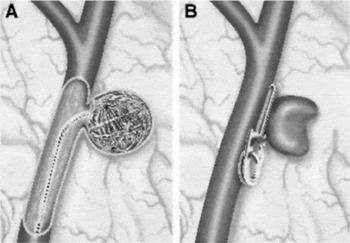
Endovascularly coiled aneurysm (A) and surgically clipped aneurysm (B) (Johnston et al., 2000).
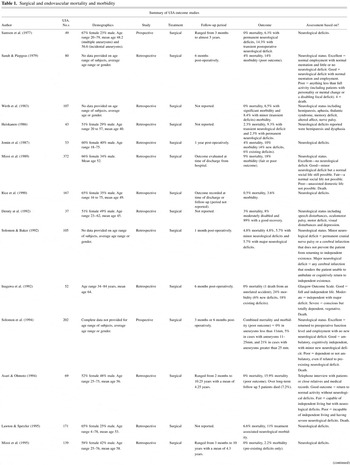
Surgical and endovascular mortality and morbidity
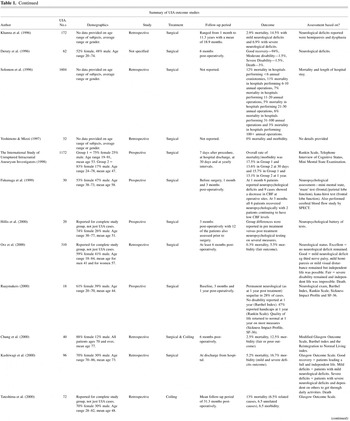
Continued
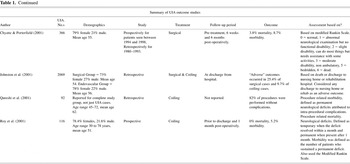
Continued
 You have
Access
- 24
- Cited by