





Highlights
-
• Phonological knowledge of Chinese was above chance by age 2.
-
• Visual-graphic knowledge of characters emerged later, by ages 4–5.
-
• Early bilinguals reached native-like orthographic awareness despite oral gaps.
-
• Vocabulary uniquely predicted reading for early bilingual and native children.
-
• Findings reveal a dissociation between visual and oral Chinese skills.
1. Introduction
The number of children acquiring Chinese as an additional language in early childhood has grown dramatically worldwide, with Mandarin Chinese now ranking as the fourth most learned second language globally, encompassing approximately 198.7 million speakers learning Chinese alongside another language (Eberhard et al., Reference Eberhard, Simons and Fennig2021). Throughout this paper, we use the term “early Chinese-learning bilinguals” to refer to children acquiring Chinese alongside one or more other languages in the preschool years, encompassing both simultaneous bilinguals (exposed to Chinese from birth) and sequential bilinguals (whose systematic Chinese exposure began after their first language was established, typically around age 2–3). This population is sometimes referred to as “Chinese as a second language” learners in the broader literature, although that label is imprecise for simultaneous bilinguals exposed to Chinese from birth. As international mobility increases (OECD, 2019), more non-Chinese families are settling in Chinese-speaking regions, enrolling their young children in Chinese-medium or bilingual kindergartens. Understanding how these children develop Chinese literacy is essential for their academic success and social integration (Cummins, Reference Cummins2000; García, Reference García2009). These children face the unique challenge of acquiring literacy in a writing system that differs fundamentally from their alphabetic first languages (e.g., English, French, Spanish and German) – a challenge that has received surprisingly little attention in the emergent literacy literature.
1.1. Characteristics of Chinese writing
Chinese differs from alphabetic writing systems in several fundamental ways that have important implications for literacy acquisition. Visually, Chinese characters represent morphosyllabic units through complex visual-spatial configurations, requiring readers to process intricate stroke patterns, radical positions and character structures that have no parallel in alphabetic scripts (Perfetti et al., Reference Perfetti, Cao and Booth2013). Unlike alphabetic languages where 20–30 letters combine linearly to form words, Chinese employs thousands of characters arranged in square configurations, each mapping to a syllable–morpheme unit rather than individual phonemes (DeFrancis, Reference DeFrancis1989).
Phonologically, Chinese differs markedly from alphabetic languages in its syllable structure and use of lexical tone. Chinese syllables follow a relatively simple onset–rime structure, with a limited inventory of approximately 400 syllables (1,200 including tonal distinctions). Critically, Chinese uses four lexical tones to distinguish meaning (e.g., /ma1/ ‘mother’ versus /ma3/ ‘horse’), requiring learners to develop sensitivity to pitch patterns not typically relevant in alphabetic languages. Research with native Chinese children demonstrates that phonological awareness develops along multiple dimensions, including syllable, onset–rime and tone awareness, with different components showing distinct developmental trajectories (McBride-Chang et al., Reference McBride-Chang, Tong, Shu, Wong, Leung and Tardif2008; Shu et al., Reference Shu, Peng and McBride-Chang2008).
Morphologically, Chinese relies heavily on compounding, with compound words constituting approximately 70% of the vocabulary. Unlike alphabetic languages where morphological complexity often involves affixation, Chinese morphology centers on combining morphemes (typically represented by single characters) to create new words. For example, 电 (electricity) + 脑 (brain) = 电脑 (computer). This compounding productivity means that morphological awareness – understanding how morphemes combine to create meaning – plays a particularly important role in Chinese vocabulary acquisition and reading development (Liu & McBride-Chang, Reference Liu and McBride-Chang2010; McBride-Chang et al., Reference McBride-Chang, Shu, Zhou, Wat and Wagner2003).
These distinctive features suggest that learning to read Chinese may engage different cognitive processes, including greater reliance on visual-spatial analysis and morphological decomposition rather than phoneme-grapheme decoding (Perfetti & Harris, Reference Perfetti and Harris2013; Share, Reference Share2008; Ziegler & Goswami, Reference Ziegler and Goswami2005).
1.2. Research on Chinese–English bilingualism
While extensive research has examined bilingual literacy development in pairs of alphabetic languages (e.g., English–Spanish, English–French; Bialystok, Reference Bialystok2002; Genesee et al., Reference Genesee, Geva, Dressler, Kamil, August and Shanahan2006), and some studies have investigated Chinese–English bilingual children learning English as a second language (e.g., Cheung et al., Reference Cheung, Chung, Wong, McBride-Chang, Penney and Ho2010; Wang et al., Reference Wang, Yang and Cheng2009), the reverse scenario – alphabetic L1 speakers acquiring Chinese literacy – has been largely overlooked, particularly during the critical pre-literacy years (Whitehurst & Lonigan, Reference Whitehurst and Lonigan1998). The few existing studies of bilingual Chinese reading development have focused primarily on school-aged children who have already received formal instruction (Zhou et al., Reference Zhou, McBride, Leung, Wang, Joshi and Farver2018; Zhou & McBride, Reference Zhou and McBride2018), leaving a significant gap in our understanding of how emergent Chinese literacy skills develop before formal schooling begins.
Evidence for cross-linguistic influence in biliteracy development comes from both behavioral and neuroimaging studies. Behavioral research demonstrates that metalinguistic skills can transfer across languages, with the direction and magnitude of transfer depending on language-specific characteristics and learner profiles (Bialystok et al., Reference Bialystok, Craik, Green and Gollan2009; Marinova-Todd et al., Reference Marinova-Todd, Zhao and Bernhardt2010; Wang et al., Reference Wang, Park and Lee2006). Functional MRI (fMRI) evidence demonstrates that skilled Chinese reading activates bilateral visual-orthographic brain regions more extensively than alphabetic reading, reflecting specialized adaptation to the script’s visual demands (Cao et al., Reference Cao, Lee, Shu, Yang, Xu, Li and Booth2010; Perfetti et al., Reference Perfetti, Liu, Fiez, Nelson, Bolger and Tan2007). Recent high-resolution fMRI using multivariate pattern analysis further reveals that bilingual readers develop distinct cortical patches for processing different scripts, with English–Chinese bilinguals showing additional neural specialization specifically for Chinese characters (Zhan et al., Reference Zhan, Pallier, Agrawal, Dehaene and Cohen2023).
1.3. Bilingualism typology and developmental patterns
Understanding these bilingual children’s Chinese literacy development requires consideration of broader bilingualism typology and developmental patterns. Bilingual children vary considerably in their language exposure profiles, with age of acquisition representing a particularly critical dimension. Simultaneous bilinguals acquire two languages from birth (or before age 3), receiving substantial exposure to both languages during the critical period for language acquisition (De Houwer, Reference De Houwer2009; Meisel, Reference Meisel2011). Sequential bilinguals begin acquiring their second language after establishing their first language, typically after age 3 (McLaughlin, Reference McLaughlin1984; Paradis, Reference Paradis, Hoff and Shatz2007). This distinction has significant implications for language outcomes and cognitive processing patterns.
Research consistently demonstrates that simultaneous bilinguals often achieve native-like proficiency in both languages when exposure is sufficient and sustained (Genesee et al., Reference Genesee, Paradis and Crago2004; Unsworth, Reference Unsworth, Nicoladis and Montanari2016). In domains such as phonological processing and grammatical development, simultaneous bilinguals frequently perform comparably to monolinguals in their respective languages, particularly when cumulative language exposure is controlled (Gathercole & Thomas, Reference Gathercole and Thomas2009; Paradis et al., Reference Paradis, Genesee and Crago2011a). Empirical studies document native-like phonological awareness in simultaneous bilinguals across diverse language pairs (Bialystok et al., Reference Bialystok, Majumder and Martin2003), equivalent morphological processing abilities (Nicoladis, Reference Nicoladis2006) and comparable vocabulary development trajectories when input quantity is accounted for (Hoff et al., Reference Hoff, Core, Place, Rumiche, Señor and Parra2012). This native-like performance reflects the fact that both languages develop from infancy through the same implicit acquisition mechanisms that support monolingual development, with parallel maturation of language-specific neural systems (Petitto et al., Reference Petitto, Berens, Kovelman, Dubins, Jasinska and Shalinsky2012).
Sequential bilinguals, in contrast, face different developmental trajectories. Having already established L1 phonological categories and grammatical structures, they must adapt these existing systems to accommodate L2 patterns – a process that can facilitate acquisition through cross-linguistic transfer but may also create interference or lead to developmental delays in specific domains (Paradis, Reference Paradis, Hoff and Shatz2007; Schwartz, Reference Schwartz, Nachbaur, Crandall and Willetts2004). Sequential bilingual children typically show weaker performance than monolinguals or simultaneous bilinguals during early stages of L2 acquisition, particularly in vocabulary depth, morphosyntactic accuracy and processing speed, though these gaps may narrow with increasing exposure (Gathercole, Reference Gathercole, Oller and Eilers2002; Unsworth et al., Reference Unsworth, Argyri, Cornips, Hulk, Sorace and Tsimpli2014). Studies document persistent challenges in L2 phonological awareness during initial acquisition years (Paradis, Reference Paradis, Hoff and Shatz2007), delayed morphological development, particularly for grammatical morphemes (Paradis et al., Reference Paradis, Nicoladis, Crago and Genesee2011b) and vocabulary sizes approximately one standard deviation below monolingual norms even after several years of L2 exposure (Unsworth, Reference Unsworth, Nicoladis and Montanari2016).
Critically, the distinction between simultaneous and sequential bilingualism is not merely about timing but reflects qualitatively different acquisition contexts. Simultaneous bilinguals develop dual language systems in parallel from the onset of language development, whereas sequential bilinguals must integrate new linguistic knowledge into an already established system. These different developmental pathways have implications for literacy acquisition in a second language: simultaneous bilinguals may approach L2 literacy more like native speakers, while sequential bilinguals may rely more heavily on transfer strategies from their established L1 literacy knowledge.
In the present study, examining both simultaneous and sequential early Chinese-learning bilinguals allows us to investigate whether these broader bilingualism patterns – documented primarily in children acquiring two alphabetic languages – extend to Chinese literacy development in an alphabetic L1-to-morphosyllabic L2 context, where cross-linguistic differences are particularly pronounced and where the nature of literacy skills may differ fundamentally from those required for alphabetic scripts.
1.4. Theoretical framework
The present research is grounded in the reading specialization hypothesis (Perfetti et al., Reference Perfetti, Cao and Booth2013), which posits that developing readers progressively acquire procedures specifically tailored to the demands of their writing system. According to this framework, reading acquisition involves both universal processes common across all writing systems and writing-system-specific adaptations that emerge through experience and instruction. The universal components include the fundamental recognition that print encodes language, the establishment of print-to-meaning mappings and the development of fluent word recognition. However, the specific cognitive and neural mechanisms supporting these processes become increasingly specialized to accommodate the unique features of each writing system (Perfetti et al., Reference Perfetti, Cao and Booth2013; Ziegler & Goswami, Reference Ziegler and Goswami2005).
The reading specialization hypothesis predicts that these adaptations emerge gradually through exposure and experience, even before formal instruction begins (Perfetti et al., Reference Perfetti, Cao and Booth2013; see also Saffran et al., Reference Saffran, Aslin and Newport1996, for implicit learning mechanisms). Environmental print exposure enables implicit learning of orthographic regularities through statistical learning mechanisms (Saffran, Reference Saffran2003; Saffran et al., Reference Saffran, Aslin and Newport1996). Children extract structural patterns – legal letter/radical combinations, positional constraints, typical configurations – through repeated exposure without explicit instruction (Pacton et al., Reference Pacton, Perruchet, Fayol and Cleeremans2001). For Chinese characters, these statistical learning mechanisms operate by tracking distributional regularities in the visual input: which components appear in which positions (e.g., semantic radicals typically on the left, phonetic components on the right), which stroke sequences co-occur and which spatial configurations are permissible (e.g., characters maintain roughly square proportions with components occupying predictable regions). Importantly, these regularities are directly observable in environmental print – street signs, product labels, classroom materials – allowing children to extract patterns through repeated visual exposure even without understanding character meanings or pronunciations.
For native Chinese children, this implicit learning manifests as early orthographic awareness by age 4–5, including sensitivity to legal radical positions and stroke patterns that distinguish real characters from illegal combinations (Ho et al., Reference Ho, Yau, Au, McBride-Chang and Chen2003; Yin & McBride, Reference Yin and McBride2015; Zhang et al., Reference Zhang, Yin and Treiman2017). However, whether and how early Chinese-learning bilinguals with contrasting alphabetic L1 backgrounds develop such Chinese-specific orthographic knowledge remains unknown.
Beyond the reading specialization hypothesis, componential models of reading (Seidenberg & McClelland, Reference Seidenberg and McClelland1989) propose that skilled reading emerges from the integration of orthographic, phonological and semantic processors. The Simple View of Reading (Gough & Tunmer, Reference Gough and Tunmer1986) further emphasizes that reading comprehension depends on both decoding skills and linguistic comprehension, with vocabulary serving as a critical bridge. These frameworks generate predictions about how different literacy components may develop and interact in L2 contexts, and whether the tight integration assumed by these models holds when children are acquiring literacy in a second language with limited input.
1.5. The present study
Applying these theoretical frameworks to early bilingual Chinese acquisition generates several testable predictions. First, if specialization emerges through exposure rather than formal instruction, early Chinese-learning bilingual kindergarteners immersed in Chinese-dominant environments should begin developing Chinese-specific orthographic knowledge despite their alphabetic L1 backgrounds. Second, this specialization process should manifest differently than in native Chinese children due to cross-linguistic influence from the L1 writing system. Third, the degree of specialization should correlate with the amount and quality of Chinese print exposure, potentially resulting in uneven development across different literacy subskills.
Critically, we examine kindergarteners – a population that has received little attention in research on early bilingual Chinese acquisition. Most prior studies have focused on primary school students who have already received formal instruction (Zhou et al., Reference Zhou, McBride, Leung, Wang, Joshi and Farver2018; Zhou & McBride, Reference Zhou and McBride2018). The kindergarten years represent a critical developmental period in which implicit learning and environmental exposure play a more central role than formal instruction, making this age range ideal for examining how writing-system-specific adaptations emerge through naturalistic exposure.
1.6. Research questions and hypotheses
Building on this theoretical foundation, the present research addresses three critical questions about early Chinese literacy development in our bilingual sample:
Research Question 1: How does knowledge about Chinese writing differ across ages 2–5 in early Chinese-learning bilingual kindergarteners?
Hypothesis 1: Based on the reading specialization hypothesis, we predict that both visual-graphic knowledge (sensitivity to Chinese character features) and phonological knowledge (understanding of character–syllable mappings) will show age-related increases. However, given these bilingual children’s alphabetic L1 experience, we hypothesize that phonological knowledge may show earlier emergence due to positive transfer from L1 print-sound mapping experience, while visual-graphic knowledge may show later emergence as children accumulate exposure to Chinese-specific visual patterns.
Research Question 2: How do early Chinese-learning bilingual kindergarteners’ Chinese reading-related cognitive-linguistic skills compare to those of native Chinese-speaking peers?
Hypothesis 2: We predict that bilingual children will show lower performance than native peers on skills requiring extensive Chinese language exposure (vocabulary, phonological awareness, morphological awareness and rapid naming). However, based on evidence that visual-orthographic patterns can be acquired through implicit statistical learning, we hypothesize that they may achieve relatively stronger performance in orthographic awareness, which depends more on visual pattern extraction than on semantic or phonological knowledge.
Research Question 3: Which cognitive-linguistic skills uniquely predict Chinese word reading ability in early Chinese-learning bilingual kindergarteners?
Hypothesis 3: Consistent with the Simple View of Reading and evidence from native Chinese readers, we predict that vocabulary will emerge as a significant predictor of reading for both groups. We further hypothesize that the predictor–reading relationships will be similar across bilingual and native children, reflecting universal foundations of reading development, though the absolute levels of performance will differ.
2. Method
2.1. Participants
Participants included 79 early Chinese-learning bilingual kindergarteners (Experiment 1; ages 2–5) and 37 native Mandarin Chinese-speaking kindergarteners (Experiment 2; ages 4–5), all attending kindergartens in Beijing, China. Total unique participants numbered 116. All participants attended kindergartens in middle-to-upper-class neighborhoods of Beijing, ensuring relatively homogeneous socioeconomic backgrounds and comparable educational resources. Table 1 presents detailed participant characteristics for both experiments.
Participant characteristics

Table 1. Long description
The table is divided into two main sections.
Experiment 1: Visual-graphic and phonological tasks.
- Bilingual 2-year-olds: n = 19, Age M (S D) = 2.32 (0.28), Female = 68 percent, L 1 background = Diverse non-Mandarin.
- Bilingual 3-year-olds: n = 20, Age M (S D) = 3.33 (0.18), Female = 55 percent, L 1 background = Diverse non-Mandarin.
- Bilingual 4-year-olds: n = 20, Age M (S D) = 4.34 (0.34), Female = 45 percent, L 1 background = Diverse non-Mandarin.
- Bilingual 5-year-olds: n = 20, Age M (S D) = 5.42 (0.29), Female = 35 percent, L 1 background = Diverse non-Mandarin.
- Experiment 1 Total: n = 79, Age M (S D) = 3.86 (1.21), Female = 51 percent, L 1 background = Diverse non-Mandarin.
Experiment 2: Comprehensive literacy battery.
- Simultaneous bilinguals: n = 22, Age M (S D) = 5.26 (0.52), Female = 45 percent, L 1 background = Mandarin plus L 1 from birth.
- Sequential bilinguals: n = 18, Age M (S D) = 5.34 (0.56), Female = 39 percent, L 1 background = No Mandarin at home.
- Bilingual total: n = 40, Age M (S D) = 5.38 (0.57), Female = 48 percent, L 1 background = Not specified.
- Native Chinese: n = 37, Age M (S D) = 5.28 (0.57), Female = 46 percent, L 1 background = Mandarin only.
Note: Participants are referred to as “early Chinese-learning bilinguals” throughout. Experiment 2 bilingual participants (n = 40) were selected from Experiment 1’s older cohort. Simultaneous bilinguals (55%): Mandarin exposure from birth through family language use (English-Mandarin n = 9, French-Mandarin n = 12, German-Mandarin n = 1). Sequential bilinguals (45%): Mandarin exposure from age 2 at kindergarten entry; includes children from bilingual homes with two non-Mandarin languages (n = 10) and monolingual homes (n = 8).
Sample Size Determination. Sample size was determined a priori using GPower 3.1 (Faul et al., Reference Faul, Erdfelder, Lang and Buchner2007). Based on detecting medium effect sizes (d* = .50; Cohen, Reference Cohen1988) with 80% power at α = .05 (two-tailed), the minimum required sample size was 17 participants per group for between-group comparisons. Our samples exceeded this threshold, providing adequate power for primary analyses.
2.1.1. Experiment 1: Early Chinese-learning bilingual children
All 79 bilingual participants (40 girls, 51%) came from families where at least one parent did not speak Chinese as a native language. Age distribution was: 2-year-olds (n = 19, 13 girls, Mage = 2.32 years, SD = .28), 3-year-olds (n = 20, 11 girls, Mage = 3.33 years, SD = .18), 4-year-olds (n = 20, 9 girls, Mage = 4.34 years, SD = .34) and 5-year-olds (n = 20, 7 girls, Mage = 5.42 years, SD = .29). All participants attended bilingual kindergartens (French–Chinese or English–Chinese programs) from age 2 onwards, with 2–5 years of Chinese exposure at the time of testing.
2.1.2. Experiment 2: Bilingual and native Chinese children
Experiment 2 included 40 of these bilingual children (19 girls, 48%; Mage = 5.38 years, SD = .57) selected from Experiment 1’s older cohort (ages 4–5) who could read at least one Chinese character, and 37 age-matched native Chinese children (17 girls, 46%; Mage = 5.28 years, SD = .57) who attended a public kindergarten in a middle-class area of Beijing. Native Chinese participants were monolingual Mandarin speakers exposed exclusively to Mandarin from birth.
2.1.3. Bilingual subgroups and language exposure
Based on home language use patterns documented through parent report, early Chinese-learning bilingual participants in Experiment 2 were categorized as simultaneous or sequential bilinguals:
Simultaneous bilinguals (n = 22, 55%; Mage = 5.26 years, SD = .52; 10 girls, 45%) were exposed to Mandarin and another language from birth through family language use, with home language combinations of English–Mandarin (n = 9), French–Mandarin (n = 12) and German–Mandarin (n = 1). These children had 4–5 years of Mandarin exposure at the time of testing.
Sequential bilinguals (n = 18, 45%; Mage = 5.34 years, SD = .56; 7 girls, 39%) had no Mandarin exposure at home and began learning Mandarin upon kindergarten entry at age 2. Within this group, 10 children (56%) had been exposed to two non-Chinese languages before kindergarten entry (English–Dutch, French–Spanish, Russian–Hebrew, English–Hindi, English–Russian, English–Swahili, French–Japanese and German–Spanish), making them functionally trilingual, while eight children (44%) came from monolingual homes (English, French, German, Hebrew and Korean). These children had 2–3 years of Mandarin exposure at the time of testing (4-year-olds: 2 years; 5-year-olds: 3 years).
2.1.4. Kindergarten language exposure
All bilingual participants attended kindergartens with standardized 50–50 language distribution. Kindergarten hours were 8:30–15:30 daily (7 hours), providing approximately 3.5 hours of Mandarin exposure daily through the bilingual program. Classroom structure included 16–18 children with three teachers: one lead teacher (French or English speaker) and two teaching assistants (Mandarin speakers). Formal language instruction occurred during daily circle time (.5 hour total, with activities conducted once in each language), while both languages were used throughout all classroom activities including meals, free play and outdoor activities. Children entered kindergarten at age 2.
Beyond kindergarten hours, simultaneous bilinguals received additional Mandarin exposure at home through Mandarin-speaking parents, resulting in approximately 7+ hours of daily Mandarin input (kindergarten + home). Sequential bilinguals had no Mandarin exposure outside kindergarten, resulting in approximately 3.5 hours of daily Mandarin input (kindergarten only).
2.1.5. Chinese language proficiency
Bilingual children demonstrated functional Mandarin proficiency appropriate for kindergarten participation. Prior to formal testing, we conducted classroom observations to verify children’s Chinese comprehension and communication abilities. During individual testing sessions conducted entirely in Mandarin Chinese, all children comprehended routine instructions, responded appropriately to questions and used Mandarin for basic communication without requiring translation or L1 support. In kindergarten observations, bilingual children communicated comfortably in both Mandarin and their other L1. When attempting more complex narrative discourse, children exhibited code-switching to their L1 – a typical bilingual communication strategy for filling lexical gaps (Gross & Castilla-Earls, Reference Gross and Castilla-Earls2023; Kuzyk et al., Reference Kuzyk, Friend, Severdija, Zesiger and Poulin-Dubois2020). All families consented to participation in a Chinese-language research study after receiving detailed information sheets describing the testing procedures, indicating parental confidence in their children’s Chinese capabilities.
Importantly, none of the participants received formal literacy instruction, consistent with mainland China’s educational policy discouraging character teaching before primary school. Children were exposed to environmental print through storybooks, labels and signage but did not engage in systematic character learning, writing practice or phonics instruction. Parents confirmed that children had no diagnosed developmental, speech or hearing difficulties. Written informed consent was obtained from all parents, and the research was approved by the institutional review board.
2.2. Measures
2.2.1. Visual-graphic knowledge of Chinese writing (Experiment 1)
Children’s knowledge of the visual-graphic features of Chinese was assessed using a graphic discrimination task adapted from Zhang et al. (Reference Zhang, Yin and Treiman2017). Participants viewed 16 pairs of displays, each containing either Chinese characters (e.g., 柬, 壬, 疋, 夅) or Kannada symbols (e.g., ಔ, ೞ, ರ, ಣೆ) from a South Indian script visually distinct from Chinese. Chinese displays included eight single-character and eight two-character combinations using low-frequency characters unfamiliar to kindergarteners (mean frequency: five occurrences per million; Shu et al., Reference Shu, Chen, Anderson, Wu and Xuan2003). Kannada displays were matched to Chinese displays for number of symbols (eight single-symbol pairs and eight two-symbol pairs) and visual complexity. Following Zhang et al. (Reference Zhang, Yin and Treiman2017), matching criteria included approximate stroke count and overall spatial configuration (height, width and density of visual elements). Kannada symbols were selected to be visually distinct from Chinese while maintaining comparable visual complexity, ensuring that discrimination required sensitivity to Chinese-specific orthographic features rather than low-level perceptual differences in visual density or spatial extent.
Following Zhang et al. (Reference Zhang, Yin and Treiman2017), the administrator introduced a puppet named “Pengpeng” (鹏鹏). Children were told that Pengpeng needed help learning to write, creating a supportive game-like context. After practice trials with everyday objects (e.g., “Which is edible: apple or cup?”), children completed 16 test trials. For each trial, the administrator asked, “Which display shows how people here write [spoken word]?” (这里的人怎么写[word]?), directing children to consider writing in their geographical area. Children kept the card they identified as correct while physically disposing of the rejected card in a “trash bin,” adding kinesthetic engagement appropriate for young learners. The dependent variable was the proportion of correct identifications (16 items, maximum = 1.00), with chance performance at .50.
2.2.2. Phonological structure knowledge of Chinese writing (Experiment 1)
Understanding of Chinese character–syllable correspondences was measured using a phonological mapping task (Zhang et al., Reference Zhang, Yin and Treiman2017). Children viewed 16 pairs of displays contrasting one-character and two-character combinations (e.g., one-character: 酉, 秉, 匂; two-character: 酉乍, 秉皿 匂乇) and judged which display matched a spoken word containing either one or two syllables. Spoken stimuli included common words familiar to young children (e.g., /zhu1/ ‘pig’, /tang2/ ‘candy’, /pa2/ ‘crawl’), though the written characters displayed were unfamiliar low-frequency characters to prevent direct recognition. This task assessed children’s implicit understanding that Chinese characters map to syllables rather than phonemes, a fundamental principle distinguishing Chinese from alphabetic writing. The dependent variable was the proportion of correct identifications (16 items, maximum = 1.00), with chance performance at .50.
2.2.3. Chinese orthographic awareness (Experiment 2)
Orthographic awareness was evaluated using a character decision task (Tong et al., Reference Tong, McBride-Chang, Shu and Wong2009) requiring discrimination among 70 items: 30 real characters (e.g., 趣, 秋, 海, 船, 新, 楼), nine pseudo-characters (novel combinations of radicals that follow Chinese orthographic rules but do not exist as real characters), 21 non-characters (characters with illegal radical positions, added or subtracted strokes or reversed radical placements) and ten simple visual symbols (e.g., △, ⊙, □ and ∞). Real characters were balanced across frequency levels to prevent familiarity effects. Children judged whether each item was a “real Chinese character,” with scores reflecting sensitivity to Chinese orthographic constraints (70 items, maximum = 70, α = .75). Signal detection analysis yielded d′ scores indicating discrimination sensitivity for each item type.
2.2.4. Chinese word reading (Experiment 2)
Early reading ability was assessed using a graded character reading task (Wang et al., Reference Wang, Yin and McBride2015) containing 208 single- and double-character words arranged in ascending difficulty. Testing followed a discontinuation rule (eight consecutive errors), minimizing frustration while capturing the full range of emerging reading skills. Raw scores represented total characters read correctly (maximum = 208, α = .99).
2.2.5. Chinese phonological awareness (Experiment 2)
Chinese phonological awareness was measured using a syllable deletion task (Shu et al., Reference Shu, Peng and McBride-Chang2008) with 29 three-syllable words and phrases. The administrator spoke each item aloud and asked the child to repeat it with a specified syllable omitted. For example, the administrator said “/xi1 gua1 pi2/” (watermelon rind) and asked, “Say /xi1 gua1 pi2/ without saying /gua1/.” The expected response was “/xi1 pi2/.” Children progressed through three difficulty levels: Level 1 involved real words with initial syllable deletion, Level 2 involved real words with medial or final syllable deletion, and Level 3 involved nonword combinations. Two practice trials with feedback preceded test trials. Testing discontinued after five consecutive errors (maximum = 29, α = .96).
2.2.6. Chinese morphological awareness (Experiment 2)
Morphological construction ability was assessed following Liu and McBride-Chang (Reference Liu and McBride-Chang2010), requiring children to create novel compound words following an analogy pattern. The administrator orally presented each item as a scenario followed by a test question. For example, the administrator first provided an example: “There is one type of oil made using peanuts; we call it peanut oil” (用花生做成的油, 我们会叫它做花生油), then asked: “What would we call a type of oil that is made using mushrooms?” (那么用蘑菇来做的油, 我们会怎样叫它呢?). The expected response was a novel compound following the established pattern (e.g., “mushroom oil” 蘑菇油). Two practice trials preceded testing. Testing discontinued after four consecutive incorrect responses. One point was awarded for each correctly formed compound (maximum = 27, α = .93).
2.2.7. Rapid automatized naming (RAN; Experiment 2)
Processing speed was measured using RAN-digits (McBride-Chang et al., Reference McBride-Chang, Shu, Zhou, Wat and Wagner2003). Children named five Chinese digits (4, 7, 9, 6 and 2) arranged in eight columns and five rows for a total of 40 digits. Children first named the five digits individually without timing to ensure familiarity with digit names. The administrator then instructed, “Name these numbers as quickly as you can, going across each row” (with demonstration provided). Children named the entire 40-digit list twice consecutively while the administrator recorded the time for each complete reading using a stopwatch. The score was the average time in seconds of the two readings (lower scores indicate faster naming and better performance). Average completion time served as a measure of automaticity of visual-verbal associations (test–retest reliability = .76).
2.2.8. Vocabulary knowledge (Experiment 2)
Receptive and expressive vocabulary were assessed using an adapted Peabody Picture Vocabulary Test (Dunn & Dunn, Reference Dunn and Dunn1997) translated into Chinese, including picture identification, picture naming and definition tasks. This comprehensive assessment captured vocabulary breadth across modalities (maximum = 25, α = .88).
2.2.9. Nonverbal reasoning (Experiment 2)
General cognitive ability was measured using the Combined Raven’s Test (CRT-Chinese version, 1991), Sets A and B, requiring pattern completion from six alternatives. This culture-fair measure controlled for intelligence differences when comparing groups (maximum = 24, α = .77).
2.3. Procedure
Data collection occurred in two phases corresponding to the two experiments, with some participants completing both protocols. All assessments were conducted individually in Mandarin Chinese in quiet rooms at children’s schools or homes (when COVID-19 restrictions required) by trained graduate researchers fluent in Mandarin. Sessions were designed to be engaging and age-appropriate, incorporating puppet characters, games and frequent praise to maintain motivation.
For Experiment 1 (ages 2–5), each child completed the visual-graphic knowledge and phonological structure knowledge tasks across two sessions approximately 10 days apart, with task order counterbalanced. Sessions began with practice trials using familiar objects (e.g., identifying edible items) to ensure task comprehension. Test trials were interspersed with filler activities every four items to maintain engagement.
For Experiment 2 (ages 4–5), participants completed a comprehensive battery over 2–3 sessions, with task order randomized to prevent systematic fatigue effects. Each session lasted 20–30 minutes with breaks as needed. Tasks were presented in child-friendly formats with colorful materials and developmentally appropriate instructions. For production tasks (syllable deletion, morphological construction), two practice trials with feedback preceded test trials. Discontinuation rules prevented frustration while maximizing data collection.
Experimenters could clarify a task in children’s L1 if necessary (this occurred rarely). Parents or teachers remained nearby but did not participate. Sessions were audio-recorded for response verification, with two independent coders achieving 95% agreement on scoring.
2.4. Analysis plan
Data analysis proceeded in three stages addressing each research question sequentially. First, to examine age-related differences in Chinese writing knowledge (Research Question 1), we employed generalized linear mixed models (GLMM) with binary outcomes (correct/incorrect) and items and participants as crossed random effects. Fixed effects included age group (2-, 3-, 4- and 5-year-olds), task type (visual-graphic versus phonological) and their interaction. This approach accommodated the hierarchical data structure while controlling for item-level and participant-level variance. Planned contrasts compared performance to chance (.50) within each age group using binomial tests.
Second, to compare bilingual and native Chinese children’s cognitive-linguistic profiles (Research Question 2), we conducted multivariate analysis of covariance (MANCOVA) with language group as the between-subjects factor and age and nonverbal IQ as covariates. Given non-normal distributions typical of early literacy measures, we applied Blom’s rank-based transformation to normalize scores before analysis. Effect sizes (partial η 2) quantified the magnitude of group differences. For orthographic awareness, we additionally conducted signal detection analyses to compute sensitivity (d′) scores for different character types, correcting for extreme proportions using established methods (Hautus, Reference Hautus1995).
Third, to identify unique predictors of Chinese word reading (Research Question 3), we employed hierarchical multiple regression with language group dummy-coded and interaction terms testing whether predictor-reading associations differed between groups. Variables entered in theoretically motivated blocks: (1) control variables (age, IQ, language group); (2) universal predictors (vocabulary, RAN); (3) Chinese-specific predictors (phonological awareness, morphological awareness). Orthographic awareness was not included in the hierarchical regression for two reasons: (1) it showed no significant group difference and therefore could not account for variance in the substantial group difference in word reading, and (2) both groups performed near chance on pseudo-characters and non-characters, indicating this skill was still emerging. Visual-graphic knowledge and phonological structure knowledge from Experiment 1 were not included because these tasks were designed to assess emergent understanding of writing conventions rather than reading-related skills, and were administered to a broader age range (2–5 years), not all of whom participated in Experiment 2. This approach isolated unique contributions while testing for group-specific patterns.
Missing data (<5%) were handled through listwise deletion given the low proportion and random distribution. All analyses were conducted using SPSS 26.0 with significance set at α = .05, two-tailed.
3. Results
3.1. Age-related patterns in Chinese writing knowledge (Experiment 1)
Analysis of bilingual kindergarteners’ knowledge about Chinese writing revealed distinct age-related patterns for visual-graphic versus phonological aspects of the writing system. GLMM yielded excellent fit to the observed data (correct classification rate = 70.9%), with significant main effects of both age level, F(3, 2524) = 14.78, p < .001 and task type, F(1, 2524) = 16.34, p < .001. These main effects were qualified by a significant age × task interaction, F(3, 2524) = 8.30, p < .001, indicating that age-related patterns differed between visual-graphic and phonological knowledge domains (see Figure 1; Table 2 presents the full GLMM results).
Age-related differences in visual-graphic and phonological knowledge about Chinese writing in early Chinese-learning bilingual kindergarteners aged 2–5 years. Note: Cross-sectional age patterns showing visual-graphic knowledge and phonological structure knowledge across four age groups. The horizontal dashed line indicates chance performance (.50). Phonological structure knowledge was above chance from age 2 and remained relatively stable (range: .59–.80), while visual-graphic knowledge remained at chance until age 4, followed by steep increases to near-ceiling performance by age 5. Note that cross-sectional data represent between-group comparisons at a single time point, not within-individual developmental change. The crossing pattern suggests different age-related profiles for these two aspects of emergent Chinese literacy in L2 learners, though longitudinal research is needed to confirm developmental trajectories. Error bars represent 95% confidence intervals.

Figure 1. Long description
A line graph with the y-axis labeled Proportion correct ranging from 0.25 to 1.00 and the x-axis labeled Age years with four categories: 2 n = 19, 3 n = 20, 4 n = 20, and 5 n = 20. A horizontal dotted line at 0.50 represents Chance.
Two data series are plotted with error bars:
* Phonological structure knowledge: Represented by a solid blue line with circular markers. It starts above chance at age 2 approximately 0.61, remains stable at age 3 approximately 0.59, and increases to approximately 0.72 at age 4 and 0.80 at age 5. Statistical markers show three asterisks at age 2, two at age 3, and three at ages 4 and 5.
* Visual-graphic knowledge: Represented by a dashed red line with square markers. It starts below chance at age 2 approximately 0.45 labeled n s, rises slightly above chance at age 3 approximately 0.53 labeled n s, then shows a steep increase to approximately 0.71 at age 4 and near 0.88 at age 5. Statistical markers show three asterisks at ages 4 and 5.
The two lines cross between age 3 and 4, where visual-graphic knowledge begins to catch up to and eventually surpass phonological knowledge.
Generalized linear mixed model results for age and task effects on Chinese writing knowledge

Table 2. Long description
The table is divided into two main sections: Fixed effects and Random effects.
Fixed effects section columns include F, d f, and p.
- Age level: F equals 14.78, d f equals 3, 2524, p is less than .001.
- Task type: F equals 16.34, d f equals 1, 2524, p is less than .001.
- Age times Task interaction: F equals 8.30, d f equals 3, 2524, p is less than .001.
Random effects section columns include Variance, S E, Z, and p.
- Participant intercept: Variance equals .977, S E equals .220, Z equals 4.44, p is less than .001.
- Item intercept: Variance equals .098, S E equals .050, Z equals 1.94, p equals .052.
A note below the table specifies a binomial distribution with logit link function, trial-level response accuracy as the outcome variable, and a correct classification rate of 70.9 percent.
Note: Model specification: binomial distribution with logit link function. Outcome variable: trial-level response accuracy (correct/incorrect). Random effects: crossed random intercepts for participants and items. Covariance structure: variance components. Model fit: correct classification rate = 70.9%.
Examining performance by age group revealed notable differences. Two-year-old bilingual children performed significantly above chance (.50) on the phonological structure knowledge task (M = .61, SD = .49), p < .001, demonstrating sensitivity to character–syllable correspondences. However, their visual-graphic discrimination remained at chance levels (M = .45, SD = .50), p = .085, indicating they could not yet distinguish Chinese characters from Kannada symbols. The difference between task types was significant (β = −.64, SE = .17, p < .001).
Three-year-olds showed above-chance performance on the phonological structure knowledge task (M = .59, SD = .49), p < .01, while visual-graphic knowledge remained at chance (M = .53, SD = .50), p = .219. The difference between task types was not significant (β = −.11, SE = .23, p = .63).
Four-year-olds achieved above-chance performance on both tasks. Visual-graphic discrimination was significantly above chance (M = .71, SD = .46), p < .001, as was phonological structure knowledge (M = .72, SD = .45), p < .001. Performance on phonological structure knowledge remained significantly higher than visual-graphic knowledge (β = −1.18, SE = .30, p < .001).
By age five, bilingual children demonstrated strong performance on both knowledge types, with visual-graphic discrimination (M = .87, SD = .34) and phonological structure knowledge (M = .80, SD = .40) both significantly above chance (ps < .001). The difference between task types was not significant (β = −.53, SE = .34, p = .12).
As illustrated in Figure 1, phonological structure knowledge was above chance from age 2 and remained relatively stable across ages (ranging from .59 to .80), while visual-graphic knowledge showed a steeper age-related increase, from chance-level performance at ages 2–3 to near-ceiling performance by age 5.
3.2. Group comparisons in Chinese reading-related skills (Experiment 2)
Comparative analyses between 4- and 5-year-old bilingual and native Chinese kindergarteners revealed a profile of relative strengths and weaknesses. After controlling for age and nonverbal IQ, MANCOVA indicated significant group differences on most cognitive-linguistic measures, Wilks’ λ = .42, F(6, 68) = 15.63, p < .001, with a large overall effect size (η 2 = .58). Table 3 presents adjusted means and effect sizes for all cognitive-linguistic measures.
Group comparisons on Chinese reading-related skills between early Chinese-learning bilingual and native Chinese kindergarteners

Table 3. Long description
The table consists of seven columns: Measure, Bilingual n equals 40 Mean and S D, Native n equals 37 Mean and S D, F 1 comma 73, p-value, Partial eta-squared, and Cohen’s d.
* Word reading: Bilingual 8.58 8.34 vs Native 49.70 54.82. F equals 21.88, p is less than .001, Partial eta-squared .231, d equals 1.05.
* Vocabulary: Bilingual 14.03 4.54 vs Native 18.51 3.30. F equals 23.29, p is less than .001, Partial eta-squared .242, d equals 1.13.
* Phonological awareness: Bilingual 12.08 8.42 vs Native 21.97 6.80. F equals 24.58, p is less than .001, Partial eta-squared .252, d equals 1.29.
* Morphological awareness: Bilingual 11.80 5.16 vs Native 18.62 5.12. F equals 26.66, p is less than .001, Partial eta-squared .268, d equals 1.33.
* R A N in seconds: Bilingual 62.44 26.78 vs Native 35.00 13.69. F equals 30.35, p is less than .001, Partial eta-squared .294, d equals 1.28.
* Orthographic awareness: Bilingual 40.70 4.46 vs Native 41.32 6.42. F equals .19, p equals .659, Partial eta-squared .003, d equals .11.
Note: Analyses controlled for age and nonverbal I Q. R A N stands for Rapid Automatized Naming. All measures except Orthographic awareness show significant differences with p less than .001.
Note: Analyses controlled for age and nonverbal IQ. RAN = Rapid Automatized Naming. Cohen’s d calculated using pooled standard deviation. Effect size interpretations: d = .2 (small), .5 (medium), .8 (large); partial η 2 = .01 (small), .06 (medium), .14 (large). **p < .001.
Native Chinese children read significantly more characters (M = 49.70, SD = 54.82) than bilingual children (M = 8.58, SD = 8.34), F(1, 73) = 21.88, p < .001, partial η 2 = .231, Cohen’s d = 1.05. Native children also showed significantly higher vocabulary scores (M = 18.51, SD = 3.30) than bilingual children (M = 14.03, SD = 4.54), F(1, 73) = 23.29, p < .001, partial η 2 = .242, d = 1.13.
Regarding metalinguistic skills (i.e., the ability to reflect on and manipulate language structure, including phonological and morphological awareness), native children significantly outperformed bilingual children on phonological awareness (M = 21.97, SD = 6.80 versus M = 12.08, SD = 8.42), F(1, 73) = 24.58, p < .001, partial η 2 = .252, d = 1.29 and morphological awareness (M = 18.62, SD = 5.12 versus M = 11.80, SD = 5.16), F(1, 73) = 26.66, p < .001, partial η 2 = .268, d = 1.33. Effect sizes were large for all metalinguistic comparisons (all partial η 2 > .14).
Native children completed the rapid automatized naming task significantly faster (M = 35.00 seconds, SD = 13.69) than bilingual children (M = 62.44 seconds, SD = 26.78), F(1, 73) = 30.35, p < .001, partial η2 = .294, d = 1.28.
Chinese orthographic awareness was the sole domain where bilingual children performed equivalently to native peers, with no significant group difference (Mnative = 41.32, SD = 6.42 versus M Bilingual = 40.70, SD = 4.46), F(1, 73) = .19, p = .659, partial η 2 = .003, d = .11. This null finding persisted across all character types: real characters (t(75) = −.17, p = .859), visual symbols (t(75) = −.01, p = .986), non-characters (t(75) = .13, p = .895) and pseudo-characters (t(75) = .17, p = .859). Figure 2 illustrates these contrasting cognitive-linguistic profiles.
Cognitive-linguistic profiles of early Chinese-learning bilingual and native Chinese kindergarteners on standardized measures (z-scores). Note: All scores were transformed so that higher values indicate better performance. Bilingual children (n = 40, solid line) showed selective competence, achieving native-like performance only in orthographic awareness (z = −.06 versus .06, ns) while demonstrating significantly lower scores in all other domains: morphological awareness (z = −.66), phonological awareness (z* = −.64), vocabulary (z* = −.56), word reading (z* = −.52) and RAN (z* = −.64). Native Chinese children (n = 37, dashed line) showed consistently positive scores across all domains. Error bars represent standard error of the mean. p < .001. ns = non-significant.

Figure 2. Long description
The radar chart features a hexagonal grid with axes ranging from negative 0.8 at the center to 0.8 at the outer edge. Two data series are plotted: a solid black line with blue circles for Bilingual Z-score and a dashed black line with orange circles for Native Z-score.
Moving clockwise from the top:
* Orthographic Awareness: Both groups converge near the center, with the Bilingual score at negative 0.06 and the Native score at 0.06.
* Vocabulary: The Native group is near the outer edge (0.6), while the Bilingual group is near the center (negative 0.56).
* Phonological Awareness: The Native group is near the outer edge (0.6), while the Bilingual group is near the center (negative 0.64).
* Morphological Awareness: The Native group is near the outer edge (0.6), while the Bilingual group is near the center (negative 0.66).
* R A N (inverted): The Native group is near the outer edge (0.6), while the Bilingual group is near the center (negative 0.64).
* Word Reading: The Native group is near the outer edge (0.6), while the Bilingual group is near the center (negative 0.52).
The resulting shapes show the Native group as a large, balanced hexagon near the perimeter, while the Bilingual group forms a small, narrow teardrop shape concentrated near the center, except for the peak at Orthographic Awareness.
Signal detection analyses confirmed equivalent discrimination sensitivity between groups. Both bilingual and native children showed comparable d′ values for distinguishing real characters from distractors (d′native = 1.82 versus d′Bilingual = 1.76), t(75) = .41, p = .684. Both groups showed above-chance discrimination of real characters and visual symbols by age 4 (ps < .001), while performing near chance on pseudo-characters and non-characters even at age 5.
Age-related analyses were conducted specifically for orthographic awareness to examine whether bilingual children’s native-like performance emerged across the full age range or only in older children. Results indicated that both 4-year-olds and 5-year-olds in the bilingual group performed comparably to their native peers at each age level (ps > .05), confirming that native-like orthographic awareness was present across the full age range tested in Experiment 2.
3.3. Supplementary analyses: Bilingual subgroups
3.3.1. Simultaneous versus sequential bilinguals
To examine whether bilingual type moderated findings, we compared simultaneous (n = 22) and sequential (n = 18) bilinguals on all literacy measures. Supplementary Table S1 presents these comparisons.
Simultaneous bilinguals showed significantly higher vocabulary scores (M = 15.41, SD = 3.47) than sequential bilinguals (M = 12.33, SD = 5.19), t(38) = 2.24, p = .031, d = .71 and significantly higher morphological awareness (M = 13.45, SD = 4.33 versus M = 9.78, SD = 5.49), t(38) = 2.37, p = .023, d = .75. However, the groups did not differ significantly on phonological awareness (p = .379) or rapid naming (p = .984).
Critically, both simultaneous and sequential bilinguals achieved orthographic awareness scores comparable to native Chinese children. Simultaneous bilinguals (M = 42.36, SD = 3.92) did not differ from native children (M = 41.32, SD = 6.42), t(57) = .69, p = .496. Sequential bilinguals (M = 38.67, SD = 4.34) also did not differ significantly from native children, t(53) = 1.58, p = .119. This pattern confirms that native-like orthographic awareness was achieved by these bilingual children regardless of subgroup.
Correlation analyses revealed that vocabulary was not significantly correlated with orthographic awareness within the bilingual sample (r = .02, p = .87), confirming that orthographic awareness developed independently of vocabulary knowledge. Vocabulary was positively correlated with years of Mandarin exposure (r = .47, p = .002), consistent with the interpretation that vocabulary differences reflect cumulative input rather than fundamental learning differences.
3.3.2. Trilingual versus bilingual sequential learners
Within the sequential bilingual group, we conducted exploratory analyses comparing children exposed to two non-Chinese languages (trilingual, n = 10) with those from monolingual homes (bilingual, n = 8). Independent samples t-tests examined group differences across all cognitive-linguistic measures, with Bonferroni correction applied (α = .0045) given 11 comparisons.
Results revealed no significant differences between trilingual and bilingual sequential learners on 10 of 11 measures after Bonferroni correction. The groups did not differ on age, t(16) = −1.29, p = .214, d = −.61, nonverbal IQ, t(16) = −1.44, p = .169, d = −.68, orthographic awareness, t(16) = .61, p = .552, d = .29, vocabulary (total: t(16) = −1.94, p = .071, d = −.92; receptive: t(16) = −1.44, p = .168, d = −.69; expressive: t(16) = .00, p = 1.00, d = .00; definitional: t(16) = −.24, p = .814, d = −.11), phonological awareness, t(16) = −1.65, p = .119, d = −.78, word reading, t(16) = −.92, p = .370, d = −.44 or RAN, t(16) = .61, p = .549, d = .29. A significant difference emerged for morphological awareness, with trilingual sequential children (M = 12.50, SD = 3.87) outperforming bilingual sequential children (M = 6.38, SD = 5.50), t(16) = −2.78, p = .014, d = −1.32; however, this difference did not survive Bonferroni correction (α = .0045). Notably, trilingual children showed numerically higher means across most language measures, a pattern that is at least inconsistent with a “linguistic overload” account, though small sample sizes preclude any firm conclusion about whether multilingual exposure confers measurable benefits.
3.3.3. Predictors of Chinese word reading ability
Hierarchical regression analyses examined cognitive-linguistic predictors of Chinese word reading, with language group and interaction terms testing for differential patterns between bilingual and native children (see Table 4). The full model explained 58% of variance in reading ability.
Hierarchical regression predicting Chinese word reading

Table 4. Long description
The table displays results for three steps of a hierarchical regression.
Step 1 includes Control variables:
- Age: beta .34 super star star, s r super 2 .10.
- Nonverbal I Q: beta .09, s r super 2 .01.
- Language group: beta minus .45 super star star star, s r super 2 .18.
- R super 2 for Step 1 is .40 super star star star.
Step 2 adds Universal predictors:
- Age: beta .05, s r super 2 .00.
- Nonverbal I Q: beta .01, s r super 2 .00.
- Language group: beta minus .15, s r super 2 .01.
- Vocabulary: beta .60 super star star, s r super 2 .12.
- R A N: beta minus .26, s r super 2 .02.
- R super 2 for Step 2 is .56 super star star star, with a Delta R super 2 of .15 super star star star.
Step 3 adds Chinese-specific predictors:
- Age: beta .00, s r super 2 .00.
- Nonverbal I Q: beta minus .00, s r super 2 .00.
- Language group: beta minus .08, s r super 2 .00.
- Vocabulary: beta .53 super star, s r super 2 .09.
- R A N: beta minus .13, s r super 2 .01.
- Phonological awareness: beta minus .16, s r super 2 .01.
- Morphological awareness: beta .21, s r super 2 .02.
- R super 2 for Step 3 is .58 super star star star, with a Delta R super 2 of .01.
Note: s r super 2 equals squared semi-partial correlation. R A N equals Rapid Automatized Naming. P-value significance levels: star p less than .05, star star p less than .01, star star star p less than .001.
Note: sr 2 = squared semi-partial correlation, RAN = Rapid Automatized Naming. *p < .05, **p < .01, ***p < .001.
In Step 1, control variables accounted for 40% of variance, F(3, 73) = 16.47, p < .001. Age contributed significantly (β = .34, p < .01), and language group emerged as the strongest predictor (β = −.45, p < .001), reflecting native children’s reading advantage. Nonverbal IQ showed a non-significant contribution (β = .09, p = .14).
Step 2 added vocabulary and RAN, explaining an additional 15% of variance, Fchange(4, 69) = 6.16, p < .001. Chinese vocabulary emerged as a significant unique predictor (β = .60, p < .01), while RAN showed a non-significant contribution (β = −.26, p = .07). Neither vocabulary × group nor RAN × group interactions reached significance (ps > .30), indicating that these predictors operated similarly across language groups.
Step 3 incorporated phonological and morphological awareness, adding only 1% additional variance, Fchange(4, 65) = .61, p = .651. Neither skill uniquely predicted reading beyond vocabulary and RAN. The final model revealed vocabulary as the sole significant unique predictor (β = .53, p < .05) after accounting for all other variables.
Within-group correlations revealed that for native Chinese children, vocabulary (r = .72), morphological awareness (r = .68) and phonological awareness (r = .61) all showed strong bivariate correlations with reading (ps < .001). For bilingual children, vocabulary remained strongly associated with reading (r = .65, p < .001), with weaker correlations for morphological awareness (r = .45, p < .01) and phonological awareness (r = .38, p < .05). Orthographic awareness showed no significant correlation with reading in bilingual children (r = .12, p = .46) despite their native-like performance levels.
Following procedures used in previous research on individual differences in early reading (Catts et al., Reference Catts, Adlof and Weismer2006; Stanovich et al., Reference Stanovich, Cunningham and Feeman1984), we compared children above the 25th percentile (‘better readers’) with those below (‘poorer readers’). Among native Chinese children, poorer readers showed specific difficulties in vocabulary (Mpoor = 14.78 versus Mbetter = 21.33), F(1, 14) = 5.02, p < .05 and morphological awareness (Mpoor = 14.56 versus Mbetter = 22.22), F(1, 14) = 6.10, p < .05, while maintaining comparable orthographic awareness (p = .48).
Bilingual poorer readers displayed difficulties in morphological awareness (Mpoor = 9.60 versus Mbetter = 14.70), F(1, 16) = 6.33, p < .05 and significantly longer RAN completion times (Mpoor = 70.43 s versus Mbetter = 49.19 s), F(1, 16) = 8.52, p < .01.
4. Discussion
4.1. Summary of key findings
The present research offers new insights into emergent Chinese literacy development in kindergarten-aged children from alphabetic L1 backgrounds, revealing both adaptations and challenges in early L2 reading acquisition. Three key findings emerge from this investigation.
First, early Chinese-learning bilingual kindergarteners demonstrated distinct age-related patterns in acquiring knowledge about Chinese writing, with phonological structure knowledge observed earlier than visual-graphic knowledge. While 2-year-old
bilingual children showed above-chance sensitivity to character–syllable correspondences, visual-graphic knowledge remained at chance levels until age 4, after which older children showed near-ceiling performance by age 5. This asymmetric pattern contrasts with native Chinese children, who typically show earlier and more balanced development across both domains (Zhang et al., Reference Zhang, Yin and Treiman2017). It is important to note that the cross-sectional design provides snapshots of age-related differences rather than true within-individual developmental trajectories; the patterns observed suggest different developmental timecourses, but longitudinal research tracking the same children over time is needed to confirm these inferences. Additionally, these findings reflect performance on one specific measure of visual-graphic knowledge – discrimination between Chinese and Kannada scripts. Different task designs (e.g., using more visually distinct scripts or simpler discrimination judgments) might yield different patterns. Nevertheless, the task successfully differentiated age groups, and the pattern observed in our bilingual sample closely paralleled that reported for native Chinese children in Zhang et al. (Reference Zhang, Yin and Treiman2017), suggesting that the measure taps meaningful changes in visual-graphic knowledge despite these methodological considerations.
Second, and most strikingly, our bilingual kindergarteners achieved native-like performance in Chinese orthographic awareness despite significantly lower performance across all other cognitive-linguistic domains. This selective competence – accurate discrimination of real characters, pseudo-characters, non-characters and visual symbols equivalent to native peers – was observed despite significantly lower performance in phonological awareness (native M = 21.97 versus bilingual M = 12.08), morphological awareness (native M = 18.62 versus bilingual M = 11.80), vocabulary (native M = 18.51 versus bilingual M = 14.03) and rapid naming (native M = 35.00 s versus bilingual M = 62.44 s). The dissociation between intact visual-orthographic processing and less developed phonological-semantic skills suggests that different components of the Chinese reading system may develop at different rates with limited interdependence in L2 acquisition (Perfetti & Harris, Reference Perfetti and Harris2013; Seidenberg, Reference Seidenberg2005). However, it is important to note that while both groups showed above-chance discrimination of real characters versus visual symbols (demonstrating basic orthographic knowledge), their near-chance performance on pseudo-characters and non-characters indicates emergent rather than sophisticated orthographic sensitivity. More nuanced orthographic knowledge may continue developing beyond kindergarten and may require formal instruction.
Third, vocabulary emerged as the sole unique predictor of Chinese word reading ability for both bilingual and native children, explaining significant variance beyond all other cognitive-linguistic skills. This finding underscores the universal importance of oral language foundations for emergent literacy while highlighting bilingual children’s relatively weaker phonological-semantic skills, which constrain their reading development despite possessing age-appropriate orthographic knowledge. The primacy of vocabulary over traditionally emphasized skills like phonological awareness in predicting early Chinese reading aligns with the morphosyllabic nature of the Chinese writing system, where character recognition inherently involves meaning retrieval.
4.2. Vocabulary differences and exposure duration
Bilingual children’s vocabulary scores (M = 14.03, SD = 4.54, range 3–21) were significantly lower than native Chinese peers (M = 18.51, SD = 3.30), F(1,73) = 23.29, p < .001, partial η 2 = .24, d = 1.13. This group difference should be interpreted within the context of exposure duration: native children had 4–5 years of monolingual Chinese exposure, while sequential bilinguals had only 2–3 years and simultaneous bilinguals received Chinese input alongside another L1.
While a small subset of bilingual children (n = 5, 12.5%) scored at or above the native mean (scores: 19, 19, 20, 21 and 21) – all of whom were simultaneous bilinguals with substantial home Chinese exposure – the majority (87.5%) scored below the native average. The vocabulary scores indicate developing L2 proficiency rather than native-like mastery, which is developmentally appropriate given participants’ age and exposure history.
4.3. Differential mechanisms for different skills
The differential performance between simultaneous and sequential bilinguals on vocabulary and morphological awareness – but not phonological awareness or rapid naming – suggests distinct mechanisms underlying different literacy components. Vocabulary and morphological awareness, both heavily dependent on semantic knowledge and lexical learning, benefit from accumulated Chinese experience and correlate with exposure duration (Gathercole & Thomas, Reference Gathercole and Thomas2009; Paradis, Reference Paradis2010). In contrast, phonological awareness and rapid naming appear less directly tied to exposure duration in this age range, possibly reflecting cross-linguistic transfer and general cognitive maturation respectively.
4.4. Simultaneous and sequential bilingual patterns
More striking is the finding that sequential bilinguals – who began systematic Chinese exposure only at kindergarten entry around age 2–3 – also achieved orthographic awareness scores indistinguishable from native peers (M = 38.67, SD = 4.34, p = .119). This pattern suggests that Chinese orthographic regularities can be acquired rapidly once systematic exposure begins, even when that exposure is delayed. The visual–spatial nature of Chinese orthographic patterns – radical positions, stroke configurations and character structure – may be particularly amenable to rapid implicit learning because they are directly observable in environmental print, require minimal linguistic mediation and can be extracted through statistical learning mechanisms that operate efficiently in early childhood (Pacton et al., Reference Pacton, Perruchet, Fayol and Cleeremans2001; Zhang et al., Reference Zhang, Yin and Treiman2017).
However, the same factors that enabled native-like orthographic awareness did not extend to phonological or semantic domains. Sequential bilinguals’ significantly lower vocabulary (M = 11.11, SD = 4.12) and morphological awareness (M = 9.06, SD = 6.45) compared to simultaneous bilinguals (vocabulary M = 16.18, SD = 3.02; morphological awareness M = 13.73, SD = 4.61) reflects the well-documented finding that vocabulary depth and morphosyntactic knowledge require extensive cumulative exposure (Gathercole & Thomas, Reference Gathercole and Thomas2009; Paradis et al., Reference Paradis, Genesee and Crago2011a). These skills depend on rich linguistic input – hearing words used in varied contexts, engaging in extended discourse and receiving semantic feedback – which accumulates more slowly than visual pattern exposure and shows stronger correlations with total language experience. The exploratory comparison of trilingual and bilingual sequential learners revealed no significant differences after correction for multiple comparisons, though trilingual children showed numerically higher performance across most language measures. While the morphological awareness difference approached significance (p = .014, d = −1.32) before correction, the pattern is best interpreted cautiously given small sample sizes (n = 8 versus 10). Nevertheless, the consistent direction across language measures aligns with research documenting metalinguistic advantages in multilingual children (Cenoz & Gorter, Reference Cenoz and Gorter2015; Jessner, Reference Jessner2008; Montanari, Reference Montanari and Häfner2013). Larger samples are needed to determine whether additional language exposure confers measurable benefits for L2 Chinese literacy development.
4.5. Theoretical implications
These findings provide evidence for refining theories of reading development, particularly the reading specialization hypothesis (Perfetti et al., Reference Perfetti, Cao and Booth2013) as applied to L2 acquisition. The native-like orthographic awareness achieved by these bilingual kindergarteners supports the hypothesis that writing-system-specific adaptations can emerge through environmental exposure alone, without formal instruction. Despite limited Chinese input relative to native peers, they developed sensitivity to Chinese orthographic regularities – legal radical positions, stroke patterns and character configurations – by age 4–5.
However, our findings also reveal important boundary conditions for the specialization hypothesis. While visual-orthographic specialization proceeded efficiently, parallel specialization in phonological and semantic domains lagged substantially behind. This asymmetry suggests that different components of reading specialization may have different input thresholds. Visual-orthographic patterns, being directly observable in environmental print, may be acquired through relatively passive exposure and implicit statistical learning (Pacton et al., Reference Pacton, Perruchet, Fayol and Cleeremans2001; Saffran et al., Reference Saffran, Aslin and Newport1996). In contrast, phonological and morphological patterns require richer linguistic input – hearing words in context, engaging in verbal interactions and receiving corrective feedback – that bilingual children may lack in their home environments (Gathercole & Thomas, Reference Gathercole and Thomas2009; Paradis, Reference Paradis2010).
The dissociation between orthographic competence and reading ability in these bilingual children informs componential models of reading that assume tight integration between orthographic, phonological and semantic processors (Seidenberg & McClelland, Reference Seidenberg and McClelland1989). Our findings suggest that in early L2 reading development, visual-orthographic knowledge can develop to native-like levels while remaining functionally disconnected from underdeveloped phonological and semantic systems. This pattern may represent an adaptive response to uneven L2 input (Green & Abutalebi, Reference Green and Abutalebi2013), allowing children to capitalize on available visual information while awaiting richer linguistic input to support phonological-semantic development. Our findings align with evidence from alphabetic languages showing that orthographic knowledge can develop relatively independently of phonological skills in certain populations (Castles & Coltheart, Reference Castles and Coltheart2004) and with Chinese studies showing dissociations between different reading-related skills in atypical development (Ho et al., Reference Ho, Chan, Tsang and Lee2004; Shu et al., Reference Shu, McBride-Chang, Wu and Liu2006).
The age-related patterns observed also inform debates about critical periods in L2 acquisition. The steep improvement in visual-orthographic knowledge between ages 3 and 5 coincides with documented periods of rapid neural plasticity in visual cortex specialization for reading. Dehaene and Cohen (Reference Dehaene and Cohen2007) describe how the “visual word form area” becomes specialized for print during early childhood through a process of “neuronal recycling,” whereby cortical regions originally evolved for other visual functions become co-opted for reading. This plasticity may explain why bilingual children achieved native-like orthographic awareness by age 5, whereas older L2 learners often show persistent deficits in character recognition even after years of study (Perfetti et al., Reference Perfetti, Liu, Fiez, Nelson, Bolger and Tan2007).
Although cross-linguistic transfer may contribute to the observed patterns – with early phonological structure knowledge potentially reflecting transfer from L1 print-sound mapping experience (Bialystok et al., Reference Bialystok, Craik, Green and Gollan2009; Koda, Reference Koda2007) – our study did not include L1 literacy measures and therefore cannot directly test transfer hypotheses. Future research with bilateral assessment is needed to examine these possibilities. Similarly, the delayed visual-graphic development may reflect the need to overcome L1-based expectations about linear letter arrangements to process Chinese characters’ two-dimensional configurations (Perfetti & Liu, Reference Perfetti and Liu2005; Wang et al., Reference Wang, Koda and Perfetti2003), but this interpretation requires further investigation.
The universal importance of vocabulary for early reading across language groups aligns with Simple View of Reading models (Gough & Tunmer, Reference Gough and Tunmer1986) while highlighting language-specific instantiations. In Chinese, where most characters represent morphemes directly, vocabulary knowledge provides crucial top-down support for character identification, particularly given the high visual similarity among characters and unreliable phonetic cues.
4.6. Practical implications
The identification of early Chinese-learning bilingual kindergarteners’ areas of relative strength and weakness carries implications for early childhood education. The native-like orthographic awareness achieved by these children suggests that standard classroom exposure to Chinese characters may be sufficient for developing visual-orthographic sensitivity, though intervention research is needed to confirm this. However, our results clearly indicate that orthographic competence alone is insufficient for reading success without corresponding oral language development.
The critical role of vocabulary highlights the need for oral language enrichment in early bilingual Chinese education. Unlike native Chinese children who acquire vocabulary naturally through extensive daily interactions, bilingual children may benefit from structured vocabulary instruction embedded in meaningful contexts. For assessment and identification of at-risk bilingual readers, our findings suggest that vocabulary breadth and RAN tasks may be more sensitive to reading difficulties than orthographic awareness tasks. Importantly, bilingual children scoring below native norms on phonological or morphological awareness tasks should not automatically be flagged for learning disabilities, as these gaps may reflect limited L2 exposure rather than processing deficits (August & Shanahan, Reference August and Shanahan2006; McCardle et al., Reference McCardle, Mele-McCarthy, Cutting, Leos and D’Emilio2005).
4.7. Limitations and future directions
Several limitations constrain the generalizability of these findings. First, our cross-sectional design provides only snapshots of age-related differences rather than true developmental trajectories. Longitudinal research tracking the same bilingual children from ages 2–5 would clarify whether the observed age differences reflect developmental progression versus cohort effects.
Second, we did not assess children’s L1 literacy skills, preventing direct examination of cross-linguistic transfer. Future research should include parallel measures in children’s alphabetic L1 to test whether L1 orthographic awareness, phonological awareness or vocabulary directly predict L2 Chinese development.
Third, our sample’s heterogeneous L1 backgrounds, while ecologically valid, introduce uncontrolled variance. Comparative studies examining early Chinese-learning bilingual children from specific L1 backgrounds (e.g., English versus French) could identify language-specific transfer patterns. The supplementary analyses comparing simultaneous and sequential bilinguals represent an initial step in addressing this heterogeneity, demonstrating that core findings hold across bilingual types. Relatedly, we did not administer an independent standardized Chinese proficiency measure prior to testing. While converging behavioral and observational evidence (extended Chinese-medium kindergarten attendance, classroom observations and successful task engagement) supports the claim that participants had functional Chinese for task participation, an independent baseline measure would have allowed stronger inferences about the mechanisms underlying group differences, particularly between simultaneous and sequential subgroups.
Fourth, limited assessment of home literacy environments prevents understanding of input quality effects beyond simple exposure quantity. Additionally, we did not systematically measure home Chinese language input beyond categorical distinctions (simultaneous versus sequential bilinguals). Continuous measures of Chinese input quantity and quality – including factors such as parental Chinese proficiency, frequency of Chinese book reading and use of Chinese media – would allow for more precise modeling of exposure effects on literacy development.
Future research should examine whether bilingual children with strong emergent orthographic awareness benefit differentially from subsequent instruction, and whether explicit phonological instruction compensates for weak emergent phonological knowledge. Intervention research testing targeted vocabulary instruction, morphological awareness training or RAN fluency interventions could establish causal relationships between cognitive-linguistic skills and reading outcomes.
5. Conclusion
This research demonstrates that early Chinese-learning bilinguals possess remarkable capacity for adapting to Chinese orthography, achieving native-like visual-orthographic knowledge through environmental exposure alone. However, this orthographic competence develops in relative isolation from phonological and semantic systems, creating challenges for subsequent reading development. The findings underscore vocabulary’s universal importance while revealing unique challenges facing these bilingual children in coordinating multiple, partially developed systems to support reading development. Understanding these patterns enables more targeted support for the growing population of young bilingual Chinese learners worldwide, promoting more equitable literacy outcomes in increasingly multilingual societies.
Supplementary material
The supplementary material for this article can be found at http://doi.org/10.1017/S1366728926101746.
Data availability statement
The data supporting this study are available from the author upon reasonable request.
Acknowledgments
This work was supported by grants from National Social Science Foundation of China Grant (NSSFC, 21BYY110) and Tsinghua Initiative Scientific Research Program (Grant no. 2022THZWJC11) awarded to Li Yin.
Competing interests
The authors declare no conflicts of interest with respect to the authorship or publication of this article.


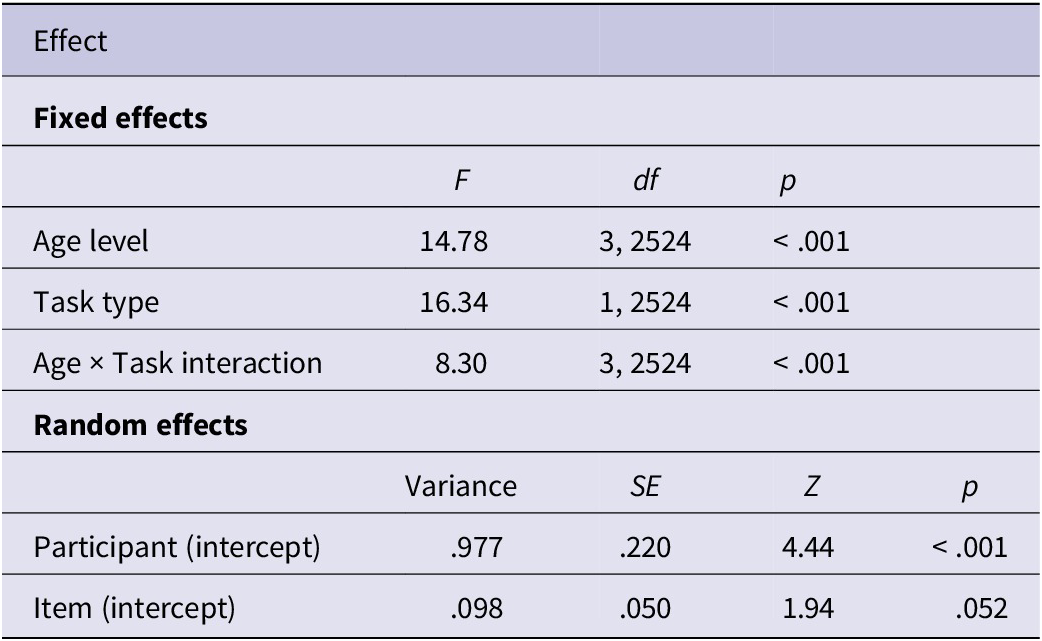

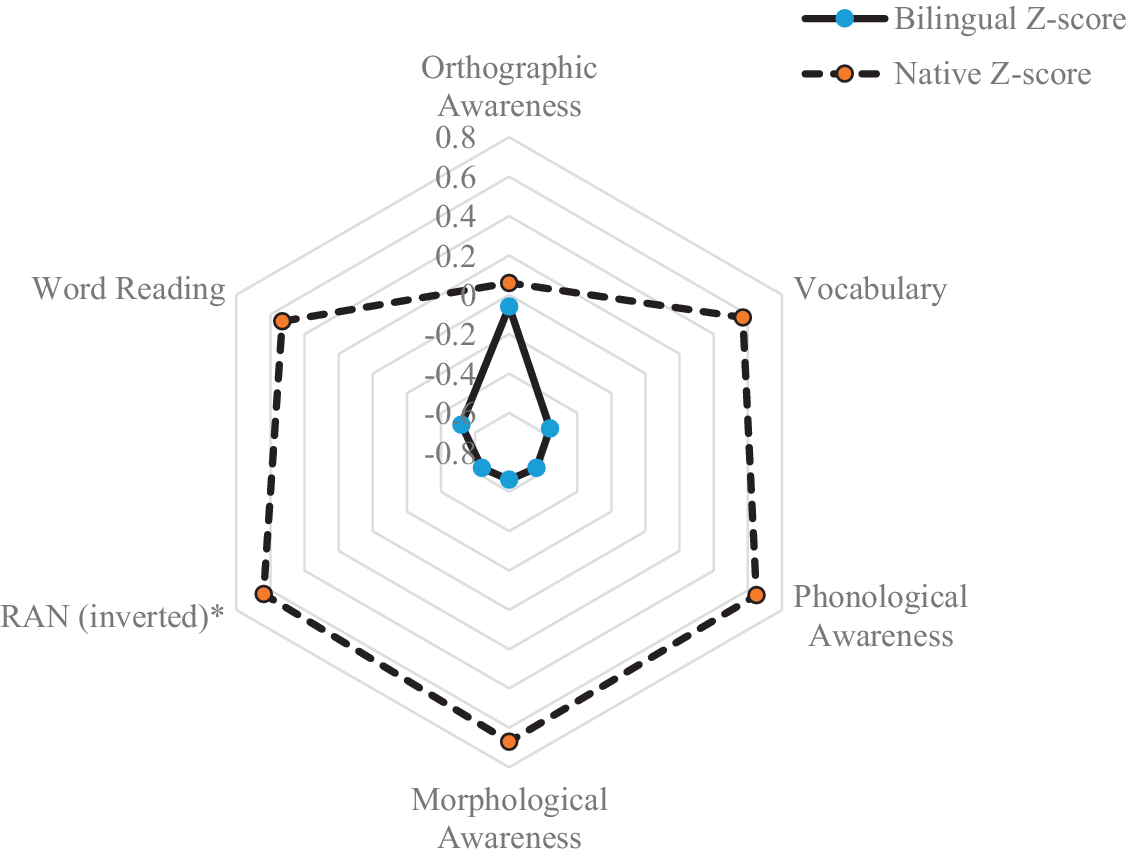


 Open access

