Introduction
Paediatric haematopoietic cell transplant is a curative therapy for several malignant and non-malignant conditions; however, it can contribute to significant morbidity and mortality in spite of immense advances in supportive care and management of haematopoietic cell transplantation-related complications. Reference Fraint, Abdel-Azim and Bhatt1,Reference Aldoss, Gruenstein and Bass2 Cardiac complications, including pericardial effusion, represent a significant subset of post-haematopoietic cell transplantation complications Reference Dandoy, Jodele and Paff3–Reference Rotz, Ryan and Jodele6 . While the exact incidence has not been completely established, retrospective reports describe pericardial effusion in 5–26% of adult haematopoietic cell transplantation recipients Reference Kubo, Imataki and Fukumoto7,Reference Chen, Zou and Yin8 and in 10–25% of paediatric recipients, Reference Aldoss, Gruenstein and Bass2,Reference Versluys, Grotenhuis, Boelens, Mavinkurve-Groothuis and Breur4,Reference Lyons, Dham, Schwartz and Dávila Saldaña9–Reference Neier, Jin and Kleinman14 although incidence as high as 38% has been reported when including trivial effusions. Reference Diamond, Ruiz-Mesa, Corrales-Medina, Tamariz, Ziga and Swaminathan15
Despite limited information regarding incidence, risk factors, outcomes, or guidance for optimal management of pericardial effusion in children after haematopoietic cell transplantation, several retrospective studies suggest an impact on survival, Reference Dandoy, Jodele and Paff3,Reference Pfeiffer, Rotz and Ryan16 –Reference Tinianow, Gay, Bearl, Connelly, Godown and Kitko18 with worse survival and increased transplant-related mortality among children who developed pericardial effusion after haematopoietic cell transplantation.
Several risk factors for pericardial effusion development have been reported in both adults and children, including the age at transplantation, myeloablative conditioning, use of high dose cyclophosphamide, total body irradiation, viral reactivations including cytomegalovirus, acute and chronic graft-versus-host disease, transplant-associated thrombotic microangiopathy, use of calcineurin inhibitors for graft-versus-host disease prophylaxis, sinusoidal obstructive syndrome, and delayed neutrophil engraftment. However, the strength of these associations varies widely within reports and there is no clear identification of an at-risk haematopoietic cell transplantation recipient population that would benefit from pericardial effusion screening. Furthermore, guidelines for screening and optimal management of pericardial effusion after haematopoietic cell transplantation are lacking.
We report a retrospective review conducted to evaluate the incidence, risk factors, and clinical course of pericardial effusion after paediatric allogeneic haematopoietic cell transplantation. We describe our institutional clinical experience, including transplant recipients “at risk” for developing pericardial effusion. Last, we propose a model for the evaluation and management of pericardial effusion after haematopoietic cell transplantation based on our interpretation of the potential clinical impact.
Methods
Patient selection and data collection:
We performed a retrospective review of all patients who received allogeneic haematopoietic cell transplantation at Texas Children’s Hospital during the study period from January 2010 to April 2021. International Classification of Diseases, 10th Revision codes were queried for a diagnosis of pericardial effusion. Patients were excluded from the pericardial effusion cohort when the effusion preceded haematopoietic cell transplantation or occurred after a second haematopoietic cell transplantation. Patients with pericardial effusion recognition at the time of active chronic graft-versus-host disease were also excluded from the pericardial effusion cohort, considering the association between chronic graft-versus-host disease and polyserositis, including pericardial effusion, has been well established. Reference Ferreira, de Oliveira, Parísio and Ramalho19
Those patients that underwent a first allogeneic haematopoietic cell transplantation during the study period without developing pericardial effusion were included in the control cohort. The study was approved by the Institutional Review Board at Baylor College of Medicine. All available medical records, clinical notes, echocardiograms, other imaging reports, and autopsy reports were reviewed for demographic and outcomes data collection. The type of conditioning was organised into two categories: myeloablative conditioning and others (reduced intensity and non-myeloablative conditioning). For the pericardial effusion cohort, data for radiation exposure and cumulative anthracycline dose were collected when available.
Echocardiogram surveillance:
Based on institutional practice, we obtained electrocardiograms and transthoracic echocardiograms in all patients as part of baseline cardiovascular risk assessment prior to haematopoietic cell transplantation including evaluation of ventricular size and function. Subsequent echocardiograms were performed based on clinical indication per the discretion of medical providers post-haematopoietic cell transplantation. These were commonly in the setting of respiratory and haemodynamic changes with signs of cardiac failure, unexplained tachycardia, and/or respiratory distress, or abnormal imaging in chest X-rays or chest CT. In addition, follow-up echocardiograms were performed routinely on an annual basis and then every 2–3 years as part of our standard long-term cardiotoxicity monitoring post-haematopoietic cell transplantation.
Definition and Diagnosis of pericardial effusion:
Pericardial effusion was diagnosed if post-haematopoietic cell transplantation echocardiography showed a new accumulation of fluid in the pericardium. Clinically significant pericardial effusion was defined as (1) being symptomatic with moderate to large size of the effusion on echocardiogram, (2) having clinical and/or echocardiographic evidence of cardiac tamponade, (3) necessity of medical interventions or pericardiocentesis with or without drain placement, or (4) a combination of any of the above. Symptoms associated with pericardial effusion varied; however, chest pain, tachycardia, and dizziness usually prompted echocardiographic evaluation.
There is no specific threshold for classifying the size of a pericardial effusion into small, moderate, or large categories in children. For our study, a single paediatric cardiologist reviewed all echocardiograms of the patients included in our cohort to decrease operator variability and to establish a uniform classification of pericardial effusion by size. We followed the specific definition and criteria used at our institution for echocardiographic diagnosis of cardiac tamponade.
Definitions of haematopoietic cell transplantation outcomes and haematopoietic cell transplantation-related complications:
Transplant-related mortality was defined as all deaths from medical complications related to haematopoietic cell transplantation and not due to relapse of the underlying disease or disease progression. Transplant-associated thrombotic microangiopathy was diagnosed based on published criteria. Reference Schoettler, Carreras and Cho20 Cytomegalovirus infection was diagnosed based on polymerase chain reaction test positivity in the blood (plasma), body fluid or tissue, when applicable. The limit of detection for cytomegalovirus protein-to-creatinine ratio at our institution is 182 IU/ml, where one copy of cytomegalovirus is equal to 5.04 IU.
Transplant-associated thrombotic microangiopathy was diagnosed using published criteria that distinguish a subset of patients at higher risk of transplant-related mortality. Reference Schoettler, Carreras and Cho20 Transplant-associated thrombotic microangiopathy was diagnosed when ≥4 of the following 7 features occurred twice within 14 days: anaemia; haemoglobin decline by ≥1 g/dL or new-onset transfusion dependence; thrombocytopenia; lactate dehydrogenase exceeding the upper limit of normal; schistocytes; hypertension; soluble C5b-9 exceeding the upper limit of normal; and proteinuria (≥ 1 mg/mg random urine protein-to-creatinine ratio). High-risk transplant-associated thrombotic microangiopathy was considered in the setting of elevated soluble C5b-9, lactate dehydrogenase ≥2 times the upper limit of normal, random urine protein-to-creatinine ratio ≥1 mg/mg, multi-organ dysfunction, concurrent grades II-IV acute graft-versus-host disease, or infection (bacterial or viral). Screening for transplant-associated thrombotic microangiopathy at our institution is based on provider’s discretion when any of the above occurs.
Statistical analysis:
Baseline, disease, transplant, and pericardial effusion-related characteristics were summarised descriptively. Time to pericardial effusion was defined as the time from transplant to pericardial effusion diagnosis. Time to pericardial effusion resolution was defined as the time from pericardial effusion diagnosis to pericardial effusion resolution. Overall survival was defined as the time from transplant to death from any cause. Time to pericardial effusion and time to pericardial effusion resolution analyses were performed using sub-distribution hazard models (competing risk: death) and overall survival was estimated using Cox proportional hazard model.
Univariate analyses were performed first to aid covariate selection for multivariate models, ensuring that the variables included were based on both statistical significance and clinical importance. The following variables were investigated as potential contributors to pericardial effusion development: age at haematopoietic cell transplantation, sex, underlying diagnosis, type of conditioning, donor type, cytomegalovirus diagnosis, and transplant-associated thrombotic microangiopathy diagnosis. Those variables and pericardial effusion-related factors such as pericardial effusion management approach, clinically significant pericardial effusion, degree of pericardial effusion, and tamponade were considered in pericardial effusion resolution analyses. To explore the independent effect of severity of pericardial effusion on mortality, baseline characteristics along with cytomegalovirus and transplant-associated thrombotic microangiopathy were included as potential covariates. Cytomegalovirus, transplant-associated thrombotic microangiopathy, and pericardial effusion diagnoses (non-significant and clinically significant) were treated as time-dependent covariates. Multivariate model results are depicted with forest plots. Statistical analyses were performed using SAS (Version 9.4) and R (Version 4.3.1) software.
Results
Baseline characteristics and transplant complications
A total of 697 paediatric patients underwent allogeneic haematopoietic cell transplantation during the study period. Supplemental Figure 1 shows a flow diagram depicting the study cohort composition and exclusions. Supplemental table 1 shows the baseline characteristics and demographics of the eligible study patients. After exclusions, a total of 73 patients developed pericardial effusion post-haematopoietic cell transplantation (11.6%), while 556 patients (88.4%) did not develop pericardial effusion, and hence comprised the control cohort. The median age at transplantation was 8.5 years (range: 0.1–24.3). Most patients were male (62.3%), White (75.4%), had a malignant underlying diagnosis (53.7%), received myeloablative conditioning (63.1%), and had non-matched related donor types (70.7%).
Supplemental Table 2 displays the rate of specific haematopoietic cell transplantation-related complications and transplant-related mortality in our cohort. Acute graft-versus-host disease was diagnosed in 31.6% of our cohort. Approximately one-quarter of patients developed cytomegalovirus infection (24.8%). Of the patients who experienced cytomegalovirus infection and were also diagnosed with pericardial effusion (n = 31), 16 (51.6%) died. All 31 patients had viraemia, and 16 had other organ involvement including lungs and colon, bone marrow, urinary tract, retina, or central nervous system. One patient had positive protein-to-creatinine ratio noted in pericardial fluid analysis. Almost 10% of patients developed transplant-associated thrombotic microangiopathy (n = 59); more than half of these died (53.9%), consistent with the well-established risk for transplant related mortality associated with transplant-associated thrombotic microangiopathy. Eleven patients who developed pericardial effusion also experienced both transplant-associated thrombotic microangiopathy and cytomegalovirus infection, five out of whom (45.4%) died. We did not observe any death from cardiac complications.
Clinical characteristics and management of pericardial effusion post-haematopoietic cell transplantation
Seventy-three patients had pericardial effusion post-haematopoietic cell transplantation, all of whom had a normal echocardiogram pre-haematopoietic cell transplantation. Table 1 and Supplemental Figure 2 summarise the characteristics and management of pericardial effusion. Pericardial effusion developed after a median of 102 days post-haematopoietic cell transplantation (range: 1–403 days). Fifty patients who developed pericardial effusion (68.5%) had resolution as demonstrated by echocardiogram, while 23 (31.5%) had no resolution of pericardial effusion at the time of last evaluation (Supplemental Figure 2B). Median of the time to resolution was 93.5 days (range: 2–1073 days). Clinically significant pericardial effusion developed in 34 patients (46.6%, Supplemental Figure 2A). The degree of pericardial effusion was moderate in 28.8% and large in 15.1%, and either trace or small in the rest of the cohort (Supplemental Figure 2C). Cardiac tamponade was diagnosed in 13 patients (17.8%).
Clinical characteristics and management of pericardial effusion

Abbreviations: HCT: haematopoietic cell transplant, PEF: pericardial effusion.
With regard to the management of pericardial effusion, observation only with serial echocardiograms was performed in 54 (74.0%) patients, while medical treatment (anti-inflammatories such as non-steroidal anti-inflammatory drugs and/or colchicine, and diuretics) was used for 11 patients (15.0%). Eight patients (11.0%) had a pericardiocentesis with drain placement indicated for large and/or circumferential pericardial effusion with cardiac tamponade (Supplemental Figure 2D). All eight patients tolerated the procedure well without significant procedure-related complications. One patient had re-accumulation after drain removal with persistent tamponade physiology requiring a second pericardial drain placement. All drained effusions were sent for analysis of the pericardial fluid, which included cytology, infectious, and chemistry analysis. The results were unremarkable except for one patient with positive fluid cytomegalovirus protein-to-creatinine ratio. Four out of the eight patients who required drain placement died due to advanced underlying multi-organ failure. Three patients still had a pericardial drain in place at the time of death. Only one patient showed immediate pericardial effusion resolution without re-accumulation after drain removal, while all other patients were noted to have persistent pericardial effusion for weeks to months after drain removal prior to complete pericardial effusion resolution.
Thirty-one (42.5%) patients who received total body irradiation, with a median dose of 1200 centi-grey (range: 200–1400 centi-grey) developed pericardial effusion. Data for cumulative anthracycline dose pre-haematopoietic cell transplantation were available for 36 patients with pericardial effusion who received a median dose of 227 mg/m2 of doxorubicin equivalents (range: 75–693 mg/m2). Of the 73 patients who developed pericardial effusion, eight (11.0%) were diagnosed with sinusoidal obstructive syndrome. Delayed neutrophil engraftment occurred in two patients at post-transplant days 54 and 63, respectively; one patient had primary graft failure (data not shown).
Factors associated with pericardial effusion post-haematopoietic cell transplantation
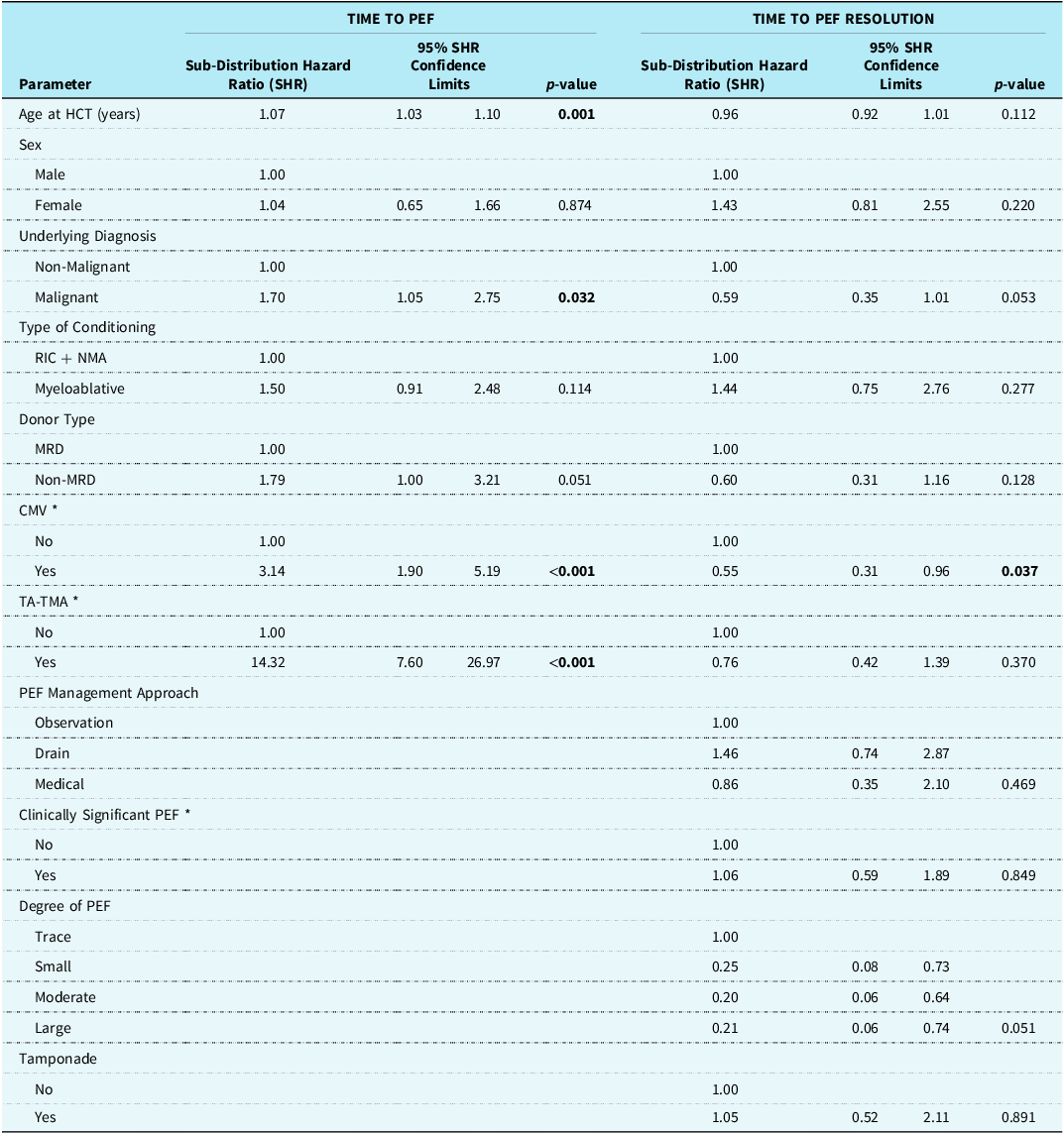
Table 2 shows the results of the univariate sub-distribution hazard model for time to pericardial effusion. Risk factors associated with the development of pericardial effusion included increasing age at haematopoietic cell transplantation (sub-distribution hazard ratio = 1.07, 95% confidence interval (CI): 1.03–1.10, p = 0.001), malignant underlying diagnosis (sub-distribution hazard ratio = 1.70, 95% CI: 1.05–2.75, p = 0.032), cytomegalovirus diagnosis (sub-distribution hazard ratio = 3.14, 95% CI: 1.90–5.19, p < 0.001), and transplant-associated thrombotic microangiopathy diagnosis (sub-distribution hazard ratio = 14.32, 95% CI: 7.60–26.97, p < 0.001); these variables were included in the multivariate model subsequently. Haematopoietic cell donor type and type of conditioning were identified as clinically meaningful factors warranting further investigation, and thus, were added to the multivariate model. Figure 1A shows the results of the multivariate model. The strongest associations with pericardial effusion development were cytomegalovirus diagnosis (Adjusted Sub-distribution Hazard Ratio [adjusted sub-distribution hazard ratio] = 2.94, 95% CI: 1.79–4.84, p < 0.001) and transplant-associated thrombotic microangiopathy diagnosis (adjusted sub-distribution hazard ratio = 16.89, 95% CI: 9.28–30.71, p < 0.001). Increasing age at haematopoietic cell transplantation also remained a significant risk factor (adjusted sub-distribution hazard ratio = 1.06, 95% CI: 1.02–1.11, p = 0.005). Underlying malignant diagnosis, myeloablative conditioning, and non-matched related donor types did not significantly contribute to the risk of pericardial effusion development in multivariate analysis.
Factors associated with pericardial effusion development post-haematopoietic cell transplantation. Forest plot show: a. Multivariate analysis results of time to pericardial effusion b. Time to pericardial effusion resolution multivariate analysis results c. Overall survival multivariate analysis results. * = time-dependent variable. ^ = non-significant PEF development and clinically significant PEF development are mutually exclusive and both compare to reference category, “No PEF.” PEF: pericardial effusion, CMV: cytomegalovirus, TA-TMA: transplant-associated thrombotic microangiopathy, MRD: matched related donor, HCT: haematopoietic cell transplant.

Univariate analyses of time to pericardial effusion and time to pericardial effusion resolution using sub-distribution hazard model

Competing risk was death. * time-dependent variable. Abbreviations: SHR: sub-distribution hazard ratio, CMV: cytomegalovirus, TA-TMA: transplant-associated thrombotic microangiopathy, MRD: matched related donor, RIC: reduced intensity conditioning, NMA: non-myeloablative, HCT: haematopoietic cell transplant.
In sub-distribution hazard univariate analyses of time to pericardial effusion resolution, cytomegalovirus diagnosis (sub-distribution hazard ratio = 0.55, 95% CI: 0.31–0.96, p = 0.037) was the only factor to have a significant association with pericardial effusion resolution (Table 2), and thus, was included in the multivariate model. Though not statistically significant upon univariate analyses, the diagnosis of transplant-associated thrombotic microangiopathy, pericardial effusion management approach, and clinically significant pericardial effusion development was identified as clinically meaningful factors that warranted investigation in the multivariate model of time to pericardial effusion resolution. Figure 1B shows the results of the multivariate model where cytomegalovirus diagnosis (adjusted sub-distribution hazard ratio = 0.44, 95% CI: 0.24–0.81, p = 0.009) remained significantly associated with decreased likelihood of pericardial effusion resolution after adjusting for various factors. Despite clinical interest in their potential association with pericardial effusion resolution, the diagnosis of transplant-associated thrombotic microangiopathy, pericardial effusion management approach, and clinically significant pericardial effusion development remained as non-significant factors. Supplemental Figures 3A-D show swimmers plots that illustrate time to pericardial effusion resolution according to cytomegalovirus infection status, transplant-associated thrombotic microangiopathy diagnosis, clinically significant pericardial effusion development, and pericardial effusion management approach. Supplemental Figure 3A illustrates an increased likelihood of earlier pericardial effusion resolution in the group without cytomegalovirus, as green dots cluster more closely together.
Figure 1C shows the results of the multivariate model for overall survival. Non-significant pericardial effusion development and clinically significant pericardial effusion development were associated with post-haematopoietic cell transplantation mortality, compared to no pericardial effusion development (Adjusted Hazard Ratio = 3.64, 95% CI: 2.23–5.94, p < 0.001; Adjusted Hazard Ratio = 3.86, 95% CI: 2.18–6.84, p < 0.001, respectively), after controlling for age at haematopoietic cell transplantation, sex, underlying diagnosis, type of conditioning, donor type, diagnosis of cytomegalovirus, and diagnosis of transplant-associated thrombotic microangiopathy. Comparatively, the risk of mortality carried by non-significant pericardial effusion development and clinically significant pericardial effusion development did not differ significantly (not shown).
Discussion
In this study, we report our experience with pericardial effusion evaluation, diagnosis, and management at a single tertiary care paediatric hospital over 11 years. To our knowledge, this is one of the largest cohorts of paediatric allogeneic haematopoietic cell transplantation recipients with pericardial effusion reported to date. While the reported incidence of pericardial effusion after haematopoietic cell transplantation in paediatric patients varies widely, Reference Aldoss, Gruenstein and Bass2,Reference Versluys, Grotenhuis, Boelens, Mavinkurve-Groothuis and Breur4,Reference Lyons, Dham, Schwartz and Dávila Saldaña9,Reference Tong, Meng and Zhang10,Reference Diamond, Ruiz-Mesa, Corrales-Medina, Tamariz, Ziga and Swaminathan15 the incidence in our cohort (11.6%) was comparable to previous reports. In our cohort, all the patients with pericardial effusion post-haematopoietic cell transplantation demonstrated normal ventricular function and no pericardial effusion was noted in echocardiograms obtained before transplant admission. The aetiology of pericardial effusion in our cohort seemed multifactorial in nature, similar to what has been described by other investigators. Reference Fraint, Abdel-Azim and Bhatt1,Reference Hayek, Zaha and Bogle5,Reference Rotz, Ryan and Jodele6,Reference Tong, Meng and Zhang10,Reference Tinianow, Gay, Bearl, Connelly, Godown and Kitko13 Notably, we found that transplant-associated thrombotic microangiopathy and cytomegalovirus infection frequently co-occurred with pericardial effusion development. When associated with these conditions, an increased risk of death was noted. Our findings highlight the need for prompt pericardial effusion recognition and treatment in patients who develop transplant-associated thrombotic microangiopathy and cytomegalovirus infection.
Signs and symptoms of pericardial effusion can be subtle and often overlap with other conditions commonly seen after allogeneic haematopoietic cell transplantation. A high level of suspicion should be maintained after conditioning and haematopoietic cell transplantation, especially during periods of heightened inflammation such as peri-engraftment and the first 100 days post-transplantation. Often, by the time patients are showing signs and symptoms of haemodynamic instability post-haematopoietic cell transplantation, more than half are reported to have abnormal echocardiogram findings, including pericardial effusion. Reference Dandoy, Jodele and Paff3 This illustrates the need for early screening in the setting of new cardio-respiratory signs and symptoms or vital signs changes.
The relationship between transplant-associated thrombotic microangiopathy, endothelial injury, and polyserositis has increasingly been recognised. Reference Rotz, Ryan and Jodele6,Reference Lerner, Dandoy, Hirsch, Laskin, Davies and Jodele17 Although no patients in our cohort died from primary cardiac causes, both non-significant and clinically significant pericardial effusion development were associated with increased risk for death. This illustrates the common co-occurrence of pericardial effusion with other organ dysfunction, especially in the setting of transplant-associated thrombotic microangiopathy, and highlights the role of pericardial effusion as a marker for transplant-associated thrombotic microangiopathy severity and organ dysfunction. Reference Schoettler, Carreras and Cho20
Cytomegalovirus infection is a well-recognised contributor to infectious complications post-haematopoietic cell transplantation, as well as to morbidity and mortality due to the potential for organ involvement and dysfunction. Reference Lyons, Dham, Schwartz and Dávila Saldaña9,Reference Cox, Punn, Weiskopf, Pinsky and Kharbanda11,Reference Bhat, Joshi, Sarode and Chavan21 Our data illustrate the increased risk of pericardial effusion development post-haematopoietic cell transplantation associated with systemic cytomegalovirus infection and, notably, one patient had presumed viral pericarditis with positive cytomegalovirus protein-to-creatinine ratio in pericardial fluid. This supports the ongoing need for prompt evaluation of pericardial effusion and strict viral surveillance in this population.
In our cohort, we observed that both older age at the time of haematopoietic cell transplantation and the presence of malignancy were associated with an increased risk of pericardial effusion. The association with older age is consistent with the recognised link between increased risk of cardiovascular complications following haematopoietic cell transplantation and older age at the time of transplantation. Reference Hayek, Zaha and Bogle5,Reference Rotz, Ryan and Jodele6
The development of both non-significant and clinically significant pericardial effusion after transplantation was associated with increased risk of death in our cohort (Figure 1C). Patients in our cohort did not die from cardiac-related causes, rather their pericardial effusion was often a manifestation of underlying multi-organ involvement by infectious/inflammatory processes. This was illustrated by the lack of complete resolution of pericardial effusion immediately after drain placement in seven out of eight patients that underwent pericardiocentesis. As such, pericardial effusion development often represents a marker of severe underlying organ dysfunction that is in turn causative of increased mortality, rather than impacting mortality by itself.
Screening guidelines exist for cardiovascular complications in the long-term post-transplant setting, Reference Hayek, Zaha and Bogle5,Reference Majhail, Rizzo and Lee22 but recommendations for screening and prevention in the early post-haematopoietic cell transplantation period are lacking. Based on our study findings and clinical experience both from our group and published literature, we propose an algorithm for the evaluation and management of pericardial effusion in paediatric patients that undergo haematopoietic cell transplantation warranting a multi-disciplinary approach (Figure 2A-B). Medical management considerations depend on underlying conditions and inflammatory state. Therapeutic choices should be discussed with paediatric cardiology and tailored to the individual clinical scenario of the patient. Based on our findings, we recommend screening for pericardial effusion in patients with transplant-associated thrombotic microangiopathy and cytomegalovirus infection. Transplant-associated thrombotic microangiopathy screening and cytomegalovirus testing should also be strongly considered after diagnosis of pericardial effusion. Recognition of echocardiographic and clinical signs of cardiac tamponade helps identify patients in need of urgent drainage of the pericardial effusion. When clinically significant pericardial effusion with cardiac tamponade occurs in the setting of underlying inflammatory aetiology (such as transplant-associated thrombotic microangiopathy, engraftment syndrome, and acute graft-versus-host disease), resolution of clinically significant pericardial effusion can take up to several months, resulting in a pericardial drain being in place for longer. Reference Pfeiffer, Rotz and Ryan23 As such, in the absence of clinical findings of cardiac tamponade, pericardiocentesis may be temporarily deferred and we instead recommend serial echocardiogram monitoring and tailoring medical interventions to treat the underlying condition associated with pericardial effusion, when such a condition is confirmed.
A. Screening for pericardial effusion in paediatric haematopoietic cell transplantation recipients. B. Evaluation and management of clinically significant pericardial effusion after haematopoietic cell transplantation. Recommendations for pre-HCT evaluation, screening, and initial management of pericardial effusion after haematopoietic cell transplantation in paediatric patients, clinically significant PEF definition included. PEF: pericardial effusion, cPEF: clinically significant pericardial effusion, HCT: haematopoietic cell transplant, EKG: electrocardiogram, aGVHD: acute graft-versus-host disease, TA-TMA: transplant-associated thrombotic microangiopathy, LDH: lactate dehydrogenase, ULN: upper limit of normal, rUPCR: random urine protein-to-creatinine ratio, RV: right ventricle, RA: right atrium, ICU: intensive care unit, CMV: cytomegalovirus.

The clinical data we present here help inform pericardial effusion management approaches, including the selection of paediatric patients likely to benefit from pericardiocentesis. Overall, these data reinforce the concept that closer screening for pericardial effusion post-haematopoietic cell transplantation is imperative, treatment strategies must be tailored individually, and a handful of underlying inflammatory and infectious conditions must be investigated upon pericardial effusion diagnosis. Persistent pericardial effusion as such is a marker of mortality in this population and may warrant aggressive management of associated contributing aetiologies.
Limitations
Our study is limited by its retrospective nature and high inter-provider variability in clinical practice both within haematopoietic cell transplantation and paediatric cardiology providers. Even though this is one of the largest cohorts of paediatric allogeneic haematopoietic cell transplantation recipients with pericardial effusion to be reported, our study is relatively underpowered for certain statistical analyses, and the time-dependent nature of most of the variables of interest prevents the implementation of more straightforward survival analyses. In addition, earlier during the study period, the vast increase in transplant-associated thrombotic microangiopathy recognition was still incipient. As such, it is likely that this diagnosis was underappreciated in our cohort, which could result in biased estimates.
Conclusions
Pericardial effusion in paediatric haematopoietic cell transplantation recipients occurs with notable frequency. Patients with malignant diseases, older age at the time of haematopoietic cell transplantation, cytomegalovirus infection, or transplant-associated thrombotic microangiopathy are at higher risk for pericardial effusion development post-haematopoietic cell transplantation, which in turn predicts worse outcomes with increased risk of death. We propose a model for screening, evaluation, and management of pericardial effusion post-haematopoietic cell transplantation. Prospective studies are needed to further evaluate the aetiology and associations of pericardial effusion in the haematopoietic cell transplantation setting; as well as to validate screening and treatment guidelines that can help prevent morbidity and decrease mortality, and ultimately improve haematopoietic cell transplantation outcomes.
Supplementary material
For supplementary material accompanying this paper visit https://doi.org/10.1017/S1047951125100553
Data availability statement
The data used to support the findings of this study are available from the corresponding author upon reasonable request.
Acknowledgements
The authors acknowledge data managers from the Center for Cell and Gene Therapy at Baylor College of Medicine for their assistance with data retrieval.
Author contribution
All authors contributed to the study conception and design. JFS performed data collection. AP, AQ, and CL help revise echocardiographic definitions and concepts, while CL performed central review of echocardiograms. TW, KS, and MW performed statistical analysis. All authors helped conceptualise and revise the proposed algorithm for screening and management of pericardial effusion after haematopoietic cell transplantation. The manuscript was written by JFS, SB, and BS; and all authors commented on previous versions of the manuscript. All authors read and approved the final manuscript.
Financial support
J.F.S. was supported by Baylor College of Medicine Comprehensive Cancer Training Program via Cancer Prevention & Research Institute of Texas Training Award RP210027. T.W., M.W., and K.S. were supported by the Dan L. Duncan Comprehensive Cancer Center at Baylor College of Medicine through a support grant P30CA125123 from the National Cancer Institute.
Competing interests
The authors have no relevant conflict or competing interests to declare.
Ethical standard
The authors confirm this retrospective study was approved by the Institutional Review Board at Baylor College of Medicine.