



1. Introduction
We consider non-existence of positive radial solutions for the following problems
 \begin{equation}
\begin{cases}
-\text{div}\big(h(|x|){A}(|\nabla u|)\nabla u\big)=g(|x|)f(u)&\text{in }B_R,\\
u=0&\text{on }\partial B_R,
\end{cases}
\end{equation}
and
 \begin{equation}
-\text{div}\big(h(|x|){A}(|\nabla u|)\nabla u\big)=g(|x|)f(u)\quad\text{in }{\mathbb R}^N,
\end{equation}
where BR is the open ball of centre 0 and radius R in  ${\mathbb R}^N$, with N > 2, and
 ${A}\in C(\mathbb R^+)$,
 $tA(t)\in C^1(\mathbb{R}^+),$ with
 $A \gt 0$ in
 $\mathbb R^+$,
 \begin{equation}
[tA(t)]' \gt 0\,\text{for }t \gt 0,\qquad \lim_{t\to0^+}tA(t)=0,
\end{equation}
 $h,g$ are given non-negative weight functions and
 \begin{equation}
f\in C(\mathbb R_0^+),\qquad f(0)=0, \qquad f \gt 0 \,\text{in } \mathbb R^+.
\end{equation}
Main prototypes for A are, for instance,  $A(t)=t^{m-2}$, m > 1, that is the m-Laplacian operator,
 $A(t)=(1+t^2)^{m/2-1}$, m > 1, the generalized mean curvature operator, which reduces, when m = 1, to the mean curvature operator
 $A(t)=1/\sqrt{1+t^2}$. Differently from the m-Laplacian, the generalized mean curvature operator is bounded in the entire
 $\mathbb R^+$ when
 $1 \lt m\le2$, this feature can be considered in some sense inherited from the mean curvature operator. On the other hand, when m > 2, the generalized mean curvature operator blows up at infinity with order m − 2 as the m-Laplacian.
In this article, we are interested in the non-existence of radial solutions, in some cases radial ground states, namely radial solutions tending to 0 at infinity.
The study of problems (P) and (Q) in the semilinear case, where A = 1, without diffusion and weights (i.e.,  $h=g=1$), within bounded domains, has attracted significant attention, evidenced by a large number of articles in literature. This research was pioneered by the foundational works of Brezis and Nirenberg [Reference Brezis and Nirenberg5], Trudinger [Reference Trudinger25], and Aubin [Reference Aubin2]. In the context of the entire space, the first Liouville theorem for power-type non-linearities was established by Gidas and Spruck in [Reference Gidas and Spruck16]. Concerning the m-Laplacian case, namely,
 $A(t)=t^{m-2}$, m > 1, Mitidieri and Pohozaev in [Reference Mitidieri and Pohozaev18] and Serrin and Zou in [Reference Serrin and Zou24] extended the Liouville theorem by Gidas–Spruck to inequalities and equations, respectively. Precisely, non-existence of non-negative solutions for
 \begin{equation*}-\Delta_mu=u^p\quad\text{in }{\mathbb R}^N\end{equation*}
holds when
 \begin{equation*}m-1 \lt p \lt \frac{(m-1)N+m}{N-m}=m^*-1,\quad N \gt m,\quad m^*:=\frac{mN}{N-m},\end{equation*}
where  $m^*$ is the critical Sobolev exponent. In particular, it is well known that, as concerns non-existence in the entire
 $\mathbb R^N$, namely Liouville theorems,
 $m^*$ is optimal for the equation above, while
 $m_*=p(N-1)/(N-p)( \lt m^*)$, namely Serrin’s exponent, is optimal for Liouville theorems for the inequality case
 $-\Delta_mu \ge u^p$ in
 $\mathbb R^N$,
 $u\ge0$. For further results in this direction, we refer to [Reference Mitidieri and Pohozaev18] and [Reference Serrin and Zou24].
For critical problems involving the m-Laplacian with varying weights, specifically with  $h(x)=|x|^\alpha$ and
 $g(x)=|x|^\beta$, that is
 \begin{align}
\begin{cases}
-\text{div}\big(|x|^\alpha|\nabla u|^{m-2}\nabla u\big)=|x|^\beta u^p&\text{in }B_R,\\
u=0&\text{on }\partial B_R,
\end{cases}
\end{align}
the work by Clemént, de Figueiredo, and Mitidieri [Reference Clement, de Figueiredo and Mitidieri9] identified the critical exponent for radial solutions of problem (1.1) as
 \begin{equation}m^\ast_{\alpha,\beta}:=\frac{m(N+\beta)}{N+\alpha-m}, \qquad m-N \lt \alpha \lt \beta+1.
\end{equation}
We observe that  $m^\ast_{\alpha,\beta}$ reduces to
 $m^*$ when
 $\alpha=\beta=0$, furthermore
 $m^\ast_{\alpha,\beta} \gt m$ given that
 $\beta-\alpha+m \gt 0$. We refer to [Reference Baldelli, Brizi and Filippucci4], for a further generalization of (1.1), with a diffusion term inside the divergence.
Significant findings regarding the non-existence of positive radial solutions in unbounded domains for
 \begin{equation}
-\text{div}\big(|x|^\alpha|\nabla u|^{m-2}\nabla u\big)=|x|^\beta u^p\quad\text{in }{\mathbb R}^N
\end{equation}
were presented by Caristi and Mitidieri [Reference Caristi and Mitidieri6] and Clément, Manásevich, and Mitidieri [Reference Clément, Manásevich and Mitidieri8], particularly under the condition that
 \begin{equation*}m-1 \lt p \lt m^\ast_{\alpha,\beta}-1.\end{equation*}
Moreover, theorem 4.1 in [Reference Clement, de Figueiredo and Mitidieri9] conducted an in-depth exploration of solution behaviours in bounded domains for the critical case  $p=m^\ast_{\alpha,\beta}-1$, employing variational techniques. Egnell [Reference Egnell13] also contributed further insights in this direction. On the other hand, for m = 2 in (1.3), with singular weights and a singular potential, a non-existence set of solutions is obtained in [Reference Liskevich, Lyakhova and Moroz17]. Finally, non-existence results in the coercive case of (1.3), that is when the minus sign is removed, can be found in [Reference Ghergu and Radulescu15], where a generalized Keller–Osserman condition is involved.
In the context of the mean curvature operator  $A(t)=1/\sqrt{1+t^2}$, Ni and Serrin in [Reference Ni and Serrin21, theorem 3.4] demonstrated that the problem (P) in the case of
 $h=g=1$, namely
 \begin{align}
\begin{cases}
-\text{div}\left(\frac{\nabla u}{\sqrt{1+|\nabla u|^2}}\right)=f(u)&\text{in }B_R,\\
u=0&\text{on }\partial B_R,
\end{cases}
\end{align}
does not possess any positive (radial) solution, if there exists  $\eta\geq(N+2)/(N-2)=2^*-1$ (where
 $2^*:=2N/(N-2)$) such that
 \begin{equation}
(\eta+1)F(u)\leq uf(u)\quad\text{for all }u \gt 0,
\end{equation}
where  $F(u)=\int_0^uf(t)dt$.
Expanding on this topic, Serrin later in [Reference Serrin23] explored a special case of problem (1.4) with  $f(u)=-\lambda u+u^p$ and λ > 0, revealing that for
 $1 \lt p \lt 2^*-1$, there is a critical radius R 1, dependent solely on p and N, below which no positive radial solutions can exist, cfr. theorem 3 in [Reference Serrin23]. Notably, Serrin established that positive radial solutions must adhere to the inequality
 $u(0)^{p+1}-2\lambda u(0)^2 \lt 4N^2p$, which simplifies to
 $u(0) \lt \left(4N^2p\right)^{1/(p+1)}$ when λ = 0, applicable for any p > 1, cfr. corollary of theorem 2 in [Reference Serrin23].
Further exploration by Clément, Manásevich, and Mitidieri in [Reference Clément, Manásevich and Mitidieri7] showed that for  $f(u)=u^p$ and
 $1 \lt p \lt 2^*-1$, there exists a threshold radius
 $R^\ast\geq0$ such that problem (1.4) has at least one positive (radial) solution for any
 $R \gt R^\ast$, cfr. theorem 3.6 in [Reference Clément, Manásevich and Mitidieri7].
In the study of the equation in (1.4) over the entire space  $\mathbb{R}^N$, a noteworthy problem is presented as
 \begin{align}
-\text{div}\left(\frac{\nabla u}{\sqrt{1+|\nabla u|^2}}\right)= f(u)\quad\text{in }\mathbb R^N,
\end{align}
where Ni and Serrin [Reference Ni and Serrin21] have established significant results regarding the non-existence and existence of ground states for problem (1.6), as outlined in their work. They demonstrated the non-existence of ground states for the condition  $f(u)\geq cu^p$, with c being a positive constant and for
 $1 \lt p\leq N/(N-2)=2_*-1$, where
 $2_*$, less than the critical Sobolev exponent
 $2^*$, is referred to as the Serrin exponent, cfr. [Reference Ni and Serrin21, theorem 2.2]. Furthermore, they proved the existence of ground states under the condition (1.5) for some
 $\eta\geq2^*-1$, cfr. [Reference Ni and Serrin21, theorem 5.2].
Later Clément, Manásevich, and Mitidieri [Reference Clément, Manásevich and Mitidieri7] explored non-existence of solutions to problem (1.6) with  $f(u) = u^p$ within the range
 $2_*-1 \lt p \lt 2^*-1$. In particular, their results produce Liouville type theorem for positive radial solutions with the initial condition
 $u(0) \lt C$ for a certain constant
 $C=C(N,p)$, cfr. [Reference Clément, Manásevich and Mitidieri7, theorem 3.5].
Additionally, Del Pino and Guerra [Reference Del Pino and Guerra11] dealt with multiplicity results for problem (1.6) with  $f(u)=u^p$, showing the existence of multiple ground states for
 $p \lt 2^*-1$, belonging to suitable left neighbourhood of the critical threshold.
Ni and Serrin in [Reference Ni and Serrin21] also considered the generalized mean curvature operator  $A(t)=(1+t^2)^{m/2-1}$ with m > 1. They proved that the boundary value problem
 \begin{align}
\begin{cases}
-\text{div}\left(\left(1+|\nabla u|^2\right)^{\frac{m}{2}-1}\nabla u\right)=f(u)&\text{in }B_R,\\
u=0&\text{on }\partial B_R,
\end{cases}
\end{align}
cannot admit any positive radial solution if there is a  $\eta\geq2^*-1$ for
 $1 \lt m\leq2$, or
 $\eta \geq m^*-1$ for m > 2, provided that the inequality (1.5) is satisfied, cfr. [Reference Ni and Serrin21, application (III)].
Concerning the generalized mean curvature equation with weight in the whole space
 \begin{equation}
-\text{div}\left(\left(1+|\nabla u|^2\right)^{\frac{m}{2}-1}\nabla u\right)=|x|^\beta u^p\quad\text{in }{\mathbb R}^N,
\end{equation}
Mitidieri, Sweers, and Vorst demonstrated in [Reference Mitidieri, Sweers and van der Vorst19, example 5] the non-existence of ground state when  $1 \lt m\leq2$. They established that for N > m and p > 1, if
 \begin{equation*}N-1\leq(m-1) \frac{1+\beta+(1+\beta+p)p}{p^2-1},\end{equation*}
then (1.8) has no non-trivial ground states. More recently, Azzollini [Reference Azzollini3] addressed the case of m = 1 in (1.8), proving that no radial ground state solutions exist for  $1 \lt p\leq (N+\beta)/(N-2)$. Notably, when β = 0, the exponent
 $(N+\beta)/(N-2)$ simplifies to the well-known Serrin exponent.
Moving to the study of our model (P), but without weight functions
 \begin{align}
\begin{cases}
-\text{div}\big({A}(|\nabla u|)\nabla u\big)=f(u)&\text{in }B_R,\\
u=0&\text{on }\partial B_R.
\end{cases}
\end{align}
The work in [Reference Ni and Serrin21] investigated the non-existence of positive radial solutions of (1.9) under the assumptions that
 \begin{equation*}A(t)\in C^1(\mathbb R^+),\quad A(t) \gt 0,\quad \int_0^ts(sA(s))'ds \gt 0\quad(t \gt 0),\end{equation*}
showing that if there exists a constant c < 1 (by the condition above) such that the inequality
 \begin{equation}
\int_0^ts{A}(s)ds\geq ct^2{A}(t),\quad t \gt 0,
\end{equation}
is valid and exists
 \begin{equation*}\eta\geq\frac{(1-c)N+1}{cN-1}\quad (N \gt 1/c),\end{equation*}
ensuring that the condition (1.5) is satisfied, then the Dirichlet problem (1.9) cannot possess any positive radial solution. Building on their exploration of non-existence theorems for positive radial solutions, Ni and Serrin in [Reference Ni and Serrin22] extended their study to encompass singular radial solutions of problem (1.9). Singular solutions are characterized by the behaviour of the positive function u, which tends to infinity as it approaches the origin of the domain BR.
On the other hand, if we consider the associated problem to (1.9), but in the entire space, precisely
 \begin{align}
-\text{div}\big({A}(|\nabla u|)\nabla u\big)=f(u)\quad\text{in }{\mathbb R}^N,
\end{align}
Ni and Serrin in [Reference Ni and Serrin21] studied the existence and non-existence of ground states of (1.11). Suppose that  $A(t) \gt 0$ for all t > 0 and bounded for t near 0, f satisfies
 \begin{equation*}f(u)\geq c_1u^p,\quad F(u)\leq c_2u^{\bar p+1}\end{equation*}
for all sufficiently small u, where  $c_1,c_2$ are positive constants,
 $p,\bar p \gt 0$ are such that
 \begin{equation*}\frac{p-1}{2}N-1 \lt \bar p\leq p.\end{equation*}
Suppose also that the opposite of (1.5) holds, namely
 \begin{equation}
(\eta+1)F(u)\geq uf(u)\quad\text{for all }u \gt 0,
\end{equation}
where
 \begin{equation*}\eta\leq\frac{\left(1-\widetilde{c}\right)N+1}{\widetilde{c}N-1}\quad (N \gt 1/\widetilde{c})
\end{equation*}
and  $\widetilde{c} \lt 1$ is a constant such that
 \begin{equation}
\int_0^ts{A}(s)ds\leq \widetilde{c}\,t^2{A}(t),\quad t \gt 0,
\end{equation}
then no ground states of (1.11) can exist, cfr. [Reference Ni and Serrin21, theorem 5.1].
Since we deal with radial solutions, we consider the radial version of (P), that is
 \begin{align}
\begin{cases}
-\big(a(r){A}(|u'|)u'(r)\big)'= b(r)f(u(r)),\quad r\in(0,R),\\
u'(0)=0, \quad u(R)=0,
\end{cases}
\end{align}
where  $r=|x|$,
 $x\in B_R$,
 $a(r)=r^{N-1}h(r)$ and
 $b(r)=r^{N-1}g(r)$. On the radial weights a and b, we assume
•
 $(H_0)$
$a(r),b(r)\in C[0,R]\cap C^1(0,R)$ are positive functions in
$(0,R)$ satisfying
(1.14)\begin{equation}
a(0)=0,\quad \lim_{r\to0^+}\frac{b(r)}{a'(r)}=0,
\end{equation}
in the case in which
$a\in C^1[0,R]$ with
$a'(0)\neq0$, the latter condition simply becomes
$b(0)=0$.•
$(H_1)$ There exist positive constants λ and µ such that
(1.15)\begin{equation}
ra'(r)\geq\lambda a(r)\quad\mbox{and}\quad rb'(r)\leq\mu b(r),
\end{equation}for all
$r\in(0,R)$.


Actually,  $(H_1)$ can be read as follows
 \begin{equation*}
r^{-\lambda}a(r) \,\text{is increasing and}\, r^{-\mu}b(r) \,\text{is decreasing in } \mathbb R^+.
\end{equation*}
In addition,  $(H_1)$ implies that a(r) has to be strictly increasing in
 $\mathbb R^+$.
Theorem 1.1. Assume (A0), (F0),  $(H_0)$, and
 $(H_1)$. Suppose there exist constants η > 0 and
 $c \in (0,1)$ (due to the monotonicity of
 $tA(t)$) such that (1.5) and (1.10) hold, respectively. If the following relation between the parameters holds:
 \begin{equation}
\frac{\mu+\eta+2}{\eta+1}\le c(\lambda+1),
\end{equation}
then problem (P) has no positive radial solutions.
A first consequence of theorem 1.1 is the following.
Corollary 1.2. Assume (A0), (F0),  $N+\alpha \gt 1$, and
 $\beta-\alpha+1 \gt 0$. Let (1.5) and (1.10) be valid. Then, problem
 \begin{align}
\begin{cases}
-\text{div}\big(|x|^\alpha{A}(|\nabla u|)\nabla u\big)=|x|^\beta f(u)&\text{in }B_R,\\
u=0&\text{on }\partial B_R,
\end{cases}
\end{align}
does not possess any positive radial solution if
 \begin{equation} c \gt \frac1{N+\alpha} \quad\text{and} \quad \eta\geq\frac{N+\beta}{c(N+\alpha)-1}-1.
\end{equation}
Assumptions (1.5) and (1.10) reduce to Ni and Serrin’s conditions in the case  $\alpha=\beta=0$, see [Reference Ni and Serrin21, application (IV)].
Example 1.3. (Generalized mean curvature operator)
The problem
 \begin{align*}
\begin{cases}
-\text{div}\left(|x|^\alpha\left(1+|\nabla u|^2\right)^{\frac{m}{2}-1}\nabla u\right)=|x|^\beta u^p&\text{in }B_R,\\
u=0&\text{on }\partial B_R,
\end{cases}
\end{align*}
does not possess any positive radial solution if  $\beta-\alpha+1 \gt 0$ and
 \begin{equation*}\begin{aligned}
1\leq m& \lt 2,\quad N+\alpha \gt 2,\quad \,\, p\geq2^\ast_{\alpha,\beta}-1, \,\, \text{or}\\
m&\geq2,\quad N+\alpha \gt m, \quad p\geq m^\ast_{\alpha,\beta}-1,\end{aligned}
\end{equation*}
where  $m^\ast_{\alpha,\beta}$ is given in (1.2).
For existence and non-existence results in the case of the mean curvature operator, m = 1, both in the ball and in the entire  $\mathbb R^N$, we refer to [Reference Filippucci and Zheng14].
If we move to equation (Q), we need the following assumptions
 \begin{equation}
0 \lt \liminf_{t\to0^+}A(t)\le \limsup_{t\to0^+}A(t)=M \lt \infty.
\end{equation}
This property is satisfied, for instance, by  $A(t)=(1+t^2)^{m/2-1}$ with M = 1 for any
 $m\geq1$. Note that the second property in
 $(A_0)$ is trivial by
 $(A_1)$.
For the weights, we need to assume the following stronger conditions
•
$(H_2)$ There exist real numbers
$\alpha,\beta$ satisfying
$N+\alpha \gt 2$ and
$\beta-\alpha+1 \gt 0$ and exist two positive functions
$a_0(r),b_0(r)\in C^1(\mathbb R^+)$ such that
(1.19)\begin{align}
a(r)=r^{N+\alpha-1} a_0(r),\quad \underline{a}\leq a_0(r)\leq\bar{a},\end{align}(1.20)\begin{align} b(r)=r^{N+\beta-1} b_0(r),\quad \underline{b}\leq b_0(r)\leq\bar{b},\end{align}for all r > 0, where
$\underline{a},\bar{a},\underline{b},\bar{b}$ are positive constants.•
$(H_3)$ There exist constants
$\lambda_1,\mu_1\geq0$ such that
(1.21)\begin{equation} ra_0'(r)\leq\lambda_1 a_0(r),\quad rb_0'(r)\geq\mu_1 b_0(r),\end{equation}for all r > 0.


Following [Reference Ni and Serrin20], as concerns the non-linearity f, which satisfies (F 0), we distinguish either if we consider positive radial ground states or general positive radial solutions. In particular, we assume the existence of positive exponents p and  $\overline{p}$ such that
•
$(F_1)$
$f(u)\geq c_1u^p$ for u near 0 and for some
$c_1 \gt 0$.•
$(F_2)$
$f(u)\geq c_1u^p$ for all u > 0 and for some
$c_1 \gt 0$.•
$(F_3)$
$F(u)\leq c_2u^{\bar{p}+1}$ for u near 0 and for some
$c_2 \gt 0$.


Theorem 1.4. Assume (A1),  $(H_2)$ and
 \begin{equation}
1 \lt p\leq2_{\ast,\alpha,\beta}-1,\quad {2_\ast}_{\alpha,\beta}:=\frac{2(N-1)+\alpha+\beta}{N+\alpha-2}.
\end{equation}
 $(\rm i)$ If
 $(F_1)$ holds, then there cannot exist any positive radial solutions of (Q) in
 ${\mathbb R}^N$ which tend to zero as
 $r\to\infty$.
 $(\rm ii)$ If
 $(F_2)$ holds, then there cannot exist any positive radial solutions of (Q) in
 ${\mathbb R}^N$.
Theorem 1.5. Assume (A0) (A1),  $(H_2)$,
 $(H_3)$,
 $(F_1)$, and
 $(F_3)$ with positive exponents
 $p$ and
 $\bar p$ satisfying
 \begin{equation}
\frac{(N+\beta)(p-1)}{\beta-\alpha+2}-1 \lt \bar{p}\leq p.
\end{equation}
Suppose that there exists a constant  $\widetilde c \in (0,1)$ such that (1.13) holds and exists
 \begin{equation*} \eta \lt \frac{\mu_1+N+\beta}{\widetilde c(\lambda_1+N+\alpha)-1}-1,\end{equation*}
with  $\lambda_1+N+\alpha \gt 1/\widetilde c$, such that (1.12) holds, then there cannot exist any positive radial solution of (Q) in
 ${\mathbb R}^N$ which tend to zero as
 $r\to\infty$.
Remark 1.6. If we replace the condition  $(F_1)$ with
 $(F_2)$ in theorem 1.5, the same conclusion holds for any positive radial solution of (Q) in
 ${\mathbb R}^N$.
In the case in which weights are of power type, we have the following.
Corollary 1.7. Assume (A0), (A1),  $(F_1)$,
 $(F_3)$,
 $N+\alpha \gt 2$, and
 $\beta-\alpha+1 \gt 0$. Let (1.12), (1.13), and (1.23) be valid. Then, problem
 \begin{align}
-\text{div}\big(|x|^\alpha{A}(|\nabla u|)\nabla u\big)=|x|^\beta f(u)\quad\text{in }{\mathbb R}^N
\end{align}
does not possess any positive redial ground state solutions if
 \begin{equation}
\frac1{N+\alpha} \lt \widetilde c \lt 1\quad\text{and} \quad \eta \lt \frac{N+\beta}{\widetilde c(N+\alpha)-1}-1.
\end{equation}
Example 1.8. (Generalized mean curvature operator in
${\mathbb R}^N$)

The problem
 \begin{align}
-\text{div}\left(|x|^\alpha\left(1+|\nabla u|^2\right)^{\frac{m}{2}-1}\nabla u\right)=|x|^\beta u^p\quad\text{in }{\mathbb R}^N
\end{align}
does not possess any positive radial solution if  $N+\alpha \gt 2$,
 $\beta-\alpha+1 \gt 0$ and
 \begin{equation*}\begin{aligned}
1\leq m& \lt 2,\quad 1 \lt p \lt m^\ast_{\alpha,\beta}-1, \,\, \text{or}\\
m&\geq2,\quad 1 \lt p \lt 2^\ast_{\alpha,\beta}-1.\end{aligned}
\end{equation*}
Indeed, if we take  $A(t)=(1+t^2)^{m/2-1}$,
 $m\geq1$ and
 $f(u)=u^p$, conditions (1.23) and (1.13) are satisfied with
 $\bar p=p \lt 2^\ast_{\alpha,\beta}-1$ and
 $\widetilde c=1/m$ for
 $1\leq m \lt 2$, while
 $\widetilde c=1/2$ for
 $m\geq2$. In turn, condition (1.12) is satisfied with
 $\eta=p \lt m^\ast_{\alpha,\beta}-1$ for
 $1\leq m \lt 2$ and
 $\eta=p \lt 2^\ast_{\alpha,\beta}-1$ for
 $m\geq2$. Note that
 $m^\ast_{\alpha,\beta}\leq2^\ast_{\alpha,\beta}$ when
 $1\leq m \lt 2$.
For the generalized mean curvature equation (1.26) in  ${\mathbb R}^N$, when
 $1\leq m \lt 2$, the previous example only established the non-existence result in the range
 $1 \lt p \lt m^\ast_{\alpha,\beta}-1$. The next theorem will enlarge the range of p to the broader interval
 $1 \lt p \lt 2^\ast_{\alpha,\beta}-1$, ensuring that any positive radial solution of (1.26) is zero, but to include the range
 $m^\ast_{\alpha,\beta}-1 \lt p \lt 2^\ast_{\alpha,\beta}-1$ we need to act on the size of u 0.
Theorem 1.9. Assume  $1\leq m \lt 2$,
 $N+\alpha \gt 2$, and
 $\beta-\alpha+1 \gt 0$. If
 \begin{align*}
& p=m^\ast_{\alpha,\beta}-1\quad\text{or}\\
m^\ast_{\alpha,\beta}-1 \lt \, &p \lt 2^\ast_{\alpha,\beta}-1\,\text{and }u_0\in(0,u_0^\ast],
\end{align*}
where  $u_0^\ast=u_0^\ast(m,\alpha,\beta,p,N)$, precisely
 \begin{align}
u_0^\ast&=\left(\frac{N+\beta}{(N+\alpha-2)^{\beta-\alpha+1}}\right)^{\frac{1}{p+\beta-\alpha+1}}
\nonumber\\ &\quad\cdot
\left[1-\left(\frac{p(N+\alpha-1)+\alpha-\beta-1}{N+\beta+p+1}\right)^{\frac{2}{m}}\right]^{\frac{\beta-\alpha+2}{2(p+\beta-\alpha+1)}},
\end{align}
then problem (1.26) admits no positive radial solutions.
Remark 1.10. Theorem 1.9 can be extended to more general operators A satisfying (A 0), (A 1), and the further conditions
 \begin{equation}
A(t)\geq\frac{1}{\sqrt{1+t^2}} \quad\text{and (1.13) holds with }\widetilde c=\widetilde c(t) =\frac{c_0}{\left(\sqrt{1+t^2}\right)^{\gamma-1}+1},
\end{equation}
for all  $t\geq0$ and for some constants
 $c_0 \gt 0$ and γ < 1. Consequently, the value
 $u_0^\ast$ in (1.27) also depends on c 0 and γ and should be replaced by
 \begin{align*}
u_0^\ast&=\left(\frac{N+\beta}{[M(N+\alpha-2)]^{\beta-\alpha+1}}\right)^{\frac{1}{p+\beta-\alpha+1}}
\\ &\quad\cdot \left[1-\left(\frac{c_0(p+1)(N+\alpha)-(N+\beta+p+1)}{N+\beta+p+1}\right)^{\frac{2}{1-\gamma}}\right]^{\frac{\beta-\alpha+2}{2(p+\beta-\alpha+1)}},
\end{align*}
where M is from (A 1). Note that the generalized mean curvature operator  $A(t)=(1+t^2)^{m/2-1}$ with
 $1\leq m \lt 2$ trivially satisfies condition (A 2) by taking
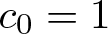 $c_0=1$ and
 $\gamma=1-m$.
This result significantly expands the range of p for which non-existence can be guaranteed, thereby offering a more comprehensive understanding of the behaviour of solutions to this class of problems. The integral condition involving A(t) and the parameter γ plays a crucial role in this analysis, ensuring that the problem adheres to the specified constraints and ultimately leads to the desired non-existence outcome.
Remark 1.11. In theorem 1.9, we consider for simplicity that  $f(u)=u^p$. In fact, we can obtain a similar result by assuming more general that
 $(F_1)$ and
 $(F_3)$ hold and that f is non-decreasing.
Remark 1.12. Theorem 1.9 extends the result obtained by Clément, Manásevich, and Mitidieri in [Reference Clément, Manásevich and Mitidieri7, theorem 3.5], in the sense that taking m = 1, it follows that
 \begin{align*}
u_0^\ast&=\left(\frac{N+\beta}{(N+\alpha-2)^{\beta-\alpha+1}}\right)^{\frac{1}{p+\beta-\alpha+1}}
\\ &\quad\cdot
\left[1-\left(\frac{p(N+\alpha-1)+\alpha-\beta-1}{N+\beta+p+1}\right)^2\right]^{\frac{\beta-\alpha+2}{2(p+\beta-\alpha+1)}},
\end{align*}
which is larger than that presented in [Reference Clément, Manásevich and Mitidieri7]. Therefore, we have enlarged the range of initial data to ensure that any non-negative solution to (1.26) is identically zero.
Finally, inspired by [Reference Alarcón, Garcia-Melian and Quaas1], we investigate the non-existence of solutions to elliptic equations with a general convection term. Specifically, we consider the following problem
 \begin{align}
\begin{cases}
-\text{div}\left({A}(|\nabla u|)\nabla u\right)+\mu u=f(|\nabla u|)+\lambda h(x)&\text{in }B_R,\\
u=0&\text{on }\partial B_R,
\end{cases}
\end{align}
where µ and λ are positive constants, and f and h are given functions that are not necessarily non-negative but satisfy suitable regularity conditions. Meanwhile, A satisfies the following conditions:
 \begin{equation}
\begin{aligned}
&A(t)\in C(\mathbb R_0^+) \cap C^1(\mathbb R^+) ,\\
&A(t) \gt 0 \text{ in }{\mathbb R}_0^+,\quad [tA(t)]' \gt 0 \,\text{in }{\mathbb R}^+,\\
&\limsup_{t\to\infty}[tA(t)]' \lt \infty.
\end{aligned}
\end{equation}
It follows from (A 3)1 that
 \begin{equation}
\lim_{t\to0^+}[tA(t)]'=A(0).
\end{equation}
One example of A that satisfies the properties in (A 3) is  $A(t)=(1+t^2)^{m/2-1}$ for
 $1\leq m\leq2$, with
 \begin{equation*}\lim_{t\to0^+}[tA(t)]'=1\quad\text{and}\quad \lim_{t\to\infty}[tA(t)]'\in\{0,1\},\end{equation*}
indeed  $[tA(t)]'\sim (m-1)t^{m-2}$ as
 $t\to\infty$.
In particular, in [Reference Alarcón, Garcia-Melian and Quaas1], it is considered the case  $A(t)\equiv1$.
Our non-existence result concerning problem (I) is as follows.
Theorem 1.13. Assume (A3),  $f\in C^1({\mathbb R})$ is increasing, while
 $h\in C^1(\overline{B_R})$ is such that
 $\inf_{B_R} h(x) \gt 0$. If µ > 0 and
 \begin{equation*}
\int_1^\infty\frac{sds}{f(s)-f(0)} \lt \infty,
\end{equation*}
then problem (I) does not admit positive radial solutions for suitably large λ.
Remark 1.14. Theorem 1.13 extends the non-existence result stated in part (ii) of [Reference Alarcón, Garcia-Melian and Quaas1, theorem 2] by removing condition  $f(0)=0$, assumed in their study, and introducing a more general operator A. Some simple examples for the function f include
 \begin{equation*}f(t)=\left(a+bt^c\right)^d\quad\text{with } a\geq0,\,b \gt 0,\,c \gt 1,\,d \gt 2/c.\end{equation*}
The article is organized as follows. In §2, we investigate the non-existence of positive radial solutions for the Dirichlet problem (P) and provide detailed proofs for theorem 1.1 and corollary 1.2. Section 3 focuses on the analysis of the Cauchy problem (Q), where we prove theorems 1.4, 1.5, and 1.9. Finally, §4 addresses the non-existence of solutions to the problem (I), including the proof of theorem 1.13.
2. Non-existence results for Dirichlet problem
In this section, we begin by defining weak solutions (distribution) of problem (P).
Definition 2.1. A weak distribution solution of (P) is a non-negative function u of  $C^1(B_R)\cap C(\overline{B_R})$ which verifies
 \begin{equation*}
\int_{B_R}h(|x|){A}(|\nabla u|)\nabla u\cdot\nabla\psi dx=\int_{B_R}g(|x|)f(u)\psi dx
\end{equation*}
for all C 1 functions  $\psi=\psi(x)$ with compact support in BR.
Alternatively, in the radial case, a weak (distribution) solution of (P′) is defined as a non-negative function u that belongs to  $C[0,R]\cap C^1(0,R)$ and satisfies
 \begin{equation*}
\int_0^Ra(r){A}(|u'(r)|)u'(r)\cdot\psi' dr=\int_0^Rb(r)f(u(r))\psi dr
\end{equation*}
for all C 1 functions  $\psi=\psi(r)$ with compact support in
 $[0,R)$. Using distribution arguments, it can be shown that u satisfies
 \begin{equation}
-a(r){A}(|u'(r)|)u'(r)=\int_0^rb(s)f(u(s))ds\quad\text{in }[0,R).
\end{equation}
As the right-hand side of (2.1) is continuously differentiable in r, we conclude that
 \begin{equation}
a(r){A}(|u'(r)|)u'(r)\in C^1(0,R),
\end{equation}
implying that u is a classical solution of problem (P). Therefore, in our case, the definition of weak solution is consistent with that of classical solution.
Lemma 2.2. Assume (A0)2, (F0), and  $(H_0)$. Let
 $u(r)$ be a positive solution of (P′), then we have
 \begin{equation}
u'(0)=0, \quad u'(r) \lt 0 \,\text{in } (0,R].
\end{equation}
Proof. Integrating the equation in (P′) from 0 to r, and by  $a(0)=0$, we obtain
 \begin{equation}
-{A}(|u'|)u'(r)=\frac{1}{a(r)}\int_0^rb(s)f(u(s))ds.
\end{equation}
By L’Hospital’s rule and (1.14)2, being  $f(u(0)) \gt 0$, we have
 \begin{equation*}-\lim_{r\to0^+}{A}(|u'|)u'(r)=f(u(0))\lim_{r\to0^+}\frac{b(r)}{a'(r)}=0.\end{equation*}
Consequently,  $u'(0)=0$ can be deduced by (A 0)2. Furthermore, (2.4) immediately gives
 $u'(r) \lt 0$ in
 $(0,R]$ by (F 0).
The next proposition contains a Pohozaev type identity.
Proposition 2.3. Let  $u(r)$ be a positive solution of (P′). Then for any real constant κ, we have the identity
 \begin{equation}
\begin{aligned}
&\quad \frac{d}{dr}\left[ra(r)\int_0^{\rho(r)} sE(s)ds+rb(r)F(u)+\kappa a(r){A}(\rho)u(r)u'(r)\right]
\\ &
=\left[a(r)+ra'(r)\right]\int_0^{\rho(r)}sE(s)ds+\left[\kappa a(r)-ra'(r)\right]{A}(\rho)\rho^2(r)\\ &\quad
+\left[b(r)+rb'(r)\right]F(u)-\kappa b(r)u(r)f(u),
\end{aligned}
\end{equation}
where
 \begin{equation*}\rho(r)=|u'(r)|,\quad E(t)=\bigl(t {A}(t)\bigl)',\quad F(u)=\int_0^uf(t)dt.\end{equation*}
Proof. Assuming that u is a positive solution of (P′). Since  $\rho(r)=|u'(r)|$, we get
 \begin{equation}
\rho'(r)u'(r)=\rho(r)u''(r),\quad \rho(r)\rho'(r)=u'(r)u''(r).
\end{equation}
In particular, equation in (P′) becomes
 \begin{equation}
b(r)f(u)=-a'(r){A}(\rho(r))u'(r)-
a(r)E(\rho(r))u''(r).
\end{equation}
To proceed, consider the left-hand side of (2.5),
 \begin{align*}
I:&=\frac{d}{dr}\left[ra(r)\int_0^{\rho(r)} sE(s)ds+rb(r)F(u)+\kappa a(r){A}(\rho(r))u(r)u'(r)\right]
\\ &
=\left[a(r)+ra'(r)\right]\int_0^{\rho(r)}sE(s)ds
+ra(r)E(\rho(r))\rho(r)\rho'(r)
\\ &\quad
+\left[b(r)+rb'(r)\right]F(u)
+rb(r)f(u)u'(r)+\kappa a'(r){A}(\rho)u(r)u'(r)
\\ &\quad
+\kappa a(r)\left[\frac{d{A}(\rho)}{d\rho}\rho'(r)u(r)u'(r)
+{A}(\rho)u(r)u''(r)+{A}(\rho(r))\rho^2(r)\right].
\end{align*}
By (2.6)1, we can replace the first two terms inside the last bracket with  $E(\rho)u(r)u''(r)$ to obtain
 \begin{align}
I&
=\left[a(r)+ra'(r)\right]\int_0^{\rho(r)}sE(s)ds
+ra(r)E(\rho)\rho(r)\rho'(r)
\nonumber\\ &\quad
+\left[b(r)+rb'(r)\right]F(u)
+rb(r)f(u)u'(r)+\kappa a'(r){A}(\rho)u(r)u'(r)
\nonumber\\ &\quad
+\kappa a(r)\left[E(\rho)u(r)u''(r)+{A}(\rho)\rho^2(r)\right].
\end{align}
Then, replacing (2.7) into (2.8), we obtain
 \begin{align}
I&=\left[a(r)+ra'(r)\right]\int_0^{\rho(r)}sE(s)ds
+ra(r)E(\rho)\rho(r)\rho'(r)
\nonumber\\ &\quad
+\left[b(r)+rb'(r)\right]F(u)
-ru'(r)\left[a'(r){A}(\rho)u'(r)+a(r)E(\rho)u''(r)\right]
\nonumber\\ &\quad
+\kappa a'(r){A}(\rho)u(r)u'(r)
+\kappa a(r)\left[E(\rho)u(r)u''(r)+{A}(\rho)\rho^2(r)\right]
\nonumber\\ &
=\left[a(r)+ra'(r)\right]\int_0^{\rho(r)}sE(s)ds
\nonumber\\ &\quad
+\left[b(r)+rb'(r)\right]F(u)
+\left[\kappa a(r)-ra'(r)\right]{A}(\rho)\rho^2(r)
\nonumber\\ &\quad
+\kappa a'(r){A}(\rho)u(r)u'(r)
+\kappa a(r)E(\rho)u(r)u''(r),
\end{align}
where we used (2.6)2 in the second equality. By (2.7), the last two terms on the right-hand side of (2.9) can be written as
 \begin{align*}
&\kappa a'(r){A}(\rho)u(r)u'(r)
+\kappa a(r)E(\rho)u(r)u''(r)
=-\kappa b(r) u(r)f(u).
\end{align*}
Therefore, we get (2.5).
Proof of theorem 1.1
Suppose u is a positive radial solution of problem (P). Using (1.5) and (1.15)2 with  $\kappa=\frac{\mu+1}{\eta+1}$, we get
 \begin{equation*}\left[b(r)+rb'(r)\right]F(u)-\kappa b(r)u(r)f(u)\leq\left[(\mu+1)F(u)-\frac{\mu+1}{\eta+1} uf(u)\right]b(r)\leq0.\end{equation*}
Hence, proposition 2.3 with κ as above yields
 \begin{align}
&\quad \frac{d}{dr}\left[ra(r)\int_0^{\rho(r)} sE(s)ds+rb(r)F(u)+\frac{\mu+1}{\eta+1} a(r){A}(\rho)u(r)u'(r)\right]
\nonumber\\ &
\leq\left[a(r)+ra'(r)\right]\int_0^{\rho(r)}sE(s)ds+\left[\frac{\mu+1}{\eta+1} a(r)-ra'(r)\right]{A}(\rho)\rho^2(r):=\Psi(r).
\end{align}
Integrating (2.10) from 0 to R and using  $a(0)=0$,
 $u(R)=0$, and
 $F(u(R))=0$, we obtain
 \begin{equation}
R\,a(R)\int_0^{\rho(R)} sE(s)ds
\leq\int_0^R\Psi(r)dr.
\end{equation}
Now, since  $E(t)=\bigl(t {A}(t)\bigl)'$, by integration by parts, we get
 \begin{equation}
\int_0^{\rho(r)} sE(s)ds=\rho^2(r){A}(\rho(r))-\int_0^{\rho(r)} s{A}(s)ds,
\end{equation}
so that (1.10) gives
 \begin{equation}
\int_0^{\rho(r)} sE(s)ds\le (1-c)\rho^2(r){A}(\rho).
\end{equation}
From (2.10) and (2.13), thanks to the positivity of  $a(r)+ra'(r)$, we deduce that
 \begin{align*}
\Psi(r)&\leq\rho^2(r){A}(\rho)\left\{(1-c)\left[a(r)+ra'(r)\right] +\frac{\mu+1}{\eta+1} a(r)-ra'(r)\right\}\\ &=
\rho^2(r){A}(\rho)\left\{\left(1-c+\frac{\mu+1}{\eta+1}\right)a(r)-cra'(r)\right\}.
\end{align*}
Then, we can use (1.15)1 and condition (1.16) to derive
 \begin{align*}
\Psi(r)\leq\left (1-c+\frac{\mu+1}{\eta+1}-c\lambda\right)a(r)\rho^2(r){A}(\rho)\leq0,
\end{align*}
namely the right-hand side of (2.11) is non-positive.
On the other hand, we note that the left-hand side of (2.11) is positive, being by  $E(s) \gt 0$ for any s > 0 by (A 0)1, and also
 $\rho(R)=|u'(R)| \gt 0$ by (2.3)2. This induces a contradiction and concludes the proof.
Proof of corollary 1.2
Let  $a(r)=r^{N+\alpha-1}$ and
 $b(r)=r^{N+\beta-1}$. Then,
 $(H_0)$ is satisfied if
 \begin{align*}
N+\alpha \gt 1 \quad\text{and}\quad \beta-\alpha+1 \gt 0,
\end{align*}
while  $(H_1)$ holds with
 \begin{equation*}
\lambda= N+\alpha-1\quad\text{and}\quad \mu= N+\beta-1.
\end{equation*}
By theorem 1.1, we obtain that problem (1.17) does not possess any positive radial solution if (1.16) holds with the above values of λ and µ, namely if (1.18) is satisfied.
Proof of example 1.3
Let  $A(t)=(1+t^2)^{m/2-1}$,
 $m\geq1$, and
 $f(u)=u^p$. Then, conditions (1.5) and (1.10) are satisfied with
 $\eta=p$ and
 $c=1/2$ for
 $1\leq m \lt 2$,
 $c=1/m$ for
 $m\geq2$, indeed when
 $m\geq2$ inequality (1.10) becomes
 \begin{equation*}(1+s^2)^{m/2}-1\ge cm(1+s^2)^{m/2-1}s^2,\end{equation*}
thus choosing  $c=1/m$ and multiplying for
 $(1+s^2)^{-m/2+1}$, we reach
 \begin{equation*}1\ge(1+s^2)^{-m/2+1},\end{equation*}
which is verified for any  $s\ge0$ being
 $-m/2+1\le0$ since
 $m\geq2$. On the other hand, if
 $1\leq m \lt 2$, choosing
 $c=1/2$, then inequality (1.10) becomes
 \begin{equation*}(1+s^2)^{m/2}-1- \frac 12(1+s^2)^{m/2-1}s^2 \gt 0,\end{equation*}
which holds since the function
 \begin{equation*}\varphi(s)=1+\frac{1}2s^2-(1+s^2)^{-m/2+1}\end{equation*}
is such that  $\varphi(0)=0$ and
 $\varphi'(s)=s\bigl[1-(2-m)(1+s^2)^{-m/2}\bigr] \gt 0$.
3. Non-existence results for Cauchy problem
In this section, we consider radial solutions u of (Q), namely positive functions  $u=u(r)$ such that
 \begin{align}
-\big(a(r){A}(|u'|)u'(r)\big)'= b(r)f(u(r)),\quad r \gt 0.
\end{align}
3.1. Proof of theorem 1.4
Before starting the proof of theorem 1.4, we introduce some lemmas. The next one can be proved under a weaker assumption on the sign respect to (F 0) because we deal with radial ground states.
Lemma 3.1. Assume (A1),  $(H_2)$, and
 $f(u)\geq0$ for
 $u$ near 0. Let u be a positive solution of problem (Q′) tending to zero as
 $r\to\infty$. Then there exists
 $r_1 \gt 0$ such that
 \begin{equation}
u'(r) \lt 0\quad\text{for }r\geq r_1.
\end{equation}
Moreover,
 \begin{equation}
\lim_{r\to\infty}u'(r)=0,
\end{equation}
and the function
 \begin{equation}
W(r)=ra_0(r){A}(|u'|)u'(r)+\bar{a}M(N+\alpha-2)u(r)
\end{equation}
is non-negative and non-increasing in  $(r_1,\infty)$, where M from (A1).
Proof. Since  $u(r)\to0$ as
 $r\to\infty$ and
 $f(u)\geq0$ for u near 0, there exists
 $r_0 \gt 0$ such that
 $f(u)\geq0$ for
 $r\geq r_0$. Hence, by (Q′)
 \begin{equation*}\Big(\mathcal L(r):=a(r){A}(|u'|)u'(r)\Big)'\leq0\quad\text{for }r\geq r_0,\end{equation*}
and  $\mathcal L(r)$ is a negative decreasing function in
 $[r_0,\infty)$. Since u ′ obviously cannot be non-negative in
 $(\overline r, \infty)$ for some
 $\overline r \gt r_0$, otherwise
 $u(r)\ge u(\overline {r}) \gt 0$ in
 $(\overline r, \infty)$ contradicts u → 0 as
 $r\to\infty$, it follows that
 $\mathcal L(r^*) \lt 0$ for some
 $r^* \gt \overline r$, so that
 \begin{equation}
\mathcal L(r)\to\text{negative limit (possibly }-\infty)
\end{equation}
as  $r\to\infty$, hence there exists
 $r_1 \gt r_0$ such that
 $u'(r) \lt 0$ for
 $r\geq r_1$. This proves (3.1).
Next, we show that  $u'\to0$ as
 $r\to\infty$. Otherwise, for any ɛ > 0, there exists
 $r_2 \gt r_1$ such that
 $|u'(r)| \gt \varepsilon$ when
 $r \gt r_2$. In turn, we have
 \begin{equation*}-u(r)+u(r_2)\geq r-r_2,\quad r \gt r_2.\end{equation*}
By letting r tends to  $\infty$, we find a contradiction with the fact that u → 0 as
 $r\to\infty$. Thus we derive (3.2).
By (Q′), (1.19)1, and (3.1), we obtain for  $r\geq r_1$,
 \begin{align*}
b(r)f(u)&
=-r^{N+\alpha-2}\big(ra_0(r){A}(|u'|)u'(r)\big)'-(N+\alpha-2)r^{N+\alpha-2}a_0(r){A}(|u'|)u'(r)
\\ &
\leq-r^{N+\alpha-2}\big(ra_0(r){A}(|u'|)u'(r)\big)'-\bar{a}M(N+\alpha-2)r^{N+\alpha-2}u'(r),
\end{align*}
where in the last inequality we used (1.19)2 and the condition (A 1). Therefore
 \begin{align*}
r^{-(N+\alpha-2)}b(r)f(u)\leq -\big(ra_0(r){A}(|u'|)u'(r)\big)'-\bar{a}M(N+\alpha-2)u'(r)=-W'(r)
\end{align*}
for  $r\geq r_1$. This shows that W(r) is non-increasing in
 $(r_1,\infty)$. It remains to prove that W is non-negative in
 $(r_1,\infty)$. Suppose by contradiction that there exist
 $r_3 \gt r_1$ and k < 0 such that
 $W(r_3) \lt k$. By the fact that W(r) is non-increasing in
 $(r_1,\infty)$, then
 $W(r)\leq k$ for all
 $r \gt r_3$, which implies
 \begin{equation*}ra_0(r){A}(|u'|)u'(r)\leq k-\bar{a}M(N+\alpha-2)u(r)\leq k,\end{equation*}
since  $N+\alpha-2 \gt 0$. Thus, for all
 $r \gt r_3$, we obtain
 \begin{equation*}u'(r)\leq \frac{k}{ra_0(r){A}(|u'|)}\leq\frac{k}{\bar{a}Mr}\end{equation*}
and integrating from r 3 to r, we have
 \begin{equation*}u(r)-u(r_3)\leq \frac{k}{\bar{a}M}\ln\frac{r}{r_3}.\end{equation*}
Since k < 0, this yields  $\lim_{r\to\infty}u(r)=-\infty$, which contradicts the fact that u is a positive function. Therefore
 $W(r)\geq0$ for all
 $r \gt r_1$. This completes the proof of lemma 3.1.
Lemma 3.2. Assume (A1),  $(H_2)$, and
 $(F_1)$. Let
 $u$ be a positive solution of problem (Q′) and tending to zero as
 $r\to\infty$, then we have
 \begin{align}
u(r)\leq Cr^{-\frac{\beta-\alpha+2}{p-1}}\quad\text{for large enough }r.
\end{align}
Proof. Let  $u=u(r)$ be a positive radial solution of (Q′). Let r 1 is the same as in lemma 3.1. Without loss of generality, we can suppose that
 \begin{equation}
f(u)\geq c_1u^p\quad\text{for }r\geq r_1.
\end{equation}
Integrating (Q′) from r 1 to r gives
 \begin{equation}
a(r){A}(|u'(r)|)u'(r)-a(r_1){A}(|u'(r_1)|)u'(r_1)=-\int_{r_1}^rb(s)f(u(s))ds.
\end{equation}
Hence by (1.20), (3.1), and (3.7)
 \begin{align}
\int_{r_1}^rb(s)f(u(s))ds&\geq c_1\int_{r_1}^rs^{N+\beta-1} b_0(s)u^p(s)ds
\nonumber\\ &\geq \underline{b}c_1u^p(r)\int_{r_1}^rs^{N+\beta-1} ds=\frac{\underline{b}c_1}{N+\beta}\left(r^{N+\beta}-r_1^{N+\beta}\right)u^p(r).
\end{align}
Choosing  $r\geq2r_1$ and noting that
 $u'(r_1) \lt 0$ by (3.1), it follows from (3.8) and (3.9) that
 \begin{equation*}
- a(r){A}(|u'(r)|)u'(r)\geq \frac{\underline{b}c_1}{N+\beta}\left(1-2^{-(N+\beta)}\right)r^{N+\beta}u^p(r).
\end{equation*}
This, together with lemma 3.1, yields
 \begin{align*}
\bar{a}M(N+\alpha-2)u(r)&\geq-ra_0(r){A}(|u'(r)|)u'(r) \\ &
\geq\frac{\underline{b}c_1}{N+\beta}\left(1-2^{-(N+\beta)}\right)r^{\beta-\alpha+2}u^p(r)\quad\text{for }r\geq2r_1,
\end{align*}
which allows us to derive (3.6) as required.
Remark 3.3. If we assume that  $f(u)\geq0$ for all u > 0 instead of u near 0 in lemma 3.1, and let u be a positive solution of (Q′) not necessarily tending to zero as
 $r\to\infty$, we can have the same results as in lemma 3.1 by putting
 $r_1=0$.
Furthermore, we can obtain the following result by taking  $r_1=0$ in the above proof, precisely.
Lemma 3.4. Assume (A1),  $(H_2)$, and
 $(F_2)$. Let
 $u$ be a positive solution of problem (Q′), then we have
 \begin{align}
u(r)\leq Cr^{-\frac{\beta-\alpha+2}{p-1}}\quad\text{for all }r \gt 0,
\end{align}
where  $C=\left[\frac{\bar{a}M(N+\alpha-2)(N+\beta)}{\underline{b}c_1}\right]^{1/(p-1)}$.
Now we use lemmas 3.2 and 3.4 to finish the proof of theorem 1.4.
Proof of theorem 1.4 (i)
Assume  $(F_1)$ and that u is a positive solution of (Q′) tending to zero as
 $r\to\infty$, then by (3.4), namely
 $\mathcal L(r)\leq-C$ for large r, where C is some positive constant, we have
 \begin{equation*}r^{N+\alpha-1} u'(r)\leq-\frac{C}{a_0(r){A}(|u'|)}\leq-\frac{C}{\bar{a}M}, \quad r\gt \gt 1,\end{equation*}
by (1.19), (3.2), and (A 1). Integrating this relation from any fixed value r to  $\infty$, and using
 $\lim_{r\to\infty}u(r)=0$, yields
 \begin{equation}
u(r)\geq\frac{C}{\bar{a}M(N+\alpha-2)}r^{-(N+\alpha-2)}
\end{equation}
for all sufficiently large r.
Suppose that  $1 \lt p \lt {2_\ast}_{\alpha,\beta}-1=\frac{N+\beta}{N+\alpha-2}$, then
 \begin{equation*}N+\alpha-2 \lt \frac{\beta-\alpha+2}{p-1},\end{equation*}
so that (3.11) contradicts lemma 3.2, namely that  $ u(r)\leq Cr^{-\frac{\beta-\alpha+2}{p-1}}$ for large enough r > 0. Hence no solution of (Q′) can exist.
It remains to show the same result when  $p={2_\ast}_{\alpha,\beta}-1$. Using the assumption
 $(F_1)$ and (3.11), we have for large enough r,
 \begin{align*}\left(a(r){A}(|u'|)u'(r)\right)'& =-b(r)f(u)\leq-c_1b(r)u^p(r)\leq-\underline{b}c_1r^{N+\beta-1-p(N+\alpha-2)}\\ &=-\underline{b}c_1r^{-1}.\end{align*}
Integrating this inequality from a sufficiently large s to r, where r > s, leads to
 \begin{equation*}a(r){A}(|u'(r)|)u'(r)-a(s){A}(|u'(s)|)u'(s)\leq C\ln\frac{s}{r}.\end{equation*}
Therefore, we conclude that
 \begin{equation*}a(r){A}(|u'(r)|)u'(r)\to-\infty\quad\text{as }r\to\infty.\end{equation*}
Together with the fact that  $u'\to0$ as
 $r\to\infty$ and (A 1), it follows that
 \begin{equation*}a(r)u'(r)\to-\infty\quad\text{as }r\to\infty.\end{equation*}
Hence, for any n > 0, there exists  $r_n=r_n(n) \gt 0$ such that
 \begin{equation*}a(r)u'(r)\leq-n\quad\text{for any }r\geq r_n.\end{equation*}
Hence
 \begin{equation*}r^{N+\alpha-1} u'(r)\leq-n/a_0(r)\leq-n/\bar{a}\quad\text{for any }r\geq r_n.\end{equation*}
Integrating this inequality from any fixed value  $r\geq r_M$ to
 $\infty$, and using
 $\lim_{r\to\infty}u(r)=0$, we get
 \begin{equation*}r^{N+\alpha-2}u(r)\geq\frac{n}{\bar{a}(N+\alpha-2)}.\end{equation*}
However, lemma 3.2 shows that  $ r^{N+\alpha-2}u(r)\leq C$ for large enough r > 0, leading to a contradiction by the arbitrariness of n. Therefore, the proof of theorem 1.4 (i) is complete.
The proof of theorem 1.4 (ii) is similar by using remark 3.3 and lemma 3.4 instead of lemma 3.2.
3.2. Proof of theorem 1.5
To finish the proof of theorem 1.5, we also need the following two lemmas.
Lemma 3.5. Assume (A0)1, (A1),  $(H_2)$,
 $(F_1)$, and
 $(F_3)$ hold. Let
 $u$ be a positive solution of (Q′) tending to zero as
 $r\to\infty$, then there exists a constant C > 0 such that for large enough
 $r \gt 0$, we have
 \begin{align}& ra(r){A}(|u'|)u^{\prime 2}(r) \leq CY_1(r),\end{align}
 \begin{align}&
ra(r) \int_0^{|u'(r)|}sA(s)ds\leq CY_1(r),\end{align}
 \begin{align}&
a(r){A}(|u'|)u(r)|u'(r)|\leq CY_1(r),\end{align}
 \begin{align}&
rb(r)F(u)\leq CY_2(r),\end{align}
where
 \begin{equation*}Y_1(r):=r^{N+\alpha-2-\frac{2(\beta-\alpha+2)}{p-1}}\qquad{and }
\qquad Y_2(r):=r^{N+\beta-\frac{(\bar{p}+1)(\beta-\alpha+2)}{p-1}}.\end{equation*}
In particular, if  $1 \lt p \lt 2^\ast_{\alpha,\beta}-1$, we have
 \begin{equation}
\lim_{r\to\infty}Y_1(r)=0.
\end{equation}
If  $\bar{p} \gt \frac{(N+\beta)(p-1)}{\beta-\alpha+2}-1$, we have
 \begin{equation}
\lim_{r\to\infty}Y_2(r)=0.
\end{equation}
Proof. From lemma 3.1, by the non-negativity of W(r), we obtain
 \begin{equation}
0\le ra_0(r){A}(|u'|)|u'(r)|\leq \bar{a}M(N+\alpha-2)u(r), \quad r \gt r_1.
\end{equation}
In turn
 \begin{equation*}r^2a_0(r){A}(|u'|)^2u^{\prime 2}(r)\leq\frac{\bar{a}^2(N+\alpha-2)^2u^2(r)}{a_0(r)}\end{equation*}
so that, by (A 1), for r large, there exists a constant  $c_3 \gt 0$ such that
 \begin{equation*}r^2a_0(r){A}(|u'|)u^{\prime 2}(r)
\leq \frac{c_3\bar{a}^2(N+\alpha-2)^2}{\underline{a}}u^2(r).\end{equation*}
Then
 \begin{equation*}r^{N+\alpha}a_0(r){A}(|u'|)u^{\prime 2}(r)
\leq Cr^{N+\alpha-2}u^2(r),\end{equation*}
yielding (3.12) by virtue of (3.10). By (A 0)1 and (2.12), we have  $A(|u'|)u^{\prime 2}(r)\ge \int_0^{|u'(r)|}sA(s)ds$, thus (3.13) follows.
Next, to obtain (3.14), we observe that from (3.18), we have
 \begin{equation*}r^{N+\alpha-1} a_0(r){A}(|u'|)u(r)|u'(r)|
\leq \bar{a}(N+\alpha-2)r^{N+\alpha-2}u^2(r),\end{equation*}
Finally, since  $\lim_{r\to\infty}u(r)=0$, then condition
 $(F_3)$ implies that
 $F(u)\leq c_2u^{\bar{p}+1}$ for large enough r. In turn,
 \begin{equation*}rb(r)F(u(r))\leq c_2r^{N+\beta} b_0(r)u^{\bar{p}+1}\leq\bar{b} c_2r^{N+\beta-\frac{(\bar{p}+1)(\beta-\alpha+2)}{p-1}}\end{equation*}
for large enough r. This proves (3.15).
To prove (3.16), we observe that when
 \begin{equation*}p \lt 2^\ast_{\alpha,\beta}-1=\frac{N-\alpha+2\beta+2}{N+\alpha-2},\end{equation*}
we have
 \begin{equation*}p-1 \lt \frac{2(\beta-\alpha+2)}{N+\alpha-2}.\end{equation*}
Then
 \begin{equation*}N+\alpha-2-\frac{2(\beta-\alpha+2)}{p-1} \lt N+\alpha-2-2(\beta-\alpha+2)\frac{N+\alpha-2}{2(\beta-\alpha+2)}=0,\end{equation*}
which implies
 \begin{equation*}\lim_{r\to\infty}Y_1(r)=\lim_{r\to\infty}r^{N+\alpha-2-\frac{2(\beta-\alpha+2)}{p-1}}=0.\end{equation*}
Similarly, we can prove (3.17).
Remark 3.6. In the case in which  $f(u)=u^p$ in
 $\mathbb R_0^+$, p > 1, then
 $(F_1)$ and
 $(F_3)$ hold with
 $c_1=1$,
 $c_2=1/(p+1)$ and
 $\overline p=p$. In particular
 \begin{equation*}p=\bar{p} \gt \frac{(N+\beta)(p-1)}{\beta-\alpha+2}-1\end{equation*}
trivially holds being equivalent to
 \begin{equation*}p(N+\alpha-2)-N-2\beta+\alpha-2 \lt 0,\end{equation*}
namely,  $p \lt 2^\ast_{\alpha,\beta}-1$.
Now, to prove theorem 1.5, we need the differential version of the Pohozaev type identity (2.5), given in proposition 2.3, precisely.
Lemma 3.7. Assume  $(H_2)$ and let
 $u$ be a positive solution of (Q′). Then, for a real constant κ we have, for all r > 0,
 \begin{equation}\begin{aligned}
&\quad \int_0^r\left[b(s)+sb'(s)\right]F(u(s))ds-\kappa\int_0^r b(s)f(u(s))u(s)ds\\ &\quad
+(\kappa+1)\int_0^ra(s){A}(|u'(s)|)u^{\prime 2}(s)ds-\int_0^r\left[a(s)+sa'(s)\right] \int_0^{|u'(s)|}tA(t)dt\,ds
\\
&=rb(r)F(u(r))+ra(r){A}(|u'(r)|)u^{\prime 2}(r) +\kappa a(r){A}(|u'(r)|)u(r)u'(r)
\\ &\quad
- ra(r) \int_0^{|u'(r)|}sA(s)ds.
\end{aligned}
\end{equation}
Proof of theorem 1.5
Suppose that u is a positive solution of problem (Q′) tending to zero as  $r\to\infty$. From lemma 3.7, the identity (3.19) holds. Taking
 $r\to\infty$, all the terms in the right-hand side of (3.19) tend to zero by (3.12), (3.13), (3.14), and (3.15) in lemma 3.5, respectively. Thus
 \begin{align}
&\quad \int_0^\infty\left\{\left[b(s)+sb'(s)\right]F(u(s))-\kappa b(s)f(u(s))u(s)\right\}ds\nonumber\\ &
+\int_0^\infty\left[(\kappa+1)a(s){A}(|u'(s)|)u^{\prime 2}(s)- \left[a(s)+sa'(s)\right] \int_0^{|u'(s)|}tA(t)dt\right]ds=0.
\end{align}
By  $(H_2)$ and
 $(H_3)$, we find
 $sb'(s)\geq(\mu_1+N+\beta-1) b(s)$ for all s > 0. Since also
 $(\eta+1)F(u)\geq uf(u)$ for all u > 0, we can choose
 \begin{equation*}\kappa=\frac{\mu_1+N+\beta}{\eta+1},\end{equation*}
such that
 \begin{equation*}\left[b(s)+sb'(s)\right]F(u(s))-\kappa b(s)f(u(s))u(s)\geq0\quad\text{for all }s \gt 0.\end{equation*}
Hence by (3.20),
 \begin{equation*} \int_0^\infty a(s)\left[ (\kappa+1){A}(|u'(s)|)u^{\prime 2}(s)-\frac{a(s)+sa'(s)}{a(s)} \int_0^{|u'(s)|}tA(t)dt\right]ds\leq0,
\end{equation*}
which gives, thanks to (1.13),
 \begin{equation*}\int_0^\infty a(s)\left[ (\kappa+1)- c\frac{a(s)+s a'(s)}{a(s)} \right]A(|u'(s)|)|u'(s)|^2dt\,ds\leq0.\end{equation*}
By  $(H_2)$ and
 $(H_3)$, we also find
 $sa'(s)\leq(\lambda_1+N+\alpha-1) a(s)$, thus
 \begin{align}
\int_0^\infty a(s) \bigl[\kappa+1- c\bigl(\lambda_1+N+\alpha \bigr)\bigr] A(|u'(s)|)|u'(s)|^2 ds\leq0,
\end{align}
which yields a contradiction being
 \begin{equation*}\kappa+1- c\bigl(\lambda_1+N+\alpha \bigr)=
\frac{\mu_1+N+\beta}{\eta+1}+1- c\bigl(\lambda_1+N+\alpha \bigr) \gt 0\end{equation*}
since
 \begin{equation*}
\eta \lt \frac{\mu_1+N+\beta}{c(\lambda_1+N+\alpha)-1}-1.
\end{equation*}
This concludes the proof of the theorem.
3.3. Proof of theorem 1.9
First, we present the following lemma, which estimates the first derivative  $u'(r)$ of radial solutions to problem (1.24) and, then we apply it to problem (1.26) with
 $1\leq m \lt 2$.
Lemma 3.8. Assume (A1),  $N+\alpha \gt 2$,
 $\beta-\alpha+1 \gt 0$, and
 $A(t)\geq1/\sqrt{1+t^2}$ for t > 0. If u is a positive radial solution of problem (1.24) with
 $f(u)=u^p$, then
 \begin{align}
|u'(r)|\leq\begin{cases}
\frac{C_1r^{-\frac{p+\beta-\alpha+1}{p-1}}}{\sqrt{1-C_1^2r^{-\frac{2(p+\beta-\alpha+1)}{p-1}}}}&\text{if }r \gt C_1^{\frac{p-1}{p+\beta-\alpha+1}},\\
\frac{u_0^p}{(N+\beta)\sqrt{\nu}}r^{\beta-\alpha+1}&\text{if }0 \lt r\leq\left(\frac{(N+\beta)\sqrt{1-\nu}}{u_0^p}\right)^{\frac{1}{\beta-\alpha+1}},
\end{cases}
\end{align}
for any  $\nu\in(0,1)$, where
 $C_1:=[M(N+\alpha-2)]^{\frac{p}{p-1}}(N+\beta)^{\frac{1}{p-1}}$.
Proof. Let u be a positive radial solution of problem (1.24) with  $f(u)=u^p$. We observe from (3.10), (3.18), and remark 3.3 that
 \begin{align*}
A(|u'|)|u'|\leq \frac{M(N+\alpha-2)}{r}\ u(r)\leq C_1r^{-\frac{\beta-\alpha+2}{p-1}-1}\quad\text{for all } r \gt 0,
\end{align*}
where  $C_1:=[M(N+\alpha-2)]^{\frac{p}{p-1}}(N+\beta)^{\frac{1}{p-1}}.$ This gives, by noting that
 $A(t)\geq1/\sqrt{1+t^2}$ for t > 0,
 \begin{equation*}\frac{u^{\prime 2}}{1+u^{\prime 2}}\leq C_1^2r^{-\frac{2(p+\beta-\alpha+1)}{p-1}}\quad\text{for all } r \gt 0.\end{equation*}
Thus, we have
 \begin{equation*}u^{\prime 2}\leq\frac{C_1^2r^{-\frac{2(p+\beta-\alpha+1)}{p-1}}}{1-C_1^2r^{-\frac{2(p+\beta-\alpha+1)}{p-1}}},\end{equation*}
provided that
 \begin{equation*}r \gt C_1^{\frac{p-1}{p+\beta-\alpha+1}}.\end{equation*}
This proves (3.22)1.
To prove (3.22)2, we see that u verifies
 \begin{align}
-\left(r^{N+\alpha-1}A(|u'|)u'\right)'=r^{N+\beta-1} u^p,\quad r \gt 0.
\end{align}
Integrating (3.23) from 0 to r and by using the monotonicity of u, we obtain
 \begin{align*}
A(|u'|)|u'|\leq\frac{u_0^p}{r^{N+\alpha-1}}\int_0^rs^{N+\beta-1}ds
=\frac{u_0^p}{N+\beta}r^{\beta-\alpha+1}.
\end{align*}
Using  $A(t)\geq1/\sqrt{1+t^2}$ for t > 0, we get
 \begin{align*}
\frac{|u'|}{\sqrt{1+u^{\prime 2}}}\leq
\frac{u_0^p}{N+\beta}r^{\beta-\alpha+1}.
\end{align*}
Now we can repeat word by word the proof of lemma 4.7 in [Reference Filippucci and Zheng14] to prove (3.22)2.
Now we are ready to prove theorem 1.9, to this aim we restrict our attention to the case  $A(t)=(1+t^2)^{m/2-1}$, a further generalization has been discussed in §1.
Proof of theorem 1.9
We can assume that  $p \gt {2_\ast}_{\alpha,\beta}$ according to theorem 1.4.
Now suppose that u is a positive radial solution of problem (1.26). Then, the identity (3.19) with  $a(r)=r^{N+\alpha-1}$,
 $b(r)=r^{N+\beta-1}$, and
 $\kappa=\frac{N+\beta}{p+1}$ reads as
 \begin{align}
&\quad\frac{N+\beta+p+1}{p+1}\int_0^rs^{N+\alpha-1}A(|u'|)u^{\prime 2}ds
-(N+\alpha)\int_0^rs^{N+\alpha-
1}\int_0^{|u'(s)|}tA(t)dtds
\nonumber\\ &
=\frac{1}{p+1}r^{N+\beta}u^{p+1}+r^{N+\alpha}A(|u'|)u^{\prime 2}
+\frac{N+\beta}{p+1}r^{N+\alpha-1}A(|u'|)uu'
\nonumber\\ &\quad
-r^{N+\alpha}\int_0^{|u'(r)|}sA(s)ds.
\end{align}
As r tends to infinity, lemma 3.5 confirms that the terms on the right-hand side of (3.24) converge to zero, yielding
 \begin{equation*}\frac{N+\beta+p+1}{p+1}\int_0^\infty s^{N+\alpha-1}A(|u'|)u^{\prime 2}ds
-(N+\alpha)\int_0^\infty s^{N+\alpha-
1}\int_0^{|u'(s)|}tA(t)dtds
=0,\end{equation*}
namely
 \begin{align}
\int_0^\infty s^{N+\alpha-1}\left[\frac{N+\beta+p+1}{(p+1)(N+\alpha)}A(|u'|)u^{\prime 2}-\int_0^{|u'(s)|}tA(t)dt\right]ds
=0.
\end{align}
If we can prove
 \begin{align}
\frac{N+\beta+p+1}{(p+1)(N+\alpha)}A(|u'|)u^{\prime 2}\geq\int_0^{|u'(r)|}tA(t)dt\quad\text{for all } r \gt 0,
\end{align}
namely that the integrand on the left-hand side of (3.25) is non-negative, in turn, by (3.25), it follows that
 \begin{equation*}\frac{N+\beta+p+1}{(p+1)(N+\alpha)}A(|u'|)\equiv\frac1{u^{\prime 2}}\int_0^{|u'(r)|}tA(t)dt\quad\text{for all } r \gt 0.\end{equation*}
This equality, along with the asymptotic estimates in (3.2), leads to
 \begin{equation*}\frac{N+\beta+p+1}{(p+1)(N+\alpha)}\lim_{t\to0 ^+}A(t)=\lim_{t\to0 ^+}\frac{\int_0^tsA(s)ds}{t^2}=\lim_{t\to0^+}\frac{tA(t)}{2t}=\frac 12\lim_{t\to0^+}A(t),\end{equation*}
which implies, by  $\lim_{t\to0^+}A(t)=A(0)=1$,
 \begin{equation*}\frac{N+\beta+p+1}{(p+1)(N+\alpha)}=\frac{1}{2}.\end{equation*}
Thus, we derive
 \begin{equation*}p+1=\frac{2(N+\beta)}{N+\alpha-2}=2^\ast_{\alpha,\beta},\end{equation*}
creating a contradiction since  $p \lt 2^\ast_{\alpha,\beta}-1$, and thus, we can conclude the proof of the theorem.
Hence, it remains to prove (3.26). Let
 \begin{equation*}c= \frac{N+\beta+p+1}{(p+1) (N+\alpha)}.\end{equation*}
Now, observe that, since  $A(t)=(1+t^2)^{m/2-1}$, then (3.26) holds if
 \begin{equation*}\varphi(t)=(cm-1)t^2-1+ (1+t^2)^{-m/2+1}\ge0, \quad t\ge0.\end{equation*}
In particular,  $\varphi(0)=0$ and
 $\varphi'(t)=t\bigl[2(cm-1)+(2-m) (1+t^2)^{-m/2}\bigr].$ In turn, trivially
 $\varphi'(t) \gt 0$ in
 $\mathbb R^+$ for any
 $c\ge1/m$ (namely,
 $p\leq m^\ast_{\alpha,\beta}-1$) and
 $1 \lt m \lt 2$. Now, if
 $0 \lt c\le 1/2 \lt 1/m$ (namely,
 $p\geq 2^\ast_{\alpha,\beta}-1$), being m < 2, then
 $\varphi(0)=0$ but
 \begin{equation*}\varphi'(t)\le t[2(cm-1)+(2-m)] = t(2c-1)m\le 0.\end{equation*}
Thus, if  $c\le 1/2$, inequality (3.26) cannot occur. It remains to investigate if (3.26) holds for
 $1/2 \lt c \lt 1/m$ (namely,
 $m^\ast_{\alpha,\beta}-1 \lt p \lt 2^\ast_{\alpha,\beta}-1$) and
 $1 \lt m \lt 2.$ In this case, there exists
 $t^* \gt 0$ such that
 $\varphi(t^*)=\max_{\mathbb R^+} \varphi(t)$, indeed since
 $c \gt 1/2$, then
 $\frac{2(1-cm)}{2-m} \lt 1$ hence
 $\varphi'(t^*)=0$ for
 $t^*$ satisfying
 \begin{equation*}
1+{t^*}^2=\biggl(\frac{2(1-cm)}{2-m}\biggr)^{-2/m}( \gt 1).
\end{equation*}
It follows that  $t^*$ is a maximum for φ, since
 $\varphi'(t) \gt 0$ for
 $t\sim 0^+$ being
 $c \gt 1/2$. On the other hand,
 $\varphi(\infty)=-\infty$ yielding the existence of
 $t^{**} \gt t^*$ such that
 $\varphi(t^{**})=0$, consequently for (3.26) to be valid, roughly along the solution, it must occur
 $|u'(r)|\in(0,t^{**})$.
Next, we make use of lemma 3.8 to control that  $|u'(r)|$ cannot be too large for any r > 0. By the non-negative of the function
 $-(1+t)^m+mt(1+t)^{m-1}+1$ in
 ${\mathbb R}_0^+$ for
 $1 \lt m \lt 2$, we have
 \begin{equation*}-t^2-1+(1+t^2)^{-m/2+1}\geq-mt^2\frac{(1+t^2)^{m/2}}{(1+t^2)^{m/2}+1},\quad t\geq0.\end{equation*}
Thus
 \begin{equation*}\varphi(t)\geq cmt^2-mt^2\frac{(1+t^2)^{m/2}}{(1+t^2)^{m/2}+1}.\end{equation*}
Therefore, to prove  $\varphi(|u'(r)|)\geq0$ for all
 $r\geq0$, it is enough to prove
 \begin{equation}
\left(1+u^{\prime 2}(r)\right)^{m/2}\leq\Lambda:=\frac{c}{1-c}=\frac{N+\beta+p+1}{p(N+\alpha-1)+\alpha-\beta-1},\quad r\geq0.
\end{equation}
Specifically,  $\Lambda \gt 0$ follows from
 $p \gt 2_{*\alpha,\beta}-1$ while
 $\Lambda \gt 1$ is due to
 $p \lt 2^\ast_{\alpha,\beta}-1$.
To prove (3.27), we can first use (3.22)1 to obtain
 \begin{equation*}u^{\prime 2}(r)\leq\frac{C_1^2r^{-\frac{2(p+\beta-\alpha+1)}{p-1}}}{1-C_1^2r^{-\frac{2(p+\beta-\alpha+1)}{p-1}}}\leq\Lambda^{\frac{2}{m}}-1,\end{equation*}
provided that
 \begin{equation*}r\geq\left(\frac{C_1\Lambda^{1/m}}{\sqrt{\Lambda^{2/m}-1}}\right)^{\frac{p-1}{p+\beta-\alpha+1}}:= K.\end{equation*}
This ensures that (3.27) is valid for all  $r\geq K$. To prove (3.27) for
 $r\in(0,K)$, we apply (3.22)2 with
 $\nu=1/\Lambda^{\frac {2} {m}}$, leading to
 \begin{equation*}
u^{\prime 2}(r)\leq \frac{\Lambda^{\frac {2} {m}} K^{2(\beta-\alpha+1)}}{(N+\beta)^2}u_0^{2p}\leq\Lambda^{\frac {2} {m}}-1\quad\text{for } r\in(0,K),
\end{equation*}
provided that
 \begin{equation*}
0 \lt u_0\leq u_0^\ast:=\left(\frac{(N+\beta)\sqrt{\Lambda^{2/m}-1}}{\Lambda^{1/m} K^{\beta-\alpha+1}}\right)^{1/p}.
\end{equation*}
Upon substituting the values of K and Λ into  $u_0^\ast$ as described above, we directly obtain (1.27). This completes the proof of (3.27).
4. Non-existence results for equations with a general convection term
To prove theorem 1.13, we first establish the following uniqueness result for problem (I) given in §1.
Theorem 4.1. Assume (A3),  $f\in C^1({\mathbb R})$, and
 $\mu\geq0$. Then, problem (I) has at most one solution.
The uniqueness theorem follows directly from the comparison lemma presented below.
Lemma 4.2. Under the assumptions of theorem 4.1, if  $u_1,u_2\in W^{1,\infty}(B_R)$ satisfying
 \begin{align}
\begin{cases}
-\text{div}\left(A(|\nabla u_1|)\nabla u_1\right)+\mu u_1-f(|\nabla u_1|)\\ \quad
\leq-\text{div}\left(A(|\nabla u_2|)\nabla u_2\right)+\mu u_2-f(|\nabla u_2|)&\text{in }B_R,\\
u_1\leq u_2&\text{on }\partial B_R,
\end{cases}
\end{align}
then
 \begin{equation}
u_1\leq u_2\quad\text{in }B_R.
\end{equation}
Proof. The complete proof can be found in [Reference Corsato, De Coster, Flora and Omari10, lemma 2.1]. Here we provide a brief part of the proof, mainly pointing out the differences with [Reference Corsato, De Coster, Flora and Omari10].
Let  $w=u_1-u_2$. Our aim is to prove that
 $w\leq0$ in BR. To this end, we define, for every
 $k\geq0$,
 \begin{equation*}\phi_k=(w-k)^+\in W_0^{1,\infty}(B_R).\end{equation*}
Multiplying both sides of (4.1) by ϕk and then integrating over BR, we get
 \begin{align}
&\quad\int_{B_R}A(|\nabla u_1|)\nabla u_1\cdot\nabla\phi_kdx+\mu\int_{B_R} u_1\phi_k dx-\int_{B_R} f(|\nabla u_1|)\phi_k dx\nonumber\\ &\leq
\int_{B_R}A(|\nabla u_2|)\nabla u_2\cdot\nabla\phi_kdx+\mu\int_{B_R} u_2\phi_k dx-\int_{B_R} f(|\nabla u_2|)\phi_k dx.
\end{align}
Consider the function  $g:[0,1]\to{\mathbb R}$ defined as
 \begin{equation*}g(s)=\int_{B_R}A\left(|\nabla (u_2+sw)|\right)\nabla (u_2+sw)\cdot\nabla\phi_kdx,\end{equation*}
where we simplify the notation by omitting the indication of the dependence of g on k. Note that based on the definition of ϕk, we have  $\nabla w\cdot\nabla\phi_k=|\nabla\phi_k|^2$. Applying the mean value theorem, we find that there exists
 $\theta\in (0,1)$ such that
 \begin{align}
&\quad\int_{B_R}\big[A(|\nabla u_1|)\nabla u_1-A(|\nabla u_2|)\nabla u_2\big]\cdot\nabla\phi_kdx= g(1)-g(0)=g'(\theta)\nonumber\\ &
=\int_{B_R}A(|\nabla (u_2+\theta w)|)\nabla w\cdot\nabla\phi_kdx
\nonumber\\ &\quad
+\int_{B_R}
A'(|\nabla (u_2+\theta w)|) \frac{\nabla (u_2+\theta w) \cdot \nabla w}{|\nabla (u_2+\theta w)|}\,
\nabla (u_2+\theta w)\cdot\nabla\phi_kdx
\nonumber\\ &
=\int_{B_R}A(|\nabla (u_2+\theta w)|)|\nabla\phi_k|^2dx+\int_{B_R}
A'(|\nabla (u_2+\theta w)|)\big|\nabla(u_2+\theta w)\big| |\nabla\phi_k|^2dx
\nonumber\\ &
=\int_{B_R}[tA(t)]'\big|_{t=|\nabla(u_2+\theta w)|}|\nabla\phi_k|^2dx
\geq d_1\int_{B_R}|\nabla\phi_k|^2dx,
\end{align}
where
 \begin{equation*}d_1:=\inf_{0 \lt t \lt \|\nabla u_1\|_\infty+\|\nabla u_2\|_\infty}[tA(t)]'.\end{equation*}
By condition (A 3), we have  $0 \lt d_1 \lt \infty$.
Moreover, since  $w\phi_k=\phi_k^2$, we have
 \begin{equation}
\mu\int_{B_R} w\phi_kdx=\mu\int_{B_R}\phi_k^2dx\geq0,
\end{equation}
and, by the mean value theorem again, for some  $\eta\in \bigl(|\nabla u_1|, |\nabla u_2|\bigr)$ it holds
 \begin{align}
\int_{B_R}\big[f(|\nabla u_1|)-f(|\nabla u_2|)\big]\phi_kdx
&=\int_{B_R} f'(\eta)\big(|\nabla u_1|-|\nabla u_2|\big)\phi_kdx
\nonumber\\ &\leq d_2\int_{B_R}\big||\nabla u_1|-|\nabla u_2|\big|\phi_kdx\nonumber\\ &\leq d_2\int_{B_R}|\nabla w|\phi_kdx=d_2\int_{B_R}|\nabla\phi_k|\phi_kdx,
\end{align}
where we have used  $\big||a|-|b|\big|\le |a-b| $ for all
 $a,b\in\mathbb R$ and
 \begin{equation*}d_2:=\sup_{0 \lt \eta \lt \|\nabla u_1\|_\infty+\|\nabla u_2\|_\infty}|f'(\eta)| \lt \infty\end{equation*}
being  $f\in C^1({\mathbb R})$. It follows from (4.3), (4.4), (4.5), and (4.6) that
 \begin{equation*}d_1\int_{B_R}|\nabla\phi_k|^2dx\leq-\mu\int_{B_R}\phi_k^2dx+d_2\int_{B_R}|\nabla\phi_k|\phi_kdx\leq d_2\int_{B_R}|\nabla\phi_k|\phi_kdx.\end{equation*}
Let  $\mathcal M=d_1d_2^{-1}$, we get
 \begin{align}
\mathcal M\int_{B_R}|\nabla\phi_k|^2dx\leq\int_{B_R}|\nabla\phi_k|\phi_kdx.
\end{align}
For the remaining part of the proof, we can repeat word by word the argument below (2.6) in lemma 2.1 in [Reference Corsato, De Coster, Flora and Omari10], yielding  $w\leq0$ in BR.
Thanks to the uniqueness result, given by theorem 4.1, we can prove a non-existence result for positive solutions of
 \begin{align}
\begin{cases}
-\left(r^{N-1}A(|u'|)u'(r)\right)'+r^{N-1}\mu u=r^{N-1}\left(f(|u'|)+a\right),\quad 0 \lt r \lt R,\\
u'(0)=0,\quad u(R)=0,
\end{cases}
\end{align}
when a is sufficiently large, by using similar arguments in lemma 6 in [Reference Alarcón, Garcia-Melian and Quaas1], but adapted to our problem involving a general differential operator .
Theorem 4.3. Assume (A3) and that  $f\in C^1({\mathbb R})$ is increasing. If µ > 0 and
 \begin{equation}
\int_1^\infty\frac{sds}{f(s)-f(0)} \lt \infty,
\end{equation}
then problem (4.8) does not admit positive solutions for large values of a, so that  $a+f(0) \gt 0$.
Proof. Assume that u is a positive solution to (4.8), arguing as in lemma 3.1 in [Reference Corsato, De Coster, Flora and Omari10], by  $(A_3)$, then
 $u\in C^2[0,R)\cap C^3(0,R)$ and satisfies
 \begin{align}
-\left[A(|u'(r)|)u'(r)\right]'
-\frac{N-1}{r}A(|u'(r)|)u'(r)+\mu u=f\left(|u'|\right)+a,\quad 0 \lt r \lt R.
\end{align}
By letting  $r\to0^+$, since
 $u'(0)=0$ and recalling (1.28), we have
 \begin{align*}
&\lim_{r\to0^+}\left\{\left[A(|u'(r)|)u'(r)\right]'
+\frac{N-1}{r}A(|u'(r)|)u'(r)\right\}
\\ &\quad =N\lim_{r\to0^+}\left[A(|u'(r)|)u'(r)\right]'=Nu''(0)\lim_{t\to0^+}[tA(t)]'=NA(0)u''(0).
\end{align*}
This together with (4.10) yields
 \begin{equation}
u''(0)=-\frac{a+f(0)-\mu u(0)}{NA(0)}.
\end{equation}
We claim that
 \begin{equation}
u(0) \lt \frac{a+f(0)}{\mu}\qquad\text{and}\qquad u'(r) \lt 0\,\text{for }r\in(0,R).
\end{equation}
Indeed, if  $u(0)=\left(a+f(0)\right)/\mu$. Then, due to uniqueness, we have
 $u\equiv \left(a+f(0)\right)/\mu$ for
 $r\in[0,R]$, which contradicts the boundary condition
 $u(R)=0$. If
 $u(0) \gt \left(a+f(0)\right)/\mu$, then from (4.11),
 $u''(0) \gt 0$, indicating that u increases in a right neighbourhood of 0, since
 $u'$ is locally strictly increasing with
 $u'(0)=0$. Given the boundary condition
 $u(R)=0$, then u must attain a maximum at some
 $r_0\in(0,R)$, leading to
 \begin{equation*}u(r_0) \gt \frac{a+f(0)}{\mu},\qquad u'(r_0)=0,\qquad u''(r_0)\leq0.\end{equation*}
This, however, contradicts the equation in (4.10), being the left-hand side strictly greater than  $f(0)+a \gt 0$. We, therefore, conclude that
 $u(0) \lt \left(a+f(0)\right)/\mu$, and once again, by the equation, u initially decreases and cannot reach a minimum in
 $(0,R)$, indeed by boundary conditions u should also have a maximum yielding the above contradiction. Thus, u always decreases, proving (4.12).
Next, we shall prove
 \begin{equation}
u''(r) \lt 0\quad\text{for }r\in[0,R).
\end{equation}
Observe that  $u''(0) \lt 0$ by (4.11) and (4.12)1. Assume now that for some
 $r_1\in(0,R)$ we have
 $u''(r_1)=0$, then
 $u'''(r_1)\geq0$. On the other hand, by differentiating equation (4.10) and evaluating in
 $r=r_1$, and noting (4.12)2, we obtain
 \begin{equation*}
-[tA(t)]'\big|_{t=|u'(r_1)|}u'''(r_1)
+\frac{N-1}{r_1^2}A(|u'(r_1)|)u'(r_1)+\mu u'(r_1)=0,\end{equation*}
which implies  $u'''(r_1) \lt 0$ being
 $u'(r_1) \lt 0$,
 $A(t) \gt 0$ and
 $[tA(t)]' \gt 0$ for all t > 0 from condition (A 3), a contradiction. Thus
 $u''(r) \lt 0$ for all
 $r\in[0,R)$.
Integrating the equation in (4.8) from 0 to r, and using (4.12) and (4.13) as well as the fact that f is increasing, we obtain
 \begin{align}
-r^{N-1}A(|u'|)u'(r)&=\int_0^rs^{N-1}\left[-\mu u(s)+f(-u'(s))+a\right]ds
\nonumber\\ &\leq\left[-\mu u(r)+f(-u'(r))+a\right]\int_0^rs^{N-1}ds \nonumber\\ &=\frac{r^N}{N}\left[-\mu u(r)+f(-u'(r))+a\right].
\end{align}
Combining (4.10) and (4.14), we derive
 \begin{align}
-[tA(t)]'\big|_{t=|u'(r)|}u''(r)
\geq\frac{1}{N}\left[-\mu u(r)+f(-u'(r))+a\right].
\end{align}
Let  $M_1:=\sup_{t \gt 0} [tA(t)]'$. It follows from (A 3) that
 $M_1\in{\mathbb R}^+$. Since
 $u'' \lt 0$, we obtain from (4.15) that
 \begin{align}
-u''(r)
\geq\frac{1}{NM_1}\left[-\mu u(r)+f(-u'(r))+a\right].
\end{align}
Let us now assume the existence of a sequence  $a_n\to\infty$ for which a positive solution un corresponding to (4.8) exists with
 $a=a_n$. For simplicity, we can assume without loss of generality that an is an increasing sequence. Define
 $v_n=\left(a_n+f(0)\right)/\mu-u_n$, then
 $v_n',v_n'' \gt 0$ in
 $(0,R)$ and
 \begin{align*}
\begin{cases}
\left[A(|v_n'|)+|v_n'|A'(|v_n'|)\right]v_n''+\frac{N-1}{r}A(|v_n'|)v_n'=\mu v_n+f\left(v_n'\right)-f(0),\\
v_n'(0)=0,\quad v_n(R)=\left(a_n+f(0)\right)/\mu.
\end{cases}
\end{align*}
We assert that  $v_n(0)$ is bounded as
 $n\to\infty$. From (4.16), it follows that
 \begin{equation}
v_n''\geq\frac{1}{NM_1}\left(\mu v_n+f(v_n')-f(0)\right)\geq\frac{1}{NM_1}\left(\mu v_n(0)+f(v_n')-f(0)\right).
\end{equation}
Integrating this inequality from 0 to R, we obtain
 \begin{equation*}\frac{R}{NM_1}\leq\int_0^R\frac{v_n''(s)}{\mu v_n(0)+f(v_n'(s))-f(0)}ds=\int_0^{v_n'(R)}\frac{dt}{\mu v_n(0)+f(t)-f(0)}.\end{equation*}
Thus, if  $v_n(0)\to\infty$, this would lead to a contradiction because the integral on the right-hand side would tend to zero, contradicting the positive lower bound
 $R/(NM_1)$.
Given the increasing nature of solutions in terms of a (due to uniqueness), it follows that  $v_n(0)$ approaches some finite limit
 $\bar{v} \gt 0$. Consequently, vn converges to z, the unique solution to
 \begin{align*}
\begin{cases}
\left[A(|z'|)+|z'|A'(|z'|)\right]z''+\frac{N-1}{r}A(|z'|)z'=\mu z+f\left(z'\right)-f(0),\\
z(0)=\bar{v},\quad z'(0)=0,
\end{cases}
\end{align*}
which is defined in a maximal interval  $[0,T)$. If
 $T \lt \infty$, either
 $\lim_{r\to T}z(r)=\infty$ or
 $\lim_{r\to T}z'(r)=\infty$ must occur. By comparison, since
 $v_n(0)$ approaches
 $\overline v$ monotonically increasing, we also conclude that
 $v_n\leq z$ in
 $\left[0,\min\{T,R\}\right)$.
We claim that T < R. Indeed, if  $T\geq R$, then by definition
 $v_n(R)=\left(a_n+f(0)\right)/\mu\leq z(R)$, implying T = R and
 $z(R)=\infty$, being an increasing. This is impossible since, according to (4.17) and
 $v_n(0) \gt 0$, we have
 \begin{equation}z''\geq\frac{1}{NM_1} \left(f(z')-f(0)\right).\end{equation}
Multiplying this inequality by  $z'$ and integrating from
 $R/2$ to
 $R-\varepsilon$ (where ɛ is a small positive value) results in
 \begin{align*}\int_{\frac{R}{2}}^{R-\varepsilon}\frac{z'(r)}{NM_1}dr&\leq\int_{\frac{R}{2}}^{R-\varepsilon}\frac{z''(r)z'(r)}{f(z'(r))-f(0)}dr=\int_{z'(R/2)}^{z'(R-\varepsilon)}\frac{sds}{f(s)-f(0)} \\ & \lt \int_{z'(R/2)}^\infty\frac{sds}{f(s)-f(0)}.\end{align*}
Thus
 \begin{equation*}\frac{z(R-\varepsilon)-z(R/2)}{NM_1} \lt \int_{z'(R/2)}^\infty\frac{sds}{f(s)-f(0)}.\end{equation*}
Taking ɛ → 0, we find a contradiction with (4.9), since the left-hand side goes to  $\infty$, leading us to conclude that T < R and at the same time
 $z(T) \lt \infty$, repeating the argument above. Thus,
 $\lim_{r\to T}z(r)=\infty$ cannot occur if
 $T \lt \infty$.
Now assume that  $T \lt \infty$ and
 $\lim_{r\to T}z'(r)=\infty$. Select a small ϵ > 0. Given that
 $v_n'\to z'$ uniformly in
 $[0,T-\epsilon]$ by the Arzelà–Ascoli theorem, for sufficiently large n, it holds that
 \begin{equation}
v_n'(T-\epsilon)\geq z'(T-\epsilon)-\epsilon.
\end{equation}
On the other hand, by (4.17) and  $v_n(0) \gt 0$, we have
 \begin{equation}
v_n''\geq\frac{1}{NM_1}\left(f(v_n')-f(0)\right).
\end{equation}
Upon dividing (4.20) by  $f(v_n')-f(0)$ and integrating from
 $T-\epsilon$ to R, being T < R, and applying (4.19), we get
 \begin{equation*}\frac{1}{NM_1}(R-T+\epsilon)\leq\int_{v_n'(T-\epsilon)}^{v_n'(R)}\frac{ds}{f(s)-f(0)} \lt \int_{z'(T-\epsilon)-\epsilon}^\infty\frac{ds}{f(s)-f(0)}.\end{equation*}
Letting ϵ → 0, then the right-hand side goes to zero due to  $z'(T)\to\infty$ and that
 $[f(s)-f(0)]^{-1}\in L^1(\infty)$ which follows from
 $s[f(s)-f(0)]^{-1}\in L^1(\infty)$. Consequently, we approach
 $R\leq T$, a contradiction indicating that
 $T=\infty$ for every solution, thus no solutions to (4.8) for any R > 0 can exist for sufficiently large values of a.
Proof of theorem 1.13
Assume that problem (I) has a positive radial solution u for some  $\lambda\geq a/h_0$, where
 $h_0=\inf_{B_R}h(x)$ and a is sufficiently large. Then u is a supersolution to the problem
 \begin{align}
\begin{cases}
-\left(r^{N-1}A(|u'|)u'(r)\right)'+r^{N-1}\mu u=r^{N-1}\left(f(|u'|)+\lambda h_0\right),\quad 0 \lt r \lt R,\\
u(R)=0.
\end{cases}
\end{align}
Since u = 0 is a subsolution of problem (4.21), it follows that there exists a solution u to problem (4.21) (by using the results in [Reference Deuel and Hess12] with q = 2). However, theorem 4.3 states that problem (4.21) does not admit positive solutions. This leads to a contradiction.
Acknowledgements
Filippucci is a member of the Gruppo Nazionale per l’Analisi Matematica, la Probabilità e le loro Applicazioni (GNAMPA) of the Istituto Nazionale di Alta Matematica (INdAM) and was partly supported by PRIN 2022 ‘Advanced theoretical aspects in PDEs and their applications’ Prot. 2022BCFHN2. Zheng was supported by the China Scholarship Council (No. 202206200049).



