1. Introduction
In activity recognition, the main objectives are determining “What is the action?” and “Where is the action in the video?” The solution to the former relies on the latter, the localization problem. Once the critical target is located, the classification of actions becomes straightforward. HAR research is gaining attention within the computer vision domain and extends beyond human-computer interaction to applications such as assisted living and healthcare [Reference Hassan, Ullah, Hossain and Alelaiwi1], security [Reference Mekruksavanich and Jitpattanakul2], video surveillance [Reference Cengiz, Birant, Cengiz, Birant and Baysari3], home monitoring [Reference Mihoub4], and robotics [Reference Yu, Xu, Zhang and Ou5]. Therefore, activity recognition methods are directly linked to their implementation domains. Developing reliable remote patient activity recognition systems has been a critical focus of scientific research. Long-term benefits of remote patient monitoring include early and accurate disease detection, regular patient follow-up, prevention of worsening conditions and premature deaths, and reduced hospitalization rates while allowing patients to maintain their daily routines. Hospital environments present unique challenges for human activity recognition (HAR) systems, including occlusion, view invariance, cluttered backgrounds, illumination variations, and scale variation [Reference Perez-Gamboa, Sun and Zhang6]. Occlusion occurs when objects obstruct the view of individuals or activities, hindering accurate monitoring. View invariance challenges arise due to differences in camera angles and perspectives, necessitating robust algorithms that identify actions regardless of viewpoint changes [Reference Jiang, Lu, Lu and Zhou7].
Cluttered backgrounds, common in hospitals, can interfere with recognition accuracy by introducing visual distractions. Hospital environments often exhibit varying lighting conditions due to natural and artificial light sources and shadows from equipment and furniture [Reference Perez-Gamboa, Sun and Zhang6]. This variability can lead to inconsistencies in image quality and color distribution. Fluorescent lighting prevalent in hospitals may introduce flickering effects, potentially impacting the performance of video-based activity recognition systems. Addressing these challenges is essential for enhancing the reliability and effectiveness of HAR systems in hospital environments, ultimately supporting improved patient care and clinical decision-making. HAR systems are utilized in medical environments for various purposes, including ensuring surgical precision, patient monitoring, interpreting language signs [Reference Zhu, Xiao, Li, Yang, Tan, Zhou, Lin and Wen8–Reference Karsh, Laskar and Karsh10], and supervising medication administration [Reference Bibbò and Vellasco11].
Shaochen Wang et al. [Reference Wang, Zhou, Li, Li and Kan12] proposed a multi-modal transformer-based framework to enable robots to perform object grasping based on human language instructions. Their approach addresses challenges such as ambiguous queries and complex visual scenes by integrating visual and linguistic information for precise spatial localization and grasp planning. The framework was validated through ablation studies on multiple datasets and real-world experiments involving natural language-driven human-robot interactions. Intelligent technologies have also been incorporated into homes, workplaces, and manufacturing facilities to improve human living and working conditions in digital settings. Given that RGB cameras are highly packed, noisy, and obscure in some circumstances, as well as their sensitivity to changes in brightness and hue, it can be challenging to discern motion from such data [Reference Al-Janabi and Salman13]. Indra Kishor et al. [Reference Kishor, Mamodiya, Saini and Bossoufi14] proposed an adaptive human-robot interaction system that integrates voice recognition, emotional context detection, and reinforcement learning to enhance robot performance in dynamic, noisy environments. Their architecture uses self-learning mechanisms to improve decision-making and adaptability over time. The system achieved high accuracy and reliability, making it suitable for real-world applications like assistive robotics and smart environments. The growing population of elderly individuals demands efficient and affordable healthcare solutions, prompting the development of assisted living technologies. Monitoring elderly activities is crucial to detect emergencies early and ensure timely intervention. Daily activities can be analyzed using ambient or wearable sensors to identify deviations from standard patterns. This proactive approach allows for preventing health issues such as dehydration and malnutrition. Additionally, immediate alerts can be sent to healthcare facilities or family members in emergencies such as falls or pain. Depending on the monitoring context and individual needs, various audio, visual, environmental, and physiological sensors can be deployed to collect behavioral and personal data. The collected data is stored in a database system for analysis, enabling the detection of abnormal activities or dangerous situations that warrant intervention.
Activity monitoring can be achieved through sensor-based or vision-based approaches [Reference A.Silva, GarciaBermudez and Casilari15]. In vision-based methods [Reference Beddiar, Nini, Sabokrou and Hadid16], raw video streams are used for action classification. Initially, the video stream is converted into a sequence of consecutive frames, serving as input for classification models. To manage complexity and time constraints, frames may be batched instead of processed individually. However, challenges such as scale variation, background artifacts, and illumination fluctuations persist. Integrating deep learning (DL) into HAR has revolutionized feature extraction from vision and sensor data. DL autonomously extracts abstract attributes through multiple hidden layers, significantly reducing the effort required for feature identification compared to traditional AI algorithms [Reference Tian, Qu, Li, Sun, Li, Liang and Zhang17]. Moreover, DL structures have demonstrated effectiveness in unsupervised and reinforcement learning scenarios. This paper introduces an indoor activity recognition system that accurately identifies various activities despite challenging conditions such as diverse lighting and cluttered backgrounds. Balmik et al. [Reference Balmik, Paikaray, Jha and Nandy18] proposed Kinect-based framework that enables the NAO robot to recognize and imitate human motions with improved stability. A novel adaptive balancing technique (ABTN) is introduced to control dynamic CoM during motion. Joint angles are adjusted using a pitch-roll control algorithm to maintain balance. A 7-layer 1D-CNN with zero padding achieves 95% accuracy in motion recognition, outperforming traditional models. Emptoz et al. [Reference Emptoz and Lamure19] propose a novel pretopological model for pattern recognition, rooted in the fundamental concept of “neighbour,” enabling a unified approach to diverse problems like clustering, recognition, and image skeletonization. This model offers more than descriptive insight by providing a perceptive and topological framework. Huang et al. [Reference Huang, Wu, Liang, Sun and Dong20] introduce a pretopological model for pattern recognition, originally developed for analyzing complex economic systems, and now applied to unify tasks like clustering, image skeletonization, and learning set optimization. Centered on the core concept of “neighbourhood,” the model offers a perceptive, topological framework that goes beyond description to support diverse pattern recognition challenges. While existing research often relies on smart wearable sensors or multiple cameras for patient activity monitoring, these approaches have significant drawbacks. Wearable sensors can cause discomfort for patients, who may need to wear them continuously, leading to inconvenience and irritation. Moreover, using multiple cameras increases complexity and poses challenges related to device synchronization, complicating the implementation and maintenance of monitoring systems. Vaibhav Malviya et al. [Reference Malviya and Kala21] propose a 3D person-tracking method for robotic guides using a Particle Filter with a “follow-the-robot” model. It handles occlusions and sharp turns by predicting motion, even with a moving camera. Tested in indoor scenarios, it outperforms Kalman Filter, long short-term memory (LSTM), and 2D tracking methods. Furthermore, the need for enhanced performance arises from the inability to process full frames using existing video analysis techniques efficiently. In robotics, HAR is critical for enabling service robots to perceive and interpret human activities in real-world settings, such as patient monitoring in hospitals or assistive tasks in homes. By improving activity recognition under challenging conditions like illumination variations and cluttered backgrounds, our work directly contributes to robotic perception and autonomy, facilitating applications such as autonomous patient assistance and fall detection [Reference Malviya and Kala22].
In the survey, it’s evident that the field of Activity Recognition still requires improvement. Few datasets adequately address illumination variation, with some either inaccessible or recorded in overly simplistic backgrounds. Only a handful of datasets suitable for patient monitoring contain activities relevant to patient care. The existing literature primarily focuses on action recognition using smart sensors or watches, lacking accuracy, precision, and real-time computational efficiency in vision-based approaches. Our research introduces a vision-based method utilizing a single RGB camera and curates a new dataset recorded in diverse illumination and cluttered backgrounds. Our research aimed to decrease computation time for real-time patient recognition under varying illumination conditions while maintaining high accuracy.
The proposed approach eliminates traditional methods by using a single RGB camera, minimizing patient discomfort and simplifying device setup. It introduces innovative solutions to tackle illumination variations and cluttered backgrounds, including the illuminationRevive Architecture and a hybrid activity detection architecture. Remarkably, the illuminationRevive Architecture boasts a processing time of only 0.8 s, with an average activity detection time of 1.05 s. These efficient processing times highlight the applicability of the algorithms for real-time operation, minimizing latency and facilitating prompt intervention in crucial scenarios. The Main contribution of the papers is
-
1. IlluminationRevive, a proposed image restoration architecture, has been designed to address the varying illumination conditions in activity detection. This architecture is designed to effectively revive and enhance the visual quality of underexposed images, providing a robust solution for activity detection in adverse lighting conditions.
-
2. Hand-engineered kinematic features such as the angle between informative joints, the distance between joints, and the candidate’s height have been used along with the joint motion information to differentiate between similar types of gesture activities.
-
3. Patient-related activity data is limited. To overcome this, we created a new dataset called LNMIIT-SMD (The LNM Institute of Information Technology-Skeleton Motion Dataset) for monitoring patient activity indoors. This dataset covers seven specific physical activities: eating, walking, exercising, vomiting, experiencing a headache, performing situps, and engaging in a handshake.
-
4. A novel fusion model was employed, utilizing SMHI and ResNet50-ViT independently to extract spatial features, focusing on spatial patterns and global context. Additionally, CNN-BiLSTM was integrated to capture spatiotemporal characteristics by incorporating body joints and hand-engineered kinematic features.
-
5. A rigorous comparative analysis of state-of-the-art DL models and the proposed model has been done to validate the proposed model’s accuracy.
The paper is divided into five sections. Section 2 covers the literature review pertaining to the problem statement. Section 3 discusses the proposed methodology, focusing on the DL algorithm applied to HAR frameworks. Section 4 presents the results and discussions. Finally, Section 5 explains the conclusion and future scope of the paper.
2. Literature review
The realm of action recognition within computer vision has witnessed substantial exploration, manifesting in a rich and ever-growing body of research literature. This field not only fuels academic inquiry but also finds practical applications in various domains, including video surveillance, human-computer interaction, sports analytics, healthcare monitoring, and autonomous systems. Gumaei et al. [Reference Gumaei, Hassan, Alelaiwi and Alsalman23] proposed a human action detection system based on sensor methodology. Gated recurrent units and a hybrid deep-learning model are used for classification. GRU is used to fix the vanishing gradient problem. Traditional, publicly available datasets have been examined with the new plan. This research discovered that the suggestion is more efficient than the current state-of-the-art techniques. The proposed system can be thoroughly examined using more complex and substantial datasets. Gu et al. [Reference Gu, Chung, Chignell, Valaee, Zhou and Liu24] presented a survey paper on human action recognition using still images instead of sequential images. They also discussed various state-of-the-art DL models for classifying the action. Blank used a space-time 3D template MEI based on retrieved human silhouettes to solve the activity classification challenge. Such all-encompassing approaches, meanwhile, are less sensitive to measuring the potential variance in the movies, such as view variability and occlusions. Abdul-Azim et al. [Reference Abdul-Azim and Hemayed25] presented a trajectory-based local feature extractor to identify human action in the video series. Brun et al. [Reference Brun, Percannella, Saggese and Vento26] suggest an approach based on the string kernel to recognize activities of various lengths and timelines in real time. They used a string termed an “aclet” to represent an action, and the Gaussian kernel has been used to characterize how similar these “aclets” are.
By embedding skeleton coordinates into depth frames and extracting features using a spatiotemporal pyramid on a partitioned collection of action sequences, Ji et al. [Reference Malviya and Kala22] developed a hybrid technique. However, these techniques are performing satisfactorily but are less able to deal with environmental changes, including camera jitters, occlusion, and variations in illumination. The initial stage in learning automated features [Reference Tehrani, Yadollahzadeh-Tabari, Zehtab-Salmasi and Enayatifar27] proposed a deep multilayer bidirectional long-short memory (BiLSTM) architecture for human activity detection. Three publicly available datasets, i.e., AReM, Mhealth, and PAMAP2, have been used for Comprehensive investigations and to evaluate the performance of the proposed framework. Sain et al. [Reference Sain, Laskar, Singha and Saini28] proposed a novel hybrid DL model by combining a CNN, a bidirectional LSTM unit, and a fully connected layer for activity identification. The suggested model builds unique guided features using the preprocessed skeleton coordinates and their distinctive geometrical and kinematic aspects. Ji et al. [Reference Huang, Wu, Liang, Sun and Dong20] first introduced converting from raw RGB frames. This technique is based on 3D CNN for video analysis of human action. However, because of the rigid design, such a paradigm accepts set input frames and is less effective for videos of various lengths. Zisserman and Simoyan [Reference Simonyan and Zisserman29] proposed a two-stream deep model that inputs raw data to the trained system, RGB frames, and an optical flow robust learning model. Das et al. [Reference Das and Birant30] suggested that the HAR-MIL technique portrays human activities in a novel way: as a collection of multiple wearable sensors such as gyroscope, magnetometer, accelerometer, and linear acceleration. The suggested HAR-MIL technique demonstrated effectiveness across 50 participant-based and sensor-position-based activity recognition datasets. The experimental results and classification accuracy of HAR-MIL is 99.23%. A novel method for human action recognition in 2D sequences was introduced in [Reference Deotale, Verma, Suresh, Srivastava, Kumar and Jangir31]. It relies on straightforward identification of human activity features using video sequences and real-time vision tracking. Human movements are utilized in the multifunctional human walking detection system proposed in [Reference Semwal, Gupta and Lalwani32]. IMU sensors have been used to track the candidates’ various gaits. For the purpose of categorizing activities, numerous combinations of DL models have been explored; A multi-input hybrid DL model for HAR was proposed in [Reference Dua, Singh and Semwal33]. Andriluka et al. [Reference Andriluka, Pishchulin, Gehler and Schiele34] introduced the MPII Human Pose dataset, a benchmark for 2D human pose estimation, containing approximately 25,000 images with annotated body joints. Their work provides a comprehensive evaluation of pose estimation algorithms, reporting metrics like Percentage of Correct Keypoints (PCK) to assess accuracy. The dataset’s diversity in activities and occlusions makes it a robust standard for validating pose estimation models, including those like MediaPipe used in our study. Cao et al. [Reference Cao, Hidalgo, Simon, Wei and Sheikh35] developed OpenPose, a real-time multi-person 2D pose estimation system using Part Affinity Fields (PAFs) to model joint associations. OpenPose achieves robust performance on COCO and MPII datasets, with PCK scores often exceeding 70% for keypoint detection. Its ability to handle multiple individuals makes it a strong baseline for comparison with MediaPipe in our context. Moreover, empirical observations on wearable sensors, which include accelerometers and gyroscopes, collect data on human activity. The proposed accuracy of the framework was 95%. CNN and LSTM have been incorporated into a deep architecture by [Reference Yadav, Tiwari, Pandey and Akbar36]. Tut et al. [Reference Tu, Zang, Duan, Jiang, Zhao, Jiang and Liu37] proposed multi-feature-based orthogonal graph convolution network (MFOGCN), incorporating innovative features like hybrid spectral transform and mask-aware multiple attention, offering improved prediction accuracy by capturing both local transient features and global motion trends. Extensive evaluations on datasets such as Human 3.6M, AMASS, and 3DPW demonstrate the superior effectiveness of MFOGCN compared to other existing methods.
Jia et al. [Reference Jia, Yang, Zhao, Wu and Zhang38] suggested MPA-GNet, an innovative strategy to strengthen 3D HPE performance, which consists of 3 concurrent multiple-scale subsection networks (PMS-Net). Testing analyses on seeking datasets (Human3.6M and HumanEva-I) showcase the model’s competitive edge and show its effectiveness compared to the most advanced 3D HPE techniques. The authors extract cylindrical coordinates and the Euclidean distances between normalized joints through principal component analysis, which minimizes the feature’s dimensions. The principal component analysis and statistical characteristics are used to execute HAR, following the suggestions that are made in [Reference Ashwini, Amutha and raj39] and globally contextualized attention (LSTM) [Reference Liu, Wang, Hu, Duan and Kot40]. Liao et al. [Reference Liao, Zhao, Liu, Ivanov, Xiong and Yan41] presented a multilayer ResGCNN (Graph Convolutional Neural Network) residual structure to deal with the sensor-based HAR difficulties. The deep transfer learning tests utilizing the ResGCNN model demonstrate excellent transferability and few-shot learning performance. Table I presents a list of the datasets used in the research. Table I presents some research on existing methods for recognizing human activity. Sun et al. [Reference Sun, Jia, Zhu, Liu and Yu42] suggested an innovative approach that revolves around unified spatiotemporal modeling: the Decoupled Spatio-Temporal Grouping Transformer (DSTGFormer). Over two broad datasets, DSTGFormer performs more efficiently than prior approaches, exhibiting improved computational effectiveness and recognition accuracy. Sudhir Gaikwad et al. [Reference Gaikwad, Bhatlawande, Shilaskar and Solanke43] presented a computer vision-based HAR system for ALS; it overcomes sensor-based system limitations by utilizing key-joint data rather than images. Efficiently detecting sitting, standing, walking, lying, and falling, the system employs a decision tree, random forest, support vector machine, and ensemble methods for implementation.
Taxonomy of activity recognition literature.

Existing methods in HAR often struggle to handle environmental changes such as camera jitters, occlusion, and illumination variations, indicating a need for more robust models [Reference Du, Wang and Wang50, Reference Jalal, Kamal and Kim51]. Recent literature predominantly emphasizes action recognition using smart sensors or watches [Reference Parmar, Bhardwaj, Garg, Kapoor and Mishra44, Reference Ullah, Muhammad, Haq and Baik46, Reference Wei and Wang55, Reference Davidashvilly, Cardei, Hssayeni, Chi and Ghoraani56], exhibiting deficiencies in accuracy, precision, and real-time computational efficiency compared to vision-based approaches. Moreover, few datasets adequately address illumination variation, with some either inaccessible or recorded in overly simplistic backgrounds [Reference Parmar, Bhardwaj, Garg, Kapoor and Mishra44–Reference Davidashvilly, Cardei, Hssayeni, Chi and Ghoraani56]. The dataset used in recent work contains fewer patient monitoring activities, and some are inaccessible. Some techniques, like those relying on 3D CNNs, also lack flexibility in accepting input frames of varying lengths, highlighting the necessity for more adaptable models [Reference Shahroudy, Ng, Yang and Wang49]. There is a gap in the utilization of comprehensive feature sets for activity recognition, suggesting the potential for developing hybrid models [Reference Singh and Vishwakarma52, Reference Muhammad, Mustaqeem, Imran, Sajjad, Kiran, Sannino and de Albuquerque53, Reference Khan, Afzal and Lee54] that integrate multiple types of features.
The proposed work addresses several limitations in the field of activity recognition, particularly about varying illumination and complex background environments. Incorporating additional kinematic features enhances the algorithm’s robustness, especially in challenging conditions like illumination variation and cluttered backgrounds. Furthermore, the work fills the gap in diverse visual datasets for recognizing normal patient activities. Notably, the average detection time of the complete methodology is around 0.75 s, meeting the requirement for real-time detection. Some of the images of the test sample that are not part of the training are shown in Figure 1.
Sample images of real-time testing videos.

3. Proposed method
This research presents an innovative hybrid framework for observing and recognizing individual physical activities in an indoor scenario. Additionally, we curated a unique dataset and conducted a comprehensive ablation analysis. This section outlines the internal structure of the proposed study, details the chosen dataset, and presents a comparative analysis. The design of the proposed method is visually represented in Figure 2.
3.1. Dataset collection and preparation
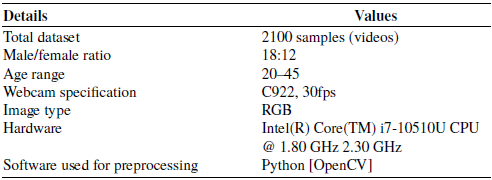
This subsection presents a detailed overview of the data collection and processing methodologies. We collected our self-generated dataset, named LNMIIT-SMD, which includes seven activities recorded in an indoor environment. The dataset details are summarized in Table II.
Participants are instructed to perform activities for 10 s each. Each activity task is repeated 10 times by each candidate, resulting in 70 samples per individual and 300 samples for each activity. The dataset was intentionally created in an indoor environment under varying light conditions and complex backgrounds to improve recognition accuracy. Several constraints were followed during the dataset collection process, including:
-
1. The distance from the camera to the target candidate should range from three to a maximum of 5 m.
-
2. Patients should be between the ages of 20 and 45, with the condition that they do not have Parkinson’s or paralysis.
-
3. Both participants should be visible during the two-person activity.
Dataset collection and preprocessing.

Skeleton joints based activity classification methodology.

3.2. Preprocessing and feature extraction
Before proceeding to further feature extraction, a series of preprocessing steps has been applied to enhance the quality of the data and extract meaningful features.
-
1. Individual frames are extracted from the video to convert the video data into a sequence of images.
-
2. The pixel values of the frames are normalized to ensure consistency in lighting conditions across different videos. This helps in reducing the effects of illumination variations on the recognition process.
-
3. The frames are resized to 224 x 224 dimensions to ensure consistency with the input layer size of ResNet50.
3.2.1. Feature extraction
The proposed hybrid classification model relies on two key features for activity classification: one extracted from images and the other from human motion data, revealing the movement of each joint in terms of x, y, and z direction values.
-
1. Joints Motion Data The motion data for joints was generated using the open-source framework MediaPipe, extracting 33 joint information per frame. However, not all joints offer useful information for activity recognition [Reference Chen, Wang, Xue and He57]. Rigorous experiments were conducted on the datasets to identify the 15 informative joints that consistently contribute to all activities, as depicted in Figure 3.
-
2. Generate image as feature
-
• It’s impossible to understand the performed activities from a single image clearly.
-
• Utilizing image frames with a temporal skip of four image frame, RGB motion history images are generated. However, they are sensitive to illumination and cluttered backgrounds.
-
• Next, skeleton joint information is obtained from each image frame and appended to a new black image, creating a skeleton motion history image.
-
• Generate one skeleton motion history image for every 40 frames and input it into the ResNet50-ViT for further processing.
Figure 3.Informative joints selection for analysis.
 Figure 4.
Skeleton motion history images representation for each activity.
Figure 5.Geometric and kinematic features representation.
Some sample images related to LNMIIT-SMD are shown in Figure 4.
-
-
3. Geometric and Kinematic feature Computation The cornerstone for assessing diverse features and constructing feature vectors is the 3D coordinates of human skeleton joints. These vectors are meticulously derived through manual calculation, leveraging MediaPipe features generated for each frame. The distinctiveness of these features effortlessly differentiates each activity. The dataset specifically focuses on 15 selected joints, outlined in Figure 3, for precise activity classification.
-
• Calculation of Angles Between Skeleton Joints: To create a visual representation of the skeleton, we connect the 3D coordinates of essential body joints with lines. In our dataset, we concentrate on six key joints – left and right elbows, left and right knees, and left and right hips – to calculate angle features. Please refer to Figure 5 for a detailed explanation of the angle calculation method. The angle is determined by averaging the differences between the hip-and-knee and ankle-and-knee values. In the context where joint1 represents the joint hip, joint2 corresponds to the joint knee, and joint3 denotes the joint ankle, the angle is computed using the following equation:
(1)
\begin{equation} \Theta = \frac {joint1joint2joint3}{joint1joint2 \cdot joint2joint3} \end{equation}
(2)
\begin{equation} joint1joint2joint3 = joint1_{1} \cdot joint1_{2} + joint2_{1} \cdot joint2_{2} + joint3_{1} \cdot joint3_{2} \end{equation}
(3)
\begin{equation} joint1_{1} = x1 - x2,\quad joint2_{1} = y1 - y2,\quad joint3_{1} = z1 - z2 \end{equation}
(4)
\begin{equation} joint1_{2} = x3 - x2,\quad joint2_{2} = y3 - y2,\quad joint3_{2} = z3 - z2 \end{equation}
(5)
\begin{equation} joint1joint2 = \sqrt {joint1_{1}^2 + joint2_{1}^2 + joint3_{1}^2} \end{equation}
(6)
\begin{equation} joint2joint3 = \sqrt {joint1_{2}^2 + joint2_{2}^2 + joint3_{2}^2} \end{equation}
(7)
\begin{equation} Angle = \frac {\cos ^{-1}(\Theta) \cdot 180}{\pi } \end{equation}
The variables
$joint1_{2}$
,
$joint2_{2}$
, and
$joint3_{2}$
represent the
$x$
,
$y$
, and
$z$
components of the respective vectors from
$joint2$
to
$joint1$
and
$joint3$
. -
• Velocity Computation: The computation of the differences in the coordinates of the human skeleton within time t and t + 1 yields the velocity of the X, Y, and Z axes. Apart from evaluating velocity, the three-dimensional acceleration is ascertained by contrasting the variations among the succeeding frames. The mean acceleration and mean velocity are two of our most important features that can be calculated using velocity and acceleration values.
-
• Distance Computation: The feature vector includes the distances between hand-to-hand, hand-to-head, and hand-to-spine base positions. In essence, for each data point in the dataset, extra information is included, specifying the lengths or spatial gaps between hands, hands and head, and hands and spine base. This expansion enhances the dataset with crucial details about the relative positions of these essential body parts, providing a more comprehensive perspective for analysis or modeling purposes.
-
• Height Computation: The height is determined by measuring the distance between the uppermost and lowermost joints of the body. Since height can vary significantly among individuals, considering this factor is essential for standardizing or normalizing other feature vectors. Essentially, by adjusting for height differences, we ensure that the analysis and comparison of additional features are not disproportionately affected by individual height variations. This normalization process improves the accuracy and reliability of the overall feature analysis across diverse body types.
-
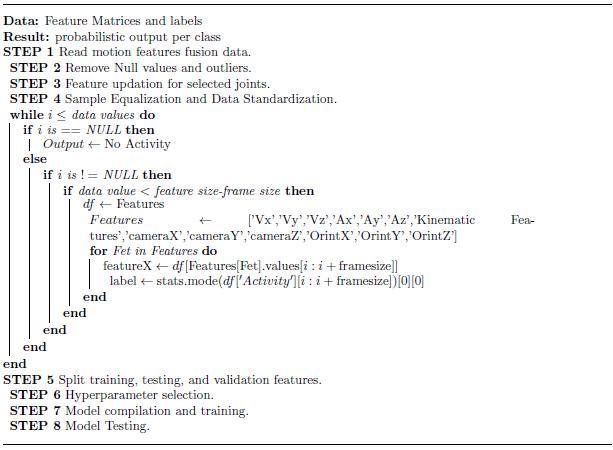
• Windowing and Segmentation: Employing all the data for training at once is not an effective strategy. Instead, using a windowing or segmentation strategy is optimal. Segmentation is typically utilized in the preprocessing phase to make data analysis more manageable, with windowing being the most common approach. The dataset was collected using a sampling rate of 30 Hz (30 samples per second). Data is split into allotted frames (Windows) of 2.57 s (80 characteristics set) with a 50% intersection with the previous window, as illustrated in Figure 6.
-


Sliding window approach for action recognition.

3.3. Proposed illumination correction architecture
3.3.1. illuminationRevive architecture
Recognizing activities under varying illumination conditions presents a significant challenge. The illuminationRevive architecture has been developed to tackle this issue, focusing on restoring underexposed images. This architecture comprises an autoencoder network, which serves as an image-to-image translation network to enhance image illumination. Additionally, a post-image processing step is included to further improve the visual quality of the resulting image.
3.3.2. Image-image translation network
This network comprises downsampling and upsampling blocks, with the downsampling path followed by the upsampling path, incorporating skip connections to retain crucial spatial information as shown in Figure 7. In the encoding phase, input images undergo processing through a series of convolutional layers. It commences with the encoder_conv1 layer, which extracts basic features using 32 filters with a 3 x 3 kernel size and ReLU activation function. Subsequent max-pooling layers (encoder_maxpool1 and encoder_maxpool2) downsample the feature maps to retain important information while reducing spatial dimensions. The process advances with deeper convolutional layers (encoder_conv2 and encoder_conv3), each extracting higher-level features with increasing complexity using 64 and 128 filters, respectively. In the decoding phase, the feature maps undergo reconstruction through corresponding convolutional layers (decoder_conv1, decoder_conv2, and decoder_conv3) with identical filter configurations as their encoder counterparts. Upsampling layers (decoder_upsample1, decoder_upsample2, and decoder_upsample3) are employed to increase spatial dimensions, and concatenation layers (concat1, concat2, and concat3) merge the upsampled features with those from the encoder layers to preserve spatial information. While the network produces improved illumination output, it may result in the loss of some pixel information. The loss function incorporates exposure loss and illumination smoothness loss, along with the Adam optimizer set to a learning rate of 0.0001.
Image-to-image translation network.

3.3.3. Loss function
Exposure loss and illumination smoothness loss have been utilized as loss functions to train the autoencoder. Illumination smoothness loss quantifies the smoothness of illumination across an image, calculated as the sum of squared gradients of pixel intensities in the image. Exposure loss measures the discrepancy between the desired exposure level (
 $ E_{\text{target}}$
) and the actual exposure level (
 $ E_{\text{input}}$
) of an image. It is calculated as the absolute difference between the target and input exposure values. Let’s denote the exposure loss as
 $L_{\text{exposure}}$
and the illumination smoothness loss as
 $L_{\text{smooth}}$
. The combined loss function
 $L_{\text{total}}$
would then be:
 \begin{equation} L_{\text{total}} = L_{\text{exposure}} + \lambda \cdot L_{\text{smooth}} \end{equation}
where
 $\lambda$
is a hyperparameter that controls the trade-off between the exposure loss and the smoothness regularization. After several experiments, the value of
 $\lambda$
is set to 1.75. The variation of Peak signal to noise ratio (PSNR) and structural index similarity (SSIM) with variation in
 $\lambda$
is shown in Figure 8. Mathematically, the exposure loss can be defined as the difference between the desired exposure level
 $E_{\text{target}}$
and the actual exposure level
 $E_{\text{input}}$
of the image:
 \begin{equation} L_{\text{exposure}} = \lvert E_{\text{target}} - E_{\text{input}} \rvert \end{equation}
SSIM and PSNR variation w.r.t lambda(
 $\lambda$
).

Meanwhile, the illumination smoothness loss can be calculated as described earlier:
 \begin{equation} L_{\text{smooth}} = \sum _{i=1}^{H} \sum _{j=1}^{W} \left ( \nabla I_{\text{input}}(i, j) \right)^2 \end{equation}
3.3.4. Dataset used for image-image translation network
The network was trained using the LOL dataset(LOW-Light dataset) [Reference Guo and Hu58], which consists of 500 image pairs. Each pair includes both a low-light version and its corresponding normal-light counterpart. The dataset is divided into 350 training pairs and 150 testing pairs. Low-light images exhibit noise typical of low-light photography, posing a challenge for image processing algorithms.
3.3.5. Post image processing process
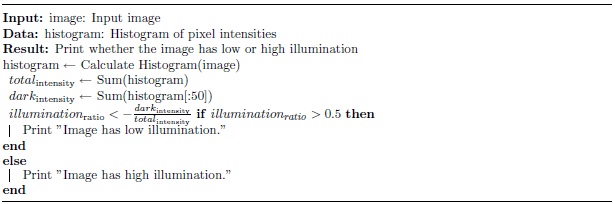
Additionally, the dataset primarily consists of indoor scenes, presenting a variety of indoor lighting conditions. To address this issue, a demosaicing process is applied to estimate missing color information at each pixel, thereby reconstructing a complete, full-color image. Subsequently, white balance is employed to correct undesirable color casts, ensuring accurate color representation. Following this, a color correction process is implemented to eliminate unwanted color casts caused by recording lighting conditions and to compensate for environmental effects such as reflections or the color of surrounding objects. To further enhance the quality of the images, a non-local means denoising technique is utilized, effectively reducing noise while preserving essential image characteristics. Finally, gamma correction is applied to fine-tune overall brightness and contrast, thereby enhancing the visual appeal of the final results. This comprehensive approach addresses the complexities associated with activity recognition in challenging illumination scenarios. The overall process is shown in Figure 9.
Detect Image Illumination

Restoration of underexposed image.

Accuracy of different approaches for human activity recognition.

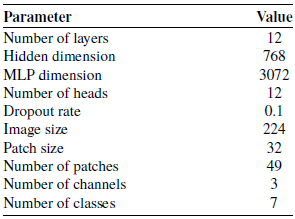
Configuration parameters for ViT.

Proposed hybrid model for activity detection/Classification architecture.

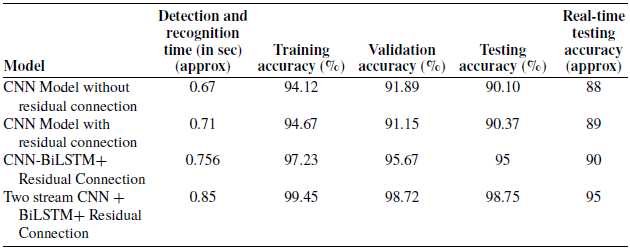
Analysis of different architectures leading to the proposed classification model.

3.4. Classification models
In this section, various classification models are employed to evaluate and compare the effectiveness of activity recognition using the extracted features. These include CNN [Reference Jiang, Lu, Lu and Zhou7], LSTM [Reference Mekruksavanich and Jitpattanakul59], ConvLSTM [Reference Yang, Zhang, Li and Luo60], Vision Transformer (ViT)-LSTM [Reference Hussain, Hussain, Ullah and Baik61], GRU-INC [Reference Mim, Amatullah, Afreen, Yousuf, Uddin, Alyami, Hasan and Moni62], and LKA-GCN [Reference Liu, Zhang, Li, He and Xu63]. Each model is designed to capture different aspects of spatial and temporal patterns: CNN extracts spatial features, LSTM addresses temporal dependencies with memory units, and ConvLSTM combines both for sequence learning. ViT-LSTM leverages transformer encodings for capturing long-range dependencies, while GRU-INC integrates inception modules and attention mechanisms for efficient spatial-temporal representation. LKA-GCN employs graph convolution with local and long-range modeling to learn action semantics. The preprocessed features are reshaped to match the input format required by each model to ensure effective classification and performance comparison.
-
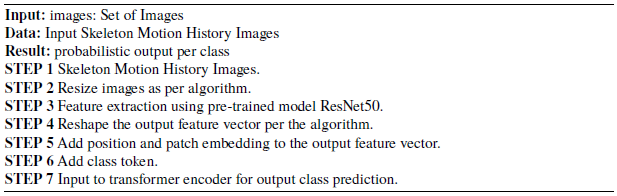
• Proposed Hybrid Deep Learning Architecture: In the proposed model, two input streams are utilized for activity classification. The first input stream employs a skeleton motion history images (SMHIs)-based classification model, while the second input stream employs body joint features and hand-generated kinematic features-based classification model. The final classification is based on the average probabilistic classification accuracy calculated using the output from each stream. The step-by-step evolution of the proposed model is shown in Table III.
-
1. Skeleton motion history images-based classification architecture
-
− SMHIs are generated for all recorded videos and saved in class folders.
-
− The ResNet50 pre-trained model extracts spatial feature vectors from the SMHIs.
-
* ResNet50’s depth and complexity, with 50 layers, enable it to capture intricate spatial patterns and hierarchical representations within images. This depth is crucial for learning complex features essential for accurately classifying activities in videos.
-
* Deeper networks like ResNet50 have demonstrated superior performance compared to shallower architectures in various computer vision tasks.
-
* ResNet50 introduces skip connections, also known as residual connections, which allow the network to bypass certain layers and propagate information more efficiently. By mitigating the vanishing gradient problem, ResNet50 can train deeper architectures effectively.
-
− The output of ResNet50 is [128, 7, 7, 2048].
-
− This output is passed through a convolutional block to reduce computational complexity or memory requirements of subsequent layers in the model. Afterward, the output is reshaped to [128, 7*7, 768].
-
− The reshaped output is subsequently input into the ViT, integrating position and patch embedding. This facilitates the capture of sequential and spatial relationships among elements in the image sequence, as well as long-range dependencies and semantic information, utilizing a self-attention mechanism, as illustrated in Figures 10. The configuration parameters for ViT are shown in Table IV.
-
− A residual connection has been introduced, where the input to the encoder block is appended to the output of the self-attention operation. This allows the model to preserve crucial information from the original input while avoiding overfitting.
-
2. Human Motion Joint-Based Classification Architecture Spatio-temporal feature extraction utilizes CNN and BiLSTM layers throughout the entire process.
-
− Final design of the classification model based on joint features has been finalized after testing of few model designs, which is shown in Table V.
-
* The first model is designed using Convolutional Layers. The training time was approximately 20 minutes. This model achieved an average testing accuracy of 90.10%.
-
* In the second model, residual connections were added after each max-pooling layer. The training time increased to approximately 23 minutes, and the average testing accuracy improved slightly to 90.30%.
-
* For the third model, a BiLSTM layer was added after the final Convolutional layer of the second model, with a reshaped layer in between the Convolutional and BiLSTM layers. Although this increased the training time by 7 minutes, the testing accuracy improved by approximately 4%.
-
* The model was slightly modified by separating the Convolutional layers and BiLSTM layer into two paths. This allowed the model to learn spatial and temporal features separately and then combine both feature vectors. Although this process increased the training time by 2 minutes compared to the previous model, there was an approximate + 4% improvement in testing accuracy and a + 5% improvement in real-time testing accuracy.
-
* Further increasing the number of layers resulted in a slight increase in training time, but there was not much improvement in testing accuracy. Therefore, the above model was selected for final classification.
-
− In this process, the window size of 40 with a shift of 10 is selected to ensure alignment with the first classification network, as the ultimate output combines both architectures.
-
− Human joint motion features are collected using MediaPipe and stacked.
-
− Novel features such as the angle between joints, distances between joints, velocity, acceleration, and person’s height (for normalization) are calculated.
-
− These features are concatenated with joint motion features.
-
− Five convolutional layers with a filter size of 32 have been utilized to extract features from the input data, preserving input information using residual connections.
-
− Simultaneously, temporal features are extracted using a BiLSTM layer.
-
− Final Classification is the average of Both Final feature vectors.
-
3. Fused image-based feature vectors and joint motion-based features are combined and passed through a final dense layer, resulting in seven probabilistic output values.
Image Input Stream Algorithm

4. Experimental results and discussion
The experimental findings using different classification models and the proposed model, as discussed in Section 3.3, have been presented in this section.
4.1. Implementation details and datasets
Existing dataset, LOL dataset, has been used to train the illuminationRevive Architecture. LOL dataset comprises 500 pairs of images captured under low or normal lighting conditions, each with dimensions of 400
 $\times$
600 pixels and stored in RGB format. Images have been resized to 224 x 224 to make computational time faster. The trained illuminationRevive architecture has been tested on generated dataset(LNMIIT-SMD) as well as on LOL and DarkFACE datasets [Reference Yang, Yuan, Ren, Liu, Scheirer, Wang, Zhang, Zhong, Xie, Pu, Zheng, Qu, Xie, Chen, Li, Hong, Jiang, Yang, Liu, Qu, Wan, Zheng, Zhong, Su, He, Guo, Zhao, Zhu, Liang, Wang, Chen, Quan, Xu, Liu, Liu, Sun, Lin, Li, Lu, Gu, Zhou, Cao, Zhang, Chi, Zhuang, Lei, Li, Wang, Liu, Yi, Zuo, Chi, Wang, Wang, Liu, Gao, Chen, Guo, Li, Zhong, Huang, Guo, Yang, Liao, Yang, Zhou, Feng and Qin64]. The experiments were conducted on a system featuring an Intel(R) Core(TM) i7-10700K CPU running at 3.80 GHz and an NVIDIA Quadro K4200 GPU. A few sample images have been shown in Figure 1. Features extracted using LNMIIT-SMD have been used to train proposed classification model.
s Stream Algorithm

4.1.1. Existing datasets
To validate the generalizability of the classification model, it has been evaluated on existing datasets, namely NTU-RGBD [Reference Shahroudy, Liu, Ng and Wang65], MSR Daily Activity [Reference Hossain, Deb, Sakib and Sarker66], and I3D Post. These datasets were carefully selected based on literature papers and our target area. Only activities similar to LNMIIT-SMD were chosen from the MSR Daily Activity [Reference Hossain, Deb, Sakib and Sarker66] and I3D Post human action dataset [Reference Pareek and Thakkar9] for testing. Here is a brief description of these datasets.
-
1. NTU RGB + D Dataset: NTU-RGBD dataset consists of 60 activity classes. The NTU-RGBD dataset is a large-scale RGBD dataset for HAR and pose estimation tasks. It includes RGB (color) and depth films shot by numerous sensors in various indoor environments. The RGBD videos in the dataset were collected from three different camera views: frontal, top, and side. Multiple videos are recorded from these numerous perspectives for each activity, offering diverse perspectives and capturing different parts of the activity. Fifteen activities that we are targeting have been selected out of 60 classes. The classes are drinking water, eating, sitting down, standing up, shaking head, making a call, falling, headache, chest pain, back pain, neck pain, sneezing, walking with a walker, handshaking, and walking.
-
2. MSR Daily Activity Dataset [Reference Hossain, Deb, Sakib and Sarker66]: The MSR daily Action Dataset encompasses a diverse range of human activities, offering researchers a comprehensive dataset for action recognition studies. With 16 distinct activities, including drinking, eating, reading books, using laptops, and more, it provides a rich variety of actions performed in real-world settings. Each activity is meticulously annotated with action labels and skeletal joint positions, enabling the development and evaluation of algorithms for action recognition using RGB and depth data.
-
3. I3D Post Dataset [Reference Pareek and Thakkar9]: The I3D Post Dataset encompasses a diverse array of human actions, offering researchers a comprehensive dataset for action recognition studies. With activities ranging from walking, running, and jumping to more intricate actions like hand-waving, handshaking, and facial expressions, it offers a rich variety of actions performed in real-world scenarios.
Test results of various methodologies on the LNMIIT-SMD dataset.

Effect of illuminationRevive architecture: (a) Output without illuminationRevive architecture (b) Output with illuminationRevive architecture.

Graphical representation of test parameters for different illumination correction methods.

4.2. Ablation study for illuminationrevivie architecture
The performance of illuminationRevive architecture has been tested on generated dataset(LNMIIT-SMD) as well as on LOL and DarkFACE datasets [Reference Yang, Yuan, Ren, Liu, Scheirer, Wang, Zhang, Zhong, Xie, Pu, Zheng, Qu, Xie, Chen, Li, Hong, Jiang, Yang, Liu, Qu, Wan, Zheng, Zhong, Su, He, Guo, Zhao, Zhu, Liang, Wang, Chen, Quan, Xu, Liu, Liu, Sun, Lin, Li, Lu, Gu, Zhou, Cao, Zhang, Chi, Zhuang, Lei, Li, Wang, Liu, Yi, Zuo, Chi, Wang, Wang, Liu, Gao, Chen, Guo, Li, Zhong, Huang, Guo, Yang, Liao, Yang, Zhou, Feng and Qin64]. The architecture has also been compared with the existing methods, i.e., Zero-DCE [Reference Guo, Li, Guo, Loy, Hou, Kwong and Runmin67], EnlightenGAN [Reference Jiang, Gong, Liu, Cheng, Fang, Shen, Yang, Zhou and Wang68], and DiDCE-Net [Reference Mi, Luo, Qiao and Huo69]. The Table VI showcases a comparative analysis of various algorithms applied to the LNMIIT-SMD dataset, focusing on their performance across key metrics: PSNR (Peak Signal-to-Noise Ratio), SSIM (Structural Similarity Index), MAP (Mean Absolute Percentage Error), and processing time per image (RT) in seconds. The algorithms under scrutiny encompass Zero-DCE, EnlightenGAN, DiDCE-Net, and IlluminationRevive (our proposed method). Figure 11 shows the use of illumination revive block. It is clear from the figure that pose detection is not accurate for any underexposed or low-illumination image, but with the use of illuminationRevive architecture, the image becomes visually understandable for the pose detector to detect the joints. Figure 12 shows graphical representation of test parameters for different illumination correction methods. Figure 13 shows testing illuminationRevive architecture on different datasets. Notably, Zero-DCE demonstrates a PSNR of 16.57, SSIM of 0.59, and MAP of 98.78, coupled with a processing time of 0.2272 s per image on a Python-CPU platform. Similarly, EnlightenGAN yields a PSNR of 16.21, SSIM of 0.59, and MAP of 102.78, with a processing time of 0.15 s per image. DiDCE-Net emerges as the frontrunner, surpassing both Zero-DCE and EnlightenGAN with superior metrics: PSNR of 18.23, SSIM of 0.72, and MAP of 73.34, along with a notably faster processing time of 0.09 s per image. It is evident from Figure 14 that the proposed model performs better compared to the reference methodology. The proposed approach achieved a PSNR of 6.03 and SSIM of 0.441, which are better by approximately
 $ \pm 7$
,
 $ \pm 6$
, and
 $ \pm 2$
units compared to Zero-DCE, EnlightenGAN, and DiDCE-Net, respectively.
Meanwhile, our proposed algorithm, IlluminationRevive, achieves a PSNR of 13.67, SSIM of 0.31, and mAP of 81.28, with a processing time of 0.067 s per image. Despite exhibiting lower PSNR and SSIM values compared to its counterparts, IlluminationRevive exhibits competitive performance in terms of MAP and processing time.
Testing illuminationRevive architecture on different datasets.

Testing existing dataset on illuminationRevive architecture and existing methods.

Skeleton motion history image representation for NTU RGB + D dataset.

4.3. Model evaluation
4.3.1. Parametric analysis
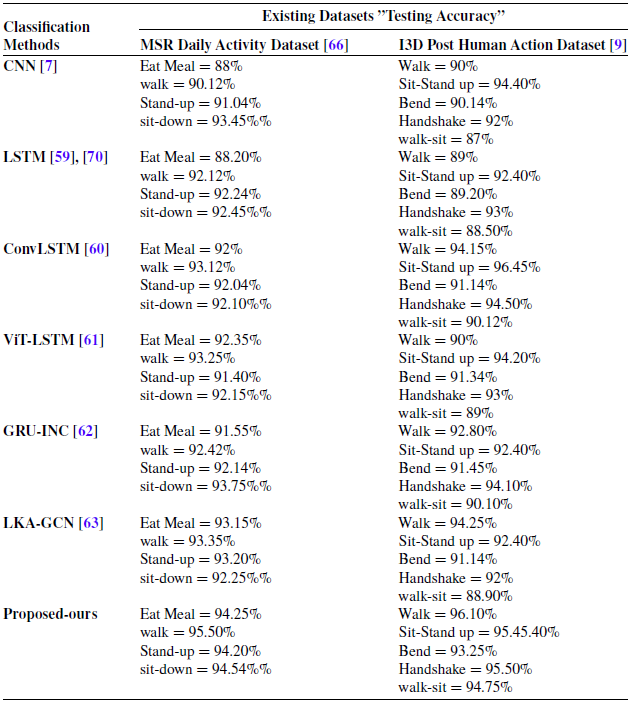
The proposed model and other existing classification models have been used to validate the performance of the suggested model. The development and finalization of the hybrid model have been described in the Table V. NTU-RGBD and LNMIIT-SMD datasets have been used to train the classification models. Some of the sample images of NTU RGB + D Dataset and its corresponding SMHIs are shown in Figure 15. To assess the performance and generalizability of the model, it has been tested on two additional existing datasets: the MSR daily activity dataset and the I3D post dataset. The results have been shown in Table IX.
-
1. The training and validation sets were divided in a 60:20 ratio, with the remaining 20% used for testing.
-
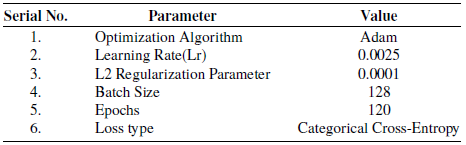
2. A series of experiments has been performed to select the batch size. Models have been tested with different batch sizes, as shown in Figure 16. Finally, a batch size of 128 has been finalized for all.
-
3. Other hyperparameters are shown in Table VII.
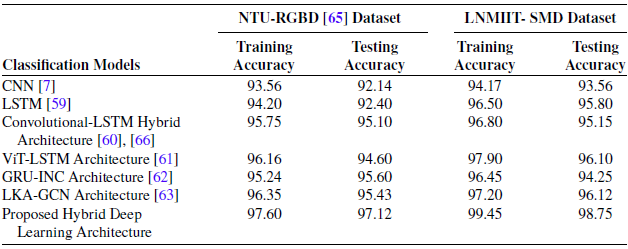
The comparative table in Table VIII illustrates the performance of various DL models across different datasets.
-
1. Among the models, the proposed Hybrid DL Architecture demonstrates superior performance across all datasets. With a training accuracy of 97.60% and a testing accuracy of 97.12% on the NTU-RGBD dataset, and a training accuracy of 99.45% and a testing accuracy of 98.75% on the LNMIIT-SMD dataset, it outperforms other models significantly.
-
2. Notably, for the MSR Daily Activity dataset, the proposed hybrid DL architecture achieves a testing accuracy of 97.12%, surpassing other models such as CNN, LSTM, Convolutional-LSTM Hybrid Architecture, ViT-LSTM Architecture, GRU-INC Architecture, and LKA-GCN Architecture, which achieved testing accuracies ranging from 90.75% to 96.52%.
-
3. Similarly, on the I3D Post dataset, the proposed model achieves a testing accuracy of 96.90%, outperforming the other models, which achieved testing accuracies ranging from 89.75% to 94.12%. In comparison to the MSR dataset, the proposed model shows an improvement of approximately 6.37% in testing accuracy over the nearest competitor, demonstrating its effectiveness in activity recognition tasks.
-
4. On the I3D Post dataset, the proposed model outperforms the nearest competitor by approximately 2.78% in testing accuracy, highlighting its superiority. These results suggest that the proposed hybrid DL architecture is more effective in accurately recognizing activities compared to existing models across multiple datasets.
Comparatively, other models such as CNN, LSTM, Convolutional-LSTM Hybrid Architecture, ViT-LSTM Architecture, GRU-INC Architecture, and LKA-GCN Architecture also exhibit competitive performance but fall short in achieving the high accuracies attained by the proposed Hybrid DL Architecture. These results underscore the efficacy of the proposed model in classification tasks across different datasets.
Hyperparameters used for model training.

Comparative analysis of different classification models on LNMIIT-SMD and NTU-RGBD dataset.

Batch size selection w.r.t accuracy for different classification models.

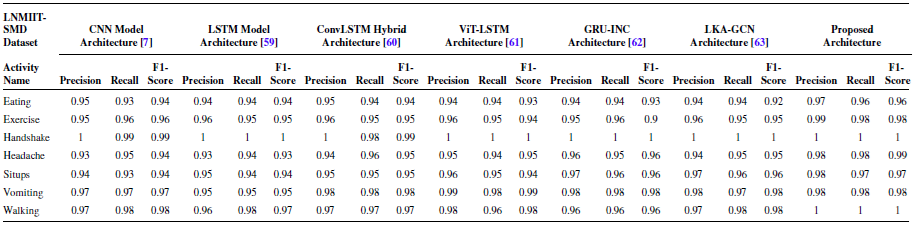
The Table XI presents performance metrics for various DL models and a proposed model across different activities on the LNMIIT-SMD dataset. Among the activities, “Eating” is handled with high precision and recall by all models, with the proposed architecture achieving a precision of 0.97, recall of 0.96, and an F1-score of 0.96, showcasing its effectiveness. Similarly, for “Exercise”, all models perform well, but the proposed architecture stands out with a precision of 0.99, recall of 0.98, and an F1-score of 0.98, demonstrating its superior capability in recognizing this activity.
Accuracy comparison for different deep learning models on the NTU RGB + D dataset.

‘Handshake’ is excellently detected by all models, with perfect or near-perfect scores across precision, recall, and F1-score, highlighting the robustness of the proposed architecture. For “Headache”, “Situps”, “Vomiting”, and “Walking”, the proposed model consistently demonstrates competitive performance, often ranking among the top performers with high precision, recall, and F1-scores. Overall, the proposed architecture exhibits strong performance across various activities, suggesting its suitability for activity recognition tasks on the LNMIIT-SMD dataset when compared to existing DL models. The suggested model outperforms other models across activities in the NTU-RGBD dataset, with percentage variations ranging from -3% to + 3% as shown in Figure 17. Notably, LSTM and ConvLSTM models show minor variations of -1% to 0%. In contrast, GRU-INC and LKA-GCN models exhibit variations of -1% to + 1%, while ViT-LSTM demonstrates variations of -2% to + 2%. Overall, the proposed model consistently maintains a slight edge over other models, highlighting its superior performance for activity recognition. The proposed model demonstrates significant performance improvements across various activities compared to other models on the MSR daily activity dataset and I3D post multiview human action dataset. For instance, in activities like drinking water, eating, and standing up, the proposed model achieves a higher accuracy percentage compared to CNN, LSTM, ConvLSTM, ViT-LSTM, GRU-INC, and LKA-GCN models as shown in Figure 18. Specifically, the proposed model outperforms others by 1.5%, 2%, and 1%, respectively, in these activities. Moreover, in tasks such as sitting down, walking, and handshaking, the proposed model showcases remarkable accuracy percentages, surpassing other models by margins ranging from 0.5% to 1.5%. Figure 19 illustrates the variation of accuracy and loss across different classification models, while Figure 21 presents the variations in precision, recall, and F1-score.
4.3.2. Statistical analysis
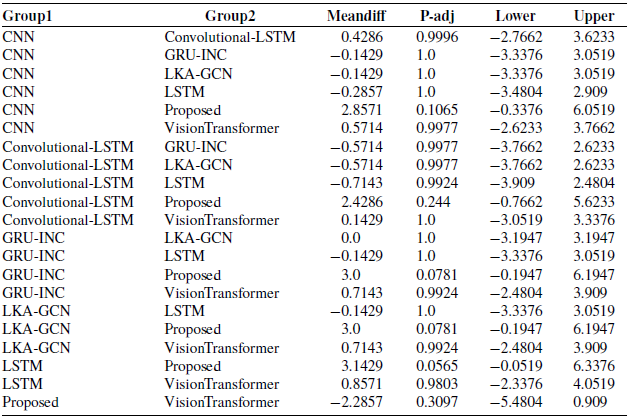
Table X presents the results of tukey test analysis comparing the proposed classification model with other models. The “meandiff” column shows the mean difference between the groups, while
 $p-adj$
represents the adjusted p-value for each comparison. A lower
 $p-adj$
value indicates a more statistically significant difference.
Statistically, the proposed model shows significant differences compared to some models but not all. For instance, compared to the CNN model, the proposed model has a mean difference of 2.8571 with a p-adj value of 0.1065, suggesting a potentially significant difference, although not extremely significant. Similarly, compared to GRU-INC, LKA-GCN, and LSTM models, the proposed model exhibits a mean difference of 3.0, with p-adj values of 0.0781, indicating potentially significant differences. However, compared to Convolutional-LSTM and VisionTransformer models, the proposed model’s mean differences are 2.4286 and -2.2857, respectively, with p-adj values of 0.244 and 0.3097, suggesting less significant differences.
Accuracy comparison for different deep learning models on MSR daily activity and I3D post dataset.

Model testing accuracy on MSR daily activity dataset and I3D post human action dataset.

Tukey test for comparative analysis among different classification models.

Overall, the ANOVA analysis indicates that the proposed model is statistically better than other classification models.
Figure 20 illustrates the statistical variation of accuracies for different classification models.
Variations in accuracy and loss across existing and proposed classification models. (a) Accuracy, loss variation w.r.t to epochs for CNN architecture. (b) Accuracy, loss variation w.r.t to epochs for LSTM architecture. (c) Accuracy, loss variation w.r.t to epochs for conLSTM architecture. (d) Accuracy, loss variation w.r.t to epochs for vision transformer-LSTM architecture. (e) Accuracy, loss variation w.r.t to epochs for proposed architecture.

ANOVA analysis for different classification models.

Performance metrics for existing deep learning models and proposed model.

Variations in precision, recall, and F1-score across different deep learning models. (a) Variations in precision, recall, and F1-score for CNN architecture. (b) Variations in precision, recall, and F1-score for LSTM architecture. (c) Variations in precision, recall, and F1-score for convLSTM architecture. (d) Variations in precision, recall, and F1-score for vision transformer-LSTM architecture. (e) Variations in precision, recall, and F1-score for vision proposed architecture.

Confusion matrices for existing classification architectures and proposed classification model for LNNMIIT-SMD (a) Confusion metrics for CNN architecture. (b)Confusion metrics for LSTM architecture. (c) Confusion metrics for convLSTM architecture. (d) Confusion metrics for vision transformer-LSTM architecture. (e) Confusion metrics for proposed architecture.

4.3.3. Matric analysis
For matric analysis, confusion matric has been generated for all classification models, which is displayed in Figure 22.
-
• The confusion matrix, like the CNN model, highlights its classification performance, achieving 95.00% accuracy in “eating” and 100% accuracy in “handshake.” “Exercise” is mostly classified accurately at 95.19%, while “vomiting” shows 96.51% accuracy. Minor misclassifications occur in “headache” and “situps”.
-
• The LSTM model struggles with a mere 94.17% accuracy in classifying “eating” instances, though it achieves a perfect 100% accuracy for “handshake.” Despite mostly accurate identification of “exercise” instances at 96.30%, minor misclassifications are observed, and “vomiting” instances show a relatively weak accuracy of 95.35%.
-
• The ConvLSTM model demonstrates commendable accuracy, notably achieving 95.00% in identifying “eating” instances and flawless accuracy for “handshake.” Additionally, “exercise” instances are predominantly accurately identified at 96.30%, with minimal misclassifications, while “vomiting” instances exhibit a predominantly accurate classification of 98.06%.
-
• The ViT-LSTM model shows strong performance, with 95.56% accuracy in classifying “eating” instances and perfect accuracy for “handshake.” “Exercise” is mostly accurate at 95.53%, with minor misclassifications, while “headache” is at 96.20%. “Situps” and “vomiting” exhibit high accuracies at 98.83% and 98.02% respectively.
-
• The GRU-INC model achieves 95.71% accuracy in classifying “eating” instances but struggles with misclassifications in “exercise” and “headache,” contributing to a 2.86% misclassification rate. Impressively, it accurately identifies “handshake” instances at 100%, despite their absence in the dataset. “Vomiting” instances are mostly accurately classified at 92.86%, with some misclassifications. Overall, the model’s confusion matrix reflects its mixed performance across activities.
-
• The LKA-GCN model achieved 95.71% accuracy in classifying “eating” instances, with perfect classification for “handshake.” While “exercise” instances are predominantly identified accurately at 92.86%, minor misclassifications occur, along with a high accuracy of 97.14% for “headache” instances.
-
• The proposed model shines with exceptional accuracy, notably achieving 97.08% for “eating” and perfect 100% for “handshake.” “Exercise” instances are predominantly accurately classified at 98.15%, while “headache” and “situps” exhibit high accuracies of 97.51% and 98.17%, respectively. Despite minor misclassifications in activities like “vomiting” and “walking,” the overall accuracy remains impressively high, with percentages summing up to 100% in each row, showcasing the model’s reliability across activities.
The proposed model outperforms others, demonstrating fewer misclassification errors in comparison to alternative models.
5. Enhanced healthcare robotics with illuminationRevive and LNMIIT-SMD
The illuminationRevive architecture and LNMIIT-Skeleton Motion Dataset (LNMIIT-SMD) provide a powerful framework for advancing robotic systems in healthcare by overcoming key HAR challenges, including illumination variations, occlusions, and limited domain-specific data. With accuracies of 98.21% in real-time and 98.45% on LNMIIT-SMD, this framework ensures robust, low-latency robotic perception in dynamic indoor environments, critical for patient-centric applications.
The illuminationRevive architecture enhances robotic vision by restoring underexposed images using an encoder-decoder CNN and post-processing blocks. In healthcare settings, where lighting varies due to artificial sources or time-of-day changes, this ensures consistent activity recognition. For example, a service robot can accurately detect patient activities like eating or exercising in dimly lit hospital rooms or homes, mitigating issues like low contrast or shadows. This capability is vital for real-time monitoring, enabling robots to respond promptly to critical events.
The LNMIIT-SMD dataset, encompassing seven patient-centric activities – eating, walking, exercising, vomiting, experiencing a headache, performing situps, and engaging in a handshake – addresses the scarcity of specialized data for healthcare robotics. By capturing subtle kinematic and geometric features, it enables robots to differentiate complex behaviors. For instance, a robot in a rehabilitation center can monitor a patient’s exercise routines for therapy compliance or detect distress signals like vomiting to alert caregivers. Derived from thirty individuals aged 20–45, the dataset ensures generalizability across diverse patient demographics.
This framework enables applications such as continuous patient monitoring, rehabilitation support, and context-aware human-robot interaction. Robots can deliver precise, timely assistance, such as guiding patients through exercises or recognizing social gestures like handshakes, enhancing care quality in challenging healthcare environments.
6. Conclusion and future scope
The illuminationRevive system, coupled with the LNMIIT-Skeleton Motion Dataset (LNMIIT-SMD), introduces a robust framework for enhancing HAR in healthcare robotics. By leveraging an encoder-decoder CNN and post-processing steps, illuminationRevive significantly improves image quality under challenging lighting conditions, enabling reliable robotic vision in dynamic indoor environments. The LNMIIT-SMD dataset, featuring seven patient-centric activities (eating, walking, exercising, vomiting, experiencing a headache, performing situps, and engaging in a handshake) performed by 30 individuals aged 20-45, addresses the scarcity of domain-specific data, training robots to recognize nuanced behaviors. The hybrid fusion architecture, integrating ResNet50-ViT for spatial analysis of SMHIs and CNN-BiLSTM for spatiotemporal analysis of joint motion and hand-crafted kinematic features, achieves exceptional accuracies: 98.21% on real-time data, 98.45% on LNMIIT-SMD, 97.12% on NTU-RGBD and MSR Daily Activity, and 96.90% on I3D Post, surpassing state-of-the-art models by up to 2.3%. ANOVA analysis confirms the statistical superiority of this approach. These advancements enable service robots to perform precise, low-latency patient monitoring and assistive tasks, such as detecting critical health events or supporting rehabilitation, in diverse healthcare settings. However, the system does not yet address occlusion scenarios, which remain a key challenge. Future work will focus on enhancing robustness in occluded environments, refining the fusion architecture, and evaluating performance across additional datasets to further advance robotic healthcare applications.
Author contributions
Manoj Kumar Sain conceived and designed the study. Manoj Kumar Sain and Rabul Laskar conducted data collection and preprocessing. Joyeeta Singha and Sandeep Saini performed analysis and validation. Manoj Kumar Sain, Joyeeta Singha, and Sandeep Saini wrote the manuscript. All authors reviewed and approved the final version of the manuscript.
Financial support
This research received no specific grant from any funding agency, commercial or non-profit sector.
Competing interests
The authors declare no conflicts of interest exist.
Ethical standards
Not applicable.
Dataset availability
The dataset will be made accessible upon request, according to the author’s assurance.
Declaration
The author affirms that the manuscript has been submitted following the author guidelines provided by the journal.