Implications
An animal’s diet has an influence on the composition of its tissues, which can be used to improve the nutritional value of meat, for instance modifying its fatty acid (FA) composition or increasing its mineral content. Unsaturated fat products used in feeds are prone to oxidation that can occur both during their production process and their storage, leading to a high content of oxidation compounds and altering their FA profile. This might affect the tissue composition, and thus the meat nutritional value. We studied the influence of the addition of oxidized oils and minerals to rabbit feeds on the FA composition of its plasma, liver and meat and on its meat element content.
Introduction
Fatty acid (FA) composition of animal tissues can be modified by the type and amount of dietary fat (Wood and Enser, Reference Wood and Enser1997). Dietary recommendations for humans suggest reducing the intake of not only fat and cholesterol but also saturated FAs (SFA) and trans FA, and increasing the intake of polyunsaturated FAs (PUFAs), mainly those from the n-3 series (Food and Nutrition Board, 2005). Therefore, in order to obtain more healthy meat, several unsaturated fat sources have been incorporated to feeds to nutritionally improve meat FA composition (Wood and Enser, Reference Wood and Enser1997).
However, unsaturated fat sources are prone to oxidation that can occur both at low and high temperatures. At low temperatures, for instance during storage of unsaturated fats at ambient temperature, lipid hydroperoxides (LHPs) increase until they reach a plateau, and then decompose into secondary oxidation compounds. At high temperatures, decomposition of LHP is faster and isomerization of FA is also favored, leading to the appearance of both geometric and positional FA isomers, as several trans FA and conjugated linoleic acid (CLA). Some polymerization reactions can also occur (Frankel, Reference Frankel1998). The compounds formed in fats due to the exposure to high temperatures can thus be found in several co- and by-products obtained from the food chain that are nowadays used in feeds (Nuchi et al., Reference Nuchi, Guardiola, Bou, Bondioli, Della Bella and Codony2009).
Apart from the increase in oxidation compounds, lipid oxidation might reduce the content of some FAs, vitamins and antioxidants in fats, which in turn can be reflected in tissues from animals fed these fats.
Heated oils added to feeds have not led to toxic effects in animals, especially when fat is added to feeds at the usual amounts, and if this fat contains <25% of polar compounds (Márquez-Ruiz and Dobarganes, Reference Márquez-Ruiz and Dobarganes1996; Billek, Reference Billek2000). However, if the content of trans FA in feeds increases, it might affect the trans FA content in animal tissues, which is not nutritionally interesting (Combe et al., Reference Combe, Clouet, Chardigny, Lagarde and Léger2007). In addition, fat digestibility may be altered if it has a high polymer content (Márquez-Ruiz et al., Reference Márquez-Ruiz, García-Martínez and Holgado2008). Furthermore, several detrimental biological effects have been described for some primary and secondary oxidation compounds (Márquez-Ruiz and Dobarganes, Reference Márquez-Ruiz and Dobarganes1996; Guardiola et al., Reference Guardiola, Dutta, Savage and Codony2002; Spiteller, Reference Spiteller2006), some of which could be absorbed from diets (Kanazawa and Ashida, Reference Kanazawa and Ashida1998; Guardiola et al., Reference Guardiola, Dutta, Savage and Codony2002) or formed in tissues (Guardiola et al., Reference Guardiola, Dutta, Savage and Codony2002; Spiteller, Reference Spiteller2006).
Thus, it is essential to evaluate the oxidation and FA composition of fats before they are added to feeds to avoid unexpected alterations in tissues. While several studies have dealt with the addition of abused oils to feeds, the addition of moderately oxidized fats to feeds has been poorly studied, especially in rabbit feeds.
Oxidation occurring in tissues might lead to an impairment of its PUFA and vitamin composition, which could be reduced by dietary supplementation with antioxidants, for instance α-tocopheryl acetate (TA; Gray et al., Reference Gray, Gomaa and Buckley1996; Wood and Enser, Reference Wood and Enser1997). Dietary supplementation with TA has been reported to be effective in reducing the loss of PUFA during meat processing, cooking and storage (Gray et al., Reference Gray, Gomaa and Buckley1996).
Meats are a good source of minerals that show high bioavailability. It has been shown that it is possible to increase the element content in meat and other animal products through dietary supplementation with minerals. As other elements, Zn and Se are of nutritional interest because their usual intake by some communities, for instance elderly people, is often under dietary recommendations (Food and Nutrition Board, 2000a and 2000b; Maret and Sandstead, Reference Maret and Sandstead2006). However, dietary supplementation with Zn and Se has been poorly studied, and it is even so less in rabbit feeding. Furthermore, as with other elements, their bioavailability might be affected by the presence of other elements. For instance, Bou et al. (Reference Bou, Codony, Baucells and Guardiola2005a and Reference Bou, Guardiola, Barroeta and Codony2005c) found increases in the content of Se in chicken meat after dietary supplementation with Zn, while others have found decreases in the Cu content as a result of high dietary Zn (Maret and Sandstead, Reference Maret and Sandstead2006).
As the presence of moderately high amounts of primary and/or secondary oxidation compounds in fats added to feeds is plausible, it is necessary to study their possible effects on animal tissue FA composition. Furthermore, several compounds with antioxidant activity might also be supplemented in feeds, but their effects on tissues might be altered by the presence of primary and/or secondary oxidation compounds in feeds. Thus, we assessed here the effects of the incorporation of oils rich in primary or secondary oxidation compounds to rabbit feeds and the dietary supplementation with TA and Zn on the FA composition of rabbit plasma, liver and meat, as well as on the Zn, Cu, Fe and Se content in meat. The Se dose used in feeds was higher than usual in order to evaluate the effect of the dietary supplementation with Zn on the Se content in meat observed in previous studies (Bou et al., Reference Bou, Guardiola, Barroeta and Codony2005c).
Material and methods
Thermal treatment of oil
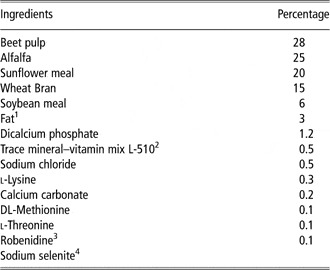
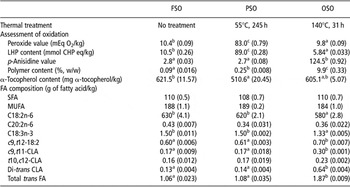
The unrefined sunflower oil (SO) was divided into three aliquots to perform the thermal treatment. The first aliquot, named fresh SO (FSO), did not suffer any thermal treatment. The second aliquot, named peroxidized SO (PSO), was heated at 55°C for 245 h in a heat exchanger under agitation, and the third aliquot, named oxidized SO (OSO), was heated in a direct heating fryer at 140°C for 31 h. Immediately after the thermal treatments, butyl hydroxytoluene (BHT) was added to the oils at 100 mg/kg in order to prevent development of oxidation during oil storage. Taking into account the antioxidants included in the vitamin premix of experimental feeds (Table 1), the global antioxidant amount included in our experimental feeds was 7 mg (BHT + butyl hydroxyanisol + ethoxyquin)/kg feed, which is much lower than the upper limit allowed by the European Regulation (European Commission, 2004). Several oxidation variables and the α-tocopherol (αT) content were measured in the three oils (Table 2).
Ingredients of diets

1The basal diet was supplemented with 3% (w/w) of fat. The type of fat added in each treatment depended on the experimental design.
2Supplied the following per kilogram of feed: 290 mg of magnesium oxide; 330 mg of sodium; 275 mg of sulfur; 700 μg of cobalt carbonate monohydrate; 10 mg of copper sulfate pentahydrate; 76 mg of ferrous sulfate monohydrate; 20 mg of manganese oxide; 59.2 mg of zinc oxide; 1.25 mg of potassium iodide; 8375 IU of vitamin A; 750 IU of vitamin D3; 20 mg of α-tocopherol; 1 mg of vitamin B1; 2 mg of vitamin B2; 1 mg of vitamin B6; 1 mg of vitamin K; 20 mg of niacin; 250 mg of choline chloride; 4 mg of butylated hydroxyanisol + ethoxyquin; 2.5 mg of flavophospholipol (80 mg/kg; Trouw Nutrition, Spain).
3Robenidine was not included in feeds given to the rabbits during their last week of life.
4Sodium selenite was added at 0.1 mg/kg of feed.
Assessment of oxidation, α-tocopherol content and fatty acid composition of oils after heating two aliquots of the same unrefined sunflower oil under different time and temperature conditionsFootnote 1,Footnote 2

FSO = fresh sunflower oil; PSO = peroxidized sunflower oil; OSO = oxidized sunflower oil; LHP = lipid hydroperoxide; FA = fatty acid; SFA = saturated fatty acid (sum of C14:0, C16:0, C17:0, C18:0, C20:0, C22:0 and C24:0); MUFA = monounsaturated fatty acid (sum of C16:1n-9, C18:1n-9, C20:1n-9, C16:1n-7 and C18:1n-7); di-trans CLA = mixture of di-trans CLA isomers; total trans FA = sum of FA containing at least one trans double bond.
a,b,c Values in the same row bearing no common letters are statistically different (P ⩽ 0.05). P-values were obtained from the one-way ANOVA (n = 9). Differences between means were studied by the Scheffé’s test (α = 0.05).
1 A table including the content of all quantified FA can be found as supplementary material.
2 Values correspond to means (n = 9, oils were analyzed in triplicate). Standard errors of the means are stated in parentheses.
Animals and diets
The preparation of diets and housing of animals took place in the Animal Science Department at the Polytechnic University of Valencia (Spain) and received prior approval from the Animal Protocol Review Committee of the Polytechnic University of Valencia. All animal housing, husbandry and slaughtering conditions agreed to the current European Union guidelines.
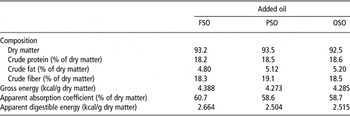
Twelve dietary treatments were prepared from a basal diet (Table 1) by the combination of the studied dietary factors, according to a factorial design (3 × 2 × 2), replicated four times: three types of oxidized SO (FSO, PSO and OSO) added to feeds at 3% (w/w), two doses of TA (0 or 100 mg TA/kg of feed) and two doses of Zn (0 or 200 mg/kg, added as ZnO). All diets contained 0.1 mg Se/kg, which is a higher amount than the usual content of Se in rabbit feeds (De Blas and Wiseman, Reference De Blas and Wiseman1998). Feeds were prepared at the beginning of the experimental trial and stored at ambient temperature until they were provided to the rabbits. Table 3 shows the composition, energy and digestibility of diets.
Composition, energy and digestibility of diets depending on the oil added to feedsFootnote 1

1 Table adapted from (Casado et al., Reference Casado, Biglia, Moya and Cervera2005).
Samples
Oils were taken immediately after thermal treatment and peroxide and p-anisidine values were determined within the following 6 h. Oil samples were stored in glass vials closed with Teflon caps, filled with N2, and frozen at −25°C until the rest of the analyses were performed.
Feed samples were taken at the end of the feeding trial. Feeds were ground and vacuum-packed in high-barrier multilayer bags (Cryovac BB325; Cryovac Europe, Sealed Air S. L., Sant Boi de Llobregat, Spain; permeability to O2 25 cm3/m2 per day per bar at 23°C and 0% RH, ASTMD-3985; Cryovac Europe; approximately 15 g feed per bag) and stored at −25°C until analysis. Feed analyses were performed in triplicate.
In all, 288 rabbits (crosses of New Zealand and Californian rabbits) were weaned at 28 days. They were randomly divided into 48 cages (12 dietary treatments, four replicates, six rabbits per cage) and fed ad libitum with the corresponding experimental diet. Mortality rates were not affected by the different dietary treatments. At 63 days of age, rabbits were electrically stunned and killed by cutting the carotids and jugulars. From four rabbits in each of the cages, 20 ml of blood per animal was collected in heparinized tubes and immediately centrifuged at 1450 g at 4°C for 10 min. Plasma samples from each cage were mixed and transferred into microtubes and stored at −80°C until analysis. Livers were immediately removed from carcasses and refrigerated for 5 h. Then, the six livers from each cage were mixed, ground and vacuum-packed in high-barrier multilayer bags (Cryovac BB325; approximately 15 g liver per bag) and stored at −80°C until analysis. Carcasses were refrigerated for 24 h at 4°C. One leg was taken from each animal of each cage and was hand deboned. Meat from the six legs was mixed, ground and divided into two parts: raw and cooked meat. Raw meat samples were vacuum-packed in high-barrier multilayer bags (Cryovac BB325; approximately 20 g meat per bag) and stored at −25°C until analysis. Cooked meat samples were prepared by vacuum-packing in high-barrier multilayer bags (Cryovac CN330; permeability to O2 15 cm3/m2 per day per bar at 23°C and 0% RH, ASTMD-3985; approximately 5 mm of meat thickness and 20 g meat per bag) and cooking in a water bath at 78°C for 5 min. Then, the cooked meat samples were stored at −25°C until analysis.
Reagents and standards
Pyrogallol, BHT, αT, thiobarbituric acid and cumene hydroperoxide were obtained from Sigma-Aldrich (St Louis, MO, USA). FA methyl esters were obtained from Larodan Fine Chemicals AB (Malmo, Sweden) and Sigma-Aldrich (St Louis). Xylenol orange was purchased from Scharlab (Barcelona, Spain). Se, Fe, Zn and Cu standard solutions (SCP Science, Montreal, Quebec, Canada) were traceable to the Standard Reference Materials of the National Institute of Standards and Technology. Methanol and ethanol used in αT analysis, polymer content, p-anisidine value and ferrous oxidation–xylenol orange method were of HPLC grade. Hydrogen peroxide (33%; ‘Suprapur’ grade) and sodium borohydride (98%; analytical reagent grade) were from Merck (Darmstadt, Germany). Sodium borohydride solution contained 0.2% NaBH4 and 0.05% NaOH. Other reagents were of ACS grade.
Analysis of oils
Oils were analyzed in triplicate. FA composition of oils was determined by gas chromatography. FA methyl esters were obtained as described by Guardiola et al. (Reference Guardiola, Codony, Rafecas, Boatella and López1994) and quantified by means of experimental calibration curves using 25 FA methyl esters as standards and heneicosanoic acid methyl ester (C21:0) as the internal standard. FA methyl esters were analyzed on an Agilent (Santa Clara, CA, USA) 4890D model gas chromatograph, fitted with a flame-ionization detector and split–splitless injector port, set at 300°C and 270°C, respectively. The split ratio was 1 : 30. Chromatographic separation of FA methyl esters was performed on a fused-silica capillary column (60 m × 0.25 mm i.d.) coated with 0.2 μm of a stationary phase of 90% biscyanopropyl-plus 10% cyanopropylphenyl-polysiloxane (SP-2380, Supelco, St Louis, MO, USA). He, at 30 p.s.i, was used as carrier gas, and the oven was programmed as follows: 5 min at 149°C and at 1.5°C/min to 181°C, then increased at 7.3°C/min to 216°C and finally increased at 5°C/min to 236°C and held for 6 min. The sample volume injected was 1 μl.
The αT content of oils was determined after a saponification by HPLC-fluorescence detection (Bou et al., Reference Bou, Codony, Tres, Baucells and Guardiola2005b). Briefly, 5 ml of absolute ethanol containing 1% pyrogallol (w/v), 0.012% BHT (w/v) and 0.4% anhydrous citric acid (w/v) was added to 0.25 g of oil. In all, 10 ml of 1.6 N methanolic KOH was added and saponification was carried out at 70°C for 30 min. Non-saponifiables were then extracted with petroleum ether and filtered through a 0.45 μm Teflon membrane. After solvent evaporation under an N2 stream at 30°C, the residue was redissolved in 96% ethanol. Chromatographic separation of this solution was performed using a Hewlett Packard Series 1100 (Waldbronn, Germany) liquid chromatograph (equipped with a Rheodyne 7725i model injector) with a loop volume of 20 μl, a column (15 × 0.4 cm) packed with 3 μm −80Å Extrasil ODS2. Sample compounds were isocratically eluted with methanol and detected by means of a Hewlett-Packard-1046A (Waldbronn, Germany) spectrofluorometric detector (excitation and emission wavelengths of 288 and 330 nm, respectively). αT content was determined by means of an experimental calibration curve using αT as the external standard.
Oxidation of oils was assessed by means of the p-anisidine value (The American Oils Chemists Society Official Method Cd 18-90 (AOCS, 1998 to 2008)) that measures the content of aldehydes in the oil (mainly 2-alquenals and 2,4-alcadienals), the peroxide value (DGF method C-VI 6a (Deutsche Gesellschaft für Fettwissenschaft (DGF), 2002)) and the ferrous oxidation-xylenol orange method (LHP content; Navas et al., Reference Navas, Tres, Codony, Boatella, Bou and Guardiola2004). As described in Navas et al. (Reference Navas, Tres, Codony, Boatella, Bou and Guardiola2004), LHP from the sample oxidize ferrous ions to ferric ions that bind xylenol orange. The reaction took place in glass cuvettes capped with Teflon caps under attenuated light. Reaction medium consisted of 100 μl 5 mM aqueous ferrous ammonium sulphate, 200 μl 0.25 mM methanolic H2SO4, 200 μl 1 mM methanolic xylenol orange, 1300 μl dichloromethane/ethanol (3:2, v/v) and 200 μl dichloromethane/ethanol (3:2, v/v) containing the oil sample. After 30 min of reaction, absorbance at 560 nm is measured in a Shimadzu UV-160A (Shimadzu, Kyoto, Japan) spectrophotometer and LHP content is determined by means of a calibration curve using cumene hydroperoxide as the standard (Navas et al., Reference Navas, Tres, Codony, Boatella, Bou and Guardiola2004). The polymer content of oils was also determined (DGF method C-III 3d (<3%; DGF, 2000), IUPAC 2508 (>3%; International Union of Pure and Applied Chemistry (IUPAC), 1992; Table 2).
FA composition of plasma, liver and meat
To assess the FA composition of feed, liver and meat, fat was extracted with chloroform/methanol (2 : 1, v/v) as described in Tres et al. (Reference Tres, Bou, Codony and Guardiola2008). Fat from plasma samples was also extracted using chloroform/methanol (2 : 1, v/v), but the amount of sample and reagents was adapted to these samples, as described in Tres et al. (Reference Tres, Bou, Codony and Guardiola2009). FA methyl esters were determined by gas chromatography as described for oil samples.
Determination of the Zn, Cu, Fe and Se content in meat
The content of Zn, Cu, Fe and Se was determined in raw meat, as described by Bou et al. (Reference Bou, Guardiola, Padró, Pelfort and Codony2004a). Briefly, samples were digested with 5 ml of 65% nitric acid and 2 ml of 33% hydrogen peroxide in closed PTFE vessels (Milestone, Monroe, CT, USA). Digestion was conducted in a microwave oven (Milestone) by applying a four-step program as follows: first, heating at a rate of 10°C/min up to 120°C and holding for 5 min, then at 10 °C/min up to 150°C and holding for 5 min, again at 10°C/min up to 180°C and a 5 min hold, and finally at 10°C/min up to 200°C and holding for 10 min. After cooling down, the digested solutions were diluted to 20 ml with double deionized water. The content of Zn, Cu and Fe was determined by ICP-AES, measuring two wavelengths for each element (213.857 and 206.200 nm, 324.752 and 327.393 and 238.204 and 259.939 nm for Zn, Cu and Fe, respectively). The content of Se was determined by inductively coupled plasma-mass spectrometry (ICP-MS) after hydride generation (HG). In all, 1 ml of concentrated HCl was added to 1 ml of the digested solution and heated at 1 h at 60 °C in an oven. After cooling, 8 ml of double deionized water was added to obtain the optimal HCl concentration (pre-reduced Se solution) for Se quantification by HG-ICP-MS. Pre-reduced Se(IV) reacted with sodium borohydride solution to form hydrogen selenide using a flow injection system and was introduced into the ICP-MS. Instrumental measurement conditions can be found in Bou et al. (Reference Bou, Guardiola, Padró, Pelfort and Codony2004a). Calibration curves of Zn, Cu, Fe and Se were used for quantification.
Statistics
Statistical analysis was perfomed using the SPSS 15.0 (SPSS Inc., Chicago, IL, USA) software. One-way ANOVA was used to determine whether there were any differences in the FA composition, the αT content and the oxidation parameters assessed in the oils added to feeds, as a result of heating conditions (n = 9, oils were analyzed in triplicate). Multifactor ANOVA (n = 36, feeds were analyzed in triplicate) was used to determine whether there were any significant differences in the FA composition and the αT content among the feeds due to the addition of oxidized oils, TA and Zn to them. Multifactor ANOVA was used to determine whether there were any significant differences in the FA composition of plasma (n = 48), liver (n = 48), raw meat (n = 48) and cooked meat (n = 48) due to the studied dietary factors (levels of oxidation of oil added to feeds and TA and Zn supplementation). Multifactor ANOVA was used to determine whether there were any significant differences in the Zn, Cu, Fe and Se content in raw meat (n = 48) due to the studied dietary factors. Multifactor ANOVA was used to determine significant differences in the FA composition of meat due to the effect of cooking (n = 96, raw and cooked meat samples). In all cases, interactions between more than two factors were ignored. Least square means for the main factors that had a significant effect were separated by Scheffé’s test. In all cases, P ⩽ 0.05 was considered significant.
Results and discussion
Oils and feeds
Thermal treatment of oils altered their oxidation, FA composition and αT content (Table 2). Heating SO at 55°C for 245 h (PSO) led to an increase in its primary oxidation compounds as it was reflected by both the peroxide value and LHP content, while secondary oxidation compounds remained at the level found in FSO. However, heating SO at 140°C for 31 h increased the p-anisidine value and the polymer content, and reduced both the peroxide value and LHP content due to the high instability of primary oxidation compounds at high temperatures and their decomposition into secondary oxidation compounds (Frankel, Reference Frankel1998).
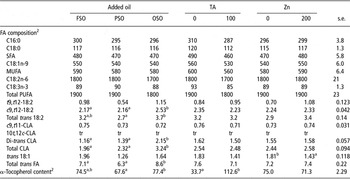
The content of αT in PSO oil was significantly reduced as a result of thermal treatment (Table 2). Oils were directly added to feeds (3%, w/w), without adding the tocopherol that was lost during heating, which caused the PSO feeds to present the lowest αT content (Table 4).
Fatty acid composition and α-tocopherol content of feeds depending on the oxidation of the oil added to feeds (3%, w/w), and on the supplementation with α-tocopheryl acetate (0 or 100 mg/kg) and Zn (0 or 200 mg/kg; added as ZnO) Footnote 1

FSO = fresh sunflower oil; PSO = peroxidized sunflower oil; OSO = oxidized sunflower oil; TA = α-tocopheryl acetate; s.e. = standard error of the global least square means; FA = fatty acid; SFA = saturated fatty acid (sum of C12:0; C14:0; C15:0; C16:0; C17:0; C18:0; C20:0; C22:0 and C24:0); MUFA = monounsaturated fatty acids (sum of C16:1n-9; C18:1n-9; C20:1n-9; C24:1n-9; C16:1n-7 and C18:1n-7); total PUFA = sum of polyunsaturated fatty acids (C18:2n-6; C20:2n-6, C20:4n-6, C18:3n-3; C20:3n-3 and C20:5n-3); total trans 18:2 = sum of geometrical isomers of linoleic acid; di-trans CLA = mixture of di-trans CLA isomers; total trans FA = sum of FA containing at least one trans double bond; tr = traces.
a,b Values in the same row for a certain factor bearing no common letters are statistically different (P ⩽ 0.05). P-values were obtained from the multifactor ANOVA (n = 36). Differences between means were studied by the Scheffé’s test (α = 0.05).
1 A table including the content of all quantified FA can be found as supplementary material.
2 FA composition expressed as mg FA/100 g feed; α-tocopherol content expressed as mg α-tocopherol/kg feed. Values correspond to least square means obtained from multifactor ANOVA (n = 36, feeds were analyzed in triplicate).
In OSO oil, the content of C18:2n-6 and C18:3n-3 was reduced due to the heating process (Table 2). However, no significant differences were encountered for the content of these FA in OSO feeds (Table 4), because feeds only contained 3% (w/w) of added oil, and their FA composition was also affected by the other feed ingredients.
Regarding the content of trans FA in oils after the heat treatment, the content of c9,t12-18:2, c9,t11-CLA and di-trans CLA (mixture of di-trans CLA isomers) increased in OSO oil with respect to FSO oil (di-trans CLA showed the highest increase (Table 2)). This is in agreement with previous studies that reported that geometric and positional isomerization of linoleic acid increased as a result of heating (above 180°C; Juanéda et al., Reference Juanéda, Brac De la Pérrière, Sébédio and Grégoire2003; Bou et al., Reference Bou, Codony, Tres, Baucells and Guardiola2005b; Destaillats and Angers, Reference Destaillats and Angers2005), and that di-trans isomers were the main CLAs formed due to geometrical isomerization that increased with temperature (180°C, 200°C or 220°C), heating time (24 to 240 h), presence of oxygen (Destaillats and Angers, Reference Destaillats and Angers2005) and when polar compounds were over 30% (w/w; Juanéda et al., Reference Juanéda, Brac De la Pérrière, Sébédio and Grégoire2003).
These effects of heating conditions on trans FA composition of oils were partially reflected in feed FA composition (Table 4). The content of c9,t12-18:2 and di-trans CLA was higher in OSO feeds with respect to FSO and PSO feeds, as found in the corresponding oils. c9,t11-CLA did not vary significantly between feeds, although it was higher in OSO oil. This might be caused by the dilution effect of adding only 3% (w/w) of oil to feeds.
Content of Zn, Cu, Fe and Se in raw meat
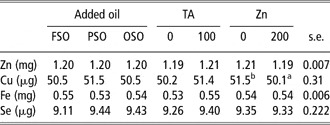
Raw meat content of Zn, Cu, Fe and Se was not affected by the type of oxidized oil added to feeds or by TA supplementation (Table 5). Similar results were found in studies with chickens (Bou et al., Reference Bou, Guardiola, Tres, Barroeta and Codony2004b; Bou et al., Reference Bou, Codony, Baucells and Guardiola2005a).
Element content (Zn, Cu, Fe and Se) in 100 g of raw rabbit meat as affected by the studied dietary factors: level of oxidation of the oil added to feeds and supplementation with α-tocopheryl acetate (0 or 100 mg/kg of feed) and Zn (0 or 200 mg Zn/kg, added as ZnO)Footnote 1

See Table 4 for abbreviations.
a,b Values in the same row for a certain factor bearing no common letters are statistically different (P ⩽ 0.05). P-values were obtained from the multifactor ANOVA (n = 48). Differences between means were studied by the Scheffé’s test (α = 0.05).
1 Values correspond to the least square means obtained from multifactor ANOVA (n = 48).
The dietary supplementation with 200 mg Zn/kg did not modify the content of Zn, Fe and Se of raw rabbit meat (Table 5). In humans, Zn supplementation led to controversial results on re-establishing Zn content (Maret and Sandstead, Reference Maret and Sandstead2006). A balance between absorption and excretion of Zn maintains Zn homeostasis (Food and Nutrition Board, 2000b), and cellular Zn is also regulated by many proteins (Maret and Sandstead, Reference Maret and Sandstead2006).
The content of Cu in meat was reduced by dietary supplementation with 200 mg Zn/kg (Table 5). Reductions on the Cu status have been described in rats and humans as a result of diets with moderate or high doses of Zn associated with normal or marginal Cu doses (Yuzbasiyan-Gurkan et al., Reference Yuzbasiyan-Gurkan, Grider, Nostrant, Cousins and Brewer1992; Sundaresan et al., Reference Sundaresan, Kaup, Wiesenfeld, Chirtel, Hight and Rader1996; Food and Nutrition Board, 2000b; Maret and Sandstead, Reference Maret and Sandstead2006). Zn supplementation has also led to alterations of the activity of Cu-dependent enzymes as ceruloplasmine or Cu–Zn superoxide dismutase (Sundaresan et al., Reference Sundaresan, Kaup, Wiesenfeld, Chirtel, Hight and Rader1996; Food and Nutrition Board, 2000b). This effect of dietary Zn on Cu status has been attributed to an induction of metallothionein by Zn in the intestinal cells, which might retain Cu within the enterocytes (Yuzbasiyan-Gurkan et al., Reference Yuzbasiyan-Gurkan, Grider, Nostrant, Cousins and Brewer1992). However, other mechanisms as an alteration of the expression or the activities of Cu transport proteins in the enterocytes might be also involved (Yuzbasiyan-Gurkan et al., Reference Yuzbasiyan-Gurkan, Grider, Nostrant, Cousins and Brewer1992; Food and Nutrition Board, 2000b).
Similar studies assessing the Zn, Cu, Fe and Se content in meat as a result of the dietary supplementation with Zn and Se have been conducted in chickens (Bou et al., Reference Bou, Codony, Baucells and Guardiola2005a; Bou et al., Reference Bou, Guardiola, Barroeta and Codony2005c). In these studies, neither the Zn nor the Cu content was modified by supplementing feeds with 200 or 600 mg Zn/kg, but it led to a higher content of Se in meat, which could be attributed to an alteration of the metabolism of metallothioneins and selenoproteins by the increase in dietary Zn (Bou et al., Reference Bou, Codony, Baucells and Guardiola2005a; Bou et al., Reference Bou, Guardiola, Barroeta and Codony2005c). This effect of Zn supplementation on Se content was not observed in our study, although our feeds contained a dose of Se (0.1 mg/kg), which was higher than the usual Se content in rabbit feeds (De Blas and Wiseman, Reference De Blas and Wiseman1998). This lack of effect of Zn on the Se content of rabbit meat may be due to the lower doses of Zn added to our feeds (200 mg/kg); however, differences between species should also be taken into account, because it seems that some proteins, for instance glutathione peroxidase, that depend on Se in other species (as chickens and humans) do not depend on Se in rabbits (De Blas and Wiseman, Reference De Blas and Wiseman1998). In fact, supplementing rabbit diets with higher doses of Se (0.5 mg/kg, added as Se-enriched yeast) than in our study, Dokoupilová et al. (Reference Dokoupilová, Marounek, Skřivanová and Bŕezina2007) encountered increases in the tissue Se content, but not in the activity of glutathione peroxidase. Further studies are needed to determine the different Se forms present in rabbits, and how they are absorbed, metabolized and affected by dietary factors, for instance by the different Se forms.
FA composition of plasma, liver and raw meat
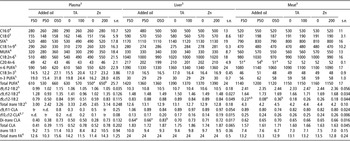
Rabbit plasma, liver and meat FA composition (Table 6) reflected the FA composition of feeds (Table 4). The content of di-trans CLA in plasma, liver and meat varied according to their content in feed, increasing significantly in liver when OSO oil was added to feeds (P < 0.001; Table 6). Meat from rabbits on OSO diets showed a higher content of t9,c12-18:2 (Table 6). As the content of C18:2n-6 and C18:3n-3 was similar among the feeds, the content of these FA in plasma, liver and meat was not modified by the addition of heated oils to feeds. Thus, the presence of a high content of primary or secondary oxidation products in oils added to feeds did not substantially alter the FA composition of plasma, liver and meat (Table 6). Although the oxidation and the polymer content increased in OSO oil, it was below the limits established in some official regulations for discarding frying oils (Firestone, Reference Firestone2004).
FA composition of rabbit plasma, liver and raw meat depending on the level of oxidation of the sunflower oil added to feeds, and on the supplementation with α-tocopheryl acetate (0 or 100 mg/kg of feed) and Zn (0 or 200 mg/kg of feed, added as ZnO)Footnote 1,Footnote 2

FSO = fresh sunflower oil; PSO = peroxidized sunflower oil; OSO = oxidized sunflower oil; TA = α-tocopheryl acetate; s.e. = standard error of the global least square means; FA = fatty acids; SFA = saturated fatty acids (sum of C12:0; C14:0; C15:0; iso-16:0; C16:0; C17:0; C18:0; C20:0; C22:0 and C24:0); MUFA = monounsaturated fatty acids (sum of C16:1n-9; C18:1n-9; C20:1n-9; C24:1n-9; C16:1n-7 and C18:1n-7); PUFA = polyunsaturated fatty acids; n-6 PUFA = sum of C18:2n-6; C18:3n-6; C20:2n-6, C20:3n-6; C20:4n-6; C22:4n-6 and C22:5n-6; n-3 PUFA = sum of C18:3n-3; C18:4n-3; C20:3n-3; C20:5n-3, C22:5n-3 and C22:6n-3; total trans 18:2 = sum of geometrical isomers of linoleic acid; di-trans CLA = mixture of di-trans CLA isomers; total trans FA = sum of FA containing at least one trans double bond; n.d. = not detected; tr = traces.
a,b Values in the same row for a certain factor and for the same sample bearing no common letters are statistically different (P ⩽ 0.05). P-values were obtained from the multifactor ANOVA (n = 48 for plasma, n = 48 for liver, n = 48 for meat). Differences between means were studied by the Scheffé’s test (α = 0.05).
1 A table including the content of all quantified FA can be found as a supplementary material.
2 Values correspond to least square means obtained from the multifactor ANOVA (n = 48 for plasma, n = 48 for liver and n = 48 for raw meat).
3 FA composition expressed as mg FA/l plasma, mg FA/100 g of liver or mg FA/100 g of meat.
4 In meat, interaction between added oil × Zn supplementation was significant at P ⩽ 0.05.
5 In meat, interaction between added oil × Zn supplementation was significant at P ⩽ 0.01.
6 In liver, interaction between added oil × Zn supplementation was significant at P ⩽ 0.05.
7 In liver, interaction between added oil × TA supplementation was significant at P ⩽ 0.01.
The content of di-trans CLA in chicken meat has been reported to be a good marker of the addition of SO heated at high temperatures to feeds (6%, w/w; Bou et al., Reference Bou, Codony, Tres, Baucells and Guardiola2005b). In their study, the content of di-trans CLA in chicken meat (with skin) was higher (9 mg/100 g meat) than in our rabbit meat from the OSO diet (0.7 mg/100 g meat) because they added a higher amount of oil to feeds (6%, w/w); a higher temperature was used to oxidize refined SO (190°C to 195°C for 28 h), and chicken meat (with skin) had a higher fat content than rabbit meat (Bou et al., Reference Bou, Codony, Baucells and Guardiola2005a; Bou et al., Reference Bou, Codony, Tres, Baucells and Guardiola2005b).
Although di-trans CLA isomers were more abundant in feeds than monotrans CLA, c9,t11-CLA was the more abundant CLA isomer in liver and meat. The content of the different CLA isomers in rabbit tissues could not only be attributed to a direct incorporation from diet since c9,t11-CLA can be synthesized from t11-18:1 by Δ9-desaturase in tissues (Lo Fiego et al., Reference Lo Fiego, Macchioni, Santoro, Rossi, Pastorelli and Corino2005; Palmquist et al., Reference Palmquist, Lock, Shingfield and Bauman2005; Corino et al., Reference Corino, Lo Fiego, Macchioni, Pastorelli, Di Giancamillo, Domeneghini and Rossi2007). CLA can also be formed by bacterial fermentation in the large intestine, and as they are poorly absorbed there, they are excreted in the feces (Leiber et al., Reference Leiber, Meier, Burger, Wettstein, Kreuzer, Hatt and Clauss2008), and through cecotrophy, CLA and other FA metabolites could reach the tissues (Lo Fiego et al., Reference Lo Fiego, Macchioni, Santoro, Rossi, Pastorelli and Corino2005; Gómez-Conde et al., Reference Gómez-Conde, Menoyo, Chamorro, Lopez-Bote, García-Rebollar and De Blas2006; Leiber et al., Reference Leiber, Meier, Burger, Wettstein, Kreuzer, Hatt and Clauss2008). Although the effect of coprophagy is marginal on the rabbit tissue FA composition, it is not negligible for the content of some FA as CLA (Leiber et al., Reference Leiber, Meier, Burger, Wettstein, Kreuzer, Hatt and Clauss2008).
In addition, the content of the different CLA isomers in tissues could be also related to other mechanisms. For instance, the higher content of c9,t11-CLA than other CLA isomers could be a consequence of the preferential use of t10,c12-CLA for β-oxidation (Martin et al., Reference Martin, Grégoire, Siess, Genty, Chardigny, Berdeaux, Juanéda and Sébédio2000) and for synthesizing long-chain metabolites from it (Evans et al., Reference Evans, Brown and McIntosh2002).
Regarding the non-conjugated isomers of linoleic acid, only di-trans 18:2 and c9,t12-18:2 were detected in feeds (Table 4), but in plasma, liver and meat, t9,c12-18:2 was also detected (Table 6). As described for other FAs such as c9,t11-CLA, this FA could be formed by intestinal bacteria and then absorbed by rabbits through cecotrophy (Gómez-Conde et al., Reference Gómez-Conde, Menoyo, Chamorro, Lopez-Bote, García-Rebollar and De Blas2006; Leiber et al., Reference Leiber, Meier, Burger, Wettstein, Kreuzer, Hatt and Clauss2008).
The non-conjugated isomers of linoleic acid were differently incorporated into liver and meat. The ratios between the content of c9,t12-18:2 or linoleic acid in tissues and their respective content in feeds were similar, but di-trans-18:2 was more incorporated than them in both tissues (Table 6). These results are in accordance with the incorporation of these isomers in chicken meat (Bou et al., Reference Bou, Codony, Tres, Baucells and Guardiola2005b), and might be related to the higher metabolization of 18:2 isomers with a cis instead of a trans double bond in 9 position (Sébédio and Chardigny, Reference Sébédio and Chardigny1998). Moreover, di-trans-18:2 showed a preference to be more accumulated in liver than in meat. Likely, muscle tissue has a lower content of SFA than liver in order to maintain the fluidity of its membranes. Thus, the uptake of both SFA and trans FA by muscle tissue might be lower than that by liver.
In addition, while the proportion of linoleic acid in liver and meat was similar, the content of linolenic acid in liver was lower than in meat, according to previously reported results (Tres et al., Reference Tres, Bou, Codony and Guardiola2009). This was attributed to the preference of liver to accumulate linoleic acid, or to a higher use of linolenic acid for β-oxidation or for biosynthesis of long-chain n-3 PUFA.
Dietary supplementation with 100 mg of TA/kg of feed did not modify the content of any of the quantified FA in plasma, liver or meat (Table 6). Haak et al. (Reference Haak, Raes, Van Dyck and De Smet2008) did not find differences in the FA composition of pork meat due to TA supplementation when feeds contained 2% (w/w) heated linseed oil (at 50°C for 4 days with aeration and addition of CuSO4). However, in other studies that dealt with the incorporation of heated SO (Bou et al., Reference Bou, Codony, Baucells and Guardiola2005a; Bou et al., Reference Bou, Grimpa, Guardiola, Barroeta and Codony2006) or polyunsaturated oils to feeds (Castellini et al., Reference Castellini, Dal Bosco, Bernardini and Cyril1998; Bou et al., Reference Bou, Grimpa, Guardiola, Barroeta and Codony2006; Tres et al., Reference Tres, Bou, Codony and Guardiola2008), increases on liver and meat PUFA content due to supplementation with TA have been reported. This was related to a protection effect of αT against FA oxidation, and also to an enhancement of the biosynthesis of long-chain PUFA because α-tocopheryl quinone, an oxidative derivative of αT, has been described to be a cofactor of Δ6-desaturase, a rate-limiting enzyme involved in PUFA biosynthesis (Tres et al., Reference Tres, Bou, Codony and Guardiola2008).
The dietary supplementation with Zn did not lead to differences in the liver FA content (Table 6), but in plasma a significant increase in the content of C20:5n-3 and total PUFA was observed, and although it was not significant, the same trend could be observed in most FAs (Table 6).
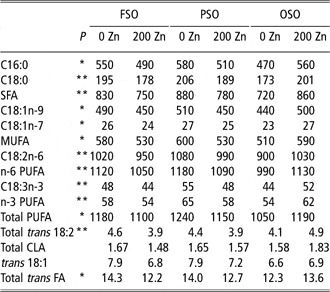
The addition of 200 mg of Zn/kg of feed affected meat FA composition in a different way depending on the type of oxidized oil added to feeds (Table 7). The dietary supplementation with Zn increased the content of some FA (C14:0, C15:0, C16:0, C18:0, C16:1n-9, C18:2n-6, C18:3n-3 and t9,t12-18:2, among others) in OSO meats, but decreased their content in PSO meats. Although these differences were statistically significant, their magnitude was small. The same interaction had also been found for trans-18:1 in chicken meat after Zn supplementation in diets containing heated oils (Bou et al., Reference Bou, Codony, Tres, Baucells and Guardiola2005b).
Effect of the level of oxidation of the oil added to feeds and the dietary supplementation with Zn (0 or 200 mg/kg) on the fatty acid (FA) composition of raw rabbit meat (mg FA/100 g of meat)Footnote 1,Footnote 2

See Table 6 for abbreviations.
1 A table including the content of all quantified FA can be found as supplementary material.
2 Values given are least-squares means obtained from the multifactor ANOVA (n = 48). Interaction between oil added to feeds and Zn supplementation significant at *P ⩽ 0.05, **P ⩽ 0.01.
Our study does not allow us to determine the mechanisms by which oxidized oils and Zn supplementation produce these effects on meat FA content. In fact, little research has been carried out until now focusing on animal feeding with heated oils, or on dietary supplementation with Zn, and even less on the effects of the addition of both dietary factors. Some hypothesis could be raised for the mechanisms involved in this interaction, including alterations of the digestion process, fat absorption, distribution, deposition or metabolism. In fact, several of those or other mechanisms could occur simultaneously. Zn interacts with several proteins, regulates several biological functions, and has a well-regulated homeostasis (Food and Nutrition Board, 2000b). As meat Zn content was not modified by dietary Zn supplementation or by the addition of heated oils to feeds (Table 5), it rules out that the effects on FA content were due to some direct effect of Zn in the FA metabolism. Thus, the origin of this interaction could be in the gastrointestinal tract, before incorporation into the tissues. However, plasma FA composition was not evidently affected by both dietary factors (i.e. 147, 150 and 156 mg C18:0/l plasma from FSO-0 Zn, PSO-0Zn and OSO-0 Zn diets, respectively, and 161, 146 and 161 mg C18:0/l plasma from FSO-200Zn, PSO-200Zn and OSO-200Zn diets, respectively (s.e., 15 mg/l; P = 0.81)). As the origin of this effect of Zn supplementation is unknown, and multiple mechanisms could be involved, further studies are needed to determine how these dietary factors interact.
Effect of cooking on meat FA composition
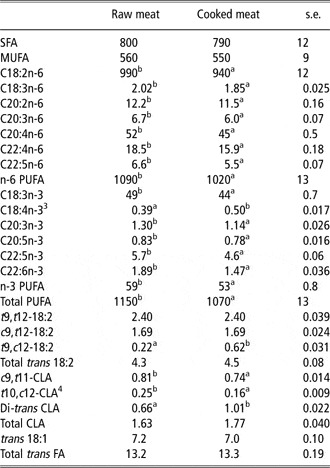
Cooking vacuum-packed raw rabbit meat in a water bath at 78°C for 5 min altered meat FA composition (Table 8). Cooking led to a loss in the content of some PUFA because they are more prone to oxidation than other FA, as has been reported in other studies in several species (Castellini et al., Reference Castellini, Dal Bosco, Bernardini and Cyril1998; Dal Bosco et al., Reference Dal Bosco, Castellini and Bernardini2001; Bou et al., Reference Bou, Grimpa, Guardiola, Barroeta and Codony2006; Tres et al., Reference Tres, Bou, Codony and Guardiola2008). Although it was significant, the reductions in the amount of each FA were not as pronounced as in other studies in which meat presented a more unsaturated FA profile, and was cooked at higher temperature or for a longer time (Castellini et al., Reference Castellini, Dal Bosco, Bernardini and Cyril1998; Tres et al., Reference Tres, Bou, Codony and Guardiola2008).
Changes in fatty acid (FA) composition (mg FA/100 g of meat) after cooking vacuum-packed rabbit meatFootnote 1,Footnote 2

See Table 6 for abbreviations.
a,b Values in the same row for a certain factor bearing no common letters are statistically different (P ⩽ 0.05). P-values were obtained from the multifactor ANOVA (n = 96). Differences between means were studied by the Scheffé’s test (α = 0.05).
1 A table including the content of all quantified FA can be found as a supplementary material.
2 Values correspond to least square means obtained from the multifactor ANOVA (n = 96, 48 raw samples and 48 cooked samples).
3 Interaction between cooking × added oil significant at P ⩽ 0.05.
4 Interaction between cooking × TA supplementation significant at P ⩽ 0.05.
Time and temperature conditions during cooking determine the extent of PUFA losses in meat (Min and Ahn, Reference Min and Ahn2005). For instance, Dal Bosco et al. (Reference Dal Bosco, Castellini and Bernardini2001) boiled vacuum-packed rabbit meat at a higher temperature for a longer time than we did and found higher decreases in n-3 PUFA content than in our study.
In our study, dietary supplementation with TA (100 mg/kg) did not prevent the loss of PUFA during cooking. The contrary was encountered in studies in which fats added to rabbit feeds presented a more unsaturated FA profile (Castellini et al., Reference Castellini, Dal Bosco, Bernardini and Cyril1998; Dal Bosco et al., Reference Dal Bosco, Castellini and Bernardini2001). However, the loss of PUFA in our meats was slight, which could be related to the mild temperature and short heating time applied (Table 8). As the changes in FA composition after cooking were minimal in our study, the dietary factors affected the FA content of cooked meat similarly to the case of raw meat.
In conclusion, the presence of primary or secondary oxidation compounds in fats added to feeds did not alter rabbit meat FA composition to a great extent. When the content of di-trans CLA in oil increased as a result of the heating conditions, it increased the di-trans CLA content in the liver. Other aspects as meat oxidability should also be evaluated. In addition, as the dietary supplementation with Zn led to a reduced Cu content in meat, when feeds are supplemented with Zn, their Cu content should also be increased to avoid possible Cu deficiencies. Further studies are needed to establish the correct doses of these mineral elements and their ratio.
Acknowledgements
This study was funded by the Ministerio de Educación y Ciencia (Spain) and by a research grant from Instituto Danone to A. Tres. The authors thank ‘Frit Ravich’ and ‘Laboratorios Salvat’ for allowing them to use their facilities for heating the experimental oils. The authors also thank the Department of Animal Science of the Polytechnic University of Valencia for the housing of animals and slaughtering facilities, and E. Carmona for her help in the analyses.