1 Introduction
In 1900, D. Hilbert posed the following question (which was the tenth in his list of twenty-three questions): does there exist an algorithm (Turing machine) that takes as input polynomial equations over
 $\mathbb {Z}$
and decides whether they have integer solutions. Building on the work of M. Davis, H. Putnam, and J. Robinson in [Reference Davis, Putnam and Robinson6, Reference Davis and Putnam5, Reference Robinson19], Y. Matiyasevich proved that computably enumerable sets over
 $\mathbb {Z}$
are exactly the same as the Diophantine sets over
 $\mathbb {Z}$
; see [Reference Matijasevic15]. In other words, he proved that Hilbert’s 10th problem is unsolvable.
Soon after in 1978, J. Denef and L. Lipshitz [Reference Denef and Lipshitz7] asked whether there exists an algorithm (Turing machine) that takes as input polynomial equations over
 $\mathcal {O}_F$
(the ring of integers of a number field F) and decides whether they have integer solutions. A straight-forward argument shows that if
 $\mathbb {Z}$
is Diophantine in
 $\mathcal {O}_F$
, then the analog of Hilbert’s 10th problem for
 $\mathcal {O}_F$
has a negative solution.
At the start of the 21st century, it was first observed by B. Poonen that there is a connection between rank stabilization of elliptic curve in extensions of number fields and Hilbert’s 10th problem, [Reference Poonen18]. The result was further strengthened by A. Shlapentokh (which is recorded in Theorem 2.2) and has been one of the key tools in proving new cases of the conjecture of Denef–Lipshitz. For several classes of number fields, Denef–Lipshitz conjecture has been established. For example, (i) if a number field is totally real, (ii) if it a quadratic extension of a totally real number field, (iii) if the number field is abelian or (iv) if it has precisely one (pair of) complex places. There are also important related works of B. Mazur–K. Rubin [Reference Mazur and Rubin16]. For degree
 $6$
number fields of the form
 $\mathbb {Q}(\sqrt {-q}, \sqrt [3]{p})$
as p and q vary over certain explicit set of primes of positive density, Denef–Lipshitz conjecture was established in [Reference Garcia-Fritz and Pasten8, Reference Kundu, Lei and Sprung13]. On the other hand, [Reference Shnidman and Weiss21] proves that for a positive proportion of integers a, Hilbert’s 10th problem is unsolvable for
 $\mathcal {O}_F$
where F is of the form
 $\mathbb {Q}(\sqrt [6]{a})$
.
We consider Hilbert’s 10th problem for the ring of integers of certain
 $S_3$
extensions and degree 12 extensions of
 $\mathbb {Q}$
. The Kummer extension
 $\mathbb {Q}(\zeta _3, \sqrt [3]{m}), m \in \mathbb {Z}$
is the first layer of the so called “false Tate curve” extension for
 $p=3$
and is widely studied in (non-commutative) Iwasawa theory. Using Mordell curves
 $\mathsf {E}_a: y^2 = x^3 + a, a \in \mathbb {Z}$
and its cubic twists, we apply results on the cube-sum problem to prove new cases of the Hilbert’s 10th problem. In particular, we prove the following results.
Theorem A For
 $\frac {5}{6}$
-th of all primes p, Hilbert’s 10th problem has a negative solution over the ring of integers of
 $\mathbb {Q}(\zeta _3, \sqrt [3]{p})$
.
Proposition A Hilbert’s 10th problem is unsolvable over the ring of integers of
 $\mathbb {Q}(\zeta _3, \sqrt {D}, \sqrt [3]{p})$
, where D varies over an infinite set S consisting of square-free integers and p is a prime such that
 $p \equiv 2,5\ \pmod 9$
. Further,
 $\#(S \cap [-X,X]) \gg X^{1 - \epsilon }$
where
 $X \gg 0$
and for any
 $\epsilon>0$
.
We emphasize that this result complements the results proven in [Reference Kundu, Lei and Sprung13] and indeed provides (infinitely many) new examples of number fields where Hilbert’s 10th problem is unsolvable.
We are interested in Hilbert’s 10th problem for the ring of integers of
 $\mathbb {Q}(\zeta _3, \sqrt [3]{m}), m\in \mathbb {Z}$
and it raised the following natural question which is of interdependent interest: given a Mordell elliptic curve
 $\mathsf {E}_a: y^2=x^3+a, a \in \mathbb {Z}$
does there exist a cube-free integer D co-prime to a such that precisely one of the elliptic curves
 $\mathsf {E}_a, \mathsf {E}_{aD^2}, \mathsf {E}_{aD^4}$
has positive Mordell–Weil rank over
 $\mathbb {Q}$
? We did an extensive computation on this on SAGE/MAGMA which are mentioned in Section 3. This led us to apply results from the cube-sum problem.
As we were completing our preprint, C. Pagano–P. Koymans announced an unconditional proof of the unsolvability of Hilbert’s 10th problem [Reference Koymans and Pagano12] over the ring of integers of any number field. Their result is accomplished by constructing elliptic curves
 $\mathsf {E}$
and studying their quadratic twists to guarantee that there is no rank growth of
 $\mathsf {E}$
in certain quadratic extensions. They use
 $2$
-descent argument and tools from additive combinatorics. On the other hand, our approach involves studying cubic twists instead of quadratic twists of elliptic curves. In fact, we specifically use Mordell curves. We use results from the cube-sum problem to study the cubic twists of the Mordell curves. Thus our method is different. Even more recently, L. Alpöge–M. Bhargava–W. Ho–A. Shnidman announced another proof; see [Reference Alpöge, Bhargava, Ho and Shnidman1].
Organization
Including this introduction, there are four sections in this short note. Section 2 is preliminary in nature, where we record crucial results that will be used in the main argument. In Section 3, we discuss the main motivation behind this note and also raise questions which we have not been able to answer completely. In Section 4, we state and prove the main result of our note.
2 Preliminaries
In this section, we record some results which will be used crucially in our argument(s).
2.1 Cube-sum problem
The classical Diophantine cube-sum problem asks the question: which integers D can be expressed as a sum of two rational cubes? An integer D is called a cube-sum (resp. not a cube-sum), if
 $x^3+y^3=D$
has (resp. does not have) a rational solution. The elliptic curve
 $X^3+Y^3=DZ^3$
can be expressed in the Weierstrass equation as
 $y^2=x^3-432D^2$
and for a cube-free integer
 $D>2$
it is known that torsion subgroup of
 ${\mathsf {E}_{-432D^2}(\mathbb {Q})}$
vanishes. Thus, a cube-free integer
 $D> 2$
satisfies
 $D=a^3+b^3$
for
 $a, b \in \mathbb {Q} $
if and only if the Mordell-Weil group
 $ E_{-432D^2}(\mathbb {Q}) $
has a positive rank. The cube-sum problem has been studied in great detail with important contributions by J. Sylvester, F. Lucas, T. Pépin, E. Selmer, P. Satgé, D. Lieman, F. R. Villegas–D. Zagier etc. Some recent works include [Reference Alpöge, Bhargava, Shnidman, Burungale and Skinner2–Reference Dasgupta and Voight4, Reference Hu, Shu and Yin9]. We refer to [Reference Alpöge, Bhargava, Shnidman, Burungale and Skinner2, Reference Dasgupta and Voight4] for a literature review. We record the special cases below which will be used in the article.
Theorem 2.1
-
(a) Suppose that
 $p \equiv 2, 5\ \pmod {9}$
is an odd prime. By [Reference Sylvester22, Section 2] the integers
$p, p^2, 9p,$
and
$9p^2$
are not cube-sum. In other words for all primes
$p \equiv 2,5\ \pmod 9$
, we have
$$\begin{align*}\operatorname{rk}_{\mathbb{Z}}\mathsf{E}_{-432p^2}(\mathbb{Q}) \kern1.3pt{=}\kern1.3pt \operatorname{rk}_{\mathbb{Z}}\mathsf{E}_{-432p^4}(\mathbb{Q}) \kern1.3pt{=}\kern1.3pt \operatorname{rk}_{\mathbb{Z}}\mathsf{E}_{-432(9p)^2}(\mathbb{Q}) \kern1.3pt{=}\kern1.3pt \operatorname{rk}_{\mathbb{Z}}\mathsf{E}_{-432(9p^2)^2}(\mathbb{Q}) \kern1.3pt{=}\kern1.3pt 0. \end{align*}$$
-
(b) Suppose that
$p \equiv 4, 7\ \pmod {9}$
is an odd prime.-
(i) By [Reference Dasgupta and Voight4], if
$3 \not \in \mathbb {F}_p^3$
, then p is a cube-sum. In other words
$\operatorname {rk}_{\mathbb {Z}}\mathsf {E}_{-432p^2}(\mathbb {Q})>0 $
. -
(ii) Suppose that
$\ell \equiv 8\ \pmod {9}$
is a prime such that
$\ell \notin \mathbb {F}^3_p$
. By [Reference Majumdar and Shingavekar14] the integers
$\ell p, \ell p^2$
, and
$p \ell ^2$
are not cube-sum. Equivalently,
$$\begin{align*}\operatorname{rk}_{\mathbb{Z}}\mathsf{E}_{-432(\ell p)^2}(\mathbb{Q}) = \operatorname{rk}_{\mathbb{Z}}\mathsf{E}_{-432(\ell p^2)^2}(\mathbb{Q}) = \operatorname{rk}_{\mathbb{Z}}\mathsf{E}_{-432(p \ell^2)^2}(\mathbb{Q})= 0. \end{align*}$$
-
-
(c) Let d be a positive integer and
$a \equiv 8\ \pmod 9$
be an integer co-prime to d. By [Reference Jha, Majumdar and Sury11, Theorem B], there are infinitely many primes
$p \equiv a\ \pmod {9d}$
such that p is a cube-sum.


2.2 Hilbert’s 10th problem and elliptic curves
Theorem 2.2 (A. Shlapentokh [Reference Shlapentokh20])
Let
 $L/F$
be an extension of number fields. Suppose that there is an elliptic curve
 $\mathsf {E}$
defined over F such that
 $$\begin{align*}\operatorname{rk}_{\mathbb{Z}} \mathsf{E}(L) = \operatorname{rk}_{\mathbb{Z}} \mathsf{E}(F)>0. \end{align*}$$
Then
 $\mathcal {O}_F$
is Diophantine in
 $\mathcal {O}_L$
.
If further, it is known that
 $\mathbb {Z}$
is Diophantine in
 $\mathcal {O}_F$
(i.e., the analog of Hilbert’s 10th problem for
 $\mathcal {O}_F$
has a negative solution) then (by transitivity)
 $\mathbb {Z}$
is Diophantine in
 $\mathcal {O}_L$
and the analog of Hilbert’s 10th problem for
 $\mathcal {O}_L$
has a negative solution.
A useful corollary of Shlapentokh’s theorem was proved in [Reference Garcia-Fritz and Pasten8, Proposition 3.3], which we record below.
Theorem 2.3 Let
 $F/\mathbb {Q}$
and
 $K/\mathbb {Q}$
be extensions of number fields with
 $K/\mathbb {Q}$
quadratic. Let L be the compositum of F and K over
 $\mathbb {Q}$
. Suppose that there is an elliptic curve
 $\mathsf {E}/\mathbb {Q}$
satisfying the conditions:
-
(i)
$\operatorname {rk}_{\mathbb {Z}}\mathsf {E}(F) = 0$
and -
(ii)
$\operatorname {rk}_{\mathbb {Z}}\mathsf {E}(K)> 0$
.


Then
 $\mathcal {O}_L/\mathcal {O}_F$
is integrally Diophantine.
If further, it is known that the analog of Hilbert’s 10th problem for
 $\mathcal {O}_F$
has a negative solution, then the analog of Hilbert’s 10th problem for
 $\mathcal {O}_L$
has a negative solution.
3 Some computations
3.1 Sufficient conditions
Let a be a non-zero integer and consider the elliptic curve
 $$\begin{align*}\mathsf{E} = \mathsf{E}_a: y^2 = x^3 + a. \end{align*}$$
It is well known that
 $\mathsf {E}_a$
is an elliptic curve with complex multiplication by
 $\mathbb {Z}[\zeta _3]$
and there is a degree
 $3$
rational isogeny
 $\phi _a:\mathsf {E}_a \rightarrow \mathsf {E}_{-27a}$
. It follows that
 $\operatorname {rk}_{\mathbb {Z}}\mathsf {E}(K) = 2\operatorname {rk}_{\mathbb {Z}}\mathsf {E}(\mathbb {Q})$
, here K denotes the number field
 $K=\mathbb {Q}(\zeta _3)$
. Fix a cube-free (rational) integer D and define the elliptic curves
 $$ \begin{align*} \mathsf{E}_1 = \mathsf{E}_{aD^2} : y^2 & = x^3 + D^2 a\\ \mathsf{E}_2 = \mathsf{E}_{aD^4} : y^2 & = x^3 + D^4 a. \end{align*} $$
The curves
 $\mathsf {E}_1$
and
 $\mathsf {E}_2$
are the cubic twists of
 $\mathsf {E}$
, i.e., the three elliptic curves
 $\mathsf {E}$
,
 $\mathsf {E}_1$
, and
 $\mathsf {E}_2$
are isomorphic over
 $F = \mathbb {Q}(\sqrt [3]{D})$
. In particular, the three elliptic curves are isomorphic over the Galois closure of F, in other words over the extension
 $L = F\cdot K = \mathbb {Q}(\zeta _3, \sqrt [3]{D})$
.
Recall that
 $$ \begin{align} \operatorname{rk}_{\mathbb{Z}}\mathsf{E}(L) =\operatorname{rk}_{\mathbb{Z}}\mathsf{E}_1(L) = \operatorname{rk}_{\mathbb{Z}}\mathsf{E}_2(L) = \operatorname{rk}_{\mathbb{Z}}\mathsf{E}(K) + \operatorname{rk}_{\mathbb{Z}}\mathsf{E}_1(K) + \operatorname{rk}_{\mathbb{Z}}\mathsf{E}_2(K). \end{align} $$
Now, suppose that for a fixed cube-free integer D, there exists an elliptic curve
 $$\begin{align*}\mathsf{E}: y^2 = x^3 + a_D \end{align*}$$
such that exactly one of
 $\mathsf {E}, \ \mathsf {E}_1, \ \mathsf {E}_2$
has positive Mordell–Weil rank r over
 $\mathbb {Q}$
and the other two have Mordell–Weil rank 0. Without loss of generality, suppose that
 $\operatorname {rk}_{\mathbb {Z}}\mathsf {E}(\mathbb {Q})=r>0$
. Then
 $\operatorname {rk}_{\mathbb {Z}}\mathsf {E}(K) =2r$
and by the assumption in the previous paragraph, it follows that
 $\operatorname {rk}_{\mathbb {Z}}\mathsf {E}_1(K) = \operatorname {rk}_{\mathbb {Z}}\mathsf {E}_2(K) =0$
. This implies
 $$\begin{align*}\operatorname{rk}_{\mathbb{Z}}\mathsf{E}(L) = \operatorname{rk}_{\mathbb{Z}}\mathsf{E}(K) = 2r + 0 + 0 =2r>0. \end{align*}$$
Since Hilbert’s 10th problem is unsolvable in
 $K=\mathbb {Q}(\zeta _3)$
, using Shlapentokh’s result (Theorem 2.2) we deduce the following lemma.
Lemma 3.1 If there exists an elliptic curve
 $\mathsf {E}: y^2 = x^3 + a$
such that upon twisting by a cube-free integer D exactly one of
 $\mathsf {E}/\mathbb {Q}, \ \mathsf {E}_1/\mathbb {Q}, \ \mathsf {E}_2/\mathbb {Q}$
has positive Mordell–Weil rank, then Hilbert’s 10th problem is unsolvable for
 $\mathcal {O}_L$
where
 $L=\mathbb {Q}(\zeta _3, \sqrt [3]{D})$
.
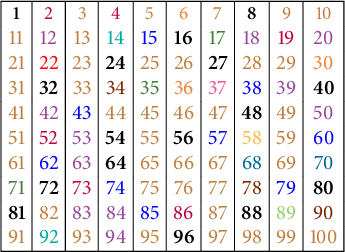
3.2 Data
We now present the data for the following SAGE computations. We fixed an elliptic curve
 $\mathsf {E}: y^2 = x^3 + a_D$
and varied
 $1 < D \le 100$
over cube-free integers to check in which cases exactly one of the cubic twists had positive rank over
 $\mathbb {Q}$
. By the earlier discussion we know that Hilbert’s 10th problem is unsolvable in
 $\mathcal {O}_L$
.
Example 3.2 Let D be an integer in the set
 $$ \begin{align*} \begin{aligned} \{3, 5, 7, 9, 10, 11, 13, 21, 23, 25, 26, 28, 29, 31, 33, 39, 41, 44, 45, 46, 47, 49, 51, 55, 59, 61, 65, 66, 67, \\ 69, 75, 76, 77, 82, 87, 91, 93, 95, 97, 98, 99, 100\}. \end{aligned} \end{align*} $$
Consider the elliptic curve

Then
 $\operatorname {rk}_{\mathbb {Z}}\mathsf {E}(\mathbb {Q}) =0$
but using the SAGE code given below one can check that exactly one of
 $\mathsf {E}_1/\mathbb {Q}$
or
 $\mathsf {E}_2/\mathbb {Q}$
has rank 0 and the other has positive rank r. We can conclude that the Hilbert’s 10th problem is unsolvable for the ring of integers of
 $\mathbb {Q}(\zeta _3, \sqrt [3]{D})$
.

Note: In the following examples, we only explicitly write the set of new D’s.
Example 3.3 Fix
 $D\in \{17, 35, 71\}$
. Consider the elliptic curve

Then a SAGE/MAGMA check shows that
 $\operatorname {rk}_{\mathbb {Z}}\mathsf {E}(\mathbb {Q}) =1$
whereas
 $\operatorname {rk}_{\mathbb {Z}}\mathsf {E}_1(\mathbb {Q}) = \operatorname {rk}_{\mathbb {Z}}\mathsf {E}_2(\mathbb {Q}) = 0$
.
Example 3.4 Fix D to be an integer in the set
 $$\begin{align*}\{12, 18, 20, 34, 42, 50, 53, 63, 83, 84, 94\}. \end{align*}$$
Consider the elliptic curve

Then a SAGE/MAGMA check shows that
 $\operatorname {rk}_{\mathbb {Z}}\mathsf {E}(\mathbb {Q}) =1$
whereas
 $\operatorname {rk}_{\mathbb {Z}}\mathsf {E}_1(\mathbb {Q}) = \operatorname {rk}_{\mathbb {Z}}\mathsf {E}_2(\mathbb {Q}) = 0$
.
Example 3.5 Let
 $D\in \{15, 38, 43, 57, 60, 62, 74, 75, 79, 85\}$
be an integer. Consider the elliptic curve

Then
 $\operatorname {rk}_{\mathbb {Z}}\mathsf {E}(\mathbb {Q}) =0$
and exactly one of
 $\mathsf {E}_1/\mathbb {Q}$
or
 $\mathsf {E}_2/\mathbb {Q}$
has rank 0 and the other has positive rank r.
Example 3.6 Fix
 $D\in \{ 5, 6, 30, 36 \}$
. Let

Then a SAGE check shows that
 $\operatorname {rk}_{\mathbb {Z}}\mathsf {E}(\mathbb {Q}) =1$
whereas
 $\operatorname {rk}_{\mathbb {Z}}\mathsf {E}_1(\mathbb {Q}) = \operatorname {rk}_{\mathbb {Z}}\mathsf {E}_2(\mathbb {Q}) = 0$
.
Example 3.7 Let
 $D\in \{2, 4, 19, 52, 73, 86\}$
be an integer. Consider the elliptic curve

Then
 $\operatorname {rk}_{\mathbb {Z}}\mathsf {E}(\mathbb {Q}) =0$
while exactly one of
 $\mathsf {E}_1/\mathbb {Q}$
or
 $\mathsf {E}_2/\mathbb {Q}$
has rank 0 and the other has positive rank r.
Example 3.8 Let
 $D\in \{34, 78, 90\}$
be an integer. Consider the elliptic curve

Then
 $\operatorname {rk}_{\mathbb {Z}}\mathsf {E}(\mathbb {Q}) =0$
, exactly one of
 $\mathsf {E}_1/\mathbb {Q}$
or
 $\mathsf {E}_2/\mathbb {Q}$
has rank 0 and the other has
 $r>0$
.
Example 3.9 Let
 $D\in \{68, 70\}$
be an integer. Consider the elliptic curve

Then
 $\operatorname {rk}_{\mathbb {Z}}\mathsf {E}(\mathbb {Q}) =0$
and exactly one of
 $\mathsf {E}_1/\mathbb {Q}$
or
 $\mathsf {E}_2/\mathbb {Q}$
has rank 0 and the other has positive rank r.
Example 3.10 Let
 $D=22$
. Consider the elliptic curve

Then
 $\operatorname {rk}_{\mathbb {Z}}\mathsf {E}(\mathbb {Q}) =0$
and exactly one of
 $\mathsf {E}_1/\mathbb {Q}$
or
 $\mathsf {E}_2/\mathbb {Q}$
has rank 0 and the other has rank
 $r>0$
.
Example 3.11 Let
 $D=37$
. Consider the elliptic curve

Then
 $\operatorname {rk}_{\mathbb {Z}}\mathsf {E}(\mathbb {Q}) =2$
and we check using SAGE that
 $\operatorname {rk}_{\mathbb {Z}}\mathsf {E}_1(\mathbb {Q}) = \operatorname {rk}_{\mathbb {Z}}\mathsf {E}_2(\mathbb {Q})=0$
.
Example 3.12 Let
 $D= 58$
. Consider the elliptic curve

Then
 $\operatorname {rk}_{\mathbb {Z}}\mathsf {E}(\mathbb {Q}) =0$
and exactly one of
 $\mathsf {E}_1/\mathbb {Q}$
or
 $\mathsf {E}_2/\mathbb {Q}$
has rank 0 and the other has rank
 $r>0$
.
Example 3.13 Let
 $D\in \{14, 92\}$
be an integer. Consider the elliptic curve

Then
 $\operatorname {rk}_{\mathbb {Z}}\mathsf {E}(\mathbb {Q}) =0$
and exactly one of
 $\mathsf {E}_1/\mathbb {Q}$
or
 $\mathsf {E}_2/\mathbb {Q}$
has rank 0 and the other has positive rank r.
Values of cube-free
 $1\le D \le 100$
for which unsolvability of Hilbert’s 10th problem is obtained using the method outlined above.

Example 3.14 Let
 $D=89$
. Consider the elliptic curve

Then
 $\operatorname {rk}_{\mathbb {Z}}\mathsf {E}(\mathbb {Q}) = 2$
and we check that
 $\operatorname {rk}_{\mathbb {Z}}\mathsf {E}_1(\mathbb {Q}) = \operatorname {rk}_{\mathbb {Z}}\mathsf {E}_2(\mathbb {Q}) =0$
.
Remark 3.15 We thank the referee for pointing out to us that using MAGMA one can check that the pairs
 $(a,D) = (2,71)$
and
 $(a,D) = (3,83)$
have the desired property.
3.3 Follow-up questions
These observations raise the following two obvious questions:
Question 1 For every cube-free integer D does there always exist an elliptic curve of the type
 $\mathsf {E}: y^2 = x^3 + a$
such that on twisting by D exactly one of
 $\mathsf {E}, \ \mathsf {E}_1, \ \mathsf {E}_2 $
has positive rank (over
 $\mathbb {Q}$
) and the other two have rank 0 (over
 $\mathbb {Q}$
)?
Even though this question has implications for Hilbert’s 10th problem, in particular it proves that Hilbert’s 10th problem is unsolvable in the ring of integers of
 $\mathbb {Q}(\zeta _3, \sqrt [3]{D})$
for every (cube-free integer) D, the question is interesting in its own right.
Question 2 Fix an elliptic curve
 $\mathsf {E}: y^2 = x^3 + a$
. For what proportion of cube-free integers D, does exactly one of
 $\mathsf {E}, \ \mathsf {E}_1, \ \mathsf {E}_2$
have positive rank r (over
 $\mathbb {Q}$
) and the other two have rank 0 (over
 $\mathbb {Q}$
)?
4 Main result and proof
4.1 Hilbert’s 10th problem for
$\mathbb {Q}(\zeta _3, \sqrt [3]{p})$

We begin this section by proving some lemmas which will be required for the main theorem.
Lemma 4.1 Let p be a prime such that
 $p \equiv 2, 4, 5, 7\ \pmod {9}$
. Then Hilbert’s 10th problem is unsolvable for the ring of integers of
 $\mathbb {Q}(\zeta _3, \sqrt [3]{p})$
.
Proof In each of these cases, we prove the unsolvability of Hilbert’s 10th Problem in
 $\mathbb {Q}(\zeta _3, \sqrt [3]{p})$
by applying Lemma 3.1 on an appropriately chosen elliptic curve
 $E_a$
.
-
(a) When
$\mathbf {p \equiv 2, 5\ \pmod {9}}$
. The elliptic curve
$\mathsf {E}_{-432*9^2}$
has rank
$1$
over
$\mathbb {Q}$
. As noted in Theorem 2.1(a), both
$9p$
and
$9p^2$
are not cube-sums i.e., both the elliptic curves
$\mathsf {E}_{-432*9^2*p^2}$
and
$\mathsf {E}_{-432*9^2*p^4}$
have rank
$0$
over
$\mathbb {Q}$
. Now the result follows from Lemma 3.1. -
(b) When
$\mathbf {p \equiv 4,7\ \pmod {9}}$
. Fix an integer B such that
$B \notin \mathbb {F}_p^3$
. By Chinese Remainder Theorem, there exists an integer A such that
$A \equiv 8 \ \pmod 9$
and
$A \equiv B \ \pmod p$
. Now by Theorem 2.1(c), there exists a prime
$\ell $
such that
$ \ell \equiv A \ \pmod {9p}$
which is a cube-sum and hence
$\operatorname {rk}_{\mathbb {Z}} \mathsf {E}_{-432\ell ^2}(\mathbb {Q})>0$
. On the other hand, as mentioned in Theorem 2.1(b)(ii), both
$\ell p$
and
$\ell p^2$
are not cube-sums and the result follows from Lemma 3.1.


Lemma 4.2 For
 $100\%$
of the primes p (with respect to the natural density) of the form
 $p \equiv 8 \ \pmod {9}$
, Hilbert’s 10th problem is unsolvable for the ring of integers of
 $\mathbb {Q}(\zeta _3, \sqrt [3]{p})$
.
Proof Consider the infinite set consisting of primes
 $S= \{ \ell \mid \ell \equiv 4, 7 \ \pmod 9\textrm { and } 3 \notin \mathbb {F}^3_\ell \} $
. Enumerate the primes of S as
 $\ell _1 =7$
,
 $\ell _2 = 13$
,
 $\ell _3=31, \ldots $
Further note that for every
 $\ell \in S$
, the prime
 $\ell $
is a cube-sum by Theorem 2.1(b)(i).
We have
 $\ell _1=7$
, now take a prime
 $p \equiv 8 \ \pmod {9}$
such that
 $p \not \equiv \pm 1 \ \pmod {\ell _1}$
, i.e., choose a prime
 $p \equiv 8 \ \pmod {9}$
such that
 $p \notin \mathbb {F}^3_{\ell _1}$
. By Theorem 2.1(b)(ii), both
 $\ell _1 p$
and
 $\ell _1 p^2$
are not cube-sum. By Lemma 3.1, Hilbert’s 10th problem is unsolvable for the ring of integers of
 $L = \mathbb {Q}(\zeta _3, \sqrt [3]{p})$
. Thus among all the primes p of the form
 $p\equiv 8\ \pmod {9}$
, for two-thirds of them (corresponds to those which are not of the form
 $\pm 1 \ \pmod 7$
) Hilbert’s 10th problem is unsolvable for
 $\mathcal {O}_L$
.
Next we work with the prime
 $\ell _2 =13$
. We choose a prime p such that
 $p \equiv 8 \ \pmod 9$
,
 $p \equiv \pm 1 \ \pmod 7$
, and
 $p \not \equiv \pm 1, \pm 8 \ \pmod {13}$
, that is
 $p \equiv 8 \ \pmod 9$
,
 $p \in \mathbb {F}^3_{\ell _1}$
and
 $p \notin \mathbb {F}^3_{\ell _2}$
. Again by Theorem 2.1(b)(ii) both
 $\ell _2 p$
and
 $\ell _2 p^2$
are not cube-sum and hence, we can conclude by Lemma 3.1 Hilbert’s 10th problem is unsolvable for
 $\mathcal {O}_L$
. Consequently, we can now conclude that among all the of primes p of the form
 $p \equiv 8 \ \pmod {9}$
and
 $p \equiv \pm 1 \ \pmod 7$
, for
 $2/3$
-rd of them Hilbert’s 10th problem is unsolvable for
 $\mathcal {O}_L$
.
Combining the two cases, for
 $\frac {2}{3} + \left (\frac {1}{3} \times \frac {2}{3} \right ) = \frac {8}{9}$
-th of the primes p of the form
 $p \equiv 8 \ \pmod {9}$
, Hilbert’s 10th problem is unsolvable for
 $\mathcal {O}_L$
.
Proceeding in this way, we see that at the k-step, for a prime p with
 $p \equiv 8 \ \pmod 9$
,
 $p \in \mathbb {F}^3_{\ell _i}$
for
 $1 \le i \le k$
and
 $p \notin \mathbb {F}^3_{\ell _{k+1}}$
, Hilbert’s 10th problem is unsolvable for
 $\mathcal {O}_L$
. Consequently, we conclude that for
 $(1- \frac {1}{3^{k+1}})$
of primes p of the form
 $p \equiv 8 \ \pmod {9}$
, Hilbert’s 10th problem is unsolvable for
 $\mathcal {O}_L$
. The set S is infinite; by induction it follows that for
 $100\%$
of primes p of the form
 $p \equiv 8 \ \pmod {9}$
, Hilbert’s 10th problem is unsolvable for
 $\mathcal {O}_L$
.
Theorem 4.3 For
 $\frac {5}{6}$
-th (with respect to the natural density) of all primes p, Hilbert’s 10th problem is unsolvable for the ring of integers of
 $\mathbb {Q}(\zeta _3, \sqrt [3]{p})$
.
4.2 Hilbert’s 10th problem for
$\mathbb {Q}(\zeta _3, \sqrt {D}, \sqrt [3]{p})$

Once we have established that Hilbert’s 10th Problem is unsolvable in the degree 6 extension
 $\mathbb {Q}(\zeta _3, \sqrt [3]{p})$
, we can extend it to certain degree 12 extensions by using the corollary of Shlapentokh’s theorem.
These are new examples of rings of integers of number fields where Hilbert’s 10th problem is being shown to be unsolvable. For the argument in [Reference Kundu, Lei and Sprung13], the authors found
 $\mathsf {E}/\mathbb {Q}$
with rank 0 over
 $\mathbb {Q}(\zeta _3, \sqrt [3]{p})$
and positive rank over
 $\mathbb {Q}(\sqrt {D})$
; this did not provide examples of degree 12 number fields
 $L_{D,p} = \mathbb {Q}(\zeta _3, \sqrt {D}, \sqrt [3]{p})$
where Hilbert’s 10th problem is unsolvable for
 $\mathcal {O}_{L_{D,p}}$
because the unsolvability of Hilbert’s 10th problem for the ring of integers of
 $\mathbb {Q}(\zeta _3, \sqrt [3]{p})$
was not verified.
Proposition 4.4 Let S be the set of square-free integers such that for every
 $D \in S$
, the rank of the elliptic curve
 $\mathsf {E}_{-432D^3}$
is positive and T be the set of primes p of the form
 $p \equiv 2,5 \ \pmod {9}$
. Hilbert’s 10th problem is unsolvable for the ring of integers of
 $L_{D,p}$
for every
 $D \in S$
and every
 $p \in T$
.
Further, the set S is infinite and moreover for
 $X \gg 0$
, we have
 $$\begin{align*}\#(S \cap [-X,X]) \gg X^{1 - \epsilon} \textrm{ for any } \epsilon>0. \end{align*}$$
Proof Consider the elliptic curve
 $\mathsf {E}_{-432}$
. By our assumption on S, we know that
 $$\begin{align*}\operatorname{rk}_{\mathbb{Z}} \mathsf{E}_{-432}(\mathbb{Q}(\sqrt{D})) = \operatorname{rk}_{\mathbb{Z}} \mathsf{E}_{-432}(\mathbb{Q}) + \operatorname{rk}_{\mathbb{Z}} \mathsf{E}_{-432D^3}(\mathbb{Q})>0. \end{align*}$$
Recall that for
 $p \in T$
, by Theorem 2.1(a), both p and
 $p^2$
are not cube-sums, i.e.,
 $\operatorname {rk}_{\mathbb {Z}} \mathsf {E}_{-432p^2}(\mathbb {Q})= \operatorname {rk}_{\mathbb {Z}} \mathsf {E}_{-432p^4}(\mathbb {Q})$
. Further recall that
 $\operatorname {rk}_{\mathbb {Z}} \mathsf {E}_{k}(\mathbb {Q}(\zeta _3)) = 2 \operatorname {rk}_{\mathbb {Z}} \mathsf {E}_{k}(\mathbb {Q})$
. Then it follows from (3.1) that
 $$\begin{align*}\operatorname{rk}_{\mathbb{Z}} \mathsf{E}_{-432}(\mathbb{Q}(\zeta_3, \sqrt[3]{p})) = \operatorname{rk}_{\mathbb{Z}} \mathsf{E}_{-432}(\mathbb{Q}(\zeta_3)) + \operatorname{rk}_{\mathbb{Z}} \mathsf{E}_{-432p^2}(\mathbb{Q}(\zeta_3)) + \operatorname{rk}_{\mathbb{Z}} \mathsf{E}_{-432p^4}(\mathbb{Q}(\zeta_3)) =0. \end{align*}$$
In Lemma 4.1, we have shown that Hilbert’s 10th problem is unsolvable over
 $\mathbb {Q}(\zeta _3, \sqrt [3]{p})$
. Hence using Theorem 2.3, we can guarantee that Hilbert’s 10th problem is unsolvable over
 $\mathcal {O}_{L_{D,p}}$
.
To prove the second assertion, we argue as follows: let
 $\mathsf {E}$
be an elliptic curve over
 $\mathbb {Q}$
and D be a square-free integer co-prime to the conductor of
 $\mathsf {E}$
. Let
 $\mathsf {E}^{(D)}$
denote the quadratic twist of
 $\mathsf {E}$
by D and let
 $L(\mathsf {E},s)$
represent the complex L-function of
 $\mathsf {E}/\mathbb {Q}$
. Put
 $$\begin{align*}N_1(\mathsf{E},X):= \{ |D|<X \mid \operatorname{ord}_{s=1}\ L(\mathsf{E}^{(D)}, s) = 1 \}. \end{align*}$$
Then by [Reference Perelli and Pomykała17], for
 $X \gg 0$
, we have
 $N_1(\mathsf {E},X) \gg _{\epsilon } X^{1 - \epsilon }$
, for any
 $\epsilon>0$
. By the work of B. Gross–D. Zagier and V. Kolyvagin, it is known that for an elliptic curve
 $\mathsf {A}/\mathbb {Q}$
,
 $\operatorname {rk}_{\mathbb {Z}} \mathsf {A}(\mathbb {Q}) =1$
whenever
 $\operatorname {ord}_{s=1} \ L(\mathsf {A}, s) = 1 $
. By applying this argument to
 $\mathsf {E}=\mathsf {E}_{-432}$
and
 $\mathsf {A} = \mathsf {E}^{(D)}$
, the assertion follows.
Remark 4.5 Note that for the square-free integers of the form (i)
 $ \pm (3k+2)$
with
 $k>0$
and (ii)
 $ \pm 3(3k+1)$
with
 $k>0$
, the root number computations due to B. Birch–N. Stephens implies that the global root number of
 $\mathsf {E}_{-432D^3}/\mathbb {Q}$
, denoted by
 $\omega (\mathsf {E}_{-432D^3})$
is
 $-1$
. Thus if we make an additional hypothesis that
 is even (see [Reference Jha, Majumdar and Shingavekar10, Section 5]) for all square-free integers D, then the natural density of S is at least
 $\frac {1}{2}$
. Note that for an elliptic curve
 $\mathsf {E}$
over a number field K, the hypothesis
 being even is discussed in [Reference Mazur and Rubin16].
Acknowledgements
We thank Alvaro Lozano-Robledo, Sudhanshu Shekhar, and Ari Shnidman for helpful discussions. We thank Antonio Lei for his interest in our paper. We thank the referee for their timely reading of the paper and for helpful comments; in particular, we thank them for suggesting using MAGMA to complete our list of examples.