Having lived in New Zealand on and off for ten years, Richard Little was working in Glasgow, Scotland, UK, in 2003, as a Finance and Programme Manager for BAE Systems. He was at his desk when the phone rang. Little immediately recognised the voice of his long-time friend and fellow engineer, Robert [Robbie] Irving calling from New Zealand. They had gone to school together in the Scottish highland town of Fort William and had reconnected with Irving immigrated five years after Little. He could hear from Irving’s tone that something was wrong. Irving went on to explain that he was diagnosed with multiple sclerosis, and with time, he will probably need a wheelchair.
The news struck a chord with Little as he knew how this would affect his friend. Both their mothers were in wheelchairs, one due to multiple sclerosis and the other after a stroke (McFadden, Reference McFadden2010). Some years later Little reflected on that telephone conversation saying ‘we figured straight away we were going to do something’.
While Little was in the United Kingdom, he and Irving started discussing the idea of a robotic exoskeleton. Six months later they met in Auckland, New Zealand, having both lived there for substantial portions of time previously. They agreed then, ‘either we shut-up about it, or we start building it!’ In late 2003 over a beer in Newmarket, they started planning. Their excitement was obvious – the finished product would give people in wheelchairs the ability to walk!
It struck us, as engineers, that while a wheelchair is a wonderful thing, it has definite access problems. Three stairs at the front of a municipal building are like a mountain. But the world isn’t flat, and we can’t change it (Little, in McFadden, Reference McFadden2010).
They decided to approach disability access from a different angle: knowing the physical challenges that people with long-term disabilities and rely on wheelchairs faced, the design and functionality of a robotic exoskeleton would remove these mobility limitations and enable natural physiological processes, such as kidney function and blood flow, thus radically improving the quality of everyday life.
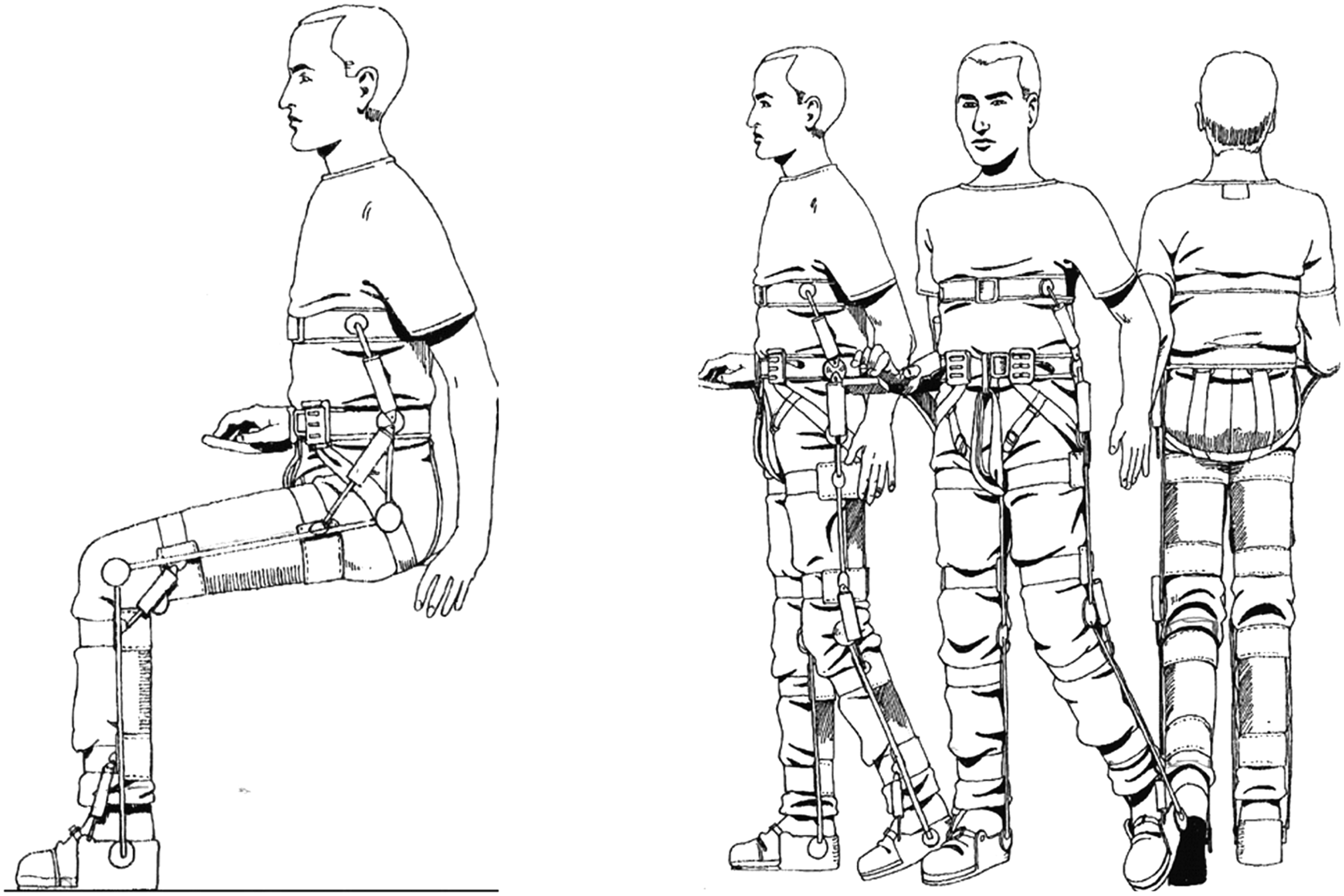
The concept was ingenious. Drawing inspiration from Sigourney Weaver’s ‘Power Loader’ exoskeleton in the movie Aliens, Little produced a rough sketch on a beer coaster (see Exhibit 1: Original Exo Skeleton); a pair of space-age robotic legs that would enable free-standing, walking, climbing and descending stairs as well as navigating slopes and gentle gradients. It was a bold and exciting idea: a fusion of science fiction, engineering, robotics and electronics.
Original Exo Skeleton (drawings revised from beer coaster). Exo Skeleton Sitting and standing
Source. Richard Little, 2015

They knew the exoskeleton promised far more than mobility, offering people hope and inspiration. Individuals who are wheelchair-reliant for long and indefinite periods experience a range of chronic health issues caused by sitting in a sedentary position. These include loss of bone density, poor blood circulation, pressure ulcers and muscle spasms and poor bowel and urinary function, leading to constipation and recurrent bladder infections. Some of these issues require prescribed medications for long periods. Physiologically, the sitting position places pressure on the spine and muscles creating chronic pain that individuals often managed with analgesics, including paracetamol or ibuprofen, or stronger and potentially addictive opioid-based painkillers, such as Oxycodone. These health complications, as well as resistance to the drugs, are common among wheelchair-reliant people.
Wheelchair users experience a range of social discrimination in addition to the physiological effects. People ‘standing over them’ during conversations, difficulty in ordering food or drink at counters and having to ask strangers to open doors are examples of the social discrimination experienced on a daily basis. Thus, providing freedom and dignity from the physiological and social effects of living in a wheelchair presented an unimaginable gift. For Little and Irving, a pair of self-supporting, motorised legs that defied the physical restrictions of a wheelchair while providing the freedom and capabilities of able-body movement was the gift they wanted to give. What began as a telephone conversation between two friends in the United Kingdom and New Zealand signalled the humble beginnings of the ground-breaking, award-winning, Auckland-based company soon to be called, REX Bionics.
From a beer mat to the first step
Taking the idea from concept to prototype became all-consuming. Working fulltime as engineers, Little and Irving recognised that to be successful the design and development of REX would have to happen in their spare time and in private. Although engineering design was at the heart of the project, it was their deep affiliation with people living with disability and their desire to make a difference that inspired them. They were keen to avoid a ‘we-will-save-you attitude’ and any unrealistic expectations from potential users or commercial partners about the potential technology.
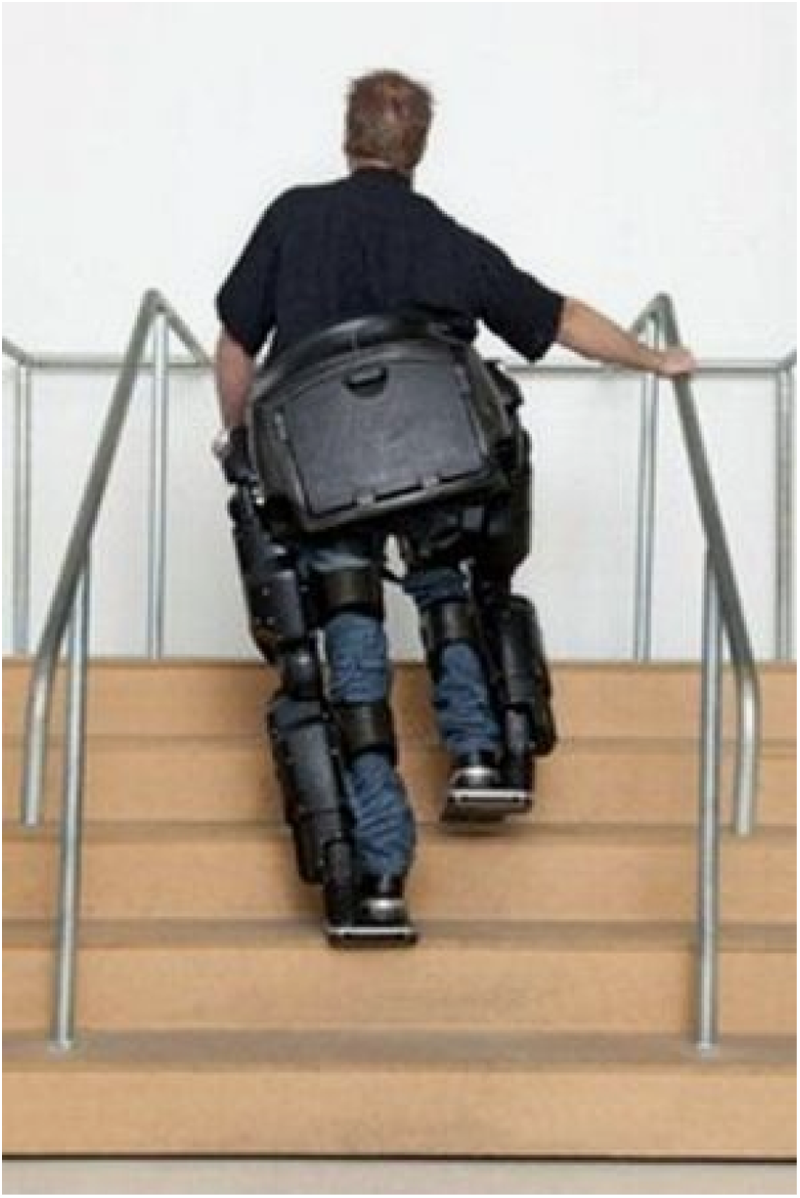
They needed the freedom to experiment and to see if it were possible to create the technology and functionality envisioned. Little and Irving took to their respective garages, but soon they decided to move to a windowless garage on Auckland’s North Shore, which became the secret site for four years of design and development. A prototype had to be able to stand first-and-foremost, walk forwards and backwards, to the side and can manage stairs (see Exhibit 2: Stair movement) and traverse slopes, including accessibility ramps.
Stair movement
Source. Marinov, B. (2015, May 13). Rex Bionics: New Applications and Markets Exoskeleton Report. Retrieved 12 June 2018, from https://exoskeletonreport.com/2015/05/rex-bionics-new-applications-and-markets/

They set to work on the biomechanical specifications. The design of the prototype was challenged by the reduced and varying degrees of physical coordination and balance that wheelchair users experience compared with able-body people. The machine had to stand, turn, walk and climb stairs without relying on the user’s sense of balance. Nor could it rely on their upper body strength, because “about 50 per cent of manual wheelchair users have shoulder injuries at any one time” (Little, Reference Little2014). Furthermore, as a medical device, REX would have to comply with medical ethics and regulations, and not harm their users in any way. This meant that the device had to be stable and not fall over if it developed a fault, such as a software glitch or if the user were to be accidentally bumped (Cudby, Reference Cudby2011).
Using rudimentary materials at first – wooden feet and a drainpipe for an arm to be exact – they progressed joint-by-joint; starting with the knee that had to move in a controlled way. Once they had achieved the desired level of functionality, they moved on to the ankle. It was very exciting, pioneering work because creating exoskeleton’s ‘bones’ that moved-like human joints presented complex challenges as each joint required a motor to power it. Custom hydraulic components were developed when powered motors and off-the-shelf hydraulic components were too imprecise (Cudby, Reference Cudby2011). Although time-consuming, the device design emerged around custom-designed motors that powered the ‘bones’ and joints to move up and down and from side-to-side. Every design breakthrough added another level of functionality. The more they explored the foundational features of the prototype, the more they realised the extent of what they were doing and the strong their heartfelt-need became.
What came out of the shed, after four years of development, was Igor – REX’s elder, less sophisticated brother. It could sit, stand and walk. A fully functional, ‘test-driven’ prototype was ready by the end of 2007, replete with carbon-fibre hips, lithium-ion battery and fully adjustable balancing system. Finally, with a prototype to share, Little and Irving formed a company with both as the directors, calling it REX Bionics Limited.
We felt exhausted, but we were so pleased—there had always been doubt. At that point, it felt like it now belonged to the users, rather than us. So, it had to be finished for those people (McFadden, Reference McFadden2010).
Finally, after seven years, they were in a position to lift the lid – but to a few select individuals only.
Stepping up the pace
Research had confirmed the size of the potential market the and number of wheelchair users in different countries. For the markets they were considering, there were six million people who live with some form of paralysis in the United States alone (Reeve Foundation, 2013) and another 2.1 million people in the world with multiple sclerosis, of which 400,000 are in the United States making health insurance claims (Dilokthornsakul et al., Reference Dilokthornsakul, Valuck, Nair, Corboy, Allen and Campbell2016). REX would make a considerable difference, even if it only served a cross-section of those customers.
External investments would be required to achieve this goal as significant work was required to take REX from a prototype to a commercially viable device. Igor – the working example – would demonstrate the tangible benefits and make it easier to convince investors that the company could deliver on its plans. For Little and Irving, pitching to prospective investors was nerve-wracking as they had already invested so much in the project – physically, financially and emotionally – and their hopes and expectations were high.
The first ‘outsider’ to see Igor was Jenny Morel, founder of venture capital firm No 8 Ventures of New Zealand. They knew that Morel, who loved these kinds of ventures, could keep it confidential. A meeting was organised in February 2007. When they led Morel into the garage and whipped the sheet off Igor, she was ‘just blown away’. As Morel recalled,
They had a prototype that could stand up and take a couple of steps, so it was really highly credible. I got very excited about it. They say I got as excited as them that day. So, they were sure we’d do the deal together (McFadden, Reference McFadden2010).
And they did. The initial funding would enable Little and Irving to resign from their day jobs and see them through for an additional year working full time on further product development and refinement. Going from proof-of-concept to commercial enterprise would take vision, resources and funding, especially if REX Bionics was to have an international impact and lasting presence. But, Morel had to act surreptitiously, like Little and Irving had done, for three more years – even approaching potential REX Bionics board members became a clandestine affair (McFadden, Reference McFadden2010).
Further to the initial investment, they received some funding assistanceFootnote 1 and moral support from the New Zealand Foundation for Research, Science and Technology, a central government agency, which helped immensely – as it was difficult ‘going it alone’. The grants provide funding to employ engineers, and the foundation’s recognition symbolised that external stakeholders saw potential in REX. For the founders, grants enabled them to employ additional specialist skills in the form of a hardware engineer and software engineer. There were daily challenges that spanned cash flow, people, suppliers, technology and many more. In that regard, the foundation supplied useful market information and introduced them to new suppliers too.
Three years in, Morel approached British surgeon, Jonathan Sackier, the medical mind behind Computer Motion which made the world’s first commercial surgical robot, Aesop. He was also a developer of laparoscopic surgery and amniotic stem cells. A professor at the University of Virginia in the United States, Sackier was speaking at a conference in Auckland when Morel sidled-up to him and gave him the best pitch of her life asking ‘would you like to come and visit our secret company?’
Pleasantly surprised, Sackier accepted the invitation, but upon searching found nothing about REX Bionics on Google,
[…]which I thought was fantastic. I’d no idea what they were building, but at least I knew they were doing it sensibly and not creating unreasonable expectations. When I got there, I liked the fact the premises were humble, that it was really a garage. I immediately warmed to Richard and his team—I knew I was in the presence of superior intellects. I have to tell you I got rather emotional about the whole thing (McFadden, Reference McFadden2010).
There and then, Sackier agreed to be a director of REX Bionics, alongside Little, Morel and Paul Dyson, an authority in the medical devices industry. Sackier could see the life-changing benefits REX could bring to wheelchair users, having seen many American soldiers paralysed in combat (McFadden, Reference McFadden2010).
With operations established in New Zealand following a vertically integrated model that included building the exoskeletons in the Auckland garage, then airfreighting them to customers where final fittings and face-to-face user training was completed. Little loved manufacturing, and he believed that they could do it well in New Zealand.
A team of highly skilled engineers with unique skills advanced REX’s development, and additional staff were employed. When a new employee asked about the design requirements, they were told: ‘It goes up and down slopes, and it goes backwards and forwards. That was the level we were working at […], and luckily, we had really highly skilled people’, said Little.
Each exoskeleton was custom-fitted to its user’s body, with each part adjusted to match the user’s skeleton. The design parameters enabled users up to 100 kg and between 1.46 and 1.95 m tall to have 40% of their weight supported by the REX frame, with the remaining 60% held by their legs, with the latter offering the advantage of improving bone density, circulation, general health and well-being.
Prototype testing emphasised the importance of working closely with potential users. The team had learned,
It’s all about walking…you learn nothing designing, or even prototyping, without the real user in the device…you can’t simulate that…quite often we used to spend a lot of time building stuff, and then we’d get somebody in to try it, and they’d…walk completely different (Cudby, Reference Cudby2011).
As a unique medical device, it was important to satisfy international medical specifications and standards such as the Food and Drug Administration (FDA). The manufacturing system had to contain full traceability down to component level.Footnote 2 They had to maintain detailed records allowing each part to be traced back to its source, ensuring the appropriate test and inspection records for all parts of every individual exoskeleton could be retrieved. Each part contributed to a higher level of overall functionality and the supplier base increased. Many of the suppliers were well aware of ‘REX’, but each was sworn to secrecy to maintain confidentiality. Testing was intensive too, lasting hundreds of hours ‘until something broke down’, and then, they would repair and try again.
To secure patents, REX Bionics had to publish descriptions of their products, containing information about the device and its functionality. This gave would-be competitors enough information to reproduce a copy of the device. As a precaution they ensured the different patent applications coincided with the launch of the first version in July 2010, by which time, the company had already started work on REX, Mark II.
Embracing rex
A small group of wheelchair users tested Rex from the early development phase, they had become accustomed to the thrill of using REX, and some even became employees. Soon others from across the world joined them. The first sale was made to Dave MacCalman, a New Zealand Paralympian whose glee was palpable,
It is hard to describe what it has been like to be back on my feet again. I’m six-foot-four, so it’s been amazing to experience life from that height again (Rex Bionics, 2011).
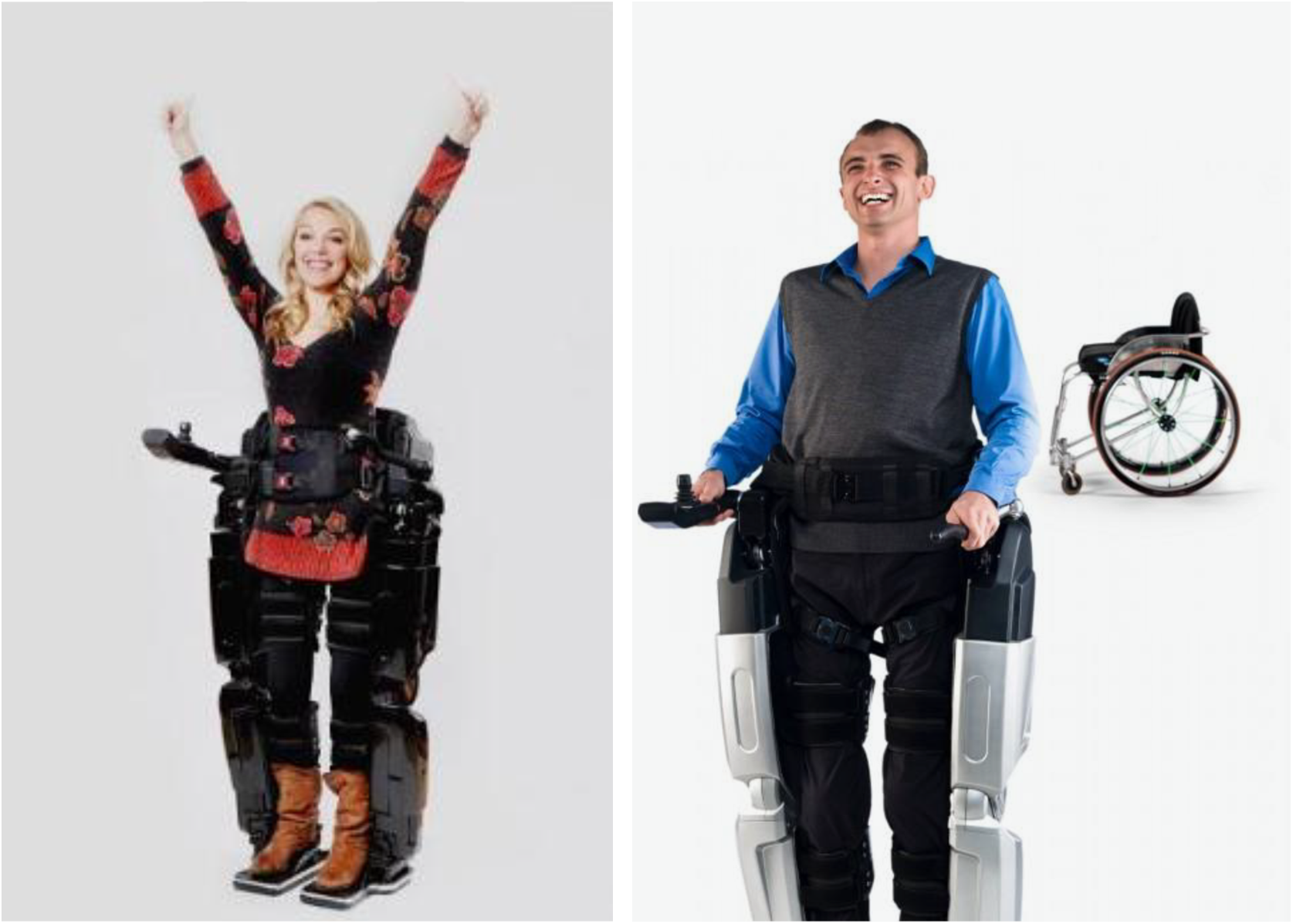
Each subsequent user described how REX made them feel. Hayden Allen (see Exhibit 3: Beneficiaries of REX), an employee at Rex Bionics who was paralysed from a motorbike accident, remarked,
[…]it gives you one-hundred million emotions in one go…you know you’re going to walk in it…but it takes your breath away. It’s really emotional, but fantastic! The first time I used REX everyone was saying I should look in the mirror and watch the movement, but I couldn’t look up. I spent the whole time looking down at my legs moving! Watching one foot in front of the other again…it just blew me away! I couldn’t ask for a better feeling (Rex Bionics, 2011).
Beneficiaries of REX
Sources. (Sophie Morgan) http://www.REXbionics.com and (Hayden Allen) http://www.gogeeks.tv/other/REX-bionics-allows-paralyzed-man-to-walk/attachment/REX1/

Sophie Morgan from the United Kingdom said it had transformed her life (see Exhibit 3: Beneficiaries of REX). Having been paralysed for almost ten years following a car accident when she was 18 years old. REX gave her the opportunity to stand and walk again.
It’s amazing, the shift in perspective is extraordinary, it’s just a thrill… it is so brilliant! Who knows where it will go… (Rex Bionics, 2011).
Establishing a commercial footing
The REX vision required Little and Irving to look beyond the financial reality of a medical device start-up.
There were times when it made more financial sense to give up though. I would have made more money if I had given up and taken up the opportunities that presented themselves…but the moral obligation to deliver REX was more important. And for that to work, the company had to make money (Little, Reference Little2014).
While the commercial plan was clear from the outset, fulfilling the vision would be costly and time-consuming. Furthermore, it required governance and management that Little and Irving struggled with. Often, they reflected on the purpose of their roles, considering that it might be ‘to push the device out there into the world’. This made commercial sense, but they were also aware of how much they had learned along the way and how difficult it would be to transfer their hands-on experience to others. They agreed,
we felt we had to stay with it and continue making a contribution…that we had a definite role to play in it (Little, Reference Little2014).
By 2012 the company’s leadership included a board of directors and a separate advisory board. The board of directors provided overall guidance and direction, and it kept a close eye on ‘where we are and where we need to be’. It also had to access new funding, especially true of start-up. It was essential to have individuals who could leverage funding from within their respective networks. During this phase, it was the Little’s job as CEO to raise money too.
In contrast, the advisory board members were from the medical sector and others who were closely linked to it. Mike Thorner, for example, was a clinical advisor, a wheelchair user and registered medical doctor, and Montel Williams who himself has multiple sclerosis was closely connected to the US military and war veterans who were wheelchair users. The advisory board had an internal and external focus, ‘[…] it’s as much about marketing acceptance as it is a clinical expectation. With the right clinical advisors, we can get through the market segments and the funding requirements […] what they want to see and deliver to stakeholders and what they need to have done’, Little explained.
Little found working with both boards challenging. There was an awful lot that related to the personality of the board members, and as he discovered, ‘company boards are a lot less difficult when you have money in the bank’. Also, he observed that a great deal of effort and problem-solving would take place by him and the senior staff and then, after a quick discussion at board level, the work would be side-lined or put on hold, and everyone would have to start over again and go in a different direction.
It was widely acknowledged that the role of the REX Bionics board was to provide input and direction. Opposing viewpoints were quite normal given the collective wisdom and wealth of experience of its members but for Little,
It was a struggle, and if I were ever to do this all over again, I would never give away as much control as I’ve had to…in order to do this. I would not give things away as freely, especially when it comes to the vision (Little, Reference Little2014).
Having an experienced chairman appointed to the first board of directors offer seasoned advice and guidance during different phases of the business. As the boards juggled conflicting priorities, Little and Irving were reassured by having someone who ‘had seen it all before’, even though fellow board members were accomplished in their own right – they had strong views on almost everything. This had its advantages, but there were some downsides too. At one stage, the thinking around the table steered REX away from rehabilitation; something that Little disagreed with and openly opposed. He had always believed the future of REX Bionics was in rehabilitation. As he explained:
Sometimes it’s difficult to communicate from a CEO or executive position because the issue…could have five years of history…and I walked with it for that entire period…how do you take someone on that journey when you are dealing with a decision in the moment, and you have 20 minutes to review it? You can’t give them all the information because there is just too much. How do you summarise it properly? Sometimes there are all these tensions…not necessarily unique to REX Bionics…they’re also common to other company boards (Little, Reference Little2014).
Little was outnumbered, and the board decided they could not adequately fund the company based on a rehabilitation device. The board was advised not to invest in it any further. And a full year passed before it became evident that it was the wrong decision.
Management realised it would be difficult to build a sales and marketing function and distribution network from New Zealand. And establishing an international one was a daunting task, possibly bigger than the challenge of designing and developing a robotic exoskeleton itself.
Doubts about transferring in-depth knowledge of REX to others were soon confirmed. They discovered how challenging it was for ordinary sales people to successfully promote and sell a device that was as technically advanced and unique as REX. A tacit working understanding of every part had instilled a deep appreciation of REX’s functionality. It was so specialised and intricate that the possibility of large-scale outsourcing and the release of REX into the market as a self-contained product would require a lot more planning. It was therefore too much to ask of distributors to satisfy the sales and service requirements, especially when consumer interest extended to a level of technical detail that called for an ability to explain and match the technical specifications of the device (performance benefits) with different (unique) user requirements.
They quickly learned that sales and service standards in the medical device market fell short of their expectations too. The service quality that people with disabilities received from many of the suppliers and medical device companies around the world was disappointedly poor. Prices were massively inflated, and the due consideration for people with distinctive physical and specialised health needs was lacking. A customised wheelchair could be a year in the making and provisional, and off-the-shelf wheelchairs failed to meet the most basic of requirements. Payment options were often prescribed too. To make matters worse, individuals who were unaccustomed to wheelchair usage or who had to adjust to a different model or new specifications, typically became ill during a period of acclimatisation. Suppliers seldom considered these side-effects.
It was a far cry from a consumer-driven model that they believed in, and as a result, REX Bionics was quick to distance itself from what the company considered to be substandard industry practices. This knowledge provided added motivation and impetus to commercial activity. By 2013, they had successfully managed the transition from an entrepreneurial business to commercial enterprise, and there were signs of reaching a balance between the needs of the business, on-going demand from consumers and the anticipated growth in the global market.
Walking the talk towards marketing and distribution
The company remained committed to dedicated and specialist customer care. REX Bionics pursued international markets and the operational capability to consolidate a permanent presence in different regions. REX Bionics decided to establish dedicated resources in different international locations. Subsequently, they set-about creating point-of-sale and distribution sites; two in the United States, one in Europe and another in the United Kingdom. Although rudimentary, the centres were designed to be functional and most importantly, customer-friendly, each with an office, a meeting room and amenities that were accessible – where clients could be treated with dignity and receive the kind of attention they deserved.
There were no shortcuts or quick-fixes and management were thinly spread during this time. They covered the service requirements of consumers and devices in operation, drummed-up new business, engaged potential investors, attended sales meetings, recounted the story of REX and provided technical support and advice. It involved a lot of international travel,
We used to fly to the States and a client would say we have this function next Tuesday, but I would be out of the country by then…planning to return after three months, but then we would run out of money, and I would only go back after six months…by which time the sales cycle and decision making had moved on (Little, Reference Little2014).
The consumer benefits were plain to see, yet customers were not always sure what to do with it. There was a gap between what REX could deliver to consumers and what [they] understood it could do. A broader audience often asked,
[…] we know we want one, it’s really cool, and we know it gets people up, standing and walking, but practically what does this mean? How will it help reduce hospital costs and resources? How will it make things better for medical care? (Little, Reference Little2014).
It was clear that educating the public about REX was closely tied to adoption rates. It was, therefore, important to ensure the medical fraternity and users understood the extent to which REX could help them fulfil their different needs and achieve their respective goals.
The need to educate the market coincided with a push worldwide by hospital management to cut patient rehabilitation time. Postoperative recuperation, which had typically required weeks in hospital was being shortened to a minimum – sometimes days in comparison. A strong drive to reduce costs and advances in medical technology, as well as new patient support methods and procedures, had enabled these changes. Almost every clinical situation required more efficient and cost-effective patient care, and there was a growing trend to start patient recovery ‘sooner’. Patients ventilated in intensive care units and high-care facilities were ‘gently’ rehabilitated.
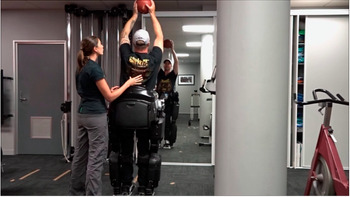
REX Bionics aligned itself with this new way of thinking. It complemented the business needs and targeted the level of patient care required. It mobilised patients earlier in the recovery process, often quicker and more effectively than manual forms of intervention. Consequently, REX could play a critical role in speeding up the rehabilitation process and in lowering costs. The device was highly effective in performing repetitive work, and it could reduce the number of medical staff required per patient (see Exhibit 4: Use by physiotherapists). As Little explained,
Instead of having three physiotherapists holding the patient up, you can have one overseeing the rehab. So, it ‘freed-up’ the physiotherapist, allowing [the person] to get more done. REX facilitated a more efficient workplace (Little, Reference Little2014).
Use by physiotherapists
Source. The REX Bionics robotic exercise system in action for upper limb (2016). Retrieved 12 June 2018, from https://www.youtube.com/watch?v=rbsZTHh_gaQ

REX’s functional capabilities meant that it was ‘very gentle on the patient’ and accommodating of individual needs. While Little and Irving aimed for physiotherapists to use REX with patients with spinal cord injuries and multiple sclerosis, what they observed was the device being utilised to assist patients recovering from strokes and coronary bypass surgery to get back on their feet sooner too.
An american footprint
Little and Irving had always anticipated entering the American market – a tough one ‘to crack’. REX had to navigate through the bureaucracy and various government agencies including FDA regulations. There was a need to keep tighter control of the business, especially concerning the funding as additional administration costs mounted up – an unavoidable fact of doing business in America.
The US healthcare market and rehabilitation subsector was a highly regulated, process-driven business environment which tended to delay client decision-making. Revenue growth was restricted in what was essentially a stable, niche market, and new revenue had to come from within the prevailing customer base. Service and customer retention became important measures, as companies were compelled to demonstrate real returns such as reducing the number of visits to the general practitioner, or shortened patient rehabilitation time. Lead-times were long. Clients waited on elaborate decision-making processes and had numerous ‘tick’ boxes to complete. Applying took a massive amount of effort to get through all the ‘red tape’, most of which was completely unexpected. As Little explained:
[…] hospital representatives would say we don’t like your clause in your insurance policy. Can you change it, please? And we are sitting here in New Zealand, saying ‘what?’ At one point, we had the same insurance company in two different countries refusing to talk to each other (Little, Reference Little2014).
Back in 2010, the company had approached a large US legal firm, Morgan Lewis Bockius, with a reasonable amount of funding in-hand. The law firm had access to decision-makers in positions of power. Their network ensured REX’s applications reached the right people within the FDA, and approvals and clearances for REX were secured legitimately. Although the service was costly, it was well worth it.
The plan to hand REX to an established organisation was still on the table. They needed to find a partner with shared values, the right infrastructure, operating systems, distribution centres and warehouses that could accommodate devices and parts and provide technical support and full distribution capability. There were five or six large companies in America that fulfilled these criteria. In Europe, there were a handful of similar companies that could do the same, one of which had 13 different centres.
Listing in London
Management had been prudent, taking well-considered decisions in the main, which, while slow and deliberate, lowered the risk of hasty changes to manufacturing, distribution, logistics and ‘rushing expansion into new markets’. With expansion into Europe and the United States and the associated costs of upscaling, the board took the initial public offering route in search of more funding. Convincing prospective investors of the company’s value required the founders’ involvement. Little used to ask,
Why do I have to go? We’ve got all these people; sales, technical guys and a CEO, and actually, I have no role there, other than storytelling (Little, Reference Little2014).
But, the story was key to promoting the device, it reassured investors, imparting the company’s values, and creating a personal connection. It also gave a clear sense that ‘the company was trying to do the right things for the right reasons’. This was particularly true for institutional investors who were buying into the company over longer periods. The story captured interest from various funding agencies – government, health and private individuals who would invest in REX Bionics because they could see long-term financial returns.
With investors committed, in late 2013 the board committed to listing REX Bionics Plc on the London Stock Exchange’s AIM market. Raising GBP £10 million facilitated a reverse takeover and a listing, and the deal was successfully concluded in May 2014.
The initial public offering culminated in the establishment of two boards, one in New Zealand and one in the United Kingdom. The make-up of the former remained unchanged, focus on operations and manufacturing. In contrast, the latter comprised individuals who were from various industry sectors, including representation from the medical devices sector, who had a significant business expertise and were adept at making informed decisions ‘on some very complex issues, quickly’.
By November 2014, REX Bionics had secured the services of a CEO to replace Richard Little who had been founder-CEO for ten years, general manager, a manufacturing manager and production/engineering staff who had previous experience in high volume, quality product companies. Also, new staff were hired, including heads of sales and marketing for the United Kingdom and Australia/New Zealand/United States, sales managers for the United Kingdom and Europe, business development manager for the United Kingdom, a head physiotherapist, a service engineer and a service manager in the United Kingdom. They joined around 30 existing staff, many of whom were based in New Zealand.
The clinical advisory board was providing expertise on the design of clinical studies in 2014, coinciding with a greater appetite for real-time data in support of business goals and new sales and marketing targets. Discussions were also under way with some clinics about using REX technology in fields other than spinal injuries, such as stroke, traumatic brain injury and multiple sclerosis. They anticipated ethics approval for a 100-patient clinical trial in March 2015, an initiative to demonstrate REX’s benefits to the rehabilitation community. It would also bring forward a US clinical trial to secure FDA clearance of the robotic exoskeletons for at-home use in the United States by the end of 2016.
With the public listing came new obligations, including legal and fiduciary accountabilities and a need for higher levels of standardisation within its operations. There was a sense that the business needed to ‘pace everything differently’ and establish a more reasonable balance between the economies of scale in operations and the demand from consumers. Subsequently, management focussed on how to get as much value as possible from the devices that were being purchased, a deliberate move in favour of producing ‘as many units as possible’.
Deciding on how many machines would be built and why a select number made more sense was a shared responsibility. On the surface, it appeared to be a simple decision, but the implications would affect the entire organisation. As Little asked, ‘are we building to risk or are we building to order?’, meaning they were holding products in stock or manufacturing on-demand, a critical question for the New Zealand manufacturing facility and the sales force in the Northern hemisphere. Initially, they wanted to raise enough money to build high volume in the first year of operating in the United Kingdom, but the data and support systems were not fully synchronised to achieve this target. Detailed models that had been finalised using CAD software lacked the necessary tolerance mark-ups to adequately inform and enable external subcontract machinists on the shop floor. Manufacturing relied heavily on attention to detail, and it required up-to-date, standardised checks and balances, for example, documents needed to be removed manually at specific times to prevent the duplication of parts. As a result, they systematically reviewed internal processes and procedures, which, while time-consuming and costly, ensured accurate documentation and ultimately more efficient manufacturing.
The manufacturing life-cycle had changed too, and for the first time, inventory management became essential. The previous manufacturing life-cycle had been five months in duration, short enough for expenses to be written-off during production and for manufacturing to progress without relying on stock-piled parts. Supply chain management was more sophisticated and complex, and there was a concerted effort to streamline processes such as the prescription guides. The financial director, based in the United Kingdom, oversaw different tax centres and independent stock locations, each carrying inventory for every part. Procurement, inventory, resources and manufacturing had to be carefully planned and coordinated within and across different centres.
Deciding on how best to implement new systems and controls and agreeing at executive level were new challenges too. The business had to account for new service levels, introduce transfer pricing and maintain quality, manage millions of dollars tied up in stock and, most importantly, track costs accurately and generate meaningful reports.
The road ahead
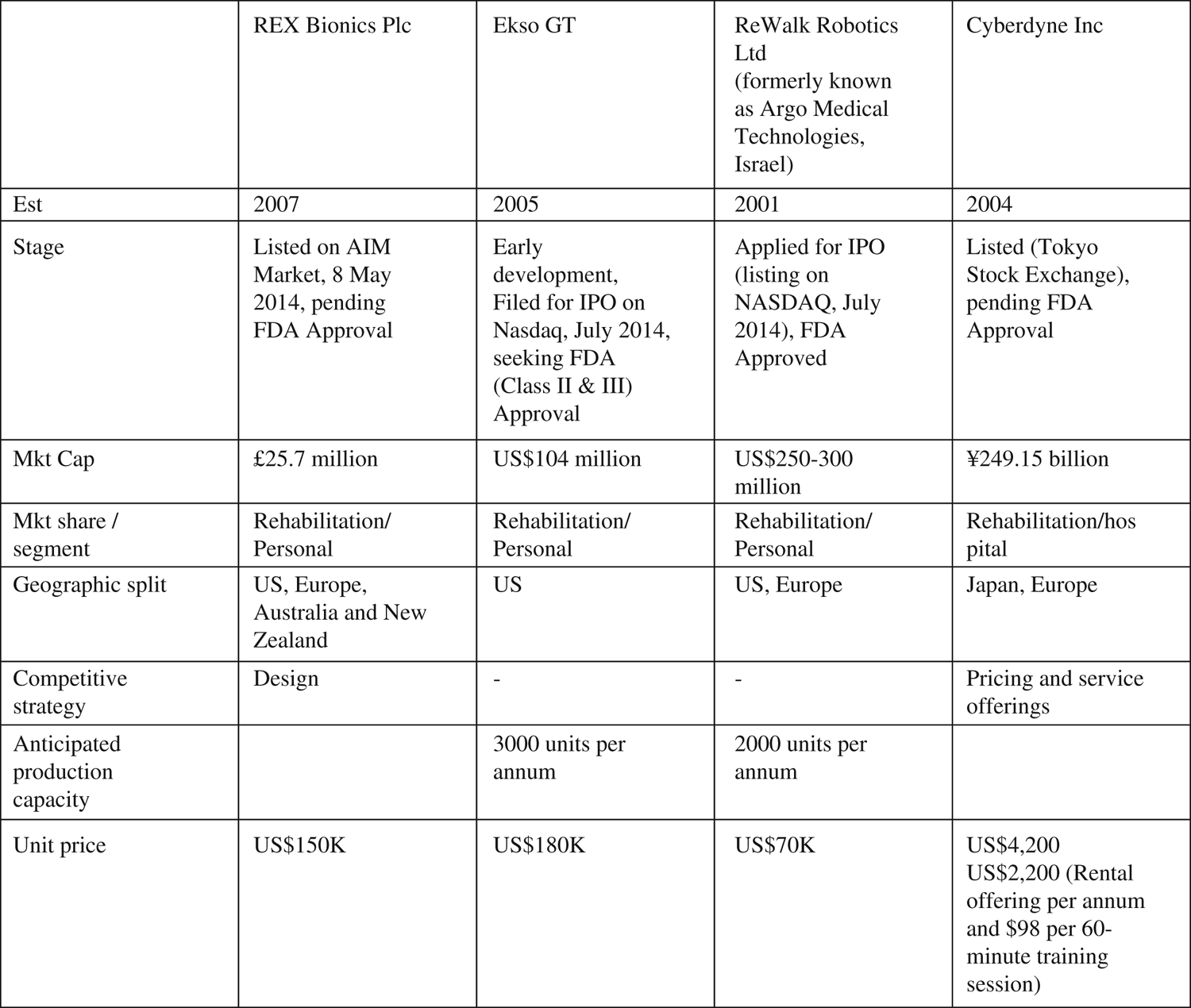
The robotic exoskeleton market had shifted over the decade that Little and Irving developed REX, although competition had remained constant (see Exhibit 5: Competitor analysis). There had been one new market entrant, whose product resembled competitor devices more closely than it did REX and it had already secured FDA approval. At medical conferences, the delegates were more up-to-date and better-informed about robotic exoskeletons – many of whom understood how REX worked and why it differed from other devices. People were also more accepting of exoskeletons, and the original need to educate consumers about REX had advanced to one of ‘clinical best practice’.
Competitor analysis
Adapted from Carter, J. (2013) Robotic Exoskeleton Investing from https://www.energyandcapital.com/articles/robotic-exoskeleton-investing/3419, Tobe, F. (2014) 3 Exoskeleton Companies Go Public from https://www.therobotreport.com/3-exoskeleton-companies-go-public/ and company websites

In March 2015, REX Bionics Plc announced that research and development work was progressing on REX 3, the next-generation re-modelled and lower cost product that was due for release in 2017. The CEO highlighted the fact that manufacturing efficiencies in Auckland had cut the unit materials cost of a REX device by more than a quarter since September 2014 and that the priority was on producing adequate numbers to meet distributor demand for product demonstrations (Rotherham, Reference Rotherham2015).
In the same period, the company reported a financial loss of GBP £3.56 million from £480,000 a year earlier, stating higher costs to commercialise as the main reason. The CEO said commercial sales would take longer than expected to eventuate […] reiterating that it expected only nominal sales during the financial year, with some improvement in the first half of the 2016 financial year and ‘a stronger growth trajectory towards the end of that period’. In the medium term, he expected that evidence of clinical benefit would underpin commercial success (Rotherham, Reference Rotherham2015).
Little continued his involvement as chief technology officer, sitting on the boards of the UK and New Zealand companies and travelling between both countries – spending the bulk of his time in the northern hemisphere. But he anticipated that his hectic travel schedule would settle down, and he would spend more time in Auckland overseeing the building of new devices, and ‘push[ing] to get what we have into more of a sensible shape to design and build[ing] the next device. It is at least ten years’ worth of learning’.
Conclusion
Little and Irving has committed 15 years of their lives to commercialise their vision of an exoskeleton that would enable wheelchair-bound people to walk tall. The story of REX Bionics is one of two founders pursuing what they believe will make a difference. Along the way, Little and Irving made key decisions that shaped the business, from keeping their idea secret to not disappoint prospective users through to maintaining their commitment to business development when governance structures and professional management was introduced. A key to REX Bionics’ commercialisation is the founders’ willingness to learn and develop. The interplay between the founders’ vision and the reality of growing technology-based businesses is the focus, saw Little and Irving continue to take new roles and tasks they have not performed before, responding to the institutional hurdles, technological trends and managerial needs in a growing business. With companies such as REX Bionics, the question that remains is how the founders will remain involved.
Acknowledgements
The authors wish to thank Richard Little for his time and insights for the development of the teaching case. In addition, we thank the two anonymous reviewers whose suggestions helped us to focus and refine the case.
Supplementary materials
To view supplementary material for this article, please visit https://doi.org/10.1017/jmo.2018.68