Aging is associated with significant changes in cognitive, physical, psychological, and social domains, which can include chronic illness, cognitive impairment, bereavement, and loss of social roles (Fiksenbaum et al., Reference Fiksenbaum, Greenglass and Eaton2006). Adverse life events associated with aging are common, with up to 75% of community-dwelling older adults reported to experience an adverse life event (most commonly physical illness and bereavement) over a one-year period (Seematter-Bagnoud et al., Reference Seematter-Bagnoud, Karmaniola and Santos-Eggimann2010). Meta-analysis has shown that adverse life events in older adulthood are related to increased depressive symptoms (Kraaij et al., Reference Kraaij, Arensman and Spinhoven2002) and have a negative impact on older adults’ well-being (Hardy et al., Reference Hardy, Concato and Gill2002). Given the frequency and impact of adverse life events it is important to understand the role of emotion regulation strategies used by older adults in dealing with these adversities.
Despite challenges that can be faced in later life, older adults have been consistently found to have improved emotional well-being over younger age groups (Carstensen et al., Reference Carstensen2011), as well as a “positivity bias” in which they attend more to positive information than younger adults (Carstensen and Mikels, Reference Carstensen and Mikels2005). A recent review has found that one particular emotion regulation strategy, positive reappraisal, increases in use in older adults and may be particularly useful for improving well-being in the face of adversity (Nowlan et al., Reference Nowlan, Wuthrich and Rapee2015a).
Positive reappraisal, first described by Lazarus and Folkman (Reference Lazarus and Folkman1984), is a cognitive emotion regulation strategy that involves identifying personally relevant positive meaning in the face of adversity. The finding that this specific emotion regulation strategy increases with age is interesting, and aligns with Carstensen and colleagues’ work showing a generally more positive way of dealing with and interpreting negative events. As many of the challenges associated with aging are unalterable and objectively negative (e.g. cognitive decline, physical deterioration, loss of loved ones), positive reappraisal may provide a particularly relevant emotion regulation strategy, both because it does not rely on altering the situation itself and because it does not require that the entire appraisal of the experience be altered, but simply that some positive meaning is found within the negative situation. In support of this suggestion, older adults have been found to report a higher frequency of use of positive reappraisal than younger adults, as well as improved ability for its use (Hall et al., Reference Hall, Chipperfield, Heckhausen and Perry2010; Nowlan et al., Reference Nowlan, Wuthrich and Rapee2015a).
Positive reappraisal appears to be particularly associated with positive emotion. Positive reappraisal in a sample of young to older women (aged 28 to 76) with breast cancer was a significant unique predictor of positive emotion 3 and 12 months later (Sears et al., Reference Sears, Stanton and Danoff-Burg2003) and positive reappraisal in a sample of older adults (aged 60 and older) predicted positive emotion even after seven years (Swift et al., Reference Swift, Bailis, Chipperfield, Ruthig and Newall2008). However, little research has examined the impact of positive reappraisal on general negative emotion, and the only study to date in older adults found that positive reappraisal was not significantly associated with negative emotion either at the time of the stressor or post-assessment (Danhauer et al., Reference Danhauer, Carlson and Andrykowski2005). Thus, positive reappraisal appears to relate to increased positive emotion and more research is required to examine the strategy's relationship with negative emotion.
Anxiety and depression are specific components within the broader construct of negative emotion. The relationship between late-life positive reappraisal with anxiety and depression is not fully understood, as research in this area is limited and findings are mixed. Positive reappraisal has been found to be negatively correlated with depression in older adults, a stronger predictor of depression than other adaptive cognitive emotion regulation strategies, and more strongly associated with depressive symptoms in older than younger adults (Garnefski et al., Reference Garnefski, Legerstee, Kraaij, van den Kommer and Teerds2002; Garnefski and Kraaij, Reference Garnefski and Kraaij2006). However, not all studies have replicated these associations (Nolen-Hoeksema and Aldao, Reference Nolen-Hoeksema and Aldao2011). There is a particular paucity of research examining how positive reappraisal relates to anxiety in older adults, with the only study demonstrating that positive reappraisal was a particularly strong predictor of both anxiety and depression for young to older adults (aged 18 to 71), but only a weak predictor for adolescents (aged 12 to 16; Garnefski et al., Reference Garnefski, Legerstee, Kraaij, van den Kommer and Teerds2002). As positive reappraisal has been found to be associated with emotional well-being for older adults, a greater understanding of its relationship with anxiety and depression specifically may help us better understand these conditions and the strategies that older adults can use to cope with them.
Positive reappraisal requires individuals to reflect and find positive meaning in negative situations. Therefore, it is likely that positive reappraisal might be a skill that takes time to develop, for example it might take time to implement positive lifestyle changes to deal with a health condition. Similarly, positive reappraisal may increase over time as positives become more apparent, for example recognition that the stressor has led to the individual now spending more time with their family. In addition, we theorize that during and immediately after the stressor the person needs time to cope with their intense negative emotions (i.e. anger, sadness) and take various actions to adapt to the stressor such as problem solving, but then as time passes the person may build the cognitive and emotional resources to reflect on their experience and identify some personal positive meaning. Little research has examined whether positive reappraisal use or its impact on well-being changes with time since the stressor. In one study, positive reappraisal was found to be positively correlated with length of time since physical illness onset (Hilton, Reference Hilton1989), suggesting that time might be important. Similarly, in a study of women recently diagnosed with breast cancer (aged 28 to 76), positive reappraisal use at around 28 weeks post-diagnosis predicted positive emotion and perceived health 3 and 12 months later (Sears et al., Reference Sears, Stanton and Danoff-Burg2003), again suggesting that the benefits of positive reappraisal might be realized with time. Therefore, it seems that at least for some stressors, positive reappraisal might increase with time and be associated with increases in positive emotion over time, but more research is needed to examine this relationship.
In this paper, we examined changes in the relationships between positive reappraisal and emotion first retrospectively and secondly over time with longitudinal data. The first study used a retrospective design to examine emotion regulation associated with a previous aging-related adverse life event in a sample of older adults. The second study examined these relationships using a prospective design in which current emotion regulation for a recent stressor was measured and re-examined in two follow-up sessions. We had three hypotheses: (1) positive reappraisal will be positively associated with positive emotion, (2) positive reappraisal will be negatively associated with general negative emotion as well as the specific emotions of anxiety and depression, and (3) positive reappraisal use will increase with time and continue to be beneficial. Specifically in the prospective study, we hypothesized that positive reappraisal use will predict positive emotion both from baseline to 3-months post-stressor and from 3-months to 6-months post-stressor.
Study 1
Method
Participants
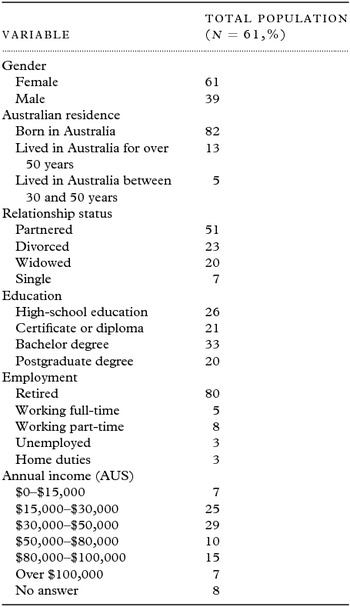
Participants were 61 community-dwelling older adults (age range 62–88 years, M = 72, SD = 5.8), of which 61% were female (see Table 1). Participants were recruited through newspaper advertisements, community newsletters, leaflets distributed by medical practitioners, and community fliers. Participants were required to be aged 60 years or older, to have English literacy, and to have experienced an adverse life event associated with aging after the age of 50 years.
Demographic information for Study 1 sample

Measures
Cognitive functioning was assessed with the Montreal Cognitive Assessment (MoCA; Nasreddine et al., Reference Nasreddine2005), using a cut-off of 22, which has been recommended for optimal sensitivity (81%), specificity (77%), positive predictive value (78%), and negative predictive value (80%; Freitas et al., Reference Freitas, Simoes, Alves and Santana2013). After excluding participants not meeting the cut-off, MoCA scores ranged from 22 to 30 (M = 26.41, SD = 2.20).
Positive and negative emotion was measured with Chipperfield et al. (Reference Chipperfield, Perry and Weiner2003) list of 14 emotions, which was based on the Positive and Negative Affect Scales (Watson et al., Reference Watson, Clark and Tellegen1988), and was selected because it was designed for older adults and is simple and relevant to older adults’ daily life. The six positive emotions are happy, content, grateful, hopeful, proud, and relieved, and the eight negative emotions are frustrated, sad, angry, bored, regretful, guilty, fearful, and ashamed. Participants were asked how often they had experienced each emotion over the past two days on a four-point response scale, with options Never, Once in a while, Fairly often, and Very often. Acceptable α coefficients have been reported for the positive emotion (α = 0.61) and negative emotion (α = 0.80) factors (Chipperfield et al., Reference Chipperfield, Perry and Weiner2003). In our sample, Cronbach's α was 0.60 for the positive emotion subscale and 0.78 for the negative emotion subscale. The positive emotion item Relieved showed a very low correlation of 0.03 with the rest of the subscale and was therefore dropped from the positive emotion subscale, leading to a coefficient alpha of 0.67.
Aging-related adverse life events were identified for the current study and assessed in a structured interview format by asking participants whether they had experienced 15 different adverse life events after age 50 years, such as retirement, loss of a close person, health conditions, and reduced independence. Participants rated their level of distress at the time of the adverse life event for each on a five-point Likert scale (1 = Not at all distressed, 5 = Extremely distressed). From this list, the most distressing adverse life event associated with aging for each individual was identified and clarified with the participant.
Cognitive emotion regulation was measured with the 36-item Cognitive Emotion Regulation Questionnaire (CERQ; Garnefski et al., Reference Garnefski, Kraaij and Spinhoven2001), which assesses how people use their thoughts to manage their emotions across nine emotion regulation strategies, and has been found to be an acceptable measure of positive reappraisal for older adults (Nowlan et al., Reference Nowlan, Wuthrich and Rapee2015b). Five strategies are considered adaptive (positive reappraisal, acceptance, refocus on planning, putting into perspective, and positive refocusing) and four strategies are considered maladaptive (self-blame, other-blame, catastrophizing, and rumination). The measure uses a five-point response scale ranging from (Almost) never to (Almost) always. Cronbach's α has been found to range from 0.76 to 0.82 in an older adult population (Garnefski and Kraaij, Reference Garnefski and Kraaij2006). In the current study, the CERQ was modified to form a past coping version with the instructions to select a response for “from the time it occurred for the two weeks after the event,” and the CERQ items were changed from present to past tense for easy reference to the particular time-point. In addition, the CERQ was administered in its usual format to be used as a measure of current coping with the instruction to choose a response based on “how you have coped with this event over the last two weeks until now.” Internal consistency ranged from 0.61 to 0.91 for the retrospective coping scores and from 0.65 to 0.95 for the current coping scores.
Depression was measured with the short-form of the Geriatric Depression Scale (GDS), comprising 15 yes-no items (Sheikh and Yesavage, Reference Sheikh and Yesavage1986). In our sample, internal consistency was acceptable (α = 0.86), and the mean GDS score (M = 2.07, SD = 2.99, range = 0–11) was below the clinical range, which is recommended as a GDS score of 5 or above (Wancata et al., Reference Wancata, Alexandrowicz, Marquart, Weiss and Friedrich2006).
Anxiety was measured with the Geriatric Anxiety Inventory (GAI; Pachana et al., Reference Pachana, Byrne, Siddle, Koloski, Harley and Arnold2007), comprising 20 dichotomous items with the response options of Agree and Disagree. The GAI has been found to have acceptable validity and reliability (α = 0.91) in a sample of older adults (Pachana et al., Reference Pachana, Byrne, Siddle, Koloski, Harley and Arnold2007). In our sample, internal consistency was acceptable (α = 0.90) and the mean GAI score (M = 2.82, SD = 4.00, range = 0–20) was below the clinical range, which is 8/9 to detect clinically significant anxiety (Johnco et al., Reference Johnco, Knight, Tadic and Wuthrich2015).
Procedure
The study was approved by the University Human Research Ethics Committee. Participants gave informed written consent and then attended the 1.5-hour assessment in person at the University Clinic. Participants first completed demographic information, the cognitive screener (MoCA), the measure of emotions, and then completed the structured interview questions in which they identified their most distressing adverse life event associated with aging since age 50 years. Immediately following this, participants completed the CERQ (past coping version) and rated how they coped at the time of the stressor (specifically the two weeks immediately following its onset). They then recompleted the CERQ (current coping version) indicating how they were coping in the present with that stressor (over the previous two weeks). Each time participants completed the CERQ, the stressor and the time period in reference were written clearly for the participant to see and were discussed to confirm that the participant understood which time period they were rating, i.e. past or current. After completing the CERQ for their previous and current coping, participants completed the GDS and GAI. At the end of the testing session, participants were reimbursed AUS$20 for their time.
Data analysis
The relationships between linear variables were examined with two-tailed Pearson product-moment correlations (α = 0.05). A multiple regression analysis assessed whether the four current emotion regulation strategies that significantly related to well-being predicted positive emotion in order to examine the unique variance explained by positive reappraisal. To examine whether positive reappraisal use increased over time, a one-way repeated measures ANOVA compared positive reappraisal across the two time points with the covariate of time since the stressor centered on the mean.
Results
Of the 15 stressors, the mean number reported was 7 (SD = 2.66) with a range from 1 to 13, and all stressors had occurred since the age of 50. The stressor most commonly reported as most distressing was death of a close person (36.1%), followed by physical illness (26.2%), retirement (13.1%), caring for someone who is ill (8.2%), memory/vision/hearing decline (4.9%), loss of physical ability (3.3%), financial difficulties (3.3%), loss of independence (1.6%), feeling disrespected for being old (1.6%), and changes in appearance due to aging (1.6%). Participants’ most distressing stressor had a mean severity level of 4.21 (SD = 0.90) ranging from 2 to 5, and the mean length of time since the stressor was 5.9 years (SD = 5.5).
Positive emotion, negative emotion, depression, and anxiety
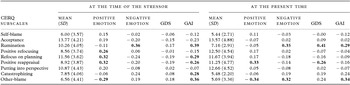
To examine the first two hypotheses, participants’ cognitive emotion regulation strategies were correlated with the well-being variables of positive emotion, negative emotion, anxiety, and depression (see Table 2). Positive reappraisal at the time of the stressor (retrospective) was significantly correlated (r = 0.32) with current positive emotion (M = 14.41, SD = 2.74) and significantly negatively correlated (r = −0.26) with anxiety (M = 2.83, SD = 3.97), but not significantly correlated with negative emotion (M = 12.63, SD = 3.59) or depression (M = 2.06, SD = 2.95). Positive emotion was also significantly correlated with past refocus on planning (r = 0.32), positive refocusing (r = 0.26), and negatively correlated with past other-blame (r = −0.29). Current positive reappraisal was also significantly correlated with current positive emotion (r = 0.33) and depression (r = −0.26), but not negative emotion or anxiety. Positive emotion was also significantly negatively correlated with current other-blame (r = −0.35), and its correlations with the other emotion regulation strategies were non-significant.
Correlations between coping strategies and well-being variables for Study 1

Note. Correlations (n = 61) significant at 0.05 level are in boldface. SD = standard deviation, CERQ = Cognitive Emotion Regulation Questionnaire, GDS = Geriatric Depression Scale, GAI = Geriatric Anxiety Inventory.
A multiple regression analysis was used to determine the extent to which current positive reappraisal predicted current positive emotion, while accounting for the other emotion regulation strategies that were also significantly related to well-being at the time of the assessment (rumination and other-blame) in case they also explained the relationship. Preliminary analyses were conducted to ensure there was no violation of the assumptions of normality, linearity, multicollinearity, and homoscedasticity. The overall model significantly predicted positive emotion, F(3, 57) = 4.63, p < 0.01 (R2 = 0.20 and adjusted R2 = 0.15), with two emotion regulation strategies being significant predictors: positive reappraisal (β = 0.31, p = 0.02) and other-blame (β = −0.26, p = 0.04). Positive reappraisal uniquely explained 8% of the variance in positive emotion, whilst other-blame uniquely explained 6% of the variance. Therefore, positive reappraisal made a significant unique contribution to the prediction of positive emotion, even when the other emotion regulation strategies relating to well-being were held constant.
Positive reappraisal and time
In order to examine the third hypothesis of whether positive reappraisal increased over time, a one-way repeated-measures ANOVA was used to compare positive reappraisal across the two time points (past and current) with the covariate of time since the stressor centered on the mean. The main effect of time was significant, F(1, 59) = 20.84, p < 0.001, partial eta2 = 0.26, as was the interaction between positive reappraisal and time, F(1, 59) = 9.05, p < 0.05, partial eta2 = 0.13, indicating that the longer duration since the stressor had occurred, the greater the positive reappraisal.
Discussion
This study examined the use of positive reappraisal in relation to a past adverse life event associated with aging in a sample of older adults using a retrospective design. The first hypothesis that positive reappraisal would be associated with positive emotion was supported. When comparing the emotion regulation strategies used at the time of the stressor, positive reappraisal and refocus on planning had the strongest positive relationships with positive emotion. When comparing the emotion regulation strategies used at an average of six years after the stressor, positive reappraisal was the only strategy significantly positively associated with positive emotion. Furthermore, even when the other strategies that significantly related to well-being were held constant, positive reappraisal remained a significant predictor of positive emotion. These findings are in line with the existing literature demonstrating that positive reappraisal relates to positive emotion using the same measure of positive emotion (Swift et al., Reference Swift, Bailis, Chipperfield, Ruthig and Newall2008), and demonstrating that positive reappraisal is a particularly adaptive strategy for older adults using the same measure of cognitive emotion regulation (Garnefski and Kraaij, Reference Garnefski and Kraaij2006).
Support for the hypothesis that positive reappraisal would be associated with a decrease in negative emotion, anxiety and depression was mixed. Positive reappraisal at the time of the stressor was significantly negatively correlated with anxiety but not depression, whereas positive reappraisal at the time of the assessment was significantly negatively correlated with depression but not anxiety. These results are difficult to interpret as it is not clear why positive reappraisal would have a different impact on anxiety and depressive symptoms at different times. It is possible that positive reappraisal was associated with anxiety at the time of the stressor because an anxious response is a likely immediate response to a threat, while depressed mood is likely to develop over time. However, these findings need to be replicated. It is possible that because the scores for anxiety and depression in this community sample were in the subclinical range, the range of scores were restricted making it difficult to assess the true relationship between positive reappraisal and anxiety and depression over time.
The finding that positive reappraisal related to increased positive emotion but not decreased negative emotion indicates that the mechanism underpinning positive reappraisal coping relates to positive emotion specifically. In the process of positively reappraising, individuals identify personally relevant positive meaning while still acknowledging the negative meaning (Lazarus and Folkman, Reference Lazarus and Folkman1984), which may explain why there was a stronger and more consistent influence on positive than negative emotion. Positive and negative emotions are theoretically independent constructs and changes on these two dimensions can occur uniquely (Bradburn and Caplovitz, Reference Bradburn and Caplovitz1965). Thus, it appears that positive reappraisal may increase positive emotion while having less influence on negative emotion, and therefore be more strongly associated with increases in positive well-being than decreases in negative well-being. The implication of this result is that the strategy would help older adults enhance positive well-being more than decreasing negative emotion per se.
The third hypothesis that positive reappraisal use would increase with increased passage of time since the stressor was supported. This finding supports previous research suggesting that positive reappraisal is an emotion regulation skill that takes time to develop (e.g. Hilton, Reference Hilton1989). In fact, positive reappraisal was found to be the most adaptive emotion regulation strategy when used an average of six years after the stressor. In addition, rumination and other-blame were both found to be maladaptive strategies that when used at an average of six years after the stressor was significantly positively correlated with negative emotion, anxiety, and depression.
An important limitation of this study is the use of the retrospective design which had the potential for memory biases to have impacted on the results. It is possible that participants’ recollection of the emotion regulation strategies they used at the time the stressor occurred may have been inaccurate and influenced by their current emotional status. It also may have been confusing for participants to separate how they feel about the stressor in the present time to how they felt about it at the time it occurred. However, the retrospective design did allow examination of positive reappraisal use in relation to the participants’ most distressing stressor of aging, rather than a recent stressor. Two further limitations are that the order of administration of the two CERQ measures was not counterbalanced and that the results were correlational preventing causal conclusions being drawn about the relationship between positive reappraisal and well-being. Therefore, it is important to explore whether these findings can be replicated in a prospective design that follows change in positive reappraisal and well-being over time.
Study 2
The results of Study 1 demonstrated that positive reappraisal significantly related to positive emotion, was affected by time since the stressor, was not related to general negative emotion, and had differing relationships over time with anxiety and depression. However, there were a number of limitations with this design. Accordingly, a prospective design was utilized in Study 2 to further examine the three hypotheses tested in Study 1 to overcome the limitations of the retrospective design. Specifically the hypotheses were: (1) positive reappraisal will be positively associated with positive emotion, (2) positive reappraisal will be negatively associated with general negative emotion as well as the specific emotions of anxiety and depression, and (3) positive reappraisal will increase with time and continue to predict positive emotion as time passes since the stressor. Specifically, we hypothesized that baseline positive reappraisal will predict positive emotion at 3-months and positive reappraisal at 3-months will predict positive emotion at 6-months.
Methods
Participants
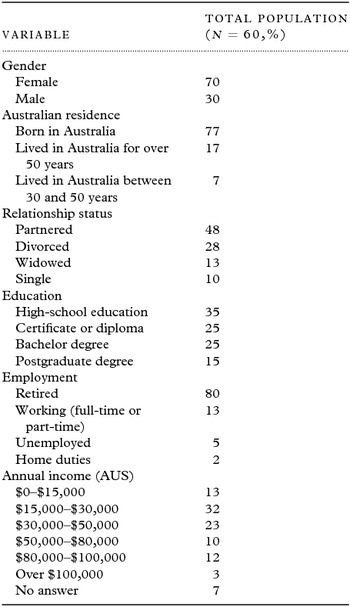
Participants comprised 60 community-dwelling older adults ranging from 62 to 88 years (M = 71.20, SD = 5.70), with 70% of the sample being female. See Table 3 for demographic information. Participants were recruited via the same methods as Study 1. Inclusion criteria were as follows: (1) aged 60 years and older and (2) having experienced an adverse life event associated with aging in the past four weeks (either a new adverse life event or a distressing flare-up of an ongoing adverse life event). The adverse life event had to relate to the aging process, such as cognitive loss, physical loss, or social loss (loss of role or illness/death of a close person), and be rated as at least A little distressing (2) on a 5-point Likert scale from Not at all distressing (1) to Extremely distressing (5). Forty-two participants (70% of the sample) also completed Study 1; however, the stressor was the most distressing adverse life event associated with aging (since age 50 years) in Study 1, but a recent adverse life event associated with aging (in the past 4 weeks) in Study 2. The adverse life events reported for each study were unique and did not overlap. All 60 participants completed the 3-month follow-up and 57 completed the 6-month follow-up as three participants were unable to be contacted.
Demographic information for Study 2 sample

Of the adverse life events, 73% were a new stressor with a recent onset (during the past 4 weeks) and 27% were ongoing but had a recent flare-up (during the past 4 weeks). The challenges fell into the following categories: physical health difficulties such as surgery or cancer treatment (27%), stress related to the aging process such as experienced physical vulnerability and memory difficulties (17%), physical ability restrictions (13%), death of close one (12%), financial difficulties (8%), social isolation (8%), retirement and job loss (8%), caring for a loved one whose health had recently deteriorated (3%), and stress related to down-sizing (3%). All events were perceived by the participant as distressing.
Measures
Positive and negative emotion was again measured with Chipperfield et al.'s (Reference Chipperfield, Perry and Weiner2003) list of 14 emotions designed for older adults, administered at baseline and 3-month follow-up using the four-point response scale of Never, Once in a while, Fairly often, and Very often. The Positive Emotion subscale was administered again at 6-month follow-up to examine the relationship between positive reappraisal and positive emotion specifically. Cronbach's αcoefficients for positive emotion were acceptable (using all six items) at baseline (α = 0.79), 3-month follow-up (α = 0.74), and 6-month follow-up (α = 0.78). Cronbach's α coefficients for negative emotion were also acceptable at both time-points that it was administered: baseline (α = 0.83) and 3-month follow-up (α = 0.70).
Cognitive emotion regulation was measured with the CERQ focused on current coping only. The alpha coefficients for the CERQ subscales ranged from 0.71 to 0.89 at baseline and 0.65 to 0.91 at 3-month-follow-up. The alpha coefficients for the Positive Reappraisal subscale were acceptable at all three time points: baseline (α = 0.84), 3-month follow-up (α = 0.68) and 6-month follow-up (α = 0.83).
Depression was again measured with the GDS Short-Form. Cronbach's αs were acceptable at both baseline (α = 0.89) and 3-month follow-up (α = 0.87). Again, neither the mean GDS scores at baseline (M = 3.88, SD = 4.00, range = 0–14) or at 3-month follow-up (M = 3.83, SD = 3.75, range = 0–13) were in the clinical range, which is 4/5 to detect clinically significant depression (Wancata et al., Reference Wancata, Alexandrowicz, Marquart, Weiss and Friedrich2006).
Anxiety was again measured with the GAI. Cronbach's αs were acceptable at both baseline (α = 0.93) and 3-month follow-up (α = 0.91). Again, neither the mean GAI scores at baseline (M = 5.82, SD = 5.82, range = 0–20) or at 3-month follow-up (M = 5.73, SD = 5.24, range = 0–19) were in the clinical range, which is 8/9 to detect clinically significant anxiety (Johnco et al., Reference Johnco, Knight, Tadic and Wuthrich2015).
Procedure
This study was approved by the University Human Research Ethics Committee. Participants phoned or emailed the researcher in response to advertisements and arranged a time for an initial assessment. Seventy-three percent of participants attended the initial assessment in person at the University Clinic and the remaining 27% completed the interview over the telephone due to personal preference. Participants first answered the demographic questions and then completed the self-report measures in the following order: measure of positive and negative emotion, CERQ, GDS, and GAI. Participants who had also participated in Study 1 did not recomplete the GDS and GAI after the CERQ at the baseline assessment, but they completed the CERQ for their recent stressor immediately after completing the GDS and GAI as part of Study 1. Three months after the baseline assessment, all participants completed the questionnaires again in the same order as the first assessment with items being administered over the telephone for all participants. At 6 month follow-up, participants completed the Positive Reappraisal subscale of the CERQ and the measure of positive emotion, which was administered over the telephone to all participants.
Data analysis
The relationships between linear variables were examined with two-tailed Pearson product-moment correlations (α = 0.05). The relationship between positive reappraisal and positive emotion over the three time points was examined using lagged path analysis with observed variables tested in a structural equation modeling program (AMOS Version 21). The data were checked for approximation to a normal distribution and missing data were handled using full information maximum likelihood. The statistical fit of the model was assessed using the following fit indices as recommended by Schreiber et al. (Reference Schreiber, Stage, King, Nora and Barlow2006) for one-time analyses: χ 2 index, Tucker–Lewis Index (TLI), Comparative Fit Index (CFI), and Root Mean Square Error of Approximation (RMSEA). The cut-off criteria for the fit indices were selected according to Schreiber et al. (Reference Schreiber, Stage, King, Nora and Barlow2006): a non-significant χ 2 index indicates a good fit; TLI and CFI values of ≥0.95 indicate acceptable fit; and an RMSEA value of < 0.06 indicates a good fit. Significant relationships in the lagged path analysis were followed-up with multiple regression analysis to examine whether positive reappraisal still significantly predicted positive emotion when controlling for the other adaptive cognitive emotion regulation strategies.
Results
Positive emotion, negative emotion, depression, and anxiety
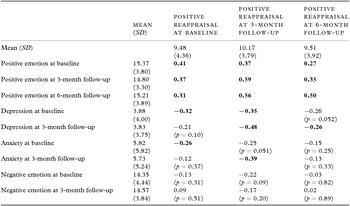
To test the first two hypotheses, we examined whether positive reappraisal was associated with positive emotion at baseline, 3-month follow-up and 6-month follow-up, and with negative emotion, depression and anxiety at baseline and 3-month follow-up (see Table 4). At baseline, positive reappraisal was significantly correlated with positive emotion (r = 0.41), but not significantly correlated with negative emotion (r = −0.13), replicating the results of Study 1. In addition, positive reappraisal was significantly negatively correlated with both depression (r = −0.32) and anxiety (r = −0.26), supporting our hypotheses and partially replicating the findings for Study 1. The same pattern of results was found at 3-month follow-up, as positive reappraisal was significantly correlated with positive emotion (r = 0.59), not significantly correlated with negative emotion (r = −0.17), and significantly negatively correlated with depression (r = −0.48) and anxiety (r = −0.39). At 6-month follow-up, positive reappraisal remained significantly positively correlated with positive emotion (r = 0.50).
Correlations between positive reappraisal and well-being at each time point for Study 2

Note. Correlations significant at 0.05 level are in boldface. SD = standard deviation, PR = Positive Reappraisal. n = 60 at baseline and 3-month follow-up, n = 57 at 6-month follow-up.
Positive reappraisal and positive emotion over time
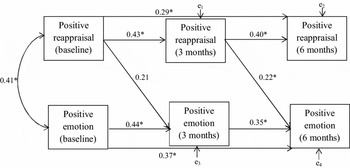
The third hypothesis that positive reappraisal will increase with time and continue to predict positive emotion as time passes since the stressor was first examined with a one-way repeated measures ANOVA to compare positive reappraisal use across the three time points. The ANOVA was non-significant, F(2, 112) = 1.24, p = 0.30, indicating that positive reappraisal use did not change with time. The second part of the hypothesis that baseline positive reappraisal would predict positive emotion at 3 months and positive reappraisal at 3 months would predict positive emotion at 6 months was examined using lagged path analysis. In the model, the exogenous variables (variables that have no inputs from the other variables in the model) were positive reappraisal and positive emotion within four weeks of the stressor (baseline). The endogenous variables (variables that have inputs from other variables in the model) were positive reappraisal and positive emotion measured 3 months and 6 months after the stressor. The error terms at 3-month follow-up were allowed to correlate and the error terms at 6-month follow-up were allowed to correlate. Positive reappraisal was conceptualized as a predictor variable and positive emotion as an outcome variable. The results of the test of the model are presented graphically in Figure 1. The model provided a good fit to the data, with a non-significant χ 2, X 2 (4, N = 60) = 4.21, p = 0.38, TLI = 0.99, CFI = 1.00, and RMSEA = 0.06. However, the 90% confidence interval of the RMSEA fit index (0.00 to 0.20) did not represent a good degree of precision, likely due to the smaller sample size. Nevertheless, the probability that the population RMSEA point estimate is no greater than 0.05 was non-significant (p = 0.45). The parameter estimates were all significant (p < 0.05) except for the path from baseline positive reappraisal to positive emotion at 3-month follow-up. As would be expected, positive reappraisal at both baseline and 3-month follow-up predicted positive reappraisal 3 and 6 months later, and similarly positive emotion at both baseline and 3-month follow-up predicted positive emotion 3 and 6 months later. Positive reappraisal at baseline did not significantly predict positive emotion at 3-month follow-up. However, positive reappraisal at 3-month follow-up did significantly predict positive emotion at 6-month follow-up.
Path analysis showing standardized regression estimates over the three time periods.

Multiple regression was used to examine whether positive reappraisal at 3 months still significantly predicted positive emotion at 6 months when controlling for the other adaptive cognitive emotion regulation strategies (acceptance, positive refocusing, putting into perspective, and refocus on planning). Preliminary analyses using normal probability plot residuals and residual scatter diagrams confirmed the assumptions of normality, linearity, multicollinearity, and homoscedasticity. The regression analysis examining whether positive reappraisal at 3 months along with the other adaptive cognitive emotion regulation strategies predicted positive emotion at 6 months was significant, F(5,51) = 5.90, p < 0.05, R2 = 0.37, Adjusted R2 = 0.30. Of the five cognitive emotion regulation strategies, positive reappraisal was the only significant predictor (β = 0.61, p < 0.05), indicating that positive reappraisal made a significant unique contribution to the prediction of positive emotion when holding the other adaptive strategies constant. None of the other strategies – acceptance (β = −0.02, p = 0.90), positive refocusing (β = 0.15, p = 0.24), putting into perspective (β = 0.01, p = 0.97), and refocus on planning (β = −0.21, p = 0.11) – significantly predicted positive emotion at 6 months. However, when positive emotion at 3 months was included in the model as an additional covariate to control for the correlation between positive reappraisal and positive emotion at 3-month follow-up, the positive reappraisal predictor only approached significance and its standardized coefficient decreased in magnitude (β = 0.26, p = 0.07). The overall model remained significant, F(6,50) = 10.25, p < 0.05, R2 = 0.55, Adjusted R2 = 0.50, and the other four emotion regulation strategies remained non-significant and none were nearing significance (p-values ranged from 0.15 to 0.92). Thus, this result indicates that positive reappraisal is a stronger predictor of positive emotion than the other strategies from 3-month to 6-month follow-up, but positive reappraisal's predictive strength reduces when the correlation between positive reappraisal and positive emotion at 3-month follow-up is controlled.
Discussion
This prospective study examined the relationship between late-life positive reappraisal and positive emotion 3 and 6 months after a recent adverse life event associated with aging. Replicating the results from Study 1, positive reappraisal was significantly correlated with positive emotion but not with general negative emotion at both baseline and 3-month follow-up, and remained significantly related to positive emotion at 6-month follow-up. This result further indicates that positive reappraisal is particularly associated with increases in positive emotion. However, in contrast to Study 1 and supporting our hypothesis, positive reappraisal was significantly negatively correlated with anxiety and depression at both baseline and 3-month follow-up. The differences in the pattern of results might relate to differences in baseline anxiety and depression across the two studies, as the sample in Study 2 (GAI M = 5.82, SD = 5.82; GDS M = 3.88, SD = 4.00) had significantly higher baseline levels of anxiety, t(119) = 3.31, p = 0.001, and depression, t(119) = 2.82, p = 0.006, than the sample in Study 1 (GAI M = 2.82, SD = 4.00; GDS M = 2.07, SD = 2.99), allowing for more sensitivity detecting differences in symptoms. It is likely that the second sample were more anxious and depressed, as they had all experienced a significant stressor within the past four weeks, such as bereavement of a loved one. Thus, the results suggest that positive reappraisal relates to reductions in anxiety and depressive symptoms if older adults are experiencing increased symptoms. This implies that positive reappraisal may be a beneficial strategy for anxiety and depressive symptoms, which further research should explore.
In contrast to Study 1, positive reappraisal use did not change with time. Perhaps, this was related to the differences in duration since the stressor across the two studies (months vs. years), differences in retrospective and prospective report, or perhaps the study was underpowered to detect change over a relatively short period of time. However, the hypothesis that baseline positive reappraisal would predict positive emotion at 3 months and positive reappraisal at 3 months would predict positive emotion at 6 months was partially supported. The path analysis found that baseline positive reappraisal did not significantly predict positive emotion at 3 months, but positive reappraisal at 3 months did significantly predict positive emotion at 6 months. However, the effect sizes did not differ greatly. Therefore, it is possible that a significant relationship from baseline to 3 months might have been detected with a larger sample. Nevertheless, the results provide evidence that positive reappraisal use after the stressor (at 3 months) is adaptive as it predicted positive emotion three months later (at 6 months). This provides further support for the theory that positive reappraisal is an emotion regulation strategy that continues to be used and is adaptive as time passes since the stressor. When the five adaptive cognitive emotion regulation strategies were assessed together for their prediction of positive emotion, positive reappraisal at 3 months remained a significant unique predictor of positive emotion at 6 months. Furthermore, positive reappraisal was the only emotion regulation strategy to significantly predict positive emotion, although this relationship was only nearing significance when the correlation between positive reappraisal and positive emotion at 3 months was controlled. This result supports previous findings indicating that positive reappraisal is particularly related to increased positive emotion over and above other adaptive cognitive emotion regulation strategies (e.g. Sears et al., Reference Sears, Stanton and Danoff-Burg2003) and provides further evidence that the positive reappraisal strategy in particular continues to be used and adaptive as time passes since the stressor. The implication of this result is that positive reappraisal is a strategy that can still be used months after the stressor has occurred.
Although this study tried to overcome some limitations of Study 1 by capturing positive reappraisal and positive emotion without the memory biases inherent in retrospective measurement, the study was not without its own limitations. First, the order of questionnaires at baseline was not standardized across all participants due to overlap in participation across the two studies, and participation in Study 1 may have affected baseline responses for those also participating in Study 2. In addition, the sample included adverse life events that were of a recent onset as well as those that had begun earlier but had been particularly stressful over the past four weeks (n = 16), which may have introduced additional variability in the analyses. Further, unlike in Study 1, the cognitive screener could not be administered because some participants were assessed over the telephone, and accordingly we could not assess for cognitive impairment. A final limitation of the study is the potential confound from analyzing all adverse life events together, as positive reappraisal may be a more effective strategy for some stressor types than others.
Summary and concluding discussion
Two main conclusions can be drawn across the two studies. First, positive reappraisal is significantly associated with positive but not general negative emotion, supporting the research that positive and negative emotions are independent (e.g. Bradburn and Caplovitz, Reference Bradburn and Caplovitz1965). One suggestion for why positive reappraisal would relate to increased positive but not negative emotion is that the individual has identified new positive meaning about the stressor which would cause them to have more positive thoughts about the experience and thus experience more positive emotion, but retain the negative interpretation of the event and thus have unchanged levels of negative emotion. In practice this is understandable, for example after having cancer individuals are likely to retain the negative memories of the course of treatment and maintain fears of relapse; however, they may also recognize improvements that have come into their life as a result of the illness. However, it could also be the case that people who experience more positive emotion will find more positive meaning and therefore report more positive reappraisal. Furthermore, item similarity across the measures of positive emotion and positive reappraisal could result in people who agree with more positively worded items on one measure agreeing with those on another. Further research is required to understand why positive reappraisal relates more strongly to positive emotion than general negative emotion.
Our findings for the relationship between positive reappraisal with anxiety and depression specifically were mixed across the two studies, with both significant and non-significant associations in the retrospective study but consistently significant negative associations in the prospective study. These differences are likely to have come from differences in the study design (prospective, retrospective) and samples used (with Sample 2 being more anxious and depressed at baseline). The result that positive reappraisal related to reductions in anxiety and depression but not negative emotion was unexpected and does not fit with the reports of significant correlations in non-clinical samples of negative emotion with depressive and anxiety (e.g. Crawford and Henry, Reference Crawford and Henry2004). However, negative emotion covers a range of negative mood states, not just those of anxiety and depression, and in this study also included frustration, anger, boredom, and shame. Therefore, negative emotion is likely to assess a different, and broader, construct to anxiety and depression, and accordingly be impacted differently by positive reappraisal coping. Another possible explanation for the result may be the difference in measurement, as negative emotion was assessed over the past two days, whereas anxiety and depression were assessed over the past week. Although the results of the current paper indicate that positive reappraisal coping has a greater impact on anxiety and depression than negative emotion, these relationships require further examination.
The second conclusion that can be drawn across the two studies is that positive reappraisal continues to be used and adaptive after time has passed since the stressor. Accordingly, it may continue to be helpful to assist people to positively reappraise some time (i.e. three months) after the stressor. We found that positive reappraisal use relates to increased well-being at 3 months, 6 months, and at an average of 6 years post-stressor. However, the results were inconsistent whether positive reappraisal use actually increases with time since the stressor. Therefore, more research is required to understand the relationship between positive reappraisal and time, and in particular whether a certain length of time needs to pass after a stressor before positive reappraisal is most helpful.
In summary, these two studies provide further evidence that positive reappraisal is an emotion regulation strategy that when used after an adverse life event is associated with increased positive emotion and potentially decreases in anxiety and depression in older adults. The clinical implications of this research are that older adults may benefit from being encouraged or taught to use positive reappraisal strategies to deal with adverse life events in order to increase positive emotion and decrease anxiety and depression. Some interesting recent pilot work suggests that positive reappraisal can be taught to older adults with chronic illness in order to improve coping (Nowlan et al., Reference Nowlan, Wuthrich and Rapee2015c).
Conflict of interest
None.
Description of authors’ roles
J. Nowlan, R. Rapee, and V. Wuthrich all assisted in formulating the research questions, designing the study, and editing the manuscript. J. Nowlan had the primary role in data collection, statistical analysis, and manuscript preparation.