Background
The body of evidence for the pervasive and devastating impacts of childhood trauma and adversity on the physical and psychological wellbeing of individuals continues to accumulate. Traumatic experiences can include sexual abuse, physical abuse, domestic violence, community and school violence, medical trauma, motor vehicle accidents, natural and human-made disasters, suicides, and other traumatic losses. Trauma exposure appears common amongst youth: studies from the USA, using structured clinical interviews, have reported between 43–68% of youth have been exposed to at least one traumatic event (Copeland, Keeler, Angold, & Costello, Reference Copeland, Keeler, Angold and Costello2007; Giaconia et al., Reference Giaconia, Reinherz, Silverman, Pakiz, Frost and Cohen1995; McLaughlin et al., Reference McLaughlin, Koenen, Hill, Petukhova, Sampson, Zaslavsky and Kessler2009). Late adolescence and early adulthood is the developmental period of the highest risk of exposure (Breslau et al., Reference Breslau, Kessler, Chilcoat, Schultz, Davis and Andreski1998; Finkelhor, Ormrod, & Turner, Reference Finkelhor, Ormrod and Turner2009). Research has unequivocally shown that childhood trauma is associated with mental illnesses, such as depression, anxiety, personality disorders, and even psychosis (Anda et al., Reference Anda, Brown, Felitti, Bremner, Dube and Giles2007; Bebbington et al., Reference Bebbington, Bhugra, Brugha, Singleton, Farrell, Jenkins and Meltzer2004; Green et al., Reference Green, McLaughlin, Berglund, Gruber, Sampson, Zaslavsky and Kessler2010; Janssen et al., Reference Janssen, Krabbendam, Bak, Hanssen, Vollebergh, de Graaf and van Os2004; Shevlin, Dorahy, & Adamson, Reference Shevlin, Dorahy and Adamson2007). Individuals exposed to traumatic events that are of an interpersonal, prolonged and/or repeated nature, are more likely to experience persistent trauma reactions and functional impairment than natural events or accidents (Australian Centre for Posttraumatic Mental Health [ACPMH], 2013). When traumatic events occur during early childhood, they can be especially harmful, resulting in behavioural and attentional problems, such as attention deficit hyperactivity disorder and oppositional defiant disorder (ACPMH, 2013; Scheeringa & Zeanah, Reference Scheeringa and Zeanah2008). Conversely, children who develop mental health problems are at greater risk of being exposed to trauma and Posttraumatic Stress Disorder (PTSD) during their lifetime (Storr, Lalongo, Anthony, & Breslau, Reference Storr, lalongo, James and Breslau2007).
Although there are multiple risk factors for the development of mental health conditions following trauma experiences during childhood, family adversity or poor family functioning has been implicated in the development of childhood PTSD (McLaughlin et al., Reference McLaughlin, Green, Gruber, Sampson, Zaslavsky and Kessler2010; Trickey, Siddaway, Meiser-Stedman, Serpell, & Field, Reference Trickey, Siddaway, Meiser-Stedman, Serpell and Field2012). Children's natural resilience and ability to recover from trauma can be negated by ongoing adversities and stressors in their lives, as well as by negative or inappropriate responses to the trauma by family or social support systems. Children may experience “proximal family stressors” such as parental divorce, conflict, substance abuse or parental mental illness, poverty, grief, and loss. (Rodgers, Reference Rodgers1996; Sawyer et al., Reference Sawyer, Arney, Baghurst, Graetz, Kosky, Nurcombe and Zubrick2001). Approximately two-thirds of Australian children will experience at least one life adversity over a 12 month period, with around 20% experiencing three or more adversities. This level of adversity is an established risk factor in the development of mental health difficulties in childhood, adolescence, and adulthood (Clark, Caldwell, Power, & Stansfeld, Reference Clark, Caldwell, Power and Stansfeld2010; Olesen, MacDonald, & Raphael, Reference Olesen, MacDonald and Raphael2010). The Adverse Childhood Experiences Study showed that there is a step-wise, dose-related increase in adverse outcomes with each episode of early life trauma and adversity (Felitti & Anda, Reference Felitti, Anda, Lanius, Vermette and Pain2010). The more adversities present or that accumulate, the more likely it is that the child will have a serious negative mental or physical health outcome, including mortality (Felitti & Anda, Reference Felitti, Anda, Lanius, Vermette and Pain2010; Felitti et al., Reference Felitti, Anda, Nordenberg, Williamson, Spitz, Edwards and Marks1998, Olesen et al., Reference Olesen, MacDonald and Raphael2010; Zubrick et al., Reference Zubrick, Silburn, Lawrence, Mitrou, Dalby, Blair and Li2005).
Many individuals exposed to trauma and multiple adversities will end up in the mental health system. Indeed, studies have shown that the majority of adult mental health service consumers have histories of trauma, many having experienced interpersonal violence and abuse during their childhood and/or adolescence (Mueser et al., Reference Mueser, Goodman, Trumbetta, Rosenberg, Osher, Vidaver and Foy1998; Reference Mueser, Salyers, Rosenberg, Goodman, Essock, Osher and Butterfield2004). These individuals are often the highest users of the most costly inpatient, crisis, and residential services (van der Kolk, Reference van der Kolk2005). Unfortunately, rates of self-disclosure are very low and health professionals tend not to routinely ask about childhood trauma (Rossiter et al., Reference Rossiter, Byrne, Wota, Nisar, Ofuafor, Murray and Hallahan2015; Toner, Daiches, & Larkin, Reference Toner, Daiches and Larkin2013). A study of children admitted to a psychiatric unit found that those with complex trauma histories had more severe behaviour problems and psychosocial impairment than a “low trauma” exposed group, despite having similar diagnoses (Ford, Connor, & Hawke, Reference Ford, Connor and Hawke2009). In this study, complex trauma was defined as extensive physical or sexual abuse, severe parental impairment or multiple out-of-home placements, as documented in their medical records. Few studies have reported on the prevalence of such experiences in child and adolescents who access community mental health services. We found one prevalence study (in German) which used the UCLA PTSD Reaction Index for DSM-IV, a semi-structured clinician interview, to assess for trauma and trauma symptoms in young people attending an outpatient clinic. The authors reported that 47% of children, adolescents, and their care givers were exposed to at least one traumatic event, with 23% of children experiencing clinically significant posttraumatic stress symptoms (Münzer, Fegert, & Goldbeck, Reference Münzer, Fegert and Goldbeck2015). Given the potential deleterious impacts on their long-term mental health, it is critical that mental health services find better ways to recognise, assess, and effectively treat young people who have been seriously affected by trauma and adversity as early in the lifespan as possible.
In light of this evidence, the CAMHS in the Australian Capital Territory (ACT) decided to examine the extent of trauma and adversity in the young people seeking help from their service. ACT CAMHS provides services to children and adolescents with moderate to severe mental health issues. Over the past few years, CAMHS clinical staff had reported increasingly complex presentations of young people with multiple adversities and trauma experiences. Focus groups with clinical staff revealed varying degrees of confidence in dealing with traumatic experiences, including fear of further re-traumatisation. Staff reported they did not have the specialist skills required to work with clients who had experienced trauma and adversity. Little was known about the extent of trauma and adversity within the CAMHS population as well as the evidence base for effective treatments. Thus, the service endeavoured to improve the recognition of trauma in the mental health presentation and to optimise the use of effective, evidence-based treatments for young people and their families. The aims of the study were to: (1) estimate the prevalence of trauma and adversity in a CAMHS clinical population; (2) investigate “proximal family stressors”; and (3) investigate the relationship between parents’ trauma histories and CAMHS clients’ trauma histories.
Study Background
The study was embedded within a mental health service system as a “real world” research project and data were collected by clinicians of the service with assistance from the research team. In February 2012, a multidisciplinary steering committee was established to oversee the study and included the Chief Investigator, child and adolescent psychiatrists, psychologists and allied health professionals, senior managers from the service, and research personnel. One of the research officers, with extensive experience in working with children and adolescents, was recruited from the clinical team to work closely with CAMHS clinicians and management to implement the project. The research team reviewed the extensive literature on childhood trauma and adversity and consulted other Australian researchers in this field in order to identify the appropriate methods and study materials. This included a review of the measurement of childhood trauma and adversity for suitable screening tools appropriate to this population and the clinical setting. Prior research has consistently shown that parents tend to under report their children's trauma experiences and symptoms (see ACPMH for a review, 2013). Although some children may spontaneously self-report a frightening or traumatic event, others may not. Reasons may include that the child may not recall the event, may not have considered it traumatic, or may be reluctant to disclose until sufficient trust with a mental health professional has developed. Consultations with relevant stakeholders, including specialist trauma services, paediatric services, CAMHS clinical staff and management were also conducted to obtain input into the questionnaires and research methods. The study was approved by the ACT Human Health Research Ethics Committee on December 3rd 2012.
Method
Participants
Children, young people and their parents/carers who accessed ACT CAMHS for their first face-to-face assessment with a clinician from March 2013 to May 2014 were invited to participate in the “Stressful Life and Family Difficulties study”. Eligibility criteria included children and young people aged 8 years and over who attended with a parent or legal custodian. Young people aged 16 years and over without a parent or legal custodian were also invited to participate. Both the child/young person and the parent/carer provided written assent/consent to participate. In total, 162 families participated in the study.
The Setting
The setting for the study included the two community teams of ACT CAMHS. ACT CAMHS comprises 30 clinicians including psychologists, social workers, registered nurses, psychiatrists, and occupational therapists servicing a population of 320,000. CAMHS provides assessment and treatment for moderate to severe mental illness in children and adolescents age 0–18 years. Referrals are made through the CAMHS Clinical Coordinator who accepts referrals from parents, carers, and service providers (such as GP’s, school counsellors, private psychologists). Face to face assessments are provided by a CAMHS clinician and, if assessed as having a moderate to severe mental illness, clients are offered treatment using evidence based mental health interventions and, if needed, a psychiatric assessment. Some examples of treatment offered include Cognitive Behavioural Therapy (CBT), Acceptance and Commitment therapy (ACT), Dialectical Behavioural Therapy (DBT), Interpersonal Psychotherapy (IPT), and Narrative Therapy.
Establishing the Study within ACT CAMHS
Consultation with key stakeholders including child trauma service providers and community paediatricians occurred before the study was implemented. Focus groups were conducted with ACT CAMHS clinicians about the issues and challenges relating to assessment and treatment of trauma and adversity in the CAMHS client population. Clinicians expressed concern about their levels of confidence in asking about and responding to trauma, lack of time to administer the questionnaires and concerns about the impact of asking directly about trauma. Training and practice in the use of the questionnaires was conducted with all clinicians and administrative staff. This provided exposure to clinicians in using the questionnaire package and a discussion of issues relating to families completing them. Communication about the progress of the study was conducted through CAMHS whole of team meetings, community based team meetings and study update e-mails. A pilot study with 10 families across ACT CAMHS was carried out from March to April 2013. The research officer obtained feedback from clinicians involved in the pilot study and several recommendations were made by CAMHS clinicians to improve the questionnaires and procedures.
Procedures
From March 2013, children, adolescents, and their parents/carers who were referred to ACT CAMHS received an information flyer in the mail informing them of the research project. They were invited to attend their initial appointment 15 minutes early in order to allow time to read the study materials, provide informed consent, and complete study questionnaires. On arrival at their appointment, they completed their routine questionnaires (Strengths and Difficulties Questionnaire) and read the study information flyer. They were approached by a CAMHS clinician who invited them into an interview room, welcomed them and discussed the issues of confidentiality. The clinician explained the purpose of the research, procedures, voluntary nature of the study, and answered any questions. Children and adolescents who agreed to participate signed an assent form. Parents who read the information sheet and were willing to participate signed their own consent form as well as witnessed their child's assent form. Mature minors (16–18 years old), who were estranged from their parents, homeless or had no legal guardian, participated by signing the assent form. Following the completion of the questionnaires, all participants participated in a clinical interview, providing an opportunity to discuss their feelings and responses to the questionnaire. All clinical staff involved in the study were legally bound to report suspicions of child neglect, physical, emotional or sexual abuse to child protection authorities in order to ensure the protection of at risk children.
Measures
Three methods were used to obtain data on exposure to trauma and adversity:
1. Young person's questionnaire
2. Parent questionnaire
3. Clinician interview
Young person's questionnaire
In selecting measures of adversity for this study, the research team reviewed the literature for valid and reliable measures. After shortlisting the questionnaires, the research team examined 13 measures of stressful life events and adversities in detail. A spreadsheet of measures was developed comparing the measures against the study criteria. Wagner, Abela and Brozina (Reference Wagner, Abela and Brozina2006), found good evidence that administering a brief checklist of stressful life events to children was as viable a method as clinical interviews. These findings were in line with prior research which found child self-report checklists were not associated with over-reporting of stressful events due to mental health symptoms such as depression and anxiety (Lakey & Heller, Reference Lakey and Heller1985). The 25-item stressful life events Questionnaire (Slee, Reference Slee1993) was selected because it was a brief, easy to use, self-report questionnaire that has been psychometrically tested with Australian children and adolescents up to the age of 18 years. Respondents answer yes/no to whether each event has occurred to them in the past 12 months. Means and frequencies have been established in community samples of children from kindergarten, primary and secondary schools as well as cut-off scores for “highly-stressed” children (Cowen et al., Reference Cowen, Work, Wyman, Parker, Wannon and Gribble1992). The most frequently cited family stressful events in a normal population were the birth of a new baby, greater financial problems, moving house, increased family conflict, child hospitalised, and death in the family (Slee, Murray-Harvey, & Ward, Reference Slee, Murray-Harvey and Ward1996).
Our research team reviewed the checklist and eliminated items that were not considered major adversities (e.g., I wasn't allowed to see a favourite TV program; I got a bad mark on my test). The final checklist used in the current study consisted of 17 stressful life events which assessed for several family adversities (e.g., my parents separated or divorced), and other items specific to children and adolescents experiences (e.g., I was bullied; I got in trouble at school or was suspended). The participants were asked if they had experienced these adversities in the last “12 months”. Demographic factors were also assessed, such as, the child's age, family structure, level of education, and employment. The final questionnaire package required an additional 5–10 minutes to complete, with younger children supported by their parents/carers to complete it.
Parent questionnaire
The parent questionnaire was completed by the parent or guardian. The questionnaire assessed a range of personal and household adversities that have been associated with mental health problems in children and adolescents (Brugha, Bebbington, Tennant, & Hurry, Reference Brugha, Bebbington, Tennant and Hurry1985). The questionnaire included a list of 18 stressful family life events, such as: job loss; separation or divorce; death of a spouse, child or close relative/family member; family health problems; financial hardship; changes to the family structure; moving house and environmental stressors. Following a review of the major adversities affecting families, the research team added five items to assess for domestic violence, marital breakdown, family conflicts, mental illness in the family and natural disasters. These items have been used in prior research into adversity in Australian children and families (Maguire, Reference Maguire2011; Olesen, MacDonald, & Raphael, Reference Olesen, MacDonald and Raphael2010). Respondents are asked to indicate whether they had experienced any of these events in the past 12 months. Items are answered on a dichotomous yes/no response format. The items are scored by simply adding all the yes responses. Higher scores indicate more negative life events. To assess for parent and child exposure to potentially traumatic events we asked parents two questions: “Has your child ever experienced a severe, frightening or traumatic experience?” and “Have you ever experienced a severe, frightening or traumatic experience?” If yes, parents were asked to provide brief descriptions of the experience(s).
Clinician interview
During the clinical interview, children and young people were routinely assessed for a range of significant adversities and potentially traumatic events by a clinician. Afterwards, the research officer met with each clinician and used a checklist of 15 possible traumatic or adverse events to obtain and record the data. Clinicians were asked specifically whether the child or young person had experienced physical abuse, neglect, family violence, emotional abuse or sexual abuse as well as questions relating to the parent having a mental illness and other stressful life events. Clinicians were provided with a list of definitions of child maltreatment which were sourced from the Child Family Community Australia (CFCA, 2012). In this study, we used the Victorian Government Department of Education and Early Childhood's definition of bullying (2010) which includes four subtypes: physical bullying (hitting, pushing or damaging one's belongings); verbal (name calling, insults, homophobic or racist remarks); social bullying (lying, spreading rumours, and deliberate exclusion; psychological bullying: threatening, manipulation and stalking); and cyber bullying (using technology to bully verbally, socially or psychologically). Childhood sexual abuse was considered as any sexual activity between an adult and a child below the age of consent; non-consensual sexual activity between minors; any sexual activity between a child <18 and a person in a position of power (e.g., parent, teacher). Sexual activity was defined as penetrative and non-penetrative sexual activity, voyeurism, exhibitionism, or exposure to pornography. In sum, the criteria we used to define “childhood trauma” included child sexual, physical or emotional abuse; physical or emotional neglect, or traumatic event (e.g., witnessing suicide; life threatening event).
Results
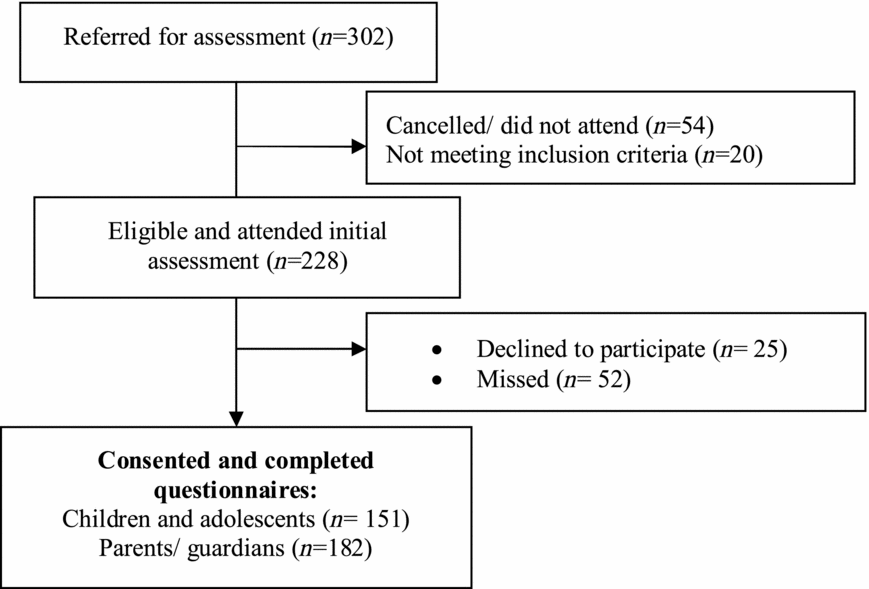
Recruitment
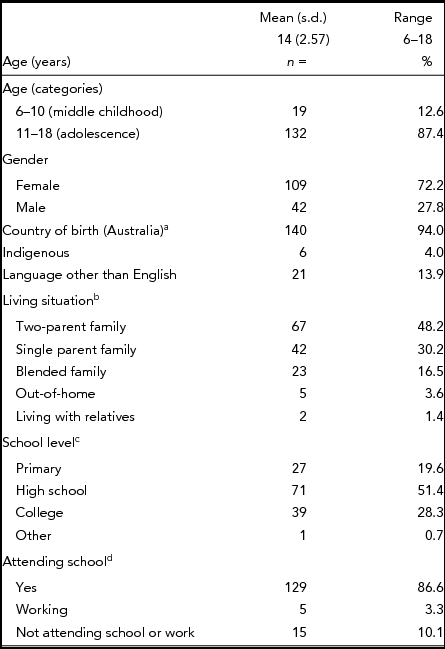
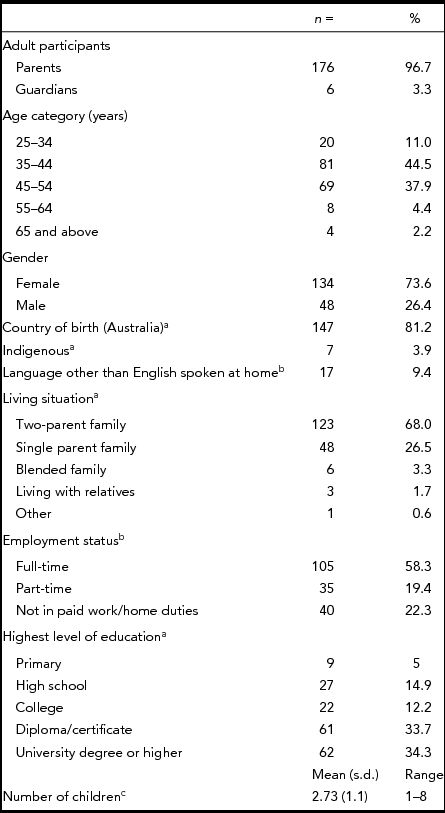
During the period from March 2013 to May 2014, 302 families were scheduled to attend an initial appointment at CAMHS. A number of families did not participate in the study because they cancelled or did not attend (n = 54), were ineligible (n = 20), were not approached by the clinician (n = 52) or declined (n = 25). Reasons for declining included being late for the appointment, being in crisis or disinterest in the study. Of the 228 eligible families who attended an initial appointment, 162 families (71%) consented to participate. In terms of participating families, 10 parents did not complete the questionnaire because they either (i) only gave consent for their child or (ii) the young person was unaccompanied to the appointment. Eleven young people also declined to complete the self-report questionnaire, however, their parent or guardian consented to provide their own data. Furthermore, 28 families provided data from both parents, resulting in a total of 182 parent/guardians who provided data. Table 1 summarises the demographics of the 151 young people who participated and Table 2 summarises the demographics of the parents.
Demographic characteristics of young people attending a child and adolescent mental health service (N = 151).

an = 149, bn = 139, cn = 138, dn = 149.
Demographic characteristics of parents/guardians (N = 182).
Note. the term “parent” refers to the child's biological parent, step parent or guardian (e.g., grandparents).
Reduced n due to missing data: an = 181, bn = 180, cn = 176.
Flow diagram.
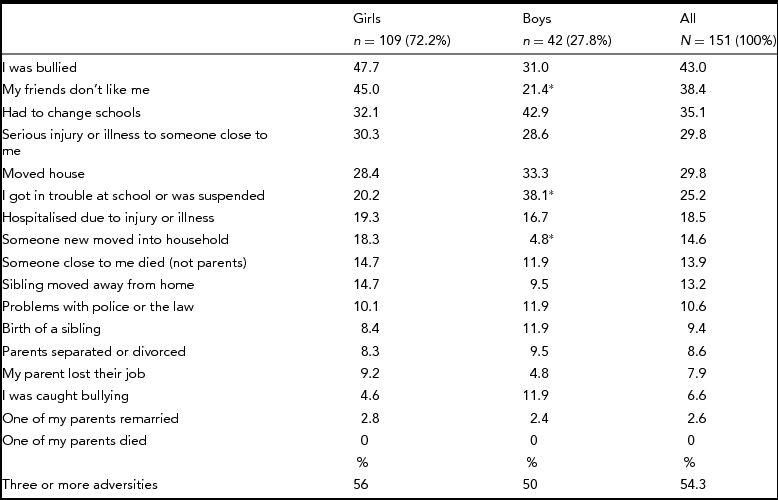
Child and adolescent adversities
Table 3 shows the frequencies of adversities for young people attending the ACT CAMHS service by gender. The most frequent adversity for all young people was being bullied (43%), followed by conflict with friends (38.5%), and having to change schools (35.1%). There were some significant differences between girls and boys with girls more likely to experience being rejected by their friends than boys (45% vs. 21.4%; p < 0.05). Girls were also more likely than boys to report that someone new moved into their household (18.3% vs. 4.8%; p < 0.05). Boys were significantly more likely to find themselves in trouble with school, including being suspended, than girls (boys: 38.1% vs. girls: 20.2%). In terms of the total number of adversities, it was more common to experience multiple adversities (three or more) in the last 12 months than single events (range 0–11) and there were no differences between males and females on this domain (p = n.s.).
Percentage of young peoples’ adversities in the past 12 month by gender.
*p < 0.05.
Parent adversities
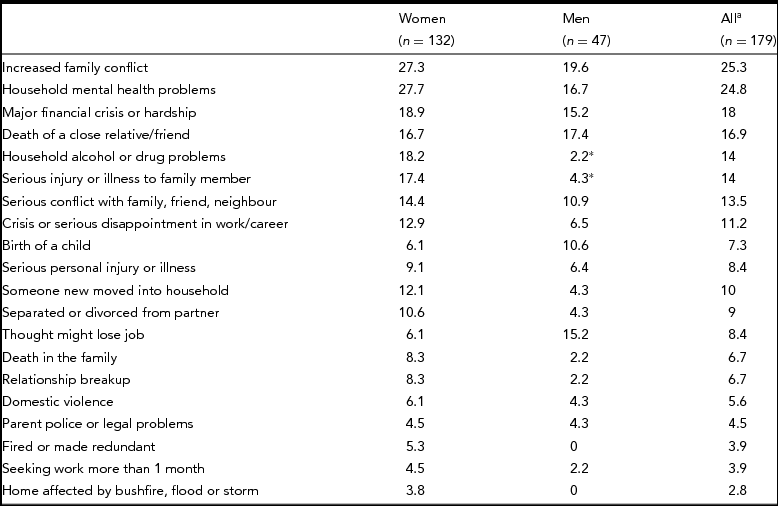
Table 4 summarises the parents’ experiences of adversities in the past 12 months, contrasting the results for men and women. The most common adversities for CAMHS families included: increased family conflict (25.3%); someone in the household with a mental health problem (24.8%), financial hardship (18%); death of a relative or close friend (16.9%), and someone in the household with an alcohol or drug problem (14%). Compared to fathers, significantly more mothers reported that someone in their household had an alcohol or drug problem, (18.2% vs. 2.2%; p < 0.05) and that there had been a serious injury or illness to a family member in the past 12 months (17.4% vs. 4.3%; p < 0.05). Mothers also fared worse than fathers when we examined the total number of reported adversities. For instance, the mean number of adverse life events was significantly higher for mothers than fathers (mean = 2.4 vs. 1.3; p = 0.001). Furthermore, the proportion of mothers who reported they had experienced three or more adversities in the past 12 months was significantly more than the proportion of fathers (36.4 vs. 12.8; p < 0.01). See Table 5.
Percentage of parents’ adversities in the past 12 month by gender.
Note: Women includes mothers, stepmothers and female guardians. Men includes father, stepfathers and male guardians.
aMissing data for 3 participants.
*p < 0.05.
Mean number of parent life adversities in past 12 months by gender.

aMissing data for 3 participants.
*p < 0.01.
Trauma histories of parents and young people
According to parent self-report, more than half of the parents (51.7%) and their children (51%) had at least one experience of trauma. These experiences ranged from single events, such as an accident or physical assault to repeated and prolonged experiences of abuse. The results showed there was a significant correlation between the results (reported incidence of trauma) for parents and their children (p < 0.01). Amongst the 76/147 parents who reported at least one traumatic event, 73.3% of their children had also been exposed to a traumatic event. Chi square analysis showed this result to be a highly significant result (χ2= 28.70 (1), p < 0.001). There were no differences between mothers and fathers in terms of exposure to trauma (females: 52.8% vs. males: 47.6%; p = n.s.). Likewise, in the CAMHS population, girls were just as likely to have experienced trauma as boys (females: 51% vs. males: 52%; p = n.s.).
Clinician Interview
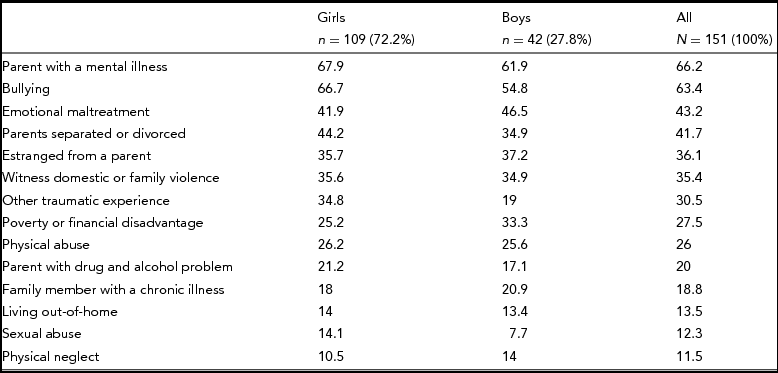
Data were obtained from clinicians on 15 potentially traumatic or adverse experiences that CAMHS clients had been exposed to (Table 6). The most frequently reported adversity was having a parent with a mental illness (66%), being bullied (63%) followed by emotional neglect from a parent (43%), and parental divorce or separation (43%). Overall, clinicians reported that 68.8% of CAMHS clients had experienced a potentially traumatic experience (any physical, emotional or sexual abuse, physical neglect or traumatic event). Young males and females were equally likely to have experienced neglect or abuse, and there were no significant differences between them on any of the variables measured.
Potentially adverse or traumatic events of young people as reported by clinicians.
Discussion
The aim of this study was to examine the prevalence and nature of trauma experiences and adversities in children and families presenting to the ACT CAMHS over a 12 month period. The study involved data collection from children, young people, their parents, and carers as well as treating clinicians from the service. This study showed when young people experienced adversity, it was more common for them to experience multiple adversities in the past 12 months than just one or two. The results of the study suggest that the most frequently occurring self-reported adversity was being bullied (43%), followed by being excluded from their friends (38%). Whilst males and females were equally likely to self-report being bullied, more females indicated their friends didn't like them (48% vs. 21%), highlighting a factor commonly associated with the development of mental health problems: social exclusion. Using another measure of bullying, the clinician interview results showed that 63% of young people experienced this adversity. The difference in reporting may be due to the broader definition used by clinicians or their interviewing skills. The frequency of bullying in this study population (63%) contrasts with research into the normal Australian population which shows bullying victimisation rates of between 10 and 35% (Cross et al., Reference Cross, Shaw, Hearn, Epstein, Monks, Lester and Thomas2009; Forero, McLellan, Rissel, & Bauman, Reference Forero, McLellan, Rissel and Bauman1999; Rigby & Slee, Reference Rigby and Slee1991). This finding is of significant concern due to well documented evidence of bullying as a risk factor for a range of mental disorders, suicide attempts, and drug and alcohol problems (Bond, Carlin, Thomas, Rubin, & Patton, Reference Bond, Carlin, Thomas, Rubin and Patton2001; Copeland, Wolke, Angold, & Costello, Reference Copeland, Wolke, Angold and Costello2013; Rigby & Slee, Reference Rigby and Slee1999). Studies have also revealed a strong, temporal relationship between bullying victimisation, poor academic performance, and increased susceptibility to illness (Juvonen, Wang, & Espinoza, Reference Juvonen, Wang and Espinoza2011; Williams, Forgás, & von Hippel, Reference Williams, Forgás and von Hippel2005).
The parents in this study also reported multiple family life difficulties with the most common adversities being increased family conflict, mental health problems in another family member, financial hardship, bereavement, alcohol or drug problem, serious illness or injury to a household member. Research has shown that such “proximal stressors” can negatively impact on children's physical health, mental health, and wellbeing, especially when these experiences are cumulative or multiple (Olesen et al., Reference Olesen, MacDonald and Raphael2010). Overall, mothers reported significantly more adversities in total than fathers and were significantly more likely to experience three or more stressful life events. For instance, mothers were more likely to report someone had a drug or alcohol problem in the household and that there had been a serious injury to someone close to them. This finding is consistent with prior research which has found that women have more chronic stress than men, and more likely to report home and family live events as stressful (see Matud, Reference Matud2004 for a review). Given that mothers traditionally provide the primary care of young children, it is of concern that many may be struggling with multiple stressful events, possibly making it even more challenging for them to address their child's needs.
Results from the clinical interview revealed that the majority (67%) of the participants were children of a parent with a mental illness (COPMI: http://www.copmi.net.au/). This is significantly higher than Australian population studies showing that 21–23% of children live with a parent who experiences mental illness (Maybery, Reupert, Patrick, Goodyear, & Crase, Reference Maybery, Reupert, Patrick, Goodyear and Crase2005). Children of parents experiencing mental illness are at substantially greater risk of developing mental health issues later in life (Beardslee, Versage, & Gladstone, Reference Beardslee, Versage and Gladstone1998; Rutter & Quinton, Reference Rutter and Quinton1984). Specifically, COPMI experience higher rates of depression, substance use and lower educational attainment (see Maybery et al., Reference Maybery, Reupert, Patrick, Goodyear and Crase2005 for a review). Their poorer outcomes have been shown to be, in part, due to inconsistent, less competent, and responsive parenting behaviours (Huntsman, Reference Huntsman2008). However, Nicholson, Biebel, Kinden, Henry, and Stier (Reference Nicholson, Biebel, Kinden, Henry and Stier2001) emphasise that children are not inevitably at risk due to the effects of their parent's mental illness and that a range of factors can influence child's outcome including the parent's diagnosis (e.g., psychotic features), severity, chronicity, level of social support, and compliance with treatment.
A notable finding of the study was the high rates of maltreatment or neglect (physical, emotional, sexual or witnessing family violence) experienced by these children. In our clinical sample, 68.8% of participants were found to have been exposed to one or more of these adversities. We compared these results with the findings from a recent review of child maltreatment studies which estimated the prevalence of a number of adversities in the Australian population (Child Family Community Australia [CFCA], 2013). Although the results of studies varied significantly due to differences in definitions and methodology, the review provided estimates for physical abuse (5–10%), neglect (12%), emotional maltreatment/abuse (11%), witnessing family violence (4–23%), and sexual abuse (penetrative: 1.4–8% boys, 4–12% girls). Although care should be taken when comparing the results of the current study, CAMHS children appear to experience higher rates of physical abuse (CAMHS: 26% vs. 10%), emotional maltreatment (CAMHS: 43% vs. 11%), and witnessing domestic or family violence (CAMHS: 35% vs. 23%) compared to samples from the Australian population. It should be noted the majority of studies reviewed in the CFCA study (2013) relied on the recollections of adults about their experience of their childhoods, whist CAMHS clients are still children. It would be more preferable to compare the study participants with a more “representative sample” of young Australians. It has also been well documented that maltreatment sub-types rarely occur in isolation (Higgins & McCabe, Reference Higgins and McCabe2001), and more than half of the CAMHS population (54%) experienced one or more types of abuse or neglect during their childhood. It is not surprising that we found high rates of trauma in this population of young people attending a mental health service. Other studies have found that that majority of adults with serious mental illness have been exposed to trauma with multiple experiences being more common than single events (Goodman, Rosenberg, Mueser, & Drake Reference Goodman, Rosenberg, Mueser and Drake1997; Lu et al., Reference Lu, Yanos, Silverstein, Mueser, Rosenberg, Gottlieb and Giacobbe2013; Mueser et al., Reference Mueser, Goodman, Trumbetta, Rosenberg, Osher, Vidaver and Foy1998). The current study adds to the body of evidence that children and adolescents with serious mental illness have experienced high rates of trauma and family adversity. Taken together, the findings of greater parent mental illness, multiple proximal family stressors and childhood maltreatment underscore the importance of programs and interventions that better support parents in their care-giving roles. The testing of trauma-informed or trauma-specific interventions in public mental health settings that include families in their children's treatment and recovery is an important area of future research.
The results of the study need to be understood in terms of its limitations. Limitations of the study include the use of self-report questionnaires and the inherent problems of accurate recall. The study results could have been strengthened by the use of semi-structured interviews or well validated screening instruments to assess for children's exposure to a range of potentially traumatic or adverse events. However, this limitation was balanced by the data obtained from the clinical interview on adversities and trauma. It is possible that there were differences between clinicians in terms of consistency of assessment, given our earlier findings about the reluctance of some clinicians to assess for trauma. However, this was partially addressed through the training provided to clinicians and use of a checklist with stringent definitions of childhood adversities. Assessing for trauma, family adversity and maltreatment of children is a sensitive issue. It is possible that the data we collected is an underestimation of the true prevalence of trauma and adversity due to the reluctance of some young people and families to disclose due to denial, shame or fear of negative consequences of reporting. Furthermore, the results for females need to be treated with caution due to the high response rate compared males. This, however, is consistent with our experience of the CAMHS population in that girls are over-represented compared to boys and mothers are more likely than fathers to accompany their children to medical appointments. The results of the study could have been strengthened by obtaining data from both parents. Despite these limitations, the study's strengths include the use of multiple sources of information in order to assess for the presence of childhood trauma and adversity, addressing an important gap in the literature. The study also demonstrates feasible methods for embedding research in a “real world” clinical setting, in order to influence clinicians to screen and assess for trauma.
Implications for Services
Mental health services have been criticised for artificially distinguishing between clients with serious mental illness versus those exposed to trauma, maintaining the view that the latter are best treated by specialist trauma services (Kezelman & Stavropoulous, Reference Kezelman and Stavropoulos2012). This approach to mental health care is thought to stem, in part, from a lack of awareness of the high prevalence of trauma exposure amongst individuals who access public mental health services. In Australia, there has been a call for a national strategic direction to develop a “new generation” of transformed mental health services, organisations and programs which support people with histories of violence and trauma (Mental Health Coordinating Council [MHCC], 2010; 2013). Such services are needed to ensure a greater understanding of the types and impacts of trauma on the lives of children and families seeking help. These services are based on a thorough understanding of the particular vulnerabilities of trauma survivors and the importance of avoiding re-traumatisation in young people (Hodas, Reference Hodas2006). The findings from the current study have led to further improvements in the CAMHS service such as, standardised routine assessment of trauma in all young people referred to the service, as well as embedded, introductory and advanced training in trauma-informed and trauma-specific interventions. In terms of changes to assessment procedures, all new client referrals are invited to complete the Child Trauma Screening Questionnaire (CTSQ; Kenardy, Spence, & Macleod, Reference Kenardy, Spence and Macleod2006) to assess for exposure to potentially traumatic events. Those who screen positive complete The Child PTSD Symptom Scale (CPSS), a 24-item, self-report measure designed to assess the severity of post-traumatic stress disorder among children and adolescents ages 8 to 18 years (Foa, Johnson, Feeny & Treadwell, Reference Foa, Johnson, Feeny and Treadwell2001). According to feedback from within the service, there has been a significant positive change in staff attitudes toward the assessment of children's trauma histories, as well as the importance of clinicial skills and competence in evidenced based treatments such as Trauma-Focussed CBT (Cohen & Mannarino, Reference Cohen and Mannarino2008). It remains an empirical question whether CAMHS services are currently meeting the support and treatment needs of children and families affected by trauma. Further research is needed to investigate whether trauma-specific approaches or interventions for children and young people are feasible and effective in real world clinical settings (CATS Consortium, 2007).
Conclusion
We found that children and adolescents attending a public mental health service had been exposed to multiple adversities and family life difficulties in the past year. These individuals were three times more likely to have a parent with a mental illness than the normal population. Overall, the mothers of these children reported greater number of adversities than fathers, highlighting the importance of providing additional support and resources to stressed parents. Clinicians reported that bullying, emotional neglect, and family breakdown were the most common experiences. More than two-thirds (69%) had experienced a potentially traumatic or adverse experience (any physical, emotional or sexual abuse, child neglect or traumatic event) during their childhood. The finding that trauma and adversity is prevalent in this population underscores the need to develop and test more trauma-informed approaches and effective interventions that address the needs of young people.
Acknowledgements
We acknowledge the ACT Health Private Practice Fund for their financial support. The authors have no competing interest statements to disclose.
We wish to acknowledge the staff and management of the Child & Adolescent Mental Health Services, ACT Mental Health, Justice Health and Alcohol and Drug Services (MHJHDAS), Canberra, ACT for their support of this project. We would like to thank Amanda Harris from the Australian Child and Adolescent Trauma Loss and Grief Network, ANU Medical School and Dr Merima Isakovic for their psychological expertise and advice. In addition, we are very grateful to the children, young people, and their families for their participation. We acknowledge the ACT Health Private Practice Fund for their financial support. The authors have no competing interest statements to disclose.